Everybody arrives in Scotland with a list. Mine, the first time, had four things on it and I managed two of them, because I’d built a route that looked sensible on a map and was ridiculous in a car. That’s the thing nobody tells you about a Scotland bucket list: the hard part isn’t choosing what to see, it’s admitting how little of it fits into one trip.
So this is a list of 30 experiences worth building a trip around — but written the way I’d actually explain it to a friend. Every entry tells you roughly what it costs, how long it eats, when in the year it’s even possible, and whether you need to book months out. A few entries tell you to skip the famous version and do something better instead.
The short answer: what belongs on a Scotland bucket list
If you only remember eight things: Edinburgh’s Old Town, the Isle of Skye, Glencoe, the North Coast 500, a Hebridean beach, a distillery on Islay, a Highland Games, and one hill you climb yourself. Everything else on this list is a variation, an upgrade, or a quieter alternative to one of those.
The eight non-negotiables at a glance
| Experience | Where | Best months | Rough cost | Book ahead? |
|---|---|---|---|---|
| Edinburgh Castle & the Old Town | Edinburgh | Apr–Jun, Sep | £23.50 online | Yes — sells out |
| Old Man of Storr / the Quiraing | Isle of Skye | May–Sep | Free (£5 parking) | No, but go early |
| Glencoe | Highlands | Year-round | Free | No |
| North Coast 500 | Far north | May–Jun, Sep | Fuel + beds | Beds, 6–12 months |
| Luskentyre or Seilebost beach | Isle of Harris | May–Sep | Free + ferry | Ferry, months out |
| Islay distillery tour | Islay | Apr–Oct | £15–£100+ | Yes |
| Highland Games | Various | May–Sep | £5–£15 | No |
| Climb a Munro | Highlands | Jun–Sep | Free | No |
Prices are what I’d budget in 2026 and they move — always check the official site before you go. If you’re at the very start of planning, our guide to the best things to do in Scotland sets the wider scene, and the Scotland itinerary guide turns a list like this into an actual route.

The icons that actually deserve the hype
1. Stand on the battlements of Edinburgh Castle
It’s the busiest paid attraction in the country and it’s still worth it. Adult tickets are £23.50 booked online (£26 if you walk up, and increasingly there’s nothing left to walk up to). Go for the 9.30am opening slot or after 2pm; the middle of the day is a crush. Budget two hours, three if you’re the sort who reads every panel. The one-o’clock gun still fires every day except Sunday, and everyone still jumps. More on fitting it into a city break in the Edinburgh travel guide.
2. Walk the Royal Mile — then get off it
The Mile itself is a tartan-shop gauntlet between two genuinely great buildings. The trick is the closes: narrow stone alleys running off both sides, most of them free to wander. Advocate’s Close, Riddle’s Court, the steps down to the Grassmarket. Ten minutes off the main drag and the crowd density drops by about ninety per cent. Both the castle and the Mile slot into our two-day plan for the city, walked downhill in the right order.
3. See the Old Man of Storr at sunrise
Skye’s most photographed rock, and the reason to be there at 6am rather than 11am is entirely practical: by mid-morning in July the car park is full and the path is a queue. It’s about 45 minutes up on a well-made path, steep enough to make you warm. Parking is around £5. Pair it with the Quiraing loop the same day and you’ve seen the best of northern Skye — the full picture is in our Isle of Skye guide.

4. Drive through Glencoe and stop more than once
Most people photograph the Three Sisters from the big lay-by and drive on, which is a shame, because Glencoe rewards anyone willing to walk twenty minutes. The Lost Valley scramble takes about three hours return and puts you in a hanging valley where the MacDonalds hid stolen cattle. Free, year-round, and atmospheric in weather that would ruin most places. It anchors any trip through the Scottish Highlands.
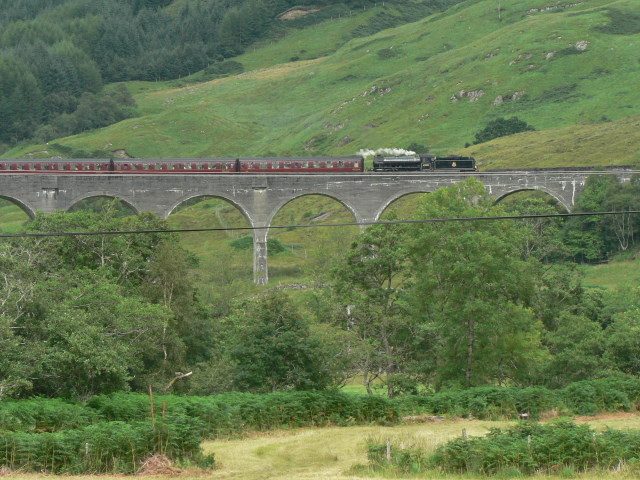
5. Ride the Jacobite steam train over the Glenfinnan Viaduct
Yes, it’s the Hogwarts Express. It’s also a genuinely lovely 84-mile round trip from Fort William to Mallaig. 2026 fares are around £76 adult return in standard and £116 in first class, with the morning service running daily from 1 June to 23 October. Book it the moment tickets open — August dates have been known to vanish in a week, and there is essentially no walk-up. If you miss out, the ordinary ScotRail service runs the same line for a fraction of the price and crosses the same viaduct — one of several rail routes worth riding for the view alone.

6. Photograph Eilean Donan Castle from the road
Thirteenth-century island castle, three lochs meeting, a stone bridge in the foreground. Around £12 to go inside; the interior is a 1930s reconstruction and pleasant rather than essential. Honestly, the view from the lay-by is the experience. It’s ten minutes off the Skye road, so nobody has to plan around it — and there are dozens more like it in our guide to castles in Scotland.

Islands, beaches and the long way round
Scotland has around 900 islands and roughly 90 of them have people on them. You will not “do the islands” in a week. Pick one archipelago and go deep — our Scottish islands guide compares them properly.
7. Walk on Luskentyre beach and doubt your own eyes
Two miles of white shell sand and water the colour of a Greek postcard, on the west coast of Harris, in the North Atlantic. It is free, it is almost always empty, and it is frequently freezing. Getting there is the cost: ferries from Ullapool to Stornoway or Uig to Tarbert, booked months ahead in summer if you’re taking a car.

8. Take a boat to Staffa and Fingal’s Cave
An uninhabited island of hexagonal basalt columns with a sea cave you can walk into on a rock ledge. Boats run from Mull, Iona and Oban between roughly April and October, around £40–£70, and they cancel in swell — build in a spare day. Mendelssohn wrote an overture about it; you’ll understand why about ninety seconds after you get inside.
9. Stand inside a 5,000-year-old house at Skara Brae
Orkney’s Neolithic village is older than Stonehenge and older than the pyramids, and it still has the stone dressers and box beds in place. Around £12, allow two hours with the visitor centre. Orkney is a 90-minute ferry from Scrabster or a short hop from Gills Bay, and it deserves three days rather than a day trip.

10. Sit among the Callanish Standing Stones with nobody else there
On Lewis, free, open at all hours, and unstaffed — which means you can turn up at nine at night in June and have a 5,000-year-old stone circle entirely to yourself. That is not a thing you can do at most monuments of this age anywhere in Europe.

11. Watch puffins from three metres away
April to early August only — they’re at sea the rest of the year, and the single most common bucket-list disappointment I hear about is someone turning up in September. The Isle of May from Anstruther, Lunga in the Treshnish Isles, or Noss in Shetland. Boat trips run around £35–£50. The birds are entirely unbothered by people.
12. Spend a night in Tobermory
The painted harbour front on Mull that half of Britain knows from children’s television, which makes it an easy win if you are travelling with children. Come for the colours, stay for the seafood and the distillery on the waterfront. Mull is also the launch point for Iona and Staffa, so it earns its place as a base rather than a stop.
Mountains, glens and the outdoors
13. Climb a Munro — but probably not Ben Nevis first
There are 282 Munros (Scottish hills over 3,000ft) and bagging one is the most satisfying free thing on this list. Ben Nevis is the famous one and also a long, crowded, viewless slog up a rebuilt path for most of the year. Ben Lomond, Schiehallion or Mount Keen give you a better day for less suffering. Check the mountain forecast, take real layers, and start early — our hiking in Scotland guide covers the safety basics properly.
14. Walk part of the West Highland Way
96 miles from Milngavie to Fort William over about a week. If that’s too much, the Rowardennan-to-Inverarnan stretch along Loch Lomond or the crossing of Rannoch Moor gives you the character in a day. Beds in the villages along the route book out by early spring.
15. Swim in a loch
Free, available everywhere, and genuinely one of the great Scottish experiences. Loch Morlich near Aviemore has a sandy beach and is one of the warmer options, which in Scotland means about 16°C in August. Go in slowly, get out before you stop feeling your hands, and bring more layers than you think.
16. Drive the Bealach na Bà
The Applecross pass climbs to 626m in a series of hairpins with no barriers, and it is the most alpine road in Britain. Not for nervous drivers, caravans, or anyone in a hurry. The reward is a view across to Skye and the Cuillin, and a pint at the Applecross Inn at the bottom. It sits on the North Coast 500, which is the road trip most people are really picturing when they think about driving in Scotland.

17. Stargaze in a Dark Sky Park
Galloway Forest Park in the south-west was Britain’s first, and on a clear moonless night you can see the Milky Way with the naked eye. October to March, when the nights are long enough. Free. Bring a red torch and a flask. Our guide to Scotland’s dark sky parks and where to stand covers the rest of them.
18. Catch the Northern Lights
Scotland is on the same latitude as parts of Alaska, and the aurora — the Mirrie Dancers, in Shetland — is a real possibility from October to March. Get as far north as you can, away from towns, on a clear night with high solar activity. Shetland, Orkney, Caithness and the north coast give you the best odds. It is never guaranteed, which is precisely why people lose their minds when it works. The best time to visit Scotland guide breaks down the seasonal trade-offs month by month.
Castles, clans and the uncomfortable history
19. See Dunnottar Castle appear out of the sea fog
A ruined fortress on a sea stack outside Stonehaven, on the north-east coast. Around £12, and it involves a proper walk down and back up a cliff path, so give it two hours. The Honours of Scotland were smuggled out of here during Cromwell’s siege. It is the single most dramatic castle silhouette in the country and it is nowhere near the tourist trail.

20. Stand on Culloden battlefield
Not a fun one, and it shouldn’t be. Forty-five minutes on an April morning in 1746 ended the Jacobite rising and, in the decades that followed, a way of life. The visitor centre (around £16) is excellent and unflinching, and the moor itself, with the clan headstones, is very quiet. Go before you visit anywhere else that sells clan tartan. It’s a short drive from Loch Ness and Inverness.
21. Tour Stirling Castle and the Bannockburn site
Stirling is the better castle for actually understanding Scottish history — the restored Renaissance palace interiors are extraordinary, and it’s around £19.50 with far smaller crowds than Edinburgh. Bannockburn is fifteen minutes away.
22. Sleep in a castle
More achievable than it sounds. Converted castle hotels start around £150 a night off-season and climb steeply from there, and a handful of Landmark Trust and estate properties let you rent a tower outright. Cheaper still: the bothy network gives you a free stone shelter in the hills, no booking, no facilities, and no company but whoever else turns up. A tower for two also ranks high among the most romantic nights in Scotland. Our where to stay in Scotland guide covers the whole spectrum.
23. Meet a Highland cow properly
Everyone wants the photo. The roadside ones near Glencoe and on Skye are semi-wild and should be left alone — they are large animals with horns and calves. Working farms across Perthshire, Angus and the Hebrides run croft tours where you can actually brush one, usually £10–£25, and that is a far better experience than leaning over a fence with a phone. We name the farms worth the detour in our guide to meeting a Highland fold properly.

Whisky, food and a proper night out
24. Do a distillery tour on Islay
Nine working distilleries on one small island, most of them within sight of the sea, several of them producing whisky so peaty it tastes like a bonfire on a beach. Standard tours run £15–£25; the deep-dive warehouse tastings run £60–£100+ and are worth it if you actually like the stuff. Book ahead in summer. If Islay is a stretch, Speyside packs more distilleries into a smaller area — both are mapped in our guide to Scotch whisky distilleries.
25. Eat haggis where it’s cooked well
Haggis is peppery, oaty and savoury, and the version served in a decent Scottish pub bears no relation to the thing tourists are dared into eating. Order it as a starter with whisky sauce, or in the breakfast at a good B&B. While you’re at it: Cullen skink in Cullen, langoustines in Oban, a fish supper anywhere in the East Neuk. Full run-down in our Scottish food and drink guide.
26. Dance at a ceilidh
Nobody expects you to know the steps. Someone will shout them, you will get them wrong, and that is broadly the point. Edinburgh and Glasgow both have regular public ceilidhs for around £10–£15, and village halls run them all year. This is the item on the list most likely to end up being the story you tell.
27. Order seafood from a shack with a view
The Oyster Shed at Carbost on Skye, the seafood huts at Stein, the shellfish bar on the pier at Oban. Paper plates, plastic forks, langoustines landed that morning, and a view worth more than the meal costs. Roughly £10–£20 a head.
Moments you have to time a trip around
28. Get to a Highland Games
Caber tossing, hammer throwing, Highland dancing and massed pipe bands, in a field, usually in the rain. Entry is typically £5–£15. The Braemar Gathering in early September is the famous one; the village games at Helmsdale, Durness or Glenfinnan are smaller, cheaper and better. Season runs roughly May to September.
29. Be in Edinburgh in August (or deliberately avoid it)
The Fringe is the largest arts festival on earth and it turns the city into something genuinely unlike anywhere else — thousands of shows, hundreds of them free, and a street performance every fifty metres. It also doubles accommodation prices and fills every train. Decide which trip you want. The Scotland festivals and events calendar lays out the whole year.
30. See in the New Year at a Hogmanay
Edinburgh’s street party is the famous version and needs tickets. The alternatives are better: the Stonehaven fireballs, where locals swing flaming wire cages around their heads down the high street, or Up Helly Aa in Lerwick at the end of January, where Shetland burns a Viking galley. Book beds a year out for any of them.
Three that nearly made the list
Playing the Old Course at St Andrews, the oldest golf course in the world — it misses the thirty only because you enter a daily ballot rather than book a tee time, and our golf in Scotland guide explains how that works. A night out in Glasgow, which has the best live music scene in Britain outside London and gets unfairly overshadowed by Edinburgh. And the Falkirk Wheel and the Kelpies, twenty minutes apart in the central belt and both far better in person than in photographs.
When each experience is actually possible
This is the part most bucket lists leave out, and it’s the part that wrecks trips. A dozen items on this list are locked to a season.
| Experience | Window | Why |
|---|---|---|
| Puffins | Apr – early Aug | At sea the rest of the year |
| Jacobite steam train | Roughly Jun – Oct | Seasonal service only |
| Northern Lights | Oct – Mar | Needs long, dark nights |
| Stargazing | Oct – Mar | Barely gets dark in June |
| Highland Games | May – Sep | Season-bound |
| Heather in bloom | Aug – early Sep | Short flowering window |
| Munros and long walks | Jun – Sep | Winter needs ice axe skills |
| Island ferries | Best May – Sep | Cancellations climb in winter |
| Edinburgh Fringe | August | Once a year |
| Hogmanay / Up Helly Aa | 31 Dec / late Jan | Once a year |
The honest sweet spots are late May to mid-June and September: long days, most things open, midges manageable, and prices short of peak. July and August give you the festivals and the worst of the crowds, the midges and the cost.
How many of these fit your trip?
Be realistic. Scotland is small on a map and slow on the ground — single-track roads, ferry timetables and 40mph averages in the Highlands.
- 3 days: Edinburgh Castle, the Old Town closes, a ceilidh, haggis done properly, and one day trip. Four or five items, and that’s a good trip.
- 7 days: Edinburgh plus a Highlands loop — Glencoe, Skye, Loch Ness, Glenfinnan. Realistically eight to ten items.
- 10 days: The above plus either the North Coast 500 or an island run to Mull, Iona and Staffa. Twelve to fifteen.
- 14 days: Add the Outer Hebrides or Orkney without rushing. Around twenty, and you’ll still be leaving things.
The single most common planning mistake is one-night stops. Two nights minimum per base, three where the driving is hard. Our getting around Scotland guide has the real drive times, and Scotland tours is worth a look if you’d rather not drive single-track roads yourself.
What to book ahead — and how far
- 6–12 months: NC500 and Skye accommodation, car ferries to the Outer Hebrides and Orkney in summer, Hogmanay beds, Fringe accommodation.
- 3–6 months: Jacobite steam train, rental cars for July–August, popular distillery experiences.
- 2–6 weeks: Edinburgh Castle timeslots, boat trips to Staffa and the puffin islands, restaurant tables in Edinburgh in August.
- Turn up: Glencoe, Callanish, most beaches, most hills, most Highland Games, and every single view on this list.
If you’re visiting more than three or four Historic Environment Scotland sites, an Explorer Pass pays for itself quickly.
The honest bit: what tends to disappoint
A bucket list that only says yes isn’t much use.
Loch Ness is a long, dark, straight-sided loch, and if you drive three hours expecting drama you’ll be underwhelmed. Urquhart Castle is genuinely good; the monster exhibitions are not. Treat it as a stop on the way north rather than a destination.
The Fairy Pools on Skye are lovely and have become a car park with a queue. Go at 7am or go to the Lealt Falls instead.
Ben Nevis is in cloud roughly two days in three. If the summit view matters to you, climb something lower and more reliable.
Whisky tours blur badly after the third one in two days. Two good ones beat five average ones, and the process is identical everywhere — it’s the warehouse tastings that differ.
Driving the NC500 in a week is the classic overreach. It’s 516 miles of mostly single-track road. Ten days, or do half of it well.
Frequently asked questions
What is the number one thing to do in Scotland?
For a first visit, Edinburgh’s Old Town and castle — it’s the densest concentration of history in the country and the easiest to reach. For a second visit, the Isle of Skye or the Outer Hebrides. If you want one experience rather than one place, climbing a Munro on a clear day is hard to beat and costs nothing.
How many days do you need to see Scotland?
Seven days covers Edinburgh and a proper Highlands loop without rushing. Ten days lets you add the North Coast 500 or an island. Three to five days works if you stay tight — one city plus day trips. Two weeks is when Scotland stops feeling like a checklist.
What is the best month to visit Scotland?
Late May, June and September. You get long daylight, open attractions and fewer midges than July or August. May and June are also statistically among the driest months. Winter is atmospheric and cheap, but many Highland attractions close and daylight shrinks to about seven hours.
Do I need a car to do a Scotland bucket list?
For the Highlands, islands and NC500, yes — public transport out there is a patchwork of once-a-day buses. For Edinburgh, Glasgow, the rail corridors and the West Highland Line, a car is an expensive liability. Most travellers do the cities car-free and pick up a hire car when they head north.
Is Scotland expensive to visit?
The best things are free: every hill, beach, glen and national museum. The costs are accommodation (which spikes in summer and during festivals), car hire and fuel, and paid attractions at £12–£25 each. Travelling in May or September rather than August is the single biggest saving. Our Scotland travel tips covers the money side in detail.
Can you actually see the Northern Lights in Scotland?
Yes, though not reliably. October to March, on clear nights with strong solar activity, from somewhere dark and north-facing. Shetland, Orkney, Caithness and the far north coast give the best chance. Treat it as a bonus rather than the reason for the trip.
What should I not miss on a first trip to Scotland?
Edinburgh’s Old Town, one Highland glen (Glencoe is the easiest), one island, one distillery and one hill. That combination gives you the history, the landscape, the sea and the culture in a week, and it’s the skeleton most good first itineraries hang on.
Is the Isle of Skye worth it given the crowds?
Yes, if you stay overnight and walk more than ten minutes from a car park. Day-trippers on coach tours see the same four viewpoints at the same four times. Two nights on the island, early starts and one long walk, and it’s a completely different place.
Final thoughts
The best Scottish trips I’ve had were the ones where I cut the list in half. You will not tick off thirty things, and the attempt would turn a holiday into a logistics exercise. Pick six or eight that genuinely pull at you, build a route that lets you stay two nights in each place, and leave room for the day when the weather turns and you end up in a pub in Ullapool listening to someone play the fiddle badly.
That’s usually the bit people remember. Everything else is just the list.
The Cairngorms entry needs an update that most lists have not made: the funicular railway came back into service in February 2025 after seven years out, though outside the snowsports season passengers may not leave the top station. Our Aviemore and Cairngorms guide sets out the current rules, and the national park itself is bigger than Luxembourg.
If castles are the reason you are coming, our roundup of the castles worth your time is more useful than another ranked list — it tells you which ones are free ruins, which need booking weeks ahead, and which are best admired from the car park.
If your list has a personal angle to it, it is worth working out where your own family actually came from before you book. The archives and clan lands are scattered, and a little research usually changes the itinerary.
About the author: This guide was written and is maintained by the ScotlandTourism.org editorial team — travel writers who’ve spent years exploring Scotland’s cities, Highlands and islands, from bagging Munros to chasing the perfect dram. We update our guides regularly to keep prices, opening details and advice current.
Last updated: July 2026. Prices and opening times change — always check the official site before you travel.
Photo credits
All images are used under their respective Creative Commons or public-domain licenses:
- Edinburgh Castle — Stanley Howe, CC BY-SA 2.0, via Wikimedia Commons
- Old Man Of Storr — Lauwz The Kiwistralian, CC0, via Wikimedia Commons
- Glencoe — JavierOlivares, CC BY-SA 4.0, via Wikimedia Commons
- Glenfinnan Viaduct — de:Benutzer:Nicolas17, CC BY-SA 2.5, via Wikimedia Commons
- Eilean Donan — Mimihitam, CC BY-SA 3.0, via Wikimedia Commons
- Luskentyre Beach — Scotboy19, CC BY-SA 4.0, via Wikimedia Commons
- Skara Brae — Libasstref, CC0, via Wikimedia Commons
- Dunnottar Castle — Colin Park, CC BY-SA 2.0, via Wikimedia Commons
- Callanish Stones — M J Richardson, CC BY-SA 2.0, via Wikimedia Commons
- Highland Cow — Thomas Andy Branson, CC BY-SA 4.0, via Wikimedia Commons