Search “northern lights scotland” and you get the same three answers every time: October to March, go as far north as you can, check a forecast. All true. All fairly useless at half past ten on a clifftop in the dark, when you are staring at a grey smudge above the sea and cannot tell whether it is aurora or cloud.
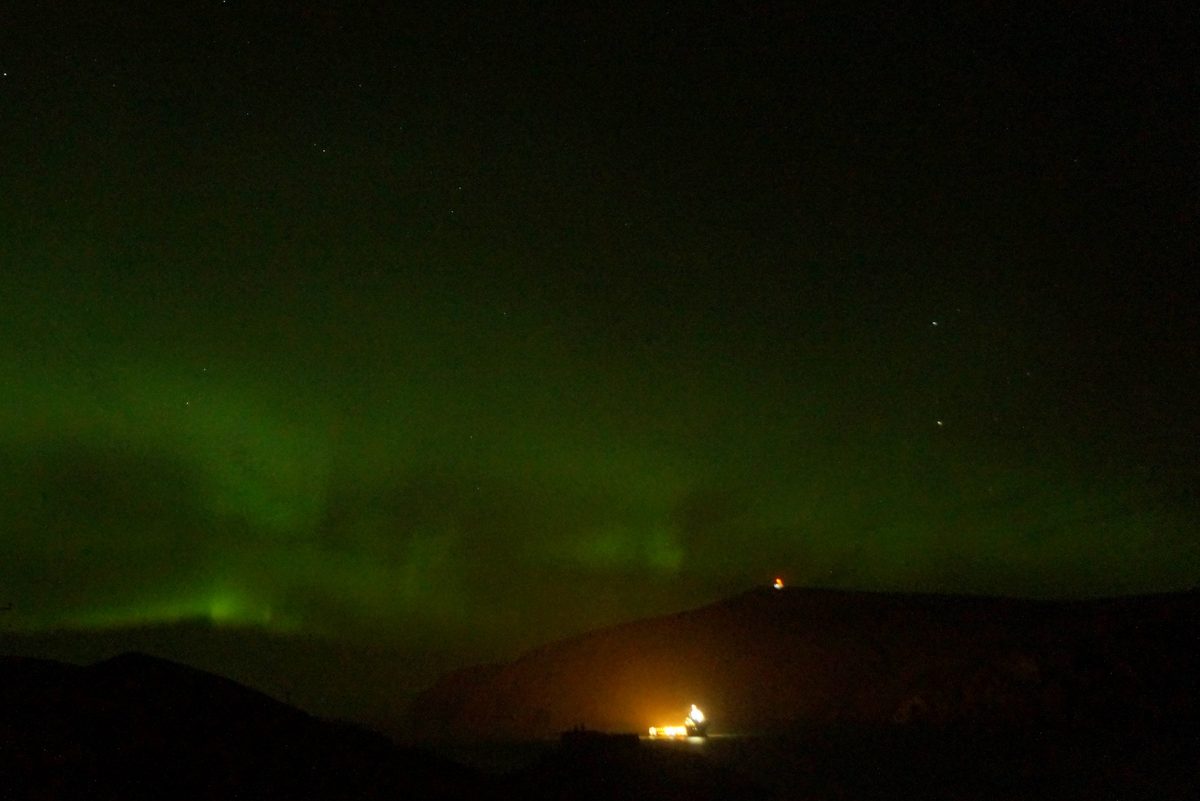
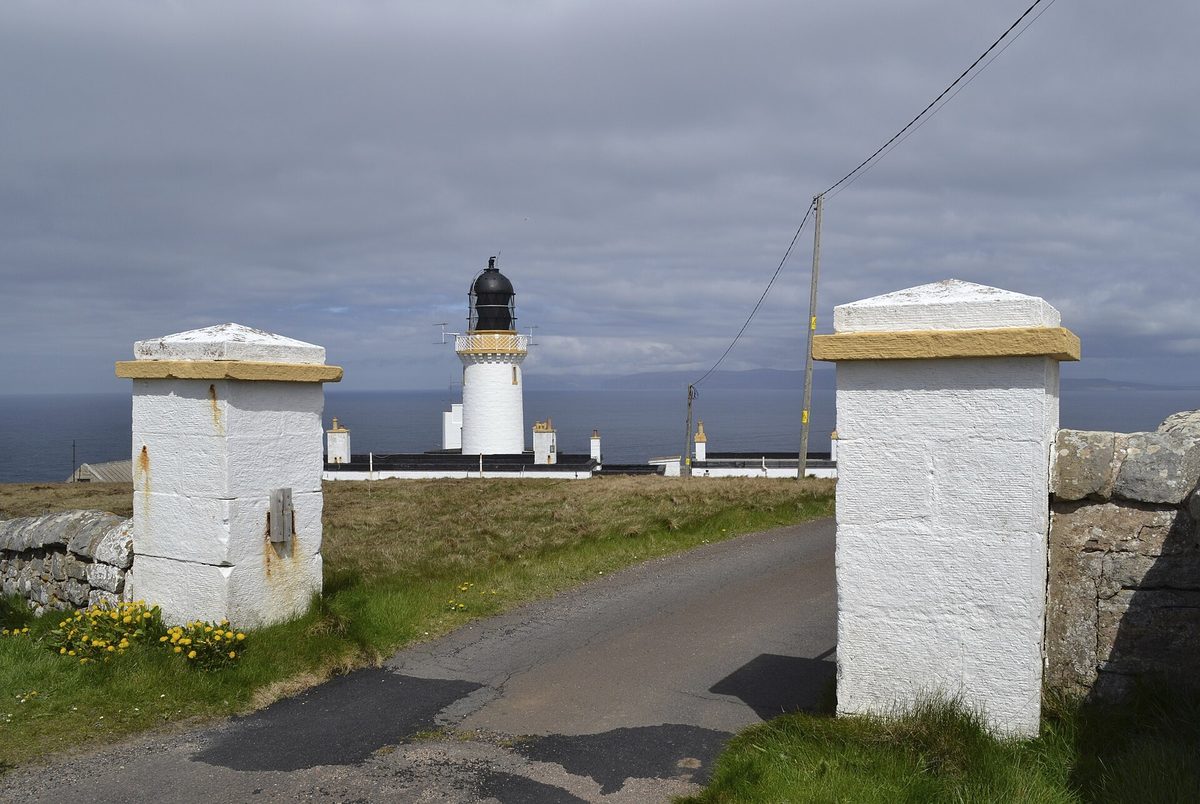
That was me at Dunnet Head in Caithness one March, minus two with a wind off the Pentland Firth, about to give up. Then I took a ten-second exposure, looked at the back of the camera, and the smudge was green. Scotland sits at a marginal aurora latitude — far enough north to catch the edge of the big displays, not far enough north to catch the ordinary ones. This guide is about playing those odds properly.
When is the best time to see the northern lights in Scotland?
Late September to late March, with the two or three weeks either side of the equinoxes — roughly late September to mid-October, and March — statistically the strongest. Aim for a moonless night, a clear north-facing horizon, and somewhere as far north and as far east as you can get. Cloud, not solar activity, is what usually stops you.
Northern lights Scotland: the odds at a glance
| Where | Latitude | Kp you realistically need | Cloud outlook | Verdict |
|---|---|---|---|---|
| Shetland (Lerwick, Unst) | ~60°N | Kp 3–4 for a visible glow | Windy, changeable, but gaps clear fast | Best odds in the UK |
| Orkney | ~59°N | Kp 4 | Low, flat, drier than the west | Excellent, and easier to reach |
| Caithness & north Sutherland | ~58.5°N | Kp 4–5 | Reasonable; drier than the west coast | Best mainland option, drivable |
| Moray & Aberdeenshire coast | ~57.5°N | Kp 5 | Driest corner of Scotland | Under-rated; clear nights win |
| Outer Hebrides & north Skye | ~57–58°N | Kp 4–5 | Wet and cloudy, but fast-moving | Great when it’s clear, often isn’t |
| Cairngorms & Speyside | ~57°N | Kp 5 | Drier inland, cold clear nights | Good, with proper dark skies |
| Edinburgh, Glasgow, the Borders | ~55–56°N | Kp 6–7 | Variable, plus heavy light pollution | A few nights a year at best |
Those Kp figures are rules of thumb rather than laws, and they assume you are looking north over water or open moor with nothing in the way. Treat them as the number below which I would not bother getting out of bed.
How the odds actually work
Four things have to line up on the same night: enough geomagnetic activity, darkness, no cloud, and no moon. Each one is independent of the others, which is why a Scottish aurora trip is a probability exercise rather than a booking. Understanding which of the four is most likely to fail is what separates people who see something from people who spend three nights staring at a grey ceiling.
Kp, and why your latitude changes the number
Kp is a 0–9 scale of global geomagnetic disturbance. As it rises, the ring of auroral activity around the magnetic pole — the auroral oval — expands southwards. Every step up the scale drags the oval roughly two degrees of latitude closer to you.
Here is the part that page-one guides skip. The four degrees of latitude between Shetland at about 60°N and Edinburgh at about 56°N are worth roughly two full Kp points. A Kp 4 night that produces a decent green arc from Unst will produce absolutely nothing visible from Calton Hill. That is not a matter of light pollution or luck; the oval simply is not far enough south. If you are in the capital and want a reasonable chance, you are waiting for Kp 6 or higher, which happens a handful of times in a good year.
The useful consequence is that you can trade activity for latitude. Rather than waiting for a rare Kp 6, drive north and settle for a common Kp 4. That is the single biggest lever you have, and it is why the north coast and the islands appear in every list. If you are still deciding when to come at all, our guide to the best time to visit Scotland puts aurora season in the context of everything else the country does well across the year.
Cloud is the constraint, not darkness
Here is the thing that surprises people. Over a Scottish winter there is no shortage of dark, and thanks to solar cycle 25 there has been no shortage of geomagnetic activity either. What there is a shortage of is clear sky at 10pm.
The west of Scotland is spectacularly wet. Parts of the western Highlands take over 3,000mm of rain a year. Now look at the other side of the country: the Met Office puts the coasts of East Lothian, Fife and the Moray Firth under 700mm a year, sheltered from the Atlantic weather by the mountains in between. That is a four-fold difference in a country you can drive across in three hours.
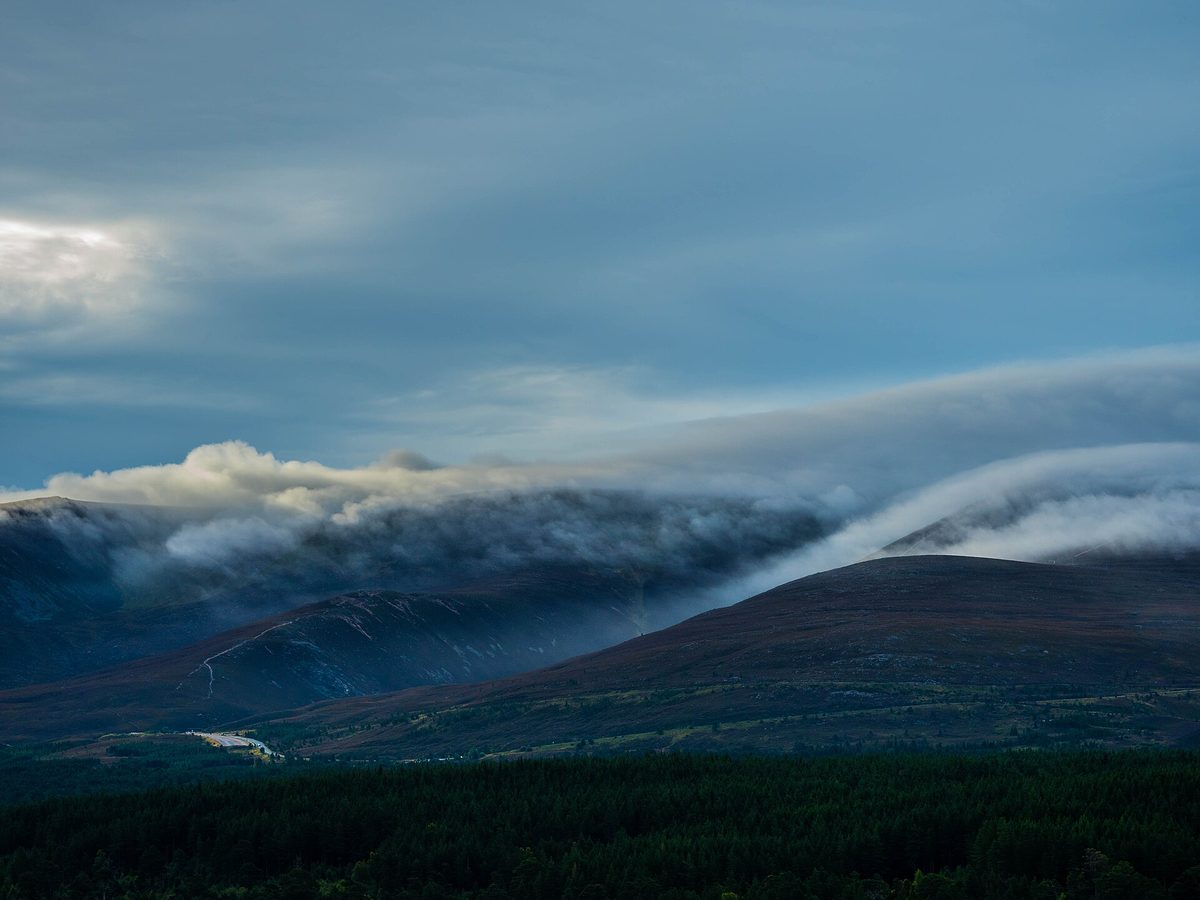
So the received wisdom — head for the wild west coast — is half wrong. Yes, the Hebrides and Wester Ross are dark and beautiful and face the right way. They are also under cloud a great deal of the time from October to March. The Moray coast between Findhorn and Fraserburgh is two degrees further south, which costs you roughly one Kp point, but buys you substantially more clear nights. On a short trip that trade is usually worth making. Our month-by-month breakdown of Scottish weather shows the pattern clearly enough.
The equinox effect
Late September and March feel wrong for aurora hunting. The nights are shorter than in December, the weather is no better, and instinct says go at midwinter. Instinct is wrong.
Geomagnetic storms cluster around the equinoxes. The mechanism is called the Russell–McPherron effect, described in 1973: around the equinoxes the tilt of Earth’s magnetic field relative to the solar wind makes it far easier for the two to connect, which lets energy in. In practice, sizeable geomagnetic storms occur on close to twice as many days in March as in June or July, and the September–October window behaves similarly.
The upshot is that a week in early October or mid-March gives you materially better odds than the same week in December, even though you get fewer hours of dark. If you are picking dates, that is where I would put them. October has the added advantage of autumn colour and quiet roads, which our guide to Scotland in October covers in more detail; if you would rather have the long nights and the frost, visiting Scotland in winter has its own arguments.
The moon will ruin a good night
A full moon in a Scottish winter sits high in the sky all night, because the moon takes the position the sun would occupy in summer. It floods the sky with light and it will wash out anything short of a strong display. I have watched a solid Kp 5 alert come to nothing because the moon was full and 50 degrees up.
Check the moon phase before you commit to dates. The five nights either side of new moon are what you want. A crescent is fine, especially if it has set by 10pm. Anything past first quarter and you need a stronger display to punch through. This is the same discipline that applies to stargazing under Scotland’s dark skies, and it is the easiest of the four variables to plan around, because it is the only one that is perfectly predictable years in advance.
Where we are in the solar cycle
The sun runs on an eleven-year cycle of activity, and solar cycle 25 peaked around 2024–25 — NOAA’s revised forecast put maximum somewhere between January and October 2024. Which means, yes, the absolute peak has passed.
Do not let that put you off. The declining phase of a solar cycle is historically a productive time for big geomagnetic storms, because long-lived coronal holes throw fast solar wind streams at Earth on a recurring 27-day rhythm. The spectacular UK-wide displays of May and October 2024, when the aurora was overhead across Scotland and visible from southern England, are unlikely to repeat every year. But the next two or three seasons should still deliver a decent number of amber-alert nights. If you have been putting this off, the window is open rather than closing — just don’t expect 2024 again.
Where to go, region by region
What you want is a dark site with an unobstructed horizon to the north, somewhere legal to park, and ideally water in front of you for the reflection. Height helps less than you would think; a low beach facing north beats a high hill with a ridge in the way.
Shetland — the best odds in the country
Shetland sits at about 60°N, closer to Bergen than to London, and locals have their own name for the aurora: the Mirrie Dancers. At this latitude you are catching displays that never reach the mainland at all.
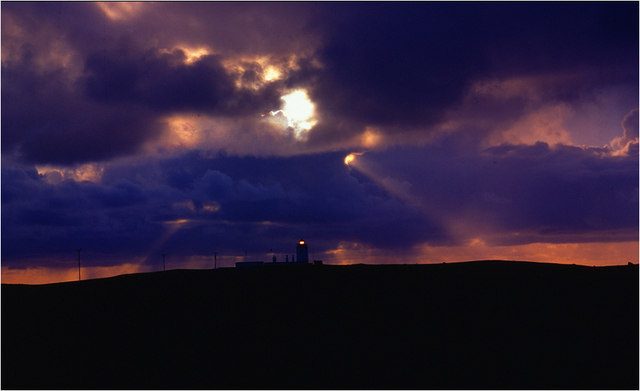
Eshaness on the north-west of the Shetland Mainland is the one I would pick. There is a car park at the lighthouse at the end of the B9078, the cliffs fall away to open Atlantic, and there is essentially nothing between you and the pole. Sumburgh Head at the southern tip has a car park too and a wide sea horizon. On Unst, the far north island, Burrafirth and the Hermaness approach are as far north as you can drive in Britain.
The catch is getting there. NorthLink runs an overnight ferry from Aberdeen to Lerwick, roughly twelve hours, and Loganair flies to Sumburgh from Aberdeen, Edinburgh and Glasgow. Neither is cheap and both are weather-dependent. Budget three nights minimum. AuroraWatch UK runs a separate Shetland alert feed, which tells you something about how different the odds are up there.
Orkney — almost as good, far easier
Orkney at about 59°N is the sweet spot between latitude and accessibility. The islands are low and treeless, so horizons are enormous, and the Pentland Firth crossing from Scrabster to Stromness takes about ninety minutes rather than a night at sea.
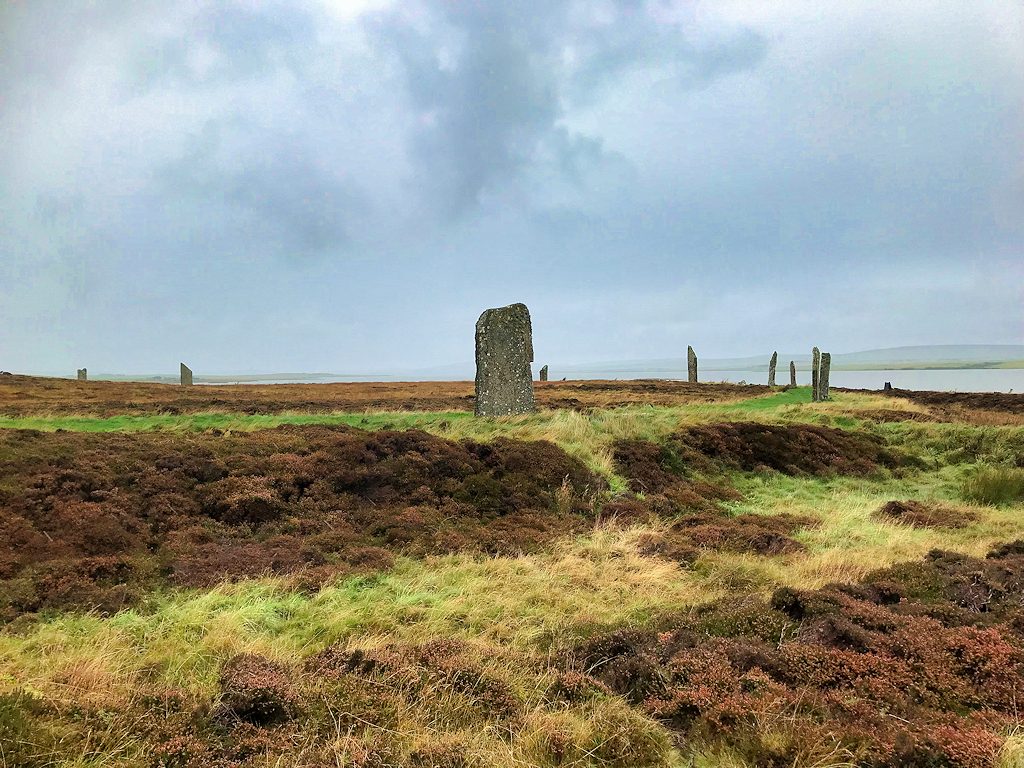
Birsay at the north-west corner of the Orkney Mainland is my pick, with a car park by the Brough and the sea running away to the north. Yesnaby, off the B9056, gives you cliffs and an enormous open sky, though it looks west rather than north. The Ring of Brodgar is atmospheric and there is a car park, though do stick to the paths — it is a scheduled monument, and stumbling around a neolithic site in the dark is not the move.
Caithness and the north coast — the best you can drive to
If you want aurora without a ferry, this is the answer. Dunnet Head is the most northerly point of mainland Britain, reached on a single-track road off the B855 from Dunnet village, with a car park by the lighthouse and an RSPB reserve around it. Duncansby Head near John O’Groats is similar. Both look straight out over the Pentland Firth to Orkney.
Head west along the A836 and you get Melvich, Farr Beach at Bettyhill, and Balnakeil near Durness — all north-facing, all with somewhere to leave a car. This stretch is the top edge of the North Coast 500 route, and in winter it is beautifully empty, though single-track roads in the dark demand patience and full beams you are willing to dip.
Thurso is the practical base: it has hotels, a supermarket, a railway station and a beach you can walk to. From there you are twenty minutes from Dunnet Head. Our Highlands guide covers the wider region if you want to build a longer trip around it.
The Moray Firth and Aberdeenshire coast — the clever choice
This is the section other guides bury and I would put near the top. You are at roughly 57.5°N, so you need a stronger display than Caithness. In exchange you get the driest, sunniest corner of Scotland and a coastline that faces due north.
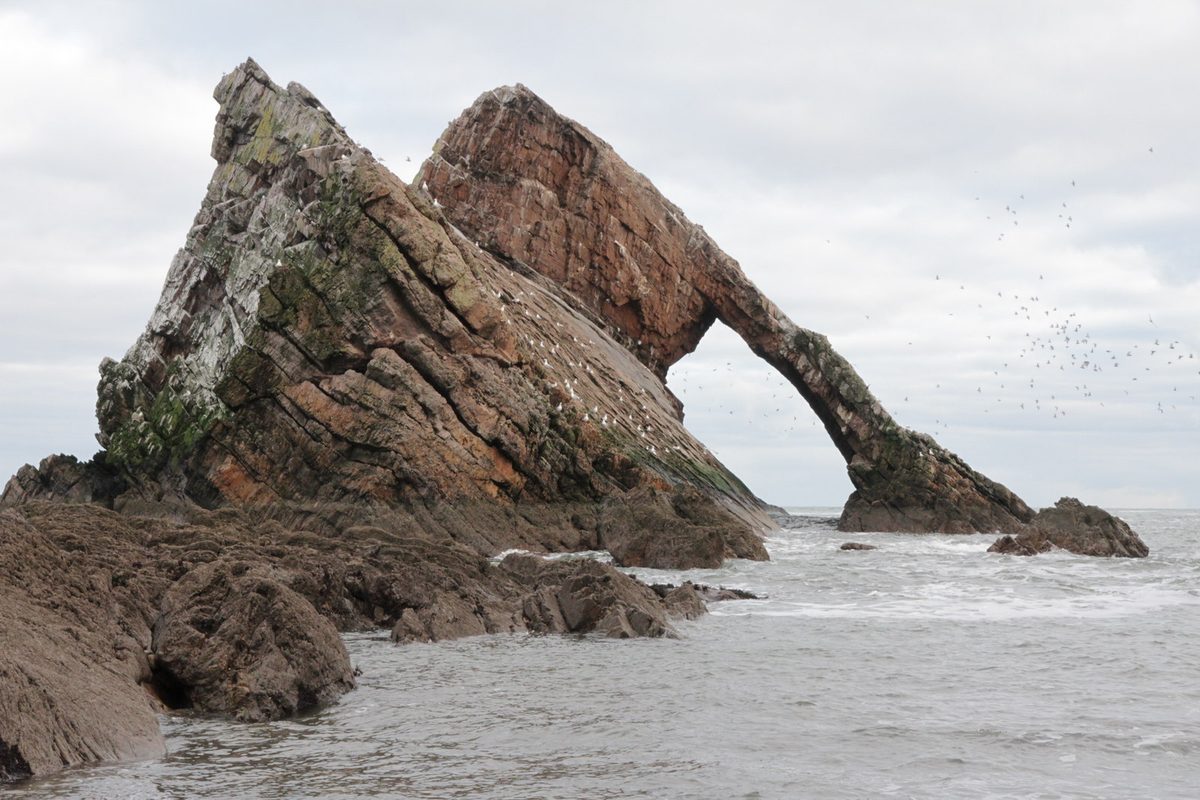
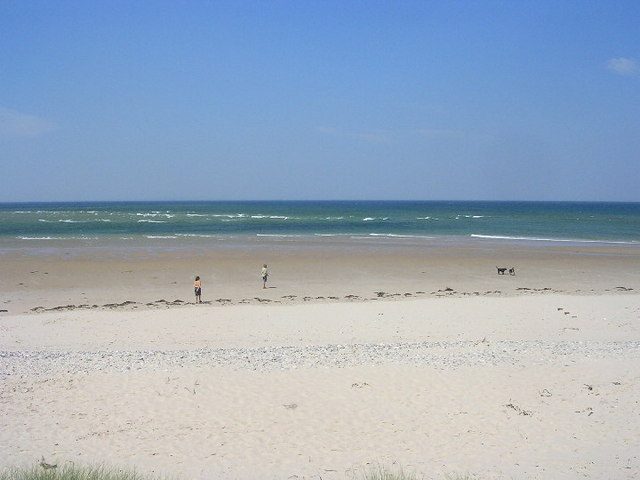
Findhorn beach has a car park at the end of the village and a huge northern horizon over the Moray Firth. Bow Fiddle Rock at Portknockie gives you a sea arch to put in the frame, with signed parking in the village and a short path down. Cullen Bay, Burghead, Lossiemouth East Beach and Kinnaird Head at Fraserburgh all work on the same principle. Inland, the Tomintoul and Glenlivet Dark Sky Park in the Cairngorms has proper dark and no sea haze.
The other advantage is that you are in Speyside, so a blank night is not a wasted day — the whisky distilleries of Speyside are all within half an hour, and most run tours through winter.
The Outer Hebrides and northern Skye
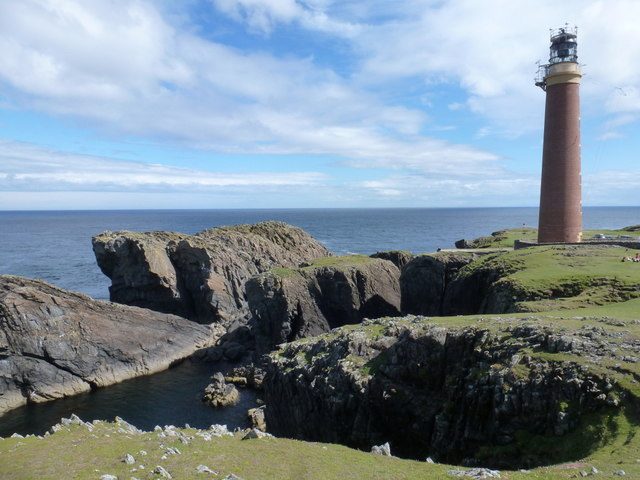
The Hebrides are dark, remote and at a good latitude, and when the sky clears the results are as good as anywhere in Scotland. The Butt of Lewis lighthouse at the island’s northern tip, past Eoropie at the end of the road, faces open Atlantic with nothing between you and Iceland. Port of Ness nearby has a harbour and a car park.
One correction to the standard advice: Luskentyre and Uig Sands are magnificent, and they face west and south-west. For aurora you want north. Port of Ness, Tolsta and the rest of the north coast of Lewis are better oriented, even if they are less famous. Our round-up of the best beaches in Scotland is worth a look if you are choosing between islands, and the wider Scottish islands guide covers ferry logistics.
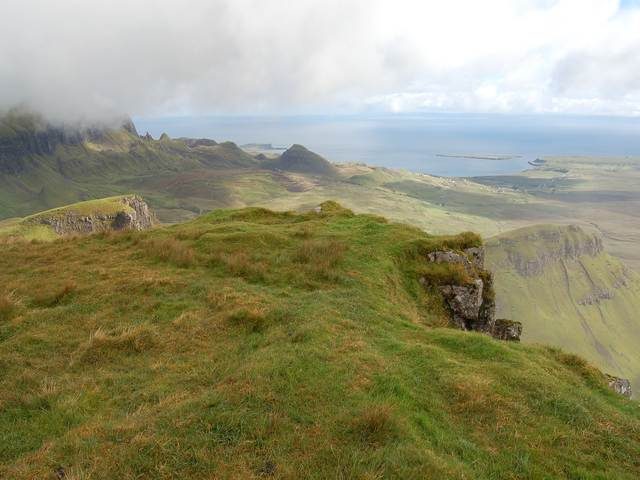
On Skye, the Trotternish peninsula in the north-east is the place — Staffin Bay, the Kilt Rock viewpoint and the Quiraing road all have parking and open sky. Trumpan on the Waternish peninsula looks north-west over the Little Minch. Neist Point, which everyone recommends, faces west; it is a superb sunset spot and a mediocre aurora one. More on the island in our Isle of Skye guide.
The Cairngorms and inland Scotland
Inland has one big thing going for it: on a cold, still, high-pressure night, the glens clear while the coast sits under sea fog. Loch Morlich near Aviemore has a pay-and-display car park, a beach and mountains behind. Lochindorb, on the moor north of Grantown-on-Spey, is a single-track road with a loch to the north and almost no light for miles.
You do need to think about the horizon here. A glen with a 700-metre ridge to the north is useless for a display sitting low in the sky. Get onto a plateau, a loch shore or a moor. Aviemore is the obvious base and works well as part of a broader Scotland itinerary.
The Central Belt and the south
You can see the aurora from Edinburgh. Calton Hill, Blackford Hill and Arthur’s Seat all get used for it, and during the May 2024 storm the pictures from Salisbury Crags were extraordinary. But that requires a rare event, and the city’s light dome eats anything weaker.
If you are based in the capital, drive east instead. Yellowcraig near Dirleton, the John Muir Country Park at Dunbar, and the Fife coast around Elie and Kingsbarns all face north across the Forth with far less glare. Forty minutes from the city centre buys you a great deal. Our day trips from Edinburgh and Edinburgh travel guide cover that coast properly.
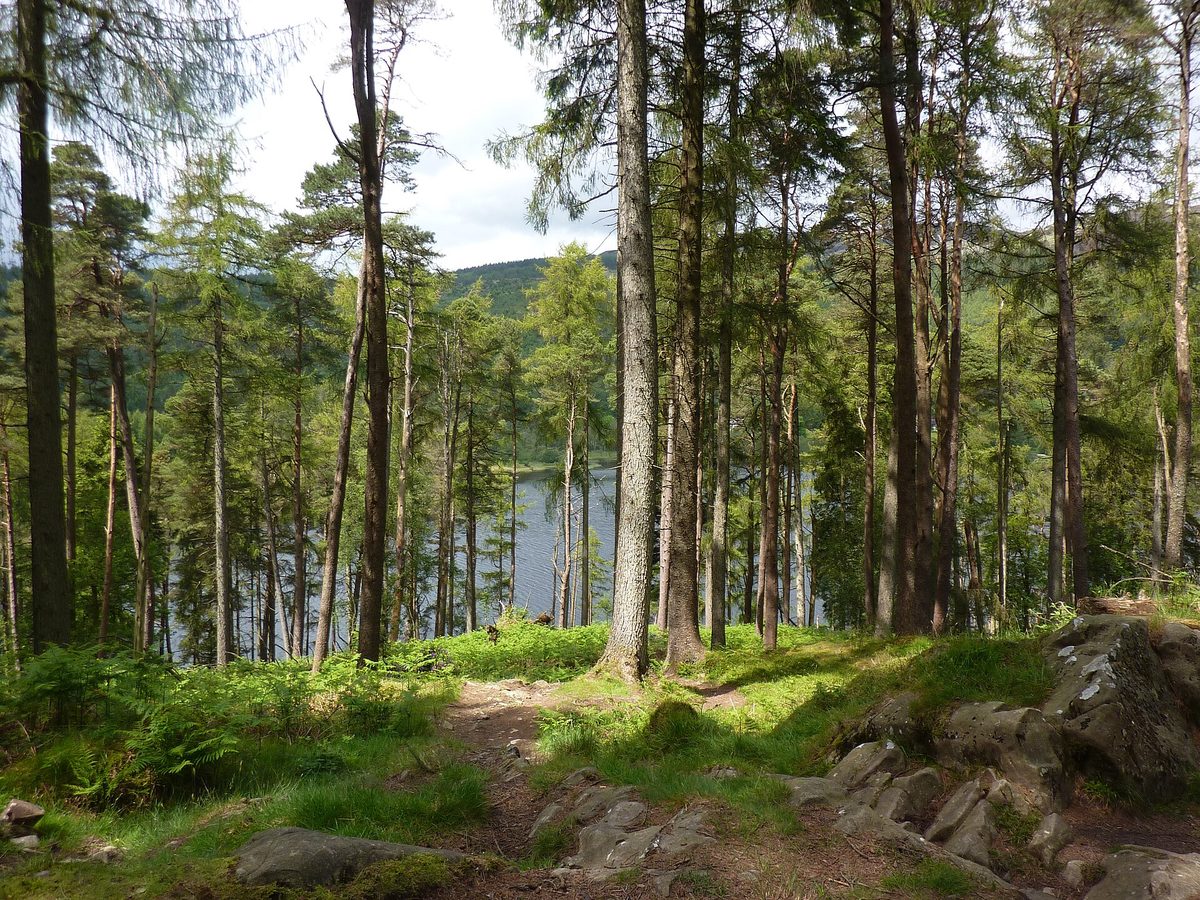
Galloway Forest Park in the south-west was the UK’s first Dark Sky Park and the skies there are genuinely superb — for stars. At about 55°N you need a serious storm before the aurora reaches you. Go for the Milky Way and treat any green on the northern horizon as a bonus.
The forecasts and alerts worth using
Ignore anything that promises a week-ahead aurora forecast. Useful warning of a specific display is measured in tens of minutes, not days.
AuroraWatch UK
Run by the Space and Planetary Physics group at Lancaster University, AuroraWatch UK reads live magnetometer data from UK sites and issues four colour-coded levels. Green means nothing is happening. Yellow means aurora may be visible by eye from Scotland and by camera from Scotland, northern England and Northern Ireland. Amber means it is likely to be visible by eye from Scotland, northern England and Northern Ireland. Red, which is genuinely rare, means anywhere in the UK.
It is free, it has no commercial interest in getting you excited, and it is the alert I trust most. Alerts come via their app, Twitter, Facebook and Telegram, and there is a separate Shetland feed. One quirk worth knowing: it alerts on measured activity, so it can fire during daylight. That is normal, not a bug.
The NOAA 30-minute forecast
The US Space Weather Prediction Center publishes a 30-minute aurora forecast based on the OVATION model, driven by solar wind measurements taken about a million miles upstream. That gives you roughly half an hour of real warning. Their three-day Kp outlook is worth a glance when planning which night to stay up, but the 30-minute product is what you refresh once you are out.
Cloud, and the forecast that actually decides your night
Because cloud is the binding constraint, the cloud forecast matters more than the space weather. I use the Met Office hourly forecast for total cloud cover alongside a satellite-derived cloud map, and I look for a gap rather than a clear night, because a clear night in a Scottish winter is a rare animal. Two clear hours is enough. Scotland is small: if the coast is socked in, an hour inland can be under stars, and being willing to drive to the gap is the single most effective habit I have picked up. A few more habits like it are in our Scotland travel tips.
Planning a trip around it
How many nights you need
Minimum five, ideally seven. Anything shorter is a lottery ticket. With five nights in Caithness or Orkney in October or March you have a fair chance of one decent display; with two nights you are relying on luck.
The mistake is building the trip around the aurora. Build it around something else — distilleries, castles, the coast, a long walk — and treat the aurora as the thing you check for at 10pm each night. That way a blank week is still a good week.
Getting there
For Caithness, fly or take the train to Inverness and drive north on the A9 and A99, about two and a half hours to Thurso. There is a direct train from Inverness to Thurso and Wick, but without a car you are stuck in the towns, which is where the streetlights are. Hire a car. Our guide to getting around Scotland covers the options and the winter caveats.
For Orkney, the Scrabster–Stromness ferry takes about ninety minutes, or fly to Kirkwall from Inverness, Aberdeen, Edinburgh or Glasgow. For Shetland, the overnight ferry from Aberdeen or a flight to Sumburgh. Book ferries with a car well ahead even in winter — sailings are less frequent than in summer and get cancelled in gales.
What to book, and how far ahead
Accommodation in Thurso, Kirkwall and Lerwick is limited and books up faster than the off-season would suggest, partly because of contractors and offshore work. I would book three months out for October and March; a month is usually fine for January and February. Look for somewhere with parking and a north-facing window so you can check the sky without dressing for it — our guide to where to stay in Scotland has regional suggestions. Winter is also the cheapest time to travel here, as our notes on the cheapest time to visit Scotland set out.
What to take
Far more warm clothing than you think. Standing still on a clifftop at 1am in February is a different proposition to walking in the same weather. Thermals, a proper insulated jacket, hat, gloves, and boots you can stand in for an hour.
Then: a head torch with a red mode, so you keep your night vision and don’t ruin everyone else’s; a flask; a fully charged phone, because cold kills batteries fast; and a tripod if you have any interest at all in photographs. A modern phone in night mode propped on a wall will get something. A camera with a fast wide lens, ISO 1600–3200, five to fifteen seconds and manual focus on a bright star will get considerably more.
What underwhelms, and the mistakes people make
It is grey-white to your eyes, not green
This is the big one. The human eye has poor colour sensitivity at low light, so a typical Scottish aurora reads as a pale grey-white glow, a bit like a distant town’s light pollution or a thin band of high cloud that sits still while everything else moves. The camera picks up the green because the sensor accumulates light over ten seconds and your retina does not.
Strong displays do show colour to the naked eye — the May 2024 storm produced pinks and reds visible without a camera across Scotland. But that is the exception. If you arrive expecting the images you have seen from Tromsø, you will be disappointed even on a night that was objectively good. Knowing this in advance genuinely changes the experience: take a test exposure of any suspicious grey patch to the north before dismissing it.
Assuming north always means better
Latitude is the strongest lever, but not the only one. Three nights on the wet west coast of Lewis can easily deliver zero clear skies, while the Moray coast has four usable nights in the same week. Weight cloud climatology alongside latitude when you choose, and be prepared to change plans on the day.
Standing on the wrong side of the hill
People pick a beautiful spot rather than a north-facing one. Neist Point, Luskentyre, most of Glencoe: superb places, wrong orientation. Before you commit to a location, look at it on a map with north at the top and ask what is between you and the horizon.
Going to bed at eleven
The active window runs roughly from 9pm to 1am, with the hours around magnetic midnight typically the best. Substorms can arrive with almost no warning and fade in twenty minutes. If you are serious, sleep in the afternoon and set an alarm to check the sky every hour. That is why five nights beats two.
Expecting a tour to guarantee it
There are guided aurora and dark-sky trips in Scotland and the good ones are genuinely useful — a driver who knows twenty viewpoints and watches the cloud radar is worth paying for. But nobody can promise you an aurora at 57°N, and any operator implying otherwise is selling something. Treat a tour as buying local knowledge and a lift, not a sighting. There is a range of options in our Scotland tours guide.
And the honest bit
Most people who come to Scotland specifically for the northern lights on a short trip will not see a memorable display. I would put a three-night November trip to the north coast at somewhere around a one-in-five chance of a proper naked-eye show, with better odds around the equinoxes and a longer stay. That is my estimate from experience rather than a published statistic, but I would rather you heard it now than at the end of night three.
Frequently asked questions
Can you see the northern lights in Scotland every year?
Yes. In any given year there will be nights when the aurora is visible from northern Scotland, and usually a handful when it reaches the Central Belt. The number varies with the solar cycle rather than disappearing entirely. What is not guaranteed is that any of those nights will coincide with clear sky and your holiday dates.
What Kp do you need to see the aurora in Scotland?
As a rough guide, Kp 3–4 for Shetland, Kp 4–5 for Orkney, Caithness and the Outer Hebrides, Kp 5 for the Moray coast and the Cairngorms, and Kp 6 or higher for Edinburgh and Glasgow. Those assume a clear northern horizon and no moon. AuroraWatch UK’s amber alert is a more practical trigger than the raw number.
What time of night are the northern lights visible in Scotland?
Roughly 9pm to 1am, though displays can appear any time it is properly dark. The hours around magnetic midnight tend to be the most active. Check the sky at least hourly rather than committing to one long vigil, because substorms build and fade within half an hour.
Can you see the northern lights from Edinburgh?
Occasionally, during strong geomagnetic storms. Calton Hill, Blackford Hill and Arthur’s Seat are the usual vantage points, but city light drowns anything faint. You will do much better driving forty minutes east to the East Lothian coast or across to Fife, where the northern horizon is dark over water.
Is winter or autumn better for the northern lights in Scotland?
Autumn and early spring, in my experience. Midwinter gives you the longest nights, but the equinox periods around late September to mid-October and March bring noticeably more geomagnetic activity thanks to the Russell–McPherron effect, and the weather is often no worse. October and March would be my two picks.
Do you need a camera to see the northern lights in Scotland?
Not to see them, but you will get much more out of the trip with one. A phone in night mode, propped steady, reveals colour your eyes cannot detect and confirms whether that grey smear is aurora or cloud. A proper camera on a tripod with a wide fast lens is better again. Bring a spare battery — cold drains them quickly.
Where in Scotland has the best chance of clear skies?
The eastern and north-eastern coasts. The Moray Firth, Fife and East Lothian coasts receive under 700mm of rain a year, against over 3,000mm in parts of the western Highlands. Orkney and Caithness are also drier than the west. If your priority is simply seeing sky, head east rather than west.
Can you see the northern lights in Scotland in summer?
Effectively no. From late April to mid-August it never gets properly dark in the far north — Shetland’s summer twilight, the simmer dim, means the sun never drops far enough below the horizon for astronomical darkness. The aurora is still happening overhead; you simply cannot see it against a lit sky.
Final thoughts
Scotland is a marginal aurora destination, and I think that is the most useful sentence anyone can give you. It means the displays you do catch are earned rather than delivered, and it means the planning is worth doing properly: go north, go east, go around an equinox, go on a new moon, and give yourself five nights.
Do that and you have a real chance. Do it on a whim in a wet week in December from a hotel in Glasgow and you almost certainly do not. Either way, book a trip you would enjoy without the lights — a week on the Caithness coast or in Orkney in March is a fine thing on its own, and if the sky goes green above the sea at midnight, it will be the part you remember. There are plenty of other reasons to be up there in the first place, as our list of the most beautiful places in Scotland makes clear.
About the author: This guide was written and is maintained by the ScotlandTourism.org editorial team — travel writers who’ve spent years exploring Scotland’s cities, Highlands and islands, from bagging Munros to chasing the perfect dram. We update our guides regularly to keep prices, opening details and advice current.
Last updated: August 2026. Prices and opening times change — always check the official site before you travel.
Photo credits
All images are used under their respective Creative Commons or public-domain licenses:
- Aurora borealis glowing green over Burrafirth on Unst, Shetland, the best latitude in Scotland for northern lights — Mike Pennington, CC BY-SA 2.0, via Geograph
- Eshaness Lighthouse on Shetland silhouetted against a stormy sky, a north-facing aurora viewpoint — Chris N Illingworth, CC BY-SA 2.0, via Geograph
- Dunnet Head lighthouse in Caithness, the most northerly point of mainland Britain and a prime northern lights spot — Terry Robinson, CC BY-SA 2.0, via Geograph
- Cloud spilling over the Cairngorm mountains near Aviemore, the main obstacle to seeing the aurora in Scotland — Paul Stümke, CC BY-SA 4.0, via Wikimedia Commons
- Bow Fiddle Rock at Portknockie on the Moray coast, a dry north-facing spot for aurora watching — Alan Hodgson, CC BY-SA 2.0, via Geograph
- Butt of Lewis lighthouse in the Outer Hebrides, facing north over open Atlantic — Chris Downer, CC BY-SA 2.0, via Geograph
- The Trotternish peninsula on the Isle of Skye looking north towards Staffin Bay — John Allan, CC BY-SA 2.0, via Geograph
- The Ring of Brodgar on Orkney, standing stones under wide dark skies — David Dixon, CC BY-SA 2.0, via Geograph
- The beach at Findhorn on the Moray Firth, a north-facing shoreline in one of Scotland’s driest corners — Richard Slessor, CC BY-SA 2.0, via Geograph
- Loch Trool in Galloway Forest Park, the UK’s first designated Dark Sky Park — Andrew Bowden, CC BY-SA 2.0, via Wikimedia Commons