The first time I walked in to the Fairy Pools I heard a woman behind me say, quite flatly, “is that it?” She wasn’t being unkind. She had driven ninety minutes, paid to park, walked twenty minutes in drizzle, and arrived at a stream. A lovely stream. But a stream.
Search Fairy Pools Skye and you get a hundred silky long-exposure shots of turquoise lagoons. Walk in on a wet Tuesday and you get a burn. That gap is the single most useful thing anyone can tell you about this place, and almost nobody does.
So here it is up front: the pools are small, the water is cold enough to hurt you, and the walk is easy. The mountains behind them, on the other hand, are among the finest in Britain, and hardly anyone writes about that. Get your expectations pointing the right way and this is a good couple of hours. Arrive expecting the pictures and you’ll be the one saying “is that it?”
The short answer
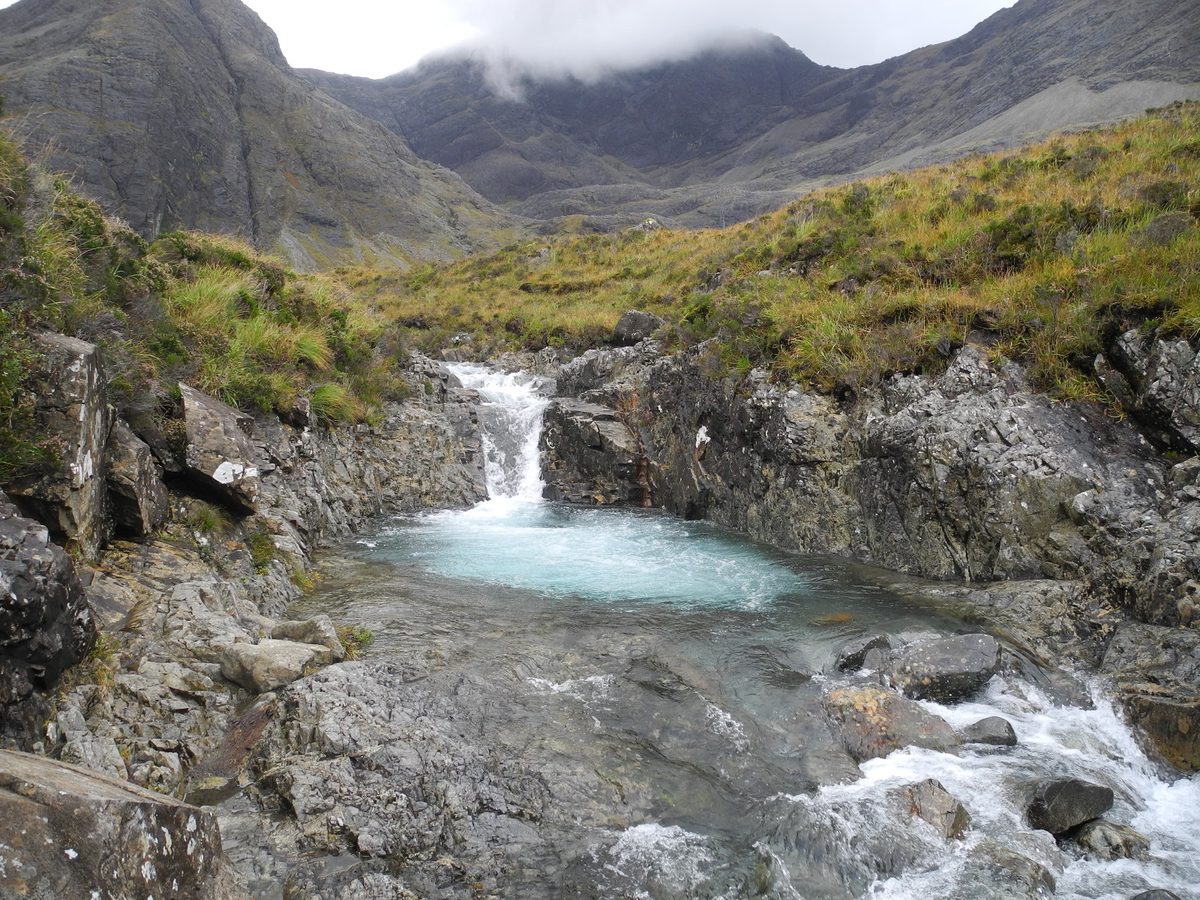
The Fairy Pools are a chain of small waterfalls and clear rock pools on the Allt Coir’ a’ Mhadaidh in Glen Brittle, at the foot of the Black Cuillin on the Isle of Skye. It’s an easy 2.4km return walk taking 40 minutes to 1.5 hours. Parking costs around £8; entry is free.
The Fairy Pools at a glance
| What you need to know | The detail |
|---|---|
| Where | Glen Brittle, Minginish peninsula, west Skye. Nearest village Carbost. Start grid ref NG424258 |
| Walk to the first fall | 2.4km there and back, 40 minutes to 1.5 hours moving. Allow 2 hours with stops and photos |
| Full Coire na Creiche circuit | 8km / 5 miles, 360m of ascent, 2.5–3.5 hours. Far quieter |
| Difficulty | Easy underfoot to the first pools; boggy and rougher higher up. Boots, not trainers |
| Parking | Around £8 per car, £4 motorbike, £10 campervan, £20 coach at the time of writing. Card, Apple Pay or cash |
| Facilities | Free toilets, staffed car park, one-way system. No café, no shop, patchy phone signal |
| Busiest | 11am–3pm, May to September. The car park is the most heavily used on Skye |
| Best for | Families with an hour to fill, Cuillin views, cold-water swimmers who know what they’re doing |
Getting there: the road is the hard part, not the walk
People plan this visit backwards. They budget an hour for the walk and five minutes for the drive, and then lose forty minutes crawling behind a motorhome on a single-track road with a queue building both ways.
The drive from Portree, Sligachan and the Skye Bridge
From Portree it’s around 20 miles and roughly 40 minutes if nothing goes wrong, which in July it will. You come down the A87 to Sligachan, turn onto the A863 and then the B8009 towards Carbost, and just before Carbost you turn left onto the single-track road signed for Glenbrittle and the Fairy Pools.
From the Skye Bridge at Kyle of Lochalsh, allow an hour and a quarter. If you’re coming across from the mainland that morning, this is a long way into a day and it’s worth reading our wider notes on getting around Scotland by car, bus and ferry before you commit to the schedule. The Fairy Pools are a detour off the main Skye loop, not a stop on it, and that costs you more time than the map suggests.
Five miles of single track, and how to drive it
From the Glenbrittle turn-off it’s roughly five miles of proper single-track road: one lane, passing places, blind summits, sheep. Traffic Scotland won’t help you here because it isn’t a trunk road. Nobody is coming to grit it or clear it.
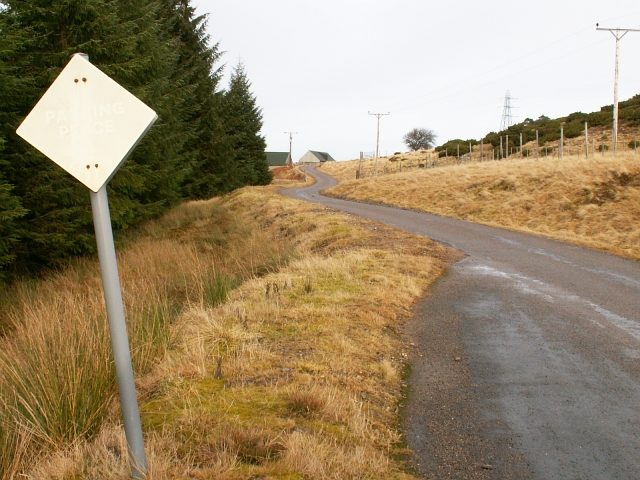
The etiquette matters and visitors get it wrong constantly. Passing places are for passing and for letting faster traffic overtake — they are not viewpoints and they are not picnic spots. If the passing place is on your left, pull into it. If it’s on your right, stop opposite it and let the other car use it. Give a wave. And if a van with a ladder on the roof comes up behind you at speed, that’s someone’s job, not a tourist in a hurry; let them past at the first opportunity.
Between November and March the Glen Brittle road ices, and it ices in the shaded sections long after the main roads have thawed. I wouldn’t take a hire car down there on a frosty morning without checking conditions first. If you’re building a wider driving itinerary, our Highlands road trip routes guide has more on how single-track sections eat into daily mileage.
Fairy Pools parking: the Glumagan nan Sithichean car park
The car park is signed in Gaelic first — Glumagan nan Sithichean — with “Fairy Pools” underneath. It sits on the opposite side of the road from the path, which means everyone crosses a live single-track road twice. Watch children here.
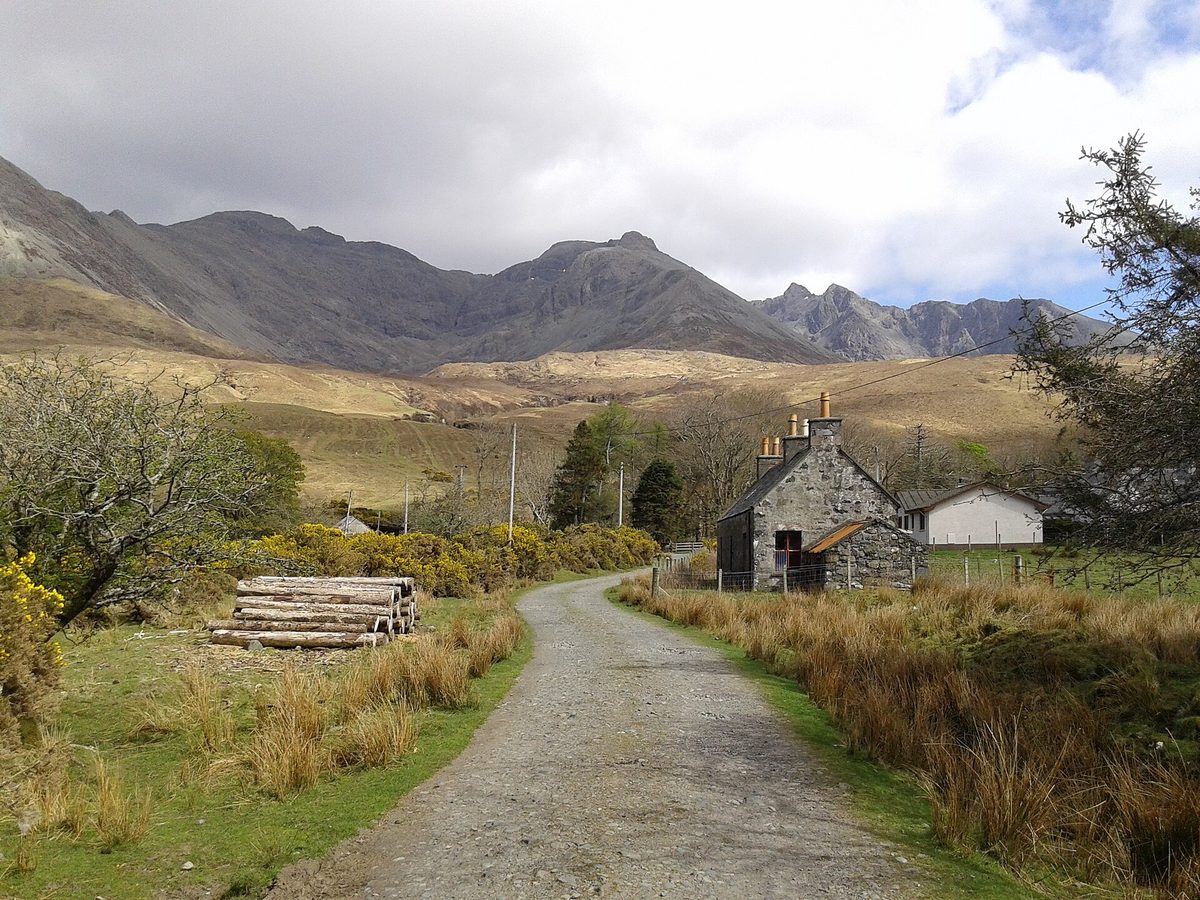
It was built in 2020 by the Minginish Community Hall Association at a reported cost of around £800,000 and is leased to the Outdoor Access Trust for Scotland, a registered Scottish charity. OATS lists 177 spaces. It’s staffed, it runs a one-way system, and there’s a designated area at the bottom for motorhomes, minibuses and larger vehicles.
Prices went up in April 2025, the first increase in more than three years, and a lot of what you’ll read elsewhere still quotes the old rates. At the time of writing OATS charge £8 for a car, £4 for a motorbike, £10 for a campervan or motorhome and £20 for a tour bus. Payment is by contactless card, Apple Pay or cash. Check the OATS site before you travel, because these numbers move.
Two details nobody mentions and both of which ruin days. First, the maximum vehicle length permitted is 8 metres — if you’ve hired a big American-style motorhome, you cannot park here at all. Second, no overnight stays are allowed, so it isn’t a wild camping spot and the staff will move you on.
Where the £8 actually goes
It’s worth knowing, because “£8 to look at a stream” is the complaint you’ll see in every review and it’s not really fair. OATS publish the breakdown on signs at the ticket machines: a fifth goes straight to HMRC as VAT, a quarter covers the car park staff who live on Skye, a tenth is rent paid back to the Minginish community, and the balance covers running costs and repayments on the loan used to build the place.
The running costs are genuinely eye-watering for a site with no mains anything. OATS say extracting waste from the off-grid toilet block by tanker costs around £30,000 a year, and the most recent tarmac resurfacing came to about £200,000. The toilet processing unit is sized for roughly 240,000 people a year, which is the clearest published indication of how many feet this small glen absorbs.
Skye residents with a Skye postcode can buy an annual permit for around £15, and it’s free for Minginish postcodes. Tour operators pay separately. Everyone else pays per visit, which is worth knowing if you’re the sort of traveller who assumes a free attraction is actually free.
The exit is slower than the arrival
This is the bit that catches people. You arrive at 10am into a half-empty car park, walk for an hour and a half, and come back at noon to find the one-way system full, cars queuing on the road outside, and a five-mile single-track crawl between you and the B8009 with everyone else trying to leave at the same time.
Budget 30 to 45 minutes to get from the car park back to Carbost in high summer. If you have a ferry, a tour or a table booked, work backwards from that and add a buffer. The car park is the bottleneck, not the path.
Getting there without a car
Honestly? It’s awkward. A seasonal Stagecoach service has run out towards the Fairy Pools in summer in recent years, but it comes and goes and the timetable is thin — check the Stagecoach website close to your travel date rather than trusting any blog, including this one.
The realistic car-free options are a guided day tour from Portree or Inverness, or a taxi from Carbost or Sligachan, which isn’t cheap and needs booking both ways because you will not flag one down in Glen Brittle. If you’re building a whole trip on public transport, our Scotland without a car itinerary sets out which Skye sights actually work by bus. The Fairy Pools are not high on that list.
The Fairy Pools Skye walk, honestly described
The walk is short, well built and genuinely easy for anyone with reasonable mobility. If you have been putting it off because you think it’s a hike, it isn’t. If you’re comparing it to the tougher days in our hiking in Scotland guide, this is at the gentle end of the scale.
From the car park to the first fall
Cross the road through the pedestrian gate. There’s a green signpost reading Sligachan 4.6 miles, which is your marker. The first few metres are the worst of the whole walk — steep, rough and rocky as the path drops off the roadside. Don’t let it put you off. It flattens almost immediately onto a wide gravel path.
From there it’s a gentle descent across peat moor, past a large lone boulder sitting in the middle of nowhere. That’s a glacial erratic, dumped where it stands when the ice melted, and it’s a better story than most of the fairy folklore. The path meets the burn and follows it upstream on the left bank.
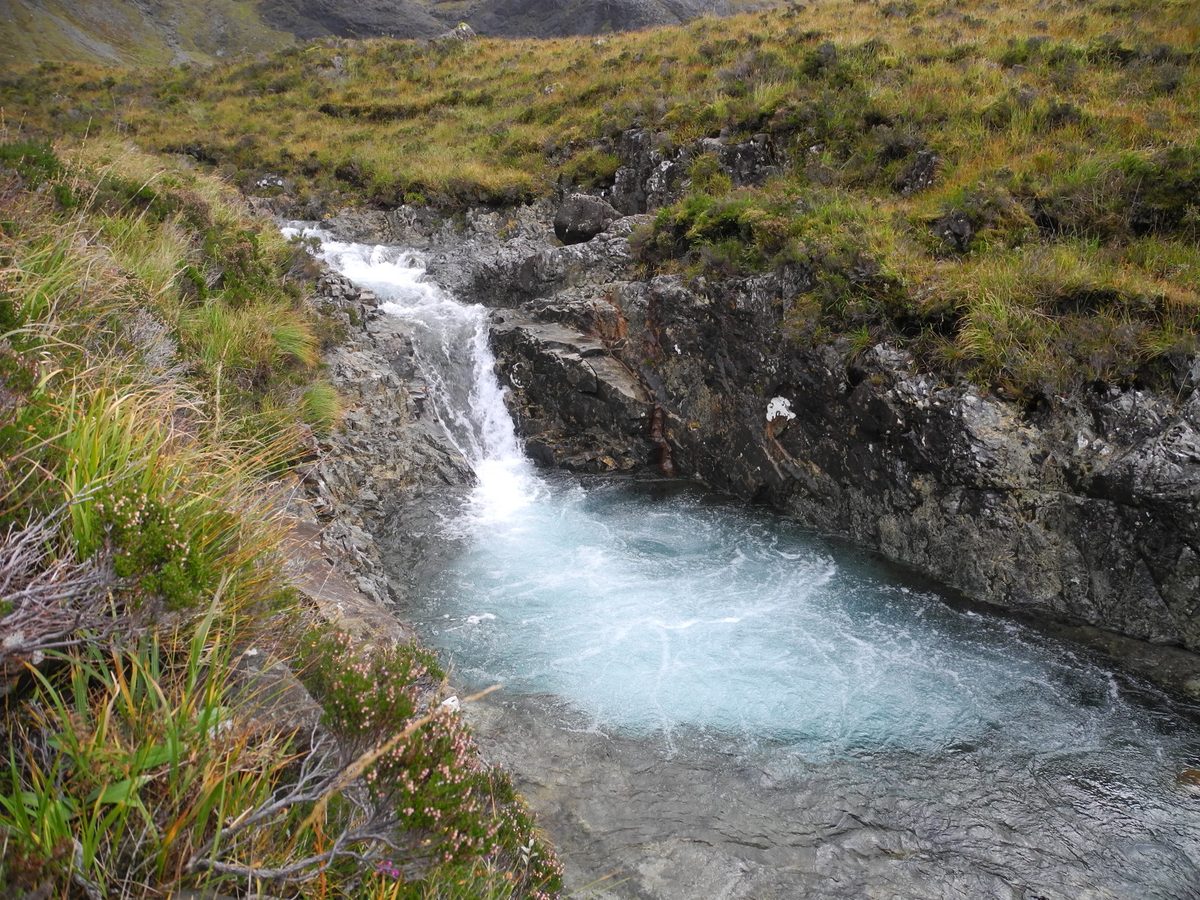
About twenty minutes in, the first and largest waterfall comes into view. That’s the start of the pools. The deepest pool is here, and on the far bank there’s a ledge that people jump from — more on that below, and my advice is not to.
The bridges that replaced the stepping stones
Here’s something worth correcting, because half of page one still gets it wrong. The Fairy Pools walk used to begin with a crossing on stepping stones that flooded regularly and created a bottleneck of nervous walkers. Two steel-beam-and-timber footbridges were installed in 2022 and that crossing is gone.
So if you’ve read that you’ll be hopping across slippery rocks to reach the pools, that advice is several years out of date. The main approach is bridged. What that means practically is that heavy rain no longer stops you reaching the first waterfall, which is a real improvement.
Where the water still stops you
It hasn’t solved everything, though, and the crossings that remain are the ones that catch people out.
To reach the far bank — the jumping ledge, the best angle on the natural arch, the side of the burn where the crowds aren’t — you have to ford the river. There is no bridge there. In normal flow it’s an ankle-deep hop between boulders. After a day of proper Skye rain it’s a knee-deep push against moving water on greasy rock, and moving water at knee height is more than enough to take your feet away.
The full Coire na Creiche circuit also has an unbridged burn to cross near the end of the return leg. Walkhighlands describe it as easy unless the burn is in great spate, which is the polite hillwalking way of saying that on the wrong day you’ll be turning round and walking back the way you came.
And the upper section of the path, above the main falls, is narrower and never got gravelled. After rain it’s a bog. Walkhighlands rate the bog factor at three out of five, which sounds moderate until you’re in it in trainers.
How far up should you go?
Most people stop at the first big fall, take a photograph and turn round. That’s a mistake, and it’s the reason the site feels so crowded — ninety per cent of the visitors are compressed into ten per cent of the glen.
Walk another fifteen minutes upstream. The pools keep coming, they get quieter with every bend, and the mountains open up ahead of you. The famous one with the underwater arch is up here. So is the best of the scenery. That extra half hour is the cheapest upgrade available to you at this site, and I’d say fewer than one visitor in ten takes it.
The Cuillin behind the pools, which is the real attraction
If you take one thing from this guide, take this. The Fairy Pools are a decent burn. The Black Cuillin above them is a world-class mountain range, and you are standing at its foot for free.
Sgurr an Fheadain and Waterpipe Gully
Look straight ahead as you walk up. The sharp pyramid closing off the glen is Sgurr an Fheadain, 689 metres, and running down its face is a deep vertical slot called Waterpipe Gully.
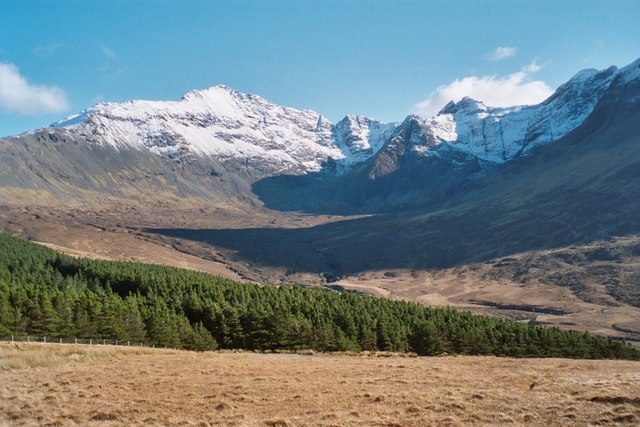
That gash is one of the celebrated old Scottish rock climbs. Victorian climbers tried it repeatedly and failed; it wasn’t climbed until 1895 and it’s graded Very Severe. You can see the whole line from the path with your naked eye, which is unusual — most famous climbs are hidden round the back of something. Point it out to whoever you’re with. It’s a better fact than the fairy story.
Coire na Creiche and the last clan battle on Skye
The bowl of mountains you’re walking into is Coire na Creiche, the corrie of the spoils. In 1601 the MacDonalds of Sleat and the MacLeods of Dunvegan fought here in what’s generally recorded as the last clan battle on Skye, the end of a long and vicious feud. The Crown was sufficiently appalled to force a truce.
Above it all sits Bruach na Frithe at 958 metres, a Munro, and the holder of the only trig point on the entire Cuillin ridge. If the cloud lifts while you’re at the pools, that’s the shapely summit up to your left. Skye is full of this sort of thing, and our complete Isle of Skye guide covers the rest of the island’s landmarks in the same way.
The circuit almost nobody walks
Here is the upgrade. Instead of turning round at the falls, keep going: up the glen, across the lower slopes of Bruach na Frithe, over the Bealach a’ Mhaim and back down alongside the forestry to Glen Brittle. That’s the Coire na Creiche circuit — 8km, 360m of ascent, two and a half to three and a half hours.
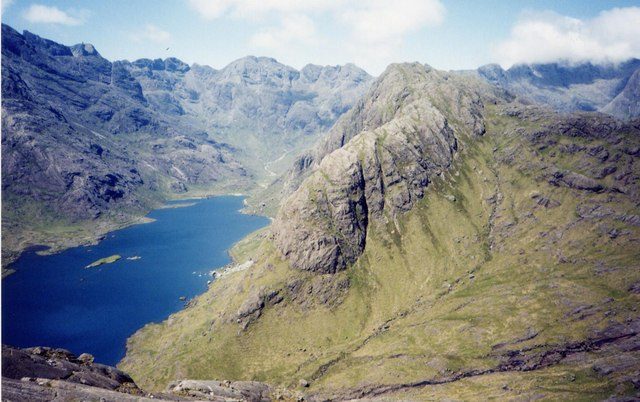
You’ll lose the crowds within twenty minutes. You’ll be inside the Cuillin rather than looking at it. And at the bealach you get the option of dropping down to Sligachan instead, which takes about the same time as walking back to the car — useful if one of your party is happy to drive round and collect everyone.
Take OS Explorer 411, Cuillin Hills, and don’t rely on a phone. Signal is unreliable and the Cuillin gabbro plays havoc with compasses, which is a genuine navigational quirk of these hills rather than a piece of folklore. Mountaineering Scotland’s advice on Cuillin navigation is worth ten minutes of your time before you go.
Swimming in the Fairy Pools: cold, and genuinely risky
People swim here every day in summer and most of them are fine. I’m not going to tell you not to. But the way this is written up elsewhere — “it’s freezing, wear a wetsuit, lol” — badly undersells what cold water actually does to a body, and the mechanism that hurts people here is not the one most visitors expect.
What “cold” means in numbers
This water comes off the Cuillin. It is meltwater and rainwater that has spent very little time near anything warm. It sits in single figures for most of the year and rarely climbs beyond the low teens even after a run of hot August days.
The RNLI define cold water as anything below 15°C, and that is the threshold at which cold water shock becomes a real risk. The Fairy Pools are below that number essentially all the time. There is no month in which this is a warm swim.
Cold water shock, not hypothermia
The mistake people make is preparing for hypothermia. Hypothermia takes a long time and you’d have to be in the water for ages. What catches people out is cold water shock, and it happens in the first sixty seconds.
Sudden immersion in cold water makes you gasp involuntarily and then hyperventilate. If your head goes under at the moment you gasp, you inhale water. At the same time the blood vessels in your skin clamp shut, your heart rate jumps and your blood pressure spikes — which is why the RNLI note that cold water shock can trigger a cardiac event in people who are young and apparently healthy. Then, within a few minutes, your hands and arms stop working properly, so even a strong swimmer loses the ability to pull themselves out.
That sequence — gasp, panic, lose your arms — is what turns a fun dip into a rescue. And a rescue in Glen Brittle is a long wait.
Who should stay out
Be blunt with yourself. Don’t get in if you have a heart condition, high blood pressure, asthma, or if you’re pregnant. Don’t get in if you’ve had a drink. Don’t get in alone, and don’t let a child in unaccompanied, because a small body loses heat much faster than yours.
And don’t jump. The high ledge above the first pool is roughly ten metres, the pool below it is fed by a burn that moves boulders around every winter, and you cannot see the bottom clearly enough to know what’s under you today. Jumping into cold water also produces the sharpest possible cold shock response, because you go under before you’ve acclimatised at all. It’s the single most dangerous thing anyone does at this site.
If you’re getting in anyway, do it properly
Go with someone. Get in slowly from the edge, splashing water on your face and the back of your neck first so the gasp response fires while your head is still above water. Give it a minute before you try to swim — the initial effects pass. Stay shallow, stay close to the side, and get out sooner than you think you need to.
Have dry clothes, a hat and something hot waiting on the bank, and get dressed straight away; the coldest you’ll feel is ten minutes after you’re out, not while you’re in. A wetsuit helps with both warmth and buoyancy. NHS inform has sensible Scotland-specific guidance on open water swimming risks that’s worth reading before your trip rather than on the bank.
The photograph problem
Now the awkward bit. The reason people arrive disappointed isn’t that the Fairy Pools are bad. It’s that they’ve been sold a version of them that doesn’t exist.
Why the pictures don’t match
Three things are happening in the images that got you here. The first is long exposure: a two-second shutter turns a modest cascade into a broad sheet of silk. The second is saturation, which pushes the water from pale green-grey to swimming-pool turquoise. The third, and the biggest, is framing — a wide lens held low and close makes a pool you could wade across in six paces look like a lagoon.
None of that is dishonest exactly. It’s just photography. But it means that the mental image you arrive with is of somewhere three times the size of the actual place. The pools are small. The largest is perhaps the size of a domestic swimming pool. Most are the size of a bath.
The blue is real, incidentally, when conditions allow. It comes from very clean, mineral-poor water over pale gabbro and basalt, with the light scattering in it. On a bright day after a settled spell it genuinely does go that clear aquamarine colour. On a grey day in spate it’s the colour of weak tea.
The central trade-off nobody tells you
And that’s the trap at the heart of this place. The falls only look like the photographs when there’s plenty of water coming down them, which means it has rained recently and heavily. But heavy rain is also what makes the water peaty brown, floods the crossings, turns the upper path to bog and puts cloud on the Cuillin.
Clear turquoise water needs a dry spell. A dry spell reduces the falls to trickles between still pools. You cannot have both at once, and anyone promising you both is selling you a composite of six different visits.
My honest preference: go a day or two after rain, not during it. The burn is still full, the peat has settled out, the crossings are passable and there’s a decent chance the tops are clear. That’s the window, and it’s a narrow one.
Getting a photograph you’ll actually like
Forget replicating the postcard. Shoot the thing that’s genuinely unusual here, which is a small waterfall with a 900-metre mountain wall behind it. Stand further back than feels natural, get the Cuillin in the top third of the frame, and let the pool be small. It’s a more honest picture and a better one.
Practically: overcast is your friend, because bright sun blows out the white water and puts hard shadows in the gullies. Early morning and evening give you low light and no people. If you want the silky-water effect you’ll need a tripod and probably a neutral density filter, and if you’re using a drone you need a UK flyer ID and operator ID from the Civil Aviation Authority — drones are otherwise not permitted here, and the site is busy enough that flying one over people’s heads will earn you a conversation with the car park staff.
When to go: hour, month and forecast
Time of day matters more than anything else
The car park’s peak is 11am to 3pm, driven by tour coaches out of Portree and cruise passengers being bussed across the island. Before 9am and after 5pm the difference is dramatic — not just fewer cars but a different atmosphere on the path.
In June and July you have daylight until well past ten at night. An evening visit is the best-value hour you’ll spend on Skye: warm light, empty path, and the Cuillin doing that thing where the last sun catches the ridge. The car park is open around the clock; only overnight parking is barred.
Month by month
April and May are the sweet spot. Snow lingering on the Cuillin, decent water levels, long days, and the Scottish midge season hasn’t properly started. Our guide to Scotland in May makes the same case for the country generally, and Skye is the strongest example of it.
June to August brings the crowds, the coaches and the midges, and the water is at its lowest after any dry spell. This is when the site is least enjoyable and most expensive in terms of time lost.
September is my pick if you can’t do spring. The coaches thin out after the schools go back, the burn is usually running well again, and the light is lovely — there’s more on this in our Scotland in September guide.
October to March is quiet, wet and often dramatic, with the falls at their most powerful. It’s also when the road ices, daylight is short and the upper path is a swamp. Perfectly doable with boots and a sensible start time; not a casual family stop. If you want to know what conditions to expect in a given month, our Scotland weather by month breakdown is the place to start.
Read the forecast properly before you commit
Check the Met Office mountain forecast for the West Highlands rather than the town forecast for Portree. They routinely disagree, because the Cuillin make their own weather and Glen Brittle sits directly downwind of it.
What you’re looking for is cloud base. If the cloud base is below about 400 metres, you will not see the mountains, and without the mountains this is a walk to a stream. That’s the number I’d cancel on — not rain, which is survivable and often improves the falls, but low cloud, which removes the entire reason for coming.
Planning the visit around the rest of your trip
How long to allow
For the standard out-and-back: two hours from parking to leaving, including the walk, some pottering and the toilet queue. Add thirty minutes if you’re going to the upper pools, which you should. Add another hour and a half if you’re doing the full circuit.
Then add the drive at both ends. Realistically the Fairy Pools consume half a day from a base in Portree, and rather more from Broadford or Kyle. If you’re working out how to fit Skye into a wider route, our advice on how many days to give the Scottish Highlands is worth reading before you lock in your driving days.
What to wear and carry
Boots or trail shoes with grip, not white trainers — the gravel path is fine but the rock beside the pools is polished and lethal. Waterproof jacket regardless of forecast. A warm layer, because the wind funnels down the corrie and it’s ten degrees colder at the falls than in the car park.
Bring water and something to eat: there is no café, no van, no shop. Midge repellent from June to September, and check yourself for ticks afterwards — the bracken beside the upper path is full of them.
Where to stay, and what else is nearby
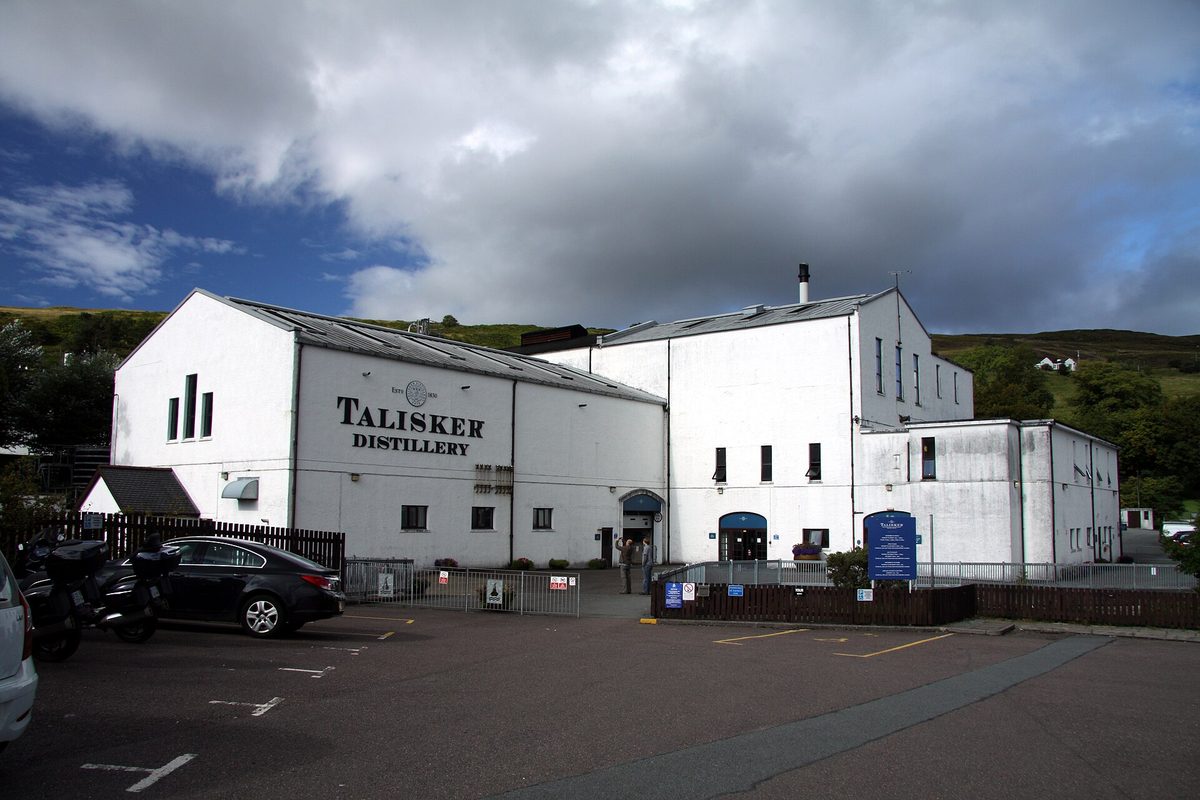
Carbost is the closest village, about fifteen minutes away, and it has the Talisker distillery on Loch Harport — one of the better-known names in our Scotch whisky distilleries guide, and a sensible pairing with a morning at the pools. Book the tour in advance in summer; it sells out.
Most people base themselves in Portree, which is the practical choice for shops and restaurants, though it books up months ahead in summer. Sligachan and Carbost are quieter and closer. Our guides to where to stay across Scotland and to the best base towns in the Scottish Highlands both go into where makes sense for a Skye-based week.
Further down the same single-track road, past the Fairy Pools, you reach Glenbrittle: a campsite, a beach and the walk-in for Coire Lagan, which is one of the great Scottish mountain corries and a fraction as busy. If you have the legs for it, that’s the better half-day.
Booking and practicalities
You cannot book the car park, and there’s no pre-paid slot system — it’s turn up and hope, which is why timing matters so much. What you should book ahead is accommodation, the Talisker tour, any guided walk, and your Skye dinner table, all of which sell out far earlier than visitors expect.
If this is your first Scottish trip, the pattern here — free attraction, paid parking, no booking, and everything else needing reservation months out — repeats across the country. Our first time in Scotland tips covers the rest of the traps.
The honest verdict: what disappoints, and when to skip it
What actually underwhelms people
Scale, first and foremost. Everything else follows from it. The pools are small, the falls are modest by Highland standards, and if you’ve come from Glencoe or the Falls of Bruar you’ll find them slight.
Then the crowds, which are worse than the numbers suggest because everyone occupies the same fifty metres of bank. On an August afternoon there are people in every frame and a queue for the good rock.
Then the mismatch between cost and content: £8 to park and twenty minutes of walking to reach the main event feels thin, even when you know where the money goes. And finally the weather lottery. Roughly half the visitors I’ve met at the Fairy Pools never saw the Cuillin at all, because the cloud was down. Those people got a stream in the rain, and they weren’t wrong to feel short-changed.
When I’d skip it entirely
Skip it if the cloud base is below 400 metres. The mountains are the point; without them you’re paying to look at moving water.
Skip it if you’re arriving between 11am and 3pm in July or August without a plan. You’ll spend more time in traffic than at the pools.
Skip it after a fortnight of dry weather, when the falls are down to trickles and the drama has gone out of the place.
Skip it in genuine spate with a wind warning, when the water is brown, the fords are impassable and the whole thing is unpleasant rather than atmospheric.
Skip it if you have two days on Skye and a long list. The Quiraing and the Storr give you more per hour, and they’re on the way to other things rather than down a five-mile cul-de-sac.
And skip it if you’re in a motorhome over 8 metres, because you physically cannot park.
What to do instead
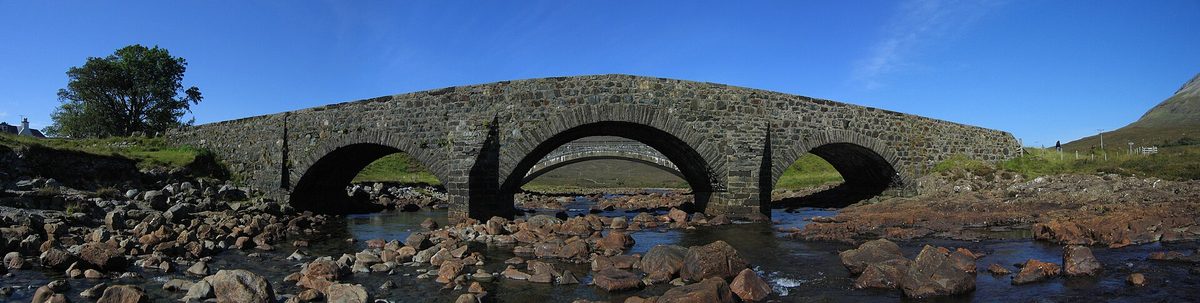
Sligachan is the obvious swap. Free parking, the old bridge, the same river system, the same mountains, and a hotel with a bar and a mountain rescue museum. On a poor day it delivers most of the Fairy Pools experience for nothing.
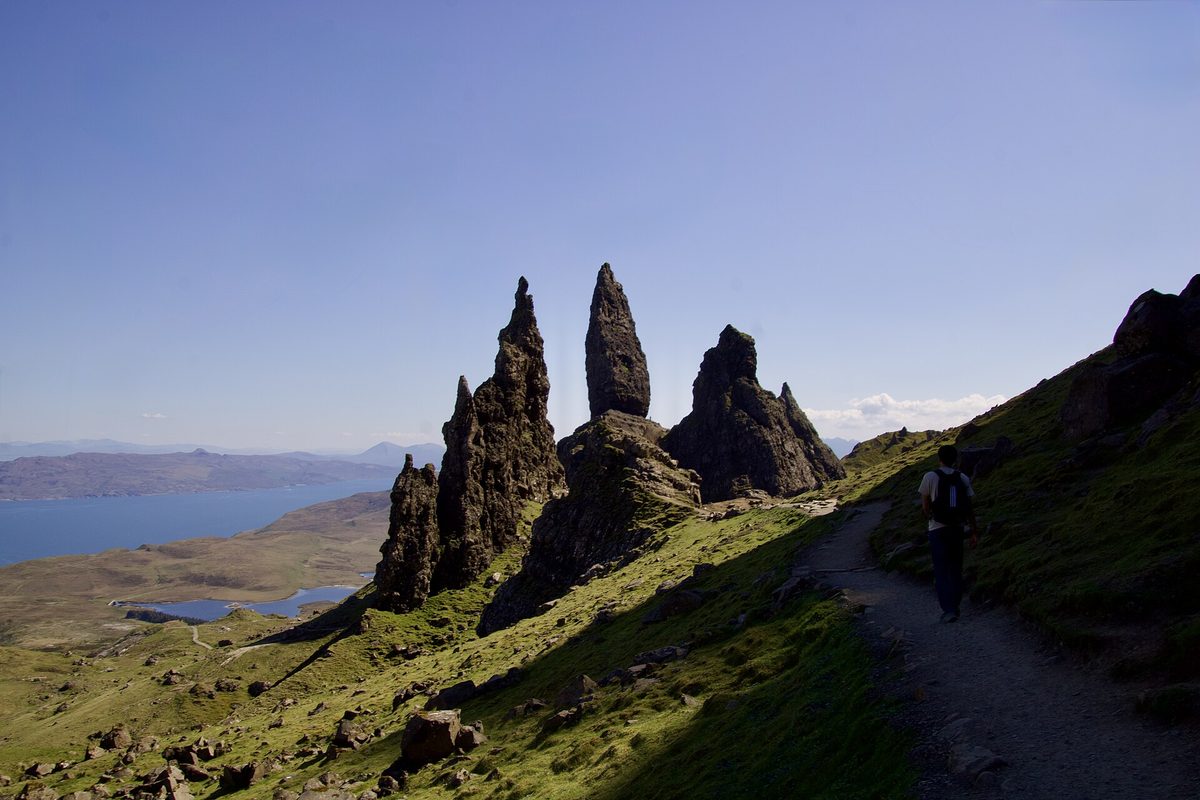
The Old Man of Storr is the other direction entirely — busier, steeper and far more spectacular. It’s the single most photographed thing on Skye for good reason, and our Old Man of Storr walking guide covers the parking and timing problems, which are similar to those here but sharper.
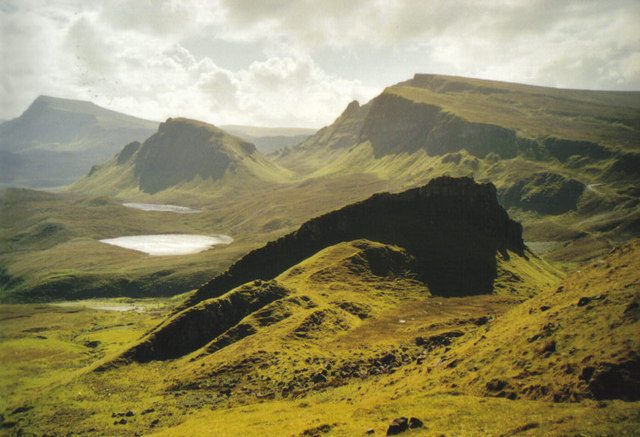
The Quiraing gives you the strangest landscape on the island and a walk you can cut short at any point. It’s the one I’d send someone to if they had a single fine afternoon.
For water without the crowds, Talisker Bay has a black-and-white sand beach and a sea stack, and features in our round-up of the best beaches in Scotland. For mountains without the walk-in, take the boat from Elgol to Loch Coruisk, which is the finest view in the Cuillin and requires no climbing at all. And if the weather has closed in completely, Skye’s museums, distilleries and the drive round Trotternish all work in the rain — the wider Scottish islands guide has more ideas for bad-weather days.
Set against the rest of the country, the Fairy Pools sit somewhere in the middle of our list of the most beautiful places in Scotland, and that’s about right. Worth an hour. Not worth a day.
Frequently asked questions
Are the Fairy Pools worth visiting?
Yes, with conditions. Worth it if you go early or late, in decent visibility, and walk past the first waterfall to the quieter upper pools. Not worth it at midday in August in low cloud, when you’re paying to queue for a view of a stream. The mountains, not the pools, are what make the visit.
How much does it cost to park at the Fairy Pools?
Around £8 per car at the time of writing, with motorbikes about £4, campervans and motorhomes around £10 and coaches £20. Prices rose in April 2025, so older guides quote less. The machines take contactless card, Apple Pay and cash. Check the Outdoor Access Trust for Scotland website before travelling.
How long is the Fairy Pools walk?
The standard route is 2.4km there and back, taking 40 minutes to an hour and a half of walking. Allow two hours in total with stops. The full Coire na Creiche circuit is 8km with 360 metres of ascent and takes two and a half to three and a half hours.
Can you swim in the Fairy Pools?
You can, and people do, but the water stays below 15°C essentially year-round, which is cold water shock territory. Enter slowly rather than jumping, never swim alone, keep it short and have dry clothes waiting. Anyone with a heart condition, asthma or high blood pressure should stay out.
Do you need walking boots for the Fairy Pools?
Trainers will get you to the first waterfall on the gravel path in dry weather. Beyond that the path is ungravelled, boggy and slippery, and the rock beside the pools is polished smooth. Boots or grippy trail shoes are the sensible choice, and essential between October and April.
Is the Fairy Pools walk suitable for children and wheelchairs?
Children manage it easily — it’s short, flat and interesting. Keep them away from the water’s edge and the jumping ledge. The path is not wheelchair accessible: the first section off the road is steep and rough, and the upper path is rugged. There is an accessible toilet in the car park.
What time should you visit the Fairy Pools to avoid crowds?
Before 9am or after 5pm. The car park peaks between 11am and 3pm when the coach tours arrive from Portree. In midsummer the light lasts until after 10pm, so an evening visit gives you an almost empty path and much better photographs.
Are the Fairy Pools better in rain or sunshine?
Both, and that’s the problem. Rain fills the waterfalls but turns the water peat-brown, floods the crossings and hides the Cuillin in cloud. Dry weather gives you clear turquoise pools but weak falls. The best compromise is one or two days after heavy rain, with a clearing forecast.
Final thoughts
I’ve been to the Fairy Pools in blazing June sun with two hundred other people, and on a wild February afternoon with nobody at all and the burn roaring. The February visit was better, and it cost the same £8.
What I’d say to anyone planning this is simple: stop thinking of it as a destination and start thinking of it as a short walk into the Black Cuillin that happens to have some pretty water in it. Go early, walk further up than you meant to, look up rather than down, and don’t get in unless you know what cold water does.
Do that and you’ll come away pleased. Turn up at noon in August expecting the photograph, and you’ll be the one saying “is that it?” — and I’ll have failed you. If you’re still shaping the rest of the trip, our Scottish Highlands guide will help you work out what else on the mainland earns a half-day.
Worth clearing up, because it costs people a whole day: the Fairy Pools at Glenbrittle and the Fairy Glen near Uig are forty miles and an entirely different landscape apart.
About the author: This guide was written and is maintained by the ScotlandTourism.org editorial team — travel writers who’ve spent years exploring Scotland’s cities, Highlands and islands, from bagging Munros to chasing the perfect dram. We update our guides regularly to keep prices, opening details and advice current.
Last updated: September 2026. Prices and opening times change — always check the official site before you travel.
Photo credits
All images are used under their respective Creative Commons or public-domain licenses:
- Pools cuillin — Drianmcdonald, CC BY 4.0, via Wikimedia Commons
- Glen brittle — Benoît Vicart, CC0, via Wikimedia Commons
- Sgurr an fheadain — Carol Walker, CC BY-SA 2.0, via Wikimedia Commons
- Black cuillin — Angus, CC BY-SA 2.0, via Wikimedia Commons
- Sligachan — Klaus with K, CC BY-SA 3.0, via Wikimedia Commons
- Carbost — Chmee2, CC BY-SA 3.0, via Wikimedia Commons
- Storr alternative — Lauwz The Kiwistralian, CC0, via Wikimedia Commons
- Quiraing — Carol Walker, CC BY-SA 2.0, via Wikimedia Commons
- Passing place — Jim Bain, CC BY-SA 2.0, via Wikimedia Commons
- Pool detail — Drianmcdonald, CC BY 4.0, via Wikimedia Commons