The first Highland cow I ever properly met was standing in the middle of a single-track road on Skye, chewing, entirely unbothered, while a queue of hire cars built up behind me. Nobody dared beep. That is the thing nobody tells you about working out where to see Highland cows in Scotland — the animals are not the problem. The problem is that most guides send you to a vague region and wish you luck.
So this one does the opposite. Below are named farms, parks and roads with postcodes, prices where I could confirm them, and an honest split between the places where you can put your hands on a coo and the places where you should stay behind the fence and take the photograph. I have checked every operator here was still trading in summer 2026.

The short answer: where to see Highland cows in Scotland
For a guaranteed sighting with no booking, go to Pollok Country Park in Glasgow or the roadside fold at the Trossachs Woollen Mill, Kilmahog. To get close enough to touch one, book a working farm: Kitchen Coos & Ewes in Galloway, Cladich Fold by Loch Awe, or Jacksons at Jedburgh. Everything else is luck.
At a glance: eight places, and what you actually get
| Place | Where | Can you get close? | Rough cost | Book ahead? |
|---|---|---|---|---|
| Pollok Country Park | South Glasgow, G43 | Fence only | Free | No |
| Swanston Farm | Edinburgh, EH10 7DS | Look only, 10m minimum | Free | No |
| Trossachs Woollen Mill | Kilmahog, FK17 8HD | Over the fence | Free | No |
| Kitchen Coos & Ewes | Nr Newton Stewart, DG8 0AU | Yes, hands-on | From around £18 to £46 | Yes — no walk-ins |
| Cladich Fold | Loch Awe, Argyll, PA33 1BQ | Yes, brushing allowed | Check current rate | Yes — around 2 months |
| Jacksons at Jedburgh | Borders, TD8 6QT | Yes, on the add-on experience | Around £42 adult, £27 child | Yes for the experience |
| Rothiemurchus Hairy Coo Safari | Aviemore, PH22 1QH | Yes, from the safari vehicle | Check current rate | Yes — online only |
| Bealach na Bà | Applecross, IV54 | No — free-roaming | Free | No |
Prices and opening details move about, so treat everything here as a starting point and confirm on the operator’s own site before you drive two hours for it. That caveat matters more in Scotland than most places — a lot of these are one-family farms fitting visitors around calving, silage and the weather.
Farms where you can genuinely get close to a Highland cow
These are working farms and crofts that run paid, guided visits. You are with the person who owns the animals, which is the only circumstance in which walking into a field of horned cattle is a sensible idea. They are also, without exception, better value than they look, because you come away understanding the breed rather than just photographing it.
Kitchen Coos & Ewes — Galloway (DG8 0AU)
The best-known Highland cow farm tour in Scotland, on the hills west of Newton Stewart, and the only one I have found that publishes a proper menu of options. The Hands-on Coo Tour is the flagship at around £46 for roughly an hour and a half; the shorter Insta Coo Tour is around £24 for a similar length; a walking version runs about two hours for around £28, and there is a cream tea variant nearer two and a half hours.
You go out onto the hill in a trailer to find the fold where it happens to be grazing that morning. The key detail everyone else omits: they do not take walk-in visitors at all. Book online in advance or you will be turned away at the gate. Pair it with a night in Galloway or the Ayrshire coast rather than trying to do it as a day trip from Glasgow.
Cladich Fold — Loch Awe, Argyll (PA33 1BQ)
A historic fold above Loch Awe with roots going back to the 1800s, and my pick if you want the encounter to feel like a farm visit rather than an attraction. Tours run for small groups of up to five people, starting at 10am or 2.30pm, and last around two and a half hours. Visitors are allowed to brush the cattle, which is a rarer permission than the internet implies.
The catch is demand. When I checked, they were booking roughly two months ahead. If you are building an itinerary around Argyll and the west coast islands, sort this one before you book the ferries.
Jacksons at Jedburgh — Scottish Borders (TD8 6QT)
Open seven days a week, which makes it the most reliable option in the south. A standard day ticket usually gets you a view of the Highland cows out in their field alongside the sheep, pigs and lambs. If you want contact, you book the separate Highland Cow Experience with Fenwick, which was around £42.40 for adults and £26.50 for children at the time of writing.
It sits just off the A68, so it works beautifully as a first or last stop if you are driving up from England rather than flying in. Genuinely good for families — it is a farm that has thought about children rather than a farm that tolerates them, and it earns a place in our guide to Scotland with children in tow.
Newton Farm Holidays and Tours — Angus (DD8 2JU)
Near Inverarity, outside Forfar. Their farm tour lets you see and groom the Highland cows, and there are resident alpacas thrown in, which delights children far more than the cattle do. It won Best Outdoor Experience at VisitScotland’s regional Thistle Awards in 2024, and they also run B&B and self-catering on site from around £60 per person per night, so you can stay put.
Angus is quietly one of the best bases in the country and hardly anyone uses it. You are 20 minutes from Glamis Castle and an hour from a proper stretch of the Angus and Aberdeenshire coast.
Rothiemurchus Hairy Coo Safari — Aviemore (PH22 1QH)
The Cairngorms option, run from the Dell Office on the Rothiemurchus Estate. You go out in an estate vehicle to the fold. Online booking is essential — they say so on their own homepage, and in high summer the Aviemore activity slots go fast.
It is the natural add-on if you are already in the Cairngorms for a day on the hill or the funicular. Half a morning, and you are back in Aviemore for lunch.
Kirkton Farm — Melvich, Sutherland (KW14 7YJ)
The far-north choice, on the stretch between Thurso and Durness, and the only farm buggy tour of its kind up there. You go round a family hill farm in a four-wheel-drive buggy or a quad and trailer. If you are driving the north coast route, this is a far better use of two hours than another lay-by photograph.
Farm Ness and the Loch Ness crofts — Inverness (IV3 8JX)
Farm Ness sits about a mile out of Inverness on the road towards the loch, with views down the Great Glen. Highland cows, alpacas, pygmy goats, sheep, a play area and a shop. It is a seasonal operation — when I checked, it was advertising opening until late October — so it is a summer and autumn option, not a winter one.
There are also croft-based visits above Drumnadrochit run by working families, typically 45 minutes and often including hand-feeding. These are small operations and they come and go, so search fresh rather than trusting a list from two years ago. Either fits neatly into a day around Loch Ness and Inverness.
Aberdeenshire Highland Beef — Banchory (AB31 5QB)
An unusual one, and I include it with a caveat. It is a private, pre-arranged farm and food experience rather than a drop-in: you get close to the cattle and then you taste the beef. Pricing when I looked was per group rather than per head — in the region of £235 for two, rising with party size — and they were not running scheduled group tours, so you email and agree a date.
Not everyone will want to meet the animal and then eat the breed in the same hour. If that sits fine with you, it is one of the more interesting things to do around Scottish food and drink in the north east.
Free herds you can see without booking anything
If you have a tight budget, a tight schedule or a hire car you would rather not take up a mountain pass, these are the reliable ones. All are free at the point of arrival, and all can be seen from a path or a fence.
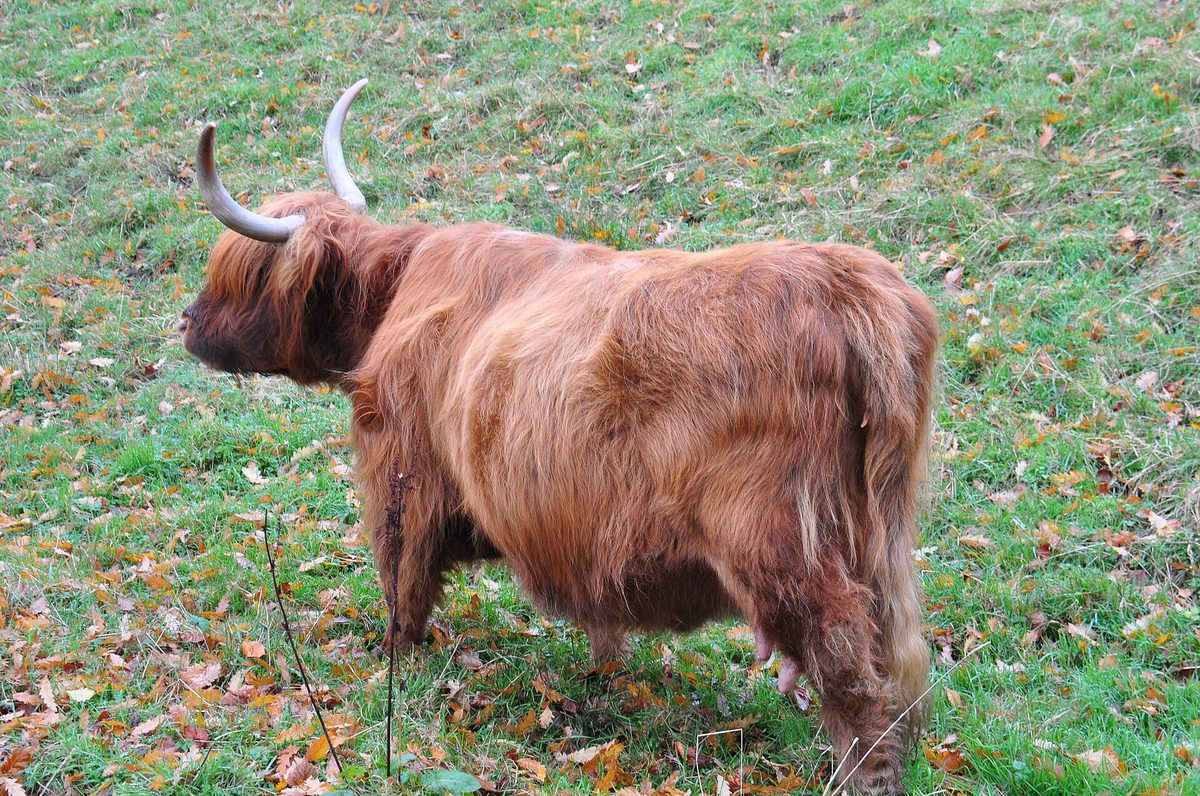
Pollok Country Park — Glasgow
The single most dependable Highland cow sighting in Scotland, and it is in a city. The Pollok Fold has grazed the park for decades and numbers somewhere around 30 to 50 animals depending on the season. You are ten minutes from the centre of Glasgow, there is a railway station within walking distance, and the Burrell Collection is a five-minute stroll away if the weather turns.
Glasgow City Council’s livestock team runs occasional Pollok Fold events through the year, including photography sessions. Worth checking their listings before you go — on an event day you get the rangers explaining which cow is which, and they all have names.
Swanston Farm — Edinburgh (EH10 7DS)
Twenty minutes from Princes Street, on the northern edge of the Pentland Hills, with views back over the city. It appears on nearly every list as somewhere to “meet” Highland cows, and that framing is wrong in a way that matters.
The farm’s own rules are unambiguous: do not feed the cows, do not attempt to touch them, and stay at least ten metres away. They run no tours. The cattle are there as conservation grazers, not as an attraction. The farm is open daily, usually 9.30am to 4pm, and it is a lovely walk. Just go with the right expectation, and read our Edinburgh guide for what else fills the afternoon.
Trossachs Woollen Mill — Kilmahog, near Callander (FK17 8HD)
The classic coach-tour stop between Edinburgh and the Highlands, and the easiest close-range photograph in the country because the field is right beside the car park. One correction, because every guide on page one still gets it wrong: the famous Hamish, the elderly bull with his own fan mail, died in 2013. The cattle you will see now are his successors, including Honey and a black bull, Hamish Dubh.
Feeding is sometimes possible over the fence with feed bought from the shop, but check on the day rather than assuming. There is a café and a large woollens shop, which is the actual business model. Ten minutes, then get on with your day.
Muiravonside Country Park — near Linlithgow (EH49 6LW)
Falkirk’s country park, with 170 acres of woodland, a demonstration farm and a named group of Highland cattle — Kyla, Haggis, Beth, Mona and Caity when I last checked. Entry is free; parking was around £2 for up to 90 minutes or £4.50 all day. There is a café open roughly 10am to 4pm. A genuinely good stop if you are between Edinburgh and Stirling with children in the back.
Castle grounds and distillery folds
Several estates keep a fold partly because visitors like them. Blair Castle, north of Pitlochry, has Highland cattle on the estate and you can usually see them from the woodland walks without paying to go inside. Glamis Castle in Angus has cows in the surrounding grounds and occasionally runs a ticketed Highland Cow Experience as a summer event — check their what’s-on page rather than turning up expecting it.
On the whisky side, The Macallan keeps a fold on its Speyside estate, and Arbikie in Angus names its Highland cattle after the botanicals used in its gin. Neither is a reason on its own to book a tasting, but if you were doing a distillery day anyway, it is a pleasant bonus. The same logic applies at several of the estates in our guide to Scotland’s castles.
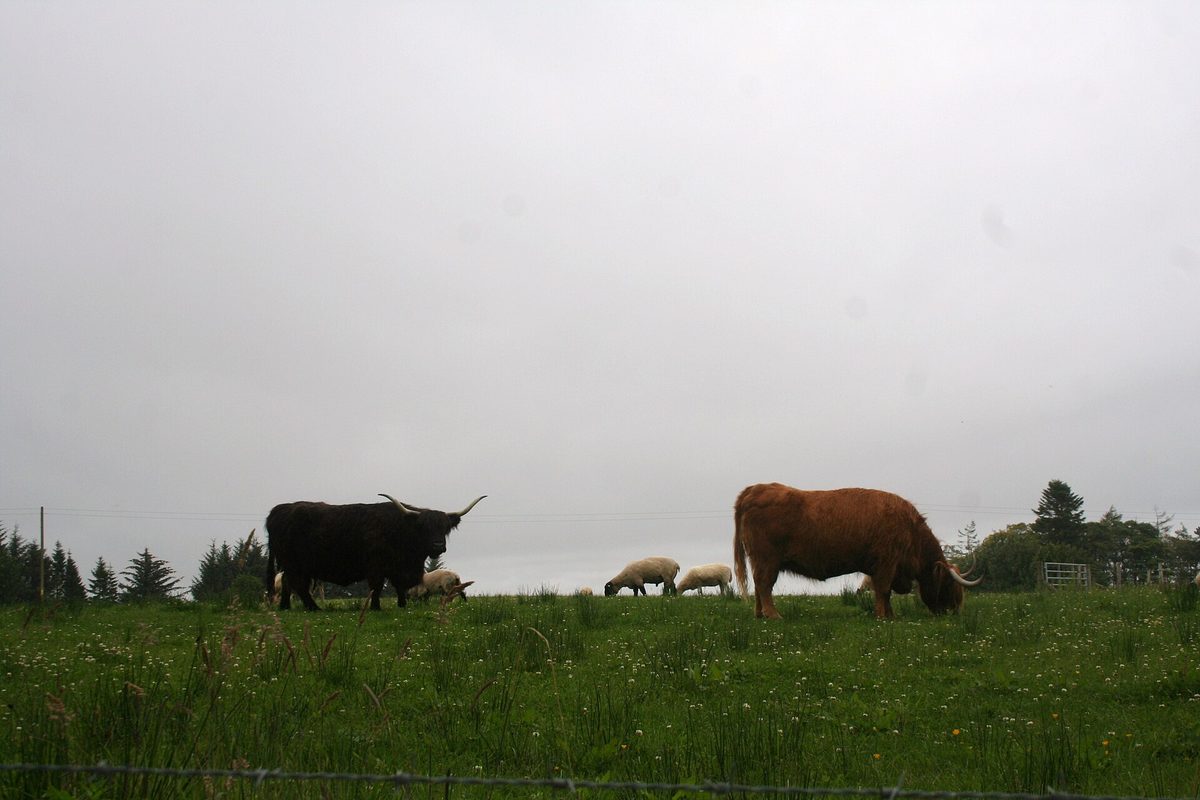
Roadside and free-roaming herds: look, don’t approach
This is where most visitors actually see their first Highland cow, and where most of the trouble happens. These animals are not wild — every one belongs to somebody — but they are unsupervised, unfenced and often on or beside a public road. Stay in or beside your car, use a zoom, and drive on.
Bealach na Bà and the Applecross peninsula
The name translates as the Pass of the Cattle, which tells you everything: it was a drove road long before it was a tourist route. The single-track road between Applecross and Shieldaig is about as close to a guaranteed free-roaming sighting as Scotland offers.
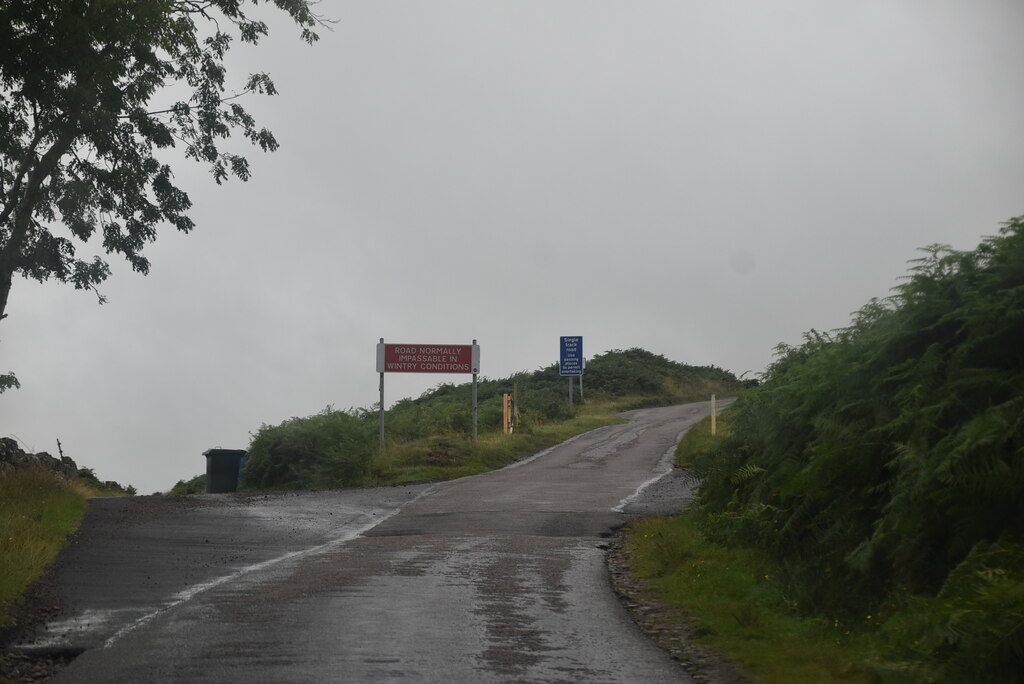
It is also a demanding drive — hairpins, blind summits, passing places, gradients that will make a nervous driver miserable, and signs warning that it is impassable in wintry conditions. Do not attempt it in a large campervan. If the pass is beyond you, the low coast road round the peninsula gives you the same cattle with a quarter of the stress.
Duirinish and Plockton
My favourite of the free ones. Duirinish is a tiny crofting village near the Skye bridge where Highland cattle wander the common grazing and sometimes the village itself. Plockton is ten minutes further on and is one of the prettiest harbours on the west coast. Combined, they make an easy hour off the road to Skye.
Glen Coe, Glen Nevis and Cow Hill
Cattle graze the flat ground around Glencoe village and along parts of the A82, and there is a resident group in Glen Nevis below Ben Nevis. Cow Hill, on the edge of Fort William, is named for exactly the reason you would guess.
Two warnings. The A82 through Glen Coe is fast, busy and has very few safe places to stop — do not brake for a photograph. And the Glencoe cattle are frequently mobbed by people who have parked badly. Use the proper car parks, walk back, and keep your distance.
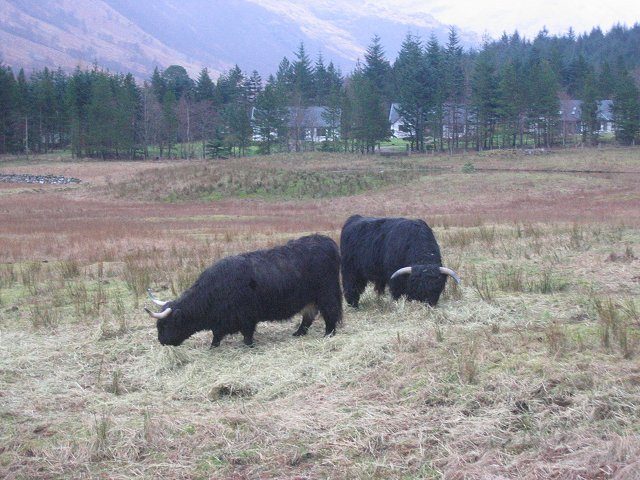
The Isle of Skye
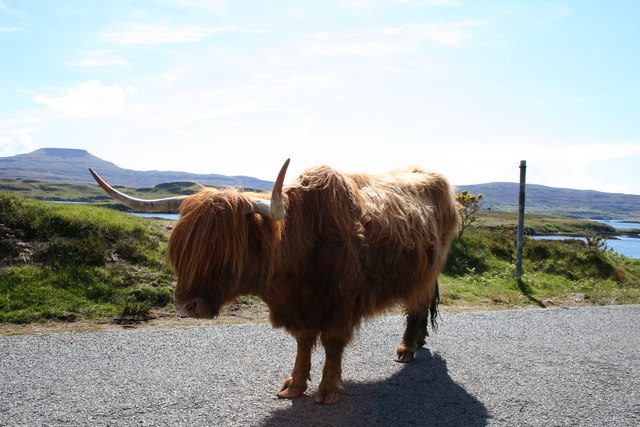
Skye has free-roaming cattle on the unfenced roads around Elgol in the south, and a well-known group near Sligachan. There is also a smallholding and café north of Portree where you can have coffee with cows in view, though it is a small independent operation and opening varies — check their social media the week you travel.
Please do not stop in the middle of a single-track road. Skye’s roads are at capacity in summer and a stationary hire car on a blind bend is genuinely dangerous. Pull fully into a passing place or drive on. There is more on this in our guide to getting around Scotland.
Mull, Islay, Barra, Arran and the rest
Highland cattle are ordinary livestock on most inhabited Scottish islands, which means sightings are common but never guaranteed on a given day. On Mull you will often meet them on the road. On Islay they graze open ground between the distilleries. On Barra they turn up on the beaches, which is the photograph everyone wants and nobody plans.
Arran is the outlier because there is a proper hands-on operation there — a farm near Brodick offering encounters with its fold, where petting and brushing are part of the visit. If you are working through the Scottish islands, that is the one to book.
Can I pet a Highland cow in Scotland?
Yes, but only in specific paid settings, and nowhere that involves climbing a gate. Highland cattle are docile by temperament and enormous by build — a mature cow weighs around half a tonne and carries horns that can span well over a metre. Touching one is fine when the owner is standing next to you and has picked an animal that is used to it. It is not fine in a field on Skye.
The places I can confirm allow contact of some kind, as part of a booked experience:
- Kitchen Coos & Ewes, Galloway — the Hands-on tour is built around it
- Cladich Fold, Argyll — brushing the cattle is part of the tour
- Jacksons at Jedburgh, Borders — on the bookable Highland Cow Experience, not the day ticket
- Newton Farm, Angus — grooming is included in the farm tour
- Hairy Coo Encounters, Isle of Arran — petting and brushing the Maol Fold
- Farm Ness, Inverness — hands-on farm experience, seasonal
- Aberdeenshire Highland Beef, Banchory — private, pre-arranged visits
Where you cannot: Pollok Country Park, Swanston Farm, any castle or distillery estate, and every roadside herd in the country. Swanston in particular asks for ten metres of distance and bans feeding outright, which is worth repeating because half the internet lists it as a petting spot.
The best time of year to see Highland cows
You can see them in any month — they live outside year round, in all weathers, which is the entire point of the breed. But the experience changes a lot across the year, and the two things people actually want are on opposite ends of the calendar.
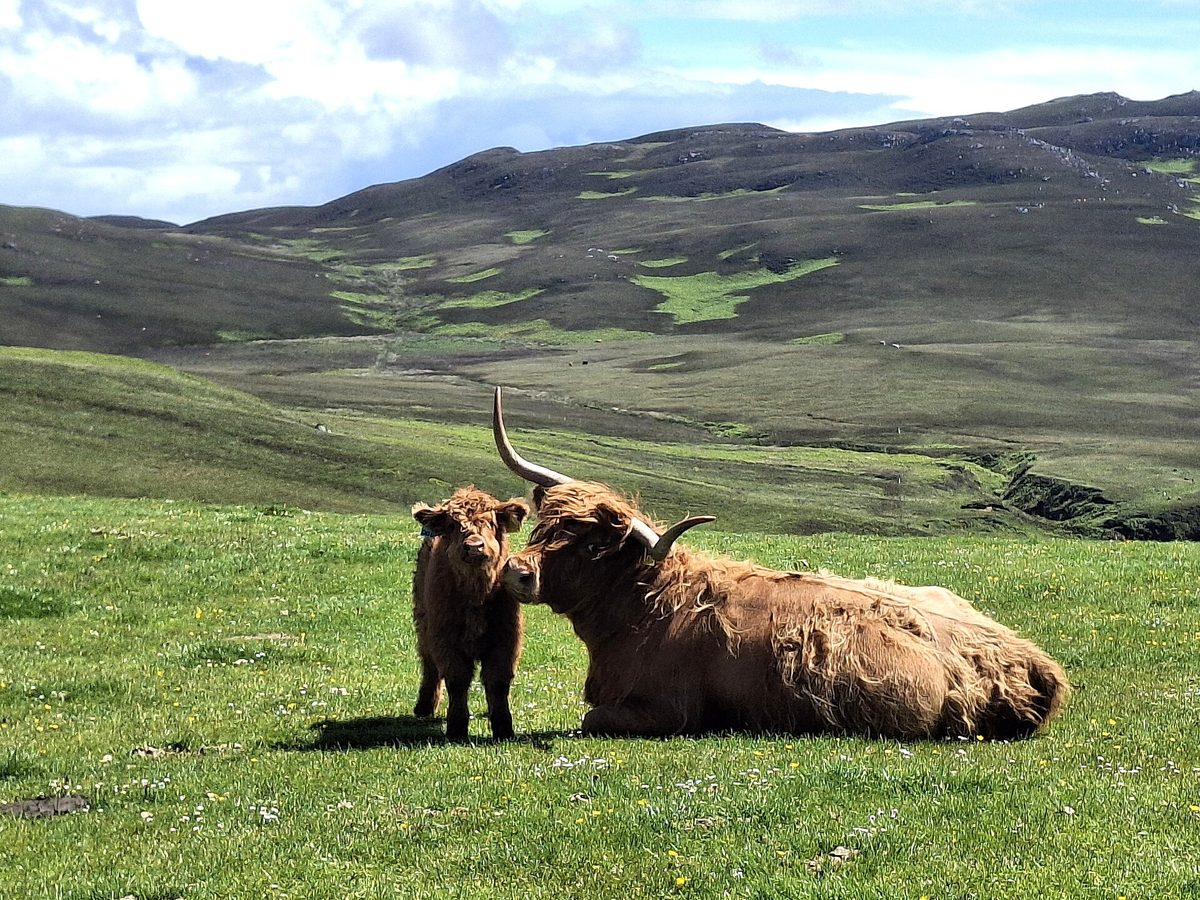
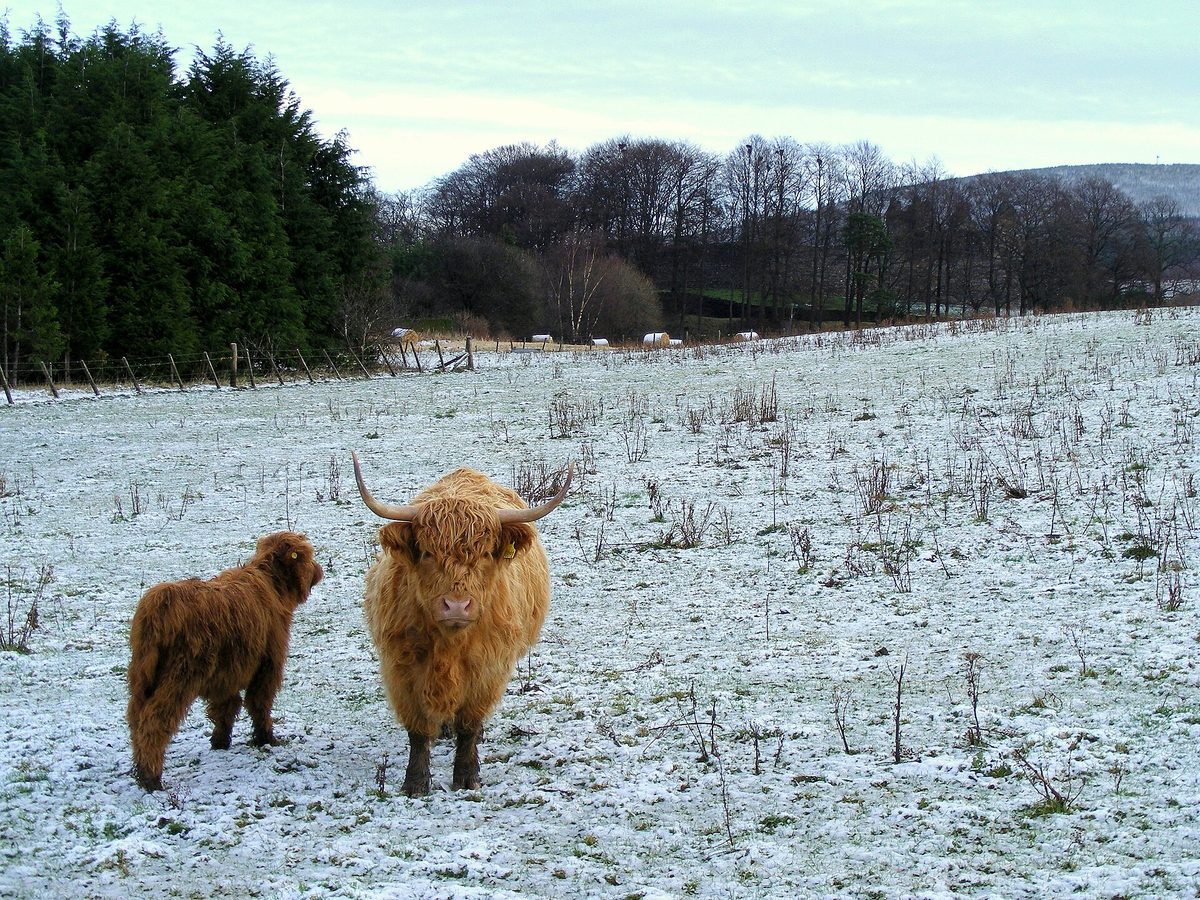
March to May is calf season on most folds. A Highland calf is a small ball of fluff with no visible legs and it is, objectively, the best thing you will photograph in Scotland. The trade-off is that mothers with young calves are markedly more defensive, so this is the worst possible time to wander into a field uninvited. Farms will also sometimes restrict access to fields where cows are calving.
June to August gives you the longest daylight and the most reliable farm opening hours, but the coats are at their thinnest — Highland cattle moult heavily in summer and can look surprisingly scruffy rather than shaggy. Book anything paid well in advance; July and August are the pinch point across the whole Scottish season.
September and October is my pick overall. The coats have grown back, the bracken has turned, the light is low and warm by mid-afternoon, and the farms are still open but no longer full. Several seasonal operations close at the end of October, so check dates.
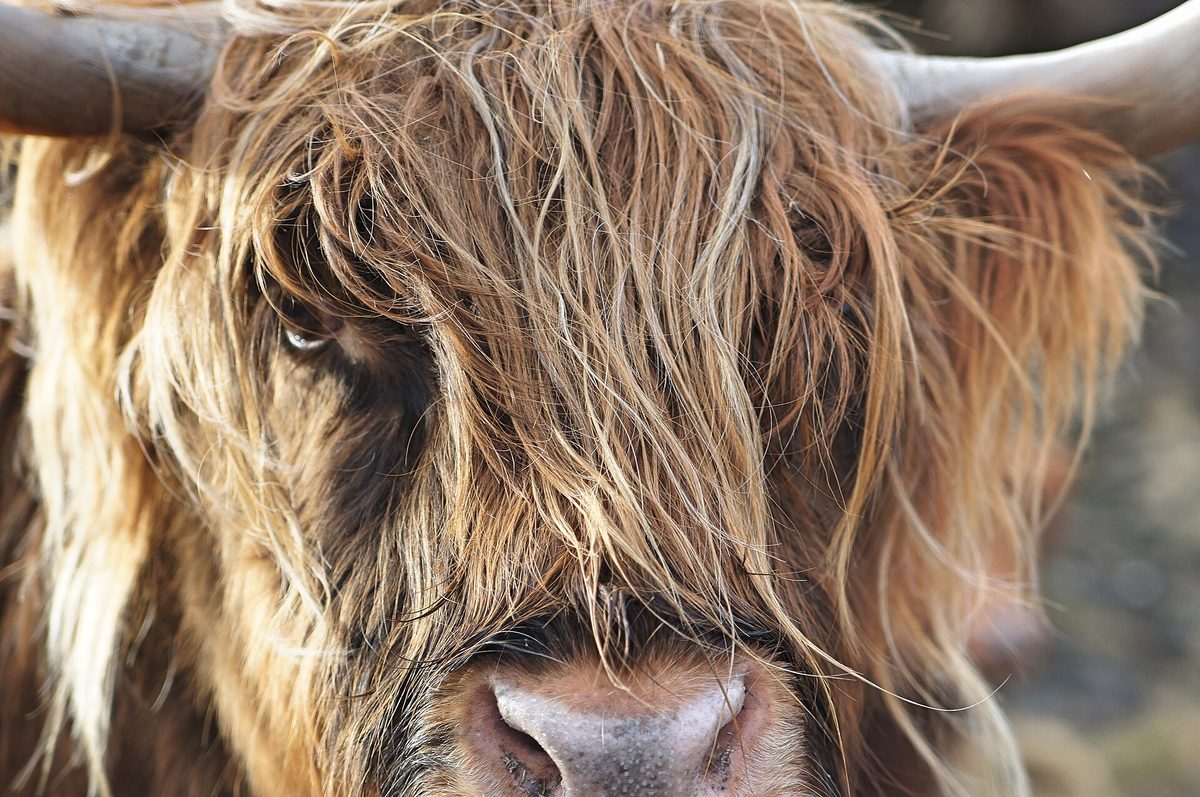
November to February is when they look their absolute best. The double coat — a coarse oily outer layer over a soft inner one — is at full thickness, and a Highland cow with frost on its fringe is the classic image. The problem is access: many farm experiences shut down or go appointment-only, the light is gone by four, and mountain roads become unreliable. Country parks and city folds stay open, so Glasgow and Edinburgh are the sensible winter bases.
Safety and etiquette: they are large animals with horns
Highland cattle have a deserved reputation for being placid. They are also cattle, and cattle injure people in Britain every year. None of this is complicated, but it is worth stating plainly rather than as a footnote.
- Never feed them. Not bread, not carrots, not the sandwich you did not finish. Their digestion is easily upset and feeding teaches them to approach cars and people, which is how animals end up being removed. If a farm sells feed at the gate, that is different — use their feed, at their fence.
- Give calves a very wide berth. A cow with a calf will put herself between you and it, and she will not be reasoned with. If you can see a calf, you are already close enough.
- Do not walk into a field to reach them. Access rights in Scotland are generous, but the Scottish Outdoor Access Code is explicit that you should avoid fields with cattle where you can, and take an alternative route if animals react to you.
- Dogs on a short lead, always. Cattle will chase a dog, and the person holding the lead is the one who gets hurt. If cattle do start moving towards you, let the dog go — it will outrun them and you will not.
- If they walk towards you, do not run. They are usually curious rather than aggressive. Keep facing them, walk calmly to the edge of the field, and get out through the nearest gate.
- Never get between an animal and the rest of the group. That is the manoeuvre that turns a docile fold nervous.
- On the road, slow right down. A stationary cow on a single-track road has priority in every practical sense. Wait. Do not sound the horn.
One more, and it is the one that irritates locals most: do not use a drone over livestock. It stresses them badly and, on a crofting township, it will get you a conversation you do not want. There is more general guidance in our Scotland travel tips.
Planning it: how long, how to get there, how far ahead to book
How long you need. A free sighting is a 20-minute stop. A farm tour is 1 to 2.5 hours plus driving, so half a day realistically. If Highland cows are a genuine priority, build one paid farm visit into your route rather than trying to string four together — they are more similar to each other than you would think.
Booking lead times. This is the detail that ruins trips. Cladich was booking around two months ahead when I checked. Kitchen Coos & Ewes takes no walk-ins at all. Rothiemurchus requires online booking. As a rule: two to three weeks minimum outside summer, six to eight weeks for July and August, and longer for anything advertised as small-group.
Getting there. Pollok Country Park is the only entry on this page that is genuinely easy without a car — suburban trains from Glasgow Central get you within a walk. Swanston is a city bus plus a short uphill walk from Edinburgh. Everything else assumes a car. Public transport to a working farm in Galloway or Argyll is not realistic in a day.
What to wear. Wellingtons or proper waterproof boots for any farm visit, and layers. Farm yards are mud from October to May and often in July too. Bring cash as well as a card; some rural farms still have patchy signal for card machines.
Fitting it into a route. The natural pairings are Pollok with Glasgow, Kitchen Coos with the south west, Cladich with Oban and the ferries, Rothiemurchus with the Cairngorms, and Kirkton with the north coast. Our Scotland itinerary guide has the driving times, and if you would rather not drive at all, several guided tours from Edinburgh and Glasgow include a coo stop.
If you happen to be here in late spring or summer, the agricultural shows are an excellent shortcut — the Royal Highland Show near Edinburgh in June, plus the Black Isle, Turriff, Perth and Border Union shows, all put Highland cattle in the ring being judged. You will see more good examples of the breed in an afternoon than in a fortnight of driving. Dates are in our roundup of Scottish festivals and events.
What underwhelms, and the mistakes I keep seeing
Some honesty, because everything above sounds relentlessly positive and the reality has rough edges.
Beecraigs Country Park is out of date on most lists. It is still recommended everywhere as a Highland cattle spot, but the fields there are now let to a local farmer and what is grazing them varies. It is a good country park. Do not drive across the central belt for the cattle.
Blair Castle and Glamis are castle visits, not cow visits. The cattle are a bonus on a wider estate ticket. If you turn up purely for coos you may spend an hour finding a distant brown shape in a large park.
Distillery folds are a nice extra, nothing more. You cannot approach them, they are often in a far field, and no distillery will alter a tour so you can see a cow.
Chasing named individual animals is a mug’s game. Hamish has been dead since 2013 and people still ask for him at Kilmahog. Farm animals are sold, moved and retired constantly. Go for the fold, not the celebrity.
Summer coats disappoint people. If you have travelled a long way for the shaggy, fringe-over-the-eyes image, come in autumn or winter. In August you may find a half-moulted, slightly patchy animal that looks nothing like the postcard.
And the big one — treating a field as a petting zoo. Every summer, farmers on Skye, in Glen Coe and along the NC500 deal with visitors climbing fences, feeding cattle from car windows and parking across field gates so a tractor cannot get in. It is the fastest way to get access restricted for everyone. Watch from the road, take the photograph, move on.
Frequently asked questions
Where is the best place to see Highland cows in Scotland?
For certainty with no booking, Pollok Country Park in Glasgow — the fold has grazed there for years and is easy to reach by train. For a close-up encounter, Kitchen Coos & Ewes in Galloway or Cladich Fold in Argyll, both booked well ahead. For a free roadside sighting on a Highland road trip, the Applecross peninsula.
Can you pet Highland cows in Scotland?
Only on organised farm experiences where the owner is present, such as Kitchen Coos & Ewes, Cladich Fold, Jacksons at Jedburgh, Newton Farm in Angus and Hairy Coo Encounters on Arran. You should never touch or feed cattle in an open field or by a road, however calm they look. Swanston Farm near Edinburgh specifically asks visitors to keep ten metres away.
Are Highland cows dangerous?
Rarely, but they are half-tonne animals with long horns and they deserve respect. Incidents almost always involve dogs, calves, or people walking into a field to get closer. Keep dogs on a lead, never come between a cow and her calf, do not run if cattle approach, and leave by the nearest gate if a group starts moving towards you.
Are Highland cows wild?
No. Every Highland cow in Scotland is owned by someone, even the ones roaming unfenced ground on Skye, Mull or the Applecross peninsula. They are a farmed breed kept for beef and, increasingly, for conservation grazing, because they will eat rough scrub and heather that other cattle refuse. The unfenced ones are on common grazing, not living wild.
What time of year is best to see Highland cows?
Late September to early November for the best combination of thick coats, autumn colour and farms still being open. March to May if you want to see calves, though mothers are more protective then. December to February gives the fullest coats but many farm experiences close or go appointment-only, and the light disappears by mid-afternoon.
Where can I see Highland cows near Edinburgh?
Swanston Farm in the Pentland Hills is 20 minutes from the city centre and free, though it is strictly look-only. Muiravonside Country Park near Linlithgow, roughly 40 minutes west, has a named group and a café. For contact with the animals you need to travel further — Jedburgh is around 90 minutes south, Angus about the same to the north.
Do Highland cows have horns, and are they bulls or cows?
Both sexes have horns, which is why you cannot tell them apart at a glance. Cows tend to have longer, more upward-curving horns; bulls have thicker, shorter ones that point forward. Most of the animals you see in visitor settings are cows and young stock. Assume any single very large animal alone in a field is a bull, and stay out.
Is it free to see Highland cows in Scotland?
Often, yes. Pollok Country Park, Swanston Farm, the Trossachs Woollen Mill field, Muiravonside and every roadside herd cost nothing. Paid farm experiences run from roughly £15 to £50 per person for the standard tours, with private and food-inclusive visits costing considerably more. Country park parking charges are usually the only hidden cost.
Final thoughts
Highland cows are the rare Scottish icon that lives up to the marketing, and they are far easier to find than people fear — provided you decide first what you actually want. A photograph from a fence is free and takes 20 minutes. Standing in a field with a brush in your hand, being leaned on by an animal the size of a small car, costs money and needs booking weeks out. Both are good days. They are just not the same day.
My own advice, after a lot of miles: book one proper farm visit somewhere quiet — Galloway, Argyll, Angus — and let every other sighting be an accident on the way to somewhere else. The best coo I ever saw was not on any list. She was standing in the road on Skye, in no hurry whatsoever, and she is still the reason I slow down on single-track roads.
For more ideas on filling the rest of the trip, start with our guide to things to do in Scotland, or work through the 30 experiences worth building a trip around and the more unusual experiences worth building a route around. If the Highlands themselves are the draw, our Highlands guide covers the glens these animals were bred for.
About the author: This guide was written and is maintained by the ScotlandTourism.org editorial team — travel writers who’ve spent years exploring Scotland’s cities, Highlands and islands, from bagging Munros to chasing the perfect dram. We update our guides regularly to keep prices, opening details and advice current.
Last updated: August 2026. Prices and opening times change — always check the official site before you travel.
Photo credits
All images are used under their respective Creative Commons or public-domain licenses:
- Hero — Anne Burgess, CC BY-SA 2.0, via Wikimedia Commons
- Highland Cows Argyll Farm — Gordon Brown, CC BY-SA 2.0, via Wikimedia Commons
- Highland Cows Pollok Country Park — Osama Shukir Muhammed Amin FRCP(Glasg), CC BY-SA 4.0, via Wikimedia Commons
- Highland Cows Aberdeenshire — Andrew Wood, CC BY-SA 2.0, via Wikimedia Commons
- Highland Cows Bealach Na Ba — N Chadwick, CC BY-SA 2.0, via Wikimedia Commons
- Highland Bull Horns — Richard Webb, CC BY-SA 2.0, via Wikimedia Commons
- Highland Cows Isle Of Skye — Andrew Wood, CC BY-SA 2.0, via Wikimedia Commons
- Highland Cows Skye Roadside — Livin4wheel livin4wheel, CC0, via Wikimedia Commons
- Highland Cow Calf Spring — Ann Harrison, CC BY-SA 2.0, via Wikimedia Commons