
The first time I drove a friend’s carefully researched 7 day Scotland itinerary, we were forty minutes behind schedule before we’d left Stirling. By Rannoch Moor we were two hours down. We arrived at our Glencoe B&B in the dark, having driven past the best scenery in Britain without stopping, because the plan had allowed “2h 45m” for a stretch of road that no sane person drives in 2h 45m.
That plan wasn’t stupid. It was just copied from Google Maps, which assumes you never stop, never queue, never get stuck behind a coach on the A82, and never once pull into a layby because the light has just done something extraordinary to the side of a mountain. This guide does the opposite. Every day below has a real distance and a driving time that accounts for reality, and I’ll tell you plainly where the hours disappear.
How much can you actually see in seven days?
Seven days gets you Edinburgh, Glencoe, the Isle of Skye and Loch Ness comfortably, on a loop of roughly 600 miles. Budget four genuine driving days of three to six hours each. You cannot add the North Coast 500, Orkney or the Outer Hebrides without ruining the week. Fewer places, longer stops, better trip.
The week at a glance
| Day | Route | Miles | Satnav time | Realistic door-to-door | Sleep |
|---|---|---|---|---|---|
| 1 | Arrive Edinburgh | 0 | — | Not a touring day | Edinburgh |
| 2 | Edinburgh on foot | 0 | — | No car needed | Edinburgh |
| 3 | Edinburgh → Stirling → Glencoe | ~120 | 2h 50m | 6 hours with stops | Glencoe / Ballachulish |
| 4 | Glencoe → Fort William → Skye | ~130 | 3h 15m | 7 hours with stops | Portree area |
| 5 | Trotternish loop, Skye | ~50 | 1h 45m | Full day, 7–8 hours | Portree area |
| 6 | Skye → Loch Ness → Inverness | ~115 | 2h 45m | 5–6 hours with stops | Inverness |
| 7 | Inverness → A9 → Edinburgh | ~157 | 3h 20m | 4h 30m with one stop | Edinburgh / fly out |
That’s about 572 miles of core route. Add the Glenfinnan detour and the Fairy Pools and you’re nearer 660. If you want to see how this sits alongside longer and shorter trips, our overview of how to plan a Scotland itinerary covers the trade-offs across every trip length.
The driving numbers nobody else gives you
This is the part that makes or breaks a week in Scotland, so let’s get it out of the way properly.
Why Google is wrong here specifically
Google Maps assumes an average speed close to the legal limit. On a Scottish A road that limit is 60mph for cars on single carriageway, 70mph on dual carriageway and motorway. In the Highlands you will never average 60. Between Tyndrum and Glencoe on the A82 I’d expect a real-world average of 40–45mph in summer. On Skye’s single-track roads, 20–25mph is more honest.
My rule of thumb after a lot of trips: take the satnav estimate, add 30% for A roads in the Highlands, add 60–80% for single track, then add every stop you intend to make plus one you don’t. That is roughly how the “realistic” column in the table above was built.
It is also worth knowing that the estimate degrades in a particular direction. Satnav is broadly accurate on the M9, the A9 and the A82 south of Crianlarich. It is optimistic by 20–30% on the A87 through Glen Shiel and up Skye. It is fantasy on anything marked as a single-track road with passing places, which on this itinerary means the last few miles to the Quiraing, the run into Glen Brittle for the Fairy Pools, and the road out to Neist Point.
Leg-by-leg reference times
| Leg | Road | Miles | Satnav | Plan for |
|---|---|---|---|---|
| Edinburgh → Stirling | M9 | 37 | 50m | 1 hour |
| Stirling → Glencoe | A84 / A85 / A82 | 83 | 2h | 3h with stops |
| Glencoe → Fort William | A82 | 16 | 25m | 35m |
| Fort William → Glenfinnan (return) | A830 | 34 | 50m | 2h 30m with the walk |
| Fort William → Portree | A82 / A87 | 115 | 2h 50m | 4h 30m with stops |
| Portree → Quiraing car park | A855 / minor | 20 | 40m | 1 hour in July |
| Portree → Fairy Pools (return) | A87 / A863 / B8009 | 56 | 1h 40m | 3h with the walk and the queue |
| Portree → Inverness | A87 / A82 | 115 | 2h 45m | 3h 45m |
| Inverness → Edinburgh | A9 / M90 | 157 | 3h 20m | 3h 45m |
Where the hours actually disappear
Photo stops in Glencoe. There are five or six laybys between Rannoch Moor and Glencoe village that you will want to use, and each one costs fifteen to twenty minutes once you’ve parked, walked to the edge, taken photographs and waited for someone to move their campervan. That’s an hour and a half gone on a fourteen-mile stretch of road. Plan for it rather than resenting it.
Coaches on the A82. The A82 from Loch Lomond to Fort William is the main tour-coach artery of the Highlands. It is narrow and twisting along the loch between Tarbet and Ardlui, has almost no safe overtaking, and in July you will spend real time behind a coach doing 40mph with no way past. Leaving early is the only fix that works — coach parties tend to depart Edinburgh and Glasgow between 8am and 9am, so being an hour ahead of them changes the day.
The Skye Bridge bottleneck. The bridge itself is free — the toll was scrapped in December 2004 — and takes about ninety seconds to cross. The problem is either side of it. Kyle of Lochalsh and Kyleakin funnel every vehicle heading for Skye through a short stretch of road with a roundabout at each end, and between roughly 11am and 3pm in high summer that can add twenty to thirty minutes.
Car park queues. The Fairy Pools car park in Glen Brittle is the worst offender on the whole route. Between 10am and 4pm in July and August, cars queue on the approach road waiting for spaces, and I’ve seen that queue take forty minutes. Parking is around £8 for the day at the time of writing. The Old Man of Storr car park charges roughly £5 for up to six hours and fills by 10am. Check current rates before you go — both have risen more than once in recent years.
Single-track etiquette. On Skye’s minor roads, passing places are for passing and for letting faster traffic through — not for parking or picnicking. If the passing place is on your left, pull in. If it’s on your right, stop opposite it. Reversing 200 metres uphill in a hire car is a skill you will acquire whether you want to or not, and it eats time. So does the driver ahead of you who hasn’t worked out the etiquette yet.
Ferry loading. If your route involves a Caledonian MacBrayne crossing, check-in for vehicles is normally 30 minutes before departure, and missing a sailing on a two-a-day timetable can cost you half a day. That matters far more on the west coast alternative below than on the classic loop.
Sheep. Not a joke. Large parts of the A82, the A87 and almost all of Skye are unfenced common grazing. Sheep sit on the warm tarmac, lambs bolt across without warning, and Highland cattle do not move for anybody. Expect to stop, and expect it to cost you five minutes at a time.
None of this is a reason to avoid driving. It is far and away the best way to see the country, and our guide to getting around Scotland compares it honestly against trains and buses. It just needs to be planned with real numbers.
The classic seven days, day by day
This is the Edinburgh → Glencoe → Skye → Loch Ness → Edinburgh loop, run anticlockwise. Anticlockwise matters, and it’s worth a sentence on why: it puts Glencoe and the road through Glen Shiel in front of you in morning light, it saves the long dull A9 slog for the last day when you’re tired and heading for a flight, and it means you reach Skye on Day 4 with two nights rather than arriving on Day 5 with one.
Day 1: Arrive in Edinburgh — and don’t plan anything
Arrival day is not a touring day. I know that feels like waste when you have seven of them. It isn’t. Most transatlantic flights land in Edinburgh between 7am and 11am after a night with perhaps three hours of broken sleep, and the itineraries that fill that afternoon with a castle tour and a whisky tasting are writing cheques your body won’t honour.
The tram from Edinburgh Airport to the city centre takes about 35 minutes and cost around £7.50 one way at the time of writing — considerably less hassle than a taxi in rush hour, and it runs every seven minutes or so at peak times. The Airlink 100 bus is similar in price and slightly faster to Waverley. A taxi will be £25–35 and can take longer than either in traffic.
Check into your hotel, leave your bags if the room isn’t ready, and walk. Calton Hill is a ten-minute climb from the east end of Princes Street and gives you the whole city laid out — castle on its rock to the west, Arthur’s Seat to the south-east, the Firth of Forth beyond the rooftops. It’s free, it takes forty minutes including the climb, and it’s a far better orientation than any map.
Do not collect your hire car today. You do not want a car in central Edinburgh. Parking is expensive, much of the Old Town is bus lanes and restrictions, a Low Emission Zone covers the city centre, and you’ll pay two days’ rental for a vehicle that sits still. Pick it up on the morning of Day 3.
Eat early and sleep. If you want one thing to aim at, an early dinner somewhere in the Old Town and a walk back along the Royal Mile at dusk is about the right level of ambition. That’s the whole plan.
Day 2: Edinburgh, properly, on foot
One full day in Edinburgh is not enough and I won’t pretend otherwise, but it is enough to see the spine of the city if you’re disciplined. Our Edinburgh travel guide goes far deeper, and if you’re squeezing it all into a single day, the one day in Edinburgh route is built for exactly that.
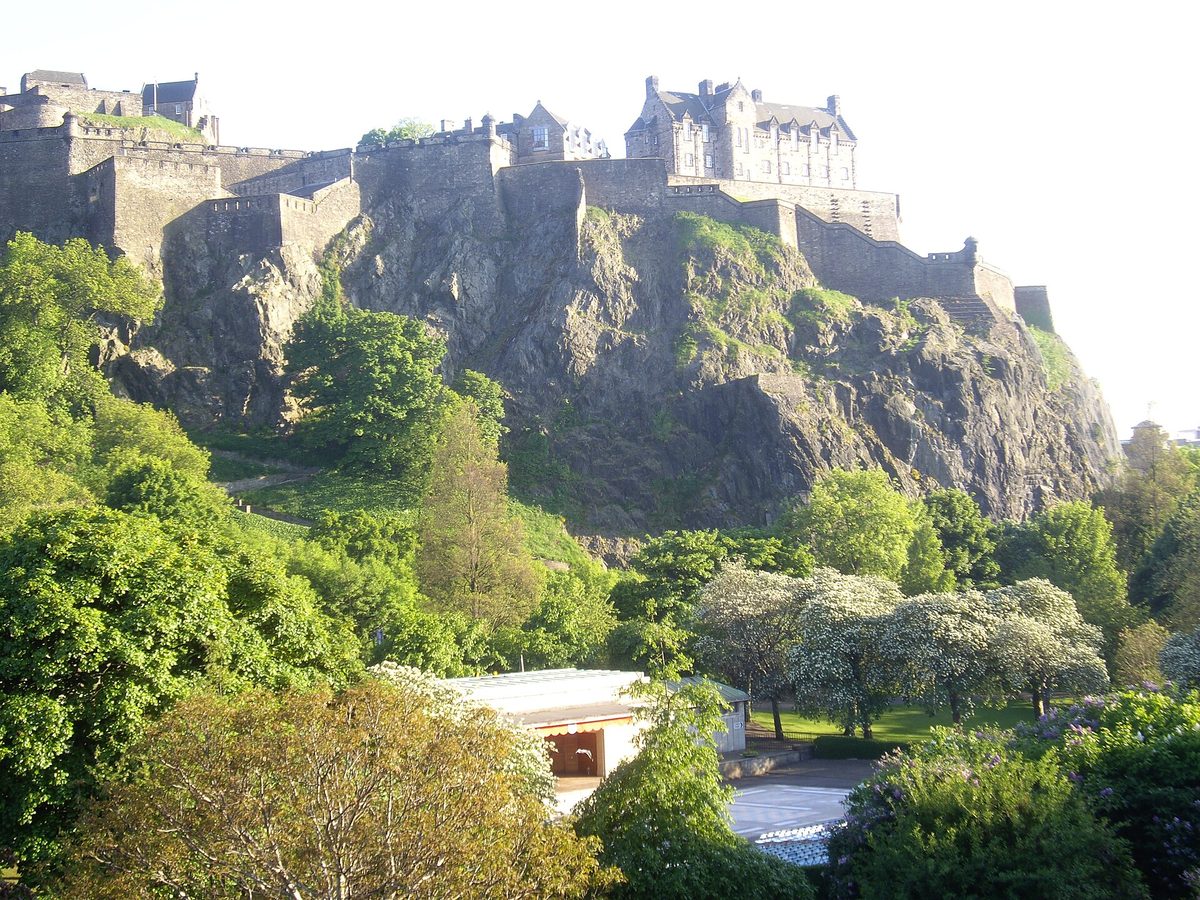
Morning: the castle. Start at opening. Adult tickets were around £23.50 online at the time of writing, a couple of pounds more if you walk up, and Historic Environment Scotland runs timed 30-minute entry slots that sell out two or three days ahead in July and August. Book online. The saving is real and the queue at the gate on a wet Tuesday in August is not something you want on your one Edinburgh day. Allow two hours inside: the Crown Jewels and the Stone of Destiny, St Margaret’s Chapel, the Great Hall, and the One O’Clock Gun if you time it right. There’s more detail in our guide to Edinburgh Castle tickets.
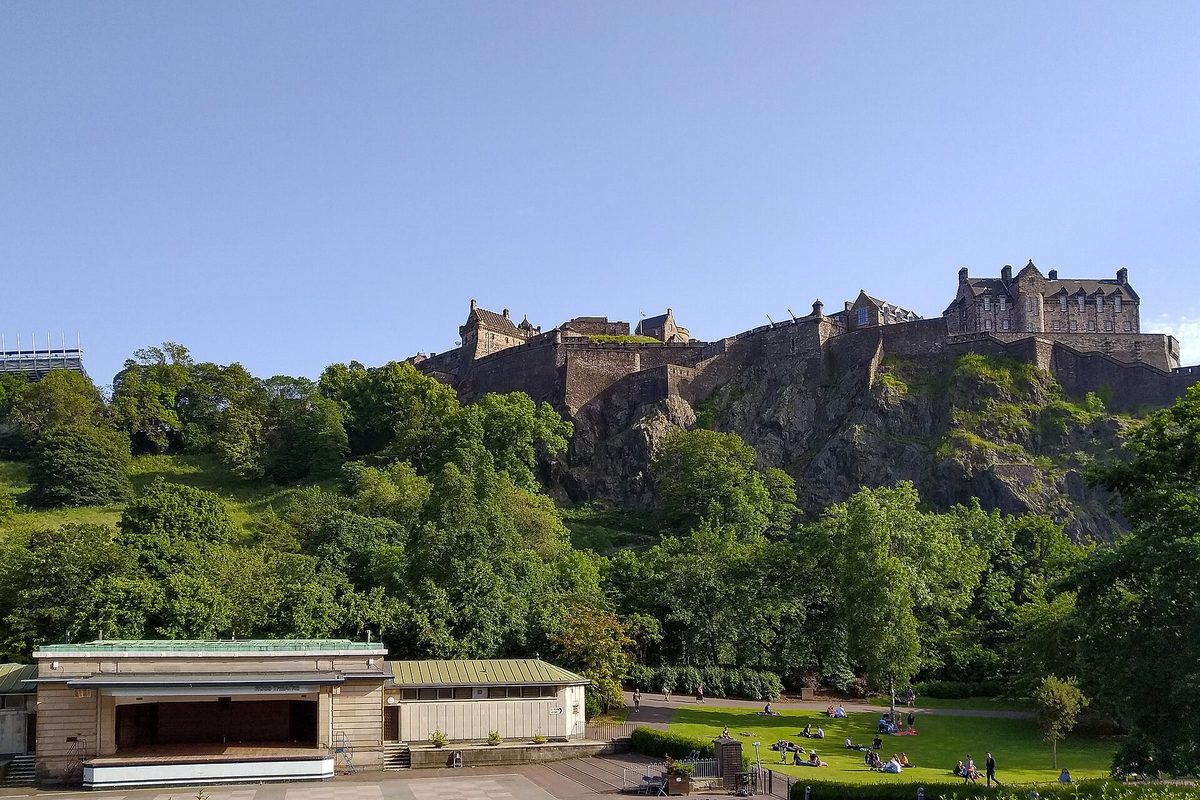
Late morning: down the Royal Mile. The Royal Mile drops roughly a mile from the castle esplanade to Holyrood, and the good bits are the closes running off it — the narrow stone alleys most people walk straight past. Advocate’s Close, Riddle’s Court, the steps down to the Cowgate. Two hours if you dawdle, and you should. Detour a hundred metres to Victoria Street, the curved terrace of coloured shopfronts that everybody photographs, and to Greyfriars Kirkyard behind it.
Afternoon: pick one. The National Museum of Scotland is free and its roof terrace is one of the best views in the city for nothing. Arthur’s Seat is a 251-metre extinct volcano in the middle of the city, about two hours return from Holyrood, steeper than it looks and badly exposed at the top in wind. The Georgian New Town and Dean Village make an easier flat walk if you’d rather look at architecture than climb anything.
If you have a spare day at either end of the trip, the two-day Edinburgh itinerary spreads this out considerably more sensibly.
Evening. Eat in the Old Town or head down to Leith, which has the best concentration of serious restaurants in the city and is a fifteen-minute tram ride from Princes Street. If you want a whisky bar rather than a distillery visitor centre, the Old Town has several with hundreds of bottles behind the counter and staff who will steer you honestly rather than upsell. One dram, though. You’re driving in the morning.
One warning about August. The Fringe and the International Festival run through most of the month and turn the city into something extraordinary and something chaotic. Hotel rates double or triple, walking the Royal Mile takes twice as long, and you need to book accommodation six to nine months out. It’s worth it if festivals are your thing. If they’re not, come in a different month — and note that Scottish school holidays run from late June to mid-August, which is earlier than in England and pushes the domestic crowd into the first half of the summer.
Day 3: Edinburgh to Glencoe — 120 miles, allow six hours
Collect the car early. Most Edinburgh city-centre depots open at 8am; the airport desks open earlier and generally have better availability, though you’ll pay a premium location fee. If you’re nervous about driving on the left, the airport is the better pickup — you join a dual carriageway rather than a one-way system.
Stirling, 37 miles, about 50 minutes. Head north-west on the M9. Stirling Castle is the better castle of the two big ones, in my honest opinion: less crowded than Edinburgh, better interiors, and the Great Hall and restored Royal Palace are done to a standard that surprises people who came expecting a lesser version of Edinburgh. It sits above the site of two of the most consequential battles in Scottish history, and the view from the ramparts explains why anyone bothered fighting for it. Budget 90 minutes. If castles are the point of your trip rather than a stop on it, our roundup of the best castles in Scotland will help you choose.
Two alternatives near Stirling, if castles aren’t your thing. The Kelpies at Falkirk are two 30-metre steel horse heads beside the canal, free to look at, ten minutes off the M9, and much more impressive in person than in photographs. Doune Castle, eight miles north-west of Stirling, is a compact fourteenth-century courtyard castle that film crews keep coming back to — the audio guide leans into that, cheerfully.
Into the Trossachs. From Stirling take the A84 through Doune and Callander, then Lochearnhead, then the A85 west to Crianlarich and onto the A82 north. This route is prettier than going via Glasgow and the M8, though it’s about ten miles longer. It also skirts the eastern side of Loch Lomond and The Trossachs National Park rather than crawling along the busy western shore.
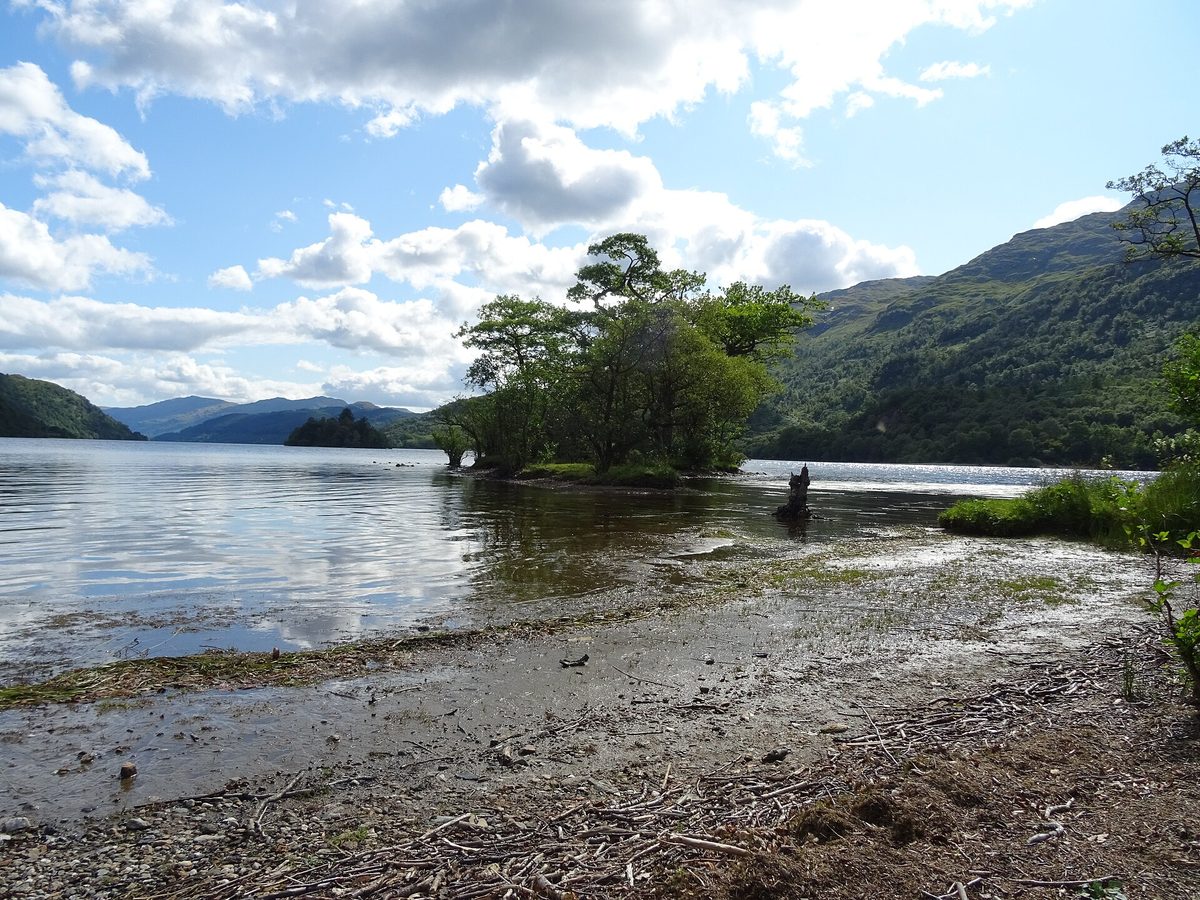
Rannoch Moor. North of Crianlarich and Tyndrum the landscape changes completely. The A82 climbs onto Rannoch Moor — fifty square miles of peat bog, lochans, scattered boulders and nothing else, one of the largest uninhabited areas in Britain, and the single most atmospheric stretch of road in the country when the cloud is low. There is a layby near Loch Ba that is worth every minute you give it.
Then Buachaille Etive Mor appears on your left, the pyramid of rock that guards the entrance to Glen Etive, and you are in Glencoe.
Stop. Stop several times. The Glencoe Visitor Centre is worth twenty minutes for the context — the 1692 massacre, the geology, the mountaineering history. But the laybys are the real event: the Three Sisters viewpoint, the Meeting of Three Waters where the water comes down in a series of falls beside the road, and the pull-in near Loch Achtriochtan looking back east up the glen. Give this the full hour and a half it deserves.
If you have energy left, the Glencoe Lochan trails behind the village are a flat 40-minute loop through pines planted by a nineteenth-century laird for a homesick Canadian wife, with the mountains reflected in the water on a still evening. The Lost Valley path from the Three Sisters car park is a different proposition: roughly three hours return, a boulder field, a river crossing on stepping stones, and a hanging valley where the MacDonalds hid stolen cattle. Do not start it at 6pm.
Where to sleep: Glencoe village, Ballachulish or Fort William. Fort William has far more beds, more restaurants and a supermarket; Glencoe and Ballachulish are quieter and put you closer to the scenery for an evening walk. Either works. Book early — this corridor is the single busiest overnight stop on the whole classic route, and our guide to where to stay in Scotland covers what to expect from Highland B&Bs, inns and hotels.
Day 4: Glencoe to Skye — 130 miles, allow seven hours
The longest driving day of the week, and the one people consistently underestimate. Leave by 8:30am. I’m serious about this.
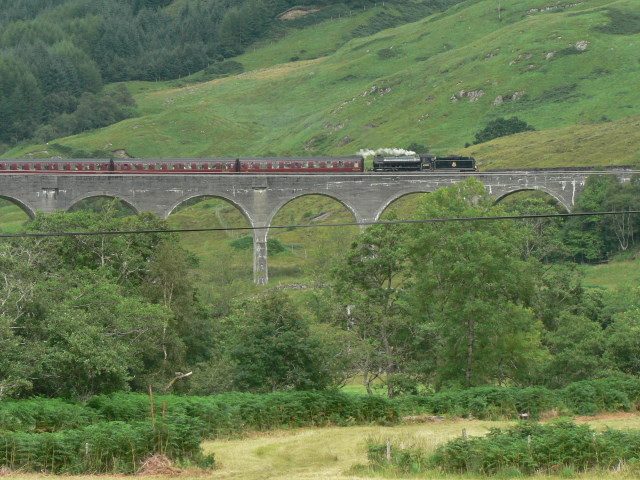
Optional first: Glenfinnan. From Fort William it’s 17 miles west on the A830 — the Road to the Isles — to the Glenfinnan Viaduct. A 34-mile round trip that will cost you two and a half hours by the time you’ve parked, walked up to the viewpoint and come back. Parking at the National Trust for Scotland visitor centre was around £3.50 for non-members at the time of writing, with a community car park charging similarly. The walk up to the standard viewpoint takes about fifteen minutes and is steep and often muddy at the top.
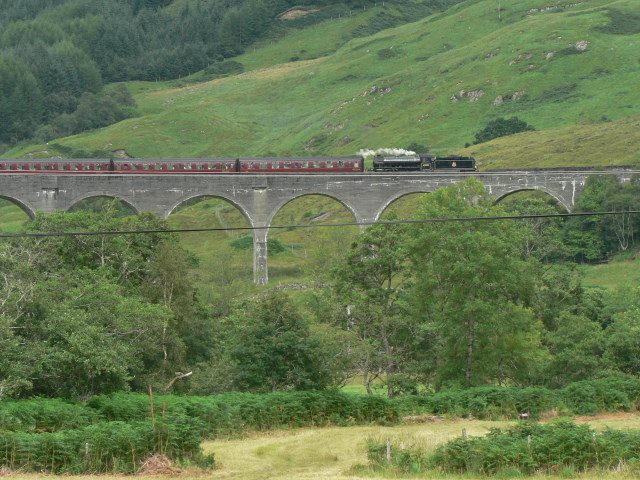
Whether to bother depends entirely on whether a steam train will be crossing. The Jacobite runs from Fort William to Mallaig roughly June to late October, and 2026 standard return fares were around £76 for adults plus a booking fee. Peak summer dates sell out within weeks of going on sale, usually in the new year. Without a train on the viaduct it’s a handsome concrete bridge and a long walk; with one, it’s the shot everybody wants.
Check the timetable, work backwards from the crossing time, and if the timings don’t align, skip it without guilt. Standing at Glenfinnan for ninety minutes waiting for a train that already went is a real way people lose a morning. Our guide to Harry Potter filming locations in Scotland covers Glenfinnan and the alternatives.
While you’re there, walk the five minutes down to the Glenfinnan Monument on the shore of Loch Shiel. The tower marks the spot where the Jacobite standard was raised in 1745, and the view down the loch is the better one.
The main route north. Fort William on the A82 alongside Loch Lochy to Invergarry, 25 miles. Ten miles out of Fort William, stop at the Commando Memorial above Spean Bridge — free, two minutes off the road, and on a clear morning it gives you Ben Nevis and the whole Nevis range laid out behind three bronze soldiers. It is also, on the right day, the best view of Ben Nevis you will get without climbing it.
At Invergarry turn left onto the A87. This is the good road. Through Glen Garry — there’s a signed viewpoint over Loch Garry that is worth the two-minute stop — past Loch Cluanie, over the pass and down into Glen Shiel with the Five Sisters of Kintail rising steeply on your right. A great half hour of driving, and the point at which most first-time visitors stop talking.
Eilean Donan. At Dornie, the castle on its island at the meeting of three sea lochs. Adult admission was around £13 at the time of writing, with tickets sold on the day at the castle rather than online. Here’s the honest verdict: the interior is a decent early-twentieth-century reconstruction, rebuilt between 1919 and 1932 after two centuries as a ruin, and it takes 45 minutes. The reason everyone stops is the view from the car park and the stone bridge, and that costs nothing. If you’re tight for time, photograph it and drive on. Nobody will judge you.
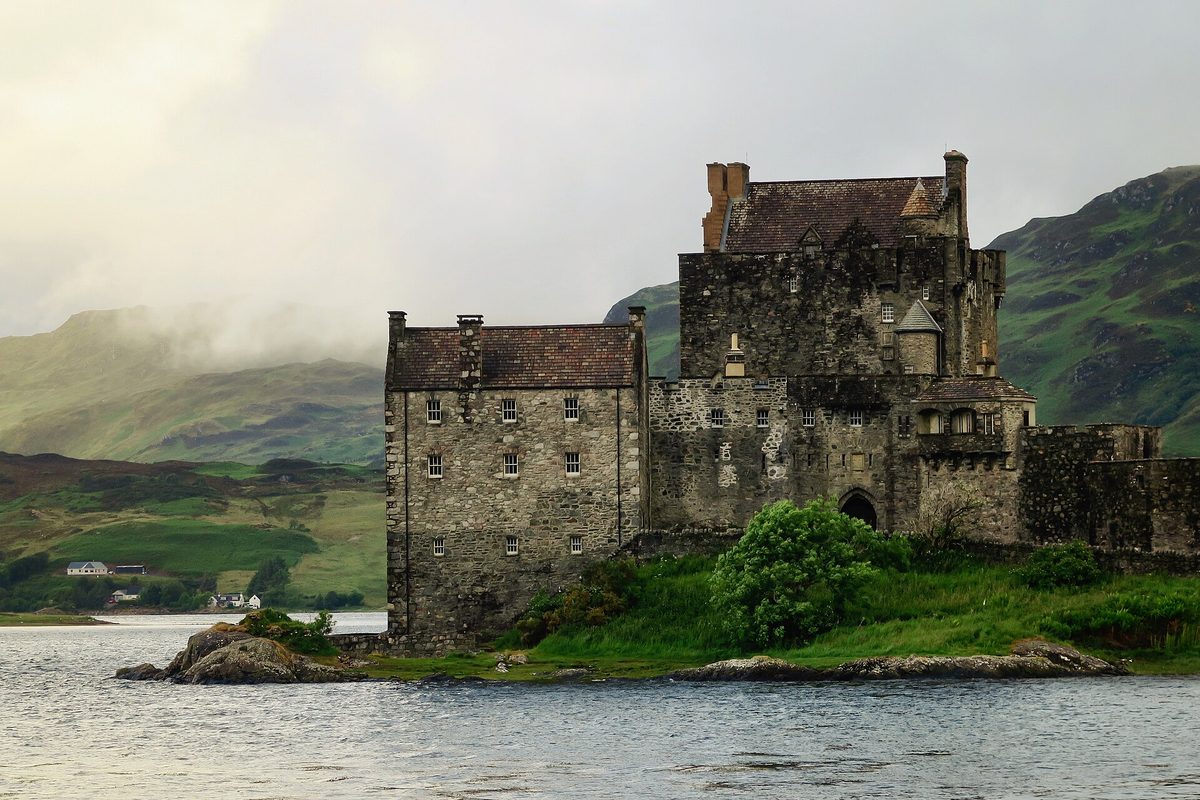
Onto Skye. From Dornie it’s eight miles to Kyle of Lochalsh, over the bridge, and then 34 miles up the A87 to Portree. That last stretch takes 50 minutes on paper and closer to an hour and a quarter in practice. Stop at the old bridge at Sligachan, halfway up, where the Red and Black Cuillin meet and the river runs clear over rock — free parking, five minutes, and one of the best roadside views on the island.
You’ll arrive tired. That’s fine — you have tomorrow, which is precisely the point of two nights.
Where to sleep: Portree is the obvious base, with the most restaurants and the shortest morning drive to the Trotternish sights. Broadford, Dunvegan and Struan are cheaper and quieter but add driving at both ends of the day. Skye accommodation is the tightest booking on this entire itinerary — more on that below. Our dedicated Isle of Skye guide goes into far more detail on bases and routes.
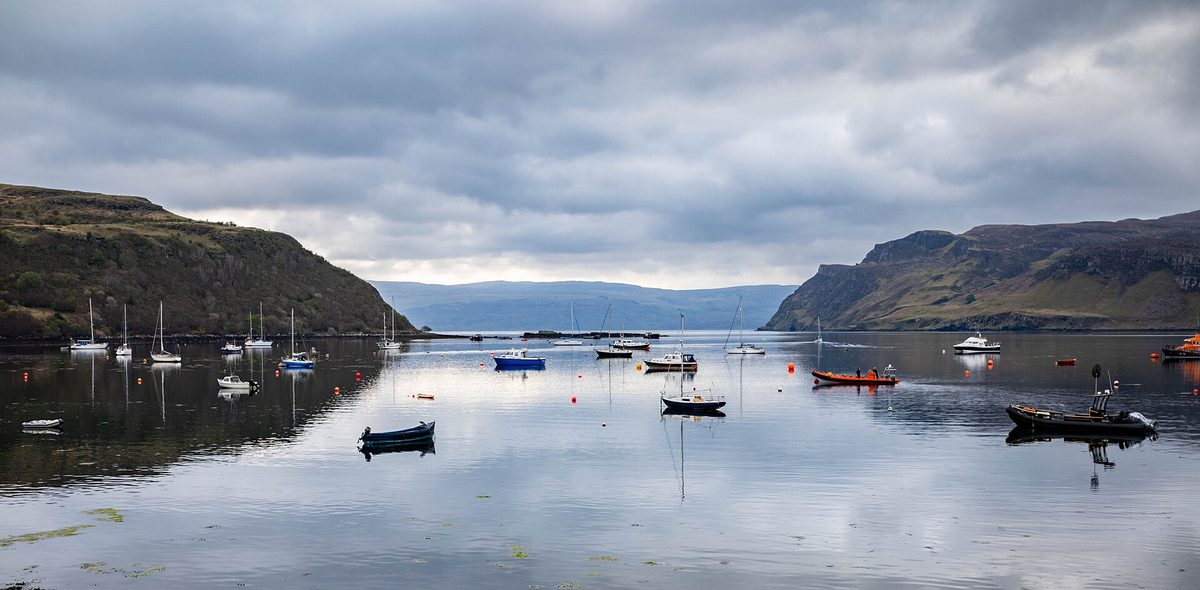
Day 5: The Trotternish loop — 50 miles, and it will take all day
Fifty miles. Google says one hour forty-five. It will take you seven or eight hours and you will not feel you wasted a minute. This is the single best argument for two nights on Skye rather than one.
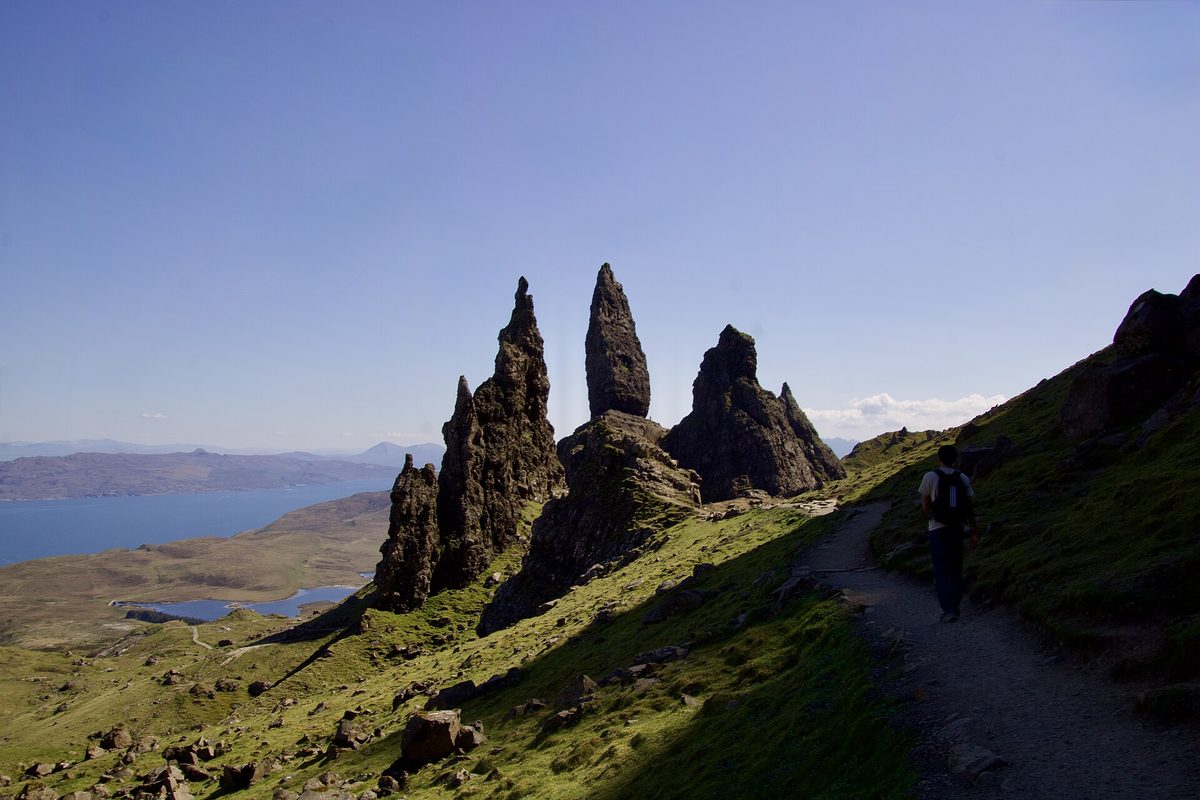
Old Man of Storr — seven miles north of Portree on the A855, about fifteen minutes. The car park charges roughly £5 for up to six hours and is full by 10am from June to September. Be there by 8:30 or come back at 5pm; the light is better in the evening anyway. The path to the base of the pinnacles is about 1.5 miles each way with a steady climb of around 300 metres, gravelled and well maintained for most of its length, with a rougher final section. Allow 90 minutes to two hours return. It is steeper than the photographs suggest, and there is no shelter on it.
Lealt Falls and Kilt Rock — two roadside viewpoints on the way north, ten minutes each. Kilt Rock has a fenced platform above Mealt Falls, which drops straight off a basalt cliff into the sea, and a wind that will take your hat. Lealt, a couple of miles south, has a short path to a gorge viewpoint and is usually quieter.
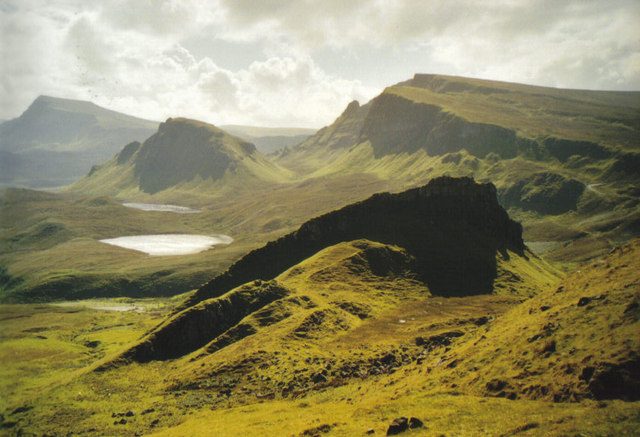
The Quiraing — this is where Google’s estimate becomes fiction. It is around 20 miles from Portree, and the satnav will tell you 40 minutes. In July, allow an hour. The final approach from Staffin is a single-track road with hairpin bends climbing several hundred metres, shared with coaches, campervans and cyclists, and if you meet a coach on a bend somebody is reversing. The car park at the top charges a few pounds and fills early.
The walk-in path along the base of the cliffs gives you most of the drama within 20 minutes of the car and is the right choice if time is short. The full circuit is about 4.5 miles and takes three hours over ground that is rough and slippery in wet weather, with one exposed section that has been eroding for years. Our guide to hiking in Scotland has more on what these Highland paths are actually like underfoot.
Continue the loop north past the ruins of Duntulm Castle on the cliff edge — free, roadside, fenced off but photogenic — then round to Kilmuir, where the Skye Museum of Island Life is a row of restored thatched croft houses with a small admission charge and half an hour of genuine interest in how people actually lived here. Flora MacDonald’s grave is in the churchyard above it.
Uig is the ferry port for the Outer Hebrides and worth a stop for the Fairy Glen just inland — a cluster of small grassy cones and a rock outcrop that looks like a ruined tower, free to visit, twenty minutes, and much smaller than the photographs make it look. Parking there is limited and the single-track road in gets clogged; go early or late.
Then back down the A87 to Portree. Roughly 50 miles for the full circuit.
Running it in reverse works just as well: Quiraing first thing when the car park is empty, Uig and Kilmuir in the middle of the day, and the Storr in evening light with a fraction of the crowd. If I had one day on Trotternish in July, that is the order I would use.
The alternative Day 5: if crowds bother you more than missing landmarks, skip Trotternish entirely and drive west instead — Dunvegan, then the road out to Neist Point, Skye’s westernmost tip. It’s about 35 miles from Portree and takes well over an hour on narrow roads. From the car park a steep concrete path drops to the lighthouse and back, around 45 minutes return, with a stiff climb out. Fewer people, bigger sea, and nothing famous at the end of it. Some of my best hours on Skye have been out there.
Day 6: Skye to Inverness via Loch Ness — 115 miles, allow six hours
Optional first: the Fairy Pools. From Portree it’s 28 miles each way into Glen Brittle, roughly 50 minutes on paper and an hour in practice, plus the car park queue. The pools are a series of clear plunge pools and small falls on the River Brittle below the Black Cuillin, reached by a rough 20-minute walk from the car park with stepping-stone crossings that become impassable after heavy rain.
They are lovely on a bright morning with nobody else there. At noon in August, with two hundred people photographing the same waterfall and a queue on the approach road, they are not. If you go, go at 8am or don’t go. Skipping them entirely is a perfectly respectable choice and buys you a relaxed drive east instead.
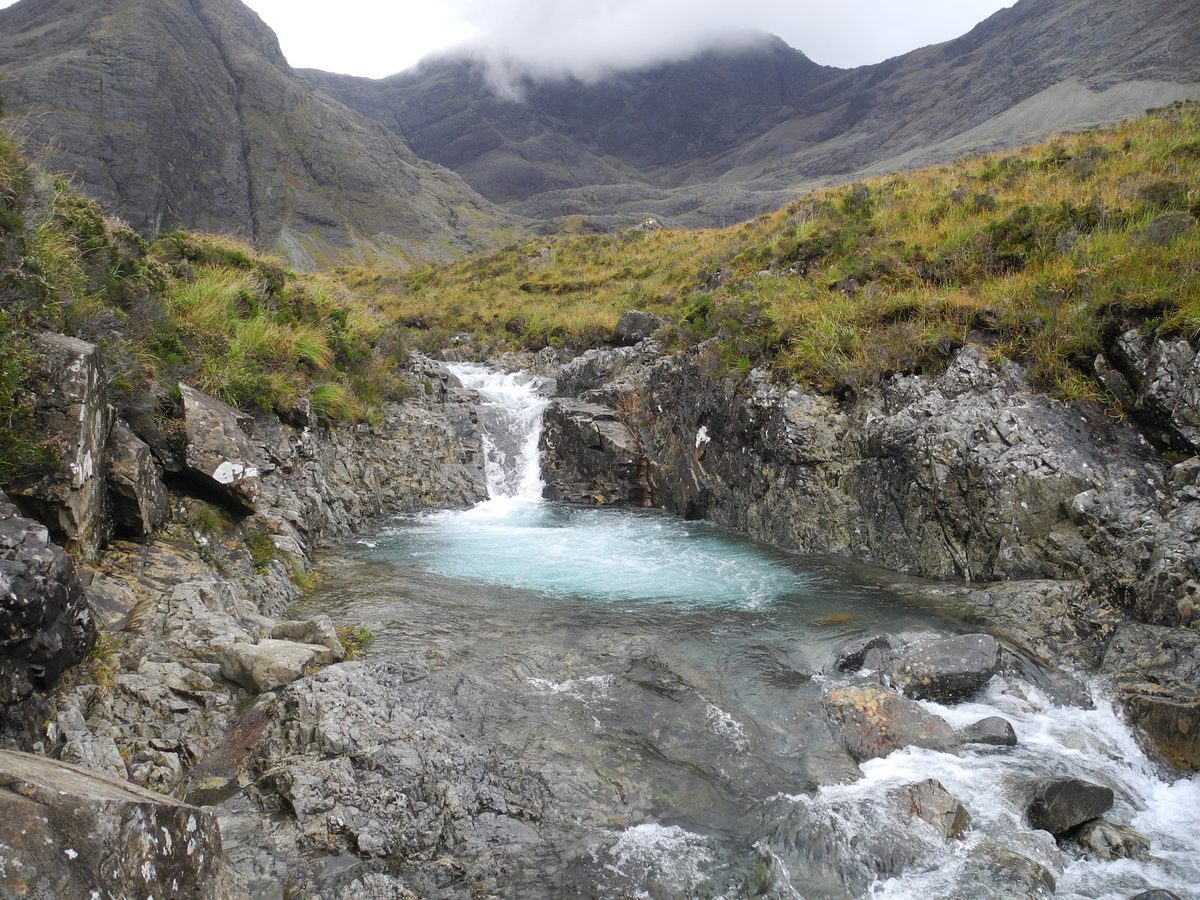
Off the island and east. Retrace the A87 over the bridge and back through Glen Shiel. Instead of turning south at Invergarry, carry on east towards Invermoriston and pick up the A82 along the western shore of Loch Ness.
Fort Augustus, at the southern end of the loch, is worth twenty minutes for the flight of five locks that lifts the Caledonian Canal up from the loch through the middle of the village. Watching a yacht work its way up is oddly compelling and the coffee is decent.
The loch itself is 23 miles long and you drive most of it. It is deep, dark and considerably less dramatic than its reputation — the shores are heavily forested and the views from the A82 are more intermittent than you’d expect. Be prepared for that and you won’t be disappointed.
Urquhart Castle at Drumnadrochit is the exception and it’s worth the stop. Adult tickets were £14 online and £16 on the door at the time of writing, and Historic Environment Scotland has been known to sell its online allocation out in summer, after which no further tickets are available at the gate. Book ahead. The ruins sit on a promontory with the best sightline down the loch you’ll get from land, and the short film in the visitor centre ends with the screen lifting to reveal the castle, which is a genuinely good piece of theatre. Allow an hour.
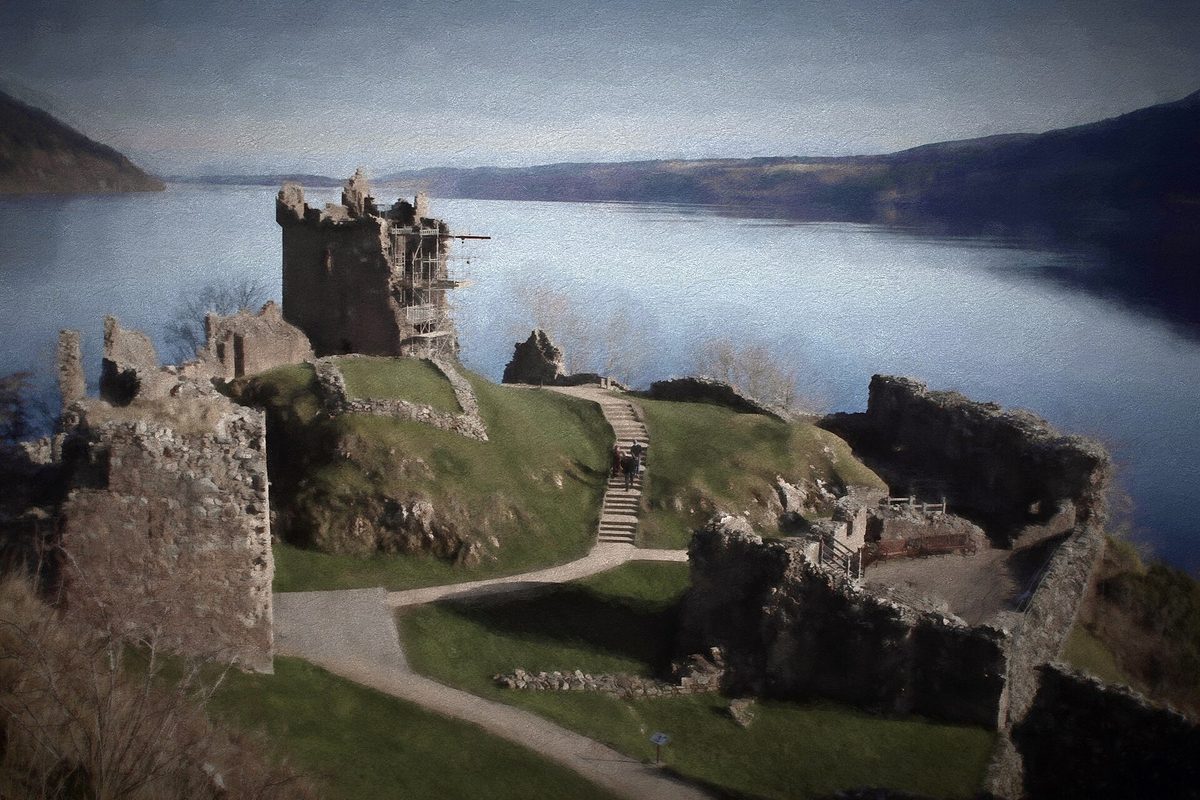
Skip the monster exhibitions in Drumnadrochit unless you have children who’ll enjoy them. Loch Ness cruises run from both Drumnadrochit and Inverness and are pleasant enough on a calm day; on a rough one you are paying to be cold. Our guide to Loch Ness and Inverness is candid about which of the attractions along that shore earn their admission.
Inverness itself is a practical, pleasant, unspectacular Highland town — a good place to eat well, do laundry and sleep, rather than a destination in its own right. The riverside walk out to the Ness Islands takes an hour and is the nicest thing in the town.
Culloden Battlefield is five miles east and takes about two hours. The 1746 battle ended the Jacobite rising in under an hour and the aftermath reshaped Highland society permanently. The visitor centre is one of the best pieces of historical interpretation in Scotland, and the moor itself, with its clan headstones, is quietly devastating. Clava Cairns, a set of Bronze Age burial cairns and standing stones, is a mile further on, free, and takes twenty minutes.
If you have to choose between Urquhart and Culloden, take Culloden. It will stay with you longer.
Day 7: Inverness to Edinburgh — 157 miles on the A9
The A9 runs 157 miles from Inverness to the central belt and the satnav will say 3h 20m. That estimate is closer to accurate than most, because much of it is fast road. Two things to know.
First, average-speed cameras cover long sections between Inverness and Dunblane. They are not a bluff, they work in both directions, and they average your speed over miles rather than catching you at a point. Sit at the limit and stop worrying about it.
Second, the A9 alternates between dual and single carriageway in a way that produces genuine frustration — you’ll get up to 70mph, then find yourself in a thirty-vehicle queue behind a lorry for eight miles. Accept it. Overtaking manoeuvres on that road have killed a lot of people, and the dual sections come round often enough that patience costs you almost nothing.
Worthwhile stops going south. The Cairngorms around Aviemore, where a short detour to Loch Morlich puts a sandy freshwater beach in front of a mountain range and a car park charge of a few pounds. Ruthven Barracks near Kingussie, free, floodlit at night, a Hanoverian garrison post burned by the retreating Jacobites. Blair Castle at Blair Atholl, white-harled and full of stags’ heads. Killiecrankie, where a wooded gorge and the Soldier’s Leap take about an hour.
Pitlochry is the standard lunch stop and a good one, with two distilleries within reach of the high street — Blair Athol on the edge of town and Edradour in the hills above it. Tours need booking ahead in summer. If whisky is a priority rather than an afterthought, our guide to Scotch whisky distilleries explains which regions are worth a detour and which tours are worth the money.
Dunkeld, fifteen miles further south, is my preferred stop of the lot — a small cathedral town on the Tay with a ruined-and-restored cathedral by the river, a good independent bookshop, and far fewer coaches than Pitlochry. Twenty minutes off the A9 and worth it.
Aim to be back in Edinburgh by 4pm. The Queensferry Crossing takes you over the Forth with the 1890 rail bridge alongside it, which is a decent last image of Scotland. If you’re flying home the next morning, drop the car at the airport rather than in town: the return is quicker, the drive is simpler, and you avoid the Edinburgh city-centre one-way system with a full boot and a tight deadline.
Two days planned to the hour
The two days that go wrong most often are Day 4, because it is long, and Day 5, because it looks short and isn’t. Here is how I’d actually run them in June or July. Shift everything an hour later in May or September when the roads are quieter.
Day 4, Glencoe to Portree, hour by hour
07:30 — Breakfast. Ask your B&B the night before whether they can do it early; most Highland hosts will.
08:30 — On the road. This is the single most important line in this guide. Leaving at 08:30 rather than 10:00 puts you an hour ahead of the coaches out of Fort William and takes twenty minutes off the Skye Bridge approach.
09:10 — Fort William. Fuel up here whatever your gauge says. It is the cheapest petrol you’ll see for two days.
09:40–12:10 — Glenfinnan, if a train is crossing. Otherwise skip straight to the next line and gain two and a half hours, which you can spend on Skye instead.
12:30 — Commando Memorial at Spean Bridge. Fifteen minutes, free, and a view of Ben Nevis worth stopping for.
13:00 — Lunch. Invergarry or the Cluanie Inn on the A87. Options thin out badly between here and Kyle, so eat when you see somewhere.
14:30 — Glen Shiel and the Five Sisters. Two or three laybys, ten minutes each.
15:15 — Eilean Donan. Half an hour if you’re photographing from the outside, ninety minutes if you go in.
16:00 — Over the Skye Bridge. You have missed the worst of the midday queue.
16:45 — Sligachan old bridge. Fifteen minutes.
17:30 — Portree. Check in, walk down to the harbour, eat at the time you booked. Because you did book.
Day 5, the Trotternish loop, hour by hour
07:45 — Leave Portree. Yes, really.
08:15–10:15 — Old Man of Storr. Empty car park, soft morning light, and the path largely to yourself. By the time you come down, the car park will be full and there will be a queue on the verge.
10:40 — Lealt Falls, fifteen minutes. 11:05 — Kilt Rock, fifteen minutes.
11:40 — Coffee and a sandwich in Staffin. Provisions on Trotternish are thin, so this is not optional if you want lunch.
12:30–14:30 — The Quiraing. Busiest window of the day, but with the Storr already done you can afford to wait for a parking space, and the walk-in path along the cliffs takes the pressure off.
15:00 — Duntulm and the Skye Museum of Island Life. An hour between them.
16:15 — Uig and the Fairy Glen. Forty minutes.
17:15 — Back in Portree with an evening to spare, or carry on to Carbost for a distillery tour if you booked one and someone else is driving.
That is eight and a half hours for fifty miles. Look at it written down and the case for two nights on Skye stops being an argument and starts being arithmetic.
Why anticlockwise, and what happens if you reverse it
Running the loop clockwise — Edinburgh, A9 north to Inverness, Loch Ness, Skye, Glencoe, home — works, and plenty of itineraries do it that way. I think it’s the weaker option for three reasons.
First, it front-loads the least interesting driving. The A9 on Day 3, when you’re fresh and excited, is 157 miles of functional road; the same stretch on Day 7, when you’re tired and heading for a flight, is exactly what you want.
Second, light. Driving west and north-west through Glen Shiel and into Glencoe in the afternoon puts the sun behind the mountains ahead of you, which is glorious to look at and difficult to photograph. Going anticlockwise you hit those glens with the light behind you.
Third, and most practically, clockwise tends to deliver you to Skye late on Day 5, which pushes you towards a single night on the island. Anticlockwise gets you there on Day 4. That one difference is worth more than anything else in this section.
The one genuine argument for clockwise: if you are flying out of Glasgow rather than Edinburgh, ending in Glencoe puts you two hours from the airport instead of three.
The alternative week: west coast, Oban, Mull and Glencoe
Not everybody should go to Skye. It is the most visited part of the Highlands, its roads and car parks are under real strain in summer, and if your holiday is spoiled by queueing you may genuinely have a better week going somewhere else. Here’s the version I recommend to people who tell me they hate crowds.
Day 1: Arrive Glasgow or Edinburgh
Same rule as before — arrival day is not a touring day. Glasgow works better as a start for this route, and it is a more interesting city than first-time visitors expect: better live music, better food, better architecture, and free entry to the Kelvingrove Art Gallery and the Riverside Museum. Our Glasgow travel guide makes the case in more detail.
Day 2: City day
Glasgow on foot — the West End around the university, Kelvingrove, the Mackintosh buildings, and the city centre’s Victorian commercial architecture. Or take the train through to Edinburgh for the day: 50 minutes each way, several an hour, no car required.
Day 3: Glasgow to Oban — 96 miles, allow five hours
North on the A82 along Loch Lomond, stopping at Luss or Tarbet, then the A83 over the Rest and Be Thankful pass to Inveraray, then the A819 and A85 west to Oban. Inveraray Castle and the old jail are both worth an hour, and the whitewashed town on the shore of Loch Fyne is a good lunch stop.
The Rest and Be Thankful has a long history of landslips and occasional closures — check Traffic Scotland before you set off, because the diversion via the old military road or the long way round Loch Long adds real time.
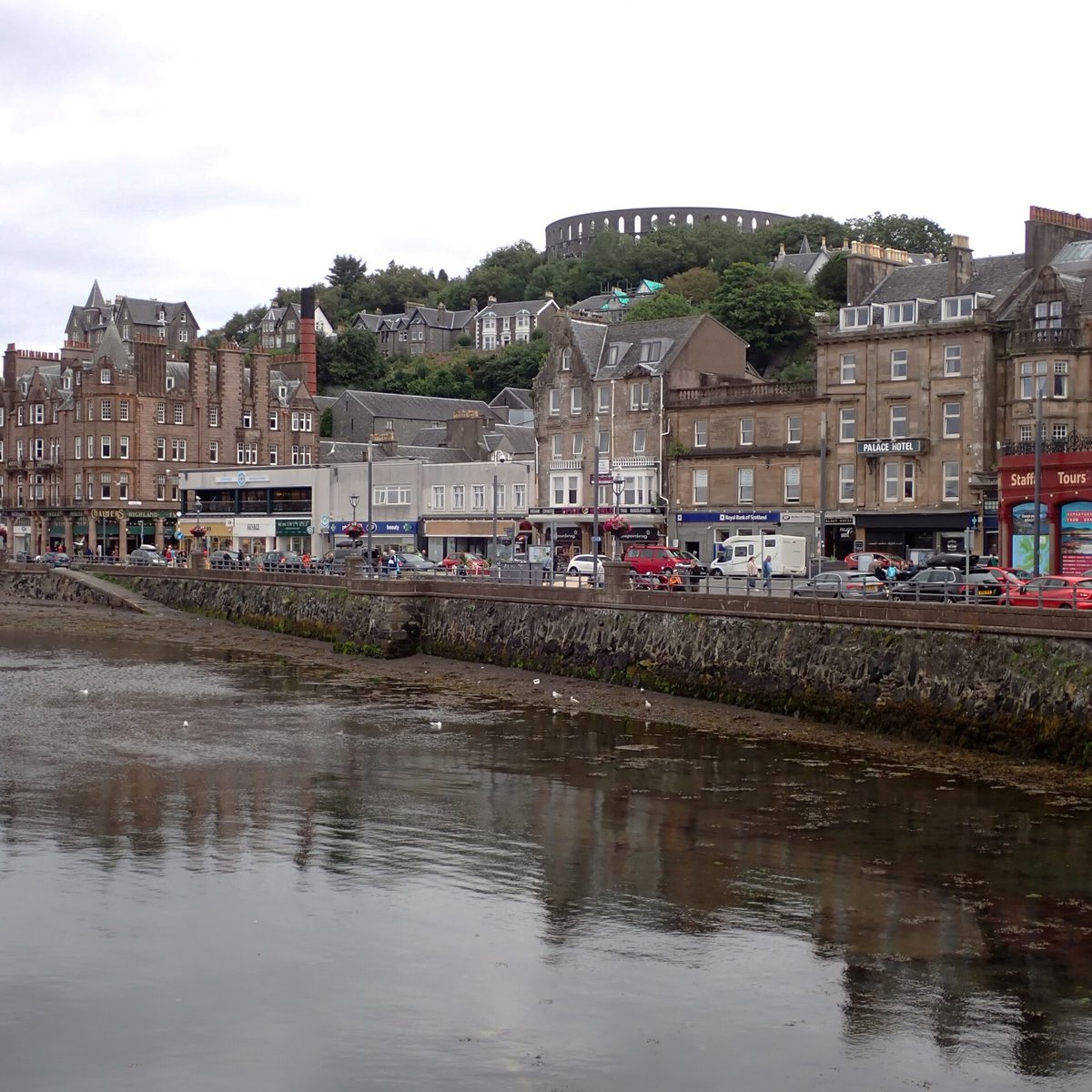
Oban is a proper working ferry town rather than a resort: a curved bay, a distillery in the middle of the high street, an excellent seafood shack on the pier, and McCaig’s Tower, an unfinished Colosseum-shaped folly on the hill above town, free to walk up to. Sleep here.
Day 4: Oban to Mull — ferry plus up to 36 miles
The Caledonian MacBrayne crossing from Oban to Craignure takes around 45–55 minutes depending on the vessel. Vehicle spaces sell out weeks or months ahead in summer and check-in closes 30 minutes before departure. Book the moment you commit to this route — this is the one immovable booking on the whole itinerary.
On Mull, Craignure to Tobermory is 21 miles of narrow but mostly two-way road, about 45 minutes. Craignure to Fionnphort at the western tip is 36 miles, largely single track, which the satnav calls 75 minutes and which takes closer to two hours. Mull is bigger and emptier than people expect — the third largest of the Scottish islands, with about 3,000 residents.
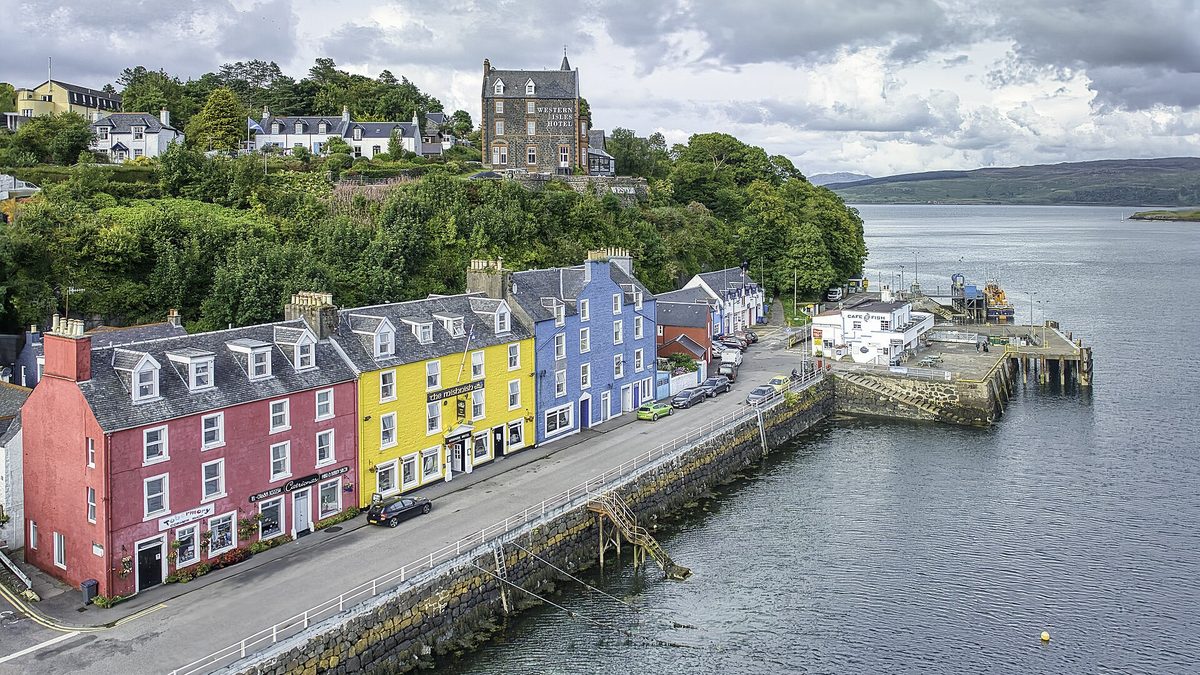
Duart Castle, the seat of Clan MacLean, sits on a headland three miles from the ferry terminal and is visible from the boat. Tobermory’s painted seafront is the image everybody knows; the town also has a small museum and a distillery. Calgary Bay, on the north-west coast, is a white shell-sand beach that would be famous if it were easier to reach.
Day 5: Iona, Staffa or the Ross of Mull
The passenger ferry from Fionnphort to Iona takes about ten minutes and runs frequently through the day; cars need a permit, so leave yours on Mull. Iona Abbey, in the care of Historic Environment Scotland, stands on the site of the monastery founded by Columba in 563, and the island is small enough to walk across in an afternoon. The white beaches on the west side are usually empty.
Boat operators run trips from Fionnphort, Iona and Ulva Ferry out to Staffa and Fingal’s Cave, and in early summer to the Treshnish Isles for the puffins. All of it is weather dependent, and “weather dependent” does real work in that sentence — build in a fallback day and book directly with the operator so you can move it. Our guide to the Scottish islands covers how the ferry network fits together if you want to push further out.
Day 6: Mull to Glencoe — ferry plus 39 miles
Back to Oban on the morning boat, then north on the A85 and A828 through Connel and Appin to Ballachulish — 39 miles, about an hour, and one of the prettiest short drives in the country. Cross the cantilever bridge at Connel above the Falls of Lora, a tidal rapid that runs in both directions depending on the hour.
Castle Stalker sits on its islet just off the road at Portnacroish, and the café above the layby exists purely so that people can photograph it with a coffee in hand. Afternoon and evening in Glencoe, which gets a full write-up on Day 3 above.
Day 7: Glencoe to Edinburgh or Glasgow
Glencoe to Glasgow is 92 miles down the A82, about two and a quarter hours; to Edinburgh it’s roughly 120 miles and closer to three. Take a morning walk in the glen before you go — the Lost Valley if you’re fit and it’s dry, the Glencoe Lochan loop if you’re not.
Which version suits you
Take the classic Skye loop if: it’s your first trip to Scotland, you want the landmarks you’ve seen in photographs, you’re travelling outside July and August, or you’re happy to start early to beat crowds. It delivers more variety and more famous scenery per mile than anything else in the country, and it needs no ferries, which means no fixed timings and no weather cancellations.
Take the west coast route if: you’ve been to Scotland before, you’re travelling in peak summer, you’d rather have a boat trip than a queue, you’re nervous about long single-track drives, or you like islands and want to feel like you’ve properly arrived on one rather than driving over a bridge. It is a slower, gentler, more coastal week with less time behind the wheel — roughly 400 miles against 660.
Take neither if: you don’t drive and won’t hire a car. Both routes need one. There are good small-group tours of Scotland that cover the same ground from Edinburgh, and they are a perfectly respectable option — you trade flexibility for not having to think about passing places, and you get a driver who knows where the light will be good.
Why the NC500 does not fit in a week
People ask this constantly, so here are the miles.
The North Coast 500 is a 516-mile loop that starts and finishes at Inverness Castle. If you fly into Edinburgh or Glasgow, you must add roughly 160 miles each way to reach Inverness and get back. That’s 836 miles of driving before a single detour, a single wrong turn, or a single stop.
Take out arrival day and departure day and you have five usable days. That is 167 miles a day, every day, on roads that include long single-track sections along the north-west coast between Applecross, Lochinver and Durness where 25mph is a realistic average and passing places come every few hundred metres. You would be driving five to seven hours daily, staying somewhere different every night, packing and unpacking six times, and seeing one of the great road trips of Europe through a windscreen.
The NC500 wants seven to ten days on its own, from Inverness, with flights arranged into Inverness Airport rather than the central belt. Do it as its own trip. Our North Coast 500 guide sets out how many days each section genuinely needs.
The same arithmetic rules out Orkney, the Outer Hebrides and Shetland for a seven-day first visit. Each needs a long ferry or a flight plus at least two nights to justify the crossing, and each would cost you two of your seven days in transit alone.
Driving in Scotland: a short practical primer
If you’ve never driven on the left, the adjustment is smaller than you fear and the real difficulties are elsewhere.
The first hour
Most people are comfortable on the left within an hour on a motorway or dual carriageway. What catches drivers out is not the side of the road but the position of the car — sitting on the right, you will drift left and clip kerbs for the first day. Ask your passenger to tell you when you’re close to the verge. It is not backseat driving; it is cheaper than a wing mirror.
Roundabouts
Traffic goes clockwise. Give way to the right. Signal left as you leave. If you take the wrong exit, do not stop — carry on, find somewhere to turn, come back. Scotland has plenty of roundabouts on the M9 and around Inverness and Perth, and hesitating in the middle of one is more dangerous than committing to the wrong exit.
Single-track roads
Marked with regular white or black-and-white posts reading “passing place”. The rules: pull into a passing place on your left, or stop opposite one on your right, to let oncoming traffic through. Pull in to let faster traffic overtake — locals with somewhere to be, delivery vans, the post bus. Never park in one. Give a wave. Everybody does.
The unwritten rule is that whoever is closest to a passing place gives way, regardless of who arrived first. In practice, judging that takes a couple of days to learn and everybody makes mistakes politely.
Speed, cameras and fuel
National speed limits for cars: 60mph on single carriageway, 70mph on dual carriageway and motorway, 30mph in built-up areas unless signed otherwise. Average-speed cameras cover the A9 and stretches of the A90. Villages on Highland A roads drop to 30mph with very little warning, and the limit is enforced.
Petrol was averaging around £1.62 a litre in the UK at the time of writing, and rural Highland stations typically charge 10–20p more. Fill up in Fort William, Portree and Inverness rather than gambling on a village pump. Some rural stations close on Sunday afternoons and a few are card-only outside staffed hours.
Weather and light
Rain moves quickly on the west coast — a downpour at 11am often means clear skies by two. Wind is the bigger driving hazard, particularly crossing the Skye Bridge, over the Cairngorms on the A9, and on exposed sections of the A87. High-sided vehicle warnings are worth taking seriously in a small hire car.
Daylight matters more than most people plan for. In late May and June you have around seventeen hours of usable light in the Highlands, which means you can do a late-evening walk after a full driving day. In late October it’s down to about nine and a half, and in December closer to seven. Our practical Scotland travel tips cover the smaller things that catch people out.
Planning: when to go, what to hire, what to book
The best months for this trip
May and September are the two months I’d pick over any other. Long daylight, roads clear, the midges either not started or fading, and accommodation prices below the July peak. Late May in particular is close to ideal: everything is open, the hills are green, and you get the extra light without the school-holiday traffic.
June is beautiful and busy. July and August are the busiest and most expensive, with the added complication that Edinburgh is hosting its festivals through most of August. October has spectacular colour on the birch and bracken, real weather, and shrinking daylight that reshapes the driving days above significantly. Our breakdown of Scotland in September goes into detail, and the wider best time to visit Scotland guide compares all twelve months.
On midges: they appear from late May, peak from June to August, and are worst at dawn and dusk in still, damp conditions on the west coast and in the Highlands. They do not bother you in a moving car, in any real wind, or in cities. They will absolutely ruin a photograph stop by a loch at 9pm in July. Carry repellent and read our guide to midge season in Scotland before you plan an evening walk.
Hiring a car
Book two to three months ahead for July and August, and longer if you need an automatic. Automatics are a minority of the UK fleet, cost noticeably more, and are the first category to sell out. If you are not genuinely comfortable with a manual gearbox, pay the premium — a hill start on a single-track road with a queue behind you is not the moment to learn.
Get the smallest car that fits your luggage. Skye’s minor roads and the approach to the Quiraing are considerably easier in a compact hatchback than in the estate car the desk will try to upgrade you into. Two people with two suitcases fit comfortably in a small car; the extra half metre of width is a liability for the entire week.
Take the excess insurance, either from the hire company or an annual standalone policy bought before you travel, which is usually far cheaper. Single-track roads, stone walls and unfamiliar wing mirrors have a relationship.
Check whether your hire agreement permits island travel. Most do for Skye, which is bridged, but some restrict ferry crossings, which matters for the Mull route.
What to book, and how far ahead
- Skye accommodation — three to six months ahead for June to September. This is the tightest bottleneck on the classic route. Portree has a finite number of beds and they go early, and the fallback towns are half an hour further out.
- Edinburgh in August — six to nine months ahead. Festival pricing is brutal and late bookers end up in Leith, Musselburgh or a Travelodge by the bypass.
- Edinburgh Castle — a few days to a week ahead in summer, longer if you want a specific morning slot.
- Urquhart Castle — a week or two ahead in summer. The online allocation sells out and there is no door sale afterwards.
- The Jacobite steam train — the day bookings open, usually in the new year for the following season. Peak dates go within weeks.
- CalMac vehicle spaces — two to three months ahead for summer sailings on the west coast route. Foot passengers can usually turn up.
- Hire car — two to three months ahead, more for automatics.
- Distillery tours — two to four weeks ahead in summer. The small ones run a handful of slots a day.
- Skye restaurants — weeks ahead. The best-known dining rooms on the island take bookings months out; even pub food in Portree in August needs a table reserved by lunchtime.
Everything else can be decided on the day. Resist the urge to pre-book every walk and viewpoint — Scottish weather makes a mockery of rigid plans, and you want the freedom to swap the Quiraing for a museum when the cloud comes down to 200 metres.
If you fly into Glasgow or Inverness instead
Glasgow. The loop works almost unchanged — you simply run it in the opposite direction. Glasgow two nights, then A82 north to Glencoe, Skye, Loch Ness, Inverness, and back down the A9 to Glasgow via Stirling on the final day. Glasgow to Glencoe is 92 miles against Edinburgh’s 120, so you gain half an hour on Day 3 and lose it again on Day 7. If you want to see Edinburgh too, take the train through for a day rather than driving.
Inverness. Flying into Inverness changes the shape of the week entirely, and mostly for the better if you care more about Highlands than cities. Inverness one night, Skye three, Glencoe one, then Edinburgh or Glasgow for the last two — or, better, forget the cities and do the northern half of the NC500 instead. Inverness has fewer direct long-haul connections and generally costs more to reach, which is the trade-off.
Open-jaw flights. If your airline allows it, flying into Edinburgh and out of Glasgow (or the reverse) removes the final day’s return leg entirely and buys you the best part of a touring day. It is the most underused trick in Scottish trip planning, and the two airports are close enough that fares rarely differ much.
Travelling with children, or as the only driver
With children, cut one destination. The single biggest cause of misery on this route is three-hour drives back to back, and a six-year-old’s tolerance for Rannoch Moor is about eleven minutes. Drop Loch Ness, add a second night in Glencoe, and use the time for the Lochan trails, a boat trip from Fort William, or a beach. Highland B&Bs are often adults-only, so check before booking, and family rooms on Skye in summer need booking earlier than anything else.
As the only driver, take the west coast route rather than the classic loop. Roughly 400 miles against 660, two ferry crossings where somebody else is in charge, and no single-track hairpins. If you do drive the classic loop alone, cut Glenfinnan and the Fairy Pools without hesitation — they are the two optional detours that turn a manageable day into a punishing one.
Either way, stop every ninety minutes. There is a good argument that the laybys are the trip and the driving is the connective tissue between them.
Packing, briefly
Competing guides devote two thousand words to this. Here is the version that matters for one week on this route.
Waterproof jacket with a proper hood. Walking boots or trainers with grip — the paths at the Storr, the Quiraing and the Fairy Pools are wet rock and mud, not gravel promenades. Layers rather than one warm coat; a Highland day can move 10°C between a car park and a ridge. Midge repellent between late May and September. Sunglasses, because low sun in a west-facing glen at 7pm is blinding. A phone mount for the car and offline maps downloaded before you leave. A power bank. And one smarter outfit if you plan to eat anywhere memorable in Edinburgh.
What you don’t need: an umbrella, a full waterproof over-trouser set unless you’re doing serious hillwalking, or a suitcase bigger than the boot of a small hire car.
What a week costs
Rough guidance, for two people sharing, at the time of writing and outside festival dates. Hire car £45–80 a day in summer for a compact automatic, less for a manual and much less outside the peak. Petrol for 650 miles in a small car, somewhere around £90–110. Highland B&Bs and guesthouses £110–180 a night; Skye in July closer to £150–250. Attractions, if you visit three or four paid sites, £50–70 per person for the week. Dinner out £25–45 a head, pub meals less.
That lands most couples somewhere between £1,800 and £2,800 for the week excluding flights, with plenty of room to move in both directions. Two useful levers: travelling in May or late September instead of July knocks a meaningful amount off accommodation, and a Historic Environment Scotland Explorer Pass pays for itself if you’re visiting three or more of their sites. All of these figures move, so treat them as a starting point and check current rates.
Eating and drinking along the route
Scottish food has improved out of all recognition in the past twenty years, and the west coast in particular does shellfish as well as anywhere in Europe. A few practical notes for this specific route.
Highland kitchens close early. This catches more people out than anything else. Outside the cities, plenty of pubs and hotel restaurants stop taking food orders at 8pm or 8:30pm, and in low season some close entirely on Mondays and Tuesdays. If you’re arriving in Glencoe or Portree at 7:45pm after a long drive, ring ahead from the road.
What to eat where. Cullen skink — smoked haddock, potato and cream — is on every Highland menu and is properly good when made well. Langoustines, scallops and oysters on the west coast, particularly around Oban and Loch Fyne, are worth ordering wherever you see them landed locally. Venison appears on most Highland menus in autumn. Haggis is better than its reputation and best tried in a decent pub rather than a tourist restaurant.
Breakfast. A full Scottish breakfast at a B&B will include tattie scone and often black pudding, and will comfortably see you through to mid-afternoon — which matters on days when lunch options are a petrol station and a lay-by. Take advantage of it.
Whisky. On this route the accessible distilleries are Oban in the town centre, Ben Nevis at Fort William, Talisker at Carbost on Skye, and Blair Athol and Edradour at Pitlochry. Book ahead in summer, and if you’re driving, most will give the driver their measure in a small bottle to take away. Our guide to Scottish food and drink goes further on both the eating and the drinking.
Self-catering supplies. Fort William, Portree and Inverness all have full-size supermarkets. Between them, you have village shops with limited hours. If you’re planning picnic lunches, buy in the towns.
If it rains all week
It might. Not the drizzle-for-an-hour kind — the sideways-for-three-days kind. This is the plan I use when the forecast collapses, and it saves trips.
Swap high walks for low ones. The Storr and the Quiraing are miserable and dangerous in low cloud with no visibility. Glencoe Lochan, the Ness Islands in Inverness, the Lealt gorge path and the woodland trails around Dunkeld all work in rain and are short enough that you can dry out afterwards.
Move indoor days around. This is the real benefit of not over-booking. If Day 5 on Skye is a washout and Day 6 looks clear, do the drive east on Day 5 with Urquhart and Culloden, and find another way to see Trotternish. Flexibility is worth more than any single sight.
The reliable wet-weather stops on this route: the National Museum of Scotland, Stirling Castle’s interiors, the Glencoe Visitor Centre, the West Highland Museum in Fort William, the Aros Centre in Portree, Culloden’s visitor centre, and any distillery tour. That is more than enough to fill three bad days.
Kit. A waterproof jacket with a hood you can actually pull tight, waterproof trousers if you plan to walk at all, and boots rather than trainers for anything off tarmac. An umbrella is useless in Highland wind. And take a dry bag or a plastic bag for the camera — the rain here goes sideways into every pocket you own.
Flexing the week: five, six or eight days
If you only have five days, cut Loch Ness and Inverness entirely. Edinburgh two nights, Glencoe one, Skye two, and drive back down the A82 on the final day. It’s a tighter, better-shaped trip than trying to complete the loop, and it saves you the whole A9 leg.
If you have six, keep the loop but drop the Fairy Pools and take a slower Day 6, arriving in Inverness by mid-afternoon with time for Culloden.
If you can find an eighth day, put it on Skye rather than anywhere else. Three nights on the island lets you do Trotternish, the west coast to Neist Point and Dunvegan, and a Cuillin walk, without racing. The second-best use of a spare day is a third night in Edinburgh; the third-best is Speyside for whisky. Adding another region is almost always the wrong call.
If you’re coming back, the natural second trip is the North Coast 500 or the Outer Hebrides, both of which want their own week. There is far more to the Scottish Highlands than the corridor this itinerary drives through.
What underwhelms, and the mistakes people keep making
Things that don’t live up to the billing
Loch Ness. I’ll say it plainly: as a body of water it is less impressive than Loch Lomond, Loch Maree or Loch Shiel, and the A82 drive along it is largely through trees with intermittent glimpses. Urquhart Castle earns its place. Culloden earns its place. The rest is a name and a gift shop.
The Fairy Pools at midday. Beautiful at 8am, an outdoor queue at noon. The same applies to the Old Man of Storr car park and, increasingly, to the Fairy Glen at Uig.
Eilean Donan’s interior. Handsome from the outside, and the reconstruction inside is more 1920s country house than medieval fortress. Worth £13 if castles interest you, easily skipped if they don’t.
Inverness city centre. A functional Highland town with good restaurants. Good for a bed and a meal, not for a day.
Loch Ness monster attractions. Two competing exhibitions in Drumnadrochit, both charging real money for a subject that does not reward it.
Gretna Green, if anybody suggests it. It is a retail complex with a wedding anvil, and it is nowhere near this route anyway.
Things that exceed expectations
Fairness demands the other list, and these are the places people consistently tell me surprised them.
Rannoch Moor. Nobody plans a trip around a peat bog and almost everybody remembers it. Forty minutes of nothing at all, in every direction, and it does something to you.
Stirling Castle. Routinely treated as the warm-up act for Edinburgh and routinely the better visit — fewer people, more to look at inside, and a view that explains six hundred years of Scottish history in one sweep.
Culloden. An hour of battle on a flat brown moor, and one of the most affecting hours you will spend in Scotland. The interpretation is unsentimental and all the stronger for it.
Glen Shiel. The stretch of the A87 between Cluanie and Shiel Bridge gets a fraction of Glencoe’s attention and is arguably the better drive. Fewer laybys, fewer coaches, bigger mountains right at the roadside.
The weather when it breaks. Two hours of horizontal rain followed by twenty minutes of low gold light on a wet hillside is the thing people photograph and then can’t explain. It happens more often than the forecast suggests.
A note on mobility and accessibility
Most of the landmarks on this route are reachable without walking far. Eilean Donan, Kilt Rock, the Commando Memorial, Sligachan, the Glencoe laybys and the Three Sisters viewpoint are all effectively roadside. Urquhart Castle, Culloden and Stirling Castle all have accessible visitor centres, though the castle ruins themselves involve uneven ground and steps.
The Storr, the Quiraing and the Fairy Pools are the three that require sure footing on rough, often wet ground with no handrails and significant drops. If those are out, the route still works — you simply spend the time saved on the coast and the glens, which is not a downgrade.
The five mistakes that ruin seven-day trips
1. Treating arrival day as a touring day. You will be jet-lagged, the hire car will be unfamiliar, and driving on the left for the first time on four hours’ sleep is a genuinely bad idea. Give the day away and you get it back with interest on Day 3.
2. One night on Skye. The single most common error. One night means you arrive at 6pm, do the Storr at 8am, and leave — a 260-mile round trip for one landmark. Two nights gives you a full day on the island and roughly triples what you see. If your week can only fit one Skye night, do the west coast route instead. That is not a compromise; it is a better trip.
3. Booking accommodation in a different town every night. Packing, checking out, driving, checking in and unpacking costs about ninety minutes a day. Six one-night stays cost you the best part of a full day of your week, plus the low-grade stress of never quite unpacking.
4. Trusting satnav times without padding. Covered at length above, but it bears repeating because it is the root cause of most miserable Scottish road trips. The 30% rule is not pessimism; it is arithmetic.
5. Trying to add one more region. Speyside, the Cairngorms proper, St Andrews, the Borders, Aberdeen, Loch Lomond’s western shore — all good, none of them fitting into this week. Cutting a place is not failure. Adding a sixth base is.
Three smaller things worth knowing
Scotland’s access rights are generous — you may walk over most land responsibly under the Scottish Outdoor Access Code — but they don’t extend to parking wherever you like, and rural verges are frequently soft enough to sink a hire car to the axle. Use car parks and laybys, and never block a passing place or a farm gate.
Mobile signal is patchy from Glencoe northwards and effectively absent on parts of Skye, Mull and the A87. Download offline maps before you leave Edinburgh, and don’t rely on being able to look up your accommodation’s phone number when you’re running late.
Cash is barely needed — cards work almost everywhere including most car park machines — but a few honesty boxes, small ferries and rural car parks still want coins. Carry £20 in change and you’ll never think about it again.
Frequently asked questions
Is 7 days enough time to see Scotland?
It is enough to see one coherent region properly — Edinburgh plus the western Highlands and one island. It is not enough for the whole country, and the trips that try end up as a driving holiday with photo stops. Seven days done narrowly beats fourteen days done frantically. Pick a corner and commit to it.
Can you drive the North Coast 500 in 7 days?
Not from Edinburgh or Glasgow. The route is 516 miles from Inverness, plus around 320 miles of return transit from the central belt, which leaves roughly 167 miles a day on some of the slowest roads in Britain. Fly into Inverness and give the NC500 seven to ten days of its own, or do the itinerary above instead.
Do I need a car for a one-week Scotland itinerary?
For this route, yes. Skye, Glencoe and the Trotternish peninsula are barely feasible on public transport within a week. Edinburgh, Glasgow, Inverness, Oban and Fort William are all well connected by train, so a rail-based week is possible — it just becomes a city and coast trip rather than a Highland one. A guided tour is the third option.
Should I start in Edinburgh or Glasgow?
Edinburgh for a first visit — more to see on foot, better direct flights from North America, and it works as both the start and the finish of the classic loop. Glasgow is the better start for the west coast route to Oban and Mull, and is a rewarding city in its own right. They are 50 minutes apart by train, so you can easily see both.
How many nights should I spend on the Isle of Skye?
Two, minimum. One night gives you an evening arrival and a rushed morning for a 260-mile round trip. Two nights gives you a full day on Trotternish, which is where most of what you came for actually is. Three would be better still, but not within seven days unless you cut Loch Ness entirely.
Is driving in Scotland difficult if you’re used to driving on the right?
Most people adapt to the left within an hour on motorways and dual carriageways. The genuine challenges are different: single-track roads with passing places, narrow rural lanes with stone walls, roundabouts, and judging the width of a right-hand-drive car from the wrong seat. Take the first day gently, get the excess insurance, and don’t drive tired.
What is the best month for a 7 day Scotland itinerary?
May or September. Both give you long daylight, manageable crowds and prices below peak, and both sit either side of the worst of the midges. June is excellent but busier. Avoid Edinburgh in August unless the festivals are the reason you’re coming.
Can I do this itinerary in winter?
You can, with adjustments. Daylight in late December is around seven hours in the Highlands, which halves your touring day, and the A87 and A82 can close in snow. Cut a destination, add a night, drive only in daylight, and check Traffic Scotland every morning. Skye in winter is quiet and dramatic, and the sunsets start at three in the afternoon.
Final thoughts
The best week I’ve had in Scotland involved fewer places than I’d planned. We dropped the Fairy Pools, spent a morning in a Portree café watching the rain go sideways past the harbour, and drove out to Neist Point in the afternoon when it cleared to find a sunset that made the whole trip.
Seven days is genuinely enough — if you are honest about the driving, generous about the stops, and willing to cross things off. The itineraries that fail are the ambitious ones. Build in the slack, book Skye early, leave before eight on the long days, and let the weather rearrange the rest.
If you want to see how the same country looks with a few more days to play with, our Scotland itinerary planner is the place to start. Which, if this week goes the way I think it will, is something you’ll be doing on the flight home.
If you would rather spend most of that week north of Perth, the day-count maths shifts and the honest answer to how long the Highlands really need is worth reading before you lock this route in. A week is enough for the North Coast 500 or a Skye and Wester Ross loop, but not both.
About the author: This guide was written and is maintained by the ScotlandTourism.org editorial team — travel writers who’ve spent years exploring Scotland’s cities, Highlands and islands, from bagging Munros to chasing the perfect dram. We update our guides regularly to keep prices, opening details and advice current.
Last updated: August 2026. Prices and opening times change — always check the official site before you travel.
Photo credits
All images are used under their respective Creative Commons or public-domain licenses:
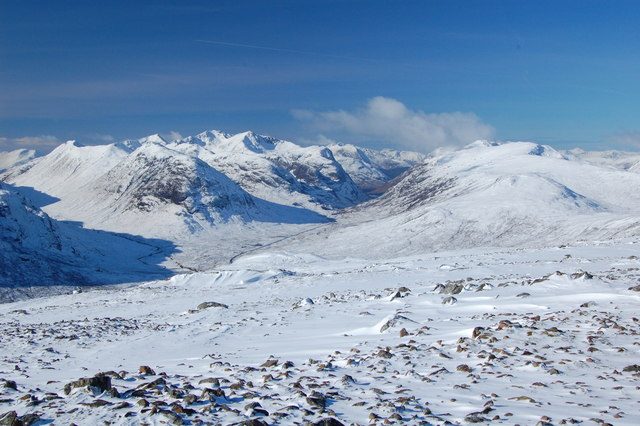
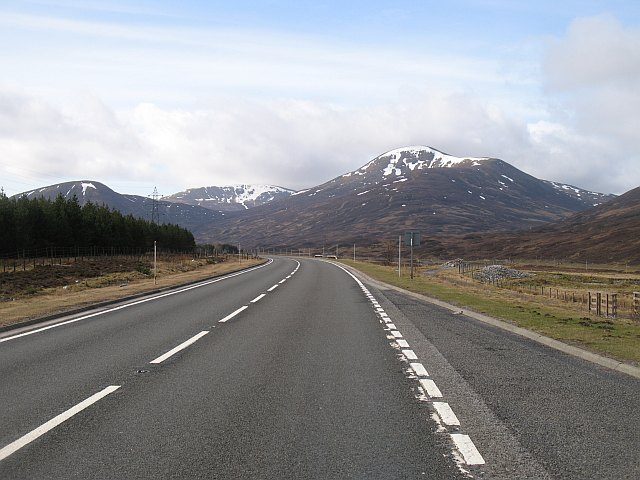
- Snow-covered peaks around Glen Coe seen from the hills above the A82, a highlight of any 7 day Scotland itinerary — Alex Mcnaughton, CC BY-SA 2.0, via Geograph
- Edinburgh Castle on its volcanic rock above Princes Street Gardens — Matti Blume, CC BY-SA 4.0, via Wikimedia Commons
- The wooded shore of Loch Lomond on the drive north from Stirling towards Glencoe — GeographUser, CC0, via Wikimedia Commons
- A steam train crossing the Glenfinnan Viaduct on the Road to the Isles — Chris Downer, CC BY-SA 2.0, via Geograph
- Eilean Donan Castle at Dornie, a standard stop on the A87 drive to the Isle of Skye — George Hiles hilesy, CC0, via Wikimedia Commons
- Boats moored in Portree harbour, the main base for a two-night stay on Skye — rboed*, CC BY 2.0, via Wikimedia Commons
- Walkers on the path below the Old Man of Storr on the Trotternish ridge, Isle of Skye — Lauwz The Kiwistralian, CC0, via Wikimedia Commons
- The Quiraing landslip on the Trotternish peninsula, reached by a single-track road from Staffin — Carol Walker, CC BY-SA 2.0, via Geograph
- A plunge pool and waterfall at the Fairy Pools in Glen Brittle, below the Black Cuillin on Skye — Drianmcdonald, CC BY 4.0, via Wikimedia Commons
- The ruins of Urquhart Castle on their promontory above Loch Ness at Drumnadrochit — BIG ALBERT, CC0, via Wikimedia Commons
- The seafront at Oban with McCaig’s Tower on the hill above, the ferry gateway to Mull — habiloid, CC BY-SA 2.0, via Geograph
- The painted harbour-front houses of Tobermory on the Isle of Mull — Arran Bee from Nottingham, UK, CC BY 2.0, via Wikimedia Commons

1 note from readers