I once stood on a wet pier in Lerwick at half past seven on a January night, in horizontal sleet, while roughly a thousand men and women in winged helmets set fire to a Viking longship. Nobody sold me a ticket. Nobody checked a wristband. A woman beside me passed round a flask of tea and explained, patiently, that this happens every year and always will.
That is the version of Scotland I want to send you to. Most lists of unique things to do in Scotland send you to the Fairy Pools and the Kelpies, which were genuinely unusual around 2014 and are now two of the most photographed places in the country. This guide is the other list — the things that are still uncommon, that you can actually book, with what they cost and how far ahead you need to move.
The short answer: what counts as genuinely unusual in Scotland
The most unusual experiences in Scotland are tied to a place, a tide or a single date: Shetland’s Up Helly Aa fire festival, a free night in a mountain bothy, landing on the Bass Rock gannet colony, walking to a tidal island, riding the world’s last hand-operated turntable ferry, and tasting whisky straight from the cask.

Unique things to do in Scotland at a glance
Eight of the best, with the bit every other guide leaves out — roughly what it costs and how far ahead you have to commit. Prices move, so treat them as a planning figure and check before you pay.
| Experience | Where | When | Rough cost | Book how far ahead |
|---|---|---|---|---|
| Up Helly Aa fire festival | Lerwick, Shetland | Last Tuesday in January | Free to watch; travel and beds are the cost | 9–12 months for flights, ferry cabins and rooms |
| Night in a mountain bothy | Highlands, mostly | Year-round | Free | You can’t book — that’s the point |
| Landing on the Bass Rock | North Berwick, East Lothian | Late April to September | Around £200 per person | 2–4 months; trips are weather-dependent |
| Glenelg–Kylerhea turntable ferry | Between Glenelg and Skye | April to mid-October | About £20 one way for a car and four people | Just turn up; no booking |
| Snorkelling with basking sharks | Coll, Mull and the Inner Hebrides | Roughly late June to early September | Around £200 for a day trip | 3–6 months for peak August dates |
| Whisky warehouse tasting | Campbeltown, Islay, Speyside | Year-round, fewer slots in winter | Roughly £40–£100 | 4–8 weeks in summer |
| A week on a car-free island | Eilean Shona, Loch Moidart | Best May to September | From around £1,100 a week for a small cottage | 6–12 months for summer weeks |
| Cape Wrath by ferry and minibus | Durness, Sutherland | May to September | Around £25 all in, per person | A few days, but check the MoD range |
If you want the wider picture first, our overview of the country’s headline attractions covers the classics properly, and the Scotland bucket list ranks the big-ticket ones. This page is deliberately the odd sibling of both.
Fire, ice and mass football: the once-a-year Scotland
Some of the best unique experiences Scotland has to offer only exist for a few hours a year. You cannot buy them, you cannot reschedule them, and if you turn up a week late you get an empty street. That makes them a nuisance to plan and completely worth it.
The pattern is worth understanding: Scotland’s genuinely old festivals cluster in the dead of winter, between Christmas and the end of January, because that is when a northern farming and fishing country most needed an excuse. Our guide to festivals and events across Scotland covers the summer ones. These are the winter ones nobody warns you about.
Up Helly Aa, Lerwick — the last Tuesday in January
Shetland’s Up Helly Aa is the one I would build an entire trip around. Around a thousand guizers march through Lerwick after dark carrying lit torches, form a circle around a purpose-built galley, and burn it. The whole thing takes about half an hour and looks like nothing else in Britain.
Then everyone goes indoors and the real event starts. Squads tour the town’s halls until dawn performing sketches, dancing with whoever is there, and drinking. Halls are the difficult bit for a visitor: most operate on invitation and local ticket allocations, and a handful release limited tickets. Ask your accommodation months in advance — Shetlanders are generous about this, but they cannot conjure a seat in February for a February request.
The procession itself is free and open to anyone standing on the street. That part needs no ticket at all.
Getting there is the expensive bit. It is either a flight to Sumburgh from Aberdeen, Edinburgh, Glasgow or Inverness, or the overnight NorthLink ferry from Aberdeen, which takes around 12 hours and is a genuinely good night’s sleep in a cabin. Lerwick’s beds sell out roughly a year ahead. I mean that literally: book the room before you book anything else.
Two things people get wrong. First, Lerwick’s is not the only one — around a dozen other Up Helly Aa festivals run across Shetland between January and March, in Scalloway, Nesting, Northmavine and elsewhere, and they are smaller, friendlier and much easier to get a hall place at. Second, since 2023 women and girls have marched in the Lerwick squads, which ended a long argument and made the whole thing better.
Dress for it. Sleet sideways at 2°C for two hours is not the night to test a fashionable coat.
The Kirkwall Ba’ — Christmas Day and New Year’s Day
Orkney’s Ba’ is mass street football with no pitch, no referee and no obvious rules. The town splits into Uppies and Doonies depending, roughly, on which side of the Mercat Cross you were born, a leather ball is thrown up at one o’clock, and a scrum of a couple of hundred men shoves it slowly through Kirkwall’s lanes for anything from two to seven hours.
Shopkeepers board their windows. Parked cars vanish from the route the night before. Spectators stand in doorways and shout advice.
It is free, it happens twice — 25 December and 1 January — and there is a Boys’ Ba’ earlier in the day. You need to be in Kirkwall over Christmas or Hogmanay, which means booking the NorthLink ferry from Scrabster or Aberdeen, or a Loganair flight, well before autumn. Do not stand in the middle of the road unless you fancy being part of the scrum.
The Burning of the Clavie, Burghead — 11 January
Burghead is a small fishing town on the Moray coast, and once a year it sets fire to half a whisky barrel and carries it through the streets. The Clavie is nailed to a post with a single hand-forged nail, filled with staves and tar, lit from a peat ember and hauled round the town by the Clavie King and his crew, who hand out burning fragments for luck.
It finishes on Doorie Hill, where the barrel is broken up and the embers are fought over. The date is 11 January — the old new year, before the calendar changed — and it shifts by a day if that falls on a Sunday.
It costs nothing. Burghead is about 45 minutes from Inverness and an easy add-on if you are in Speyside for whisky anyway. Arrive by six, stand somewhere you don’t mind getting sparks on, and accept that your coat will smell of tar for a week.
The Stonehaven Fireballs — Hogmanay, on the stroke of midnight
In Stonehaven, just south of Aberdeen, around 40 people walk the High Street at midnight on 31 December swinging blazing wire cages of fuel on chains around their heads. It lasts roughly 20 minutes, ends with the fireballs being flung into the harbour, and is followed by fireworks.
Crowds start claiming positions from about ten o’clock. The street is closed and stewarded, and it is normally free to watch, though there is usually a bucket collection for local causes.
Stonehaven is 20 minutes by train from Aberdeen, which makes it one of the easier winter fire festivals to reach without a car. Rooms in the town go early; Aberdeen is the practical fallback. It is a better use of Hogmanay than a crowded street party, and I say that as someone fond of Edinburgh at New Year.
Beltane Fire Festival, Edinburgh — 30 April
Calton Hill on the last night of April, several hundred performers, drums, body paint and a great deal of actual fire. Beltane Fire Society is a charity that has run it since 1988 and also stages Samhuinn on 31 October, which winds down the Royal Mile.
This one is ticketed and usually costs somewhere in the region of £15–£25 in advance, less than on the gate. It sells well but rarely sells out months ahead, so a few weeks’ notice is normally enough.
It runs late, the hill is dark and uneven, and it gets cold once you stop moving. Wear boots, not trainers. If you are in the city anyway, our Glasgow and Edinburgh guides both cover late-night transport, which matters when you come off the hill at one in the morning.
The World Stone Skimming Championships, Easdale Island — early September
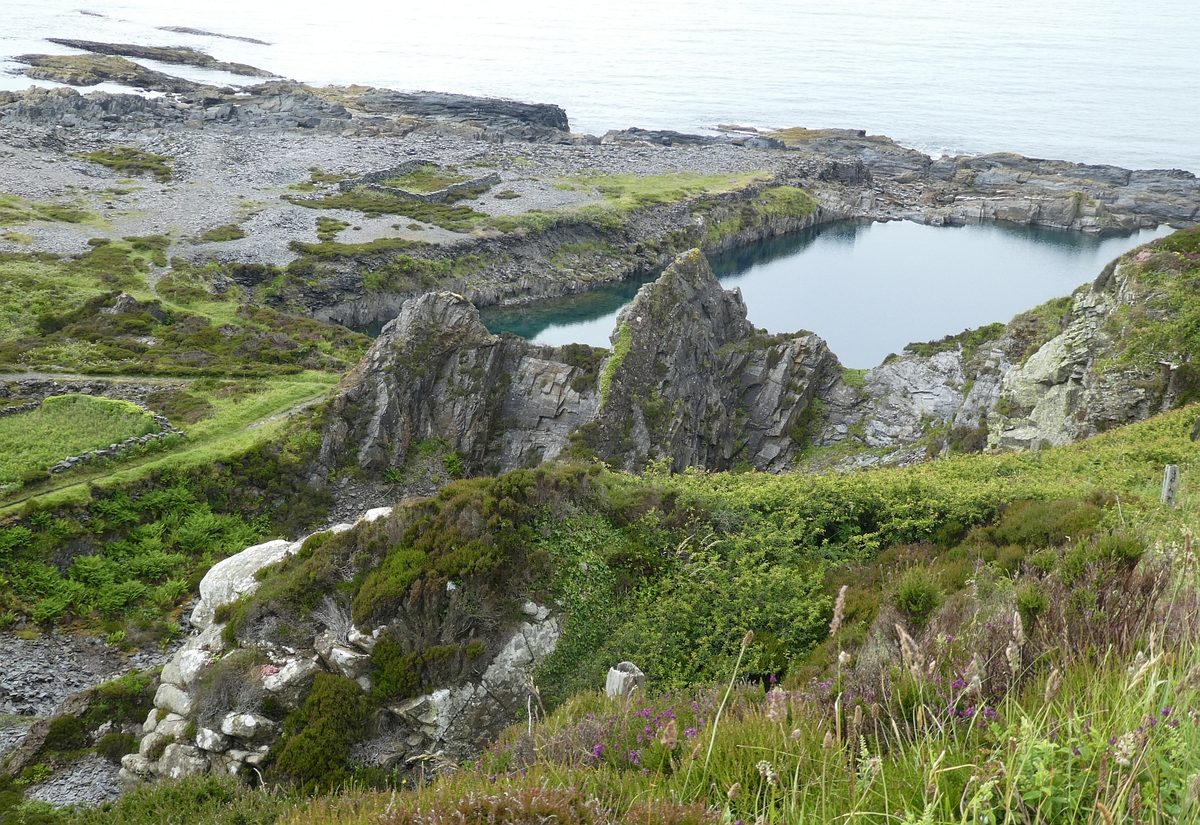
This is the purest bit of quirky Scotland on the list. Easdale is a tiny slate island off Seil, west of Oban, whose quarries flooded in a storm in 1881 and never drained. The result is a set of deep, still, walled ponds and several million perfectly flat waste slates.
Every September a few hundred people from around the world queue up to skim three stones each across one of them. The stone must be Easdale slate and no more than about three inches across, and it has to bounce at least three times before it can be measured. Distance wins. The 2026 championships ran on 4–5 September, with a party the night before and a ceilidh after.
Entry is a few pounds and spectating is cheap. The catch is logistics: you drive to Ellenabeich over the Clachan Bridge — the “Bridge over the Atlantic” — leave the car, and take the small passenger ferry across, and the island has no roads and a single pub. Book a bed in Oban or on Seil months ahead, because everyone else is doing the same.
The Golden Spurtle, Carrbridge — early October
The World Porridge Making Championship has been held in the Cairngorms village of Carrbridge since 1994, and the 2026 edition was on Saturday 3 October. Competitors make traditional porridge from oats, water and salt, plus a speciality round that has produced things no Scot would recognise as porridge.
The prize is a golden spurtle, the wooden stick used for stirring. Entries close well in advance if you want to compete; if you just want to watch, taste and drink whisky in a village hall on an October morning, turn up.
Carrbridge is 25 minutes from Aviemore and sits neatly in a Cairngorms trip. If you are pairing it with hillwalking, our notes on walking routes across Scotland cover what the Cairngorms need in October, which is more than people expect.
Sleep somewhere that isn’t a hotel
Accommodation is where Scotland gets properly strange, in a good way. You can sleep for free in a stone shelter three hours’ walk from a road, or rent a gas-lit cottage on an island with no cars, or take a bed in a 19th-century thatched blackhouse. None of it is expensive by hotel standards. Some of it needs a year’s notice.
A night in a bothy — free, unbookable, and not for everyone
The Mountain Bothies Association maintains around 100 open shelters, most of them in Scotland, and every one is free to use. No booking system exists. You walk in, and if there is space, you stay.
What you get is four walls, a roof, a sleeping platform or bare floor, and often a fireplace. What you do not get is water, a toilet, bedding, light, a warden or any guarantee of a space. You carry a sleeping bag, a mat, a stove, fuel, food, a torch, a way to treat water, and a rubbish bag for everything you brought in.
The Bothy Code is short and non-negotiable. Groups of six or more should not use bothies. No commercial groups. Short stays only. Bury human waste well away from the water supply, using the spade if there is one. Leave dry kindling for whoever comes next. Sign the log book. Observe closures during deer stalking and lambing.
Check the MBA website before you go, because individual bothies close — Ryvoan in the Cairngorms has been shut following a wildfire, and others close for repairs at short notice. Membership costs £25 a year and is optional, but the whole network is run by volunteers with buckets of paint and their own weekends, so join.
Carry a tent anyway. Arriving at nine in the evening to find eight people already asleep on the floor is a normal outcome, and being annoyed about it marks you out as someone who has misunderstood the arrangement.
This is the single most memorable cheap night you can have in the Scottish Highlands, and also the one most likely to go wrong if you are inexperienced. If you have never navigated in poor visibility, go with someone who has.
A cottage on a car-free island
Eilean Shona sits in Loch Moidart on the west coast, has no roads and no cars, and lets around nine cottages sleeping two to eight people. You park near the ruin of Castle Tioram, cross by boat in about 15 minutes, and your luggage arrives by quad and trailer.
Three of the cottages are off-grid and gas-lit, which sounds romantic until you realise it also means no wifi and no phone signal, which is the actual reason to go. Expect from roughly £1,100 a week for a small one, transfers included, and considerably more for the larger houses. It is also one of the most romantic places in Scotland to disappear together.
Summer weeks go 6–12 months ahead. Shoulder-season weeks in May and late September are easier, cheaper, and have fewer midges — which on the west coast is not a small consideration.
Other island stays worth the same effort: the Summer Isles, Shuna in the Firth of Lorn, and a scattering of self-catering places on the smaller Hebrides. Our guide to the Scottish islands works through which ones suit a first visit and which ones need a bit of practice.
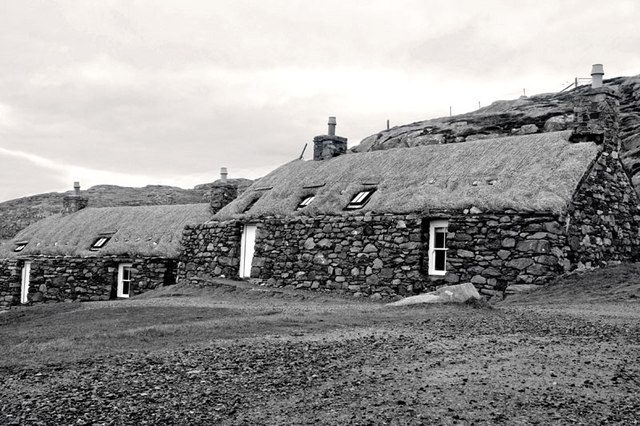
A restored blackhouse at Gearrannan, Isle of Lewis
Gearrannan is a village of drystone, thatched blackhouses on the west coast of Lewis, abandoned in 1974 and restored as self-catering accommodation. The cottages range from small two-person places to a group house sleeping 16, and they sit right above the Atlantic.
Inside they are warm and modernised — underfloor heating, proper kitchens — while the walls are metres thick and the roofs are thatched and roped down against the wind. Sleeping in one, with the sea audible through the wall, tells you more about how people actually lived here than any museum.
Lewis is reached by CalMac from Ullapool to Stornoway, about two and a half hours, or by air from Glasgow, Edinburgh or Inverness. Book vehicle deck space on the ferry early in summer. It pairs naturally with the Callanish standing stones, Dun Carloway broch and some of the emptiest beaches in Europe.
A lighthouse, a station house or a keeper’s cottage
Scotland’s lighthouses were built by five generations of Stevensons, and a good number of the keepers’ cottages beside them now take paying guests — Corsewall in Galloway has been run as a hotel for years, and various shore stations and cottages appear on self-catering sites.
They are almost always remote, usually at the end of a long single-track road, and the good ones look straight out at open water. Check what “lighthouse accommodation” actually means before booking: sometimes it is the tower complex, sometimes it is a modern house 200 metres away with a view of it.
For the general question of which region to base yourself in, our guide to where to stay in Scotland is more use than any single property recommendation.
Camping almost anywhere, legally
This surprises most visitors: Scotland has a statutory right of responsible access, so wild camping is legal on most unenclosed land. Not gardens, not crops, not right beside someone’s house — but on the open hill, yes.
The rules are in the Scottish Outdoor Access Code and they are mostly common sense: small groups, two or three nights maximum in one spot, no fires on peat, carry everything out including the obvious. Do not camp in laybys with a van and call it wild camping; that is a different thing and it is what has soured relations in places like Glen Etive.
One important exception: parts of Loch Lomond and the Trossachs National Park operate camping management zones between March and September, where you need a cheap permit or a place in a campsite. Check the park’s map before you pitch.
Wildlife you cannot see anywhere else in Britain
Scotland’s seabird cliffs are internationally significant in a way that is hard to grasp until you are underneath one. This is the part of the list where I would spend the money.
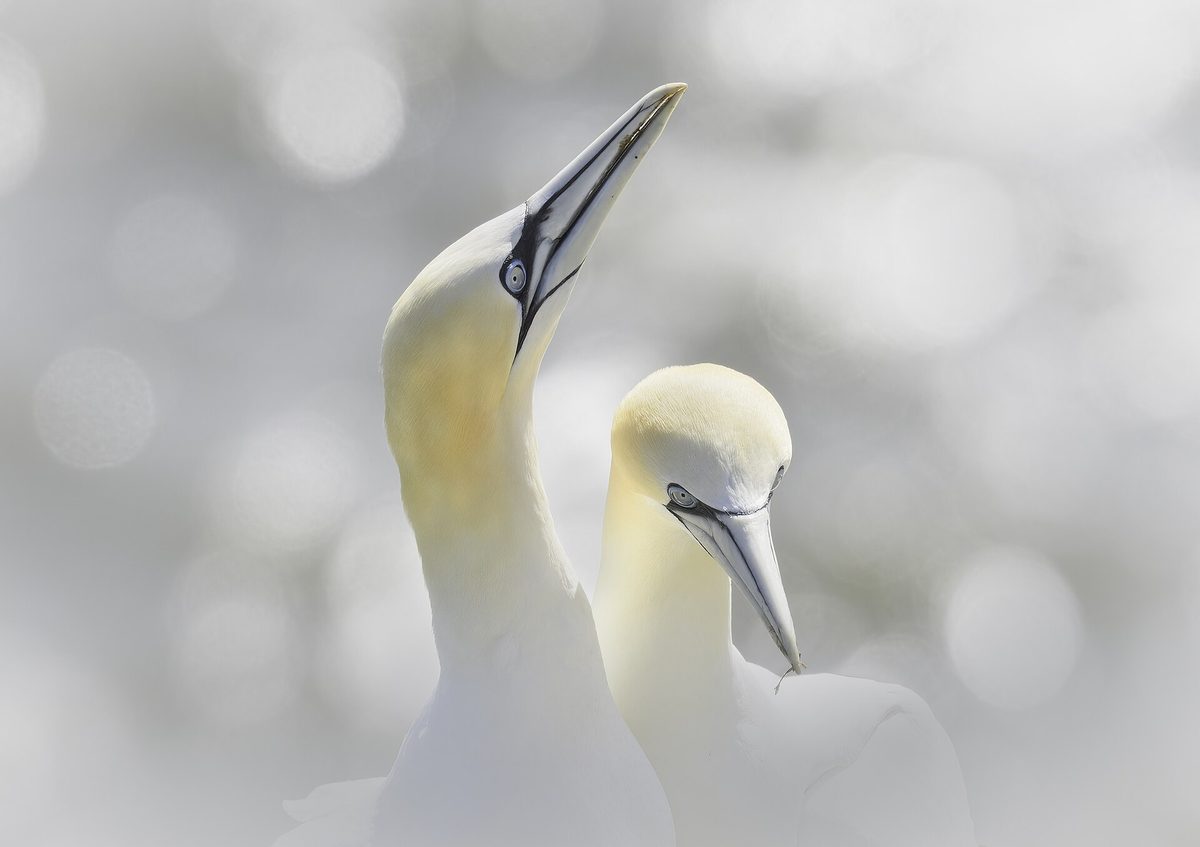
Landing on the Bass Rock — the world’s largest northern gannet colony
The Bass Rock is a volcanic plug in the Firth of Forth that turns white every spring, not with guano but with birds. It holds the largest colony of northern gannets on the planet, and the Scottish Seabird Centre in North Berwick runs the only landing trips.
They cost around £200 a head, are limited to over-16s, and run from late April to September. That is not a typo, and having done it, I think it is fair value: you are put ashore on a rock covered in tens of thousands of large seabirds, with a guide, for a couple of hours, on a boat that carries very few people.
The practicalities matter here. Landings are cancelled at short notice when the swell is wrong — you must give a mobile number when you book, and you should not schedule it on your last day in Scotland. The landing itself involves stepping off a moving boat onto rock, so it needs reasonable balance and mobility. Arrive 30 minutes early.
If £200 is too much, the same centre runs boat cruises around the rock and neighbouring Craigleith for roughly £30–£40, and Craigleith has thousands of breeding puffins in early summer. You do not land, but you get close, and you can be back in Edinburgh within the hour — North Berwick is about 35 minutes by train.
One caution I would rather give you than not: avian flu hit Scotland’s gannet colonies hard from 2022, and numbers and access arrangements have shifted since. Check the current position when you book.
Noss and Troup Head — the cliffs almost nobody visits
Noss, off Bressay in Shetland, is a national nature reserve with sea cliffs rising to about 180 metres, packed in summer with gannets, guillemots and fulmars. Getting there involves a ferry to Bressay, a drive across it, and then a three-minute crossing in a small inflatable run by NatureScot, which is a highlight in its own right.
The reserve opens for a short summer season, roughly mid-May to late August, and not every day — check NatureScot before you commit a day to it. The walk round the island is about five miles on grass, with no shelter and a cliff edge you will want to respect.
On the mainland, Troup Head on the Aberdeenshire coast is the only mainland gannet colony in Scotland, run by the RSPB. It is free, the car park has about 20 spaces, and the path from it is roughly 900 metres of rough track followed by steep steps. You end up standing more or less level with nesting gannets. April to August is the window.
Both of these give you 80% of the Bass Rock experience for nothing, minus the boat. What they don’t give you is being surrounded on all sides.
Snorkelling with basking sharks
Basking sharks are the second-largest fish in the world, they arrive in the Hebrides to feed on plankton in late summer, and licensed operators will take you snorkelling near them.
Basking Shark Scotland, working out of Oban and Coll, is the best known. A day trip runs at roughly £200 per person; multi-day and week-long trips run into four figures. The season is broadly late June to early September, with August usually the best odds, and nothing is guaranteed — these are wild animals in open water and some days you see none.
You will be in a 5mm or thicker wetsuit with hood, gloves and boots, in water somewhere around 12–14°C, and you need to be a competent, comfortable swimmer. There are strict rules about how you approach the sharks: you get in the water quietly and let them come to you.
Book peak August dates three to six months out. If a trip is cancelled for weather, most operators will move you rather than refund, so build slack into your plans.
Scotland’s free snorkel trails
Less glamorous, far cheaper, and genuinely good. The Scottish Wildlife Trust has established 13 snorkel trails around the coast, from Berwickshire to the Hebrides, each with a downloadable leaflet describing specific entry points, what lives there and how sheltered it is.
They are free and completely unsupervised, which means the safety judgement is entirely yours. You need a proper wetsuit — Scottish sea temperatures run roughly 8–14°C through the year — plus a hood, gloves, boots, a buddy and an honest assessment of the swell.
What you see is better than you expect: kelp forests, sea urchins, starfish, wrasse, occasional seals taking an interest. Pick a calm morning and a sheltered bay on an incoming tide.
Diving the scuttled German fleet in Scapa Flow
In June 1919 the interned German High Seas Fleet was scuttled by its own crews in Scapa Flow. Most of it was salvaged; seven major warships were not, and they are still on the seabed off Orkney.
Three battleships and four light cruisers sit between roughly 12 and 45 metres down, and Scapa is regularly listed among the best wreck-diving sites in the world. Charter boats and liveaboards operate out of Stromness, generally from spring to autumn.
You need a dry suit, cold-water experience and, for the deeper wrecks, appropriate qualifications and gas. Operators will ask about your logged dives, and they are right to. Note that HMS Royal Oak, torpedoed in 1939 with heavy loss of life, is a protected war grave and diving on it is prohibited.
Non-divers get a decent version of the story at the Scapa Flow Museum in Lyness on Hoy, which is worth the small-ferry hop on its own.
Journeys where getting there is the whole point
Scotland has a set of transport oddities that exist because the geography demanded them, not because a tourist board invented them. They are cheap, they run to a timetable, and most people drive straight past.
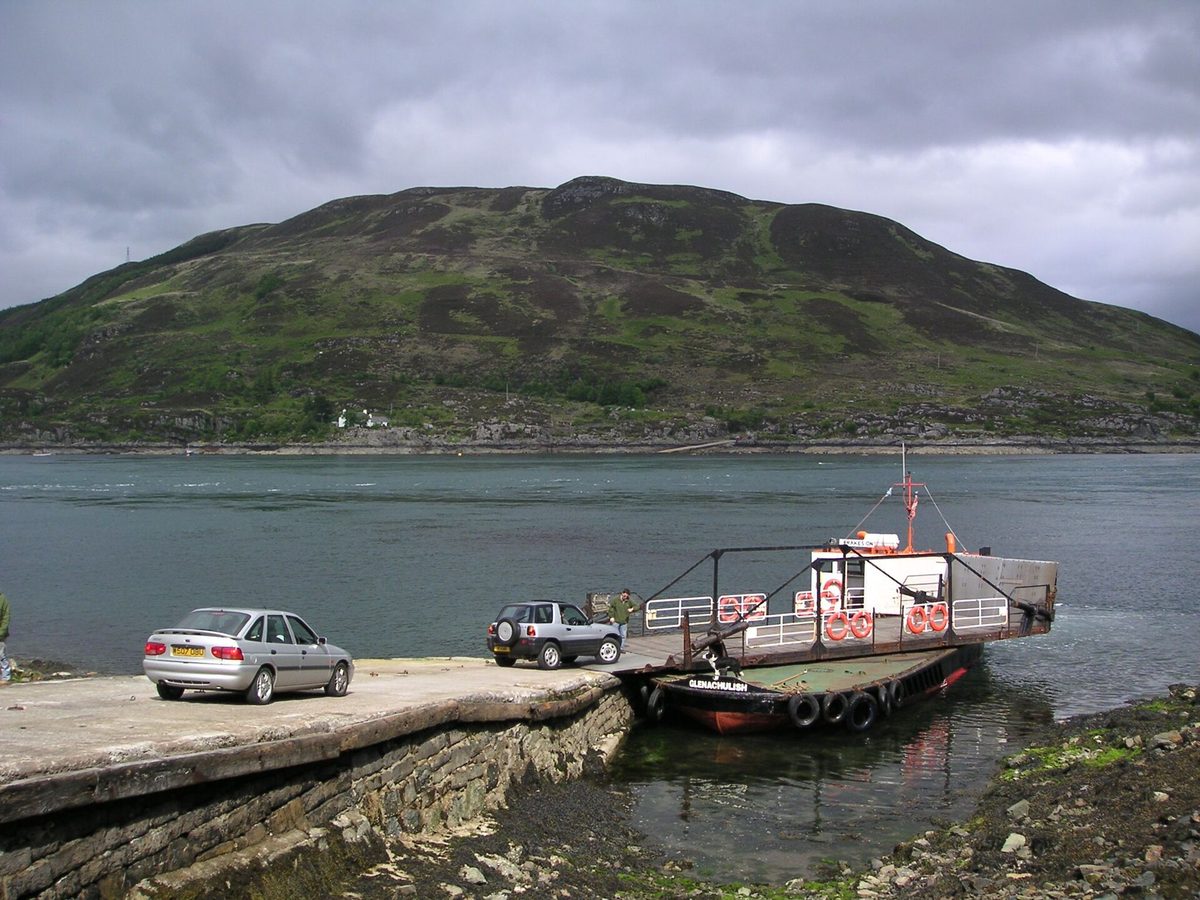
The world’s last hand-operated turntable ferry
The MV Glenachulish was built in 1969 and is the last manually operated turntable ferry still working anywhere. It carries six cars across the Sound of Sleat from Glenelg to Kylerhea on Skye, and the deck physically rotates so vehicles drive on and off forwards. Two crew turn it by hand.
It runs seven days a week from April to mid-October, roughly 10am to 6pm, every 20 minutes or as demand requires. A car with up to four people is about £20 one way; foot passengers around £5. There is no booking — you join the queue on the slipway.
The approach is half the pleasure. From Shiel Bridge you climb the Mam Ratagan pass, a single-track road with hairpins and passing places that tops out with a view down Loch Duich to the Five Sisters of Kintail. Take it slowly; it is not a road to hurry on, and it is the last place you want to meet a motorhome at speed.
The ferry is community-owned, and using it is a considerably better introduction to the Isle of Skye than queueing for the bridge at Kyle of Lochalsh. There is also an otter hide on the Kylerhea side, which is genuinely one of the better places in Scotland to see them at low tide.
The world’s shortest scheduled flight
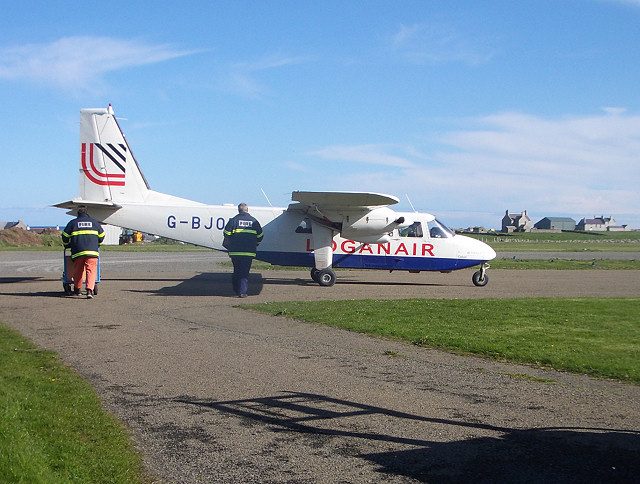
Loganair flies between Westray and Papa Westray in Orkney. The distance is 1.7 miles. The scheduled flight time is a minute and a half, actual airborne time is closer to 60 seconds, and the record is 53 seconds.
The aircraft is an eight-seat Britten-Norman Islander with the pilot sitting right in front of you and no cabin crew, because there is no time for any. It is a working service for islanders, not a novelty ride, and the fare reflects that — usually somewhere under £30 one way, booked directly with Loganair.
The sensible way to do it is as part of a longer Orkney trip: fly Kirkwall to Papa Westray, spend a day at the Knap of Howar — the oldest standing stone houses in northern Europe, older than Skara Brae — then hop the 90 seconds to Westray and take the ferry back to Kirkwall.
Weight limits are real on these aircraft, and flights get cancelled by fog and crosswinds. Don’t plan a connection out of Kirkwall the same afternoon.
Landing on a beach at Barra
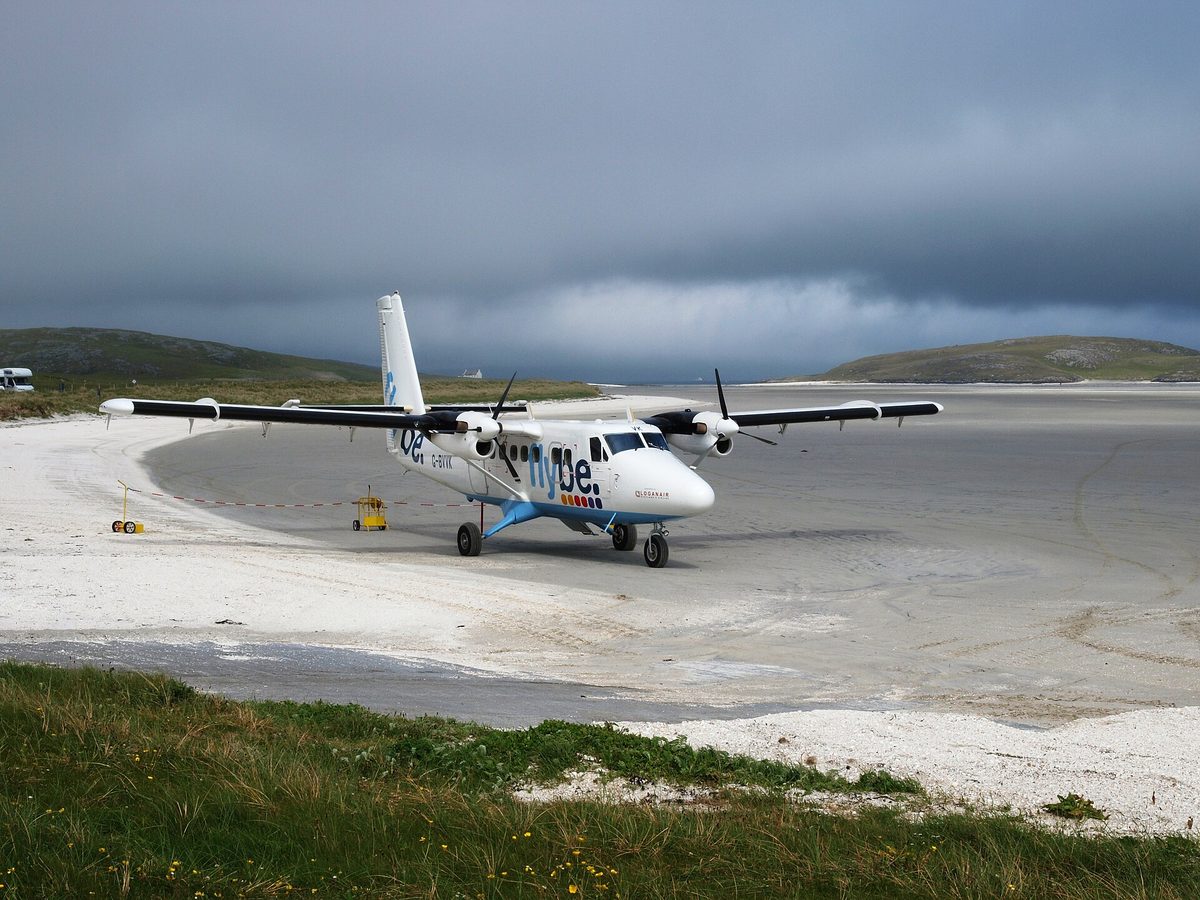
Barra Airport uses Traigh Mhòr, a tidal cockle strand, as its runway. It is the only airport in the world where scheduled airline services land on a beach, and the timetable is set by the tide rather than by demand, so departure times move day to day.
Loganair flies a Twin Otter from Glasgow in roughly an hour. Windsocks mark the runway, the terminal is a small building with a very good café, and when the tide is in, the runway is under the sea.
If you are not flying, you can stand at the terminal and watch, which costs nothing and is a fine way to spend 40 minutes. You cannot walk on the beach when a flight is due. Cockle pickers work it the rest of the time.
Barra also has Kisimul Castle sitting in the bay at Castlebay, reached by a small boat — though check whether it is open, as it has been closed for conservation work. Our round-up of Scotland’s castles flags which ones are currently accessible.
Cape Wrath by ferry, then minibus
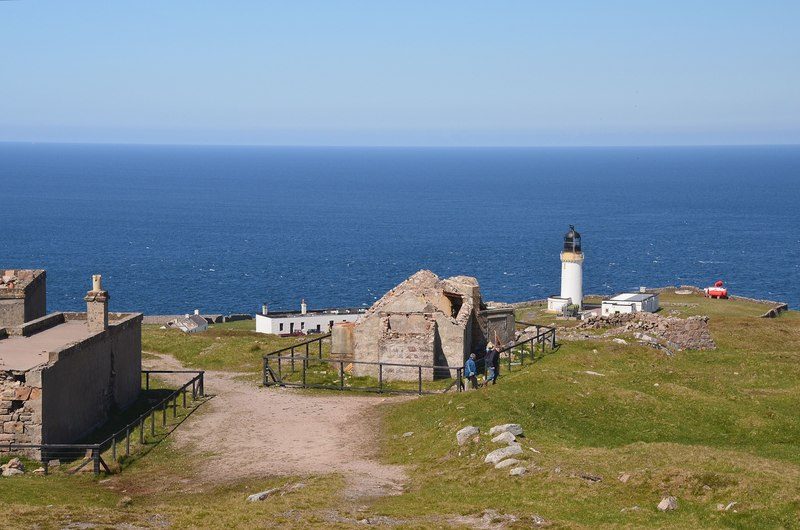
Cape Wrath is the north-west corner of mainland Britain, and there is no road to it. Getting there means a small passenger ferry across the Kyle of Durness from Keoldale — about ten minutes, roughly £6.50 return for an adult — then an 11-mile minibus ride on a rough track that takes about an hour each way and costs around £16–£20 return.
Allow four to six hours for the whole thing, and expect roughly an hour at the lighthouse before the bus turns round. There is a small café at the top, the Ozone, which has kept some very cold people alive.
The service runs May to September, seven days a week, weather and tides permitting. In May it may only run twice a day; from June it starts earlier. Book the minibus ahead; the ferry fare is paid on the boat.
The complication nobody mentions on the coach tours: most of the peninsula is a Ministry of Defence live firing range. When exercises are on, the road closes and the service stops entirely, sometimes for days. Check the range status before you drive to Durness, which is a long way to go on spec — it is a natural detour off the North Coast 500 route, but a full day out of it.
The Corryvreckan whirlpool
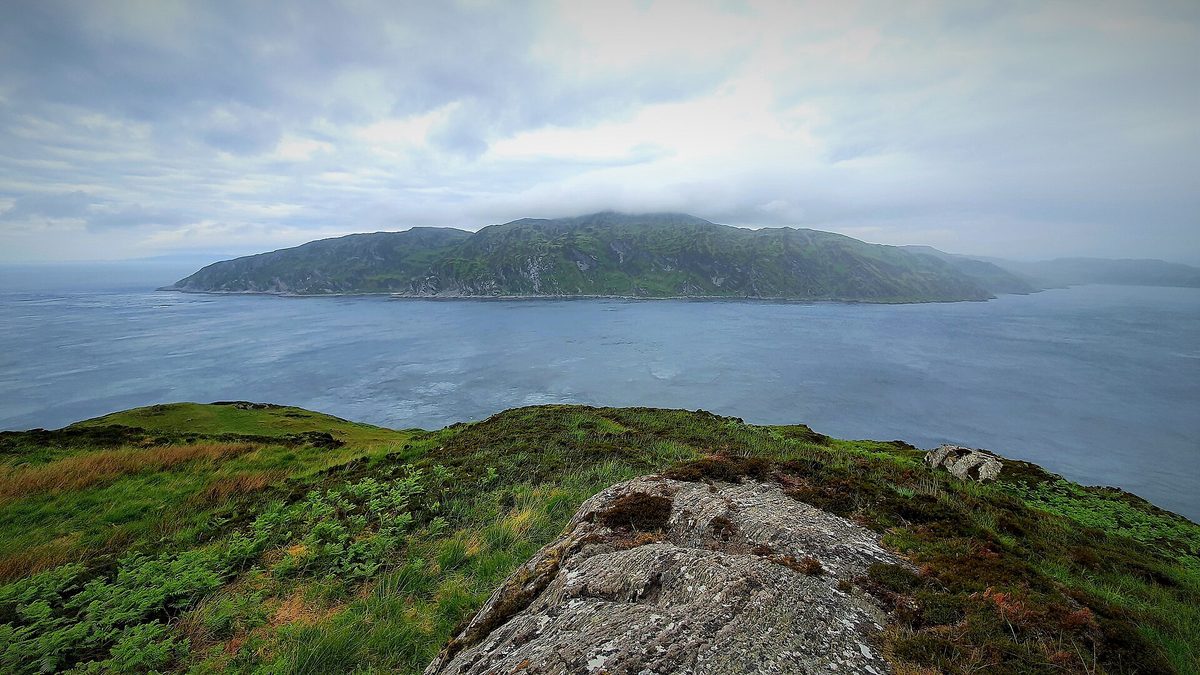
Between Jura and Scarba, the tide funnels through a narrow gap over an underwater pinnacle and produces the third-largest whirlpool in the world. On a big spring tide it makes standing waves and a noise you can hear from a mile away. George Orwell nearly drowned in it in 1947 while writing Nineteen Eighty-Four on Jura.
Seafari runs RIB trips from Easdale, near Oban: a 1 hour 45 minute whirlpool special at around £55 for an adult, a two-hour wildlife tour at similar money, and a three-hour version adding whales and eagles at about £75. Children’s fares run roughly £45–£62.
Departure times are dictated entirely by the tide, so you cannot pick a convenient slot — you take what the moon offers. Sailings are timed for the flood, and the operators know exactly how close is sensible.
Dress as though you will be soaked, because in a RIB you probably will be. Waterproofs are provided; your camera’s waterproofing is your problem.
Up the Falkirk Wheel in a canoe
The Falkirk Wheel is the only rotating boat lift in the world: a 35-metre steel machine that picks boats up out of the Forth & Clyde Canal and swings them into the Union Canal above. It replaced a flight of 11 locks that took most of a day. The turn itself takes about five minutes and uses roughly the same electricity as boiling eight kettles.
The standard boat trip costs somewhere around £20 and is fine. The better version is going up in a canoe. One local operator holds permission to paddle clients along the canal and into the wheel’s gondola, which means you are sitting at water level, in a small boat, being lifted 24 metres through the air.
Sessions run in the warmer months, take a couple of hours and need booking ahead because the slots are limited by the wheel’s timetable. It is genuinely suitable for beginners — canal water is flat and slow.
Falkirk is 30 minutes from both Edinburgh and Glasgow by train, which makes this one of the few unusual things here that fits into a half-day between cities. The Kelpies are ten minutes away if you want to tick them off at the same time.
The last seagoing paddle steamer in the world
The PS Waverley was built in 1946 and still sails, under steam, with visible paddle wheels and an engine room you can look down into while the pistons work. She runs Clyde excursions in summer — Glasgow to Rothesay, round Arran, up Loch Long — and tours other parts of Britain for a few weeks each year.
Fares vary by route; there is currently a small fuel surcharge on top, because keeping her in steam costs somewhere around £11–£12 a minute. That figure alone tells you why she is the last one.
Sailings are published each spring and popular dates sell out. If you want the best of it, take a full-day trip rather than a short hop, get a seat outside on the upper deck, and go down to watch the engine at least twice. Our notes on getting around Scotland cover how the Clyde ferries and trains connect for this.
Walk to an island at low tide
Tidal islands are the cheapest unusual thing on this list — free, self-guided, and dependent on you reading a tide table properly. Get it wrong and you become an RNLI statistic, which happens with depressing regularity.
The rule for all of them: work out low water for that specific day, note the safe window posted locally, add a large margin, and never rely on the fact that other people are walking out.
St Ninian’s Isle, Shetland
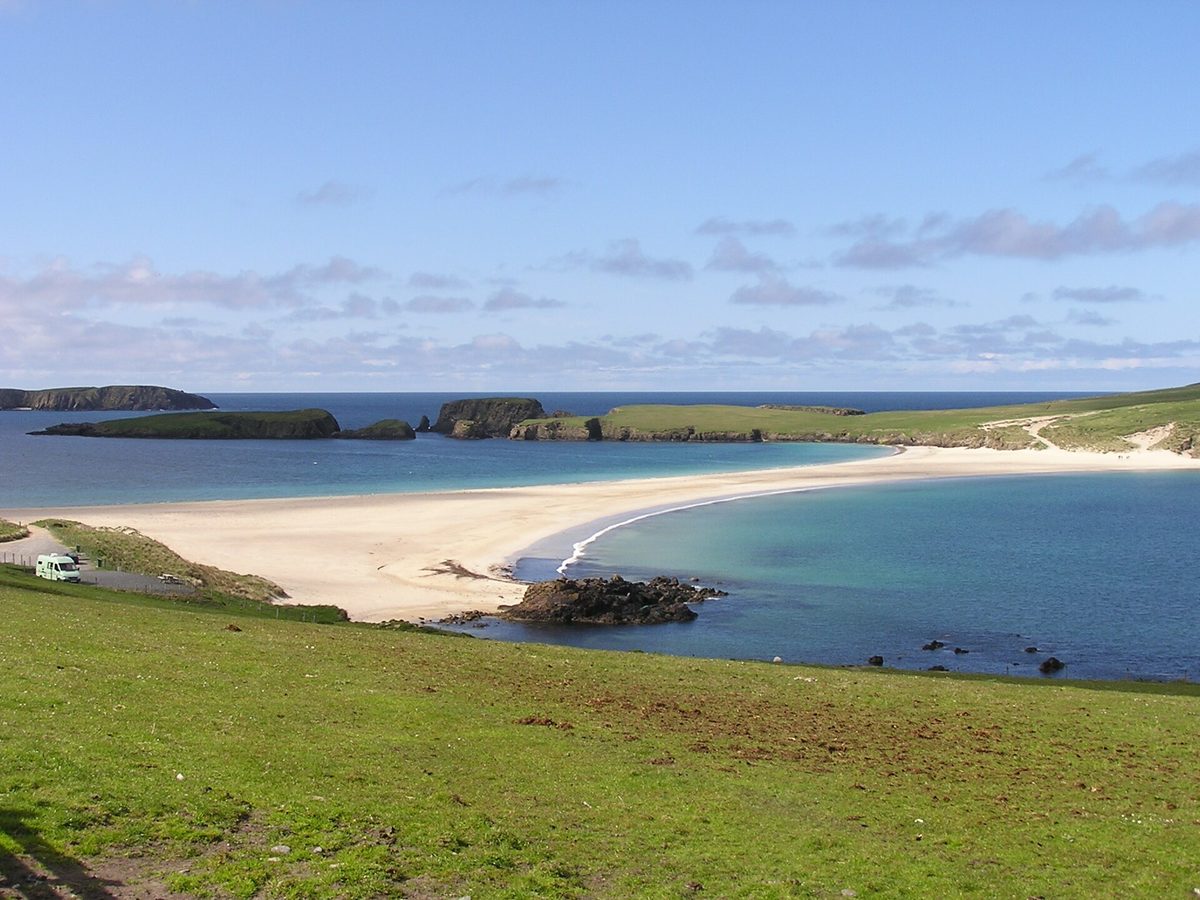
A 500-metre curve of pale sand joins St Ninian’s Isle to mainland Shetland, and unlike most causeways it is a true tombolo — sand banked up by waves meeting from both sides. It is usually walkable at most states of the tide, which makes it the most forgiving crossing here.
On the island there is the ruin of a 12th-century chapel where, in 1958, a schoolboy helping on an excavation found a hoard of Pictish silver under a slab. The originals are in the National Museum in Edinburgh; Shetland Museum has replicas.
It is about 25 minutes’ drive south of Lerwick on the way to Sumburgh, and takes an hour if you just walk over and back, or half a day if you circle the island. If you are already coming for Up Helly Aa, note the beach in January is a very different proposition — beautiful, and blowing hard.
Cramond Island, Edinburgh
Ten minutes off the Edinburgh bypass there is a wartime island you can walk to. The causeway runs 1.7 kilometres out into the Forth, flanked the whole way by a line of concrete anti-boat pylons that look like a piece of brutalist sculpture and were built to stop submarines.
The safe crossing window is roughly two hours either side of low water, giving about a three to four hour margin, and it is posted on a board at the start. Edinburgh also runs a text service for the times. The walk out takes 20 to 30 minutes and the island itself has gun emplacements to poke around in.
People get cut off here constantly, often because they walked out at the end of the window and then lingered. The RNLI issues warnings about it every spring. Set an alarm on your phone for the turnaround time and obey it.
Get the bus from the city centre to Cramond, walk the promenade, do the island and have chips afterwards. It is the best three hours of unusual Scotland available within a bus fare of a capital city.
Davaar Island, Kintyre
At the mouth of Campbeltown Loch, a shingle spit called the Dhorlin surfaces at low tide and lets you walk out to Davaar Island. It is safe roughly three hours either side of low water, and the crossing takes 15 to 20 minutes from the end of the spit, or around 40 minutes from the parking area off the Kintyre Way.
What you come for is in one of the island’s seven caves: a life-size painting of the Crucifixion, made in 1887 by a local art teacher called Archibald MacKinnon, who said he had been shown it in a vision and did not tell anyone he had painted it. The town was initially convinced it was a miracle. He later owned up, and has been forgiven.
Bring a torch — the cave is dark and the painting takes a moment to resolve. There is also a Stevenson lighthouse at the far end and, usually, wild goats.
Campbeltown is a three-hour drive from Glasgow down a long peninsula, so combine it with the town’s three working distilleries rather than making a special trip.
Oronsay, from Colonsay
The Strand is a mile of tidal sand between Colonsay and Oronsay, crossable for roughly three hours either side of low water. Oronsay has a 14th-century priory with a fine collection of carved grave slabs, an RSPB reserve, and corncrakes calling in early summer.
This is the most committing of the four, because you are crossing to an island with no ferry off it and a limited window, and Colonsay itself is a small island reached by CalMac from Oban two or three times a week. If you misjudge it you are stuck for eight hours.
Do it as part of two or three days on Colonsay rather than a rushed day trip. The island has a good hotel, a bookshop, a brewery, and beaches you will have entirely to yourself.
Whisky the way people here actually drink it
Standard distillery tours have become slick and, frankly, samey: a walk past the mash tun, a look at the stills, two small drams in a branded glass. The better version happens in the warehouse, and hardly any visitors ask for it.
What a warehouse tasting actually is
A guide takes you into a working dunnage warehouse — earth floor, low roof, casks stacked three high on wooden runners, air thick with what the industry calls the angels’ share. They draw whisky straight out of a cask with a valinch, a long copper tube, and you drink it at cask strength, undiluted, standing next to where it has been sleeping for 15 years.
You will typically taste three to six casks over 60 to 90 minutes, often including things that will never be bottled. Expect roughly £40–£100 depending on the distillery and the age of what is opened.
Practicalities: you must be over 18, warehouses are cold and unheated, floors are uneven, and cask strength runs to 55–60% ABV. Take the driver’s samples they offer in little bottles if you have a car. In summer these sessions run only a few times a week and sell out four to eight weeks ahead.
Campbeltown: the region that nearly died
Campbeltown once had more than 30 distilleries and now has three. Springbank still floor-malts all its own barley, which almost nobody does, and its sister operation, the independent bottler Cadenhead’s — Scotland’s oldest, founded in 1842 — runs a warehouse tasting on Bolgam Street that lasts about an hour and pours drams from all over Scotland and beyond.
Note that the warehouse tasting does not include a distillery tour; you book those separately. Springbank’s own tours sell out fast and are released in batches, so watch the site rather than emailing hopefully.
Campbeltown is a long way from anywhere, which is exactly why it is quiet. Give it two nights. There is more on the wider whisky map in our guide to Scotch whisky distilleries.
Filling your own bottle
A growing number of distilleries let you hand-fill a bottle straight from a cask, wax it and write the label yourself. You are usually paying £80–£150 for a 70cl bottle that exists nowhere else, and it is a far better souvenir than the airport duty-free equivalent.
Ask specifically about “hand-fill” or “distillery exclusive” when you book a tour, because it is often not advertised prominently. Some distilleries limit it to visitors on particular tours, and some cask offerings run out mid-season.
If you want to go further, blending sessions where you build your own vatting from component casks run at several distilleries for around £60–£90, and you go home with a small bottle of something genuinely your own.
Fèis Ìle, Islay — late May
Islay’s festival of music and malt runs for a week at the end of May, with each distillery on the island taking a day and throwing open its doors: warehouse tastings, one-off festival bottlings, ceilidhs, boat trips, and a queue at seven in the morning for the limited bottles.
The whole island effectively sells out. Accommodation and CalMac vehicle spaces go close to a year ahead, and if you leave it to March you will be sleeping on the mainland and day-tripping, which does not work.
Campbeltown runs its own smaller Malts Festival in May, and Speyside has one in the same month. If you want the atmosphere without the scramble, those two are far easier to arrange, and pair well with the food side of things covered in our guide to Scottish food and drink.
Unusual things to do in Scotland’s cities
Not everything odd is three hours down a single-track road. Edinburgh and Glasgow both have things that almost no visitor finds, largely because they are small, volunteer-run and terrible at marketing themselves.
Sharmanka Kinetic Theatre, Glasgow
On Trongate, in a first-floor room, a Russian sculptor called Eduard Bersudsky has built a collection of mechanical figures out of scrap metal, carved wood and salvaged clock parts. They are switched on in sequence, in the dark, with music and lighting, and they perform for about an hour.
Describing it makes it sound like a curiosity. It is not. The pieces are about labour, Soviet history and mortality, and some of them are quietly devastating. Bersudsky also co-created the Millennium Clock Tower in the National Museum of Scotland in Edinburgh, which is the same sensibility on a grander scale.
Shows run to a published schedule rather than continuously, tickets are around £10, and you book online. Give it 90 minutes and do not take a fidgety six-year-old.
The Britannia Panopticon, Glasgow
Above a shop on the Trongate is the oldest surviving music hall in the world, opened in 1857 over a pub called the Britannia Vaults. Stan Laurel made his stage debut on it in 1906. It was sealed up above a false ceiling for decades and rediscovered largely intact.
It has not been restored to a polished state, which is the point — you walk into a peeling Victorian auditorium with the original balcony and a stage you are allowed to stand on. Volunteers run tours and talks, and there are still occasional performances.
Opening hours are limited and volunteer-dependent, and admission is a couple of pounds or a donation. Check before you go, because this is not a place with a rota of paid staff.
Gilmerton Cove, Edinburgh
Underneath a house in the Edinburgh suburb of Gilmerton is a series of chambers, passages and benches hand-carved out of solid sandstone. Nobody knows who made them or why. The theories run from an 18th-century blacksmith’s drinking den to Covenanters, smugglers and worse.
Tours are guided, small and by advance booking only — expect around £10 and about 45 minutes. You go down a narrow stair into a low, cold, entirely silent space ten minutes from a bus stop, which is a strange thing to do on a Tuesday afternoon.
It is genuinely claustrophobic in places, and you need to book, because they cannot take walk-ups. Pair it with the city’s better-known underground closes if that is your sort of thing.
Learn something you can only learn here
The most interesting days I have had in Scotland were the ones where somebody taught me to do something badly.
A week of Gaelic on Skye
Sabhal Mòr Ostaig, in Sleat on the south end of Skye, is Scotland’s Gaelic college, and it runs short courses for outsiders — residential sessions at Easter and through the summer, and online classes over the winter.
You can go as a complete beginner. Courses run from a couple of days to a week or more, cover language plus things like song, fiddle and piping, and you can stay on campus. The setting, looking across the Sound of Sleat to Knoydart, is absurd for a language school.
Summer places open for booking months ahead and popular weeks fill. It is a very different way to spend time on Skye from queueing at the Old Man of Storr, and you leave able to pronounce the place names, which turns out to be its own reward.
Watching Harris Tweed being woven
Harris Tweed is the only fabric in the world protected by its own Act of Parliament. By law it must be made from pure new wool, dyed and spun in the Outer Hebrides, and handwoven by the weaver at their own home in the islands. Every length is inspected and stamped with the Orb mark.
Weavers across Lewis and Harris open their sheds to visitors, and the machine is a treadle-powered Hattersley or a Bonas-Griffith loom that sounds like a small train. Watching a length come off it, then buying it from the person who made it, is a considerably better hour than a gift shop.
Arrange it locally — ask at your accommodation or the Harris Tweed shops in Tarbert and Stornoway. Some weavers welcome drop-ins, most prefer a call first, and none of them are running a visitor attraction.
Wild swimming with someone who knows what they are doing
Cold-water swimming has gone from eccentric to normal in Scotland, and there are now qualified guides running sessions in lochs and sea lochs across the country — commonly around £40–£70 for a couple of hours including a wetsuit if you need one.
Go with a guide the first time. Scottish water runs 5–9°C in winter and 12–15°C at best in late summer, and cold water shock is a real physiological event, not a figure of speech. A guide will manage entry, time you, and get you into dry clothes before the afterdrop hits 20 minutes later.
Look for someone with an open-water coaching qualification and proper insurance. Bright hat, tow float, never alone, and no alcohol before or straight after. The reward is a February morning in a Highland loch with the hills upside down in the water and nobody else awake.
Playing the golf course that was lost for 70 years
Old Tom Morris laid out a course on the machair at Askernish on South Uist in 1891. It was then largely forgotten, grazed over and left to the sheep for the better part of a century, until a greenkeeper on holiday worked out what he was standing on. It reopened in 2008.
What makes it worth the journey is that it has been restored rather than rebuilt. There is no irrigation and effectively no chemical input; sheep and cattle graze it through the winter, the fairways are natural machair turf over shell sand, and the whole thing sits between dunes and the Atlantic with no clubhouse worth the name.
Green fees run roughly £45–£70 depending on the season, which for a genuine Old Tom Morris links is remarkable. You book by phone or online, and you may well be the only group out.
South Uist is reached by CalMac from Oban or Mallaig, or by air to Benbecula. It is a long way for 18 holes, so combine it with the Hebridean beaches and the Askernish machair in flower in June. Our guide to golf in Scotland covers the famous courses; this is the opposite of those.
Standing under a genuinely dark sky
Galloway Forest Park was the UK’s first Dark Sky Park, designated in 2009. Moffat became Europe’s first Dark Sky Town, the Isle of Coll is a Dark Sky Community, and the Tomintoul and Glenlivet area in the Cairngorms has its own designation.
The season is roughly October to March, because in June it barely gets dark this far north at all. You need a clear night, no moon, and about 20 minutes with no phone screen for your eyes to adjust.
The Milky Way from Galloway on a hard, frosty January night is the single cheapest remarkable thing in this guide, and it needs no booking at all. Wrap up far more than feels necessary; standing still in the dark at 0°C for an hour is colder than walking at −5°C.
How to actually plan a trip built around this
The mistake is trying to do all of it. These experiences are scattered across a country that takes longer to drive than people expect, and several of them are mutually exclusive by season.
Pick one anchor and build round it. Choose the single thing you would be sorry to miss — Up Helly Aa, a Bass Rock landing, a week on Colonsay — and fix that date first. Everything else flexes around it. Trying to combine a January fire festival with basking shark snorkelling is not a trip, it is two trips.
Book in this order. Ferries and island accommodation first, because they run out earliest. Then any fixed-date, limited-capacity experience. Then flights, which stay available longest. CalMac vehicle deck space for Islay, Barra, Colonsay and Harris in July and August genuinely does sell out months ahead.
Lead times that catch people out. A year for Up Helly Aa beds and Fèis Ìle. Six to twelve months for summer weeks on private islands and popular self-catering. Three to six months for August basking shark trips and peak CalMac crossings. Two to four months for Bass Rock landings. Four to eight weeks for warehouse tastings. Days, or nothing at all, for tidal islands, bothies, Cape Wrath and the turntable ferry.
Allow for weather cancellations. Boat-based experiences in Scotland get cancelled, and the smaller the boat the more often. Never schedule one for your final day, and if something matters a great deal, give yourself two possible dates.
Seasons, honestly. Winter gets you fire festivals, dark skies, empty roads and cheap accommodation, at the cost of six hours of daylight and closed attractions. May and June are the sweet spot: seabirds nesting, long light, fewer midges than August, everything open. July and August are busy and midgy on the west coast. September is underrated. Our guide to the best time to visit Scotland goes month by month.
Getting around. You will want a car for most of this, and a small one — single-track roads with passing places are not the place for a large SUV you are not used to. The exceptions are Edinburgh, Glasgow, Cramond Island, Stonehaven and the Waverley, all of which work fine by train. If you would rather not drive at all, small-group tours cover some of this, though not the island stays or the bothies.
Where to slot it into a longer route. Cape Wrath, Sandwood Bay and the turntable ferry all sit near the north and west coast driving routes; Bass Rock, Cramond and Beltane work from Edinburgh; Campbeltown and Davaar are a Kintyre loop of their own. Our sample Scotland itinerary shows how the driving distances actually stack up, and the practical travel tips page covers midges, single-track etiquette and what to carry.
The honest bit: what underwhelms, and what to skip
Every guide tells you what to do. Very few tell you what disappointed them, so here is my list.
The Fairy Pools. They were lovely when about 40 people a day went. Now there is a large paid car park, a queue on the path and a line of people waiting to photograph the same pool. The water is beautiful and about 8°C. If you must, go at seven in the morning; otherwise Skye has a dozen better walks with nobody on them.
The Kelpies. Genuinely impressive engineering and worth 20 minutes off the motorway. They are not a half-day, they are not remote, and they are on every list of unusual things to do in Scotland purely because they photograph well.
Loch Ness monster exhibitions. There are competing attractions in Drumnadrochit and neither will change your life. The loch itself, from the quiet south side road, is a far better use of the same afternoon — our guide to Loch Ness and Inverness covers the good viewpoints.
The world’s shortest street in Wick. It is a doorway. It is 2.06 metres of doorway with a sign above it. Fine if you are already driving past on the north coast; not a destination.
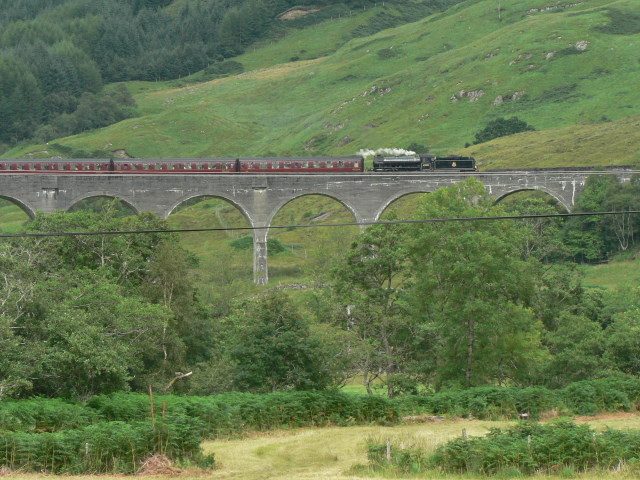
The Jacobite steam train. Not bad — just no longer unusual. Tickets sell out months ahead, prices have climbed steeply, and you can watch the train cross the Glenfinnan Viaduct for free from the path above the visitor centre, which is the shot everyone actually wants.
Paid “Highland cow experiences”. Some are proper working farms and worth it. Others are a field, a bucket of feed and a £25 charge for 20 minutes. Ask what you are actually getting before you book.
St Kilda day trips, with a caveat. The archipelago is extraordinary and I would still go. But it is three hours or more each way in open Atlantic swell, costs around £250, is cancelled often, and a meaningful number of people spend the crossing being violently ill. Book it early in your trip so a cancellation can be rescheduled, and take the seasickness tablets the night before, not on the pier.
The common mistakes are more mundane. People underestimate driving times by about a third, because single-track roads with passing places average closer to 30mph than 60. They assume small ferries and seasonal services run all year, and turn up in November to a locked slipway. They arrive on the west coast in July without head nets and lose an evening to midges. And they book Skye in August three weeks out and end up staying 90 minutes away in Kyle. Two or three unusual things done properly beat eight done in a rush — and if you want the scenery version of the same argument, our list of the most beautiful places in Scotland makes the same point about the Highlands.
Frequently asked questions
What is the most unusual thing to do in Scotland?
For sheer strangeness, Up Helly Aa in Lerwick on the last Tuesday of January — a thousand people in Viking dress burning a longship, followed by all-night hall parties. Nothing else in Britain is comparable. It is free to watch, but Shetland accommodation and travel need booking around a year in advance.
Can you really sleep in a bothy in Scotland for free?
Yes. The Mountain Bothies Association maintains about 100 open shelters, mostly in Scotland, and there is no charge and no booking. You carry everything: sleeping bag, mat, stove, food, torch and a bag for your rubbish. Space is first come, first served, so take a tent as backup.
How far in advance should I book unusual experiences in Scotland?
Roughly a year for Up Helly Aa beds and Fèis Ìle on Islay. Six to twelve months for private-island cottages. Three to six months for August basking shark trips and peak CalMac vehicle spaces. Two to four months for Bass Rock landings. Four to eight weeks for whisky warehouse tastings. Tidal islands and bothies need no notice at all.
Is wild camping legal in Scotland?
Mostly, yes. Statutory access rights allow responsible wild camping on most unenclosed land, following the Scottish Outdoor Access Code — small groups, two or three nights maximum, no fires on peat, take everything away. The main exception is the camping management zones in Loch Lomond and the Trossachs National Park between March and September, where a permit is required.
What unusual things can you do in Scotland without a car?
Plenty. Cramond Island is a bus ride from central Edinburgh, the Bass Rock boats leave from North Berwick, 35 minutes by train. The Stonehaven Fireballs are 20 minutes by train from Aberdeen, the Waverley sails from Glasgow, and Orkney and Shetland work fine on foot plus local buses and inter-island flights.
How much does it cost to land on the Bass Rock?
Around £200 per person through the Scottish Seabird Centre in North Berwick, for over-16s only, running from late April to September. Landings depend on sea conditions and are cancelled at short notice, so give a mobile number when booking and avoid scheduling it on your last day.
When is the best time of year for unique experiences in Scotland?
May and June for seabirds, long daylight and most things open with fewer midges. Late June to early September for basking sharks. January for the fire festivals. October to March for dark skies. If you can only travel in high summer, book ferries and island beds several months out.
Are these unusual experiences suitable for families?
Some are ideal — tidal island walks, the beach landing at Barra, the turntable ferry, watching the Golden Spurtle, stone skimming at Easdale. Others have age limits: Bass Rock landings and warehouse tastings are 16-plus and 18-plus respectively, and basking shark snorkelling needs confident swimmers. Bothies with young children are hard work but not impossible.
Final thoughts
The thing that makes these worth the effort is not that they are obscure. It is that they are still being done by the people who have always done them — the Burghead crew nailing a barrel to a post, the two men turning a ferry deck by hand at Glenelg, the weaver on Lewis with a loom in the shed.
You are not being sold an experience. You are being let in, briefly, on something that would carry on exactly the same if you never turned up. That is rarer than a good view.
Pick one. Fix the date. Book the bed before you book anything else, and then let the rest of the trip arrange itself around it.
One more worth adding, and the one people book wrong more often than anything else on this list: Edinburgh’s underground. Our guide to the city’s ghost tours and the South Bridge Vaults explains which operator holds access to which chambers, and why The Real Mary King’s Close is a history attraction rather than a fright night.
For anyone with Scottish family somewhere in the background, tracing your clan and tartan properly turns a holiday into something more particular — and the real record trail is more interesting, and a good deal less tidy, than the surname lookups suggest.
About the author: This guide was written and is maintained by the ScotlandTourism.org editorial team — travel writers who’ve spent years exploring Scotland’s cities, Highlands and islands, from bagging Munros to chasing the perfect dram. We update our guides regularly to keep prices, opening details and advice current.
Last updated: August 2026. Prices and opening times change — always check the official site before you travel.
Photo credits
All images are used under their respective Creative Commons or public-domain licenses:
- Unique Scotland Up Helly Aa Squad — Schwindp, CC BY-SA 4.0, via Wikimedia Commons
- Unique Scotland Easdale Quarry — Rob Farrow, CC BY-SA 2.0, via Wikimedia Commons
- Unique Scotland Gearrannan Blackhouses — Stephen Branley, CC BY-SA 2.0, via Wikimedia Commons
- Unique Scotland Gannet Colony Close — caroline legg, CC BY 2.0, via Wikimedia Commons
- Unique Scotland Skye Ferry Glenelg — Wojsyl, CC BY-SA 3.0, via Wikimedia Commons
- Unique Scotland Islander Orkney — Lis Burke, CC BY-SA 2.0, via Wikimedia Commons
- Unique Scotland Barra Beach Airport — Steve Houldsworth, CC BY-SA 2.0, via Wikimedia Commons
- Unique Scotland Cape Wrath Lighthouse — Jim Barton, CC BY-SA 2.0, via Wikimedia Commons
- Unique Scotland Corryvreckan — Steve Partridge, CC BY-SA 2.0, via Wikimedia Commons
- Unique Scotland St Ninians Tombolo — ThoWi, Public domain, via Wikimedia Commons