
I have lost count of how many Scottish castles I have walked into over the past fifteen years, but I can still tell you the exact moment each of my favourites earned its place: the first time the mist tore open over Eilean Donan, the morning I had Dunnottar’s clifftop almost to myself, the afternoon a guide at Stirling let slip which carved face in the Great Hall the masons meant as a joke. There are a staggering number of castles in Scotland — roughly 1,500 still standing in some form, and perhaps 3,000 once you count the grassy bumps where the rest used to be — and after years of getting it both right and embarrassingly wrong, this is the honest guide I wish I’d had on day one.
The quick answer: the best castles in Scotland to visit are Edinburgh and Stirling for history and crowds, Eilean Donan and Dunnottar for sheer drama, and Culzean, Glamis and Craigievar for fairytale interiors. Most charge £9–£24 for adults; the big royal fortresses open year-round while smaller ruins are often April–October only. Buy a Historic Scotland Explorer Pass if you’ll see three or more, hire a car, and go in May or September to dodge the worst of the queues.

Castles in Scotland at a glance
Before the deep dive, here is the cheat-sheet I rebuild every time friends ask me to plan their trip. It answers the questions that fill my inbox — who runs each castle, what you’ll pay in 2026, and what each one is actually for.
| Castle | Where | Run by | Adult ticket (2026) | Best for |
|---|---|---|---|---|
| Edinburgh Castle | Edinburgh | Historic Environment Scotland | £21.50 online | Crown Jewels, history, first-timers |
| Stirling Castle | Stirling | Historic Environment Scotland | ~£18.50 | Renaissance palace, Stewart kings |
| Eilean Donan | Kyle of Lochalsh | Conchra Charitable Trust | ~£11 | The classic photo, en route to Skye |
| Dunnottar Castle | Stonehaven | Dunecht Estates | ~£11.50 | Clifftop drama, atmospheric ruin |
| Urquhart Castle | Loch Ness | Historic Environment Scotland | ~£13.50 | Loch Ness views, Explorer Pass |
| Culzean Castle | Ayrshire | National Trust for Scotland | ~£21 | Robert Adam interiors, clifftop park |
| Glamis Castle | Angus | Privately owned | ~£19 | Royal links, ghosts, gardens |
| Doune Castle | Stirlingshire | Historic Environment Scotland | ~£9.50 | Outlander, Monty Python fans |
| Craigievar Castle | Aberdeenshire | National Trust for Scotland | ~£17 | The pink “Cinderella” tower |
| Kilchurn Castle | Loch Awe | Historic Environment Scotland | Free | Photographers, free ruins |
Prices below are 2026 adult rates and inevitably nudge up a little each spring, so treat them as a planning guide rather than gospel. If you’re still deciding where this trip even goes, pair this guide with our wider list of the best things to do in Scotland and our practical advice on the best time to visit Scotland.
How many castles are there in Scotland?
Estimates put the number of castles in Scotland at around 1,500 still standing in some recognisable form, with as many as 3,000 if you include the sites known only from records and earthworks. That works out at roughly one castle for every hundred square miles — an absurd density that exists because Scotland spent the best part of a thousand years being fought over, internally between clans and externally with England. Feudal lords from the 12th century onward, Highland chiefs guarding their glens, and the Crown defending its burghs all built in stone, and a remarkable amount of that stone is still here.
The single greatest concentration is in Aberdeenshire, which has more castles per acre than anywhere else in Britain — over 300 castles and castle ruins, around 19 of them stitched together into the official Castle Trail. If your trip is going to be castle-led, the north-east deserves far more of your time than most first-timers give it. I’ll come back to regional clusters later, because grouping castles by area is the single biggest thing that will save you wasted hours in the car.
The best castles in Scotland to visit
This is the heart of the guide: the castles I send people to, ranked not by some abstract “importance” but by whether they reward the journey. I’ve been honest about the trade-offs, because not every famous castle is worth a half-day detour. For a tighter, map-based shortlist you can also see our companion guide to the 15 best castles in Scotland, but the profiles below are where I’d actually start.
Edinburgh Castle — the one everyone starts with
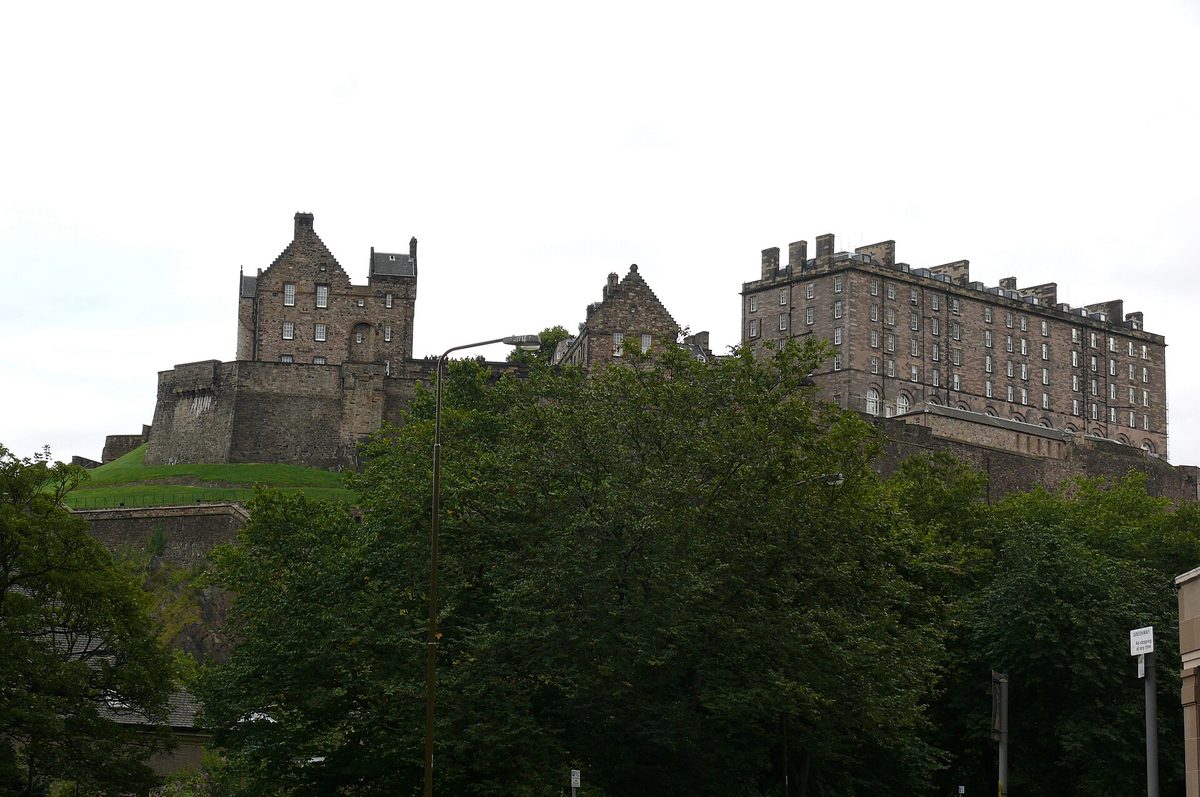
Perched on an extinct volcanic plug above the city, Edinburgh Castle is Scotland’s most-visited paid attraction, pulling well over two million people a year through its gates. That popularity is both its strength and its problem. Inside you get the Honours of Scotland (the oldest crown jewels in Britain), the Stone of Destiny, the tiny 12th-century St Margaret’s Chapel — the oldest building in the city — and the One O’Clock Gun, still fired daily except Sundays. The views over the Old Town are tremendous.
The honest trade-off: it is expensive (£21.50 for an adult booked online, more on the gate) and it can feel like a conveyor belt in August. Book the first slot of the day or one after 2pm, and you’ll have a markedly better time. It anchors any city trip beautifully — see our full Edinburgh travel guide for how to slot it into a couple of days — and if you can’t decide between it and its great rival, our Stirling Castle vs Edinburgh Castle comparison settles it.
Stirling Castle — my pick over Edinburgh
If you’ll forgive a bit of heresy: I’d send a first-time visitor to Stirling before Edinburgh. It sits on its own crag commanding the old gateway between Lowlands and Highlands, and the restored Renaissance Royal Palace — all riotously coloured and hung with the recreated Unicorn tapestries — gives you a far better sense of how Stewart kings actually lived than anything in the capital. The Great Hall, the chapel, and the views to the Wallace Monument and the Ochils are superb, and at roughly £18.50 it’s a touch cheaper too.
Bannockburn, where Robert the Bruce broke an English army in 1314, is a short hop away, so you can pair the castle with genuinely pivotal history in a single day. Our dedicated Stirling Castle visitor guide has the timing and ticket detail; I’d budget at least three hours inside.

Eilean Donan — the most photographed castle in Scotland
You already know what Eilean Donan looks like even if you’ve never heard its name: a stout tower on a tidal islet where three sea lochs meet, joined to the shore by an arched stone bridge. It’s the castle on the shortbread tin, and it has earned the title of Scotland’s most photographed castle several times over. The current building is largely a 20th-century reconstruction — the medieval original was blown up in 1719 — which purists grumble about, but standing on that bridge at golden hour, you won’t care.
The interior is small and the visit short (around £11, an hour is plenty), so the honest play is to treat it as a glorious roadside stop rather than a destination in itself. It sits perfectly on the drive to Skye — our Isle of Skye guide picks up where this leaves off — and there’s a deeper history in our Eilean Donan Castle guide. Arrive before 10am or after 5pm to beat the coach tours.
Dunnottar Castle — the most dramatic ruin in the country
Nothing in Scotland matches the first sight of Dunnottar: a sprawling ruin marooned on a flat-topped sea-stack, ringed by 50-metre cliffs and reachable only by a steep path down and back up again. It guarded the Aberdeenshire coast for centuries, sheltered the Scottish crown jewels from Cromwell’s army, and now provides the most cinematic two hours of walking-and-gawping you can have for around £11.50. It featured, fittingly, in Zeffirelli’s Hamlet.
The trade-off is purely physical: the descent and re-climb are genuinely steep, there’s no step-free access to the rock, and in a hard wind the exposure is real. Wear proper shoes and check the weather. It’s an easy detour from the coast road near Stonehaven; our Dunnottar Castle guide covers parking and the best photo angles.

Urquhart Castle — ruins on Loch Ness
Urquhart is the castle you came to Loch Ness for, even if you came for the monster. Its broken Grant Tower stands right on the water, and the setting — the long grey loch vanishing into the hills — does most of the work. It’s run by Historic Environment Scotland, costs around £13.50, and gets ferociously busy at midday when the Inverness coaches arrive, so come early. The visitor centre’s short film and the working trebuchet replica are better than they need to be.
Because it’s a ruin, an hour and a half does it justice. Combine it with a loch cruise and the wider area covered in our Loch Ness and Inverness guide, and you’ve got a full, satisfying day out of Inverness.

Doune Castle — the screen star
Doune is a modest-sized medieval keep near Stirling with an outsized cultural footprint. Its courtyard and great hall stood in for Castle Leoch in Outlander, Castle Anthrax in Monty Python and the Holy Grail, and Winterfell in the Game of Thrones pilot. The brilliant audio guide — voiced by Python’s Terry Jones and, in an alternate track, by Outlander‘s Sam Heughan — is one of the best in Scotland and worth the £9.50 alone.
It’s compact, so 90 minutes is plenty, and it pairs naturally with Stirling on a screen-and-history day. If you’re chasing filming locations specifically, our Outlander filming locations map and the dedicated Doune Castle guide will keep you busy for days.

Culzean Castle — clifftop grandeur in Ayrshire
Culzean (say “cull-ANE”) is the National Trust for Scotland’s flagship and it shows. Robert Adam transformed a clifftop tower house into a Georgian masterpiece, its oval staircase and round drawing room hanging over the Firth of Clyde with Arran on the horizon. President Eisenhower was given an apartment here for life in thanks for his wartime role, which tells you something about its standing. The 600-acre country park — walled garden, swan pond, woodland — means you can easily fill most of a day.
At around £21 it isn’t cheap, but if you hold NTS membership it’s free, and that maths starts to make sense fast (more on that below). It’s an easy run south from Glasgow — see our Glasgow travel guide — and our Culzean Castle guide has the garden highlights.

Glamis Castle — royal seat and ghost stories
Glamis (one syllable: “glahms”) is the kind of pink-stone, turret-and-tower pile that looks invented for a storybook. It was the childhood home of the late Queen Mother and the birthplace of Princess Margaret, carries a tenuous Macbeth association, and comes with the obligatory Scottish baggage of a “secret room” and assorted ghosts. The guided tour of the interior is genuinely good, and the formal gardens are worth lingering in. Reckon on around £19 for the castle and grounds.
It sits in Angus, handily between Edinburgh/Stirling and Aberdeenshire, so it slots neatly into a northbound castle run rather than demanding its own trip.

Inveraray Castle — the Campbell stronghold
The fairytale seat of the Dukes of Argyll, chiefs of Clan Campbell, Inveraray is a grey, conical-turreted confection on the shore of Loch Fyne. Fans of Downton Abbey will recognise it from the Christmas special. Inside, the Armoury Hall — a soaring stack of polearms, muskets and Lochaber axes — is the showpiece, and the grounds run to good walks. It makes a natural pairing with a Loch Fyne seafood lunch; our Scottish food and drink guide will point you to the oyster bar.
Inveraray is the gateway to Argyll, so it works as a first or last stop on a west-coast loop. If you’re tracing your roots, the clans connection runs deep here — our guide to tracing Scottish ancestry, clan and tartan explains how to find your own.

Dunrobin Castle — a French chateau in the far north
Dunrobin is a genuine surprise: a 189-room, fairytale-turreted chateau on the Sutherland coast that looks as though it wandered north from the Loire. The seat of the Earls and Dukes of Sutherland, it’s the largest house in the northern Highlands, with formal gardens modelled on Versailles dropping down towards the sea. The twice-daily falconry display in the gardens is the highlight, and unusually good. Its history is not uncomplicated — the Sutherland Clearances are part of this family’s story — and a thoughtful visit holds both things at once.
It sits right on the NC500 route, making it the most rewarding castle stop on that whole drive. Don’t skip it just because it’s far north.

Craigievar Castle — the pink fairytale tower
If one castle inspired the Disney silhouette, the locals will tell you it was Craigievar — a perfect, candy-pink tower house in Aberdeenshire, all corbelled turrets and crow-stepped gables rising unbroken to a cluster of conical caps. It’s an early-17th-century survival barely altered since, and the National Trust for Scotland keeps it close to its original state. After a recent harling restoration its pink is bolder than ever. Numbers inside are limited to protect the interiors, so timed tickets (around £17) and advance booking are essential.
It anchors the Aberdeenshire Castle Trail beautifully and pairs with Crathes and Drum nearby for a three-castle day in the wider Highlands and north-east.

Balmoral, Caerlaverock and Dunvegan — three more worth the detour
Balmoral Castle, the royal family’s Highland home in Royal Deeside, opens its ballroom, grounds and (newly) some interiors to visitors for a limited season, typically spring into summer; check before you travel and see our Balmoral and Royal Deeside guide for timing — and note that Deeside sits within easy reach of Speyside’s whisky distilleries, if you fancy pairing castles with drams. Caerlaverock Castle in Dumfries and Galloway is unique in Britain — a moated, triangular fortress with a twin-towered gatehouse, gloriously photogenic and rarely crowded, the great castle of the south. And on Skye, Dunvegan Castle is the oldest continuously inhabited castle in Scotland, home to the chiefs of Clan MacLeod for some 800 years; reach it via our Scottish islands hub.

Which Scottish castle is right for you?
Different travellers want completely different things from a castle, and one of the quiet skills of planning a good trip is matching the castle to the company you keep. Drag a teenager round three sets of period furniture and you’ll pay for it; take a history buff to a theme-parky reconstruction and they’ll sulk. Here’s how I’d steer people.
| You are travelling as… | Go to… | Why |
|---|---|---|
| A family with younger kids | Stirling, Doune, Dunrobin | Dressing-up, falconry, audio guides and space to run |
| A history enthusiast | Stirling, Edinburgh, Caerlaverock | Genuine, well-interpreted royal and military history |
| A photographer | Eilean Donan, Dunnottar, Kilchurn | The three most photogenic settings in the country |
| An Outlander or film fan | Doune, Blackness, Midhope | The key visitable screen locations |
| A couple wanting romance | Culzean, Glamis, a castle-hotel night | Beautiful interiors, gardens and somewhere to stay |
| Budget travellers | Kilchurn, Tantallon, off-season ruins | Free or cheap, and often the most atmospheric |
If you’re travelling with children, lean toward castles that give them something to do — Stirling’s costumed interpreters, Dunrobin’s falconry, the sheer climbable drama of Dunnottar — rather than rooms full of “don’t touch.” History buffs should prioritise the places with strong on-site interpretation and a real story to tell, which is exactly where the big Historic Environment Scotland sites earn their keep. And romantics: book one night in a castle, even a modest self-catering tower, because waking up inside the walls changes the whole trip. Whichever camp you fall into, you’ll find more inspiration in our overview of everything else Scotland has to offer.
A quick word on the different types of castle
It helps to know what you’re looking at. Scotland’s castles fall, very roughly, into a few families: the early motte-and-bailey earthworks the Normans introduced; the great medieval curtain-wall fortresses like Caerlaverock and Urquhart; the tall, defensible tower houses of the 15th to 17th centuries that give Aberdeenshire its fairytale skyline (Craigievar is the perfect example); and the later baronial mansions — Culzean, Dunrobin, Inveraray — built for comfort and show once the fighting stopped. Spotting which is which turns a row of “old castles” into a readable thousand-year story, and it’s half the fun of a castle-focused trip.
Scotland’s castles by region: how to cluster them
Here’s the mistake almost everyone makes, including me on my first few trips: treating castles as a wish-list of individual pins rather than as clusters. Scotland is bigger and slower to drive than the map suggests, and the difference between a relaxed trip and an exhausting one is whether you’ve grouped your castles sensibly. Our full castles by region guide goes deeper, but this table is the planning shortcut.
| Region | Base yourself in | Castles within easy reach |
|---|---|---|
| Edinburgh & the Lothians | Edinburgh | Edinburgh, Craigmillar, Tantallon, Dirleton, Blackness, Linlithgow Palace |
| Stirling & central | Stirling | Stirling, Doune, Castle Campbell, Blackness |
| Aberdeenshire & Royal Deeside | Banchory or Ballater | Dunnottar, Craigievar, Crathes, Drum, Fraser, Fyvie, Balmoral |
| The Highlands & Skye | Inverness or Portree | Urquhart, Eilean Donan, Cawdor, Dunvegan, Brodie |
| Argyll & the west | Oban or Inveraray | Inveraray, Kilchurn, Castle Stalker, Dunstaffnage, Duart |
| The far north | Dornoch | Dunrobin, Ardvreck (ruin), plus the NC500 castles |
| The Borders & south | Dumfries | Caerlaverock, Threave, Drumlanrig, Hermitage |
The north-east is the secret weapon
If you only have time for one castle region, make it Aberdeenshire. Nowhere else lets you visit four or five genuinely different castles — a clifftop ruin, a pink tower house, a turreted family seat, a royal residence — inside an hour’s drive of each other. The Castle Trail signposts the route for you. Base in Banchory or Ballater, give it two full days, and you’ll see why I think it out-castles even the Highlands.
Getting between them without losing your mind
Castles are, almost by definition, rural. Public transport will get you to Edinburgh, Stirling and Urquhart comfortably, but the fairytale stuff — Craigievar, Dunnottar, Caerlaverock, Kilchurn — really wants a car. As a rough guide, Edinburgh to Inverness is about three hours, Inverness to Skye another two and a half, and Glasgow to Culzean around ninety minutes. Our getting around Scotland guide weighs up car hire, trains and tours, and if you’d rather not drive at all, an organised trip from our Scotland tours and packages roundup can string the castles together for you.
Outlander and film-location castles
The Outlander effect on Scottish castle tourism has been enormous, and if you’re a fan, building a trip around the locations is huge fun. The key thing to know is that the show mixes real castles with private houses you can only photograph from outside. Doune Castle is the big visitable one — it plays Castle Leoch, seat of the MacKenzies. Midhope Castle near South Queensferry is Lallybroch, Jamie’s beloved home, but it’s a privately owned shell: you pay a small estate fee to wander up and photograph the exterior, and that’s it. Blackness Castle, the “ship that never sailed” on the Forth, doubles as Fort William, and Craigmillar in Edinburgh stands in for Ardsmuir Prison.
Beyond Outlander, Eilean Donan turns up in Highlander and the Bond film The World Is Not Enough, while Doune, as mentioned, carries both Monty Python and Game of Thrones credentials. Our complete Outlander filming locations in Scotland guide maps the lot, including the village stand-ins at Culross and Falkland.
Staying overnight in a Scottish castle
Yes, you really can sleep in a castle — and it ranges from a splurge-of-a-lifetime to something surprisingly affordable if you’re a group splitting the cost. I’ve done it three or four times now, and my honest advice is that the self-catering apartments inside a castle wing are the sweet spot: you get the turrets and the history without the £500 dinner. Here’s how the money breaks down in 2026.
| Type of stay | Rough nightly price | What you get |
|---|---|---|
| Castle B&B / guest room | £100–£200 per room | A room in a smaller castle or tower house, breakfast included |
| Mid-range castle hotel | £150–£300 per room | Country-house comfort, grounds, often a good restaurant |
| Luxury castle hotel | £250–£600+ per room | The full baronial fantasy — four-posters, fine dining, spa |
| Self-catering castle apartment | £150–£500+ per property | A whole wing or tower; best value for 2–10 people |
| Exclusive-use (whole castle) | £3,000–£15,000+ per night | The entire castle and staff for a wedding or big celebration |
Famous names worth knowing: Inverlochy Castle near Fort William and Glenapp in Ayrshire for top-end hotels; the Landmark Trust and various estates for atmospheric self-catering. A handful of places — Thirlestane, Traquair, Scone Palace — let you both tour the castle and stay on the estate. For the full range of options beyond castles, our where to stay in Scotland guide covers everything from bothies to five-star, and a castle night slots beautifully into a wider Scotland itinerary.
Free and ruined castles worth your time
You do not have to pay to enjoy Scotland’s castles. Some of the most atmospheric are free, ruined, and gloriously empty. Kilchurn Castle on Loch Awe is the photographer’s darling — a romantic ruin against a mountain backdrop, free to walk up to (the approach can be boggy, so wear boots). Castle Stalker, on its tidal islet in Argyll, is best admired and photographed from the lay-by viewpoint for nothing at all. Tantallon near North Berwick is cheap and spectacular, a red curtain-wall facing the Bass Rock. And many Historic Environment Scotland ruins that charge in summer are simply open and free to wander in the off-season.
The trick with free ruins is to combine them with paid headliners so your day has variety. Kilchurn plus Inveraray makes a perfect Argyll day; Tantallon plus a walk on the beach makes a perfect East Lothian one. If hiking to a ruin appeals, our hiking in Scotland guide has the routes.

How to visit Scotland’s castles: tickets, passes and timing
This is the section that will actually save you money and queueing, so it’s the one I’d read twice. Most paid castles fall under one of two organisations, and understanding the difference is the single most useful piece of castle-planning knowledge there is.
Explorer Pass vs National Trust for Scotland membership
Historic Environment Scotland (HES) runs the state-owned castles — Edinburgh, Stirling, Urquhart, Doune, Caerlaverock and 70-odd others. The National Trust for Scotland (NTS) runs the great family houses — Culzean, Craigievar, Crathes, Brodie, Fyvie. They are completely separate, and neither pass covers the other’s properties. Here’s the maths.
| Historic Scotland Explorer Pass | NTS membership | |
|---|---|---|
| Adult price (2026) | £48 (also £39 concession, £29 child, £100 family) | ~£69.60 per year |
| Valid for | 14 consecutive days | 12 months |
| Covers | Edinburgh, Stirling, Urquhart + 70+ HES sites | Culzean, Craigievar, Crathes + 100+ places |
| Pays for itself after | About 3 castles (Edinburgh + Stirling + Urquhart ≈ £53) | About 3–4 properties |
| Best for | A 1–2 week trip hitting the big HES fortresses | Aberdeenshire/Ayrshire trips and repeat visitors |
My rule of thumb: if your trip leans toward Edinburgh, Stirling and the Highlands, buy the Explorer Pass — it pays for itself in three castles and the 14-day window suits a touring holiday. If you’re spending real time in Aberdeenshire or Ayrshire among the Trust houses, or you visit Scotland often, NTS membership wins, and it throws in free parking at many sites too. A surprising number of couples buy one of each and still come out ahead. Neither pass covers the Palace of Holyroodhouse or privately owned castles like Glamis and Inveraray, which you pay for individually. For the bigger budgeting picture, our Scotland travel costs and tips guide is the companion read.
Opening seasons: not every castle is open when you arrive
This catches people out constantly. The big three — Edinburgh, Stirling, Urquhart — open year-round. But a great many smaller castles and most ruins run an April-to-October season, and some royal and private castles have very tight windows: Balmoral, for instance, traditionally opens only from spring into the summer before the family arrives. Always check the specific castle’s website for the dates of your visit; a wasted drive to a locked gate is a miserable way to spend a morning.
Booking and skipping the queues
Book Edinburgh and Stirling online in advance — they sell out on summer days and especially during the August festivals, and online tickets are cheaper than the gate. For everywhere else, advance booking matters most at the capacity-limited interiors like Craigievar. To dodge crowds, the rule is simple: be at the gate when it opens, or arrive in the last ninety minutes; the coach-tour crush is reliably 11am to 3pm. Picking a lesser-known castle is the other trick — swap Edinburgh for Tantallon, or Balmoral’s crowds for nearby Crathes.
The best time of year for castles
For the happiest balance of open attractions, daylight and weather, aim for late May, June or September. July and August bring the most reliable warmth but also the biggest crowds and the highest prices. Winter is my secret favourite for the ruins — a frost-rimed Dunnottar or a near-empty Kilchurn at low sun is unforgettable — just accept shorter days and that some sites are closed. Our best time to visit Scotland guide breaks the seasons down month by month.
Accessibility, honestly
Castles and step-free access are not natural friends. The big HES and NTS visitor centres, cafes and grounds are generally accessible, but the castles themselves often involve spiral stairs, cobbles and uneven ground. Dunnottar’s steep cliff path and Kilchurn’s boggy approach are genuinely difficult; Edinburgh, Stirling and Culzean are among the more manageable interiors. Every HES and NTS property publishes a detailed accessibility page — check it before you commit, and don’t be shy about phoning ahead, as staff are usually excellent at helping you plan a realistic visit.

Frequently asked questions about castles in Scotland
Which is the most famous castle in Scotland?
Edinburgh Castle is the most famous, sitting on its volcanic rock above the capital and drawing over two million visitors a year to its Crown Jewels and One O’Clock Gun. For sheer recognisability in photographs, though, Eilean Donan runs it close — its image appears on everything from shortbread tins to whisky labels worldwide.
What is the oldest castle in Scotland?
Castle Sween in Argyll is generally considered the oldest castle on the Scottish mainland that can be confidently dated, with stonework going back to the 1100s. For the oldest castle still lived in, the honour goes to Dunvegan on Skye, home to the chiefs of Clan MacLeod for around 800 years of continuous occupation.
What is the best castle to visit in Scotland?
For a first trip I’d choose Stirling Castle over the more crowded Edinburgh, for its restored Renaissance palace and pivotal history. For drama, nothing beats clifftop Dunnottar; for the classic photograph, Eilean Donan. The honest answer is that the “best” castle depends on whether you want royal history, romantic ruins or fairytale interiors.
Can you stay overnight in a Scottish castle?
Yes. Options run from castle B&Bs around £100–£200 a room, through luxury castle hotels at £250–£600-plus, to self-catering apartments inside a castle wing — the best value for groups at £150–£500 for the whole property. You can even hire an entire castle exclusively, though that runs into thousands of pounds per night.
Which Scottish castle is in Outlander?
Doune Castle near Stirling is the main visitable Outlander location, playing Castle Leoch. Midhope Castle is filmed as Lallybroch (exterior only, on a private estate), Blackness Castle stands in for Fort William, and Craigmillar plays Ardsmuir Prison. The villages of Culross and Falkland appear as the show’s 18th-century towns.
How much does it cost to visit Edinburgh Castle?
An adult ticket is around £21.50 booked online in advance, with higher prices on the gate; children and concessions pay less, and under-fives go free. Booking online is both cheaper and essential in summer, when slots sell out. If you’ll also visit Stirling and Urquhart, the £48 Explorer Pass quickly works out cheaper.
Which castles in Scotland are free to visit?
Several of the most atmospheric ruins cost nothing: Kilchurn Castle on Loch Awe, the viewpoint for Castle Stalker, and many Historic Environment Scotland sites that are open and unstaffed in the off-season. You can also admire Eilean Donan and Dunnottar from outside for free, though you’ll want to pay to go in.
Is the Historic Scotland Explorer Pass worth it?
For most touring visitors, yes. At £48 for 14 days it pays for itself in three castles — Edinburgh, Stirling and Urquhart alone come to roughly £53 bought separately. It’s the easy win if your route covers the major Historic Environment Scotland fortresses. It does not, however, cover National Trust properties like Culzean and Craigievar.
Final thoughts: building your castle trip
After all these years, the advice I keep coming back to is simple: pick fewer castles, cluster them by region, and give each one enough time to actually move you. A rushed dozen blurs into grey stone; a well-chosen five — a royal fortress, a clifftop ruin, a fairytale tower, a lived-in family seat and one free ruin at golden hour — is the trip people remember for years. Buy the right pass, go in the shoulder season, hire a car, and let the weather do its dramatic thing. Scotland’s castles have been standing through worse than a bit of rain, and they’re waiting for you. When you’re ready to build the wider trip around them, our Scotland itinerary guide and the overview of things to do in Scotland will help you join the dots.
Edinburgh Castle is the one most people start with, and it repays a little homework: your timed slot is an entry window rather than a countdown, and an Explorer Pass only pays for itself once you are visiting three sites. Our Edinburgh Castle ticket guide does that arithmetic and answers the question people are really asking when they ask whether it is worth it.
Some of these buildings will let you sleep in them, though the experience is rarely what the photographs suggest — our guide to castle hotels in Scotland explains what you actually get for the money, and which properties on the usual lists closed years ago.
About the author
This guide was written and fact-checked by the ScotlandTourism.org editorial team — a group of Scotland-based travel writers who have spent years exploring the country’s castles, lochs and islands in every season. We visit the places we recommend, cross-check every price and opening detail against official sources, and update our guides regularly.
Last updated: June 2026
Photo credits
All images are used under their respective Creative Commons or public-domain licences, sourced from Wikimedia Commons. Thank you to the photographers:
- Edinburgh Castle on its volcanic crag above the city, one of the most famous castles in Scotland — Photo: Ad Meskens / CC BY-SA 3.0 via Wikimedia Commons
- Eilean Donan Castle and its stone bridge at the meeting of three lochs, Scotland's most photographed castle — Photo: Dave Conner from Inverness, Scotland / CC BY 2.0 via Wikimedia Commons
- Stirling Castle on its rocky outcrop above the Forth valley — Photo: DeFacto / CC BY-SA 4.0 via Wikimedia Commons
- Dunnottar Castle ruins on a sea-stack clifftop near Stonehaven — Photo: Lynette and Malcolm Johnson / CC BY-SA 2.0 via Wikimedia Commons
- Urquhart Castle ruins above Loch Ness with the Grant Tower — Photo: Steven1991 / CC BY-SA 4.0 via Wikimedia Commons
- Doune Castle, the medieval keep used as Castle Leoch in Outlander — Photo: Billy McCrorie / CC BY-SA 2.0 via Wikimedia Commons
- Culzean Castle perched on the Ayrshire cliffs above the Firth of Clyde — Photo: Karenhowie / CC BY-SA 4.0 via Wikimedia Commons
- Kilchurn Castle ruin reflected in the still water of Loch Awe — Photo: Andrewmckie / CC BY-SA 4.0 via Wikimedia Commons
- The pink harled tower house of Craigievar Castle in Aberdeenshire — Photo: Alan Stokes / CC BY-SA 4.0 via Wikimedia Commons
- Inveraray Castle, the turreted seat of Clan Campbell in Argyll — Photo: Stuart Wilding / CC BY-SA 2.0 via Wikimedia Commons
- Dunrobin Castle and its formal gardens, a French-chateau-style castle in Sutherland — Photo: jack_spellingbacon (Flickr) / CC BY 2.0 via Wikimedia Commons
- Balmoral Castle, the royal Highland residence in Royal Deeside — Photo: W. Bulach / CC BY-SA 4.0 via Wikimedia Commons
- The triangular moated Caerlaverock Castle in Dumfries and Galloway — Photo: Billy McCrorie / CC BY-SA 2.0 via Wikimedia Commons
- Glamis Castle with its turrets and long driveway in Angus — Photo: Darrin Antrobus / CC BY-SA 2.0 via Wikimedia Commons

2 notes from readers