
The first time I drove down to Loch Ness I made the classic mistake: I parked in a lay-by on the busy A82, looked at a large grey lake for ninety seconds, took a photo that could have been any reservoir in Britain, and drove on feeling faintly cheated. It took me three or four more visits — a cruise out from Inverness, a sunset on the quiet south shore at Dores, a morning at Urquhart Castle before the coaches arrived — to understand that the most famous stretch of water in the world rewards the people who slow down and work it properly. This guide is everything I’ve learned getting it wrong and then right over the past decade, so you can skip straight to the good bits.
The quick answer: Loch Ness is well worth visiting if you’re already in or near the Highlands, and a single day is enough to do it justice. Base yourself in Inverness (15 minutes away), take a boat cruise, walk the ramparts of Urquhart Castle for the iconic view, and dig into the monster legend at Drumnadrochit. Go in late spring or early autumn, book tickets online, and you’ll have a genuinely memorable day rather than a roadside disappointment.

Loch Ness at a glance
Here’s the cheat-sheet I rebuild every time a friend asks me to plan their day. It answers the questions that actually decide a trip — how far things are, what you’ll pay in 2026, and how long to give each stop.
| Detail | The short version |
|---|---|
| Where | The Great Glen, 15 minutes south-west of Inverness in the Scottish Highlands |
| How big | About 23 miles (37 km) long, up to 230 m (755 ft) deep |
| Gateway town | Inverness — trains, airport, hotels, the start of the North Coast 500 |
| Star attraction | Urquhart Castle (adult £14 online, 2026) on the loch’s west shore |
| Best experience | A boat cruise (from roughly £21–£25) — the single best upgrade to a visit |
| The legend | Nessie exhibitions at Drumnadrochit; the real story is better than the gift shops |
| How long | One day is plenty; two lets you add Culloden and the Chanonry dolphins |
| When to go | Late April–May or September–October for light, colour and fewer crowds |
| Don’t bother | Swimming (it’s about 5°C all year) or judging the loch from a single lay-by |
Loch Ness sits at the heart of the wider Scottish Highlands, and it slots neatly into almost any route through the north. If you’re still shaping the bigger trip, pair this guide with our overview of things to do in Scotland and our advice on the best time to visit Scotland. Now, the honest part first.
Is Loch Ness worth visiting? An honest answer
I’ll be straight with you, because the internet usually isn’t: Loch Ness is worth visiting, but it is not the most dramatic landscape in Scotland, and managing that one expectation is the difference between a great day and a flat one. What you get is a vast, brooding, atmospheric body of water framed by forested hills, wrapped in the best-known legend on earth, with a genuinely spectacular castle ruin halfway down its western shore and a lovely small city as your base. What you don’t get is the jaw-on-the-floor grandeur of Glencoe or the surreal pinnacles of the Isle of Skye. Go in knowing that, and the loch delivers.

The case for visiting
The scenery is quietly enormous — this is the largest body of water by volume in the British Isles, and on a still morning the scale of it genuinely lands. The history runs deep, from Urquhart Castle’s bloody medieval past to the nearby battlefield at Culloden. The legend is irresistible whatever your age, and it’s all astonishingly easy to reach: you can be standing on the shore 15 minutes after leaving Inverness. For most visitors doing a Highlands loop or driving the North Coast 500, skipping Loch Ness would be perverse. It’s on the way, it’s iconic, and a half-day cruise-and-castle combination is a brilliant use of time.
When it might disappoint
Loch Ness disappoints people who arrive expecting a monster, a single knockout viewpoint, or a quick photo to rival Skye. From the roadside the loch can look flat and featureless, especially under grey cloud, and the village of Drumnadrochit leans hard into Nessie kitsch. If your Scotland trip is short and you’ve already got Skye, Glencoe and the islands locked in, Loch Ness is the one you can drop without heartbreak. But if you have a day spare from Inverness, it earns its place. For a deeper dive into the trade-offs, our companion piece on whether Loch Ness is worth visiting weighs it up attraction by attraction.
Is Loch Ness right for your trip? A quick decision table
| If you… | Then Loch Ness is… |
|---|---|
| Are basing yourself in Inverness or driving the NC500 | A near-essential, easy day — absolutely go |
| Love history, castles and a good legend | A perfect fit — Urquhart and Culloden in one trip |
| Want the most dramatic scenery in Scotland | Worth a stop, but prioritise Glencoe and Skye first |
| Are travelling with children | A winner — boats, a castle and a monster sell themselves |
| Have only three or four days, all in the south | Probably a stretch — it’s a long way north for one loch |
| Are chasing wildlife and quiet | Brilliant if you add the south shore and the Chanonry dolphins |
Loch Ness facts: how big and how deep?
Before the practical stuff, a little context, because the numbers are genuinely staggering and they’ll make you look at the water differently. Loch Ness holds more fresh water than every lake in England and Wales combined — all of them, put together. That single fact reframes the whole visit.
Size, depth and volume
Loch Ness stretches roughly 23 miles (37 km) down the Great Glen and is up to about 1.7 miles (2.7 km) wide, but it’s the depth that does the work. The deepest point sits at around 230 metres (755 feet) — deep enough to swallow Scotland’s tallest buildings several times over, and second only to Loch Morar among Scottish lochs. The average depth is still about 132 metres. With a surface area of 56 square kilometres it’s the second-largest loch by area after Loch Lomond, but because it’s so deep it’s comfortably the biggest by volume, holding some 7.5 cubic kilometres of water. A long-circulated claim of a 271-metre “crevice” was debunked as a sonar glitch — the loch is plenty deep enough without the embellishment.

Why the water is so dark — and so cold
Peat is the answer to the question every visitor asks. Water draining off the surrounding peatlands carries fine particles that stain the loch a deep, peaty brown and cut underwater visibility to almost nothing within a few metres of the surface. That murk is exactly why sonar searches for the monster have always struggled, and why the loch keeps its secrets so well. It’s also brutally cold: thanks to its depth, Loch Ness stays at roughly 5°C (41°F) year-round, even through a warm summer. That’s a serious cold-water-shock risk, which is why I never recommend swimming — more on that in the FAQ.
The Great Glen, the Caledonian Canal and Cherry Island
Loch Ness lies along the Great Glen Fault, a colossal geological tear that slices Scotland in two from Inverness to Fort William. That fault line is why the loch is so long and straight. In the early 1800s the engineer Thomas Telford linked Loch Ness to a chain of lochs and man-made channels to create the 60-mile Caledonian Canal, opened in 1822, which still carries boats clean across the country. Look out, too, for Cherry Island near Fort Augustus — the loch’s only island, and an artificial Iron Age crannog (a defensive island dwelling) rather than a natural one. For the full nerdy rundown, see our guide to Loch Ness facts and monster sightings.
The Loch Ness Monster: legend, hoaxes and the science
Let’s deal with Nessie properly, because the real story is far more entertaining than the fibreglass models in the gift shops. The Loch Ness Monster is a genuine cultural phenomenon with a documented history of hoaxes, earnest scientific expeditions and one rather sensible modern explanation. Whether or not you believe a thing lurks in the depths, the legend is half the reason you’re going — so it’s worth knowing the real timeline.

From Saint Columba to the 1933 sightings
The earliest tale is ancient: a 7th-century life of Saint Columba describes the Irish monk turning back a “water beast” in the River Ness around 565 AD. But the monster as we know it was really born in 1933, when a new road was blasted along the loch’s northern shore, opening up clear views of the water for the first time and triggering a wave of reported sightings. A photograph by Hugh Gray that November became the first of countless blurry “Nessie” images, and the world’s press did the rest.
The 1934 Surgeon’s Photograph — and the 1994 confession
The single most famous image of Nessie — the elegant head and neck rising from calm water — was published in the Daily Mail on 21 April 1934 and credited to a respectable London gynaecologist, Robert Kenneth Wilson, which is why it’s known as the “Surgeon’s Photograph.” For sixty years it was the legend’s cornerstone. Then in 1994 it collapsed: Christopher Spurling confessed on his deathbed that the “monster” was a toy submarine fitted with a sculpted head, masterminded by Marmaduke Wetherell — a filmmaker humiliated when his earlier “monster footprints” turned out to have been made with a dried hippopotamus foot mounted as an umbrella stand. It is, I think, the most gloriously British hoax in history.
Searching for Nessie: from Operation Deepscan to the eel theory
Plenty of serious people have gone looking. In 1987, Operation Deepscan sent a flotilla of 24 boats sweeping the loch with echo-sounders in a coordinated sonar sweep led by naturalist Adrian Shine; it logged three unexplained deep contacts but found no monster. A high-profile BBC-backed survey in 2003 used hundreds of sonar beams and satellite tracking and again came up empty. The most rigorous study arrived in 2018–19, when Professor Neil Gemmell of New Zealand’s University of Otago analysed environmental DNA from 250 water samples. He found no trace of reptile or large-fish DNA — ruling out a plesiosaur or giant sturgeon — but an enormous quantity of European eel DNA at nearly every site. His honest conclusion: there may be something big down there, and if there is, the most plausible candidate is a very large eel.
The 2023 Quest and Nessie today
The hunt hasn’t stopped. In August 2023 the Loch Ness Centre ran “The Quest,” billed as the biggest search in fifty years, deploying thermal-imaging drones, underwater hydrophones and volunteers ringing the shore. They recorded four unexplained “gloops” and one possible “humps” sighting, but nothing that would survive peer review. The Centre now runs an annual Quest weekend, and you can still buy a ticket to join the search. My take: go for the fun and the history, not because you expect to be the one who finally lands the photo. For the complete account of every major sighting and study, see our deep dive into the Loch Ness Monster.
Best things to do at Loch Ness
Beyond staring hopefully at the water, there’s a proper day’s worth of things to do here. These are the stops I send people to, in rough order of priority, with honest notes on which ones earn the time.
Take a boat cruise — the one thing not to skip
If you do only one thing at Loch Ness, get on the water. From the road the loch is a flat grey expanse; from the deck of a boat, with the depth-sounder pinging and Urquhart Castle sliding past on the shore, you finally feel the scale and the strangeness of the place. Cruises run from Inverness, from Clansman Harbour, from Drumnadrochit and from Fort Augustus at the southern end, lasting anywhere from 50 minutes to a half-day, and they’re the best-value upgrade to any visit. I’ve broken down every operator below, and our full guide to the best Loch Ness cruises goes deeper still.

Urquhart Castle — the iconic view
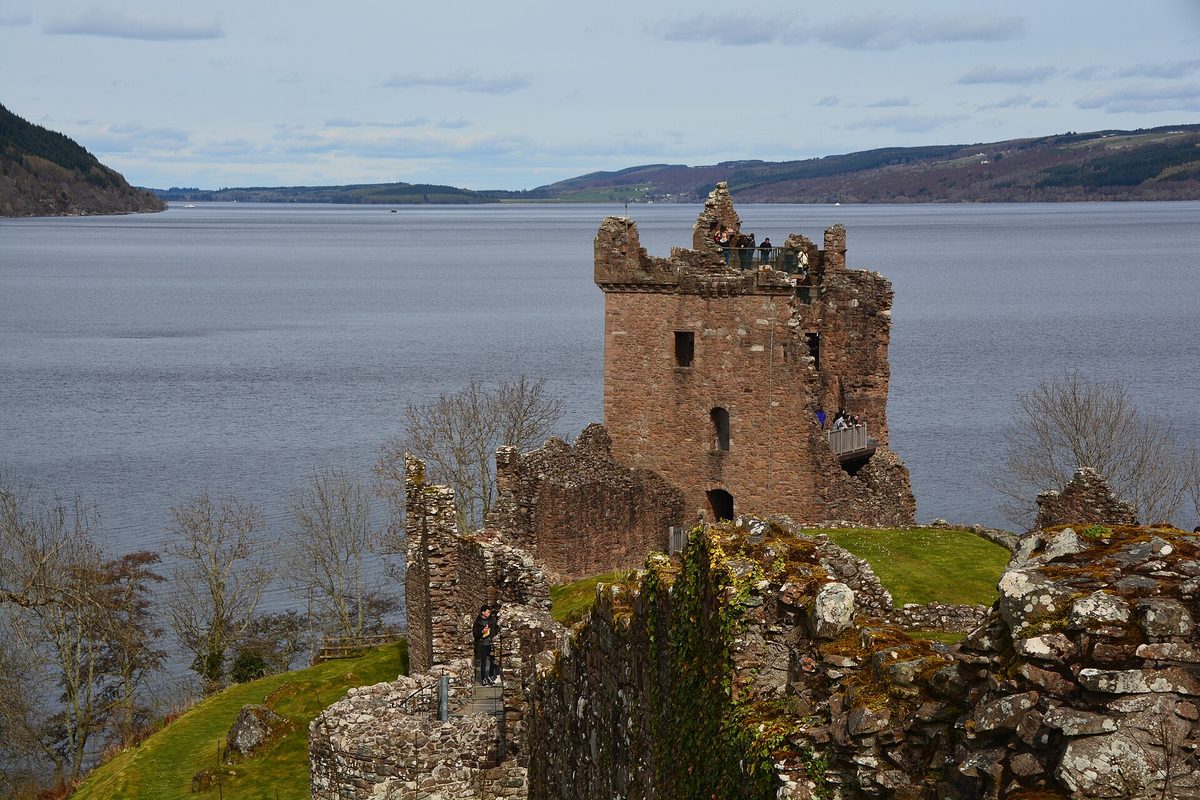
Urquhart is the postcard, and for once the postcard is right. The ruins of this medieval stronghold tumble down a rocky promontory straight into the loch, and the view from the Grant Tower — water stretching away in both directions, hills folding into the distance — is the image you came for. It’s also a genuinely interesting site, with 500 years of siege history, a working replica trebuchet, a prison cell and a slick visitor centre with a short film. It does get heaving with coach groups around midday in summer, so come early or late. I’ve put the full ticket and timing detail in its own section below, and our dedicated Urquhart Castle guide covers it room by room.
The Loch Ness Centre at Drumnadrochit
The recently revamped Loch Ness Centre (now styled “The Loch Ness Experience”) in Drumnadrochit is the serious one of the village’s two monster attractions. Its hour-long exhibition walks you through 500 million years of the loch’s geology and the real science of the Nessie hunts, and it’s well done — a world away from the tat next door. Adult tickets are £17 online (£20 on the door) for 2026. If you’re travelling with curious kids or you want the legend explained properly rather than merchandised, it’s worth the hour.
Fort Augustus and the Caledonian Canal locks
At the loch’s southern tip, the pretty village of Fort Augustus is built around a staircase of five canal locks that lift boats up from Loch Ness into the Caledonian Canal. Watching the lock-keepers work a yacht through the flight, pint in hand from a canalside pub, is one of the most relaxing hours you can spend here — and it’s completely free. It’s also the departure point for Cruise Loch Ness, so you can easily combine the two.

The Falls of Foyers
On the quieter south-eastern shore, the Falls of Foyers plunge around 30 metres through a wooded gorge — a spot so admired that Robert Burns wrote a poem about it. A short, steep, well-made path leads from the village car park to the viewing platforms; allow 30–45 minutes for the round trip and wear proper shoes, as it gets slippery. It’s at its thundering best after rain, which, this being the Highlands, is rarely in short supply.

Dores Beach and the quiet south side
Dores Beach, a short drive from Inverness at the loch’s northern end, is my favourite free spot on the whole loch. It’s a long pebble shore that looks straight down the full length of Loch Ness, and at sunset it’s magic. This is also where Steve Feltham holds the Guinness World Record for the longest continuous monster vigil — he’s been watching from a converted van here since 1991. The single-track road down the south shore from Dores is gloriously quiet compared to the coach-clogged A82 opposite.

Walk or cycle the Loch Ness 360° Trail
For walkers and cyclists, the Loch Ness 360° Trail makes a full 80-mile loop of the loch, linking the Great Glen Way along the north shore with the South Loch Ness Trail. You don’t need to do all of it — even a couple of hours on a well-marked section gives you the views and the quiet that the lay-by crowd never see. If you’re planning to walk seriously, our guide to hiking in Scotland has the kit and safety basics.
Where to see Loch Ness for free
You do not have to spend a penny to enjoy the loch. The best free viewpoints are Dores Beach for the long sunset view, the Falls of Foyers for drama, the lay-bys along the south-shore B852 for solitude, and the Fort Augustus locks for gentle entertainment. Urquhart Castle’s view can even be glimpsed from the road above for free, though paying to walk the ruins is well worth it. Budget travellers should also note the cluster of free things to do in nearby Inverness, which I’ll come to shortly.
Loch Ness cruises compared: which operator and where to leave from
There are three main cruise operators, and which one suits you depends entirely on where you’re based and how long you’ve got. Here’s the honest comparison I wish I’d had before booking blind. All prices are 2026 starting rates and worth re-checking, as they nudge up each season.
| Operator | Departs from | Signature trip | From (adult) | Best for |
|---|---|---|---|---|
| Loch Ness by Jacobite | Inverness / Clansman Harbour / Dochgarroch | 50-min scenic up to 2-hr cruise past Urquhart | £21 (50 min) | Car-free visitors based in Inverness |
| Cruise Loch Ness | Fort Augustus (south end) | 50-min cruise; also 90-min and RIB speedboat | £22 (50 min) | South-end visitors; family-run since 1968 |
| Deepscan (Loch Ness Centre) | Drumnadrochit / Temple Pier | 1-hr cruise with live sonar by Urquhart Castle | £25 | Pairing a cruise with the exhibition |
Loch Ness by Jacobite (from Inverness)
Jacobite is the big operator and the obvious choice if you don’t have a car, because its boats leave from Inverness itself (with a connecting bus from the city centre) as well as from Clansman Harbour and Dochgarroch Lock. Trips run from a 50-minute scenic loop up to half-day “Sensation” tours that bundle the cruise with a coach and Urquhart Castle entry. It’s polished, frequent and reliable — the safe pick for first-timers.
Cruise Loch Ness (from Fort Augustus)
If you’re approaching from the south or staying near Fort Augustus, this family-run firm (going since 1968) is the natural choice. Their standard 50-minute cruise is adult £22, child £15, and they also run a longer 90-minute trip and a genuinely thrilling RIB speedboat tour for those who want some spray and speed. They’re dog-friendly too, which matters if you’re touring with a four-legged companion.
Deepscan and the Loch Ness Centre (from Drumnadrochit)
The Deepscan boat, run by the Loch Ness Centre, leaves from Temple Pier near Drumnadrochit and carries working sonar you can watch in real time as you pass beneath Urquhart Castle. At £25 it’s the priciest of the short cruises, but bundling it with the exhibition (a combined “Cruise & Tour” ticket is around £43) makes a tidy half-day and is the most “scientific” of the three experiences.
Urquhart Castle: tickets, opening hours and tips
Urquhart is managed by Historic Environment Scotland, and because it’s the headline paid attraction on the loch, it’s worth getting the details right. It sits right on the A82 about 21 km (13 miles) south-west of Inverness, two minutes beyond Drumnadrochit.
2026 prices and how to save
| Ticket | Online | Walk-up |
|---|---|---|
| Adult (16–64) | £14.00 | £16.00 |
| Concession (65+) | £11.00 | £13.00 |
| Child (7–15) | £8.50 | £9.50 |
| Family (1 adult, 2 children) | £28.00 | £31.50 |
| Family (2 adults, 2 children) | £40.50 | £46.00 |
Two money tips. First, always book online — it saves £2 per adult and, crucially, guarantees a timed entry slot on busy summer days when walk-up tickets can sell out. Second, if you’re a member of Historic Environment Scotland (or visiting three or more of its sites), entry is free or covered by an Explorer Pass, which quickly pays for itself across a Highlands trip taking in several castles in Scotland.
Opening hours and beating the crowds
Urquhart opens daily from 9.30am, with last entry as late as 7.15pm in high summer and progressively earlier through autumn and winter (down to around 3.30pm in the depths of winter). The castle is closed on 25–26 December. The golden rule: the coaches arrive mid-morning and clear by late afternoon, so the first slot of the day or the last couple of hours before closing give you the ruins in soft light with a fraction of the crowd.
Getting there, parking and accessibility
There’s a large free car park at the visitor centre, and the Citylink 919 bus stops right outside if you’re travelling from Inverness or Fort Augustus. Be honest with yourself about mobility, though: the site tumbles down a steep hillside, and reaching the most photogenic parts of the ruin involves uneven ground, slopes and steps. The visitor centre, café and viewpoint are accessible, but the lower castle is a scramble.
Inverness: the gateway to Loch Ness
Almost everyone uses Inverness as their base, and rightly so. The Highlands’ only city — though with a population of around 47,000 it feels more like a friendly market town — sits 15 minutes from the loch and has the trains, the airport, the hotels and the restaurants that the lochside villages lack. It’s also a genuinely pleasant place to spend an evening.
Why base yourself in Inverness
Staying in Inverness means you can eat well, sleep comfortably and reach not just Loch Ness but Culloden, the Black Isle dolphins and the whisky country of Speyside, all within an easy drive. It’s far better supplied than Drumnadrochit or Fort Augustus, and it’s the transport hub for the whole north. For a full breakdown of neighbourhoods and properties, see our guide to where to stay around Inverness and Loch Ness, and our wider overview of where to stay in Scotland.

Things to do in Inverness
Give the city an evening and a morning. The red-sandstone Inverness Castle reopened in 2025 as the “Inverness Castle Experience,” an immersive visitor attraction with a viewing tower over the river — a real upgrade on its previous life as a closed-off courthouse. Wander the covered Victorian Market for independent shops, stroll the wooded Ness Islands linked by their Victorian suspension bridges (free and lovely), and look in at the riverside Inverness Cathedral and the wonderfully chaotic Leakey’s second-hand bookshop. It’s an easy, walkable half-day. Our full list of things to do in Inverness has the detail.

Inverness as the start of the North Coast 500
Inverness Castle is the official start and finish line of the North Coast 500, Scotland’s answer to Route 66. If Loch Ness is the warm-up, the NC500 is the main event for many road-trippers — a 516-mile loop around the wild northern Highlands. Plenty of visitors do the loch as a gentle first day before pointing the car north. Our complete North Coast 500 guide maps the whole route, and if you’d rather not drive it yourself, our roundup of Scotland tours covers guided options.

Day trips and what’s nearby
One of the best arguments for basing yourself in Inverness is everything else within reach. If I had a second day, I’d spend it on these rather than circling the loch again.
Culloden Battlefield
Five miles east of Inverness lies the most moving historic site in the Highlands. On 16 April 1746, the last pitched battle on British soil was fought here: in under an hour, the Duke of Cumberland’s government troops crushed Bonnie Prince Charlie’s Jacobite army, leaving around 1,600 dead, the vast majority of them Jacobites. The battle ended the Jacobite cause and changed the Highlands forever. The National Trust for Scotland’s visitor centre is superb — a 360-degree immersion theatre puts you in the middle of the fighting — and walking the moor past the clan graves and the memorial cairn is genuinely sobering. Adult entry is £12.50 (members free), plus £5 to park; allow two hours. Our Culloden Battlefield guide has the full story.

Clava Cairns
A mile from Culloden sit the Clava Cairns, a beautifully preserved group of 4,000-year-old Bronze Age burial cairns and standing stones, wrapped in mossy trees. They’re free, atmospheric, and — thanks to a certain time-travelling television series — increasingly busy, so go early. The two sites pair perfectly in a single morning.
Chanonry Point for dolphins
Here’s the tip most Loch Ness guides miss entirely. Twenty-five minutes from Inverness, on the Black Isle, Chanonry Point is one of the best places in Europe to see wild bottlenose dolphins from dry land. The Moray Firth pod regularly comes within metres of the shingle spit to chase salmon, and on the right tide a sighting is close to guaranteed. Timing is everything: aim for the hour or two after low tide, when a rising tide pushes the fish — and the dolphins — in close. The car park is tiny, so arrive early or walk from Fortrose. Our guide to dolphin watching at Chanonry Point has the tide tactics.

Beauly, Glen Affric and a dram
If you have wheels and an appetite for more, the ruined Beauly Priory, the spectacular native woodland of Glen Affric (one of Scotland’s most beautiful glens), and a tour of the nearby Glen Ord distillery all make excellent half-day add-ons. Whisky lovers should pencil in our guide to Scotch whisky distilleries and, for the eating side of things, our roundup of Scottish food and drink. Golfers, meanwhile, will find one of the country’s finest links courses at Castle Stuart just outside Inverness — our guide to golf in Scotland has more. For more ideas radiating out from the city, see our full list of day trips from Inverness.
Driving the loop around Loch Ness
You can drive right around the loch in a roughly 70-mile loop — down the busy A82 on the west side, across at Fort Augustus, and back up the quiet single-track B862/B852 on the east. Allow 1.5 to 2 hours of driving without stops, or make a relaxed half-day of it with the locks, the falls and Dores worked in. Honestly, I’d rather do the loop than back-and-forth the A82 twice; the south side is where the loch gets its soul back.
How to get to Loch Ness
Loch Ness is easy to reach, with or without a car. Here’s how the options stack up.
From Inverness
By car it’s about 15 minutes from Inverness to Drumnadrochit and Urquhart Castle — just follow the A82 along the western shore. Without a car, the Citylink 919 bus runs from Inverness through Drumnadrochit and Urquhart to Fort Augustus several times a day, and the Stagecoach 16 serves the quieter south side towards Dores and Foyers. Day cruises and coach tours also pick up in the city centre. For the full menu of options, see our guide to how to get to Loch Ness.
From Edinburgh and Glasgow
It’s a longer haul than people expect: roughly 3 hours 20 minutes by car from either Edinburgh or Glasgow, around 160–180 miles up the A9. Doing Loch Ness as a day trip from the central belt means a 12–13 hour day on a coach tour (operators like Rabbie’s run them from about £69, cruise usually extra). It’s doable, but you’ll spend most of it in transit — far better to stay a night or two in the Highlands if you can.
By train and the Caledonian Sleeper
The train to Inverness is a lovely way in: around 3.5 hours from Edinburgh or Glasgow through increasingly dramatic scenery, or overnight from London on the Caledonian Sleeper, which tucks you into a berth at Euston and wakes you in the Highlands. From Inverness station you’re a short bus or tour from the loch. One budget tip worth knowing: a £2 single-fare cap currently applies to most Highland bus journeys (running into early 2027), making the 919 to Urquhart absurdly cheap. Our guide to getting around Scotland has the rail and bus detail.
Best time to visit Loch Ness
Loch Ness is a year-round destination, but the experience shifts a lot with the seasons.
Season by season
Summer (June to August) brings the longest days — light until nearly 11pm in midsummer — and the warmest weather, but also the biggest crowds and the highest prices. My favourite windows are the shoulder seasons: late April and May, when the days are long and the hills greening up, and September into October, when autumn colour sets the glens alight and the coach traffic thins. Summer also brings Highland games and a lively calendar of festivals and events across the region. Winter is moody, quiet and atmospheric, but with short days and some attractions on reduced hours. Our overview of the best time to visit Scotland breaks down each month.
Midges, weather and what to pack
Two Highland realities. First, the midges: these tiny biting flies swarm from late May through September, worst at dawn and dusk near water on still, damp days — exactly the Loch Ness shoreline. Pack repellent and you’ll barely notice them; forget it and you’ll remember them forever. Second, the weather changes by the hour, so layers and a waterproof are non-negotiable whatever the forecast. For the full kit list and seasonal advice, see our Scotland travel tips.
Crowds, light and cold-water safety
For photographers, the soft light of early morning and the hour before sunset is when the loch looks its best — and when Urquhart is quietest. For everyone, a reminder that the water is genuinely dangerous to swim in: deep, dark and around 5°C year-round, it carries a real risk of cold-water shock. Admire it, cruise it, paddle a careful toe if you must, but don’t go in.
Where to stay around Loch Ness
Most people should stay in Inverness for the choice of hotels, restaurants and transport links — it’s the sensible base for all but the most determined lochside romantics. Drumnadrochit puts you on the doorstep of Urquhart and the cruises but is short on evening options. Fort Augustus, at the southern tip, is prettier and quieter, ideal if you’re heading on towards Fort William, Skye or the wider Scottish islands. And a handful of inns and B&Bs dot the tranquil south shore for those who want to wake up to the water with no coaches in sight. Whichever you choose, book well ahead in summer; our guide to where to stay around Inverness and Loch Ness compares them in detail.
Suggested Loch Ness itineraries
To pull it all together, here are the three plans I hand out most often, depending on how much time you have.
Half a day from Inverness
Drive or bus out to Drumnadrochit, take a short cruise past Urquhart Castle, then explore the castle ruins themselves before heading back — a tight but satisfying three to four hours that hits the two headline experiences.
One full day
Start early at Urquhart before the coaches, cruise the loch, then drive the southern loop with stops at the Fort Augustus locks, the Falls of Foyers and Dores Beach for sunset. This is the day I’d recommend to almost everyone — it shows you both the famous loch and its quiet, lovelier flip side.
Two days with Culloden and dolphins
Spend day one on the loch as above, then give day two to the history and wildlife around Inverness: Culloden Battlefield and the Clava Cairns in the morning, and Chanonry Point for the dolphins on the afternoon’s rising tide. For help slotting this into a longer trip, our Loch Ness day-trip itinerary and the master Scotland itinerary guide do the joining-up for you.
Loch Ness FAQ
Is Loch Ness worth visiting?
Yes, if you’re already in or near the Highlands. You get vast atmospheric scenery, a spectacular castle, the world’s most famous legend and an easy base in Inverness, all in a single day. It’s less essential if your trip is short and southern, where Glencoe and Skye offer more dramatic landscapes for the same driving time.
How deep is Loch Ness?
Loch Ness reaches about 230 metres (755 feet) at its deepest point, making it the second-deepest loch in Scotland after Loch Morar. Its average depth is around 132 metres. Combined with its 23-mile length, that depth means it holds more water than every lake in England and Wales put together — the largest volume in the British Isles.
How big is Loch Ness?
Loch Ness is roughly 23 miles (37 km) long and up to about 1.7 miles (2.7 km) wide, with a surface area of 56 square kilometres. That makes it Scotland’s second-largest loch by surface area after Loch Lomond, but its great depth makes it comfortably the largest by water volume anywhere in Britain.
How far is Loch Ness from Inverness?
The nearest shore of Loch Ness is only about 6 miles from Inverness, and it’s roughly 8 miles — around a 15-minute drive — to Drumnadrochit and Urquhart Castle along the A82. Fort Augustus, at the loch’s southern end, is about 33 miles and 45 minutes away. That closeness is exactly why Inverness makes the perfect base.
Has the Loch Ness Monster ever been found?
No. Despite sonar sweeps and famous photographs, no monster has ever been confirmed. The most thorough study, a 2019 environmental-DNA survey, found no reptile or large-fish DNA but a huge amount of eel DNA — suggesting that if anything unusual is down there, the likeliest explanation is a very large eel rather than a prehistoric creature.
Can you swim in Loch Ness?
You can, but it isn’t advised. Loch Ness is extremely deep, very dark and stays at about 5°C (41°F) all year, even in summer, which creates a serious risk of cold-water shock. Organised wild-swim and triathlon events do take place with safety cover, but casual swimming from the shore is genuinely dangerous and best avoided.
How much does it cost to visit Urquhart Castle?
In 2026, an adult ticket to Urquhart Castle is £14 booked online or £16 at the gate, with children (7–15) at £8.50 and concessions at £11. Family tickets start at £28. Historic Environment Scotland members go free, and an Explorer Pass covers it if you’re visiting several historic sites on your trip.
Which Loch Ness cruise is best and where do they leave from?
It depends on your base. Jacobite sails from Inverness and is best for car-free visitors (from £21). Cruise Loch Ness leaves from Fort Augustus at the south end (from £22) and runs speedboat trips too. The Deepscan boat departs Drumnadrochit with live sonar (£25) and pairs neatly with the Loch Ness Centre exhibition.
How long do you need at Loch Ness?
One day is enough to cruise the loch, explore Urquhart Castle and take in a viewpoint or two without rushing. Add a second day if you want to fold in Culloden Battlefield, the Clava Cairns and the Chanonry Point dolphins, all a short drive from Inverness. Most visitors find half a day to a full day is the sweet spot.
Can you see Loch Ness for free?
Absolutely. Dores Beach offers a stunning free view down the loch (and a famous sunset), the Falls of Foyers and the Fort Augustus canal locks cost nothing, and the south-shore lay-bys give you solitude the coach crowds never find. Only the indoor attractions — Urquhart Castle and the Loch Ness Centre — charge admission.
What is the best time to visit Loch Ness?
Late spring (late April to May) and early autumn (September to October) are the sweet spots, with long days, good light, autumn colour and thinner crowds. Summer is warmest but busiest and midgiest, while winter is quiet and moody with short days and reduced opening hours. Aim for the shoulder seasons if you can.
Is Inverness worth visiting?
Yes — it’s a relaxed, walkable Highland city and the ideal base for the loch. Spend an evening on the Ness Islands, browse the Victorian Market, see the newly reopened Inverness Castle Experience and eat well by the river. It’s also the launchpad for the North Coast 500 and day trips to Culloden and the dolphins.
How long does it take to drive around Loch Ness?
The full loop around Loch Ness is roughly 70 miles and takes about 1.5 to 2 hours of driving without stops — down the A82 on the west side and back up the quieter B862/B852 on the east. Realistically, build in a relaxed half-day so you can stop at the locks, the falls and Dores Beach along the way.
Final thoughts: getting Loch Ness right
After all those visits, my advice comes down to one idea: don’t judge Loch Ness from a lay-by. Get on the water, walk the ramparts of Urquhart Castle in the quiet of early morning, drive the lonely south shore to Dores for sunset, and give an evening to Inverness. Treat the monster as the fun, daft, brilliant story that it is — hippo-foot footprints, toy submarines and all — rather than something you expect to photograph. Do that, and the most famous loch in the world stops being a tourist box to tick and becomes a genuinely memorable day in the Highlands. When you’re ready to build the rest of the trip around it, our guides to the Scottish Highlands, the North Coast 500 and the best things to do in Scotland will help you join the dots. The loch has been keeping its secrets for ten thousand years; it’ll happily keep them for you too.
About the author
This guide was written and fact-checked by the ScotlandTourism.org editorial team — a group of Scotland-based travel writers who have spent years exploring the country’s lochs, castles and Highland roads in every season. We visit the places we recommend, cross-check every price and opening detail against official sources, and update our guides regularly.
Last updated: June 2026
One honest note before you build a trip around the loch: Loch Ness is famous for the monster rather than the view, and its wooded banks and long low sightlines do not compete with the water further west. If scenery is what you are after, our roundup of the most beautiful lochs in Scotland tells you where to stand at each one and what light it works in.
Photo credits
All images are used under their respective Creative Commons or public-domain licences, sourced from Wikimedia Commons. Thank you to the photographers:
- Loch Ness with Urquhart Castle on the far shore beneath a moody Highland sky — Photo: Eusebius / CC BY 3.0 via Wikimedia Commons
- View along Loch Ness from Fort Augustus in the Scottish Highlands — Photo: Seaotter26705 / CC BY-SA 4.0 via Wikimedia Commons
- The River Ness flowing through the city of Inverness in the Highlands — Photo: Public domain via Wikimedia Commons
- Memorial cairn at Culloden Battlefield near Inverness — Photo: Julian Paren / CC BY-SA 2.0 via Wikimedia Commons
- A tour cruise boat on the dark water of Loch Ness — Photo: Lewis Clarke / CC BY-SA 2.0 via Wikimedia Commons
- Caledonian Canal locks at Fort Augustus at the south end of Loch Ness — Photo: Peter Glyn (CC0) via Wikimedia Commons
- The Falls of Foyers waterfall near the shore of Loch Ness — Photo: Peter S / CC BY-SA 2.0 via Wikimedia Commons
- Pebble beach at Dores looking down the length of Loch Ness — Photo: Mike Pennington / CC BY-SA 2.0 via Wikimedia Commons
- Red sandstone Inverness Castle overlooking the River Ness — Photo: Diliff / CC BY-SA 3.0 via Wikimedia Commons
- The Grant Tower keep at Urquhart Castle on Loch Ness — Photo: Lewis Clarke / CC BY-SA 2.0 via Wikimedia Commons
- Bottlenose dolphins in the Moray Firth near Chanonry Point — Photo: Peter Asprey, http://www.peter-asprey.com/ / CC BY-SA 3.0 via Wikimedia Commons
- Victorian suspension footbridge to the Ness Islands in Inverness — Photo: Alan Reid / CC BY-SA 2.0 via Wikimedia Commons
- Loch Ness stretching along the Great Glen in the Scottish Highlands — Photo: Dave Conner from Inverness, Scotland / CC BY 2.0 via Wikimedia Commons
- A Loch Ness Monster Nessie model at Drumnadrochit — Photo: Mike Pennington / CC BY-SA 2.0 via Wikimedia Commons

2 notes from readers