
The first time I stood on the hillside above Glenfinnan and watched a steam locomotive curve out onto twenty-one concrete arches, there were about two hundred of us up there, and roughly a hundred and ninety were holding phones. It lasted maybe forty seconds. Then everybody walked back down, and half of them drove off having seen the single genuine Harry Potter Scotland location on their whole itinerary without ever quite realising it.
That is the problem with this subject. Almost every guide you will read mashes three completely different things into one list: places where cameras actually rolled, places that people say inspired the books, and places that have simply painted a lightning bolt on the window and put the prices up. I have spent a lot of time in the west Highlands and quite a lot in Edinburgh, and I think you deserve to know which is which before you spend £300 and four days chasing it.
The short answer
Every Harry Potter scene shot in Scotland was filmed in the west Highlands — Glenfinnan Viaduct, Loch Shiel, Loch Eilt, Glen Coe, Glen Etive, Rannoch Moor and Steall Falls. Nothing was filmed in Edinburgh. The capital is where the books were written, so it offers inspiration and atmosphere rather than film sets. The Jacobite steam train plays the Hogwarts Express and costs around £76 return in 2026.
The locations at a glance
| Place | Where | Real, inspired or marketing? | Rough cost | Book ahead? |
|---|---|---|---|---|
| Glenfinnan Viaduct | A830, 18½ miles west of Fort William | Real — the Hogwarts Express crossing | £5 car park, viewpoints free | No, but arrive early |
| The Jacobite steam train | Fort William to Mallaig and back | Real — it is the train from the films | £76 standard, £116 first (2026 adult return) | Yes — months ahead |
| Loch Shiel | Below the Glenfinnan Monument | Real — the Hogwarts lake | Free from the shore; cruises from £20ish | Only for boat trips |
| Glen Coe | A82, 45 minutes south of Fort William | Real — Hagrid’s hut site, though nothing remains | Free | No |
| Steall Falls | Upper Glen Nevis, 7 miles from Fort William | Real — Triwizard Tournament backdrop | Free; tiny car park | No — but arrive before 9am |
| Greyfriars Kirkyard | Edinburgh Old Town | Inspired, and only partly confirmed | Free | No |
| Victoria Street | Edinburgh Old Town | Inspired — claimed, never confirmed | Free to walk; shops are not | No |
| Wizarding cocktail bars and potion classes | Edinburgh, mostly | Marketing | £25–£45 a head | Yes, if you want one |
Real, inspired or invented: how to read the map
Here is the sorting rule I use, and it will save you a lot of driving.
Real filming locations are places where a camera crew from the eight films physically worked. In Scotland that means a tight cluster in Lochaber and Argyll, plus one outlier north of Inverness. You can stand in the exact spot. Nobody charges you for it.
Inspiration covers Edinburgh, and it is the most interesting part of the story, but the evidence varies wildly from claim to claim. Some connections J.K. Rowling has stated herself. Some are pure tour-guide inference that got repeated until it hardened into fact. I will flag which is which as we go.
Marketing is everything else: the themed shops, the wand experiences, the “wizard” afternoon teas, the day tours that use the words Hogwarts Express in the title and never put you on a train. None of it is dishonest exactly. It is just merchandising, and you should price it as merchandising rather than as pilgrimage.
Get that straight and the trip organises itself. The film locations are a Highlands road trip. The inspiration is a day walking round Edinburgh. The marketing is optional and you can safely skip all of it. If you want the wider context for where this sits among things to do in Scotland, the film-location trail is one thread in a much bigger cloth.
The real filming locations, and they are all in the west Highlands
Every one of these is a place where the films were actually shot. I have ordered them roughly by how much they reward the effort, not by geography, because a few of them are a long drive for a very small payoff and you should know that in advance.
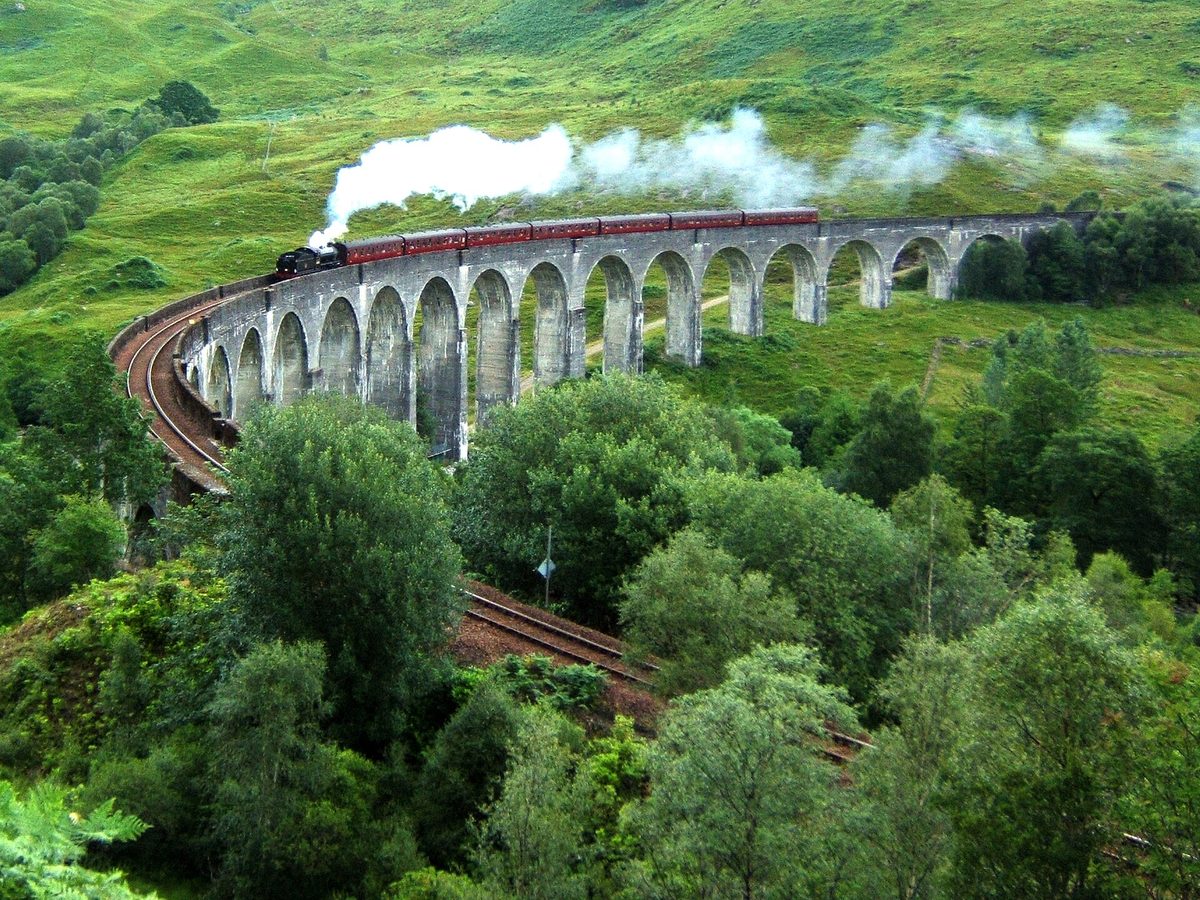
Glenfinnan Viaduct — the one that is worth it
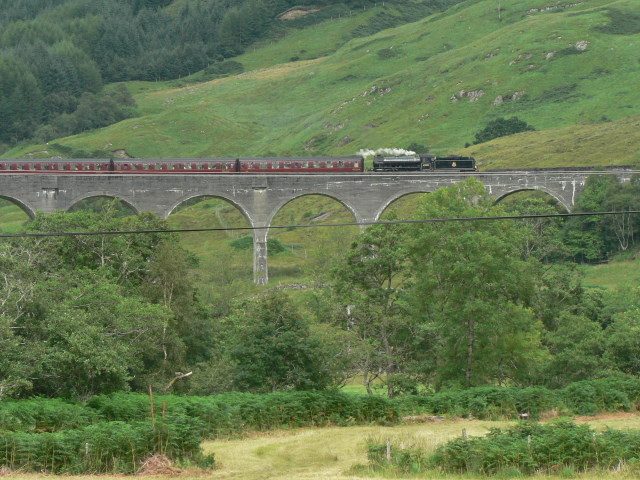
Twenty-one arches, a hundred feet above the River Finnan, curving through a bend so tight that the train appears to be turning towards you as it crosses. It is the longest concrete railway bridge in Scotland, built in the 1890s by Sir Robert McAlpine, who earned the nickname Concrete Bob for trusting the material when the local rock defeated conventional masonry. The Mallaig extension opened on 1 April 1901 and the viaduct has carried every train on the line since.
It is on the A830, 18½ miles west of Fort William, postcode PH37 4LT. The National Trust for Scotland runs the visitor centre and the main car park, which costs £5 for the day and is free to members. When that fills — and in July it fills by about 9.30am — there is a community car park next door linked by a pedestrian bridge. Motorhomes cannot use the Trust car park at all; the community one has larger bays.
Do not park on the verges. The Trust says it plainly and traffic police monitor the stretch; illegally parked cars can be towed. I have seen the A830 reduced to single file by people who decided the rules were for other visitors.
Entry to the visitor centre is free. Climbing the Glenfinnan Monument itself — the column at the loch shore, raised in 1815 where Bonnie Prince Charlie began the 1745 rising — costs £5 for an adult, £4 concession or child, £13 for a family. It opens daily, roughly 11.00–12.30 and 13.30–16.00. Under-18s need an adult with them to climb.
My verdict: the single best stop on any Harry Potter tour of Scotland, and one of the most beautiful places in Scotland regardless of whether you have read a word of the books.

Loch Shiel — the Hogwarts lake
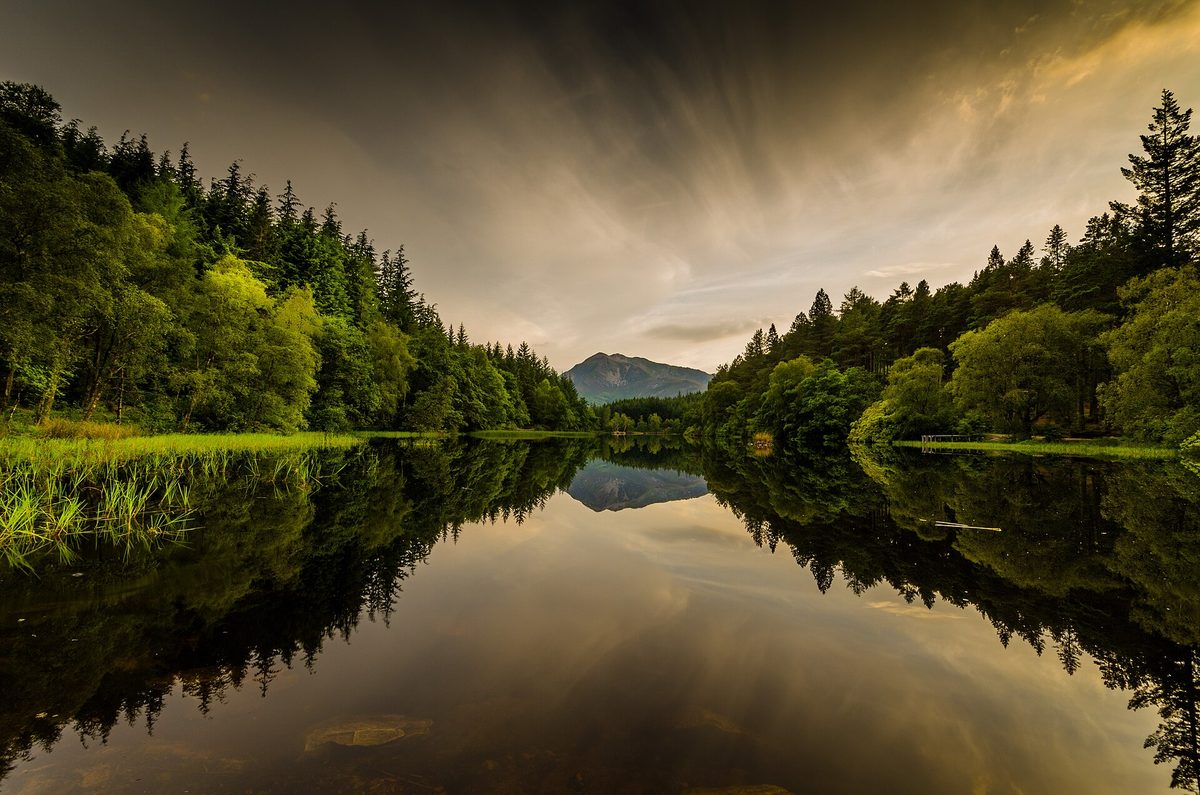
The long dark water stretching away beneath the viaduct is Loch Shiel, and it doubled for the lake at Hogwarts in the early films. It is 17 miles long, freshwater, and runs south-west from Glenfinnan towards Acharacle.
You get it free from the Monument shore, and that is the view everybody photographs. If you want the version the film crews had, Loch Shiel Cruises run boat trips out of Glenfinnan from spring to autumn, typically around £20–£30 depending on the length of sailing. Arriving by bus or train gets you 10% off, which is one of a handful of green travel rewards the Trust runs here.
What surprises people is how quiet the loch gets a mile from the car park. Walk twenty minutes down the shore path and the crowd evaporates entirely.
Loch Eilt and Eilean na Mòine — Dumbledore’s grave
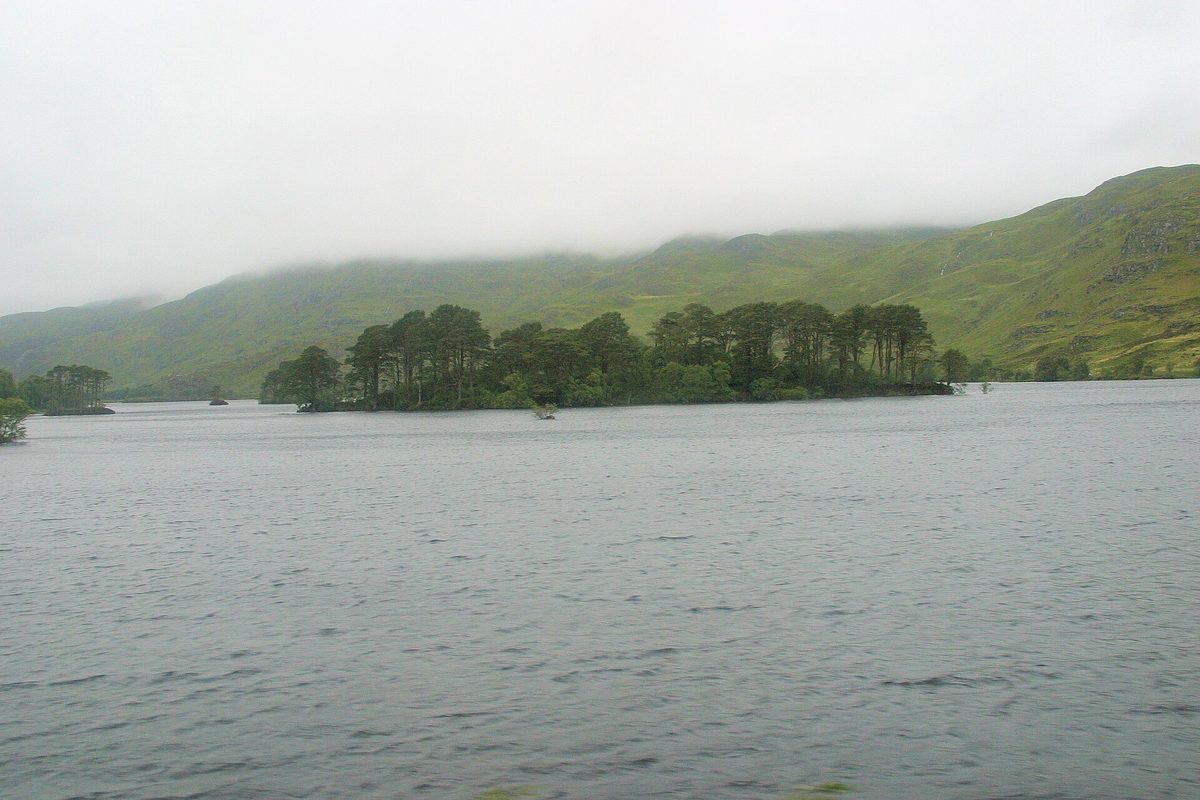
Keep going west on the A830 for another fifteen minutes or so and you reach Loch Eilt, a shallow, island-scattered loch that appears in several train sequences. The wooded island near the eastern end, Eilean na Mòine, was used for Dumbledore’s tomb in Deathly Hallows: Part 1. In the film the island was digitally moved to a different loch, which is why the surroundings never quite match when you stand there.
Two things to manage your expectations. There is no grave. There never was — the tomb was a prop, removed the moment filming finished. And there is no car park, just a potholed layby with room for maybe ten cars. The ground between the road and the shore is boggy for most of the year; I would not attempt it in trainers.
My verdict: a five-minute roadside stop on the way to Mallaig, not a destination. Lovely loch, though.
Loch Arkaig and the Dark Mile
Loch Arkaig is where the wider shots around Dumbledore’s tomb were composited, and it also appears in the wandering, tent-pitching stretch of Deathly Hallows. Getting there is the interesting part: you turn off the B8005 near Loch Lochy and follow the Mile Dorcha, the Dark Mile, a tunnel of overhanging trees on a single-track road with passing places.
Allow 40 minutes each way from Fort William, and be honest with yourself about single-track driving. If you are not comfortable reversing 100 metres to a passing place with a log lorry behind you, this is not the detour for you. Our guide to getting around Scotland covers single-track etiquette properly, and it is worth five minutes of your time before you set off.
Glen Coe — where Hagrid’s hut stood
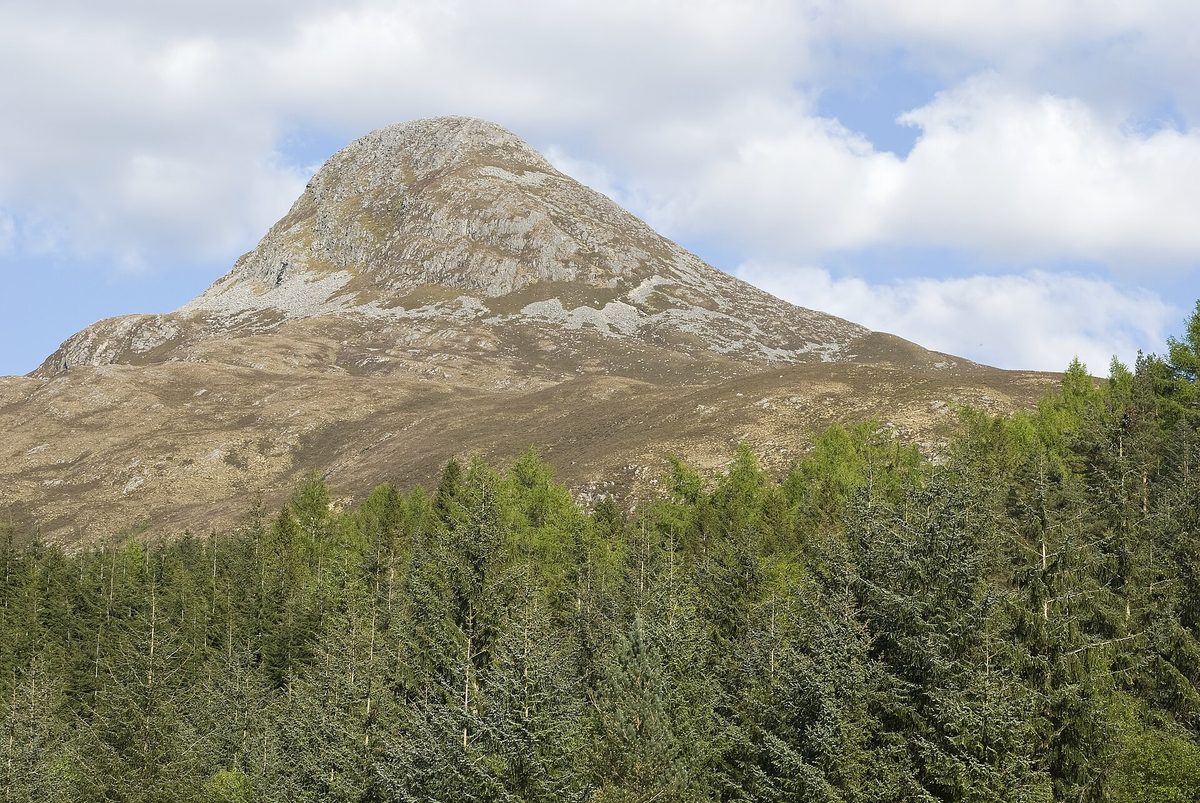
The exterior set for Hagrid’s hut was built in Glen Coe for Prisoner of Azkaban, on the flat ground near the Clachaig Inn, and the glen’s walls stood in for the landscape around Hogwarts. One of the film’s best-remembered confrontations was staged on the same ground.
Now the honest part: nothing is there. The set was struck and the ground restored, and any tour guide who walks you to a patch of grass and says “this is the spot” is giving you an approximation. What you get instead is Glen Coe, which is one of the great mountain landscapes in Europe and would be worth the drive if the films had never existed. The A82 runs straight through it, 45 minutes south of Fort William, and there are laybys everywhere.
The Clachaig Inn has been serving travellers for over three centuries and does a proper pint and a plate of food. Do not go expecting Potter decor — it is a mountaineers’ pub and rather better for it. If you want to walk while you are there, the hillwalking routes across Scotland from Glen Coe are as good as anything in the country.
Glen Etive — the camping scenes
Off the A82 at the Kingshouse end of Glen Coe, a single-track road drops 14 miles down Glen Etive to the sea loch at the bottom. Harry, Ron and Hermione turn up here after the Gringotts escape in Deathly Hallows: Part 1, and the glen has since been used by a great many other productions.
It is a dead end, so it is 28 miles of single-track there and back, and in high summer that can take well over an hour and a half with the traffic. The road has become very busy since the films and since a certain spy franchise used it. Go early or go late.
My verdict: worth it for the driving and the river pools, marginal for the film connection alone.
Steall Falls, Glen Nevis — the Triwizard backdrop
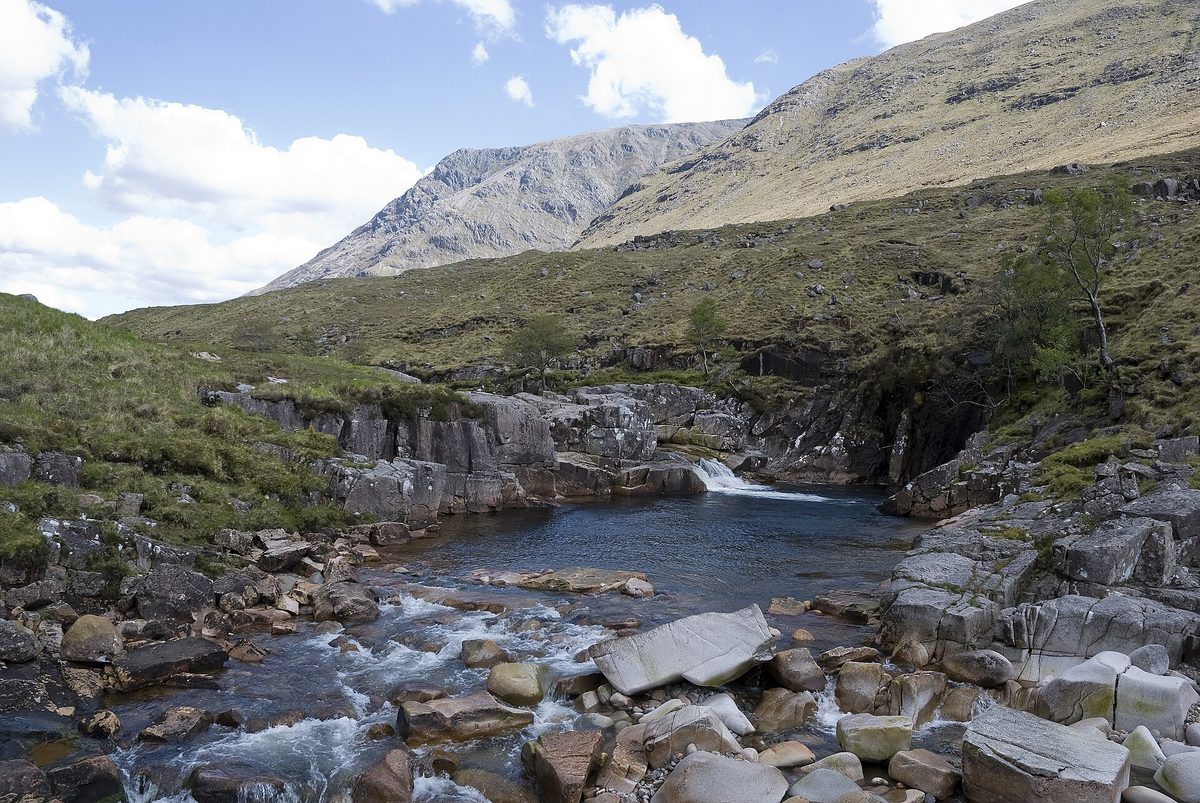
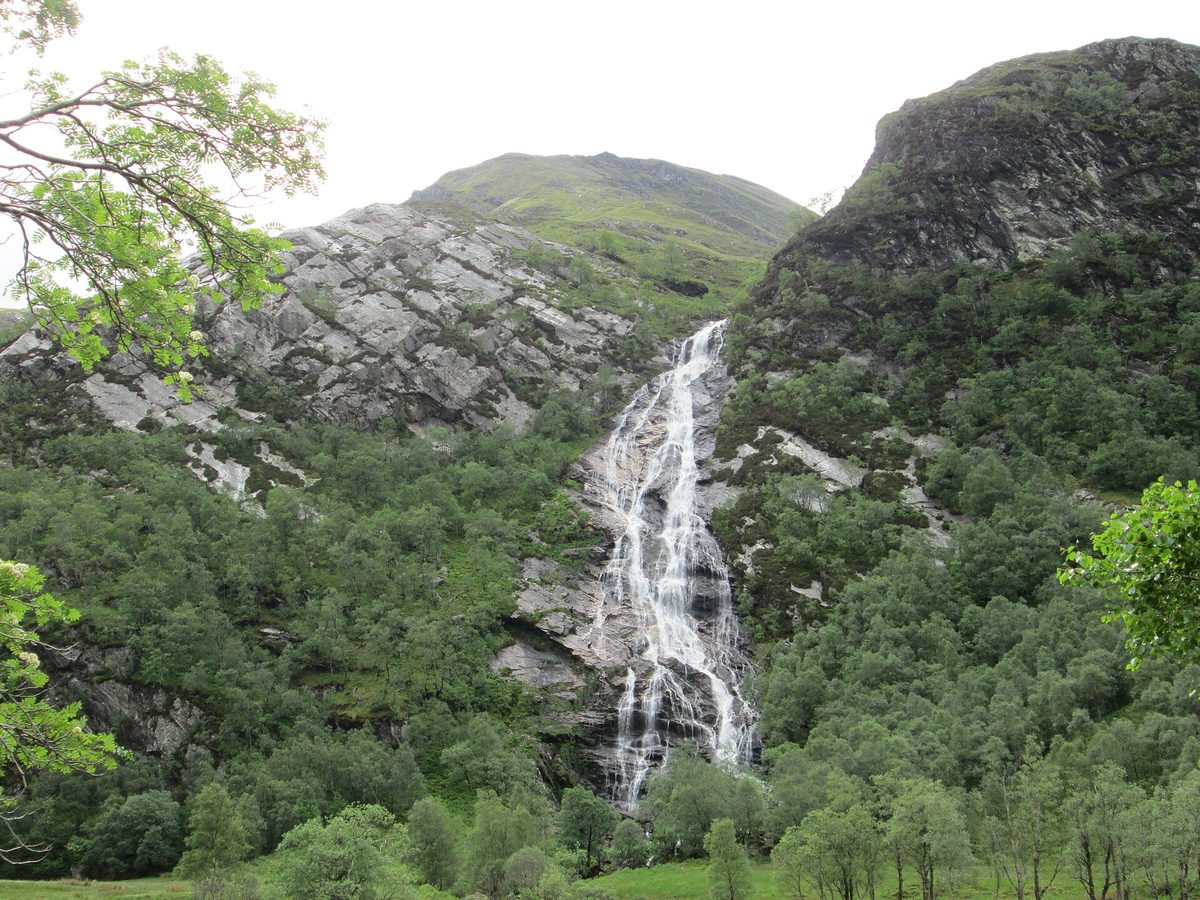
An Steall Bàn drops around 120 metres in a single fall at the head of the Nevis Gorge, and it forms the backdrop to the Triwizard Tournament sequences in Goblet of Fire, including the dragon chase. It is Scotland’s second-highest waterfall.
You reach it from the Upper Glen Nevis car park at the very end of the Glen Nevis road, about seven miles from Fort William. The walk is roughly 3.5km there and back and takes 1½–2 hours. It is not long but it is rough: the path clings to the gorge side, there is loose rock, tree roots and a couple of places where you will use your hands. Boots, not trainers.
The car park is small and the road in is single-track with passing places. In July and August, arrive before 9am or accept that you may be turning round. There is a wire rope bridge across the river at the far end which people film themselves crossing; it is optional, you do not need it for the view, and it is harder than it looks.
Glen Nevis — where Hagrid’s hut stood first
Before the production moved the hut to Glen Coe, the original Hagrid’s hut set was built in Glen Nevis for the first two films, along with stretches of the Hogwarts grounds. Drive up the Glen Nevis road from Fort William and you are passing through it: flat green meadow, the river running fast over boulders, Ben Nevis a great grey wall on your left.
There is nothing marked and nothing left. What there is instead is a lovely, easy river glen with a campsite, a couple of car parks and the start of the mountain track. Combine it with Steall Falls at the top of the road and you have a half-day that costs nothing.
The road is single-track with passing places for its upper half and it is the busiest such road in Lochaber. If a bus is coming down, you reverse.
Rannoch Moor and Corrour
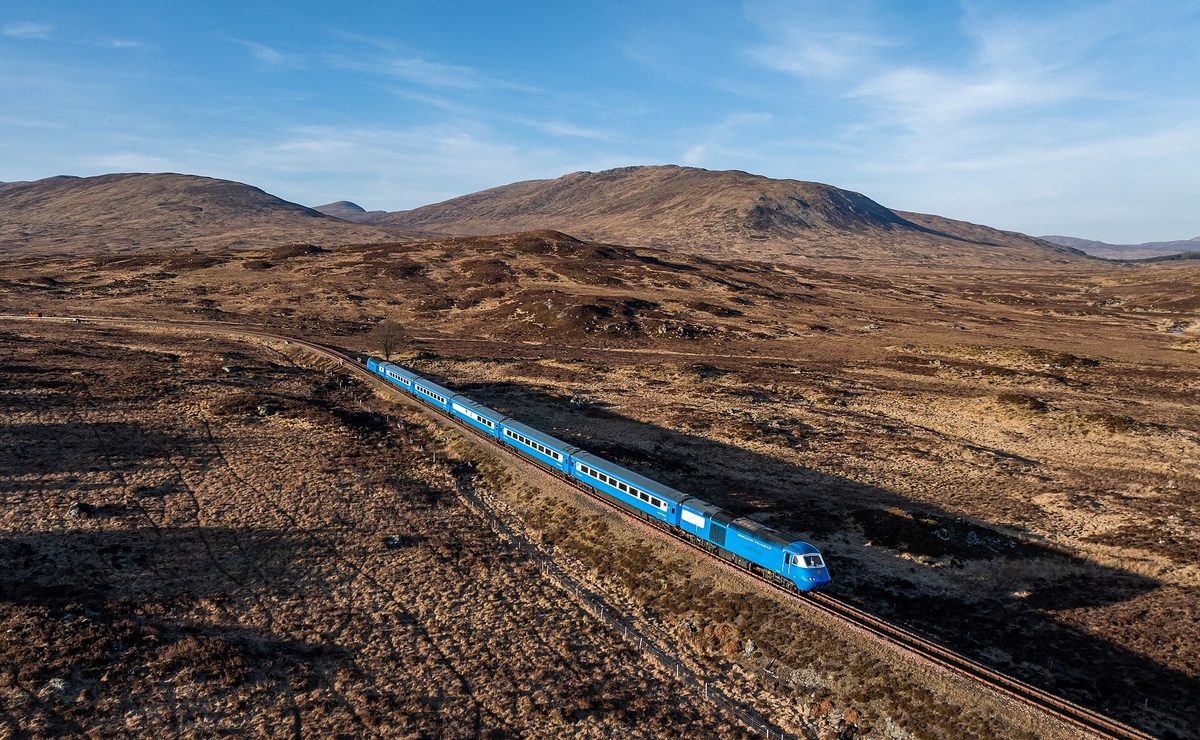
The Death Eaters board the Hogwarts Express as it crosses an empty brown moor in Deathly Hallows: Part 1. That is Rannoch Moor, fifty square miles of blanket bog, lochans and nothing else, crossed by both the A82 and the West Highland Line.
You can see it from the car in about ninety seconds, which is what most people do. The better version is to get on the Glasgow–Fort William train and watch the moor go past for half an hour, or to get off at Corrour, the highest mainline station in Britain, which has no public road to it at all. There is a station restaurant and a hostel and, in every direction, moor.
Be clear-eyed: Rannoch Moor is not a photogenic single object. It is an absence. On a low grey day it is one of the most atmospheric places in the Scottish Highlands, and in flat sunshine it can look like a brown car park.
Loch Morar and the coast beyond Glenfinnan
West of Glenfinnan the line and the road run down to the sea past Loch Morar, the deepest freshwater loch in Britain at over 300 metres, and along a coastline of white shell sand and turquoise shallows that appears in various lake and shoreline shots. You will pass it whether you drive or take the train.
The beaches here — Camusdarach, Traigh, the sands at Morar — are the real prize and have almost nothing to do with wizards. If you have an hour spare between the train and dinner, this is where I would spend it. We have gone into them properly in our guide to Scotland’s best beaches.
Black Rock Gorge — the long-shot outlier
The one filming location that is nowhere near the others. Black Rock Gorge near Evanton, north of Inverness, is a narrow chasm perhaps 40 metres deep and in places only a few metres wide, spanned by two footbridges. It was used for parts of the dragon sequence in Goblet of Fire.
It is around three and a half hours’ drive from Fort William, or 25 minutes from Inverness. The walk in from the village is easy, maybe 40 minutes return, and the gorge is properly eerie — you hear the water long before you see it.
My verdict: only worth it if you are already heading north for Loch Ness and Inverness or starting the North Coast 500. Do not drive from Fort William for this alone.
The West Highland Line itself
The most overlooked real location is the railway. Long lens shots of the train winding through the hills were taken all along the line between Fort William and Mallaig, and also on the Glasgow–Fort William section across Rannoch. Every mile of it is a filming location in the loosest sense, which is why the cheapest way to “visit” several at once is simply to buy a rail ticket and sit by a window.
Which film used which place
Useful if you are working through the series rather than the map. Scenes were often composited from several locations, so treat this as the principal use of each place rather than a complete list.
| Location | Appears mainly in | What it plays |
|---|---|---|
| Glenfinnan Viaduct | Chamber of Secrets onwards | The Hogwarts Express route |
| Loch Shiel | The first three films | The lake at Hogwarts |
| Glen Nevis | Philosopher’s Stone, Chamber of Secrets | Hogwarts grounds and Hagrid’s hut |
| Glen Coe | Prisoner of Azkaban | Hagrid’s hut and the land around the castle |
| Steall Falls, Glen Nevis | Goblet of Fire | Triwizard Tournament backdrop |
| Black Rock Gorge | Goblet of Fire | The gorge in the dragon sequence |
| Rannoch Moor | Deathly Hallows: Part 1 | The moor the train crosses |
| Glen Etive | Deathly Hallows: Part 1 | Landscape after the Gringotts escape |
| Loch Eilt | Deathly Hallows: Part 1, plus train shots | The island with Dumbledore’s tomb |
| Loch Arkaig | Deathly Hallows: Part 1 | Wider shots around the tomb |
Glenfinnan beyond the viaduct
Most people give this village forty minutes and leave. It is worth a morning.
The Station Museum sits in the original 1901 station building and is run by volunteers. It is small, it is cheap, and it explains how this line came to be built through country that engineers said could not carry a railway. Arrive by train or bus and entry is free. Next door, the Sleeping Car offers hostel beds in converted railway carriages, and there is a tearoom in an old dining car.
Loch Shiel Cruises run out of Glenfinnan from spring to autumn, generally in the region of £20–£30 depending on the length of the sailing, with a discount for arriving car-free. From the water you get the view the film crews framed, and a good chance of golden eagles, red deer on the shoreline and, if you are lucky, an otter.
The Monument itself is worth the £5 and the climb. It is a narrow spiral stair to a small platform, not suitable if you dislike confined spaces, and the view straight down the loch is the best in the glen. Booking slots are limited and it closes over lunchtime.
Glenfinnan House Hotel, across the water from the Monument, does food and a fire, and gives you a free hot or soft drink with a meal if you arrived without a car.
The other films shot on these same roads
One of the quiet pleasures of this trip is realising how much of British cinema was made on the forty miles between Glen Coe and Mallaig. If your travelling companion is indifferent to wizards, this is your argument.
- Glen Etive and Glen Coe supplied the closing act of Skyfall, which is why the single-track road is so much busier than it was in 2011.
- Glen Nevis was used extensively for Braveheart. One of the car parks is still known locally by that name.
- Camusdarach beach, near Morar on the road to Mallaig, is the beach from Local Hero, and it looks exactly as it did in 1983.
- Corrour station on Rannoch Moor is where the great outdoors scene in Trainspotting was filmed.
- Glen Coe has also done service for Highlander, Rob Roy and the opening of Outlander, among a great many others.
You will pass all of them anyway. Knowing it turns a single-franchise pilgrimage into something a good deal more interesting, and it is a useful bargaining chip when somebody in the car has had enough of viaducts.
Riding the Hogwarts Express: the Jacobite steam train, honestly
The Jacobite is the real thing. West Coast Railways has run it since 1995, the same locomotives and carriages appeared in the films, and at the height of the season it crosses the Glenfinnan Viaduct four times a day. This is the part of a Harry Potter trip that people most often get wrong, so let me be very specific.
2026 dates and times
There are two services and they run on different calendars.
- Morning service: Monday 1 June to Friday 23 October 2026, seven days a week. Departs Fort William 10:15, arrives Mallaig 12:25. Returns from Mallaig 14:10, back at Fort William 16:03.
- Afternoon service: Wednesday 10 June to Friday 25 September 2026, seven days a week. Departs Fort William 12:50, arrives Mallaig 15:06. Returns from Mallaig 17:00, back at Fort William 18:52.
So the morning train is the long-season one. If you are visiting in early June or in October, that is your only option. Between mid-June and late September you have both. It is 84 miles for the round trip. The morning service takes just under six hours from leaving Fort William to getting back, of which around four are spent on the train and the rest in Mallaig.
Two caveats worth knowing before you book. In extreme heat the operator may suspend the service for passenger safety, and when fire risk is high or a locomotive is unwell, the train may run behind a heritage diesel instead of steam. It is rare, but if steam specifically is the point of the trip for you, that is a real risk you are carrying.
What it costs in 2026
Everything is a same-day return. There are no one-way tickets.
| Ticket | Standard | First Class |
|---|---|---|
| Adult day return | £76 | £116 |
| Child day return (16 or under) | £43 | £76 |
| Private table for two (total, not per person) | — | £252 |
| Booking fee | Minimum £3.75 per booking | |
| Amendment fee | £15 per change | |
A family of two adults and two children in standard is therefore about £242 including the booking fee. In first class the same family is around £388. That is a serious amount of money for a five-hour day out, and I want you to see the number clearly before you decide it is worth it.
One structural quirk that catches people: first class has a minimum booking of two passengers and seats you at tables of four. A solo traveller cannot book first class at all and must travel standard. If you are a group of five or six wanting to sit together in first, you will need to phone rather than book online, because the system will not seat you that way automatically.
Prices were correct at publication and West Coast Railways say plainly they may change. Check westcoastrailways.co.uk before you commit.
Is first class worth £40 more?
My honest view: for most people, no.
The scenery is identical from both. Every seat on the train has a window and the carriages are the same heritage Mk2 stock throughout. What first class buys you is a guaranteed table for four with more elbow room, at-seat service and a bit more space to get a camera up to the glass. What it does not buy you is a better view.
Where I would pay the extra: if there are exactly four of you, if you have mobility issues and want the space, or if this is the centrepiece of a once-in-a-lifetime trip and you want it to feel like an occasion. Where I would not: a couple who will spend most of the journey standing in the corridor with the window down, which is what the keen photographers do anyway.
How far ahead to book
Months. Not weeks.
Bookings for the following season typically open the previous winter, and the popular July and August departures on the morning service go within days of release. By spring, summer Saturdays are usually gone. If you are travelling in the school holidays and you have not booked by March, expect to be disappointed.
Shoulder-season dates — early June, late September, October — hold on far longer, sometimes into the month itself. October in particular is a good bet: the trees along Loch Eilt turn, the light is low and gold, and the crowds thin.
There is one last-resort option. The guard may hold a small number of seats for sale on the day at Fort William station. They are cash only, first come first served, and can never be guaranteed. I would not build a holiday around it, but if you are staying in Fort William anyway and the weather turns good, it costs nothing to turn up early and ask.
The £10 alternative nobody sells you
Here is the thing the tour operators would rather you did not know. The Glenfinnan Viaduct carries the ordinary ScotRail service between Fort William and Mallaig every day of the year, and an adult return costs under £10.
Same viaduct. Same twenty-one arches. Same view down Loch Shiel. Same coastline, same white beaches, same Mallaig at the end of it. Around four services each way per day, with the first out of Fort William around 07:15, and the journey takes roughly an hour and twenty-five minutes. You can go out in the morning, spend three or four hours in Mallaig or Arisaig, and come back in the evening.
What you lose is the steam locomotive, the heritage carriages and the sense of theatre. That is a real loss — the smell of coal and hot oil, the whistle echoing off the hillside, the fact that this is the actual train. But you are paying roughly £66 a head for it, and for some travellers that trade is not obviously right.
My suggestion, if the budget is tight: take the ScotRail service, get off at Glenfinnan, walk up to the viewpoint, and watch the Jacobite cross the viaduct from outside. You get the money shot of the steam train, the ride over the viaduct, and change from £15. The National Trust for Scotland even throws in a free hot drink and 2-for-1 on the Monument climb for arriving without a car.
What the ride is actually like
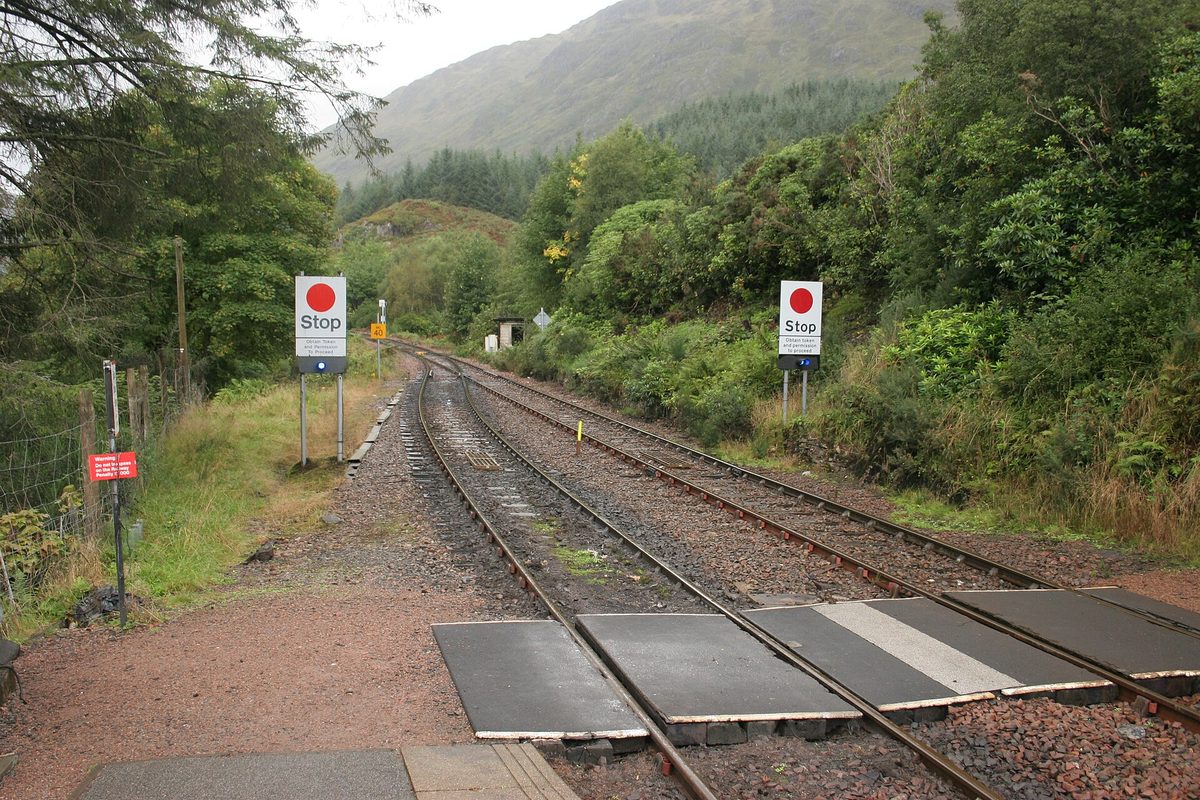
Better than I expected, and slower than you think. The locomotive is usually a Stanier Black Five, a 1930s workhorse; number 45407, The Lancashire Fusilier, has hauled this train for years.
Out of Fort William you run under Ben Nevis, past Neptune’s Staircase at Banavie, then along Loch Eil. The viaduct comes about 35 to 45 minutes in. If the timetable allows, the driver eases off on the crossing, and there is a collective scramble as everybody realises simultaneously that the best view is out of the window on the other side.
Which side to sit? Going west from Fort William, the left-hand side gives you Loch Eil and then, after Glenfinnan, the coast and the Small Isles. The right gives you the hills. Coming back, it reverses. The truth is that nobody stays in their seat for the viaduct anyway, and the corridor windows that drop down are where the serious photographs get taken. Get up early and claim one.
Beyond Glenfinnan the line threads Lochailort, Arisaig — the most westerly mainland station in Britain — and Morar, and the sea arrives. On a clear day you can see Rum, Eigg, Muck and Canna out across the water, with the southern tip of Skye beyond. That stretch, honestly, is prettier than the viaduct.
Ninety minutes in Mallaig
You get about an hour and a half at the far end while the locomotive runs round. It is enough.
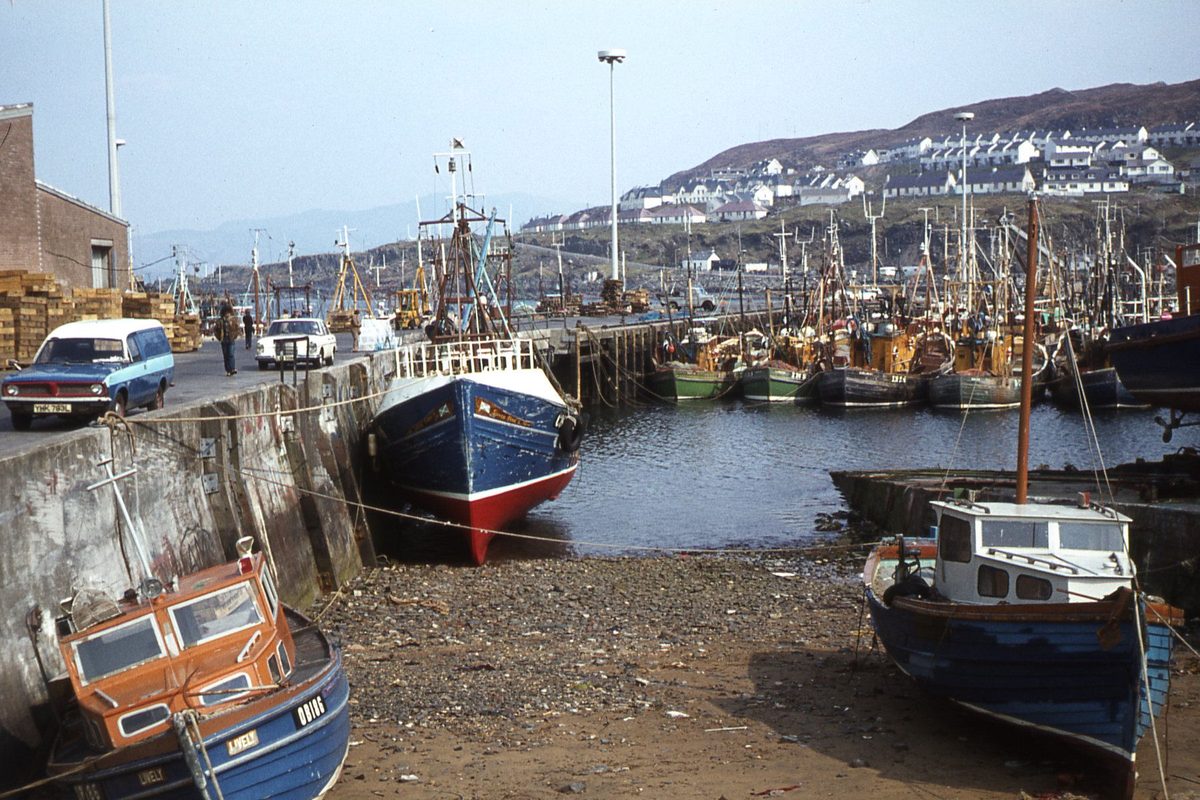
Mallaig is a working fishing port, not a tourist village. The boats land, the CalMac ferries leave for Skye, the Small Isles and Knoydart, and there is a short strip of cafes, chip shops and a heritage centre. The fish and chips are excellent and eaten on the harbour wall as intended. Mallaig kippers are the local speciality and travel well if you have a cool bag; our guide to Scottish food and drink has more on where the good stuff comes from.
Do not plan a ferry to Skye and back in the layover. It does not fit, and people try it every summer.
Bad weather, changes and cancellations
Tickets are valid only for the date and the train printed on them, and they are same-day returns on the same service. If you need to move a booking there is a £15 admin fee per change, and West Coast Railways publish their booking conditions in full — read them before you pay, not after.
The important thing to understand is that rain is not a cancellation. The train runs in weather that will completely obscure the view from the viaduct, and there is no refund for a grey day. If your trip has one flexible day in it, keep the train ticket for the better-looking forecast, and use the £15 amendment fee as your insurance rather than gambling on a fixed date months out.
Genuine suspensions do happen — extreme heat, high fire risk, a locomotive failure — and in those cases the operator will contact you. Steam being swapped for a heritage diesel is not usually treated as a cancellation, so if steam specifically is what you are paying for, accept that as a small standing risk.
On board: food, luggage, toilets and access
The carriages are heritage Mk2 stock, which is the point and also the constraint. Corridors are narrow, there are steps up from the platform, and the doors are old-fashioned. West Coast Railways publishes a disability policy and will discuss specific needs, but if anyone in your party uses a wheelchair or struggles with steps, phone or email before you book rather than after.
There is a refreshment service on board, and extras such as cream teas can be added when you book rather than bought on the day. Nothing about it is cheap. If you want a proper lunch, Mallaig is a better bet than the trolley, and you have ninety minutes there.
Toilets are on the train. Luggage space is limited to overhead racks and the vestibules, which is worth knowing if you are travelling between accommodation on the day; large cases are awkward. Fort William station has left luggage arrangements at times, but do not count on it.
Windows: some vestibule windows drop down and this is where the photographers gather. Be aware that a steam locomotive throws out smuts, and leaning out with a clean jumper on is a decision you may regret. Sunglasses are not a bad idea, and not for the sun.
One more: the train is very popular with families and it is loud, warm and social rather than serene. If you were picturing a contemplative glide through the glens, the ScotRail service is a good deal quieter.
How to photograph the train at Glenfinnan
This is the shot everybody wants and most people miss, usually by arriving fifteen minutes too late or standing in the wrong place. It is not hard, but it does need planning.
Parking, and the reality of it
Two car parks, side by side, linked by a pedestrian bridge. The National Trust one charges £5 for the day and is free to members. The Glenfinnan community car park next door takes considerably more vehicles and is the overflow.
In June, July and August, both can be full by mid-morning on a good day. My rule is to arrive at least an hour before the train, which in practice means being in the car park by about 9.45am for the morning crossing. If both are full, the Trust’s advice is to come back later or another day — not to invent a space on the verge.
Practical details that matter more than they should: the only public toilets in Glenfinnan are at the visitor centre, and after hours there is an accessible block in the car park that costs £1 to open and does not take a radar key. The next public toilets are at Corpach, 13 miles east, or Arisaig, 19 miles west. The nearest shops are the same distance again. Bring water and a sandwich.
The four viewpoints, ranked
The Trust maintains a network of paths and each gives a different photograph.
- The hillside viewpoint above the visitor centre car park. A five-minute climb with some steps and benches on the way. You get the whole panorama — viaduct, Loch Shiel, the Monument and the mountains — and you watch the train run across the entire hillside rather than appearing for four seconds. This is the one I would choose, and it is the easiest.
- The classic elevated angle. Take the flat riverside path from the car parks (about 15 minutes, suitable for wheelchairs and pushchairs) and then add a 10-minute climb up the hillside path. Steps, and slippery in the wet. This is the postcard: arches curving away, train on top.
- From directly below. The flat 15-minute walk on its own, ending under the arches looking up. Much less crowded, and the scale of the thing is far more obvious than from above.
- On the platform at Glenfinnan station. Fifteen minutes on pavement from the car parks. Close-up of the locomotive and the carriages, and the small railway museum in the old station building is well worth twenty minutes. Free entry if you arrive by bus or train.
If you want everything, there is a 4km circular linking the lot, which takes 60–90 minutes. There is also a hillside path directly from the station to the viaduct — about 30 minutes, or 45 minutes if you continue to the visitor centre.
The timetable trick
Here is the bit that separates a good visit from a frustrating one.
The Jacobite crosses the viaduct twice per service — once heading west to Mallaig and once heading back east. Between 10 June and 25 September 2026, when both services run, that is four steam crossings a day. Almost nobody realises this, which is why the car park empties dramatically after the late-morning crossing while a second, quieter one is coming an hour or two later.
Fort William to Glenfinnan is roughly 30 to 45 minutes of running. Work forward from the departure times and you can estimate each crossing. But do not trust my arithmetic or anyone else’s: the National Trust for Scotland posts the day’s actual times inside the visitor centre, and steam trains run late for perfectly ordinary reasons. Check that board the moment you arrive, then get into position 20 minutes early.
And remember the ScotRail service crosses several times a day, all year round. No steam, but a train on a viaduct is still a train on a viaduct, and in February you may have the viewpoint to yourself.
Light, weather and the winter case
The morning crossing generally gets the kinder light on the arches; by late afternoon in high summer you can be shooting into a low western sun. Cloud is your friend here more often than not — a flat grey sky renders the concrete and the steam far better than glare does.
Which brings me to the contrarian advice. Come in October. The season runs to 23 October for the morning train, the birches along the line turn copper, the light stays low all day, and the car park is not a battlefield. Our guide to the best time to visit Scotland makes the wider case, but for this one location autumn is comfortably the best compromise between crowds, light and the train still running.
Kit, settings and the mistakes photographers make
You do not need a long lens for the classic view. From the elevated path the whole viaduct fits comfortably into a standard zoom at around 24–70mm on full frame, and a phone in its wide setting does a perfectly respectable job. Where a longer lens earns its place is at the panoramic viewpoint above the car park, where you are further back and want to compress the train against the hillside.
Three settings mistakes I watch people make. First, shutter speed too slow — the train is not fast but the steam is, and anything under 1/500th turns the plume to mush. Second, exposing for the sky and losing the arches, which are pale concrete against dark hillside; meter for the viaduct and let the sky go. Third, not shooting before and after. The approach along the hillside and the departure round the curve are often better compositions than the moment on the bridge, and everybody puts their camera down too early.
Video: hold the shot for at least fifteen seconds after the last carriage clears. The whistle usually comes late and the sound is half the thing.
And get there early enough to choose your spot rather than inherit one. Twenty minutes before is the minimum; forty is comfortable.
Midges, weather and what to actually wear
Lochaber is one of the wettest inhabited corners of Britain and Glenfinnan sits in a funnel between hills and sea loch. You should expect rain on at least one day of a three-day trip, and possibly on all three.
Wear proper waterproofs with a hood. Umbrellas are useless on that hillside — the wind comes off Loch Shiel and turns them inside out in seconds. Footwear with grip matters more than you think: the viewpoint paths have steps, exposed roots and sections that turn to mud after rain, and I have watched more than one person come down that hill on their backside.
Midges run roughly late May to September and are worst in June, July and August, at dawn and dusk, in still damp air. They are not a problem on a breezy day or in the middle of a sunny afternoon, and they are a genuine problem at a loch shore at eight in the evening. Carry repellent. The Scottish standby is Avon Skin So Soft dry oil spray, which for reasons nobody has ever satisfactorily explained works better than most products actually sold for the job.
Ticks are present in bracken and long grass, so check yourself after the Steall Falls and Loch Arkaig walks.
Edinburgh: inspiration, claims and gift shops
Now the part that needs saying out loud.
Nothing was filmed in Edinburgh
Not one frame of the eight films was shot in the city. Not on Victoria Street, not in Greyfriars Kirkyard, not at George Heriot’s. The Hogwarts exteriors were built at studios in Hertfordshire and shot at English cathedrals and castles. If a tour sells you Edinburgh as a filming location, it is either sloppy or hoping you will not check.
What Edinburgh genuinely has is authorship. J.K. Rowling wrote here, in cafes and flats around the Old Town and Southside, through the years when she had a small child and not much money. That is a real and interesting story. It is just a different one from the films, and the city is far more rewarding when you approach it that way. Our full Edinburgh travel guide covers the city on its own terms.
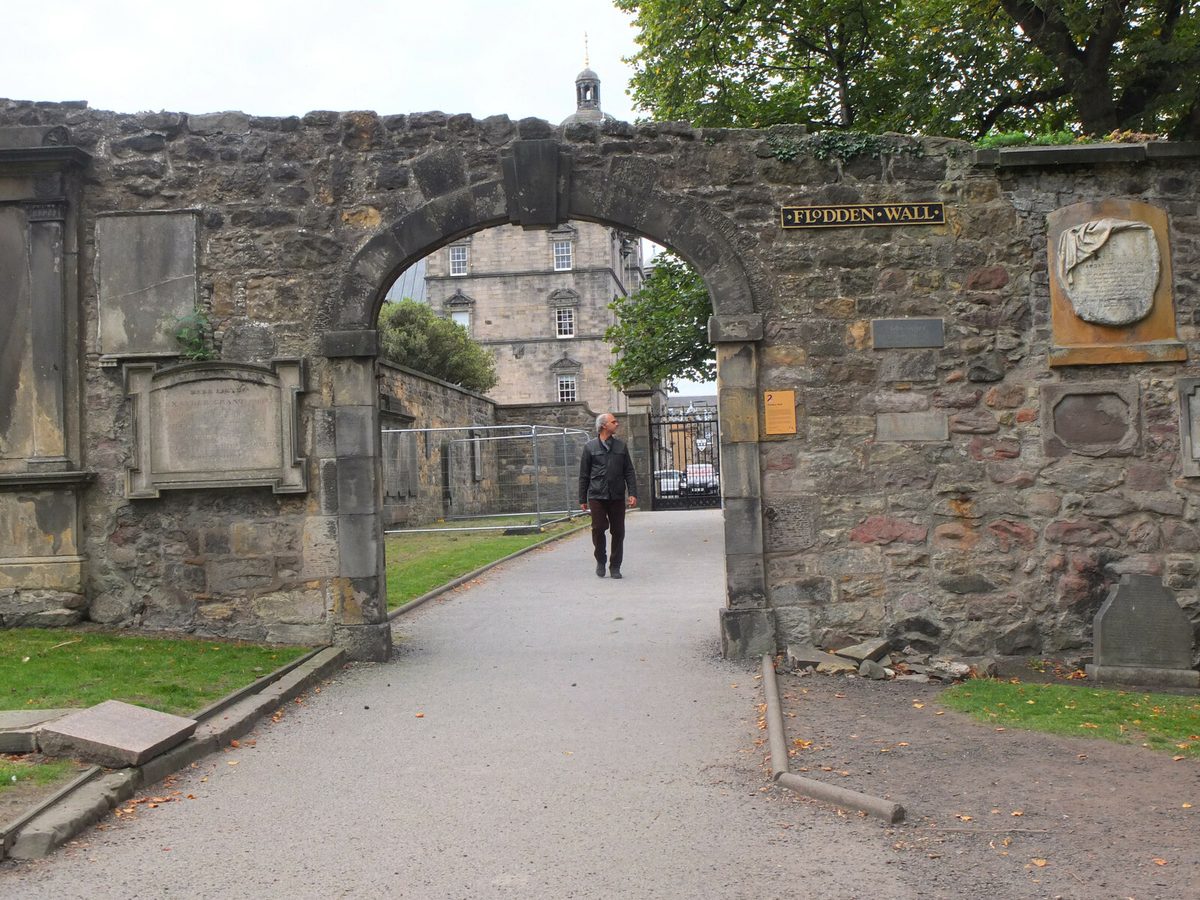
Greyfriars Kirkyard — the evidence, weighed
A working 17th-century burial ground behind the Grassmarket, free to enter, open daily, and by some distance the most atmospheric place on this list. Scattered across it are headstones bearing the names Riddell, McGonagall, Moodie, Potter and Scrymgeour.
What is confirmed: Rowling has written that she named Professor Minerva McGonagall after the poet William McGonagall, widely held to be the worst poet in the English language, who is buried in this kirkyard. That connection comes from her, not from a guide.
What is not confirmed: that she walked round the graves harvesting surnames. The Thomas Riddell stone, the Elizabeth Moodie stone and the rest are frequently presented as the origin of Voldemort and Mad-Eye Moody. She has never said so. The overlap is striking and the kirkyard is a two-minute walk from places she is known to have written, so it is a reasonable inference — but an inference is what it is.
One request, and I mean this. People have been leaving letters, sweets and candles on the Riddell stone and standing on adjacent graves to photograph it. This is an active cemetery with families still connected to it, and the kirk has had to clear offerings away. Look, photograph from the path, leave nothing. If you want somewhere to leave a tribute, that is what the gift shops are for.
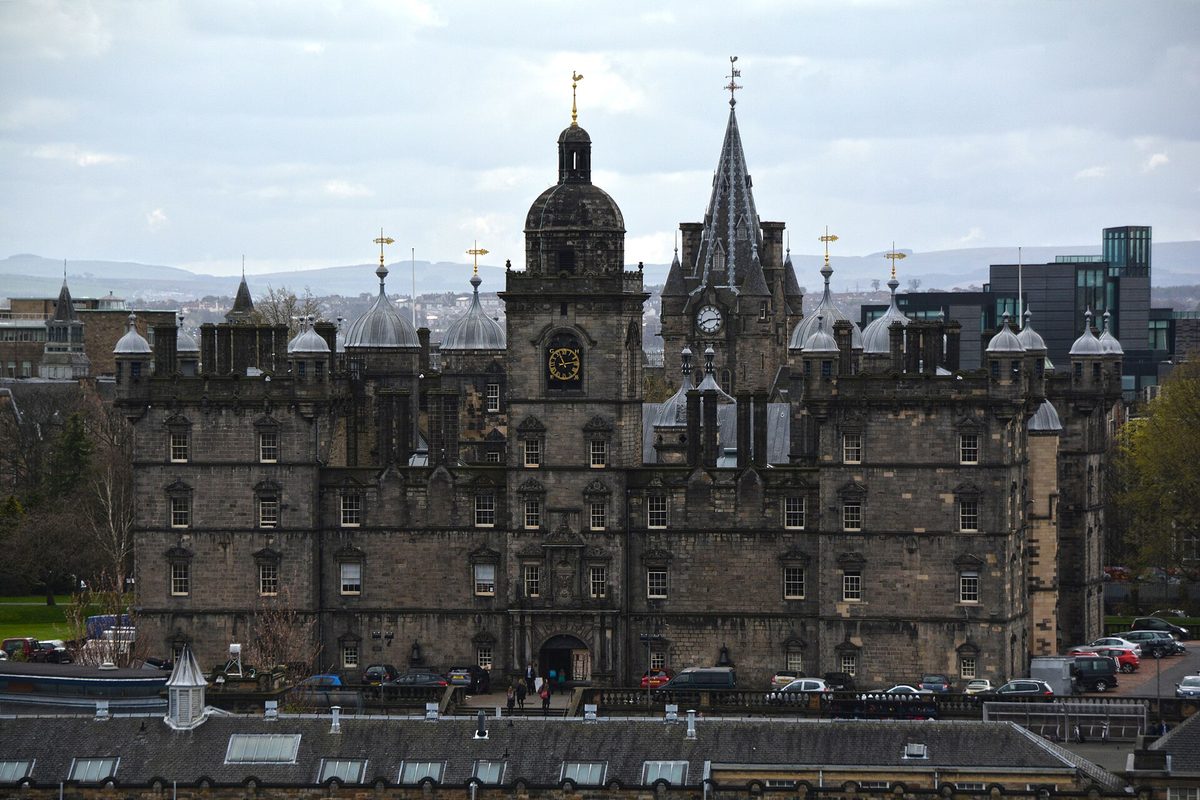
George Heriot’s School
Look south from Greyfriars and you see turrets, a quadrangle and a clock tower: George Heriot’s School, founded in 1628 and still a working independent school of well over a thousand pupils. It divides its pupils into four houses. You can see why the Hogwarts comparison gets made.
Rowling has not confirmed it as an inspiration. And critically, you cannot go in — it is a school with children in it, not an attraction, and it does not do public tours during term. The view over the kirkyard wall is what you get. That is fine; it is a handsome view. Just do not build an afternoon around it.
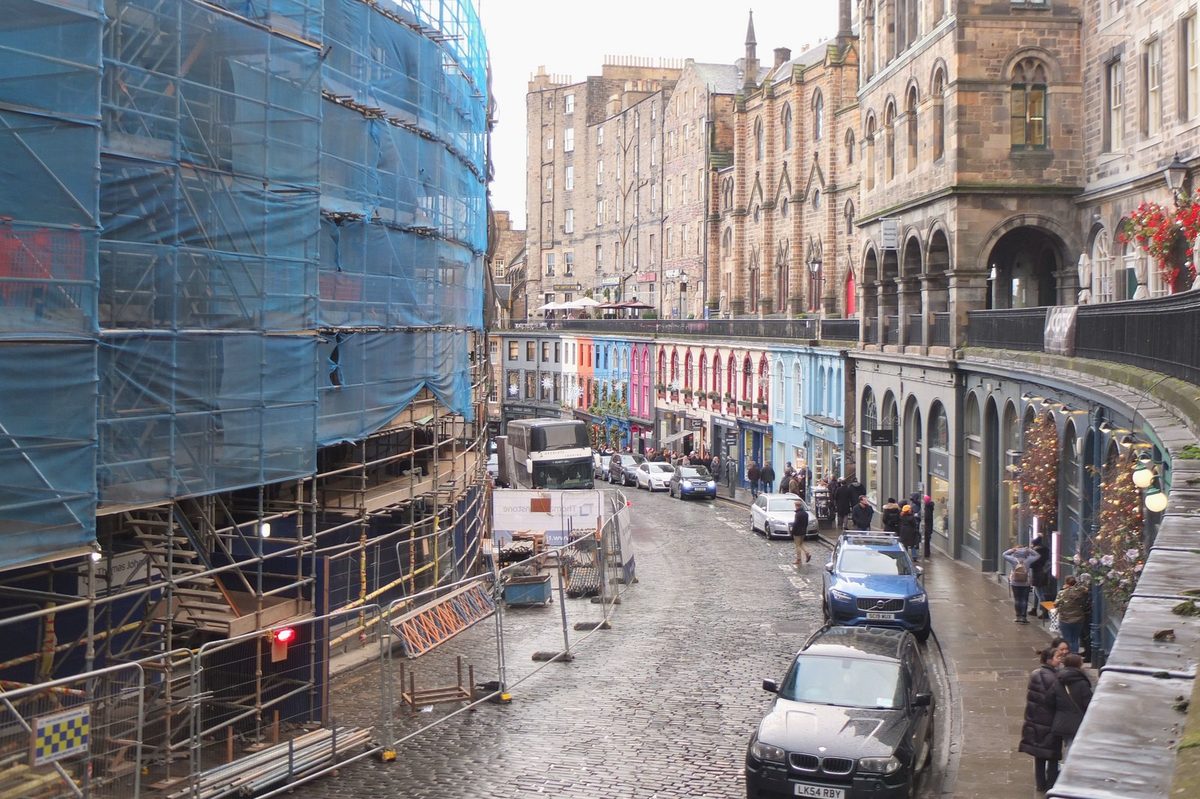
Victoria Street — the Diagon Alley question
The curved, stepped, brightly painted street running down from George IV Bridge to the Grassmarket. It was cut and built around 1830 under an Edinburgh improvement act, which means it pre-dates the books by more than 160 years and was not designed with anything magical in mind.
Is it Diagon Alley? Rowling has never said so. What is undeniable is that a curving street of stacked, jumbled, differently coloured shopfronts under a raised terrace feels like the illustrations, and it is now lined with shops that lean into it hard.
Go early. By eleven o’clock in summer the street is a slow-moving queue and you will not get a photograph without forty strangers in it. At eight in the morning it is empty and quite lovely, and the bakery smell is half the appeal.
The cafes: which one did she actually write in?
The Elephant House on George IV Bridge calls itself the birthplace of Harry Potter and has the queue to prove it. It closed in August 2021 after a serious fire in the building next door and stayed shut for more than four years, reopening at the end of December 2025. The table she is said to have used survived.
But the tidier story is not the whole one. Speaking to the BBC in 2001, Rowling described a different place — Nicolson’s Café on Nicolson Street — as the place where she wrote huge parts of the first book. The premises have changed hands and changed name more than once since; check what is there now before you make a pilgrimage. She also wrote at the Traverse Theatre cafe.
So: she wrote in several places, over several years, and the Elephant House is one of them rather than the one. It is a decent cafe with a good view of the castle and the graveyard behind it. Queue for it if you want the photograph. Do not queue for an hour believing it is the only true site, because it is not.
The Balmoral
Rowling finished Deathly Hallows in a suite at the Balmoral Hotel at the east end of Princes Street, and room 552 is now named after her. It is one of the more expensive rooms in the city and books up a long way ahead.
For everybody else, the hotel is a landmark you can walk past, and the bar will serve you a drink without asking what you are there for. The clock on the tower is famously kept a few minutes fast so nobody misses their train at Waverley below.
The shops and the walking tours
Victoria Street and the surrounding closes now hold several unlicensed “wizarding” shops selling wands, robes and house scarves. They are well done, they are busy, and they are shops. Expect £30–£45 for a wand and a queue at the door in August.
The walking tours are better value. There is a long-running free, tips-based Potter walking tour that starts near Greyfriars and covers the kirkyard, Victoria Street and the Heriot’s view in about an hour and a quarter, with a guide in a cloak and a lot of enthusiasm. Give them £10 a head at the end. Paid versions run £15–£25 and are not obviously better. Our roundup of guided tours across Scotland covers the operators worth knowing.
If you are in the city in August, be warned that the Old Town during festival season is a different proposition entirely — see our guide to Scotland’s festivals and events before you book those dates.
An Edinburgh walking route, in order
Everything worth seeing sits within about a mile, so do it on foot and do it in this sequence to avoid backtracking. Allow three hours at a browsing pace, four if you queue anywhere.
- Start on George IV Bridge at the Elephant House. Ten minutes, or an hour if you queue. Photograph the frontage from across the road.
- Cut down Victoria Street immediately opposite. Twenty minutes if it is early, longer if you shop. Walk down, then climb the steps to the upper terrace of West Bow for the view back along the curve — that is the angle you have seen and most people miss it.
- Grassmarket at the bottom for a coffee and a look up at the castle rock.
- Candlemaker Row up to Greyfriars Kirkyard. Forty-five minutes. Go through the gate, keep left along the wall, and take the path towards the far corner for the George Heriot’s view.
- Down to Nicolson Street for the site of Nicolson’s Café, about ten minutes’ walk, if you want the more accurate writing pilgrimage.
- Finish at the City Chambers on the Royal Mile, where Rowling’s handprints are set in stone in the quadrangle, then walk down to the Balmoral at the foot of Princes Street.
Best time of day is between eight and ten in the morning. Victoria Street after eleven in summer is shoulder to shoulder and the light in the kirkyard is better early anyway.
What Rowling has confirmed, and what she has not
Because this is where most guides quietly blur the line.
| Claim | Status |
|---|---|
| She wrote parts of the books in Edinburgh cafes | Confirmed by Rowling |
| Nicolson’s Café is where she wrote large parts of book one | Confirmed by Rowling, BBC 2001 |
| Professor McGonagall is named after the poet William McGonagall | Confirmed by Rowling |
| She finished the final book at the Balmoral Hotel | Confirmed |
| Greyfriars headstones supplied character surnames | Never confirmed — inference |
| Victoria Street is the model for Diagon Alley | Never confirmed — inference |
| George Heriot’s School inspired Hogwarts and its houses | Never confirmed — inference |
| The Elephant House is the birthplace of Harry Potter | Marketing — she wrote in several places |
None of this makes the walk less worth doing. Standing in a graveyard reading names you half recognise is a good hour whether or not a novelist did the same. It just means you should not repeat the stronger claims as fact, and you should be a little sceptical of a guide who does.
The bits that are pure marketing
None of this is a scam. It is all clearly labelled if you read carefully. But it gets folded into “Harry Potter locations” lists in a way that wastes people’s time, so here it is separated out.
Glasgow University cloisters
They appear on a great many Harry Potter lists. Nothing from the films was shot there. The cloisters under the Gilbert Scott Building are a genuine piece of Victorian Gothic, vaulted, free to walk through, and they have featured in various other productions. Go because they are beautiful and because Glasgow deserves more than a night in transit. Do not go believing a film crew ever set up there.
Day tours with “Hogwarts Express” in the title
Read the itinerary twice. A large number of Edinburgh day tours are sold with the Hogwarts Express in the name and take you to Glenfinnan to watch the train from the viewpoint. That is a perfectly good day out — it is what I would recommend to most people anyway — but you are not boarding anything.
Tours that genuinely include a ticket on the Jacobite exist and cost considerably more, typically £180–£250 from Edinburgh for a very long day. The giveaway is whether the price includes the train fare and whether it names a departure time. If the itinerary just says “see the steam train”, you are watching.
Also worth knowing: Edinburgh to Glenfinnan is around 150 miles each way. A day tour is 12 to 14 hours on a coach for 40 minutes at the viaduct. If you can spare two days and base yourself in Fort William instead, do that.
The English locations quietly sold as Scottish
Hogwarts itself is not in Scotland and never was. The castle, the great hall, the moving staircases and the courtyards all come from English buildings and English sets, and a fair number of “Harry Potter Britain” itineraries are vague about where the border falls. There is a section further down on which of those are worth adding and how far they really are.
Potion classes, wizard cocktails and themed teas
Edinburgh has bars serving smoking drinks in cauldrons, afternoon teas with wands on the tray, and “potion-making” sessions at roughly £25–£45 a head. Some are a laugh, particularly with children over eight. They are entertainment products, not heritage. Book them if they appeal, budget for them as a night out, and do not let them displace an actual day in the Highlands.
If it is unusual experiences you are after, we have collected a far better list of unique experiences in Scotland that will stay with you longer than a green cocktail.
If you also want the English locations
A fair number of people planning a Harry Potter trip to Britain want the castles and the great hall as well as the glens. Those are in England, and being straight about the geography saves a lot of wasted driving.
Alnwick Castle in Northumberland is the closest to Scotland — about two hours south of Edinburgh by car, or a train to Alnmouth and a short bus. It provided the courtyard for the broomstick lesson in the first film and the walls in the second, and it runs actual broomstick training sessions for children in season. It is a genuine filming location and a genuine castle, open roughly April to October.
Durham Cathedral is another two hours further south and stood in for Hogwarts corridors and the cloisters. Gloucester Cathedral did the same, and Lacock Abbey in Wiltshire supplied several classrooms.
The studio tour at Leavesden, north-west of London, is where most of the interiors were actually built and where the sets, props and costumes now live. It is the single most complete Harry Potter experience anywhere, it is nothing like a film location, and it is four hundred miles from Glenfinnan.
My honest advice: do not try to combine the Highlands and the English locations in one week. Edinburgh to Alnwick and back is a comfortable day trip and a reasonable add-on. Everything else belongs to a different holiday.
Planning a Harry Potter Scotland trip
The logistics, in the order you will actually need them.
How many days you need
- One day: Edinburgh only. Greyfriars, Heriot’s from the wall, Victoria Street, the cafes, a walking tour. Comfortably done in five hours at a slow pace.
- Two days: Edinburgh plus a long day tour to Glenfinnan, or better, a night in Fort William.
- Three days: the sensible minimum for the real locations. Day one drive Edinburgh or Glasgow to Fort William via Glen Coe. Day two the Jacobite or the ScotRail service to Mallaig. Day three Glenfinnan viewpoints, Loch Eilt and Glen Nevis before driving back.
- Five days: add Glen Etive, Loch Arkaig, a Loch Shiel cruise and time to sit still. This is the version I would actually book.
If you are fitting this into a bigger loop, our Scotland itinerary planner shows how the west Highlands slot into a week or a fortnight without doubling back.
Driving, taking the train, or joining a tour
Driving gives you Loch Eilt, Glen Etive, Loch Arkaig and Steall Falls, which no tour or train reaches conveniently. It also means single-track roads, passing places and, in summer, a real parking problem at every stop. Fort William to Mallaig is about 45 miles on the A830, an hour without stops.
The train is the low-stress option and it is very good. Glasgow to Fort William on the West Highland Line takes about four hours and crosses Rannoch Moor. From Fort William, ScotRail continues to Mallaig over the viaduct. You can do this entire trip car-free and it is one of the better rail journeys anywhere.
A tour makes sense if you are short on time or nervous about Highland driving. Just be clear about what is included, as above.
Where to base yourself
Fort William, without much hesitation. It is 18 miles from Glenfinnan, 7 from the Steall Falls car park, 45 minutes from Glen Coe, and it is where the Jacobite starts. It is not the prettiest town in Scotland — it is a functional Highland service town with a supermarket and a bypass — but the location is unbeatable and there is a distillery, a small cinema and a decent museum in it.
Glenfinnan itself has a hotel, a hostel in old railway carriages and very little else. Mallaig works if you want a quiet harbour evening. Book early either way: summer beds in Lochaber go months ahead, as our guide to where to stay in Scotland explains region by region.
What to book, and how far ahead
- Jacobite tickets: as soon as the season opens, typically the previous winter. July and August sell out fastest.
- Accommodation in Fort William: three to six months for July and August.
- Loch Shiel cruises: a week or two, more in peak season.
- ScotRail: walk-up is fine, though advance fares are cheaper if you can fix the date.
- Edinburgh walking tours: a day or two, or just turn up for the free one.
- Nothing at all: Glenfinnan viewpoints, Glen Coe, Glen Etive, Loch Eilt, Steall Falls. All free, all first come first served.
Driving times between the locations
All of these are realistic summer times with traffic, not the optimistic figures a satnav gives you at three in the morning.
| From | To | Distance | Realistic time |
|---|---|---|---|
| Edinburgh | Fort William | 145 miles | 3½–4 hours |
| Glasgow | Fort William via Glen Coe | 105 miles | 2½–3 hours |
| Fort William | Glenfinnan | 18½ miles | 30–40 minutes |
| Fort William | Mallaig | 45 miles | 1 hour 15 |
| Glenfinnan | Loch Eilt layby | 7 miles | 15 minutes |
| Fort William | Upper Glen Nevis car park | 7 miles | 20–25 minutes |
| Fort William | Glen Coe (Clachaig) | 26 miles | 40–45 minutes |
| Glen Coe | Glen Etive road end and back | 28 miles return | 1½ hours |
| Fort William | Loch Arkaig via the Dark Mile | 22 miles | 45 minutes |
| Fort William | Black Rock Gorge, Evanton | 135 miles | 3½ hours |
The A82 through Glen Coe and the A830 to Mallaig are both single-carriageway roads with a 60mph limit that you will rarely reach. Add a third again to any estimate in July and August, and remember that a caravan in front of you on the Road to the Isles sets the pace for everybody.
Two itineraries that actually work
The three-day version, self-drive from Edinburgh or Glasgow.
- Day one: leave by 9am. Drive to Glen Coe, stopping at the Three Sisters viewpoint and the Clachaig for lunch. Continue to Fort William for around 4pm. Walk up Glen Nevis in the evening light. Night in Fort William.
- Day two: the Jacobite at 10:15, or the ScotRail service if you did not get tickets. Mallaig, fish and chips, back for 16:03. Ben Nevis Distillery or the West Highland Museum in the late afternoon. Night in Fort William.
- Day three: drive to Glenfinnan for 9.30am. Viewpoints, the Monument, the second steam crossing if the afternoon service is running. Loch Eilt on the way back. Home from about 3pm.
The five-day version, which is the one I would book. Add a day for Steall Falls in the morning and Glen Etive in the evening light, and a day with no plan at all — a Loch Shiel cruise, the beaches at Morar and Arisaig, or a Munro if the weather is kind. The extra day is what turns a location-ticking exercise into a holiday.
Doing it without a car? Train from Glasgow to Fort William, two nights there, ScotRail out to Glenfinnan on day two and Mallaig on day three. It works cleanly and you see Rannoch Moor into the bargain.
What else there is in Fort William
You will have evenings to fill, and the town repays a little curiosity.
The West Highland Museum on the High Street is small, free and very good on the Jacobite risings, which gives the Glenfinnan Monument context you will not get from the film connection. Ben Nevis Distillery sits at the north end of town and runs tours most days; it is one of the more approachable stops for anyone starting to take an interest in whisky distilleries. There is a modern independent cinema with a good bar. Neptune’s Staircase at Banavie, a flight of eight canal locks, is a pleasant flat walk and you can watch boats work through.
And Ben Nevis itself is right there. The mountain path is a serious full-day walk of eight to nine hours, not a stroll, and people get into trouble on it every summer. If you are tempted, read up properly first.
Roughly what it costs
Two adults, three days, self-drive from Edinburgh, mid-season. Car hire and fuel around £250. Two nights in Fort William around £300. Jacobite standard returns £156 including the booking fee. Parking, the Monument climb, coffees and a Loch Shiel cruise, maybe £80. Food, £180. That is roughly £966, or about £480 a head.
Swap the Jacobite for ScotRail and you save around £135. Skip the car and use the train from Glasgow and you save more again, at the cost of Glen Etive and Loch Arkaig. Our Scotland travel tips cover the money-saving mechanics in more depth.
What underwhelms, and the mistakes I see every summer
Time for the unglamorous list.
Loch Eilt disappoints most people. They have seen a lit, colour-graded shot of a tomb on an island and they arrive at a grey loch with a boggy verge and no tomb. It is a nice loch. It is not an attraction.
Hagrid’s hut is not there. Every year people search Glen Coe for a building. There is no building. There has not been one since filming finished.
The Elephant House queue is not worth an hour. Go at opening or go elsewhere. The coffee is fine; it is a cafe.
Arriving at Glenfinnan ten minutes before the train. The single most common error. You will not park, you will not get up the hill, and you will hear the whistle from the road. Give yourself an hour.
Assuming the Jacobite runs year-round. It does not. Outside 1 June to 23 October 2026 there is no steam service at all, and a lot of people book February flights and then discover this.
Trying to do it all from Edinburgh in a day. Twelve hours on a coach, most of it in the dark either end, for under an hour at the viaduct.
Underestimating the weather. Lochaber is one of the wettest inhabited places in Britain. Waterproofs, not umbrellas — the wind on that hillside will destroy an umbrella in ninety seconds.
Treating a cemetery as a set. Covered above, but it bears repeating.
Booking the afternoon train in October. The afternoon service finishes on 25 September 2026. From 26 September to 23 October only the morning train runs, and people who assumed both services were still going have turned up at Fort William at lunchtime to find nothing there.
Ignoring everything else. You are in the west Highlands. There are Munros, sea eagles, distilleries and empty beaches within an hour of the viaduct. If the film locations are all you look at, you will have driven through some of the best country in Europe with your eyes on a phone screen. Add a couple of Scottish castles or an afternoon at a Scotch whisky distillery and the trip doubles in value. There is even a decent chance of meeting a Highland cow on the road to Glenfinnan — our guide to Scotland’s Highland cow folds tells you where they reliably are.
Which locations suit which traveller
The single biggest reason people come away disappointed is that they followed a list written for somebody else. Here is how I would carve it up.
Families with children under about eight
Keep it short and keep it flat. The Glenfinnan riverside path is buggy-friendly and gets you under the arches in fifteen minutes. The station platform is a better bet than the hillside for small children because they can see the locomotive up close. Skip Steall Falls entirely — the gorge path is not suitable for young children — and skip Loch Eilt, which will bore them senseless. The Jacobite is a hit at this age, but a near-six-hour day is a long sit; the ScotRail return to Glenfinnan and back may serve you better.
Photographers
Base in Fort William, give Glenfinnan two separate visits at different times of day, and plan around the four steam crossings between mid-June and late September. Add Glen Etive at dawn and the Morar beaches at sunset. Rannoch Moor is worth a dedicated trip in poor weather, which is when it works. Steall Falls in spate after heavy rain is the best waterfall shot in the area.
People travelling with a non-fan
This trip survives that combination better than most, because every real location is a landscape rather than a set. Sell it as a west Highlands road trip that happens to include a viaduct. Put Glen Coe, the beaches and a distillery in the plan, keep the Edinburgh sites to a morning, and do not make anybody queue for a cafe.
Limited mobility or anyone who cannot manage steps
Glenfinnan is better than you might expect. The riverside path to the viaduct is flat and suitable for wheelchairs and pushchairs, there are accessible parking bays beside the visitor centre entrance, and the centre itself, its cafe, shop and toilets are all accessible. A wheelchair is available to borrow. The elevated viewpoints all involve steps and slippery ground and I would not attempt them.
The Jacobite is harder: heritage carriages, steps up from low platforms and narrow corridors. Contact West Coast Railways directly before booking. The modern ScotRail trains are considerably easier.
Travelling on a tight budget
You can do the real locations for very little. ScotRail Fort William to Mallaig is under £10 return, all the Glenfinnan viewpoints are free, arriving by train means no parking charge and gets you a free hot drink and 2-for-1 on the Monument climb, and Glen Coe costs nothing at all. Stay in a hostel in Fort William or Glenfinnan. That is a two-day trip for well under £100 a head plus beds.
Anyone with exactly one day
Pick a side. Either Edinburgh on foot, which is satisfying and costs almost nothing, or a long day tour to Glenfinnan knowing you will spend most of it on a coach. Trying to combine them will give you neither.
Glenfinnan is being loved to death, and you can help
This needs saying, because it is the one thing every competing article leaves out.
A single railway viaduct in a glen of a few dozen houses now receives an enormous number of visitors, concentrated into two or three short windows a day, in a season of five months. The community has built an overflow car park. The National Trust for Scotland has put in extra paths, an out-of-hours toilet block and more bins. Traffic police patrol the A830 because verge parking has caused accidents.
None of that is your fault as an individual, but the aggregate is a problem and the fixes are easy.
- Come by train or bus if you possibly can. The rewards for doing it — a free hot drink, 2-for-1 on the Monument, discounts at the hostel, the station museum and the loch cruises — are the Trust’s way of asking nicely.
- Park in a marked bay or come back later. Not on the verge, not in a passing place, not at the hotel unless you are a guest.
- Stay on the paths. The hillside above the viaduct erodes quickly and the desire lines people cut take years to recover.
- Take your rubbish with you if the bins are full, and use the toilets at the visitor centre before you leave, because the next ones are thirteen miles away.
- Spend something locally. The cafe, the station museum, the Monument climb, the hotel bar. The money is what keeps the paths and the toilets there.
The same applies at Steall Falls, where a small car park at the end of a single-track road takes far more cars than it was built for, and in Glen Etive, where a dead-end road now carries thousands of vehicles a week. Go early, go outside July and August, and the whole thing works better for everybody — including you.
Frequently asked questions
Where was Harry Potter filmed in Scotland?
All the Scottish filming happened in the west Highlands and Argyll: Glenfinnan Viaduct, Loch Shiel, Loch Eilt, Loch Arkaig, Glen Coe, Glen Etive, Rannoch Moor, Steall Falls in Glen Nevis and stretches of the West Highland Line. Black Rock Gorge near Evanton, north of Inverness, is the one outlier. Nothing at all was filmed in Edinburgh or Glasgow.
How much is the Hogwarts Express train in Scotland?
The Jacobite steam train costs £76 for an adult standard day return in 2026 and £116 in first class, with children 16 and under at £43 and £76. A minimum booking fee of £3.75 applies and all tickets are same-day returns — there are no singles. Prices can change, so check westcoastrailways.co.uk before booking.
Can you see the Glenfinnan Viaduct without paying?
Yes. All the viewpoints are free to walk to. You pay only £5 to park at the National Trust for Scotland car park, and nothing at all if you arrive by bus or by ScotRail train to Glenfinnan station. Entry to the visitor centre is free; climbing the Monument costs £5 for an adult.
Is the Jacobite steam train worth the money?
If steam and heritage carriages matter to you, yes — it is the actual train from the films and the route is superb. If you mainly want the viaduct and the scenery, the ordinary ScotRail service crosses the same bridge for under £10 return. That is a £66 difference per adult for atmosphere rather than a better view.
How far in advance should I book the Hogwarts Express?
Months. Bookings usually open the winter before the season and July and August departures often sell out within days. Aim to book by March for peak summer. Early June, late September and October hold on much longer. A few seats may be sold by the guard on the day at Fort William, cash only and never guaranteed.
Is Edinburgh worth visiting for Harry Potter fans?
Yes, but for the writing rather than the films. Greyfriars Kirkyard, Victoria Street, the view of George Heriot’s School and the cafes where J.K. Rowling worked make a satisfying half-day, and the Old Town is remarkable anyway. Just go knowing that no scene was ever shot in the city and that several connections are inference rather than fact.
What is the best month for a Harry Potter tour of Scotland?
Late September and October. The morning Jacobite service runs until 23 October 2026, the birches turn, the light stays low all day and the Glenfinnan car parks are manageable. June is the next best for long daylight. Avoid mid-July to mid-August unless you have booked everything well ahead.
Can you visit Harry Potter locations in Scotland without a car?
Comfortably. Take the train from Glasgow to Fort William across Rannoch Moor, then ScotRail or the Jacobite to Mallaig over the viaduct, getting off at Glenfinnan for the viewpoints. Buses from Fort William also serve Glenfinnan daily. You will miss Glen Etive, Loch Arkaig and Steall Falls, which need a car.
Where does the Jacobite steam train leave from?
Fort William station, in the centre of town beside the loch, with the return leg starting at Mallaig. It is not a separate heritage station — you use the ordinary platform. Arrive at least 30 minutes early in summer; boarding a full train with heritage doors and narrow corridors takes longer than you expect, and it will not wait.
Do I need to be a Harry Potter fan to enjoy this trip?
No, and that is rather the point. Every real filming location in Scotland is a landscape that was already remarkable before a film crew arrived — Glen Coe, Loch Shiel, the Nevis Gorge, the white sands beyond Morar. Treat the film connection as a route-planning device and you get one of the best road trips in Britain out of it.
Is Hogwarts a real castle you can visit in Scotland?
No. Hogwarts is fictional and its exteriors were built as models and sets in England, then combined with real English cathedrals and castles. Alnwick Castle, the one that most resembles it on screen, is in Northumberland rather than Scotland. Scotland supplied the landscape around Hogwarts, not the building.
Final thoughts
The honest version of this trip is smaller and better than the version you are usually sold. Two days in Lochaber gets you every real location that matters. Half a day in Edinburgh gets you the writing story. Everything else is optional, and a fair amount of it is a gift shop.
What stays with me is not the forty seconds of steam on the viaduct, though that is a fine forty seconds. It is the walk back down afterwards, when the crowd has gone and the light comes off Loch Shiel, and you realise the reason a film crew came here in the first place had nothing to do with wizards at all. Book the train if you can afford it. Book the shoulder season if you can manage it. And leave a day spare for the country itself — it is the best thing on the whole list, and it is on every serious list of Scottish essentials for reasons that have outlasted several film franchises.
Edinburgh has its own Potter trail, and it needs untangling from the filming locations above, because nothing was shot in the city. Our self-guided Harry Potter walk around Edinburgh grades every stop as documented, plausible or pure merchandising, and says plainly which paid tours earn their fee.
Of everything on this list, the one that needs real planning is the viaduct crossing. Our detailed guide to the Jacobite steam train and Glenfinnan Viaduct covers the current season, the walk up to the elevated viewpoint, how early you need to be parked, and the ordinary ScotRail service that crosses the same arches for a fraction of the price.
About the author: This guide was written and is maintained by the ScotlandTourism.org editorial team — travel writers who’ve spent years exploring Scotland’s cities, Highlands and islands, from bagging Munros to chasing the perfect dram. We update our guides regularly to keep prices, opening details and advice current.
Last updated: August 2026. Prices and opening times change — always check the official site before you travel.
Photo credits
All images are used under their respective Creative Commons or public-domain licenses:
- Glenfinnan Viaduct Train — de:Benutzer:Nicolas17, CC BY-SA 2.5, via Wikimedia Commons
- Loch Shiel — J. Drevet, CC BY-SA 3.0, via Wikimedia Commons
- Glencoe — Chris Gorringe, CC BY-SA 2.0, via Wikimedia Commons
- Steall Falls — Peter S, CC BY-SA 2.0, via Wikimedia Commons
- Rannoch Moor 2 — Kabelleger, CC BY-SA 4.0, via Wikimedia Commons
- Victoria Street — Jim Barton, CC BY-SA 2.0, via Wikimedia Commons
- Loch Eilt — Stuart Logan, CC BY-SA 2.0, via Wikimedia Commons
- Glen Etive — Chris Gorringe, CC BY-SA 2.0, via Wikimedia Commons
- Greyfriars Graves — Jim Barton, CC BY-SA 2.0, via Wikimedia Commons
- George Heriots — Lewis Clarke, CC BY-SA 2.0, via Wikimedia Commons
- Mallaig Port — Colin Park, CC BY-SA 2.0, via Wikimedia Commons
- Glenfinnan Railway Station — Richard Sutcliffe, CC BY-SA 2.0, via Wikimedia Commons

1 note from readers