I have walked the Harry Potter Edinburgh trail more times than I can defend, usually with visiting friends who have read the books far more recently than I have. And almost every time, someone arrives holding a printout or a screenshot that is wrong. Not slightly wrong. Wrong about the single most famous stop on the walk.
So let me deal with that first, because it is the reason this guide exists. The Elephant House — the café with “Birthplace of Harry Potter” painted on the window — burned in August 2021, sat shut for over four years, and reopened on 29 December 2025. Half the pages ranking for this search still say it is closed. The other half never noticed it shut. Both are out of date, and the walk you actually want is better than either of them describes.
The short answer
Nothing in the Harry Potter films was shot in Edinburgh. What the city offers instead is the places J.K. Rowling genuinely wrote in, a handful of buildings and headstones that plausibly fed the books, and a lot of later merchandising. The Elephant House reopened in December 2025. The full walk takes about three and a half hours and every stop is free.

The stops at a glance
| Stop | How strong is the claim? | Time needed | Cost |
|---|---|---|---|
| 6A Nicolson Street plaque (former Nicolson’s Café) | Documented — she wrote here | 10 min | Free |
| The Elephant House, George IV Bridge | Documented, but not the “birthplace” | 20–60 min | Free to look; café prices inside |
| The Balmoral, Room 552 | Documented — the series was finished here | 10 min outside | Free outside; the suite is four figures |
| Greyfriars Kirkyard headstones | Plausible — the names are real, the link is not confirmed | 30 min | Free |
| George Heriot’s School from the Vennel | Plausible — never confirmed by Rowling | 20 min | Free |
| Victoria Street and West Bow | Plausible for the look; heavily marketed | 30–45 min | Free to walk |
| Lewis Chessmen, National Museum of Scotland | Plausible — a reasonable visual link | 30 min | Free |
| Victoria Street wizarding shops | Merchandising, mostly post-2010 | As long as the queue | Free to browse |
First, the honest framing: nothing was filmed here
This matters more than it sounds. A lot of visitors arrive expecting a film-location tour and quietly deflate when they realise there is no Great Hall, no platform, no viaduct. Edinburgh is a writing city in the Potter story, not a filming one.
The film crews went west. The Glenfinnan Viaduct, the Glencoe hillsides that stood in for the grounds, the loch that became the Black Lake — those are three or more hours away on the other side of the country, and I have covered them properly in our guide to Harry Potter filming locations across Scotland. If the viaduct is what you actually came for, read that one instead and plan a separate day for it. Trying to bolt it onto an Edinburgh afternoon does not work.
What Edinburgh gives you is subtler and, to my mind, more interesting. Rowling moved here in 1993, wrote in the city’s cafés when she had very little money, and still lives here. Some of the places she used are documented beyond argument. Some buildings look the part and may well have lodged in her head. And some shops opened long after the last book and painted themselves purple.
So I have graded every stop below into one of three buckets: documented (there is real evidence she was there), plausible (a reasonable inspiration claim, never confirmed), and merchandising (a business built on the association). All three can be enjoyable. You just deserve to know which is which.
The documented stops: where Rowling actually wrote
The Elephant House, 21 George IV Bridge — and its real status
Start with the news, because this is what most guides get wrong.
A fire tore through the building in August 2021, badly damaging the café and its neighbours. The future then got tangled up when the building’s owner went into liquidation, and for years nobody could say whether it would return. It reopened on 29 December 2025. The owners marked it on social media by counting the days: 1,587 of them.
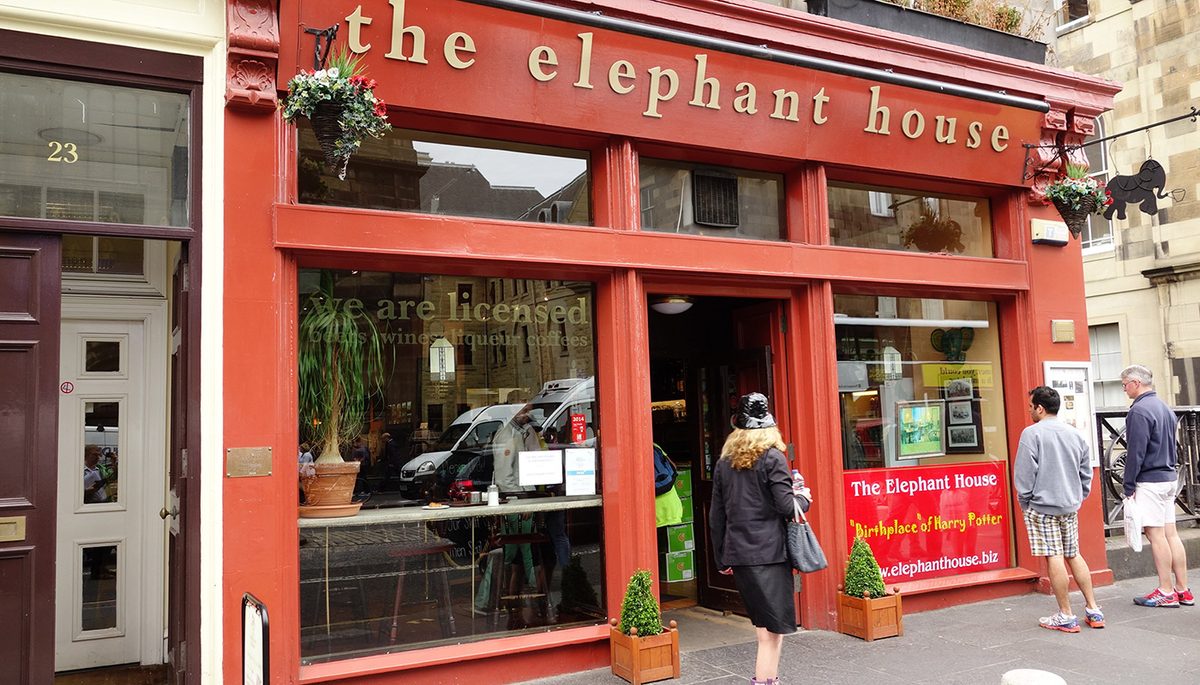
It is open now, daily, roughly 10am to 6pm at the time of writing — check before you make a special trip, because a newly reopened business tends to move its hours around. The interior has been rebuilt rather than restored, so do not go expecting the room exactly as it was. The famous toilet graffiti, layered up over years by fans with marker pens, did not survive. That genuinely is gone, and if a guide tells you to bring a pen, that guide has not been back.
What did survive is better. One of the tables Rowling wrote at was pulled out of the fire, restored, and now sits in a dedicated writers’ room inside the reopened café. That is a more meaningful thing to stand next to than a wall of biro.
Now the awkward part. The window sign says “Birthplace of Harry Potter”, and that is not true. Rowling addressed it herself, with more good humour than the shop deserved: she had been writing Potter for several years before she first set foot in the place, so it is not the birthplace — but she did write there, so, in her words, they get let off. I like that she left them the sign. It is a good line and a fair verdict, and it tells you exactly how to hold this stop: real, but oversold.
Grade: documented, with an inflated sign. There is also a smaller sister site, the Elephant House Magical Café, on Victoria Street, which is a different proposition — more gift shop than writing room.
6A Nicolson Street — the café with the better claim
Ten minutes south-east, on a scruffier stretch of street that almost nobody photographs, is the stop I would actually send you to first.
In the mid-1990s this was Nicolson’s Café, and it was owned by Rowling’s brother-in-law. She wrote early chapters of the first book upstairs, on the first floor, by the window, when she was broke and needed somewhere warm to sit with a coffee and a pram. If anywhere has a claim to being where the thing took shape, it is here rather than George IV Bridge.
Be clear about what you will find, though, because this is where other guides get sloppy. The café is long gone. It became a Chinese restaurant, then a bistro called Spoon that ran for about a decade and closed in October 2020, then changed hands again. You are not visiting a shrine. You are visiting an address.
What you are actually looking for is the plaque, put up by Edinburgh City of Literature, which records that Rowling wrote some of the early chapters of Harry Potter in the rooms on the first floor of this building. Here is the tip that saves people ten minutes of confused circling: it is mounted on the green building on the corner of Drummond Street, not on the restaurant door. Look up and around the corner, not straight ahead.
It takes a quarter of an hour and there is never a queue. For a stop with a stronger claim than the famous one, that is a decent trade.
The Traverse Theatre, 10 Cambridge Street
The least-visited writing spot of the lot, and worth knowing about if you want the version of this walk that no tour group does. Rowling wrote in the Traverse’s café bar too, pram beside her, in the same lean years.
The catch is access. The bar tends to open around performances and for ticket holders rather than as a general drop-in café, so check the theatre’s programme before you plan on getting inside. If you are in town during the festival season it is far easier, and the Traverse is a serious venue in its own right — see our rundown of Scotland’s festivals and events if your dates are flexible.
The Balmoral, Room 552
The bookend. Rowling checked into the Balmoral on Princes Street and finished Harry Potter and the Deathly Hallows there on 11 January 2007. To mark it, she signed a marble bust of Hermes in the room — it is now kept under glass, because of course it is.
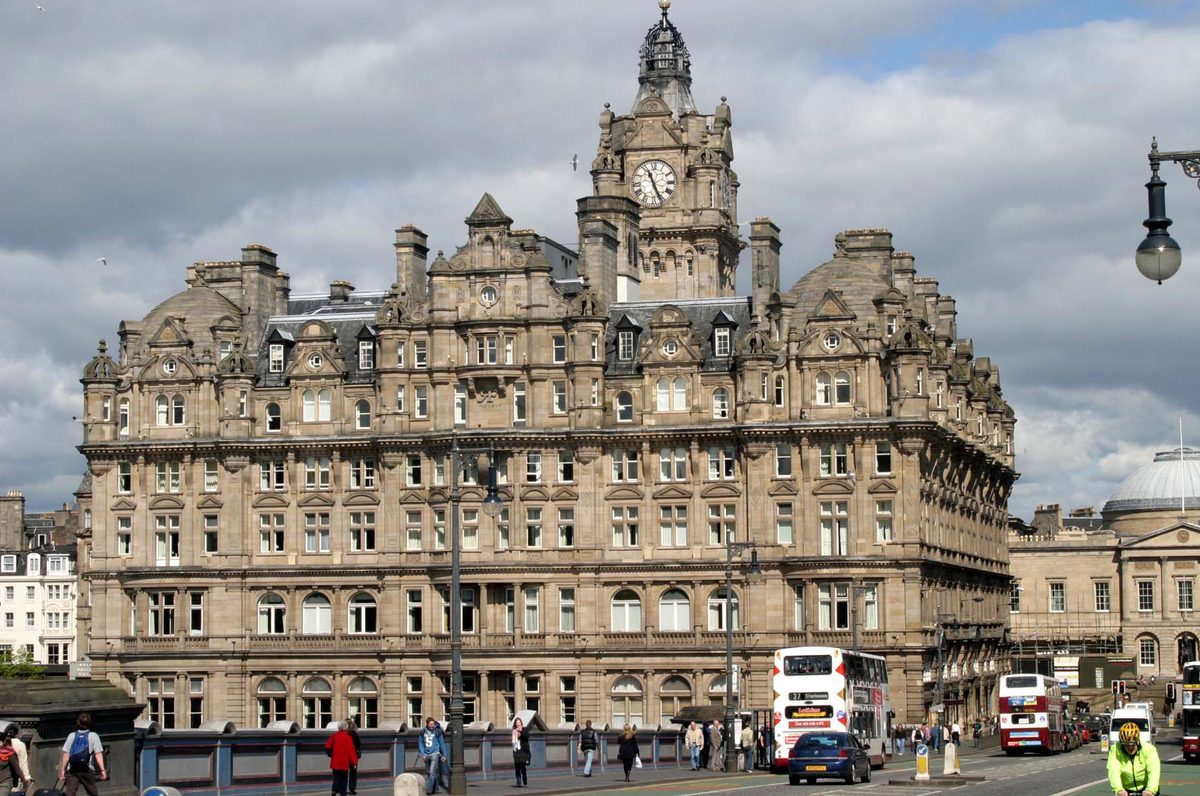
Room 552 is now the J.K. Rowling Suite and you can, in theory, sleep in it. In practice it runs somewhere in the region of £2,000 to £3,000 a night depending on season, so for almost everyone this is an exterior stop. That is fine. The building is one of the best things on Princes Street anyway, and the clock is famously set a few minutes fast to hurry people into Waverley station beneath it.
If you want to get inside without remortgaging, the hotel’s bars are open to non-residents. A drink in the whisky bar costs a fraction of the room and you are still standing in the building where the series ended. That is my kind of compromise, and it fits neatly into an evening if you are following our two days in Edinburgh plan.
Grade: documented. The date, the room number and the bust are all on the record.
The plausible stops: places that may have fed the books
Greyfriars Kirkyard — and how to behave in it
This is the stop that most rewards slowing down, and the one where visitors most often get it wrong.
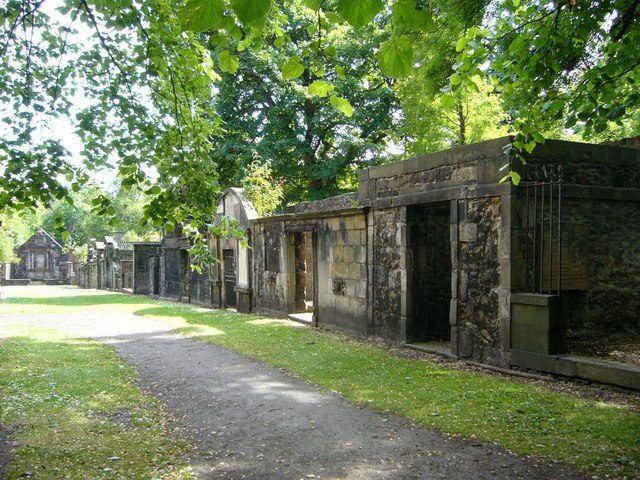
Greyfriars is a working burial ground beside a working church, a couple of minutes down Candlemaker Row. Rowling walked here; it sits between the cafés she used. Three names on the stones have become famous: Thomas Riddell, spelled with the extra letters, whose surname landed on the Dark Lord; William McGonagall, a poet celebrated for being spectacularly bad, sharing a surname with the head of Gryffindor; and Elizabeth Moodie, which fans connect to a certain paranoid ex-Auror.
To find the Riddell stone, walk past the church keeping it on your right, carry on to the back of the kirkyard and through the archway in the old Flodden Wall into the enclosed section beyond. The stone is set against a wall rather than standing free, down towards the far corner. Give yourself ten minutes; it is genuinely easy to walk past.
Now the part I care about. The kirkyard takes somewhere around two million visitors a year, which makes it one of the most-visited free attractions in the country, and the ground around the Riddell stone has suffered significant erosion from the sheer volume of feet. The church launched a consultation with tour operators to work out a conservation plan, because balancing a burial ground, a place of worship, a historic site and a Harry Potter stop is genuinely difficult.
So: do not climb on the stones, do not touch or rub the Riddell inscription, do not leave wands, notes or trinkets. People are buried here and their descendants visit. Photograph it, read it, move on. It costs you nothing to be the visitor who did not make it worse, and it is one of the better no-cost stops in the country precisely because it is still a real place rather than an attraction.
Grade: plausible. The names are unquestionably on the stones. Rowling has never confirmed she took them from here.
George Heriot’s School — and the view nobody tells you about
Look through the railings at the back of Greyfriars and you will see it: a great turreted sandstone quadrangle that does, honestly, look like someone drew Hogwarts.
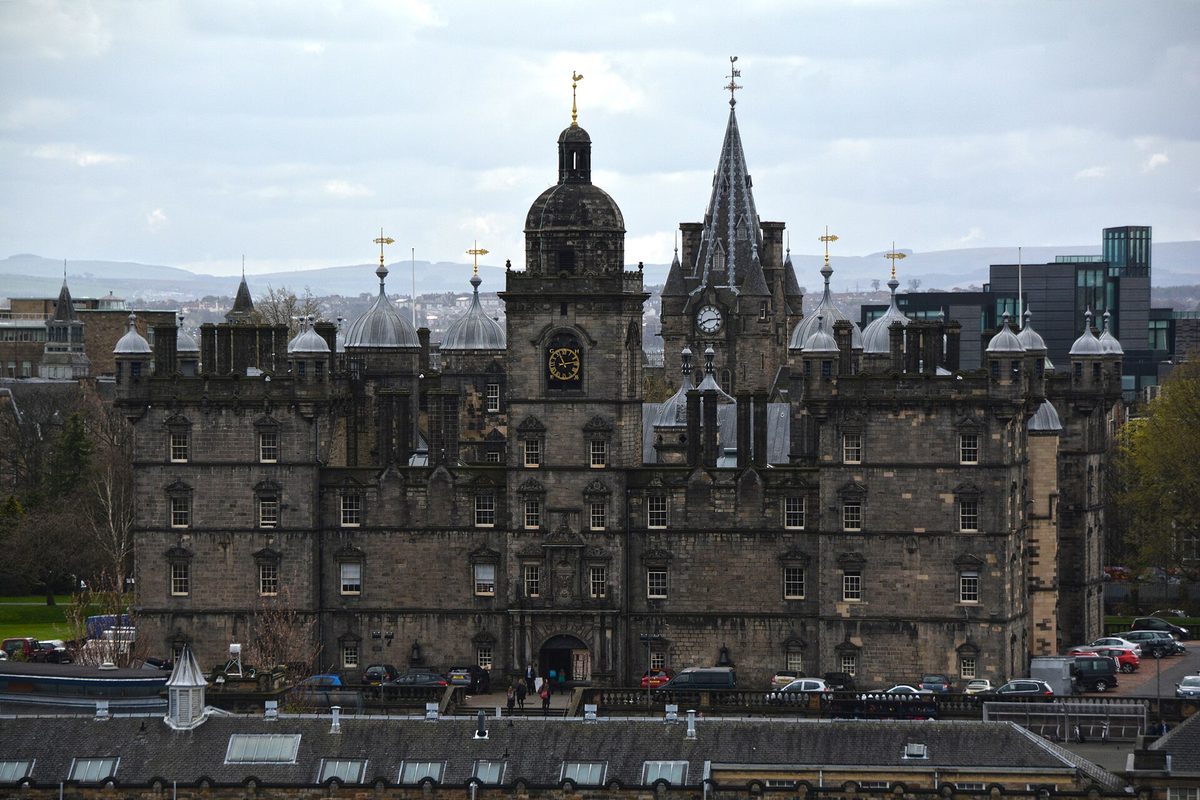
George Heriot’s was founded in 1628 by the bequest of George Heriot, goldsmith to the king, as a hospital and school for the city’s orphaned and poor children, and it opened in 1659. It is built around a quadrangle, it has towers on each corner, and it divides its pupils into four houses that compete for a cup.
That last detail gets repeated breathlessly on every Potter page, so here is the deflating footnote: the four houses are Castle, Greyfriars, Lauriston and Raeburn, named after local geography, and house systems are entirely ordinary in British schools. Mine had them. It proves nothing. What Heriot’s has is the right silhouette in the right place, close to where she wrote, and that is a perfectly reasonable basis for a claim without needing to be dressed up.
You cannot go in. It is a functioning school with several hundred children in it, and turning up at the gate expecting a look round is both futile and a bit rude. Every guide should say this plainly and most do not.
Which brings me to the thing genuinely missing from almost every Harry Potter page about this city: the Vennel.
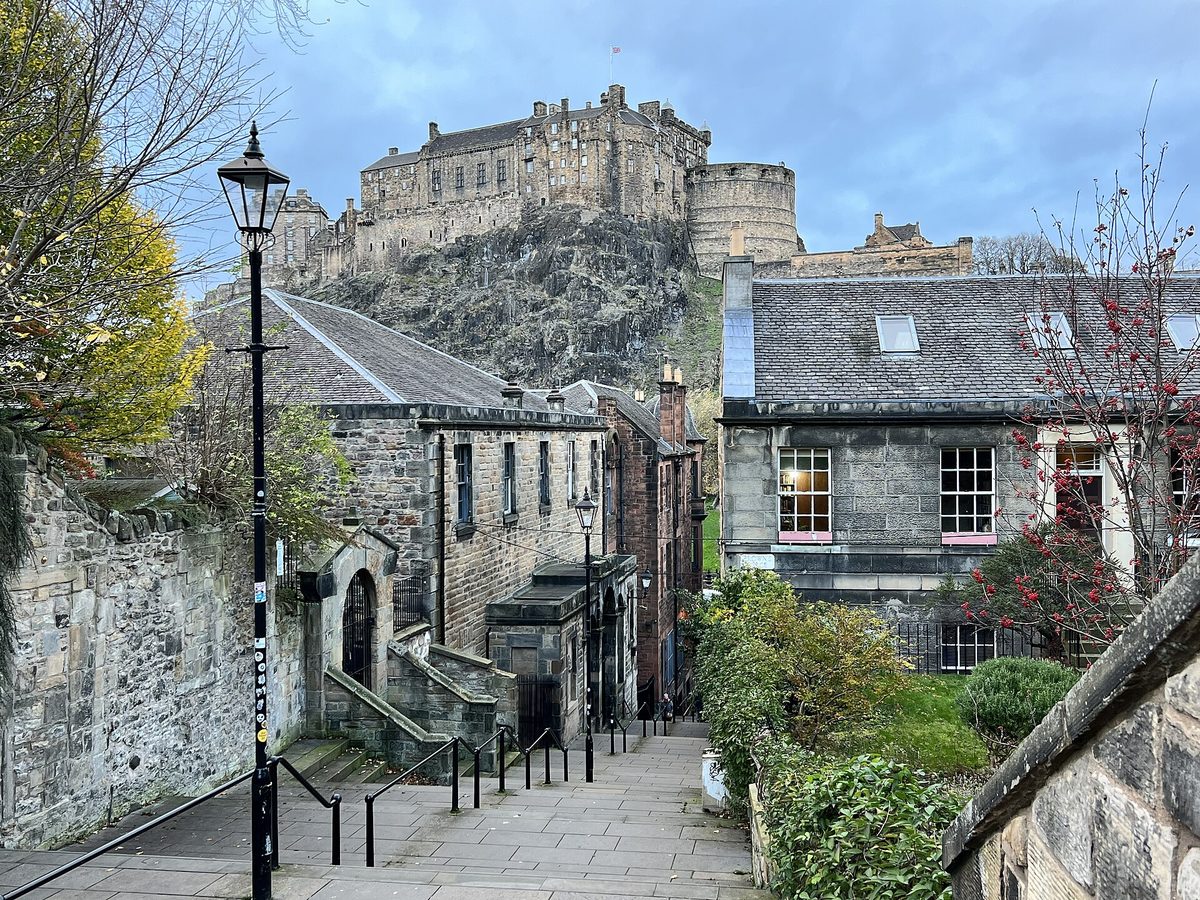
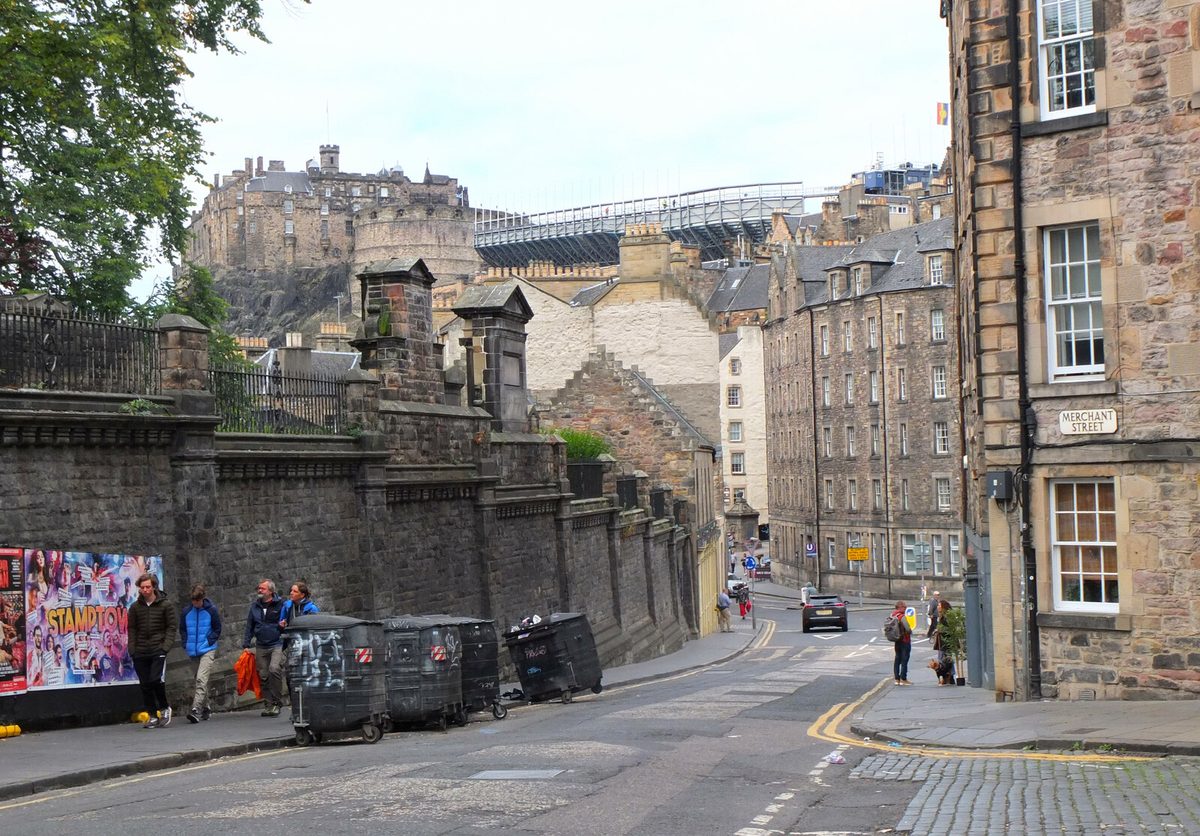
The Vennel is a narrow stepped lane climbing from the Grassmarket up the side of Heriot’s grounds, roughly 150 steps, sometimes called the Miss Jean Brodie Steps. Partway up you turn round and get what I would argue is the best free view of Edinburgh Castle in the entire city — the castle sitting on its crag, framed tightly between two old stone walls, with a fragment of the Flodden Wall beside you.
It is a two-minute detour from the Potter route. It is free. It is where I take everyone who visits. And it is on essentially none of the competing itineraries, which tell you to squint at Heriot’s through a fence and then walk away. If the steps are too much, there is a level approach at the top off Lauriston Place, beside the school.
Go at the very start of the day or in the last hour of light. Middle of the afternoon you will be sharing it, and the castle will be backlit and flat.
Victoria Street and West Bow
The famous one. A wide curving street of tall, close-packed, brightly painted shopfronts, dropping in a long arc from George IV Bridge down to the Grassmarket, with a raised terrace running along the top.
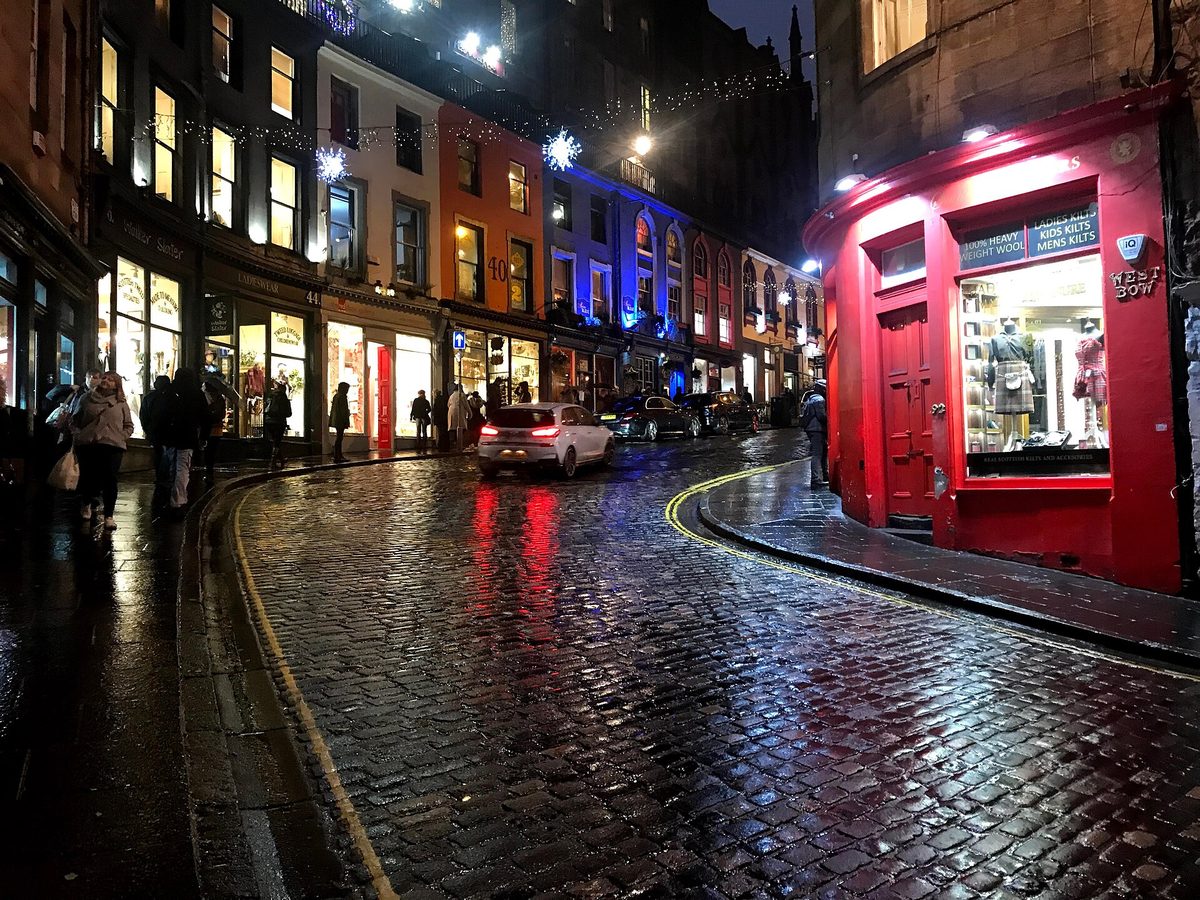
Does it look like Diagon Alley? Yes — and the reason is worth understanding, because it is about geometry rather than magic. The curve means you can never see the whole street at once. Buildings lean over you. Shopfronts sit at odd heights and the roofline steps up and down. That is precisely the trick the film’s designers used: a street that conceals its own ending, so it feels longer and stranger than it is. Whether anyone from the production ever stood here is unconfirmed. Whether it reads the same way is not really in doubt.
The lower half, curving round to the west, is West Bow proper, and the joke shop at number 99 has been trading under a laughing sign for far longer than the books have existed. It gets cited as the seed for a certain pair of red-headed twins’ shop. Nice story, no evidence.
Grade: plausible for the look, merchandising for most of what is now sold on it. More on that below, because it deserves its own honest paragraph.
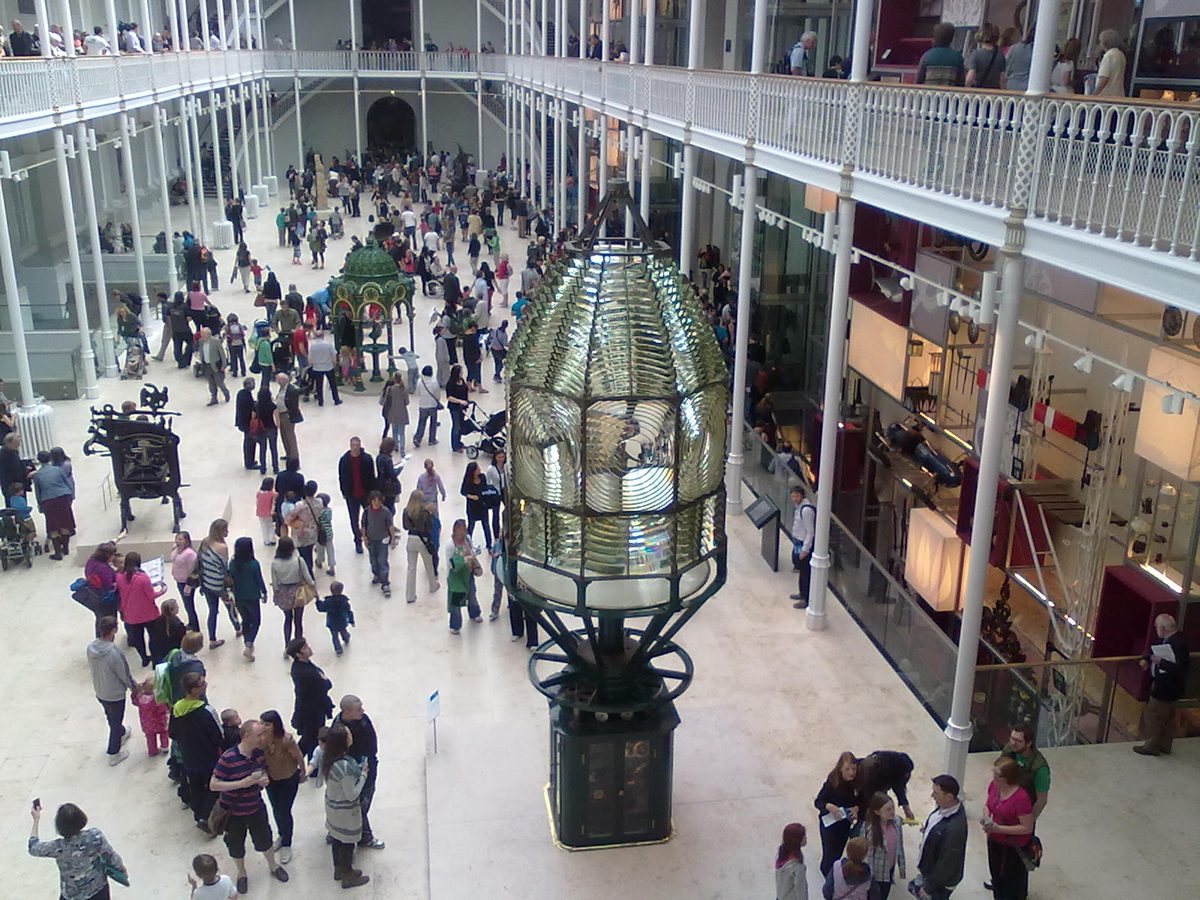
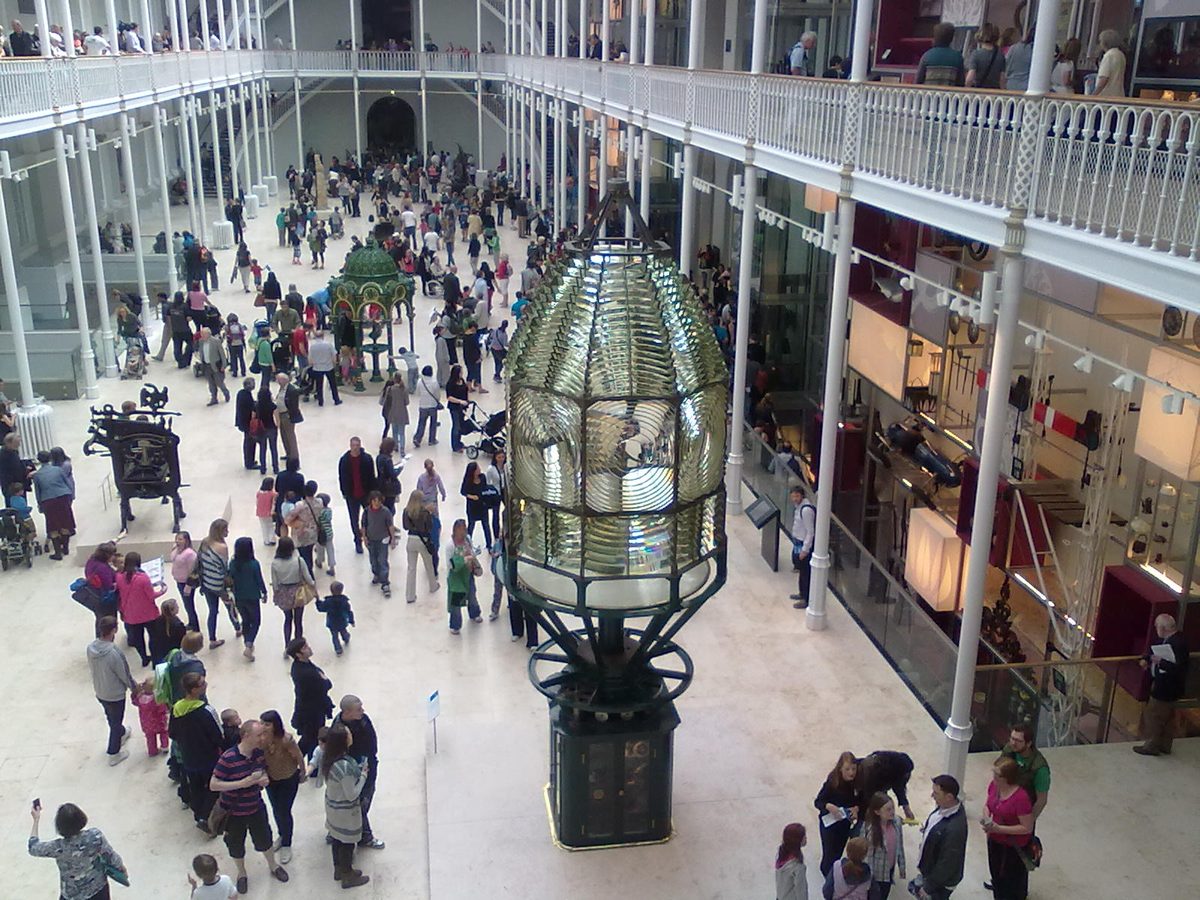
The Lewis Chessmen, National Museum of Scotland
Two minutes from the Elephant House on Chambers Street, free to enter, and a properly good museum quite apart from any of this.
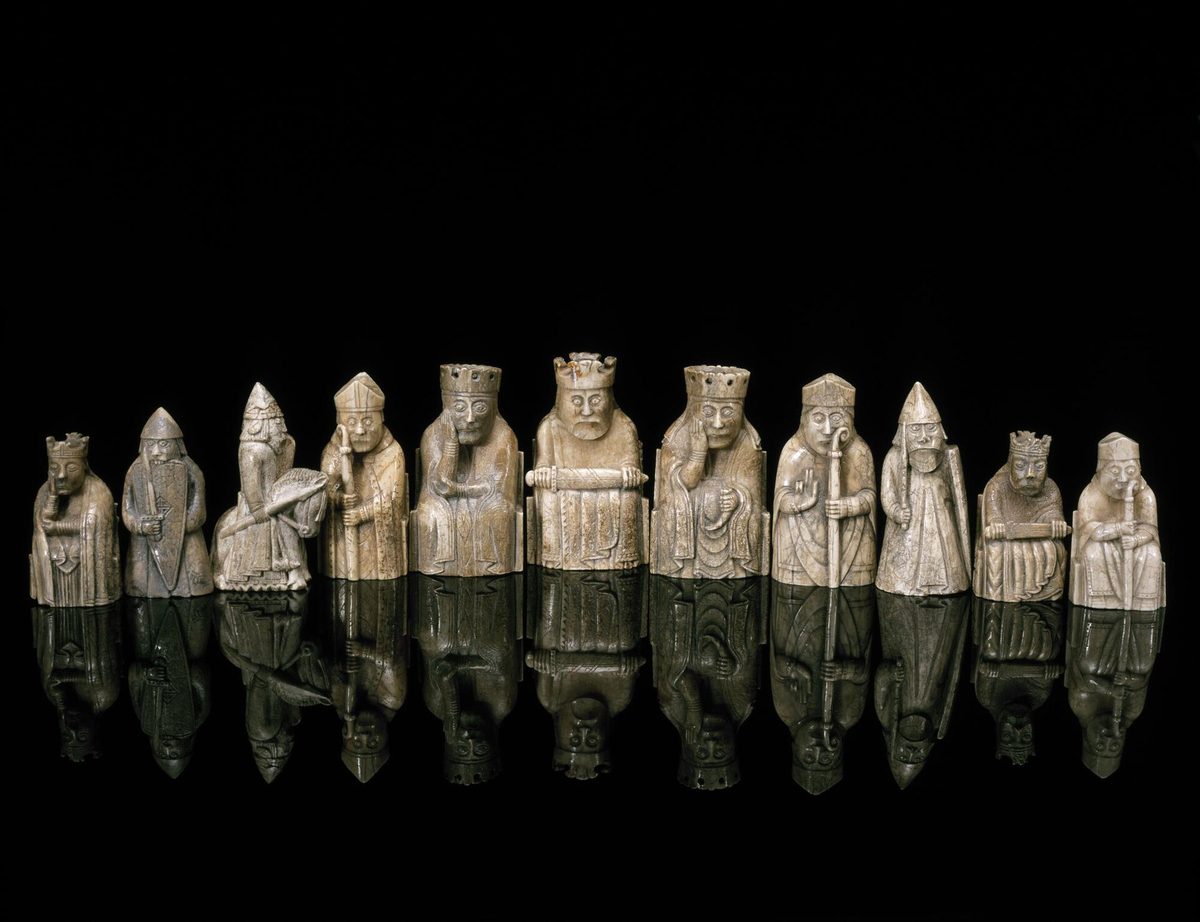
The Lewis Chessmen are carved walrus-ivory pieces from the late twelfth or early thirteenth century, found on the Isle of Lewis in the Outer Hebrides in 1831. Eleven of them are held here, in the Kingdom of the Scots gallery on Level 1. They have glorious, put-upon faces — berserkers biting their shields, a queen with her hand to her cheek looking thoroughly fed up.
Anyone who has seen the giant chess set in the first film will recognise the design language immediately. The museum itself is worth an hour or three, and if you are travelling with children it is one of the strongest family days out in Scotland going, wizard chess or not.
Edinburgh City Chambers — the handprints
On the Royal Mile, in the courtyard behind the arcade, there are golden handprints set into the paving. These belong to winners of the Edinburgh Award, given by the city for outstanding contribution. Ian Rankin took the first in 2007; Rowling won it in 2008, and her hands are there in the stone.
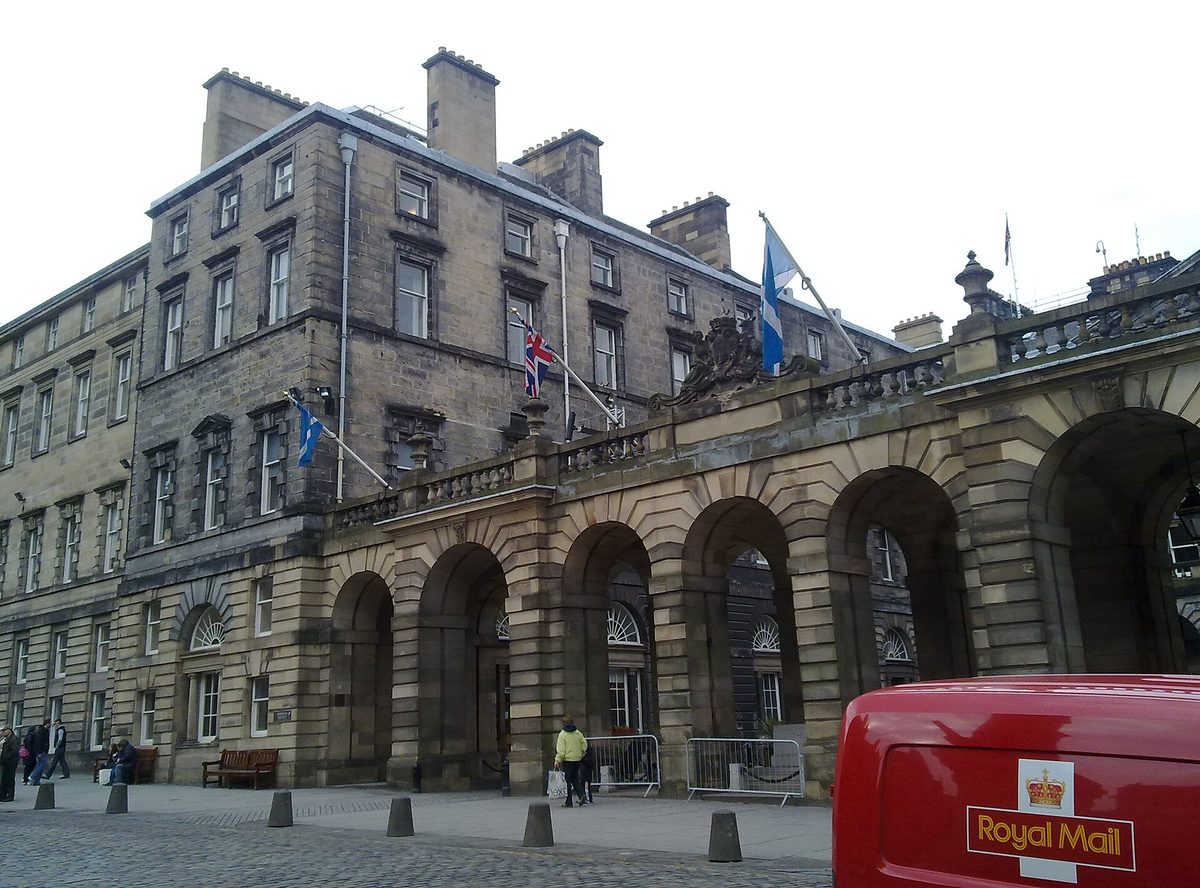
You are allowed to put your hands in them. Everybody does. It takes five minutes, it is free, and it is the only stop on this walk where you get to physically touch something connected to her that you are actually meant to touch. It sits directly on the route down from the castle, so slot it in as you pass — our walking guide to the Royal Mile covers what else is worth stopping for on that stretch.
A word on Potterrow
You will walk past a street called Potterrow near the Nicolson Street plaque, and every tour points at it. Rowling has said the name is a coincidence — in an early interview she explained that her hero had several surnames before she settled on Potter, and that Potter was the name of a brother and sister she played with as a child.
I still point it out, because it is a pleasing accident and it is on the way. But it is an accident.
The merchandising: the shops, honestly assessed
Several shops on and around Victoria Street sell wizarding goods, and I want to be precise here rather than sniffy, because the situation is more interesting than “tourist tat”.
Some of it is the real thing. Museum Context at 40 Victoria Street is an officially licensed retailer, spread through stone vaults over two floors, and it is genuinely well done — dense, dim, theatrical, and free to walk into even if you buy nothing.
Other shops are in a stranger position, and this is the story nobody tells. Warner Bros. has actively defended its trademarks on this street. One operator, Gold Brothers, ran a shop called The Boy Wizard, then renamed it The Great Wizard, and was taken to the High Court of England and Wales by Warner Bros. over alleged infringement, including the use of phrases such as “the boy wizard” and “the world of wizardry”; the company had already been blocked at the Intellectual Property Office in an attempt to register one of them. The shops have rebranded more than once since.
That is why you will notice so much of the stock is generic — robes, wands, house-coloured scarves in colours that are almost but not quite right, spellbooks with invented titles. It is not laziness. Several of these shops legally cannot use the names, and are selling wizard-adjacent goods rather than Harry Potter goods.
Knowing that changes how you shop. If you want the licensed article, go to the licensed shop. If you want a novelty wand for a nine-year-old, the unlicensed ones are cheaper and nobody is fooling anybody.
Two practical warnings. First, the queues in August are long, sometimes out of the door and along the pavement, because the Fringe puts an extra crowd into a street that was never built for it. Second, prices on the street are set for people who have just walked past a photogenic row of shopfronts and are feeling romantic. There is no obligation to buy anything at all, and I would rather you spent the money on a decent lunch.
Walking it yourself: route, order and timings
Here is the order I actually use. It runs roughly north to south, ends near the university, and never doubles back more than a block. Total walking distance is a little under 2 miles, or about 3km. Allow three and a half hours at a civilised pace with stops, or about 90 minutes if you march and photograph nothing.
- The Balmoral, 1 Princes Street — 10 minutes. Exterior, clock tower, then walk up onto the Royal Mile.
- City Chambers handprints — 10 minutes. In the courtyard off the High Street.
- Down the Royal Mile to George IV Bridge — 10 minutes of walking.
- The Elephant House — 20 minutes to look, 45 to an hour if you stop for coffee.
- Greyfriars Kirkyard — 30 minutes. Riddell, McGonagall, Moodie, and the view through to Heriot’s.
- Down Candlemaker Row to the Grassmarket — 5 minutes.
- The Vennel steps — 20 minutes. The castle view. Do not skip this.
- Victoria Street and West Bow — 30 to 45 minutes, longer if you go into the shops.
- National Museum of Scotland, Chambers Street — 30 minutes for the chessmen, hours if you let yourself wander.
- 6A Nicolson Street plaque — 15 minutes, and you finish near plenty of places to eat.
Best hours for photographs without crowds
This is where a bit of planning pays off more than any ticket.
Victoria Street: before 9am, or after about 6pm once the shops shut. In the middle of the day you are photographing the backs of other people photographing it. It also looks its best wet and lit, so a drizzly evening is a gift rather than a disaster.
The Vennel: first light or the last hour before sunset. The castle faces roughly north-east from there, so a low sun does the work for you.
Greyfriars: early morning, both for the light and because it is a graveyard and you want it quiet. Tour groups start rolling through mid-morning.
Everywhere: avoid 1pm near the castle end. The one o’clock gun fires daily except Sundays and draws a crowd that then disperses straight down the Royal Mile.
In August, add an hour to everything. The Fringe is wonderful and it makes this walk about twice as slow; if you have any choice in your dates, our guide to the best time to visit Scotland makes the case for May or September, when the same streets are half as busy and the light is nearly as good.
Paid tours versus doing it free: an honest verdict
Now the question everyone actually has. Every stop on this walk is a public street, a free museum or an exterior. So is a guide worth paying for?
My answer: for most people, no — but the free tip-based tour is worth taking, and that is a different thing.
The free, tip-based walking tour
The Potter Trail has been running since 2012, meets near Greyfriars, and lasts around 75 to 90 minutes. It costs nothing to book and you tip what you think it was worth at the end. Guides usually turn up in a robe and there is a lot of participation.
This is the format I recommend to most visitors. The performance is the product — you are paying for someone entertaining to tell the stories in the right order, not for access to anything. Budget £10 to £15 a head as a fair tip if you enjoyed it. Book ahead in summer; free does not mean uncrowded.
Suits: first-timers, families, anyone who likes a bit of theatre.
Paid guided walks and wand tours
There are ticketed alternatives, some built around being handed a wand and doing spells at each stop, generally in the region of £15 to £30 per person for around two hours. Prices move, so check before booking.
These are better than the sceptics claim, but be clear what you are buying: a guaranteed slot, a smaller group, a prop to hold, and a guide who does not depend on tips. Whether that is worth £25 over a free tour depends entirely on whether the wand appeals. For a nine-year-old, it genuinely might. For an adult who wants the history, it is money you could spend at the Balmoral bar instead.
Suits: children who want the interactive version; groups who want a booked, fixed time.
Self-guided audio
Downloadable GPS-led audio tours exist for a few pounds. Useful if you like the narration but hate walking at someone else’s pace, and the cheapest way to get commentary.
Suits: independent walkers, early risers, anyone photographing seriously who needs to linger.
Doing it entirely free
Perfectly viable, and it is what I do. You get to spend forty minutes on the Vennel steps if the light is good and skip the shops entirely. What you lose is the stories — the mad detail about McGonagall the terrible poet, the patter, the sense of being told rather than reading. If you go this route, do the reading first so you are not standing in a graveyard scrolling.
Whichever you pick, none of it needs booking far ahead except in August. Our overview of guided tours in Scotland is worth a look if you are weighing up organised trips more broadly, and the practical stuff — buses, trams, Waverley — is covered in getting around Scotland.
Planning your Harry Potter Edinburgh day
How long you need: half a day. Three and a half hours covers the walk properly. Add the National Museum in full and you have a comfortable day.
Getting to the start: everything here is within about 20 minutes’ walk of Waverley station. You do not need a car, and you actively do not want one — the Old Town is a maze of bus gates and pedestrian streets.
What to wear: the Vennel is 150 steps, the Old Town is cobbled almost everywhere, and Edinburgh is windier than visitors expect. Proper shoes, a layer more than you think.
What to book: almost nothing. The free tour, if you want it. A table at the Elephant House if you are set on eating there, since it is newly reopened and busy. Everything else you simply walk up to.
What it costs: the walk itself is free. Realistically budget £15 to £25 a head for a coffee and lunch, plus a tour tip if you take one.
Where to stay: Old Town puts you on the doorstep but you pay for it and it is noisy in August; the New Town or Bruntsfield are calmer and still walkable. Our guide to choosing a base in Scotland breaks down the trade-offs, and there is more city-specific detail in the Edinburgh travel guide.
What underwhelms, and the mistakes I see most
Some candour, because this walk has weak links and pretending otherwise helps nobody.
The shops blur together fast. Two are interesting. The fifth is the same wands at the same prices, and by then you are queuing out of the door in the rain for it.
Potterrow is a footnote. It is a street name. Rowling has said it is a coincidence. Nobody needs a photograph of the sign.
The Writers’ Museum has almost nothing to do with Potter. It is dedicated to Burns, Scott and Stevenson. It once displayed an annotated first edition on temporary loan, and guides have been coasting on that ever since. Go because it is free, tucked down a close and rather lovely. Do not go expecting Rowling.
Do not go looking for her house. Several guides cheerfully point readers at the suburb where Rowling lives. She is a private person with a family. Please just do not.
Expecting film locations is the big one. Every year people arrive disappointed that the castle is not Hogwarts and there is no train. Set your expectations correctly and this becomes a good literary and architectural walk through the finest old city in Britain. Set them wrongly and it is a series of buildings someone once sat near.
Trying to add the viaduct as a day trip. Glenfinnan is a serious undertaking from Edinburgh — think a full, long day each way by road, or an overnight. The steam service that crosses it books out months ahead in summer, as our guide to Scotland’s great railway journeys explains, and the Highland side of the Potter map has the full picture. If it matters to you, build a proper trip using our Scotland itinerary planner rather than trying to squeeze it in. Closer options are covered in day trips from Edinburgh.
Treating the graveyard as a set. I have said it once and I will say it again, because it is the one that actually causes harm.
Frequently asked questions
Is the Elephant House open again?
Yes. It reopened on 29 December 2025, after being closed since the August 2021 fire, and now trades daily at 21 George IV Bridge, roughly 10am to 6pm at the time of writing. The interior has been rebuilt, and one of the tables Rowling used was salvaged and restored. Check current hours before travelling.
Was Harry Potter filmed in Edinburgh?
No. No scenes from the films were shot in Edinburgh. The Scottish filming was done in the Highlands, chiefly around Glenfinnan and Glencoe. Edinburgh’s connection is that Rowling wrote much of the series here, and that several city landmarks plausibly influenced the books.
Where is Tom Riddle’s grave in Edinburgh?
The Thomas Riddell headstone is in Greyfriars Kirkyard, in the walled section reached through the archway in the Flodden Wall at the back of the burial ground. It is set against a wall rather than standing upright. Please do not touch or climb on it — erosion around it is a genuine conservation problem.
Can you visit George Heriot’s School?
No. It is a working school and closed to visitors. You can see it clearly from the back of Greyfriars Kirkyard and from Lauriston Place. For the best photograph in the area, walk the Vennel steps up from the Grassmarket, which frames Edinburgh Castle between old stone walls.
Is a Harry Potter tour in Edinburgh worth paying for?
Only if you want the performance. Every stop is a free public street or a free museum, so you are paying for storytelling, not access. The long-running free tip-based tour is the best value for most visitors; ticketed wand tours suit children. Doing it yourself costs nothing and works well.
How long does the Harry Potter walk take?
About three and a half hours at a relaxed pace with stops, covering a little under 2 miles. Brisk, without going into shops or the museum, you can do it in around 90 minutes. Add an hour in August, when Fringe crowds slow everything down considerably.
Which café did J.K. Rowling actually write in?
Several. The strongest early claim belongs to the former Nicolson’s Café at 6A Nicolson Street, owned in the 1990s by her brother-in-law, where a plaque records that she wrote early chapters upstairs. She also wrote at the Elephant House and in the Traverse Theatre’s café bar.
Is the walk suitable for children?
Yes, though it is largely about standing outside buildings, which younger children find dull. The free tour, the Lewis Chessmen and the golden handprints hold attention best. Keep the graveyard section short and calm, and consider pairing the day with the climb up Arthur’s Seat to burn off energy.
Final thoughts
I have a soft spot for this walk precisely because it is not what people expect. There is no set to stand on and no train to catch. What there is instead is a plaque on a green wall at the corner of Drummond Street, a rebuilt café that spent 1,587 days shut and came back, a graveyard full of real names that need treating like real names, and a flight of steps where the castle appears between two walls and briefly stops the conversation.
Take the free tour if you like company. Go alone at eight in the morning if you like light. Either way, the honest version of Harry Potter Edinburgh — documented here, plausible there, purely commercial over on the corner — is a better half-day than the breathless version, and it leaves you with a genuinely good sense of the Old Town. Pair it with a morning at the castle and you have one of the finest days out in Scotland, wizards entirely optional. There is plenty more in our full guide to Edinburgh, and if the Highlands are calling after all, the wider Potter trail across Scotland is where the viaduct lives.
About the author: This guide was written and is maintained by the ScotlandTourism.org editorial team — travel writers who’ve spent years exploring Scotland’s cities, Highlands and islands, from bagging Munros to chasing the perfect dram. We update our guides regularly to keep prices, opening details and advice current.
Last updated: August 2026. Prices and opening times change — always check the official site before you travel.
Photo credits
All images are used under their respective Creative Commons or public-domain licenses:
- The colourful shopfronts curving along Victoria Street in Edinburgh — Mike McBey, CC BY 2.0, via Wikimedia Commons
- The red frontage of the Elephant House on George IV Bridge — Ken Eckert, CC BY-SA 4.0, via Wikimedia Commons
- Walled burial enclosures in Greyfriars Kirkyard — kim traynor, CC BY-SA 2.0, via Wikimedia Commons
- The turrets and clock tower of George Heriot’s School — Lewis Clarke, CC BY-SA 2.0, via Wikimedia Commons
- Edinburgh Castle framed between tenements from the Vennel steps — Andrew Abbott, CC BY-SA 2.0, via Wikimedia Commons
- Wet cobbles and lit shopfronts on West Bow at the foot of Victoria Str — -wuppertaler, CC BY-SA 4.0, via Wikimedia Commons
- The Balmoral Hotel and its clock tower on Princes Street — W. Bulach, CC BY-SA 4.0, via Wikimedia Commons
- The medieval Lewis Chessmen — National Museums Scotland, CC BY-SA 4.0, via Wikimedia Commons
- The Grand Gallery of the National Museum of Scotland on Chambers Stree — Brian McNeil, CC BY-SA 3.0, via Wikimedia Commons
- The arcaded frontage of Edinburgh City Chambers on the Royal Mile — Jza84, CC BY-SA 3.0, via Wikimedia Commons
- Old Town streets below George IV Bridge in Edinburgh with the castle r — Jim Barton, CC BY-SA 2.0, via Wikimedia Commons
- The Grassmarket in Edinburgh on a clear day — Kalisa66, CC0, via Wikimedia Commons