I have driven the A9 north from Perth in the second week of October and thought Scotland had never looked better, and I have driven the same road eighteen days later and found the tearoom shut, the ferry on a different timetable and the light gone by half four. Both trips were Scotland in October. They were not remotely the same holiday.
That is the thing nobody tells you. October is not one month here — it is a window closing at a measurable rate, and the closing is what should shape your plan. Get the timing right and you get the best woodland colour in Britain with a fraction of the summer traffic. Get it wrong and you spend a lot of your day in the dark, looking at a locked gate.
Is October a good time to visit Scotland?
Yes, particularly the first three weeks. Autumn colour peaks in Perthshire and the Cairngorms from mid-October, midges are finished, and prices drop. But daylight falls from about 11 hours to 9 across the month, the clocks go back on the last Sunday, and many rural attractions, ferries and restaurants switch to winter operation from mid-month.
If you want the wider comparison before you commit to dates, our guide to the best time to visit Scotland sets October against the other eleven months. This page is about making October itself work.
October 2026 week by week
Daylight figures below are for Inverness and rounded. Edinburgh gets roughly ten minutes more, Lerwick around twenty minutes less by month’s end.
| Dates | Daylight | Sunset | What’s happening | How busy |
|---|---|---|---|---|
| 1–4 Oct | ~11 hr 30 min | ~18:50 BST | Colour just starting in Perthshire; rut still going; HES winter hours begin 1 Oct | Quiet |
| 5–11 Oct | ~11 hr | ~18:30 BST | Enchanted Forest opens 8 Oct; Mòd in Glasgow 9–17 Oct; Pitlochry theatre season | Moderate |
| 12–16 Oct | ~10 hr 25 min | ~18:15 BST | Scottish school holiday week; colour building fast | Busy |
| 17–24 Oct | ~10 hr | ~18:05 BST | Peak colour in Big Tree Country; CalMac winter timetable from 19 Oct | Moderate — the sweet spot |
| 25 Oct | ~9 hr 35 min | 16:50 GMT | Clocks go back at 02:00; you lose an hour of evening overnight | Changeover day |
| 26–31 Oct | ~9 hr 15 min | ~16:40 GMT | English half term; leaves stripping in wind; rural closures widespread | Busy in hotspots, dead elsewhere |
The three dates that decide your October trip
Forget the generic advice about layers and booking early. Three specific things happen in October, and every good decision you make about the month follows from them.
1. The clocks go back on Sunday 25 October 2026
At 2am on the last Sunday of the month, British Summer Time ends and the evening collapses. In Inverness, sunset on Saturday 24 October falls at about 17:53. On Monday 26 October it is 16:48. You have not lost an hour of daylight — the total shortens gradually all month — you have lost an hour of usable evening, all at once, overnight.
The practical effect is brutal on Highland days. A drive from Inverness out to Applecross and back, with a walk in the middle, is a comfortable day on the 24th. On the 28th the same plan has you finishing the last forty minutes of single-track road in full darkness, with deer on the verges. I have done it. I do not recommend it.
So: if your trip straddles the changeover, treat it as two trips. Before the 25th, plan west-coast drives and long walks. After it, plan tighter loops, town bases, distilleries, castles that close at four anyway, and evenings that were always going to be indoors.
2. From mid-October, Scotland switches to winter operation
This is the one that catches people. Historic Environment Scotland runs a summer and a winter season, and the winter season starts on 1 October. Seasonal sites generally close on 30 September and stay shut until spring; the ones that stay open move to shorter hours, typically something like 10am with last entry mid-afternoon. Edinburgh Castle goes to a 5pm close with last admission at 4pm from October through March. Always check the individual property page — the pattern varies site by site, and it changes.
National Trust for Scotland properties follow a similar rhythm, with many houses and gardens closing to the public around the end of October. Several of the small Highland ones shut earlier.
Ferries matter more. CalMac’s winter timetables for 2026–27 run from 19 October 2026 to 25 March 2027. That is not a small adjustment — on some routes it means fewer daily sailings, on others a different first and last crossing, and on the smaller island runs it can restructure the whole day. If you are island-hopping and your plan was built off a summer timetable, rebuild it. Our guide to island-hopping around Scotland is worth a look, but the timetable itself is the only thing that counts.
Then there are the businesses nobody publishes a schedule for. Small guest houses in Wester Ross, the good restaurant in Ullapool, the bike hire in Torridon, the seasonal cafe at the trailhead — a lot of these close for the winter in the last ten days of October. In the villages this is genuinely noticeable. Ring ahead. Not email, ring.
3. Peak colour arrives exactly as everything else shuts
Here is the payoff, and the cruel joke. The best autumn colour in Perthshire, the Trossachs and central Scotland lands mid-to-late October. Which is to say: the single best reason to come is at its finest in the fortnight when daylight is shortest, opening hours are shortest, and the seasonal businesses are pulling the shutters down.
You cannot fix this. You can plan around it. My rule is simple — go for the window from about 15 to 24 October. Colour is close to peak, you are still on British Summer Time, and the winter closures have only partly bitten. That week is the best week in the Scottish year for woodland, and I will argue about it with anyone.
One caveat. No two autumns run to the same schedule. A hard early frost brings the colour on fast; a mild, wet month stretches it out into November; one big Atlantic gale can strip the birches in a night. Forestry and Land Scotland and the National Trust for Scotland both post autumn colour updates through the month — check them a week out and be prepared to shift a day either way.
Where the autumn colour actually is
Most October articles say “Perthshire” and stop. Perthshire is 2,000 square miles. Here is where to point the car.
The Hermitage, Dunkeld
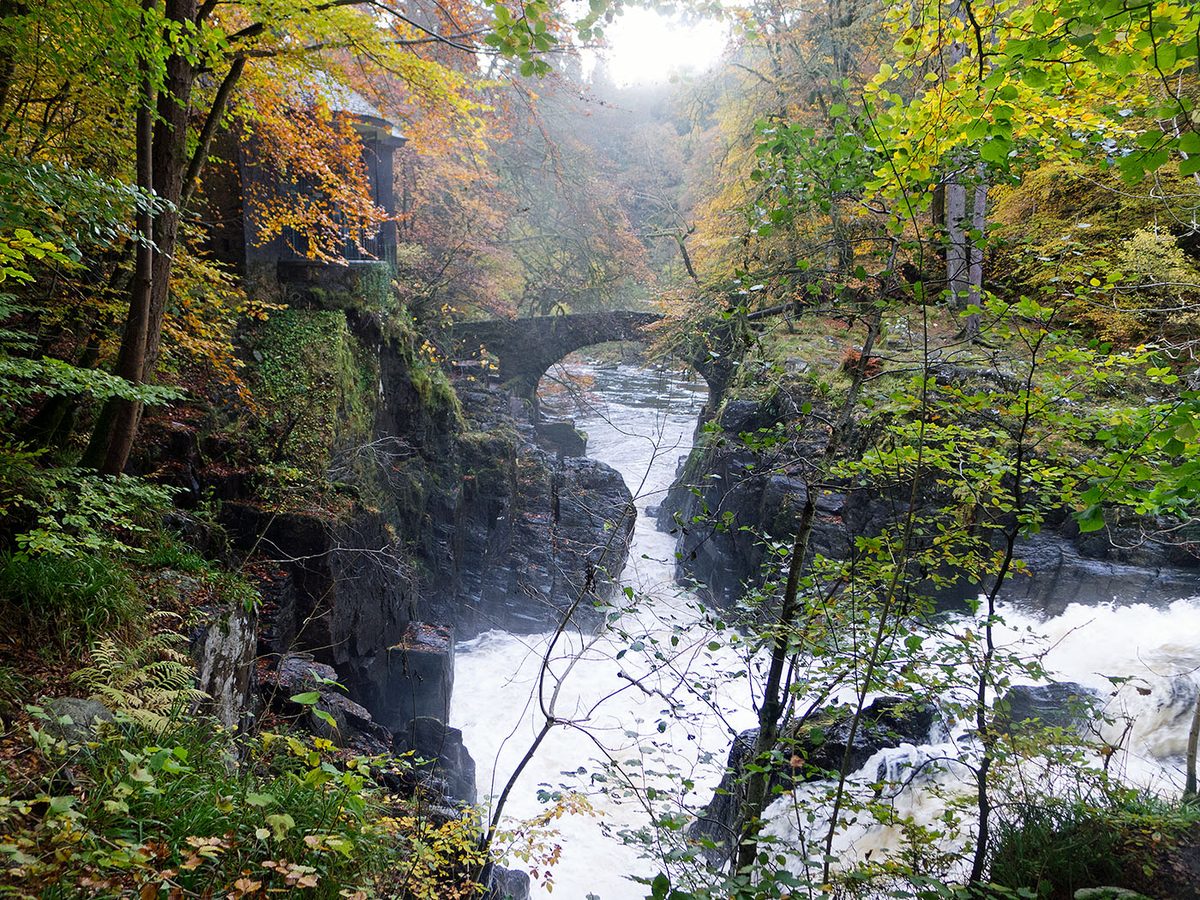
If you only do one autumn walk, do this one. The Hermitage sits just off the A9 about ten minutes north of Dunkeld, an hour and a quarter from Edinburgh, and it is a short walk — twenty minutes or so each way, under an hour for the fuller loop. You walk through some of the tallest Douglas firs in Britain to Ossian’s Hall, a folly perched directly over the Black Linn falls on the River Braan. In late October, with the beech turning and the river up after rain, the view from the folly window is the best forty seconds of standing still in Scotland.
It is National Trust for Scotland land with a pay-and-display car park. It fills by 11am on a fine October weekend. Go early, or go on a Tuesday.
Loch Faskally, Pitlochry and the Enchanted Forest
Pitlochry is the natural base for all of this, and the town wears autumn well. The circuit around Loch Faskally is flat, about four miles, and takes in the dam and the salmon ladder. Faskally Wood itself, just north of the loch, is mixed woodland that turns properly — the larch goes a colour that does not look real.
Faskally is also where the Enchanted Forest happens: an after-dark light, sound and projection show among the trees, running 8 October to 8 November 2026, with the 25th-anniversary production titled Stop The Clock: The 25th Hour. Tickets are timed and they do sell out, sometimes weeks ahead. Book before you book your hotel, not after. It is genuinely good and it is also the single best use of a dark October evening in Perthshire, which after the 25th starts remarkably early.
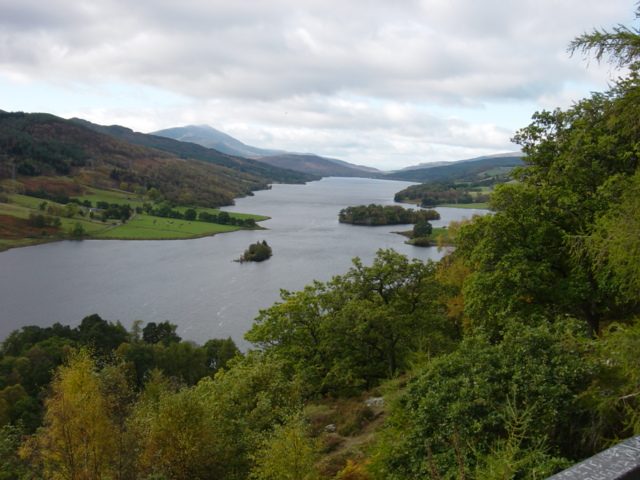
Round it out with the Linn of Tummel, the wooded gorge at Killiecrankie, the Birks of Aberfeldy, and Queen’s View above Loch Tummel — twenty minutes west of Pitlochry, small car park charge, and the classic long view down the loch to Schiehallion. For a pure oddity, the Meikleour Beech Hedge on the A93 between Perth and Blairgowrie is the tallest hedge in the world at around 30 metres, and in late October it is a 530-metre wall of copper.
Glen Affric
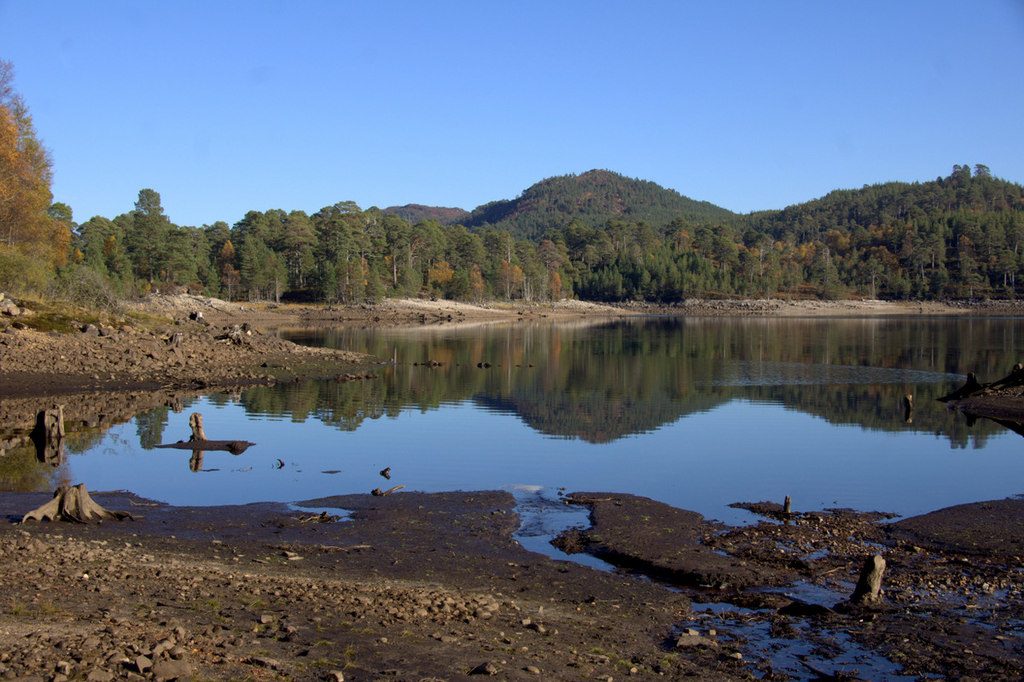
This is the one I would put top of the list, and it gets a fraction of the attention the Perthshire spots do. Glen Affric runs west from Cannich, about 45 minutes from Inverness on a road that narrows to single track with passing places. It holds one of the largest surviving fragments of Caledonian pinewood in the country, and in the third week of October the birch turns gold against the dark pine and the reflection off Loch Beinn a’ Mheadhoin does the rest.
Two walks worth your day. The Dog Falls and Coire Loch circuit is roughly three miles and gets you height for the view over the canopy. The River Affric loop from the far car park at Loch Affric is longer, around ten miles, and needs an early start in October — be walking by 9am or pick the shorter option. Forestry and Land Scotland runs the car parks and charges for parking. There is no cafe, no shop and no phone signal for large parts of it. Take a flask.
Rothiemurchus and Loch an Eilein
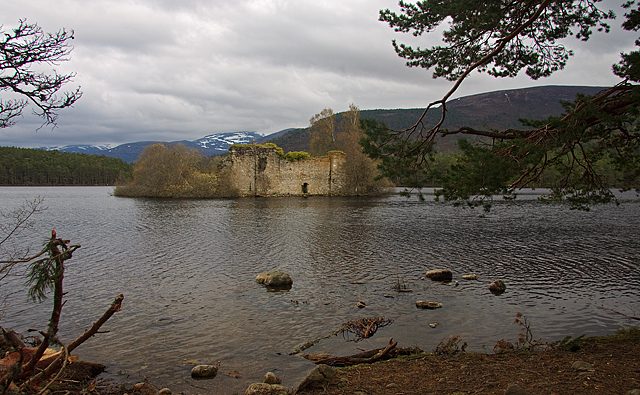
In the Cairngorms, the Loch an Eilein circuit is the easy classic: just under three miles on a good path around a loch with a ruined castle on an island in the middle, backed by old pines. Ninety minutes at a gentle pace, car park charge at the Rothiemurchus estate, and it works with children and with dubious knees. Loch Morlich nearby gives you a beach with a mountain behind it, which in October photographs better than it has any right to.
Aviemore itself stays open all winter because of the ski season, which makes the Cairngorms a more reliable late-October base than the west coast — there is still somewhere to eat on the 29th.
Loch Lomond and the Trossachs
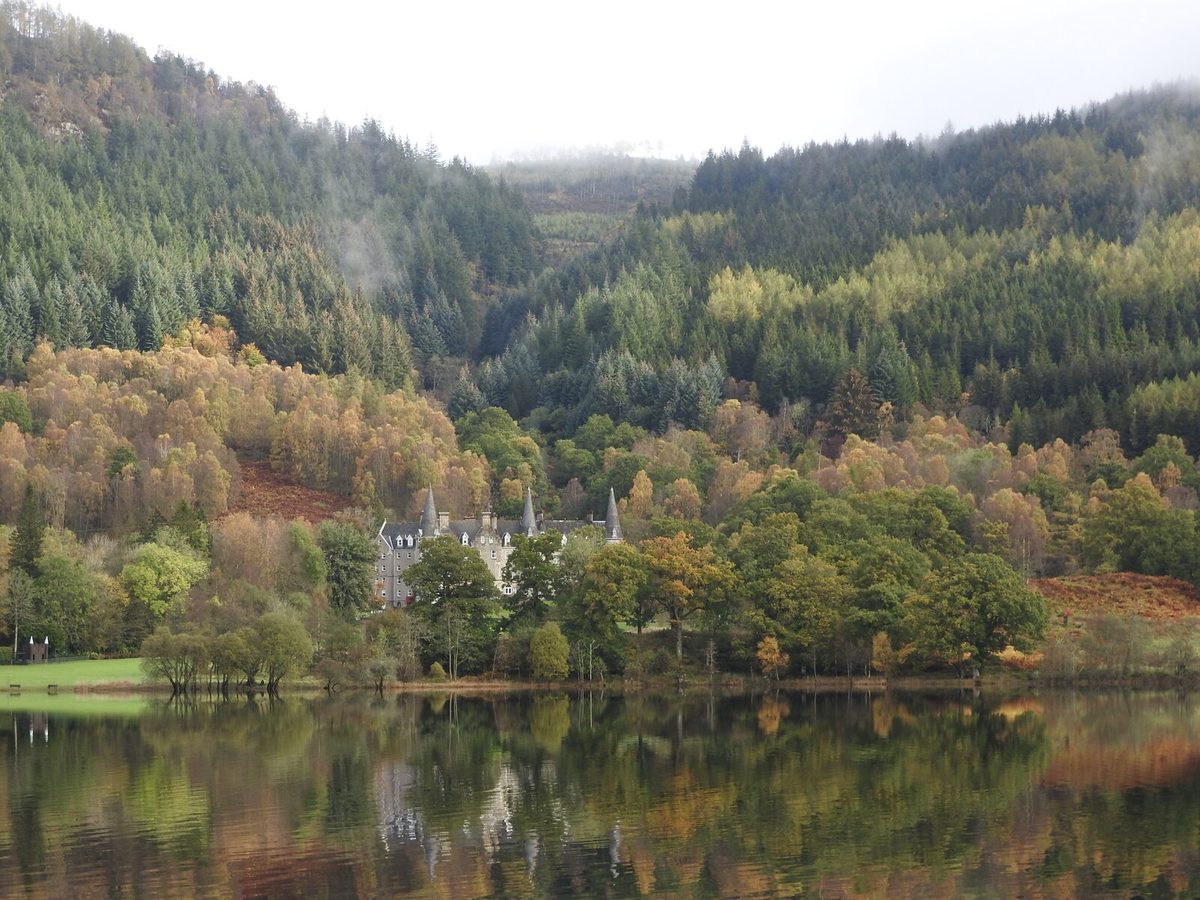
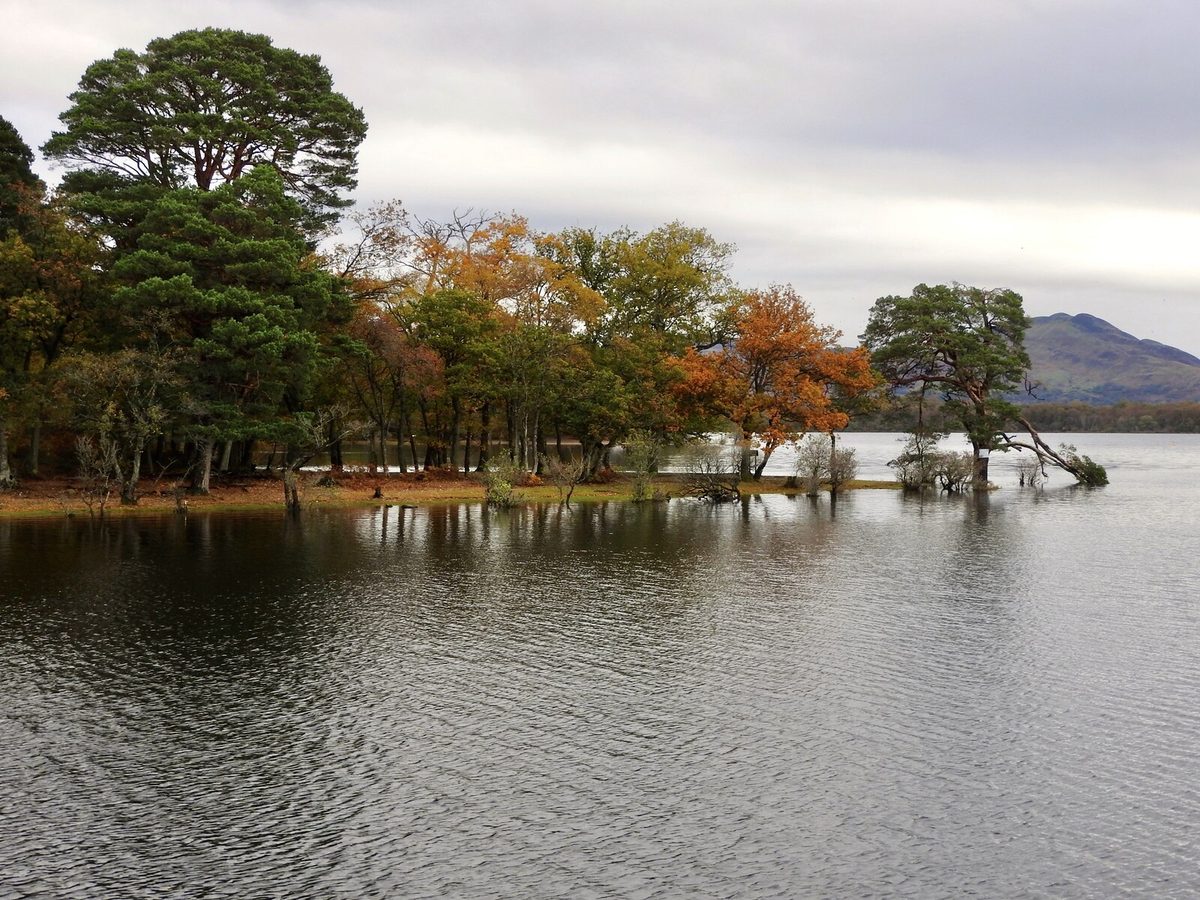
Closest to Glasgow and the most accessible of the lot. The east shore of Loch Lomond around Balmaha is oak woodland that colours beautifully, and Conic Hill above it is an hour and a bit up for the view along the Highland Boundary Fault. In the Trossachs, the shores of Loch Achray and Loch Venachar between Callander and Aberfoyle are dense mixed woodland, and Loch Katrine gives you the option of seeing it from the water.
The Three Lochs Forest Drive near Aberfoyle is seasonal and closes for winter, so check Forestry and Land Scotland before you build a day around it. This whole area is an easy addition to any Scotland itinerary that starts or ends in Glasgow.
And the places people forget
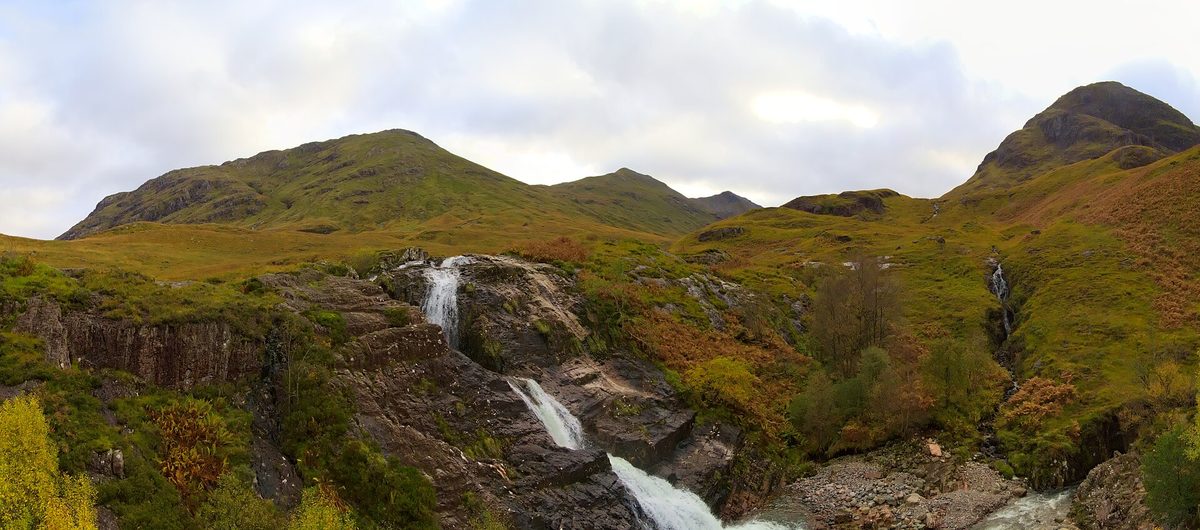
Royal Deeside around Ballater and Braemar turns late and holds well. The Hermitage of Braid and the Water of Leith in Edinburgh mean you do not need a car at all for a decent autumn walk — useful if you are only doing a single day in Edinburgh. Galloway Forest Park in the south-west is under-visited in every season, and Glen Coe in October, with the bracken gone orange on the lower slopes and cloud sitting on the ridges, is a different animal from Glen Coe in July.
Scotland October weather, without the varnish
Average highs run about 12–14°C, lows about 6–8°C, with the cities a touch milder than the Highlands and the islands. October is one of the wetter months, particularly on the west — figures in the region of 100mm across the month are typical, and the west coast can take considerably more than that. Snow at low level is unlikely; snow on the summits is normal from mid-month, and Ben Nevis has average October highs only a few degrees above freezing.
The pattern that matters is Atlantic. Depressions track in from the west and can put 50mph gusts through the Hebrides with a couple of days’ notice, which is the real reason ferry cancellations happen. If you have a fixed flight home and an island in your plan, build a spare day into the schedule. For a wider month-by-month picture, our Scotland weather by month breakdown puts October in context, and if you want the gentler version, September in Scotland keeps most of the light and loses most of the closures.
What to actually pack
A proper waterproof jacket with taped seams, not a shower-resistant fashion one. Waterproof trousers if you intend to walk. Boots you have already broken in, because wet leaves on rock are slippier than they look. A hat and gloves for the last ten days. A head torch — not for adventure, just for walking back to the car park at 5pm. And a small dry bag for the camera, because Scottish rain arrives sideways.
Driving in the dark, and the Bealach na Bà
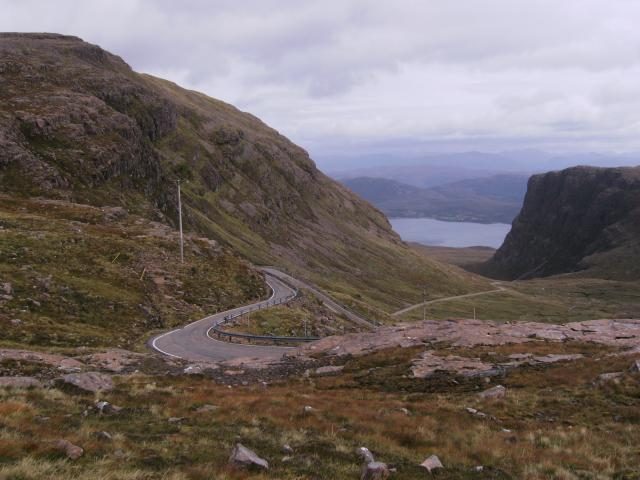
Highland roads in October are fine in daylight and demanding after it. Deer move at dawn and dusk, single-track passing places are hard to judge in the wet, and wet leaves on a steep bend behave like ice. The North Coast 500 is still a lovely drive in October — better than in July, honestly, because you are not queueing at passing places — but the Bealach na Bà over to Applecross is a different proposition. It climbs to 626 metres in about six miles of single track with hairpins and no barrier, and in low cloud with wet leaves and a hire car you do not know, it stops being fun very quickly. There is a coast road round via Shieldaig. Take it, and keep the Bealach for a clear morning.
Wildlife, dark skies and the end of the midges
The red deer rut, finishing
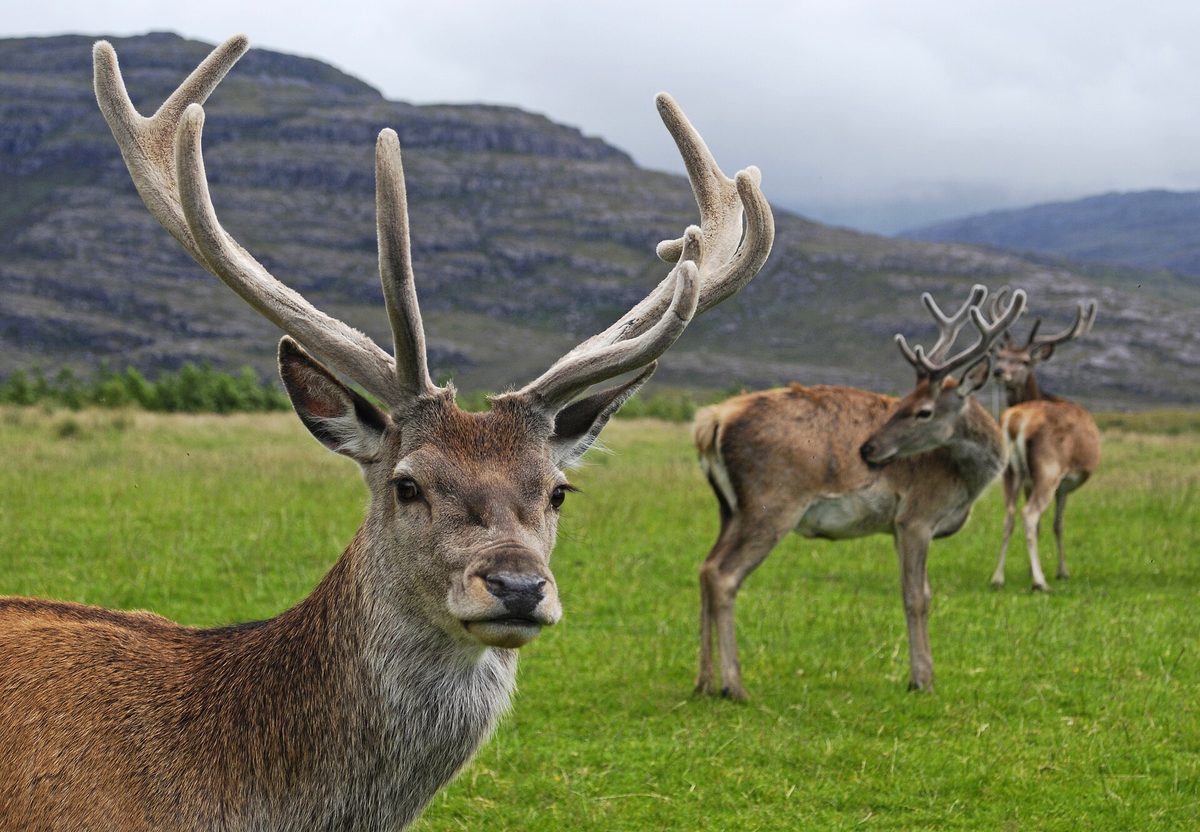
The rut runs roughly from late September into early November, and the first ten days of October are the last of the serious action. You want dawn or the couple of hours before dusk, which in early October is a civilised 5pm rather than a 4am start. Glen Etive, the Torridon hills, Jura and the open ground either side of the A82 in Glen Coe are all reliable. So is Glen Affric.
Two rules. Stay in the car or well back — a Highland stag in the rut weighs well over 100kg and is not thinking clearly — and use binoculars rather than walking closer. The roaring carries a surprising distance across a glen, and hearing it is half the point.
Salmon at Rogie Falls and the Falls of Shin
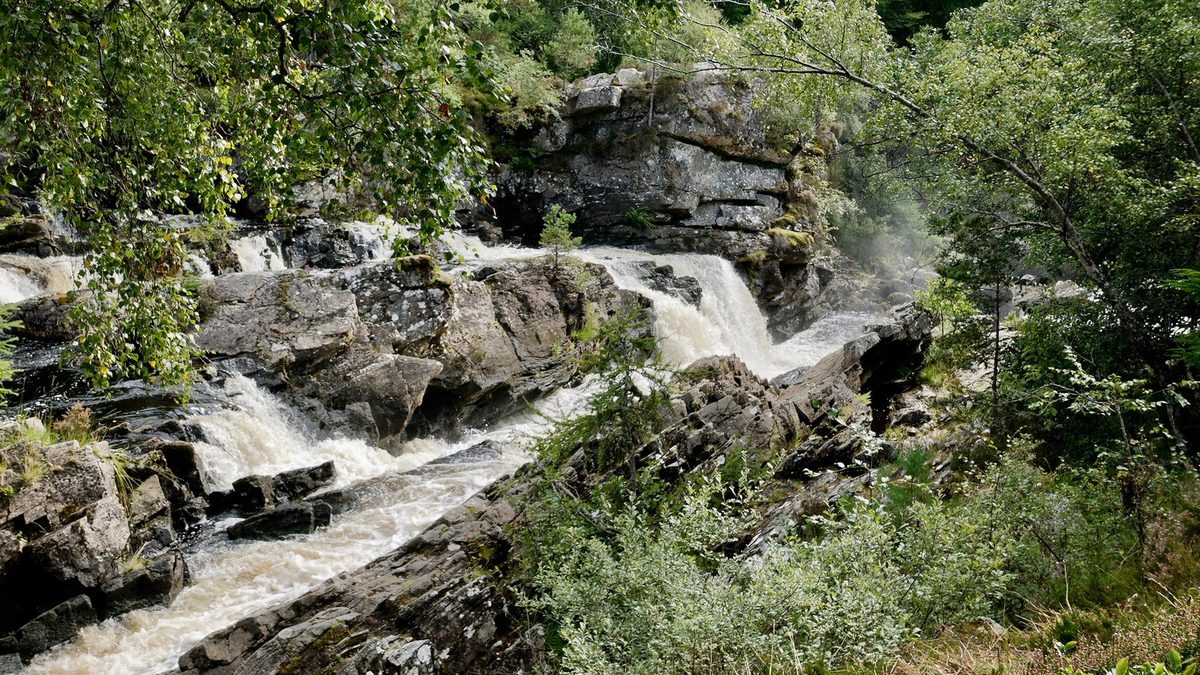
Atlantic salmon run upriver through autumn, and October after heavy rain is a good bet. Rogie Falls, on the Black Water near Contin, is about half an hour north-west of Inverness on the A835 with a free car park, a short forest path and a suspension bridge that puts you right above the drop. The Falls of Shin, further north near Lairg, has a car park and a viewing platform right above the water. Neither is guaranteed — you are watching for a fish that may or may not jump — but with the river in spate the odds are decent, and both are twenty-minute stops rather than half-day commitments.
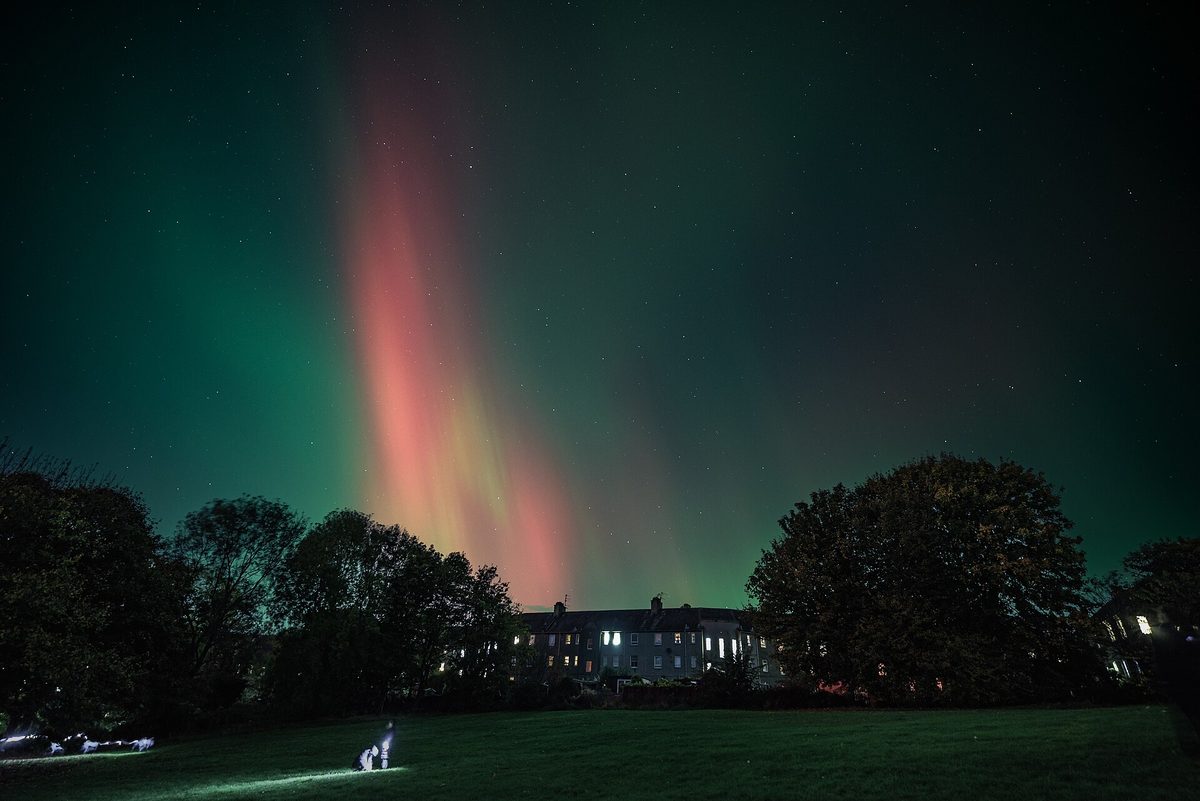
The first real aurora nights
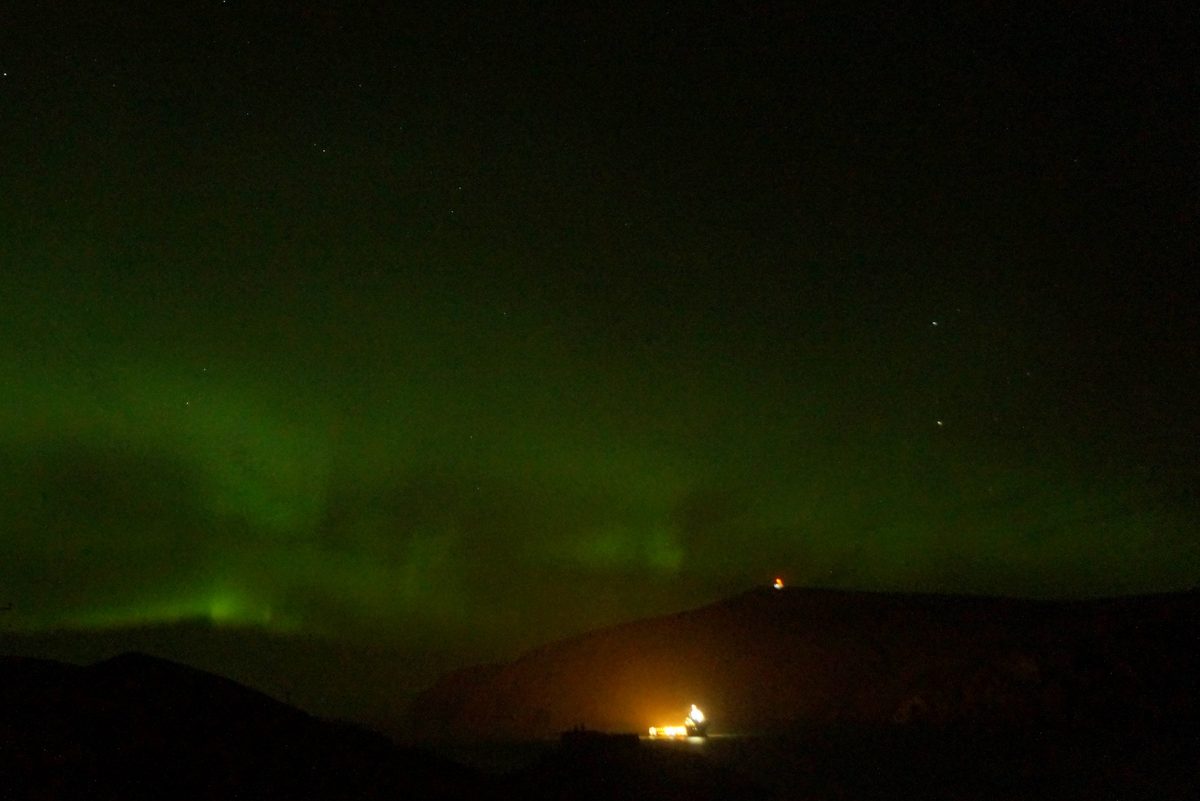
October is when the northern lights become a genuine possibility rather than a theoretical one, because you finally have proper darkness by early evening. Equinox season also tends to favour geomagnetic activity. You need three things: a clear sky, a northern horizon with no towns in it, and luck.
Sign up for AuroraWatch UK alerts from Lancaster University before you travel — they will tell you when it is worth going outside. Then get somewhere dark. The far north coast, Skye, the Outer Hebrides and the Galloway Forest Park all work; our guide to Scotland’s dark sky sites covers where to stand. Expect a grey-green arc to the naked eye and much more colour on a long exposure. That is not a disappointment, it is just physics.
Midges: done
Effectively over. Highland midge activity collapses through September and the first proper frost finishes it. By October you can stand still by a loch at dusk in shorts, which anyone who has visited in July will recognise as a small miracle. If you have been putting off a summer trip because of them, read our Scottish midge season guide and then book October instead.
Scotland half term: the two busy blocks
“October is quiet” is half true and it will cost you money if you believe it uncritically. There are two crowded stretches in the month, and they are at opposite ends.
Scottish schools take their October holiday early. Edinburgh and Glasgow both run Monday 12 to Friday 16 October in 2026, and most councils sit in that same fortnight, though some Highland and island authorities extend by a day or two either side and a handful take two weeks. That week fills Highland self-catering, Perthshire hotels and every soft-play centre in the country.
English half term falls at the other end — the week of Monday 26 to Friday 30 October for most of England in 2026, though academies and individual councils vary. That week brings a surge of cross-border families into Edinburgh, the Cairngorms and Loch Lomond, and it collides with Halloween. Edinburgh over that weekend is not a quiet city.
Between them, roughly 17 to 24 October, sits the good bit: colour near peak, both school blocks missed, still on summer time. If you have flexibility, that is the week. If you are travelling with children and cannot pick, our family things to do in Scotland guide leans heavily on the indoor options, which is what a wet half-term needs.
On price: October is cheaper than summer almost everywhere, but the two holiday weeks are not. Rates in Pitlochry and Aviemore during the Scottish week can sit close to August levels. If budget is the driver, see the cheapest time to visit Scotland — the answer is usually November, and November is a real trade.
A 6-day Scotland autumn road trip, built around the daylight budget
This is the route I would drive in the third week of October, with the walks sized to fit the light. The principle throughout: be at the trailhead by 10am, off the hill by 3pm, at the hotel before dark. That is not caution, it is arithmetic — you have roughly nine and three quarter hours of daylight, and an hour of it goes on breakfast and packing the car.
Day 1 — Edinburgh to Dunkeld and Pitlochry. Leave the city by 9am. The Hermitage first, before the car park fills. Lunch in Dunkeld, then up the A9 to Pitlochry — about 25 minutes — and the Loch Faskally circuit in the afternoon. Enchanted Forest in the evening if you have booked. Two nights in Pitlochry.
Day 2 — Highland Perthshire. Killiecrankie and the Linn of Tummel in the morning, Queen’s View at lunchtime, Birks of Aberfeldy or the drive to Loch Tay in the afternoon. If it is filthy weather, swap in Blair Castle or a distillery — this corner has plenty, and our Scotch whisky distillery guide will point you at the ones worth the detour.
Day 3 — Pitlochry to Aviemore. An hour and a bit north on the A9. Loch an Eilein in the morning, Loch Morlich in the afternoon, or take the Cairngorm funicular if it is running and the cloud is high. Two nights in Aviemore. Dark sky is good here — check the aurora alerts before bed.
Day 4 — Cairngorms and across to Inverness. Morning in the Cairngorms — Ryvoan Pass, or the Speyside Way if you want something flatter. Then across to Inverness in the afternoon, roughly 45 minutes, stopping at Rogie Falls if the rivers are up. Two nights near Inverness, which also puts Loch Ness and Inverness within easy reach.
Day 5 — Glen Affric. The big one. Out through Cannich, walk the Dog Falls and Coire Loch circuit, eat your sandwiches with the best view of the week, and be driving back down the single track well before the light goes. If the forecast is poor, save it and do the Black Isle and Chanonry Point instead.
Day 6 — south via Glen Coe. The long way home down the A82 through Glen Coe and along Loch Lomond, about five hours of driving before stops, and every one of those stops worth making. If you would rather not drive it, the same corridor is covered by one of the great scenic train journeys in Scotland.
Stretch it to seven days by adding a night on the west coast — but only before the clocks change, and only if you have checked that your accommodation and the local restaurant are still open. Skye in October is superb and quiet; see our Isle of Skye guide for what stays open. Without a car, the same trip is doable on trains and buses with more patience and fewer walks — getting around Scotland covers the practicalities.
How long you need, and what to book first
Five to seven days is the honest minimum for a Highland autumn trip. Three days gets you Edinburgh plus one day trip and that is it — not because the distances are enormous, but because October light caps you at one substantial outdoor thing per day. Ten days lets you add the west coast or the islands with a weather buffer, which in October is not a luxury.
Book in this order. First, anything with timed entry and a fixed run: the Enchanted Forest, theatre, any tour with a small group size. Second, accommodation for the two school-holiday weeks, which go early in Perthshire and the Cairngorms. Third, ferries if you are taking a car to an island, because vehicle deck space on the winter timetable is finite. Everything else — restaurants, castles, distillery tours — can generally be sorted a few days out, with the caveat that in remote areas the restaurant may simply not be open, in which case no amount of notice helps.
A note on hire cars. October rates are markedly lower than July, but check that your car has proper tyres and working lights, and take the excess insurance. Single-track roads and stone walls have a relationship.
For where to base yourself, our regional accommodation guide breaks it down; in October I would bias towards towns that stay open year-round — Pitlochry, Aviemore, Inverness, Fort William, Oban — over the very small villages.
What underwhelms, and what to skip
The far north-west in the last week. Assynt and the north coast are magnificent, and in late October a lot of them are shut. If your idea of the trip involves finding dinner in Durness on the 30th, rethink. Push the far north to a summer visit and give October to Perthshire, the Cairngorms and the Trossachs, which have the better woodland anyway.
Long ridge walks. Nine hours of daylight, wet rock, early cloud and a real chance of the first snow above 900 metres. Save the big Munro days — and there is a reason our hiking in Scotland guide pushes the ambitious stuff towards May and June. Do the low woodland walks in October. They are what the month is for.
Assuming the aurora is a plan. It is a bonus. Do not build an itinerary around it, do not book a hotel because it faces north, and do not be disappointed when six clear nights produce nothing. That is normal.
Booking a Highland trip that ends on the 31st. The last few days of October are the thinnest of the month for open businesses and the shortest for light, and they collide with English half term in the honeypots. If you must travel then, base in a city. Edinburgh and Glasgow are excellent at the end of October — the museums are free, the pubs have fires, and Halloween is properly done. Our Edinburgh travel guide and the Scottish events calendar will fill the days.
Driving too far each day. The commonest October mistake by a distance. People plan July distances and then discover that the last ninety minutes are in the dark and the viewpoint they drove for is invisible. Cut your daily mileage by a third against what you would do in summer.
Frequently asked questions
When do the clocks change in Scotland in October?
British Summer Time ends at 2am on the last Sunday of October — 25 October in 2026. Clocks go back one hour to GMT. Sunset in Inverness moves from roughly 17:53 on 24 October to about 16:48 on the 26th. Mornings get lighter, but the usable end of your day arrives an hour sooner overnight.
How many hours of daylight does Scotland get in October?
Around 11 hours 30 minutes at the start of the month in Inverness, falling to roughly 9 hours 10 minutes by 31 October. Edinburgh runs about ten minutes longer, Shetland about twenty minutes shorter by month’s end. Plan on one substantial outdoor activity per day and aim to finish walks by mid-afternoon.
When is peak autumn colour in Scotland?
Mid to late October for Perthshire, the Trossachs and central Scotland, with the Cairngorms often a touch earlier and sheltered lowland woods later. It shifts year to year — an early frost accelerates it, a mild month drags it into November, and a single gale can strip the trees. Check Forestry and Land Scotland’s updates a week ahead.
Are there midges in Scotland in October?
Essentially none. Highland midge activity drops away through September and the first frost ends it. You may meet the odd straggler in a mild, still, sheltered spot in early October, but midge repellent is not something you need to pack for a Scottish October trip.
Do attractions close in Scotland in October?
Many change or close. Historic Environment Scotland’s winter season starts on 1 October, with seasonal sites shutting from 30 September and others moving to shorter hours. National Trust for Scotland properties largely wind down through the month, CalMac moves to winter timetables from 19 October 2026, and rural guest houses and restaurants start closing for the season. Check each individually.
Can you see the northern lights in Scotland in October?
Yes, given clear skies, a dark northern horizon and geomagnetic activity. October is the first month with enough darkness by early evening to make it practical. The far north, Skye, the Outer Hebrides and Galloway are best. Sign up to AuroraWatch UK alerts, and treat any sighting as a bonus rather than an itinerary item.
Is October cheaper than summer in Scotland?
Generally yes — flights, hire cars and hotels all come down from the July and August peak. The exceptions are the Scottish school holiday week around 12–16 October and English half term at the end of the month, when Highland and Perthshire rates can approach summer levels. Book the shoulder weeks and you will feel the difference.
What should I wear in Scotland in October?
Layers, with a genuinely waterproof outer. A fleece or wool mid-layer, waterproof jacket and trousers, broken-in walking boots, hat and gloves for the second half of the month, and a head torch. Temperatures sit around 12–14°C by day and 6–8°C at night, but wind on an exposed hillside makes it feel considerably colder.
Final thoughts
October rewards people who look at a calendar rather than a mood board. The colour is real, the quiet is real, the money you save is real — and so is the fact that the country is quietly folding itself up for winter while you are looking at the trees.
Pick your week deliberately. Aim for the stretch between the Scottish school holiday and the clock change, base yourself somewhere that stays open, keep your driving days modest and your walks finished by three. Do that and you will get the version of Scotland that made me fall for the month in the first place — wet leaves, low sun through birch, a stag roaring somewhere out of sight, and a pub with a fire at the end of it.
And if it rains for six days straight, which it might, there are castles and distilleries and a lot of very good soup. That is the deal you make with the Scottish autumn, and I have never once regretted taking it.
October is quietly one of the better aurora months, thanks to the equinox effect. Our northern lights in Scotland guide covers the mechanics and names the north-facing viewpoints worth the drive.
If autumn colour is the reason you are coming, go to Highland Perthshire. The Douglas firs at the Hermitage, the Fortingall Yew and the beech and larch around Dunkeld hold their colour far longer than the birch and bracken elsewhere, and our Pitlochry and Highland Perthshire guide makes the case that October, not July, is this area’s real season.
About the author: This guide was written and is maintained by the ScotlandTourism.org editorial team — travel writers who’ve spent years exploring Scotland’s cities, Highlands and islands, from bagging Munros to chasing the perfect dram. We update our guides regularly to keep prices, opening details and advice current.
Last updated: August 2026. Prices and opening times change — always check the official site before you travel.
Photo credits
All images are used under their respective Creative Commons or public-domain licenses:
- Ossian’s Hall above the Black Linn falls at The Hermitage, Dunkeld, with autumn leaves … — Julian Paren, CC BY-SA 2.0, via Wikimedia Commons
- Autumn colour in the woods above Loch Faskally near Pitlochry — Kirsty Smith, CC BY-SA 2.0, via Wikimedia Commons
- The view west along Loch Tummel from Queen’s View in Highland Perthshire — Jamieli, CC BY-SA 3.0, via Wikimedia Commons
- Caledonian pine and turning birch above Loch Beinn a’ Mheadhoin in Glen Affric — Mike Pennington, CC BY-SA 2.0, via Wikimedia Commons
- The ruined castle on its island in Loch an Eilein, Rothiemurchus, in the Cairngorms — Mike Searle, CC BY-SA 2.0, via Wikimedia Commons
- Autumn woodland reflected in Loch Achray in the Trossachs — Mags49, CC BY-SA 2.0, via Wikimedia Commons
- Waterfalls and orange bracken on the flanks of Glen Coe in October — Daniel Kraft, CC BY-SA 3.0, via Wikimedia Commons
- The hairpin bends of the Bealach na Ba climbing towards Applecross — Hilmar Ilgenfritz, CC BY-SA 2.0, via Wikimedia Commons
- A red deer stag on open Highland ground, with the herd behind — Mehmet Karatay, derivative by Massimo Catarinella, CC BY-SA 3.0, via Wikimedia Commons
- The Black Water tumbling over Rogie Falls near Contin in the Highlands — Julian Paren, CC BY-SA 2.0, via Wikimedia Commons
- The aurora borealis in green and red over rooftops in Scotland — Gary Campbell-Hall, CC BY 2.0, via Wikimedia Commons
- Autumn trees along the shore of Loch Lomond under grey cloud — Mags49, CC BY-SA 2.0, via Wikimedia Commons