The first time I drove north in December I did the sums wrong. I’d booked three nights in Inverness, sketched out a loop that took in Loch Ness, Glen Affric and a chunk of the west coast, and then discovered on the first morning that the sun did not clear the rooftops until nearly nine and was gone again by half three. Everything after that happened in the dark.
That is the thing nobody tells you about Scotland in winter. It isn’t the cold, which is milder than the latitude suggests, and it isn’t even the rain. It’s the daylight budget. You get somewhere between six and eleven hours of usable light depending on the month and how far north you’ve gone, and every decision you make about where to stay, how far to drive and what to see has to be built around that number. Get it right and a Scottish winter is one of the best trips in Europe. Get it wrong and you spend a fortnight peering at hedgerows through a windscreen.

The short answer
Winter runs December to February: mild for the latitude at 5–7°C in the Lowlands, wet, windy, and very short on daylight. Expect about seven hours of light in Edinburgh at the solstice, under six in Shetland. Prices fall hard and crowds vanish, but roads, ferries and rural businesses turn unreliable. Plan one or two outdoor things a day.
Scotland in winter at a glance
| Month | Typical daytime high (Lowlands) | Daylight, Edinburgh | Daylight, Inverness | What it’s good for | Cost |
|---|---|---|---|---|---|
| November | 8–9°C | Around 8 hr 15 min mid-month | Around 8 hr | Empty hills, last of the autumn colour, markets opening | Low |
| Early December | 6–7°C | Around 7 hr 25 min | Around 7 hr 05 min | Christmas markets without the crush | Medium |
| Late December | 6–7°C | Around 6 hr 58 min at the solstice | Around 6 hr 35 min at the solstice | Hogmanay, fire festivals, the darkest week of the year | Highest of the winter |
| Early January | 5–6°C | Around 7 hr 05 min | Around 6 hr 45 min | Genuine bargains, genuine emptiness | Lowest of the year |
| Late January | 5–6°C | Around 8 hr 33 min | Around 8 hr 20 min | Burns Night, Celtic Connections, Up Helly Aa | Low |
| Mid-February | 6–7°C | Around 9 hr 37 min | Around 9 hr 28 min | Best snow odds, ski centres running, light coming back | Low to medium |
| Late February | 7°C | Around 10 hr 36 min | Around 10 hr 31 min | Snowdrops, proper hill days, shoulder-season prices | Medium |
Daylight figures are sunrise to sunset for the 2026–27 winter, rounded to the nearest five minutes. Temperatures are typical daytime maxima on low ground; subtract a good few degrees for anywhere above 500m, and more again for wind chill. If you want the full year in context, our guide to the best time of year to visit Scotland lays the seasons side by side.
Start with the daylight budget, not the itinerary
Most winter guides mention short days somewhere near the packing list and then carry on recommending an itinerary designed for June. That’s the mistake. Daylight isn’t a caveat in a Scottish winter; it is the entire constraint, and it varies far more across the country than anyone admits.
What the numbers actually say
Here is the winter solstice, 21 December, from south to north. These are sunrise and sunset in local time, so the real usable window is a touch wider at each end and a great deal narrower if it’s overcast, which it often is.
| Place | Sunrise | Sunset | Daylight |
|---|---|---|---|
| Glasgow | 08:46 | 15:44 | 6 hr 59 min |
| Edinburgh | 08:42 | 15:40 | 6 hr 58 min |
| Aberdeen | 08:46 | 15:27 | 6 hr 41 min |
| Portree, Skye | 09:04 | 15:41 | 6 hr 37 min |
| Inverness | 08:57 | 15:33 | 6 hr 36 min |
| Ullapool | 09:04 | 15:33 | 6 hr 29 min |
| Kirkwall, Orkney | 09:04 | 15:15 | 6 hr 11 min |
| Lerwick, Shetland | 09:08 | 14:57 | 5 hr 49 min |
An hour and ten minutes separates Glasgow from Lerwick. That sounds trivial until you realise it is roughly a fifth of your entire day. National averages, which is what most sites quote, hide it completely.
Two other quirks are worth knowing. The shortest day is not the day of the latest sunrise: in Inverness the sun keeps rising later until around 28 December, so the very bleakest mornings are the ones between Christmas and New Year. And the earliest sunset comes about a week before the solstice, in the middle of December, which is why the first fortnight of the month often feels darker than the last.
What six and a half hours actually buys you
Six and a half hours in Inverness sounds survivable written down. In practice, subtract the first thirty minutes and the last thirty, when the light is too flat and grey to be worth much for photographs or for seeing anything at distance. Subtract breakfast. Subtract the fact that in December the cloud base is frequently somewhere around your knees.
What you’re left with is about five hours of properly useful time. That is one drive and one walk. Or two short walks and a very short drive. It is not a castle in the morning, a glen at lunchtime and a distillery in the afternoon, however neatly that reads on a spreadsheet.
The rule I now plan by
Spend the light on the two things that need it: the driving and the walking. Spend the dark on everything that has a roof and a heating system.
So a good winter day in the Highlands looks like this. Out of the door at first light, or a little before, with the flask already filled. Drive the scenic stretch between about 09:00 and 11:00 when the low sun does extraordinary things to snow and heather. Walk from 11:00 until 14:30. Be back at the car with an hour of light in hand. Then the castle, the distillery tour, the museum, the three-hour pub lunch that turns into dinner.
Invert that — a lazy morning, a museum until two, then a drive to a viewpoint — and you will arrive at the viewpoint in total darkness. I have done it. Twice.
Driving in the dark, on roads with no lights
The other consequence is that a lot of your driving happens at night, and Highland roads at night are a different proposition from motorways at night. Single-track roads with passing places have no lighting, no cat’s eyes on many stretches, no white lines, and deer that step out without warning. The A82 between Glencoe and Fort William, the A87 across to Skye, most of the North Coast 500 route north of Ullapool: all fine in daylight, all considerably more demanding at four in the afternoon in sleet.
My practical fix is to accept fewer bases and longer stays. Two nights minimum anywhere, three if you can. The winter trips that fall apart are the ones with a different bed every night, because every transfer eats the good light.
If you’re weighing up hiring a car against trains and buses, our rundown of how to get around Scotland goes into the trade-offs properly. In winter the balance shifts noticeably towards the train.
December, January and February are three different trips
Lumping them together as “winter” is lazy, and it’s why so many people book the wrong month. They have different weather, different prices, different opening hours and completely different atmospheres.
December: festive, expensive, and the darkest
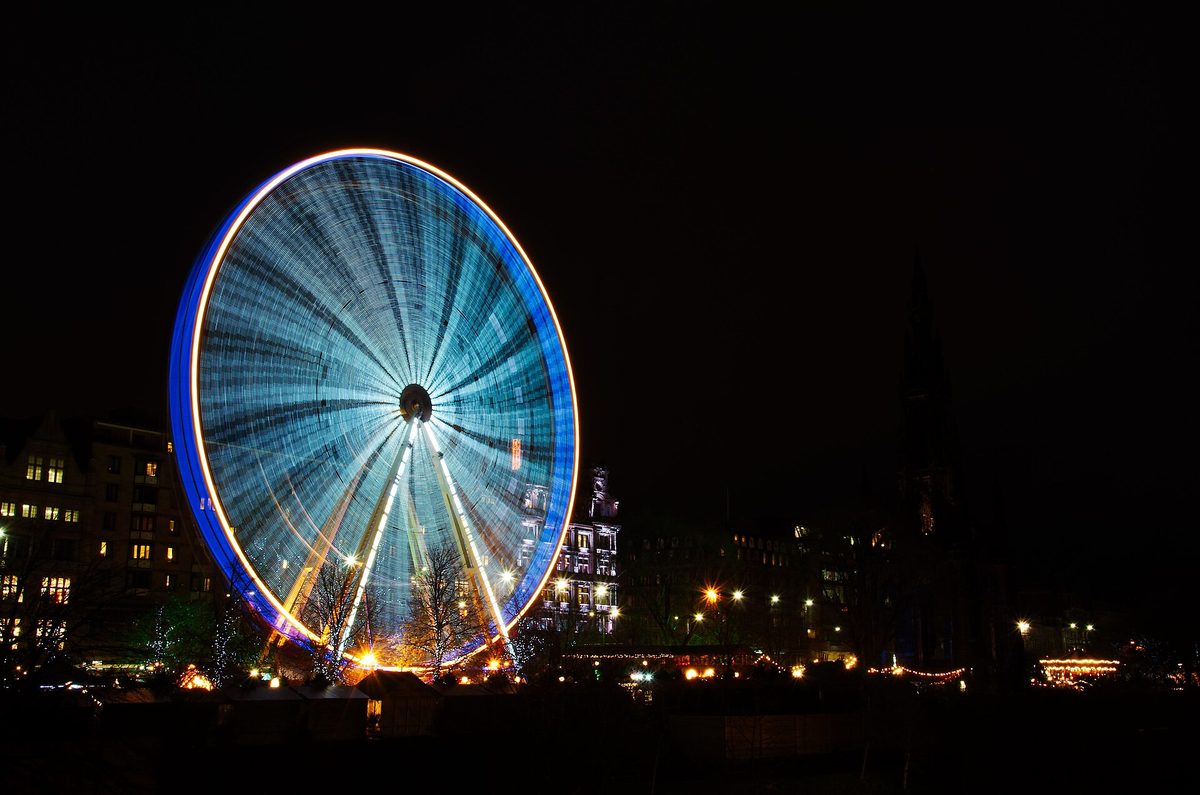
December is the month people picture and the month that costs the most. Edinburgh’s Christmas market fills East Princes Street Gardens from mid-November until the first days of January — for the 2026 season it runs 14 November to 3 January, free to walk into, with the big wheel and the star flyer around £12 to £15 a ride and the outdoor rink on George Street about £15 at the time of writing. Check the current prices before you go; they creep up most years.
Honestly? The market is fine. It is a German-style market of the sort you’ll find in forty other British cities, and on a Saturday in mid-December the walkway between the stalls moves at a shuffle. What makes it worth an hour is the setting: the gardens drop away below Princes Street with the castle floodlit above and the Scott Monument sticking up out of the fairy lights. Go on a weekday evening, buy one mulled wine, walk up to the top of the Mound for the view, then go somewhere warm.
Hogmanay is the real draw. Edinburgh’s programme for 2026–27 runs 29 December to 1 January, and it is ticketed throughout: the Street Party from around £33 for early releases and rising past £55, the Concert in the Gardens in the £85–140 range, the Torchlight Procession around £25–35 if you want to carry a torch rather than watch. The big tickets sell out, and they sell out early — if you’re reading this in August for a December trip, book now or make a different plan. There’s more on the wider calendar in our guide to Scottish festivals and events.
The alternative I’d push harder: leave Edinburgh entirely. Stonehaven, just down the Aberdeenshire coast from Aberdeen, swings enormous balls of flaming wire around its High Street at midnight on 31 December, a thing that would never be permitted if it hadn’t been going on for well over a century. It is free, it is genuinely startling, and the crowd is a fraction the size. On New Year’s Day a few hundred people in fancy dress run into the Firth of Forth at South Queensferry for the Loony Dook — the format has changed a few times in recent years, so check what’s actually happening before you build a day around it. Watching costs nothing and takes ten minutes.
The catch: December has the shortest days of the year, hotel rates in Edinburgh over Hogmanay that can triple, and a Highlands where a great many small businesses have shut for the season. It is the most atmospheric winter month and the least practical one.
January: the cheapest fortnight of the Scottish year
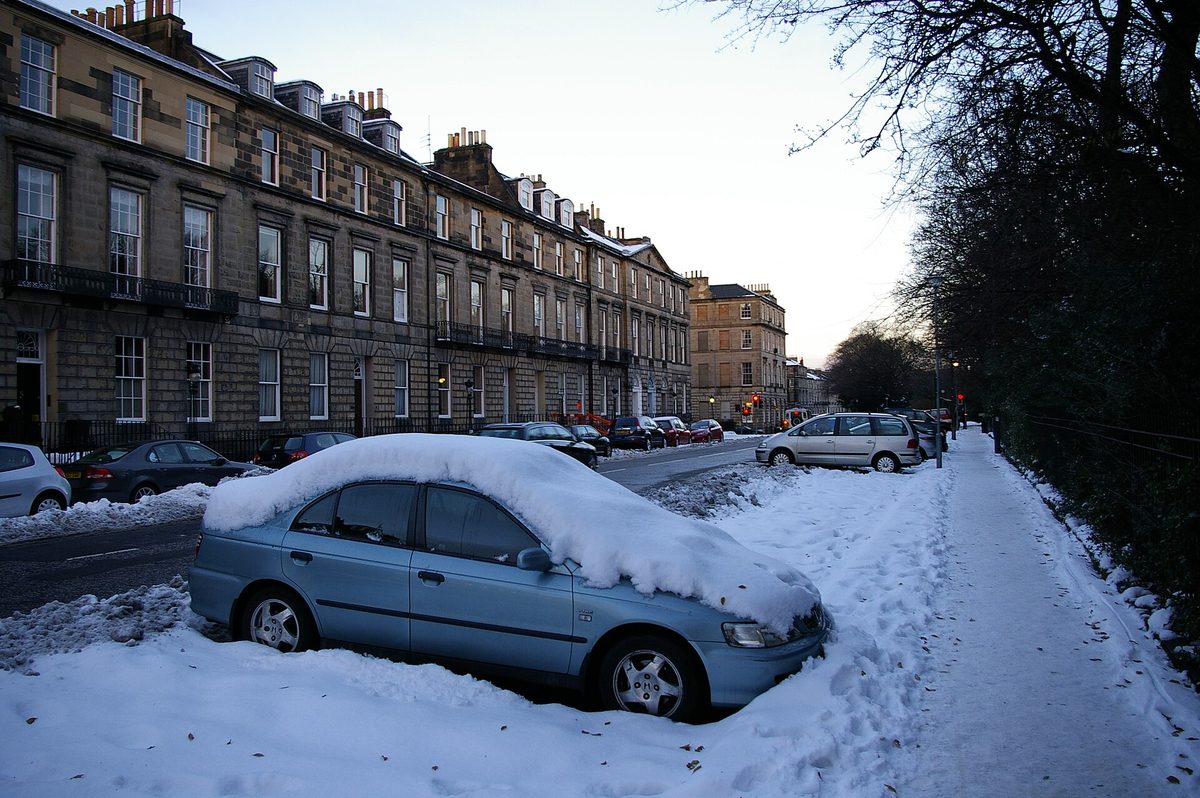
The first two weeks of January are, without much competition, the cheapest time to be in Scotland. The festive crowd has gone home, nobody has any money, the weather is grim, and hotels that wanted £220 a night on 30 December will take £70 on 8 January. City-centre rooms in Glasgow and Edinburgh that are impossible in August become almost embarrassingly available.
It is also dead. I mean that neutrally, because it cuts both ways. In a Highland village in the second week of January you may find one pub open, no restaurant, a shop with reduced hours, and a landscape entirely to yourself. If that reads as peace, January is your month and you will love it. If it reads as bleak, you’ll spend four days wondering where everyone went.
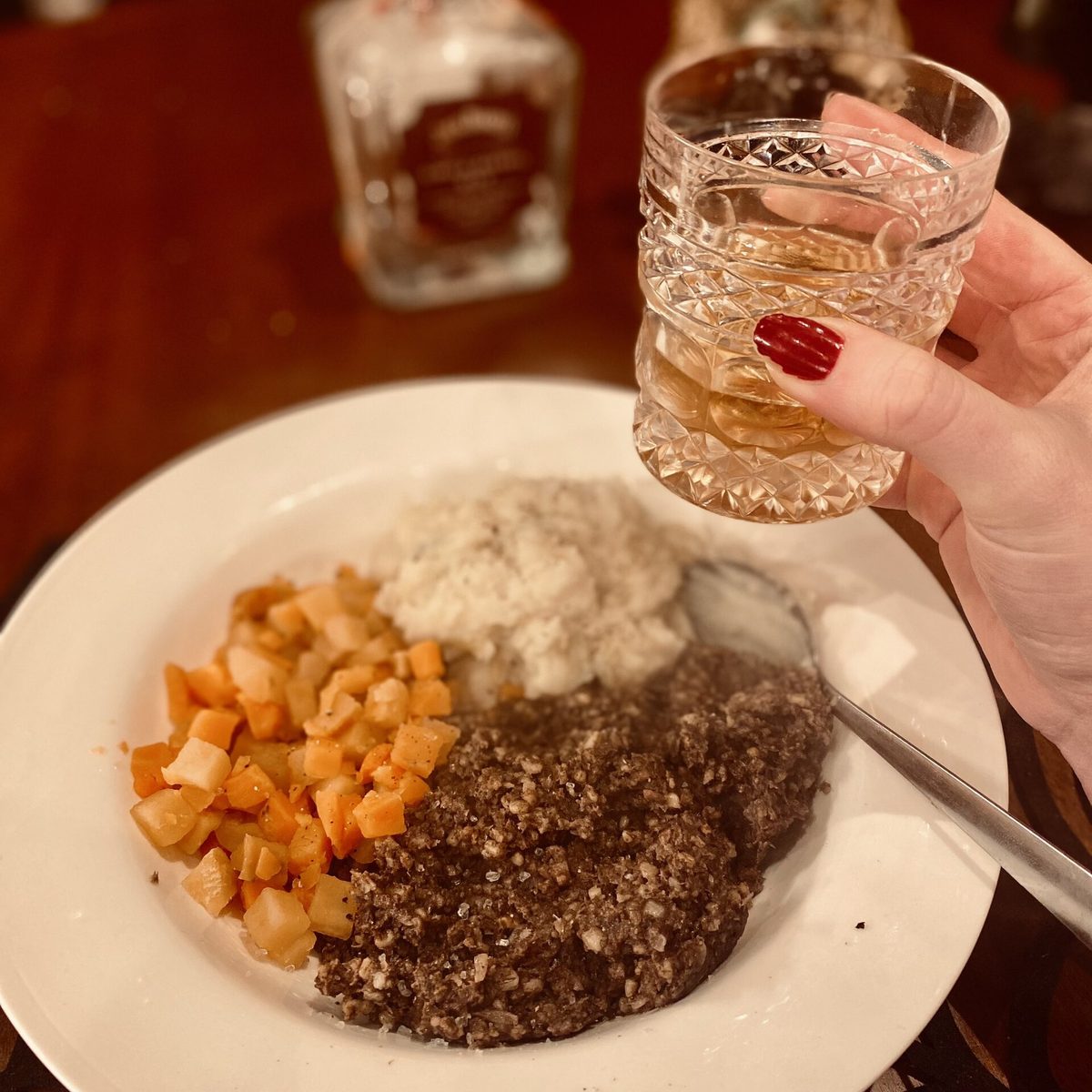
Two things pull January out of the doldrums. Burns Night on the 25th is properly observed — haggis, neeps and tatties, the address to the haggis, whisky, and usually a ceilidh at the end. Hotels and pubs across the country run suppers and most of them need booking a couple of weeks ahead. Our guide to Scottish food and drink explains what you’re actually eating, which helps.
The other is Celtic Connections in Glasgow, which runs 14 to 31 January in 2027 and turns the city into the best folk and roots festival in Britain for a fortnight. Hundreds of concerts across venues from the Royal Concert Hall down to back rooms in pubs, plus late-night sessions where the musicians play for each other. It is the strongest single argument for putting Glasgow rather than Edinburgh at the centre of a January trip.
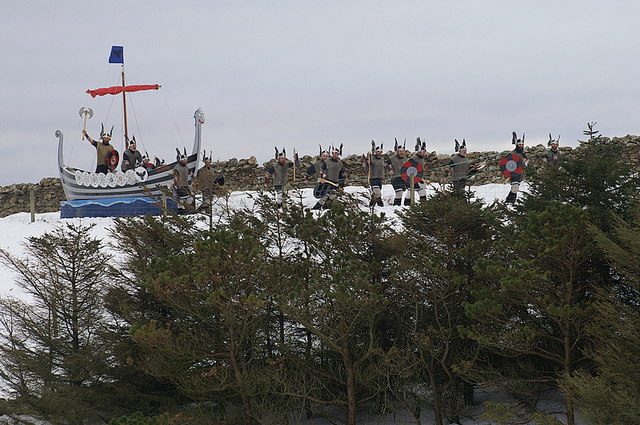
And in Shetland, Lerwick’s Up Helly Aa falls on the last Tuesday of January — 26 January 2027. A thousand men in costume, a torchlit procession, a replica galley burned on a playing field, and then squads touring the halls until dawn. Getting there in January means a NorthLink ferry from Aberdeen or a flight, and accommodation on the island books out a year in advance. Treat it as a trip in its own right rather than a detour.
February: the best snow, and the light returning
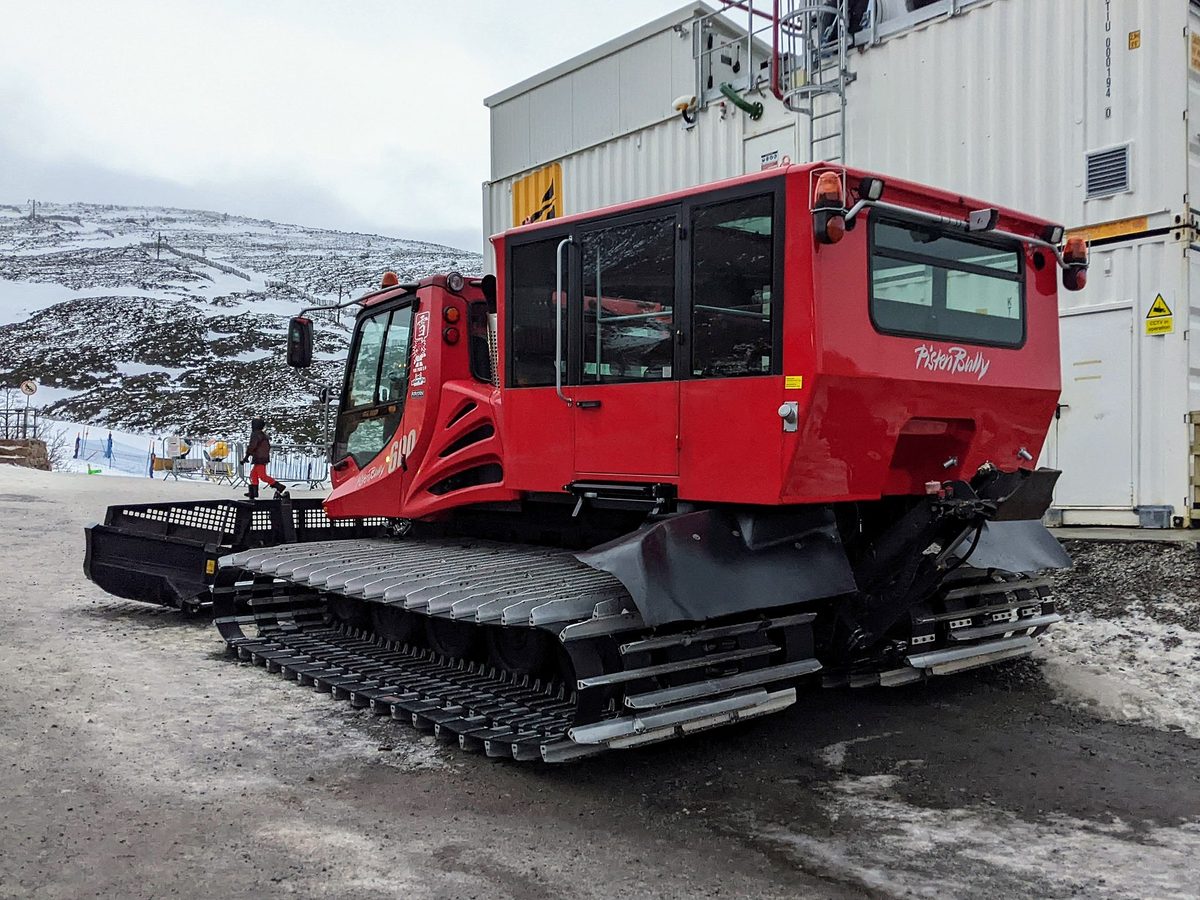
If you want actual snow rather than the idea of snow, February is your month. The Cairngorms hold their best cover in late January and February, and it is the period when Scotland’s five ski centres — Cairngorm, Glenshee, Glencoe, Nevis Range and The Lecht — are most likely to be running properly rather than operating two tows on a strip of machine-made cover.
The daylight has recovered too. By 15 February, Inverness is back to nine and a half hours; by the end of the month it’s over ten and a half. That is the difference between one outdoor thing and three, and it is why I’d send a first-time winter visitor to Scotland in the second half of February over almost any other date.
Lift passes at the time of writing sit around £34 midweek and £40 at weekends at Glencoe, with half-days at Glenshee about £30 for an adult; Glenshee’s season typically runs December to April. Nobody is coming to Scotland for the skiing in preference to the Alps, and you shouldn’t. Come for a day of it because you happen to be in the Cairngorms and the conditions are good, and treat it as a bonus rather than the reason for the trip. The Cairngorm funicular is running again after its long closure, which puts the Ptarmigan restaurant back within reach of people who have no intention of skiing anywhere.
February also brings snowdrops, which sounds twee until you’ve walked through a few acres of them at Cambo or in the grounds of a Borders house in weak February sun. The Scottish Snowdrop Festival runs across dozens of gardens from late January into March.
Where to go, and where I’d think twice
Your choice of base matters more in winter than in any other season, because your margin for error is smaller. A wet Tuesday in July costs you an afternoon. A wet Tuesday in January, in a village where the one pub shuts at eight, costs you the whole day.
Edinburgh and Glasgow: the winter-proof option
The cities are the safe answer and there’s no shame in taking it. Everything is walkable, everything is open, and both have enough indoor material to absorb a week of horizontal rain without repeating yourself. The National Museum of Scotland and the Scottish National Gallery are free and both are properly good. Kelvingrove in Glasgow is free too, and better than it has any right to be.
Winter suits Edinburgh in a way summer doesn’t. The Old Town closes in around you when it’s dark by four, the pubs have fires, and the streets that are impassable during the Fringe are yours. If you’ve only got a day, our single-day Edinburgh plan sequences it sensibly. And because the light goes so early, a stack of free things to do in Edinburgh is more useful in January than it is in June — you’ll be filling more hours than you expect.
One genuine winter advantage: Edinburgh Castle in February has queues measured in minutes rather than hours. The esplanade in a gale is memorable in its own right.
The Cairngorms and Speyside: snow with a plan B
If I had one week and wanted a chance of snow without gambling the whole trip, I’d base in Aviemore or Grantown-on-Spey. You get the highest, snowiest ground in Britain on your doorstep, a ski centre, forest walks at Glenmore and Rothiemurchus that work in almost any conditions, the reindeer herd, and — crucially — Speyside’s distilleries fifteen minutes down the road for when the weather closes in.
That last point is the whole argument. Speyside gives you a dozen indoor options within half an hour, which is exactly what a Scottish winter demands. Most of the big names run tours through the winter, though several drop to reduced days and a few close for the annual silent season, so ring ahead rather than turning up. Our guide to Scotland’s whisky distilleries sorts out which regions are worth your time.
Glencoe, Fort William and the west
Glencoe in winter is the image everyone has in their head, and for once the image is accurate. The A82 drops off Rannoch Moor into the glen with the Buachaille on your left and the Three Sisters ahead, and under snow, in low January sun, there is nothing else in Britain like it. It is also one of the easiest good things to reach, because the road goes straight through it.
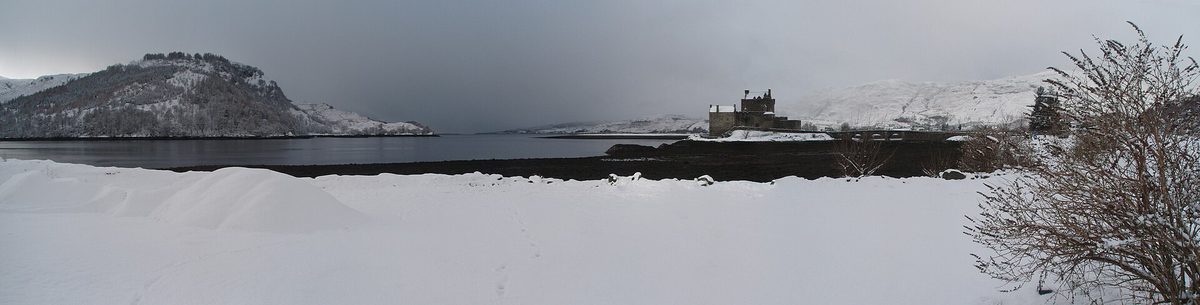
Fort William makes a workable base with the Nevis Range gondola, ice climbing for people who know what they’re doing, and the West Highland Line running through. But the west coast catches the Atlantic weather first, which means more rain, more wind and less lying snow at low level than the Cairngorms get. You trade snow odds for scenery.
Serious winter hillwalking is a different sport from summer hillwalking — ice axe, crampons, the ability to use both, and a real avalanche forecast to read. If you’re not already equipped for that, stay on the low routes. Our Scottish hiking guide covers the range; in winter, drop your ambitions by at least one grade.
Skye and the islands: possible, but read the ferry page first
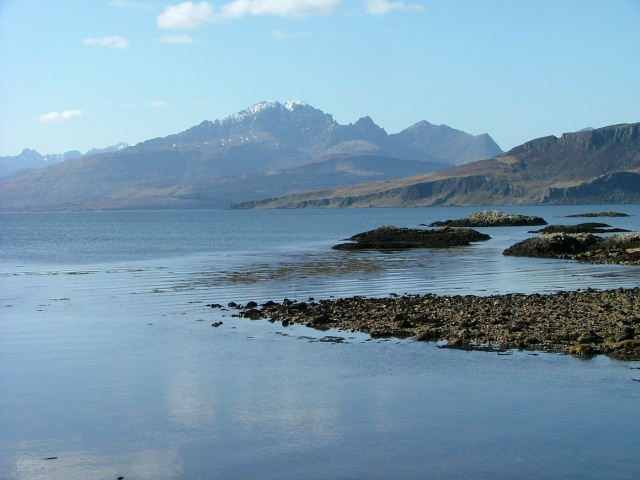
Skye in winter is glorious and I’d go again tomorrow. Empty car parks at the Quiraing, the Old Man of Storr to yourself, the Cuillin white above black water. The bridge means you’re not dependent on a boat, which puts it in a different category from the rest of the islands.
But it is also the place where winter closures bite hardest. A substantial share of Skye’s guest houses, cafes and restaurants shut from around late October to Easter, and the ones that stay open often run three or four days a week. Book food, not just beds. Our Isle of Skye guide covers the sights; in winter, halve the number you attempt.
For the ferry-dependent islands — Mull, Islay, Harris, Lewis, Barra — the calculation changes. CalMac drops to winter timetables from late October, with fewer sailings and, on some routes, whole days without one. And winter gales cancel sailings regularly; a single Atlantic low can take out most of the west coast network for two days. It’s not that you shouldn’t go. It’s that you must build slack into the plan and never book a flight home for the evening of the day you’re due to sail. Our guide to the Scottish islands is honest about which ones are realistic out of season.
The far north, Orkney and Shetland: aurora country
This is where the daylight budget hurts most and where the compensation is greatest. Kirkwall gets six hours eleven minutes at the solstice; Lerwick under six. You will be doing almost everything in the dark.
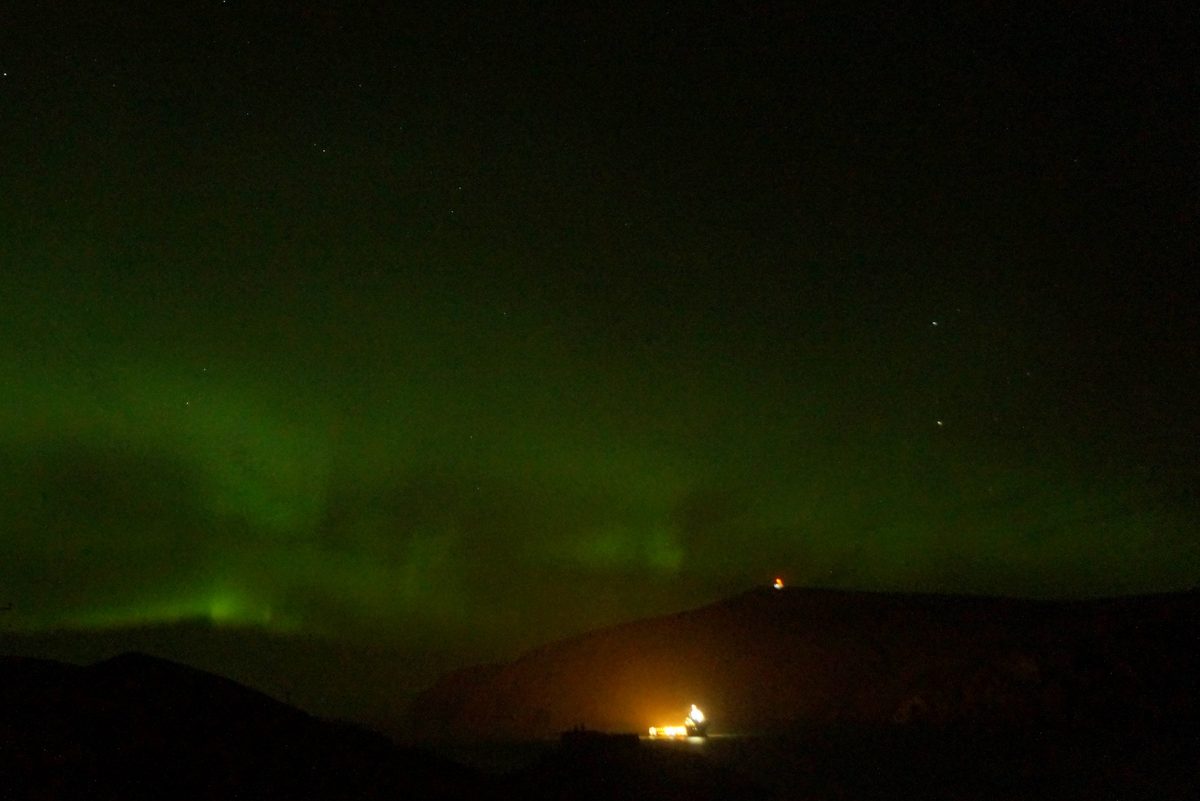
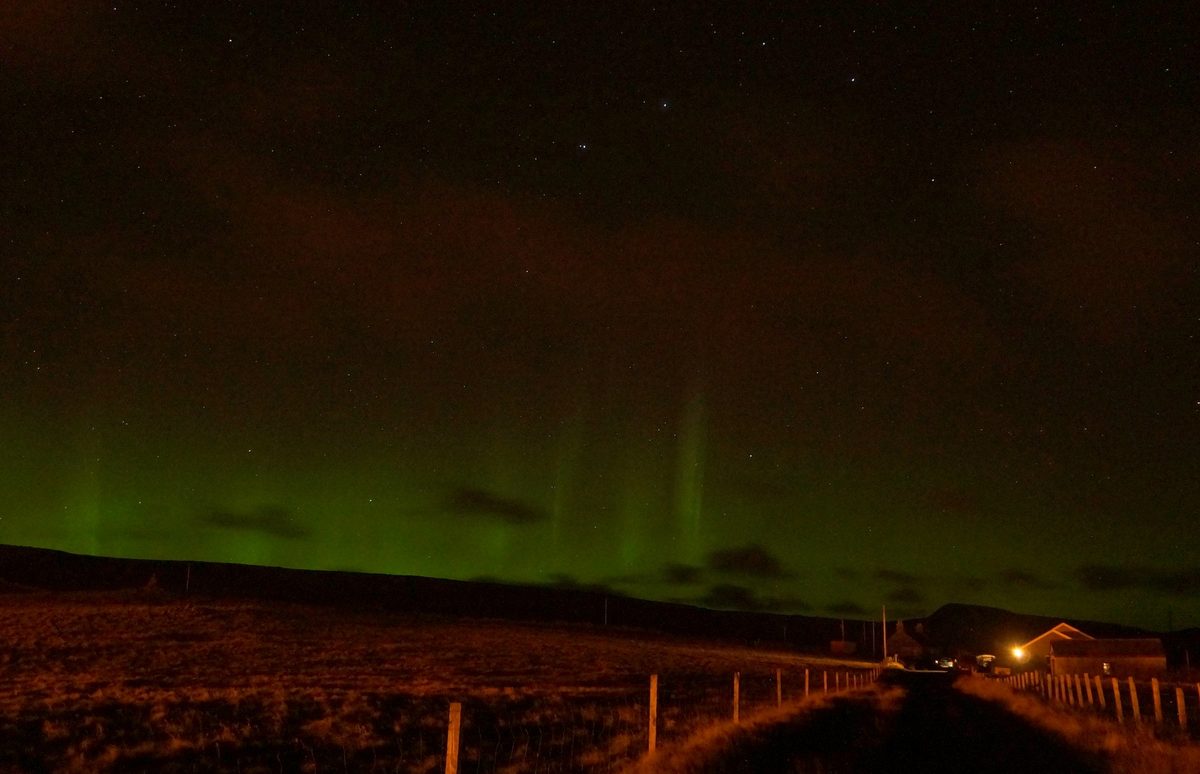
What you get in return is the best chance in Britain of seeing the aurora. Shetland and Orkney sit far enough north that a moderate disturbance — Kp 4 or so — can produce something visible, where the central Highlands would need Kp 5 or 6. Caithness, Dunnet Head and the Flow Country are the mainland equivalents. The season runs roughly September to March and needs three things to coincide: activity, a clear sky and darkness. In a Scottish winter the third is guaranteed and the second very much isn’t.
Set an AuroraWatch UK alert, stay somewhere you can walk outside at midnight without driving, and treat any sighting as a bonus rather than the plan. If you go north purely for the lights and don’t see them, you’ll be disappointed. If you go north for the winter emptiness and the sky performs on night three, it’s the best hour of the trip. Our guide to stargazing and dark skies in Scotland has the sites and the practicalities.
What to do with the dark hours
Sixteen to eighteen hours a day of darkness is a lot of hours. The trips that work are the ones that plan for them deliberately instead of treating evenings as dead time.
Distilleries
A distillery tour is the single best winter activity in Scotland, and I don’t say that as a whisky bore. It’s ninety minutes to two hours, entirely indoors, warm, involves sitting down at the end, and the buildings smell extraordinary on a cold day. Tours run roughly £15 to £30 for a standard visit at the time of writing, more for tastings of older stock, and drivers are given their dram to take away. Book ahead in winter: reduced schedules mean fewer slots, not fewer visitors.
Castles, but check the calendar
Scotland’s castles are winter-friendly right up until the point where they’re padlocked. Historic Environment Scotland runs the major ticketed sites — Edinburgh, Stirling, Urquhart — year round, and its Explorer Pass is discounted through the winter season from 1 November to 31 March. But more than forty of its smaller seasonal properties close over winter and don’t reopen until 1 April. The National Trust for Scotland does something similar with many of its houses and gardens.
The practical upshot: the famous ones are open, the atmospheric little ones on the map often aren’t, and turning up at a locked gate after a forty-minute drive in bad light is a genuinely miserable way to spend an afternoon. Check each site individually the night before. Our guide to Scottish castles flags which are open year round.
The long lunch, which is not a cop-out
I’m serious about this. A three-hour lunch in a Highland pub with a fire, in the middle of the afternoon, watching the light go — that is one of the genuine pleasures of a Scottish winter and it is not a consolation prize for bad weather. Cullen skink, a pint of something local, nowhere to be. Build one in every other day.
Trains, which turn transit into the attraction
Because the light is short, moving between places can feel like wasted time. Trains fix that. The West Highland Line from Glasgow to Fort William and Mallaig crosses Rannoch Moor in a way no road does, and in winter, with snow on the moor, it’s better than in summer. Someone else drives, you sit in the warm, and the transit becomes the day’s main event. Our roundup of Scotland’s scenic rail journeys covers the routes; check the winter timetable, because some services thin out and the steam-hauled seasonal trains don’t run at all.
Winter weather, without the sugar-coating
It’s milder than you fear and wetter than you hope
Scotland sits at the latitude of Labrador and Moscow and behaves nothing like either, because the Atlantic keeps it warm. Typical daytime highs on low ground run 5–7°C through December, January and February; Glasgow tends to be a shade colder overnight, Edinburgh slightly drier through the day. Hard frosts happen, but weeks of sub-zero cold do not, on the coast at least.
Rain is the real story. The Met Office counts something like thirty wet days across the whole of winter on the East Lothian and Fife coasts, rising to over fifty-five in the Grampian mountains. Read that again: in the western hills, most winter days have rain in them. And the wind matters more than the temperature. Five degrees with a 40mph westerly on an exposed ridge is a serious proposition; five degrees in a sheltered glen is pleasant walking weather in a jumper.
Snow: where it actually falls
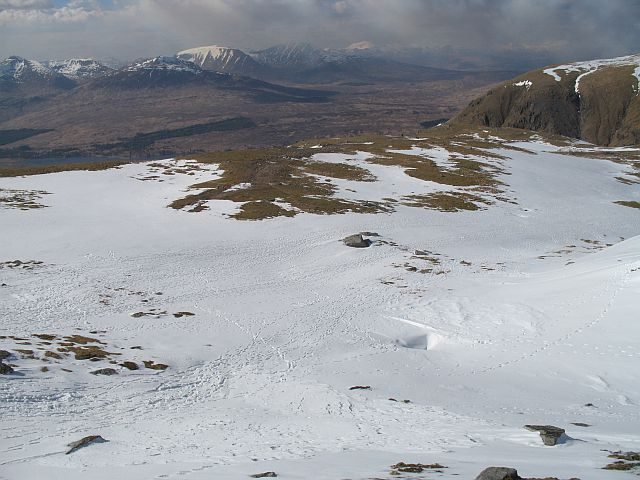
Here’s the honest version. Snow lying on the ground at low level averages only around three days a month through the winter across Scotland as a whole. Edinburgh and Glasgow get a few dustings a year that are gone by lunchtime. Snow in the postcard sense — deep, lying, reliable — means altitude: the Cairngorm plateau, Glencoe, Torridon, Drumochter, the Lecht.
So if snow is the point of your trip, go to the Cairngorms in February and go up. Do not book a week in Edinburgh in December expecting a white city, because most years you won’t get one.
What to pack, briefly
Waterproof jacket with a hood that actually stays up in wind, waterproof over-trousers you can pull on over jeans, boots with grip, and layers rather than one thick coat so you can strip down indoors. Hat and gloves. A head torch — this is the one people forget, and it converts a walk that ends at half three into one that can safely end at half four. Something for microspikes if you’re walking on frozen paths. Sunglasses for snow, which sounds absurd until you’re squinting across the Cairngorm plateau. More general kit advice sits in our Scotland travel tips guide.
One compensation worth stating plainly: there are no midges. None. From October to April the thing that ruins Scottish summer evenings simply isn’t there, which is why some people who’ve suffered a July trip to the west coast never go back in summer again.
Planning a winter trip: length, logistics and what to book
How many days you need
More than you’d need in summer, for the same itinerary. My working ratio is that a winter day delivers roughly two-thirds of a summer day’s sightseeing, so add a third to any plan you’ve seen written for warmer months.
Concretely: four or five nights is enough for Edinburgh plus one day trip. Seven nights gets you Edinburgh or Glasgow plus a Highland base with two nights minimum in each. Ten nights is where a proper loop becomes sensible — cities, Cairngorms, and one stretch of west coast — and even then I’d cut one destination from whatever you first sketched. If you want a template to adapt, our Scotland itinerary guide has routes you can compress.
Anything under three nights, stay in one city. A two-night winter Highland dash is mostly a two-night drive.
Getting there and getting around
Edinburgh and Glasgow airports both run year round with good connections, and the trains from London reach Edinburgh in about four and a half hours. The Caledonian Sleeper puts you in Fort William or Inverness at breakfast, which in winter is a real advantage: you arrive with the full day’s light ahead rather than burning half of it in transit.
For driving, hire a car with winter-appropriate tyres if you can get one and check what the hire company’s policy is on snow. Fill up more often than you would in summer; rural petrol stations keep short hours and some close on Sundays. Download offline maps, because mobile signal on the west coast is patchy and worse in bad weather.
Check Traffic Scotland before every Highland departure between October and April. The A9 over Drumochter at 457m and the A82 across Rannoch Moor and through Glencoe close more often than any other main routes in Scotland, and both have physical snow gates whose status is published live. A closure on either can add two hours to a journey, or end it.
What to book, and how far ahead
Winter inverts the usual advice. Accommodation is easy and cheap outside the festive fortnight. It’s the things that are open that need booking, because there are fewer of them.
- Hogmanay tickets: months ahead. The Edinburgh Street Party and Concert in the Gardens sell out and the cheap release tiers go first.
- Burns suppers: two to three weeks ahead for anything decent on 25 January.
- Up Helly Aa accommodation: up to a year. Shetland has finite beds.
- Restaurant tables in the Highlands: the day before, at minimum. In a village with one open kitchen, walking in at seven is optimistic.
- Distillery tours: a few days ahead; winter schedules mean fewer slots.
- Ferries with a car: as early as you can, and check the timetable is the winter one, not the summer one you found on Google.
What it costs
This is winter’s strongest argument. Outside Christmas and Hogmanay, hotel rates commonly run a third below high season and sometimes far more — a Highland room at £180 in August can be £90 in late January. Flights are cheaper. Car hire is much cheaper. Attractions cost the same but you queue for none of them.
Set against that: you’ll spend more on food and drink, because you’ll be indoors more, and you may need an extra night somewhere to absorb a weather day. Our guide on where to stay across Scotland is worth reading with winter prices in mind, because places that are unaffordable in July come into range.
What goes wrong, and what underwhelms
The failure modes, listed plainly
Roads close. The A9 and A82 in heavy snow, and Bealach na Bà almost routinely. The Applecross pass is an unclassified road with snow gates at both ends and it isn’t on the primary gritting schedule — it can be shut for days at a stretch, occasionally weeks. That makes a full clockwise North Coast 500 a genuine winter gamble. You can still reach Applecross by the coast road from Shieldaig, but it’s slow and it is not the drive you came for.
Ferries cancel. Reduced winter timetables plus Atlantic gales equals regular disruption. A single storm can take out most of the CalMac network. Never plan an island trip with no spare day.
Things are shut. A large share of Highland guest houses, small restaurants and Historic Environment Scotland’s smaller sites close from around October to March. This is the one that catches people out most, because the websites stay up and the photos stay sunny.
The weather takes a day. Not “it rains”, which you can walk in, but genuine named-storm conditions where going outside is unwise. Budget for one such day per week.
What underwhelms
The Christmas markets. Pleasant, crowded, not distinctively Scottish, and if you’ve done Vienna or Cologne you’ll find them thin. Go for the setting, not the stalls.
The Hogmanay Street Party, for some people. Forty thousand people in the rain on Princes Street is a magnificent thing if you want to be in a crowd and a poor use of £55 if you don’t. The Torchlight Procession on the 29th is the better ticket and the fireworks are visible free from a dozen points around the city if you know where to stand.
The northern lights, most nights. Statistically you will look at a black sky. Anyone selling you a Scottish aurora trip as a likelihood rather than a chance is overselling.
Loch Ness in flat winter light. The loch is long, grey and often featureless under cloud, and the visitor experience is fairly thin out of season. Urquhart Castle in low sun is worth the stop; the rest can be a slog if the weather’s dull. Our Loch Ness and Inverness guide is realistic about what’s actually there.
Mistakes I see repeatedly
Planning a summer route and doing it in December. Booking a different town every night. Assuming a two-hour drive is a two-hour drive when it’s dark and icy — add a third. Arriving in the Highlands with no torch. Not checking whether the one restaurant in the village is open on a Monday in January. And the big one: treating short days as an inconvenience rather than the thing the whole itinerary must be built around.
If any of that has put you off, that’s fair — and the honest alternative is to look at Scotland in May, which gives you long light and low crowds, or read up on what a Scottish summer actually delivers before you commit.
Frequently asked questions
Is it worth visiting Scotland in winter?
Yes, if you accept the constraint. You get empty landscapes, hotel prices a third below summer, no midges, no queues, and the best odds of snow and aurora. You lose daylight, reliability and a lot of rural opening hours. For cities, distilleries, festivals and dramatic light, winter is excellent. For a comprehensive road trip, it isn’t.
How many hours of daylight does Scotland get in winter?
At the winter solstice, about 6 hr 58 min in Edinburgh, 6 hr 36 min in Inverness, 6 hr 11 min in Kirkwall and 5 hr 49 min in Lerwick. By mid-February that’s risen to roughly nine and a half hours everywhere, and by the end of February to over ten and a half. The spread between south and north is more than an hour in December.
Which winter month is best to visit Scotland?
Late February for most people: the best snow odds, ski centres running, and nearly four extra hours of daylight compared with the solstice. December if you want Christmas markets and Hogmanay and will pay for them. Early January if price is your priority and you don’t mind things being closed.
Does it snow in Edinburgh and Glasgow?
A few times each winter, usually briefly. Lying snow at low level averages only around three days a month across Scotland, and city snow typically melts within a day or two. If you want reliable snow you need altitude — the Cairngorms, Glencoe or Torridon in February — not a Lowland city in December.
Can you drive the North Coast 500 in winter?
You can, but treat it as a gamble rather than a plan. Bealach na Bà is often closed, single-track sections are unlit and ungritted, several hotels and cafes on the route shut for the season, and most of your driving falls in darkness. If you go, allow twice the summer time, check Traffic Scotland daily, and be willing to abandon sections.
Will I see the northern lights in Scotland in winter?
Possibly, if you go north and stay several nights. Shetland and Orkney need less geomagnetic activity than the mainland Highlands, and the season runs September to March. But you need clear skies as well as activity, and Scottish winter skies are frequently overcast. Treat any display as a bonus, not the reason for the trip.
What is closed in Scotland in winter?
More than forty of Historic Environment Scotland’s smaller seasonal sites close until 1 April, along with many National Trust for Scotland houses and gardens. A large share of Highland and island guest houses, cafes and restaurants close from around late October to Easter, and many that stay open run reduced days. Major castles, city museums and most distilleries stay open year round.
Is Scotland very cold in winter?
Less than the latitude suggests. Typical daytime highs are 5–7°C on low ground and hard frosts are occasional rather than constant, thanks to the Atlantic. What makes it feel cold is the wind and the damp, not the thermometer. On the hills it’s a different matter entirely, and winter conditions above 800m are genuinely serious.
Final thoughts
I’ve come to like Scotland in winter more than Scotland in August, and it’s not close. The country stops performing for visitors and just gets on with being itself — wet, dark, hospitable, occasionally spectacular when the cloud lifts off a snowy ridge for twenty minutes at three in the afternoon and everyone in the car goes quiet.
But it only works if you plan against the daylight rather than around it. Fewer places. Longer stays. Outdoor things in the light, indoor things in the dark, and a genuine willingness to write off a day when the weather says so. Do that and the empty glens, the £90 hotel rooms and the pub fire at four in the afternoon are all yours.
Then come back in June and see how different the same road looks with eighteen hours of light on it.
Long winter nights are also aurora season. If that is part of the draw, read our breakdown of when and where to see the northern lights before you pick a base — the drier north-east coast beats the west for clear skies by a wide margin.
Winter is soup weather, and Scotland does soup better than it gets credit for — cullen skink and the rest is the cheapest good meal in the country at this time of year.
Winter is the sensible season for an indoor treat, and rates roughly halve once the clocks go back. We have ranked the best spa hotels and wellness retreats by region, with honest notes on which are residents-only and which sell midweek day passes.
About the author: This guide was written and is maintained by the ScotlandTourism.org editorial team — travel writers who’ve spent years exploring Scotland’s cities, Highlands and islands, from bagging Munros to chasing the perfect dram. We update our guides regularly to keep prices, opening details and advice current.
Last updated: August 2026. Prices and opening times change — always check the official site before you travel.
Photo credits
All images are used under their respective Creative Commons or public-domain licenses:
- The A82 running through Glen Coe with snow on the ridges in winter — Richard Dorrell, CC BY-SA 2.0, via Wikimedia Commons
- A snowed-in street in Edinburgh’s New Town at dusk in winter — Stablenode, CC0, via Wikimedia Commons
- The big wheel and Christmas market lights below the Scott Monument in Edinburgh — marsupium photography, CC BY-SA 2.0, via Wikimedia Commons
- Eilean Donan Castle across a snow-covered shore under a heavy winter sky — Akela NDE, CC BY-SA 2.0 fr, via Wikimedia Commons
- Snow on the Highland hills above the A82 near Bridge of Orchy — Richard Webb, CC BY-SA 2.0, via Wikimedia Commons
- The aurora borealis seen from Baltasound on Unst, Shetland — Mike Pennington, CC BY-SA 2.0, via Wikimedia Commons
- An Up Helly Aa squad and galley in the snow in Shetland in January — Mike Pennington, CC BY-SA 2.0, via Wikimedia Commons
- Haggis, neeps and tatties with a dram, served for a Burns supper on 25 January — Evelyn Hollow, CC BY-SA 4.0, via Wikimedia Commons
- Snow lingering on the Cuillin, seen across the water from Ord on Skye — Dave Fergusson, CC BY-SA 2.0, via Wikimedia Commons
- A piste groomer at Cairngorm Mountain with thin early-season snow behind — Glen Wallace from Inverness, Scotland, CC BY-SA 2.0, via Wikimedia Commons