One missed connection is all it takes. Reach Inverness after the last coach of the day has pulled out and you will most likely be spending the night there, staring at a timetable, rather than on the island.
Skye is not far. Portree is about 230 miles from Edinburgh and 110 from Inverness, and the road runs straight onto the island over a free bridge. What makes the trip awkward is connections.
How to get to Isle of Skye: the short answer
Drive over the free Skye Bridge on the A87, or take the CalMac ferry from Mallaig to Armadale. Without a car, the simplest routes are the direct Citylink coach from Glasgow to Portree in around six and a half hours, or a train from Edinburgh to Inverness followed by the 917 coach, a long day’s travel door to door.
Get the sequence right and it is genuinely straightforward. There are four coaches a day out of Inverness, up to three trains from Glasgow to Mallaig, one ferry that shuts for the winter and another that only sails in daylight hours, and a local bus network on the island that thins to almost nothing on a Sunday. The services all exist. They simply do not wait for each other, which is how a twenty-minute gap put the island three hours away and completely out of reach.
Journey times at a glance
| Route | Typical time | Changes | Rough cost | Best for |
|---|---|---|---|---|
| Glasgow Buchanan Street to Portree (Citylink 915/916) | Around 6h 25m | None | Coach fare, cheapest booked early | Car-free travellers who want one ticket |
| Edinburgh to Portree via Inverness (train + Citylink 917) | A full day | One | Rail advance fare plus coach | Car-free travellers starting in Edinburgh |
| Inverness to Portree (Citylink 917) | Around 3h 15m | None | Coach fare only | Anyone basing themselves in Inverness |
| Glasgow to Armadale (West Highland Line + CalMac) | Around 6h | One, plus a boat | Rail fare plus about £4 per adult foot passenger | The journey being half the point |
| Inverness to Kyle of Lochalsh (Kyle Line) | Around 2h 45m | None | Rail fare | The best train ride to the island’s doorstep |
| Edinburgh to Portree by car (A9 then A87) | Most of a day with stops | None | Fuel, roughly 230 miles | Walkers, families, anyone chasing weather |
| Skye Bridge, Kyle of Lochalsh to Kyleakin | Minutes | None | Free since December 2004 | Everyone, all year, high winds permitting |
| Glenelg to Kylerhea turntable ferry | Up to fifteen minutes afloat | None | Around £20 per car | The most enjoyable way onto the island, April to mid-October |
Every figure above is a starting point rather than a promise. Coach and rail times shift between the summer and winter timetables, ferries move for tides and maintenance, and a caravan on the A87 in July can add half an hour to a drive that Google swears takes two hours forty. Check Scottish Citylink, ScotRail and CalMac directly before you commit to anything.
There are three ways onto the island, and only one of them is a bridge
Skye is a big island with a small number of doors. Most visitors only ever use one of them, which is a shame, because the other two are better. Before you plan anything else, decide which crossing you want, because it dictates your whole approach route.
All three land you within striking distance of the same places, though the driving times from each vary a lot. If you already know roughly where you are heading on the island, our complete guide to the Isle of Skye is the place to work out whether you should be aiming for Portree, Broadford, Dunvegan or somewhere quieter still.
The Skye Bridge: free, fast and slightly anticlimactic
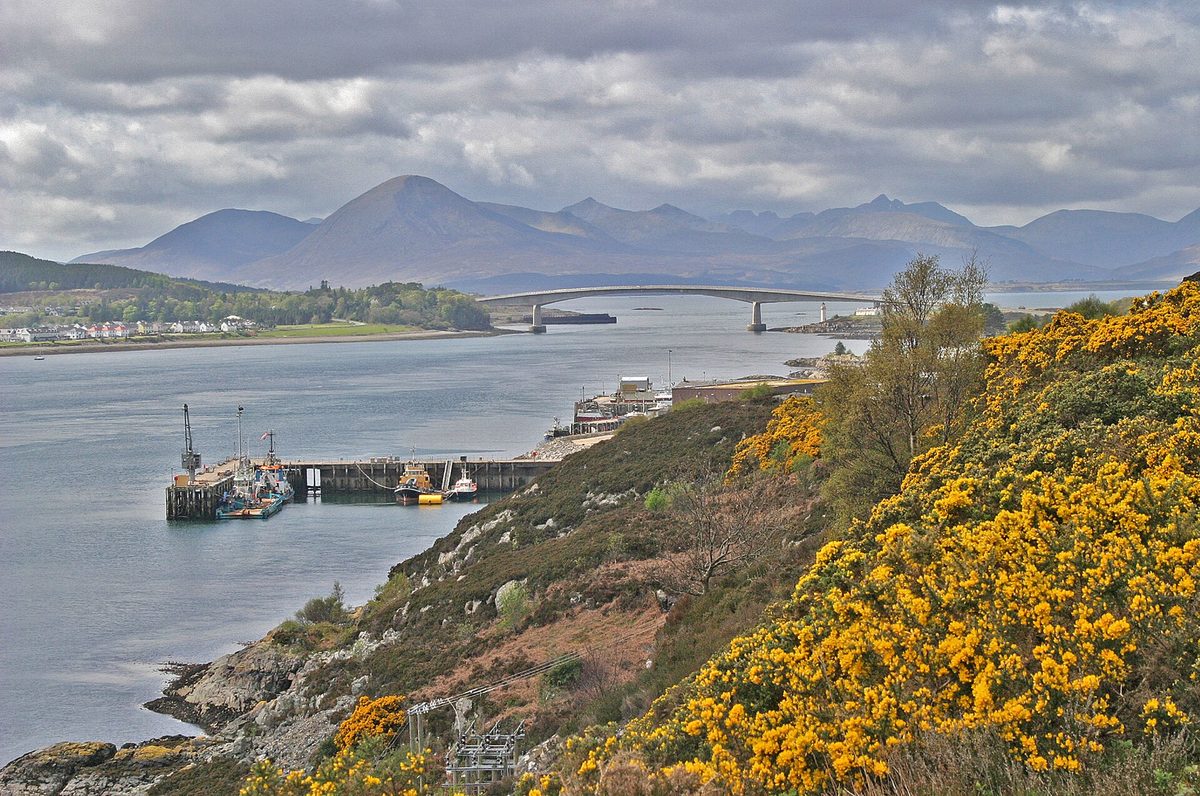
The bridge opened on 16 October 1995, runs about 500 metres across Loch Alsh with a central span of roughly 250 metres, and uses the little island of Eilean Ban as a stepping stone. It carries the A87 from Kyle of Lochalsh to Kyleakin, and crossing it takes well under two minutes.
It is free. It was not always. The original tolls were expensive enough to trigger a genuine civil disobedience campaign on the island, with locals refusing to pay and ending up in court, and the tolls were finally lifted on 21 December 2004 after the Scottish Executive bought the bridge outright. Anyone telling you to budget for a Skye crossing charge is working from twenty-year-old information.
The drive itself is over before you have registered it. The good view is not from the bridge but from the Kyleakin side looking back, or from the old ferry slipway at Kyle of Lochalsh with the Red Cuillin stacked up behind. Pull in, look properly, then carry on.
The bridge is open all year, day and night, though high winds can bring restrictions or close it for a time, so check Traffic Scotland before a stormy crossing. That matters more than it sounds. If you are arriving late, travelling in February, or driving something the ferries would charge a fortune for, the bridge is the one crossing that does not depend on a season or a sailing.
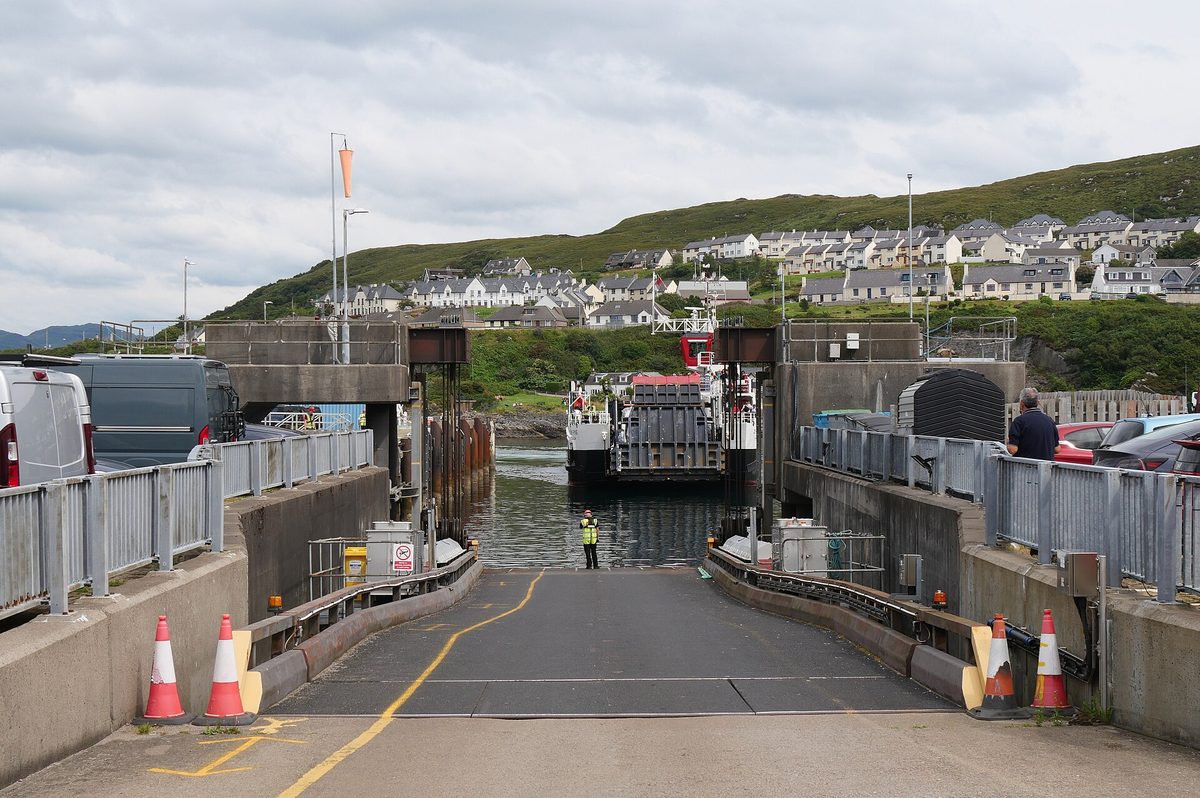
Mallaig to Armadale: the crossing that makes a loop possible
CalMac run the MV Lochnevis between Mallaig on the mainland and Armadale on Skye’s Sleat peninsula. The crossing takes around 30 minutes and lands you in the green, wooded south of the island, about 45 minutes’ drive from Broadford and an hour and a quarter from Portree.
Fares are around £4 single for an adult foot passenger and about £13.25 for a car, with the driver charged separately as a passenger. Bicycles travel free. Booking is essential on this route, even as a foot passenger, and check-in closes 20 minutes before departure for vehicles and 10 minutes for foot passengers. Turn up five minutes before sailing with a car and you will watch it leave.
The real value of this ferry is not the crossing, it is the shape it gives your trip. Come north via Glencoe and Fort William, sail from Mallaig, and leave over the bridge to Kyle of Lochalsh, and you never drive the same road twice. That single decision improves a Skye trip more than almost anything else you can do, and it slots neatly into the wider Highland road trip routes that most people are stitching together anyway.
Two warnings. The summer timetable runs roughly from early May to mid-October, with a reduced winter service after that, so this is not a year-round substitute for the bridge. And CalMac publish amended timetables for specific dates when low spring tides make the slipways unworkable, plus further changes for planned vessel maintenance. The sailing you looked up in January may simply not exist on the day you travel, which is why checking the route page in the fortnight before you go is worth the two minutes it takes.
Glenelg to Kylerhea: the ferry almost nobody writes about
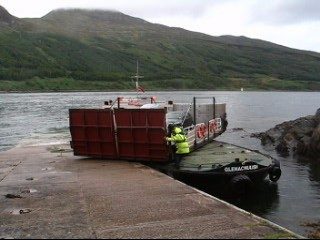
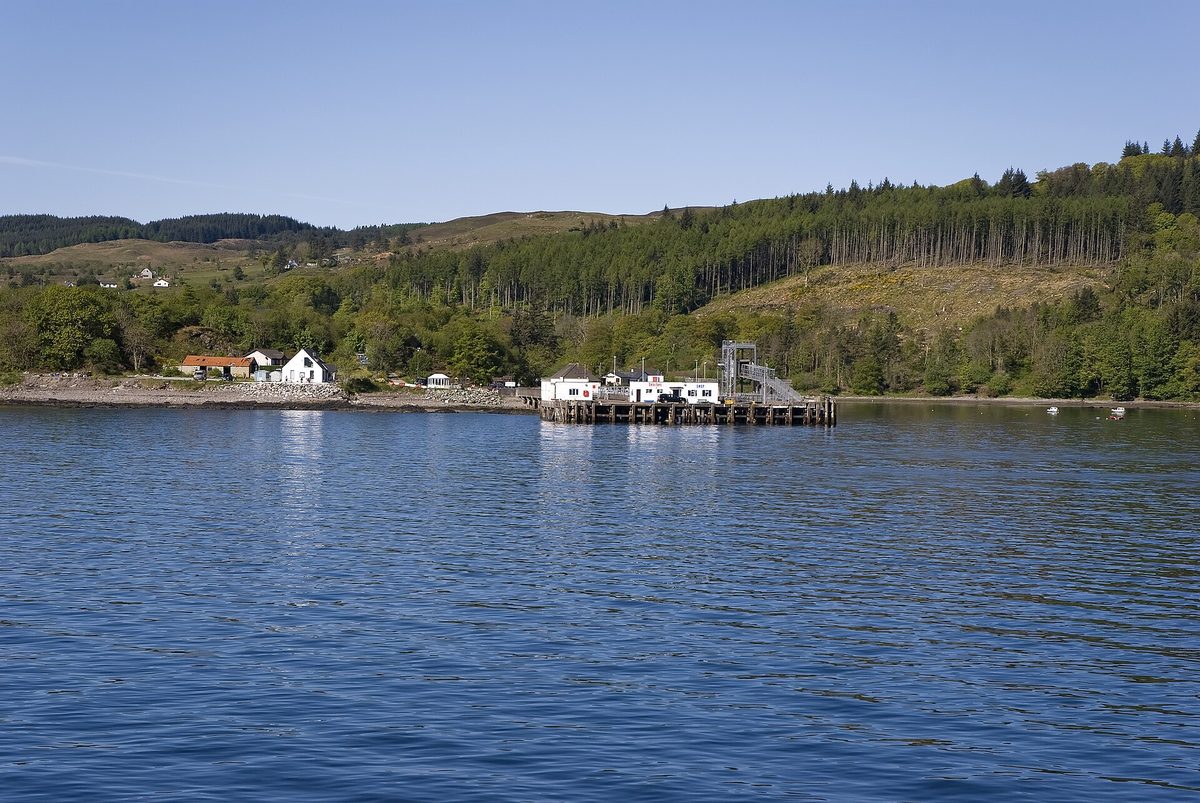
This is the one. The Glenelg to Kylerhea ferry is run by the Isle of Skye Ferry CIC, a social enterprise, using the MV Glenachulish, the world’s last surviving manually operated turntable ferry. The deck physically rotates to load and unload, four cars at a time, and the crew do it by hand.
The boat crosses the Kylerhea narrows, and the operator allows no more than fifteen minutes for the trip. Otters live in these narrows. Seals are routine. On a good day the tide rips through the gap fast enough that the ferry visibly crabs sideways against it.
A car with up to four passengers costs £20 single or £30 return, a foot passenger £5 single, and a cyclist with bike £6 single or £10 return. You pay on board, by card or cash, and you cannot book. The season normally runs from April to mid-October, seven days a week, between 10am and 6pm, with a crossing every 20 minutes or as required. Bad weather closes it, and signs at the road junctions tell you before you commit to the drive.
The approach is part of the appeal and also the catch. Leaving the A87, you climb Mam Ratagan, a steep pass that is single track for much of the way, with the bends sharpening and the gradient stiffening as you near the summit at around 350 metres. In a heavily loaded campervan, in the wet, with a queue behind you, it is a real piece of driving. In a normal car on a dry afternoon it is one of the best half hours in Scotland, and the viewpoint near the top looks straight down Loch Duich to the Five Sisters.
Honestly, if you are travelling between April and October in anything smaller than a motorhome, take this route instead of the bridge at least once. It costs about £20 and it converts a functional transfer into the best part of the day.
Getting to Skye without a car: the routes that actually work
Most guides to this island give the car-free traveller two sentences and a shrug. That is lazy. You can reach Skye by public transport from anywhere in Britain, on scheduled services, without a tour bus, and some of the journeys are among the best rail travel in the country. What you cannot do is improvise. Turn up at a Highland bus stance hoping for something in the next hour and you will be disappointed.
These are the car-free routes that work, starting with the simplest. If you are building a whole trip around this, it pairs closely with our car-free Scotland itinerary, which sequences the islands and Highlands around the same coach and rail spines.
Glasgow to Portree by coach: the one properly direct option
Scottish Citylink run services 915 and 916 from Buchanan Street bus station in Glasgow all the way to Skye, by way of Fort William and Kyle of Lochalsh. In the winter timetable the quickest Glasgow to Portree run takes six hours 25 minutes; carry on to the end of the line at Uig pier and you are looking at about seven hours.
There are typically three departures a day in summer and fewer in winter. It is a single ticket, a single seat, no changes and no connection anxiety, and the coach has a toilet and decent windows. For a lot of people this is simply the answer, and the fact that it goes past Loch Lomond, through Glencoe and along the length of Loch Cluanie means the six and a half hours pass more pleasantly than the number suggests.
Book ahead. Fares on Citylink are cheapest bought early and the summer services on this corridor genuinely fill, particularly the morning departure and anything on a Friday. Do not assume you can walk up at Buchanan Street in August and get a seat.
Two practical notes. The coach stops in Fort William for long enough to buy food, which is worth knowing because there is not much between there and Skye. And it drops at Somerled Square in the middle of Portree, not on some ring road, so you can walk to your accommodation.
Edinburgh to Skye: there is no direct service, and that is fine
Nothing runs direct from Edinburgh. Every route involves one change, and the choice is essentially which city you change in.
Via Inverness is usually best. Take a ScotRail service from Edinburgh Waverley to Inverness (times and fares are on ScotRail’s site), then pick up the Citylink 917 to Portree. In the winter 2026/27 timetable it leaves Inverness at 08:30, 13:15 and 17:45, reaching Portree at 11:50, 16:30 and 20:57; the times change with the season, so check Citylink for your date. Allowing for a sensible connection, the trip takes a full day.
Via Glasgow works too. Take the train from Edinburgh to Glasgow Queen Street, then walk across to Buchanan bus station and join the 915 or 916 as above. The total comes to more than seven hours, but you only have one connection to worry about and the coach leg is a single unbroken ride.
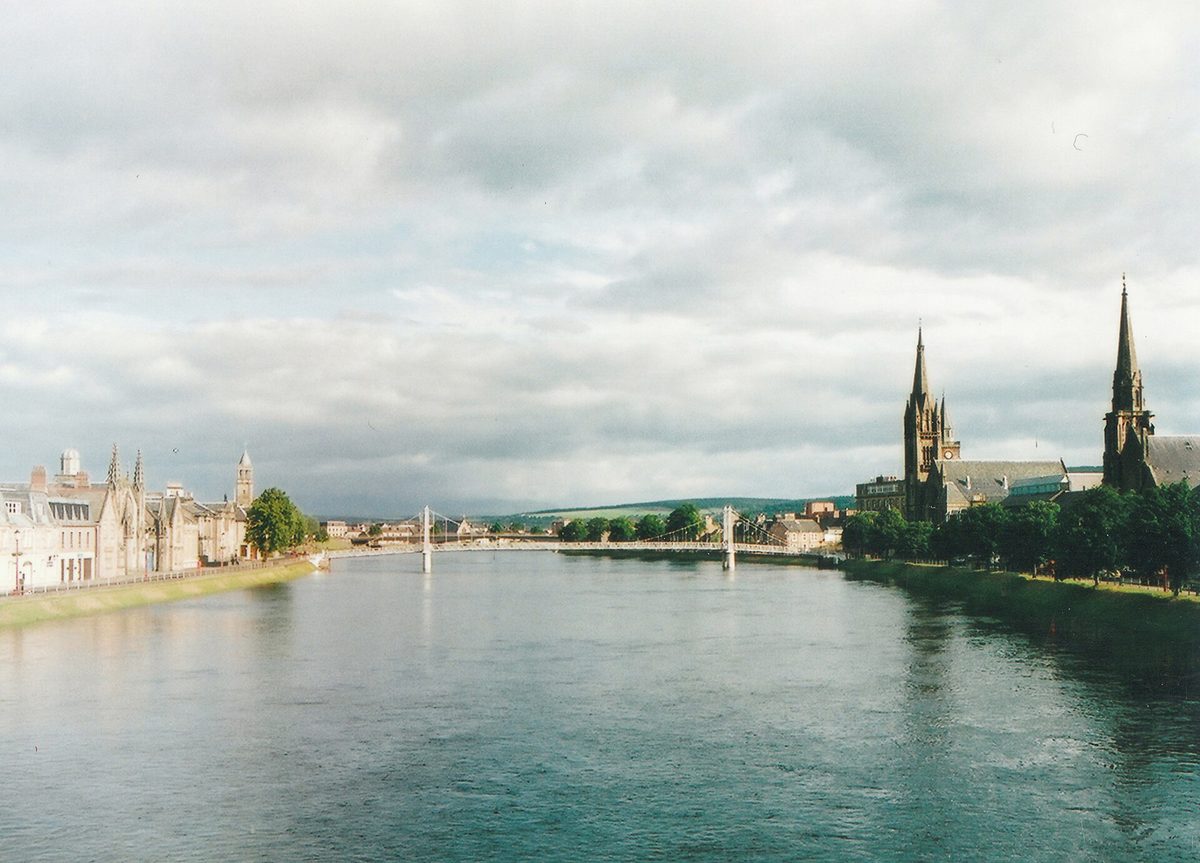
The critical thing on the Inverness route is the connection window. In winter there are only three coaches a day. If a delayed train makes you miss the last one, you will need a taxi, a lift or a bed in Inverness. Book a train that leaves a generous margin before the coach: spare time in the city costs far less than an unplanned night there. Use the time to walk down to the river, or if you have a longer gap, our Loch Ness and Inverness guide covers what is genuinely worth doing on foot from the station.
Coming from further south, note that the same logic applies with more force. From London, the sensible pattern is an overnight or early train to Edinburgh or Glasgow, a night there, then Skye the following day. Trying to do London to Portree in one calendar day is theoretically possible and practically miserable.
The Kyle Line: the best train journey to the island’s doorstep
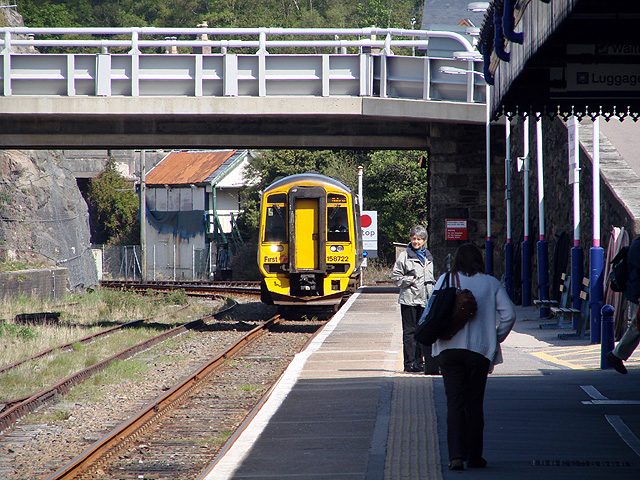
ScotRail’s Kyle line runs 63 miles from Dingwall to Kyle of Lochalsh, about 82 miles from Inverness in all, and the journey takes between two and a half hours and two hours 45 minutes in a two-carriage Sprinter. There are four departures each way Monday to Saturday, with a seasonal Sunday service that runs a couple of times a day in summer and not at all in winter.
It is a genuinely great railway. The line climbs out of the Beauly Firth, runs west through Garve and Achnasheen across empty moorland, drops down to the sea at Strathcarron and then runs beside Loch Carron on the way to Kyle, with the Applecross hills on one side and Skye filling the view ahead. It belongs in the same conversation as the West Highland Line, and it is far quieter. Our roundup of Scotland’s best scenic train journeys goes into what to look for from each seat.
The catch is the last mile. Kyle of Lochalsh station is on the mainland side of the bridge. There is no railway on Skye at all. The Citylink 915 and 917 coaches stop in Kyle and carry on over the bridge to Portree, so the coach is the simple way across. The bridge does have a footway and people do cross on foot, but with traffic beside you and wind coming off the loch, it is no walk to attempt with luggage.
One more reason to take this line: it stops at Plockton, a sheltered little harbour village with palm trees growing in the front gardens thanks to the Gulf Stream. If your coach connection at Kyle does not work, breaking the journey there for a night is a far better outcome than sitting in a waiting room, and it leaves you a short hop from Kyle of Lochalsh, at the mainland end of the Skye Bridge, the following morning.
Plan the connection before you buy the train ticket. The 917 calls at Kyle on its way from Inverness to Portree, so you can take the train out for the view and pick up the coach at Kyle, or take the coach out and the train back.
The West Highland Line and the Mallaig ferry
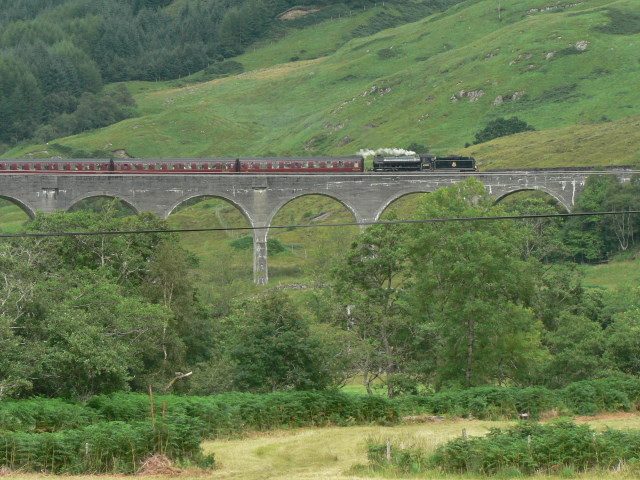
This is the scenic route and, for a certain kind of traveller, the only route worth considering. ScotRail run direct trains from Glasgow Queen Street to Mallaig, over Rannoch Moor, past Ben Nevis, through Fort William and across the Glenfinnan Viaduct. At Mallaig you walk from the station to the ferry terminal in under five minutes and take the CalMac boat to Armadale.
Total Glasgow to Armadale is roughly six hours including the crossing. From Edinburgh, add the Glasgow connection and call it seven.
The viaduct is the bit everyone knows, and yes, it is the one from the films. The steam service that runs the same tracks in summer is a separate ticketed operation and covered properly in our Glenfinnan Viaduct and steam train guide, but the scheduled ScotRail train crosses it too, for the price of an ordinary ticket, and nobody tells you that.
The problem with this route is what happens after Armadale. You land on the Sleat peninsula in the far south of Skye, and onward public transport from there is thin. Stagecoach’s 52 runs between Portree and Broadford on weekdays, but its current timetable does not serve Armadale, so work out how you will cover the stretch from the pier before you book. Without a bus from the pier, you need a taxi, a lift, or a bed in Sleat.
This route suits you if you are staying in the south of the island, being picked up, or have booked accommodation in Armadale or Ardvasar for the first night. Do not rely on it to reach Portree at the weekend.
Overnight from England: the Caledonian Sleeper
If you are starting from London or the English Midlands, the Caledonian Sleeper changes the arithmetic completely. The Fort William portion, known informally as the Deerstalker, leaves Euston in the evening and arrives at Fort William around ten in the morning, having spent the last few hours crawling through Rannoch Moor at breakfast time. From Fort William you pick up the Citylink coach north and are in Portree in the early afternoon.
That turns a two-day slog into one travel day plus a night you would have spent in a bed anyway. It is not cheap, and the cheapest seated option is a long night, but for a week’s holiday it is often the best value decision on the whole trip. Book as far ahead as you can; the berths on this train sell out months out in summer.
The alternative is the Inverness portion of the same sleeper, which gets you to Inverness in time for the first 917 coach of the day. On paper that is faster. In practice the Fort William route is far more scenic and the Inverness route gives you a very early start.
Once you are on Skye: the honest state of the bus network
This is where car-free trips to Skye go wrong, and it has nothing to do with getting there.
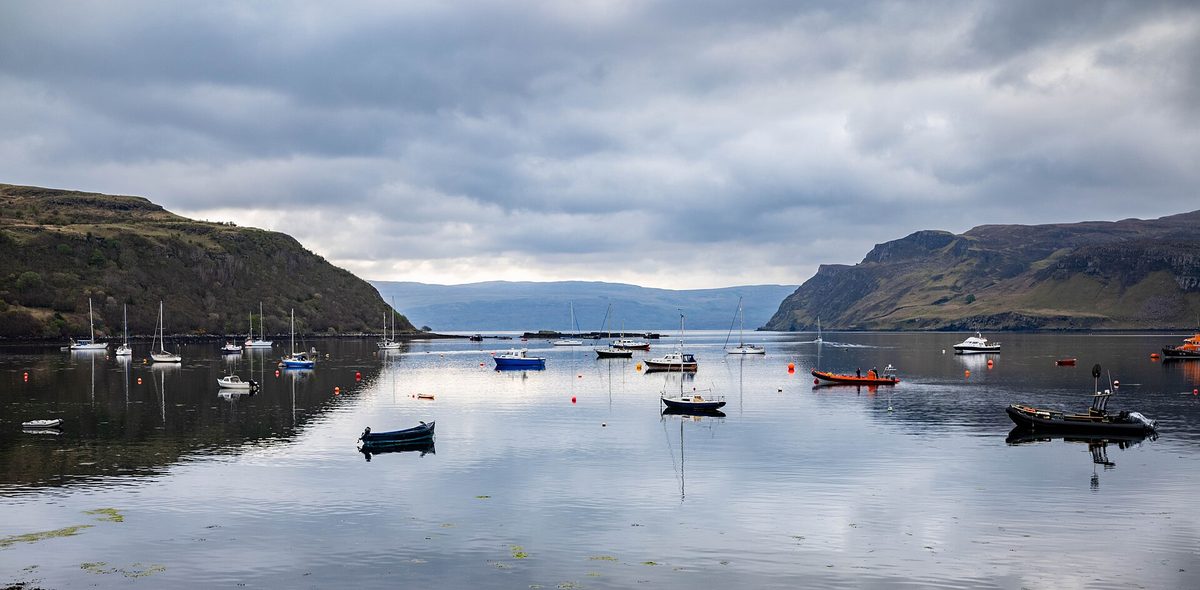
Stagecoach run the island’s buses, radiating from Somerled Square in Portree. The 52 heads south to Broadford. The 56 runs west towards Dunvegan and Glendale. The 57 services go north from Portree to Uig and Flodigarry and round the Trotternish loop by way of Staffin. The main Portree to Broadford corridor is reasonably served because the Citylink coaches use it too. Everything else is a school-and-shopping network that happens to be useful to tourists rather than one designed for them.
What that means in practice: several routes run Monday to Friday only. Sunday service across the island is minimal to non-existent on many routes. Frequencies on the western and northern branches can be two or three journeys a day, timed for islanders getting to Portree in the morning and home in the afternoon, which is exactly the wrong shape for a visitor wanting to reach a viewpoint and come back.
The good news is that the headline sights are better served than the rest. The 57A up the Trotternish ridge stops at the Old Man of Storr car park, so the island’s best-known walk is reachable by bus if you plan around the timetable rather than against it. For the Quiraing, check how close the loop bus gets to the start of the walk before you rely on it. The Fairy Pools at Glen Brittle are harder, because the road in is a long single-track spur with very limited service.
My honest advice for a car-free Skye trip: base yourself in Portree, accept that you will not see everything, book one guided day out to cover the places the buses do not reach, and treat the rest of the island as a reason to come back. That is a better holiday than four days of watching the clock. The same principle underpins our thinking on choosing a Highland base town, and it applies double on an island.
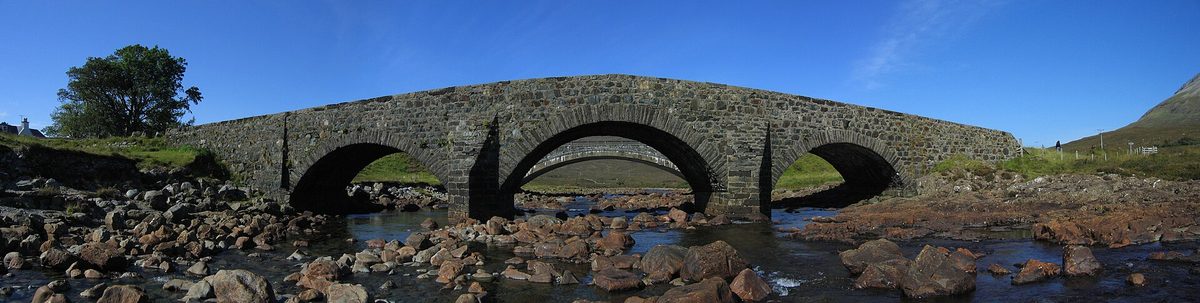
Driving to Skye: the three approach routes and what they are really like
Driving is still how most people arrive, and the flexibility is worth a lot on an island where the weather turns on a sixpence and the best light can be at nine in the evening. But the drives are longer than the mileage suggests, and the A87 in particular does not behave like a trunk road.
The A87 is the road that matters. It runs west from Invergarry on the Great Glen, past Loch Garry and Loch Loyne, along the full length of Loch Cluanie, down through Glen Shiel under the Five Sisters, past Eilean Donan Castle at Dornie, over the Skye Bridge and on up the island to Uig. Almost every route to Skye funnels onto it eventually.
Edinburgh to Skye by car
Roughly 230 miles to Portree. Realistically, with a coffee stop, a photograph stop and one unplanned stop behind a caravan, budget seven hours if you want to arrive in a good mood.
Two sensible routes. The northern route takes the A9 to Inverness, then the A82 down the west side of Loch Ness to Invermoriston, then the A887 and A87 west. It is the fastest and the most consistently dual-carriageway for the first half. The western route goes M9 and A84 to Callander, up past Loch Lomond on the A82, through Glencoe and Fort William, then north to Invergarry and west on the A87. Slower, considerably more dramatic, and much better as a holiday.
If you have the time, take the western route out and the northern route back, or the reverse. It adds perhaps an hour of driving across the whole trip and roughly doubles what you see.
Glasgow to Skye by car
Around 216 miles to Portree; allow five to six hours, longer when the roads are busy. The drive is simply better than the Edinburgh one. Loch Lomond, Rannoch Moor, Glencoe, Fort William, the Great Glen, then west. It is one of the great British drives and the reason people come back.
Be realistic about the A82 in summer. It is single carriageway for most of its length, it carries coaches, timber lorries and a very high proportion of visiting drivers who are not confident on it, and overtaking opportunities are limited. Five hours becomes six and a half without anything going wrong.
Inverness to Skye by car
About 110 miles to Portree, around two hours 45 minutes, and much the easiest of the three. The A82 down Loch Ness is scenic if slow, and once you turn west at Invermoriston the road opens out and the traffic thins dramatically.
This is why so many people base themselves in Inverness for a Skye trip. It is a manageable day trip in a way that Edinburgh is not, though I would still argue for staying at least one night on the island. Two nights on Skye with the rest of the week based in Inverness is a perfectly sensible shape for a first Highland trip.
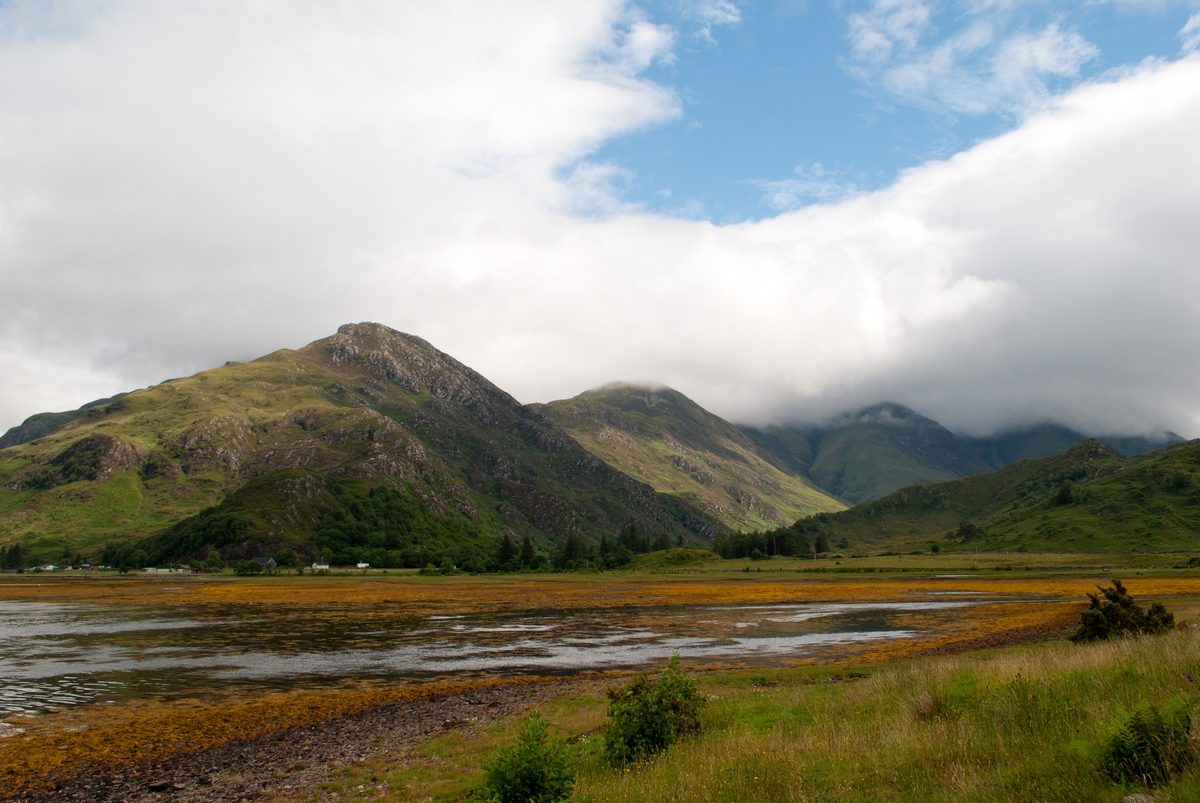
Where to stop, and where the last decent fuel is
This is the practical bit that most guides skip. Fuel on and around Skye is not scarce exactly, but it is scattered, expensive relative to the central belt, and a lot of it keeps shop hours rather than motorway hours.
Coming from the south, Fort William is the last large town for fuel and supplies. After that you have limited options at Invergarry and Invermoriston, then a very long stretch along Loch Cluanie and through Glen Shiel with nothing at all. There are filling stations in the Shiel Bridge and Inverinate area and at Kyle of Lochalsh, but several operate business hours and some do not open at weekends.
On the island itself, Broadford and Portree are the reliable options, with smaller stations at Uig, Dunvegan and Kyleakin. Even the ones advertised as long-hours have been known to close unexpectedly when staffing is tight, and there have been stretches where a station was out of action for over a week.
Fill up at Fort William or Inverness whatever the gauge says, and never let the tank drop below a quarter once you are west of Invergarry. It costs you five minutes and removes an entire category of problem. The same applies to food, cash and any medication you actually need. Fort William and Inverness have the big supermarkets, and there is a Co-op supermarket on Bridge Road in Kyle of Lochalsh, beside the A87 approach to the bridge.
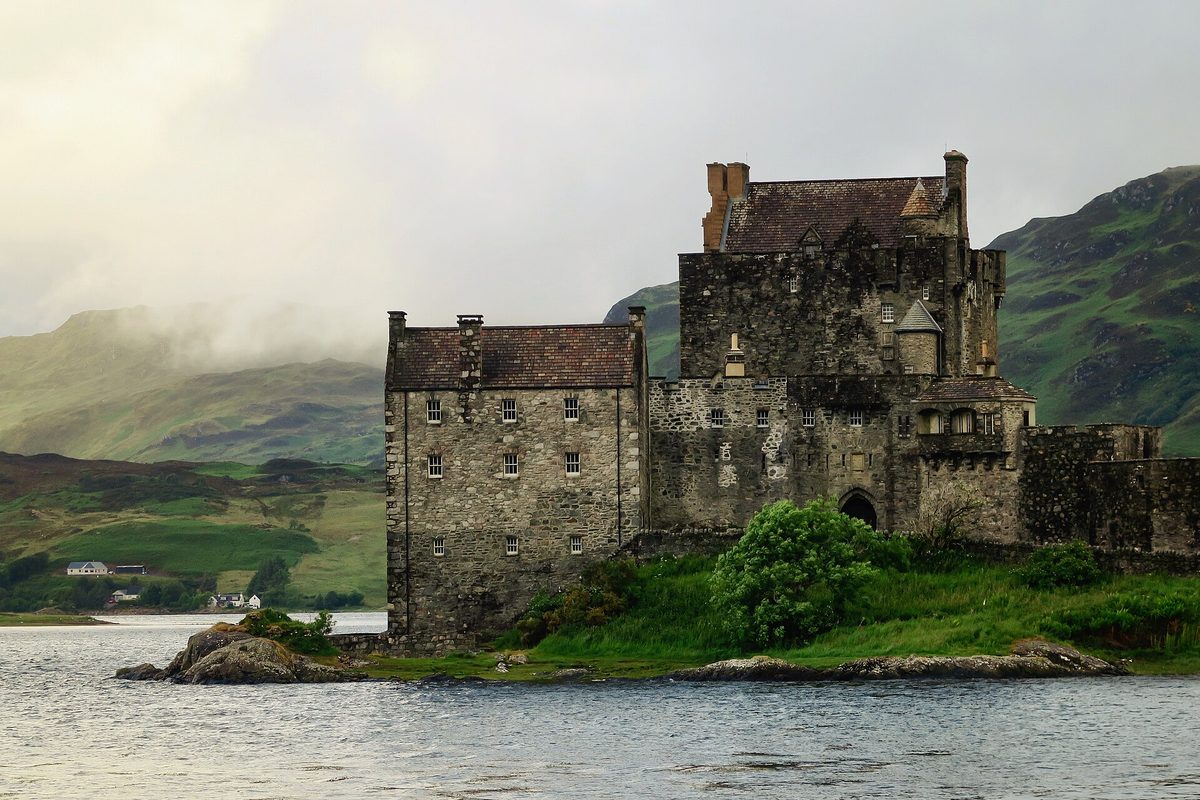
Worth a stop on the way regardless: Eilean Donan Castle at Dornie sits directly on the A87 about eight miles short of the bridge, and there is a large car park. Even if you do not go in, it is the best leg-stretch on the route, and the walk out towards the causeway takes five minutes.
Arriving after dark, and why winter is harder than people expect
I want to be direct about this, because it is the single most underestimated part of getting to Skye.
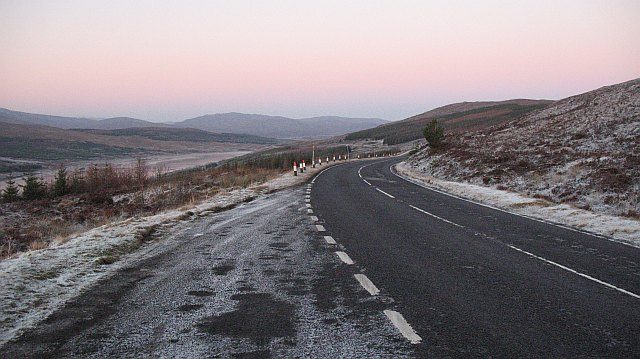
The A87 west of Invergarry is unlit for tens of miles. There are no cat’s eyes on some sections, no hard shoulder worth the name, and long stretches with a loch on one side and a rock face on the other. In daylight it is glorious. At night in November, in rain, with headlights coming the other way, it is genuinely demanding driving and it is slower than the sat nav thinks by a wide margin.
Then there are the deer. Red deer come down off the higher ground in autumn and winter looking for grazing, and the A87 corridor has a serious deer collision problem. NatureScot research on this route found that reported collisions were a small fraction of the number of carcasses actually recovered, which tells you the real frequency is much higher than the statistics suggest. They appear without warning, they often travel in groups, and they do not reliably run away from headlights. Slow down at dawn and dusk, and if you see one at the roadside assume there are three more you have not seen.
Add the practical winter facts. In late December, daylight in this part of Scotland runs roughly from quarter to nine in the morning to half three in the afternoon. That is under seven hours. A five-and-a-half-hour drive from Edinburgh that starts at ten o’clock finishes in the dark. Snow gates on the A87 and the surrounding roads do close in bad conditions, and high winds occasionally close the Skye Bridge to high-sided vehicles, which is the one time the ferries do not help you either because they are shut for the season.
None of this is a reason to avoid winter. Skye in January, with snow on the Cuillin and nobody at the Storr car park, is worth the effort, and our guide to Scotland in winter makes the case properly. It is a reason to plan a shorter driving day, aim to arrive by mid-afternoon, and check Traffic Scotland and the Met Office before you set off rather than after.
Driving on the island once you get there
Skye is bigger than it looks on a map. Portree to Dunvegan Castle is about 35 minutes by car, longer with traffic or stops. Portree to Elgol, for the Cuillin boat trips, is over an hour on roads that get progressively narrower. The Trotternish loop takes the best part of a day if you actually stop.
A lot of the island is single track with passing places, and the etiquette is not optional. Passing places are for passing and for letting faster traffic overtake, not for parking while you photograph a sheep. Pull in on your left; if the passing place is on your right, stop opposite it and let the other car use it. Locals drive these roads to get to work and they are entitled to get past you.
The other reality is parking. At the Old Man of Storr, the Quiraing and the Fairy Pools, the car park is the constraint, not the walk. In July and August they fill by mid-morning, and the verges are increasingly signed and enforced. Arriving before nine or after four solves it. The Sligachan junction, where the Portree and Dunvegan roads meet under the Cuillin, is a useful mental waypoint for judging where you are on the island.
Flying, island-hopping and the routes people forget
Can you fly to Skye?
No, not on a scheduled service. There is an airfield at Ashaig near Broadford, coded SKL, but scheduled passenger flights ended in the 1980s and it currently handles no commercial services. Proposals to reopen it surface periodically and have not yet come to anything.
The nearest useful airport is Inverness. Portree is about two hours 45 minutes’ drive from the city, a little more from the airport, which lies east of town. The Citylink 917 leaves from Inverness itself, and a Stagecoach bus links the airport to the city. Glasgow and Edinburgh are both five hours or more by road, which is a long transfer after a flight but perfectly manageable if you break it.
If you are flying into Scotland specifically for Skye, Inverness is worth the extra connection almost every time. It saves you the entire central belt to Fort William section, which is the slowest part of the journey.
Arriving from the Outer Hebrides
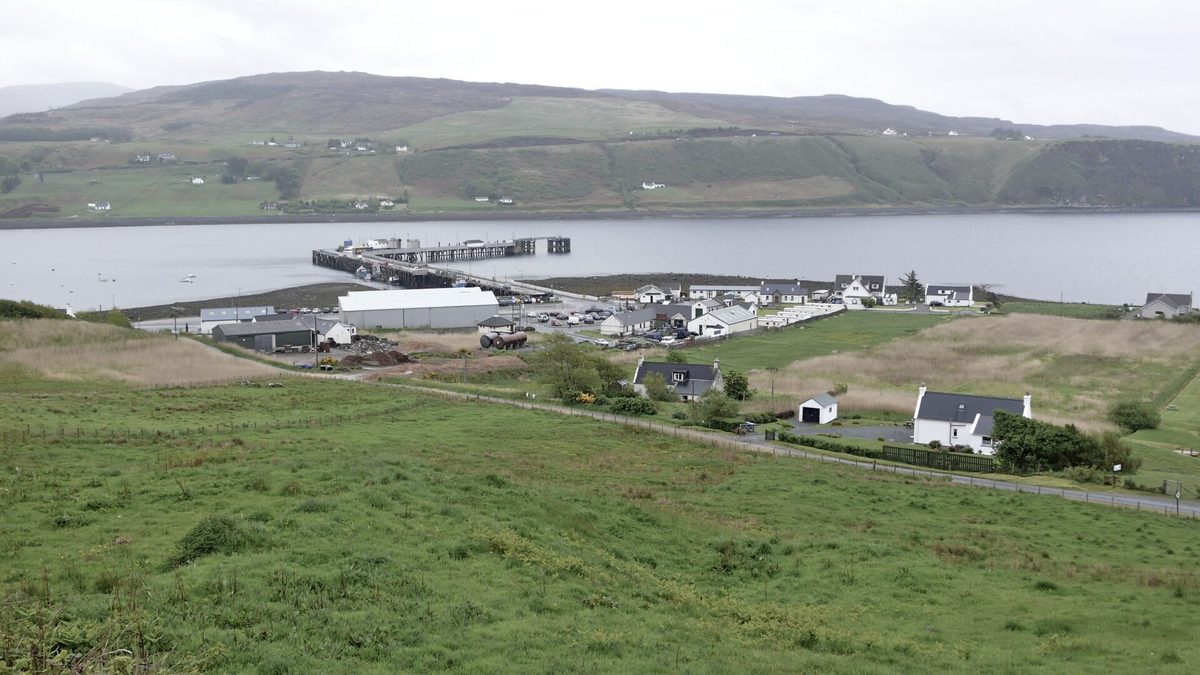
This is the route people forget and it opens up the best island itinerary in Scotland. CalMac sail from Uig, on Skye’s north-west coast, to Tarbert on Harris in about an hour 40, and to Lochmaddy on North Uist in about an hour 45. Both are bookable routes where your ticket is tied to a specific sailing, so advance booking matters, especially with a vehicle in summer.
The obvious loop: Oban to Barra or South Uist, drive north up the Uists and Harris, then cross to Skye at Uig and leave over the bridge. You end up seeing three very different island landscapes and never backtrack. Our guide to the Scottish islands sets out which combinations are worth the ferry fares, and Oban is the natural southern gateway for it.
Uig is a short drive north of Portree on the A87, under half an hour even by bus. If you are arriving there on a late sailing, be aware that the village itself is small and accommodation is limited, so book before you sail rather than after.
Guided day tours and small-group trips
I am generally sceptical of Skye day tours from Edinburgh, for reasons I will come to. From Inverness, they make far more sense, and from Portree itself a half-day guided trip is often the single best purchase a car-free visitor makes, because it reaches Elgol, Neist Point and Glen Brittle in one go.
Multi-day tours from Edinburgh and Glasgow, typically three to five days, are a reasonable option if you do not drive and want the western Highlands as well as the island. You trade flexibility for coverage. The thing to check before booking is how many nights are actually spent on Skye rather than in Fort William or Inverness, because that varies a lot between operators selling near-identical itineraries.
What to book, and how far ahead
Skye has a booking rhythm that catches people out. Some things need reserving months ahead; others genuinely do not.
Accommodation is the binding constraint. For July and August, book by February or March. Portree in particular sells out early and the remaining rooms get expensive fast. This is the reservation that determines whether your trip happens as planned, and it is worth making before you book any transport at all. If Skye prices look impossible, Kyle of Lochalsh and Plockton on the mainland side are usually cheaper and only a short drive from the bridge.
The Mallaig to Armadale ferry needs booking, including as a foot passenger. CalMac are explicit about this. Vehicle spaces on peak summer sailings go early, and campervans and motorhomes have a separate standby process worth reading before you turn up.
Uig to Harris and North Uist need booking further ahead again, particularly with a vehicle in summer. These are the crossings where people get stuck.
Rail advance fares open around twelve weeks out and the difference between an advance ticket and a walk-up fare on the Edinburgh to Inverness or Glasgow to Mallaig runs is substantial. Seat reservations on the West Highland Line are worth having in summer; the trains are short and they fill.
Citylink coaches are cheaper booked ahead and the Skye services do sell out on peak summer days. Book at least a few days out, more in August.
The Glenelg ferry cannot be booked at all. You turn up, join the short queue, and pay on board. In peak season you might wait for the next sailing. That is the whole system and it works.
Hire cars need booking early and picking up early. Inverness, Glasgow and Edinburgh airports all run tight on vehicles in summer and prices climb steeply. There is limited hire on Skye itself and it is not something to rely on at short notice.
For the wider picture of when to come at all, our guide to the best time to visit Scotland is the one to read before you fix dates, and if midges are a concern for a summer trip, they are worth understanding before you book rather than after.
Roughly what the journey costs
Prices move, so treat all of this as an order of magnitude rather than a quote, and check each operator before you book. But the relative costs are stable and worth understanding, because the cheapest option is not the one most people assume.
The single coach ticket from Glasgow to Portree, booked a few weeks ahead, is usually the cheapest way to reach the island for one person, and it is often cheaper than the fuel alone for the same trip by car. Booked on the day in August, it is a different number entirely.
Rail is the most variable. An advance fare from Edinburgh to Inverness bought twelve weeks out can be a fraction of the walk-up price, and the same applies on the Glasgow to Mallaig run. Buying rail tickets late is where car-free trips to Skye stop being good value.
Driving flips the maths as soon as there are two or more of you. Roughly 470 miles round trip from Edinburgh, plus around £13 for the Armadale ferry if you use it and around £20 for the Glenelg crossing, split between four people, undercuts four coach tickets comfortably. Add a hire car and it swings back the other way, particularly in July and August when Highland hire rates climb hard.
Two costs people forget entirely. Ferry fares for a vehicle do not include the driver, who is charged as a foot passenger on top. And accommodation on Skye in peak season is expensive enough that a night saved by travelling efficiently is often worth more than any transport saving you might make.
Getting to Skye from everywhere else in Scotland
Edinburgh, Glasgow and Inverness cover most arrivals, but plenty of people reach Skye mid-trip from somewhere else entirely. These are the connections worth knowing.
From Fort William
The best mainland base for Skye that nobody treats as one. It is just over 100 miles to Portree and roughly two and a half hours by car, north on the A82 to Invergarry and then west on the A87. By coach, the Citylink 915 and 916 come through Fort William on their way north, so you can join the Glasgow to Skye service partway and be in Portree in around three hours without changing.
Fort William is also on the West Highland Line, which means you can arrive by sleeper from London, spend a night, and continue to Skye the next morning by either coach or the Mallaig train and ferry. For a car-free trip that is the most efficient staging post in the western Highlands.
From Oban
About three to three and a half hours by road, north on the A828 and A82 through Ballachulish and Fort William, then the usual A87. There is no direct coach; you change at Fort William.
Oban’s real value here is as the other end of an island loop. Sail from Oban to the Outer Hebrides, work north, and come back to the mainland via Skye. That is a substantially better week than driving to Skye and back.
From Aviemore and the Cairngorms
About three and a quarter hours by car, north on the A9 to Inverness and then west. By public transport, take the train or coach to Inverness, then the Citylink 917 to Portree.
It is a long way for a day trip and a very easy second leg of a Highlands week. If you are already in Aviemore and the Cairngorms, treat Skye as its own three-night block rather than a bolt-on.
From Aberdeen and the north east
By car, the route runs through Inverness and then west. By rail, take the train to Inverness and pick up the 917 there, timing the train against the coach departures. Total journey time is comparable to coming from Edinburgh.
From the North Coast 500 and the far north west
This is the connection people find late and wish they had planned for. From Ullapool it is close to three hours south to Portree via Garve and Kyle of Lochalsh. From Lochinver or Durness, add a good deal more.
Skye sits just off the western end of the classic loop, so it works well as either a prologue or an epilogue to the North Coast 500 rather than something you squeeze into the middle. Combining the two in a single week is the most common overreach I see in Highland trip planning.
Bikes, campervans, dogs and the things the timetables do not mention
Every operator has rules that only surface when you turn up with the wrong thing. These are the ones that catch visitors.
Bicycles
Bikes travel free on the CalMac crossing from Mallaig to Armadale, which makes cycle touring to Skye genuinely cheap. Groups of six or more bikes are asked to contact the port office in advance, and you may be split across sailings. On the Glenelg ferry a cyclist and bike cost £6 single or £10 return.
Trains are the constraint. ScotRail carry bicycles free but the space on West Highland Line and Kyle Line services is very limited, and reservations are strongly advised and sometimes required. Two-carriage trains have very few bike spaces and they go quickly in summer.
Long-distance coaches are the hard no. Citylink services generally cannot take a full-size bicycle, only folding bikes that fit standard luggage rules. If your plan is coach out and cycle back, that plan does not work.
Campervans and motorhomes
CalMac price by length, and the jump is steep: a motorhome under six metres crosses to Armadale for the same fare as a car, while one over eight metres costs roughly three times that. There is also a separate standby process for motorhomes, campervans and caravans that is worth reading before you plan around a specific sailing.
The Glenelg ferry publishes clear limits: broadly three tonnes per axle, no more than ten tonnes total, a maximum of 13 metres long and four metres wide, and anything non-standard should be cleared with them before you arrive. A small campervan costs £25 and a motorhome £40.
More important than either fare is the Mam Ratagan road to Glenelg. Single track, hairpinned, with a sustained climb steeper than most people expect. A long wheelbase van on that pass in the wet, with a queue behind, is not a relaxing twenty minutes. If you are driving something large, take the bridge.
Dogs and assistance needs
Dogs are well catered for on the ferries and on ScotRail, and Skye is a good island for them. Coach policies vary by operator and are stricter, so check the current terms rather than assuming. Assistance dogs are accepted throughout.
If you need passenger assistance, arrange it in advance with each operator separately. A rail booking does not tell the ferry company anything, and a small two-carriage train at a rural station is a different proposition from a staffed city terminus. CalMac, ScotRail and Citylink all have assistance procedures and all of them work better with notice.
Luggage, and the last thing nobody warns you about
Citylink coaches take hold luggage within standard limits, but the Skye services are long-distance runs with a lot of people carrying rucksacks and cases, and space is finite on peak departures. There is no reliable left luggage facility in Portree, so if you are arriving early and your accommodation is not ready, you are carrying your bag around town. Most guesthouses will hold it if you ask, and asking in advance is better than asking on the doorstep.
The honest bit: what goes wrong and what to skip
Skye is not a day trip from Edinburgh
I will be blunt, because a lot of operators are not. A Skye day trip from Edinburgh is a coach leaving around seven in the morning and returning around nine or ten at night. Somewhere in the middle of that fourteen or fifteen hours you get perhaps three hours on the island, split between two or three photo stops and a lunch break in Portree.
That is the better part of eleven hours in a coach seat to spend three hours somewhere. You will see the Storr from the road, you will not walk to it. You will cross the bridge twice. You will remember Glencoe better than Skye, because you passed it in good light on the way out and were asleep on the way back.
If a day is genuinely all you have, do it from Inverness instead, where the round trip is closer to five and a half hours of driving and you get a proper day on the island. Or spend that day somewhere closer that rewards it, which is what our day trips from Edinburgh guide is for. Skye deserves two nights minimum, and three is where it starts to make sense.
The mistakes I see over and over
Assuming a bridge means no planning. The bridge removed the crossing problem and people extrapolate from that to the whole journey. The A87 is still a long single-carriageway road and Portree is still four hours from the nearest city of any size.
Booking the last connection of the day. With four coaches and four trains, one delay ends your day. Build in a buffer at every change.
Arriving on a Sunday without a car. This is the classic. The Citylink coaches run seven days a week, but the local Stagecoach network largely does not, so you can reach Portree on a Sunday and then be stuck in it. Arrive on a weekday if you possibly can.
Trusting a single ferry timetable check. Tidal amendments and maintenance changes are published for specific dates and they are easy to miss. Check again in the week you travel.
Underestimating on-island driving times. People book accommodation in Dunvegan and plan sunrise at the Quiraing, which is an hour and twenty minutes away on roads you do not want to rush in the dark.
Treating the drive as dead time. This one costs you the most. Glencoe, Glenfinnan, Eilean Donan and Glen Shiel are on the way, and if you set off at nine to arrive at two you will blow past all of them. Give the journey a day and it becomes part of the holiday.
What underwhelms
The Skye Bridge itself. It is a fine piece of engineering and a genuinely important bit of local history, but as an arrival experience it is thirty seconds of concrete parapet. The Glenelg ferry and the Mallaig crossing both feel like arriving somewhere. The bridge feels like a bypass.
Kyleakin, immediately over the bridge, is a quiet village that lost its purpose when the ferry stopped and has not entirely found a new one. Do not plan a meal stop there without checking what is open.
And the A87 through Glen Shiel, which is one of the finest stretches of road in Britain, has almost nowhere good to stop. The lay-bys are small, badly placed and often full. Take the Mam Ratagan turn-off to Glenelg if you want a viewpoint that actually delivers.
Which route suits you: a straight answer
Enough options. Here is what I would tell a friend, depending on who they are.
If you have a car and a week
Drive up from Glasgow or Edinburgh on the A82 through Glencoe and Fort William, cross to Skye on the Mallaig to Armadale ferry, spend three or four nights on the island, and leave over the Skye Bridge heading east on the A87 towards Inverness. No repeated roads, three different landscapes, and the ferry gives the trip a proper beginning. Add the Glenelg crossing as a day out if the timing works.
If you have a car and only a long weekend
Fly or train to Inverness, hire a car there, and drive the A82 and A87 west. You save four hours of driving each way compared with starting in the central belt, and you can be on the island by lunchtime on day one. Base in Portree or Broadford and do not attempt the whole island.
If you do not drive and want it simple
The direct Citylink coach from Glasgow Buchanan Street to Portree. One ticket, one seat, six and a half hours, no connections to miss, and it drops you in the middle of town. From Edinburgh, take the train to Glasgow first. This is the option with the fewest ways to go wrong.
If you do not drive and the journey matters to you
The West Highland Line to Mallaig and the ferry to Armadale outbound, and the Kyle Line back to Inverness at the end. You get two of Britain’s best railway journeys and a sea crossing, and you avoid retracing anything. Just check the Armadale onward bus for the day you land, and if it does not work, book your first night in Sleat rather than Portree.
If you are coming from the Outer Hebrides
Take the Uig ferry from Tarbert or Lochmaddy, book it well ahead, and plan to spend the first night within reach of Uig rather than driving on tired. Skye is the natural end of that itinerary rather than the start.
If you only have one day
Do it from Inverness, not Edinburgh, and accept that you are seeing the Trotternish peninsula and nothing else. Or, better, save Skye for a trip where you can give it three days and go somewhere else instead. Plenty of places within two hours of the city are far more forgiving of a single day.
Frequently asked questions
How do you get to the Isle of Skye without a car?
Take the direct Scottish Citylink coach from Glasgow Buchanan Street to Portree, around six and a half hours with no changes. From Edinburgh, train to Inverness then the Citylink 917, which takes the whole day. The scenic alternative is the train to Mallaig and the CalMac ferry to Armadale. Check current timetables before booking.
Is there a bridge to the Isle of Skye, and is it free?
Yes. The Skye Bridge carries the A87 from Kyle of Lochalsh to Kyleakin and has been completely free since the tolls were removed in December 2004. It is open around the clock all year, though very high winds can restrict high-sided vehicles. No booking, no barrier, no charge in either direction.
How long does it take to get from Edinburgh to the Isle of Skye?
By car, around five and a half hours of driving to Portree, realistically seven with stops. By public transport, expect seven to eight hours with one change, in Inverness or Glasgow. There is no direct train or coach from Edinburgh, and anyone advertising it as a comfortable day trip is understating the travel involved.
Do you need to book the ferry to Skye?
For the CalMac crossing from Mallaig to Armadale, yes, including as a foot passenger, and vehicle spaces sell out in summer. The Uig sailings to Harris and North Uist also need booking. The Glenelg to Kylerhea turntable ferry cannot be booked at all; you turn up and pay on board.
Can you visit the Isle of Skye as a day trip?
From Inverness, yes, at about two hours 45 minutes each way. From Edinburgh or Glasgow it is a fourteen-hour day for roughly three hours on the island, which is a poor trade. Skye rewards at least two nights, and three lets you actually walk somewhere rather than photographing it from the road.
Is there a train to the Isle of Skye?
Not onto the island itself, as Skye has no railway. The two railheads are Kyle of Lochalsh, at the mainland end of the Skye Bridge and two and a half to two and three quarter hours by train from Inverness, and Mallaig, at the end of the West Highland Line from Glasgow, from where the ferry sails to Armadale. Both journeys are outstanding in their own right.
Is it better to arrive by bridge or by ferry?
The bridge is faster, free and available all year. The ferries are more enjoyable and better for building a circular route. If you are visiting between April and October, cross one way by boat and the other by bridge. In winter, the bridge is effectively your only option, since both ferry routes reduce or stop.
What is the last place to buy fuel before Skye?
Fort William if you are coming from the south, Inverness from the east. Between there and the island the options are limited and several keep shop hours rather than staying open late. Kyle of Lochalsh, Broadford and Portree all have filling stations, but do not plan to arrive on fumes at nine on a Sunday evening.
Final thoughts
The journey to Skye is longer than the map suggests and better than you expect. Coach, train and ferry, or car: whichever you choose, it repays the effort.
If you take one thing from all of this, make it the loop. Come in one way and leave another. Use the Mallaig ferry or the little turntable boat at Glenelg for one direction and the bridge for the other, and the travelling stops being the price of the holiday and becomes part of it.
And whatever you do, give yourself the extra night. Skye is not a place you pass through efficiently. Once you are there, the island and the wider Scottish Highlands beyond it will keep you busy for a great deal longer than you have planned for.
Getting here is the easy part; picking your week is harder. Daylight, rainfall, midges and bed supply all swing hard by month, and our guide to the best time to visit Skye puts numbers against each of them.
One more thing about the bridge route: you will pass Eilean Donan Castle at Dornie on the way in. The shoreline view that everyone photographs is free, and late afternoon light suits it far better than the middle of the day, when the coaches arrive.
About the author: This guide was written and is maintained by the ScotlandTourism.org editorial team — travel writers who’ve spent years exploring Scotland’s cities, Highlands and islands, from bagging Munros to chasing the perfect dram. We update our guides regularly to keep prices, opening details and advice current.
Last updated: September 2026. Prices and opening times change — always check the official site before you travel.
Photo credits
All images are used under their respective Creative Commons or public-domain licenses:
- Bridge crossing — W. Bulach, CC BY-SA 4.0, via Wikimedia Commons
- Kintail — Natasa, CC BY-SA 2.0, via Wikimedia Commons
- Loch cluanie — Richard Webb, CC BY-SA 2.0, via Wikimedia Commons
- Eilean donan — George Hiles hilesy, CC0, via Wikimedia Commons
- Kyle station — John Lucas, CC BY-SA 2.0, via Wikimedia Commons
- Glenfinnan viaduct — Chris Downer, CC BY-SA 2.0, via Wikimedia Commons
- Mallaig harbour — habiloid, CC BY-SA 2.0, via Wikimedia Commons
- Armadale — Chris Gorringe, CC BY-SA 2.0, via Wikimedia Commons
- Kylerhea ferry — Prastilak, Public domain, via Wikimedia Commons
- Sligachan — Klaus with K, CC BY-SA 3.0, via Wikimedia Commons
- Portree harbour — rboed*, CC BY 2.0, via Wikimedia Commons
- Uig pier — Anthony O’Neil, CC BY-SA 2.0, via Wikimedia Commons