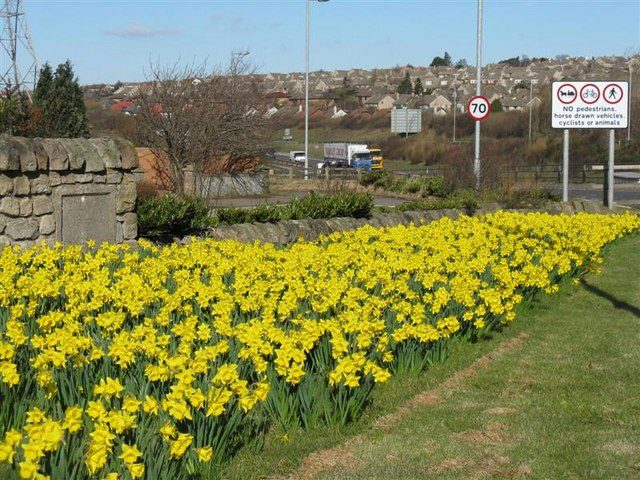
The first time I tried Scotland in spring I got it badly wrong. I booked a week on the west coast in the middle of March on the strength of a photograph of daffodils, then spent three days in horizontal sleet on a single-track road with every restaurant in the village shut until Easter. The next year I went three weeks later, in the back half of April. It was a different country.
That gap is what this guide is about. Spring here is less a season than a switch, and it gets flipped at different times in different places. The clocks change, the ferries move to summer timetables, dozens of seasonal historic sites unlock their gates on the same morning, island guest houses take down the shutters, and daylight climbs from a stingy twelve hours to nearly fifteen inside four weeks. Get your dates right and you get the best value of the year. Get them wrong and you get February with better marketing.
Is spring a good time to visit Scotland?
Yes — from roughly the start of April. Spring brings the driest months of the year, long evenings, low prices and no midges. But the country reopens in stages: late March flips the switch, April tips the odds in your favour, and May is the month you can actually rely on. March in the Highlands is still winter.
If you are weighing spring against the rest of the calendar, our overview of the best time to visit Scotland sets the whole year side by side. What follows is the fortnight-by-fortnight version, because in spring a fortnight genuinely changes the trip.
Scotland in spring at a glance
| Fortnight | Typical high, Edinburgh | Typical high, Highlands | Daylight by the end | What changes | Verdict |
|---|---|---|---|---|---|
| 1–15 March | Around 8°C | Around 7°C | About 11 hr 30 min | Snowdrop season; cities and year-round sites only | Winter with a spring label |
| 16–31 March | Around 9°C | Around 8°C | About 13 hr after the clock change | Clocks forward; CalMac summer timetables; ospreys back; lambing underway | The switch flips |
| 1–15 April | Around 11°C | Around 9°C | About 14 hr | Seasonal historic sites reopen on 1 April; Easter falls here in many years | The odds tip |
| 16–30 April | Around 12°C | Around 11°C | About 15 hr | Puffins ashore; gardens peaking; bluebells starting; high passes reliable | The best-value fortnight of the year |
| 1–15 May | Around 14°C | Around 12°C | About 16 hr | Bluebells at their peak; everything open; still no midges | Spring at full strength |
| 16–31 May | Around 15°C | Around 13°C | About 17 hr | First midges appear in the west; half-term and bank holidays bite | Handing over to summer |
Those temperatures are rounded averages for typical daytime highs, drawn from Met Office climate figures — treat them as the middle of a wide range rather than a forecast. A sunny mid-April afternoon in Aviemore can hit 18°C; the same week can deliver sleet at 4°C. For the full twelve-month picture, we break the numbers down in our guide to Scottish weather month by month.
The switch: how Scotland reopens between March and May
Most spring guides tell you the country is “waking up”. That is true but useless. Here are the actual dates and mechanisms, which is what you need to book against.
The clocks go forward, and the day grows by three hours
British Summer Time starts at 1am on the last Sunday in March. In 2027 that is 28 March; in 2028 it is 26 March. You lose an hour of sleep and gain an evening.
The numbers behind that are more dramatic than people expect this far north. In Edinburgh, 1 March gives you around ten and a half hours between sunrise and sunset. By 31 March, with the clocks changed, it is about thirteen hours and the sun is not setting until roughly 7.45pm. By 30 April you are on about fifteen hours, with sunset near 8.45pm. Go further north and it stretches again: Inverness gains another half hour by late April, and Lerwick in Shetland is closer to sixteen and a half.
What that buys you is a third act to the day. In March you drive to a glen, walk for two hours and drive home in the dark. In late April you can do a full day’s sightseeing, have an early dinner, and still get to a viewpoint for golden hour at half past eight. Nothing else about spring changes the shape of a trip as much as this.
1 April, when the seasonal sites unlock
Historic Environment Scotland runs two seasons, and more than forty of its smaller properties are shut for the winter and reopen on 1 April. Inchcolm Abbey in the Firth of Forth, Smailholm Tower in the Borders, Stanley Mills in Perthshire and the Meigle sculptured stones are all in that category. If your itinerary leans on the quieter, weirder end of the country’s heritage, late March is the wrong side of the line.
The headline properties are different. Edinburgh Castle, Stirling Castle and Urquhart Castle stay open through the winter on shorter hours, so a March trip built around the big names still works — see our round-up of Scotland’s castles for which ones keep year-round hours. National Trust for Scotland properties follow a similar pattern, with many houses reopening across March and April while their gardens stay open all year.
The ferries change gear
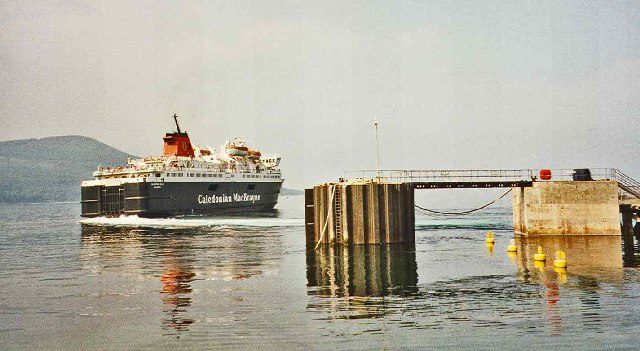
CalMac switches from winter to summer timetables in the last days of March — the 2026 summer timetable ran from 27 March, and 2025’s from 28 March. On the busier routes that means more sailings a day; on the thinner ones it can be the difference between a daily service and a day trip being possible at all.
This matters more than the raw sailing count suggests. A winter timetable to a small island often gives you one crossing in and one out, which forces an overnight. The summer timetable is what makes island hopping work. If you are planning to string together several of the Scottish islands, check whether your dates fall before or after the changeover before you book anything else.
The high passes become reliable again
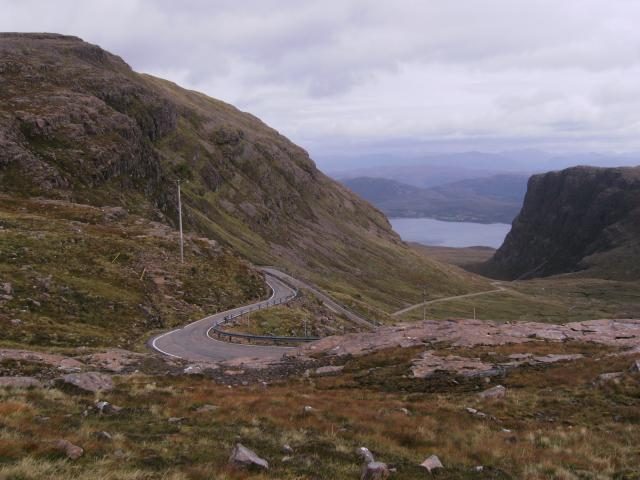
Scotland has a handful of roads that are genuinely seasonal. The Bealach na Bà over to Applecross tops out at 626 metres and closes in heavy snow; the A93 over the Cairnwell at Glenshee is the highest main road in Britain at about 670 metres and is regularly shut or snow-gated in winter; the A939 Lecht road is the one that appears on the news every January.
By mid-April, all three are usually fine. In March they are a coin flip. That is not a reason to avoid March, but it is a reason not to build a March itinerary that depends on any of them — particularly if you are driving the North Coast 500, where the Bealach is one of the signature sections and the diversion round Loch Kishorn adds the best part of an hour.
Scotland in March: winter wearing a spring label
I want to be straight about March, because most pages are not. Meteorologically it is spring. In the Highlands it feels like the tail of winter, and the mountains behave accordingly.
What March actually feels like
Daytime highs of 8–9°C in the cities, a degree or two less inland and on the west coast. Frost most clear nights. Snow above roughly 500 metres is normal and snow at sea level is not unusual, especially in the first fortnight. The wind is the part people underestimate: a 9°C day with a 30mph westerly off the Atlantic feels like 2°C, and it will find the gap between your hat and your collar.
Rain is not the worst of it. March is drier than the autumn months in most of the country. It is the changeability that catches people out — four distinct weather systems in a day, sun to sleet to sun again inside an hour. If you have read our take on what a Scottish winter is really like, early March is essentially that with two extra hours of light.
What March is genuinely good for
Cities. Edinburgh and Glasgow do not care what month it is, and March is when you get museums to yourself, restaurant tables at short notice and hotel rates that will look like a misprint by June. The capital in early March is one of my favourite versions of it: cold, empty, gold-lit in the late afternoon.
Lambing starts. Snowdrops carpet the estate woodlands in February and March, and the Scotland’s Gardens Scheme snowdrop festival opens dozens of private gardens that are shut the rest of the year. The ospreys come back in the last week or so of the month. And it remains, comfortably, part of the cheapest stretch of the year to travel — up until the moment Easter lands.
What you will find shut
Plenty. Seasonal Historic Environment Scotland sites, as covered. A good number of Highland and island restaurants, which close from January and reopen for Easter or 1 April. Small island guest houses. Some distillery visitor centres, though the bigger names on Speyside and Islay generally run year-round — check individual opening hours before you plan a day around whisky distillery visits. Wildlife boat operators on the west coast mostly start in April.
The practical consequence is that a March trip to a remote area needs its evenings planned. In October I have rolled into a Wester Ross village at 7pm and found one hotel still serving. Doing the same in March, I found nothing open for eleven miles.
Scotland in April: the month the odds tip
April is where I would point most first-time visitors who want spring rather than summer. Not because the weather is good — it is a lottery — but because the odds move in your favour and everything else lines up.
Weather and daylight
Typical highs of 11–12°C in Edinburgh and Inverness, a little cooler on Skye and in the higher glens, with nights still dropping close to freezing inland. April and May are usually the driest months across most of Scotland, and the east coast is drier than the west by a wide margin — Edinburgh might see around 40mm of rain across the month while Fort William sees several times that.
The daylight is the real prize. By the last week of April you have fifteen hours of usable light in the Central Belt and closer to sixteen in the far north. That is enough to drive from Edinburgh to Skye, walk somewhere on arrival and still eat before dark, which is simply not possible in March.
Scotland’s Easter weather, and why the date matters more than you think
Easter moves. It can fall as early as 22 March and as late as 25 April, and the difference is enormous. Easter Sunday 2027 is 28 March — the same weekend the clocks go forward, which makes for an unusually early spike. Easter 2028 falls on 16 April, and 2029 on 1 April. Look up the date for your year before you assume anything, because guides written around one year’s calendar quietly mislead you about another.
Whenever it lands, Easter is the first genuine price spike of the year. Scottish school holidays run for roughly two weeks around it, English school holidays often sit slightly differently, and the two together fill Skye, the Cairngorms and Loch Lomond. Rates on popular self-catering cottages can jump by half over that fortnight and the good ones go months ahead. The weather does not improve to match. An early Easter in March gets you March weather at April prices, which is the single worst combination in the Scottish calendar.
My advice: if Easter is early in your year, go the fortnight after it. If it is late, go the fortnight before it. Either way you land in the same sweet spot of open attractions, long days and shoulder-season pricing.
What opens in April
Effectively everything except the very seasonal island operators. Seasonal historic sites from the 1st. Wildlife boats from the west coast and out of Anstruther. Gardens hitting their stride. The Jacobite steam train between Fort William and Mallaig normally starts its season in spring and runs into October — one of the better rail journeys in Scotland, and one of the few things in this guide that genuinely does sell out weeks ahead.
Scotland in May, and where this guide hands over
May is the month I would book if someone made me choose one. It is often the sunniest and among the driest months, everything is open, the days run to seventeen hours by the end of it, and the midges have not started in earnest. Bluebell woods peak in the first half. Rhododendrons are at full pitch in the Argyll gardens.
The catch is that the secret is out. May bank holidays and half-term push prices up, the Speyside whisky festival fills Moray at the end of the month, and by the last week of May the first midges are showing on the west coast. Because May deserves its own treatment, we have written it up separately — our guide to Scotland in May covers the trade-offs in detail, and it is the natural next read if late spring is where you are heading.
What is uniquely spring
Some of what follows you cannot get at any other time of year. This is the part of the season that justifies planning around it rather than simply tolerating it.
Lambing, from March
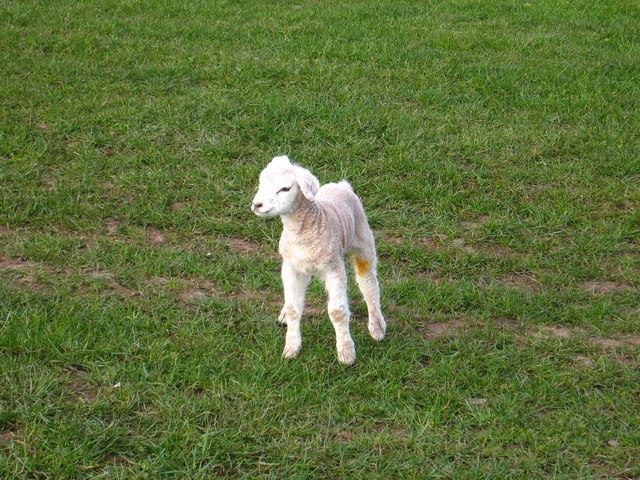
Lambing runs from roughly March through April depending on the farm and the altitude, and in the Borders, Perthshire and across the islands you will pass field after field of them. Two things to hold in mind: keep dogs on a lead near livestock without exception, and shut gates behind you. Scotland’s access rights are generous and lambing season is when they get tested.
The ospreys come back
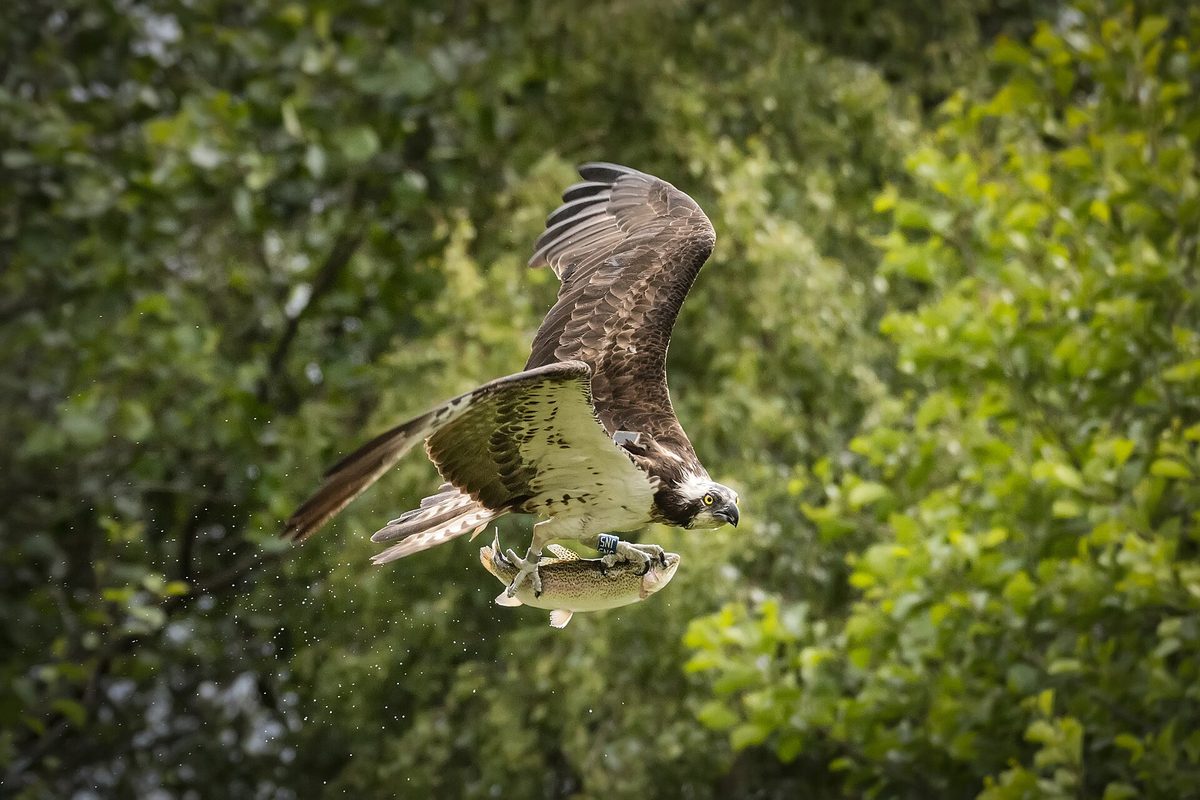
Ospreys migrate from West Africa and arrive at Scottish nests in the last week of March and the first days of April, then sit through incubation and nesting across April and into May. The Scottish Wildlife Trust’s Loch of the Lowes reserve near Dunkeld has a hide and cameras trained on the nest, and RSPB Loch Garten in Abernethy Forest is the historic site — though the Loch Garten nest has had unpredictable seasons in recent years, so check the reserve’s live updates before you drive out there specifically.
Watching a bird that spent the winter in Senegal drop onto a Perthshire pine is a better story than most things you will pay for that week, and the reserves are free or a few pounds to enter.
Puffins come ashore
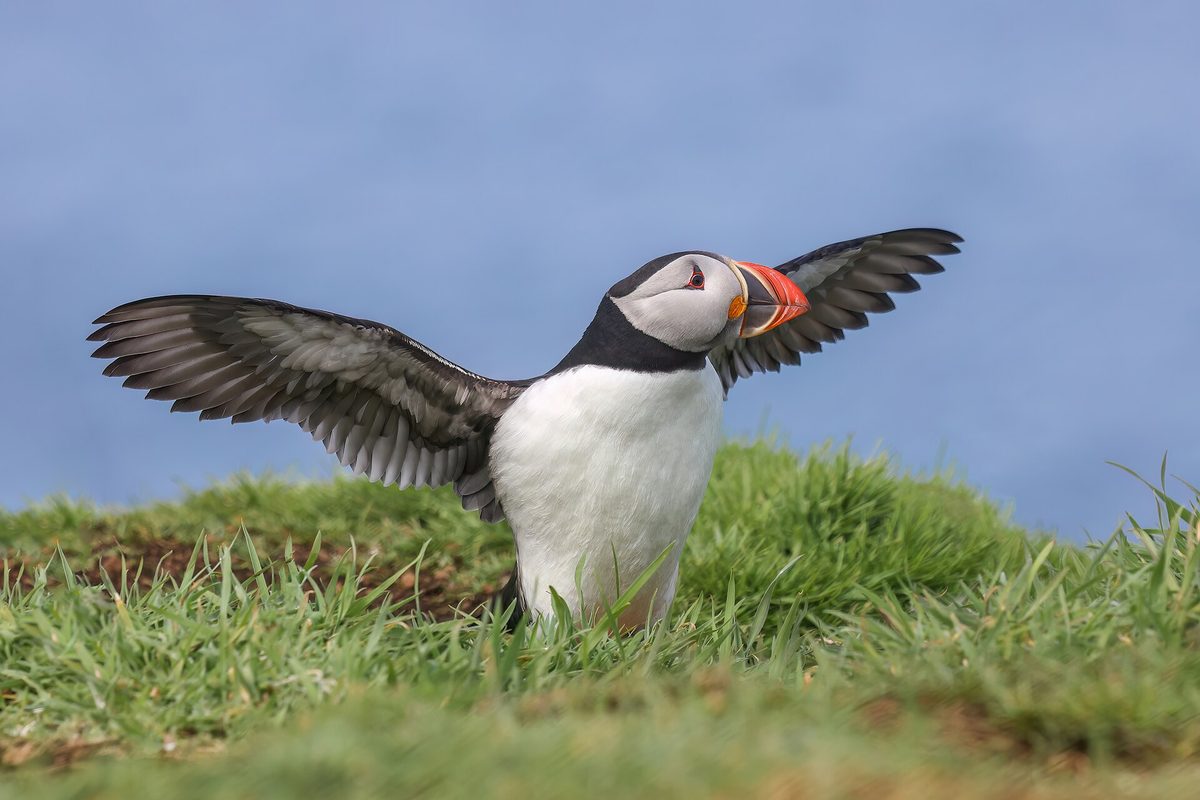
Puffins spend the winter out on the open Atlantic and come back to land to breed. On the Isle of May in the Firth of Forth they typically arrive from late March, and boats from Anstruther in Fife run through spring and summer. On the west coast, Lunga in the Treshnish Isles holds a large colony and landings usually start in April, generally combined with Staffa and Fingal’s Cave on trips from Fionnphort, Iona, Ulva Ferry or Oban.
Book these. Sailings are weather-dependent, cancellations are common, and the good operators sell out. Puffins are gone again by early August, so spring and early summer is the whole window.
Dolphins in the Moray Firth
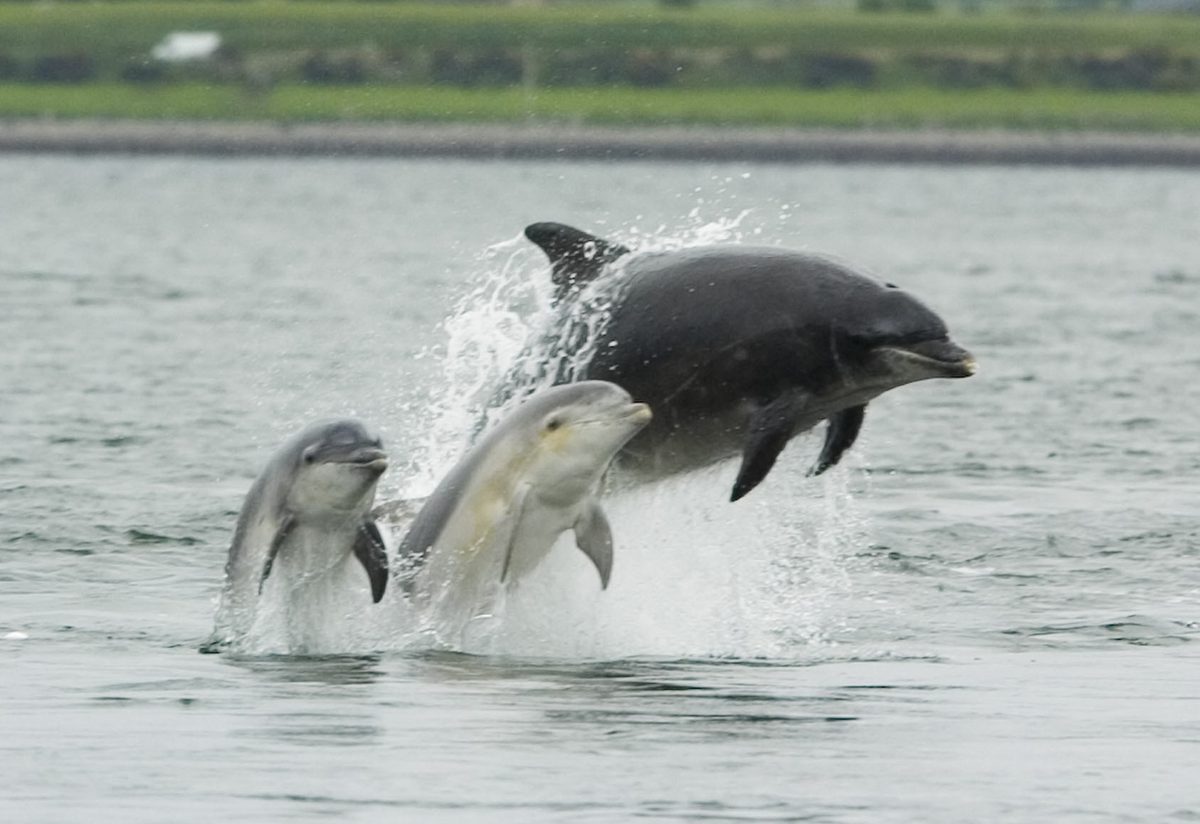
The Moray Firth holds the resident bottlenose dolphin population that most people come north to see, and sightings pick up noticeably through spring. Chanonry Point near Fortrose on the Black Isle is the classic land-based spot — a narrow spit where the tide funnels fish past the shore. Go on a rising tide, take something warm, and accept that you may see nothing.
Minke whales are a different matter. They are really a late-spring-into-summer proposition off the west coast, so if whales specifically are the draw, you want the far end of May at the earliest.
Daffodils, blossom and bluebells
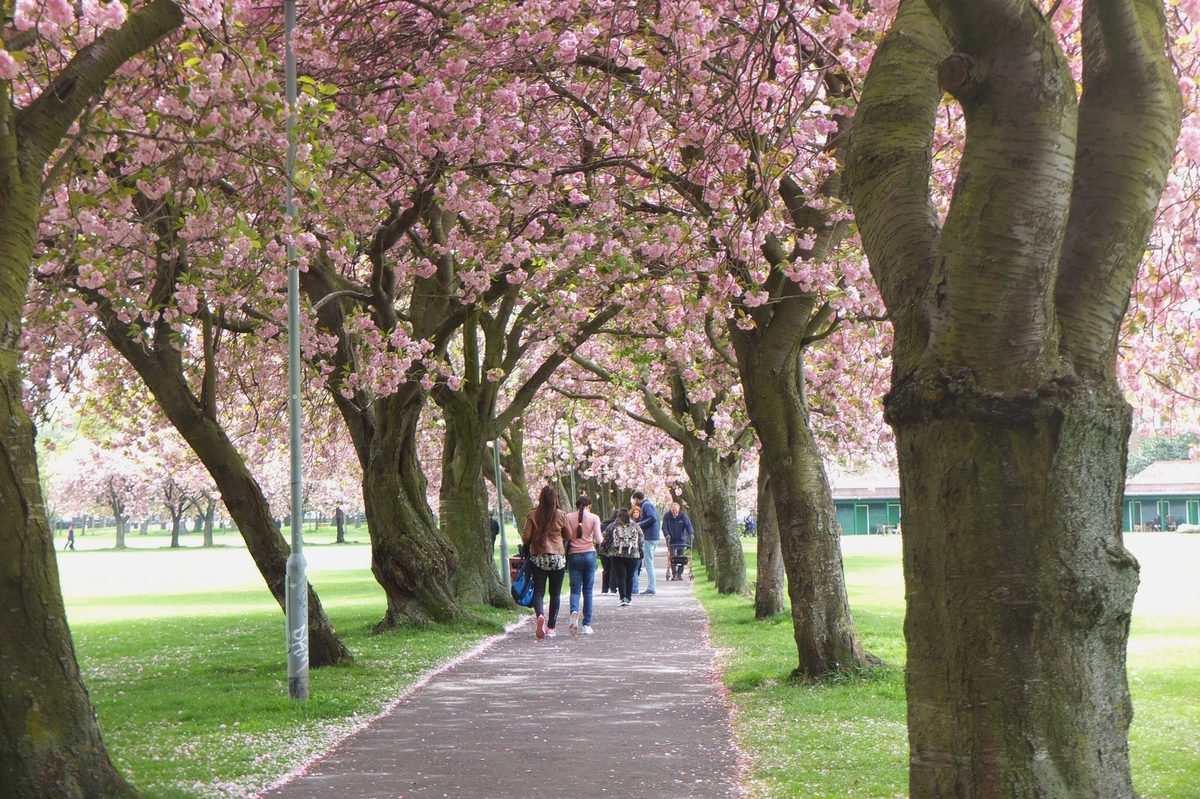
Daffodils run through March and into April, banked along roadsides and city parks. Cherry blossom on the Meadows in Edinburgh usually peaks in the second half of April and is the closest thing the city has to a seasonal event that costs nothing.
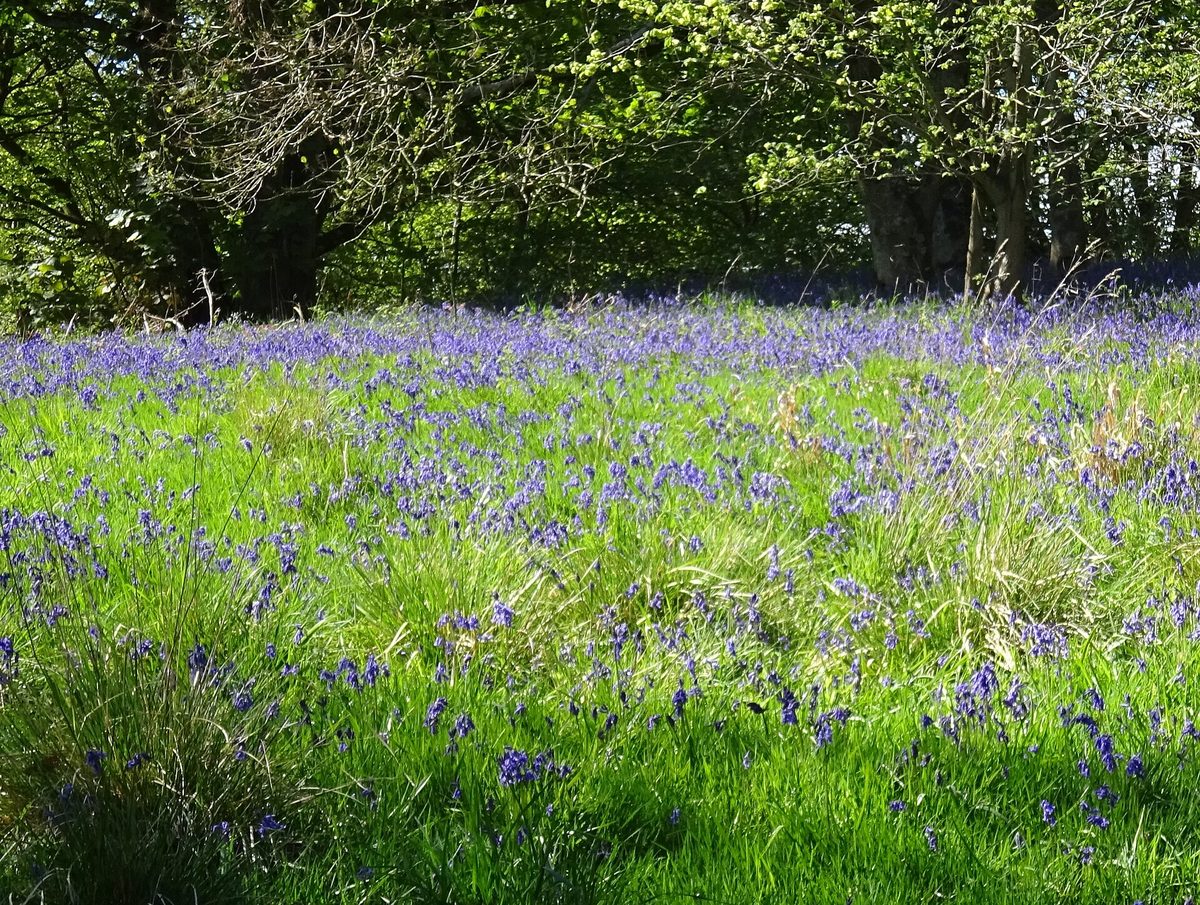
Bluebells are the one worth timing. Scottish woods come into flower later than English ones — late April into the middle of May is the window, with Argyll, the Trossachs and Perthshire holding some of the best displays. A native bluebell wood on a still, warm afternoon has a smell to it that photographs cannot carry.
Gardens at their peak
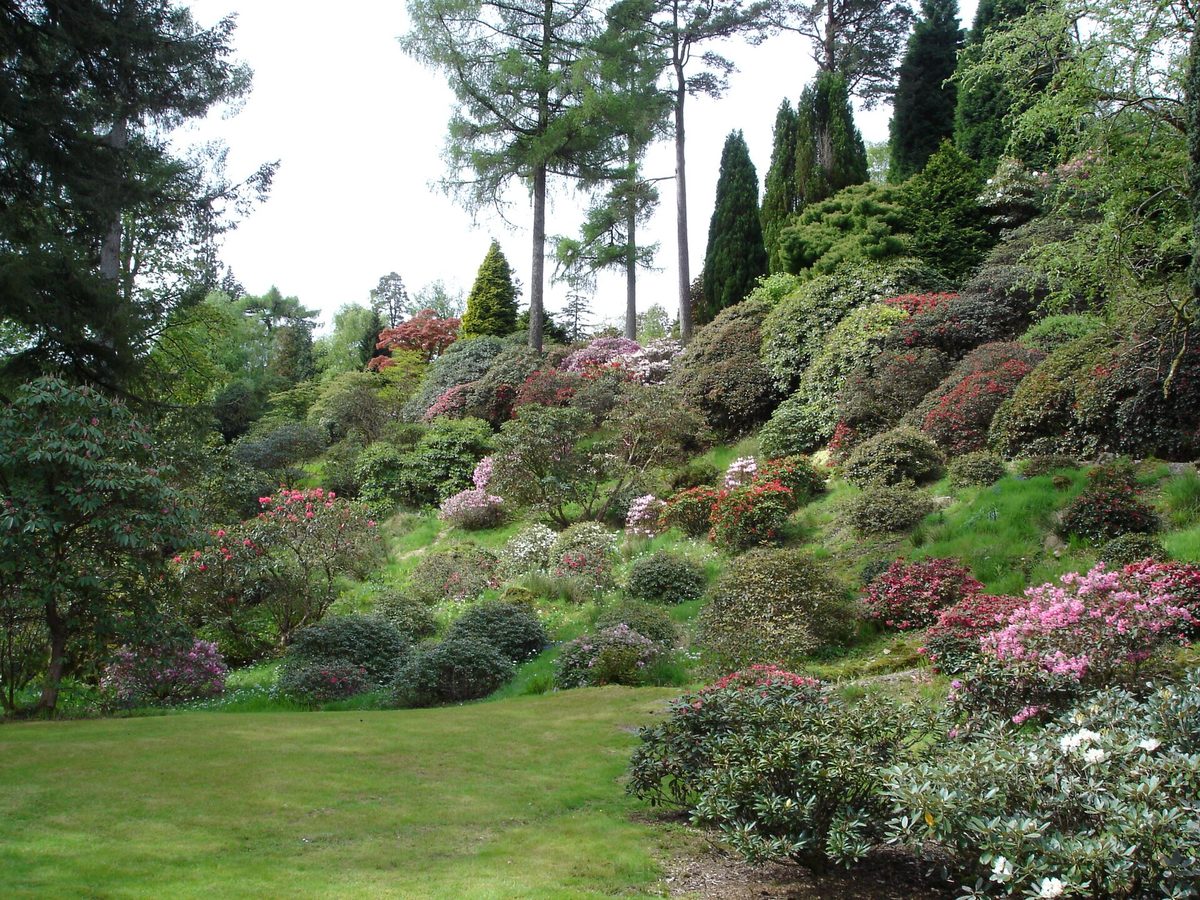
Scotland’s west coast gardens are odd and wonderful, warmed by the Gulf Stream and stuffed with Himalayan rhododendrons that have no business growing at this latitude. Their peak is April into May and it does not last.
Benmore Botanic Garden near Dunoon is open from 1 March to the end of October and grows over 300 rhododendron species on a hillside behind an avenue of giant redwoods. Inverewe at Poolewe, on the same latitude as parts of Siberia, holds hundreds of varieties and comes good in April and May. Crarae on Loch Fyne is at its best in late April, and Arduaine on the A816 south of Oban runs magnolias and rhododendrons through the same weeks. All are worth a detour if you are in the west; Benmore is worth a day trip from Glasgow on its own.
No midges. None.
This is the argument that wins over more people than the flowers. Highland midges do not emerge in numbers until the back end of May, and they do not become a genuine nuisance until June. A May camping trip on the west coast is a pleasure; the identical trip in early July can be an ordeal. Our full breakdown of Scotland’s midge season has the timings by region, but the short version is that anything before about 20 May is free.
If you camp, walk, fish or photograph, that fact alone is worth arranging your year around. It is the main reason spring outperforms the summer months for a certain kind of traveller, and it is the reason I now do my west coast walking in May rather than August.
Ski in the morning, daffodils in the afternoon
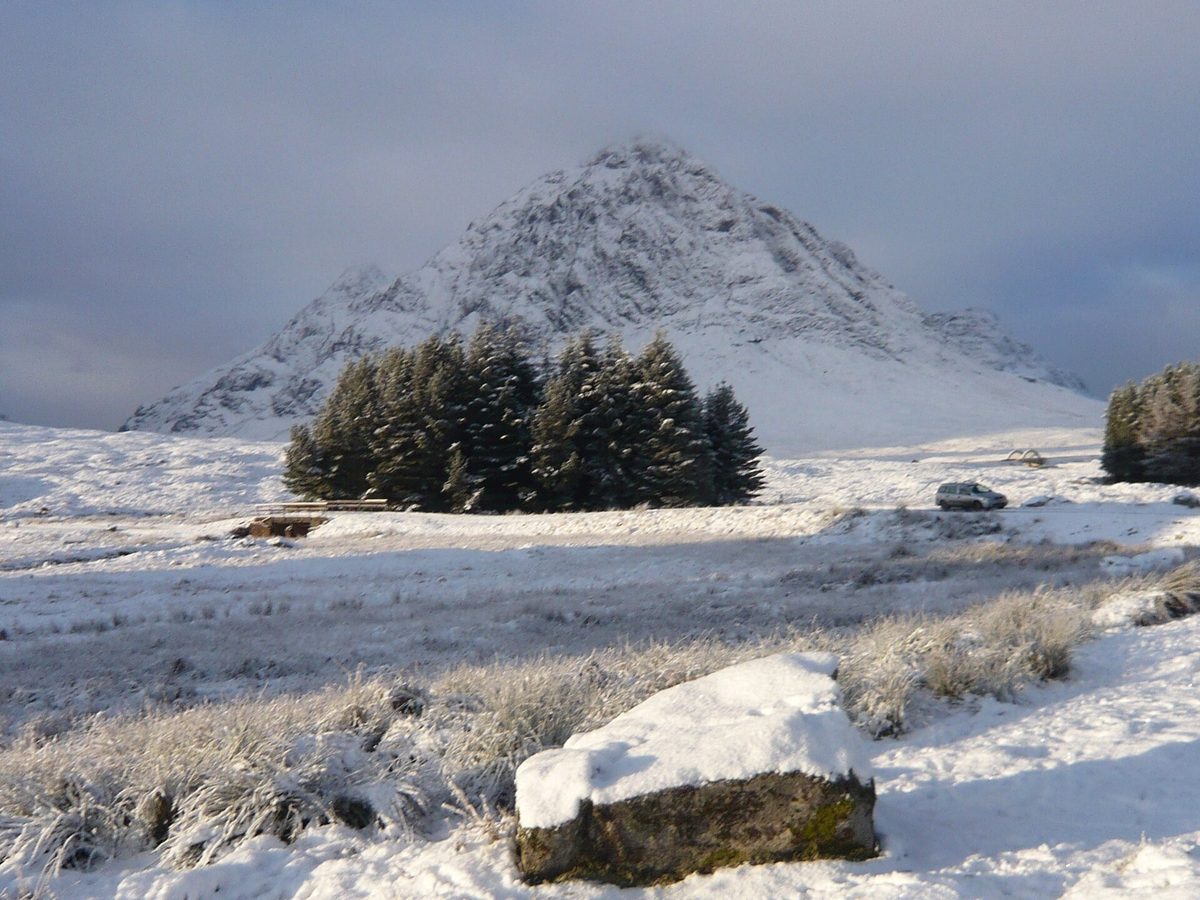
Here is the fact that best captures Scottish spring. The ski season at Cairngorm Mountain, Glenshee, Glencoe, Nevis Range and the Lecht typically runs from December to April, snow permitting. In a good year you can be on lift-served snow in the Cairngorms in the first week of April and looking at daffodils in Princes Street Gardens the same week.
Do not overplan it. Scottish skiing is entirely at the mercy of conditions and there are Aprils with nothing open at all. But it is a real option, the resorts publish daily reports, and the drive from Aviemore to the Cairngorm car park takes about twenty minutes. If your trip is in the first half of April and the forecast turns, it is a fine plan B.
The same snowline that makes this possible is what you must respect if you are walking. Winter conditions persist on the high tops well into April and sometimes May: cornices, ice, avalanche risk. The Munros are not spring hills yet in the first half of the season, and anyone planning serious hillwalking in Scotland should be reading the avalanche forecast rather than the weather app until the snow is properly gone.
Where to go, region by region
Edinburgh and the east
The driest corner of the country and the one that works earliest in the season. Edinburgh is fully functional in March, the East Neuk of Fife is a good spring day out, and the seasonal Borders sites — Smailholm Tower among them — unlock on 1 April. If your trip is early, weight it east.
Argyll and the west coast
Where spring shows off. The gardens, the bluebells, the puffin boats and the ferries all live here, and by late April the whole coast is functioning again. It is also the wettest region, so pack for it and build flexibility into the plan.
The Cairngorms and Speyside
The best of both. Snow on the tops, ospreys in the pines, reindeer and Highland cattle in the glens, and Speyside’s distilleries a short drive away. Aviemore has enough year-round infrastructure that early-season closures barely register.
Skye and the islands
Skye in late April is one of the great arguments for spring travel — the light is long, the Cuillin still carry snow, and the roads are not yet solid with campervans. Go before Easter and you will find some accommodation and restaurants shut; go after and it works properly. Our Isle of Skye guide has the detail on which parts of the island need booking regardless of season.
The far north
The most seasonal part of the country and the one that punishes an early visit hardest. Sutherland and Caithness in March have very little open. From mid-April onwards they are excellent and almost empty, which is a combination the Highlands do not offer again until October.
Planning a spring trip
How long you need
Seven to ten days is the sensible range for a first spring trip. The extra daylight from mid-April means you can genuinely cover more ground per day than in autumn or winter, but spring weather rewards flexibility, and a schedule with no slack in it will get broken by one bad day. I would rather see four bases in ten days than seven.
Getting there and getting around
Edinburgh, Glasgow, Aberdeen and Inverness all take direct flights, and spring fares are among the cheapest of the year outside the Easter fortnight. A hire car is close to essential for anything beyond the cities, and spring rates are noticeably lower than summer — though the Easter spike hits car hire as hard as it hits hotels. Our practical guide to getting around Scotland covers the rail and bus alternatives, which work better than most visitors expect on the main corridors.
One spring-specific point on driving: single-track roads in the Highlands are being used by farm traffic during lambing, and passing places are for passing, not parking. Also, road surfaces are at their worst in March after the winter, so allow a little more time than the satnav claims.
What to book, and how far ahead
Book early: anything over Easter, puffin and wildlife boat trips, the Jacobite steam train, popular self-catering cottages on Skye and around Loch Lomond, and dinner anywhere in a small Highland village. Book late or not at all: city hotels outside Easter, most museums and castles, day tours. The gap between those two lists is wider in spring than in summer, when everything needs booking.
Check event dates too. Spring carries the Glasgow film and comedy festivals in March, the Edinburgh International Science Festival around Easter, Melrose Sevens and the Scottish Grand National in April, the Beltane Fire Festival on Calton Hill on 30 April, and the Spirit of Speyside whisky festival at the turn of the month. Any of them can empty a town’s beds; our festivals and events calendar is worth a scan before you fix dates.
What to pack
A properly waterproof jacket, not a shower-resistant one. Waterproof over-trousers if you plan to walk. Layers you can shed at eleven and put back on at four. A hat and gloves in March and April, no matter what the forecast says. Boots that cope with mud, because the ground is saturated after winter and paths that are firm in August are not in April. Sunglasses, which sounds like a joke and is not — low spring sun on a wet road is genuinely blinding.
What underwhelms, and the mistakes I keep seeing
Expecting an English spring
Scottish spring runs two to four weeks behind southern England. If you have seen photographs of blossom in Kent in late March and booked accordingly, you will arrive to bare trees. Adjust everything you think you know by a fortnight, and add another fortnight for the Highlands and the north.
Booking the Highlands for early March
The most common mistake. The cost saving over April is small; the reduction in what is open, walkable and drivable is large. If your dates are fixed to early March, spend them in the cities and the east and save the Highlands for another trip.
Treating Easter as a normal week
It is the year’s first peak, prices behave accordingly, and the weather has not caught up. It is the one period in spring where you pay summer rates for shoulder-season conditions.
Assuming “spring” means warm
It does not. Average April highs of 11°C mean cafe terraces are theoretical and a swim off one of the Scottish beaches requires either a wetsuit or a lack of judgement. The beaches themselves are outstanding in spring — empty, bright, the sand blinding white against grey water. The sea is about 8°C.
Overplanning the drive
Spring gives you long days, which tempts people into 300-mile itineraries. Scottish roads are slower than the mileage suggests, and one wet day makes a tight plan collapse. Build in a spare afternoon per week.
Ignoring the shoulder either side
If your reason for choosing spring is quiet roads, low prices and no insects, the other shoulder does the same job with autumn colour instead of blossom. Our guide to September in Scotland makes that case, and for a certain kind of traveller it is the stronger one.
Frequently asked questions
Is March too early to visit Scotland?
Not for the cities, which run normally all year. It is too early for a Highlands or islands trip that depends on seasonal attractions, ferry frequency, high passes or open restaurants. If March is your only option, weight the itinerary towards Edinburgh, Glasgow, Fife and the Borders, and treat any Highland day as a bonus rather than the plan.
What is the weather like in Scotland in April?
Typical daytime highs of 11–12°C in the Central Belt and around Inverness, cooler on the west coast and at altitude, with nights near freezing inland. April is usually one of the two driest months, and the east is noticeably drier than the west. Expect four changes of weather in a day and pack for all of them.
When do the clocks go forward in Scotland?
At 1am on the last Sunday in March, when the UK moves from GMT to British Summer Time. That is 28 March 2027 and 26 March 2028. Evenings gain an hour instantly, and by the end of April sunset in Edinburgh is close to 8.45pm — later still in the north.
Are there midges in Scotland in spring?
Essentially none. Highland midges begin to emerge towards the end of May and only become a real problem from June through early September. Any trip in March, April or the first three weeks of May is effectively midge-free, which is the strongest single argument for spring over summer if you plan to be outdoors.
Is Easter a bad time to visit Scotland?
It is the most expensive and busiest week of spring, and because Easter can fall as early as 22 March, it does not reliably come with good weather. If you can shift by a fortnight in either direction you will pay less and see the same things with fewer people. Check the date for your travel year rather than assuming.
Can you still ski in Scotland in April?
Sometimes, yes. The season at Cairngorm, Glenshee, Glencoe, Nevis Range and the Lecht typically runs December to April, entirely dependent on snow. Early April skiing happens in good years and not at all in poor ones. Never build a trip around it, but check the daily reports if you are in the Cairngorms and the weather turns cold.
Is April or May better for visiting Scotland?
May is more reliable: warmer, sunnier, everything open, bluebells at their peak. April is cheaper and quieter, with the same absence of midges. If the weather matters most, choose May. If value and empty roads matter most, choose the second half of April and accept the risk.
Do I need a 4×4 or winter tyres in spring?
No. An ordinary car is fine on all main routes from March onwards. What you should do is check whether high passes such as the Bealach na Bà, the Cairnwell or the Lecht are open on the day, particularly in March, and have a diversion in mind. Snow gates get closed at short notice and the detours can be long.
Final thoughts
Spring is the season I recommend most often and the one people get wrong most often, and the reason is the same in both cases: the dates matter more here than anywhere else in the calendar. A trip in the second half of April costs a fraction of the same trip in July, comes with more daylight than you can comfortably use, no biting insects, and a country that has just finished putting its chairs back out.
A trip three weeks earlier gets you a cold, half-shut version of the same places. That is the whole decision. Look up the Easter date for your year, aim for the fortnight either side of it that is not it, point yourself west once the gardens are out, and you will get the best-value fortnight Scotland offers.
About the author: This guide was written and is maintained by the ScotlandTourism.org editorial team — travel writers who’ve spent years exploring Scotland’s cities, Highlands and islands, from bagging Munros to chasing the perfect dram. We update our guides regularly to keep prices, opening details and advice current.
Last updated: August 2026. Prices and opening times change — always check the official site before you travel.
Photo credits
All images are used under their respective Creative Commons or public-domain licenses:
- Daffodils in flower on a verge on the edge of Edinburgh in March — M J Richardson, CC BY-SA 2.0, via Wikimedia Commons
- A newborn lamb in a Scottish field during spring lambing — Lisa Jarvis, CC BY-SA 2.0, via Wikimedia Commons
- A Scottish bluebell wood in flower in late spring — Rosser1954, CC BY-SA 4.0, via Wikimedia Commons
- A puffin ashore on the Treshnish Isles off Mull — Romaniviatores, CC BY-SA 4.0, via Wikimedia Commons
- Rhododendrons in flower at Benmore Botanic Garden in Argyll — E96an at English Wikipedia, Public domain, via Wikimedia Commons
- The hairpin bends of the Bealach na Ba on the road to Applecross — Hilmar Ilgenfritz, CC BY-SA 2.0, via Wikimedia Commons
- Bottlenose dolphins breaching in the Moray Firth — Peter Asprey, http://www.peter-asprey.com/, CC BY-SA 3.0, via Wikimedia Commons
- Cherry blossom over a path on the Meadows in Edinburgh — Jim Barton, CC BY-SA 2.0, via Wikimedia Commons
- A Caledonian MacBrayne ferry arriving at Brodick pier on Arran — Christine Matthews, CC BY-SA 2.0, via Wikimedia Commons
- Buachaille Etive Mor under snow at the head of Glen Coe — Alan O’Dowd, CC BY-SA 2.0, via Wikimedia Commons
- An osprey carrying a trout back towards its nest — caroline legg, CC BY 2.0, via Wikimedia Commons