Here is how a visit often goes wrong. A family arrives at half past one, buys tickets, walks to the house, walks round the house, buys a scone, and drives away at half past three feeling faintly cheated. They have just paid for a 260-hectare estate with 40 buildings and follies to explore and seen only a corner of it.
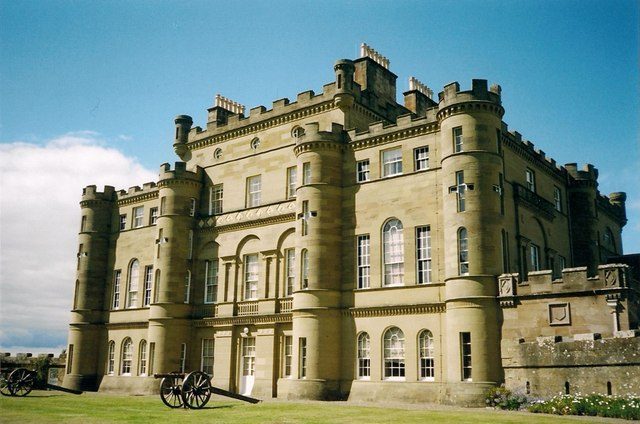
Culzean Castle is the most misunderstood big-ticket attraction in Ayrshire, and the misunderstanding starts with the name. It is not a castle in any defensive sense. It is a Georgian country house that Robert Adam dressed up as one, set on a cliff edge above the Firth of Clyde and surrounded by roughly 600 acres of woods, gardens, follies, shoreline and parkland. The house is very good. The estate is better. Budget your day accordingly and it becomes one of the best days out in the country. Budget two hours and you will leave wondering what the fuss was about.
Is Culzean Castle worth visiting?
Yes — but treat it as a country estate rather than a castle tour. Robert Adam’s house delivers an oval staircase and a round drawing room over the sea that are genuinely worth the ticket, and the surrounding country park adds gardens, woods, a deer park, play parks and a beach. Allow four to five hours, not two.
| What you need to know | Detail |
|---|---|
| What it actually is | A Robert Adam country house built in stages between 1777 and 1792, styled to look like a castle |
| Where | Off the A719, around 12 miles south of Ayr and 4 miles west of Maybole; postcode KA19 8LE |
| Time to allow | Four to five hours minimum; a full day if you have children with you |
| Admission (2026 season) | Around £22 adult for castle and park, around £16 for the park alone — check current rates before you go |
| Season | House open roughly late March to early November; the country park keeps going beyond that |
| Don’t miss | Oval staircase, round drawing room, armoury, walled garden, Swan Pond, the shoreline |
| Parking | Included in admission; several car parks spread across the estate |
| Run by | National Trust for Scotland — free entry and parking for members |
Culzean is not really a castle, and that is the whole point
There was a Kennedy stronghold on this cliff long before the building you see now. What David Kennedy, 10th Earl of Cassillis, wanted in the 1770s was not a fortress but a statement, and he hired the most fashionable architect in Britain to make it. Robert Adam rebuilt the earlier L-plan tower into a country house between 1777 and 1792, then wrapped it in battlements, turrets and a drum tower so that it would read as ancient and Scottish from every approach.
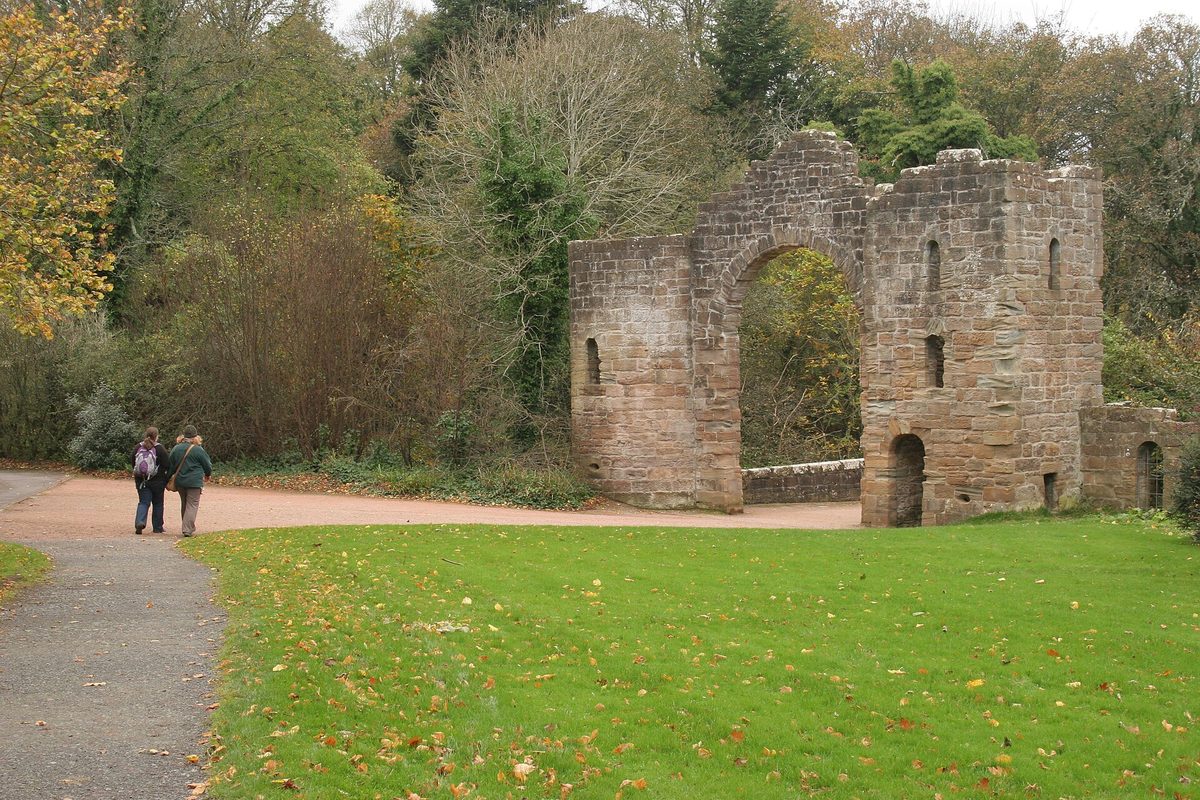
Understand that and the whole place clicks into focus. The battlements are decorative. You walk under the ruined arch on the way in from Home Farm, and the viaduct beyond it is stage management too.
If you have come to Scotland for the sort of castle that got besieged, you want a cliff-edge ruin like the sea-stack fortress at Dunnottar or a working royal fortress along the lines of Stirling. Culzean is a different animal entirely, and our complete guide to Scotland’s castles is the place to work out which type of castle day you actually want. If you are building a route rather than picking one site, the regional castle breakdown puts Culzean in context with everything else in the south-west.
The Kennedys, and the parts of the story that get skipped
The Kennedy family held Culzean for centuries and their line is one of the older ones in Ayrshire, which makes this a natural stop if you are tracing Scottish ancestry and clan connections. In 1945 the family handed the castle and grounds to the National Trust for Scotland, a transfer that also dealt neatly with a looming inheritance tax bill.
There is a harder strand to the family history that the estate has become more willing to talk about. The walled garden stands on ground associated with Scipio Kennedy, a man who was enslaved by the Kennedy family before later living as a free man on the estate. It is a small sign on a garden wall rather than a major exhibition, and it is easy to walk past, but it is worth stopping for.
Culzean Castle tickets: what you are actually buying
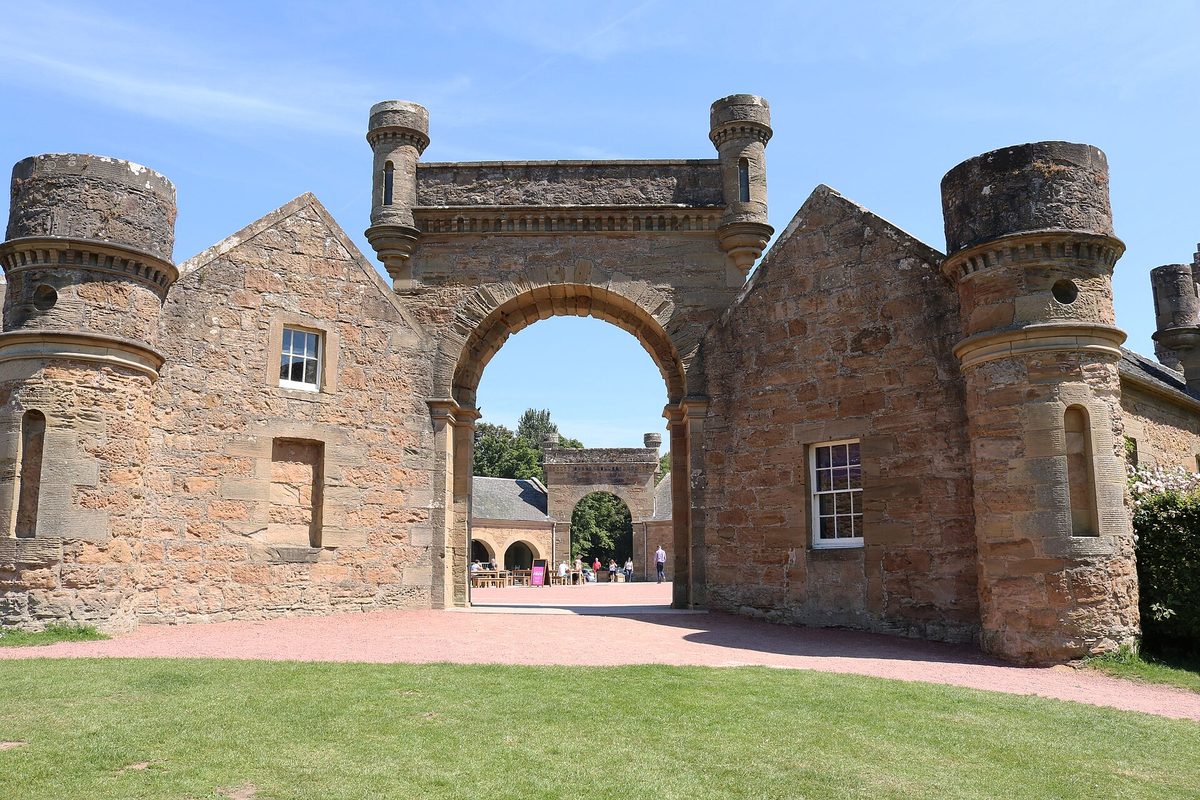
This is where people get caught out, because there are two different tickets and the cheaper one does not get you through the front door of the house.
Castle and country park, or country park only
The full ticket covers the house plus the entire estate. In the 2026 season that was around £22 for an adult, roughly £16.50 concession, about £11 for a child and around £55 for a family, with a one-adult family rate near £33. The grounds-only ticket ran at approximately £16 adult, £12 concession, £8 child and £40 family. Young Scot cardholders get in for a nominal £1.
Treat all of those as indicative. The Trust adjusted its pricing during a temporary VAT reduction in 2026 and rates move between seasons, so check the National Trust for Scotland listing on the morning you travel rather than trusting any blog, including this one.
The honest advice: if the weather is poor, the grounds-only ticket is a false economy, because in driving rain the estate loses most of what makes it special and the house is the only dry thing on site. If the weather is good and you have small children, grounds-only is a perfectly sane choice — the play parks, the pond and the beach will fill four hours on their own.
The membership maths
National Trust for Scotland membership starts somewhere around £6 a month for an individual at current rates, and members go in free and park free at every Trust property. A single family visit to Culzean at full price is most of a year’s membership already. If your Scotland trip includes even one more Trust site — the Robert Burns Birthplace Museum down the road at Alloway, Brodick Castle over on Arran, Glencoe, Culloden — the sums stop being close.
Note that National Trust for Scotland and the National Trust in England are separate organisations with a reciprocal arrangement, so check what your existing card covers before you assume anything. There are also multi-day discovery tickets aimed at visitors who are only in the country for a week.
What the ticket does not include
Parking is included, which is worth saying because plenty of Scottish attractions charge separately. Food, obviously, is not. Special events, and the summer tours down into the sea caves beneath the cliff when those run, are usually booked and priced separately. Pre-booking is not normally required for general admission, which is a relief in a country where half the good things now need a slot booked three weeks out.
Inside the house: what is worth your time
The house is self-guided, with staff stationed in the rooms who will happily talk if you give them an opening. Some of them are extremely good. Allow an hour to ninety minutes and be aware that last entry is mid-afternoon, earlier than most people assume.
The oval staircase
This is the reason architectural historians care about Culzean. Adam carved an oval well out of the middle of an awkward, irregular old building and ran a staircase around it, lit from above, with columns stacked in classical order as you rise. It solves a structural problem and produces the single best interior in the house at the same time. Stand at the bottom and look straight up before you climb it. Then look up again from the top.
The round drawing room
Also called the circular saloon. It sits inside the drum tower on the seaward side, which means the windows look out over nothing but the Firth of Clyde and, on a clear day, the profile of Arran. The view is the draw. On a bright afternoon it is the room people stand in longest, and rightly.
The armoury
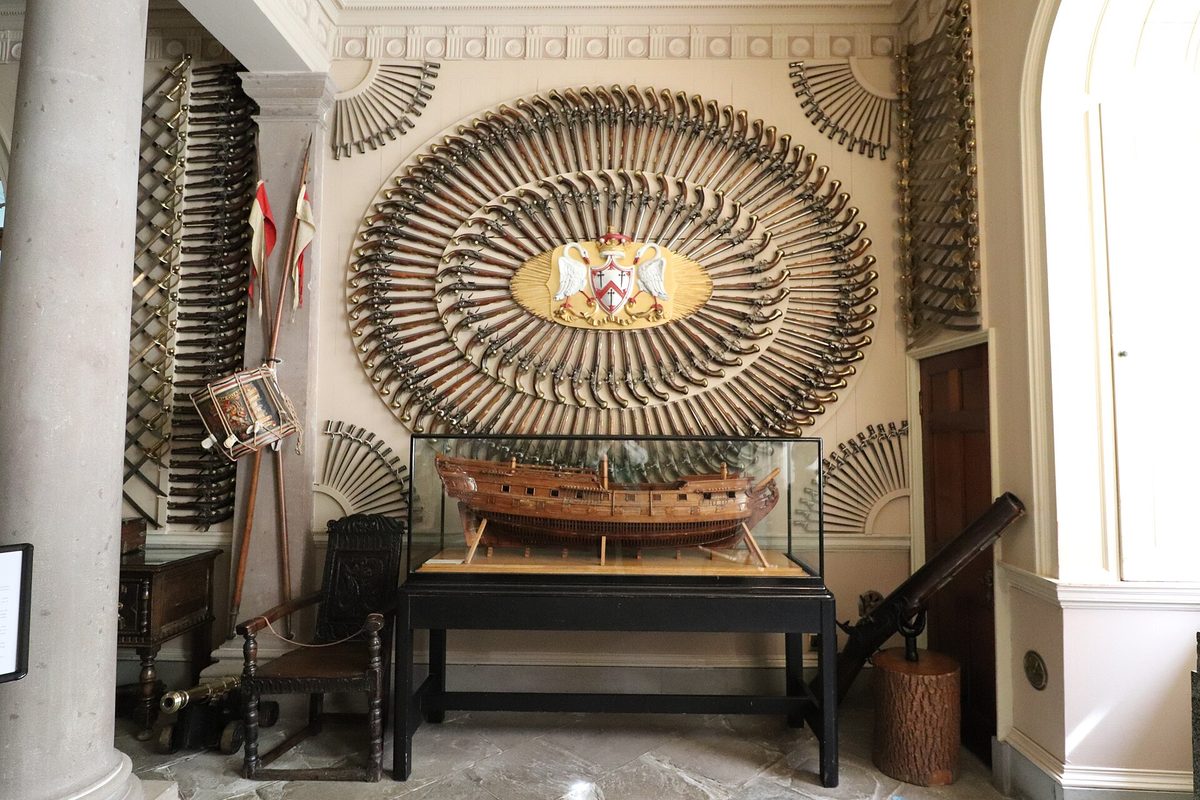
The room that consistently surprises people. Hundreds of flintlock pistols and swords are arranged across the walls in vast radiating fans and ovals around the family crest, in an arrangement that looks more like decorative art than a weapons store. There are bayonets, a model warship, and — a detail almost nobody points out — a propeller from the aircraft flown by William Leefe Robinson when he shot down a German airship north of London in 1916. Give the armoury longer than it first appears to deserve.
The Eisenhower connection, which is realer than most guides admit
When the Kennedys handed Culzean over in 1945 they attached a condition: the top-floor apartment was to be given to General Dwight D. Eisenhower for his lifetime, in recognition of his role as Supreme Commander of the Allied Forces in Europe. It was not a ceremonial gesture on paper only. He first came in 1946 and stayed four times in all, once while serving as President of the United States.
That apartment is still up there. There is a small display about the Eisenhower years. Most guides give this a single line in an FAQ; it deserves more, because it is the reason a Georgian house in Ayrshire has been called Scotland’s White House.
Eight self-catering properties sit around the estate, including a flat built into the seaward corner of the castle’s west wing and a cottage in the old stable block. Staying on site after the day visitors have gone is one of the more genuinely unusual things you can do in Scotland, and it makes the estate feel like a different place at seven in the morning.
The estate: why the park earns the day
Around 600 acres, with 40 buildings and follies scattered through it. You cannot see it all in an afternoon and you should stop trying. Pick up the estate map at the entrance or at Home Farm — there are waymarked routes of different lengths, and without the map you will spend half your time working out which path goes where.
The walled garden and the glasshouses
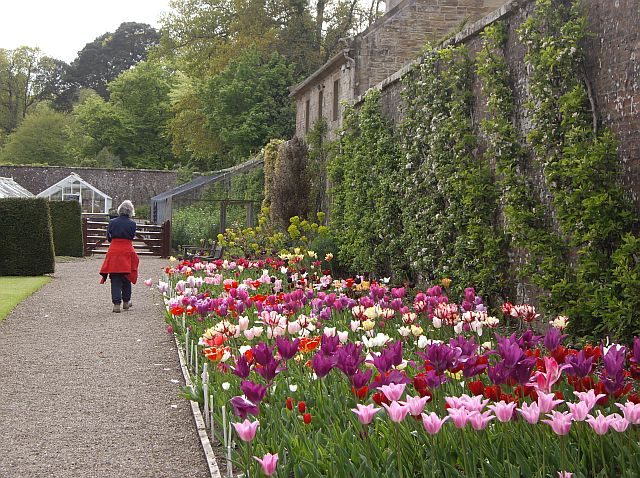
Much bigger than the walled garden at most Scottish houses, and properly worked rather than ornamental. Fruit under glass, deep double borders, vegetables in production, bees in hives on the site. In late April and May the tulip borders along the south-facing wall are the best thing on the whole estate. The Camellia House and the Orangery sit nearby and take five minutes each.
The Swan Pond, Adventure Cove and the Wild Woodland
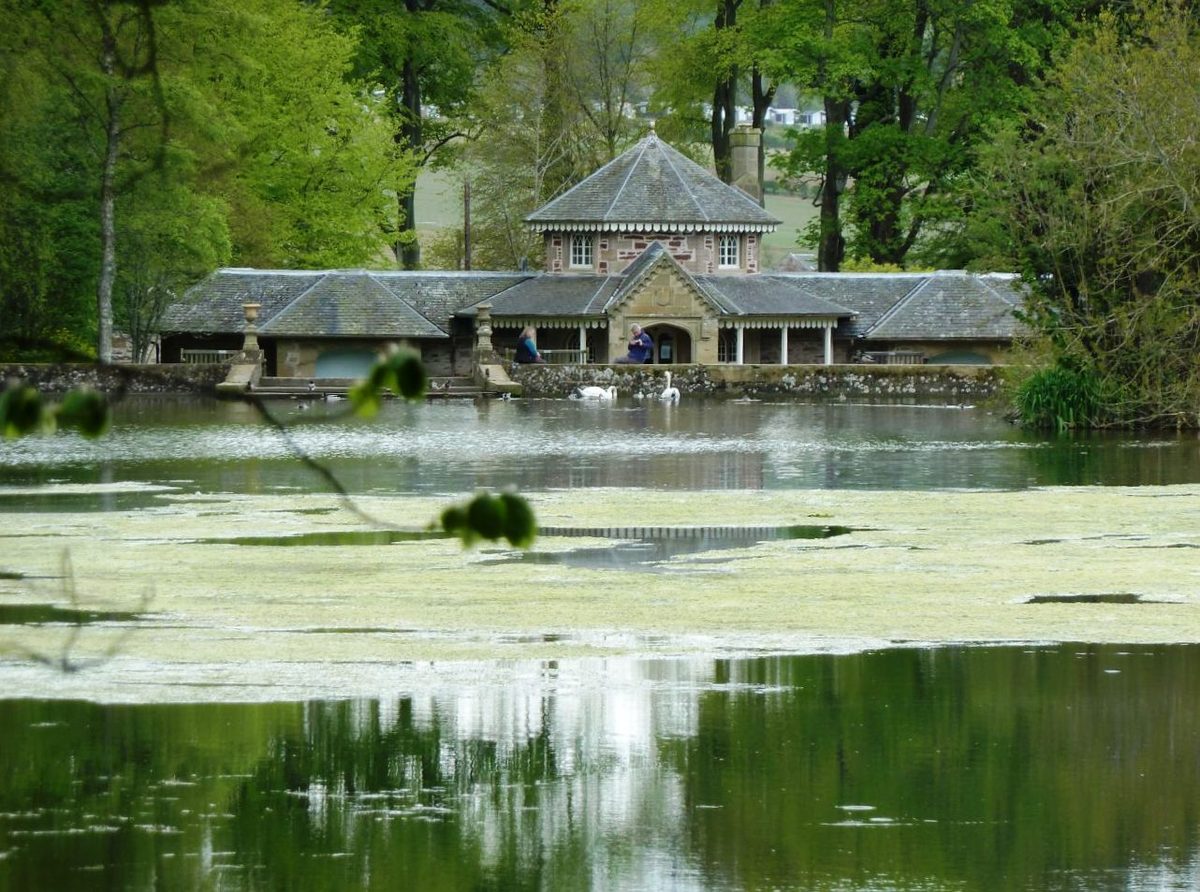
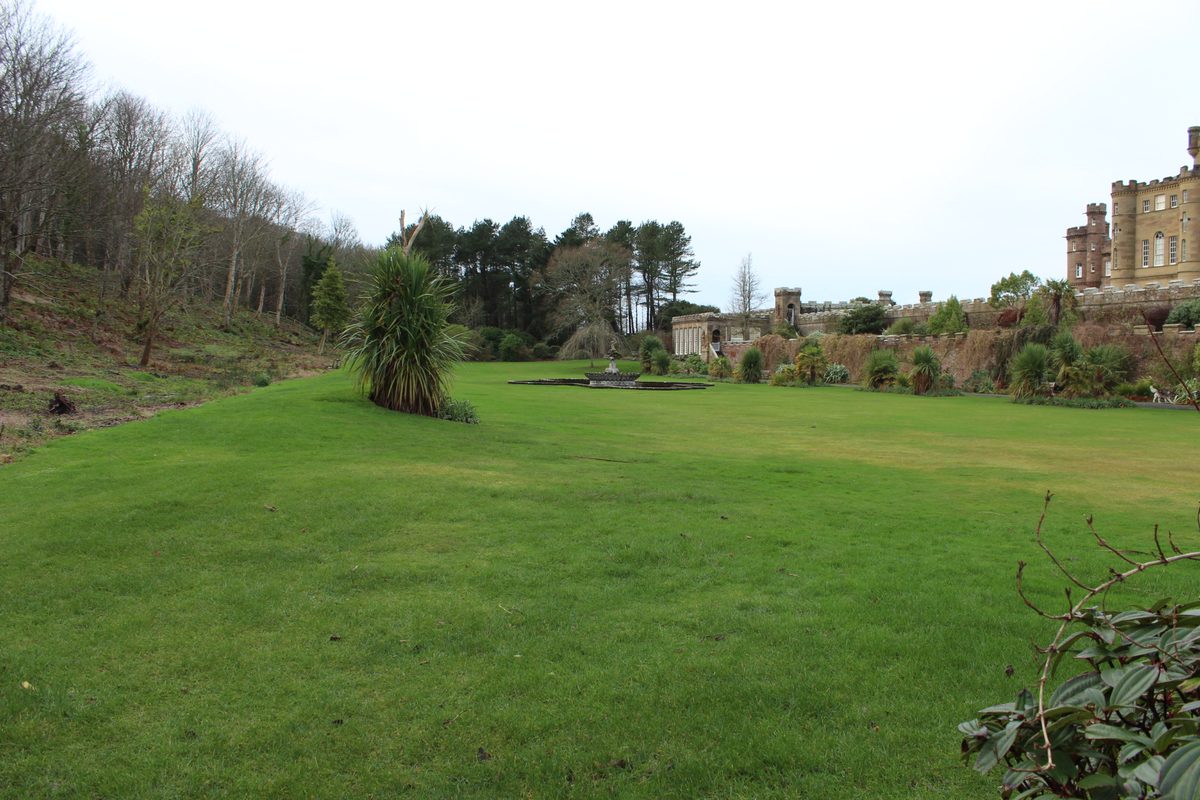
The Swan Pond is a piece of Georgian theatre — an ornamental water with a fanciful pavilion along one side, deliberately placed a long way from the house so that reaching it was an outing in itself. It still is. There are usually swans.
Beside it are the two play parks, and they are not token. Adventure Cove is the accessible one, with a large timber fort, slides and swings. Wild Woodland is the ambitious one, a treetop circuit of platforms, nets, walkways and zip lines threaded through mature deciduous woodland. If you are working out what to do in Scotland with children, this pairing is close to unbeatable, and it is the single strongest argument for a full day here rather than a half.
The deer park, the ice house and the odd little buildings
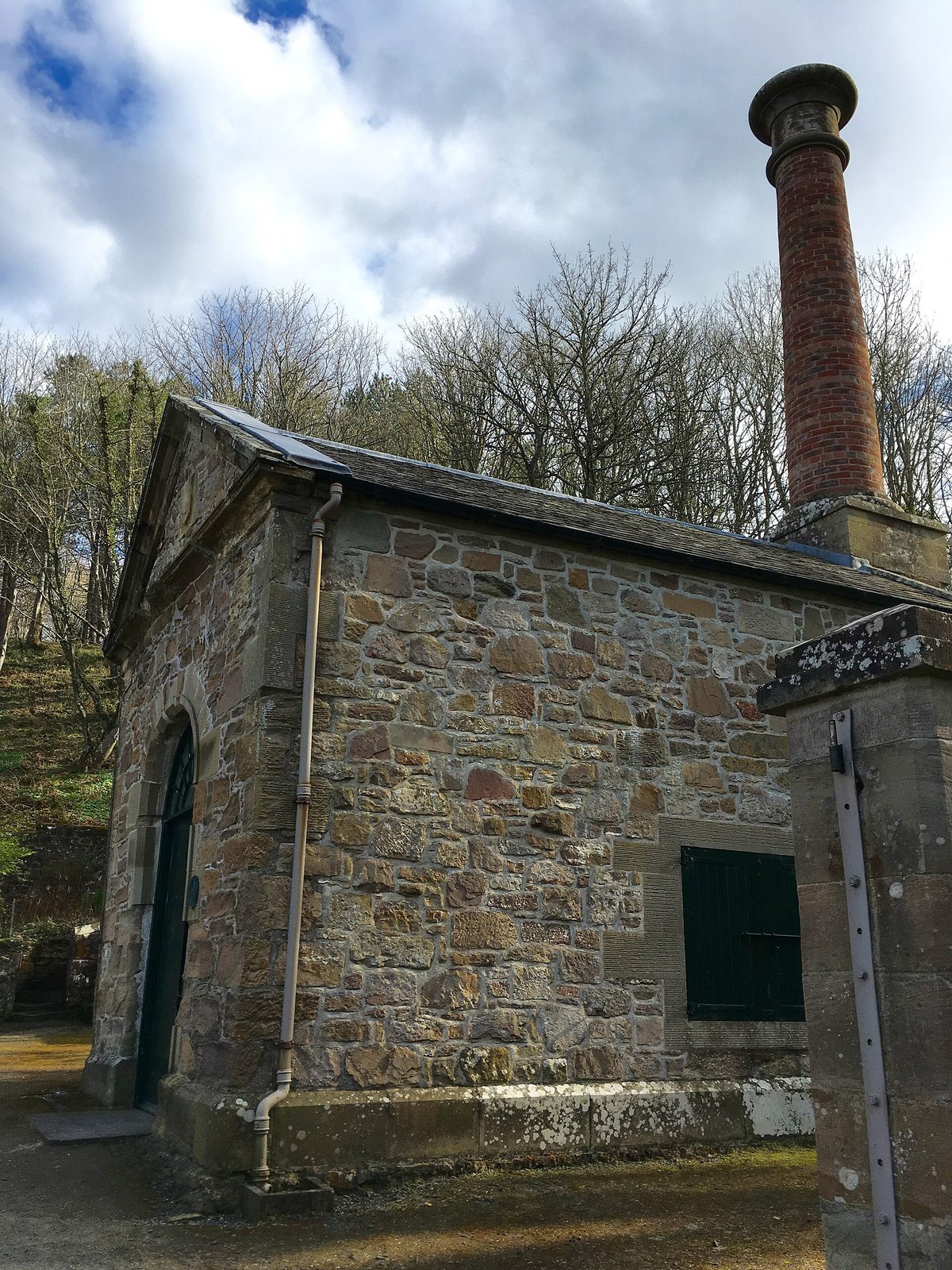
The deer park is exactly what it sounds like and costs nothing extra. The ice house, the Powder House where the gunpowder was kept safely away from the family, the Gas House that made town gas for the castle right up until 1940, the Cat Gates, the Retort House and the remains of the gasometer — these are the things that get skipped when people rush, and they are the things that make the estate feel like a working world rather than a lawn around a big house.
The shore
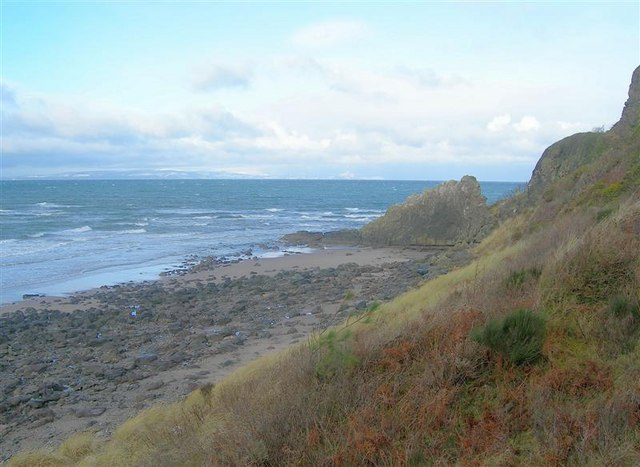
Steps and paths drop from the clifftop down to the beach, and this is the bit that converts a house tour into a proper day out. The shoreline shifts as you walk it: a rocky lava platform with rock pools at one end, sandy bays over old red sandstone as you head north. Children find starfish and crabs in the pools. The caves in the cliffs below the castle are part of the estate’s smuggling history and are not generally open, though tours run in some summers.
It is not one of Scotland’s great beaches in the Hebridean sense — nobody comes to Ayrshire for white sand. It is a very good beach to have at the bottom of a garden, which is a different and rarer thing.
Woods and walking
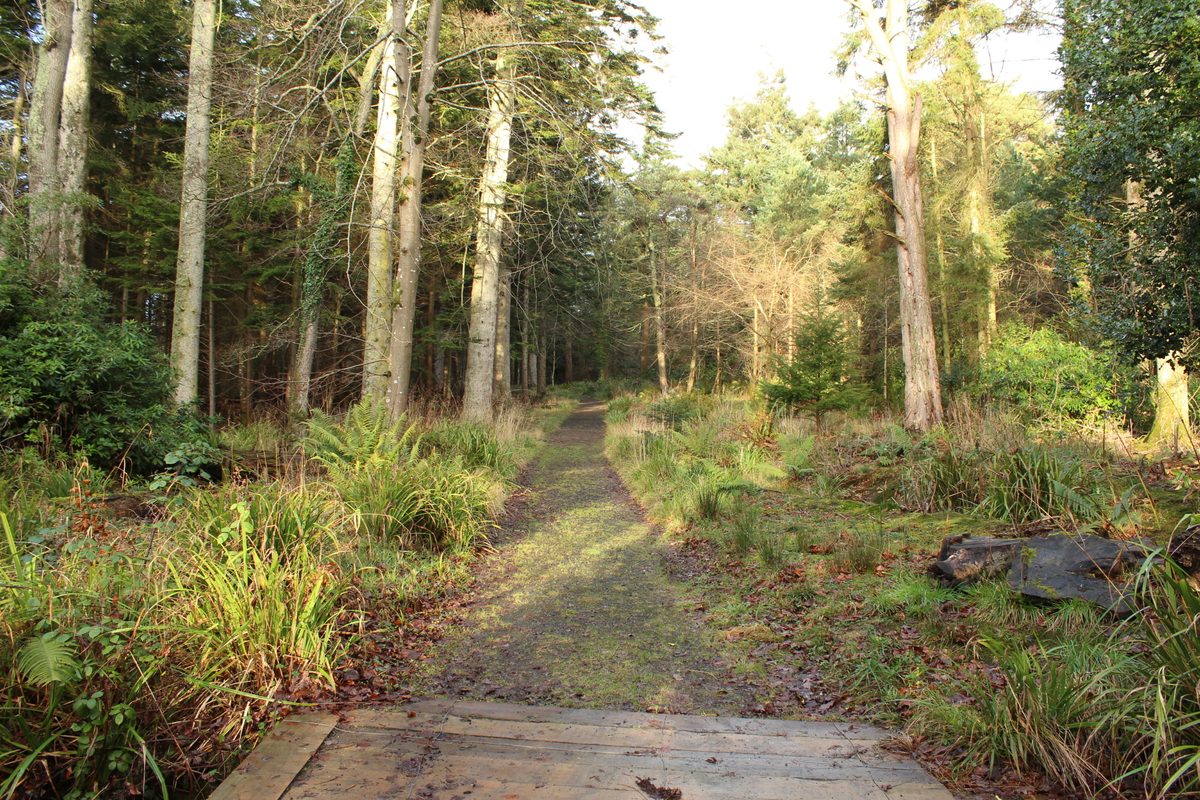
The planting is mixed conifer and beech, dense in the way west coast woodland is, and the paths run from wide gravel avenues to narrow muddy tracks. The four waymarked trails on the estate map give you routes of roughly half an hour up to a couple of hours. None of it is difficult walking by Scottish hillwalking standards, but the estate is far larger than it looks from the car park and you will cover several miles without noticing.
Planning your day at Culzean
How long, honestly
Four to five hours for two adults doing the house and a decent circuit of the grounds. Six to eight, or a full opening day, if children are involved and the play parks are on the list. Two hours buys you the house, the formal terrace and a walk back to the car, and I would not travel from Glasgow for that.
A shape that works: arrive at opening, walk the estate first while it is quiet, do the house around midday or early afternoon, then let the afternoon go slack — pond, play park, beach, walled garden. Doing the house first is the common instinct and it is the wrong way round, because you end up rushing the grounds against the clock.
Getting there and parking
The entrance is off the A719 on the South Ayrshire coast, a dozen miles below Ayr and about four miles west of Maybole. From central Glasgow allow about an hour, nearer fifty minutes if the road is clear; from Edinburgh it is closer to two and a quarter hours, which makes it a long but feasible push if you are working through day trips out of Edinburgh. Coming up the A719 from the south you pass the Electric Brae, a stretch of road where the slope reads backwards and a stationary car appears to roll uphill. Stop. It takes four minutes and it is properly disorienting.
Parking is included and there is not one car park but several — at Home Farm, near the walled garden, and by the Swan Pond. Choose based on what you want to see first rather than following the first sign you meet, because the walk between the ends of the estate is a genuine walk. A volunteer buggy sometimes runs between Home Farm and the castle, but it depends on volunteers being available and cannot be relied on.
Public transport is thin. Local buses along the coast road stop within reach of the entrance, but services are infrequent and the estate is large once you are inside the gates, so this is a place where having a car in Scotland genuinely changes the day. There are a couple of 7kW electric charging posts on site.
Eating on the estate
Home Farm Kitchen, in the converted cattle byre, is the main year-round option and does hot food, soup and a serious cake counter, with outdoor tables in the cobbled courtyard when the weather allows. The Old Stables Coffee House does lighter things with a view towards Arran. The Swan Pond Café is the one that matters if you are at the play parks with hungry children. The satellite cafes run reduced hours outside high season, so if you are visiting in October, assume Home Farm is your option and pack something for the far end of the estate. There is also a gift shop at Home Farm and a second-hand bookshop that opens daily through the year and is a decent rainy-day twenty minutes.
Access and mobility
This needs honest treatment. There is level access from the main entrance and from Home Farm to the shop, the restaurant, the accessible toilet and the castle itself, and accessible toilets are placed at Home Farm, the Swan Pond and the castle. Adventure Cove is the estate’s accessible play park. The Trust publishes a detailed accessibility guide for the site and offers complimentary admission for personal assistants.
The estate as a whole is a different matter. It is large, it is hilly in places, and a good deal of it is gravel, grass or woodland track that turns soft after rain. The route down to the beach involves steps. Inside the house, the upper floors mean stairs. If mobility is a consideration, park at the point closest to what you most want to see rather than assuming you will walk between areas, and read the accessibility guide before you travel rather than after you arrive.
What underwhelms, and what to skip
The house can feel hurried. It is self-guided rather than a fixed guided tour, but on a busy August afternoon the flow through the rooms is managed and you will find yourself moving on before you have finished looking. Last entry to the house is mid-afternoon, well before the park closes, and people who arrive at two o’clock intending to do the grounds first regularly find they have locked themselves out of the interior.
In bad weather the value proposition collapses. The house is an hour of shelter and the other four hours of this place are outdoors. If the forecast is genuinely filthy, either go anyway with waterproof boots and accept a wet day, or move Culzean to another date and use the time on something indoors — our month-by-month guide to Scottish weather will tell you what odds you are playing with.
A few smaller honest notes. Some of the follies are genuinely just small stone buildings, and the Powder House in particular takes thirty seconds to appreciate. The formal terrace garden below the house is handsome but modest compared with the walled garden, and visitors who only see the terrace go away thinking they have seen the gardens. And the estate’s scale defeats people who did not pick up a map, which is a five-second mistake with a two-hour cost.
One more. If you are visiting Scotland for a week and can only fit two castles in, Culzean is a strong pick for the south-west but it is not a substitute for a Highland set-piece. Pair it with something like Eilean Donan on the road to Skye or a fortress on the eastern side, and see our roundup of the best castles in the country if you are choosing between them.
Pairing Culzean with the rest of Ayrshire
Burns country at Alloway
Twenty minutes or so north, on the edge of Ayr, sits the Robert Burns Birthplace Museum with the poet’s cottage, the Auld Kirk and the Brig o’ Doon. It is also National Trust for Scotland, so the same membership card covers it. Souter Johnnie’s Cottage at Kirkoswald — home of the shoemaker Burns turned into a character in Tam o’ Shanter — is closer still, a few minutes from the Culzean gates. Culzean in the morning and Alloway in the afternoon is a strong Ayrshire day, and it slots neatly into a wider Scotland itinerary without much detour.
Turnberry and the golf coast
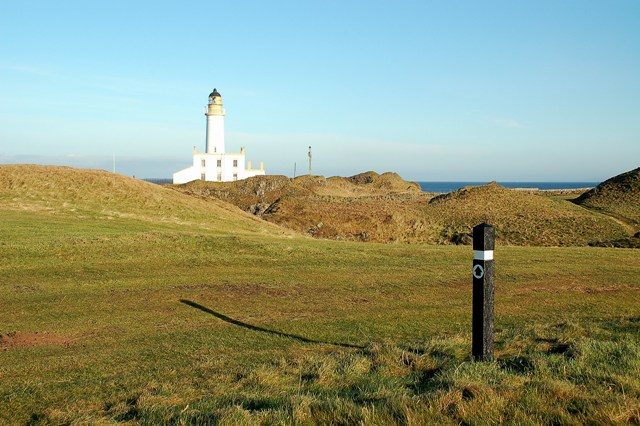
Head south and the A719 runs into links country. Turnberry is a few miles down the coast, with its lighthouse standing on the point and Ailsa Craig sitting out in the firth like a dropped stone. You do not need to play to enjoy the drive, though if you do play, Scotland’s golf coast is one of the reasons people come to Ayrshire in the first place. The village of Girvan a little further on has a beach, a promenade and an unusually good playpark if the Culzean ones have not exhausted everyone.
South into Dumfries and Galloway
Keep going and the coast road delivers you into Dumfries and Galloway, which is the quietest good driving in southern Scotland and consistently overlooked by visitors racing north. If you are coming up from England this is the natural approach to Culzean, and it makes far more sense than doubling back from Glasgow. Going the other way, Glasgow is close enough that Culzean works as a day trip from the city, and basing yourself in Ayr or Glasgow both work for a visit.
Frequently asked questions
How do you pronounce Culzean?
Cull-ANE, with the stress on the second syllable and the z silent. The z is a survival of an old Scots letter that was written like a z but sounded closer to a y, and it has caught out visitors for two centuries. Staff hear every possible mangling daily and will not blink, but you may as well get it right.
How long do you need at Culzean Castle?
Plan on four to five hours as a couple. Stretch that to a full opening day with children, since the play parks and the beach swallow an afternoon between them. The two-hour visit that most people budget for gets you the interior and the terrace and nothing else, which is why so many leave flat.
Is Culzean Castle free with National Trust membership?
A Trust card gets you through the gate and into the car park at no charge. Members of the National Trust in England, Wales and Northern Ireland should check the current reciprocal arrangement between the two charities before travelling, though — the terms have shifted over the years and can depend on how long you have held your card.
Is Culzean Castle open in winter?
The house closes for the winter, typically from early November until around late March. The country park generally stays accessible outside the main season, though opening hours shorten and several of the cafes, the play parks and the walled garden run reduced or seasonal hours. Check the current listing before making a winter trip, and see our guide to Scotland in winter for what else is running.
Can you stay at Culzean Castle?
Yes. The Eisenhower Apartment on the top floor of the castle takes overnight guests, and there are around eight further self-catering properties across the estate, including a flat inside the castle’s west wing, a cottage in the stable block and the clocktower. They book up well ahead for summer weekends, and they are a strong option for a romantic few days in Scotland.
Do you need to book Culzean Castle tickets in advance?
General admission does not normally require pre-booking — you can turn up and pay at the gate. Special events, cave tours and the holiday properties do need booking. On peak summer weekends arriving near opening is still worth doing, less for the queue than because the estate is much better before the middle of the day.
Is Culzean Castle good for children?
Unusually so. The play parks are among the best attached to any Scottish heritage site, there is a beach with rock pools, a deer park, a pond, woodland to run in and a trail inside the house that gives children something to hunt for room by room. Dogs are welcome on leads in the grounds, though only assistance dogs go inside buildings and play areas.
What was filmed at Culzean Castle?
The 1973 film The Wicker Man used Culzean as a location, which is why the house occasionally turns up on film-location itineraries. It is a far quieter proposition than the Outlander filming locations that draw crowds elsewhere in Scotland, and you will not be sharing the place with tour groups tracing scenes.
Final thoughts
Culzean rewards the visitors who slow down. The people who leave disappointed are almost always the ones who treated it as a castle stop between two other things, gave it ninety minutes, and never got past the formal terrace to the parts that make it worth the drive.
Give it a morning and an afternoon. Walk to the Swan Pond the long way. Go down to the shore. Stand under Adam’s oval staircase and look up, then find a window in the round drawing room and watch the light move on the firth. That is a day out, and it is a better one than the castle billing suggests. If you are still shaping the trip around it, our trip planning guide and the best time to visit Scotland will help you land the date, and Doune is worth a look if you want a genuine medieval contrast on the way north.
About the author: This guide was written and is maintained by the ScotlandTourism.org editorial team — travel writers who’ve spent years exploring Scotland’s cities, Highlands and islands, from bagging Munros to chasing the perfect dram. We update our guides regularly to keep prices, opening details and advice current.
Last updated: October 2026. Prices and opening times change — always check the official site before you travel.
Photo credits
All images are used under their respective Creative Commons or public-domain licenses:
- Culzean Castle in Ayrshire, Robert Adam’s country house with its mock battlements and… — Kenneth Mallard, CC BY-SA 2.0, via Wikimedia Commons
- The deliberately ruined arch on the walking approach to Culzean Castle — Richard Sutcliffe, CC BY-SA 2.0, via Wikimedia Commons
- The archway into Home Farm, the visitor hub at Culzean Castle and Country Park — Billy McCrorie, CC BY-SA 2.0, via Wikimedia Commons
- Flintlock pistols and swords fanned across the armoury wall inside Culzean Castle — Billy McCrorie, CC BY-SA 2.0, via Wikimedia Commons
- The Fountain Court terrace garden below Culzean Castle on the Ayrshire coast — Billy McCrorie, CC BY-SA 2.0, via Wikimedia Commons
- Tulip borders and glasshouses in the walled garden at Culzean Castle — Kenneth Mallard, CC BY-SA 2.0, via Wikimedia Commons
- Swans on the Swan Pond in Culzean Country Park, with the ornamental pond building behind — Anthony Parkes, CC BY-SA 2.0, via Wikimedia Commons
- A woodland path through Culzean Country Park in South Ayrshire — Billy McCrorie, CC BY-SA 2.0, via Wikimedia Commons
- The Gas House on the Culzean estate, one of around 40 buildings scattered through the… — LornaMCampbell, CC BY-SA 4.0, via Wikimedia Commons
- A rocky Ayrshire beach on the coast near Culzean, looking out across the Firth of Clyde — Mary and Angus Hogg, CC BY-SA 2.0, via Wikimedia Commons
- A lighthouse on the Ayrshire Coastal Path a few miles south of Culzean Castle — Mary and Angus Hogg, CC BY-SA 2.0, via Wikimedia Commons