The usual mistake goes like this. You type “Outlander filming locations Scotland” into a search bar, take the long list it hands back, plot every site onto one map, and find you have designed a fortnight of driving. Several of those stops amount to a glimpse on screen and a layby.
Here is the thing nobody says clearly enough about Outlander filming locations in Scotland: they are not spread evenly across the country. The famous ones cluster, and they cluster tightly. Doune, Culross, Blackness, Midhope, Linlithgow, Hopetoun, Callendar House and Glasgow’s cathedral precinct all sit within roughly an hour of one another, in the belt between Glasgow, Stirling, Falkirk and West Lothian. That means a proper day out from either city, by car, and most of it doable by train and bus. Everything else is a different trip entirely.
Outlander filming locations Scotland: the short answer
Most of the well-known locations sit in a compact belt between Glasgow, Stirling, Falkirk and West Lothian: Doune Castle as Castle Leoch, Midhope as Lallybroch, Culross as Cranesmuir, Blackness as Fort William. A second, smaller cluster sits around Inverness. Everything else is scattered, and only worth the drive if you are already passing.
VisitScotland publishes a downloadable Outlander filming locations map with the full set of pins on it, and it is worth having. What follows is different: the version I would actually drive. Three circuits rather than an alphabetical list, and for each place the thing that catches people out — what the site really is, and how much of it you get to see.
The locations at a glance
| Place | On screen as | Run by | Adult entry | Circuit |
|---|---|---|---|---|
| Doune Castle | Castle Leoch | Historic Environment Scotland | around £10 online | Central Belt |
| Midhope Castle | Lallybroch | Hopetoun Estate (private) | around £9.50, exterior only | Central Belt |
| Culross | Cranesmuir | National Trust for Scotland | village free; palace around £14 | Central Belt |
| Blackness Castle | Fort William | Historic Environment Scotland | around £7.50 online | Central Belt |
| Linlithgow Palace | Wentworth Prison | Historic Environment Scotland | around £10 online | Central Belt |
| Falkland | 1940s Inverness | NTS palace, public village | village free; palace around £19 | Highland run |
| Clava Cairns | The stones, in spirit | Historic Environment Scotland | free, unstaffed | Highland run |
| Kinloch Rannoch | Craigh na Dun | working farmland | free — and nothing to see | Skip |
Circuit one: the Central Belt day
This is the circuit that surprises people. Almost everything iconic is here, within a triangle you could drive round in a couple of hours without stopping. If you only have one day, spend it here. It also happens to be excellent castle country in its own right, which matters if half your party has never watched an episode — there is a good case for treating it simply as one of the better castle days in Scotland that happens to have a television show attached.
Doune Castle, near Stirling — Castle Leoch
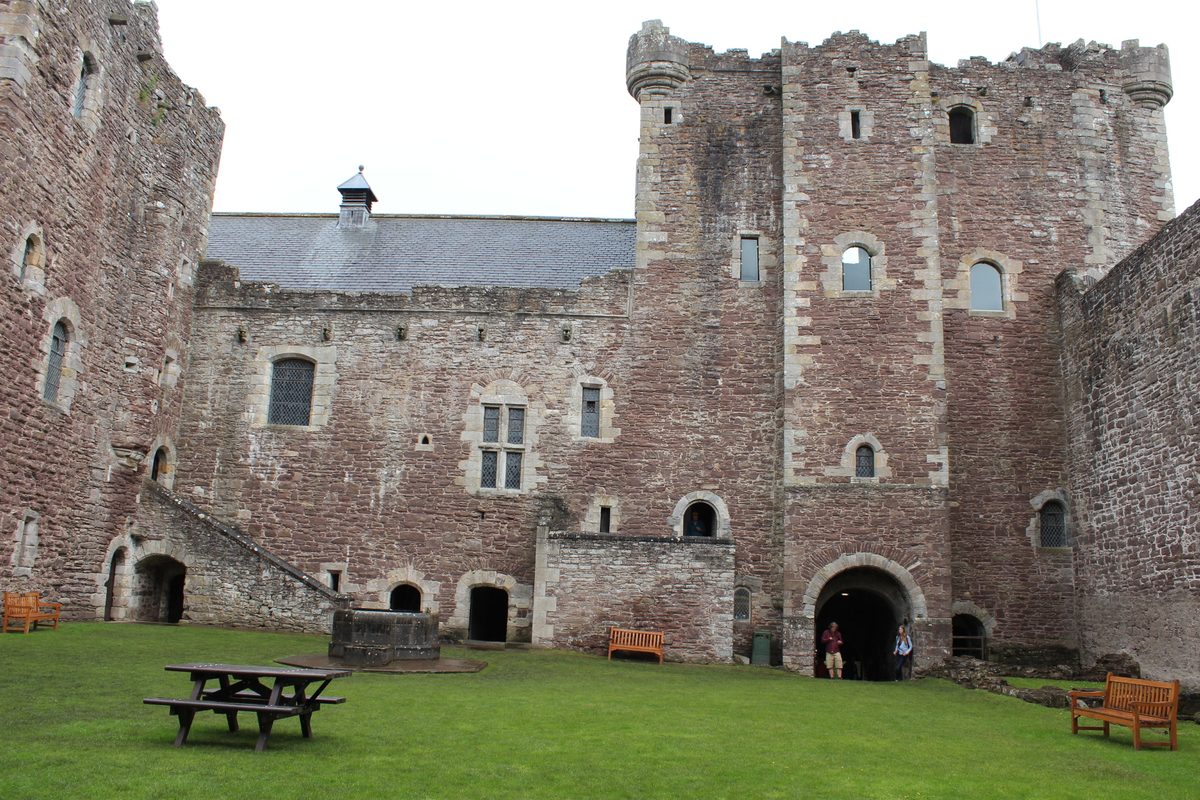
Start here if you start anywhere. Doune is the one location on this list that would be worth your money with no television connection at all: a compact, unusually complete 14th-century courtyard castle on a bend of the River Teith, with a great hall and a kitchen tower that still feel like rooms rather than ruins.
It is run by Historic Environment Scotland, open year round, and entry is around £10 for an adult if you book online at the time of writing, a pound more if you turn up and pay at the door. Book online anyway — it is cheaper and it guarantees you a slot on a July afternoon.
The audio guide is the reason to linger. It is narrated by both Sam Heughan, who plays Jamie, and the late Terry Jones, because Doune was also the castle in Monty Python and the Holy Grail and the pilot episode’s Winterfell in Game of Thrones. Hearing a Python routine and a Jacobite clan seat described over the same set of stairs is very funny indeed. One practical note: it now runs on your own phone and needs an internet connection, so it is not a handset you collect at the desk.
Getting there without a car is easier than you would think. Dunblane station is about four and a half miles away and Stirling about eight and a half, both with direct trains from Edinburgh and Glasgow, and the 59 bus from Stirling takes roughly half an hour and drops you a short walk from the gate. Historic Environment Scotland has been running a discount for visitors who arrive by train, bus or bike — worth checking before you buy. Parking on site is limited and there is no provision for motorhomes or coaches, but the village has free car parks.
Midhope Castle, Hopetoun Estate — Lallybroch
Read this bit carefully, because more people are disappointed here than anywhere else on the trail.
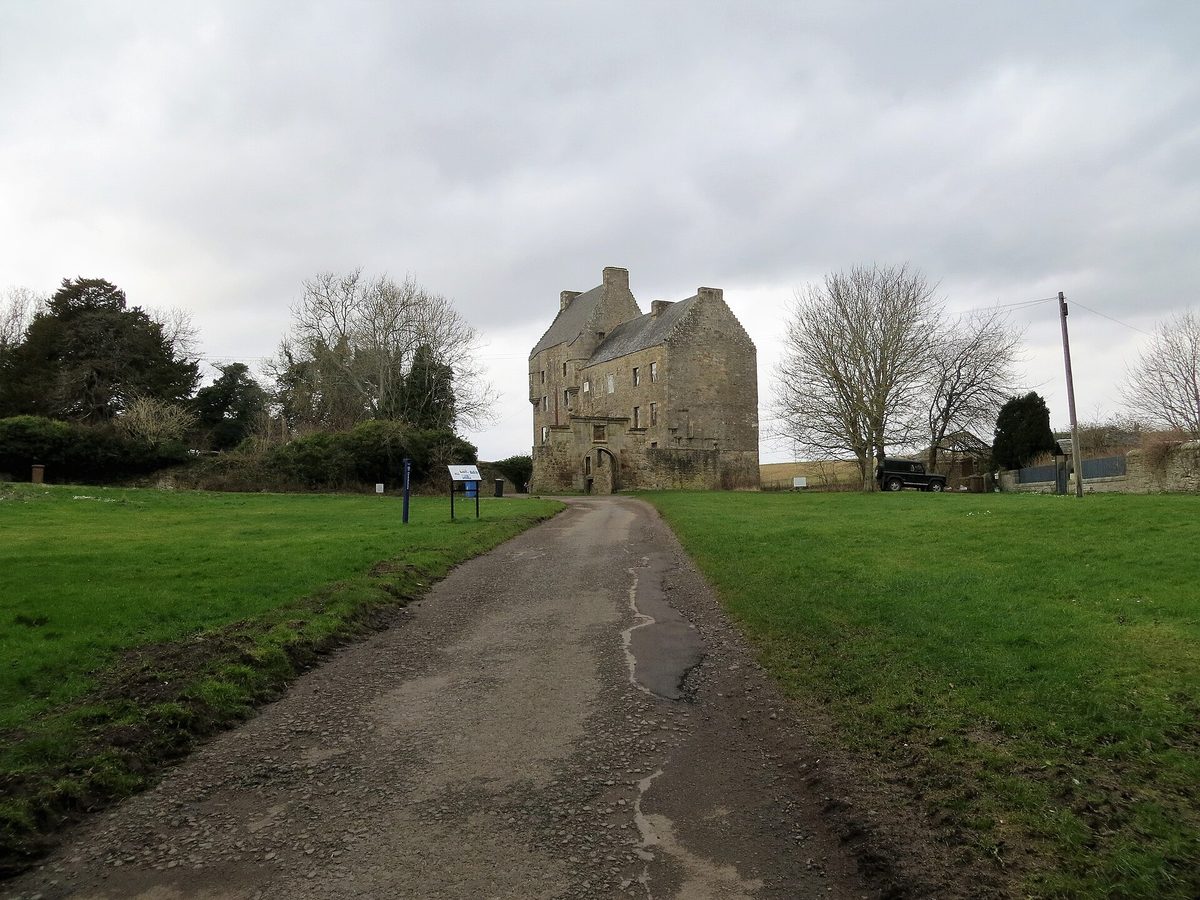
Midhope is a roofless 16th-century tower house standing in a field on the Hopetoun Estate, a few miles west of South Queensferry. It is derelict. You cannot go inside. The estate’s own wording is admirably blunt about it: the ticket buys you a photo opportunity, not a visit. Midhope supplied the exterior only, so the rooms you remember from the series — the hall, the kitchen, Jenny’s parlour — are not here. What is here is the archway, the courtyard, the front steps that Jamie walks up, and a pleasant burnside walk.
Entry is around £9.50 per person at the time of writing, booked online in advance and shown at a kiosk when you arrive. It has been opening seven days a week through 2026, roughly 9am to 5pm, but this is a working farm on a private estate and Hopetoun reserves the right to close at short notice for filming or farm work. Check the morning you go.
There is no public transport. None. The estate says so itself. It is a car, an organised tour, or a taxi you have asked to wait. If you are on foot, this is one to leave out.
Is it worth it? If Lallybroch means something to you, yes — there is a real jolt in walking up those steps, and twenty minutes and ten pounds is not much to pay for that. If it does not, you are paying a tenner to photograph a ruin in a field, and Blackness five miles down the road is a better castle for less money.
Blackness Castle — Fort William
Blackness is the one I recommend to people who are lukewarm about the whole exercise. It sits on a spit of rock in the Firth of Forth, shaped rather like a ship, and it played Black Jack Randall’s garrison at Fort William, including the flogging scene. Around £7.50 online for an adult. VisitScotland’s figures show visits here rising from 16,559 in 2014 to 77,326 in 2024, an increase of about 367 per cent — and it still feels quiet next to Doune.
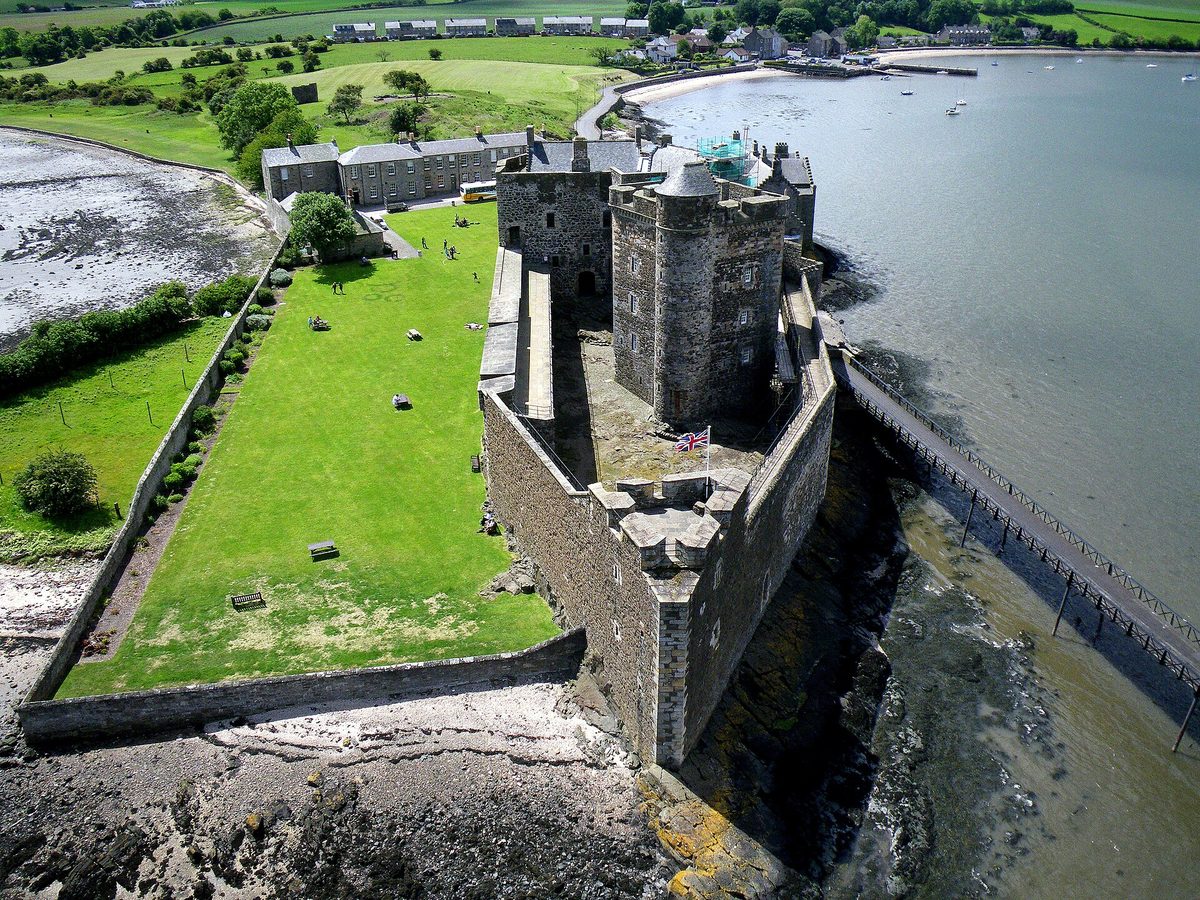
The tower stairs are steep and spiral, so bear that in mind if knees are an issue. The car park is small, restricted to ticket holders, and time-limited — about ninety minutes in summer — and staff do monitor it. By public transport you want Linlithgow station and then the F49 bus towards Bo’ness, which does not run at weekends, so check before you commit to a Saturday.
Linlithgow Palace — Wentworth Prison
Linlithgow is the easiest of the lot to reach: the palace is in the middle of the town, five to ten minutes’ walk from a station that is about fifteen minutes from Edinburgh and half an hour from Glasgow on a direct train. It stood in for Wentworth Prison, and the vast roofless quadrangle does the job of a dungeon rather well.
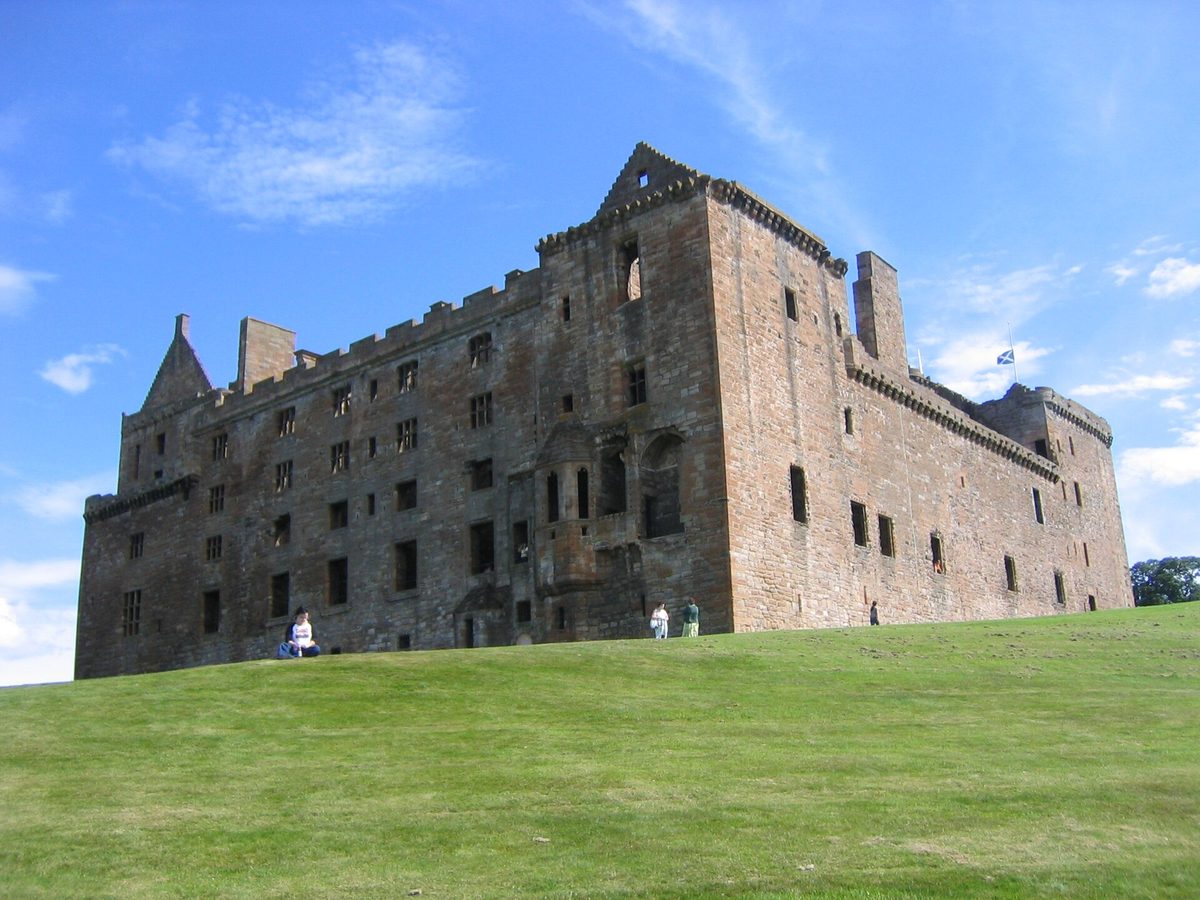
Be aware that parts of it are closed. The King’s Bed Chamber, the Court Kitchen and the North Range are not accessible. You still get the courtyard, the Great Hall, the Chapel Royal, Queen Margaret’s Bower and the fountain, which is plenty. But if you are budgeting around £10 for a complete palace, adjust your expectations. Height and width limits on the car park rule out campervans.
Hopetoun House — a great many things
Hopetoun claims around two dozen separate filming locations across several series, from the Duke of Sandringham’s Bellhurst Manor to a Paris townhouse to Lord John Grey’s Savannah residence. It is a stately home the family still live in, and the interiors are the point — the Red Drawing Room in particular.
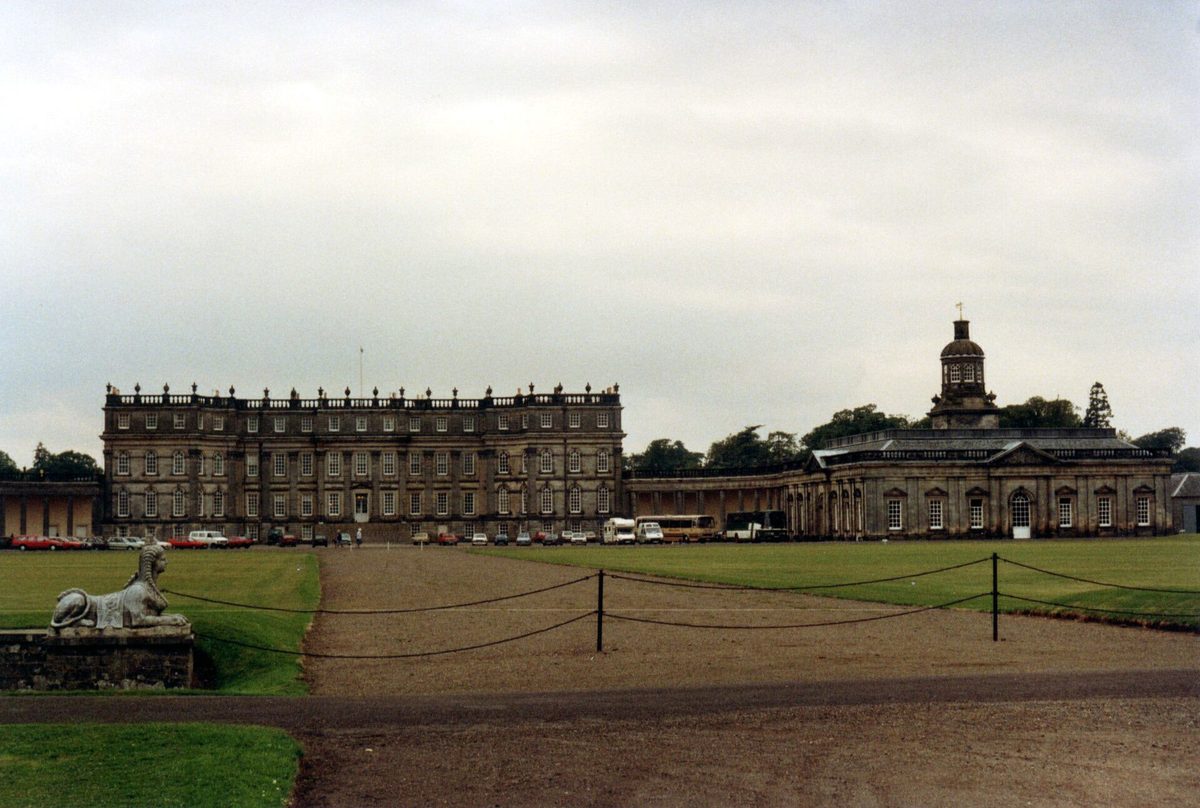
Two things to know. It is a separate ticket from Midhope, despite sharing an estate: house and grounds run at around £15, grounds alone around £7. And the season is short and full of gaps, with occasional whole days closed for events. During the visitor season there is a Friday 11.30am guided tour of Hopetoun’s house and grounds, with Midhope admission included for a self-guided visit, which is the efficient way to do both. The estate’s site lists the next season’s tour dates. Ring ahead.
Culross, Fife — Cranesmuir
Culross is my favourite stop on this circuit and the one I would send someone to who does not care about the show at all. It is a preserved 16th and 17th-century royal burgh on the north shore of the Forth: cobbled wynds, crow-stepped gables, an ochre-painted palace, and, importantly, a village where people actually live. Treat it like somebody’s street, because it is.
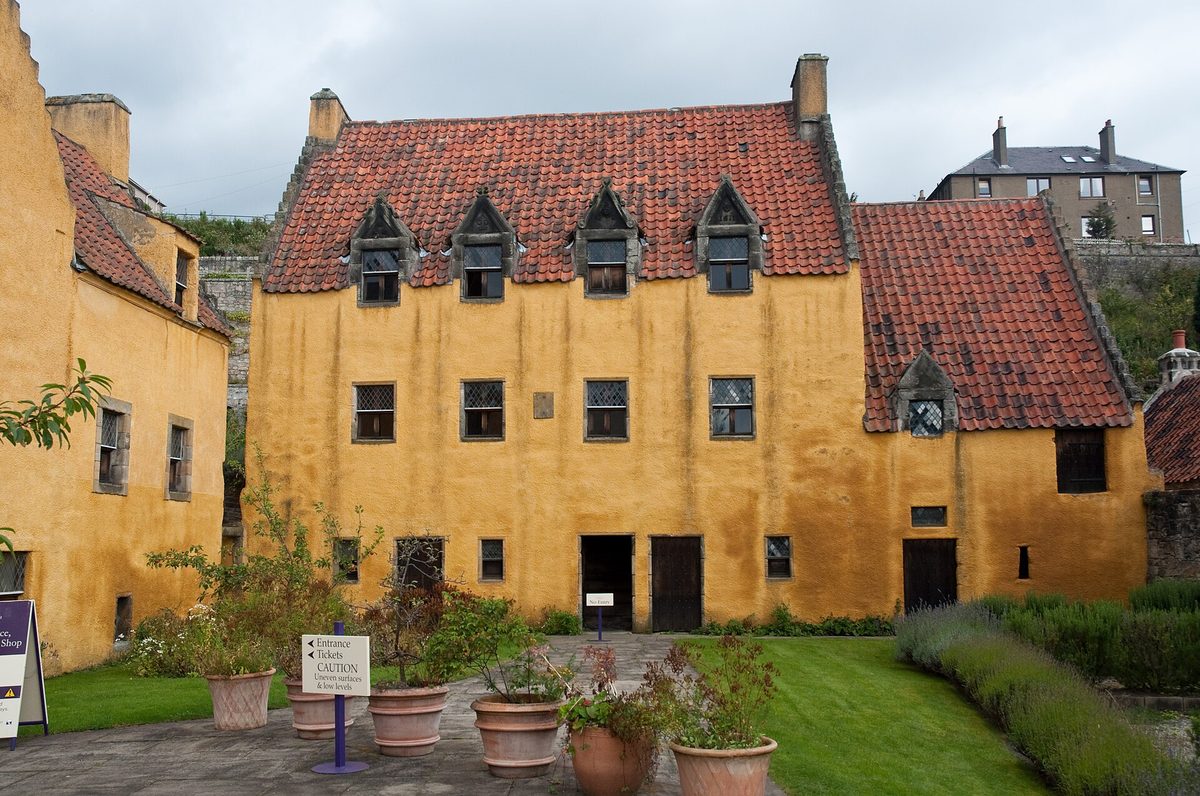
The National Trust for Scotland looks after the Palace, the Study and the Town House. Walking the burgh itself costs nothing — the streets, the Mercat Cross and the harbour front are all public. The Palace and its garden run to around £14 for an adult, and the garden alone around £5.
The catch is the cap. To protect the old timber beams, the Palace admits only eight people every fifteen minutes, members included, and you cannot book online — tickets are sold at the Town House shop on the day. On a busy August afternoon that queue is real. Go early. In October the Palace opens 10am to 4pm with last entry at 3pm, and the Palace and garden close from 1 November to 31 March 2027.
The Trust’s re-created kitchen garden behind the Palace is quietly one of the best things in Fife, full of medicinal planting, and Geillis Duncan’s dress from the series is on display inside. The burgh appears across several series, standing in for Cranesmuir and later for other places entirely.
Callendar House, Falkirk
Free, which makes it an easy add-on. The Georgian Kitchen here was the kitchen of the Duke of Sandringham’s house, and the kitchens are open to the public with costumed interpretation. The house is run by Falkirk Council and opens every day except Tuesday, roughly 10am to 5pm. Both Falkirk Grahamston and Falkirk High stations serve the town, and Grahamston is a walkable mile and a half. There is a large park around it if you have children who have run out of patience with castles.
Glasgow’s cathedral precinct and West End
Glasgow does not feel like an Outlander destination, but it quietly holds several locations and they are all free.
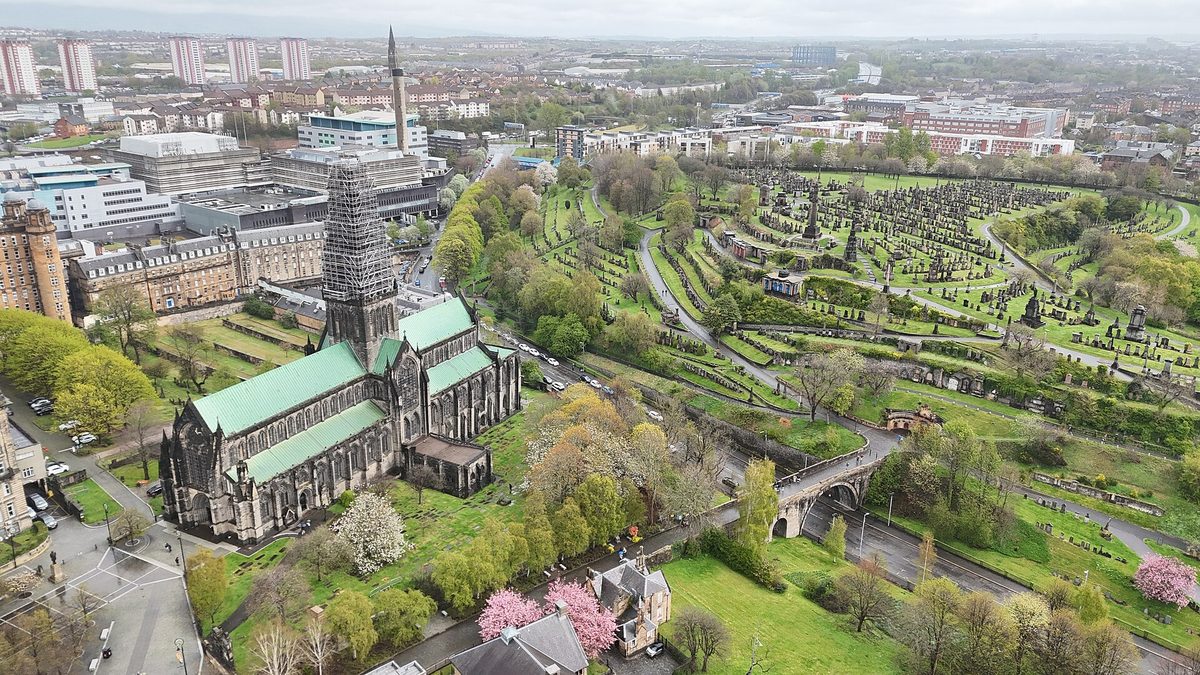
Glasgow Cathedral’s lower church — the crypt — was the interior of L’Hôpital des Anges in the Paris storyline. Entry is free with donations welcome, and you need no ticket to go in; it is a working congregation, so hours shift around services. Guided tours can be booked ahead. It is a superb building in its own right, one of the few Scottish medieval cathedrals to survive the Reformation more or less whole. Note that the hospital’s exteriors were filmed in Prague, not here.
While you are on that corner: Provand’s Lordship across the road, the oldest house in the city, reopened in 2024 after a long repair programme and is free. It has no Outlander connection whatsoever — it is simply two minutes away and worth ten. The Necropolis behind the cathedral is the same deal. My wider guide to visiting Glasgow covers the rest of that quarter.
Over in the West End, the University of Glasgow’s cloisters and Main Building doubled as Harvard.
How to string the Central Belt day together
My preferred order, driving from Edinburgh: out to Midhope for opening time, Blackness next, Linlithgow for lunch, then over the Forth to Culross mid-afternoon, and Doune late if you are quick or on a second day. From Glasgow, reverse it — Doune first, then down through Falkirk to Linlithgow and Blackness. Either way you are looking at roughly 70 miles and four or five hours of stopping time. Do not try to add Glasgow’s sites on the same day; give the city its own morning.
It slots neatly into a wider trip, too. If you are basing yourself in the capital, this is one of the strongest day trips out of Edinburgh going, and it pairs naturally with a proper castle day at Stirling Castle, which is twenty minutes from Doune and a considerably bigger building than anything on this trail.
Circuit two: the Highland run
This is a separate journey with an overnight in it, and it is the one where the driving distances get real. Falkland is the hinge — it is in Fife rather than the Highlands, but it is the natural first stop if you are heading north from Edinburgh.
Falkland, Fife — 1945 Inverness
Falkland is a small stone village under the East Lomond hill, and its square stood in for Inverness in the post-war scenes: the Covenanter Hotel became Mrs Baird’s guest house, and the Bruce Fountain in the middle of the square appears repeatedly.
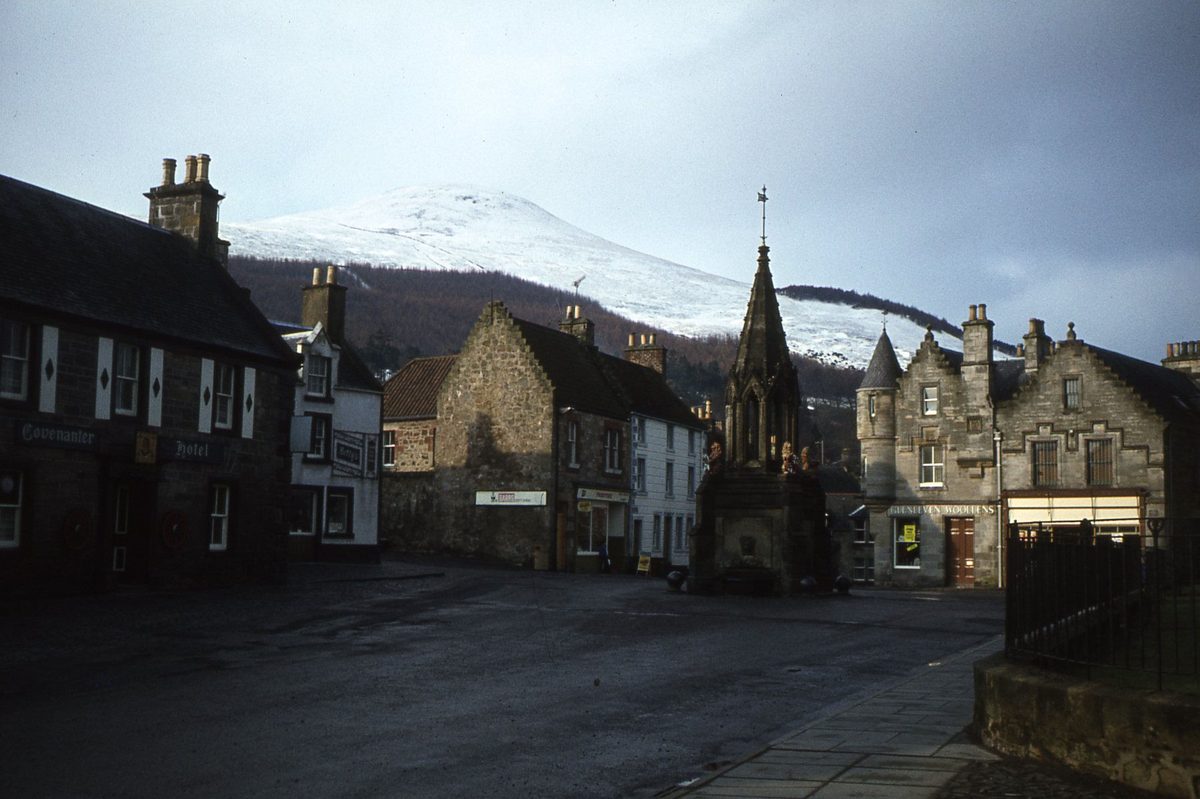
The village costs nothing. There is a free car park, several tea rooms, and the Covenanter is a hotel with a coffee shop, so ring ahead if you were planning to stay. Falkland Palace, run by the National Trust for Scotland, is a separate proposition at around £19 for an adult, and it is open from spring to autumn and closed in winter. The Apothecary room was explicitly modelled on its use during filming, and the physic garden and the real tennis court are lovely. But at nineteen pounds, if it is the filming you came for, I would think hard. The village is the location; the palace is optional.
No station in Falkland. Markinch is about an hour from Edinburgh Waverley by train, and then it is a bus or a taxi; check Stagecoach for current bus times. Ignore any journey planner that offers you “Falkland Road” station — it closed long ago.
Glencoe
Glencoe supplied the sweeping backdrop of the opening titles and various Highland scenes, and it does not need a television show to justify itself. The glen is free and open all year. The National Trust for Scotland’s visitor centre is also free to enter; you pay around £4 to park a car, £6 for a motorhome, and it is free for members.
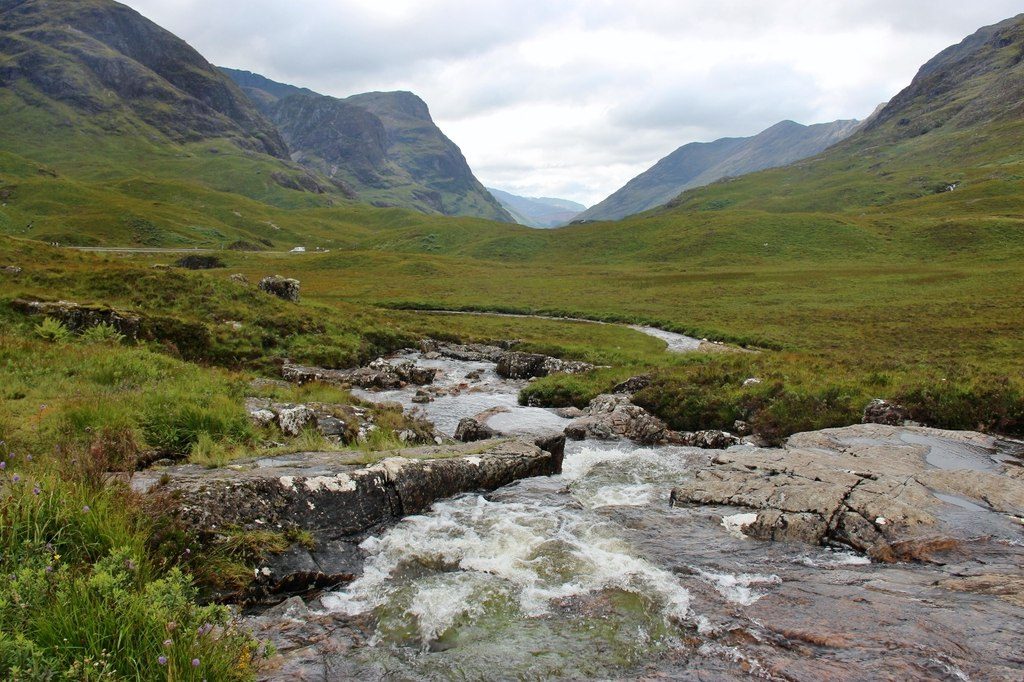
Be honest with yourself about what you are doing here. There is no set to find and no marked viewpoint. You are driving the A82 through one of the great mountain passes in Britain and stopping at the laybys, which is a fine way to spend two hours regardless. Daily Glasgow to Fort William coaches stop at the visitor centre junction, so this is one of the few Highland stops you can reach without a car. There is far more to do in the area than a photo stop — my roundup of what to do in and around Glencoe goes into the walks properly.
Clava Cairns, near Inverness
The Clava Cairns are not an Outlander set. They are a Bronze Age cemetery, roughly 4,000 years old: two passage graves and a central ring cairn, ringed by standing stones in a beech grove east of Inverness, near Culloden. They are widely understood to have inspired the idea of Craigh na Dun, and that association has brought a great many visitors to a site that has no staff, no ticket and no barriers.
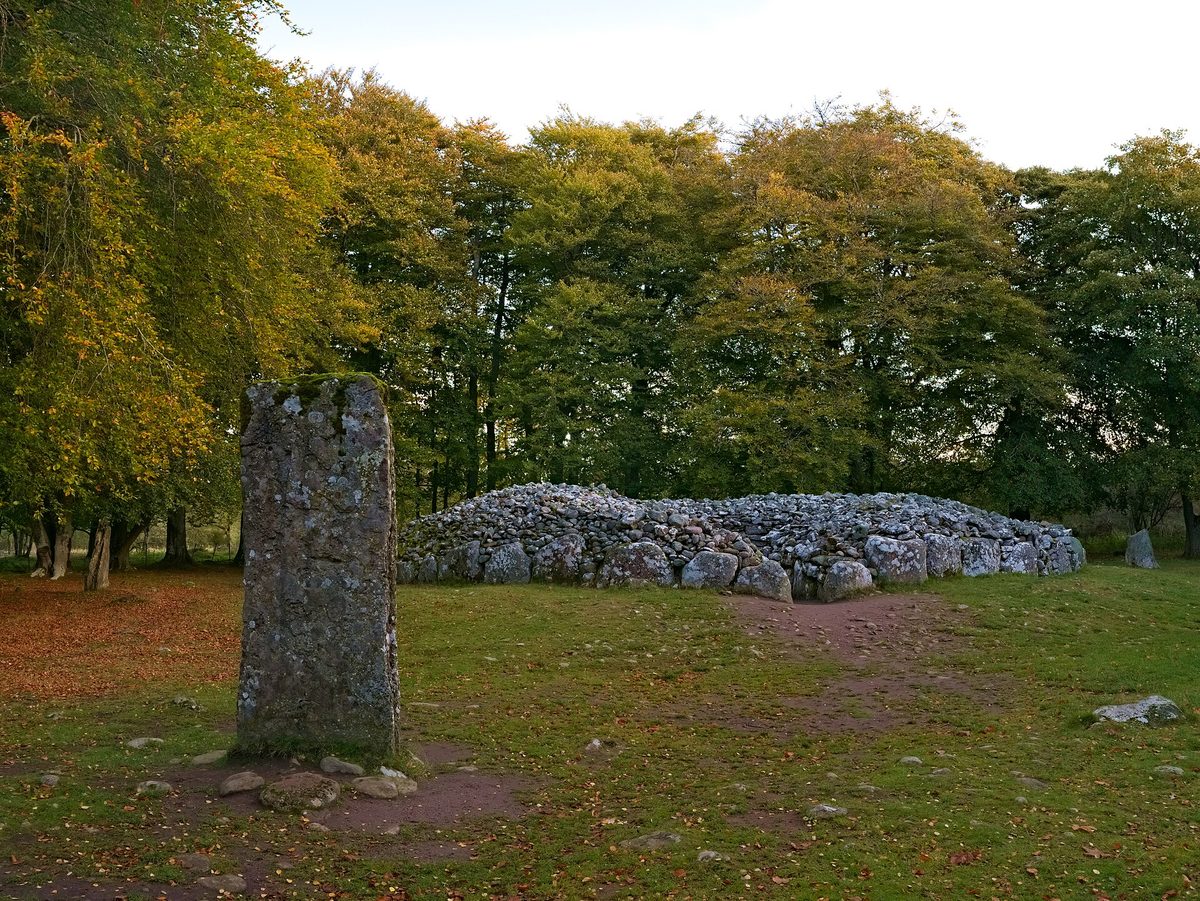
It is free, open year-round, and signposted from the B9091 about 300 yards east of Culloden Battlefield. Treat it gently. Historic Environment Scotland’s position is unambiguous: leaving items at the stones “constitutes vandalism, which is a criminal offence”, and visitors should “leave it exactly as they find it”.
So: go, by all means. It is a remarkable place and free. Take photographs, walk the ring, read the interpretation boards. Do not climb on the cairns, do not move a single stone, and do not leave a coin, a ribbon or a note. If enough people ignore that, the gate closes for everyone.
There is no bus to Clava, so drive — there is a car park, and the road in has a 17-tonne weight limit.
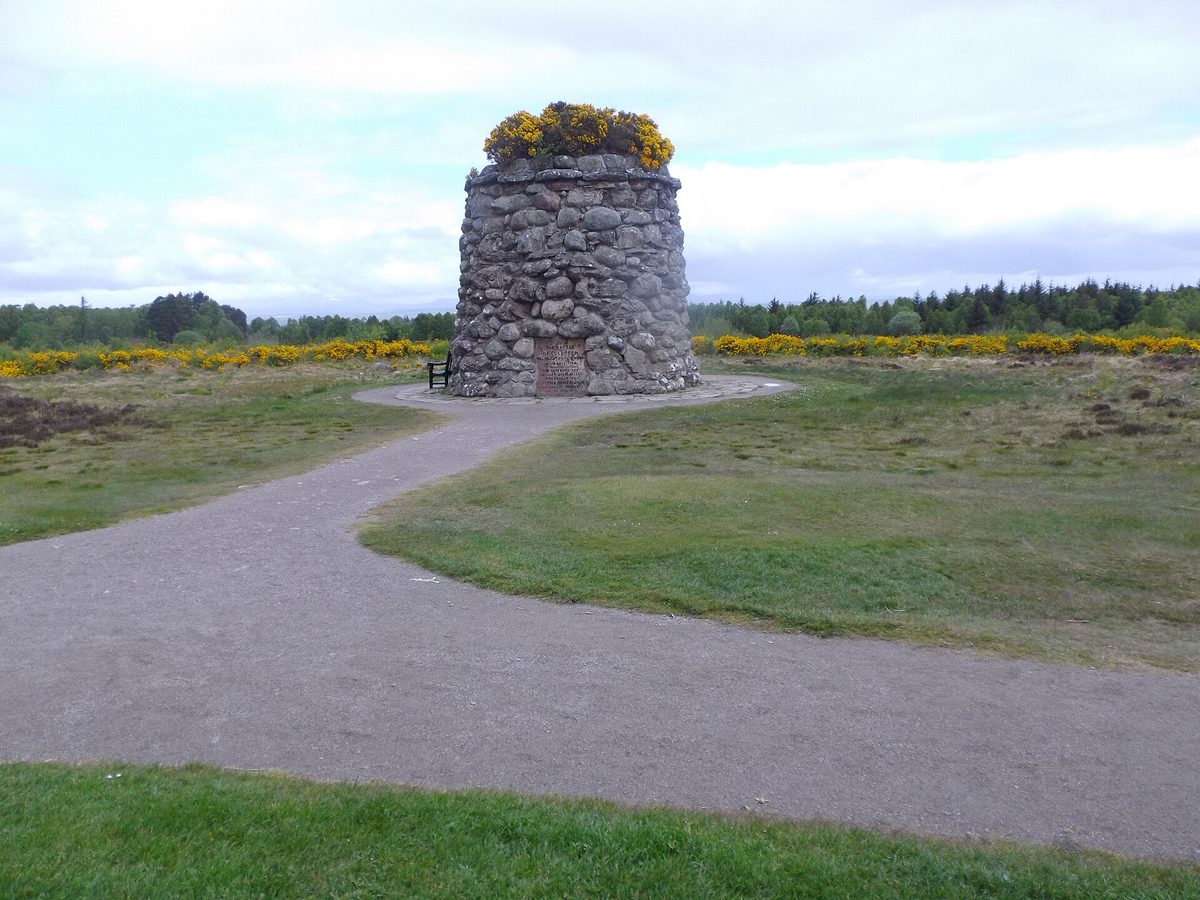
Culloden Battlefield
Ten minutes from Clava and the emotional centre of the whole story. The National Trust for Scotland’s visitor centre costs around £12.50 for an adult, or around £16.50 with a guided battlefield walk, which must be pre-booked. Parking is a further £5 unless you are a member.
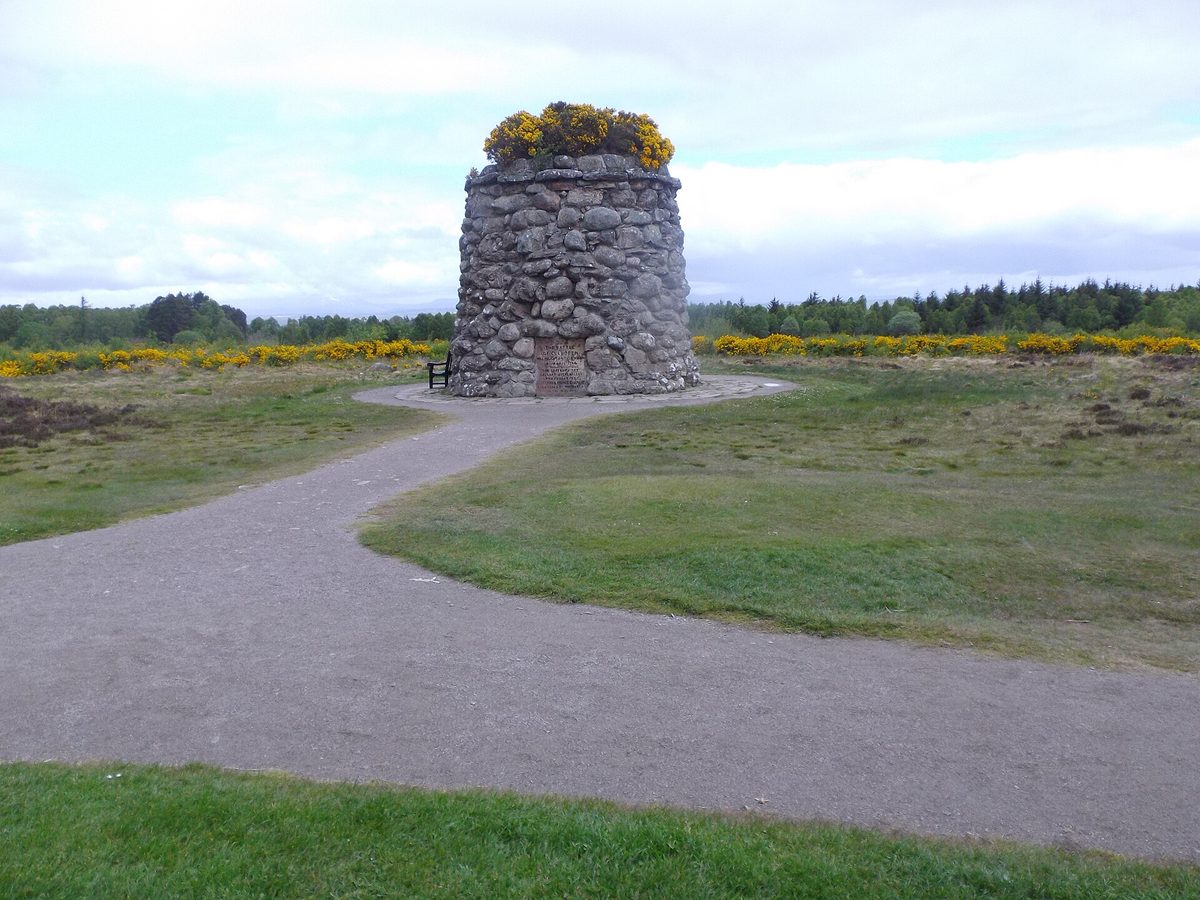
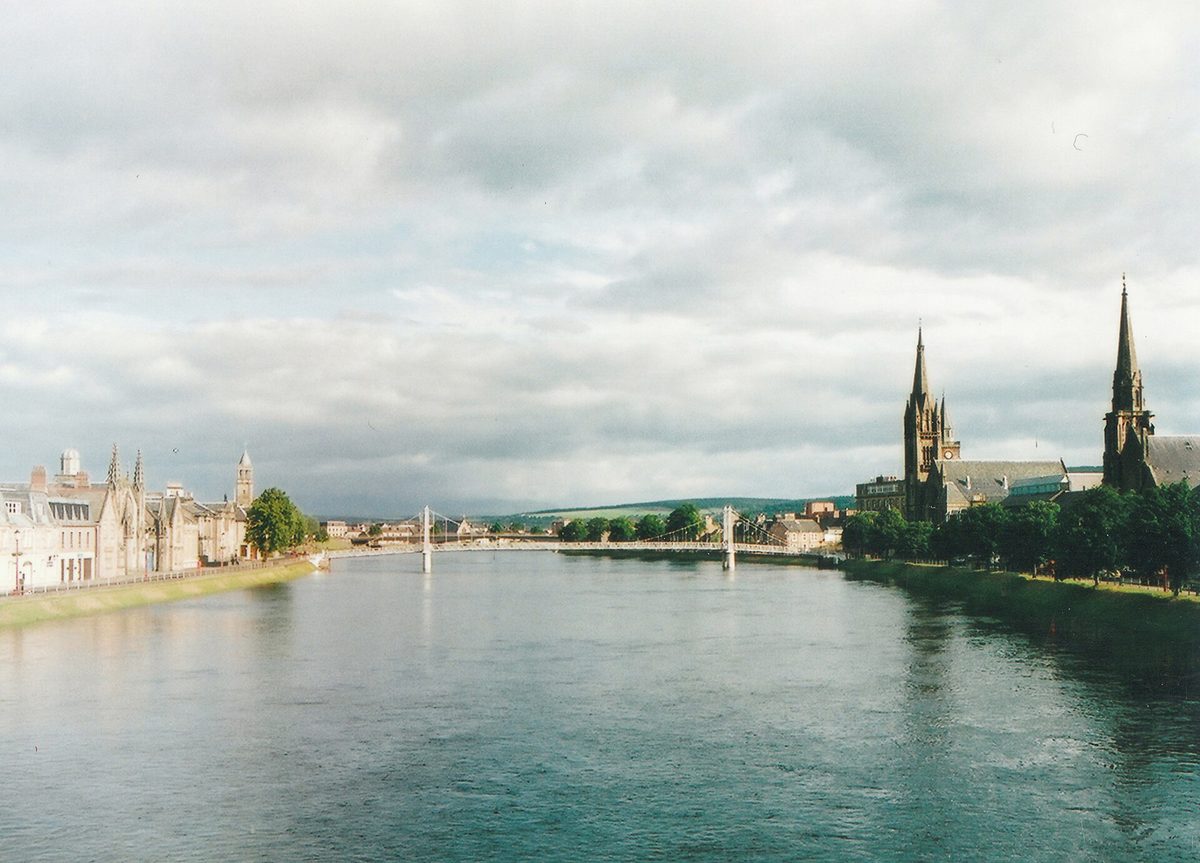
The moor itself can be walked without a visitor centre ticket, which is worth knowing if you are travelling on a budget, though you will get far more out of it with the exhibition first. Give it two hours. It is a burial ground and it is treated as one; the clan grave markers along the path are the part that stays with you. If you are basing yourself in the area, my guide to Inverness and Loch Ness covers what else is within reach.
Highland Folk Museum, Newtonmore
Just off the A9 at Newtonmore, south of Inverness, and to my mind the most rewarding stop on the northern circuit. It is an open-air museum of relocated and reconstructed Highland buildings spread over a mile-long site — more than thirty of them, including a re-created 1700s township of turf-and-timber houses with peat fires actually burning inside. That township is where the rent-collecting scenes were filmed, and unlike everywhere else on this list it has not been dressed up for the cameras, because it was already a working reconstruction.
Entry is free, donations welcomed, but parking now costs around £3 for a car, so it is not quite the wholly free day people expect. It is open from spring to autumn and closed in winter; the 2027 season starts on Friday 26 March. Newtonmore station is a walkable mile and a bit away. Wear proper shoes; the ground is uneven and the lintels are low.
Kinloch Rannoch, and the truth about Craigh na Dun
I will say this plainly, because a surprising number of people drive two hours to find out the hard way. There are no standing stones at Craigh na Dun. There never were.
The circle was a set: artificial stones made for the production and put up for filming near Kinloch Rannoch. There is no monument, no sign, no car park, no ticket office and no toilets. The site is on private farmland where visitors are tolerated by the landowner’s goodwill and may quite reasonably be asked to leave if there are sheep being moved.
What you can genuinely see is the landscape — Schiehallion, Loch Rannoch, some of the loveliest road in Perthshire — and, north of Aberfeldy outside the Braes of Foss car park, the actual Craigh na Dun road sign prop from series one, which still stands. That is a nicer souvenir photograph than an empty field.
Getting there takes longer than any map application will tell you: the roads in are slow and winding, even from Pitlochry, and at the end of them is a field on private land. If you want real standing stones, go to Clava, or Kilmartin Glen, or the Ring of Brodgar on Orkney. If you want Perthshire, go for Perthshire — my Pitlochry and Highland Perthshire guide makes the case for the area on its own terms.
Circuit three: the far-flung extras
These are the ones to slot in only if the geography already suits you. None of them justifies a dedicated journey.
Drummond Castle Gardens, Perthshire
The formal parterre here doubled as the gardens of Versailles, and it is a first-rate piece of Scottish garden design, laid out as a St Andrew’s cross and best seen from the terrace above.
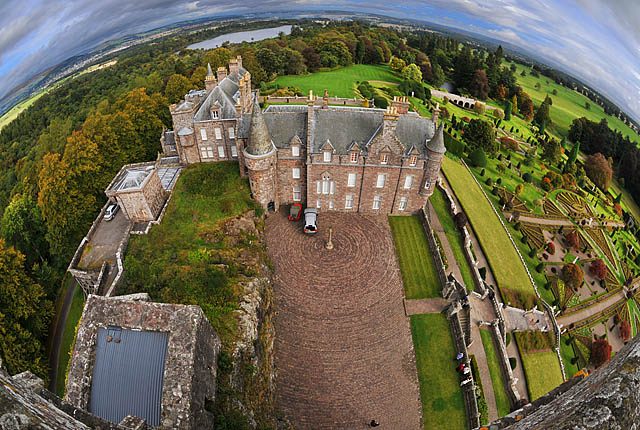
Around £12.50 for an adult, open daily from May to the end of October only. The castle itself is not open — gardens only, so do not arrive expecting rooms. No booking needed. There is no published public transport information, so assume you are driving; Crieff is about three miles away.
Preston Mill and Newhailes, East Lothian
Preston Mill is the working water mill Jamie repairs, and it is one of the prettiest buildings the National Trust owns. Access is now by guided tour only, four tours a day of about an hour, roughly £11, Thursday to Monday between March and the end of October. Numbers are capped daily and entry is not guaranteed without pre-booking, so book. East Linton station is a fifteen-minute walk, which makes this the rare rural location that works by train.
Newhailes, near Musselburgh, is a Season 4 location — its library and dining room played Governor Tryon’s house in North Carolina, not anywhere Scottish. House access is mostly by guided tour, around £17 and best booked ahead, with self-guided visits once a month from April to October (the dates are on the Trust’s Events page) and a £5 car park charge for non-members; the estate is open daily, dawn to dusk, all year. Newcraighall station is about twenty minutes’ walk.
Craigmillar and Aberdour castles
Craigmillar, on the southern edge of Edinburgh, was Ardsmuir Prison. It is around £7.50 online, open year round, and a fine ruin that most visitors to the city never bother with. Parking is very limited.
Aberdour Castle in Fife appeared as the monastery in France, and it has the best public transport connection of anything on this entire list: a five-minute walk from Aberdour station, direct from Edinburgh. Around £7.50 online. In winter it closes on Thursdays and Fridays and shuts for an hour at lunch.
Dysart Harbour, Deanston and Tibbermore
Dysart Harbour near Kirkcaldy doubled as the port of Le Havre. It is free and one of the harbours Fife Council looks after, though parts of the harbour path have been closed off for rockfall safety, so check the council’s harbours page before you go. Deanston Distillery, five minutes from Doune, used its maturation warehouse for the Le Havre wine warehouse; the distillery is open seven days and does tours, so check tour times and prices with it before you build a day around it. It is a handsome former cotton mill on the Teith and a decent stop on any Scottish distillery itinerary regardless.
Tibbermore Church west of Perth was the interior for the witch trial. It is a beautifully unrestored Georgian kirk with box pews, now cared for by Historic Churches Scotland — but it is open by arrangement only, not on a published schedule, and there is space for about two cars. Do not simply turn up.
Edinburgh’s Old Town
Bakehouse Close off the Canongate is the print shop close, and Tweeddale Court appears too. Both are free, both take five minutes, and both are already on the route of any walk down the Royal Mile. Do not make a special trip; simply know where they are as you pass. The same applies to the World’s End pub at the foot of the High Street, which fans connect with the third book and which is a perfectly good pub in any case.
Tickets, memberships and what to book ahead
This is where the trail costs people money unnecessarily, because the locations split across three different operators and no single card covers them all.
Historic Environment Scotland runs Doune, Blackness, Linlithgow, Craigmillar, Aberdour and Glasgow Cathedral. Its Explorer Pass is a single ticket valid for fourteen consecutive days, around £48 for an adult at the time of writing, with cheaper concession, child and family rates. Passes are limited and often sell out a week or more ahead in summer. Annual membership works out at around £64 by direct debit, so if you are visiting Edinburgh and Stirling castles too, the maths tips towards membership fast — there is more on that in my Edinburgh Castle ticket guide.
The National Trust for Scotland runs Culross, Falkland, Culloden, Preston Mill, Newhailes and the Glencoe visitor centre. Adult membership runs at around £79 a year. It is a separate organisation and the two do not overlap: an HES card will not get you into Culross, and an NTS card will not get you into Doune. NTS membership does give reciprocal access to National Trust properties in England, Wales and Northern Ireland, which matters if your trip continues south.
Private estates — Midhope and Hopetoun, Drummond, Gosford — sit outside both schemes and are ticketed individually.
What actually needs booking, in order of urgency: Midhope (online only, no gate sales), Culloden guided walks, Preston Mill and Newhailes tours, and Hopetoun’s Friday Outlander tour. Book the HES sites ahead too: the popular ones often sell out in summer, and online tickets can save you money, £2.50 for an adult at Edinburgh Castle and £2 at Urquhart. What you cannot book at all: Culross Palace and Falkland Palace, both sold on the door only — which is exactly why you should arrive early at Culross.
Car, train and bus, or a guided tour
Driving is the honest answer for the Central Belt circuit. The roads are easy, the distances are short, and you will fit four sites into a day comfortably. Parking is the recurring irritation rather than the driving: Blackness is time-limited and ticket-holders only, and Culross’s cobbled lanes were not built for cars at all — use the East or West car park and walk.
Without a car, more is possible than most guides admit. Linlithgow, Falkirk and Aberdour are all short direct train rides from Edinburgh and Glasgow, and the stations are within walking distance of the sites. East Linton puts you fifteen minutes from Preston Mill. Doune needs a train to Stirling or Dunblane and then a bus. Glasgow’s locations are all on foot or a Subway ride. Where it falls apart is Midhope, which has no public transport at all, Culross, which needs a bus from Dunfermline, and everything in the Highlands beyond Glencoe. For a broader look at what is realistic, see my notes on getting around Scotland and the car-free Scotland itinerary.
Guided day tours out of Edinburgh and Glasgow typically cover three or four Central Belt sites in a day, and they solve the Midhope problem neatly since the coach handles the estate access. They cost more than doing it yourself and you lose the ability to linger. I would use one if I had a single day and no car, and drive it otherwise. There is a wider selection in my roundup of guided tours in Scotland. Screen-location touring in general has grown enormously here — the same thing has happened with the Harry Potter locations across Scotland, which overlap with this route more than you would expect.
What underwhelms, and what to skip
A guide that likes everything is no use to anyone, so here is where I would save your time.
Skip Kinloch Rannoch as a filming stop. Not because Perthshire is not lovely, but because there is nothing there. It is a long drive for an empty field.
Think twice about Midhope if you are not deeply invested. Ten pounds and a locked exterior is a poor deal next to Blackness at seven-fifty with an entire castle attached.
Falkland Palace, at present. The village is free and it is the village that was on screen. With the main apartments closed and the ticket at nineteen pounds, the value simply is not there this season. Have lunch in the square instead.
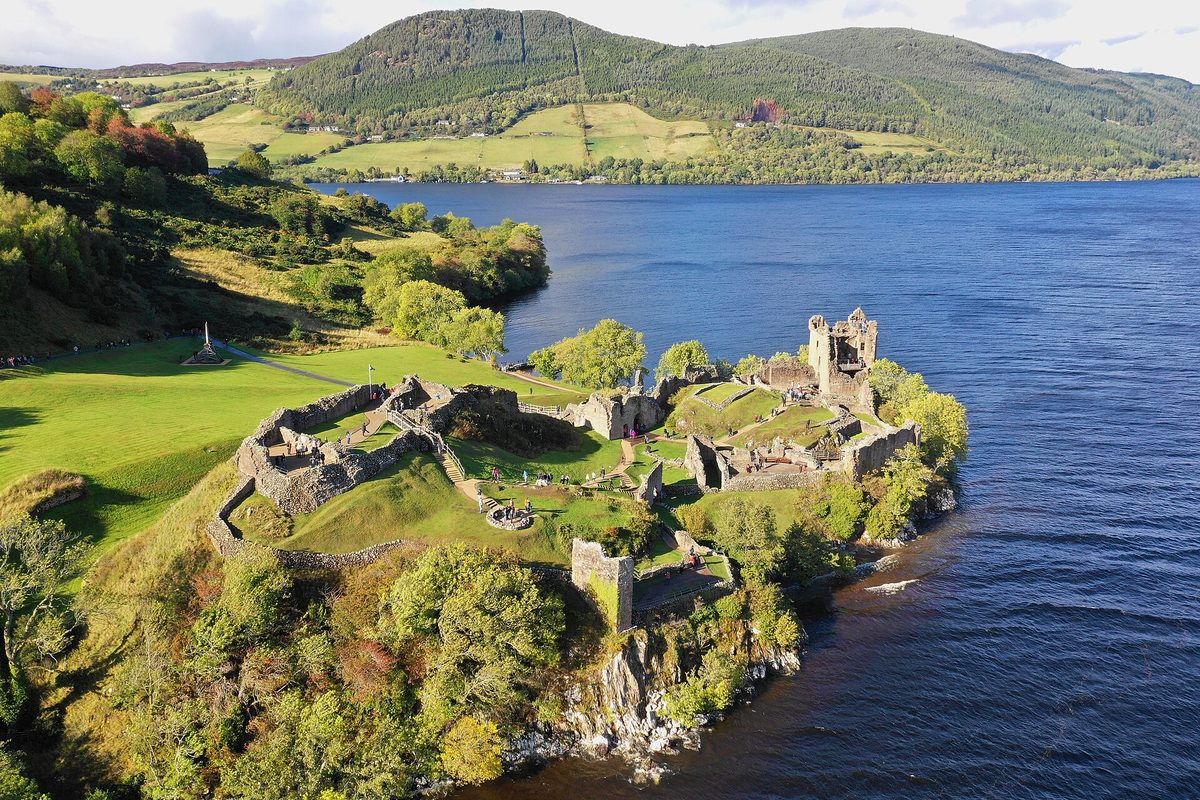
Do not chase Skye. A surprising number of lists include the Isle of Skye and Loch Ness. Neither has any Outlander filming. They are wonderful places and there are excellent reasons to visit the Isle of Skye — this is not one of them.
Do not attempt the whole list. Thirty locations is a fortnight of driving, and the marginal ones are seconds of screen time. Four good stops beat eleven rushed ones. If your total Scottish trip is a week, give this one day and spend the rest on the country itself — a seven-day Scotland itinerary that includes an Outlander day works far better than one built around it.
Common mistakes, briefly: arriving at Culross Palace at 2pm in August and finding a queue; booking a Saturday at Blackness without checking the bus; assuming an HES membership covers NTS properties; and turning up at Hopetoun on a Tuesday or Wednesday, when it is closed.
When to go
May, September and early October are the sweet spot. The sites are all open, the light is good, the coach parties are thinner than in July and August, and the Central Belt sites are close enough together that a wet day does not ruin the plan. From November, Culross Palace, Falkland Palace, Drummond, Preston Mill and the Highland Folk Museum are all shut, which guts the itinerary — a winter visit is essentially the HES castles only, on very short days. There is more seasonal detail in my breakdown of the best time to visit Scotland and what October in Scotland is actually like.
One timing note: the original series has finished, and the prequel’s second season followed about four months later, so crowds at the marquee sites may run heavier than they used to. Doune had more than 126,000 visitors in 2025. Book ahead.
Frequently asked questions
Can you go inside Lallybroch?
No. Midhope Castle is a derelict, roofless tower house and the interior is closed for safety reasons. The estate is clear that the ticket, around £9.50, buys an exterior photo opportunity only. Every interior you remember from the series — the hall, the kitchen, the bedrooms — was a studio set, not a room inside this building.
Do the standing stones at Craigh na Dun really exist?
No. The circle was a set of artificial stones made for filming near Kinloch Rannoch in Perthshire. There is nothing there now, the land is a working farm, and there is no car park or signage. For real prehistoric stones, visit the Clava Cairns near Inverness, Kilmartin Glen or Callanish.
How many days do you need for the Outlander locations?
One full day covers the Central Belt cluster properly — four sites at a civilised pace. Two days lets you add Glasgow or Culross without rushing. Adding the Inverness sites, Glencoe and the Highland Folk Museum makes it four to five days including the driving. Anything longer is chasing diminishing returns.
Can you visit Outlander filming locations without a car?
Several, yes. Linlithgow Palace, Aberdour Castle, Preston Mill and everything in Glasgow and Edinburgh are all walkable from a station. Doune needs a train to Stirling plus a bus. Midhope has no public transport whatsoever and Culross needs a bus from Dunfermline, so a guided day tour is the practical solution for those two.
Is Doune Castle worth visiting if you have not watched the series?
Yes, more than any other site here. Much of the medieval castle survives, the great hall and kitchen tower are impressive, and the audio guide features Terry Jones as well as Sam Heughan, so Monty Python fans get as much from it as Outlander ones. At around £10 it is good value with no television knowledge required.
Which Outlander locations are free?
Clava Cairns, Callendar House in Falkirk, Glasgow Cathedral, the Highland Folk Museum (parking excepted), Dysart Harbour, Glencoe itself, and the streets of both Culross and Falkland. That is a respectable day out for the cost of petrol, and there are plenty more free things to do across Scotland to pad it out.
Do I need a Historic Scotland or National Trust membership?
They are different organisations and neither covers the other. Historic Environment Scotland has Doune, Blackness, Linlithgow, Craigmillar and Aberdour; the National Trust for Scotland has Culross, Falkland, Culloden and Preston Mill. If you are visiting several HES sites within a fortnight, add up their admission prices and compare them with the Explorer Pass, £48 for an adult in summer or £38 in winter; it covers one visit per property. Otherwise buy individually.
Is a guided Outlander tour worth the money?
It is if you have no car and one day. A tour from Edinburgh or Glasgow will cover three or four Central Belt locations, handle the Hopetoun Estate access that defeats independent travellers, and remove the parking headaches. If you are driving anyway, you will see more for less by doing it yourself with this list and an early start.
Final thoughts
The reason this trail works is not really the television programme. It is that a group of unusually good buildings — a complete medieval courtyard castle, a fortress on a tidal rock, a preserved 17th-century burgh, a roofless royal palace — happen to sit within an hour of each other in a part of Scotland most visitors drive straight past on their way north.
Take the day. Take the audio guide at Doune. Be honest about Midhope before you pay. Leave the stones at Clava exactly where you found them. And when someone tells you they have found Craigh na Dun, ask them to send a photograph. If it is still on your list of the loveliest corners of Scotland afterwards, that is the show having done its job — the country was there first.
Two of these deserve a proper visit rather than a drive-by: Doune Castle, which plays Castle Leoch and is a remarkably complete medieval great house in its own right, and Culloden Moor, where knowing what lies under the grass changes the whole hour.
About the author: This guide was written and is maintained by the ScotlandTourism.org editorial team — travel writers who’ve spent years exploring Scotland’s cities, Highlands and islands, from bagging Munros to chasing the perfect dram. We update our guides regularly to keep prices, opening details and advice current.
Last updated: October 2026. Prices and opening times change — always check the official site before you travel.
Photo credits
All images are used under their respective Creative Commons or public-domain licenses:
- Doune Castle near Stirling, the Outlander filming location used as Castle Leoch — Billy McCrorie, CC BY-SA 2.0, via Wikimedia Commons
- Midhope Castle on the Hopetoun Estate, the Outlander filming location known as Lallybroch — John Ferguson, CC BY-SA 2.0, via Wikimedia Commons
- The ochre walls of Culross Palace in Fife, used as Cranesmuir in Outlander — Phillip Capper from Wellington, New Zealand, CC BY 2.0, via Wikimedia Commons
- Blackness Castle on the Firth of Forth, the Outlander filming location for Fort William — Dr John Wells, CC BY 3.0, via Wikimedia Commons
- Linlithgow Palace in West Lothian, which stood in for Wentworth Prison in Outlander — Alistair McMillan, CC BY-SA 2.0, via Wikimedia Commons
- Hopetoun House near South Queensferry, used for Outlander interiors and grounds — Jo and Steve Turner, CC BY-SA 2.0, via Wikimedia Commons
- The Bronze Age burial cairns and standing stones at Clava Cairns near Culloden — Daniel Kraft, CC BY-SA 3.0, via Wikimedia Commons
- The square in Falkland, Fife, which doubled as 1940s Inverness in Outlander — Colin Park, CC BY-SA 2.0, via Wikimedia Commons
- The Three Sisters of Glencoe, seen in the opening titles of Outlander — Alan Reid, CC BY-SA 2.0, via Wikimedia Commons
- The memorial cairn on Culloden Battlefield near Inverness — Stanley Howe, CC BY-SA 2.0, via Wikimedia Commons
- Glasgow Cathedral seen from the Necropolis, an Outlander filming location in the city’s medieval precinct — 瑞丽江的河水, CC BY-SA 4.0, via Wikimedia Commons
- The formal parterre at Drummond Castle Gardens in Perthshire, which stood in for Versailles in Outlander — Dr Richard Murray, CC BY-SA 2.0, via Wikimedia Commons