The obvious way to “do castles” in Scotland is to print a list of the twenty best ones and start driving. The lists are the problem. They rank castles nationally, by fame or by looks, and they never once tell you which two sit twenty minutes apart. Castles in the Scottish Highlands alone are scattered across an area bigger than Belgium.
So this guide does the thing the listicles refuse to do. It groups Scotland’s castles by region and by drivable day, tells you which pairs genuinely work together, gives you the driving time between them, and — the bit that matters most and that nobody mentions — says whether each one is a bare ruin, a furnished house or a home somebody still lives in. Those are three completely different afternoons.
The short answer: where to find Scotland’s best castles
Aberdeenshire has a signposted Castle Trail linking 19 of them. Edinburgh and the Lothians give you six, all run by Historic Environment Scotland. The Great Glen has the famous Highland trio — Urquhart, Cawdor, Eilean Donan. Argyll, Ayrshire and Skye each hold two or three worth a dedicated day.
Scotland’s castle regions at a glance
| Region | Best base | Castles in a comfortable day | Longest hop | Mostly owned by |
|---|---|---|---|---|
| Edinburgh & the Lothians | Edinburgh | 3 (Edinburgh + Craigmillar, or Dirleton + Tantallon) | Short | Historic Environment Scotland |
| Stirling & Perthshire | Stirling or Pitlochry | 2–3 (Stirling + Doune, or Blair + Scone) | Medium | Mixed: HES and private estates |
| Aberdeenshire Castle Trail | Banchory, Alford or Aberdeen | 3 comfortably, 4 if you rush | Short | Mixed: NTS and HES |
| Great Glen & Inverness | Inverness | 2 (Urquhart + Cawdor, or Cawdor + Brodie) | Long | Mixed: HES, NTS and private |
| Argyll & the west | Oban or Inveraray | 2–3 (Inveraray + Kilchurn + Dunstaffnage) | Medium | Mixed, one clan seat |
| Ayrshire & the south | Ayr or Dumfries | 2 (Culzean alone, or Caerlaverock + Threave) | Medium | NTS in the west, HES in the south |
| Skye & the islands | Portree, Oban, Castlebay | 1 per island day | Ferry-dependent | Mixed ownership |
Prices and opening times below were checked in autumn 2026 and will drift. Treat them as a planning guide, not gospel.
First, the thing every castle list gets wrong
Scottish castles come in three flavours, and mixing them up is why people come home saying castles all look the same.
Bare ruins are roofless shells. Urquhart, Tantallon, Caerlaverock, Kilchurn, Dunnottar. You get walls, wind, views and an interpretation board. They are brilliant in good weather and grim in horizontal rain, they take 45 to 90 minutes, and they cost between £4.50 and £14. Children either love them or are bored in ten minutes, with very little in between.
Furnished houses are properties presented as museums: fixed routes, roped-off rooms, portraits, a guide in every chamber. Crathes, Craigievar, Fyvie, Culzean, Brodie. They take two hours minimum, cost £16 to £22, and they work regardless of weather. They are also where you’ll learn the most, because there is someone in the room who knows the family’s story.
Lived-in homes are the odd ones. Cawdor, Blair, Inveraray, Dunvegan, Glamis, Balmoral. A family still occupies part of the building, which means you see a fraction of the rooms, opening is seasonal and sometimes brutally short, and there is a faint sense that you are a guest rather than a customer. They stay with you longest, and they demand the most planning.
The rule I now follow, and I’ll repeat it later because it’s the single most useful thing in this guide: never do two of the same type back to back. Ruin, then house. House, then ruin. It resets the eye.
Edinburgh and the Lothians: six castles
This is the densest cluster for anyone without a car, and the easiest region to underestimate. Most visitors do Edinburgh Castle and stop, which is a shame, because the three coastal ruins east of the city are better company on a bright day than the crowded esplanade ever is.
Edinburgh Castle — the one you have to book
Type: part ruin, part museum complex, all queue. Adult tickets sit at around £23.50 booked online and £26 on the door, and Historic Environment Scotland is blunt about the fact that once online tickets sell out there are no more at the gate. Book weeks ahead in July and August. Two hours is realistic; the Crown Jewels queue eats forty minutes of it in high season.
The castle opens at 9.30am; arrive then, or come late in the afternoon before last entry, an hour before closing. Our full walkthrough of Edinburgh Castle tickets and timings covers the queue-dodging in detail, and if you are choosing between this and Stirling on a short trip, Stirling is the better castle and Edinburgh is the better spectacle.
Craigmillar Castle — the sensible pairing
A short drive or bus ride south-east of the Royal Mile, and within a 15-minute walk of bus stops with services to the city centre. Around £7.50 online. This is the ruin Mary, Queen of Scots retreated to when Edinburgh got too much for her, and it is astonishingly complete for something that costs a third of the price of its famous neighbour.
You can climb the tower, walk the wall-head, and on a weekday morning there may be six other people there. If you only add one castle to an Edinburgh trip, add this one. Pair it with Edinburgh Castle in the morning and you’re done by three.
Tantallon Castle — the best ruin in the Lowlands
East of Edinburgh on the A1 then the A198, just past North Berwick. A single vast curtain wall of red sandstone across a headland, with the sea on three sides and the Bass Rock offshore, white with gannets from April to October. Around £7.50 online.
Worth knowing: conservation work has closed the east tower staircase and the doocot, so check what’s accessible before you go. The rest is open, and the rest is the point. Allow an hour, more if the wind isn’t trying to remove your hat.
Dirleton Castle — the cheap one that surprises people
Around £4.50 for an adult, a reduced price while access restrictions apply. The castle itself is a modest ruin, but its gardens held the Guinness world record for the longest herbaceous border from 1998 to 2016, and in July the border is quite something.
Dirleton and Tantallon together make a perfect half-day. Add lunch in North Berwick between them and you have one of the best days out from the capital, which I’d rank alongside anything in our roundup of day trips from Edinburgh.
Blackness Castle and Linlithgow Palace — the western pair
Blackness sits on the Forth west of Edinburgh, a strange wedge-shaped fortress that locals call the ship that never sailed. Around £7.50. Outlander fans will recognise it instantly as Fort William, and the courtyard where the flogging scene was filmed is the first thing you walk into.
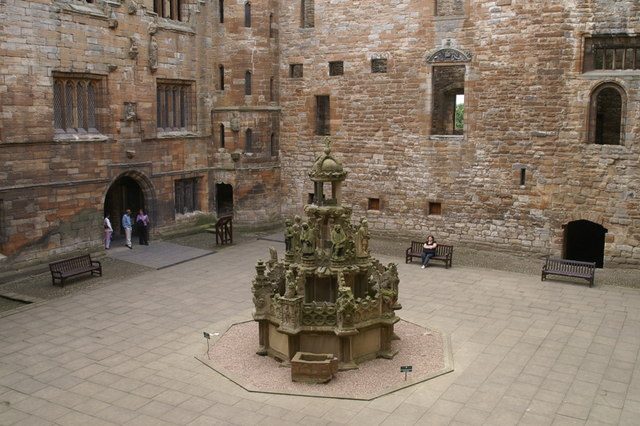
Linlithgow Palace is 15 minutes further inland, around £10, and it is not a castle at all but a royal palace shell beside a loch — roofless since 1746, birthplace of Mary, Queen of Scots, with a magnificent carved fountain in the courtyard. The two together fill a day easily and both sit close to the M9, which makes them a good detour if you’re driving between Edinburgh and Stirling.
Aberdour Castle — the one across the bridge
Strictly this is Fife rather than the Lothians, but it’s 30 minutes from Edinburgh by train and the station is a five-minute walk from the gate, which makes it more accessible than half the castles on this list. Around £7.50.
Aberdour is one of the oldest standing masonry castles in Scotland, with a terraced garden, a beehive-shaped doocot and a surviving painted ceiling in one of the private chambers of the east range. It is small, quiet and almost never busy. If you are in Edinburgh without a car and want a genuine castle afternoon, this and Craigmillar are the two to know about.
How the Lothian castles connect
The geography here is simple once you see it. Edinburgh sits in the middle, with Craigmillar closest of all in the city’s south-east. The coastal trio — Dirleton, Tantallon and, further out, the ruins around North Berwick — run east along the A1 and A198, Dirleton first and Tantallon beyond it; a route planner will give you the time from your own starting point and the day’s traffic. Blackness and Linlithgow run west on the M9, near enough to each other to share a day. Aberdour is north over the Forth, about 30 minutes by train.
That means east and west are mutually exclusive in a day. Pick a direction, and leave the other side of the city for another day rather than trying to loop all six.
All six of these are Historic Environment Scotland properties, which makes the Lothians the strongest single argument for an Explorer Pass. Six sites at gate prices comes to well over £60 before you have left the region.
The day that works: Dirleton at 10, lunch in North Berwick, Tantallon at 2. Or Blackness at 10.30, Linlithgow at 1. Do not attempt Edinburgh Castle and the coast on the same day — you’ll spend the good light in traffic on the A1.
Stirling and Perthshire: the crossroads region
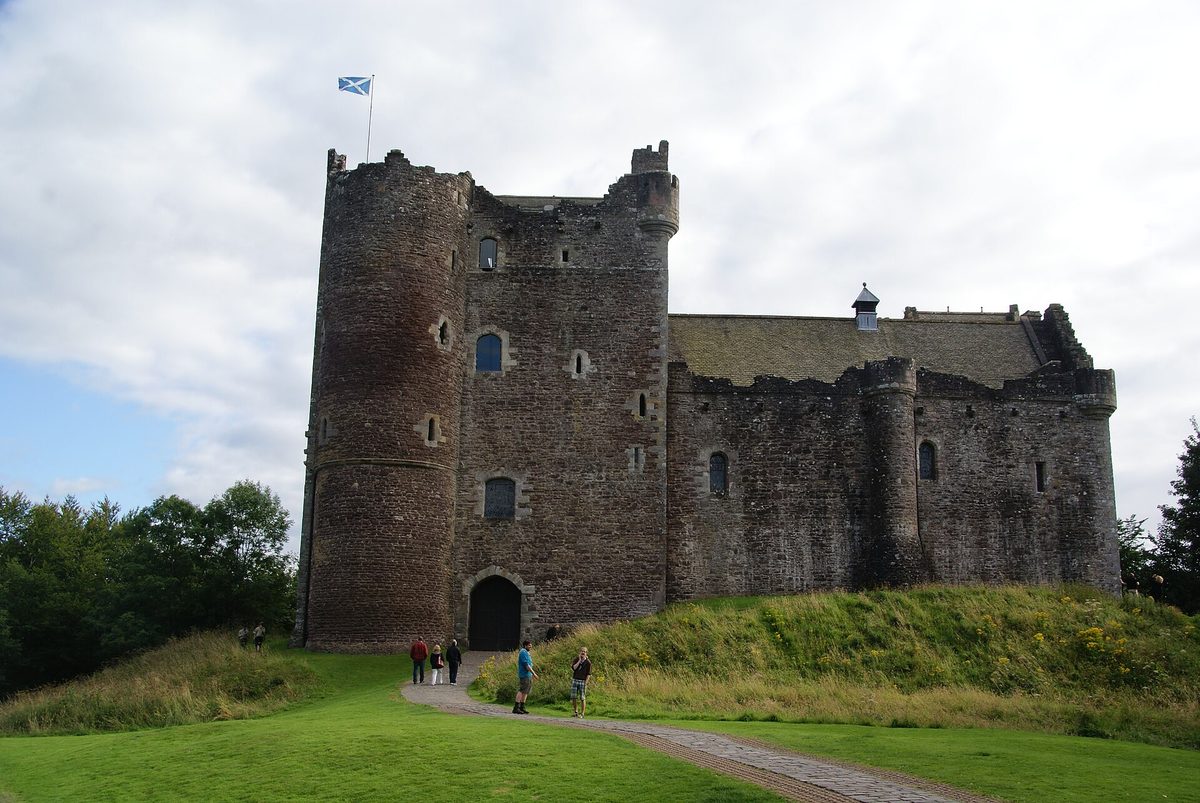
Everything in Scotland funnels through here, which is exactly why the castles were built where they were. This is also the region where the ruin-versus-house distinction bites hardest, because Stirling and Doune are stone shells while Blair and Scone are furnished to the rafters.
Stirling Castle — better than Edinburgh, and I’ll defend that
Around £18.50 online, £20.50 on the day. It costs less than Edinburgh, has more to actually look at, and the restored Renaissance palace apartments, with their painted ceiling roundels, are reason enough to choose it. The views over the Forth valley and towards the Ochils are extraordinary.
Allow three hours. Genuinely three — there is a working weaving studio, a Great Hall, a regimental museum and the gardens. Our Stirling Castle visitor guide has the room-by-room detail.
Doune Castle — the one with the coconuts
Eight and a half miles from Stirling and 4.5 miles from Dunblane. Around £10 online. Doune is a compact 14th-century courtyard castle with an intact great hall and kitchen tower, and it has been Castle Anthrax in Monty Python and the Holy Grail, Winterfell in the Game of Thrones pilot, and Castle Leoch in Outlander.
The audio guide is narrated in part by Terry Jones, which is the single funniest thing in Scottish heritage. Ninety minutes. Historic Environment Scotland also runs a 25 per cent discount for visitors arriving by train, bus or bike with an online booking code — worth checking if you’re travelling car-free.
Stirling in the morning, Doune after lunch. That is the pairing, and it is one of the best value days in the country.
Blair Castle — white, huge and still a clan seat
Just north of Pitlochry off the A9, about an hour from Stirling. Blair is the seat of the Murrays of Atholl and home to Europe’s only remaining legal private army, the Atholl Highlanders. Thirty rooms are open, furnished, and the deer park and Hercules Garden are included.
Budget two and a half hours and expect to pay something in the high teens for an adult ticket; check the current rate before you go. It pairs naturally with a night in Pitlochry and Highland Perthshire, just down the road.
Scone Palace — the crowning place
Just outside Perth. Palace and gardens run to around £19.75 for an adult, gardens only about £14. This is where the Kings of Scots were crowned on the Stone of Destiny, on the Moot Hill, and you can stand on the spot yourself.
The interiors are Georgian Gothic and busy with objects. The grounds have peacocks, a maze and a Douglas fir planted from seed sent home by David Douglas himself, who was born on the estate. Two hours.
Glamis Castle — the pink one in Angus
North-east of Perth, near Forfar in Angus. Childhood home of the late Queen Mother and birthplace of Princess Margaret. Access to the state rooms is by guided tour, so arrival time matters more than at most places.
Castle Campbell — the one at the top of a glen
Above Dollar in the Ochil Hills, just north of the town. Around £7.50. It sits at the head of Dollar Glen between two burns historically named the Burn of Care and the Burn of Sorrow, and the approach on foot up the wooded gorge is the best walk-in to any castle in Scotland.
You can drive to the Brewlands car park, 500 metres from the castle, though even that last stretch is steep and crosses a wooden footbridge. If you’re able, walk the whole way up through Dollar Glen instead. The building at the top is a plain tower and courtyard. The setting is what you came for. Combine it with a Stirling morning if you want a short walk built into your castle day.
Huntingtower Castle — on the edge of Perth
Around £7.50 online. Two tower houses, built separately and later joined, and inside one of them a painted ceiling from about 1540 that is reason enough for the detour.
Half an hour does it. If you are staying in Perth and Scone Palace has eaten your morning, this is the ideal small second stop.
Drummond Castle Gardens — gardens only, and that’s the point
Near Crieff. The castle is a private family home and is not open, but the formal terraced parterre below it is one of the finest in Europe, laid out as a St Andrew’s Cross and best seen from the terrace above. The gardens open from 1 May to 31 October.
Be clear about what you’re buying here: this is a garden visit with a castle in the background, not a castle visit. On a July afternoon it is worth the drive; in April it is not.
How the Perthshire castles connect
Stirling is the hub. Doune is eight and a half miles north. Castle Campbell lies east, above Dollar. Scone and Huntingtower both sit on the edge of Perth to the north-east, and Drummond is north, near Crieff. Blair is north up the A9, with Pitlochry just short of it. Glamis is further out, beyond Perth near Forfar in Angus.
The A9 is the artery, and it is a road that punishes optimism — average speed cameras run for long stretches and the single-carriageway sections north of Dunkeld crawl behind lorries. Whatever time your phone tells you, add a quarter.
The day that works: Stirling then Doune, or Blair then Pitlochry, or Scone then Glamis. Do not try to combine Stirling with Glamis. It looks close on the map. It is not.
Aberdeenshire’s Castle Trail: the densest concentration in Britain
Here is the fact that should reorganise your entire trip. Aberdeenshire Council describes the county as having more castles per acre than anywhere else in the United Kingdom — around 300 castles, stately mansions and ruins, of which a signposted Castle Trail links 19 sites. Brown road signs with a castle symbol do the navigating for you.
Most castle lists give Aberdeenshire two entries and move on. That is a planning failure. If you want to see a lot of castles in a short time, this is unambiguously where you go, and several of them belong to the National Trust for Scotland, which changes the membership maths entirely (see below).
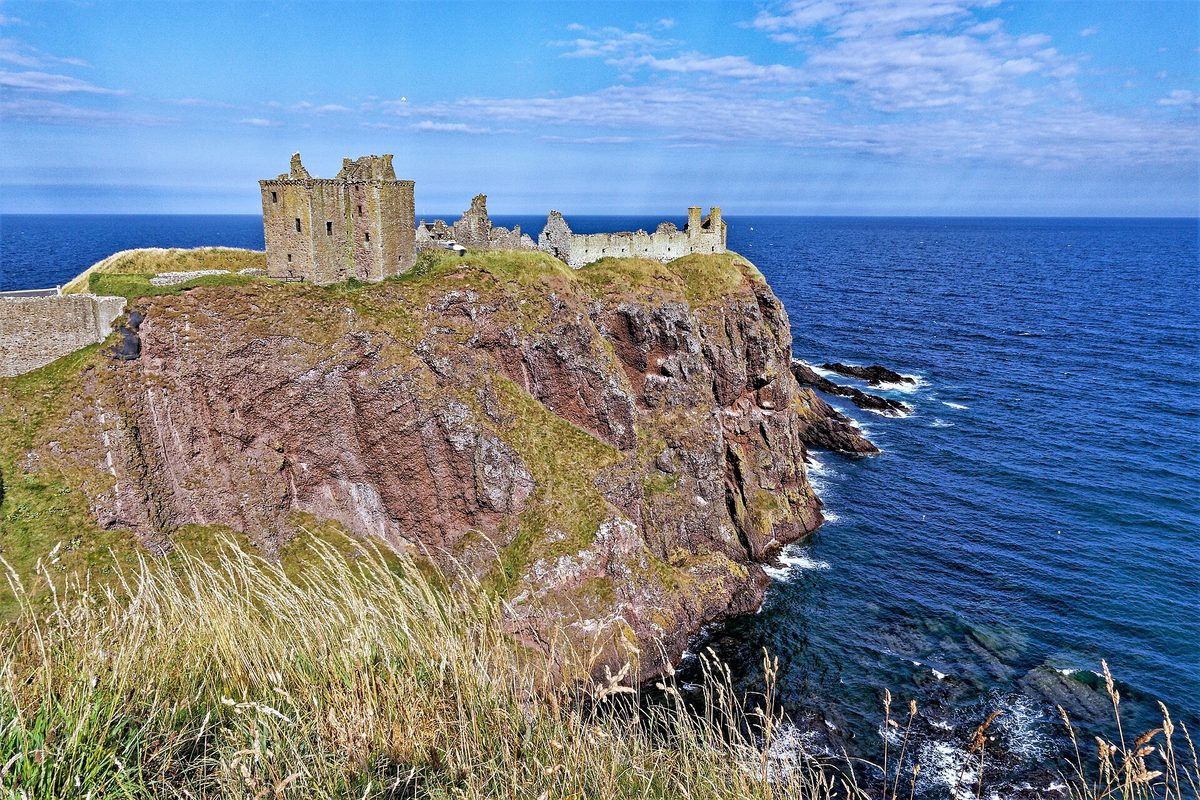
Dunnottar Castle — the one on the sea stack
Just south of Stonehaven, a short drive from Aberdeen. A cliff-edge ruin on a promontory reached by a steep path and a great many steps, and the most dramatic castle silhouette in Scotland by a distance. Privately run, so an HES or NTS card is no help here, though Historic Houses members get in free.
The walk down and back up is not trivial — there are 180 steps down from the clifftop and another 103 up into the castle, 283 in all, and no vehicle access to the rock. Allow an hour and a half door to door, and see our dedicated Dunnottar Castle guide for parking, the clifftop path from Stonehaven and the best light for photographs.
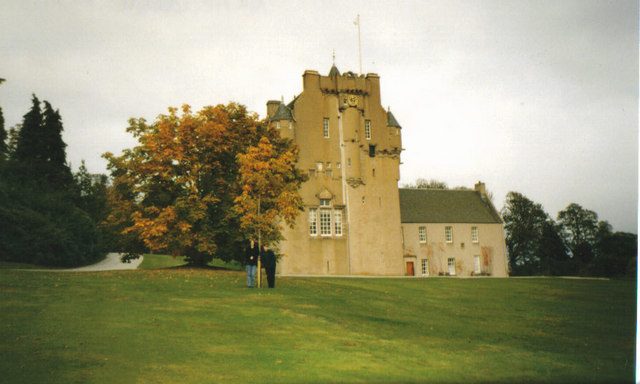
Crathes Castle — the tower house that gets it right
Fifteen miles west of Aberdeen near Banchory, on the A93. National Trust for Scotland, adult admission around £18, with car parking about £5 on top unless you’re a member. A 16th-century tower house with original painted ceilings and a walled garden divided by yew hedges planted in 1702.
This is the best all-rounder in Aberdeenshire: interesting inside, excellent outside, good café, and adventure play in the woods if you have children in tow. Two to three hours.
Drum Castle — close to Crathes
Three miles along the same road, which is the point. Around £18 for castle and walled garden, or about £5 for the garden alone. Drum has one of the oldest intact tower keeps in Scotland, granted to the Irvine family by Robert the Bruce in 1323 and held by them for 653 years.
Crathes and Drum together are the easiest castle pairing in the country: close together, same ownership, one ticket type. If you’re chasing family history, the Irvine and Burnett connections here are a good place to start — our guide to tracing Scottish ancestry, clans and tartan explains how to work back from a surname.
Craigievar Castle — the pink fairy-tale tower
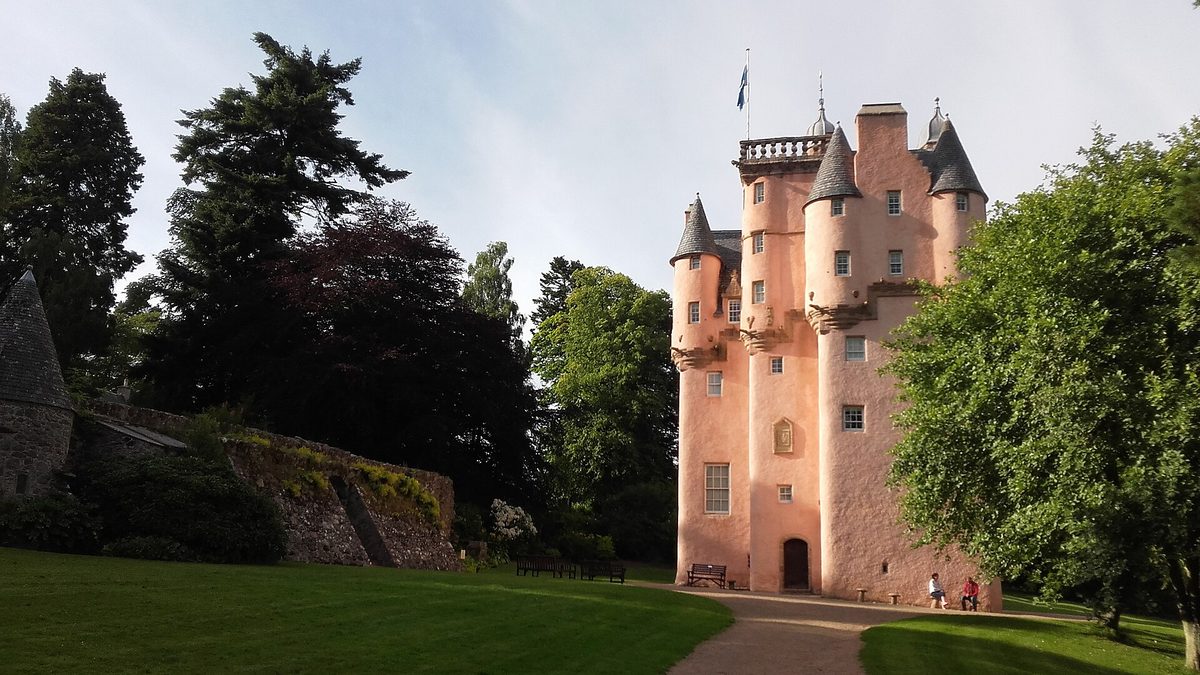
Six miles south of Alford. Around £18. Seven storeys of pink harled tower house that finish in a riot of turrets and corbelling, and one of the most photographed buildings in Scotland.
It reopened on 31 May 2024 after an 18-month conservation project that repaired the harling and roof detailing and applied over 13,000 litres of a specially mixed limewash to restore the “Craigievar pink”. The interiors are cramped, the stair is a tight spiral, and the castle itself is seen on guided tours with a limited number of tickets each day. That is not a complaint — it’s why it feels like a real house rather than a visitor attraction.
Castle Fraser and Fyvie Castle — the northern pair
Castle Fraser sits about 16 miles west of Aberdeen, around £18, with a fine walled garden and a secret staircase that children find far more interesting than the portraits. Fyvie lies further north, also around £18, with five towers, each supposedly built by a different family, and a collection of Raeburn portraits.
Fyvie is where I’d send someone who has already seen a lot of castles and thinks they’re done. It is not like the others.
Balmoral Castle — the royal one
On Royal Deeside near Crathie, west of Crathes along the A93. The grounds, gardens and Ballroom open in summer and again in autumn, when adult admission is £10 and children go free, and from early November the grounds are free to enter while the Ballroom is closed. Opening days vary, so check the calendar on the Balmoral Castle site before you go.
Interior guided tours run on selected autumn dates, limited to twelve people per tour, and tickets are scarce. Do not turn up hoping. Our Balmoral and Royal Deeside guide explains what you actually get to see, which is less than people expect.
Huntly Castle — the carved one
In the town of Huntly, about an hour north-west of Aberdeen. Around £7.50, and Historic Environment Scotland rather than the Trust, which matters if you’re working out which card to carry. The great ruin of the Gordon seat, with an inscribed frontage carrying the family’s name in letters a metre high and some of the finest heraldic stonework in Britain over the fireplaces.
Practical warnings: the round tower is closed, there are no public toilets on site after storm damage, and the castle opens on a reduced weekly pattern rather than daily. Check the day of the week before you drive.
Kildrummy Castle — the summer-only ruin
In upper Donside, open Wednesday to Sunday from April to September only. Around £7.50 online, and one of Scotland’s finest surviving examples of a 13th-century courtyard castle — it was the great fortress of the north until it was abandoned after the 1715 rising and gradually fell into ruin.
Two things will catch you out. It closes entirely from 1 October to 31 March, and it doesn’t open every day even in season. This is the sort of castle that rewards a phone call.
Braemar Castle — the community-run one
At the top of Deeside, a short drive west of Balmoral. Adult admission is £16, concessions £14, and a family ticket for two adults and up to three children £33. The season normally opens in April; check the dates on Braemar Castle’s own site before you go.
What makes Braemar different is that it is run by the community itself — local volunteers took on the lease and have restored it room by room. The guiding is done by people who live in the village, and it is warmer and funnier than anything a corporate heritage body produces. If you want one castle visit that feels like meeting a place rather than consuming it, this is the one.
Tolquhon, Corgarff and Slains — the ones for a second visit
Tolquhon, north of Aberdeen, is a courtyard ruin with a gatehouse so ornamental it looks decorative rather than defensive. Corgarff is the whitewashed star-shaped barracks high on the Lecht road, all bleak military geometry, and the drive to it over the A939 is one of the great Scottish roads. Both around £7.50 and both seasonal.
Slains, a roofless ruin on the cliffs near Cruden Bay, is the castle said to have influenced Bram Stoker while he was writing Dracula. Go carefully near the cliff edge.
How the Aberdeenshire castles connect
Aberdeen is the natural hub if you want restaurants; Banchory or Alford if you want to be among the castles. From Banchory, both Crathes and Drum are close. Craigievar lies north-west near Alford, Castle Fraser between there and Aberdeen, and Fyvie further north. Dunnottar is on the coast just south of Stonehaven. Balmoral is west up the A93, with Braemar a short way beyond it.
Almost everything is on single-carriageway roads through farmland, which look faster on a map than they drive. Two castles before lunch is realistic only if they’re the Crathes and Drum pair.
The day that works: Crathes at 10, Drum at 1, and stop there. Or Craigievar at 11 and Castle Fraser at 2.30. Three Aberdeenshire castles in a day is possible; four is a route march. The roads are single carriageway and slower than the map suggests.
The Great Glen and Inverness: the classic Highland run
This is the region the search results mean when they say castles in the Scottish Highlands, and it is the one where the driving times are most likely to catch you out. Inverness makes the obvious base, though Nairn and Beauly are quieter and no further from most of these castles.
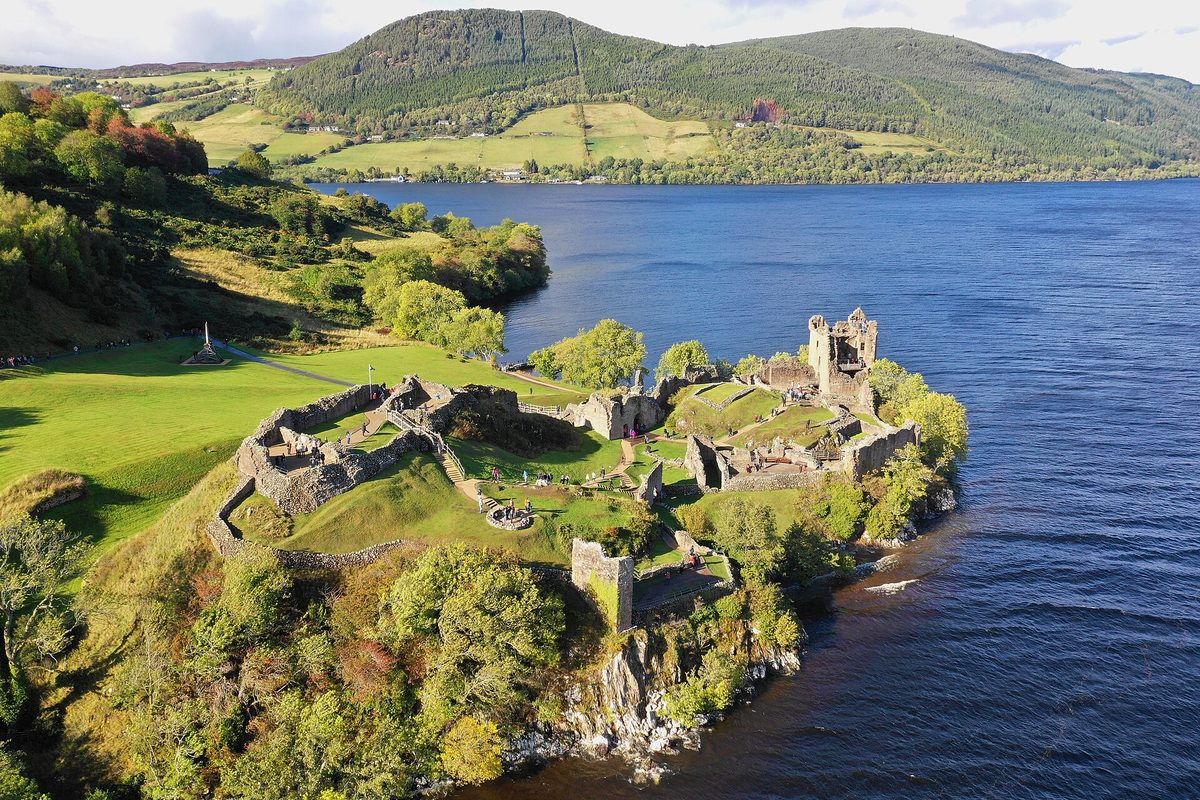
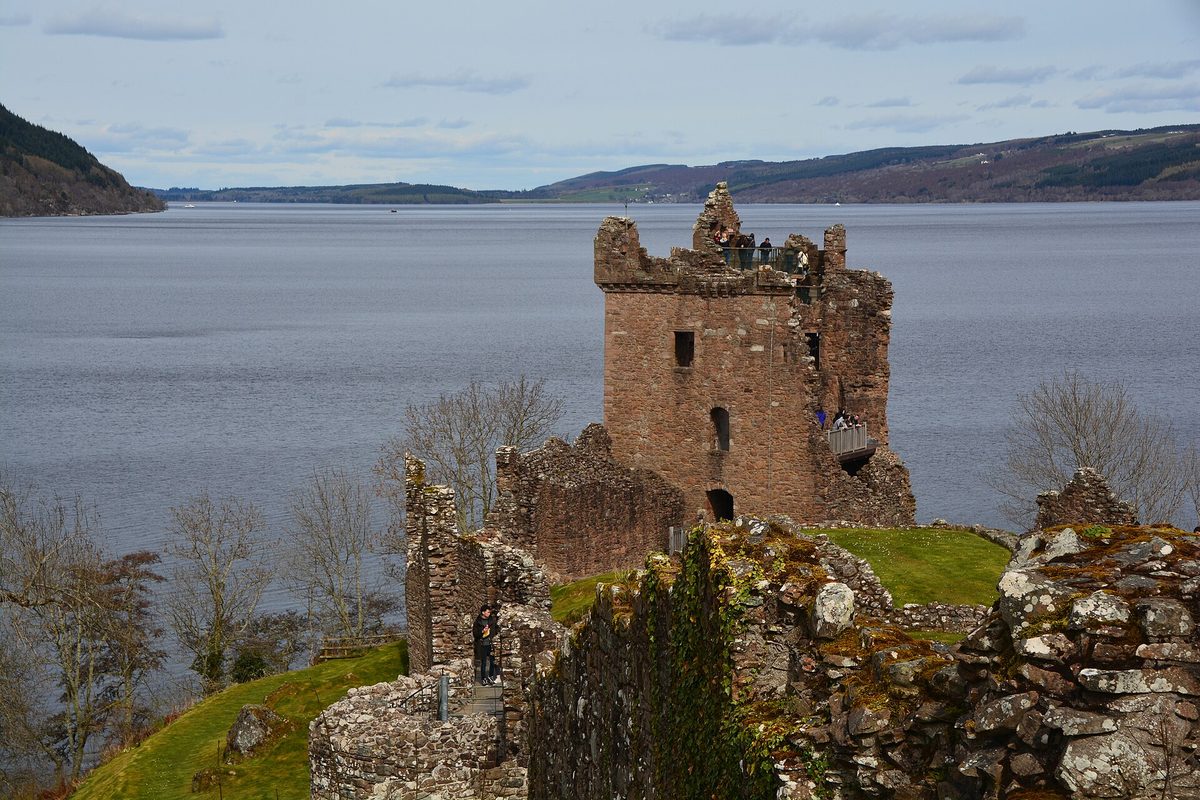
Urquhart Castle — the Loch Ness ruin
Sixteen miles south-west of Inverness on the A82. Around £14 online, £16 on the door, which makes it the priciest Highland ruin and, on a wet Tuesday in August with four coaches in the car park, arguably the least peaceful.
It’s still worth it. The Grant Tower has a viewing platform looking straight down the loch, there’s a full-size working trebuchet in the grounds, and the visitor centre film is genuinely good. Aim for the 9.30am opening, or from April to August, when it stays open until 8.15pm, go in the evening. Combine it with the rest of the Loch Ness and Inverness area rather than treating it as a standalone stop.
Cawdor Castle — the lived-in one
Between Inverness and Nairn. Around £17 for castle, gardens, grounds and nature trails, or about £10 for the gardens alone. The Campbells of Cawdor still live here, and it shows: the room notes are written by the family, they’re funny, and they are the best interpretation panels in Scotland.
Yes, Shakespeare’s Macbeth is Thane of Cawdor. No, the historical Macbeth had nothing to do with this building, which postdates him by three centuries. The family will tell you so themselves, cheerfully.
Brodie Castle — further east
National Trust for Scotland, near Forres, around £16.75. A 16th-century Z-plan tower house with a substantial art collection and a famous daffodil collection in April. Cawdor and Brodie pair beautifully: one private house, one Trust property, two quite different tones.
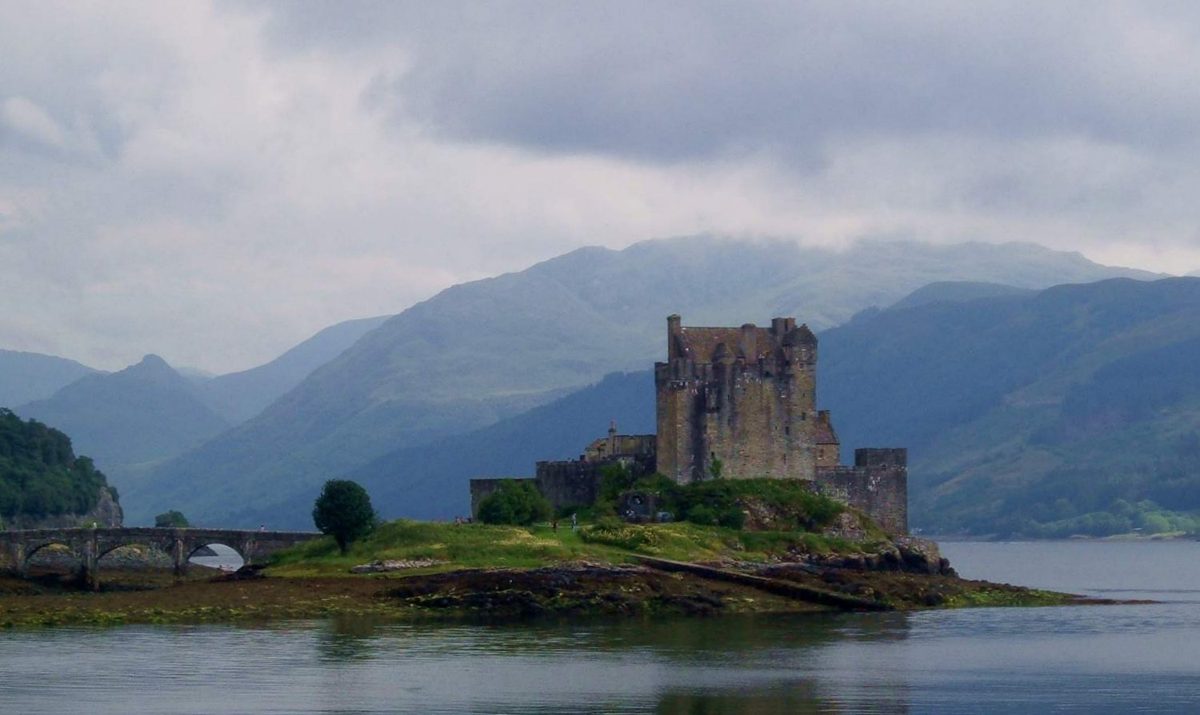
Eilean Donan — the postcard, out west at Dornie
Here is where the lists mislead people badly. Eilean Donan is in the Highlands and it does belong in this region, but it is a long drive west from Inverness by the A82 and A87 — not a morning’s outing from Urquhart. It sits on its island at Dornie, where three sea lochs meet, on the road to the Skye Bridge.
Two practical things nobody mentions. Tickets are sold on site only, on the day — there is no advance online booking, so a coach arriving before you can mean a wait. And the castle is a 20th-century reconstruction of a fortress blown up in 1719, which some people find deflating and others find fascinating. Our Eilean Donan Castle guide covers opening hours by season, and it is worth the stop for the bridge view alone even if you never buy a ticket.
Dunrobin Castle — the French chateau in Sutherland
Near Golspie on the A9, about an hour’s drive north of Inverness. The 2026 season runs 1 April to 31 October, adult admission around £16, concessions about £14, children aged six and over around £10 and a family ticket around £47. Hours are roughly 10am to 5.30pm from April to September, shorter in October.
This is the largest house in the northern Highlands, 189 rooms of Victorian fantasy above formal gardens modelled on Versailles, and the seat of the Earls and Dukes of Sutherland. The falconry displays in the garden run twice daily in season and are the reason many families come.
It also has its own railway station on the Far North Line, which opens seasonally for castle visitors — one of the few Scottish castles you can genuinely reach by train from Inverness without a connecting bus. If you are heading for the far north coast, it is the obvious first-day stop out of Inverness.
Fort George and the smaller Highland ruins
Fort George, on a spit east of Inverness, is not a castle but an 18th-century artillery fortification, and it’s the most complete of its kind anywhere in Europe. It is a Historic Environment Scotland site, so your pass covers it, and it makes an unusual third stop after Cawdor and Brodie because it is nothing like either.
Further out you’ll find Inverlochy near Fort William, a compact 13th-century courtyard ruin that most people drive past; Castle Tioram on its tidal islet in Loch Moidart, reachable on foot across the sand at low tide but closed to entry; and Ardvreck on Loch Assynt in Sutherland, a free roadside ruin that is more a stop than a visit. None of these justify a special journey, but all three are worth ten minutes if you are already passing, and all three are free.
How the Highland castles connect
Inverness is the hub for the Highland castles. Urquhart is south-west on the A82. Cawdor lies east towards Nairn, Brodie further east near Forres, and Fort George north-east of the city at Ardersier. Dunrobin is north up the coast. Eilean Donan is a long way west — the outlier.
Notice the shape: everything except Urquhart and Eilean Donan lies east of the city, which is why the classic Highland castle day runs Cawdor, Brodie and Fort George rather than trying to pair Loch Ness with anything at all.
The day that works: Urquhart early, then Cawdor or Brodie in the afternoon. Eilean Donan is a separate day, ideally the day you drive to Skye rather than a return trip from Inverness. Treat it as a waypoint on the Edinburgh to Highlands road trip and it costs you nothing.
Argyll and the west: the most scenic driving
Fewer castles, better roads, and the finest settings in Scotland. The A83 down Loch Fyne and the A85 through Glen Lochy are drives you’d do even without a destination.
Inveraray Castle — the Duke’s house
Reached from Glasgow on the A83. Seat of the Dukes of Argyll, chiefs of Clan Campbell, and a lived-in home with a startling armoury hall — well over a thousand pole-arms, muskets and Lochaber axes arranged in patterns up a 21-metre wall. Seasonal opening, so check dates before travelling.
The village of Inveraray outside is a planned Georgian town in whitewash and black trim, and the jail museum is better than it sounds.
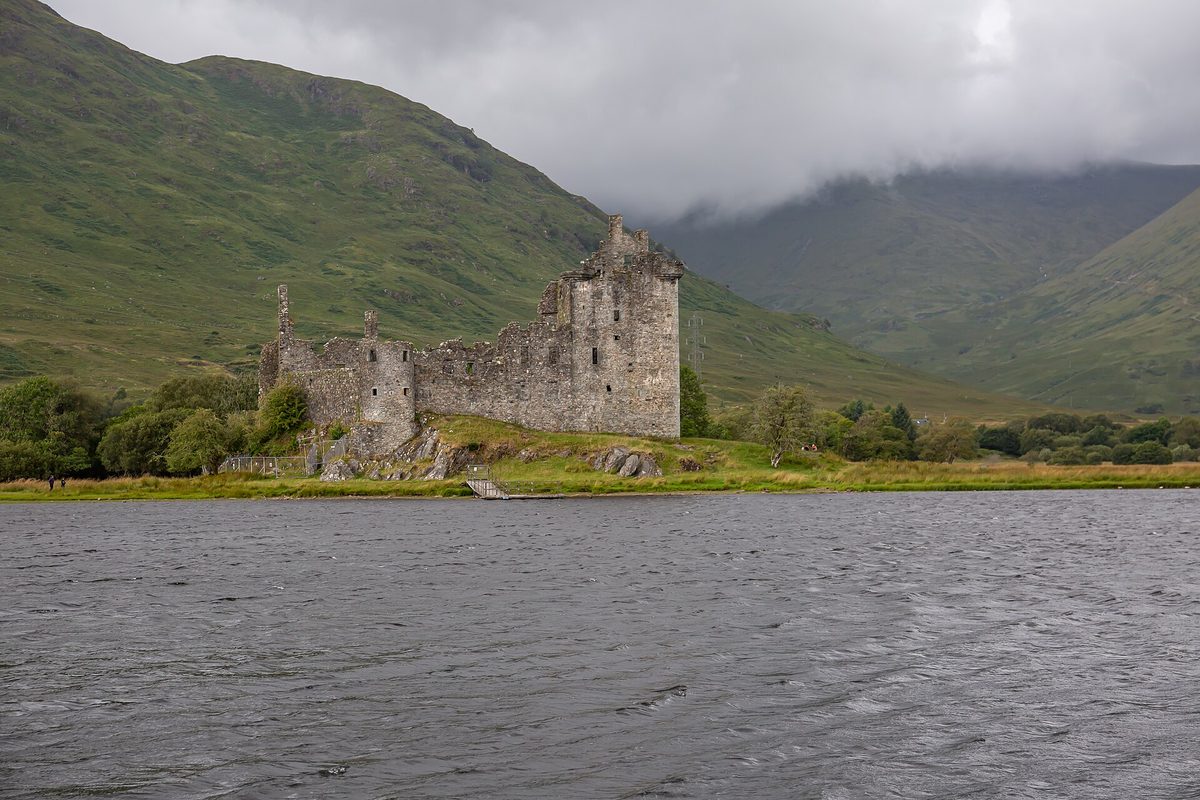
Kilchurn Castle — currently closed inside
At the head of Loch Awe, a short drive from Inveraray. This is the ruin on the peninsula that appears on every Scotland calendar. It is in Historic Environment Scotland’s care, and while the interior is closed for conservation work, you can still walk round the outside and the grounds.
Important and current: the castle is closed for conservation work, and you can walk up to and around the exterior only. That does not spoil it — the exterior and the reflection in Loch Awe were always the reason to come — but do not drive there expecting to climb the tower. Check before you go, because this will change.
Dunstaffnage Castle — three miles from Oban
Around £7.50 online. A squat 13th-century curtain-wall castle on a rock above the Firth of Lorn with a roofless chapel in the woods nearby, and it is where Flora MacDonald was held after helping Bonnie Prince Charlie escape. Closed in winter on some seasons, so check. Forty-five minutes is plenty. It slots neatly into a stay in Oban.
Castle Stalker — look, don’t enter
Twenty-five miles north of Oban on the A828, on a tidal islet in Loch Laich. Privately owned and open only by pre-booked guided tour on a handful of dates, weather and tide permitting. For almost everyone it is a photograph from the lay-by or the view café, and that is fine — it is the tower from the closing shot of Monty Python and the Holy Grail.
Dunollie — the one you can walk to from Oban
Ten minutes on foot from the north end of Oban’s seafront. A ruined MacDougall keep on a crag, with a museum in the 1745 house below it run by a clan trust. The ruin itself is small; the collection and the story of the MacDougall chiefs are what hold you.
It is an easy walk from Oban, which makes it the obvious choice if you’ve arrived by train. Dunstaffnage works without a car too: a bus from Oban to Dunbeg, then a walk of just under a mile. Ninety minutes including the museum.
Rothesay Castle — the circular one on Bute
A 35-minute ferry from Wemyss Bay, itself just under an hour by train from Glasgow, then a short walk from the pier. Around £7.50. Rothesay is unusual in Scotland for its circular curtain wall and its water-filled moat, and the hall in the gatehouse has had its roof reinstated.
This is the easiest island castle in the country to reach, and Bute makes a genuinely good day out from Glasgow with no driving at all.
How the Argyll castles connect
Inveraray to Kilchurn is a short drive on the A819 and A85. From Kilchurn the A85 carries on west to Dunstaffnage, with Oban just beyond it, and Castle Stalker lies north of Oban on the A828. The road from Glasgow to Inveraray runs over the Rest and Be Thankful, which closes to landslips more often than anyone would like — check the road status in winter.
The pleasure here is that the driving is the point rather than the cost. Loch Fyne, Loch Awe and the Firth of Lorn are as good as anything in Scotland, and the castles punctuate the drive rather than interrupting it.
The day that works: Inveraray at 10.30, Kilchurn at 1, Dunstaffnage at 3, overnight in Oban. That is one house, one ruin and one ruin with a completely different character, and it’s the best-balanced castle day in Scotland.
Ayrshire and the south: the region everyone drives past
Most itineraries treat southern Scotland as the bit between the border and Glasgow. That is a mistake worth around three excellent castles.
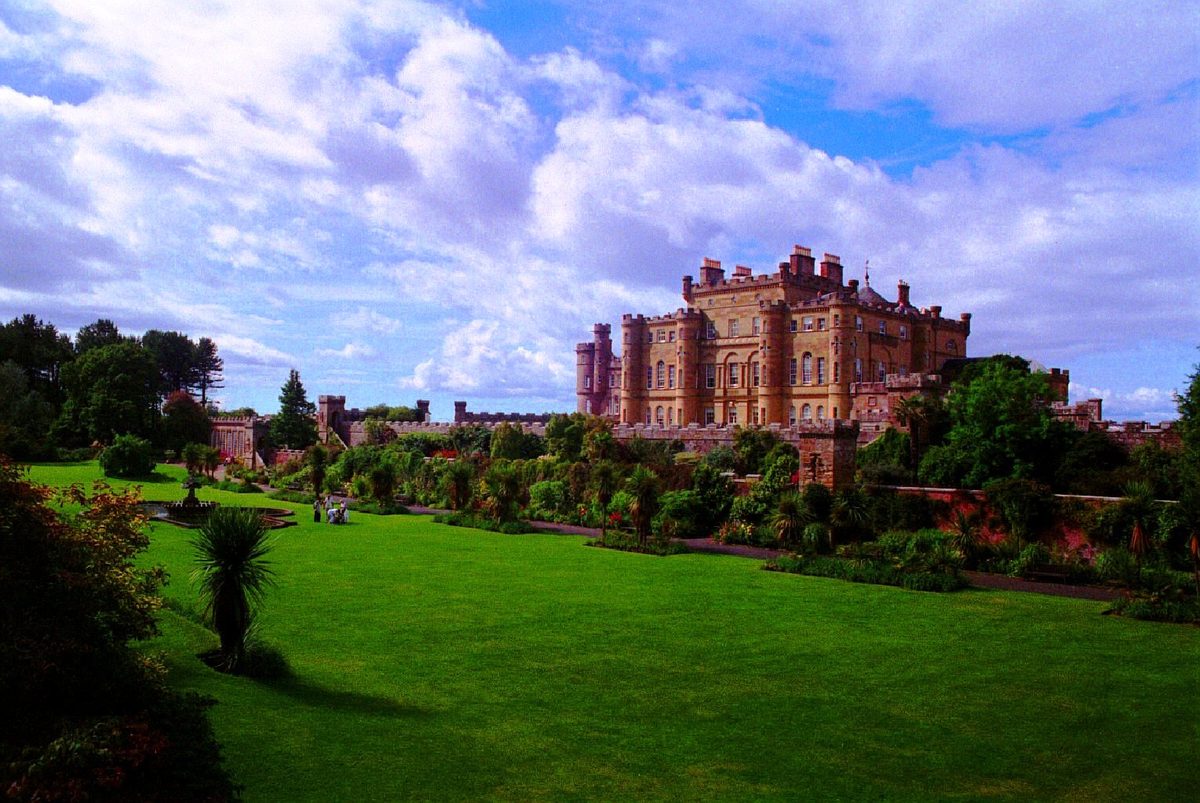
Culzean Castle — Robert Adam on a cliff
Twelve miles south of Ayr. National Trust for Scotland, around £22 for castle and country park, or about £16 for the country park alone. That country park runs to 260 hectares of coastline, woodland, walled garden and a swan pond.
The building is Robert Adam’s masterpiece — the oval staircase is the reason architects come — and General Eisenhower was given a flat on the top floor for life in thanks for his part in the war. Half a day minimum. Do not try to add another castle. Culzean is the day.
Caerlaverock Castle — the triangular one
Eight miles south of Dumfries. Around £7.50. A moated red sandstone castle built on a triangular plan, which is unique in Britain, with a twin-towered gatehouse and a Renaissance range inside the walls that looks like someone dropped a townhouse into a fortress.
Check access before travelling — parts of the site have had conservation restrictions in recent years. The nature reserve next door is one of the best places in Britain for barnacle geese from October to April.
Threave Castle — the boat trip
Near Castle Douglas, west of Caerlaverock. Around £6 online, a reduced price while the castle’s ground floor is closed for conservation, and the visit starts with a short passenger-boat crossing to the island in the Dee. It closes from 1 November to 31 March.
Here is a detail that catches people out and that no listicle mentions: Threave Castle is run by Historic Environment Scotland, while Threave Garden and Estate a couple of miles away belongs to the National Trust for Scotland. Same name, two organisations, two tickets. Your membership card will get you into one and not the other.
Dumbarton Castle — the rock in the Clyde
On the Clyde west of Glasgow. Built on a volcanic rock with the longest recorded history of any stronghold in Scotland, and over 500 steps to the summit and a view up the Clyde that explains every siege it ever endured. It’s an easy add-on from Glasgow and, being a stiff climb, it works best as a morning visit.
Bothwell Castle — the great red keep near Glasgow
South-east of Glasgow city centre, above a bend in the Clyde. Around £4.50, a reduced price while conservation works keep the main tower, the south-east tower and the great hall closed. What survives is the shattered half of a colossal 13th-century circular donjon, and even fenced off for the works it gives you a better sense of medieval scale than anything at Edinburgh.
It is an easy first or last stop on a drive between Glasgow and the Borders.
Drumlanrig and Floors — the two great houses
Drumlanrig, north of Thornhill in Dumfriesshire, is a pink sandstone Renaissance palace belonging to the Buccleuch family, with a collection that includes work by Rembrandt and Holbein. Floors, at Kelso in the Borders, is the seat of the Dukes of Roxburghe.
Both are lived-in homes with short seasons and guided or semi-guided routes, and both are more country house than castle in feel. If you have already seen a lot of ruins and want the opposite experience, these two deliver it.
Hermitage and Cardoness — the two most atmospheric ruins in the south
Hermitage sits alone in Liddesdale on the Border moors, a bleak black rectangle with almost nothing around it. Around £7.50 and seasonal. It has a reputation as the grimmest building in Scotland and it earns it — the story of what happened to its 14th-century prisoners is not one for children.
Cardoness, near Gatehouse of Fleet, is a compact tower house on a rock above the Water of Fleet with a well-preserved interior stair and fireplaces. Around £7.50. Both are short visits, both are on the way to somewhere else, and both are quieter than anything in the Highlands.
How the southern castles connect
The south splits into two clusters that do not combine. In the west, Culzean sits on the coast south of Ayr, with Dumbarton west of Glasgow and Bothwell south-east of it. In Dumfries and Galloway, Caerlaverock is south of Dumfries, Threave further west near Castle Douglas, Cardoness beyond that and Drumlanrig north of Dumfries near Thornhill.
Culzean to Caerlaverock is roughly an hour and a half, so treat them as separate days and separate bases. Ayr for the west, Dumfries for the south.
The day that works: Culzean on its own. Or Caerlaverock at 10.30 and Threave at 2, which is one of the most underrated castle days in the country.
Skye and the islands: clan seats and ferry timetables
Island castles are the ones where planning stops being optional. Sailings dictate everything, and a missed ferry costs you a day rather than an hour. Check the operator’s timetable before you book anything else on that day.
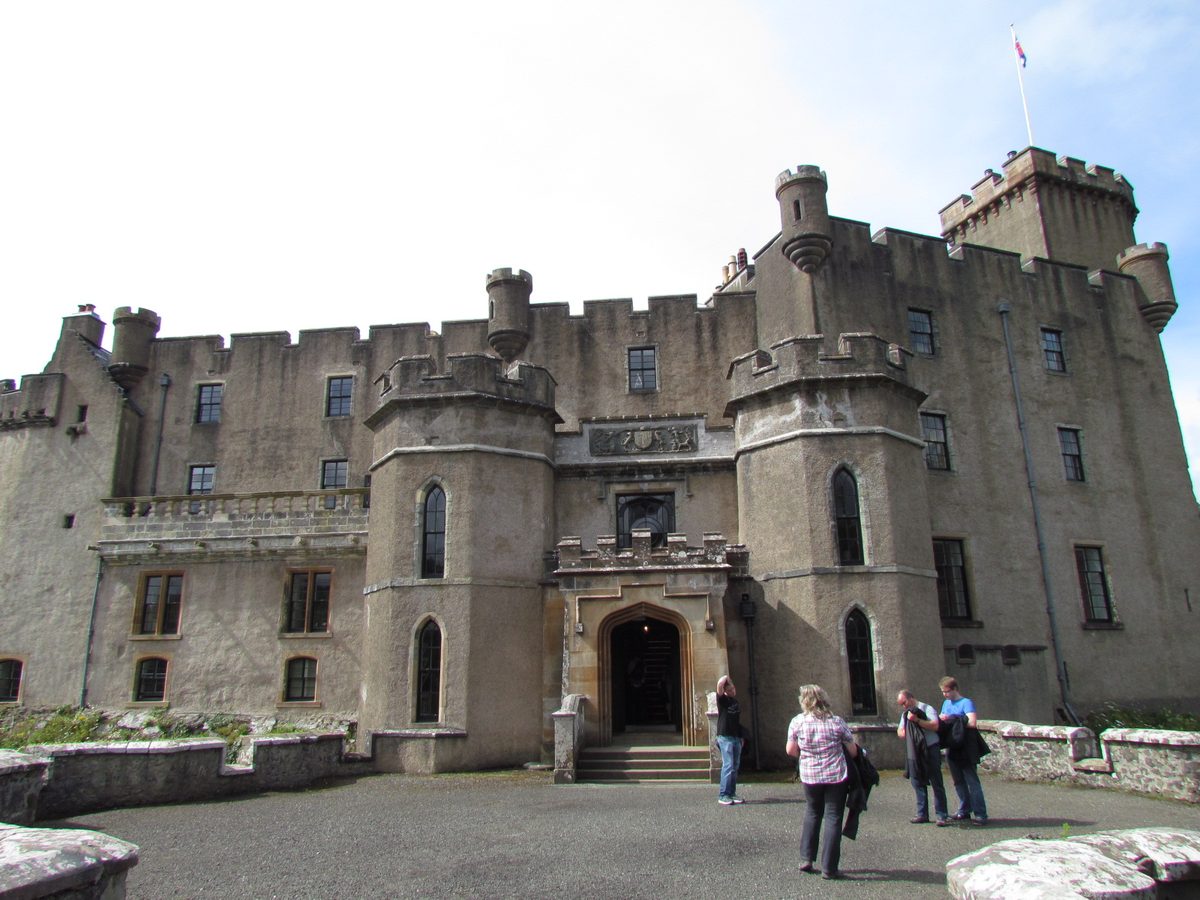
Dunvegan Castle — 800 years of MacLeods
North-west of Portree on Skye, roughly 23 miles. Adult admission is £18 for castle and gardens, and the season runs from 26 March to 15 October, so a winter trip to Skye means looking at it from the outside.
It claims to be the oldest continuously inhabited castle in Scotland, and the Fairy Flag is on display inside. The gardens are better than the building. Seal boat trips run from the jetty in season.
Duart Castle — the Maclean seat on Mull
Three miles from the Craignure ferry terminal, which is a 45-minute sail from Oban. Duart sits on a headland commanding the Sound of Mull. Sir Fitzroy Maclean, the 26th Chief, bought back the ruined castle in 1911 and restored it before the First World War. Seasonal opening and reduced hours outside summer — check before you commit to a ferry.
Kisimul Castle — the one in the middle of the bay
On a rocky islet in the bay at Castlebay on Barra, in the Outer Hebrides, and the only significant medieval castle to survive anywhere in the Western Isles. It had been closed for major conservation work — stabilising the Great Hall ceiling, replacing the tower stair, re-roofing the chapel and repairing the jetty — and it reopened to visitors in July 2026. That first season ended on 30 September, so look up next year’s dates on the HES Kisimul page before you book a ferry.
Access is by guided tour only, departing by boat from Castlebay jetty on selected dates in the summer season, one tour a day, lasting about an hour. If you’re going to Barra, book it the moment dates are released. If you’re not, it is a long way for one castle.
Brodick Castle — the easy island
On Arran, a short walk or bus from the ferry terminal at Brodick. National Trust for Scotland, around £16 for castle, garden and country park, or about £10 for garden and park alone. The most accessible island castle in Scotland and a good day out from Glasgow without a car.
Armadale Castle — the Skye one people forget
In Sleat, at the southern end of Skye and a few minutes from the Mallaig ferry terminal. Now owned by Armadale Estate Ltd, which bought it in partnership with the Clan Donald Lands Trust, with 40 acres of gardens around the castle ruins and the Museum of the Isles telling the story of the Lords of the Isles.
The castle shell itself is fenced and you view it rather than enter it. The reason to come is the museum and the genealogy library, which is one of the best places in Scotland to research a Highland surname — and if that is your interest, read our guide to clan research and tartan before you arrive so you know what to bring.
Lews Castle — free, and in Stornoway
On Lewis in the Outer Hebrides, a ten-minute walk from the Stornoway ferry terminal. A Victorian mock-Gothic mansion built on the fortune of the opium and tea trade, now holding the island museum, where six of the Lewis chessmen are displayed on long-term loan from the British Museum.
Entry to the museum and grounds is free. Nothing about it is medieval, but if you are on Lewis it deserves an afternoon, and the wooded grounds around it make a good walk.
How the island castles connect
They mostly don’t, and that is the honest answer. On Skye, Dunvegan lies north-west of Portree and Armadale down in Sleat at the southern end, so both in one day means plenty of driving. Duart is three miles from the Craignure ferry terminal, and that crossing takes about three quarters of an hour. Kisimul is a five-hour sail from Oban to Barra. Rothesay is 35 minutes from Wemyss Bay, Brodick 55 minutes from Ardrossan.
Book ferries ahead in summer, especially with a vehicle, and build in a spare hour on either side of every sailing. A cancelled crossing in a westerly is not unusual.
The day that works: one island castle per island day. Do not try to combine Mull and Skye. Ferry timetables will win.
Picking the right castle for the day you’ve actually got
Region gets you most of the way there. The last decision is matching the castle to the weather, the company and how much energy is left in the group. These shortlists cut across the regions.
Best in heavy rain
Anything furnished and roofed: Crathes, Craigievar, Fyvie, Culzean, Brodie, Blair, Cawdor, Scone. Add Stirling, which has enough indoor rooms to shelter for two hours, and Huntingtower for the painted ceiling. Avoid every ruin on this list — a roofless castle in Scottish rain is 40 minutes of misery and a wet camera.
Best on a clear, still day
The ruins earn their keep now. Tantallon with the Bass Rock offshore, Dunnottar from the clifftop path, Kilchurn reflected in Loch Awe, Urquhart early in the day, Slains on its cliff edge. Free-standing ruins on a good day beat furnished houses every time, and they cost a third as much.
Best with children
Crathes for the woodland adventure play, Brodick for the country park, Dunrobin for the falconry displays, Culzean for the beach and the deer park, Doune for the Monty Python audio guide, and Threave for the boat. Castles with a walk, an animal or a boat attached hold children far better than castles with portraits. Our guide to Scotland with kids covers the wider planning.
Best without a car
Edinburgh, Stirling, Linlithgow, Aberdour, Craigmillar, Dumbarton, Rothesay, Brodick, Dunollie and Dunrobin are all reachable by train, bus or ferry with a short walk at the end. That is ten castles across five regions, which is a better car-free itinerary than most people believe exists — and Doune adds a discount if you arrive by public transport.
Best if you have already seen a lot of castles
Fyvie for the collection, Braemar for the community guiding, Threave for the boatman, Kisimul for the sheer improbability of a fortress on a rock in a bay, and Huntingtower for a painted ceiling almost nobody has heard of. These are the ones that surprise people who thought they were finished with castles.
Best for photographs
Dunnottar from the coast path at sunrise, Eilean Donan from the shore at high tide, Kilchurn from the A85 lay-by, Craigievar in low afternoon light when the pink glows, and Castle Stalker from the view café. Four of those five you photograph from outside without paying to go in, which is worth knowing if the budget is tight. Golden hour on the east coast is early in summer and painfully early in June, so set an alarm.
The membership arithmetic nobody does for you
This is the section that will save you the most money, and I have never seen a castle list attempt it. Scotland’s castles are split between two bodies plus a large number of private owners, and the split is strongly regional. Buying the wrong card is an expensive mistake.
Historic Environment Scotland membership
Also branded Historic Scotland. Dozens of ticketed sites, including Edinburgh, Stirling, Urquhart, Doune, Linlithgow, Tantallon, Dirleton, Blackness, Craigmillar, Caerlaverock, Dunstaffnage and Threave Castle. An adult membership runs to about £72 paid annually by card, £64 by annual direct debit, or £5.33 a month. Two adults together come to around £125, £112 and £9.33 respectively.
Work the sums. Edinburgh at £23.50 plus Stirling at £18.50 plus Urquhart at £14 is £56. Add Doune at £10 and Linlithgow at £10 and you’re at £76 — past the annual price. So HES membership pays for itself on roughly the fifth site, and it is worth it if you’re touring the Lothians, Stirlingshire and the Great Glen, or if you’ll be back within the year.
The Explorer Pass — the one most visitors should buy
For the 2026 summer season, 1 April to 31 October, the pass costs around £48 for an adult, £39 concession, £29 for a child aged 7 to 15 and about £100 for a family of two adults and up to three children. It is valid for 14 consecutive days and covers the participating ticketed Historic Scotland sites; Holyrood Abbey, Calanais Visitor Centre and Kinnaird Head Lighthouse are not included.
Now the arithmetic that matters: Edinburgh plus Stirling plus Urquhart at online prices comes to £56. The summer pass costs £48 (£38 from 1 November to 25 March). Three flagship castles and it has already paid for itself, and everything after that — every £7.50 ruin, every abbey, Skara Brae, Fort George — is free. For a two-week first trip covering Edinburgh, Stirling and the Highlands, the Explorer Pass is the obvious buy. Book your slots online anyway; the pass guarantees entry only if you pre-book.
National Trust for Scotland membership
Over 100 places, and critically they include several of the Aberdeenshire Castle Trail properties plus Culzean and Brodie. Adult membership costs about £6.60 a month, roughly £79.20 a year; senior around £5.90 a month; a 16-to-24 membership about £3.80 a month; two adults around £11.70 a month.
Trust castles are pricier individually — Drum, Craigievar, Fyvie and Castle Fraser are around £18 for an adult, Culzean about £22 — and several charge roughly £5 for parking on top unless you’re a member. So Crathes plus Drum plus Craigievar is £54 in tickets and £15 in parking, or £69, which is most of a year’s membership before you’ve reached Fyvie or Castle Fraser.
The verdict: touring Aberdeenshire, or Aberdeenshire plus Culzean? Take National Trust for Scotland. Doing Edinburgh, Stirling and the Highlands on a two-week trip? Take the Explorer Pass. Doing both regions on a long trip, or coming back next year? Take both memberships and accept you’ll break even rather than save. And remember that Dunnottar, Cawdor, Blair, Scone, Glamis, Inveraray, Dunvegan, Duart, Balmoral and Eilean Donan belong to neither, so an HES or NTS card won’t get you in free. Some honour other schemes — Historic Houses members get into Dunnottar free — so check each castle’s own page before paying full price.
If you’re travelling as a family
The maths changes sharply once children are involved, and it changes in your favour. The Explorer Pass family option covers two adults and up to three children aged 7 to 15 for £100 in summer or £80 in winter. Two adults and two children buying separate online tickets at Edinburgh Castle and Stirling would pay £125 for the pair. Against individual tickets, then, two flagship castles and it has paid for itself, though compare any family ticket on offer before you buy.
National Trust for Scotland goes further: a one-adult family membership at about £7.90 a month, or roughly £94.80 a year, covers up to six children, and there is a separate two-adult family rate, listed on the Trust’s join page. Given that a single Aberdeenshire castle visit for a family runs to around £40 plus £5 parking, two properties settle the argument.
Children under seven go free at Historic Environment Scotland sites, and under-fives at most private houses. That is worth knowing before you buy anything.
One more thing worth knowing: Young Scot cardholders pay £1 at both HES and NTS sites.
When neither card is worth buying
If your trip is Skye, Mull and the west coast, buy nothing. Dunvegan, Duart, Armadale, Eilean Donan and Castle Stalker are all privately or trust-owned, and neither membership touches any of them. The same goes for a Deeside trip built around Balmoral, Braemar and Dunnottar — three castles, three separate owners, three full-price tickets.
This is the single most common way people waste money on Scottish castles: buying a card in Edinburgh for a trip that turns out to be almost entirely private property. Work out your route first, then count which body owns what, then buy.
Planning a castle trip: how long, when, and what to book
How many days you need
One region is a comfortable long weekend. Two regions need a week. Trying to cover Edinburgh, Aberdeenshire and the Great Glen properly wants ten days, because Aberdeen to Inverness is about two and a half hours and Edinburgh to Aberdeen roughly the same again. If you have a week, pick two adjacent regions and do them well.
A realistic daily maximum is three castles, and only if at least one is a quick ruin. Two is the honest number if both are furnished houses, because each of those eats two hours before you’ve had lunch.
Three days, seven days, fourteen days
Three days. Stay in Edinburgh and pick one direction each day. Edinburgh Castle and Craigmillar on day one, Dirleton and Tantallon on day two, Blackness and Linlithgow on day three. Six castles, no long drives, and you can do the whole thing by car or mostly by bus. Buy nothing but individual tickets unless you’re doing all six, in which case the Explorer Pass wins.
Seven days. Two adjacent regions. The strongest pairing is Edinburgh and the Lothians for three days, then Stirling and Perthshire for four, which gives you Edinburgh, Craigmillar, Tantallon, Dirleton, Linlithgow, Stirling, Doune, Blair and Scone with drives under an hour throughout. Explorer Pass, comfortably.
The alternative seven-day route runs Edinburgh, Stirling, then north to Inverness for the Great Glen. Fewer castles, more scenery, and one long driving day up the A9.
Fourteen days. Now you can take in three regions and still travel at a human pace. Lothians, Aberdeenshire, Great Glen is my pick, going up the east coast and back through Perthshire, because it gives you the two densest castle regions in the country plus the Highland set pieces. That itinerary needs both memberships, or an Explorer Pass plus a National Trust for Scotland card, and it will still save you money.
If castles are only part of the plan, our seven-day Scotland itinerary shows how to weave them in among the lochs, distilleries and cities rather than making the whole trip about stone.
When to go
May, June and September are the sweet spot: everything is open, the light is long, and the coaches are thinner than in July and August. April is fine but many private houses haven’t opened yet. October is lovely and cheap, though Dunvegan closes mid-month and Balmoral’s Ballroom closes in early November, so check each property’s season individually rather than assuming.
Winter is the difficult season. Most HES ruins stay open on reduced hours, most private houses do not open at all, and several island castles are unreachable. If you’re travelling between November and March, build the trip around Historic Scotland sites and city castles. The best time to visit Scotland guide has the month-by-month breakdown.
What to book, and how far ahead
Edinburgh Castle: weeks ahead in summer, and there is no gate release once online stock is gone. Balmoral interior tours: months ahead, tiny group sizes. Kisimul: as soon as dates are published. Castle Stalker: the moment the season’s tour dates appear. Glamis state-room tours: same day is usually fine outside peak.
Everything else you can generally book the night before or turn up. Booking online at HES sites is still worth it because it is a pound or two cheaper than the gate price at almost every property.
Getting there without a car
More castles are reachable by public transport than people assume. Edinburgh, Stirling, Linlithgow, Dumbarton and Brodick are all straightforward by train and bus. Doune has a discount for car-free arrivals. Craigmillar and Blackness are manageable by local bus. Aberdeenshire’s trail, though, effectively requires a car — that is the honest position. Our guide to getting around Scotland covers the train and bus network, and if you’d rather not drive at all, a guided day trip solves the rural properties.
Where to stay
Base yourself in one town per region rather than moving nightly. Edinburgh, Stirling, Banchory or Alford, Inverness, Oban, Ayr or Dumfries, Portree. Each makes a sensible base for its region. Our where to stay in Scotland guide has the neighbourhood detail, and the wider Scottish Highlands overview covers the northern options.
Castle fatigue, and the honest bit
Three ruins in a day blur into one. By evening, few people could tell you which of Tantallon, Dirleton and Blackness had the doocot. The problem isn’t the castles. It’s that a roofless stone shell has a limited vocabulary, and by the third one your brain stops recording.
Alternate. Ruin, then furnished house. The furnished house gives you rooms, objects, colour, a guide’s voice, a family story. The ruin gives you scale, weather and view. One after the other, they stay distinct. Two ruins in a row and the second one is wasted money.
What genuinely underwhelms
Eilean Donan’s interior. The setting is one of the great sights in Europe and the bridge view is worth crossing the country for, but inside you’re walking through a 1930s reconstruction with a fairly thin collection, and on a busy day you shuffle. If you’re short of time, photograph it from the shore and drive on to Skye.
Urquhart in high season. Between 11am and 3pm from June to August it is a car park with a ruin attached. Early or late, it’s magnificent. Same castle, completely different visit.
Balmoral, for most people. You see the grounds, the ballroom exhibition and not much else unless you have one of the rare interior tour places, and autumn admission is £10 for an adult, with under-16s free. Go because you’re interested in the estate and the Deeside landscape, not because you expect to see how the family lives.
Inverness Castle. It appears on Highland castle lists constantly. It is a 19th-century courthouse, recently redeveloped as a visitor experience, and it is not a medieval castle in any sense you’d recognise. Manage your expectations accordingly.
The mistakes I see most often
Booking a castle-heavy day without checking closures. Kilchurn’s interior is currently shut. Tantallon’s east stair is off limits. Conservation work moves around constantly and the property page always says so — five minutes of checking saves a wasted drive.
Assuming your membership card covers everything. It does not. Threave Castle and Threave Garden are different organisations two miles apart. Dunnottar takes neither card. Cawdor, Blair, Glamis, Inveraray and Dunvegan are all privately owned.
Underestimating Highland driving. Scottish A-roads average far less than motorway speed, and Google’s estimates assume you don’t stop, don’t get stuck behind a tractor and don’t pull over for the view. Add 25 per cent to any Highland drive time. Then add lunch.
Arriving at a private house at 3.30pm. Check each castle’s last admission time and how long its guided route runs, or you’ll be rushed through and it will feel like a waste of £18.
Buying the wrong Culzean ticket. There are two: castle and country park at around £22, or country park only at around £16. People arrive late, buy the cheaper one to save six pounds, and then discover the Adam interiors were the reason to come. If you’re going, go early and buy the full ticket.
Ignoring tour limits at the small tower houses. Craigievar shows the castle itself on guided tours, with a limited number of tickets each day sold first come, first served, so turning up late in the day can mean they have all gone. The grounds stay open; the castle may not.
Trusting the brown signs to plan your day. Scotland’s Castle Trail signage is excellent for navigating between properties once you’re moving, but it says nothing about opening days, and several Aberdeenshire castles open only four or five days a week, or close entirely from October. A signed route is not the same as an open door.
Doing castles every day. Three or four across a fortnight is plenty for most people. Break them up with a distillery, a beach or a walk — and if you want the wider context, the complete guide to castles in Scotland and our ranked pick of the best castles in Scotland both help you choose which ones deserve your limited slots.
Frequently asked questions
Which region of Scotland has the most castles?
Aberdeenshire, without much argument. The council counts around 300 castles, stately mansions and ruins there, more castles per acre than anywhere else in the UK by its reckoning, and a signposted Castle Trail links 19 sites. If your goal is to see many castles in a few days, base yourself at Banchory or Alford rather than in the Highlands.
What are the best castles in the Scottish Highlands?
Urquhart on Loch Ness for the setting and the trebuchet, Cawdor near Nairn for the lived-in interiors and the family’s own room notes, Eilean Donan at Dornie for the view, and Brodie near Forres for a Trust property with a real collection. Dunrobin, north of Inverness on the way to the far north, is the grandest of them all.
How many castles can you visit in one day in Scotland?
Three is a comfortable maximum, and even then one of them needs to be a ruin you can walk round in under an hour. Two furnished houses fill a day on their own. In Aberdeenshire, with Crathes and Drum both close to Banchory, three is achievable; in the Highlands the drives are longer, so plan around the castles you have picked rather than a number.
Is Historic Scotland membership or the Explorer Pass better value?
For a single trip of two weeks or less, the Explorer Pass at around £48 for an adult in summer (£38 in winter) wins — Edinburgh, Stirling and Urquhart alone cost more than that at gate prices. Membership at roughly £72 a year makes sense if you’ll visit five or more sites, or if you’re returning within twelve months.
Do I need National Trust for Scotland membership as well?
Only if you’re touring Aberdeenshire or visiting Culzean. Those properties are all Trust-owned at around £18 to £22 each, plus roughly £5 parking, so three of them nearly covers the £79.20 annual adult membership. Historic Environment Scotland cards do not work at Trust properties, and vice versa.
Which Scottish castles are still lived in?
Cawdor, Blair, Inveraray, Glamis, Dunvegan and Balmoral are all family homes with parts open to visitors. Expect shorter seasons, limited room access and guided routes rather than free wandering. Dunvegan claims the longest unbroken occupation, with the MacLeods there for more than 800 years.
Can you visit Scottish castles without a car?
Yes, in the cities and along the rail corridors. Edinburgh, Stirling, Linlithgow, Blackness, Craigmillar, Dumbarton and Brodick on Arran are all reachable by train and bus, and Doune offers a discount for car-free arrivals. Aberdeenshire’s Castle Trail and most of Argyll effectively need a car or a guided tour.
When is the best month to visit Scotland’s castles?
May, June and September. Everything is open, daylight runs long, and the crowds are lighter than midsummer. April misses some private-house openings, and from November to March most family-owned castles close entirely, leaving you with Historic Environment Scotland ruins on shortened winter hours.
Final thoughts
Try Inveraray, Kilchurn and Dunstaffnage in that order, and finish with fish and chips on the pier at Oban. Not because those are the three best castles — they aren’t — but because the day has a shape. A furnished house, then a ruin by a loch, then a small fortress by the sea, with two good drives in between.
That’s the whole argument of this guide. Stop ranking castles and start grouping them. Pick a region, pick two or three that pair well, work out which membership card that region rewards, and leave the rest for next time. Scotland has more castles than any trip can hold, and the ones you remember will be the ones you weren’t rushing.
About the author: This guide was written and is maintained by the ScotlandTourism.org editorial team. We update our guides regularly to keep prices, opening details and advice current.
Last updated: October 2026. Prices and opening times change — always check the official site before you travel.
Photo credits
All images are used under their respective Creative Commons or public-domain licenses:
- The roofless courtyard and fountain of Linlithgow Palace in West Lothian — Mike Pennington, CC BY-SA 2.0, via Wikimedia Commons
- Doune Castle’s great tower and courtyard near Stirling — Bill Boaden, CC BY-SA 2.0, via Wikimedia Commons
- Dunnottar Castle on its sea stack south of Stonehaven in Aberdeenshire — Holger Uwe Schmitt, CC BY-SA 4.0, via Wikimedia Commons
- Pink harled Craigievar Castle on the Aberdeenshire Castle Trail — Anais Culot, CC BY-SA 4.0, via Wikimedia Commons
- Crathes Castle, a turreted tower house near Banchory in Aberdeenshire — Carol Walker, CC BY-SA 2.0, via Wikimedia Commons
- The Grant Tower at Urquhart Castle above Loch Ness — Lewis Clarke, CC BY-SA 2.0, via Wikimedia Commons
- Eilean Donan Castle and its stone bridge on Loch Duich in the west Highlands — Dave Conner from Inverness, Scotland, CC BY 2.0, via Wikimedia Commons
- Kilchurn Castle ruin on Loch Awe in Argyll — Balon Greyjoy, CC BY-SA 3.0, via Wikimedia Commons
- Culzean Castle above the Firth of Clyde in Ayrshire — Elisa.rolle, CC BY-SA 3.0, via Wikimedia Commons
- Dunvegan Castle seat of Clan MacLeod on the Isle of Skye — Lómelinde, CC0, via Wikimedia Commons