Oban is a ferry town first, and most of what it offers lies across the water. That is not a criticism. It is the whole point of the place. Most guides to things to do in Oban hand you McCaig’s Tower, the distillery and a seafood shack, and they are not wrong — but they are describing a town you can see properly in half a day.
What Oban actually is, and what makes it worth a night or three, is the pier. This is the main mainland ferry port on Scotland’s west coast, and the sailing board at the CalMac terminal is the single most useful piece of information in Argyll. Read it properly and you have a week of island days at your feet. Ignore it and you have a wet afternoon on a promenade.
What are the best things to do in Oban?
Use Oban as a launchpad. Take the 50–60 minute CalMac ferry to Mull, and from Mull reach Iona and the boat trips to Staffa and the puffins on Lunga. In town, walk up to McCaig’s Tower for the view, book Oban Distillery ahead, and eat shellfish on the pier. Everything else is a bonus.
Oban at a glance: the departures that matter
| Sailing or trip | Best for | Crossing time | Time needed | Adult fare guide |
|---|---|---|---|---|
| Oban – Craignure (Mull) | Tobermory, Duart, Mull’s wildlife | 50–60 min | Full day | Around £4.90 single |
| Oban – Craignure – Fionnphort – Iona | The abbey, white beaches, quiet | Two ferries plus 35 miles | Very long day, or overnight | Around £9.80 + £4.80 returns |
| Staffa and Lunga boat trips | Fingal’s Cave, puffins in season | 2–6 hours afloat | Add to a Mull or Iona day | From around £45 |
| Gallanach – Kerrera | Gylen Castle, the tea garden, a walk | A few minutes | Half a day | A few pounds |
| Oban – Achnacroish (Lismore) | Empty lanes, cycling, no crowds | About 55 min | Full day | £3.85 single |
| Oban – Coll and Tiree | Beaches, wind, genuine remoteness | Several hours | Overnight minimum | Varies by season |
| Oban – Castlebay (Barra) or Lochboisdale | The Outer Hebrides the slow way | 4h45 to Castlebay, 3h30 to Lochboisdale | Three days minimum | Varies by season |
| Oban town itself | Tower, distillery, seafood, castles | — | Half a day to a day | Free to around £24 |
Fares above are the summer 2026 published CalMac passenger fares at the time of writing and they change with the seasonal timetable, so check calmac.co.uk before you commit to anything.
How CalMac actually works, explained properly
This is the bit every Oban guide skips, and it is the bit that decides whether your trip works. Caledonian MacBrayne is a lifeline service first and a tourist attraction second, and it behaves accordingly. Understand five things and you will plan better than most visitors.
Foot passengers and vehicles are two completely different problems
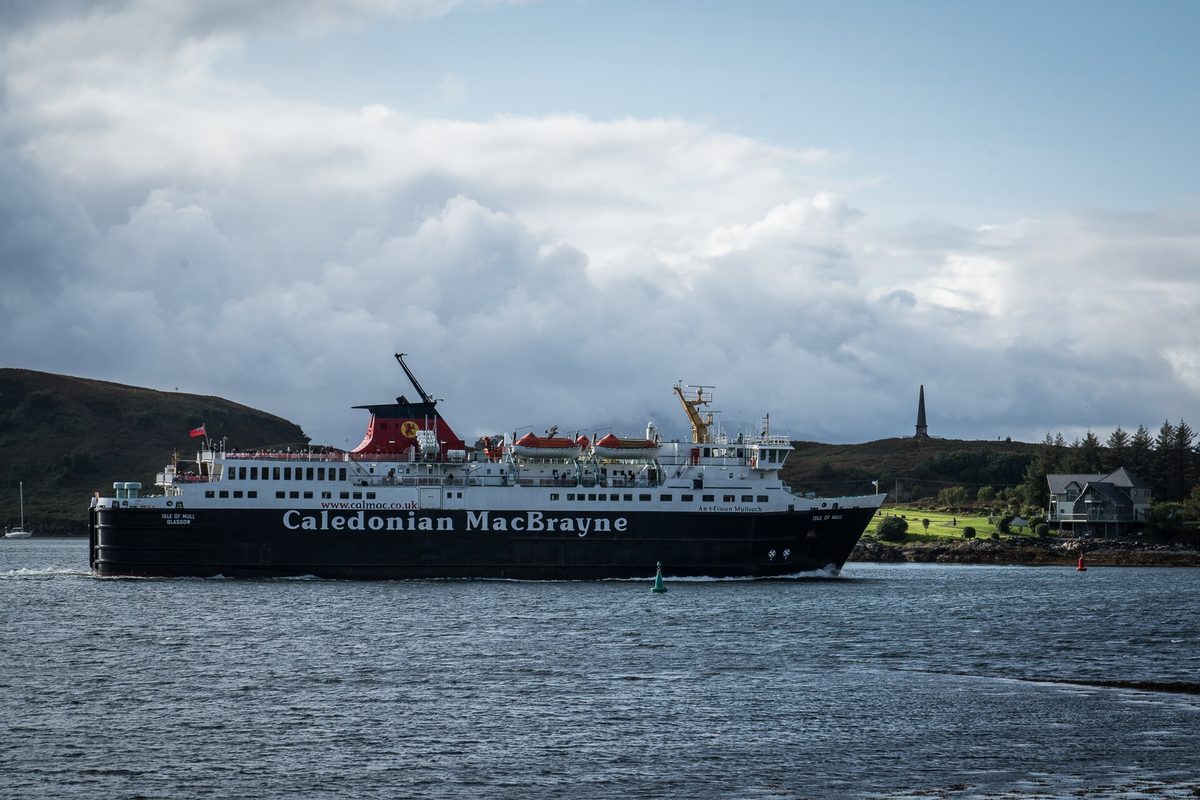
If you are walking on, you are in a good position. CalMac now asks everyone to book online in advance, even foot passengers, and eTickets scan straight from your phone — but passenger capacity on the Oban routes is rarely the constraint. On the busiest August Saturday you are very unlikely to be turned away from the Mull ferry on foot.
Vehicles are a different world. Car deck space on Oban – Craignure sells out weeks and sometimes months ahead for July and August, and for school holidays and event weekends. If your plan involves driving onto Mull in summer, book the moment the timetable opens. If you have left it late and there is no space, the honest answer is to leave the car in Oban and go on foot, then use the bus on the other side.
Motorhomes and campervans get an extra layer. At Argyll and Bute Council’s request, CalMac asks campervan and motorhome travellers to have an agreed overnight pitch on Mull before they sail. Turning up and hoping is not a plan.
The timetable is seasonal, and the seasons are hard edges
There is a summer timetable and a winter timetable, and the switch is abrupt rather than gradual. For 2026 the Oban – Craignure summer timetable ran from 27 March to 18 October, with the winter timetable taking over from 19 October through to late March 2027. Sailings thin out noticeably once the winter timetable takes over, and some of the smaller island runs drop to a handful a week.
Timetables also get amended for events. In 2026, for one, the Oban – Craignure service was altered for the Tiree Music Festival in July. None of that is a problem if you check the route page a week out. All of it is a problem if you assume last year’s times.
Check-in times are real
Thirty minutes before departure for vehicles, ten minutes for foot passengers. Miss the vehicle deadline and your space can be reallocated to someone on standby, which is exactly as painful as it sounds when the next sailing is three hours away.
Cancellations are normal, not exceptional
The western routes run across open water and they get cancelled. Not occasionally — regularly, through autumn and winter especially, and sometimes in a summer gale too. CalMac publishes live service status by route: check it the night before and again over breakfast.
Build your itinerary so a cancellation costs you a day, not your whole trip. In practice that means: do not book a non-refundable night on Mull for the evening you arrive from Oban; do not put an island day immediately before a flight home; and always know what you would do instead. Oban’s plan B is a good one, which is why the town matters more than its half-day of sights suggests.
The fares are cheaper than you expect
People brace themselves for ferry prices and then find the Mull crossing costs less than lunch. Winter 2026/27 fares, valid until 25 March 2027, are £4.90 single and £9.80 return for an adult, with a car at £18.20 single and £36.40 return, its occupants paying separately. Bicycles travel free on this route if you add them to your booking. Fares are set on the Road Equivalent Tariff, which is why island travel here does not cost what an equivalent crossing would in, say, Norway.
Every sailing from Oban, and what it is worth
Here is the pier, route by route, in the order most visitors should think about them. If you only take one, take Mull.
Mull: the crossing that does most of the work
Craignure is the gateway, and the crossing itself is a proper journey — out past Kerrera and the Lismore lighthouse with Mull’s hills filling the view ahead. Two vessels usually work the route in summer, MV Isle of Mull and the smaller MV Loch Frisa, and the timetable allows 50 minutes to an hour for the crossing, with the Loch Frisa sailings at the hour mark.
On foot, the standard day is Craignure to Tobermory by West Coast Motors bus, about an hour each way, for the painted harbour front, the distillery and the walk out to Rubha nan Gall lighthouse. Check that the bus meets your ferry before you commit.
With a car you can do considerably more — Duart Castle above the Sound of Mull, the single-track run round to Calgary Bay, sea eagles over Loch na Keal. Mull is one of the better bets in the country for wildlife, and if you like a fortress you will find plenty more across Scotland’s castles once the island bug takes hold.
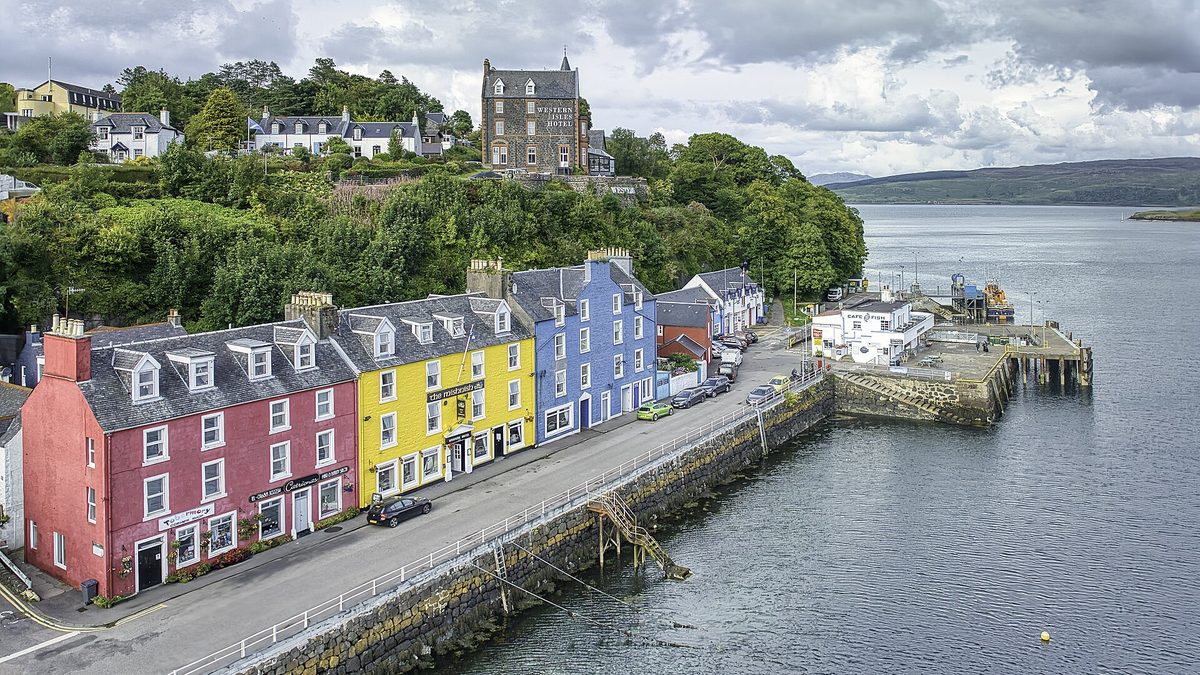
Two other routes reach Mull if Craignure is full: Lochaline to Fishnish from Morvern, and Kilchoan to Tobermory from Ardnamurchan. Both involve a long mainland drive to get there, but they are genuinely useful escape valves in August.
Iona: a pilgrimage, and a much longer day than people expect
This is the single biggest planning mistake made in Oban. Iona is not a morning trip. It is two ferries and 35 miles of largely single-track road across Mull, and that middle leg takes an hour or more by car and about 80 minutes on the West Coast Tours coach.
Then the Fionnphort to Iona crossing, which is ten minutes, passenger-only in practice, turn-up-and-go, and costs an adult £2.40 single or £4.80 return in winter 2026/27. Vehicles do not cross without a permit, which is part of why the island feels the way it does.
Add it up and a day trip from Oban to Iona is roughly twelve hours door to door, of which perhaps two or three are actually on Iona. It can be done — West Coast Tours run a Three Isles Tour from April to October that leaves Oban at 09:55 and puts you on Iona around 15:00, handling every connection for you — but go in knowing it is a long day of moving, not a leisurely wander.
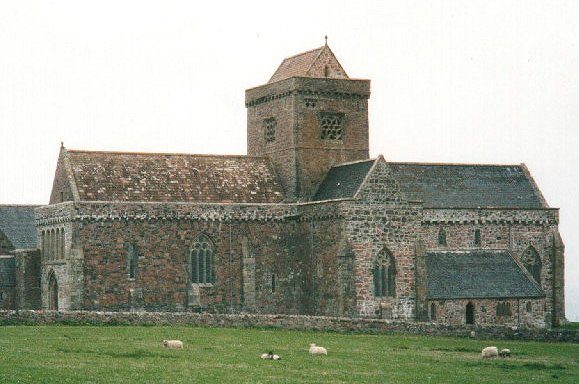
Is it worth it? Yes, and more so if you stay a night. Iona receives something like 130,000 visitors a year. The abbey is the draw, with the burial ground beside it traditionally said to hold dozens of early kings. The beaches at the north end are the colour people do not believe until they see them, improbable turquoise water over white shell sand. Accommodation is very limited, so book months out.
Staffa, Fingal’s Cave and the puffins on Lunga
Staffa is uninhabited, off the west coast of Mull, and it is the reason a lot of people come to this coast at all. The hexagonal basalt columns are the same geological event as the Giant’s Causeway, and Fingal’s Cave runs deep into the rock under a high roof of columns. Mendelssohn heard the swell booming inside it and wrote the Hebrides Overture. Standing on the walkway of columns while the Atlantic sucks in and out below you is one of the genuinely extraordinary experiences in Scotland.
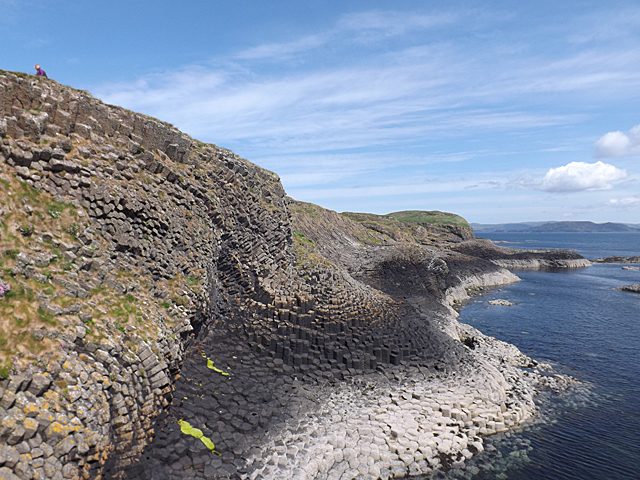
You cannot get to Staffa directly from Oban. Boats leave from Fionnphort and Iona, at the far end of Mull, and from Ulva Ferry and Tobermory further north, which is why Staffa attaches naturally to a Mull or Iona day rather than being its own trip. The full-day Staffa tours sold in Oban make that connection for you, with the CalMac ferry and a coach across Mull. Operators including Staffa Trips and Staffa Tours run from roughly April to late October, with landings entirely dependent on sea state — a swell that looks harmless from shore can make the landing steps unusable.
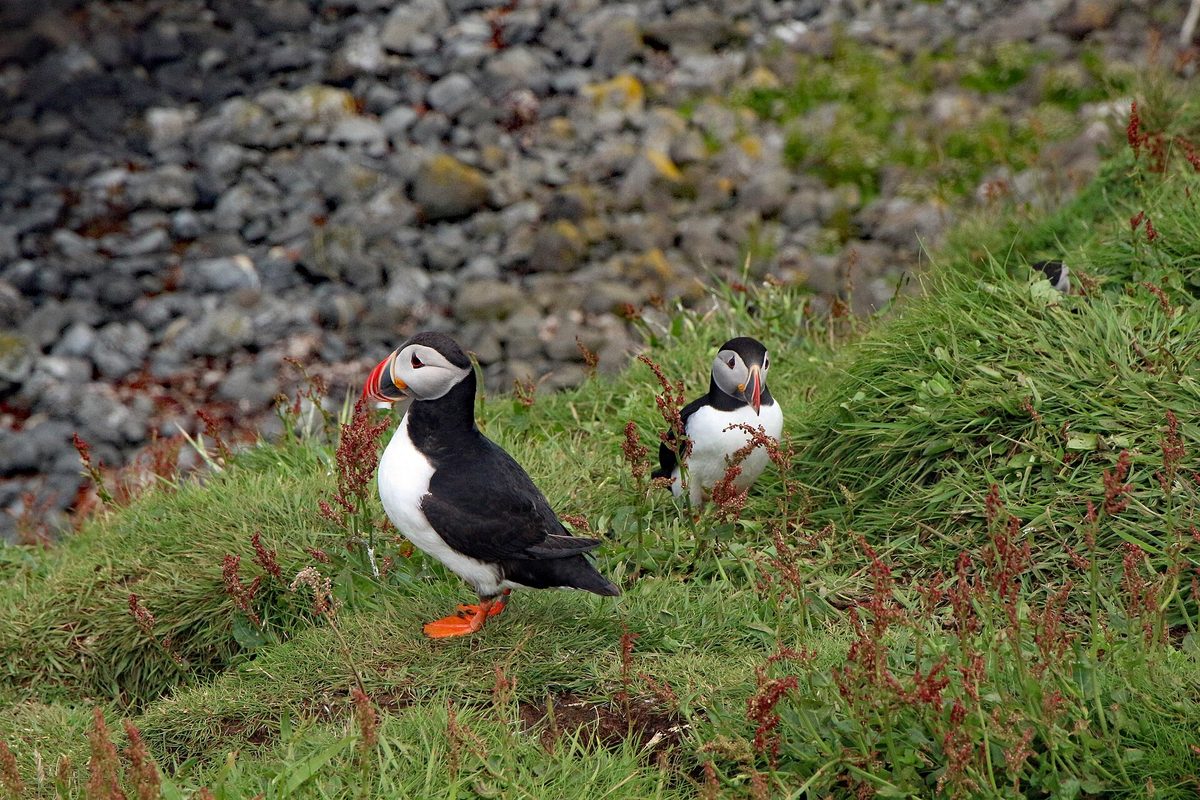
For puffins, the island to aim at is Lunga in the Treshnish Isles. Birds are on the cliffs from around mid-April and most trips stop by early August, with late May and June the reliable window. The longer wildlife sailings give you an hour or so on Staffa and two hours on Lunga, and Lunga is where you sit on the turf a couple of metres from puffins that could not care less about you. Prices sat around £45 for an adult at the time of writing.
Lismore: a short hop to a quiet island
Lismore is my favourite underused thing on this pier. The crossing to Achnacroish takes about 55 minutes (check CalMac’s timetable for the day’s sailings), and you arrive on a low, green, fertile island of empty single-track lanes with the Morvern hills on one side and Ben Cruachan on the other.
Take a bike. The island is about ten miles long and near-flat by west coast standards, which makes it one of the easiest cycling days in Argyll. There is a Gaelic heritage centre with a café, a ruined cathedral, and very little else, which is exactly the point. There is also a separate small passenger ferry from Port Appin to the island’s north end if you are driving down from Fort William.
Kerrera: a short crossing, a castle and a tea garden
Kerrera is the long green island that shelters Oban Bay, and the crossing to it leaves from the slipway at Gallanach, roughly two miles south of the town centre. It is a turn-up-and-go service and takes minutes.
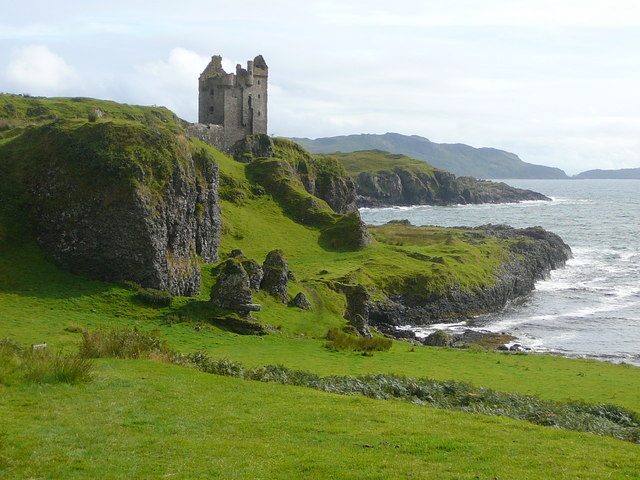
Once across, the walk south to Gylen Castle takes an hour or so on a rough track, and the castle itself is a tiny, perfect tower on a clifftop above the Firth of Lorn. There is a tea garden en route with opening days that shift with the season, so check before you rely on it for lunch. Do the full southern loop and you have a four-hour day with no cars, no crowds and a real sense of having left the mainland.
Coll, Tiree and Colonsay: the overnight islands
These are not day trips from Oban and pretending otherwise wastes your holiday. Coll and Tiree sit two to four hours out, sharing a sailing on most days; Colonsay is a similar commitment on its own route. All three reward a couple of nights and punish a rushed visit.
Tiree is the flattest and windiest of them, with white beaches, more sunshine hours than almost anywhere in Britain and a surf scene. Coll is darker — literally, it is a designated Dark Sky Community, and the night skies there are among the best in Britain. Colonsay has a bookshop, a brewery and an oyster farm, which tells you most of what you need to know.
Barra and South Uist: the Outer Hebrides, the slow way
Oban also reaches the Outer Hebrides. Castlebay on Barra and Lochboisdale on South Uist are around five hours out, and the crossing is a proper sea passage rather than a hop. Sailings are limited and seasonal, so treat this as the start of a week rather than an excursion.
It is a very different route into the Scottish islands from the usual Skye-and-back circuit, and I would argue a better one, because you arrive by sea the way everyone did until recently. If Skye is what you had in mind instead, it is reached by bridge from much further north and is a different trip entirely.
The town itself, told honestly
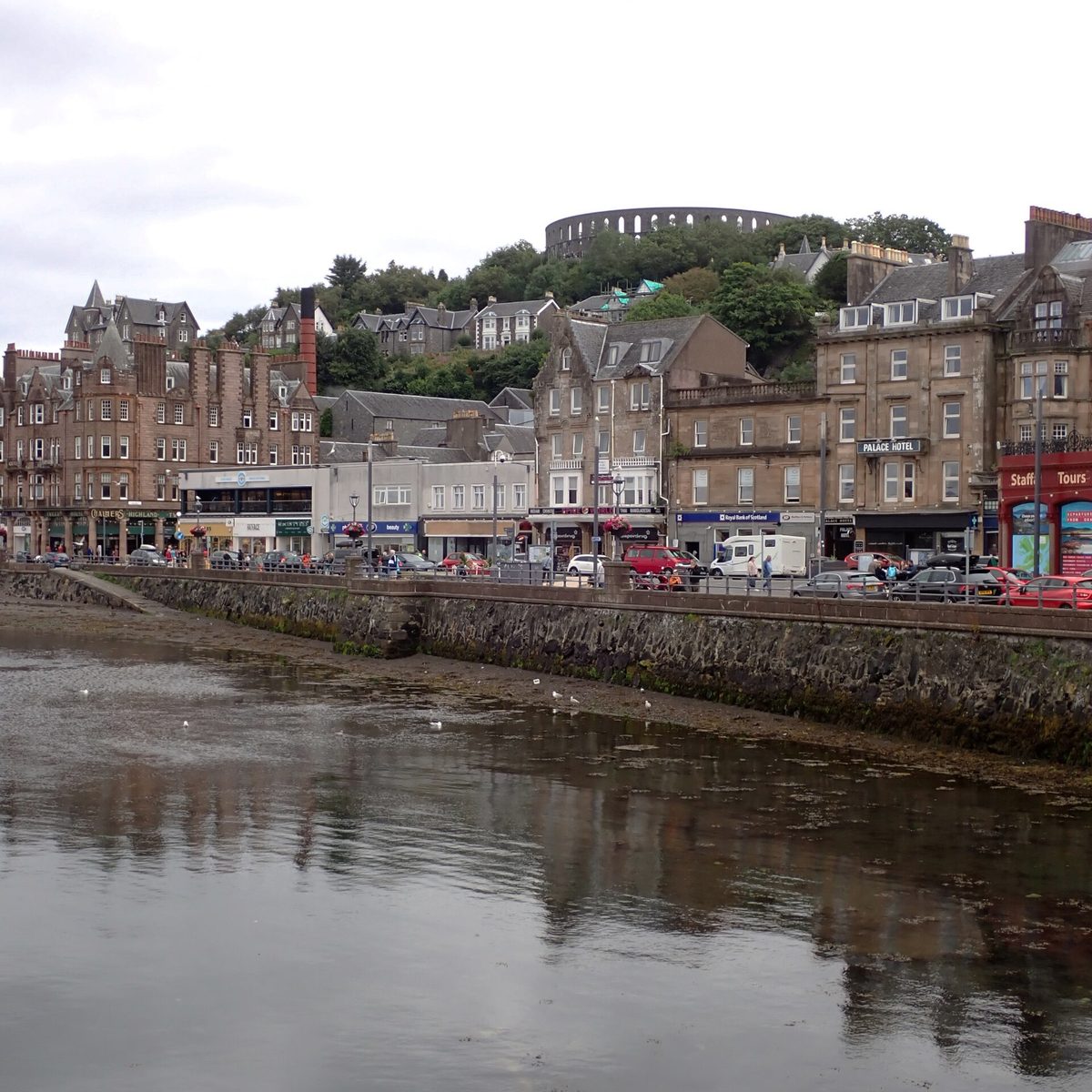
Now the half-day. Oban is a Victorian seaside resort grafted onto a working port, and both halves are visible at once: fish lorries and cruise tenders on one side of the road, ice cream and tartan shops on the other. It is not a pretty town in the way Tobermory is pretty. It is a functional one, and it is the largest settlement between Helensburgh and Fort William, with a population of around 8,000.
McCaig’s Tower: free, steep, and the view is the point
The great stone ring on the hill is the town’s emblem and it is not really a building at all. John Stuart McCaig, a local banker, commissioned it in the 1890s partly as a family monument and partly to give Oban’s stonemasons work through the winter. He died before it was finished. The planned central tower was never begun, and the statues he wanted in the window arches never appeared.
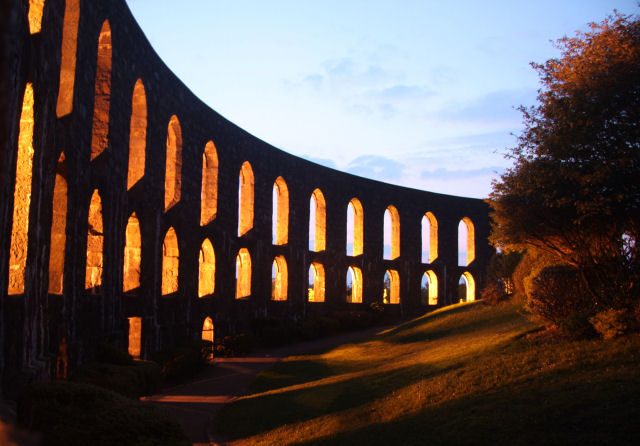
So what you get is an empty circular wall with a garden inside. Entry is free and it is open all the time. The walk up from George Street takes about ten minutes and it is genuinely steep — a proper set of steps rather than a stroll. Go anyway, and go in the evening: the view over the bay to Kerrera, Lismore and the Mull hills is the reason to climb, not the masonry. For a lower and arguably better view with fewer people, walk to Pulpit Hill on the south side of the harbour instead.
Oban Distillery: small, central, and booked out
Oban Distillery was established in 1794 and the town grew up around it rather than the other way round. It sits in the town centre near the harbour, works with just two pot stills, one wash and one spirit, and is one of the smallest distilleries in Scotland — which is precisely why tours sell out.
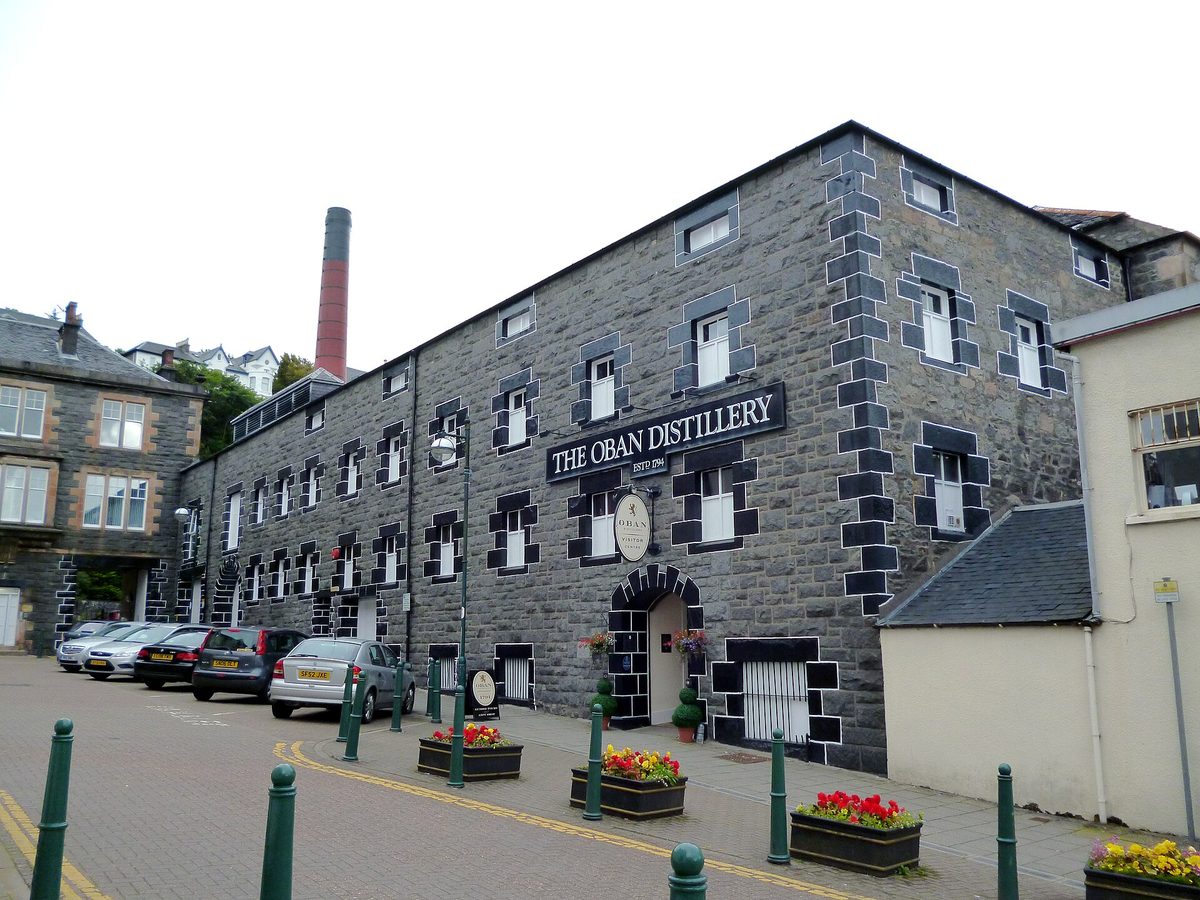
The classic hour-long tour and tasting starts at £24. Milk, Dark & Drams, a 30-minute paired tasting, starts at £45, and the 90-minute Exclusive Oban Tour & Tasting at £75. Book ahead. In July and August, and on any day a cruise ship is in, walking up hoping for a place is optimistic. If you miss out, Tobermory Distillery on Mull is a decent consolation, and there are plenty more options among Scotland’s whisky distilleries worth touring further north.
The seafood, which is the real reason to eat here
Oban calls itself the seafood capital of Scotland and for once the marketing is roughly true, because the boats land here and the shellfish does not have to travel. The famous cheap option is the green shack on the Railway Pier — scallops, langoustines, mussels and crab claws on a paper plate, eaten standing up while a ferry loads behind you. It costs very little and it is better than most restaurant seafood inland.
Beyond the shack there are proper restaurants: seafood-led places along the harbour, a van or two doing langoustines and chips, good fish and chips on George Street, and a specialist coffee roaster if you need respite from batter. Book dinner in advance between June and September; the town has more visitors than tables. Oban is a good place to start understanding Scottish food and drink beyond the clichés.
Dunollie and Dunstaffnage: two castles, two different visits
Dunollie sits on the headland at the north end of the promenade, a flat mile from the harbour. It is the ancestral seat of Clan MacDougall and the site combines a ruined medieval keep, the 1745 house museum, woodland paths and a café. Adult admission is £13, with concessions and children less, and the ticket converts to an annual pass for return visits during the open season. It is normally open from mid-March to late October.
Dunstaffnage, three miles north near Dunbeg, is the more impressive ruin: a thirteenth-century curtain-walled fortress on a rock at the mouth of Loch Etive, with a roofless chapel in the woods nearby. It is a Historic Environment Scotland site with an admission charge, so check current prices and opening times before you go.
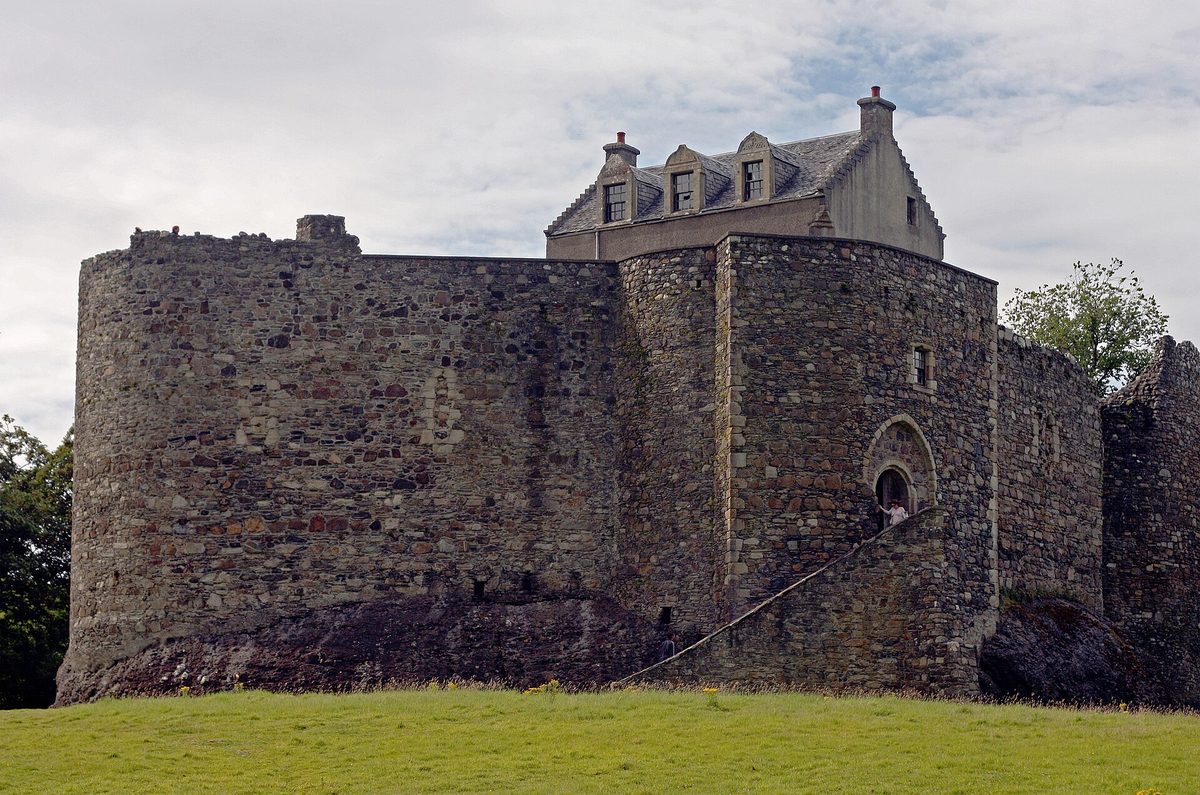
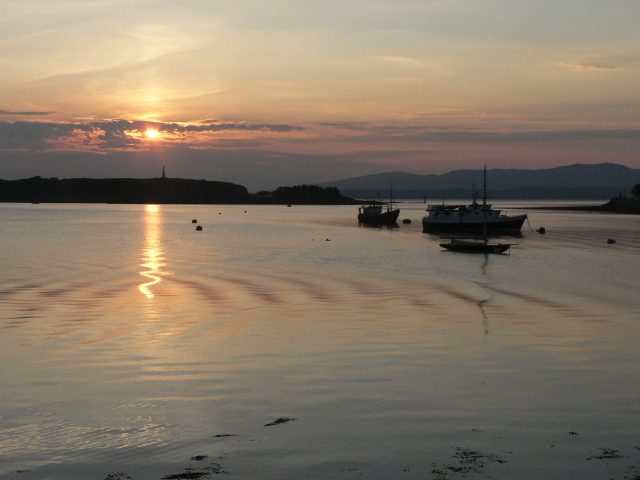
You can link Dunstaffnage to Ganavan Sands, Oban’s local beach two and a half miles from town, by a coastal path. Ganavan itself is a sandy bay looking at Mull and Morvern, with a food van in season, and it is the best place in Oban to watch a sunset.
The wet-day list
It rains here. Genuinely, persistently, and on days the forecast promised otherwise. The Oban War and Peace Museum on the Corran Esplanade is free, volunteer-run and much better than it sounds, with old photographs of the town before the tower and a piece of the Berlin Wall. There is also a chocolate maker with a café, St Columba’s Cathedral on the seafront, and the distillery if you booked. For a broader rainy-day strategy, our notes on Scotland’s weather month by month will set your expectations correctly.
Thirty minutes south: Seil, Easdale and the Bridge over the Atlantic
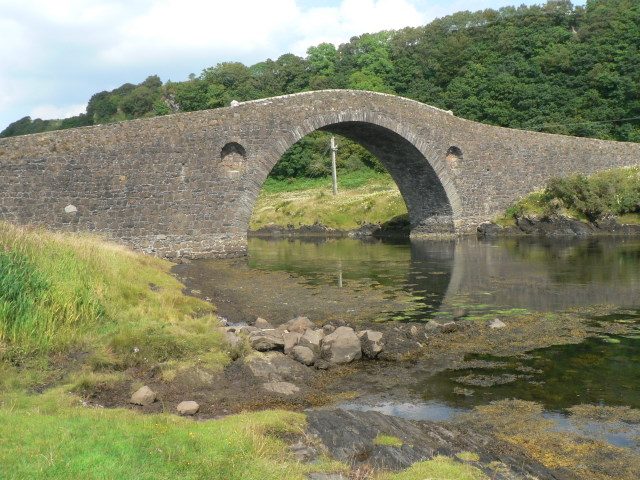
If you have a car and a spare half-day, drive south on the A816 and turn off for the Isle of Seil. You reach it over the Clachan Bridge, a single high-arched stone span from the 1790s that has long been called the Bridge over the Atlantic, on the reasonable grounds that the water underneath connects to it. The bridge is tiny and the name is a joke that has outlived several generations of locals. Stop anyway.
Carry on to Ellenabeich and you reach the slate country. These islands roofed much of Victorian Britain, and the quarries are still there — deep, flooded, sheer-sided pits right at the sea’s edge, with rows of white quarrymen’s cottages behind. A tiny passenger ferry crosses to Easdale island, which has no cars, a folk museum and the world stone skimming championships every September.
Wildlife boat trips also leave from this stretch of coast towards the Corryvreckan whirlpool between Jura and Scarba, which on a big spring tide is one of the more alarming things you can look at from a small boat.
Planning your Oban trip
How long you need
One night gets you the town and nothing else. Two nights gets you the town plus one island day. Three or four nights is the sweet spot: Mull, Iona and Staffa, Kerrera or Lismore, and enough slack that a cancelled sailing does not wreck the plan.
If Oban is one stop on a bigger loop, it fits naturally between Loch Lomond and the Trossachs to the south and Glencoe and Fort William to the north. It is a genuinely good base for the western Scottish Highlands, and better than Fort William if your interest is islands rather than mountains.
Getting to Oban
By train, the West Highland Line runs from Glasgow Queen Street in a shade over three hours, splitting at Crianlarich with the other branch heading for Fort William and Mallaig. Advance fares started around £20 one way at the time of writing and rise steeply if you buy on the day; tickets typically go on sale twelve weeks out. It is one of the finest scenic rail journeys in Scotland, and the northern branch is the one that crosses the Glenfinnan Viaduct behind the Jacobite steam train.
By coach, Citylink takes around three hours from Glasgow, on two different and equally good routes — one via Inveraray, one via Tyndrum. By car it is about two and a half hours from Glasgow on the A82 and A85, and around three hours from Edinburgh.
The station, the bus stance and the ferry terminal are all within a few hundred metres of each other, which makes Oban unusually easy without a car. If that appeals, it slots neatly into a car-free Scotland itinerary, and our guide to getting around Scotland covers the connections in more detail.
What to book, and how far ahead
In rough order of urgency: accommodation in Oban and especially on the islands, which goes first; vehicle space on the Mull ferry for summer dates; the distillery tour; the Three Isles or Staffa boat trips; and dinner tables in July and August. Foot passenger ferry tickets can wait, though CalMac would rather you booked online anyway.
For choosing dates, late May and early June are my pick — puffins are on Lunga, the sailings are on the summer timetable, and the town is not yet at full pressure. September is the other good bet, quieter and often clear. Our guide to the best time to visit Scotland goes into the trade-offs, and the midge season is a real consideration on the west coast between June and August.
Where to stay
Seafront guest houses along the Corran Esplanade for views, the streets behind George Street for convenience to the pier, and a hostel and a chain hotel for budget certainty. Prices in Oban in July are not a bargain and rooms sell out; if you are struggling, look at Connel or Benderloch a few miles north. Our overview of where to stay across Scotland puts Oban in context against the other Highland bases.
What underwhelms, and the mistakes people make
McCaig’s Tower disappoints anyone expecting a monument. It is a wall. A striking one, with a nice garden and a superb view, but people photograph it from the harbour, climb up, and find there is nothing inside. Go for the vantage point and you will not be let down.
The seafront is a working port, not a resort promenade. There are lorries, fuel bowsers, gulls with intent and a car park where a piazza might be. That authenticity is part of the appeal, but do not arrive expecting a manicured harbour town — Tobermory, an hour away on Mull, is the picture you have in your head.
Parking is the single biggest practical irritation. Longsdale, Lochavullin and Ganavan Sands are pay and display with the first two hours free, and Corran Halls 1 is free from October to March unless an event closes it. In July, finding a space near the pier at ferry time is a genuine event. Arrive early or use the outlying car parks and walk.
The weather is wetter than most visitors budget for. This is the Atlantic edge of Scotland and rain here is horizontal and frequent. Waterproof jacket, waterproof trousers, proper shoes. A cancelled sailing on a wet Tuesday is much less miserable if you are dressed for it.
The commonest itinerary mistake, by some distance, is the Iona day trip attempted without checking the connections — people budget four hours and need twelve. The second commonest is booking a car onto the Mull ferry a fortnight before a July trip and discovering there is nothing. The third is treating Oban as a one-night stop between Glasgow and Skye, which works fine but means you have used the ferry port as a bed and nothing more. If this is your first Scottish trip, our first-time visitor tips cover the wider version of these mistakes.
Frequently asked questions
Is Oban worth visiting?
Yes, but for what it connects to rather than what it contains. The town is a pleasant half-day of tower, distillery and seafood. Its real value is as the mainland ferry port for Mull, Iona, Staffa, Lismore, Kerrera, Coll, Tiree, Colonsay, Barra and South Uist. Treat it as a base rather than a destination.
How many days do you need in Oban?
Two nights minimum, three or four if you want islands. One full day covers the town comfortably. Each island day trip needs a whole day of its own, and Iona realistically needs twelve hours door to door. Build in a spare day, because ferry cancellations on this coast are routine rather than rare.
Do you need to book the ferry from Oban to Mull?
Book online in advance either way, as CalMac now asks. For foot passengers it is a formality and space is rarely a problem. For vehicles it is essential: car deck capacity on Oban to Craignure sells out weeks or months ahead for July and August. Check in 30 minutes before departure with a vehicle, 10 minutes on foot.
Can you visit Iona as a day trip from Oban?
Yes, but it is a long day, not a morning. You take the ferry to Craignure, which takes up to an hour, travel 35 miles across Mull by car or bus on largely single-track road, then a ten-minute crossing from Fionnphort. Allow about twelve hours in total, or book an organised Three Isles tour that handles the connections.
When can you see puffins near Oban?
On Lunga in the Treshnish Isles, from roughly mid-April to early August, with late May and June the most reliable window. Boats reach Lunga and Staffa from Mull and Iona rather than from Oban directly, so a puffin trip is an add-on to a Mull or Iona day, or a full-day tour from Oban via the ferry, and depends entirely on sea conditions.
How much is the Oban Distillery tour?
From £24 for the classic one-hour tour and tasting. The half-hour Milk, Dark & Drams pairing is from £45, and the Exclusive Oban Tour & Tasting, at 90 minutes, from £75. The distillery is one of the smallest in Scotland and tours sell out in summer and on cruise days, so book online well ahead rather than turning up.
What is the best way to get from Glasgow to Oban?
The train from Glasgow Queen Street takes a little over three hours on the West Highland Line and is worth taking for the journey alone. Citylink coaches take around three hours for less money. Driving is about two and a half hours, but remember that parking in Oban is charged and scarce in summer. A Glasgow day trip is possible, though you would see the town and no islands, which rather misses the point.
Final thoughts
I have a soft spot for Oban precisely because it does not pretend. It is a wet, busy, hard-working port with a folly on the hill, a very small distillery, some of the best shellfish in Britain and a pier that can put you on eight different islands.
Read the sailing board, book the car deck early, keep a plan B, and let the ferries decide the shape of your days. Do that and Oban stops being a stopover and becomes the best-value base on the west coast — a starting point for Mull, Iona and Staffa, and for the sort of Highland trip that includes Scotland’s finest lochs and, further east, gentler bases like Pitlochry and Aviemore and the Cairngorms.
Oban is one of the best places in the country to eat shellfish, and knowing what to order matters more than knowing where to sit — our guide to Scottish seafood runs through the species, the seasons and the menu words that actually mean something.
About the author: This guide was written and is maintained by the ScotlandTourism.org editorial team — travel writers who’ve spent years exploring Scotland’s cities, Highlands and islands, from bagging Munros to chasing the perfect dram. We update our guides regularly to keep prices, opening details and advice current.
Last updated: September 2026. Prices and opening times change — always check the official site before you travel.
Photo credits
All images are used under their respective Creative Commons or public-domain licenses:
- Oban harbour with McCaig’s Tower on the hill above the town — habiloid, CC BY-SA 2.0, via Wikimedia Commons
- A CalMac ferry at Oban, the mainland gateway to the Hebrides — Brian Deegan, CC BY-SA 2.0, via Wikimedia Commons
- The colourful harbourfront houses of Tobermory on the Isle of Mull — Arran Bee from Nottingham, UK, CC BY 2.0, via Wikimedia Commons
- Iona Abbey on the Isle of Iona, reached by two ferries from Oban — John Naisbitt, CC BY-SA 2.0, via Wikimedia Commons
- The hexagonal basalt columns of Staffa, home of Fingal’s Cave — Anne Burgess, CC BY-SA 2.0, via Wikimedia Commons
- A puffin on Lunga in the Treshnish Isles, a summer boat trip from Mull — PaulT (Gunther Tschuch), CC BY-SA 4.0, via Wikimedia Commons
- Gylen Castle on the clifftop at the south end of the Isle of Kerrera — Colin Park, CC BY-SA 2.0, via Wikimedia Commons
- The arched walls of McCaig’s Tower, the Victorian folly above Oban — Bob Jones, CC BY-SA 2.0, via Wikimedia Commons
- Oban Distillery on the high street in the centre of Oban — Dr Neil Clifton, CC BY-SA 2.0, via Wikimedia Commons
- Dunstaffnage Castle, the 13th-century MacDougall stronghold north of Oban — Eusebius, CC BY 3.0, via Wikimedia Commons
- The Clachan Bridge to the Isle of Seil, known as the Bridge over the Atlantic — Chris Downer, CC BY-SA 2.0, via Wikimedia Commons
- Sunset over Oban Bay and the Isle of Kerrera on Scotland’s west coast — Chris Downer, CC BY-SA 2.0, via Wikimedia Commons