I searched ‘where to stay Isle of Skye’ in early June for a trip in late July, and got back a hundred lists of hotels. From them I built a shortlist of eleven places, feeling rather organised about it. Nine were already full. The two that weren’t wanted more per night for a small twin room than I’d paid for a rather good hotel in Edinburgh the month before.
That was the moment the island stopped being a scenery problem and became a supply problem. Skye has roughly 13,000 residents and takes in something well north of 650,000 visitors a year, most of them squeezed into about five months. There are only so many beds. Everything else about planning a trip to Skye follows from that one fact, so let’s start there rather than with a list of hotels.
Where to stay Isle of Skye: the short answer
Portree is the right first choice for most people: it’s central, it has restaurants, shops and fuel, and the big Trotternish sights are 15 to 40 minutes away. Broadford is the practical alternative, Kyleakin and Kyle of Lochalsh the cheap one. Book four to six months ahead for July and August.
Skye’s bases at a glance
Drive times below are honest averages in daylight with normal summer traffic, not the 6am best case that booking sites quote. Add ten minutes in August, and add more if you meet a coach on a single-track section.
| Base | Drive to Portree | Fuel and food shop | Dinner without booking | Best for |
|---|---|---|---|---|
| Portree | — | Two forecourts, large supermarket | Possible, but not in July or August | First-timers, no-car travellers, restaurants |
| Broadford | 40 min | Supermarket forecourt, good shop | Usually, if you eat early | Arrivals, departures, families, value |
| Kyleakin and Kyle of Lochalsh | 50–60 min | Fuel and shops at Kyle | Usually | Budget, rail arrivals, late ferries |
| Sleat (Armadale, Ardvasar, Isleornsay) | 60–75 min | Small shop, limited fuel | Rarely — book it | Mallaig ferry, quiet, woodland walks |
| Carbost and Minginish | 35–40 min | Village shop only | Sometimes, and it’s a short list | Fairy Pools, Talisker, Cuillin walkers |
| Dunvegan and Waternish | 35–45 min | Fuel and a decent shop at Dunvegan | Rarely at the good places | Sunsets, castle, west coast food |
| Uig | 20 min | Fuel, small shop | Rarely | Outer Hebrides ferry, Fairy Glen |
| Staffin | 30–40 min | Small shop, seasonal hours | Rarely, and things close early | Quiraing, dark skies, dinosaur coast |
The bit nobody puts in the headline: Skye runs out of beds
Most guides to Skye accommodation are a list of hotels with a booking link attached. That’s fine as far as it goes, but it skips the only thing that actually changes what you should do next. On Skye, demand outruns supply for about five months of the year, and once that happens price stops reflecting quality.
In July, a plain double room with a shower over the bath, a kettle and a view of a car park will cost you real money in Portree. The same room in October might be half that. It hasn’t got better or worse. There are simply fewer people bidding for it.
Why the supply is so tight
Three things stack up. The island is small and the settlements are tiny: Portree’s population is somewhere around 2,300, which is a large village pretending to be a capital. Building is slow and expensive out here. And a substantial slice of the existing housing has moved into holiday letting rather than being added to it.
Highland Council’s own evidence for Skye and Lochalsh has put the share of potential dwellings licensed as short-term lets at around 17 per cent, against roughly 5 per cent across Highland as a whole. Scotland has required short-term let licences since 2023, and the council has been consulting on whether to designate Skye and Raasay as a short-term let control area, which would mean planning permission for new whole-property lets.
None of that is a reason to feel guilty about booking a cottage. It is a reason to understand that the pool of self-catering places is not going to expand quickly, and that hosts on Skye know exactly what their calendar is worth.
How far ahead to actually book
Here’s what I’d work to, at the time of writing, for a two-adult booking of any decent standard.
- Mid-June to the end of August: four to six months. For a specific cottage, a family room or anywhere in Uig, Staffin or Elgol, make it six to nine.
- May and early June: three to four months. This is the best value-to-weather window and plenty of people have worked that out.
- September: two to three months. The island stays busy well into September, and the light is better than July’s.
- October: four to six weeks, and you’ll have choice. Some B&Bs shut from late October, so check before you build a route around one.
- November to March: a fortnight is usually enough. Fewer places are open, but the ones that are will want your business.
The tactic that saves the most money is dull: book something with free cancellation as soon as your dates are fixed, then keep shopping. You’re buying a floor, not a ceiling. If nothing better appears you’ve lost nothing, and if you find something better at the 60-day mark you cancel and upgrade.
Worth saying plainly: the cheapest lever isn’t the town you pick, it’s the month. Shifting a Skye trip from the second week of July to the first week of October changes the bill more than any base on this page. If your dates are flexible at all, the quieter months for prices are worth a look before you go any further.
Northern Skye: Portree, Staffin and Uig
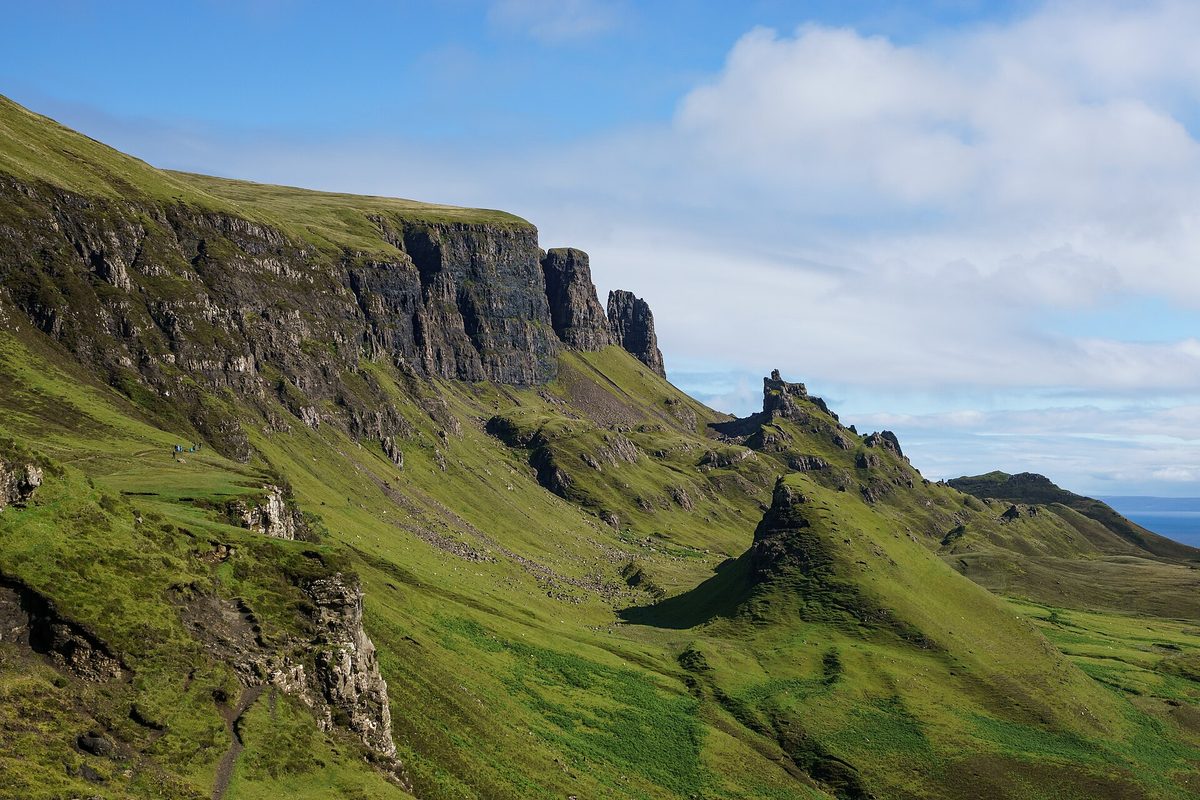
This is where most people want to be, because this is where the famous rock is. The Trotternish peninsula holds the Old Man of Storr, the Quiraing, Kilt Rock and the Fairy Glen, and the loop road round it is the busiest tarmac on the island between about 9am and 5pm in summer.
Portree: the default, and usually the right one
Portree earns its reputation. It has the island’s biggest cluster of rooms, two petrol stations, a large supermarket, a bank machine, a pharmacy, a proper choice of places to eat and the bus connections that make Skye workable without a car. If you want one base and no fuss, book here.
The drive times are the clincher. The Old Man of Storr car park is about 15 minutes north up the A855. Kilt Rock is around 25. The Quiraing car park is 35 to 40 minutes if you go via Staffin. Dunvegan is about 35 minutes west, Uig 20 minutes north, Broadford 40 minutes south. Nothing on the island is more than about an hour and a quarter away.
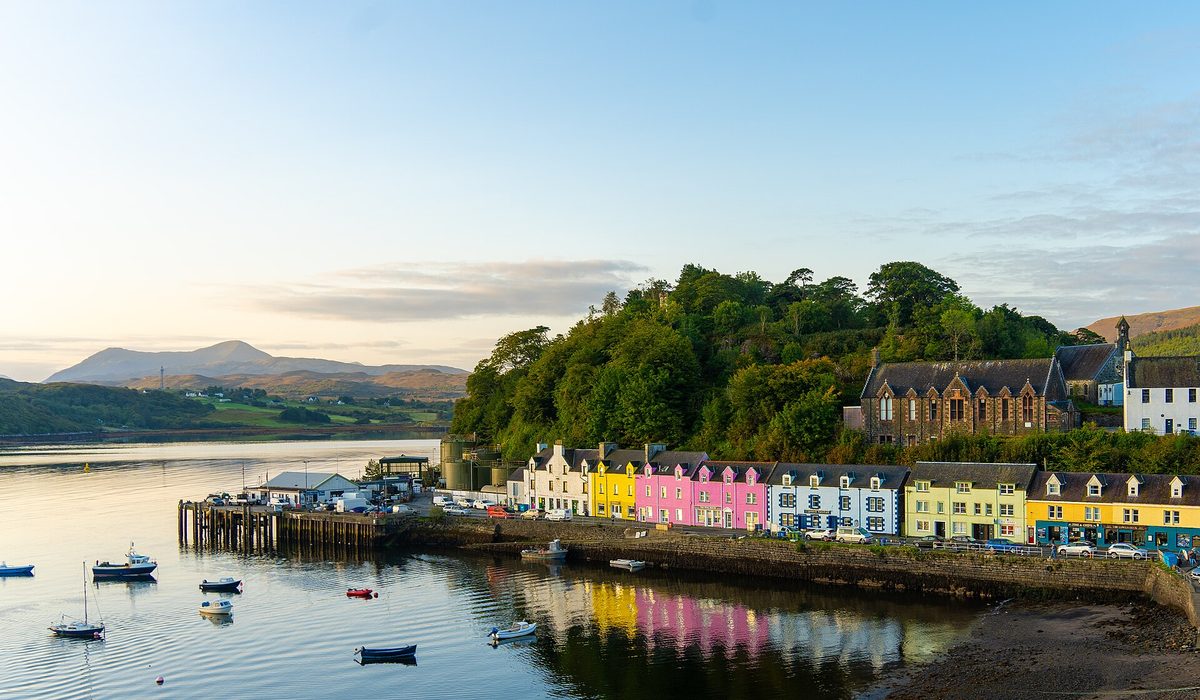
Two honest caveats. First, Portree is not a beautiful town. The painted houses on the harbour are lovely and about ninety metres long; behind them it’s a working Highland village with a Co-op and a car park, which is fine, but people arrive expecting a postcard and get a high street. Second, parking. The Bayfield and Somerled Square car parks are pay-and-display, with charges at Bayfield running to around £3 for up to three hours and roughly £5 for the twelve-hour maximum at the time of writing. Twelve hours is not overnight. Ask your accommodation where you’re actually supposed to leave the car before you arrive, because Highland Council issues a genuinely startling number of penalty notices here.
Dinner is the other thing to sort. From late June to early September you should book a table when you book the room. It is entirely normal to walk the length of Portree at seven o’clock in August and be told no by every kitchen.
Staffin: the quiet end of the Trotternish loop
Staffin sits under the Quiraing escarpment on the east coast, about 30 to 40 minutes north of Portree. It’s a scattering of crofting townships rather than a village centre, with a small shop, a campsite, a handful of B&Bs and cottages, and An Corran beach with its dinosaur footprints at low tide.
What Staffin buys you is the early start. Being 10 minutes from the Quiraing car park instead of 40 is the difference between arriving before the coaches and joining the queue. It’s also properly dark. There’s essentially no street lighting on this coast, which makes it one of the better spots on Skye for looking at the night sky from about September onwards.
What it costs you is convenience. Shops keep short and seasonal hours, there’s no fuel to speak of, and if you fancy dinner out you’re either booking days ahead or driving back to Portree in the dark. Take food with you.
Uig: the ferry village with a commute
Uig is a bay with a pier, a shop, a fuel pump, a brewery and a few places to stay, 20 minutes north of Portree on the A87. It’s the departure point for CalMac’s sailings to Harris and North Uist, so it’s the obvious overnight if you’re chaining Skye onto the Outer Hebrides. The Fairy Glen is five minutes up the hill.
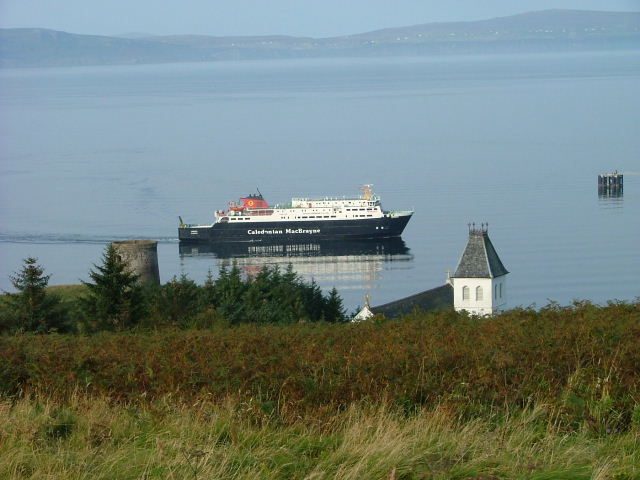
Here’s the trap. Uig looks close to the Quiraing on a map, and it is, but the road between them is the single-track Staffin-to-Uig hill road with passing places and a set of tight hairpins near the top. It’s a fine drive once. As a daily commute in fog, with a queue of hire cars that have never reversed into a passing place, it’s a slog. If the Quiraing and the Storr are your priority, Staffin or Portree beat Uig.
Southern and central Skye: Broadford, Sleat, Sligachan and Carbost
The southern half of the island is less photographed and, partly for that reason, easier to book. It’s also where the practical infrastructure lives.
Broadford: unglamorous and very useful
Broadford is Skye’s second settlement and its most sensible base if you’re arriving late or leaving early. It’s strung along the A87 for about a mile: a supermarket with a fuel forecourt, a pharmacy, a co-op, cafés, a hostel, hotels, cabins and a lot of B&Bs. It’s roughly 15 minutes from the Skye Bridge and 40 minutes from Portree.
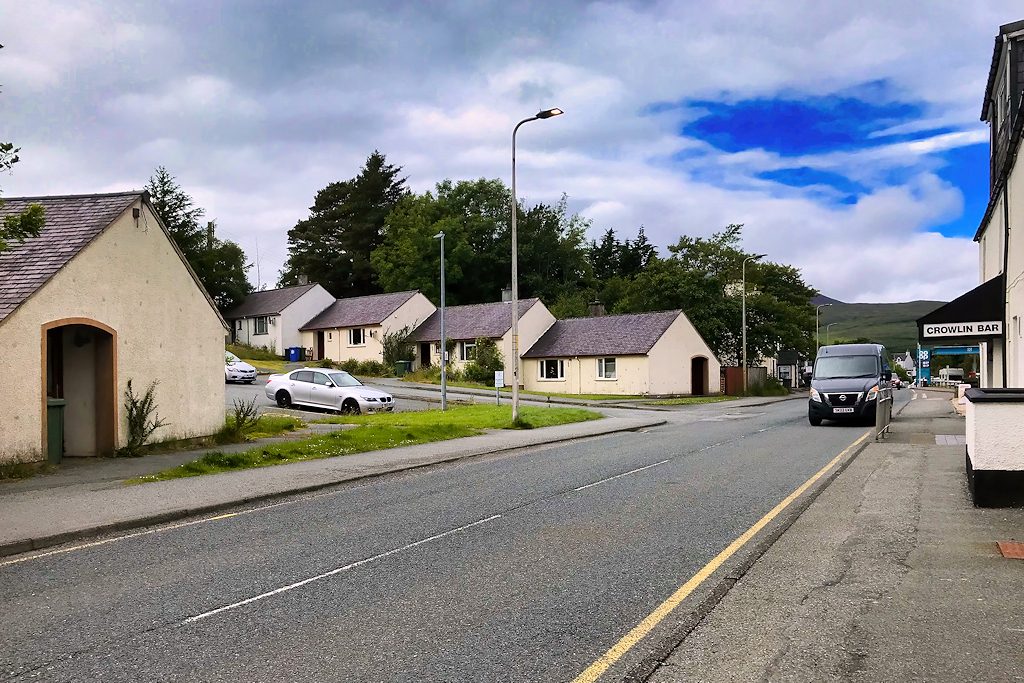
Nobody comes to Skye for Broadford’s looks, and you shouldn’t book it expecting them. What you get instead is the thing that goes wrong most often on this island, solved: fuel and food at sensible hours, somewhere to eat that isn’t fully committed six weeks out, and a shorter drive on the day you have a ferry or a flight. Families with young children tend to be happier here than in a remote cottage with a 25-minute drive to a pint of milk.
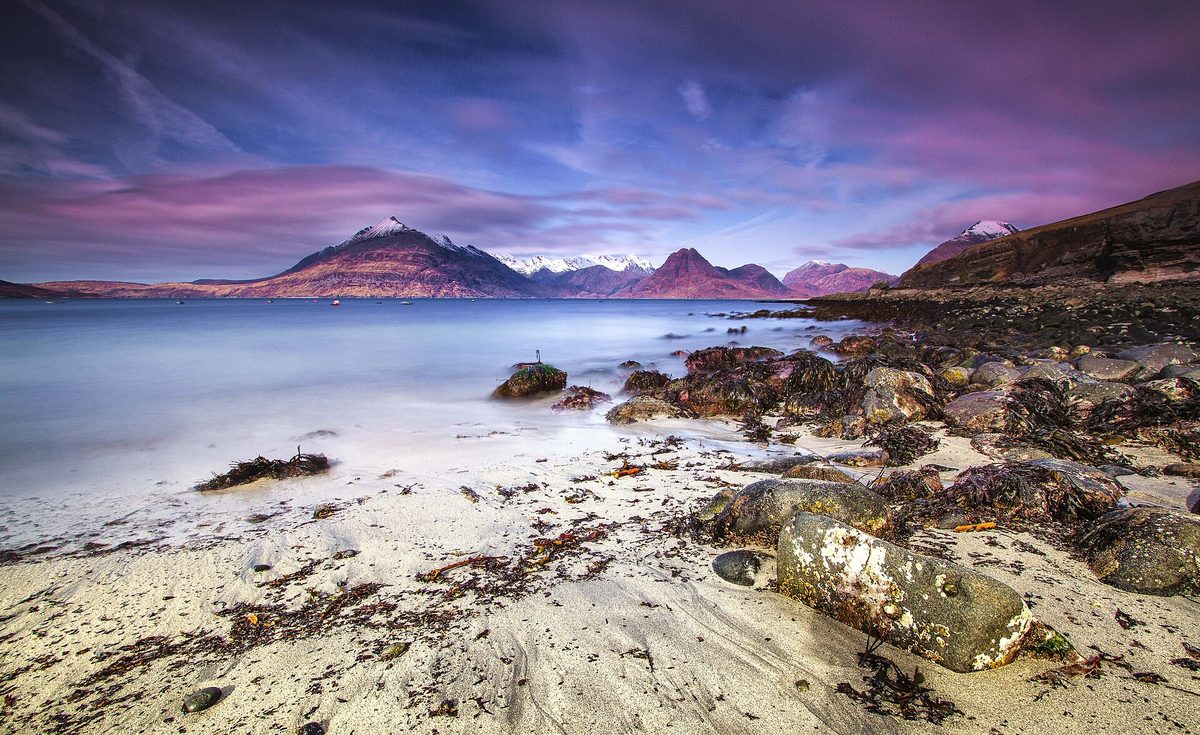
It’s also the gateway to Elgol. The B8083 runs 14 miles south-west down Strath Suardal to the water at Elgol, where you get the best road-accessible view of the Black Cuillin in Scotland and boat trips into Loch Coruisk. It’s a beautiful single-track road and a 30 to 40 minute drive each way.
Sleat: the garden of Skye, and the Mallaig ferry
The Sleat peninsula in the far south is greener and lower than the rest of Skye, with woodland, small bays and a fraction of the traffic. Armadale is where the CalMac ferry from Mallaig lands, which makes Ardvasar and Armadale the obvious first or last night if you’re coming in on the Mallaig crossing rather than over the bridge.
The trade-off is straightforward: it’s an hour to an hour and a quarter from Portree, and closer to two hours to the Quiraing. That’s a real commitment if Trotternish is your reason for coming. Treat Sleat as its own destination for a couple of nights, or as bookends to a stay further north, rather than as a base for the whole island.
Amenities are thin. There’s a shop and limited fuel, and the good places to eat down here fill up, so book dinner in advance rather than driving around hopefully.
Sligachan and the middle of the island
Sligachan is not a village. It’s a junction, a hotel, a campsite, a bunkhouse and one of the most photographed stone bridges in Scotland, sitting where the A87 meets the A863 at the foot of the Cuillin. Portree is 15 to 20 minutes north, Broadford about 25 minutes south-east, Carbost 15 minutes west.
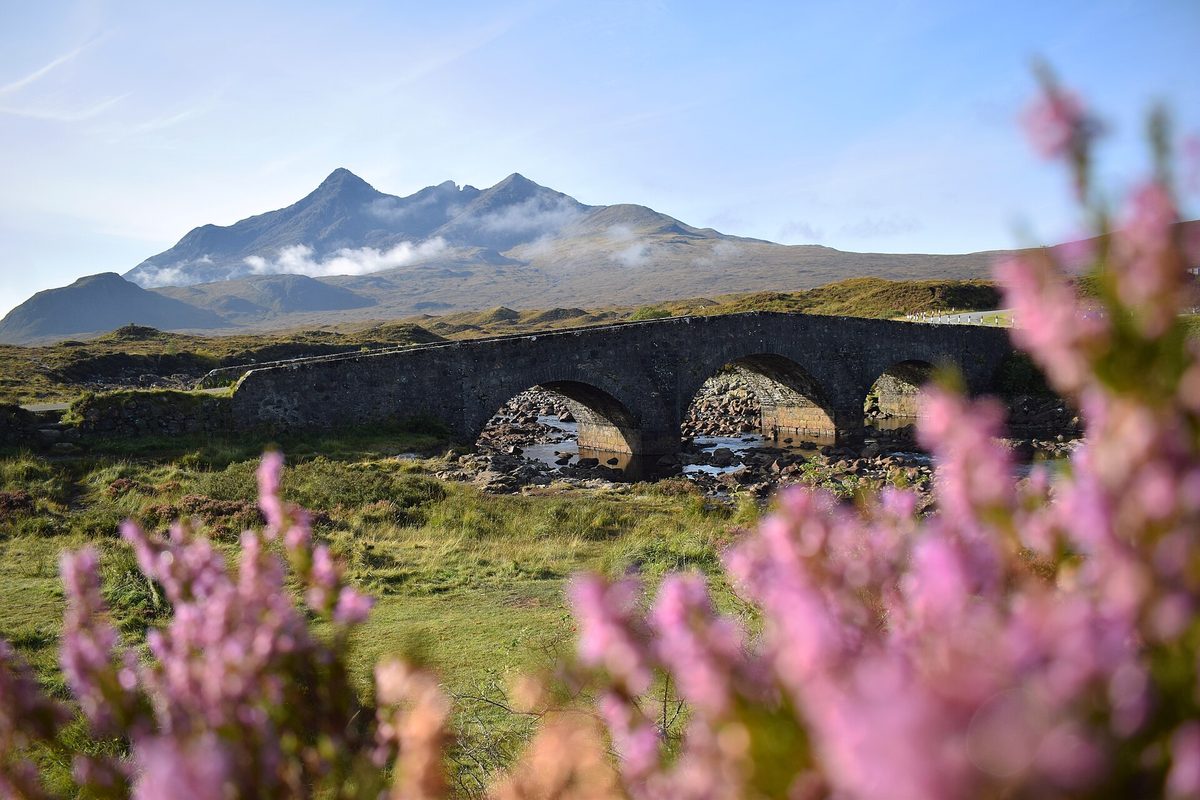
For anyone whose trip is mostly about walking, this is the most efficient address on Skye. The Cuillin routes start here or nearby, and you’re equidistant from almost everything. For anyone else it’s isolated, options are limited, and you will be driving for every meal that isn’t in the hotel.
The same broadly applies to the central belt of the island around Skeabost and Edinbane, on the A850 between Portree and Dunvegan. There’s some very good accommodation and a couple of excellent kitchens tucked away out here, and you’re 10 to 20 minutes from Portree. It’s a smart fallback when Portree itself is full, but there’s no village life at all.
Carbost and Minginish: for the Fairy Pools and the whisky
Carbost sits on the shore of Loch Harport, home of the Talisker distillery, about 35 to 40 minutes from Portree. It’s small: an inn, a café or two, a shop, a bunkhouse, some cottages and pods.
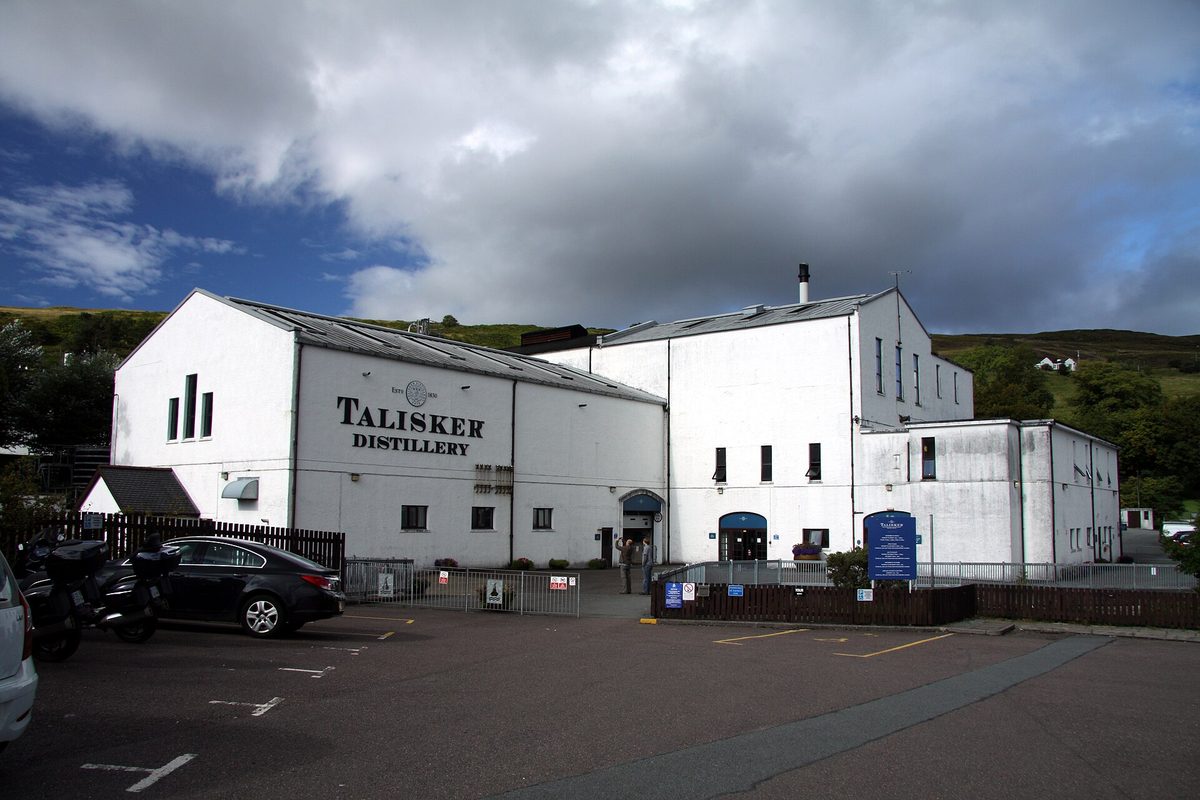
Stay here if the Fairy Pools matter to you. The Glenbrittle road turns off just west of Carbost and the car park is about 15 minutes away, which means you can be walking at eight in the morning while everyone driving from Portree is still on the A863. In July that single decision transforms the experience of the place. It also puts you on the doorstep for a distillery tour you can walk home from, which is not nothing.
The catch is that Minginish is a cul-de-sac. Everything on the eastern side of the island means driving back out via Sligachan, and the Cuillin ridge sits between you and Elgol, so those two are an hour and a half apart by road despite being close as the eagle flies.
Western Skye: Dunvegan, Waternish and Duirinish
The west is where Skye slows down. It’s also where the sunsets are, since you’re looking out over the Minch rather than into a hillside.
Dunvegan is the main village: a shop, fuel, a couple of places to eat, and the castle that has been the seat of Clan MacLeod for eight centuries. Portree is 35 minutes east. The Coral Beach walk is 15 minutes north, Neist Point around 30 to 40 minutes west on progressively narrower roads.
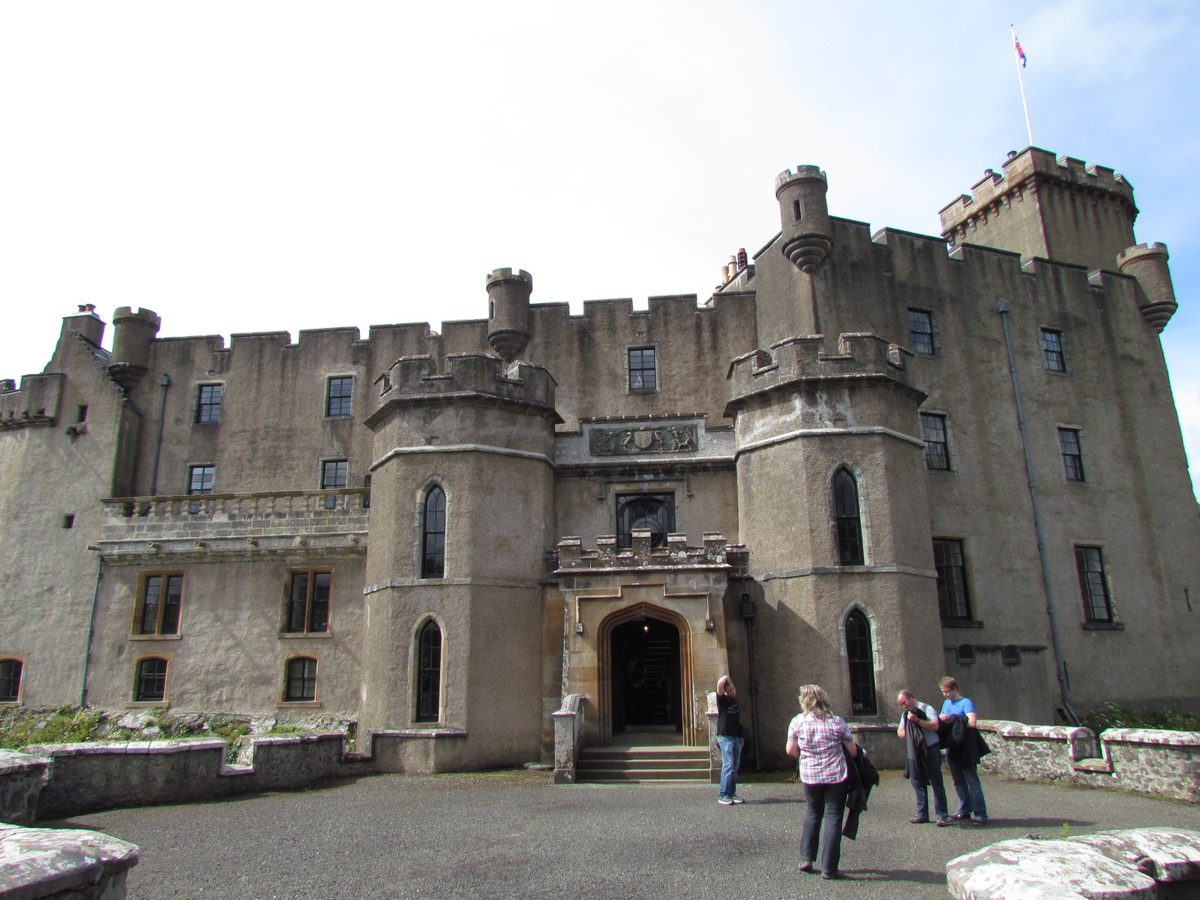
Waternish, the peninsula to the north-east, is quieter still, with crofting townships strung along a single road down to Stein and Trumpan. Some of Skye’s best-known kitchens are out here, which is worth planning around: they book out weeks ahead in summer and the drive back to Portree afterwards is 35 minutes of unlit road with deer on it.
The honest calculation for the west is this. You’re trading 30 to 45 extra minutes of driving each way to Trotternish for lower prices, better availability, more space and better evenings. If you’re staying five nights or more, that’s usually a good trade. For a two-night dash aimed at the Storr and the Quiraing, it isn’t.
The mainland option almost nobody recommends
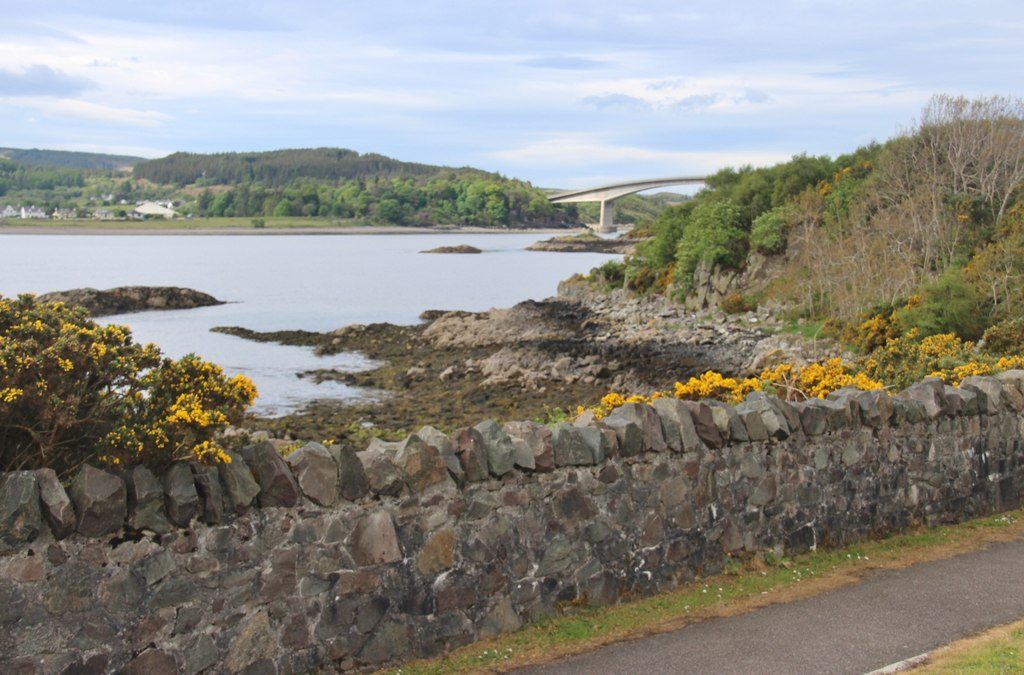
Here’s the thing I’d want to know if I were planning this from scratch. The Skye Bridge is free, takes about a minute to cross, and there is a whole cluster of accommodation on the wrong side of it that most Skye guides ignore completely.
Kyleakin and Kyle of Lochalsh
Kyleakin is the village immediately on the Skye side of the bridge; Kyle of Lochalsh is the one immediately off it, on the mainland. They’re about five minutes apart. Both are usually noticeably cheaper than Portree for equivalent rooms in high season, and both still had availability in my experience at points when the north of the island had nothing under any price.
Kyle has the practical stuff: shops, fuel, cafés, a Co-op, and the western terminus of the railway from Inverness, which makes it the only place in this article you can reach with a suitcase and no car. Kyleakin has a couple of hostels, some budget rooms, two pubs and the ruin of Caisteal Maol above the harbour.
The reason guides tell you to avoid it is drive time, and they’re not wrong about the numbers: Portree is 50 to 60 minutes away, the Old Man of Storr about an hour and ten, the Quiraing an hour and a half. If you have three days and a fixed hit-list in the north, that’s an hour and a half of daily driving you didn’t need.
But if you have five or more days, if you’re doing Skye as one leg of a longer Highland road trip, or if the alternative is not going because everything is booked, the maths flips. Eilean Donan Castle is 10 minutes east. Plockton is 20 minutes north and is the prettiest village on this stretch of coast by a distance. Glenelg and the Kylerhea turntable ferry are 45 minutes south. You’re not stuck in a suburb; you’re in a different, quieter part of the same landscape.
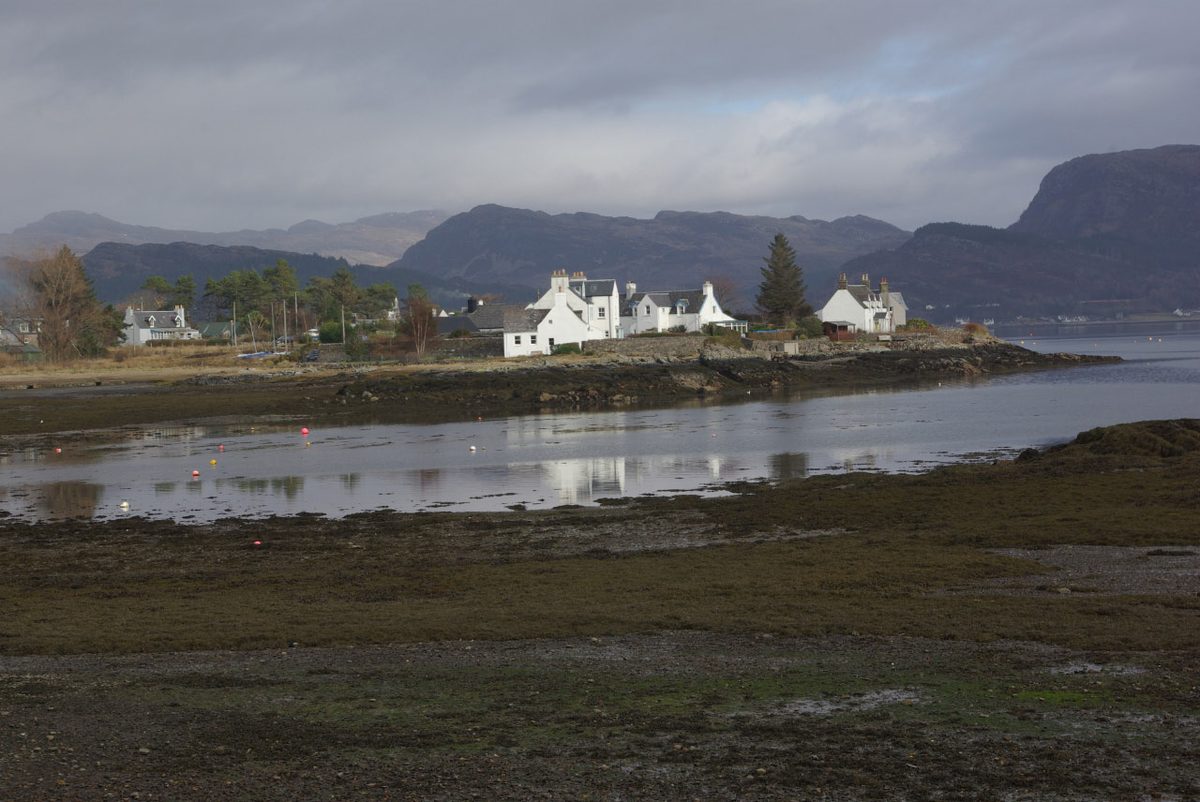
One caution: Kyleakin in particular is quiet, and some of the budget rooms are dated. That is precisely what you’re paying less for. Go in expecting good value and a short drive to the bridge, not a scenic base in its own right.
Choosing by accommodation type, not just by town
Half the battle on Skye is knowing which category of bed to chase, because they behave completely differently.
B&Bs and guesthouses
Still the backbone of Skye accommodation, and often the best value at the mid-range. Most are two to four rooms in someone’s house, so they sell out as a unit and they take single bookings badly — a two-night gap between two longer stays can sit unsold, which is exactly the gap you want to find.
Two things to check before booking. Very few serve an evening meal, so you need a plan for dinner that isn’t a 40-minute round trip. And a lot of them close from late October to Easter, so an autumn or winter trip needs a different shortlist entirely.
Hostels and bunkhouses
Skye’s hostel network is better than most people expect and it is the single most reliable way to sleep on the island at short notice. There are hostels at Portree, Broadford, Glenbrittle and Kyleakin, and independent bunkhouses at Portnalong on the west coast and near Staffin in the north, among others.
Expect somewhere in the region of £30 to £50 for a dorm bed in high season at the time of writing, with private twins and family rooms at a premium. The private rooms go first and go early; dorm beds are the last thing standing in August. Most have a proper self-catering kitchen, which quietly solves the dinner problem in villages where nothing is open.
Bunkhouses are not only for twenty-year-olds with rucksacks, whatever the photos suggest. On Skye they’re full of walkers, climbers and couples in their fifties who worked out the pricing years ago.
Self-catering cottages
The best option for a group or a family, and the most rule-bound. Peak-season minimum stays of three to seven nights are standard, and a lot of properties still run fixed changeover days — Saturday to Saturday, sometimes Friday or Monday. That’s the reason your search comes back empty: you’re asking for Tuesday to Friday in a market that only sells weeks.
Two workarounds. Search Saturday to Saturday even if it’s more nights than you wanted, because the total is often less than four nights of hotel rooms. And in shoulder season, ask directly about shorter stays — minimums usually drop to two or three nights from October, and owners will fill an awkward gap if you ask.
Check what “fully equipped” means in a rural context. Mobile signal is patchy across large parts of Skye, some places have no mains gas and rely on oil or wood, and the nearest shop may be 20 minutes away and shut on Sunday.
Pods, cabins and glamping
This is the part of Skye’s accommodation stock that has grown fastest, and it’s the reason there are now beds in places that had none a decade ago. A pod is typically a small insulated timber unit for two, with heating, a kettle, a microwave and a fridge.
The question that decides whether you’ll enjoy it: is there a bathroom inside the pod, or a shared block across a field? Both exist at similar prices and the listings are often vague. In horizontal rain in April, this matters more than the view.
Second question: midges. A pod with a lovely deck beside standing water is a completely different proposition in late July from what the photos suggest. Midge season runs roughly late May to early September, worst in still, damp, overcast conditions at dawn and dusk.
Hotels and inns
There aren’t many large hotels on Skye, which is why the ones that exist can charge what they charge in August. The village inns are often the better bet: fewer rooms, a bar and kitchen downstairs that solves dinner, and a much shorter walk home. Book the room and the table together.
Campervans, campsites and wild camping
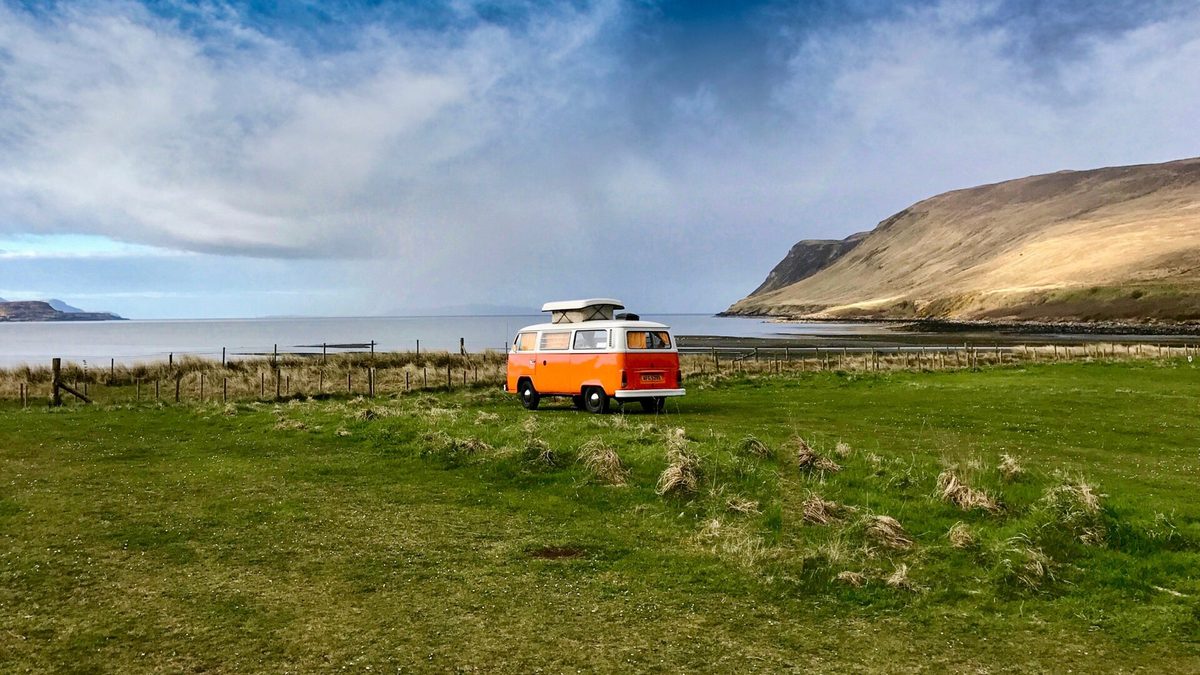
A large share of the traffic on Skye in summer is now vans and motorhomes, and this is the part of the accommodation picture with the most misinformation attached to it.
What the law actually says
Scotland’s right of responsible access, set out in the Scottish Outdoor Access Code, allows wild camping on most unenclosed land. That right is exercised on foot. It covers a small tent, carried in, pitched late, struck early, kept away from houses, roads and farmland, left with no trace and no fire on peat, and moved on after two or three nights.
It does not cover motor vehicles. Sleeping in a van at the roadside is not wild camping in the legal sense and never has been. It’s governed by parking law, signage and the landowner’s permission, and lay-bys are for stopping and passing, not for staying the night. Plenty of people do it anyway, and where it’s done badly it’s the single biggest source of local irritation on Skye: verges churned to mud, passing places blocked, and human waste left behind at popular viewpoints.
I’d put it this way. Nobody on Skye resents campervans. They resent the twelve vans parked overnight in a car park meant for walkers, and the toilet paper behind the wall. The behaviour is what’s being complained about, and it’s easy to stay on the right side of it.
The facilities that now exist
The island has quietly built out the sort of Aire-style provision that continental Europe has had for years, and it’s under-publicised.
- Portree has a designated motorhome area at the Bayfield car park and a card-operated chemical toilet disposal point on the waterfront, around £3 per use at the time of writing.
- The ferry terminal at Uig has waste and water facilities.
- Several campsites — including those at Portree, Uig, Staffin, Edinbane and near Dunvegan — sell service stops to non-residents for a few pounds, letting you empty grey and chemical waste and fill fresh water without booking a pitch.
- Full campsites with hook-up exist at Portree, Staffin, Uig, Sligachan, Glenbrittle and elsewhere. In July and August, book these too. They fill.
Charges and opening seasons change, so check the operators directly before you rely on any of it. Several of these sites close from October to Easter.
My honest advice for van travellers
Book campsites for at least half your nights, especially your first and last. Use the service points and pay the few pounds. Don’t overnight in the car parks at the Storr, the Quiraing or the Fairy Pools, all of which have signage and, increasingly, enforcement. And remember that a van doesn’t solve the supply problem in August so much as move it: the good pitches book out too.
How long to stay, and how to split it
Two nights is enough to see the Old Man of Storr, the Quiraing and one other thing badly. Three nights is the realistic minimum. Four or five is where Skye starts to relax, and it’s when the weather stops dictating your entire trip, which on this island is the real argument for staying longer.
If you have four nights or more, splitting your base is worth the packing. Two nights north around Portree or Staffin covers Trotternish properly. Two nights south or west — Carbost, Broadford, Dunvegan, Sleat — covers the Cuillin, the Fairy Pools and the coast without an hour of driving before breakfast. Our Skye itinerary sets out how the days actually fit together.
If you have two or three nights, don’t split. Stay in Portree, accept the drive times and use the early mornings.
Getting around once you’re there
Skye without a car is possible but it narrows your options sharply, and it makes the choice of base for you: Portree, with Broadford and Kyleakin as the alternatives. Buses link Kyle, Broadford, Portree, Uig and Dunvegan, with services thinning out badly on Sundays and in winter. The Storr is reachable by bus; the Quiraing and the Fairy Pools effectively aren’t, so plan on a tour or a taxi for those. There’s more on the practicalities in our guide to travelling around Scotland.
If you’re driving, three things about the roads that affect where you sleep. The A87 trunk road is decent but unlit and busy with lorries and coaches. Much of the rest is single-track with passing places, including the Glenbrittle road, the Elgol road, the Quiraing road and most of the far north-west. And there are deer on the verges at dusk everywhere. A base that’s 40 minutes away in daylight is a longer, slower 40 minutes at half past ten at night in October.
Fuel, food and the practical stuff
Fuel is concentrated at Broadford, Portree, Dunvegan and Uig, with forecourts generally tied to shop hours rather than open around the clock. Sunday evenings and winter are the weak points. My rule on Skye is to fill up whenever the tank drops below half and I happen to be passing a pump, which sounds paranoid until the first time you’re at Neist Point on a Sunday afternoon with 40 miles showing.
The two supermarkets that matter are in Portree and Broadford. Everything else is a village shop with village hours. If you’re self-catering anywhere west or north, do a proper shop on the way in.
What to do when Skye is fully booked
In August, this happens. Not “everything nice is gone” — genuinely nothing at any price on the dates you want. Here’s the order I’d work through.
1. Move the days of the week before you move the destination
Sunday to Wednesday is dramatically easier to book than Thursday to Saturday, and it’s cheaper. Shifting a four-night stay back by three days often produces results that no amount of searching within the original dates will.
2. Widen the map to the mainland
Kyle of Lochalsh, Plockton, Dornie, Lochcarron, Glenelg and Shieldaig are all within striking distance and are searched by a fraction of the people searching Skye. Portree is under an hour from Kyle. Even Fort William works for a long day trip if you’re desperate, though I wouldn’t do it twice.
3. Split the stay across three or four places
One night here, two nights there. It’s a nuisance, and it’s how a lot of people get onto the island in August. Skye is small enough that no two bases are more than 90 minutes apart, so a mid-trip move costs you an hour, not a day.
4. Change the type of bed
Hostels, bunkhouses and campsites hold availability far longer than hotels and cottages. So do pods. A dorm bed or a pitch is not the trip you pictured, but it’s a trip.
5. Re-check at 30 and 14 days
Free-cancellation bookings drop out in waves as balances fall due and plans change. Set alerts, check late in the evening, and be ready to book immediately. Cancellations are the main reason the island appears to have capacity that wasn’t there in April.
6. Go in a different month
Unpopular but correct. Skye in the first half of October has better light, fewer people, no midges, and half the accommodation problem. If your dates are movable at all, moving them beats every other tactic on this list. Our overview of summer in Scotland is honest about how compressed the peak really is.
The one thing not to do is drive to Skye without a booking and assume something will turn up. There is no late-night fallback here. The nearest thing to a safety net is a campsite, and in August they’re full too.
What underwhelms, and the mistakes I see most
A fair account has to include the bits that don’t live up to the listing.
The “20 minutes from the Old Man of Storr” claim. Usually measured at dawn, from a property whose driveway is five minutes off the main road. In practice, in July, add half of it again, plus however long you spend hunting for a space in the car park, which is the actual bottleneck. Our Storr walk guide goes into the parking situation in detail.
“Sea view” on the north and west coasts. A sea view on Skye is a weather view. It’s magnificent and it also means the room faces into whatever is coming off the Atlantic. Lovely in June. Loud in October.
Booking the remotest cottage on the island for a first visit. Elgol, Glendale, Aird of Sleat and the far end of Waternish are all beautiful and all involve committing to 30 to 45 minutes of single-track driving before you reach a main road. That’s romantic on night one and wearing by night four, particularly with children or in bad weather.
Underestimating how early kitchens stop. Outside Portree, last food orders across much of Skye land somewhere between 8pm and 8.30pm, earlier still in the shoulder season and on Sundays. If you’re coming off a long walk at seven, that is tighter than it sounds.
Treating Skye as a day trip from Inverness or Fort William. People do it, and they spend seven hours in a car for two hours on the island. If that’s the plan, at least sleep at Kyle or Broadford and turn it into an overnight. It’s a completely different trip. There’s a wider argument about this in our look at choosing a Highland base town.
Ignoring the ferry option entirely. Everyone drives over the bridge. Coming in on the Mallaig-to-Armadale crossing changes the whole shape of the trip and makes Sleat a sensible first night rather than an odd detour.
Frequently asked questions
What is the best area to stay on the Isle of Skye for a first visit?
Portree, in almost every case. It’s central, it has the island’s best concentration of restaurants, shops and fuel, and it’s 15 to 40 minutes from the Trotternish sights most first-timers come for. Book it early, because it’s also the first place to fill. Broadford is the sensible second choice.
How far in advance should I book accommodation on Skye?
Four to six months for July and August, and six to nine for a specific cottage or family room. Three to four months for May, June and September. Four to six weeks for October. A fortnight is usually enough from November to March, though many places close for winter, so check.
Is it cheaper to stay on the mainland near the Isle of Skye?
Generally yes. Kyle of Lochalsh, Plockton and Dornie are usually cheaper than Portree for comparable rooms in high season and hold availability longer, as does Kyleakin, which is technically on Skye but a minute over the bridge. The cost is drive time: Portree is 50 to 60 minutes away, the Quiraing about 90. It works well for stays of five nights or more, or when Skye itself is sold out.
How many nights do you need on the Isle of Skye?
Three nights is the realistic minimum, four or five is better. Two nights means seeing the headline sights in a hurry with no slack for weather, which on Skye is the thing most likely to reorganise your plans. With four nights or more, consider splitting between a northern and a southern or western base.
Can you stay on Skye without a car?
Yes, if you base yourself in Portree. Buses connect Kyle, Broadford, Portree, Uig and Dunvegan, and the Old Man of Storr is reachable by service bus. The Quiraing, the Fairy Pools and Neist Point effectively are not, so budget for a day tour or two. Kyle of Lochalsh is the only base here with a railway station.
Is wild camping allowed on the Isle of Skye?
Wild camping with a small tent on unenclosed land is allowed under the Scottish Outdoor Access Code, provided you stay small, discreet, brief and leave no trace. The access rights do not extend to motor vehicles, so sleeping in a campervan by the roadside isn’t covered and depends on parking rules and landowner permission. Use campsites and the island’s service points instead.
Is Portree or Broadford better as a base?
Portree if you want restaurants, buses and the shortest drives to Trotternish. Broadford if you want value, an easier arrival or departure, decent shops and a shorter run to the bridge and to Elgol. Broadford is about 40 minutes further from the Quiraing, which is the number that usually decides it.
What should I do if everything on Skye is booked?
Shift your dates to Sunday-to-Wednesday, then widen the search to Kyle of Lochalsh, Plockton and Lochcarron on the mainland. Split the stay across two or three properties, look at hostels, bunkhouses and campsites, and re-check at 30 and 14 days out when cancellations land. Don’t turn up without a booking.
Final thoughts
Skye is worth the hassle. I’ve been in July, when the Storr car park was a slow-motion argument, and in early October, when I had the Quiraing to myself for twenty minutes in low gold light, and both trips were good in completely different ways.
But the accommodation is the part that will decide your trip, and it’s the part people leave until last. Sort the beds first, then the route. Book something refundable the moment your dates firm up, take the mainland side seriously if the island is full, and don’t be too proud for a bunkhouse. If you’re still weighing the island against other options, our wider guide to where to stay in Scotland puts Skye in context with the rest of the country.
Get that right and Skye is one of the great weeks in Britain. Get it wrong and it’s two hours a day in a car park queue with nowhere to eat at eight o’clock.
Where you sleep on Skye depends a good deal on when you come. Beds are fixed in number and August prices bear no relation to late September ones, which is one of the four variables behind our verdict on the best time to visit the Isle of Skye.
If a whole house suits you better than a room, the thinking behind that choice is set out in our guide to choosing a Highland self-catering cottage, which covers the boring specification details that decide the week.
About the author: This guide was written and is maintained by the ScotlandTourism.org editorial team — travel writers who’ve spent years exploring Scotland’s cities, Highlands and islands, from bagging Munros to chasing the perfect dram. We update our guides regularly to keep prices, opening details and advice current.
Last updated: September 2026. Prices and opening times change — always check the official site before you travel.
Photo credits
All images are used under their respective Creative Commons or public-domain licenses:
- Portree harbour — הגמל התימני, CC BY-SA 4.0, via Wikimedia Commons
- Skye bridge — Alan Reid, CC BY-SA 2.0, via Wikimedia Commons
- Broadford — David Dixon, CC BY-SA 2.0, via Wikimedia Commons
- Sligachan old bridge — NYSonnet, CC BY-SA 4.0, via Wikimedia Commons
- Quiraing — Colin, CC BY-SA 4.0, via Wikimedia Commons
- Uig village — Dave Fergusson, CC BY-SA 2.0, via Wikimedia Commons
- Dunvegan castle — Lómelinde, CC0, via Wikimedia Commons
- Carbost talisker — Chmee2, CC BY-SA 3.0, via Wikimedia Commons
- Elgol — Ian Campbell camcam, CC0, via Wikimedia Commons
- Plockton — Stephen McKay, CC BY-SA 2.0, via Wikimedia Commons
- Campervan — Tristan Mimet, CC BY 3.0, via Wikimedia Commons