
The first time I walked the Royal Mile in Edinburgh I did what everyone does. Out of the Castle at about half eleven, into the flow heading downhill, a shortbread tin I did not want, and Holyrood forty minutes later with the vague feeling I had missed something. I had. Type “Royal Mile Edinburgh” into a search box and you get the same six ticketed attractions on every page, and I had followed that list straight past roughly forty openings in the tenement walls without going down a single one.
That is the whole trick of this street, and almost nobody tells you. The shops are a distraction. The paid attractions are fine and mostly optional. The actual interest is in the closes — the narrow lanes running off both sides, nearly all of them free, most of them empty, several of them genuinely startling. This guide walks the Mile top to bottom, street by street, and tells you which openings to turn into and what is waiting at the bottom.

Royal Mile Edinburgh: the short version
The Royal Mile is not one street. It is a chain of four — Castlehill, the Lawnmarket, the High Street and the Canongate, plus Abbey Strand at the end — running roughly 1.6km downhill from Edinburgh Castle to the Palace of Holyroodhouse. Walk it top-down in 30 minutes flat, or three to four hours properly, dropping into the free closes.
The Royal Mile at a glance
Here is the sequence, in the order you will meet it walking down from the Castle. Times are for walking that stretch without stopping; you will roughly triple them if you actually look at things.
| Section | Walk time | What it is | Closes worth entering | Paid stop |
|---|---|---|---|---|
| Castle Esplanade | 3 min | Parade ground and the view west | None — it is open ground | Edinburgh Castle |
| Castlehill | 4 min | Steepest stretch, most tourist-facing | Boswell’s Court, Ramsay Lane | Camera Obscura, Scotch Whisky Experience |
| Lawnmarket | 4 min | Short, and the best closes on the Mile | Lady Stair’s Close, Riddle’s Court, James Court, Wardrop’s Court | Gladstone’s Land |
| High Street | 10 min | Longest and busiest; St Giles and the bridges | Advocate’s Close, Tweeddale Court, Fleshmarket Close, Craig’s Close | The Real Mary King’s Close |
| Canongate | 10 min | Quieter, older, where most visitors give up | Dunbar’s Close, White Horse Close, Chessel’s Court, Bakehouse Close | Nothing — the museums here are free |
| Abbey Strand | 2 min | The last few metres to the palace gates | None | Palace of Holyroodhouse |
Why “the Royal Mile” is four streets, and why that matters
Nobody who lives in Edinburgh says “I’m on the Royal Mile”. They say they are on the Lawnmarket, or up at Castlehill, or down the Canongate. The collective name only appeared in the early twentieth century, borrowed from a guidebook phrase and never officially adopted. Look at the street signs as you descend and you will see the name change four times under your feet.
This is not pedantry, it is navigation. Directions in Edinburgh are given by section. If someone tells you the place you want is “just past the Tron on the south side”, that is precise and useful; “on the Royal Mile” describes about 1.6km of continuous frontage and helps nobody. Learn the sequence — Castlehill, Lawnmarket, High Street, Canongate — and the whole thing becomes legible.
The geology explains the shape. The Castle sits on a volcanic plug; the ridge running east of it is glacial debris that piled up behind the hard rock, a formation geologists call crag and tail. So the Mile is a spine with steep ground falling away on both sides, which is why every close off it is either a set of steps or a slope. The Castle end sits at around 109m above sea level and the palace gates at around 42m, giving an average gradient of about 4%. It does not sound like much. Your knees will notice on the way back up.
Always walk it downhill, from the Castle
Some guides route you uphill from Holyrood, usually so they can finish at the Castle for the drama. I would not. Sixty-seven metres of climb spread over a mile is a slog on granite setts, and you will arrive at the Castle hot and out of patience with an hour of standing still ahead of you.
Walking down works better for three reasons. The gradient is with you. The crowd thins as you go, so the busiest stretch is behind you by early afternoon. And you finish at Holyrood, where the Palace, the Parliament and the entrance to Holyrood Park all sit within a hundred metres of one another, and where you can flop on the grass under Arthur’s Seat rather than fight your way back through the shops. If the Castle is on your list, get the timed entry sorted first — our guide to how Edinburgh Castle tickets actually work covers the slot system, which matters more than the price.
North side, south side — pick one and stop zig-zagging
Here is the single biggest improvement you can make to this walk. The closes run off both sides, and they go to very different places.
North side closes drop steeply towards Market Street, Waverley station and the New Town. Most are stepped, many are through-routes, and several give you a sudden framed view north across the valley to the Scott Monument and Princes Street. These are the dramatic ones.
South side closes fall towards the Cowgate and the Grassmarket. They are more often dead ends or open into courtyards, and they feel older and more enclosed — less view, more atmosphere.
Crossing back and forth every thirty seconds is how most people do it, and it is exhausting and inefficient. Do the north side going down, then either take the Cowgate back west and pick up the south side on a second pass, or simply accept you are doing half the Mile properly today and come back. I now think of it as two walks, not one.
Section one: the Esplanade and Castlehill
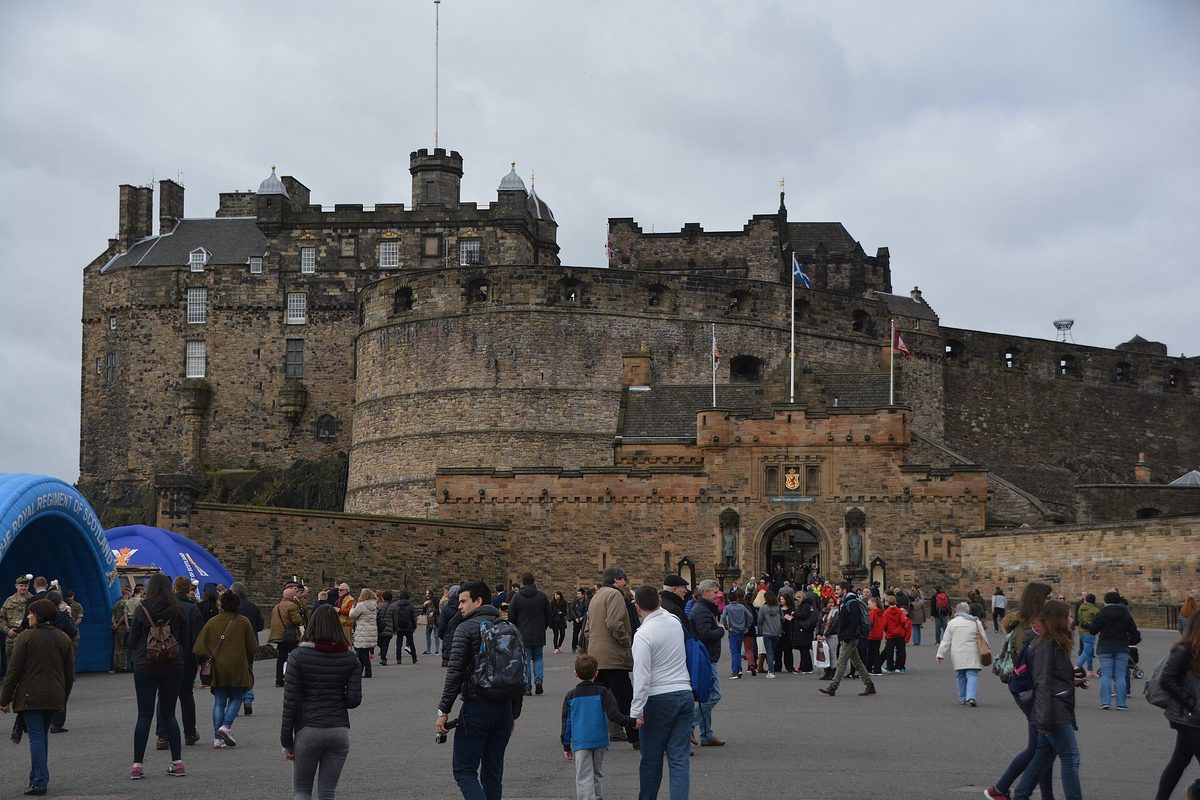
You start on the Castle Esplanade, which is not really part of the Mile at all — it was laid out as a parade ground in 1753 using spoil from the building of the Royal Exchange further down the hill. For most of the year it is a wide, windy, unremarkable apron of tarmac with a very good view southwest over the city. For four weeks in August it holds the temporary grandstands of the Military Tattoo, and you cannot cross it freely.
Walk east off the Esplanade and the setts start. The first building on your right, on the south side, is Cannonball House, and there is a cannonball lodged in the wall facing the Castle. Every guide on the street will tell you it was fired from the ramparts during the 1745 Jacobite rising. It was almost certainly placed deliberately, marking the height of the Comiston Springs three miles south, which fed a water cistern that once stood on Castlehill. I like the real story more.
Castlehill is short, steep and the most nakedly commercial stretch of the whole Mile. It is also where the two big Castlehill attractions sit.
Camera Obscura and the Scotch Whisky Experience: worth it?
Camera Obscura and World of Illusions, on the north side in the old Outlook Tower, costs the thick end of £20 at the time of writing. My verdict: worth it with children, hard to justify without them. The Victorian camera obscura itself is a genuine curiosity and the rooftop terrace is one of the best free-standing views of the Old Town roofscape. The five floors of mirror mazes and vortex tunnels below it are a decent wet-afternoon rescue if you are travelling with children, and fairly ordinary otherwise.
The Scotch Whisky Experience, on the south side in the former Castlehill School, starts at around £25 for the standard tour and tasting. Verdict: skip it if you have any intention of visiting a real distillery on this trip. It is a well-made attraction with a barrel ride and an enormous private collection, but it is an interpretation centre, not a working still. If whisky is why you came to Scotland, spend the money and the day on a working distillery instead. If you have one afternoon in Edinburgh and no plans to leave it, it does the job.
Also on Castlehill: The Hub, the enormous Gothic pile at the foot of the section with the tallest spire in the centre of the city at around 72m. It is a former church, now the headquarters of the Edinburgh International Festival, and there is a café inside that is usually calmer than anything else on this stretch. And just before the Esplanade, on the north side, the Witches’ Well — a small cast-iron drinking fountain set into a wall, easy to walk past, commemorating the hundreds of people, mostly women, executed for witchcraft in Scotland between the fifteenth and eighteenth centuries. Almost nobody stops.
The closes here
Boswell’s Court (south side) is a low pend leading to a courtyard building once owned by the uncle of James Boswell, the diarist. Ramsay Lane (north side) is technically a lane rather than a close, but take it anyway: it curves down past Ramsay Garden, the extraordinary red-and-white cluster of flats built in the 1890s, and gives you the postcard angle back up at the Castle that everyone photographs from the wrong place. It also drops you onto the Mound if you want to bail out to the National Galleries.
Section two: the Lawnmarket, and the best closes on the Mile
The Lawnmarket runs about 200m from the Upper Bow to St Giles Street. It takes four minutes to walk and could take you two hours. Concentration of interesting closes per metre, it beats every other section comfortably.
The name has nothing to do with lawns. A charter of 1477 set this stretch aside as the market for “inland merchandise” — yarn, stockings, coarse cloth, and later linen above all. It was the Land Market, and Scots pronunciation wore it down to Lawnmarket. Addresses here still run as a continuation of the High Street numbering, which is a small hint that these were always understood as one street with different jobs.
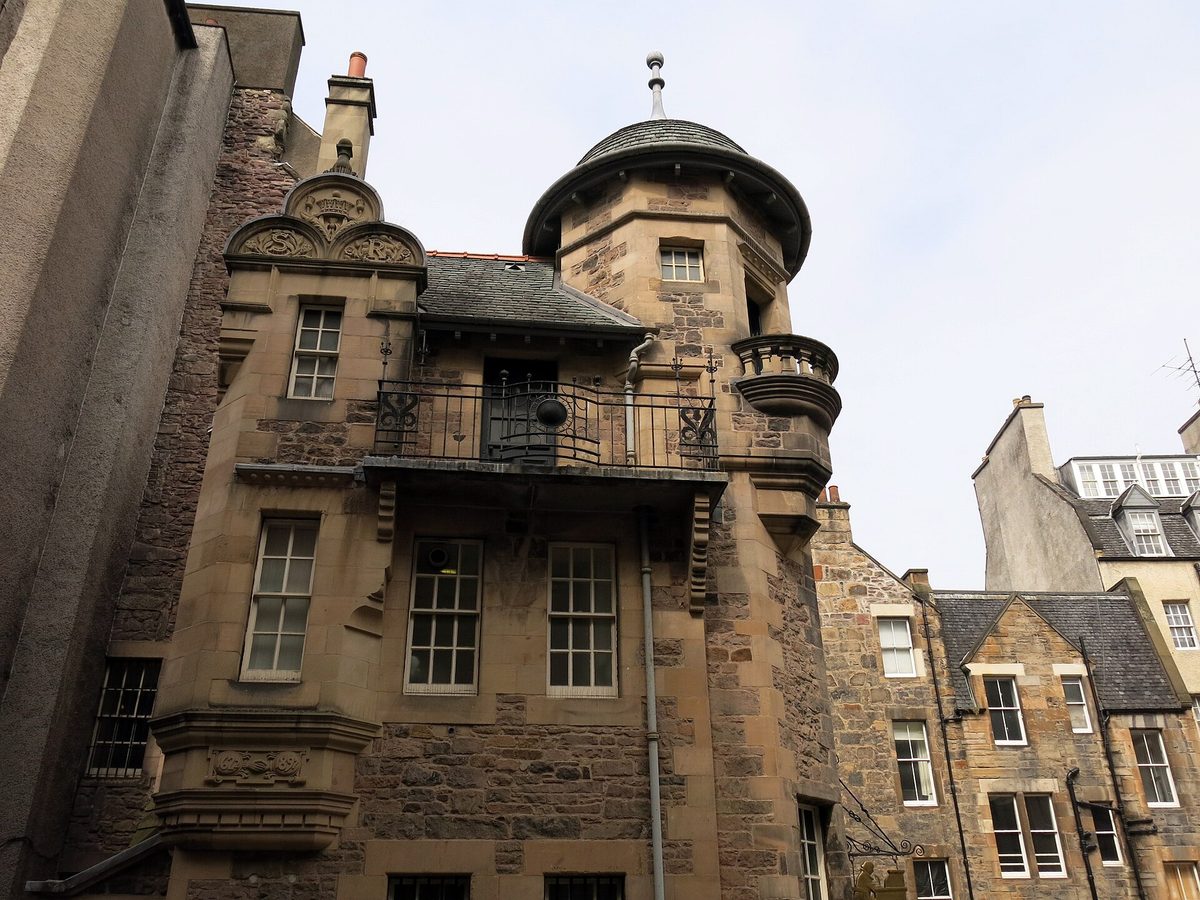
Lady Stair’s Close and Makars’ Court (north side)
The one everybody should do. A short pend on the north side opens into a paved courtyard with a turreted seventeenth-century house at the far end — Lady Stair’s House, now the free Writers’ Museum, holding collections on Robert Burns, Walter Scott and Robert Louis Stevenson. The museum is small, dark and pleasingly old-fashioned; twenty minutes is plenty.
The courtyard itself is the better reason to come. The flagstones of Makars’ Court are inscribed with quotations from Scottish writers running from the fourteenth century to the present, and new stones are still being added. There are benches. It is quiet enough to hear your own footsteps, thirty seconds from a street with several thousand people on it. That contrast, more than anything else, is what the closes are for.
Riddle’s Court and Riddle’s Close (south side)
Across the road and slightly downhill, a narrow entry leads to Riddle’s Court, a well-preserved sixteenth-century merchant’s house built round a courtyard. It belonged to John MacMorran, a wealthy Edinburgh merchant who was shot dead in 1595 by rioting pupils of the town’s High School during a dispute over holidays — an Edinburgh story that reliably stops people mid-sentence. The building now runs as a learning and events centre, so access depends on what is on; if the outer gate is open, walk in and look at the courtyard.
James Court, Wardrop’s Court and Brodie’s Close
James Court (north side) is a large eighteenth-century development around several linked courtyards, and one of the few places on the Mile where you get a real sense of how these buildings stack — you enter at street level and find yourself several storeys up at the back. Wardrop’s Court (north side) is worth ten seconds for the four small painted dragons guarding its entry, which children spot instantly and adults never do.
Brodie’s Close (south side) carries the name of the Brodie family, of whom Deacon William Brodie — cabinetmaker and city councillor by day, housebreaker by night, hanged in 1788 — is generally credited as the seed of Stevenson’s Jekyll and Hyde.
Gladstone’s Land: worth it?
On the north side, a six-storey seventeenth-century tenement in the care of the National Trust for Scotland, entry around £10. Verdict: yes, and it is the paid stop I would defend hardest on the upper Mile. It is the only place you can stand inside an unmodernised Old Town tenement and understand the vertical life of this street — rich and poor stacked in the same stair, painted ceilings from around 1620 still overhead. It takes forty minutes. There is an ice cream shop on the ground floor, which is not a reason to go but is not nothing either.
Section three: the High Street, the busy bit
The High Street is the longest section, roughly 600m from the foot of the Lawnmarket to the crossroads at St Mary’s Street, and it holds most of what people picture when they picture the Royal Mile. It is also where the crowd is thickest, the bagpiper is loudest and the free stops are best.
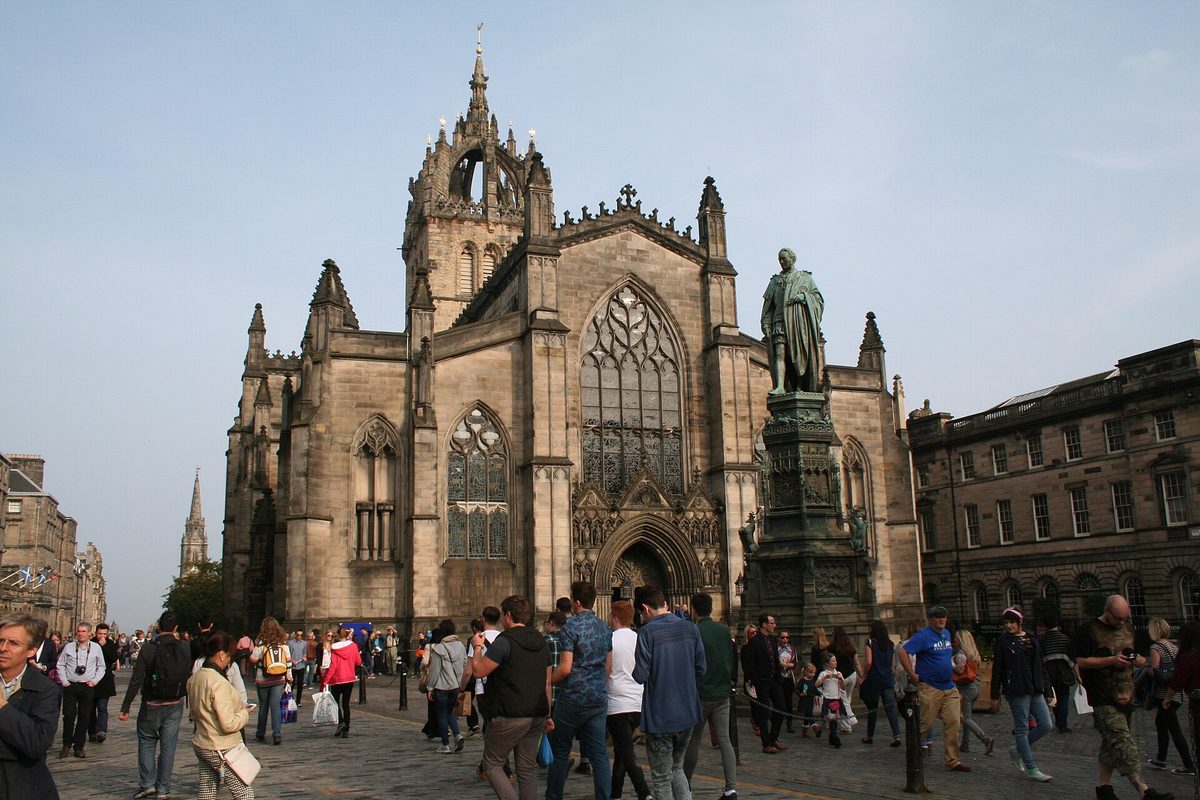
Parliament Square, St Giles and the Heart of Midlothian
St Giles Cathedral (south side) is free to enter, with a donation box and a small photography permit fee if you want to take pictures inside. Go in. The crown spire is the most recognisable silhouette in Edinburgh, but the thing to find is the Thistle Chapel — a tiny, ludicrously ornate 1911 chapel for the Knights of the Order of the Thistle, with carved stalls, heraldic beasts and, somewhere up in the vaulting, an angel playing the bagpipes. It takes twenty minutes and costs nothing.
Set into the setts by the west door is the Heart of Midlothian, a heart-shaped mosaic marking the site of the Old Tolbooth, the burgh’s prison and courthouse until it was demolished in 1817. You will see people spit on it. That is not a good-luck ritual, whatever the man with the flyers tells you; it started as a gesture of contempt for the prison and has survived as a habit.
Behind St Giles lies Parliament Square, which contains Parliament House, seat of the Scottish Parliament until 1707 and now home to the Court of Session. And in the car park behind the kirk, under a marked parking bay, is the grave of John Knox — the man who drove the Scottish Reformation, lying under a numbered space with a car frequently parked on top of him. It is the most Edinburgh thing on the entire street.
Advocate’s Close: the best view on the Mile
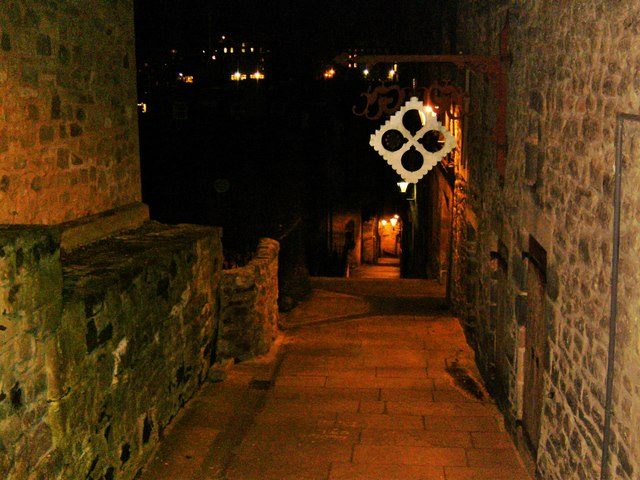
North side, a few paces down from St Giles. Advocate’s Close takes its name from James Stewart of Goodtrees, Lord Advocate of Scotland at the end of the seventeenth century, who lived here. It drops in steep stone steps towards Cockburn Street, and about fifteen steps down the buildings frame a view north of the Scott Monument, black and spiky against Princes Street.
It is the best-composed view on the Royal Mile and it is completely free, and on an average afternoon there will be two people in it. Go down as far as the bend, then come back up if you do not want to lose height.
The City Chambers courtyard and Mary King’s Close
Opposite St Giles, a screen of stone arches fronts the City Chambers, built in the 1750s as the Royal Exchange and taken over by the council when the merchants declined to use it. Most people photograph the arches and move on. Walk behind them. The courtyard is open, and the flagstones carry the bronzed handprints of Edinburgh Award winners — a short, odd, free list of the city’s chosen figures.
The Real Mary King’s Close runs beneath that building: a genuine seventeenth-century close, entombed when the Exchange was built over it, now toured in small groups. Around £25 to £30 depending on the day and tour, at the time of writing. Verdict: the one ticketed attraction on the Mile I would not want to have skipped, and the one I would choose over the Whisky Experience or Camera Obscura without hesitating. It is not a ghost tour. Guides are strong on plague, sanitation and the mechanics of tenement poverty, which is more interesting than spooks. Book ahead; walk-ups are often turned away.
The north-side ladder: Fleshmarket, Anchor, Craig’s, Warriston’s
Between St Giles and the bridges, the north side of the High Street is perforated by a run of closes all dropping towards Cockburn Street and Market Street. Take at least one.
Fleshmarket Close runs down past a pub to the back of Waverley station and gave Ian Rankin a novel title; it is a genuine shortcut to the trains, and steep enough that you should not attempt it with a wheeled suitcase. Craig’s Close, between Cockburn Street and Market Street, is the narrowest surviving lane in the Old Town at about two feet wide, which tells you more about medieval Edinburgh in five seconds than any museum caption. Anchor Close and Warriston’s Close do the same job with more steps.
These are the closes almost every guide skips, and they are the most useful ones, because they are also functional routes. Learning two of them turns Waverley into a five-minute walk from the middle of the Mile.
The Tron, Cockburn Street and the bridges
The Tron Kirk (south side) takes its name from the tron, the public weighbridge that stood here. It stopped being a church in 1952 and now houses a makers’ market run by the Scottish Design Exchange, which is one of the few places on the Mile where you can buy something made by a named Scottish maker rather than imported stock. Free to walk into.
Directly opposite, Cockburn Street (pronounced Co-burn) curves down to Waverley in a long Victorian S-bend. It is not part of the Royal Mile, but if you want independent shops, record shops, coffee and less tartan, it is the best five-minute detour on the walk.
The North Bridge and South Bridge crossroads is the busiest point on the Mile and the natural bail-out: Waverley station is 200m down the hill to your left. Look at the south side between St Giles and the Tron as you pass. That whole terrace was rebuilt after the Great Fire of 1824, which is why the frontages step neatly down the hill in Georgian rhythm while everything around them is a jumble.
John Knox House, the Netherbow and the World’s End
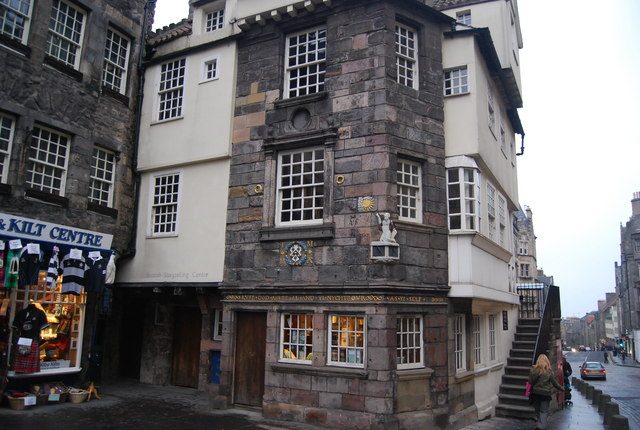
Below the bridges the street narrows and the buildings start to lean in. John Knox House (north side) juts out into the road because it predates the widening of everything around it — it is the oldest surviving medieval house on the Mile, part of it dating from the 1470s. Knox’s connection to it is doubtful and historians argue about whether he ever lived there, but that association is why the building was not demolished, which is a fair trade. It is now joined to the Scottish Storytelling Centre, whose bookshop and café are open free of charge and are a decent refuge.
At the crossroads with St Mary’s Street and Jeffrey Street, look down at the road. A line of brass studs crosses the carriageway. That is the footprint of the Netherbow Port, the fortified gate in the Flodden Wall that marked the eastern boundary of Edinburgh proper until it was pulled down in 1764 to ease traffic. Beyond it lay the separate burgh of the Canongate. The corner pub is called the World’s End, and so is the close beside it, because for anyone who could not pay the toll to pass through the gate, this was exactly that.
Tweeddale Court (south side)
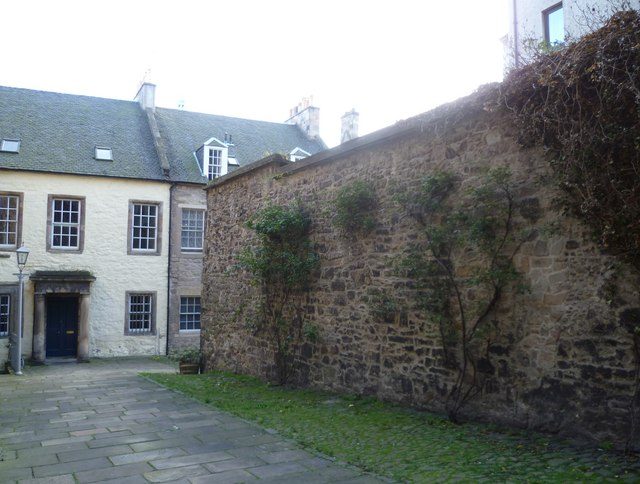
Just before the crossroads, on the south side, an unpromising pend opens into a wide, silent court with a stretch of the old town wall running along one flank. It was the townhouse of the marquises of Tweeddale, later a printing and publishing address, and in 1806 a bank porter named William Begbie was murdered in the passage leading into it — a case that was never solved.
What strikes you is the width. Most closes are a metre across; this is a proper enclosed yard with grass and old stone. It is one of the quietest spots within thirty seconds of the High Street, and I have never once had to share it.
Section four: the Canongate, where most visitors give up
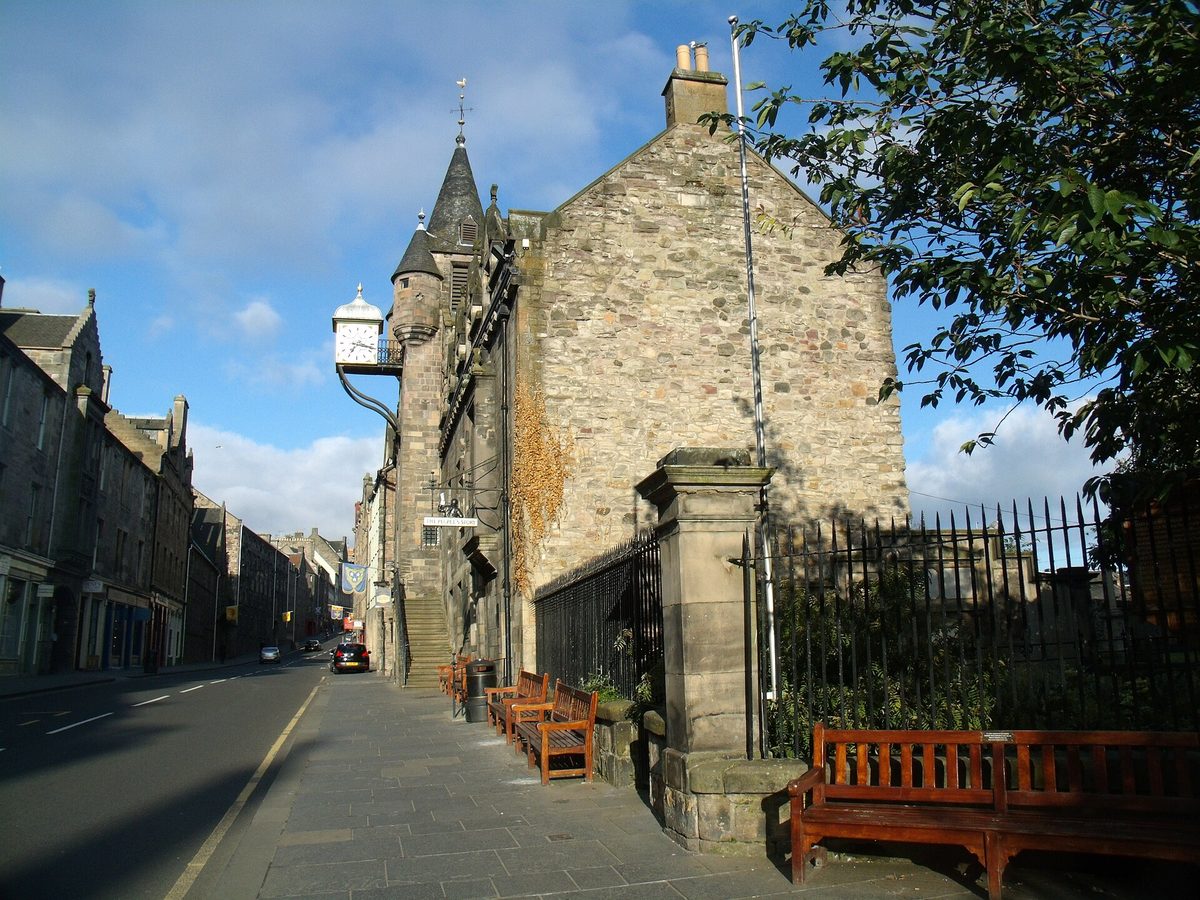
Cross St Mary’s Street and the crowd halves. Two hundred metres further down and it halves again. By the time you are level with the Canongate Kirk you will have the pavement largely to yourself, and this is the section I would defend hardest to anyone with limited time.
The Canongate was a separate burgh until 1856, outside the walls, governed by the abbey. Its name means the canons’ way — the road used by the Augustinian canons of Holyrood Abbey. It has better-preserved seventeenth-century frontages than anything above the Netherbow, two free museums, and the two closes I would send anyone to first.
Chessel’s Court and Bakehouse Close (south side)
Chessel’s Court is a handsome eighteenth-century housing court set back behind a wall, and it was the site of Edinburgh’s customs and excise office. The robbery that finally caught up with Deacon Brodie is said to have happened here, which closes a loop with Brodie’s Close half a mile uphill.
Bakehouse Close, a little further down beside Huntly House, is a broad cobbled close that was the city’s bakery quarter. It has since become one of the most filmed corners of Edinburgh, standing in for eighteenth-century street scenes in Outlander, which means it is the one close on the Canongate you may find someone else in.
The free museums: Museum of Edinburgh and The People’s Story
The Museum of Edinburgh (south side, in Huntly House) is free, rambling and genuinely good on the city’s own history, with the original National Covenant of 1638 and, more popularly, Greyfriars Bobby’s collar and bowl. The People’s Story sits opposite in the Canongate Tolbooth, built in 1591 as the burgh’s courthouse and jail and unmistakable for the clock projecting out over the pavement. Also free. It covers working life in Edinburgh from the eighteenth century on, and it is the antidote to a mile of kings and queens.
Free entry is the theme down here, and it is worth saying plainly: you can do the entire Royal Mile, including four museums and a cathedral, for the price of nothing. That is unusual for a street this famous, and it is why it turns up on any sensible list of free things to do across Scotland.
Dunbar’s Close Garden: the one almost nobody finds
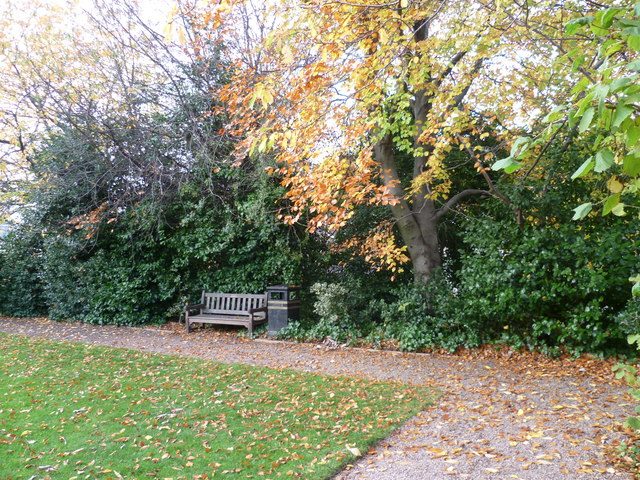
North side, immediately beside the Canongate Kirk. The entrance is an unlit pend about a metre wide with a small sign, and it looks like a service passage to bins. Thousands of people walk past it every day.
Walk down it. It opens into a walled garden of about half an acre, laid out in the 1970s in a seventeenth-century style and divided into a series of compartments — clipped hedges, a knot garden, gravel paths, mature trees, lawn, benches. There is no ticket, no desk, no gift shop. On a weekday afternoon there might be four people in it, two of them eating sandwiches.
It is my favourite single place on the Royal Mile and it costs nothing, and if you take away one thing from this guide, make it this close. The contrast between the noise of the Canongate and the silence twenty metres in is the entire argument for exploring the lanes rather than the frontage.
Canongate Kirk and its kirkyard
The kirk dates from 1688 and is the parish church for the Palace and the Parliament, which is why the royal family attends when in residence. The kirkyard behind it is open and quiet, and it holds Adam Smith, the poet Robert Fergusson (whose headstone Robert Burns paid for), and Agnes Maclehose, the “Clarinda” of Burns’s letters. Greyfriars gets the coach parties and the ghost tours; this one gets the birdsong. If you are following the literary thread through the city, it pairs naturally with the Potter trail through the Old Town, which is really a graveyard trail with a marketing department.
White Horse Close
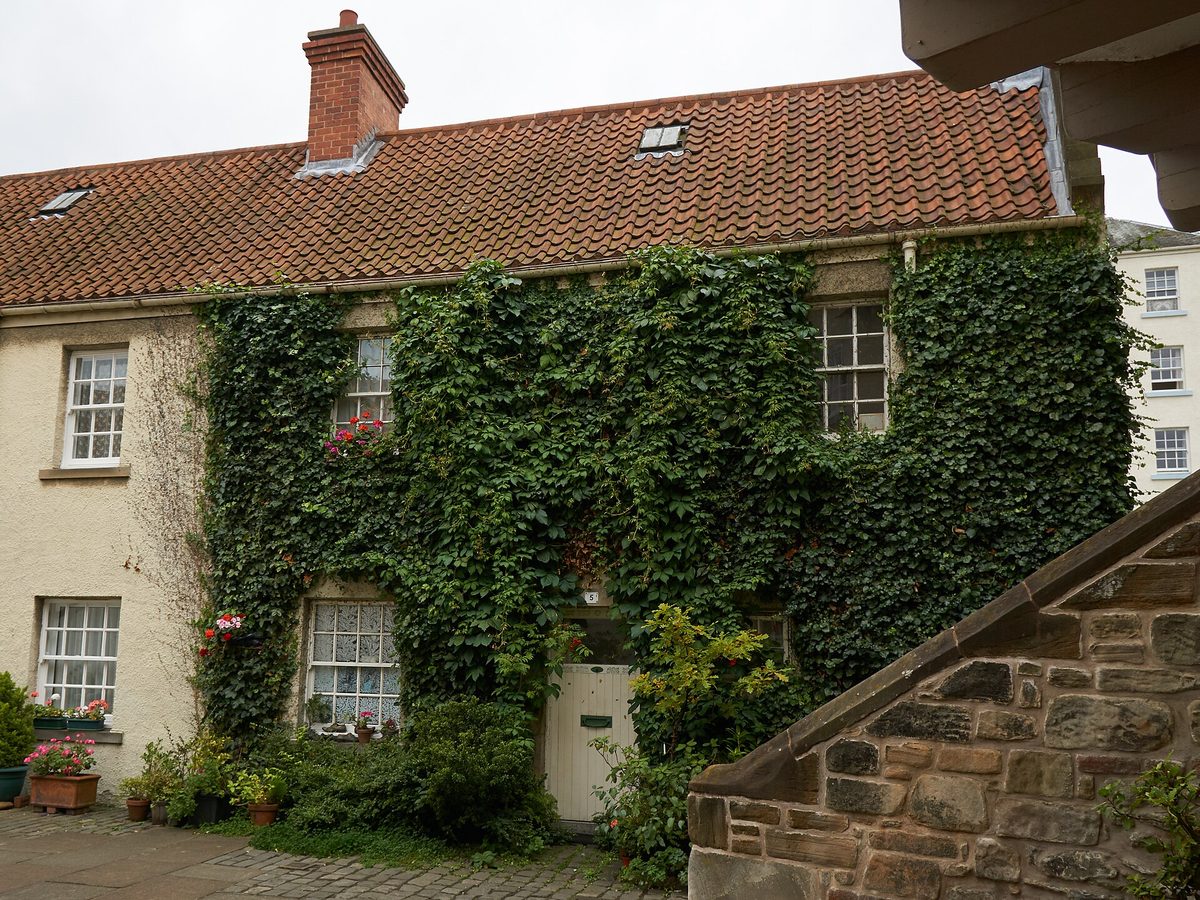
North side, near the very bottom of the Canongate. A pend opens into a courtyard of white harled cottages with red pantiled roofs, outside forestairs and window boxes — the prettiest single courtyard on the Mile and still, somehow, one of the least visited.
There was an inn here from around 1603, and in the eighteenth century this was the departure point for the stagecoach to Newcastle and London; the arches on the Calton Road side once held its stables and coach houses. Be aware, though, that what you are looking at is heavily reconstructed — converted into working-class housing in 1889 and rebuilt again in the early 1960s. One Scottish architectural historian described it as heritage rather than history, which is fair and does not stop it being lovely. People live here now, so keep your voice down and do not photograph the windows.
Section five: Abbey Strand and the Holyrood end
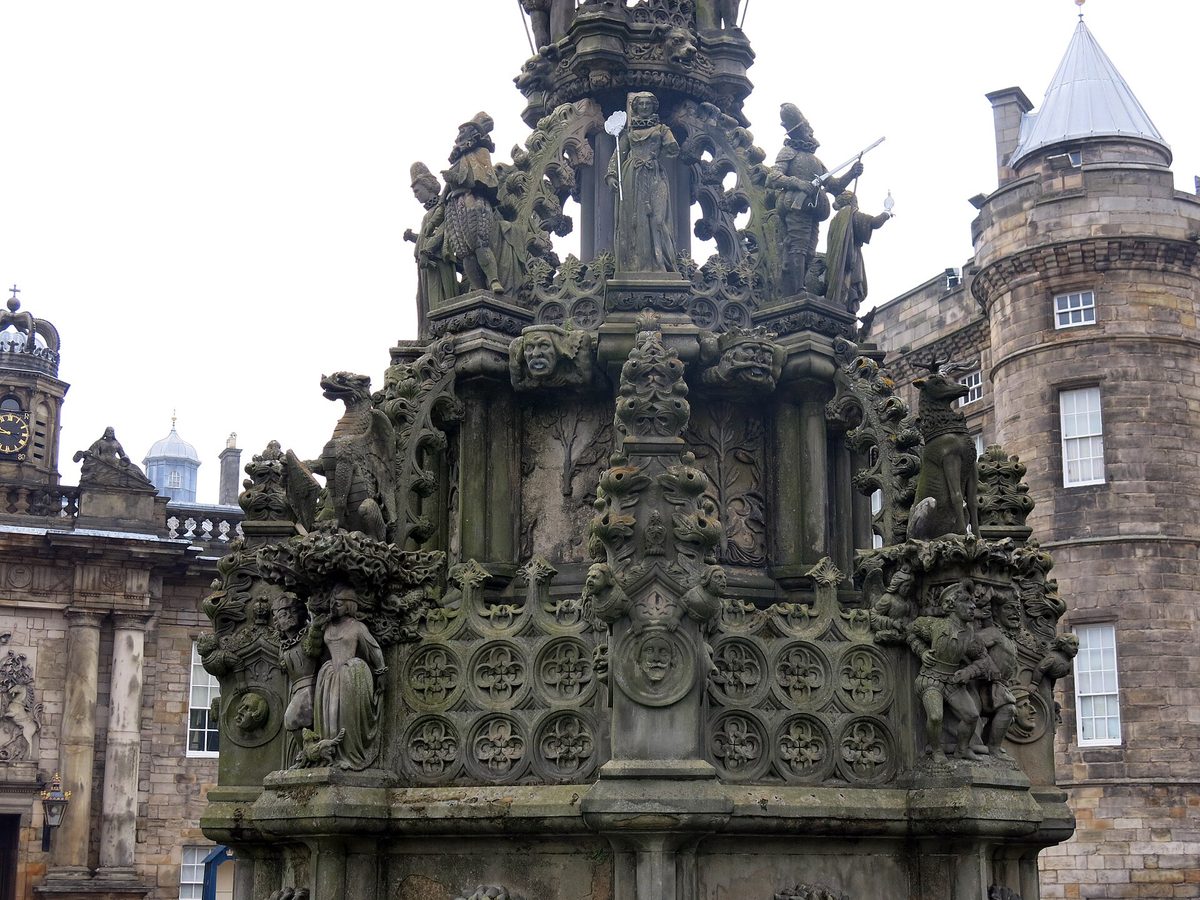
The last stretch is barely 100m. On the north side stand a couple of surviving sixteenth-century buildings, including one described in 1570 as a new great mansion; on the south is the King’s Gallery, which shows rotating exhibitions from the Royal Collection in the shell of a former church and school. Set into the wall by the palace gates are the remains of the earlier gatehouse built for James IV, with the royal arms of James V carved above.
The Palace of Holyroodhouse: worth it?
Around £20 at the time of writing, with an audio guide included. Verdict: yes, but for two rooms rather than the whole. The State Apartments are handsome and unmemorable.
What you are actually paying for is the sixteenth-century tower — Mary, Queen of Scots’ bedchamber and the small supper room off it where her secretary David Rizzio was killed in 1566 — and the roofless ruin of Holyrood Abbey behind the palace, which is the most atmospheric thing at this end of the Mile. Check before you travel: the palace closes to visitors when the royal family is in residence, usually for a stretch in early summer. If you are collecting royal residences and fortresses on this trip, our roundup of the castles worth the detour is honest about which ones repay a long drive.
The Scottish Parliament and Holyrood Park
Directly opposite, the Scottish Parliament building by Enric Miralles opened in 2004, over budget and years late, and remains the most divided-opinion building in Scotland. Free to enter, free guided tours on non-sitting days, and you can watch debates from the public gallery. Whatever you make of the exterior, the Debating Chamber roof is worth ten minutes of your life.
Behind it all rises Arthur’s Seat. If you have an hour and dry weather, the walk up from the Parliament end is the obvious finish to the day, and the view back down the Mile puts the whole ridge in context in a way no map manages. It also explains why this street exists where it does. For a fuller sense of how the city fits together, our complete Edinburgh travel guide sets out the districts, and if you are working to a tight schedule the two-day Edinburgh itinerary slots this walk into a wider plan.
Shopping on the Royal Mile: what is real and what is not
Let us be honest about this, because most guides are not. The great majority of the cashmere, tartan and kilt shops on the Royal Mile sell mass-market stock, much of it not made in Scotland at all, at prices set for people who will only buy one. The “clan tartan” walls, the £9.99 lambswool scarves, the kilt hire windows on Castlehill — that is volume tourist retail, and it is fine as long as you know that is what it is.
There are genuine makers on and just off this street. The trick is knowing what to look for rather than which shop sign to trust, because shops change hands constantly and any specific recommendation I gave you would be out of date within two years.
Look for these things. On woollens: the Harris Tweed Orb mark, which is a protected certification and means the cloth was handwoven in the Outer Hebrides. On cashmere: a named Scottish mill on the label — the Borders mills at Hawick still weave, and their stock is priced accordingly.
On kilts: ask whether it is hand-stitched, and where. A genuine eight-yard hand-sewn kilt runs into the hundreds of pounds, so anything at £80 is a machine-made costume — a perfectly reasonable thing to buy, as long as nobody is telling you otherwise. On whisky: look for independent bottlers with a cask number and a bottling date on the label, rather than airport blends.
Where to look. The Tron Kirk makers’ market on the High Street sells work by named Scottish designers. Cockburn Street, thirty seconds off the Mile, has independents. Victoria Street, reached by nipping down Upper Bow from the Lawnmarket, is where Edinburgh residents actually shop for cheese, tweed and books. And the museum shops — the Writers’ Museum, the Museum of Edinburgh — are quietly among the better places on the street for something small that is not tat.
Where to eat without being fleeced
The general rule on the Royal Mile is the same as on any famous street anywhere: the closer the menu is to the pavement and the more languages it is printed in, the worse the value. A photograph of haggis on a laminated A-board is a warning, not an invitation.
Three principles that have never let me down here. First, go up or go in. The places with the frontage pay the rent with the frontage; the ones tucked into a close or up a stair have to be better to survive. Some of the best eating on this street is down a pend with a chalkboard at the top. Second, go one street off. The Grassmarket, Victoria Street, Cockburn Street and the Cowgate are all within four minutes of the Mile and are where locals actually eat. Third, eat early or late. Everything within 200m of St Giles is jammed between noon and two.
Pub-wise, the Canongate and the World’s End end of the High Street hold the older, more workaday bars; Castlehill and the upper Lawnmarket hold the ones with the tartan carpets and the pipers on the door. You will get a better pint and a quieter hour downhill. If you want to understand what you are ordering before you order it, our guide to what Scottish food actually tastes like covers haggis, cullen skink and the rest without the tourist gloss.
Planning your walk: time, timing and tickets
How long to allow
Straight down, no stops, brisk: about 25 to 30 minutes. That number is worth knowing because it tells you the Mile is small. Everything else is stopping time.
My recommended allocations: two hours for the walk plus the free closes and St Giles, and nothing else. Four hours for the walk, the closes, St Giles, two free museums and a proper stop for lunch. A full day if you are adding the Castle, Mary King’s Close and Holyroodhouse, which between them will eat five hours before you have walked a step.
Getting to each end
Waverley station sits directly below the middle of the Mile at the North Bridge crossroads — five minutes uphill, less if you take Fleshmarket Close. To start at the top, the simplest approach on foot is up the Mound or Cockburn Street.
Alternatively, Lothian Buses services run along George IV Bridge and the Mound, and the 35 runs to the Parliament at the Holyrood end, which is handy for the return leg when your legs are done. Contactless capping applies, so you do not need exact change. There is no useful parking anywhere near the Mile and I would not try; more on the alternatives in our overview of getting around Scotland without a car.
What to book, and how far ahead
Only three things on this street need booking. Edinburgh Castle uses timed entry and sells out weeks ahead in summer — around £21.50 online against £24 at the gate at the time of writing, so booking also saves you money. The Real Mary King’s Close runs small timed groups and regularly fills. The Palace of Holyroodhouse is worth pre-booking in July and August and checking for royal-residence closures at any time of year.
Everything else — St Giles, the four council museums, the Parliament, every close on the Mile — is walk-in and free. If you are building a longer trip around this, our Scotland itinerary planner and notes on where to base yourself will do more for your week than any single ticket.
Cobbles, weather and knees
The surface is setts, not cobbles — squared granite blocks, wet-slippery, unforgiving, and utterly hostile to any heel. Flat shoes with grip, always. The Mile funnels wind straight off the Firth of Forth, so it runs several degrees colder than the New Town and a layer more than you think you need is the right call in any month; there is more of this in our practical Scotland travel tips, and our guide to when to visit Scotland is worth a look if your dates are flexible.
On accessibility: the main street itself is walkable throughout with a wheelchair or pushchair, though the gradient is constant and the setts are rough going. The closes are a different matter — most are stepped and many are steep. Lady Stair’s Close and its Makars’ Court, Tweeddale Court, Dunbar’s Close and White Horse Close are all reachable on the level or close to it. The north-side closes off the High Street are almost all stairs.
The Mile in August: the Fringe changes everything
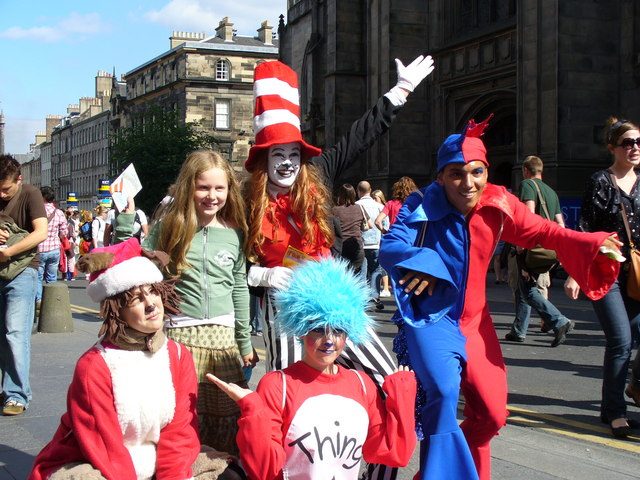
For most of August — 7 to 31 in 2026 — the Royal Mile stops being a street and becomes a performance corridor. The High Street between the bridges and St Giles is closed to traffic, staged, and given over to street performers, with pitches running back to back from late morning to early evening.
What that means in practice: you will be handed several dozen flyers, you will not be able to walk in a straight line, you will queue to get past St Giles, and a sword swallower will be working a crowd of two hundred people directly on your route. It is enormous fun and it is one of the great free spectacles in Europe. It is also completely incompatible with the walk described in this guide.
My advice for August is to do both, separately. Walk the Mile properly before 9am, when the street is empty, the light is good and the closes are yours. Then come back at three in the afternoon for the chaos and treat it as a different thing entirely. Do not try to do a considered architectural descent through a Fringe crowd; you will enjoy neither.
Two practical notes. The Castle Esplanade is occupied by Tattoo grandstands for the month, so the view from the top is compromised. And accommodation prices across the city roughly double. If August is not fixed for you, the Mile at the end of September is a materially better walk. Our roundup of Scotland’s festival calendar covers the alternatives, several of which are considerably easier to move through.
What underwhelms, and the mistakes people make
The bagpipers are not a cultural experience. There are usually three or four working the upper Mile, they are competent, and they are buskers. Give them a pound if you enjoyed it. Do not build an expectation around it.
The tartan “clan” shops cannot tell you your clan. The wall of named tartans is a retail display. Scottish surname-to-tartan mapping is largely a nineteenth-century invention and the assignments vary by shop. Buy the scarf because you like the colours.
Most people rush the bottom half. By the time they hit the Canongate they are tired and the crowd has gone, so they read that as “nothing here” and speed up. The Canongate has the best-preserved buildings, the best closes and the free museums. If your time is short, do the Lawnmarket and the Canongate and skip the High Street shops entirely.
The Scottish Parliament is not ugly, it is unfinished-looking on purpose. It routinely appears on worst-building lists. Go inside before you agree. The interior is where the argument is won.
Doing the Castle and Holyroodhouse on the same day is too much. Two large historic properties with audio guides, five hours of standing, and a mile of setts in between. By the second one you will be looking at furniture without seeing it. Split them across two days if you can.
And the big one: not going down any closes. If you walk the frontage only, you have seen a busy shopping street with good architecture above shop level. That is a perfectly nice hour, and it is not what this place is. There were once around 250 of these lanes; roughly 90 survive the Victorian clearances. They are free, they are the oldest fabric of the city, and they are almost all empty.
Turn down them. If you would rather have somebody point them out and tell you who lived where, a few of the small-group walking tour operators build their whole route around the closes rather than the frontage, and they are worth the money.
Frequently asked questions
How long does it take to walk the Royal Mile?
About 25 to 30 minutes downhill from the Castle Esplanade to the palace gates without stopping, over roughly 1.6km. Realistically, allow two hours to include the free closes and St Giles, four hours with museums and lunch, and a full day if you are adding Edinburgh Castle and the Palace of Holyroodhouse.
Is the Royal Mile free to walk?
Entirely. The street, every close and courtyard off it, St Giles Cathedral, the Writers’ Museum, the Museum of Edinburgh, The People’s Story, the Museum of Childhood and the Scottish Parliament all cost nothing. Only the Castle, Holyroodhouse, Mary King’s Close, Gladstone’s Land, Camera Obscura and the Scotch Whisky Experience are ticketed.
Should I start at the Castle or at Holyrood?
The Castle, every time. The Royal Mile drops about 67m from top to bottom, so starting at the Castle means the gradient works for you rather than against you. You also finish at Holyrood Park with somewhere to sit down, instead of arriving at the Castle sweating with an hour of queueing ahead.
What streets actually make up the Royal Mile?
Running west to east and downhill: the Castle Esplanade, Castlehill, the Lawnmarket, the High Street, the Canongate and Abbey Strand. The collective name only came into use in the early twentieth century. Street signs change as you descend, which is how locals give directions.
What are the closes on the Royal Mile?
Narrow lanes running off both sides between the tenements. Strictly, a close was private or a dead end and often gated at night, a wynd was a through-route wide enough to pass along, and a court opened into a courtyard serving several buildings. Around 250 once existed; roughly 90 survive today.
Which closes are the best ones to visit?
If you only do five: Lady Stair’s Close and Makars’ Court on the Lawnmarket, Advocate’s Close on the High Street for the Scott Monument view, Tweeddale Court for the old town wall, Dunbar’s Close for the walled garden, and White Horse Close at the Canongate end. All free, all open, none of them busy.
Is the Royal Mile suitable for a wheelchair or pushchair?
The main street is manageable throughout, but the surface is rough granite setts and the gradient is constant, so downhill is far easier than up. Most closes are stepped. Lady Stair’s Close, Tweeddale Court, Dunbar’s Close Garden and White Horse Close are the accessible ones; the north-side closes off the High Street are almost all stairs.
What is the best time of day to walk it?
Before 9am for an empty street and good light down the closes, or after 5pm when the coach groups have gone and the low sun runs straight along the ridge. Between 11am and 3pm in summer the upper Mile is genuinely congested. In August, early morning is the only time the walk works as a walk.
Final thoughts
I have walked this street a great many times now, and the version I would give a first-time visitor has changed completely. It used to be a list of six attractions. Now it is: start at the top, walk down slowly, and turn into every gap in the wall that looks like it goes nowhere.
The Royal Mile is not the best street in Scotland because of what is on it. It is the best because of what is behind it — a surviving medieval circulation system, free, unlocked, and walked past by several million people a year. Dunbar’s Close Garden on a quiet Tuesday is worth more than any ticket you will buy here. There is plenty more in our wider guide to the city, and if this walk has given you an appetite for the rest of the country, start with the most beautiful places in Scotland and work outwards.
If the Mile is all the time you have, our one-day Edinburgh routes build three different days around it depending on whether you arrive by ship, by tram or the night before.
About the author: This guide was written and is maintained by the ScotlandTourism.org editorial team — travel writers who’ve spent years exploring Scotland’s cities, Highlands and islands, from bagging Munros to chasing the perfect dram. We update our guides regularly to keep prices, opening details and advice current.
Last updated: August 2026. Prices and opening times change — always check the official site before you travel.
Photo credits
All images are used under their respective Creative Commons or public-domain licenses:
- Looking down the Lawnmarket stretch of the Royal Mile in Edinburgh tow — jockrutherford from Owen Sound, ON, CC BY-SA 2.0, via Wikimedia Commons
- Edinburgh Castle seen from the Esplanade at the top of the Royal Mile — Lewis Clarke, CC BY-SA 2.0, via Wikimedia Commons
- Lady Stair’s House in Lady Stair’s Close off the Lawnmarket — Enric, CC BY-SA 4.0, via Wikimedia Commons
- Advocate’s Close after dark — Stu JP, CC BY-SA 2.0, via Wikimedia Commons
- St Giles Cathedral and its crown spire on Parliament Square — Dr Neil Clifton, CC BY-SA 2.0, via Wikimedia Commons
- John Knox House jutting into the High Street where the Royal Mile narr — N Chadwick, CC BY-SA 2.0, via Wikimedia Commons
- Tweeddale Court off the High Street — kim traynor, CC BY-SA 2.0, via Wikimedia Commons
- The Canongate Tolbooth and its projecting clock on the Canongate secti — Euan Nelson, CC BY-SA 2.0, via Wikimedia Commons
- Autumn in Dunbar’s Close Garden — kim traynor, CC BY-SA 2.0, via Wikimedia Commons
- Ivy-covered cottages in White Horse Close at the Holyrood end of the R — Wilmm, CC BY-SA 4.0, via Wikimedia Commons
- The carved fountain in the forecourt of the Palace of Holyroodhouse at — Enric, CC BY-SA 4.0, via Wikimedia Commons
- Costumed Fringe performers flyering on Edinburgh’s Royal Mile during t — Colin Smith, CC BY-SA 2.0, via Wikimedia Commons



1 note from readers