The first time I planned a 10 day Scotland itinerary for friends, I did what almost every guide online does: I took the standard seven-day loop and padded it with three more days of the same. Two nights on Skye became three. An extra afternoon in Glasgow. A slightly longer lunch in Pitlochry. They came home happy enough, and they’d seen nothing they couldn’t have seen in a week.
That still bothers me. Ten days is not a slightly longer week. It is the shortest trip in which Scotland stops being a highlights reel and starts being a country, and the whole question is what you do with those extra three days. Spend them badly and you’ve bought yourself more driving. Spend them well and you get an archipelago, a Neolithic town older than the pyramids, or the rarest thing on any Scottish holiday — a morning with nowhere to be.
So what do the extra three days actually buy you?
Three days beyond a week buys you exactly one of four things: the Outer Hebrides, Orkney, the under-visited east coast, or the classic Edinburgh–Highlands–Skye loop slowed down to a human pace with two-night bases. It does not buy you two of them. Pick one, book the ferries early, and the trip works.
The four ways to spend a 10 day Scotland itinerary
Here is the honest costing. The “extra days” column is what each option actually consumes once you count travel time, not the fantasy version where an island is a day trip.
| Option | Extra days it really costs | Ferry or flight needed | Book by | Pick this if |
|---|---|---|---|---|
| Slow the classic loop (my default) | 0 — the days go into two-night bases | Optional 45-minute Armadale–Mallaig hop | 4–6 months for accommodation | It’s your first visit and you hate packing |
| Outer Hebrides (Harris and Lewis) | 3, including two half-days at sea | Yes — Uig–Tarbert and Stornoway–Ullapool | December–January for a summer car space | Beaches, weaving, standing stones, big empty roads |
| Orkney | 3 — two on the islands, one lost to getting there | Yes — Scrabster or Gills Bay, or fly | 3–4 months, sooner for cabins | Archaeology and wartime history beat mountains for you |
| The east: Aberdeenshire, Cairngorms, Fife | 3, all of them on land | No | 2–3 months | You’re travelling in July or August and want space |
| Two of the above | More than you have | — | — | Don’t. This is the mistake everyone makes |
Everything below assumes ten days on the ground: you land on day one and fly out on day ten, which gives you nine nights and about eight and a half usable days. If your flights are awkward, take a day off the end of the route rather than compressing the middle. Our broader guide to building a Scotland itinerary covers the shorter and longer variants, and if you’re wavering between one week and ten days, the seven-day route shows you exactly what you’d be giving up.
The route I’d book: ten days, four beds, about 700 miles
This is the version I give people who ask over dinner and want an answer rather than a menu. It uses the extra three days to cut the number of beds you sleep in from nine to four, which sounds boring on paper and is the single biggest improvement you can make to a Scottish road trip.
Fly into Edinburgh, out of Glasgow. The two airports are 50 miles apart and most airlines will sell you an open-jaw ticket for close to the same money. Doing that saves you a pointless 200-mile drive back across the country on your last morning.
Days 1–3: Edinburgh, and no car at all
Three nights, one bed, zero driving. Hiring a car for days you’ll spend walking around a medieval city is a way of paying £40 a day for the privilege of worrying about parking. Pick the car up on the morning of day four from a city-centre or airport branch instead.
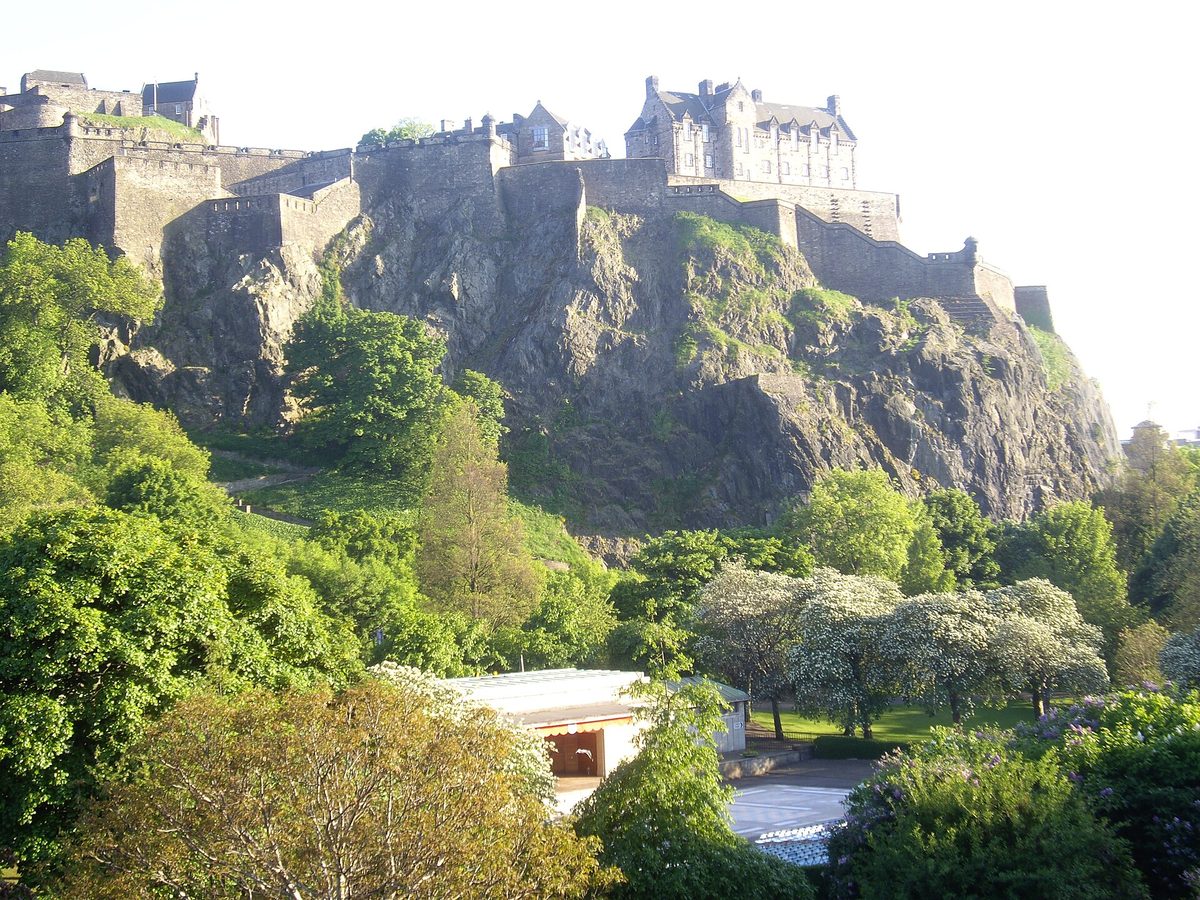
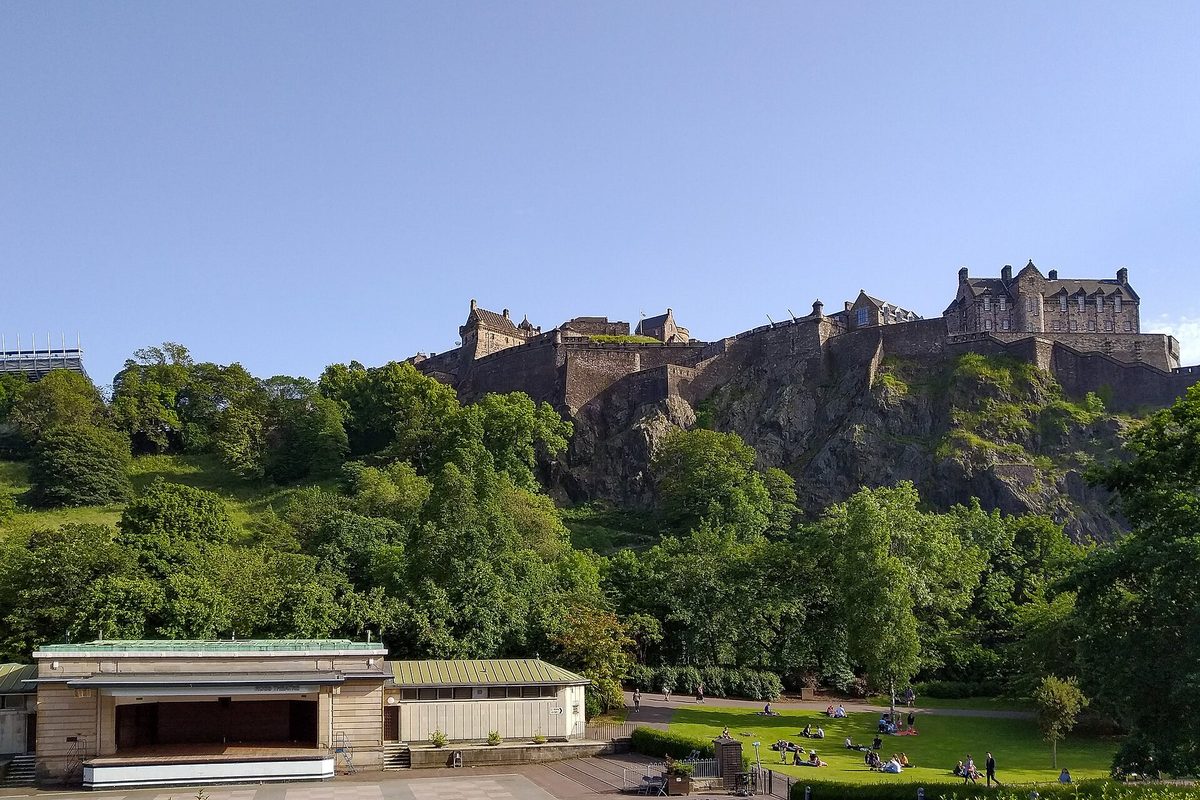
Day one is arrival: drop the bags, walk the Royal Mile end to end to get your bearings, and eat early because jet lag wins. Day two, take the castle first thing — timed entry slots are released well in advance and the 09:30 slot is a different experience from the 13:00 one, as our Edinburgh Castle ticket guide explains. Day three is for the National Museum of Scotland, Dean Village, and either Calton Hill or the climb up Arthur’s Seat, which takes about an hour up from the Holyrood side and gives you the best free view in Britain.
Our full Edinburgh guide goes deeper on neighbourhoods, food and the parts of the Old Town that aren’t on the tourist spine.
Day 4: Edinburgh to the Cairngorms — 130 miles, about 2h45 driving
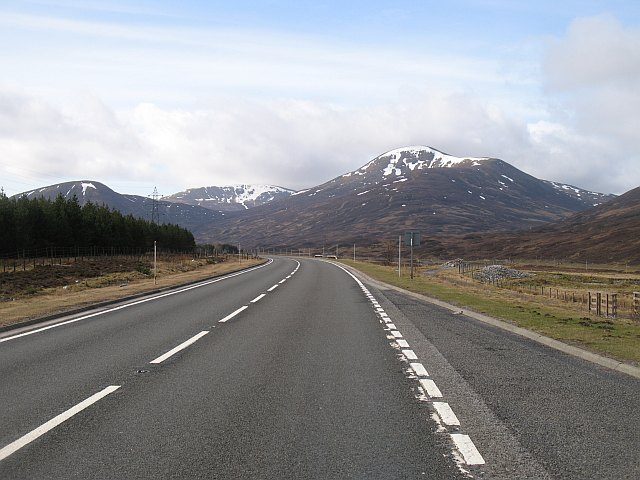
Collect the car by 09:30 and get out of the city before the Queensferry Crossing traffic thickens. The A9 north is a fast road with average-speed cameras along most of its length, and they are not decorative; the limit is 70mph on the dual sections and 60mph for cars on the single carriageway.
Stop at the Hermitage near Dunkeld, a National Trust for Scotland woodland walk to a folly above a waterfall that takes 40 minutes and resets everyone’s mood. Then Pitlochry for lunch. Then, if whisky is your thing, Dalwhinnie sits directly beside the A9 at 350 metres and does driver’s kits so the person behind the wheel isn’t just watching — there’s more on distillery etiquette in our guide to Scotland’s whisky distilleries.
Sleep in Aviemore, Boat of Garten or Grantown-on-Spey. Two nights.
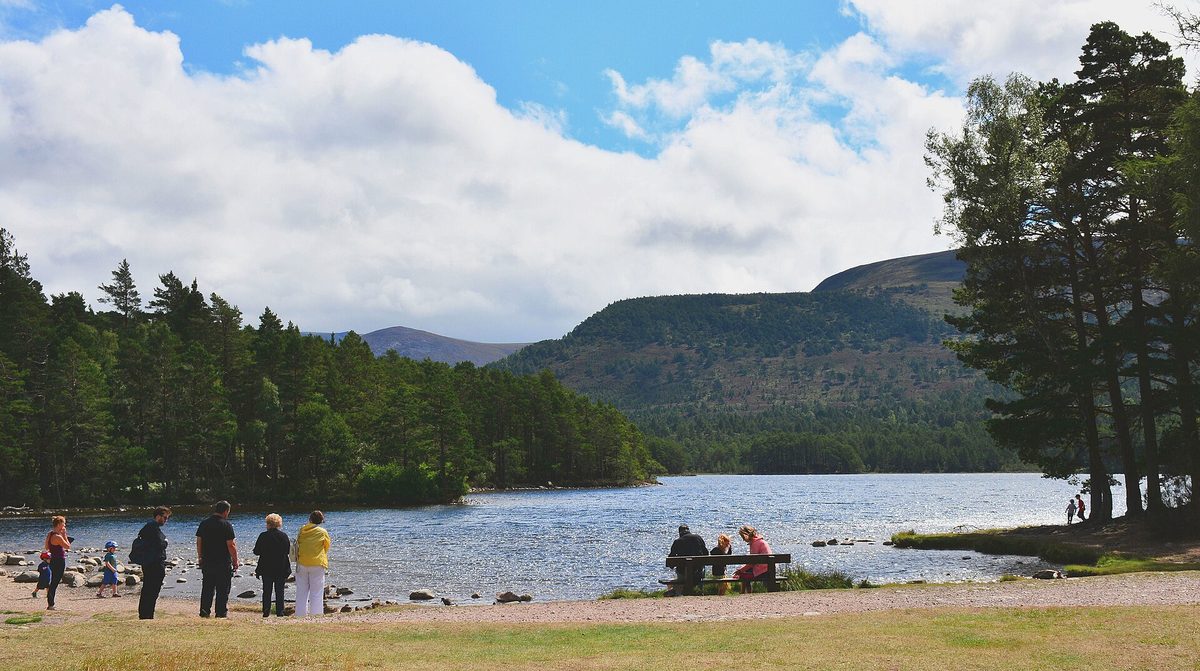
Day 5: The Cairngorms, no packing required — 40–60 miles
Your first rest day, and the reason this route works. Loch an Eilein in Rothiemurchus is a four-mile flat circuit round a loch with a ruined castle on an island in it, and it is the best easy walk in the eastern Highlands. Loch Morlich has an actual sandy beach at 300 metres above sea level. The Cairngorm Mountain funicular has had a complicated few years, so check whether it’s running before you drive up.
Speyside is on your doorstep here, which means Glenlivet, Aberlour, Glenfiddich and Cardhu are all within 40 minutes. Alternatively, do nothing. Sit outside a cafe in Grantown, read, let the children run out of energy in a forest. You have another six days of driving ahead and you will be grateful.
This is also good ground for the animal everyone wants a photograph of. Highland cattle graze the estate land around Rothiemurchus and along the B970; pull into a proper passing place rather than stopping on a verge, and don’t feed them.
Day 6: Cairngorms to Skye — 165 miles, about 4 hours driving
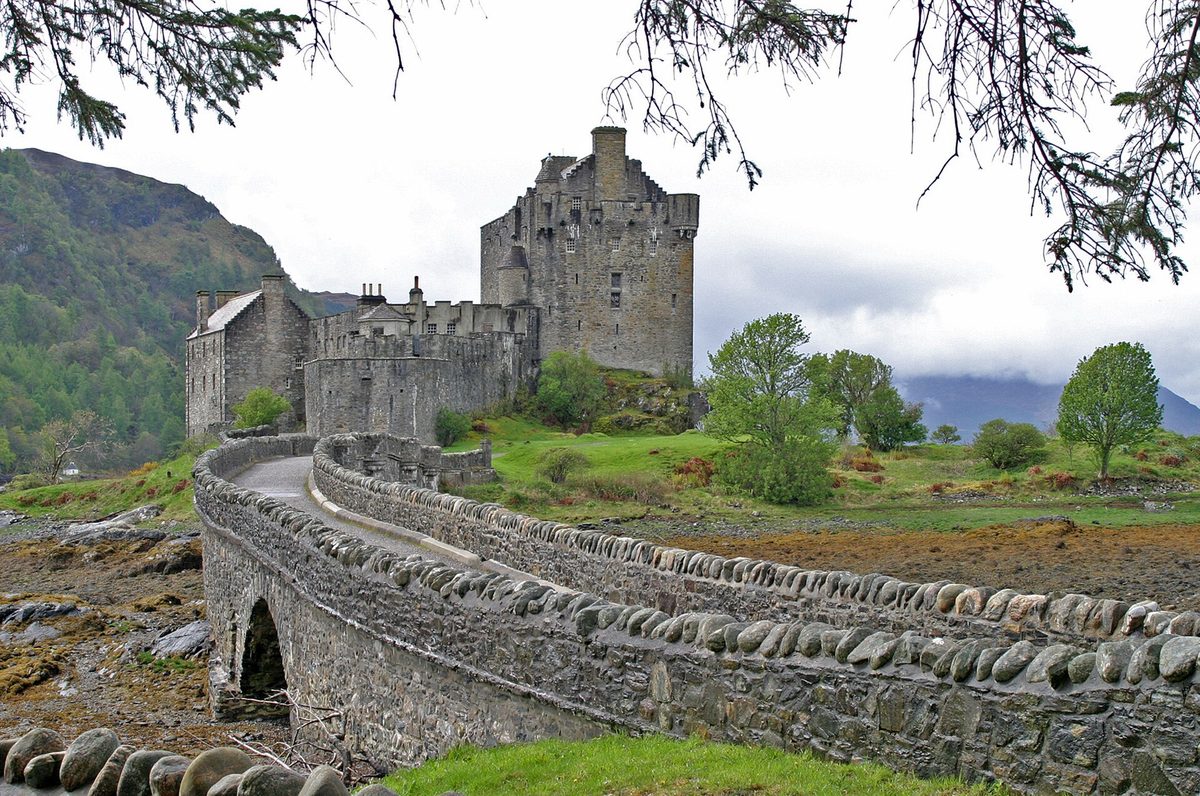
The big transfer day, and the one most itineraries under-time. Culloden first (35 miles, 45 minutes) for the battlefield and the visitor centre; give it two hours and walk out onto the moor rather than just doing the exhibition. Then Urquhart Castle on Loch Ness, which is the only reason I’d send anyone to that particular loch — the ruin is genuinely worth an hour, the monster industry at Drumnadrochit is not.
From there the A82 and A87 run west into the heart of the Scottish Highlands through Glen Shiel, past the Five Sisters, to Eilean Donan Castle at the head of Loch Duich. It is the most photographed castle in the country, it costs about £12 to go inside at the time of writing, and the view from the car park is honestly most of the value. Our round-up of Scotland’s castles has better-value ruins if you’re rationing.
Cross the Skye Bridge (free since 2004) and be in Portree by early evening. Three nights.
Day 7: The Trotternish loop — 50 miles, under 2 hours driving
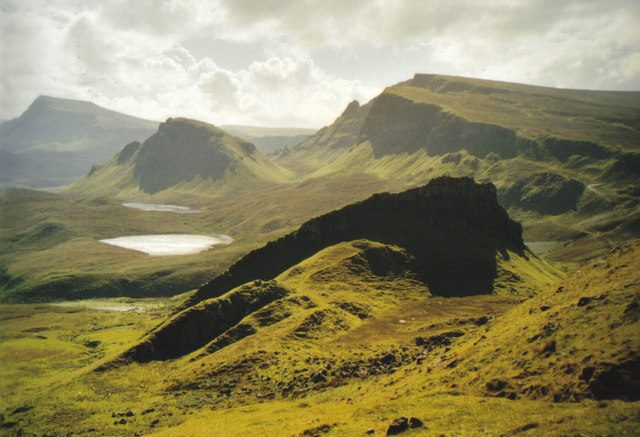
North from Portree on the A855: the Old Man of Storr car park (paid, and full by 10:00 in summer), Kilt Rock and Mealt Falls, the Quiraing viewpoint on the single-track road between Staffin and Uig, and the Fairy Glen just outside Uig. Loop back down the west side.
The Storr walk is about an hour and a quarter up, on a rebuilt path, and the crowd thins dramatically after 17:00. The Quiraing road is steep, narrow and has passing places rather than lay-bys; if you’re not confident, park at the Staffin end and walk in for twenty minutes, which gets you the view without the hairpins.
Day 8: West and south Skye — 95 miles, about 3 hours driving
The Fairy Pools at Glenbrittle (car park £8 for a car at the time of writing, and it fills early), Talisker at Carbost, Dunvegan Castle, then Neist Point for sunset — the lighthouse walk is a mile and a half each way with a punishing set of steps on the return.
Honestly, that’s too much for one day. My advice is to halve it: either do the west coast run above, or drive south to Elgol and take a boat into Loch Coruisk, which is the single best three hours available on the island and something almost no ten-day itinerary mentions. Our Isle of Skye guide goes through both options properly.
Day 9: Skye to Glencoe — 110 miles plus a ferry, about 3 hours driving
Take the small ferry from Armadale to Mallaig rather than driving back over the bridge. It runs roughly every couple of hours in summer, takes about 45 minutes, and it turns a dull retrace into the prettiest hour of your day. Book the car space in advance.
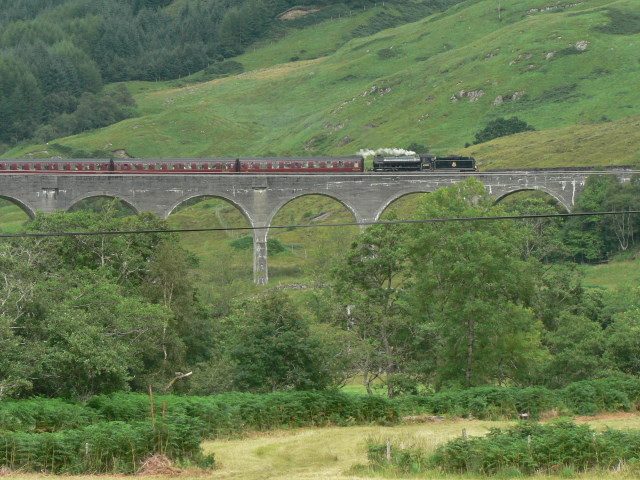
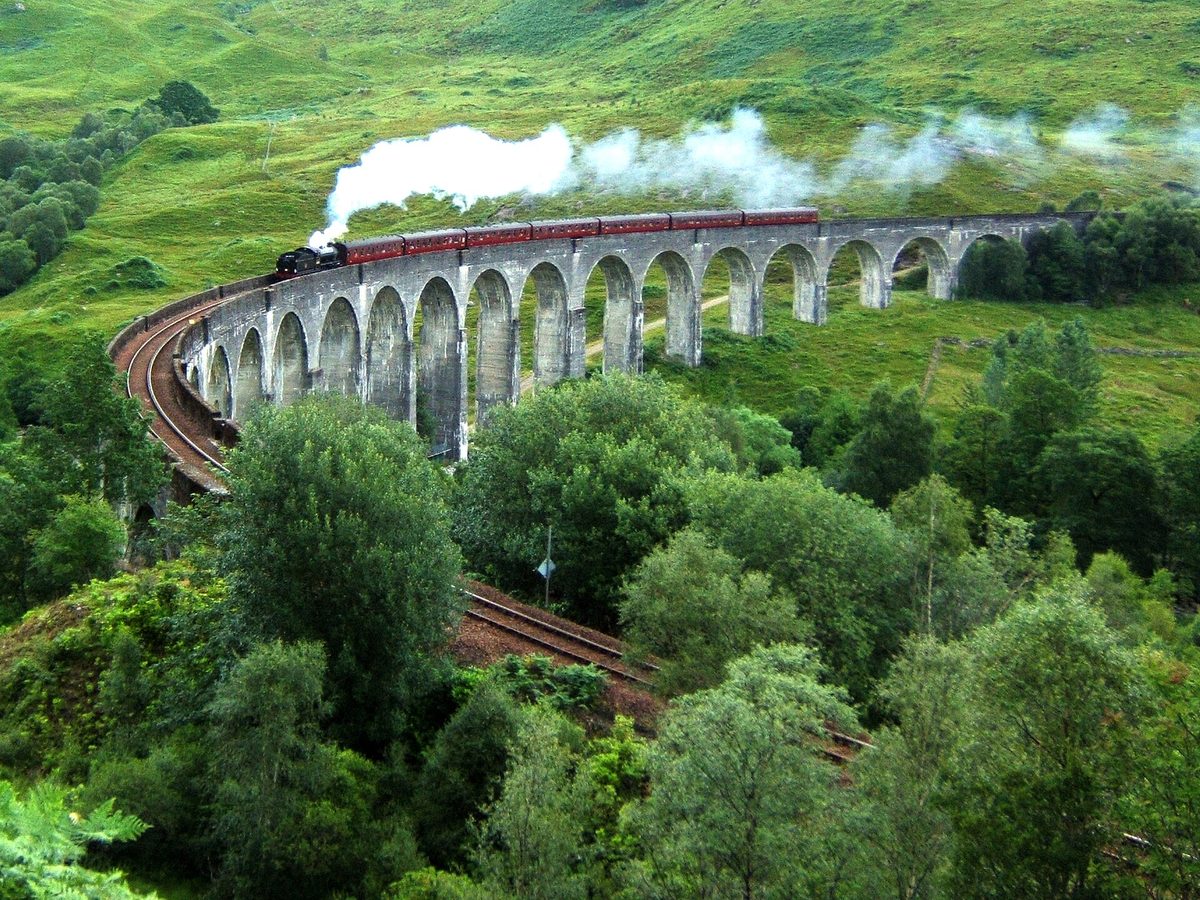
From Mallaig the A830 runs east past Arisaig’s white beaches to Glenfinnan, where the viaduct sits above Loch Shiel. The National Trust for Scotland car park is around £5 for non-members; the walk up to the viewpoint takes twenty minutes and the steam train usually crosses late morning and again mid-afternoon in season, though times shift year to year, so check. If you’d rather ride the thing than photograph it, the Jacobite runs from Fort William to Mallaig and back and books out a season ahead.
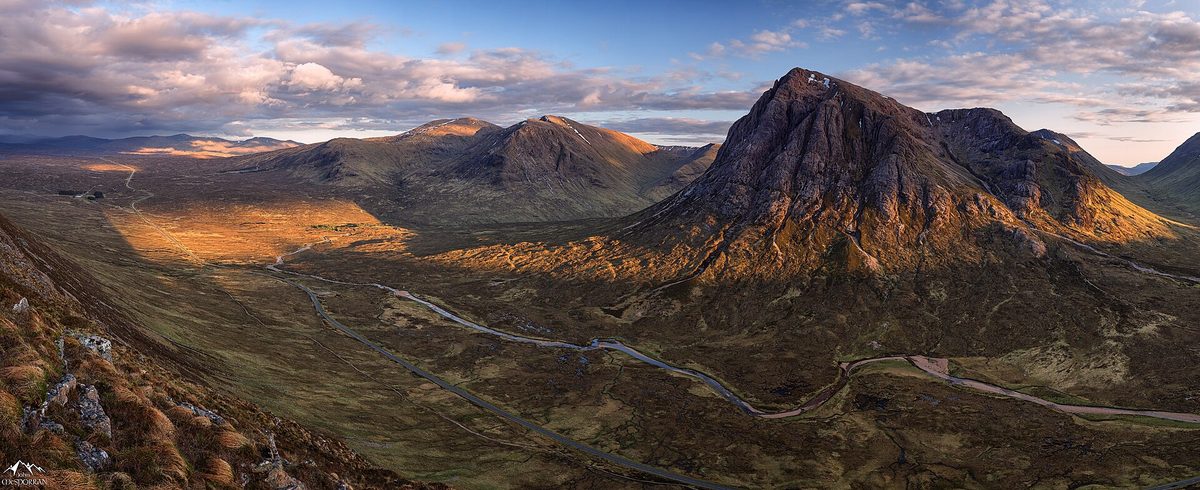
Then Fort William, then Glencoe. Sleep in Ballachulish, Glencoe village or Kinlochleven. This gets you into the glen for evening light, which is when it earns its reputation.
Day 10: Glencoe to Glasgow — 100 miles, about 2h15 driving
Down the A82 across Rannoch Moor, along Loch Lomond, into Glasgow. Drop the car at the airport if you’re flying out that afternoon, or in the city if you’ve got an evening. If your flight leaves before 15:00, add a night in Glasgow at the end instead of trying to do this drive at dawn.
With a spare afternoon, Kelvingrove is free and one of the best civic museums in Britain; our Glasgow guide has the rest.
Why the two-night base beats another sight
I want to make this argument properly, because it is the part people skip.
A hotel change costs you roughly two hours of your day once you count packing, checking out, driving with luggage, arriving before check-in, killing time, and unpacking. Do that eight times in nine nights and you’ve spent sixteen hours — two full days of your holiday — on logistics. You’ve also eaten eight hotel breakfasts at eight different people’s timetables, and you never once know where the light switch is at 3am.
The route above moves you three times across nine nights. That buys back the best part of two days, and it changes the texture of the trip: you can go out for an evening walk because you’re not repacking, you can have a slow morning because your bag is already where it needs to be, and you can react to weather instead of obeying a spreadsheet. If day seven on Skye is a wall of rain, you swap it with day eight and lose nothing.
The one thing I would not do is add a ninth destination to save a night’s accommodation cost. More on the mistakes I see in a moment.
Alternative one: trade the Cairngorms for the Outer Hebrides
Pick this if you want beaches that look Caribbean and feel Arctic, if 5,000-year-old standing stones with no ticket office appeal, and if you can handle a plan that the weather might rewrite.
The Hebrides are the most rewarding of the four options and the least forgiving. They also work beautifully as a loop rather than an out-and-back, which is why they’re worth three days rather than two.
How the route changes
Drop the Cairngorms nights and one Skye night. You get: Edinburgh (3), Inverness or Loch Ness (1), Skye (2), Harris or Lewis (3), then back to the mainland at Ullapool and south. Something like this:
- Day 4: Edinburgh to Inverness via the A9, 157 miles, about 3h15.
- Day 5: Culloden, Loch Ness, Eilean Donan, on to Portree. 145 miles.
- Day 6: Trotternish loop from Portree.
- Day 7: Morning ferry Uig to Tarbert, 1h40. Afternoon on the Harris beaches.
- Day 8: South Harris and the Golden Road, or north to Lewis.
- Day 9: Callanish, Carloway broch, Gearrannan, night in Stornoway.
- Day 10: Stornoway to Ullapool, about 2h40 at sea, then 60 miles to Inverness for a flight.
That last day is tight and I would only run it if your flight is late. Better: make day ten a mainland day and fly out on day eleven.
What you actually get
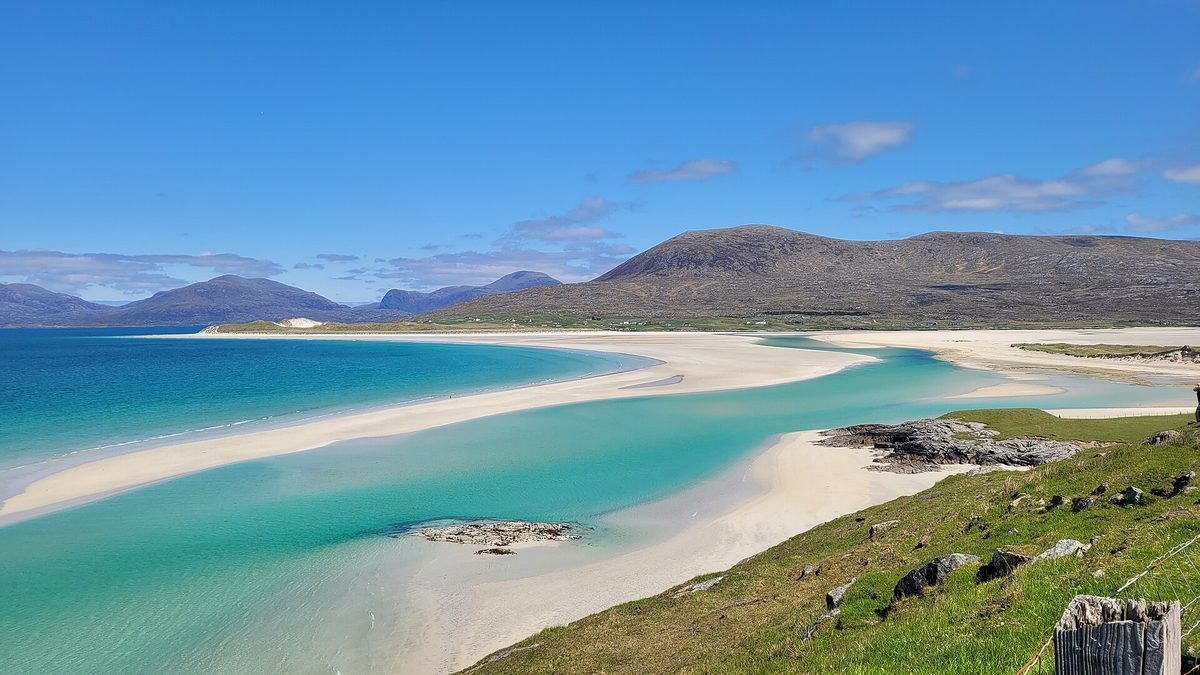
South Harris is the reason people go. Luskentyre and Seilebost are miles of white shell sand against water that turns turquoise in any light above dull, and in June you’ll have a beach the size of a small town to yourself. Scarista and Hushinish are quieter still. The machair — the flower-covered grassland behind the dunes — peaks in late June and early July.
Then drive back over the spine of the island on the Golden Road, a single-track lane through a landscape of bare gneiss and lochans that looks like the surface of somewhere else entirely. It takes about an hour to do fifteen miles and you will stop constantly.
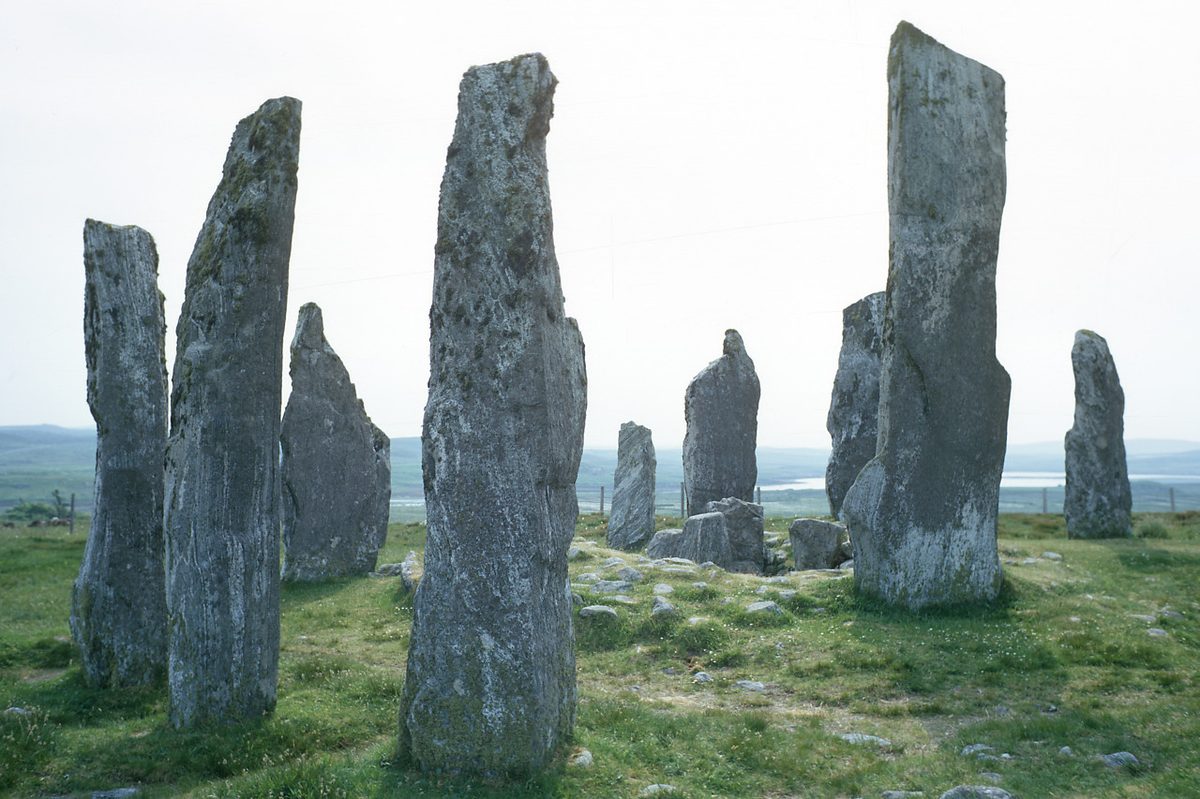
Lewis is flatter and more about people: Callanish, where the stones predate Stonehenge’s sarsens and there is no barrier and often no one else; Dun Carloway, an Iron Age broch still standing nine metres high; and Gearrannan, a restored blackhouse village on the coast. Stornoway has the supermarkets, the fuel and the ferry.
Two practical things nobody tells you. Fuel stations on Harris are few and shut early, so fill up in Tarbert or Stornoway rather than assuming. And Sunday observance is real in Lewis and Harris — the ferries sail now, but many shops, cafes and some attractions close, so don’t plan your one free day for a Sunday. Our guide to the Scottish islands covers the character of each group, and the best beaches in Scotland ranks the Hebridean sand against the rest.
Which Hebridean island, if you only get one
The Outer Hebrides are a chain of more than a dozen inhabited islands and about 130 miles from top to bottom, so “the Hebrides” is not a destination, it’s a region. With three days you’re choosing.
Harris is the answer for most people. The beaches are the best in Britain, the Golden Road is extraordinary, and Tarbert is a short ferry from Skye so it slots straight into a Skye-based plan. It is also the smallest commitment.
Lewis is joined to Harris by road, so you can do both, and it holds the archaeology — Callanish, Dun Carloway, Gearrannan — plus the ferry back to Ullapool that makes the loop work. If you only have three days, do south Harris on day one and Lewis on days two and three.
North and South Uist and Benbecula are flatter, wetter, threaded with lochs and joined by causeways. They are the best of the chain for birdlife and machair flowers and the quietest by some margin, but the ferry connections are more awkward and the landscape rewards patience rather than announcing itself.
Barra has the beach that doubles as an airport runway, where scheduled flights land on the sand at low tide, and nobody I know has come back from it unimpressed. It is also about five hours by sea from Oban or a chain of hops down the whole island group, which puts it out of reach on ten days unless it’s the only island you visit.
My advice: Harris and Lewis together, in via Uig and out via Stornoway. It’s the only version that doesn’t waste a day retracing.
The honest cost
Two ferry crossings, roughly four and a half hours at sea, plus port waits of 45 minutes each. Call it a full day of your ten spent travelling that you would not otherwise spend. That’s the price. The beaches are worth it.
Alternative two: go north to Orkney
Pick this if the phrase “older than the pyramids” does something to you, if you like wartime history, and if you’re happy to swap mountains for a low green landscape with enormous skies.
Orkney is where ten-day itineraries most often go wrong, because people treat it as a day trip. It isn’t. Here is the arithmetic.
How the route changes
Assuming you fly to Kirkwall rather than drive north, which is what I’d do:
- Days 1–3: Edinburgh, as before, no car.
- Day 4: Fly Edinburgh to Kirkwall in the morning, pick up a hire car at the airport, and spend the afternoon in Kirkwall itself.
- Day 5: The west mainland — Skara Brae, Stenness, Brodgar, Maeshowe, and the cliffs at Yesnaby if the weather allows.
- Day 6: Scapa Flow, the Churchill Barriers, the Italian Chapel, and South Ronaldsay. Fly back to Inverness or Edinburgh late afternoon.
- Day 7: Collect a car in Inverness. Culloden, Loch Ness, Eilean Donan, on to Skye.
- Days 8–9: Skye, two nights, one for Trotternish and one for the west coast.
- Day 10: Skye to Glasgow via Glencoe, 210 miles, five hours with stops. Long, but it’s your last day.
If you drive north instead, you lose a full day each way and Skye comes off the plan entirely. That is a legitimate trade — Orkney plus the north coast is a coherent trip — but be clear-eyed that you’re choosing between Orkney and Skye, not adding one to the other.
Why Orkney costs three days, not one
Inverness to Scrabster, the main ferry port, is about 110 miles up the A9 and takes two and a half to three hours — longer than people expect, because the road is single carriageway most of the way and slow through Helmsdale and Berriedale. Add a 45-minute check-in, then the 90-minute crossing to Stromness on the MV Hamnavoe. That is most of a day gone before you’ve seen anything.
Then you need two clear days on the islands to do Orkney any justice at all. Then the same journey back. Three days, and that’s without a spare hour.
Your alternatives:
- Gills Bay to St Margaret’s Hope with Pentland Ferries takes just over an hour and lands you 30 minutes from Kirkwall. Usually cheaper than NorthLink. The catch is that Gills Bay is a further 20 miles east than Scrabster and the crossing is more exposed to the tide race in the Pentland Firth.
- Aberdeen to Kirkwall with NorthLink is about six hours and often sails overnight, so you sleep through it. Good if you’re coming from the east coast, useless if you’re mid-Highlands.
- Fly. Loganair serves Kirkwall from Edinburgh, Glasgow, Aberdeen and Inverness. This is the move if you have ten days and are determined to see Orkney: fly up, hire a second car on the island for two days, fly back. It costs money and saves you the best part of two days of driving. Check current routes and schedules before you build a plan around it.
What two days on Orkney gets you
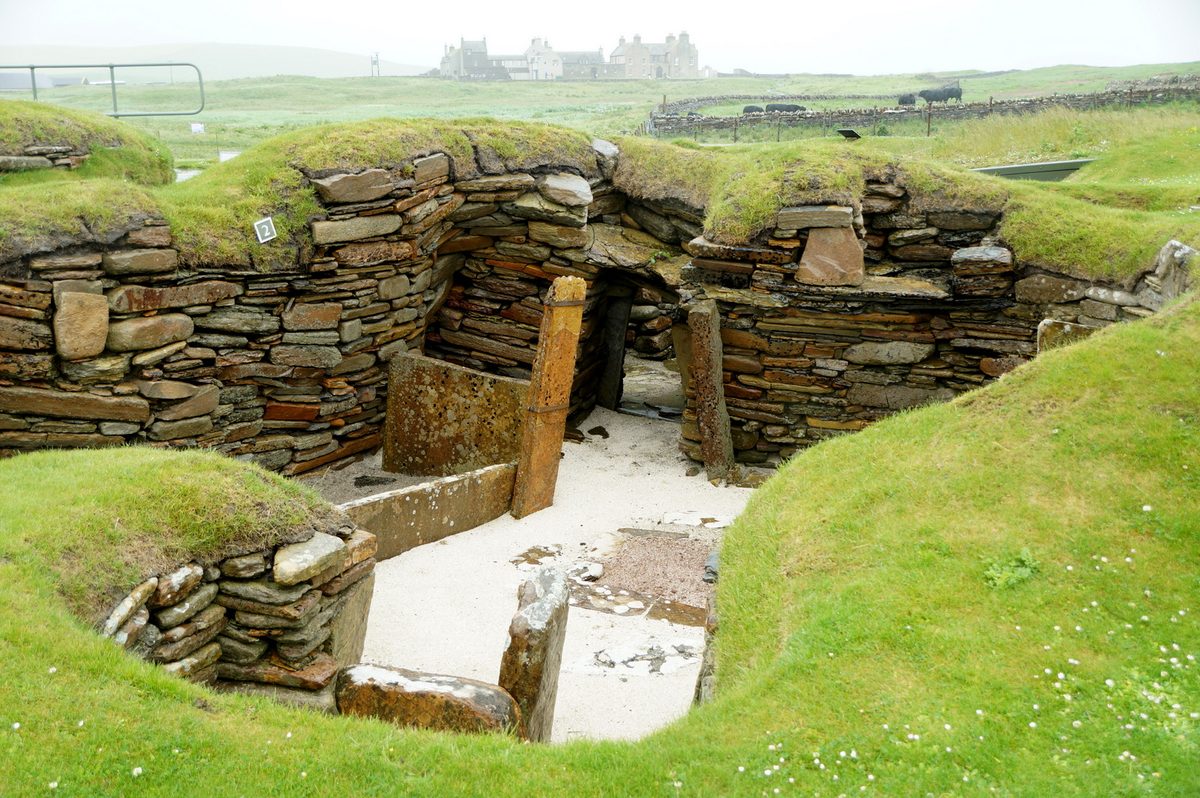
Day one, the west mainland: Skara Brae, a Neolithic village that lay under a sand dune until a storm in 1850 uncovered it, with stone dressers and box beds still in place; the Ring of Brodgar and the Standing Stones of Stenness a few miles away; and Maeshowe, a chambered cairn you enter on your knees through a low passage, covered in graffiti carved by Vikings sheltering from a snowstorm. Maeshowe is guided-tour only and must be booked ahead, often weeks ahead in summer.
Day two, Kirkwall and the south: St Magnus Cathedral, red and yellow sandstone, founded in 1137 and free to enter; the Italian Chapel, built by prisoners of war out of two Nissen huts and scrap; the Churchill Barriers and the block ships of Scapa Flow, where the German High Seas Fleet was scuttled in 1919. Highland Park distillery is in Kirkwall if you want a dram with your archaeology.
Orkney also has some of the darkest skies in Britain, which matters if you’re travelling between late September and March — on a clear, moonless night the Milky Way is plainly visible from the Ring of Brodgar, and the aurora is a genuine possibility from late September onwards.
If you’re drawn this far north anyway, be aware you are within touching distance of the North Coast 500, which is its own trip and cannot be crammed into the same ten days. Choose one.
Alternative three: the east coast nobody sells you
Pick this if you’re travelling in July or August and the thought of the Old Man of Storr car park at 10am makes you tired, if you don’t want to deal with ferries at all, or if this is your second Scottish trip.
The east is where I send returning visitors. It has more castles per mile than anywhere else in the country, better weather statistics than the west, and a fraction of the coaches.
How the route changes
Keep Edinburgh and the Cairngorms. Cut Skye to two nights, or drop it entirely and run a loop: Edinburgh (3) – Fife and the East Neuk (1) – Aberdeenshire (2) – Cairngorms (2) – Perthshire or Glasgow (1).
Aberdeenshire and the castle trail
Dunnottar, on a sea stack south of Stonehaven, is the one everybody photographs and it deserves it: you walk down a cliff path and back up onto the headland, and the ruin runs right to the edges. Craigievar is a pink tower house that looks like it was drawn by someone who’d only had castles described to them. Crathes has yew hedges planted in 1702. Fyvie is enormous and slightly menacing.
Most are National Trust for Scotland; the Historic Environment Scotland ones, including Dunnottar’s neighbours, come under a separate ticket. If you’re doing more than four paid properties in ten days, the Explorer Pass or an NTS membership pays for itself — work out which organisation owns the places on your list first, because they are not interchangeable.
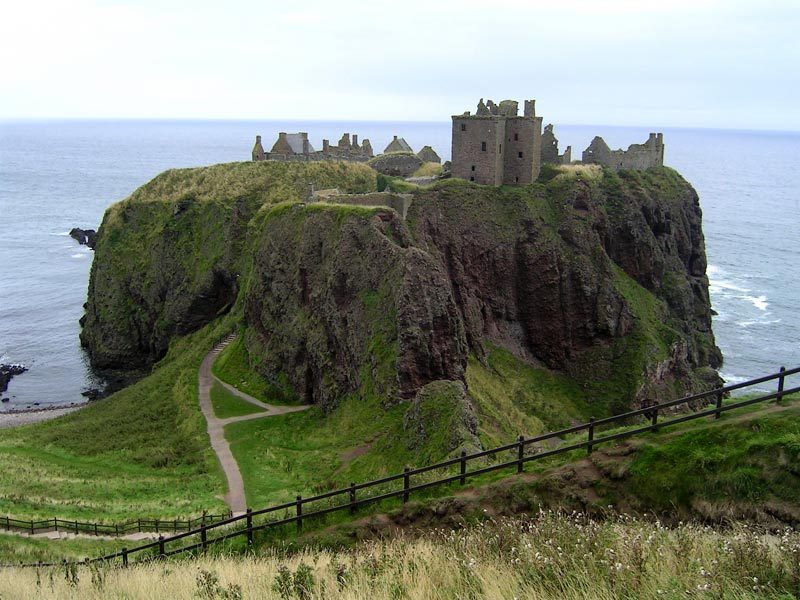
Royal Deeside and the eastern Cairngorms
Braemar, Balmoral (opening seasons vary, so check), the Linn of Dee, and Glen Tanar. This side of the national park is drier and quieter than the Aviemore side, and the drive over the Cairnwell Pass on the A93 — the highest public road in Britain at 670 metres — is more dramatic than anything on the A9. It is also the least sheltered road on this list, and the first to close in a snap of bad weather outside summer.
The Fife coast
The East Neuk villages — Crail, Anstruther, Pittenweem, Elie — are a string of stone harbours an hour from Edinburgh, and they are the easiest good day in this whole article. Anstruther has a fish and chip shop that people queue down the street for. St Andrews has the golf, the ruined cathedral and the West Sands, the beach in the opening scene of Chariots of Fire; anyone hoping to actually play the Old Course needs to understand the daily ballot, which is entered two days in advance and is not something you sort out on the morning.
All of it works as a day out from Edinburgh too, if you’d rather keep one base and drive out and back.
A worked ten days in the east
- Days 1–3: Edinburgh.
- Day 4: Over the Forth into Fife. Falkland, then the East Neuk. Night in Anstruther or St Andrews. 55 miles.
- Day 5: St Andrews in the morning, then north up the coast to Dundee for the V&A, and on to Stonehaven. 75 miles.
- Day 6: Dunnottar at opening time before the coaches, then inland to Crathes and Craigievar. Night near Ballater or Banchory. 60 miles.
- Day 7: Royal Deeside — Balmoral if it’s open, Braemar, the Linn of Dee — then over the Cairnwell Pass. 70 miles.
- Days 8–9: The Cairngorms proper from an Aviemore or Grantown base, with a Speyside distillery day. Two nights.
- Day 10: South on the A9 to Perth and Stirling, then Glasgow or Edinburgh for the flight. 140 miles.
Around 400 miles in total, all on decent roads, no ferries and no single-track hairpins. It is the easiest of the four options to drive and the hardest to sell to someone who has already decided that Scotland means Skye.
The near-miss islands: Mull, Iona, Islay and Arran
The Outer Hebrides get the glory, but three other island options fit a ten-day trip and are far easier to book. If the Uig ferry is sold out when you go to reserve it — and in July it will be — these are your fallbacks, and two of them are arguably better uses of three days.
Mull and Iona
Oban to Craignure is 50 minutes with roughly ten sailings a day in summer, which makes it the most forgiving island crossing in Scotland. Mull is big — allow two hours to drive from Craignure to Fionnphort at the far south-west tip, most of it single-track — and the road out there is one of the best in the country.
From Fionnphort a small passenger ferry crosses to Iona in ten minutes. Iona is about three miles long and a mile wide, has a medieval abbey standing on the site of the monastery Columba founded in 563, white beaches on its west side, and no through traffic. It is the calmest place I know in Scotland and a genuine antidote to the Skye car parks. Tobermory, with its painted harbour front, is the other reason people come, and boat trips out to Staffa and the puffin colony on the Treshnish Isles run from Ulva Ferry and Fionnphort between roughly May and August.
Cost: two nights on Mull plus travel, so about two and a half days of your ten. Half the commitment of the Outer Hebrides for two thirds of the reward.
Islay
Nine or so working distilleries on an island of around 3,200 people. If whisky is the actual reason you’re coming to Scotland, three days on Islay beats three days anywhere else, and the ferry from Kennacraig takes a little over two hours. The catch is that Kennacraig is a long way down the Kintyre peninsula from anywhere on the classic route, so this really wants to be a Glasgow-out-and-back rather than a bolt-on to a Skye trip.
Arran
An hour from Ardrossan, which is an hour by train from Glasgow, and often described as Scotland in miniature because the north is mountainous and the south is farmland. It works as a two-night addition to the end of a trip when you’re flying out of Glasgow, and it is the only one of these you could sensibly do without a car. Our overview of the Scottish islands compares the groups if you want to weigh them up properly.
Still can’t choose? Answer these four questions
If the four options are all still live, this is how I’d narrow it down at a kitchen table.
Is this your first visit to Scotland? Then take the slow classic loop. The Hebrides and Orkney are better on a second trip, when you’re not also trying to see Edinburgh Castle and Glencoe for the first time and can give an island your full attention.
Are you travelling in July or August? Go east. Skye in high season is a queue with a view, the Uig ferry will already be full, and Aberdeenshire in August has the same weather and a tenth of the traffic.
Does your plan collapse if one day goes wrong? If you have a fixed flight, non-refundable bookings and no slack, avoid the Hebrides and Orkney. Ferries are a variable you cannot control. If you can absorb a lost day, they’re the best thing in this article.
What do you actually want to look at? Mountains and lochs: the classic loop. Beaches and open horizons: Harris. Archaeology and sea: Orkney. Buildings, gardens and food: the east. People rarely regret choosing on this basis and often regret choosing on someone else’s list of highlights.
How CalMac actually works, and why it decides your itinerary
If your ten days include the Outer Hebrides, Mull, Arran or the Small Isles, Caledonian MacBrayne is not a detail of your plan. It is the frame your plan has to fit inside. More ten-day trips are ruined by a misunderstood ferry than by anything else, so this section is longer than it looks like it needs to be.
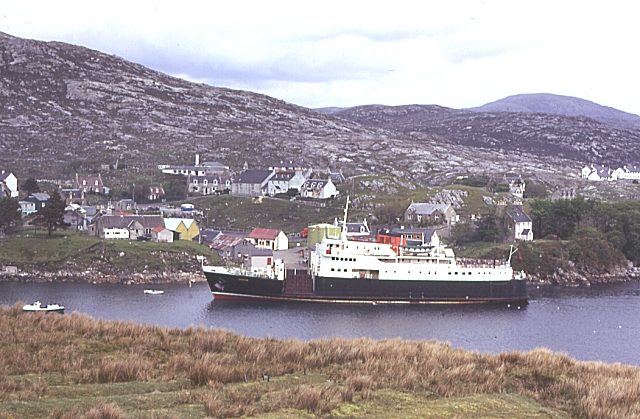
Bookable versus turn-up-and-go
CalMac splits its network in two. On bookable routes your ticket is tied to a specific sailing on a specific date and time, and if you miss it you are at the mercy of space on the next one. Everything you’re likely to use on a ten-day trip is bookable: Uig–Tarbert, Uig–Lochmaddy, Ullapool–Stornoway, Oban–Craignure, Mallaig–Armadale, Ardrossan–Brodick, Oban–Castlebay.
On turn up and go routes — mostly the short inner-firth hops — you buy an open ticket and join the queue. Useful to know, but not what you’ll be doing on the big crossings.
The critical distinction is between people and cars. Foot passengers almost always get on; the vehicle deck is the constraint. If you are flexible enough to leave the car at Uig and hire on Harris, or to travel as a foot passenger and use buses, the whole booking problem largely disappears. Our guide to getting around Scotland goes into the car-free options in detail, and there are decent small-group tours that handle the ferries for you.
Which crossings sell out, and when
Not all routes are equally squeezed. The ones that go first are the ones with small vessels and few daily sailings.
- Uig–Tarbert (Harris) and Uig–Lochmaddy (North Uist). The worst offenders. On many days in the 2026 summer timetable there are only two departures from Uig, and on some days only one. One vessel covers both destinations. The crossing to Tarbert is 1 hour 40 minutes. Car spaces on the popular mid-morning sailings in July and August can be gone months out.
- Oban–Craignure (Mull). Frequent — ten or so sailings a day in summer, 50 minutes each — but it carries enormous volumes and July and August weekends do sell out.
- Ardrossan–Brodick (Arran). Popular with Glasgow day-trippers, so weekends are the pinch point.
- Ullapool–Stornoway. Around 2 hours 40 minutes on a much larger ship, so it is the most forgiving of the Hebridean routes. This is why running the Hebrides as a loop — in via Uig, out via Stornoway — is easier to book than going in and out the same way.
- Oban–Castlebay (Barra) and Oban–Lochboisdale. Long crossings, roughly one a day. Miss one and you’ve lost 24 hours.
When bookings actually open
CalMac publishes its summer timetable — which for 2026 runs 27 March to 18 October — in the December beforehand, and opens bookings at the same time. So if you want a specific car space on a specific Uig sailing in July, you are booking it in December or January. That is earlier than most people book their flights, which is the awkward truth of Hebridean travel.
Practically: decide your island dates first, book the ferries the day the timetable drops, and build the rest of the trip around them. Accommodation on Harris is almost as tight, so do both in the same week.
The island-hopping ticket, explained
The old branded “Island Hopscotch” tickets, which sold fixed pre-set routes at a discount, are gone. What replaced them is better: a multi-journey booking that lets you put up to seven sailings into a single transaction, in whatever order you like. You design your own route rather than picking from a menu.
Two things to know. First, the booking engine wants each leg as a separate start and end port, so write your legs down before you open it — port names, dates, times — because it is easier to fill in a form than to design a holiday inside one. Second, fares are set by Road Equivalent Tariff, meaning they’re priced roughly like driving the same distance on a road, and they are cheap by any European standard. Uig to Tarbert at the time of writing is £8.50 per adult and £41.90 for a car, one way. Two adults and a car, about £59. That is not the expensive part of your trip; the scarcity is.
What happens when a sailing is cancelled
This is the bit worth reading twice. Atlantic weather cancels sailings. Not often in June and July, regularly in October, and occasionally in any month. When it happens:
- CalMac will normally move you to the next available sailing with space. On a route with two departures a day that might be six hours later. On a once-daily route it is the next day.
- Everyone else on the cancelled sailing is being moved too, so the next sailing fills instantly and cars are prioritised in ways you don’t control.
- If you genuinely can’t travel, you’re entitled to a refund, but a refund does not get you off an island.
- Cancellations are usually announced a few hours ahead on the service status pages and the app, and there’s often a “sailing subject to weather” warning the evening before. Check both the night before and again at breakfast.
Which produces the single most important rule in this article: never put a ferry crossing on the day before you fly home. Put a mainland night between the last sailing and the airport. If you’re leaving the Hebrides on the Stornoway–Ullapool boat, sleep at Ullapool or Inverness rather than driving straight to a red-eye. If you’re coming back from Orkney, sleep in Thurso, Dornoch or Inverness. That buffer night costs you about £100 and it is the cheapest insurance you will ever buy.
The corollary: build your island days early in the trip, not late. If a crossing goes wrong on day five you have room to rearrange. If it goes wrong on day nine you don’t.
Planning the practical side
How long is long enough, really
Ten days is the first length at which Scotland stops feeling like a sprint. Seven days gets you Edinburgh, the road north and Skye, and that’s it. Fourteen days gets you two of the four options above. Ten sits exactly at the point where one substantial addition fits and two do not, which is why the choice matters so much.
When to go
May, June and September are the sweet spot: long daylight, the ferries running full summer timetables, and fewer people than July and August. June has the longest days — light until 22:30 in the north — but also the start of the midges. September has better odds of settled weather than most people believe and much easier accommodation. Our month-by-month breakdown of the best time to visit Scotland goes through the trade-offs in detail.
Midges are a west coast and Highland problem from late May to early September, worst at dawn and dusk on still, damp days. They are not present in any number on windy beaches or in cities. Read the midge season guide and pack repellent rather than rearranging your trip around them.
The car
Book it when you book flights. Automatics are a minority of the UK fleet and sell out first; if you can’t drive a manual, reserve early and expect to pay more. Take the smallest car your luggage allows — single-track roads with passing places are far less stressful in a Golf than an estate, and Highland car parks were not designed for large vehicles.
Check the ferry policy in your rental terms if you’re island-hopping. Most companies allow CalMac crossings, some require notification, a few prohibit them.
On driving: single-track roads have passing places on alternating sides. If the passing place is on your left, pull in. If it’s on your right, stop opposite it and let the other car use it. Never park in one. Let faster local traffic overtake — pulling in for thirty seconds is normal courtesy, not a defeat. Fuel gets sparse and expensive north and west of Fort William, so fill up when you’re at half a tank rather than a quarter.
What to book, and how far ahead
- Ferries with a car: December or January for the following summer on Uig–Tarbert and Uig–Lochmaddy. Two to three months elsewhere.
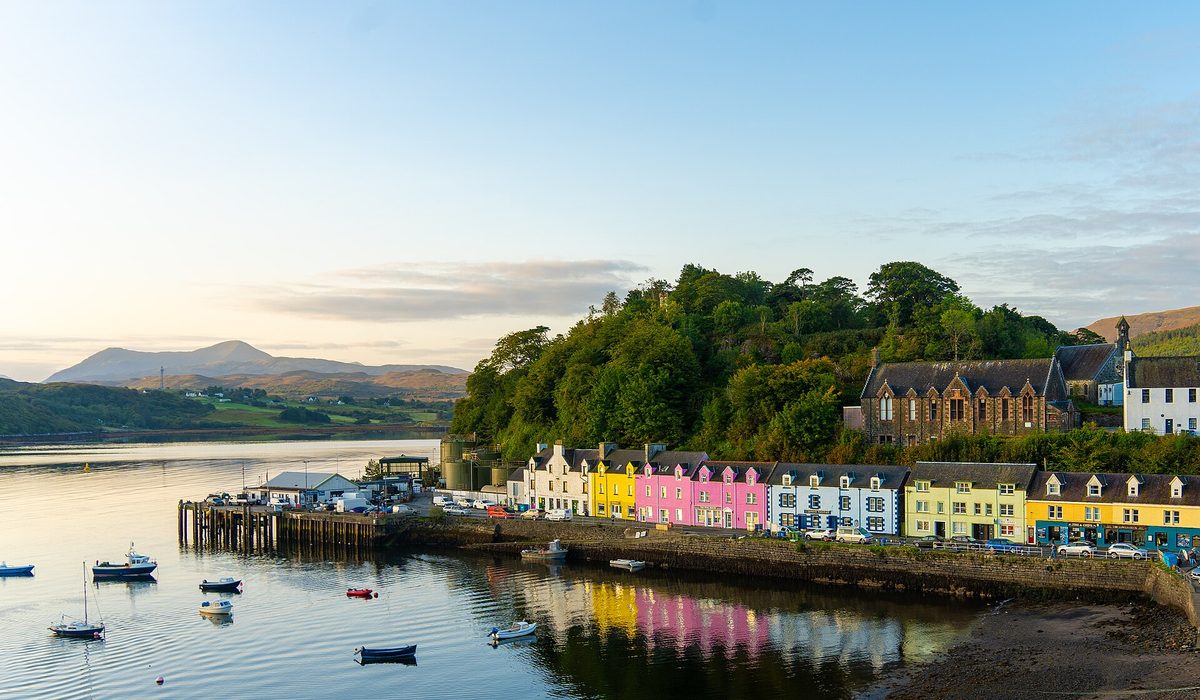
- Skye accommodation: four to six months for June to August. Portree fills first; look at Broadford, Dunvegan and Kyleakin.
- Harris accommodation: as early as the ferries. There simply aren’t many beds.
- Edinburgh in August: the Fringe roughly doubles room rates and fills the city. Six months, or go in a different month — and check the festival dates before you fix your flights.
- Edinburgh Castle, Maeshowe, the Jacobite steam train, Elgol boat trips: all timed and all sell out. Weeks ahead in summer.
- Restaurant tables in small Highland villages: yes, really. One decent kitchen and forty visitors is a difficult ratio. Book the night before.
Our guide to where to stay in Scotland breaks down which bases work for which routes.
Flying into Glasgow or Inverness instead
Not everyone lands in Edinburgh, and the main route adapts easily.
Into Glasgow, out of Edinburgh. Run the whole thing backwards: Glasgow (1 night), Loch Lomond and Glencoe (1), Skye (3), Cairngorms (2), Edinburgh (2). This is arguably better, because you finish in Edinburgh with the city fresh rather than jet-lagged, and because the drive north from Glasgow through Rannoch Moor on day two is a far more dramatic opening than the A9.
Into Inverness. Inverness is a small airport with limited long-haul connections, but if you can reach it, you save the whole first transfer day. Try: Inverness and Loch Ness (1), Skye (3), Glencoe and Fort William (2), Edinburgh (3). You lose the Cairngorms but gain a day of actual holiday.
Landing at 06:00 after a night flight. Don’t drive. Every itinerary that has you collecting a car at Edinburgh Airport on arrival morning is written by someone who has never done it. Take the tram into town, leave your bags at the hotel, walk until 20:00, sleep properly, and start the driving on a rested head.
If you’re going outside the summer season
Everything above assumes May to September. From late October the arithmetic changes in ways worth knowing before you book.
CalMac switches to its winter timetable in mid-October — for the 2026–27 season, from 19 October — which means fewer sailings, more weather cancellations and a much stronger case for the buffer night. Some Hebridean routes drop to one crossing a day. Daylight in the far north shrinks to under seven hours around the solstice, which effectively removes one destination from any ten-day plan because you cannot drive four hours and still see anything.
Against that: no midges, no queues at the Storr, half-price accommodation, and the chance of aurora on a clear northern night. Many smaller attractions and Highland restaurants close from November to March, and some Historic Environment Scotland sites move to winter hours or shut entirely, so check every single opening time rather than assuming. A winter ten days works beautifully if you build it around two cities and one Highland base, and badly if you try to run the summer route in the dark.
The roads you’ll actually drive
Scottish roads vary far more than a map suggests. Knowing which is which is the difference between an accurate plan and an optimistic one.
- A9, Perth to Inverness. Your main artery north. A mix of dual and single carriageway with average-speed cameras along most of it, and an ongoing dualling programme that means roadworks somewhere in most years. Fast, functional, not especially beautiful until Drumochter.
- A82, Glasgow to Fort William. The stretch along Loch Lomond between Tarbet and Ardlui is narrow, twisting and overhung with trees, and it is where people lose the time they think they’ve gained. North of Crianlarich it opens onto Rannoch Moor and becomes one of the great drives in Britain.
- A87, Invergarry to Kyle of Lochalsh. Wide, fast and genuinely spectacular through Glen Shiel. Watch for caravans and for coaches stopping at the Five Sisters viewpoint.
- A830, Fort William to Mallaig. The Road to the Isles, rebuilt in the last twenty years and now quick. Glenfinnan, Arisaig, white beaches. Take it rather than doubling back over the Skye Bridge.
- A855 and the Quiraing road, Skye. Two-way as far as the Storr, then increasingly narrow. The section between Staffin and Uig over the Quiraing is single-track with passing places, a steep gradient and blind bends, and it is not the place to learn.
- A835, Inverness to Ullapool. About 60 miles and an easy hour and a quarter on a good road, which is why the Stornoway ferry is less stressful to reach than the Uig one.
- A93 over the Cairnwell Pass. The highest public road in Britain at 670 metres. Fine in summer, first to close in winter.
- Bealach na Bà, Applecross. Not on any route above, and mentioned only to say: 626 metres, alpine hairpins, no barriers, explicitly unsuitable for caravans and large motorhomes, and frequently attempted by people in hire vans who then have to reverse. Take the coast road round instead unless you’re confident.
General rule: on anything single-track, halve your expected average speed and double your patience. Twenty miles can take fifty minutes, and that’s before you stop for the deer.
Where you’ll actually sleep
The accommodation types differ more than they do in most of Europe, and picking the wrong one costs you money or flexibility.
B&Bs are the backbone of Highland travel and often the best value: a room in someone’s house, a large cooked breakfast included, local knowledge thrown in. The catch is that many refuse single-night bookings in peak season and some still prefer bank transfer to a card. Book direct where you can; the small operators pay heavy commission to the big platforms.
Self-catering cottages are excellent for families and are usually the cheapest per head, but Highland and island lets very often run Saturday to Saturday, or occasionally Friday to Friday, which will bend your whole itinerary around a changeover day. Work out the changeover before you fix your flights.
Hostels and bunkhouses exist in places hotels don’t — Glenbrittle, Glen Nevis, Torridon — and the Scottish Youth Hostels network has private rooms as well as dorms. If you’re travelling alone or in a pair on a budget, this is how you afford the good locations.
Camping and motorhomes. Scotland’s access legislation permits responsible wild camping on most unenclosed land, with a well-known exception around parts of Loch Lomond where seasonal byelaws apply. That right covers lightweight tents, not campervans parked in laybys, which is a distinction that has caused real friction in Skye and along the north coast. If you’re in a van, book campsites; the informal free-parking culture has largely ended.
What I’d cut with nine days, and add with eleven
With nine days, lose the Glencoe night. Drive Skye to Glasgow in one long day with a proper two-hour stop in the glen, and keep the Cairngorms rest day, which is doing more work for you than the extra bed.
With eleven, add a second Cairngorms or Glencoe night rather than a new region. If you insist on a new region, make it Mull and Iona — it slots neatly into the west-coast leg via Oban and needs the least booking discipline of any island option.
With twelve or more, the calculus flips entirely and the Hebrides stop being a trade and start being an addition. That’s a different article.
What ten days in Scotland actually costs
Nobody puts real numbers in these guides, so here are mine. They’re for two adults sharing, in mid-season, at the time of writing, and they will drift — treat them as a shape rather than a quote.
- Accommodation. The single biggest variable. A decent mid-range double in Edinburgh runs roughly £140–£200 a night outside August and considerably more during the Fringe. Highland and island B&Bs sit around £100–£150. Portree in July can be higher than Edinburgh, which surprises everyone. Nine nights, mid-range: budget £1,100–£1,500 for two.
- Car hire. Around £40–£70 a day for a small manual in summer, more for an automatic, plus a one-way fee if you’re dropping in Glasgow rather than Edinburgh — usually £30–£60 within Scotland. Seven days: £300–£500.
- Fuel. Petrol is sold by the litre and is meaningfully dearer in the north-west than in the Central Belt. For 700 miles in an average petrol car, allow £110–£140, plus a bit more if you’re doing the Hebrides loop.
- Ferries. Cheap, because of Road Equivalent Tariff. Uig to Tarbert is £41.90 for a car plus £8.50 per adult one way. The full Hebrides loop with a car, two people, is well under £150. Orkney is dearer — NorthLink’s Scrabster crossing costs more per mile and a cabin on the Aberdeen overnight sailing adds a chunk again.
- Attractions. Edinburgh Castle is the priciest single ticket on most itineraries; Urquhart, Eilean Donan, Skara Brae and the NTS castles run roughly £10–£20 each. If you’ll visit four or more Historic Environment Scotland properties, the Explorer Pass in its five-day or fourteen-day form is worth pricing up. National Trust for Scotland membership is a separate calculation covering different places — Culloden, Glenfinnan, Craigievar, Crathes — so check which body owns what before you buy either.
- Food. A pub main is around £16–£22, a good restaurant dinner £35–£55 a head with a drink. Supermarket lunches in the Highlands save real money and there are Co-ops in most sizeable villages. Our guide to Scottish food and drink is worth a read before you decide the cuisine is all deep-fried.
- Parking and small charges. £5–£8 at popular Highland car parks, and they now take cards or apps rather than coins. Budget £60 across the trip and you’ll have some left.
All in, a comfortable mid-range ten days for two, excluding international flights, lands somewhere around £2,500–£3,500. You can do it for a good deal less with hostels, self-catering and fewer paid attractions; the free parts of Scotland — the glens, the beaches, the hills, most of the museums in Edinburgh and Glasgow — are the best parts.
Doing this without a car
It is possible and it is not a consolation prize, but it changes the shape of the trip. The rule is that you swap breadth for depth: fewer places, more time in each, and no chasing viewpoints down single-track roads.
A workable car-free ten days, nine nights: Edinburgh (3) — train to Inverness, about 3h30, with a coach day trip to Loch Ness and Culloden (2) — train to Kyle of Lochalsh and bus on to Portree, using the island bus network and one guided day tour for the Trotternish loop (3) — Citylink coach from Portree to Fort William, then the West Highland Line south to Glasgow (1). That train is one of the great rail journeys in Europe, and you will see more of Rannoch Moor from it than you ever would from the A82.
The gaps in the public network are real: Glencoe is served by the Glasgow–Fort William coach but the glen itself needs a walk or a taxi, and the Fairy Pools and Neist Point are effectively unreachable without a car or a tour. That’s what the day-tour operators exist for. Our guide to getting around Scotland sets out the rail and coach options in full, and a couple of well-chosen guided day tours plug the holes without committing you to a coach for ten days.
Ten days with children, or with anyone who tires
Cut a destination. Genuinely — the version of this route that works with a seven-year-old is Edinburgh (3), Cairngorms (3), Skye (3), and that’s it, with the drive to Glasgow on the last day. The Cairngorms are the best family base in Scotland: a steam railway at Boat of Garten, a wildlife park at Kincraig, reindeer at Glenmore, a beach at Loch Morlich and forest paths that a small person can actually finish.
On the road, the rule is 90 minutes between stops, not three hours. The single-track sections are the hardest part with a tired car full of people, so do them in the morning. Our guide to Scotland with kids has more, and it’s worth knowing that most Scottish pubs serve families until early evening, which makes dinner easier than it is in some of Europe.
Getting the light right
Scotland is a high-latitude country, which means the light is low and long for hours rather than minutes, and it also means the sun sets in a very different place in June than it does in September. It’s worth ten minutes of planning.
In mid-June the far north gets around eighteen hours of daylight and a long blue twilight after that, so a 21:30 walk is entirely reasonable and the Quiraing at 05:00 is genuinely empty. By late September you’re down to roughly twelve hours and the golden hour is a proper hour rather than a stripe at the horizon.
Where it matters on this route: Neist Point faces west, so it’s a sunset location and pointless at midday. The Quiraing viewpoint faces roughly east and is best early. Glencoe works late, when the sun comes down the glen from the west. Callanish is at its best in low light in either direction. And the Old Man of Storr is in shadow for much of the afternoon, which is one reason the 17:00 crowd is thinner and the photographs are better.
The practical version of all this: do the popular car parks at either end of the day and the indoor things — distilleries, castles, museums — between 11:00 and 15:00, when the light is flat and everyone else is outside.
Weather, and what to pack for it
You will get four seasons, possibly in one afternoon, in any month. The useful mental model is not “will it rain” but “how long will it rain for” — Scottish rain is usually showers moving through rather than a fixed grey lid, so a plan that survives a wet hour survives most days.
What actually matters: a proper waterproof jacket rather than a fashion one, boots or trainers you don’t mind soaking, a warm layer even in July (it is 8°C on the Quiraing at 08:00 in June), midge repellent, and sunglasses, because low northern sun on a wet road is genuinely blinding. What doesn’t matter: an umbrella, which the wind will take from you within a day.
What underwhelms, and the mistakes I keep seeing
Loch Ness
It is a long, deep, dark, straight-sided body of water, and from the road you mostly see trees. Scots find the fuss baffling. Go to Urquhart Castle, which is genuinely good, and give the monster exhibitions at Drumnadrochit a miss unless you have children who will be devastated otherwise. If you want a loch to stop the car for, Loch Maree or Loch Shiel will do more for you.
Trying to add the North Coast 500
The NC500 is 516 miles of mostly single-track road and needs five to seven days on its own. People try to bolt a “quick” northern loop onto a ten-day trip that already includes Skye, and they end up driving nine hours a day past scenery they never stop at. Do the loop properly on another trip.
Treating Skye as a day trip
Skye is fifty miles long with single-track roads and one main town. Driving up from Fort William, seeing the Storr and driving back is six hours of car for ninety minutes of island. Two nights is the minimum, three is right.
Booking the last ferry of the day
If it’s cancelled, there is nothing after it. Take the mid-morning sailing, arrive with the afternoon intact, and keep the evening sailing as your fallback rather than your plan.
The Fairy Pools in August at midday
A car park that fills by 09:30, a queue on a stony path, and a series of pools you cannot photograph without twelve other people in the frame. Go at 08:00 or at 18:00, or go to the Coire Lagan walk from Glenbrittle instead and see almost nobody.
Buying the wrong heritage membership
Historic Environment Scotland and the National Trust for Scotland are different organisations with different properties, and neither ticket works at the other’s sites. Edinburgh Castle, Urquhart, Skara Brae and Maeshowe are HES. Culloden, Glenfinnan, Glencoe’s visitor centre, Craigievar and Crathes are NTS. Write your list, count which side it falls on, then buy.
Assuming you can eat late
Kitchens in Highland villages often stop at 20:00 and sometimes at 19:30, and in the shoulder season some close entirely on Mondays and Tuesdays. If you arrive at your B&B at 20:30 having driven from Skye, you may be eating crisps. Plan the evening meal like you plan the ferry.
Under-timing Highland driving
Whatever your mapping app says, add 30 per cent. It does not know about the caravan doing 35mph on the A87, the sheep, the passing-place etiquette, or the fact that you will stop for photographs roughly every eleven minutes. A “two-hour” Highland drive is three hours in real life.
Doing Edinburgh with a car
Controlled parking, tram lines, bus gates with cameras, and a medieval street plan. You will spend more on parking than on the car itself. Collect it on your way out.
Skipping Glasgow entirely
Almost every ten-day itinerary treats Glasgow as an airport with a cathedral attached. It has the better music scene, the better food, the better architecture and the Burrell Collection, and it’s the natural end point for a west-coast route. Give it the afternoon at least.
Frequently asked questions
Is 10 days in Scotland enough?
Enough for one region done properly plus Edinburgh, yes. Enough for the whole country, no — Scotland is 30,000 square miles with some of the slowest roads in Europe. Ten days comfortably covers Edinburgh, the central Highlands and Skye, with three days spare for one substantial addition. Trying to cover more turns the trip into a driving holiday.
Should I do a Scotland 10 day road trip by car or by train?
Car for the Highlands and islands, where buses are infrequent and the best places have no service at all. Train works surprisingly well for a city-plus-one-route trip: Edinburgh to Inverness, Inverness to Kyle of Lochalsh, and the West Highland Line to Mallaig are all scenic in their own right. A hybrid — trains between cities, a hire car for four days in the Highlands — is often the best answer.
What is the best 10 day Scotland itinerary for a first visit?
Edinburgh for three nights, the Cairngorms for two, Skye for three, Glencoe for one, out through Glasgow. That is the route in the middle of this article, and it works because it has five hotel changes rather than eight. Add the Hebrides or Orkney only on a second visit or if a specific interest pulls you there.
How many miles will I drive in 10 days in Scotland?
Around 650 to 750 miles on the classic loop, which is about eighteen hours behind the wheel spread over six driving days. The Hebrides version is similar on the road but adds four to five hours at sea. The Orkney version pushes you closer to 900 miles unless you fly north.
Do I need to book CalMac ferries in advance?
With a car, absolutely — and for the Uig to Tarbert and Uig to Lochmaddy crossings in summer, months in advance. Bookings for the summer season open when the timetable is published the previous December. As a foot passenger you can be far more relaxed, since the vehicle deck rather than the passenger capacity is what runs out.
Can I visit both Skye and Orkney in 10 days?
Technically yes, sensibly no. They are at opposite ends of the Highlands, roughly six hours’ driving apart before you add the ferry, and doing both leaves you about a day and a half in each. Pick one. If you want both, you want fourteen days.
What is the best month for a 10 day Scotland itinerary?
September, narrowly, for the combination of full ferry timetables, thinning crowds, dropping midge numbers and reasonable daylight. May is the close second and is often the driest month on the west coast. June has the longest days if that matters more to you than company.
What happens if my ferry is cancelled and I miss my flight?
You are responsible for the flight, not the ferry operator — which is exactly why you should never schedule a crossing on the day before you fly. Build in a mainland night. Travel insurance may cover missed departures caused by transport disruption, but read the policy wording before you rely on it.
Final thoughts
The best ten days I’ve spent in Scotland involved fewer places than the worst ten days I’ve spent in Scotland. That’s not a paradox, it’s just what happens when you stop measuring a holiday in sights per day.
So decide early. If you want beaches and standing stones and don’t mind the weather having a vote, go to the Hebrides and book the Uig ferry in December. If you’d rather have Neolithic villages and Scapa Flow, fly to Kirkwall and give Orkney two clean days. If you’re travelling in high summer, go east, where the castles outnumber the coaches. And if this is your first visit and you just want it to be good, take the classic loop and spend those three extra days standing still.
Whichever you pick, put a mainland night before your flight home. Then go and enjoy the rain.
About the author: This guide was written and is maintained by the ScotlandTourism.org editorial team — travel writers who’ve spent years exploring Scotland’s cities, Highlands and islands, from bagging Munros to chasing the perfect dram. We update our guides regularly to keep prices, opening details and advice current.
Last updated: August 2026. Prices and opening times change — always check the official site before you travel.
Photo credits
All images are used under their respective Creative Commons or public-domain licenses:
- Edinburgh Castle above Princes Street Gardens, the usual first stop on a 10 day Scotland itinerary — Matti Blume, CC BY-SA 4.0, via Wikimedia Commons
- Loch an Eilein and its ruined island castle in Rothiemurchus, Cairngorms National Park — Mike McBey, CC BY 2.0, via Wikimedia Commons
- Eilean Donan Castle on Loch Duich, on the drive from Loch Ness to the Isle of Skye — W. Bulach, CC BY-SA 4.0, via Wikimedia Commons
- The Quiraing landslip on the Trotternish peninsula, Isle of Skye — Carol Walker, CC BY-SA 2.0, via Geograph
- The Glenfinnan Viaduct curving above Loch Shiel on the road from Skye to Fort William — de:Benutzer:Nicolas17, CC BY-SA 2.5, via Wikimedia Commons
- Buachaille Etive Mor standing at the entrance to Glen Coe in the western Highlands — john mcsporran from Trossachs, Scotland, CC BY 2.0, via Wikimedia Commons
- White sand and turquoise water at Luskentyre beach on the Isle of Harris, Outer Hebrides — Scotboy19, CC BY-SA 4.0, via Wikimedia Commons
- The Callanish Standing Stones on the Isle of Lewis in the Outer Hebrides — Julian Paren, CC BY-SA 2.0, via Geograph
- The Neolithic stone houses of Skara Brae on Orkney Mainland — Mike Pennington, CC BY-SA 2.0, via Geograph
- Dunnottar Castle on its cliff headland near Stonehaven in Aberdeenshire — Gerhard Piezinger, CC BY-SA 3.0, via Wikimedia Commons
- A Caledonian MacBrayne ferry at Tarbert on the Isle of Harris — Anne Burgess, CC BY-SA 2.0, via Geograph
- Coloured houses around the harbour at Portree, the main base town on the Isle of Skye — הגמל התימני, CC BY-SA 4.0, via Wikimedia Commons