The first time I drove north out of Edinburgh, I had a plan that looked entirely reasonable on a map. Breakfast in the capital, lunch somewhere near Glencoe, sunset on Skye. I got to Portree at half past nine at night, having eaten a service-station sandwich in a lay-by on the A87, and I remember thinking: nobody told me. That is the thing about your first time in Scotland — the country is not big, but it is slow, and almost every expensive mistake a first-timer makes comes from confusing those two facts.
Most guides for first-time visitors will tell you to pack layers, try haggis and remember that we drive on the left. All true, all useless. What they rarely tell you is that the drive from Edinburgh to Skye is five to six hours each way, that passing places on single-track roads are not photo stops, that many Highland petrol stations shut on a Sunday, or that Edinburgh in August means Fringe pricing and peak midges on the west coast at the same time. This guide is the other list. Start with our full Scotland itinerary planner for the route-building, then use what follows to stop the trip going sideways.
Your first time in Scotland: the short version
Scotland is smaller than you think and slower than you think, and that combination costs first-timers days and money. Base yourself in two or three places rather than moving nightly, book Highland and island accommodation months ahead, budget realistically for driving times on A-roads, and choose your month with midges, daylight and festival pricing in mind.
Eight assumptions that cost first-timers money
| What first-timers assume | What is actually true | What the mistake costs |
|---|---|---|
| “The Highlands are a day trip from Edinburgh” | Edinburgh to Portree on Skye is roughly 230 miles and 5–6 hours each way | A whole day in a car, and no time on Skye |
| “Short distances mean short drives” | The A82 and A87 are winding single-carriageway roads; average speeds sit far below motorway pace | Arriving after dark, missing check-in, missing dinner |
| “Passing places are lay-bys” | They exist to let oncoming and faster traffic through, not to park in | Blocked roads, blocked ambulances, and a genuinely furious local |
| “August is the obvious month” | Festival pricing in Edinburgh plus peak midge season in the west | Doubled room rates and a bitten face |
| “There will be a petrol station” | Rural pumps often close on Sundays, evenings and out of season | A long wait for recovery with no phone signal |
| “Right to roam means camp anywhere” | Access rights come with the Scottish Outdoor Access Code, and parts of Loch Lomond need a permit in season | A fixed penalty and a miserable night |
| “I’ll book accommodation nearer the time” | North Coast 500 and island beds go months ahead for summer | Driving 60 miles back to where you started |
| “Scottish banknotes are the same as English ones” | They are legal currency but shops in England can and do refuse them | An awkward standoff at a motorway services near Carlisle |
Getting your expectations right: Scotland is slow, not small
This is the section I wish somebody had sat me down for. Everything else on this page is detail; this is the bit that decides whether your trip works.
The Highlands are not a day trip from Edinburgh
Look at a map of Scotland on your phone and the whole country fits on one screen. It looks like an afternoon. It is not. Edinburgh to Portree, the main town on Skye, is around 230 miles by road and takes five to six hours without stopping. Realistically, with a coffee, a photo stop at Glencoe and a caravan somewhere on the A87, you are looking at seven hours or more. That is each way.
Plenty of coach operators do sell “Skye in a day” from Edinburgh. They run at speed, they leave before dawn, and you get perhaps ninety minutes on the island. Some people enjoy them. If your idea of Skye came from photographs of the Quiraing at first light, you will not enjoy it. Read our Isle of Skye guide and give the island three nights, or leave it out entirely and come back.
The same logic applies to Loch Ness, Inverness, the Cairngorms and Applecross. Everything in the Highlands is further away than the map suggests, and the roads that get you there are not motorways.
Sat-nav times assume a version of the road that does not exist in July
The A82 along Loch Lomond and through Glencoe, and the A87 through Glen Shiel to Skye, are the two roads most first-timers use. Both are beautiful. Both are single-carriageway, both twist, both have long sections where overtaking is impossible, and both fill with motorhomes between June and September. A route planner might quote you two hours forty for Glasgow to Fort William. Give it three and a half in summer.
My rule of thumb after years of doing this: take whatever your phone says and add 25 per cent for any Highland A-road, 40 per cent if the route includes single-track sections, and another half hour for every scenic stop you already know you are going to make. You will make them. That is the point of coming.

Pick two bases, not seven
The single biggest improvement you can make to a first Scottish trip is to stop moving every night. Packing, checking out, driving four hours, checking in, finding dinner in a village where the kitchen closes at eight — do that six days running and you will remember the car parks, not the country.
A week works beautifully as Edinburgh for three nights, then somewhere Highland for four. Ten days lets you add a west-coast island or the Cairngorms. Our seven-day Scotland itinerary is built on exactly that principle, and if you are still deciding how much time to give the country, this breakdown of how many days you need is honest about what each length of trip can and cannot include.
What a realistic first trip looks like
Five days: Edinburgh and one Highland loop, no islands. Seven days: Edinburgh, Glencoe and Fort William, maybe Loch Ness. Ten days: add Skye properly, or the Cairngorms and Speyside. Fourteen days: now you can think about the North Coast 500 or the Outer Hebrides without sprinting.
If your heart is set on the north coast, read our North Coast 500 guide before you commit. The full circuit is 500-odd miles of mostly slow road, and the people who come back saying it was exhausting are almost always the people who tried it in five days.
Money, paperwork and the practicalities nobody warns you about
Some of this changed recently, and a lot of older advice online has not caught up.
You may now need a UK travel authorisation before you fly
This one catches people at the airport. Visitors from the United States, Canada, Australia, the EU and around 85 nationalities in total now need an Electronic Travel Authorisation, or ETA, before travelling to the UK. It is applied for online or through the UK Immigration: ID Check app, and at the time of writing the fee is £20, having risen from £16 in April 2026. It covers multiple trips of up to six months over two years, or until your passport expires.
British and Irish citizens do not need one. Everybody else who does not already hold a UK visa should assume they do, apply well before departure, and use gov.uk rather than a third-party site charging a markup for nothing. Check the current rules on the official page before you book flights — this is the fastest-moving fact in this article.
Edinburgh now charges a visitor levy
From 24 July 2026, Edinburgh applies a 5 per cent charge on the cost of paid overnight accommodation in the city, capped at five consecutive nights. It is the first city-wide scheme of its kind in the UK. If you booked before it came in, the rules on advance bookings are worth reading; if you are booking now, budget for it.
On a £180-a-night hotel for four nights that is roughly £36 you had not planned for. Not ruinous, but it is the kind of thing that turns a tight budget into an uncomfortable one. Other Scottish councils are working on their own schemes, so check the local authority website for wherever you are staying.

Scottish banknotes are real money, and English shops sometimes disagree
Three Scottish banks issue their own notes: Bank of Scotland, Royal Bank of Scotland and Clydesdale. They are perfectly good currency across the UK. Strictly, though, no banknote is legal tender in Scotland at all — only Royal Mint coins are — and Scottish notes are not legal tender in England either.
“Legal tender” is a narrow term about settling debts in court, not about what a shop must accept. Any business anywhere can decline any note it likes. In practice you will occasionally meet a shop assistant in England who looks at a Clydesdale twenty as though you have handed them a Monopoly card. Spend your Scottish notes before you head south, or pay by card.
Cards work almost everywhere — almost
Contactless is the default. Apple Pay and Google Pay work in city buses, distillery shops, cafes and taxis. Set them up before you travel and tell your bank you are coming.
The exceptions are rural and specific: honesty boxes at farm gates and roadside egg stalls, a few small island shops, some community-run car parks, campsite showers, and the occasional village hall serving tea. Carry £20 to £40 in cash and a few coins and you will never be stuck.
What things actually cost
A pint in an Edinburgh pub generally runs somewhere between £4.50 and £6.50 depending on the bar and the beer, with craft options higher; move out to a smaller town and it drops. Pub main courses sit around £14 to £20 in most places. A mid-range Highland B&B in summer commonly asks £110 to £160 for a double room including breakfast, and considerably more on Skye or along the north coast in July.
Attractions add up faster than people expect. Edinburgh Castle is £23.50 for an adult booked online and £26 on the door at the time of writing, with concessions at £19 and children aged 7 to 15 at £14. The audio guide is another £4. Multiply that by a family and two or three castles and you see why the passes exist. Our guide to Edinburgh Castle tickets goes through the options in detail.
If you are watching the budget hard, the season matters far more than any individual saving. Shifting a Highland trip from July to late September can cut accommodation by a third, and November to March cuts it further still, with the obvious daylight trade-off.
Tipping, briefly
Ten per cent in a restaurant with table service if the service was good, and nothing at all at a pub bar where you ordered and carried your own drink. Nobody chases you down the street. Some places add a discretionary service charge; you can ask for it removed. Taxi drivers usually get rounded up. That is the whole system.
Driving in Scotland: the part that catches everyone out
Yes, we drive on the left. You knew that. Here is what you did not.
Single-track roads and the etiquette of passing places
Large parts of the west Highlands, Skye, Mull and the Outer Hebrides run on single-track roads: one lane, two directions, with marked passing places every few hundred metres. They are usually signed with a black-and-white diamond or a small square post.
The Highway Code is clear about how they work. If a vehicle is coming towards you, pull into a passing place on your left, or stop opposite one on your right and let the other driver come through. Give way to traffic coming uphill wherever you can, because reversing downhill is far easier than reversing up. And if somebody has come up behind you and is obviously travelling faster — a postie, a delivery van, somebody who lives here — pull in and wave them past. This is the rule first-timers miss most often. A passing place is for letting people overtake you as well as for meeting oncoming cars.
Then the one that genuinely angers residents: never park in a passing place. Not for two minutes. Not for one photograph. On some roads that pull-in is the only gap for a mile, and blocking it can stop a farm vehicle, a school bus, or an ambulance. If you want the picture, drive on until you find a proper lay-by or a car park.
Two smaller courtesies that make you look like you know what you are doing: a raised hand or a flash of the hazards to thank someone who pulled in for you, and keeping your speed sensible so you can actually stop within the distance you can see.

Fuel: the Sunday problem
Petrol stations in the Highlands and islands are sparse, and many are attached to a village shop or garage with human opening hours. Plenty close on Sundays. Plenty close at six on a weekday. Card-only 24-hour pumps exist but you cannot count on finding one where you need it, and some older pumps do not take foreign cards reliably.
The habit to build is simple and it has never once let me down: on the west and north coasts, never drive past a petrol station below half a tank. Put £20 in even if you think you do not need it. Fuel in remote Highland stations typically runs noticeably dearer per litre than the supermarkets in Inverness, so fill up properly in a town when you get the chance.
The other half of this is mobile signal. Large stretches of the north-west have none. Download offline maps before you leave a town, and do not assume you can look up the next open garage from a lay-by in Assynt.
Hire cars, gearboxes and insurance
Book an automatic early if you need one. Manual transmission is the default in the UK, automatics are a smaller share of the fleet, and in July they simply run out. The premium for booking late is unpleasant.
Take the smallest car you can live with. A compact hatchback on a single-track road with a stone wall on one side is a relaxed drive; a large estate is not. Check whether your policy covers windscreen and tyre damage, because Highland roads throw a lot of grit, and check the excess before you get to the desk, where the upsell is enthusiastic.
Parking, motorhomes and where not to sleep
Popular trailheads now charge for parking — Glenfinnan, the Old Man of Storr, the Fairy Pools and Glen Nevis all have managed car parks with fees, generally in the low single-figure pounds, and they fill by mid-morning in summer. Bring a card and expect the odd machine to be temperamental.
Motorhomes are welcome on Scottish roads, but the informal “park anywhere overnight” culture has worn thin in the most-visited places. Use campsites and designated aires. Emptying waste anywhere other than a proper facility is the fastest way to make yourself unwelcome in a community that has been dealing with it for a decade.
If you would rather not drive at all, that is a perfectly good first trip. Our guide to getting around Scotland covers the alternatives properly.
Weather, midges and daylight
Everyone tells you to pack a waterproof. Fine. Here is the rest of it.
Layers are the answer, but the wind is the real problem
Scottish rain is rarely heavy for long. Scottish wind is relentless, and it is what makes 12 degrees feel like four on a ridge. A proper windproof shell matters more than a thick coat, and waterproof trousers you can pull on over jeans will save an afternoon on the hill.
Summer daytime temperatures generally sit in the mid-teens Celsius, occasionally nudging into the low twenties. Nights get cool even in July. Bring one warm layer more than the forecast suggests and boots you can walk five miles in without thinking about it. Our month-by-month weather guide sets out what to expect and when.

Midges: where, when, and what actually works
The Highland midge is a real consideration, not a joke, and it is geographically specific. Midge season runs from roughly late May to early September, with July and August the worst. The problem concentrates on the west coast and north-west Highlands — Argyll, Lochaber, Knoydart, Torridon, Assynt, Skye, Mull — where humid, sheltered ground gives them everything they want.
Three things reduce the misery. Wind: midges struggle in anything above about seven miles per hour, so a breezy hilltop or a beach is usually fine while the wooded glen below is not. Time of day: dawn and dusk are the peak, and the middle of a bright day is comparatively quiet. And bright sun or steady rain also suppresses them.
Practical kit: a repellent you trust, and a head net. The head net looks ridiculous and you will be grateful for it roughly ten minutes after you first sneer at it. East-coast destinations — Edinburgh, Fife, Aberdeenshire, the Angus glens — are far less affected. For timing your trip around them, our midge season guide goes region by region.
Daylight swings far more than you expect
Scotland sits a long way north, and the seasonal difference is dramatic. Edinburgh gets around seventeen and a half hours of daylight at the June solstice, with usable light until nearly eleven at night. In late December it drops to roughly seven hours, and less as you go further north — Inverness loses about another half hour, Shetland considerably more.
This changes everything about how much you can fit in. A June day genuinely holds two full outings. A December day holds one, and you should plan to be off any hill by three. It also makes winter a serious proposition for northern lights hunting, which is covered in our guide to the best time to visit Scotland.
Ticks
Less discussed than midges and rather more important. Ticks are common in bracken, long grass and heather from spring through autumn. Wear long trousers on overgrown paths, check yourself and any children at the end of the day, and carry a tick remover. Lyme disease is uncommon but not rare, and prompt removal matters. Anyone planning serious walking should read our hiking guide before setting off.
Trains, ferries and doing it without a car
A car opens up the country. It is not compulsory, and for some first trips it is a liability.
Trains: peak fares are gone
ScotRail permanently abolished peak fares from 1 September 2025, the first operator in Britain to do so. Fares are now the same regardless of what time of day you travel, which removes the classic tourist trap of accidentally paying a fortune for an 8am train. The Edinburgh to Glasgow return, for instance, is dramatically cheaper than it used to be at commuter times.
Advance tickets still matter for cross-border journeys with other operators, so if you are coming up from London, book early. Within Scotland you can be far more relaxed and simply turn up.
The scenic lines are worth building a day around rather than treating as transport. The West Highland Line from Glasgow to Mallaig crosses Rannoch Moor and the Glenfinnan Viaduct and is one of the great railway journeys anywhere; the Kyle Line to Kyle of Lochalsh is its quieter equal. Our roundup of Scotland’s scenic train journeys has the routes and the timings.

Ferries: book the car, not just yourself
CalMac — Caledonian MacBrayne — runs most west-coast and Hebridean routes. Foot passengers can generally turn up. Vehicles cannot. Car deck space is finite and popular summer sailings to Mull, Islay, Arran, Harris and Lewis sell out weeks or months ahead. Bookings typically open around three months in advance, and the busiest crossings go quickly once they do.
Two things to internalise. First, ferries get cancelled. Weather does it, and mechanical problems on an ageing fleet do it. Never plan to catch a flight the same day you take a ferry, and always have a contingency night in mind. Second, the timetable is the trip: on smaller islands there may be two or three sailings a day, and missing one costs you a day rather than an hour.
Northern Isles routes to Orkney and Shetland are operated separately, and there are various short crossings run by councils and small operators, some of which take no bookings at all.

Buses fill some gaps, not all
Citylink coaches connect the main towns and run to Fort William, Portree, Oban and Inverness. Local buses in rural areas can be one or two a day, and on Sundays sometimes none at all. If you are building a car-free trip, check the actual timetable for the actual day rather than assuming, and consider our car-free Scotland itinerary as a starting framework.
Food, drink and the whisky you are about to be offered
Eat better than the tourist streets allow
Scottish food has improved enormously, and the version sold on the busiest streets has not caught up. Haggis, neeps and tatties is genuinely worth ordering, and the vegetarian version is common and good. Beyond that: langoustines and scallops on the west coast, smoked salmon and Arbroath smokies on the east, venison almost everywhere, Stornoway black pudding at breakfast, and Cullen skink, a smoked haddock and potato soup that is better than it sounds.
Two practical points. Rural kitchens close early — last orders at eight or half past is normal in a Highland village, and on Skye in summer you should book dinner days ahead, not on the day. And Scotland’s fine-dining and good-pub scene is heavily concentrated, so the gap between a well-chosen meal and a badly chosen one is wide. Our guide to Scottish food and drink covers what to seek out.

How to order whisky without embarrassing yourself
Ask for a dram. Drink it slowly. A drop of water is entirely acceptable and often improves it — nobody serious will object, and many distillers do it themselves. Ice is tolerated and quietly noted. Shots are for other drinks.
If you have never had a peated Islay malt, be warned that it tastes of bonfires and iodine, and that people either love it immediately or never recover. Ask the bartender for something from Speyside instead if you want an easier introduction. Distillery tours are worth doing at least once; book ahead in summer, and if you are driving, most will give you your drams in small bottles to take away. Our roundup of Scotch whisky distilleries sorts the regions.
Pub rules and minimum unit pricing
You order at the bar in most pubs and pay as you go. Rounds are a genuine social institution and if someone buys you a drink, buy the next one. Many pubs stop serving food long before they stop serving drinks.
One Scotland-specific quirk: minimum unit pricing means alcohol cannot be sold below a set price per unit, currently 65p, which took effect on 30 September 2024. In practice a 70cl bottle of standard-strength spirits has a floor price well above what you might pay in England, and very cheap supermarket drink does not exist here. It is not a tax and nobody collects it; it just changes the shelf prices.
Access, camping and the Scottish Outdoor Access Code
The right to roam is real, and it comes with conditions
Scotland’s access rights, established by the Land Reform (Scotland) Act 2003, are among the most generous in Europe. You have the right to be on most land and inland water for recreation, education or simply getting from place to place — walking, cycling, wild camping, swimming — provided you behave responsibly.
The conditions are set out in the Scottish Outdoor Access Code, and this is the half that visitors skip. Access rights do not extend to houses and their gardens, to fields with crops growing, or to school grounds and building sites. You take responsibility for your own safety, respect people’s privacy, avoid disrupting farming and estate work, keep dogs under proper control — especially around sheep and ground-nesting birds — and leave nothing behind.
Wild camping in the Scottish sense means small, light and out of sight: two or three nights at most in one spot, well away from roads and buildings, no fires on peat or near woodland, and everything carried out. It does not mean parking a motorhome in a lochside lay-by, which is not covered by access rights at all.

The Loch Lomond camping byelaws catch people out every summer
Here is a genuine trap. Loch Lomond & The Trossachs National Park operates camping management zones covering specific lochside strips — West Loch Lomond, East Loch Lomond, the Trossachs West area around Loch Chon, and North Loch Earn. Between 1 March and 30 September you need a permit to camp within those zones, or you must use a campsite. Permits are inexpensive, a few pounds per tent per night at the time of writing, and are booked online through the park authority.
The zones cover a small fraction of the national park, so camping elsewhere in it is unaffected. But they cover precisely the shorelines that look most inviting to somebody who has just driven up the A82 and fancies pitching by the water. The byelaws are currently under a ten-year review, so check the national park’s website for the rules in force when you travel rather than trusting a blog post from three summers ago.
Hills, Munros and knowing when to turn round
A Munro is a Scottish mountain over 3,000 feet, and there are 282 of them. “Bagging” them is a national hobby. They are not high by Alpine standards and they are frequently underestimated: the weather changes fast, cloud comes down in minutes, and paths disappear. Mountain rescue teams in Scotland spend a great deal of their time on people who set off in trainers with a phone for navigation.
Take a map and compass you can actually use, check the Mountain Weather Information Service forecast rather than a general one, tell somebody your route, and be entirely comfortable turning back. Ben Nevis in particular kills people most years, usually in poor visibility on the descent.
Etiquette, and what genuinely irritates locals
Scotland, Britain, the UK and England are not the same word
Scotland is a country within the United Kingdom. Great Britain is the island containing Scotland, England and Wales. The UK adds Northern Ireland. Calling Scotland “England” is the fastest way to sour a conversation, and it happens more than you would think.
Related: Scots is a language, Gaelic is a different language, and the accent is neither. Gaelic appears on road signs across the Highlands and islands and is spoken as a first language by a small number of people, mainly in the Western Isles. Nobody expects you to speak either. Everybody notices if you treat them as a novelty.
Ancestry is welcome; claiming to be Scottish is not
Scots are, in my experience, delighted to hear that your great-grandmother came from Inverness. Genealogy tourism is a real and warmly received thing. Announcing that you are Scottish on that basis lands differently. Say you have Scottish family. It gets you a much better conversation.
On the same theme: the clan shops selling “your family tartan” on tourist streets are largely a Victorian invention with a modern retail operation attached. If you want good tartan, buy from a proper weaver or a mill shop. It will cost more and last for decades.

The small things that make people sigh
Stopping dead in the middle of a pavement to photograph a close in the Old Town while forty commuters try to get past. Parking across a farm gate. Walking a dog off-lead through a field of ewes in April. Flying a drone over somebody’s house. Leaving a disposable barbecue on a beach. Standing on the left of an escalator.
None of these are catastrophes. All of them are the difference between being a visitor and being a nuisance, and Scotland has had enough visitors in the last decade to have strong feelings about the distinction.
Planning: what to book, and how far ahead
Timings that reflect how the country actually books up, based on a summer trip:
- Six to twelve months ahead: Edinburgh accommodation for August, anything on the North Coast 500 in July, island B&Bs, and the Jacobite steam train.
- Three months ahead: CalMac vehicle bookings, which is roughly when the summer window opens for the busiest crossings.
- Two to three months ahead: hire cars, especially automatics; popular distillery tours; anything with a small group size.
- One month ahead: Edinburgh Castle timed slots for summer, Fringe show tickets, restaurant tables in Portree or Ullapool.
- A few days ahead: dinner anywhere rural, Loch Lomond camping permits within the zones, and any hill walk where you need a weather window.
Decide your bases first, then book accommodation, then build the days around it. Doing it the other way round — picking sights and hoping beds exist nearby — is how people end up driving an hour each way to sleep. Our guide to where to stay in Scotland breaks the country down by region, and if you want a route straight out of Edinburgh, the Edinburgh to Highlands road trip is the version I recommend most often to first-timers.
What underwhelms first-timers, and what to do instead
Being honest about this is more useful than pretending everything is wonderful.
Loch Ness
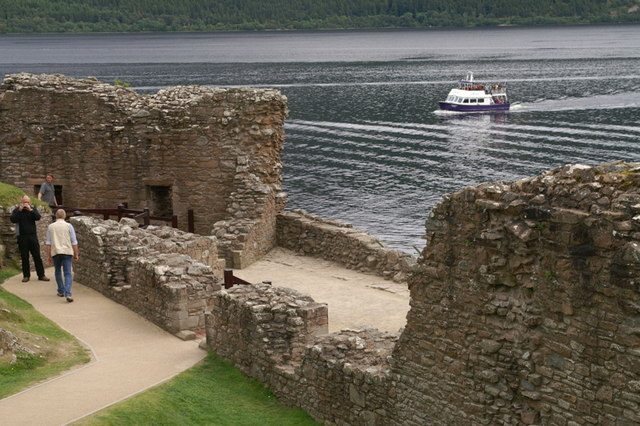
Loch Ness is a very long, very deep, very dark loch with wooded sides and, for most of its length, not much of a view. It is famous for a monster story, and the visitor infrastructure reflects that. The best of it — Urquhart Castle on its promontory — is genuinely good, and the rest is a long drive along the A82 looking at trees.
If you are passing, stop at Urquhart and move on. If you want a loch that will actually stop you in your tracks, go to Loch Maree, Loch Assynt or Loch Shiel instead. Our Loch Ness and Inverness guide is candid about how to spend the time well.
The tartan end of the Royal Mile
Edinburgh’s Royal Mile is a superb street with about fifteen shops on it selling the same mass-produced kilts, thistle keyrings and “Scottish” shortbread. Walk it early in the morning, take the closes and stairs off it, and do your souvenir shopping somewhere else entirely. The Royal Mile guide points out what is actually worth stopping for between the Castle and Holyrood.

Edinburgh Castle at midday in August
The castle is excellent. Arriving at noon on a Fringe Saturday without a booked slot is not. Timed entry sells out days in advance in summer, the esplanade is a crush, and you will spend more time queueing than looking at the Honours of Scotland. Book the first slot of the day online, go on a weekday, and be inside before the coach parties.
Skye in a day, and Skye in July
Skye is the single most oversubscribed place in Scotland. The Fairy Pools car park fills by nine, the Old Man of Storr path is a queue, and Portree’s restaurants are booked out. None of that means do not go — it means go in May or September, stay at least two nights, and walk in the early morning or the evening when the coaches have gone.

Frequently asked questions
How many days do you need in Scotland for a first visit?
Seven to ten days is the realistic minimum for seeing Edinburgh and a meaningful slice of the Highlands without rushing. Five days works if you accept one region only. Anything under four is a city break with a day trip attached, which is a perfectly good trip — just do not call it seeing Scotland.
Do I need to hire a car in Scotland?
Not for Edinburgh, Glasgow, or a trip built around trains and organised day tours. Yes, if you want the west coast, the smaller glens, or flexibility on Skye and the north. Public transport reaches the main towns well and the spaces between them poorly, and rural Sunday services are thin to non-existent.
What is the best month for a first trip to Scotland?
May and September are the sweet spots: long enough days, most attractions open, far fewer midges, and prices below the July and August peak. June is glorious and busy. August means the Fringe, peak crowds and peak insects simultaneously. Winter is beautiful, cheap and very dark.
Is Scotland expensive?
Moderately, and unevenly. Accommodation in the Highlands in summer is the big cost, with mid-range doubles commonly £110 to £160 a night. Food, drink and transport are comparable to the rest of the UK. Many of the best things — hills, beaches, glens, most museums in Edinburgh and Glasgow — cost nothing at all.
Can I wild camp anywhere in Scotland?
Mostly yes, under access rights, if you camp lightly, stay away from houses and roads, move on after two or three nights and leave no trace. The main exception is Loch Lomond & The Trossachs National Park, where designated camping management zones require a permit or a campsite booking between March and September.
Will I be able to understand Scottish accents?
Usually, and occasionally not. Accents vary sharply between Glasgow, Edinburgh, Aberdeen, the Highlands and the Northern Isles, and speed matters more than vocabulary. Nobody minds being asked to repeat themselves. Watching a couple of Scottish films or programmes before you travel genuinely helps tune your ear.
Do I need to book Highland accommodation in advance?
For June to August, absolutely, and months rather than weeks ahead for Skye, the North Coast 500 and the islands. Small communities have small bed stocks and they sell out. Outside the season you can be far more spontaneous, though you will find some places closed entirely between November and March.
Final thoughts
Scotland is a country that punishes hurry and rewards patience, which is an awkward thing to discover on a two-week holiday you saved a year for. The visitors who come away happiest are almost never the ones who saw the most. They are the ones who picked two or three places, gave them proper time, drove slowly, pulled into passing places without resentment, and went out again in the evening when the light did something extraordinary over the water.
Book the beds early, add a quarter to every drive time, take the head net, and leave a day with nothing in it. That last one is the trick. The best afternoon of your trip will almost certainly be one you did not plan, on a road you took because the sign looked interesting. Give yourself room for it. And for everything else, our wider collection of practical Scotland travel tips will fill in the gaps.
One expectation worth managing early: Loch Ness divides visitors sharply, and whether it earns your time depends almost entirely on whether you are travelling through the Great Glen anyway.
About the author: This guide was written and is maintained by the ScotlandTourism.org editorial team — travel writers who’ve spent years exploring Scotland’s cities, Highlands and islands, from bagging Munros to chasing the perfect dram. We update our guides regularly to keep prices, opening details and advice current.
Last updated: September 2026. Prices and opening times change — always check the official site before you travel.
Photo credits
All images are used under their respective Creative Commons or public-domain licenses:
- Glen Coe under snow, seen from the hills above the A82 — Alex Mcnaughton, CC BY-SA 2.0, via Wikimedia Commons
- Old Town tenements and chimney stacks just behind Edinburgh’s Royal Mile — Alan Murray-Rust, CC BY-SA 2.0, via Wikimedia Commons
- Eilean Donan Castle on Loch Duich, a standard stop on the long drive to Skye — W. Bulach, CC BY-SA 4.0, via Wikimedia Commons
- A Caledonian MacBrayne ferry berthed at Mallaig on Scotland’s west coast — calflier001, CC BY-SA 2.0, via Wikimedia Commons
- Walkers on the path below the Old Man of Storr on the Isle of Skye — Lauwz The Kiwistralian, CC0, via Wikimedia Commons
- A Highland cow standing on open moorland in the Scottish Highlands — Donald Bain, CC BY-SA 2.0, via Wikimedia Commons
- A steam train crossing the Glenfinnan Viaduct on the West Highland Line — de:Benutzer:Nicolas17, CC BY-SA 2.5, via Wikimedia Commons
- Edinburgh Castle on its crag above Princes Street Gardens — Matti Blume, CC BY-SA 4.0, via Wikimedia Commons
- Snow on the hills above Loch Lomond in Loch Lomond and The Trossachs National Park — James T M Towill, CC BY-SA 2.0, via Wikimedia Commons
- A weathered passing place sign on a single-track road in rural Scotland — Jim Bain, CC BY-SA 2.0, via Wikimedia Commons
- A wide empty sand beach on Scotland’s west coast — Jim Smillie, CC BY-SA 2.0, via Wikimedia Commons