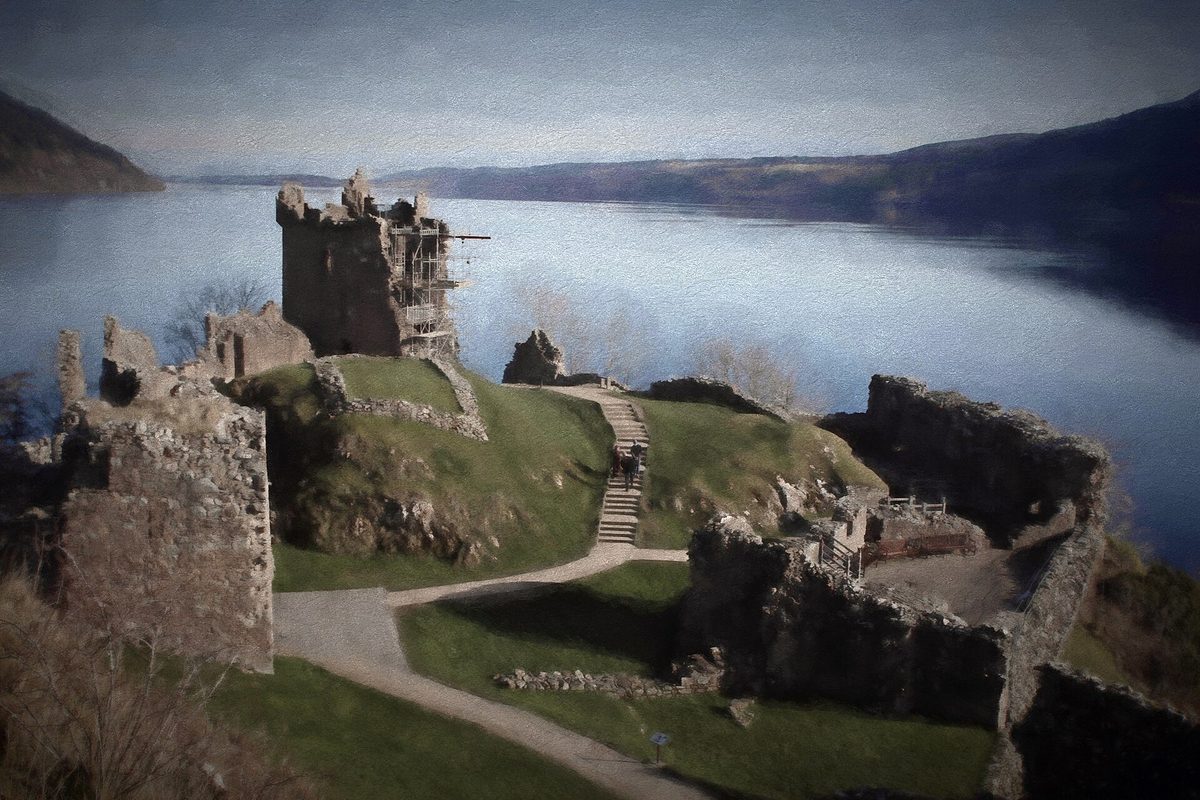
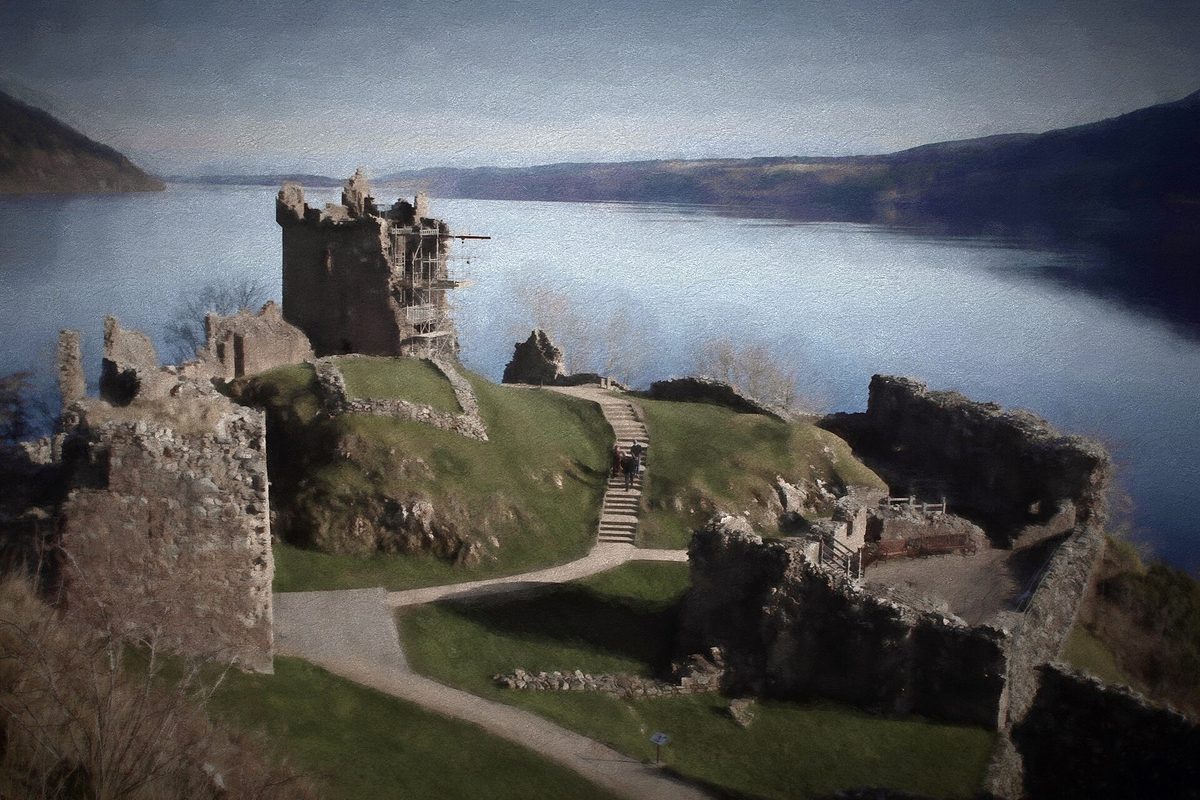
The classic Loch Ness booking mistake goes like this: you pick a hotel in Inverness because it is cheap and has a picture of a loch on the booking page, then spend your evenings walking Church Street wondering where the water is. Deciding where to stay in Inverness and where to stay on the loch itself are two different decisions, and the hotel lists that fill page one of Google will not help you tell them apart.
Here is the thing nobody puts in the ranked lists: Loch Ness is not in Inverness. The nearest shore, at Dores, is about fifteen minutes’ drive from the city, and the famous view from Urquhart Castle is further away, down the A82 on the other shore. That single fact should shape your booking more than any star rating. So this guide is organised the way you actually plan — by what you want to be doing at nine in the morning and at nine at night — rather than by which property pays the best commission.
Where to stay in Inverness and Loch Ness: the short answer
Stay in Inverness city centre if you want restaurants, the railway station, late pubs and car hire on your doorstep, and accept a drive to the loch: about fifteen minutes to the shore at Dores, around half an hour to Drumnadrochit. Stay at Drumnadrochit, Fort Augustus or on the south shore if waking up beside the water matters more than dinner choice. Most first trips work best with two nights in the city and one on the loch.
The eight bases, at a glance
| Base | Places to eat after 8pm | Typical July double | Best for |
|---|---|---|---|
| Inverness city centre and riverside | Dozens | £150–220 | First visits, no-car trips, rain days |
| Crown and Hilton (the B&B hill) | Walk 10 min down to town | £95–140 | Value, breakfast, quiet nights |
| Inverness eastern edge and the A9 | Two or three chains | £90–150 | Early NC500 starts, free parking |
| Drumnadrochit and Lewiston | Three or four | £140–200 | Cruises, Urquhart, Nessie-hunting |
| Invermoriston | One or two | £120–180 | Halfway bases, Skye onward legs |
| Fort Augustus | Five or six | £130–200 | Best loch-side evening, canal locks |
| Dores and the east shore | Very few; check before you go | £110–170 | Silence, sunsets, the long loch view |
| Foyers and the south side | One or two | £110–170 | Waterfalls, walkers, shoreline camping |
Prices are indicative bands for a double room in high summer at the time of writing, not quotes. Shoulder season — May, late September, October — and the winter months usually come in below those figures.
Start with tomorrow, not with the hotel
Pick your base by working backwards from your first activity of the following morning. It sounds obvious. Almost nobody does it, which is why so many people end up driving the A82 twice a day in both directions.
If tomorrow is a boat trip, a castle and a long lunch, you want to be on the loch. If tomorrow is Culloden, the Clava Cairns, a distillery run into Speyside and a proper dinner, you want the city. If tomorrow is the first leg of the North Coast 500, you want to be on the northern edge of Inverness, close to the Kessock Bridge.
The trade-off is blunt, and I will state it plainly because the affiliate lists never do. Inverness gives you choice: plenty of places to eat, a railway station with sleeper services to London, car hire desks, supermarkets, pharmacies, a cinema and pubs with live music. What it does not give you is the loch. You will not see a drop of it from your window, and every day starts with a drive: fifteen minutes or so to the shore at Dores, half an hour there and back, and longer to anywhere further down the water.
The loch-side villages give you the opposite deal. You wake up to water and hills, you can be at Urquhart Castle before the coaches arrive, and evening light on the loch in June is worth rearranging a trip for. But evenings are far quieter than in the city and the choice of places to eat is small, so check what is open and book dinner ahead in summer; the bigger shops are back in Inverness. Our full Loch Ness and Inverness guide covers the sights themselves; this piece is purely about where to put your head down.
Staying in Inverness itself
Inverness is small. From the castle you can walk to the railway station in six minutes, to the Victorian Market in three, and to the Ness Islands in about fifteen. That compactness is the city’s real selling point, and it means the “areas” you see listed are often only a few minutes’ walk apart. Where it genuinely matters is parking, noise and how steep the walk home is.
The city centre and the riverside
The core is a rough triangle: Academy Street and Falcon Square to the east, Bridge Street and Church Street in the middle, Ness Bank and Ardross Terrace along the river to the south. Almost everything you would want on a short trip sits inside it.
Church Street is the old town and the prettiest of the three, with the Old High Church at the top and a run of independent bars. Academy Street has had a serious upgrade in the last few years and is now where most of the better restaurants sit, though it is also the street with the taxi ranks and the Friday-night noise. If you are a light sleeper, ask for a room at the back.
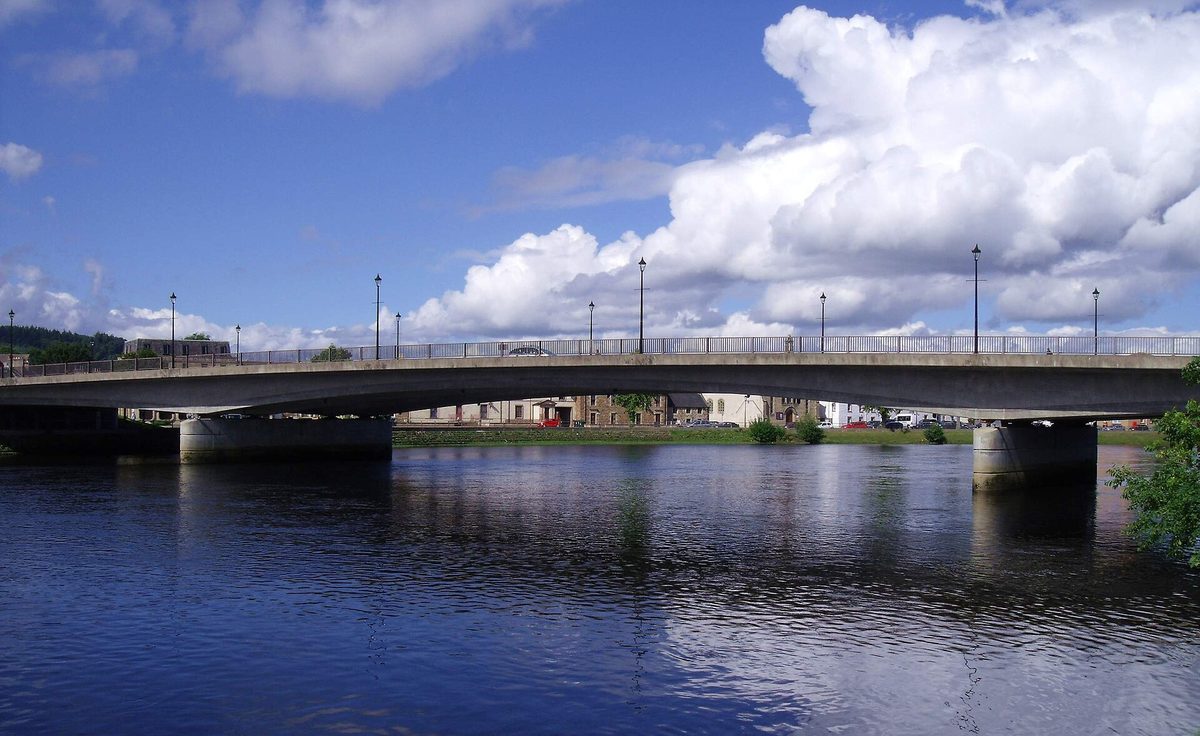
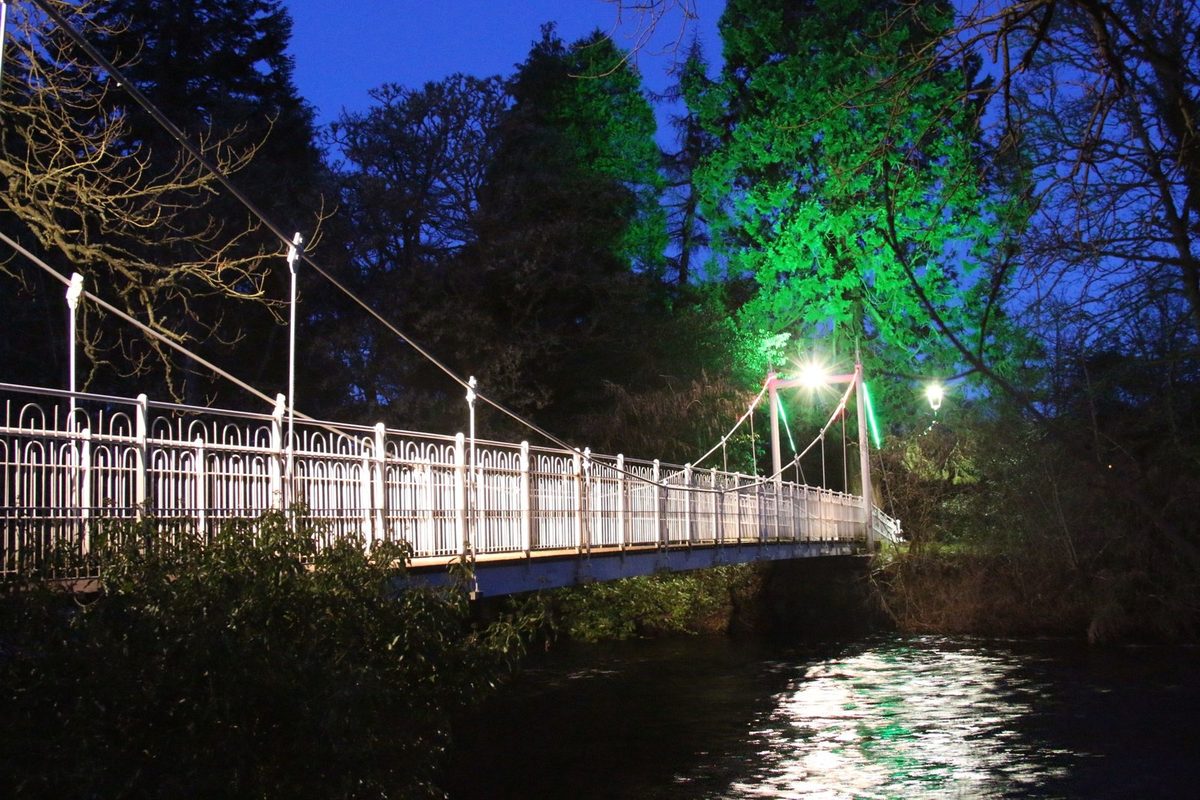
My honest preference is the riverside. Ness Bank and Ardross Street run along the south bank between the two footbridges, and the walk into town takes six or seven minutes along the water past the cathedral. It is quieter than Academy Street, the Victorian terraces have been converted into a good mix of guest houses and small hotels, and the Ness Islands walk starts at the end of the road. Glen Mhor sits on this stretch if you want a hotel rather than a guest house.
Expect roughly £150 to £220 for a mid-range double in July, dropping to £110–150 in May or late September and often under £90 between November and February. Inverness has more rooms than it used to, so mid-week in shoulder season is genuinely good value.
Crown and Hilton: the B&B belt up the hill
Walk east from the castle up Castle Street and the ground rises sharply into Crown. Ardconnel Street, Old Edinburgh Road, Midmills Road and Kingsmills Road are lined with big Victorian villas, and a large share of them are guest houses. Keep going south-east and you reach Hilton, which is more residential and further out.
This is where the value is. You will pay £95 to £140 for a double in high summer, breakfast almost always included and usually cooked to order, and most places have their own off-street parking — which, as I will come to, is worth more in Inverness than people realise.
The catch is the hill. It is ten minutes downhill into town and a genuinely sweaty fifteen back up, and after a couple of drams on Church Street you will want a taxi, which is around £7 to £9 for the short hop. Two or three nights of that adds up. If you have mobility issues, book on the riverside instead.
Near the railway and bus stations
If you are arriving by train, this matters more than any other consideration. Inverness railway station sits on Academy Street, the bus station is directly behind it off Margaret Street, and the Rose Street multi-storey car park is next door. That whole cluster is one block.
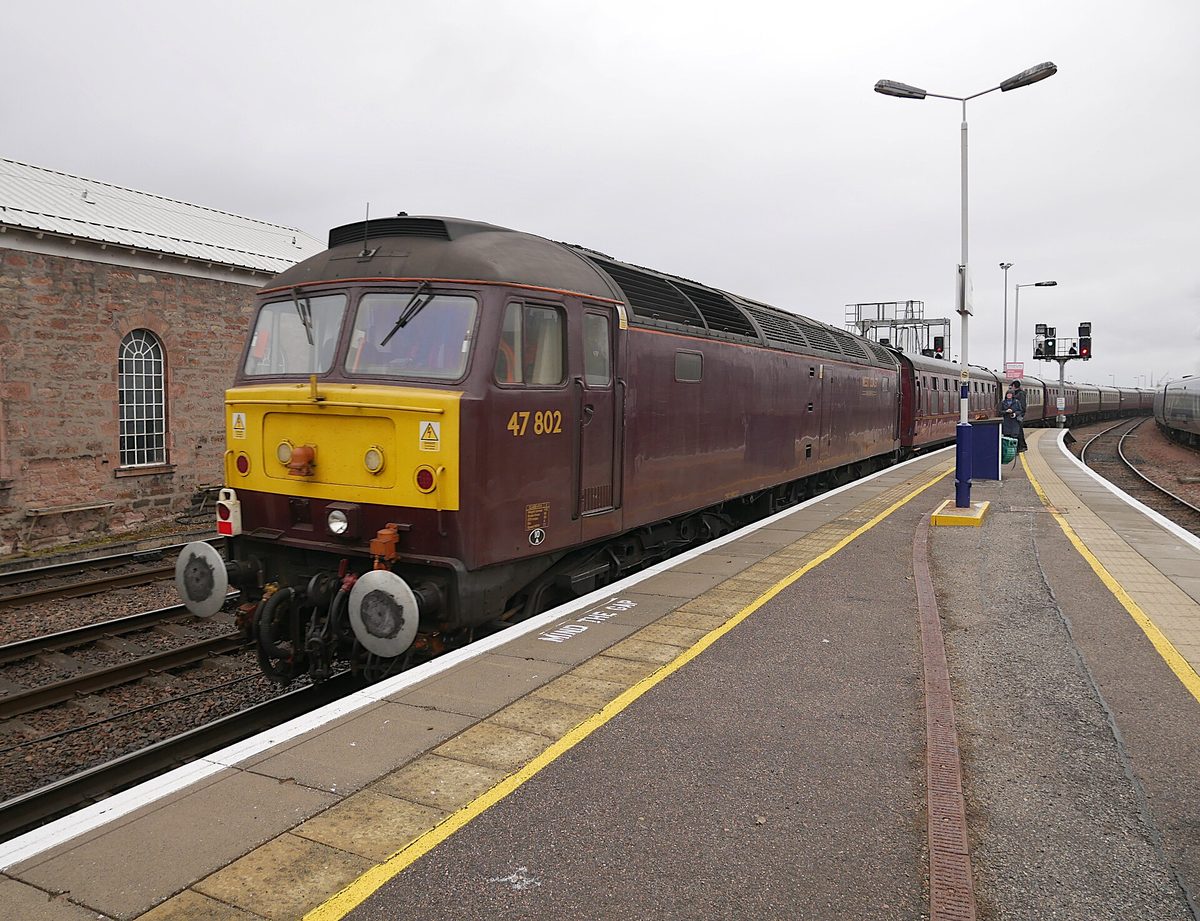
Book anywhere on Academy Street, Union Street or Falcon Square and you are wheeling a suitcase for three minutes rather than fifteen. That sounds trivial until you arrive off the four-hour service from Edinburgh in horizontal rain. The Citylink 919 coach from Inverness to Fort William leaves from the bus station too, which makes this cluster the obvious choice if you are doing Loch Ness without a car — something we cover more widely in our guide to seeing Scotland without driving.
One caution: rooms directly overlooking Academy Street near the station catch bus noise from about six in the morning. Ask for a courtyard-facing room.
The eastern edge and the A9: for early starts
Out past Inshes and Raigmore, near the Eastgate retail park and the Inshes roundabout, sits a cluster of chain hotels and budget places. Nobody will tell you this area is attractive, because it is not. It is a retail park with hotels attached.
It earns its place for two reasons. First, parking is free and plentiful, which saves you £10 to £15 a night against the city centre. Second, you are already on the ring road: from here you can be on the A9 north over the Kessock Bridge in five minutes and at the Tore roundabout in twelve, which is exactly what you want on the morning you start the NC500. If that is your plan, read our notes on which direction to drive the route before you book, because it changes which end of town you want.
The downside is that dinner means a chain restaurant in the retail park or a £10 taxi each way into town. For one night before a big drive, fine. For a three-night stay, you will regret it.
Areas I would not bother with
Merkinch and South Kessock, on the north side of the river by the harbour, get recommended in a few guides for the dolphins. The dolphins are real and the Moray Firth is one of the best places in Britain to see them, but Chanonry Point is an easy drive from any part of the city, and the walk back into town from Merkinch at night is not one I would choose. Dalneigh and Ballifeary are perfectly pleasant residential streets between the river and the Caledonian Canal, but you are paying city prices for a longer walk into the centre. If you want quiet and value, the Crown hill does it better.
Staying on Loch Ness itself
Loch Ness is 23 miles long, and the two shores are completely different propositions. The north-west side carries the A82, the coaches, the castle and much of the accommodation. The south-east side carries the single-track B862 and B852, very little traffic, and a handful of places to stay that people drive past without noticing.
Drumnadrochit and Lewiston
Drumnadrochit is the default. It sits on the A82 about half an hour’s drive from Inverness, in the mouth of Glen Urquhart just back from the water. Lewiston is its immediate neighbour, a quieter run of houses along the River Coiltie a few hundred metres south, and for practical purposes the two are one village.
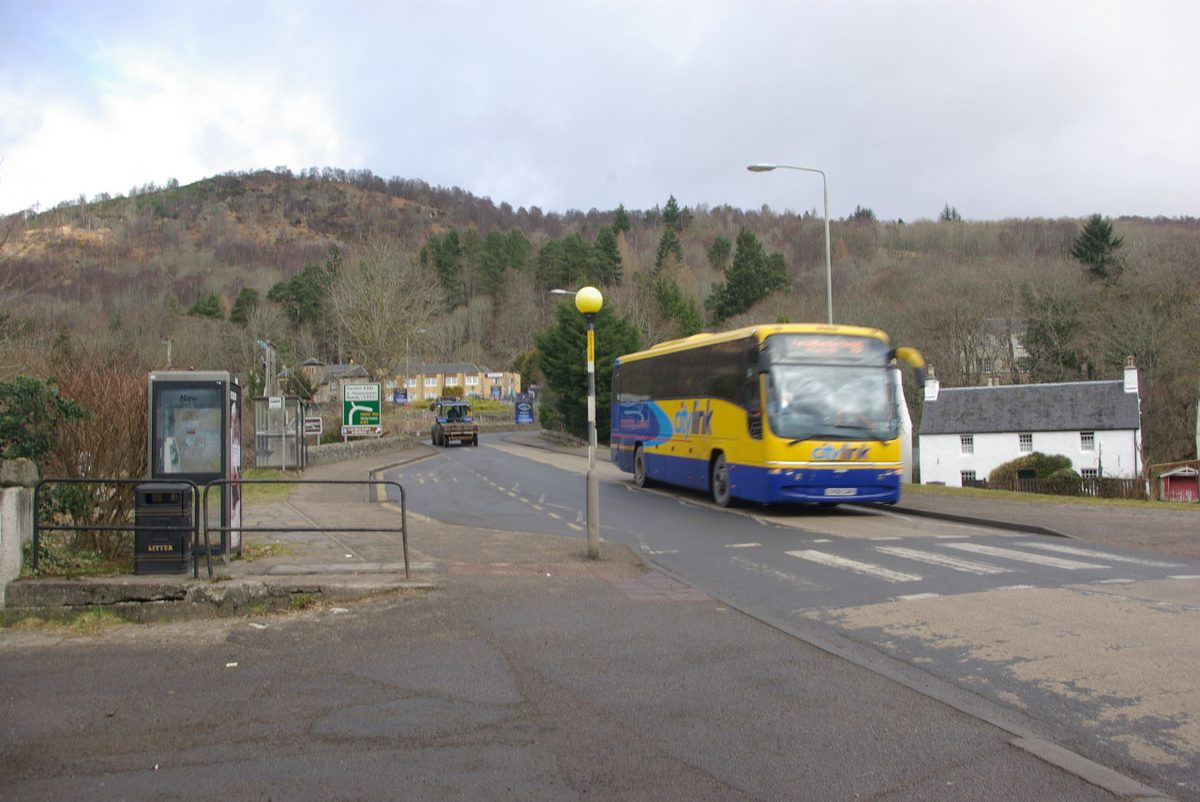
What you get: Urquhart Castle two miles down the road, the cruise jetties at Temple Pier five minutes away, two Nessie exhibitions, a village shop, a couple of pubs and the Loch Ness Inn at Lewiston. The Great Glen Way passes through, so there is a steady flow of walkers and the food is better than a village this size would normally sustain.
What you should know: Drumnadrochit is set back in the glen, so despite the name on the booking site most rooms here have no loch view at all. If a view matters, read the listing carefully and look at the map rather than the photographs. Properties on the Bunloit road or up towards Balbeg genuinely do look out over the water; village-centre rooms mostly look at the village.
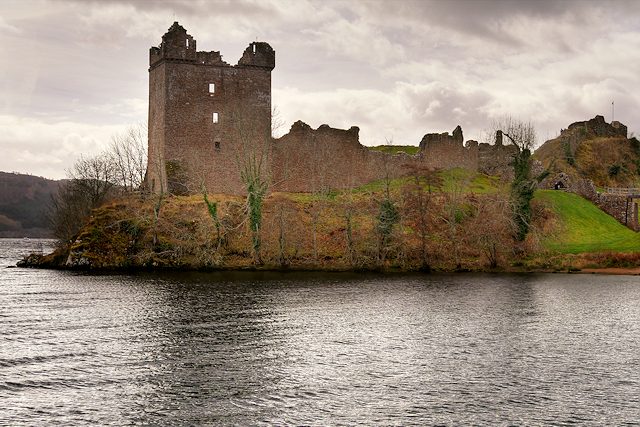
It is also the heart of Nessie-hunting on the loch, and that brings the day-trippers. Coaches stop here. If you are staying overnight you get the good half of the deal — the castle at opening time is a different place entirely, and our guide to the best Loch Ness cruises explains which departures avoid the crush. Reckon on £140 to £200 for a double in July, £100–140 in shoulder season.
Invermoriston
Eight miles further down the A82, Invermoriston is where the road to Skye branches off west on the A887. It is a small place: a hotel, a shop, some self-catering, Telford’s old bridge over the River Moriston and a short waterfall walk that takes twenty minutes and is worth doing at dusk.
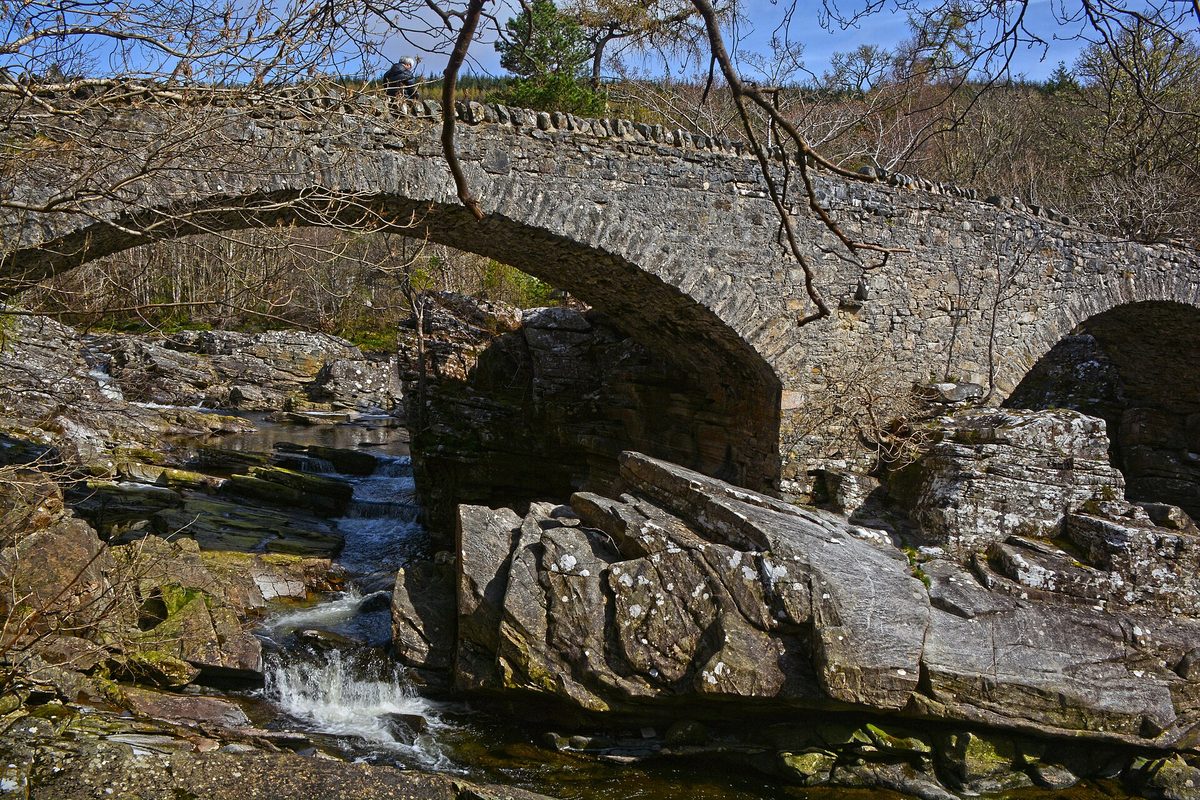
I rate it as a halfway base. You are close to both Urquhart Castle and Fort Augustus, so you can do both from here without the Drumnadrochit prices or the coach traffic. It is also the obvious overnight stop if you are heading for Skye the next morning, since you are already on the junction — see our notes on getting to Skye for the onward drive times.
The trade-off is stark: there is essentially one place to eat. Book it, or bring food.
Fort Augustus
Fort Augustus sits at the southern tip of the loch, around an hour’s drive from Inverness. Of all the loch-side villages, this is the one with an actual evening.
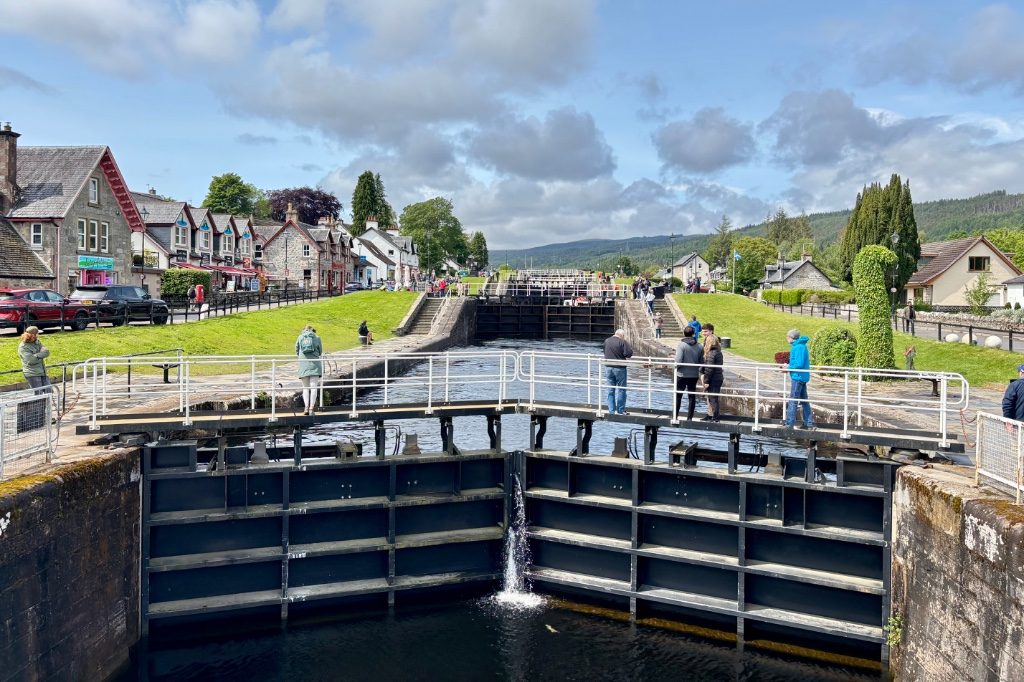
The Caledonian Canal climbs through the middle of the village in a flight of five locks, and watching boats work their way up while you sit outside a pub is one of the more pleasant hours you can spend in the Highlands. There are five or six places to eat, two of them decent, plus a Co-op, a couple of cafes and the loch pier where the cruise boats dock. The Lovat and the Inch Hotel are among the established hotels; Morag’s Lodge is a hostel, and a good one.
Fort William is around an hour’s drive away, close enough for the village to work as a staging post if you are heading down the Great Glen.
The honest downside: Fort Augustus is a long way from Culloden, Cawdor, the Black Isle and the whole eastern side of the Inverness area. If your list is weighted that way, this is the wrong end of the loch. Doubles run roughly £130 to £200 in July.
Dores and the quiet east shore
Turn off the A82 in Inverness onto the B862 and you are on the old military road down the east side. Dores is eight miles out, about fifteen minutes, and it delivers the view that most people picture when they think of Loch Ness: a shingle beach, the water running dead straight into the haze, hills on both sides.
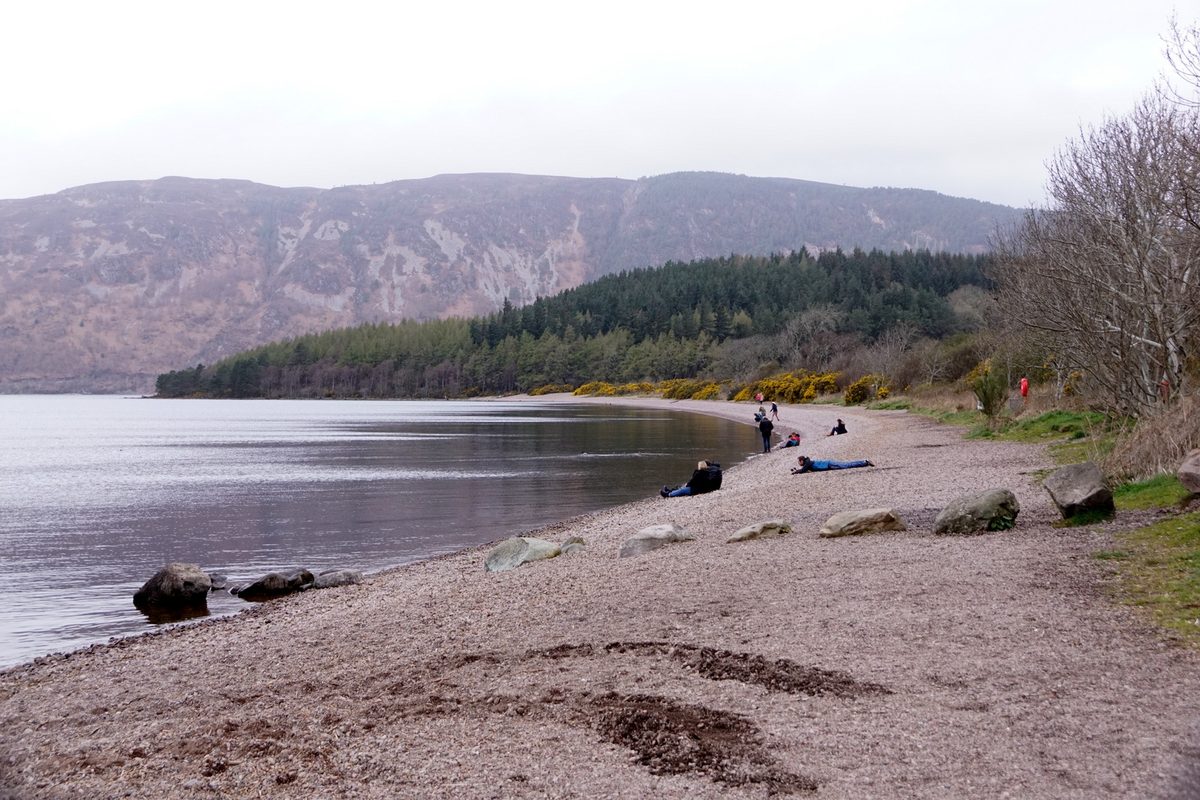
It is a proper loch-side base within easy reach of Inverness, and I do not think enough people realise that. Fifteen minutes to the city for dinner or car hire, and yet you are on the water. The Dores Inn by the beach is currently closed, with only pop-up food and drink in its gardens. Accommodation is thin — a handful of B&Bs and self-catering cottages — so this one needs booking early.
Be warned that the B862 south of Dores climbs away from the loch and becomes single-track with passing places for long stretches. It is a lovely drive in daylight and a slow, tiring one in the dark or in rain. Do not assume you can nip round to Drumnadrochit; the loch has no crossing, so the round trip is the full circuit.
Foyers and the south side
Foyers is 19 miles from Inverness on the B852, roughly 30 minutes by car. It is split into Upper and Lower Foyers, and the Falls of Foyers drop through a wooded gorge between them; a path runs round the gorge through the trees, then a track leads downhill towards Lower Foyers. The falls are on the quiet side of the loch, away from the A82, which makes them easy to miss.
This is the base for walkers and for anyone who wants shoreline rather than a village. Foyers Bay Country House looks out over the loch, and the Camping and Caravanning Club’s Loch Ness Shores site nearby is one of the very few places on the whole loch with direct access to the shingle.
What you give up is convenience, comprehensively. There is a village shop and a couple of places to eat, and that is it. Petrol is back in Inverness or at Fort Augustus. Mobile signal is patchy along the whole south shore. If that reads as a warning to you, stay north; if it reads as the point, this is your spot.
What the loch-side price picture actually looks like
Loch-side accommodation does not behave like city accommodation. Beds along the loch are limited, and demand is concentrated into the summer. That produces a market with very sharp edges.
In July and August, a double at a village inn runs £140–200 and the good rooms with a view sit at the top of that. Self-catering cottages sleeping four are commonly £900 to £1,400 for a week. In May, June and September the same rooms drop to £100–150, and cottage weeks fall to £600–900. Between November and March a fair proportion of loch-side places simply close, and the ones that stay open can be under £90 — the cheapest genuine loch view you will ever get, at the cost of six hours of daylight. Late October is the sweet spot if you want a view and a discount in the same booking.
One quirk worth planning around: because supply is so tight, loch-side prices do not fall as your dates approach. They rise. Late availability in August is a seller’s market, not a bargain hunt.
Campervans, hostels and cheaper beds
Campsites and motorhome pitches
The Great Glen is well served, which is fortunate because the roadside laybys are not a legitimate substitute.
On the north side, Loch Ness Bay Camping at Borlum Farm sits above Drumnadrochit with hardstanding pitches and electric hook-ups, about fifteen minutes’ walk from the water. Fort Augustus has a caravan park within walking distance of the village and the locks. On the south side, Loch Ness Shores near Foyers is the standout: grass and hardstanding pitches, direct access to the shore, and you can launch your own canoe or kayak. Inverness itself has a caravan park at Bught, ten minutes’ walk from the Ness Islands.
Expect roughly £25 to £38 a night for a motorhome pitch with hook-up in summer. Book the loch-side sites — they fill from May, and Loch Ness Shores in particular is often full weeks ahead in July. If Loch Ness is the warm-up for a bigger trip north, our rundown of NC500 campsites and wild camping covers what comes next, and the campervan versus car comparison is worth reading before you commit to a van at all.
Hostels and bunkhouses
There is a decent spread. In Inverness, Bazpackers sits close to the castle; the SYHA hostel is on Victoria Drive, within walking distance of the station, with private ensuite rooms as well as dorms.
On the loch, Loch Ness Backpackers occupies a converted eighteenth-century farm cottage at Lewiston, minutes from the water and Urquhart Castle. Morag’s Lodge at Fort Augustus is the best of the lot for a stay rather than a stopover: private rooms as well as dorms, all ensuite, and a bothy-style bar with a log fire that saves you the walk into the village on a wet night.
Dorm beds run roughly £28 to £40 in summer, private twins £70–100. Hostels here are not just for backpackers — the private rooms at Morag’s Lodge undercut village hotel prices by a wide margin.
Wild camping and overnight parking
Scotland’s access rights allow wild camping in most unenclosed land, and Loch Ness has no by-law restrictions of the kind Loch Lomond introduced. But the rights cover lightweight tents, not vehicles. Sleeping in a campervan in a layby is not wild camping and is not covered by the access code, and the laybys along the A82 are increasingly signed against overnight parking.
If you are camping, walk in away from the road, keep groups small, take everything out and do not light fires on peat. Check the Scottish Outdoor Access Code before you go. And bring repellent between late May and early September — the loch shore, still and wooded, is prime midge ground, as our guide to midge season explains in more detail than you probably want.
Choosing a base for your specific trip
Two nights, no car
Stay in Inverness, within five minutes of the bus station. You can reach the loch on the Citylink 919, which runs all year from Inverness bus station to Fort William, on a reduced timetable in winter. Book seats in advance in July and August; they do sell out. Combine it with a cruise from Temple Pier and you have a full day without a hire car. The airport bus also stops on Academy Street, by the Eastgate Centre.
One night on the loch between Skye and the NC500
This is a common shape of trip and it has a clear answer: Invermoriston or Drumnadrochit, not Fort Augustus. Coming off Skye you arrive on the A887 at Invermoriston, so an overnight there costs you nothing in mileage. Next morning you head north into Inverness and pick up the A9 for the start of the NC500. Fort Augustus sends you the wrong way down the loch for no gain. If Skye is the other bookend of your trip, our Skye accommodation guide handles that half.
A week with children
Split it. Three or four nights in Inverness gives you rainy-day options — the pool, the cinema, the museum, the Ness Islands, Culloden and the Highland Wildlife Park within reach — and then two or three nights in a self-catering cottage near the loch so they get the water and the space. Trying to do both from one base means everyone spends the week in the car. Our list of day trips from Inverness is the easiest way to see what falls inside a comfortable radius.
Walking the Great Glen Way
The route runs Fort William to Inverness through Invermoriston, Drumnadrochit and along the north side. Beds along it are limited and walkers book them out early; the stretch between Fort Augustus and Invermoriston is the tightest. Reserve by February for a July or August walk. The Fort Augustus to Invermoriston section has the fewest beds of any stage, so start there when you plan.
Booking: what to reserve, and how far ahead
Lead times here are longer than the size of the place suggests, because summer demand collides with a very small bed stock.
For July and August: book loch-side accommodation four to six months ahead. By March, the good rooms at Drumnadrochit and Fort Augustus with a view are largely gone. Inverness is more forgiving, simply because it has far more beds, but leave it to the last fortnight and you will pay more for whatever is left.
For festival weekends: two dates gut the availability across the whole area. Belladrum Tartan Heart Festival takes place on the Belladrum Estate about 20 minutes west of Inverness and runs Thursday 29 to Saturday 31 July in 2027; if you need a room that weekend, book it early. The Inverness Highland Games at Bught Park is scheduled for 10 July 2027 and has a similar if smaller effect on that weekend. Check current dates on the organisers’ sites, and see our roundup of Scottish festivals and events for the rest of the calendar. If you are not going to either event, avoid those weekends entirely.
For restaurants: in the villages, book. Between June and September, the two or three places in Drumnadrochit or Invermoriston that serve food in the evening will turn people away by seven. A phone call that morning is usually enough; on a Friday or Saturday, do it the day before. In Inverness you can walk in most nights, though the better Academy Street restaurants want a booking at weekends.
For cars: hire desks are at the airport and around Inverness, and August availability genuinely runs out. Book at the same time as your first night’s accommodation, not afterwards.
The two things nobody warns you about
Inverness hotel parking is rarely free, and often not on site
This is the single most common unpleasant surprise, and almost no guide mentions it. Many city-centre Inverness hotels have no car park at all. Some have a small yard that fills by four in the afternoon. Others offer “parking nearby”, which means a permit for a public car park several streets away.
The Rose Street multi-storey behind the station is the main city-centre option and charges by the hour; overnight rates through a hotel arrangement are typically £8 to £15 a night. On-street parking in the centre is metered during the day and the Highland Council has been revising charges, so check the council’s parking pages for the current position rather than trusting a hotel listing written two years ago.
Two practical fixes. Book a Crown or Hilton guest house, where private off-street parking is normal and included. Or, if you are staying centrally, factor £10 to £15 a night into your comparison — a £130 riverside room with paid parking is not cheaper than a £125 room on the hill with a driveway.
Loch-side self-catering usually means Saturday to Saturday
From roughly late June to the end of August, most cottages and lodges around Loch Ness go to a fixed changeover day and a seven-night minimum. Saturday is the standard, though some run Friday or Monday. Outside that window they will often take three or four nights, and in winter two.
The practical effect is that you cannot slot a Tuesday-to-Thursday cottage stay into a summer touring itinerary, no matter how much you are prepared to pay. Either shape your whole trip around a Saturday arrival, or book hotels and inns for the loch section and save self-catering for a week-long base. Owners occasionally release short breaks a fortnight out if a week has not sold, so it is worth an email — but do not plan on it.
What underwhelms, and what I would skip
Rooms sold as “Loch Ness” that are nowhere near it. Booking sites treat “Loch Ness” as a region stretching well past Beauly and up Glen Urquhart. Before you book anything with the loch in its name, put the postcode into a map. If it is more than a mile from the shore, you are paying a premium for a word.
The airport hotels. Inverness Airport is nine miles east of the city at Dalcross. Unless you have a dawn flight, staying out there means a drive for everything: into the city for dinner, and further still to the loch.
Assuming you can hop between shores. There is no bridge or ferry across Loch Ness. Drumnadrochit and Foyers look close on the map, but by road it is a long drive round either end of the loch. Pick a side and stay on it for the day.
Booking the loch for a rainy forecast. On a genuinely wet day, a loch-side village gives you almost nothing to do indoors, while Inverness gives you a museum, a leisure centre, a cinema, shops and a whole street of pubs. If the forecast is grim and you have flexibility, weight your nights towards the city. Our piece on whether Loch Ness is worth visiting is honest about how much of its appeal depends on the weather.
Paying extra for a “Nessie view”. The exhibitions in Drumnadrochit are fine for an hour with children in the rain, but no room rate is worth a monster-themed upgrade. If the legend is what brings you, read the actual story behind the sightings instead and spend the money on a boat trip.
Frequently asked questions
Is it better to stay in Inverness or at Loch Ness?
Inverness if you want restaurants, transport links and rainy-day options; Loch Ness if the water and early-morning quiet matter more. On a first trip of three nights or more, do both: two nights in the city and one on the loch gives you the variety without a second long drive.
Can you see Loch Ness from Inverness?
No. The loch begins about six miles south-west of the city and is hidden behind rising ground the whole way. No hotel room in Inverness has a Loch Ness view, whatever the listing photograph implies. The nearest place you can see the loch from your window is Dores, fifteen minutes’ drive out on the B862.
How far is Inverness from Loch Ness?
Around eight miles to the nearest shoreline at Dores, roughly fifteen minutes. Allow about half an hour to Drumnadrochit on the A82, with Urquhart Castle a couple of miles beyond it, and around an hour to Fort Augustus at the far end.
Where to stay in Inverness if you do not have a car?
Within a few minutes of the railway and bus stations — Academy Street, Union Street or Falcon Square. Everything in the centre is walkable from there, the Citylink 919 to Loch Ness leaves from the bus station behind, and the airport bus stops outside. Avoid the Crown hill and the eastern retail-park hotels if you are not driving.
Do I need to book Loch Ness accommodation in advance?
Yes, and earlier than you think. Beds on the loch itself are limited. For July and August, book four to six months ahead; for the Belladrum weekend at the end of July, earlier still. Inverness is more flexible, though a summer room booked at the last minute costs more than one booked well ahead.
Which is better, Drumnadrochit or Fort Augustus?
Drumnadrochit if you want the castle, the cruises and quick access back to Inverness. Fort Augustus if you want a village with an actual evening — canal locks, five or six places to eat, and day-trippers gone by six. Fort Augustus is also the better choice if you are continuing to Fort William or Glencoe.
Is Inverness a good base for the North Coast 500?
It is the standard start and finish, and it works. Stay on the eastern or northern edge of the city the night before you leave so you are across the Kessock Bridge quickly, and keep your last night central so you can eat properly. Our guide to where to stay on the NC500 covers the rest of the loop.
Are there hotels actually on the shore of Loch Ness?
Some, and if waking up to the water matters to you, book those rooms early. Most are on the south side around Foyers or on the stretch of the A82 between Drumnadrochit and Invermoriston. Village-centre rooms in Drumnadrochit are set back in Glen Urquhart with no water in sight, so check a map before you assume the name means the view.
Final thoughts
If you take one thing from this, take the map check. Open the postcode, look at where the building actually sits, and work out how long tomorrow morning’s drive will be. That five-minute habit will do more for your trip than any star rating.
For most people, the honest answer is a split: use Inverness for the practical nights and one loch-side night for the morning you want to remember. I would put that night at Fort Augustus if you want an evening, or Dores if you want silence and the long view down the water. Either way, book it earlier than feels reasonable.
When you have the beds sorted, our Loch Ness and Inverness planning guide covers what to actually do with the days, and the things to do in Inverness list will fill any gaps left by the weather. If you are still deciding how the whole trip fits together, choosing your Highland base towns is the right place to start.
About the author: This guide was written and is maintained by the ScotlandTourism.org editorial team — travel writers who’ve spent years exploring Scotland’s cities, Highlands and islands, from bagging Munros to chasing the perfect dram. We update our guides regularly to keep prices, opening details and advice current.
Last updated: November 2026. Prices and opening times change — always check the official site before you travel.
Photo credits
All images are used under their respective Creative Commons or public-domain licenses:
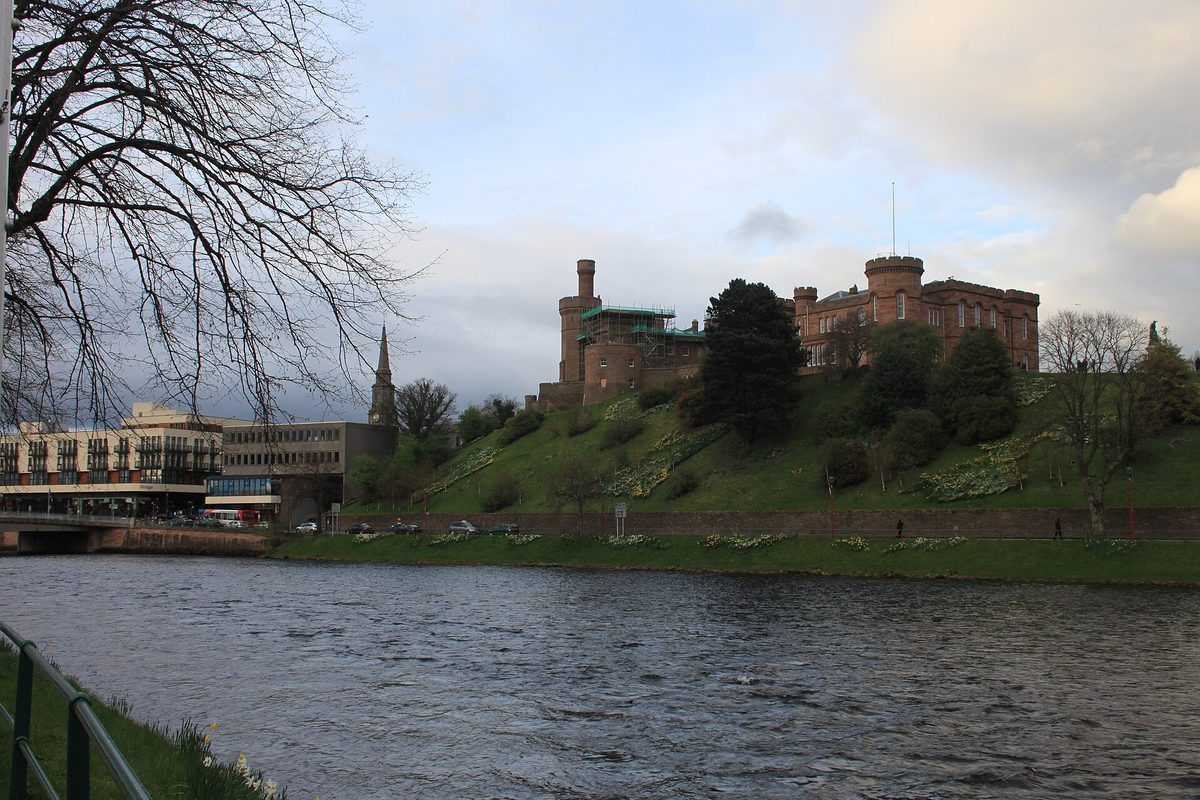
- Inverness Castle above the River Ness — Roger Davies, CC BY-SA 2.0, via Wikimedia Commons
- The River Ness running through Inverness — Dave Conner from Inverness, Scotland, CC BY 2.0, via Wikimedia Commons
- The Caledonian Canal lock flight climbing through the middle of Fort A — David Dixon, CC BY-SA 2.0, via Wikimedia Commons
- The shingle beach at Dores — Mike Pennington, CC BY-SA 2.0, via Wikimedia Commons
- Telford’s old bridge over the River Moriston at Invermoriston — Lewis Clarke, CC BY-SA 2.0, via Wikimedia Commons
- Inverness railway station — Craig Wallace, CC BY-SA 2.0, via Wikimedia Commons
- Urquhart Castle on Loch Ness — David Dixon, CC BY-SA 2.0, via Wikimedia Commons
- The footbridge to the Ness Islands — Alan Reid, CC BY-SA 2.0, via Wikimedia Commons
- The A82 running through Drumnadrochit — Stephen McKay, CC BY-SA 2.0, via Wikimedia Commons