
I have driven the same stretch of the A82 through Glen Coe in February, in July and in the third week of May, and only one of those trips ended with me sitting outside a pub in Ballachulish at half nine at night, still in daylight, without a single midge for company. Scotland in May is not simply “nice weather and fewer people” — it is, on the actual numbers, the best month the country has to offer, and most guides never bother to show you the figures that prove it.
So here they are. Met Office climate averages, station by station, alongside daylight times, midge timing and the two bank holidays that quietly wreck the whole argument for about eight days. I have also been honest about the catches, because there are real ones and nobody seems willing to name them.

Is May a good time to visit Scotland?
Yes — statistically the best. Across Scotland, May averages more sunshine than any other month, the lowest rainfall of the year and the fewest wet days. Daylight reaches 17 hours by month end, matching mid-July. Midges have barely hatched. The trade-offs are cold water, some attractions not yet at full timetable, and two bank holidays that spike prices.
The numbers behind Scotland’s sunniest month
The Met Office publishes long-run monthly averages for every one of its climate stations, and the 1991–2020 series tells a consistent story. Nationally, Scotland averages 182 hours of bright sunshine in May. June manages 146. July manages 141. That is not a rounding error — May outshines high summer by around a quarter, and it does so everywhere from Lewis to the Borders.
Rainfall runs the same way. Scotland’s May average is 89mm, the lowest of any month, with roughly 13 wet days. August averages 120mm. If you have been putting off a trip because you assume Scotland is one long drizzle, the month you want is the one nobody books.
| Met Office station (area) | Avg daily high, May | May rainfall | May sunshine | Rain vs August |
|---|---|---|---|---|
| Leuchars, Fife (east coast) | 14.5°C | 50mm | 198 hrs | 27% less |
| Paisley (Glasgow area) | 16.1°C | 63mm | 184 hrs | 30% less |
| Nairn (Moray Firth) | 14.3°C | 51mm | 186 hrs | 22% less |
| Braemar (Cairngorms) | 13.7°C | 59mm | 183 hrs | 17% less |
| Dunstaffnage, Oban (west) | 14.9°C | 97mm | 196 hrs | 24% less |
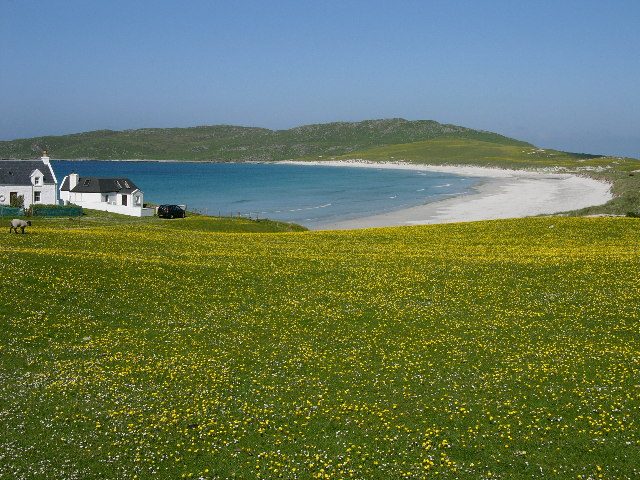
| Tiree (Inner Hebrides) | 13.1°C | 67mm | 224 hrs | 35% less |
| Stornoway (Lewis) | 12.6°C | 69mm | 193 hrs | 22% less |
| Wick (Caithness) | 12.0°C | 50mm | 167 hrs | 29% less |
Figures are Met Office 1991–2020 monthly averages, rounded. Two things jump out. Tiree records 224 hours of sunshine in May — over seven hours a day, the highest monthly figure at any Scottish station, and higher than most of southern England manages in July. And the east coast is dry in a way visitors never expect: Leuchars and Wick both average 50mm across the whole month, which is less than a typical week of Highland weather in October.
If you want to see how the rest of the year compares before committing, our guide to the best time to visit Scotland lays the whole calendar out side by side. May keeps winning, but September comes closer than most people think.
What May gives you that no other month does
Plenty of months in Scotland are pleasant. May is the only one that stacks half a dozen separate advantages on top of each other at once, and they are worth taking one at a time.
Long evenings, without the insect that ruins them
On 31 May, Inverness gets 17 hours 29 minutes between sunrise and sunset, with civil twilight lingering past eleven at night. Mid-July gives you 17 hours 21 minutes. In other words, the last week of May hands you July daylight exactly.
What it does not hand you is midges. The Highland midge normally produces its first hatch in the last week or two of May, and the first generation does not reach nuisance levels until June. Peak misery is July and August. So the end of May is the narrow window where you can eat outside at a bothy at 10pm on the west coast and not be driven indoors. I have had exactly that evening at Arisaig; I have also had the June version, and it lasted four minutes.
That extra light changes what a day can hold. You can walk a Munro after lunch and still be down for dinner. Our overview of walking and hill routes across the country is worth a read if you plan to use those evenings properly.
Bluebells, and the fortnight they last
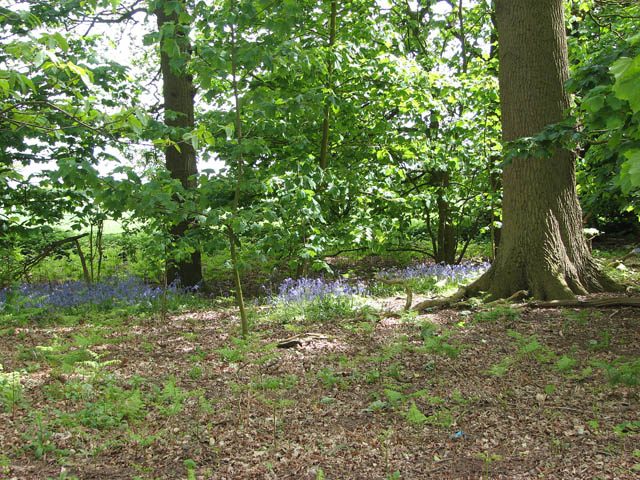
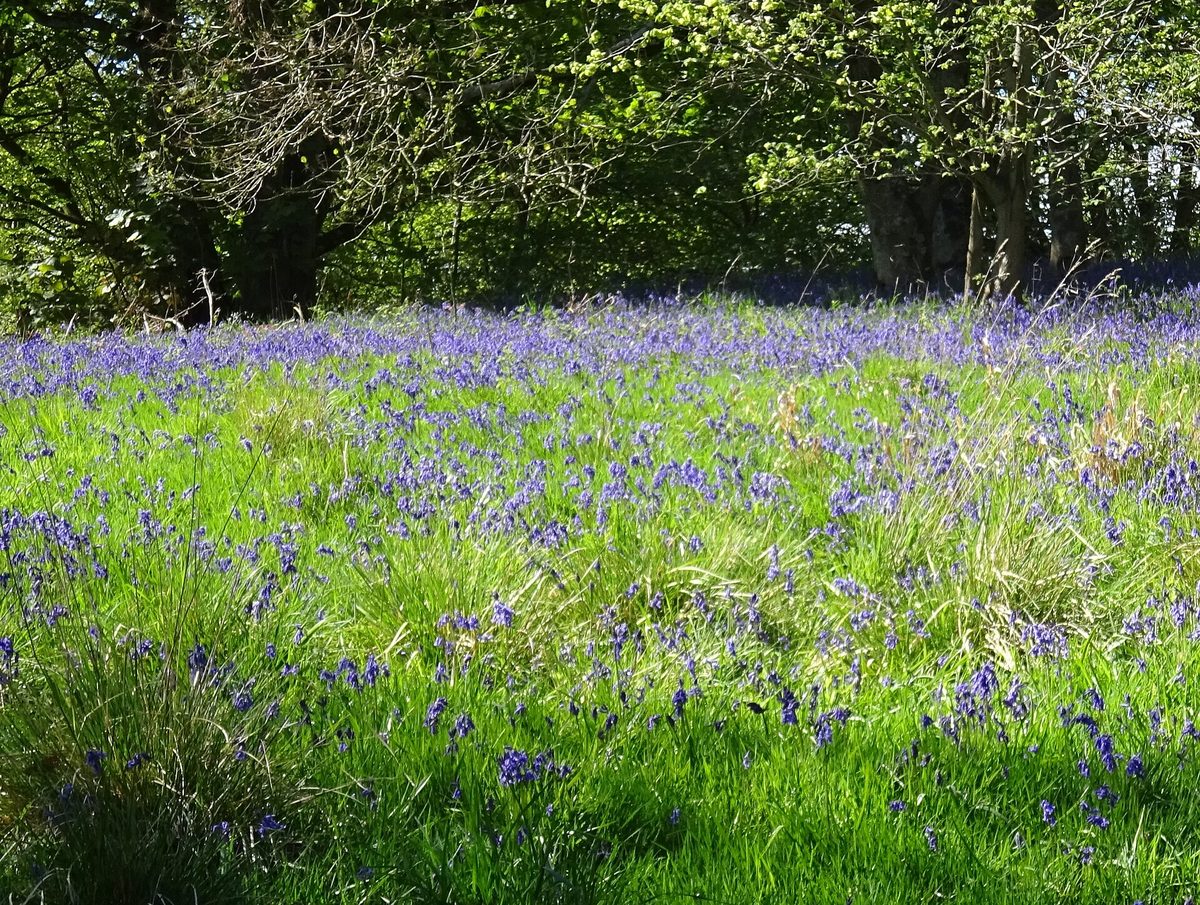
Scottish bluebells run two to three weeks behind England’s. The Argyll oak woods and the Perthshire glens tend to peak somewhere between the very end of April and the third week of May, depending on how the spring has gone. It is a genuinely short window and it is not on the summer visitor’s calendar at all.
The Woodland Trust’s Kinclaven Bluebell Wood, near Murthly in Perthshire, is the best known and it earns the reputation. Free to visit, small car park, and worth arriving early on a weekend. On the west, the Atlantic oakwoods around Loch Sunart and Taynish carry bluebells alongside moss and lichen you will not see anywhere else in Britain.
Seabird colonies at full volume
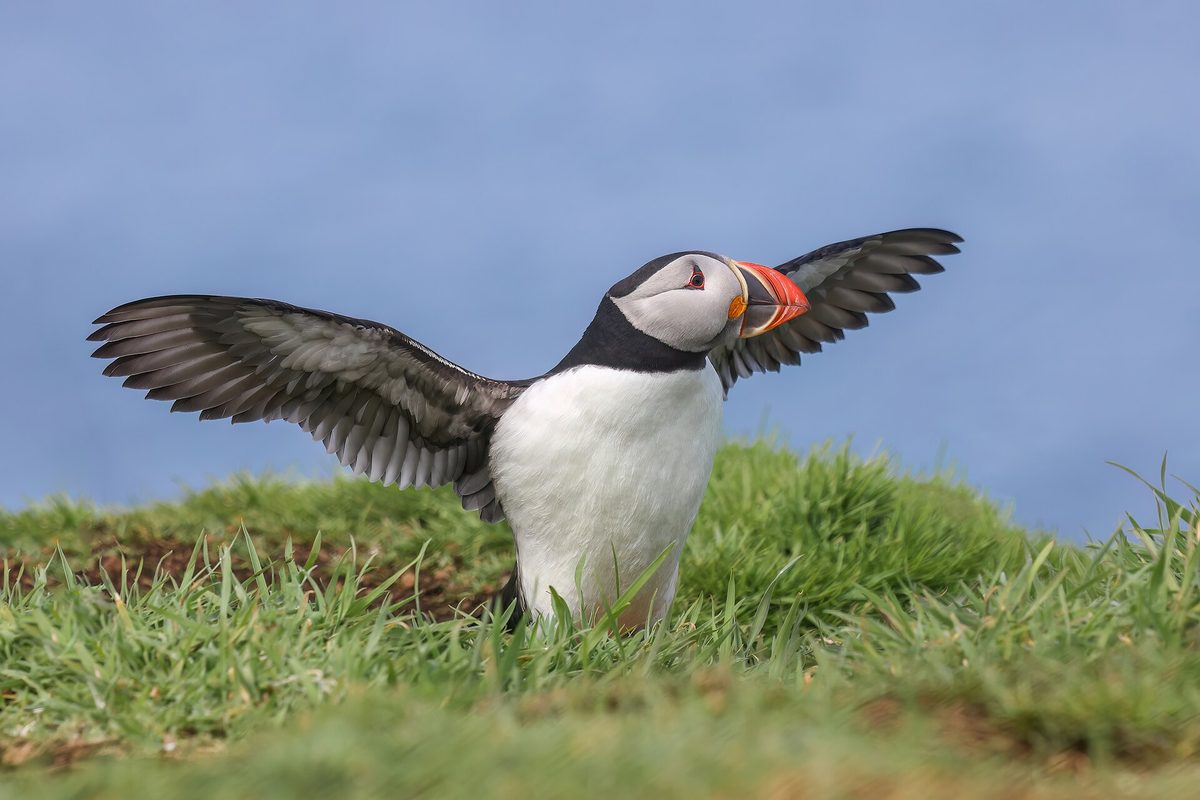
May is the month Scotland’s cliffs are loudest. Puffins are ashore and visible from roughly late April through to early August, and May sits comfortably inside that.
The Isle of May, off Anstruther in Fife, is the easy one — boats run from Anstruther harbour roughly April to September, the crossing takes about 45 minutes and you get a couple of hours ashore. Expect somewhere around £40 per adult at the time of writing; check current fares with the operator, and book well ahead because puffin-season sailings sell out.
Further west, Lunga in the Treshnish Isles is the one where puffins land a metre from your boots, usually combined with Staffa on a day trip from Mull or Iona. And in the far north-west, Handa Island is reached by a small ferry from Tarbet, three miles north of Scourie, running April to early September with no booking — the boat leaves when it fills. Handa holds great skuas, guillemots and razorbills in serious numbers.
All of these need calm-ish weather, which is another quiet argument for May. Several of these islands appear in our roundup of Scotland’s islands and how to reach them.
Gardens having their one loud moment
Scotland’s west-coast gardens are rhododendron gardens, and rhododendrons flower now. Inverewe, on Loch Ewe in Wester Ross, holds a national collection of over 400 varieties and is at its best in April and May. Crarae, on Loch Fyne in Argyll, is a steep wooded gorge planted like a Himalayan valley, and May into June is its peak. Arduaine, south of Oban, is the third of the set.
All three are National Trust for Scotland properties. If you are visiting more than a couple of NTS sites, a membership usually pays for itself inside a week — worth doing the arithmetic before you go. The drive between them along the A816 and A83 is one of the better half-days in Argyll.
Lambing, calving and a countryside that is working
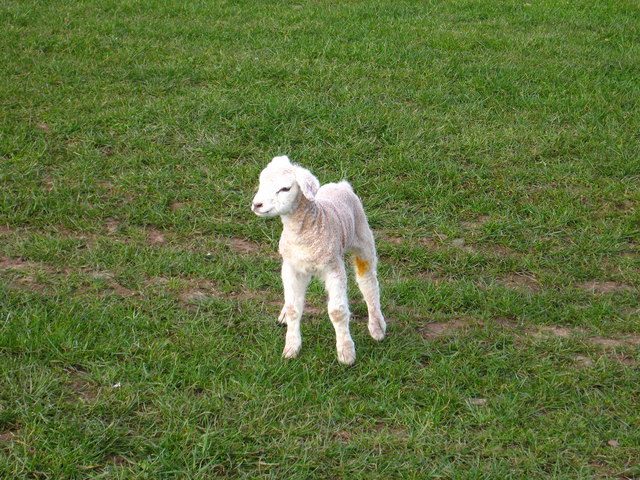
Scottish lambing runs through April and into May, later in the hills than the lowlands. It sounds like a small thing until you are driving a single-track road in Sutherland and the verges are full of them. Two practical notes: keep dogs on leads without exception, and slow right down, because lambs bolt across roads at exactly the wrong moment.
May is also a decent month for the animal everyone actually asks about. Our guide to finding Highland cattle without trespassing on someone’s farm covers the reliable spots, several of which have new calves this time of year.
An NC500 you can still stop on
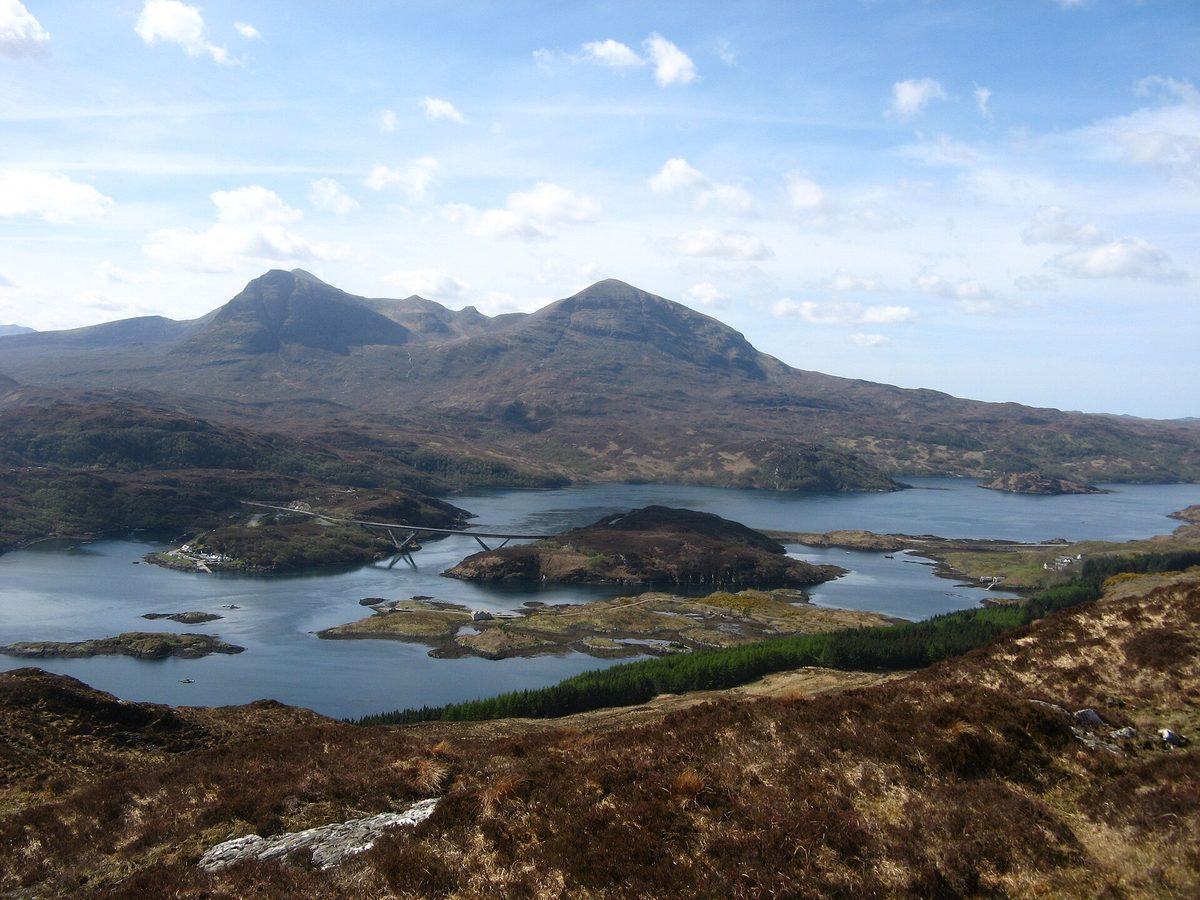
The North Coast 500 route around the northern Highlands is fully drivable in May, the passing places are not permanently occupied, and you can pull in at Kylesku or Achmelvich without circling for twenty minutes. By late July that same road is a slow-moving queue of camper vans and the laybys near Durness are full by ten in the morning.
Wick’s May rainfall average of 50mm and 167 hours of sunshine tell you the far north is not the washout people assume. Give the loop seven days rather than five — the roads are slower than the mileage suggests, and the point of going in May is having time to stop.
Where to point yourself in May
The weather data should shape your route more than it usually does, because the east–west split is at its widest in spring.
The east, if you want the driest days
Fife, Angus, Aberdeenshire and East Lothian are the driest corner of the country in May, and they are chronically underused by visitors who go straight from Edinburgh to Skye. The Fife Coastal Path, the fishing villages of the East Neuk, the castle trail through Aberdeenshire — all of it works better in a dry month. Our tour of Scottish castles worth the detour leans heavily on this part of the map for good reason.
Argyll and the inner isles
Argyll in May is my own favourite version of Scotland. Oban’s station averages 196 hours of sunshine, the gardens are out, the Mull and Iona ferries are running, and the whole coast has a soft green quality it loses by August. Base yourself in Oban for three nights and you can reach Mull, Kerrera, Seil and the Slate Islands without ever repeating a drive.
The far north-west
Assynt, Coigach and the Sutherland coast are the emptiest good landscape in western Europe, and May is when you get them almost to yourself. The beaches at Achmelvich, Clachtoll and Sandwood Bay are as good as anything in our list of Scotland’s finest stretches of sand, with the significant caveat that the water is around 9–11°C and will not warm up much before August.
Skye, with a caution
Everything in our guide to getting the most out of the Isle of Skye holds true in May, but this is the one place where the shoulder-season logic breaks. The two bank holiday weekends fill Portree and the Fairy Pools car park to summer levels. Go mid-week, mid-month, or go somewhere else. Raasay, twenty-five minutes away by ferry, is the obvious answer and almost nobody takes it.
The cities
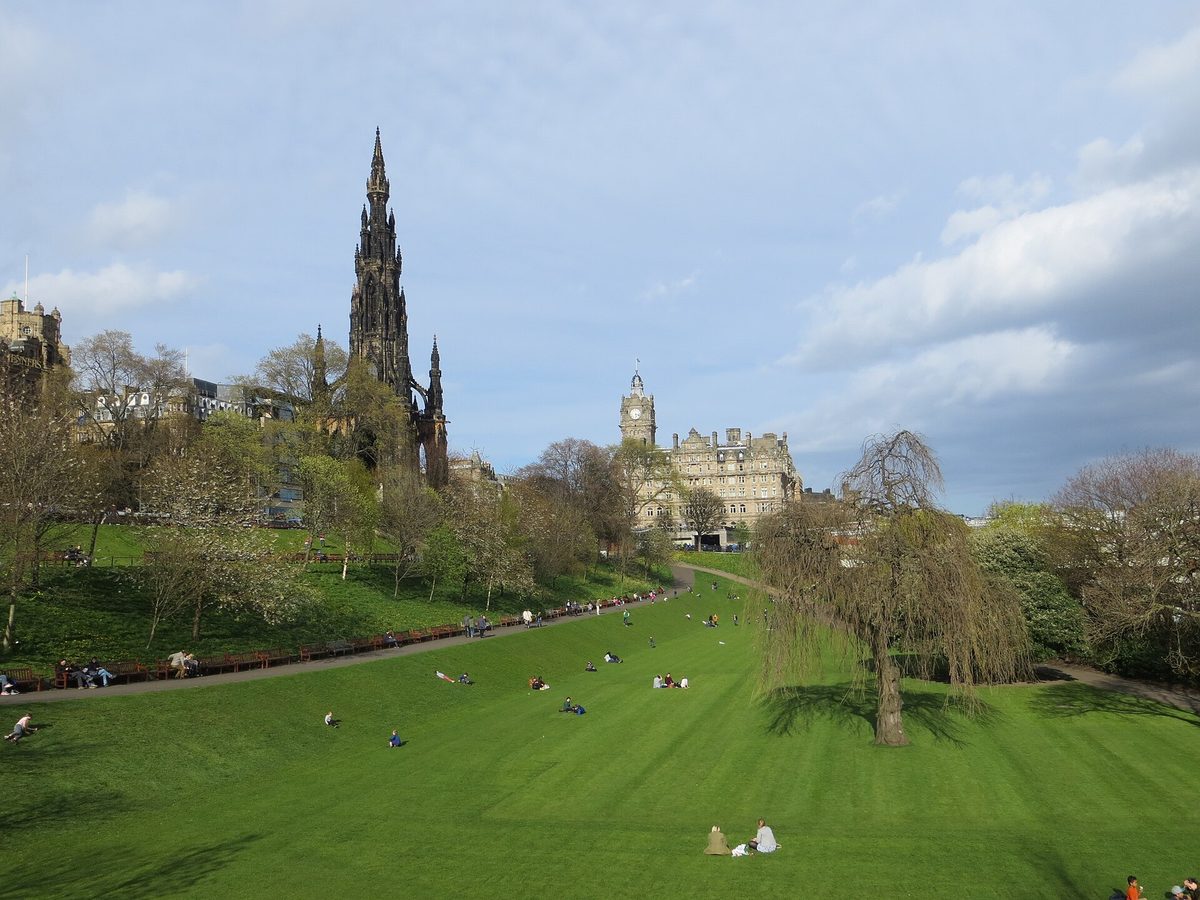
May is the best month of the year in the capital, and everything in our full Edinburgh city guide is easier to do now. The gardens are out, the light is long, and the city is not yet doing the thing it does in August where 25,000 extra people arrive at once. If you are tight on time, a single well-planned day in Edinburgh covers more than you would expect at this time of year, because you have daylight until well past nine.
Glasgow, meanwhile, is the warmest big city in Scotland in May — the Paisley gauge averages a daily high of 16.1°C, against 14.5°C on the Fife coast — and it is considerably cheaper to sleep in. If you are basing yourself somewhere for a week, our notes on choosing a base region by region are worth twenty minutes before you book.
Planning a May trip: what to book and when
How long you need
Seven to ten days is the sweet spot. With a week you can pair Edinburgh with either the west coast or the Cairngorms and do both properly. With ten days you can add the islands or the northern loop. Five days means picking one region and staying in it — our route-by-route Scotland itinerary options break this down by trip length.
Resist the temptation to use those 17 hours of daylight to cram in more driving. The light is the reward, not the schedule.
The two bank holidays, and why they matter
The UK has two May bank holidays: the early May holiday on the first Monday, and the spring bank holiday on the last Monday. In 2027 those fall on 3 May and 31 May. Around each one, hotel rates on Skye, in Fort William and around Loch Lomond jump sharply, ferries fill, and popular car parks are full by mid-morning.
The middle two weeks of May are the actual bargain. Accommodation is still on shoulder-season pricing, and the difference between a mid-May Tuesday and a late-May Saturday on Skye can be £60 or more a night for the same room. Book the middle of the month, and if you must travel over a holiday weekend, book three months out.
Scotland also has local council holidays that vary by town and do not line up with the UK ones — they mostly affect council services rather than attractions, but a few small museums close.
What to book ahead
Three things genuinely need advance booking in May: island ferries if you are taking a car, Edinburgh accommodation over the bank holidays, and any distillery tour running a limited-capacity tasting. CalMac car spaces on the Mull, Skye and Islay routes go early around the holiday weekends; foot passengers are usually fine.
Whisky is a specific reason to come in May. The Spirit of Speyside Whisky Festival runs at the end of April into early May — 28 April to 3 May in 2027 — and World Whisky Day falls on the third Saturday of the month, with events all over the country. Fèis Ìle on Islay lands at the end of May and accommodation there sells out roughly a year ahead. Our guide to distilleries worth touring flags which ones take walk-ins.
Beyond whisky, May carries the Orkney Folk Festival in Stromness, the Ullapool Book Festival, the Edinburgh Marathon, the Atholl Gathering at Blair Castle and the Edinburgh International Children’s Festival. The full picture is in our calendar of Scottish festivals and events.
Getting around
May is comfortable driving. Winter road closures are done, the Bealach na Bà to Applecross is open in normal conditions, and you are not competing for road space. If you would rather not drive, ScotRail’s West Highland Line to Mallaig and the Far North Line to Thurso both run year-round and are among the best rail journeys in Britain — see our piece on Scotland’s most rewarding train routes. For the mechanics of buses, ferries and rail passes, our transport guide is the practical one.
What to pack
A waterproof jacket, a warm mid-layer, and boots that cope with wet ground. May daytime highs sit between 12°C and 16°C depending where you are, but overnight lows drop to 5–7°C and the tops are colder still. Sunscreen is not a joke here — 200 hours of May sunshine off a Hebridean beach will catch you out.
Bring midge repellent even though you probably will not need it. If you are camping in the west after about the 25th, you will be glad of it.
The honest catches
May is not perfect, and the guides that pretend otherwise are doing you no favours. Five things genuinely go against it.
The water is cold, and it stays cold
Sea temperatures around the Scottish coast sit at roughly 9–11°C in May, and the lochs are colder. The beaches look Caribbean and behave Arctic. Wild swimming is entirely possible with a wetsuit and some sense; without one, expect a very short dip and a long shiver. If swimming matters to you, August and September are the months.
Not everything is running yet
This is the one that catches people out and no other guide seems to mention it. The Jacobite steam train — the Harry Potter one over the Glenfinnan Viaduct — has recently started its season in June rather than April. In 2026 the morning service ran from 1 June. If crossing that viaduct behind a steam locomotive is a fixed point in your trip, check the West Coast Railways timetable before you book flights, because May may simply not work.
Similarly, some smaller island boats, seasonal cafés in the far north and a handful of Historic Environment Scotland sites do not reach full summer opening until late in the month. The big attractions are all open; it is the small operators that lag. Anyone chasing film locations should read our Harry Potter locations across Scotland guide before fixing dates.
There is no darkness at all
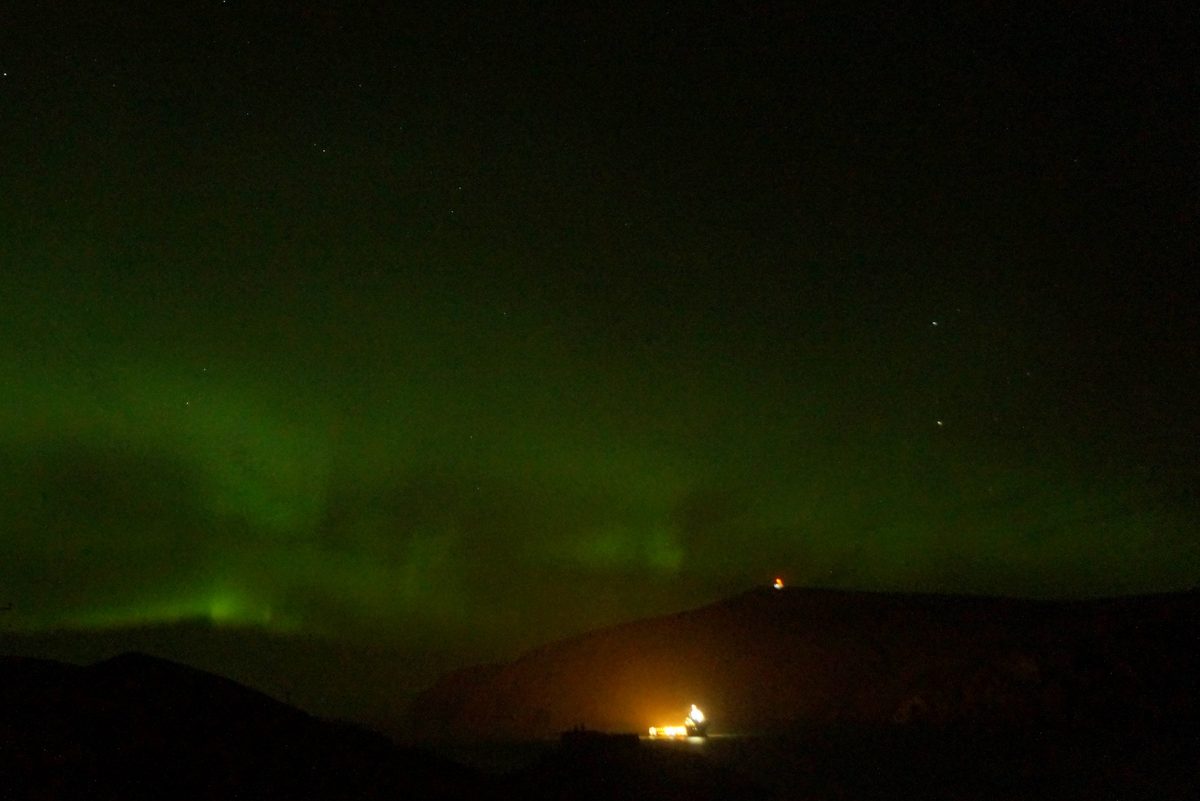
Scotland gets no true astronomical darkness from roughly the end of April to the second week of August. Nowhere. That means no aurora, no Milky Way, and no meaningful stargazing for the entire month of May — if that is your reason for coming, our guide to Scotland’s dark sky sites will steer you to autumn and winter instead.
Haar
The east coast has a specific spring problem: haar, the cold sea fog that rolls in off the North Sea and sits over Edinburgh, Fife and Aberdeen for days. It can be 20°C in Stirling and 11°C and grey on Portobello beach on the same afternoon. There is no forecasting your way around it beyond having an inland plan. It is one reason I would not build an entire May trip around the east coast alone.
Winter is still on the tops
Snow lies in the Cairngorm and Nevis corries well into May and sometimes June. The gullies hold hard old snow that needs an ice axe and the ability to use it. A mild afternoon in Aviemore tells you nothing about conditions at 1,200 metres. Check the Scottish Avalanche Information Service while it is still reporting, and if you are new to Scottish hills, stick to paths below the snow line — there is plenty across the Highlands that does not require crampons.
And the mistakes people make
Three recurring ones. Booking a bank holiday weekend on Skye and then complaining about crowds. Packing for summer and being cold at 6am on a ferry deck. And building a nine-stop-a-day driving itinerary because the daylight allows it, then seeing nothing properly — the single-track roads in Wester Ross and Sutherland run at 30–40mph in practice, whatever the map suggests.
Frequently asked questions
Is May or September better for visiting Scotland?
May wins on sunshine, rainfall and midges; September wins on sea temperature, autumn colour and warmer evenings. Nationally May averages 182 hours of sun against September’s 107, and 89mm of rain against 123mm. If you are walking or driving, take May. If you want to swim or want the hills in autumn colour, take September.
Are there midges in Scotland in May?
Barely. The first hatch usually happens in the last week or two of May, mainly on the west coast and in sheltered glens, and numbers do not become a real nuisance until June. Early and mid-May are effectively midge-free. Pack repellent anyway if you are camping in the west after about the 25th.
How many hours of daylight does Scotland get in May?
It climbs fast. Edinburgh has about 15 hours 20 minutes on 1 May and 17 hours 7 minutes on 31 May. Inverness reaches 17 hours 29 minutes by month end, with usable twilight until around 11pm. Shetland does better still, at over 18 hours. Sunset in the Highlands is after 9pm from mid-month.
What should I wear in Scotland in May?
Layers, with a properly waterproof outer. Daytime highs of 12–16°C feel warm in sun and cold in wind, and overnight lows near 5°C are normal. Bring waterproof footwear, a hat for the hills, and sunscreen — May is the sunniest month and people underestimate it badly on the west-coast beaches.
Is May expensive in Scotland?
Mid-May is one of the better value windows of the year, with accommodation still on shoulder-season rates. The two bank holiday weekends are the exception and can add £50–£80 a night in popular spots. Avoid the first and last weekends of the month and you keep spring prices with early-summer weather.
Can you see puffins in Scotland in May?
Yes, and it is one of the best months. Puffins are ashore from around late April to early August. The Isle of May from Anstruther, Lunga in the Treshnish Isles from Mull or Iona, and Handa Island from Tarbet in Sutherland are the three most reliable trips. Book Isle of May sailings well in advance.
Does it snow in Scotland in May?
Not at sea level, in any meaningful way. Snow showers on the Cairngorm plateau in May are perfectly normal, and old snow lingers in the high corries into June. Towns and cities essentially never see it. Plan hill days accordingly, but do not worry about your city break.
Is May a good month for the North Coast 500?
It is arguably the best. The route is fully open, accommodation is easier to find than in July, the laybys are usable and Caithness averages only 50mm of rain. Allow seven days rather than five, and book your first and last nights even in May.
Final thoughts
I have been coming to Scotland in every month of the year for a long time, and May is the one I recommend without hedging. Not because it is romantic — because the Met Office numbers back it up, and because the last week of it gives you July’s light with none of July’s problems.
Book the middle fortnight, keep a wet-weather plan for the east coast, and do not try to see everything. If you want more ideas for filling those long evenings, our list of the places worth going out of your way for is a good place to start planning.
May is also the month I would pick for the far north. It is the driest stretch of the year on the west coast, it lands before the midges hatch in earnest, and the traffic has not arrived — the reasoning is set out in full in our guide to the best time to drive the NC500.
About the author: This guide was written and is maintained by the ScotlandTourism.org editorial team — travel writers who’ve spent years exploring Scotland’s cities, Highlands and islands, from bagging Munros to chasing the perfect dram. We update our guides regularly to keep prices, opening details and advice current.
Last updated: August 2026. Prices and opening times change — always check the official site before you travel.
Photo credits
All images are used under their respective Creative Commons or public-domain licenses:
- The Quiraing on the Trotternish ridge, Isle of Skye, green in late spring — Colin, CC BY-SA 4.0, via Wikimedia Commons
- Traigh Bhi at Balephuil Bay on the Isle of Tiree, with flowering machair behind the sand — Irvine Smith, CC BY-SA 2.0, via Wikimedia Commons
- Native bluebells flowering across a woodland floor in spring — Evelyn Simak, CC BY-SA 2.0, via Wikimedia Commons
- Atlantic puffin stretching its wings on a grassy clifftop in the Treshnish Isles — Romaniviatores, CC BY-SA 4.0, via Wikimedia Commons
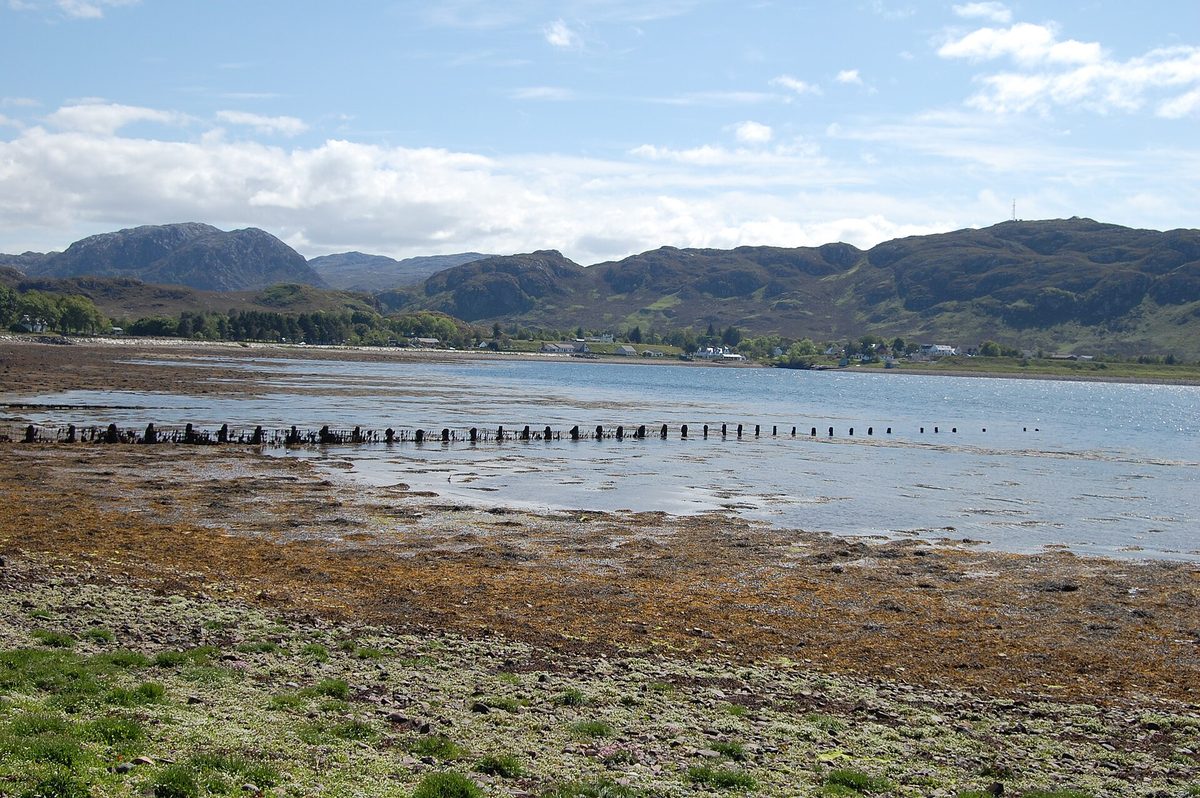
- Looking across Loch Ewe to Poolewe from Inverewe in Wester Ross — Ken Bagnall, CC BY-SA 2.0, via Wikimedia Commons
- Kylesku Bridge and Quinag seen from above, on the North Coast 500 in Sutherland — Reboelje, Public domain, via Wikimedia Commons
- Princes Street Gardens in spring, with the Scott Monument and the Balmoral clock tower … — alljengi from Edinburgh, CC BY-SA 2.0, via Wikimedia Commons
- A spring lamb in a Scottish field — Lisa Jarvis, CC BY-SA 2.0, via Wikimedia Commons
- Buachaille Etive Mor at the entrance to Glen Coe — kim traynor, CC BY-SA 2.0, via Wikimedia Commons
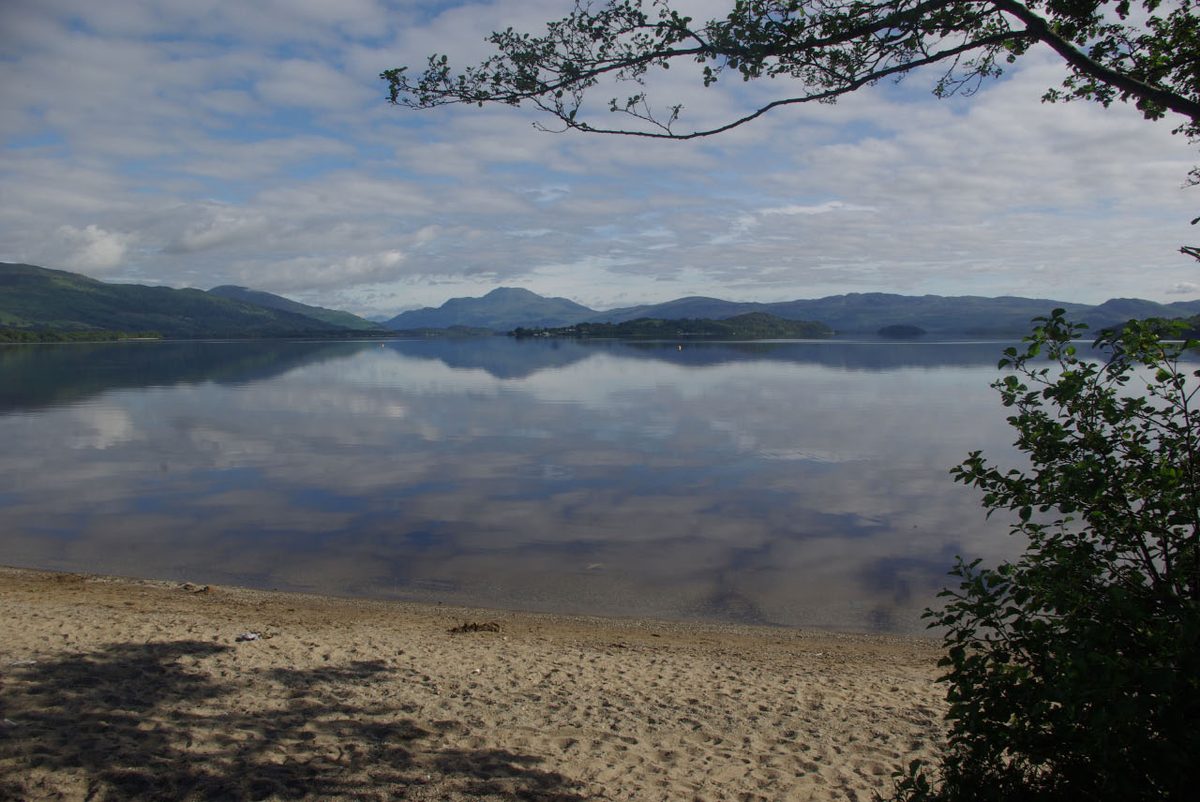
- Loch Lomond on a still morning, seen from a shingle shore — Stephen McKay, CC BY-SA 2.0, via Wikimedia Commons
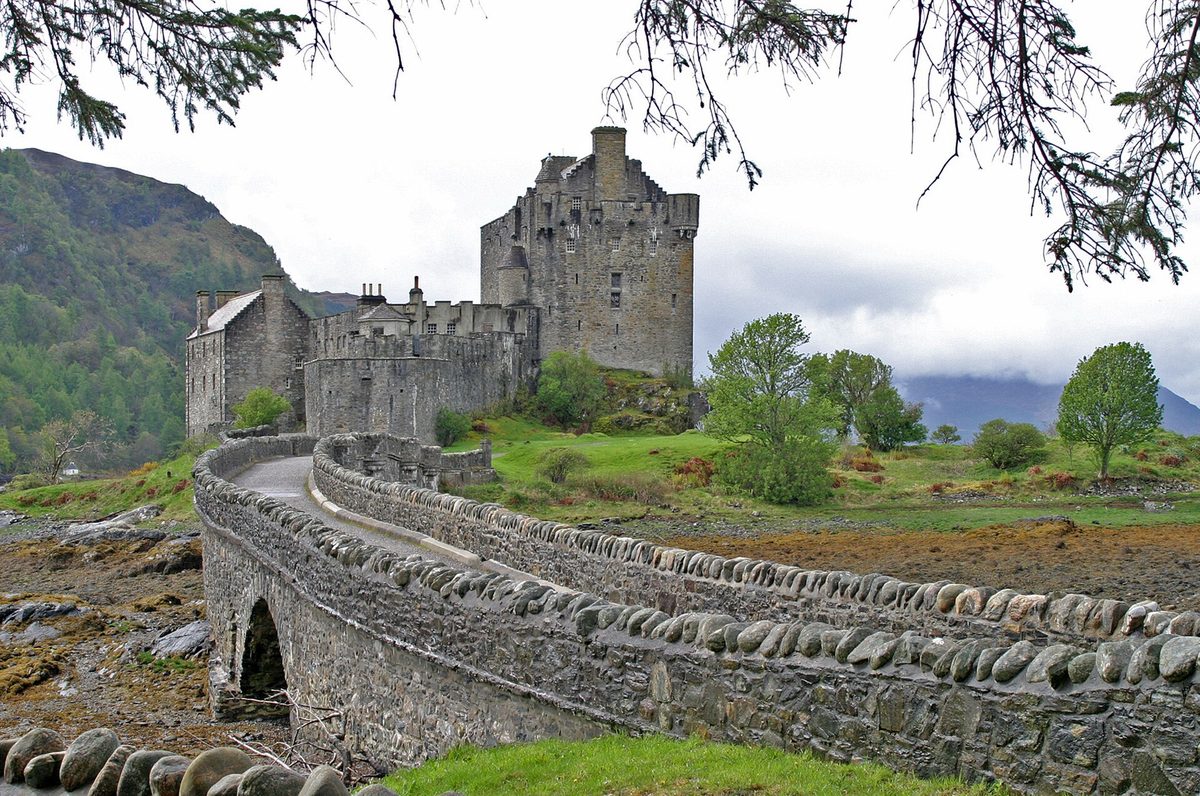
- Eilean Donan Castle and its stone causeway bridge at the head of Loch Duich — W. Bulach, CC BY-SA 4.0, via Wikimedia Commons

1 note from readers