I have lived within an hour of most of these places for years, and I still get the same message from friends who have booked four nights in the capital: which day trips from Edinburgh are actually worth it? The honest answer has less to do with how good a place looks in a photograph and more to do with arithmetic. How long is the journey each way, what does it cost, and how much of the day is left when you finally arrive.
Nearly every guide to this subject hands you fifteen destinations, one paragraph each, with no way of telling that one of them is a half-hour hop and another is a twelve-hour coach day for forty minutes at a loch. So I have organised this by how you would actually get there. Real journey times, rough costs, and a straight answer on what you get at the other end. Most of these are excellent. Two of them I would tell you to skip entirely.
The short answer
The best trips out of Edinburgh are the ones under 90 minutes each way. Stirling, Glasgow, Linlithgow, North Berwick, Falkirk and South Queensferry are all straightforward by train with no car and no tour needed. St Andrews, Melrose and the East Neuk of Fife take longer but still work. Loch Ness and Skye do not.
At a glance: what each trip really costs you
Times below are door to door from central Edinburgh, not station to station, because the walk at either end is where day plans quietly fall apart. The last column assumes a 10-hour day: leave around 9am, back by 7pm.
| Trip | How you get there | Each way | Time at the other end | Best for |
|---|---|---|---|---|
| South Queensferry & the Forth Bridges | Train to Dalmeny | About 30 min | 9 hours (you need 3) | A half-day with no planning |
| Linlithgow | Direct train | About 35 min | Around 8.5 hours | Palaces without the crowds |
| North Berwick | Direct train | About 50 min | Around 8 hours | Beach, seabirds, a hill |
| Stirling | Direct train | About 1 hr 5 min | Around 7.5 hours | Castles and battlefields |
| Glasgow | Direct train, every 15 min | About 1 hr 5 min | Around 7.5 hours | Museums, food, architecture |
| St Andrews | Train to Leuchars, then bus | About 1 hr 35 min | Around 6.5 hours | Golf, ruins, a huge beach |
| Glen Coe | Car, A82 | About 2 hr 40 min | Around 4.5 hours | Big Highland scenery |
| Loch Ness | Coach tour only | About 3 hr 30 min | Roughly 40 minutes at the water | Ticking a box, honestly |
Straight out of Waverley: no car, no tour, no stress
Everything in this section is reachable on a single train or a single bus from the city centre, which means you can decide over breakfast and be gone by ten. If you are still working out how the wider network fits together, our guide to travelling around Scotland without a car covers the ticket types and the regional quirks in more detail.
South Queensferry and the Forth Bridges
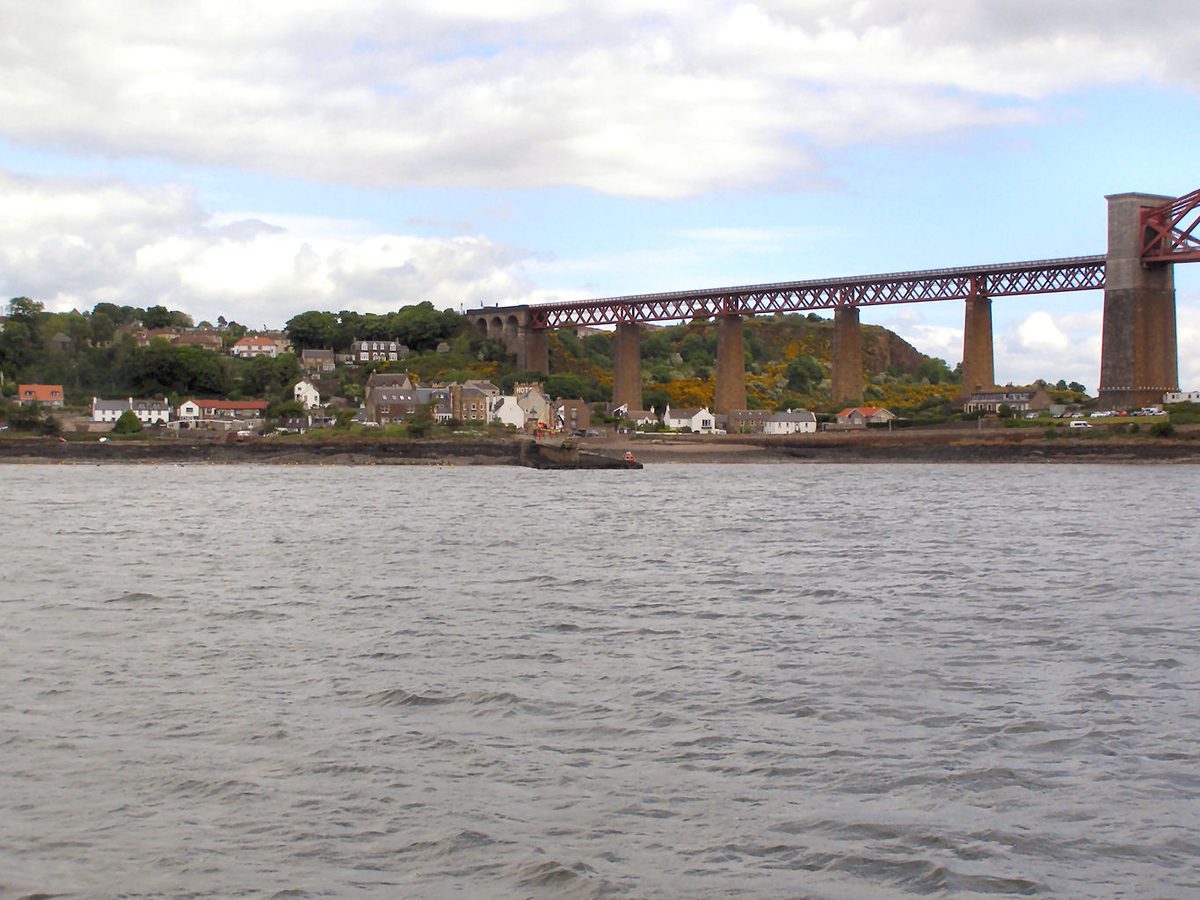
This is the trip I send people on when they have half a day spare and no energy for logistics. Trains from Waverley to Dalmeny run several times an hour and take about 15 minutes; from the platform it is a downhill walk of ten minutes or so into South Queensferry.
What you get is a cobbled high street of 17th and 18th-century buildings squeezed between the water and the hill, three enormous bridges stacked in one view, and a shoreline path with a rotating cast of dog walkers. The red cantilever Forth Bridge opened in 1890 and is a UNESCO World Heritage Site; the Queensferry Crossing beyond it opened in 2017.
Allow three hours and you have done it properly, including a pint at the Hawes Inn. Boat trips out towards Inchcolm Island run seasonally from the Hawes Pier and need booking ahead; in winter they largely stop. This one is genuinely year-round otherwise, and it is free apart from the fare.
Linlithgow
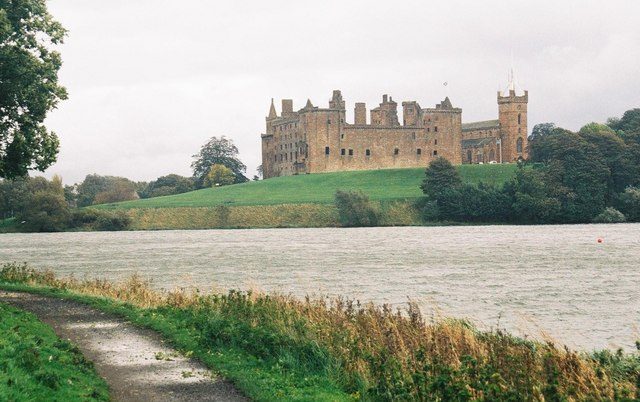
Twenty minutes by direct train and you are standing at the gates of the palace where Mary Queen of Scots was born in 1542. Linlithgow Palace was closed for several years while Historic Environment Scotland dealt with unstable high-level masonry, and it has since reopened, though at the time of writing the King’s Bed Chamber and the Court Kitchen remain shut. Opening is daily from 9.30am with last entry at 4.15pm between April and September, and from 10am with last entry at 3.15pm the rest of the year.
The roofless quadrangle is the point. You walk into a shell the size of a small castle, climb to the first floor and get the loch through the empty windows. Next door, St Michael’s Parish Church wears an aluminium crown spire added in 1964 that locals still argue about.
Do the loch circuit afterwards, a flat couple of miles, then lunch on the High Street. If your list of ruins is longer than one, our round-up of the castles worth crossing the country for will help you prioritise. Linlithgow also sits on the Stirling line, so an early start buys you both.
Stirling
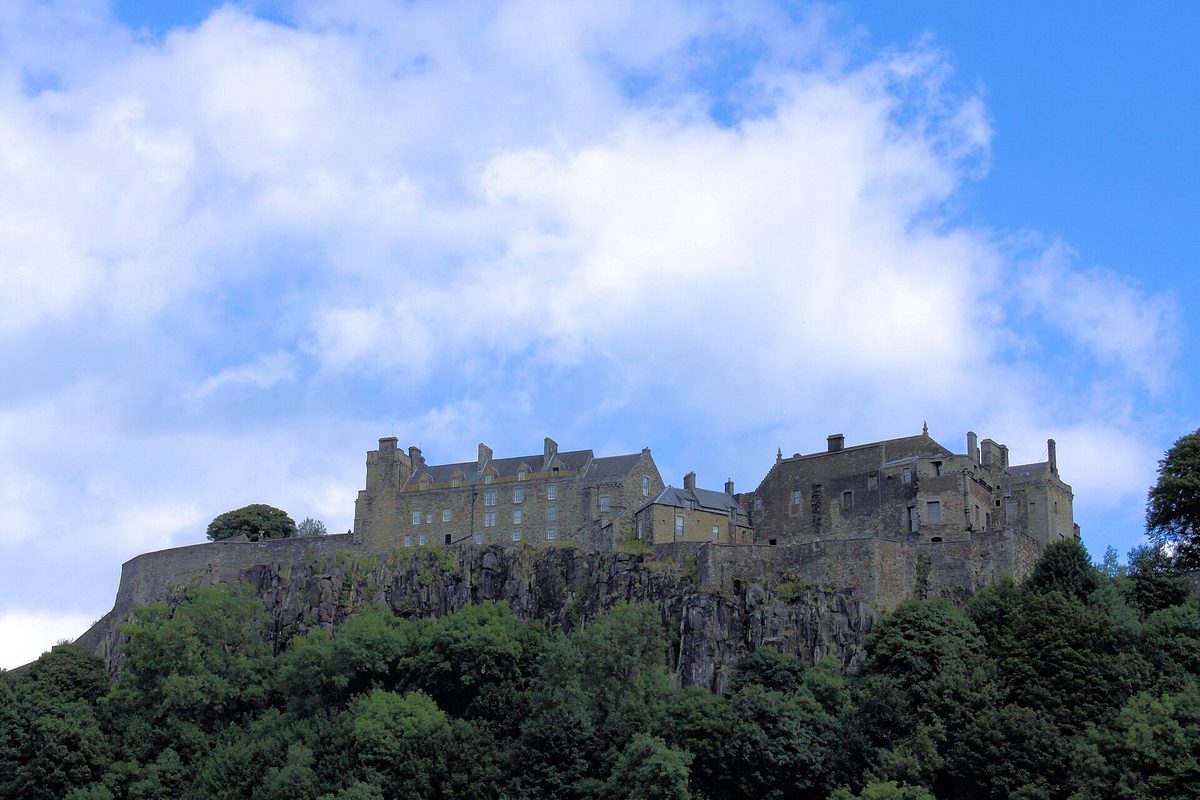
If you only do one of these, make it Stirling. Direct trains take around 50 minutes, the station is in the centre of town, and the castle is a steep 15-minute walk uphill from there. Adult admission runs somewhere around £18 to £20 at the time of writing — check the current price on the Historic Environment Scotland site before you go.
Stirling Castle beats Edinburgh’s on interiors. The restored Royal Palace apartments were repainted in the colours the originals would have worn, which is startling if you have only seen grey stone ruins, and the Stirling Heads on the ceiling are worth twenty minutes on their own. It is also less of a scrum, which matters if you have already queued at the capital’s own fortress. Our Edinburgh Castle ticket guide explains why that queue happens and how to dodge it.
One current practicality: the castle car park is closed to everything but coaches and accessible parking while local road closures are in place, so drivers need the Castleview park and ride. Another reason the train wins. Add the National Wallace Monument if you have the legs for 246 spiral steps.
Glasgow
Fifty minutes, trains every 15 minutes to Queen Street, and a completely different city at the other end. Edinburgh is tight, vertical and self-conscious. Glasgow is broad, Victorian, loud and much better at feeding you. Anyone who says the two cities are similar has been to neither.
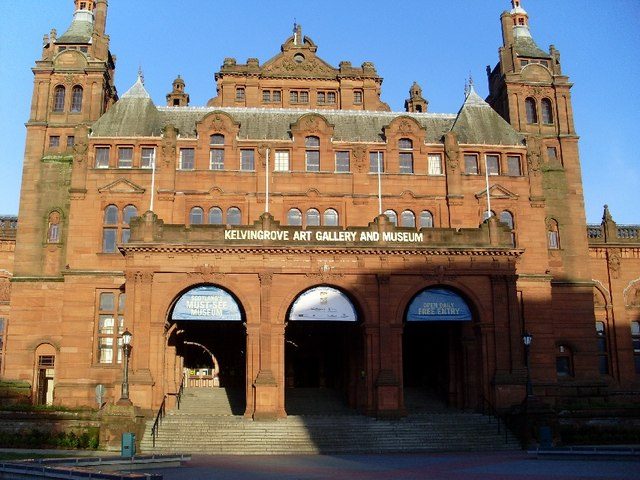
Kelvingrove Art Gallery and Museum is free and about as good as a municipal collection gets: Dali’s Christ of Saint John of the Cross, a Spitfire hanging from the ceiling, an organ recital most days. The Burrell Collection in Pollok Country Park is also free, and reopened in 2022 after a long refurbishment.
Eat in Finnieston, walk the city-centre mural trail, and give yourself an hour in the Necropolis behind the cathedral. There is far more than a day’s worth here, which is why we have a separate guide to Glasgow. Almost none of the big museums charge admission, which makes it a cheap day out as well as a good one.
North Berwick and the East Lothian coast
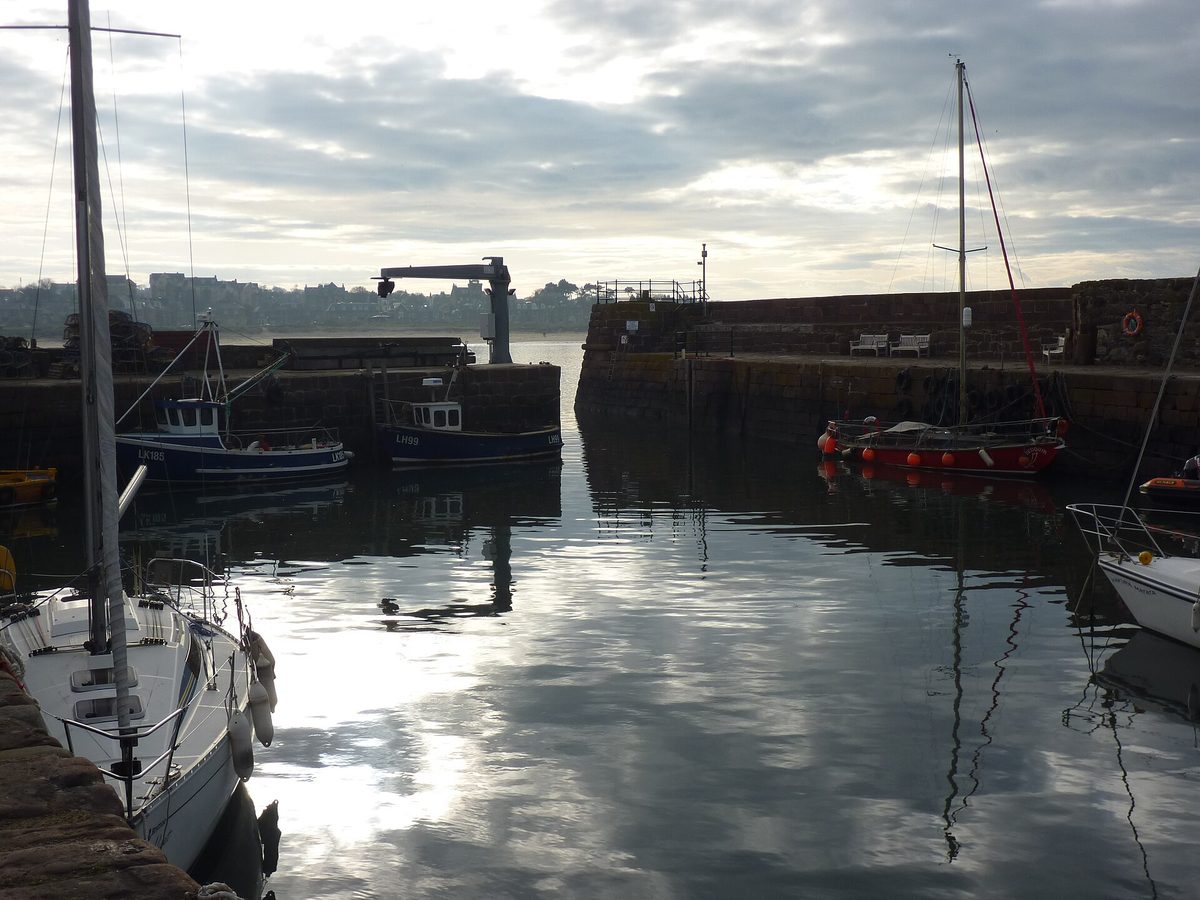
Around 33 minutes on a direct train and you are in a seaside town with two sandy beaches, a working harbour and a volcanic plug behind it. There are roughly 16 trains a day, so this is not one where you need to memorise a timetable.
The Scottish Seabird Centre sits on the point with live cameras trained on Bass Rock, which holds one of the largest northern gannet colonies anywhere. Boat trips around the rock run from the harbour between roughly April and September and sell out in high summer — book before you travel, not on the day. National Rail’s Days Out Guide has been running a discount on Seabird Centre entry for people arriving by train, which is worth two minutes of checking.
Climb North Berwick Law for the view back to Edinburgh and across to Fife. It is a short, sharp 187-metre pull with a replica whale jawbone at the top, and considerably quieter than the capital’s own volcano — though if you want that one, our Arthur’s Seat walking guide has the routes. Two miles east along the coast, Tantallon Castle stands on a cliff facing Bass Rock; at the time of writing there was no visitor access to the east tower staircase, the doocot or the vaults, so check before making a special trip. The beaches here are among the best on the east coast, and they feature in our wider guide to Scottish beaches worth the sand in your shoes.
The Kelpies and the Falkirk Wheel
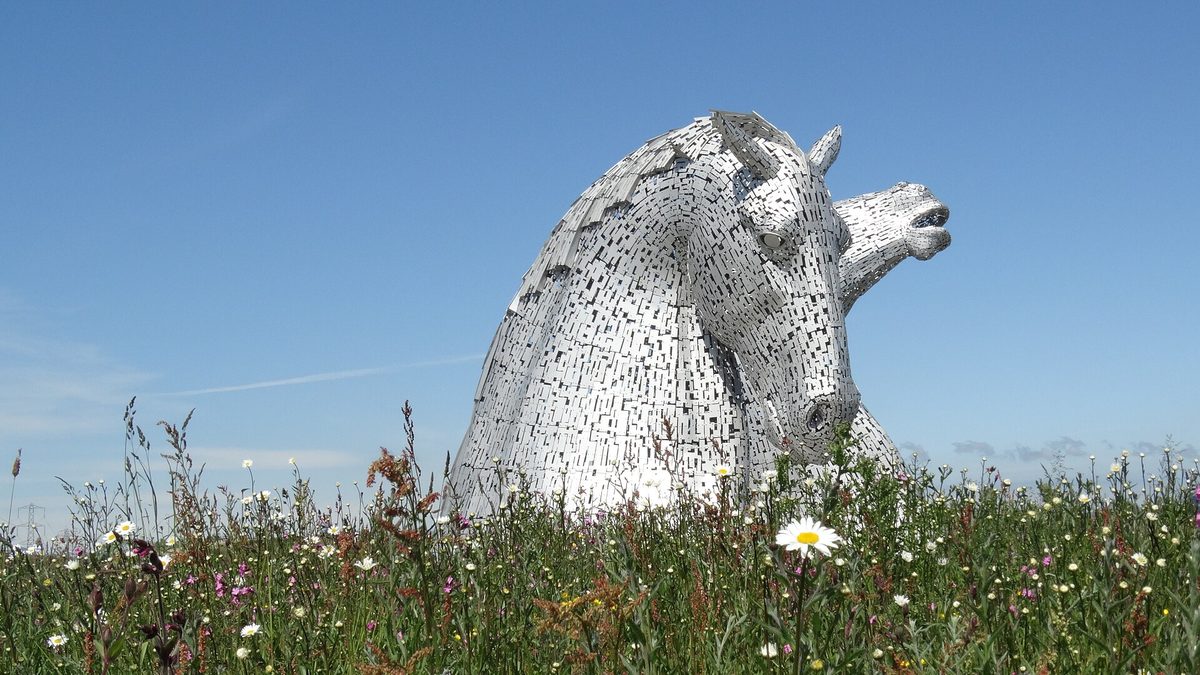
Falkirk is not a beautiful town and nobody pretends otherwise, but it holds two of the more memorable things Scotland has built in the last thirty years. The Kelpies are 30-metre steel horse heads by Andy Scott, standing in Helix Park at the eastern end of the Forth and Clyde Canal. They are free to walk up to and free to photograph; you pay only for the guided tour that takes you inside one. Parking charges apply if you drive.
Ten minutes away, the Falkirk Wheel is the world’s only rotating boat lift, built to replace a flight of eleven locks. Watching it turn costs nothing; riding it needs booking on the Scottish Canals site, particularly on summer weekends.
By train it is 30 to 40 minutes to Falkirk Grahamston or Falkirk High, then a local bus or short taxi to each site. Doing both without a car is fiddly but workable with an hour’s planning, and it is one of the better outings with children in tow — see our list of family days out around Scotland.
Rosslyn Chapel
The only entry here that is a bus rather than a train. Lothian Bus 37 runs from the city centre towards Penicuik and drops you near the Original Rosslyn Hotel in about 45 to 60 minutes, depending on traffic. Seven miles, and it feels like proper countryside.
The chapel was founded in 1446 and left unfinished when Sir William St Clair died three years later, which is why it is far smaller than most visitors expect. Almost every surface inside is carved: green men with vines pouring from their mouths, angels, plants, and the twisted Apprentice Pillar the legends attach to. Adult admission was around £10.50 at the time of writing, entry is by 90-minute timed slot, and photography inside is not permitted.
Be realistic about the scale. Pair it with a walk down into Roslin Glen Country Park, past the ruined castle and along the river, and you have a good half-day. Building a whole day around it is how people end up disappointed by something remarkable.
St Andrews
The rail line does not reach St Andrews. You take a direct train to Leuchars, around an hour and five minutes, then a bus or taxi for the last five miles, which adds fifteen to twenty minutes and a bit of waiting. Door to door, call it 1 hour 35 minutes each way and plan accordingly.
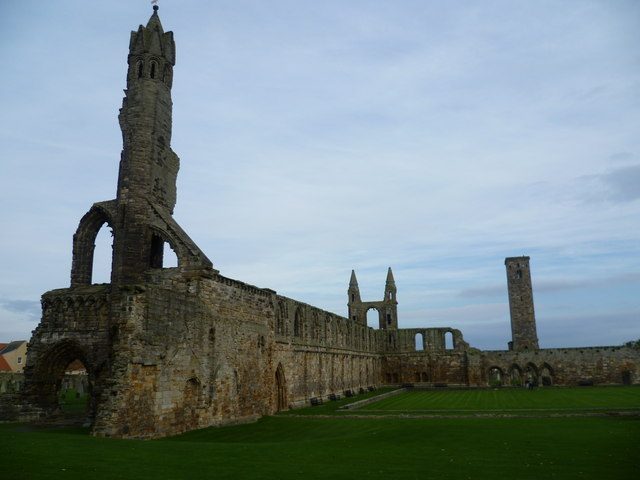
What you get: the shell of what was Scotland’s largest cathedral, consecrated in 1318 and wrecked at the Reformation; a bishops’ castle perched over the sea with a genuinely unnerving mine and counter-mine tunnel; the oldest university in Scotland; and West Sands, the two-mile beach from the opening of Chariots of Fire. The Old Course sits right beside it, and you can walk across the 18th fairway on the public path when play allows. Serious players should read our guide to playing golf in Scotland before assuming a tee time is available.
A day here is comfortable. A day here plus the East Neuk villages is not, unless you have a car. Pick one.
Melrose and the Borders
The Borders Railway reopened in 2015 and put the Tweed valley back within reach. Waverley to Tweedbank takes around 55 minutes to an hour, and from Tweedbank it is a 40-minute walk or a short bus into Melrose itself.
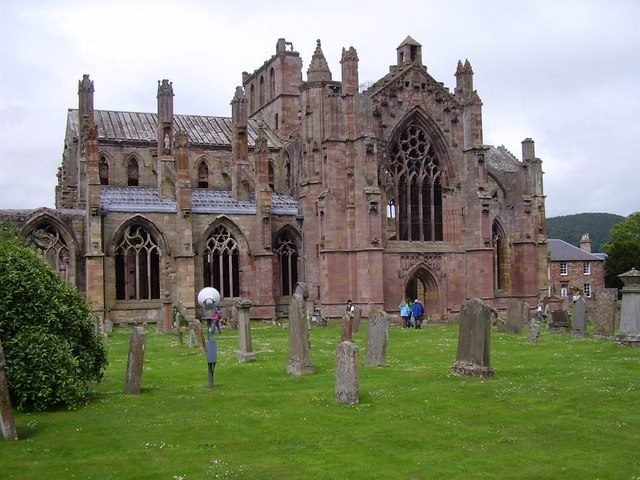
Melrose Abbey is the reason most people come. Robert the Bruce’s heart is buried in the grounds, and the stonework includes a bagpipe-playing pig on the roofline that guides never tire of pointing out. Be aware that high-level masonry inspections have restricted access at various points, with alternative arrangements covering the cloister, the foundations, the cemetery and part of the museum. Check the Historic Environment Scotland site the week you travel.
Abbotsford, Sir Walter Scott’s extravagant house, is a 30-minute walk from Tweedbank station along the Tweed and is arguably the better visit of the two. The town itself is small, well-fed and ringed by the Eildon Hills, which give you a two-hour walk and a very good view.
Where a car changes the day completely
These are all technically reachable by public transport. They are all much better with a car, because the good bits are strung out along a coast or a glen rather than clustered around a station. If you are hiring, remember that fuel and town-centre parking add up fast, and that Scottish single-track roads take a good deal longer than the satnav thinks.
The East Neuk of Fife
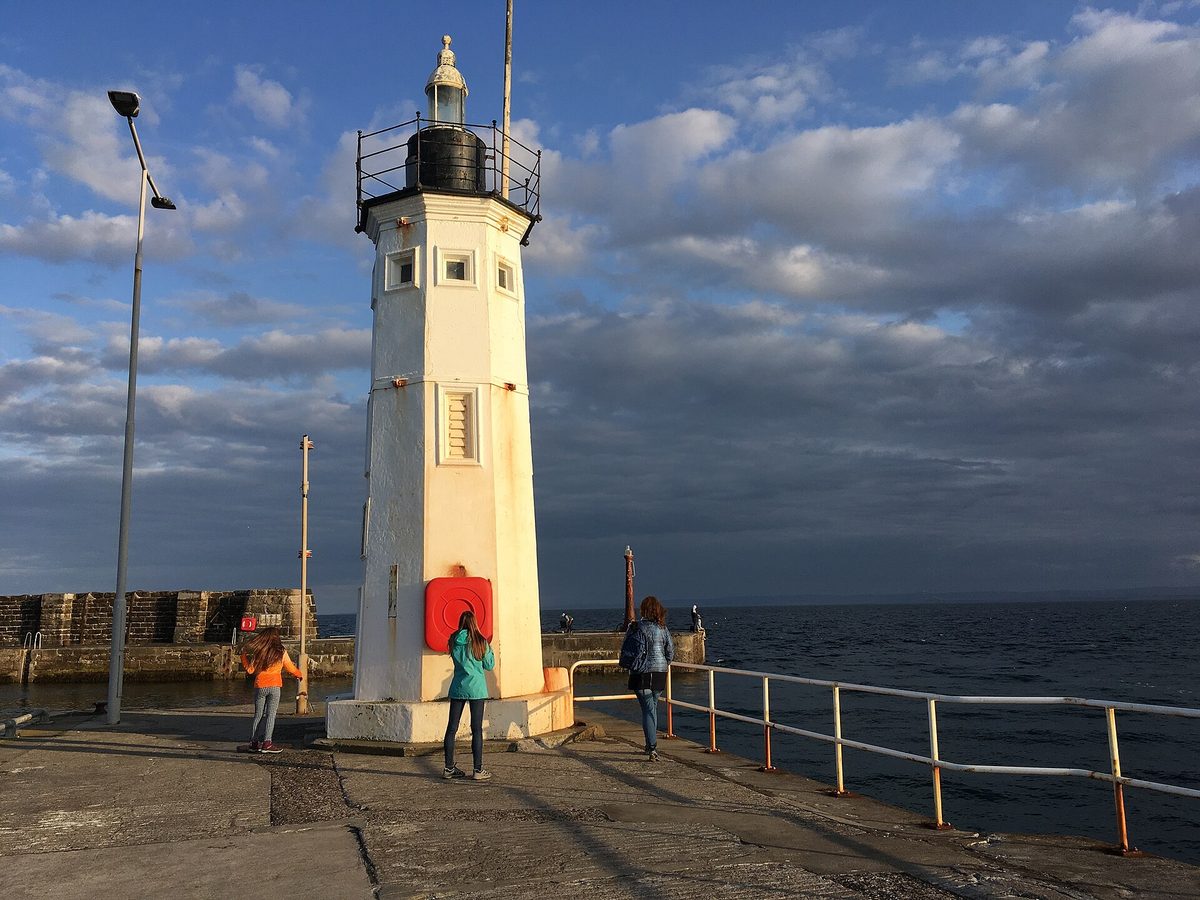
The string of fishing villages along the southern edge of Fife — Elie, St Monans, Pittenweem, Anstruther, Crail — is the single best drive within two hours of Edinburgh. Crow-stepped gables, pantile roofs, working creel boats, and a coastal path linking the lot.
Anstruther is the anchor: the Scottish Fisheries Museum, a harbour full of boats, and a fish bar with a queue that regularly stretches down the pavement. Anstruther to Crail is about four and a half miles on the Fife Coastal Path, a comfortable two hours with stops. St Monans has a 14th-century kirk sitting almost in the sea and a restored windmill on the old salt pans.
By car it is roughly 1 hour 30 to 1 hour 45 each way over the Queensferry Crossing. A direct Stagecoach bus from Edinburgh takes about two hours and works if you are only going to Anstruther and back. Trying to string three villages together by bus will eat the day.
Culross and the west Fife shore
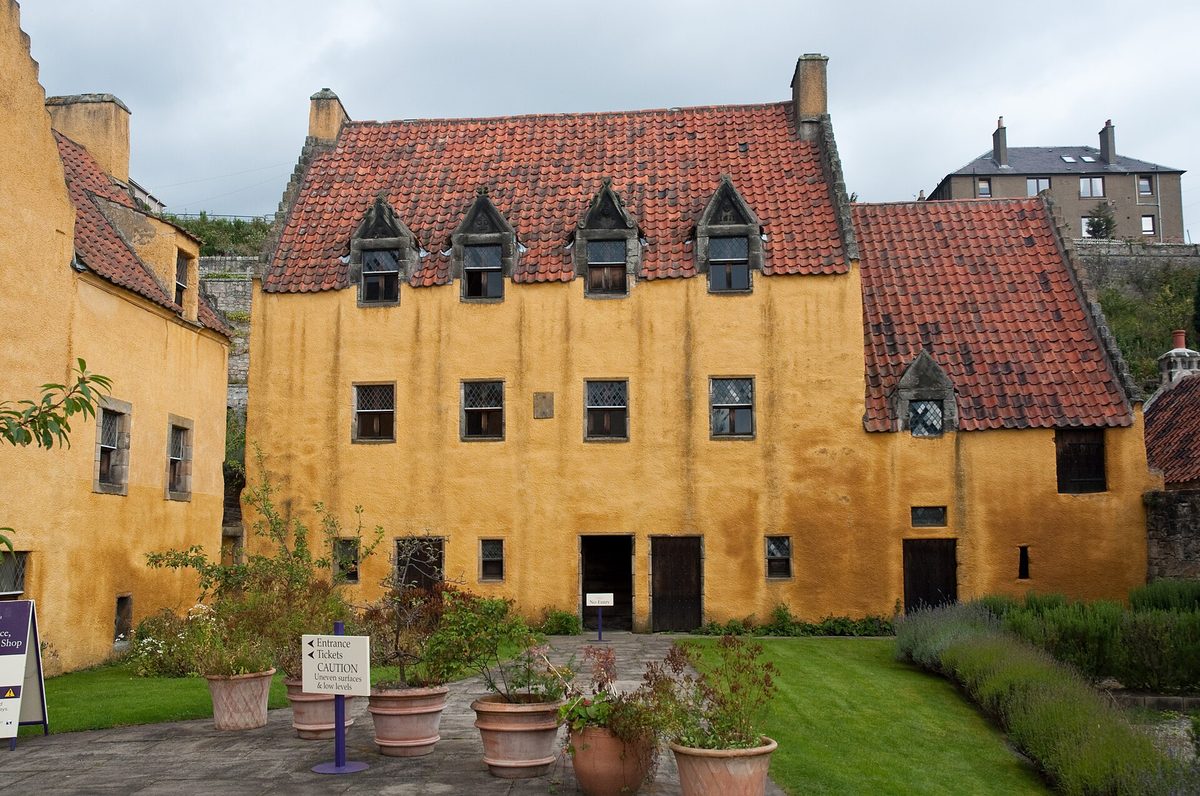
Culross is the most complete surviving example of a 17th-century Scottish burgh, cared for by the National Trust for Scotland: white harled walls, red pantiles, an ochre-yellow palace and a set of cobbled lanes that have stood in for the fictional village of Cranesmuir in Outlander. It is small. An hour and a half covers it, plus the palace interiors and the terraced herb garden.
Treat it as one stop on a loop rather than a destination. Fifty minutes by car gets you there; add Dunfermline Abbey, where Robert the Bruce lies under the pulpit and his name is carved into the tower parapet in letters a metre high, plus Blackness Castle on the way back, and you have a genuinely full day.
Without a car it is a train to Dunfermline, 35 to 40 minutes, then a local Stagecoach bus west. Doable, but you will spend a chunk of the afternoon at bus stops.
Loch Lomond and the Trossachs
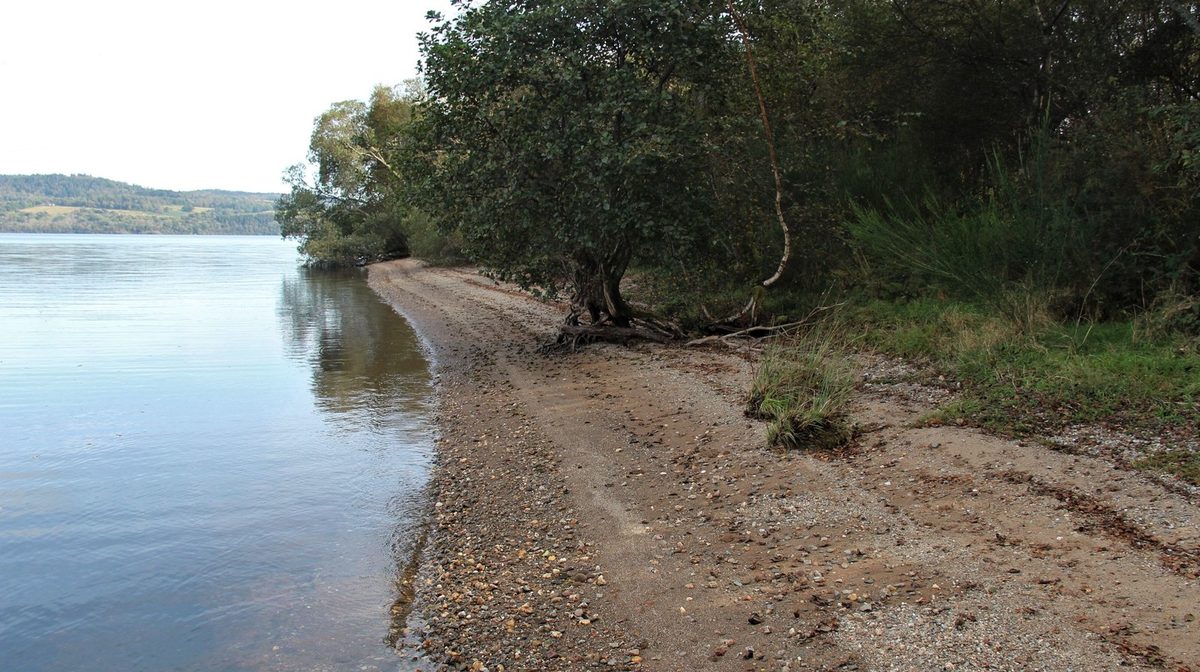
Scotland’s first national park starts about an hour and fifteen minutes west of Edinburgh by car, which makes it the closest thing to real Highland scenery you can reach and return from without rushing. Balmaha on the eastern shore is the best target. Conic Hill above it is roughly an hour up from the car park for a view down the length of the loch and its islands, and it sits almost exactly on the Highland Boundary Fault.
Balloch at the southern tip is the easiest by public transport — train to Glasgow Queen Street, change, and about two hours in total — but it is also the least interesting bit of the loch, all car parks and cruise jetties. If you cannot drive, take an organised tour to the northern shore instead.
Loch Katrine, deeper into the Trossachs, runs a steamship service in season and is a good deal quieter than Lomond. Both sit at the southern edge of the region covered in our guide to the Highlands and how to see them properly.
Glen Coe
This is the furthest I would drive and still call it a day trip. Around 116 miles and roughly two and a half hours each way via the M9 and the A82, or a little more if you go round by Glasgow. That is five hours of driving for what is, in fairness, the most dramatic 10 miles of road in the country.
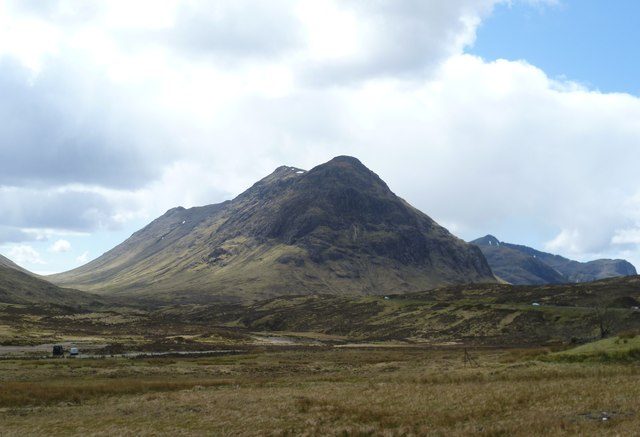
The pass itself does most of the work. You come over Rannoch Moor, Buachaille Etive Mor appears on the right like a stage set, and then the Three Sisters wall up either side of the glen. Stop at the Glencoe Visitor Centre, walk the short trail to the Signal Rock, and if the weather holds, do the Lost Valley path — a rough, boulder-strewn 2.5-mile round trip ending in a hanging valley where the MacDonalds hid stolen cattle. Three hours, proper boots, not a stroll.
Leave Edinburgh at 8am, be back by 8pm, and you get around five usable hours. In June that is fine. In December it is not, for reasons I will come to.
The ones that only work as an organised coach tour
There is no shame in a coach tour. For anything north or west of Loch Lomond without a car, it is the only realistic option, and the good operators run small mini-coaches with driver-guides who know the ground. Expect to pay somewhere around £60 to £90 per adult for a full day at the time of writing, more with add-ons like a boat cruise or castle entry. Our overview of guided tours around Scotland covers how the main operators differ.
One number to hold on to: the operators themselves state that most of their day tours from Edinburgh run between eight and thirteen hours, departing between 7am and 10am and returning between 5pm and 9pm. That is the honest shape of the day, and it is worth knowing before you book anything sold as a relaxed outing.
The Highlands loop: Glen Coe, Rannoch Moor and a distillery
The best value tour from Edinburgh, to my mind, is the one that stays inside Perthshire and Argyll rather than pushing for Loch Ness. A typical itinerary covers Glen Coe, a stop on Rannoch Moor, a working distillery and a woodland walk, and gets you home nearer 7pm than 8.30pm. Less of your day is spent watching a trunk road through a window. Check our guide to Scotland’s distilleries and tour options so you know which stop you are actually getting.
The Outlander circuit
Doune Castle, Blackness, Midhope, Culross and Falkland in one day is genuinely hard to assemble yourself without a car, and the coach version works well. It also functions as a decent castle day even if you have never watched the programme, because three of those five are worth seeing on their own terms.
Glenfinnan and the Jacobite steam train
The long one. Edinburgh to Fort William and out to the Glenfinnan Viaduct is a serious drive, and tours including a leg on the steam train cost several times a standard day out. Magnificent if the weather plays; a very expensive way to sit in a coach if it does not. Our guide to the film locations behind the wizarding world covers which bits earn the effort, and our round-up of Scotland’s best rail journeys makes the case for riding the West Highland Line properly from Glasgow instead.
Do not do these as day trips
Every guide to this subject lists the next three. I would rather tell you what the day actually feels like and let you decide.
Loch Ness
Loch Ness is about 170 miles from Edinburgh, roughly three and a half hours of driving each way. The coach tours that sell it as a day trip are not lying about the destination; they are simply quiet about the shape of the day. A typical example checks in at 7.30am, departs at 7.45, and returns to Edinburgh Bus Station around 8pm. Twelve and a quarter hours.
Of that, something like eight hours are spent on the coach. The loch gets you perhaps 40 minutes to an hour at Fort Augustus or Dores, a little longer if you pay for the boat cruise; Urquhart Castle, if included, is another 45 minutes. You do see Glen Coe and Rannoch Moor from your seat, and a good guide makes the miles pass. But you are buying a coach journey with a loch in the middle of it.
Who it suits: someone with exactly one spare day, no car, and Nessie firmly on the list. Who it does not suit: anyone with motion sickness, small children, or a genuine interest in the Highlands. The better version is two days — train or coach to Inverness, one night there, and the loch, Culloden and Clava Cairns at walking pace the next morning. Our guide to Loch Ness and Inverness sets out what an overnight actually looks like.
The Isle of Skye
Skye is about 230 miles from Edinburgh and the road for the last hundred is slow. The major Edinburgh operators sell it as a three-day trip for a reason, and the one-day Skye tours you see advertised almost always depart from Inverness, not Edinburgh. If you do find an Edinburgh day tour to Skye, work out the arithmetic before you hand over money: even at a brisk average speed you are looking at ten hours of driving and perhaps two on the island, most of it at a single viewpoint.
Skye deserves three days minimum and rewards five. The Quiraing, the Fairy Pools and the Storr are all walks rather than viewpoints, and the light changes hourly. Read our Isle of Skye guide, then build it into the route properly instead of bolting it onto Edinburgh.
Anything past Inverness
I have seen John o’ Groats, the North Coast 500 and even Orkney floated as day trips from Edinburgh. They are not. Inverness alone is three and a half hours by fast train and five by the coastal line via Aberdeen. If the far north is the point of your trip, restructure the trip.
Which trips survive winter, and which collapse
Almost nobody covers this, and it is the difference between a good December day out and six hours in the dark. On 21 December, Edinburgh gets sunrise around 8.42am and sunset around 3.39pm. That is roughly seven hours of daylight, and a fair amount of it is flat grey. Head north-west towards Glen Coe and you lose a little more.
Run the sums on Glen Coe in late December. Leave at 8am in the dark, arrive around 10.30am, and you have five hours of light before it goes. Two and a half of those are your drive home. So you get roughly two and a half hours in the glen, in weather that is often low cloud, and you drive back down the A82 in darkness with deer on the verges. It can be superb — snow on the Buachaille in low winter sun is as good as Scotland gets — but it is a gamble, not a plan.
Fine year-round: Glasgow, Stirling, Linlithgow, South Queensferry, Melrose, St Andrews, Dunfermline. These are indoor-heavy days in walkable towns where an hour of rain costs you nothing.
Compromised in winter: North Berwick and the East Neuk lose the boat trips and most of the point of the beaches, though the coastal walks are bracing and the fish is still excellent. Loch Lomond is fine for the low shore paths but Conic Hill gets slick and dark early.
Genuinely difficult November to February: Glen Coe, any Highlands coach tour, and Loch Ness, which becomes a twelve-hour day where you arrive at the loch in gloom and leave it in the dark. Several operators run reduced winter schedules for exactly this reason. Our guide to choosing when to visit Scotland goes into the month-by-month detail.
Late May and early June are the sweet spot. Around 17 hours of daylight, the roads are not yet at August levels, and the midges have not properly started. Late September is the other good window.
Planning it properly: tickets, timing and what to book
Rail fares changed. ScotRail scrapped peak fares permanently from 1 September 2025 and withdrew separate off-peak tickets, repricing Anytime tickets down to the old off-peak level. In practice that means you no longer need to dodge the morning rush to get a sensible fare on ScotRail services. Confirm current prices on the ScotRail site; most of the trips in the first section land somewhere in the £10 to £20 return range.
Railcards and children. A standard railcard costs around £35 and takes a third off, which pays for itself in one or two of these journeys. ScotRail’s Kids for a Quid ticket is £1 per child return for up to four children aged 5 to 15 travelling with an adult, and includes free child entry to some attractions. If you are travelling as a family, that is the single biggest saving available.
Two stations, not one. Waverley handles almost everything here, but Haymarket, ten minutes west, sits on the Glasgow, Stirling and Fife lines and is the easier start if you are staying in the West End. Check which your ticket assumes.
Book ahead for: Rosslyn Chapel timed slots, Bass Rock boat trips, Falkirk Wheel boat trips, any coach tour in July and August, and Stirling Castle on a Fringe-season weekend. Everything else you can turn up for.
Sunday engineering works. Scottish rail lines take their maintenance on Sundays, and replacement buses can add an hour each way without warning. Check the day before, not the week before.
If you are driving: paid car parks in these towns fill by 11am in summer, with Stirling, St Andrews and Balmaha the worst offenders. Forth crossings no longer charge tolls, and the A82 north of Tarbet is narrow, twisting and slower than it looks on a map.
What underwhelms, and the mistakes I see most
Rosslyn Chapel is smaller than the film suggests. It is one dense room, and the carving in it is extraordinary. But the visit is 90 minutes. People who build a whole day around it come away oddly short-changed by something superb.
Balloch is not Loch Lomond. The southern tip is a retail park with a loch attached. Drive twenty minutes further to Balmaha or Luss and the difference is enormous.
The Falkirk Wheel turns slowly. It is a beautiful piece of engineering, but the rotation takes several minutes and there is no drama to it. Go for the Kelpies and treat the Wheel as a bonus rather than the reverse.
Pitlochry in August is coach-park Scotland. Lovely town, genuinely good distilleries, but from late morning to mid-afternoon in high summer the high street belongs to tour groups. Go early, or go in October when the trees have turned.
Three mistakes worth avoiding. First, stacking two destinations that are each 90 minutes away — you will see neither. Second, booking a Highlands tour for your last full day, when a delayed return puts your flight at risk. Third, spending four of your five days out of the city. Edinburgh rewards slow attention, and there is a strong case for staying put; our Edinburgh travel guide and our two-day Edinburgh itinerary both make it. A morning wandering off the Royal Mile into the closes beats a rushed afternoon anywhere else.
Frequently asked questions
What is the best day trip from Edinburgh?
Stirling, for most people. It is 50 minutes by direct train, the castle interiors are better than Edinburgh’s, and the town is compact enough to see properly in a day. If you would rather have coast than castle, North Berwick is 33 minutes away and gives you beaches, a hill walk and a seabird colony.
Can you do day trips from Edinburgh without a car?
Yes, and most of the best ones are better without one. Direct trains from Waverley reach Linlithgow, North Berwick, Stirling, Glasgow, Falkirk, Dunfermline, Leuchars for St Andrews and Tweedbank for the Borders. For the Highlands, an organised coach tour is the practical option rather than a fallback.
Is Loch Ness worth doing as a day trip from Edinburgh?
Only if you have no alternative. It is roughly three and a half hours each way, and a typical coach tour runs about twelve and a quarter hours door to door for perhaps 40 minutes to an hour actually at the loch. An overnight in Inverness costs little more and turns a long, tiring day into a proper visit.
How far in advance should I book?
Rosslyn Chapel timed slots, Bass Rock boat trips and summer coach tours are the ones that sell out, so book those a week or two ahead in July and August. ScotRail tickets can be bought on the day now that peak pricing has gone, though advance fares on longer routes are still cheaper.
What is the closest day trip to Edinburgh?
South Queensferry, about 15 minutes by train to Dalmeny plus a ten-minute walk. Rosslyn Chapel is seven miles south, roughly 45 minutes on the number 37 bus. Both are half-days rather than full ones, which makes them ideal for an arrival or departure day.
Can you see the Highlands in a day from Edinburgh?
Partly. Glen Coe, Loch Lomond and Highland Perthshire are all reachable there and back in a day, and Pitlochry and Dunkeld are under two hours by direct train while feeling convincingly Highland. What you cannot do in a day is the north-west coast, Skye or anything past Inverness.
Do I need to book train tickets in advance in Scotland?
Not for short hops. Since ScotRail removed peak pricing in September 2025, walk-up fares on routes like Edinburgh to Glasgow or Stirling are the same all day. Advance tickets still save money on longer journeys to Inverness, Aberdeen or Pitlochry, so book those if your times are fixed.
Which day trip is best with children?
The Kelpies and Falkirk Wheel, comfortably. Both are outdoors, the Kelpies cost nothing to visit, and Helix Park has a splash zone and cycle paths. North Berwick is the coastal alternative, with a beach, rock pools and live seabird cameras when it rains.
Final thoughts
The trips that people remember from Edinburgh are almost never the furthest ones. They are the day in Stirling when the sun came out over the Ochils, or the hour on the harbour wall at North Berwick with a bag of chips, or the empty upstairs room at Linlithgow with the loch through the window.
Pick two, not five. Keep at least one of them under an hour each way. And if you find yourself seriously considering a twelve-hour coach day to stand beside a loch for forty minutes, spend that day in the city instead — our complete guide to Edinburgh has more than enough to fill it, and you will get home in time for dinner.
Only in the city for 24 hours and wondering whether a day trip is worth it? Read how to spend one day in Edinburgh first — on a single day the city itself almost always wins.
Only have a long weekend? Our three days in Scotland plan compares the big day-trip options head to head with real hours and mileage, and argues for one base and no hotel changes.
Stirling is the day trip I recommend most often and the one people skip. Our full guide to Stirling Castle explains why the 2011 palace restoration makes it the better building, and our head-to-head with Edinburgh Castle settles the question if you only have time for one.
About the author: This guide was written and is maintained by the ScotlandTourism.org editorial team — travel writers who’ve spent years exploring Scotland’s cities, Highlands and islands, from bagging Munros to chasing the perfect dram. We update our guides regularly to keep prices, opening details and advice current.
Last updated: August 2026. Prices and opening times change — always check the official site before you travel.
Photo credits
All images are used under their respective Creative Commons or public-domain licenses:
- The red cantilever Forth Bridge crossing the Firth of Forth at Queensf — David Dixon, CC BY-SA 2.0, via Wikimedia Commons
- Linlithgow Palace and St Michael’s Church seen across Linlithgow Loch — Chris Downer, CC BY-SA 2.0, via Wikimedia Commons
- Stirling Castle on its volcanic crag — Sgmiller4038, CC BY-SA 3.0, via Wikimedia Commons
- The red sandstone frontage of Kelvingrove Art Gallery and Museum in Gl — Stephen Sweeney, CC BY-SA 2.0, via Wikimedia Commons
- Fishing boats and yachts in North Berwick harbour on the East Lothian — Richard West, CC BY-SA 2.0, via Wikimedia Commons
- The Kelpies horse-head sculptures rising above wildflowers at Helix Pa — Colin Park, CC BY-SA 2.0, via Wikimedia Commons
- The ruined nave and towers of St Andrews Cathedral in Fife — kim traynor, CC BY-SA 2.0, via Wikimedia Commons
- The red sandstone ruins of Melrose Abbey in the Scottish Borders — james denham, CC BY-SA 2.0, via Wikimedia Commons
- The pier lighthouse at Anstruther harbour in the East Neuk of Fife — Marcok, CC BY-SA 4.0, via Wikimedia Commons
- The ochre walls and red pantile roofs of Culross Palace in the royal b — Phillip Capper from Wellington, New Zealand, CC BY 2.0, via Wikimedia Commons
- A quiet pebble shore on Loch Lomond looking north towards the Highland — Alan Reid, CC BY-SA 2.0, via Wikimedia Commons
- Highland peaks on the approach to Glen Coe along the A82 — kim traynor, CC BY-SA 2.0, via Wikimedia Commons