
The first time someone showed me a photograph of Luskentyre I assumed it had been taken in the Seychelles and mislabelled. It hadn’t. That really is what the best beaches in Scotland look like on a bright day in June — white shell sand, water the colour of a swimming pool, hills behind. What the photograph leaves out is that the sea in that picture is about 13°C, there is one small toilet block for the entire beach, and getting there involves a ferry you should have booked in February.
I’ve spent a lot of time on Scottish sand: some of it swimming, more of it eating a sandwich in a car park watching horizontal rain. This guide is the version I wish I’d had. It’s grouped by region so you can plan around it, and every beach gets the boring bits — how you actually reach it, whether there’s a loo, whether swimming is sensible, and whether it’s a day out or a two-night commitment.

The short answer
Luskentyre on Harris is the best beach in Scotland, with Sandwood Bay in Sutherland the best if you’ll walk four miles for it. For an easy day out, head to East Lothian or Fife. The sand is genuinely Caribbean-looking; the water is 12–14°C in August, so bring a wetsuit or accept a short, bracing dip.
The best beaches in Scotland at a glance
| Beach | Region | Getting there | Facilities | Swim? | Day trip? |
|---|---|---|---|---|---|
| Luskentyre | Harris, Outer Hebrides | Ferry to Tarbert or Stornoway, then 3 miles of single track off the A859 | Small toilet block, seasonal snack hut | Yes, sheltered, but cold | No — 2 nights minimum |
| West Beach, Berneray | Outer Hebrides | Causeway from North Uist, then a short walk over the dunes | None at the beach | Yes, shallow and calm | No — part of a Uists trip |
| Traigh Mhor | Barra, Outer Hebrides | 5-hour ferry from Oban, or fly and land on the sand | Airport cafe alongside | Only when the airport is closed | No — 2–3 nights |
| Calgary Bay | Mull, Inner Hebrides | 50-minute ferry to Craignure, then a 90-minute drive | Free car park, cafe a short drive away | Yes — the best all-rounder on Mull | No — 2 nights |
| Camusdarach | Morar, west Highlands | Car park off the A830, then five minutes through the dunes | Car park (charge expected), nothing on the sand | Yes, shallow and sheltered | Yes, from Fort William |
| Sandwood Bay | Sutherland | 4-mile walk each way from Blairmore car park | Toilets at the car park, nothing at the beach | Experienced swimmers only | Yes if you’re based in the far north-west |
| West Sands | St Andrews, Fife | Walk from the town centre, or park on the beach road | Toilets, cafes, RNLI lifeguards in summer | Yes — lifeguarded July–August | Yes, from Edinburgh or Dundee |
| Seacliff | East Lothian | Private road off the A198, coin barrier | None — bring everything | Yes, but no lifeguard | Yes — under an hour from Edinburgh |
What the photographs leave out
Every guide to Scottish beaches runs the same six pictures. Here’s the context that turns those pictures into a workable plan.
The water is 12–14°C, and that changes the whole day
Sea temperatures around Scotland peak in late August and early September, not July. On the west coast and through the Hebrides you’re looking at roughly 13–15°C at the very top of the season. The east coast runs a degree or two cooler. In winter it drops to around 7°C. Always check a local forecast — a shallow, sheltered bay on a hot afternoon can read noticeably warmer than the open coast.
What does that feel like? Roughly the temperature of a cold shower you’d complain about. Perfectly swimmable for ten or fifteen minutes if you’re going in deliberately. Genuinely dangerous if you go in by accident, because cold water shock kicks in below about 15°C and makes you gasp involuntarily.
My honest advice: get in slowly, keep the swim short, and get dressed immediately afterwards. The cold hits hardest twenty minutes later, not while you’re in.
What a wetsuit actually buys you
A 3/2mm shorty is fine for a quick splash in August. If you want to be in the water for half an hour or more — snorkelling, surfing, swimming a proper distance — you want a 4/3mm full suit.
Here’s the bit nobody mentions: neoprene boots and gloves make a bigger difference than a thicker suit. Your hands and feet are what force you out, not your torso. Add a hood if you’re going in outside June to September. A changing robe is not a fashion item here; it’s the difference between a lovely afternoon and shivering in the car for an hour.
Hire is patchy. Surf schools on Tiree, at Thurso, Coldingham and Machrihanish will kit you out, but on most beaches in this guide there is no shop, no hire, and no one to ask. Bring what you need.
Only eight beaches in Scotland have lifeguards
This is the single most useful fact in this article. The RNLI patrols a handful of Scottish beaches over the summer — the list has recently run to Coldingham Bay, Silver Sands at Aberdour, Burntisland, Leven, Elie, both East and West Sands at St Andrews, and Broughty Ferry.
Look at that list. Every one is on the east or south-east coast. There is not a single lifeguarded beach in the Hebrides, on the north coast, or anywhere along the north-west. The most beautiful beaches in the country are also the ones with nobody watching.
That doesn’t mean don’t swim. It means swim with someone, swim parallel to the shore rather than out, and be honest about conditions. If there’s a strong side-current dragging you along the beach, that’s your cue to get out.
Rip currents: the beaches where I wouldn’t swim
Rips form where water pushed onto a beach by waves finds a channel back out. On Scotland’s Atlantic-facing beaches that’s most days with a swell running.
The ones with a real reputation: Machir Bay and Saligo Bay on Islay both carry warning signs and I would not swim at either. Machrihanish on Kintyre gets serious surf and serious rips. Tolsta and the west-facing Lewis beaches can be fierce. River mouths — Torrisdale where the Naver comes out, Findhorn’s channel, the Ythan at Newburgh — move far faster than they look, and the current runs hard on both the ebb and the flood.
If you’re caught in a rip, don’t swim against it. Float, signal, and let it take you out until it weakens, then swim across it to the side.
Tides do more work here than you expect
Scottish tidal ranges are big. The Solway Firth in the south-west has one of the largest ranges in Britain, and the water comes across those flats quicker than a person walks. There are sinking sands along parts of that coast too, and the warnings are not decorative.
In the Hebrides the tide is what makes the photographs. Luskentyre, Uig Sands, Traigh Mhor on Barra and West Beach on Berneray all reveal enormous aprons of sand at low water and shrink to a strip at high. Turn up at high tide and you’ll wonder what the fuss was about.
Check a tide table for the nearest port before you set off. Low to mid-tide on a rising sea is usually the sweet spot: maximum sand, and you won’t get cut off.
Dogs: there is no national rule, only local bylaws
Scotland has no country-wide ban on dogs on beaches. What it has is a patchwork of council orders, which is far more confusing.
The pattern to remember: most restrictions run from around 1 April or 1 May to 30 September, and they tend to apply to the busiest municipal beaches rather than the wild ones. St Andrews West Sands restricts dogs across the summer. Parts of North Berwick and Aberlady in East Lothian are seasonally off-limits. Several Fife, Angus and Aberdeenshire beaches do the same.
Out in the Hebrides and the north-west you’ll generally find no restrictions at all — but the Scottish Outdoor Access Code still applies, and it matters more there. Ringed plovers and oystercatchers nest on open shingle above the tideline from April to July, and their eggs look exactly like pebbles. Leads on around dunes and machair in spring, please. Also: sheep and cattle graze right down to the sand on a lot of island beaches, and some of the best places to meet a Highland cow are the machair fields immediately behind them.
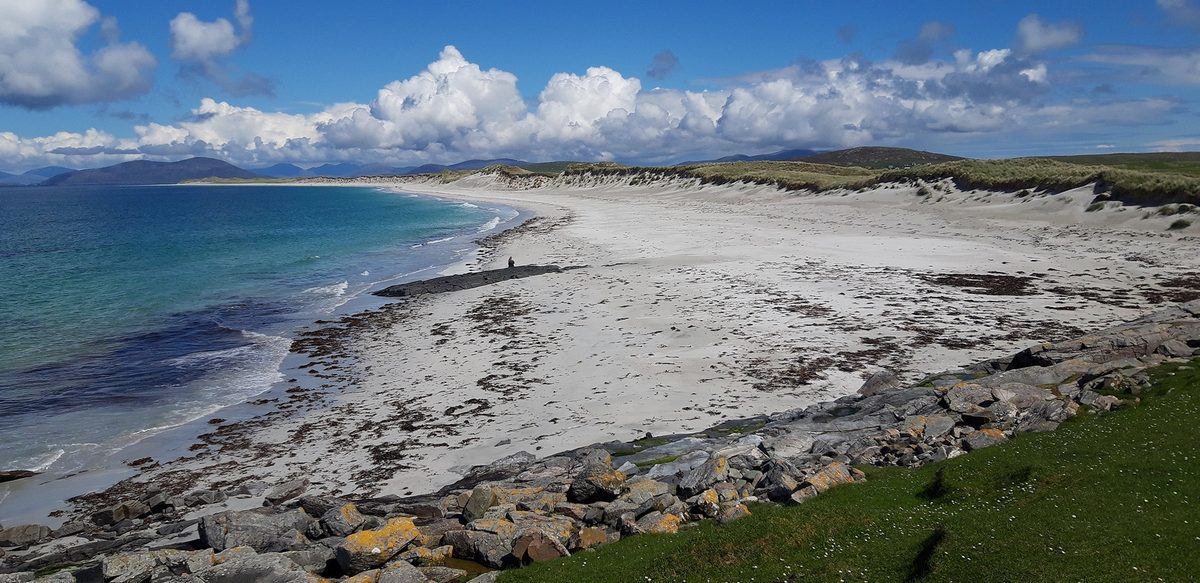
The Outer Hebrides: the ones worth the ferry
If you only have one beach trip in you, spend it here. The sand is coral-white because it’s ground-up shell rather than quartz, the water goes turquoise over it in any decent light, and the machair behind — a rare flowered grassland that only exists in a few places on earth — comes into bloom from late June. Nowhere else in Britain looks like this.
The cost is time. You need at least two nights, realistically three or four, and accommodation across the islands books out months ahead. Read up on island-hopping around the Hebrides before you commit to a route, because the ferry timetable dictates everything.
Luskentyre, Isle of Harris
The one that started the Caribbean comparisons, and it deserves it. A mile-plus of pale sand with the North Harris hills across the bay and, at low water, a shallow turquoise channel that runs out into the sound.
Getting there: take the CalMac ferry from Uig on Skye to Tarbert — roughly 1 hour 40 minutes — or Ullapool to Stornoway, about 2 hours 30, then drive an hour south. From the A859 about ten minutes south of Tarbert, follow the single-track road signed Losgaintir for around three miles. It has blind summits; use the passing places properly.
Facilities: a small toilet block at the car park and, in season, a hut selling hot drinks and ice cream, plus a cake shed a few minutes up the road. That’s it. The car park is small and fills with motorhomes; before 9am in July and August is not paranoid advice.
Swimming: yes. It shelves gently and it’s sheltered, which puts it near the top of the Hebridean swims. Still cold, still no lifeguard.
Verdict: not a day trip from anywhere. Build a Harris trip around it.
Seilebost and Traigh Lar, Harris
Seilebost is Luskentyre seen from the other side of the estuary, and half the famous photographs are actually taken from the viewpoint on the A859 above it. Parking is roadside and limited, so pull in properly rather than blocking a passing place.
Traigh Lar, a little further down the west coast, is the one I’d send you to if Luskentyre’s car park is full. Same sand, a fraction of the people.
Scarista, Harris
Two miles of west-facing sand with a decent swell, which makes it the surf beach of the group. There’s a golf course above it — Harris Golf Club, nine holes, honesty box — which is one of the odder rounds of golf you can play in Scotland.
Parking is a small area off the A859. No facilities. The rip risk is real when there’s a swell running; this is not the one for a casual family paddle.
Uig Sands, Isle of Lewis
Uig is a tidal amphitheatre rather than a beach — at low water the sand runs out for what feels like a kilometre, braided with river channels, ringed by hills. It’s where the Lewis Chessmen were found in 1831.
It’s a long drive west from Stornoway on the B8011, well over an hour on winding single track. Time it for low tide or you’re wasting the journey. There’s a community-run museum and cafe nearby; otherwise nothing.
Tolsta and Garry Beach, Lewis
Twenty minutes north of Stornoway, which makes these the easiest Hebridean beaches to reach. Garry Beach has sea stacks scattered across the sand and rock arches you can walk under at low tide; Tolsta itself is the bigger stretch, and it picks up serious Atlantic swell.
Park at the road end and walk down. The famous Bridge to Nowhere — a road-building project that stopped dead in the 1920s — is a mile further on and worth the stroll.
Swimming: only in settled conditions. This coast is exposed.
West Beach, Berneray
Three miles of empty sand facing the Atlantic, and my personal favourite in the whole country. Berneray is joined to North Uist by a causeway, so no extra ferry is needed — you just drive on.
Park near the community hall or at the end of the road at Borve and walk over the dune ridge. There is nothing at the beach at all: no bin, no loo, no shelter. The water is shallow and calm on a still day, and it feels about as safe as swimming in the islands gets.
A local legend has it that a Thai tourist board once used a photo of this beach to advertise Thailand. Nobody has ever produced the advert, but I understand the mistake.
Balranald and Traigh Iar, North Uist
Balranald is an RSPB reserve as much as a beach, and it’s one of the last strongholds of the corncrake — you’ll hear them rasping in the iris beds from May to July long before you see one. The machair flowers here in late June and early July are worth the trip on their own.
There’s a small visitor centre, a basic toilet and a campsite. The beach walk round the headland takes about two hours. Keep dogs on leads: this whole area is a ground-nesting bird site.
Prince’s Beach, Eriskay
Coilleag a’ Phrionnsa — the Prince’s Cockle Strand — is where Bonnie Prince Charlie first set foot in Scotland in 1745. It’s a small, sheltered curve of white sand with a view across to Barra, reachable by causeway from South Uist.
It’s tiny compared with the Harris beaches, and it’s the story that makes it. Wild ponies wander the hill above. The pub in the village, Am Politician, is named after the ship whose cargo of whisky inspired the film Whisky Galore, and it does a decent pint.
Traigh Mhor and Traigh Eais, Barra
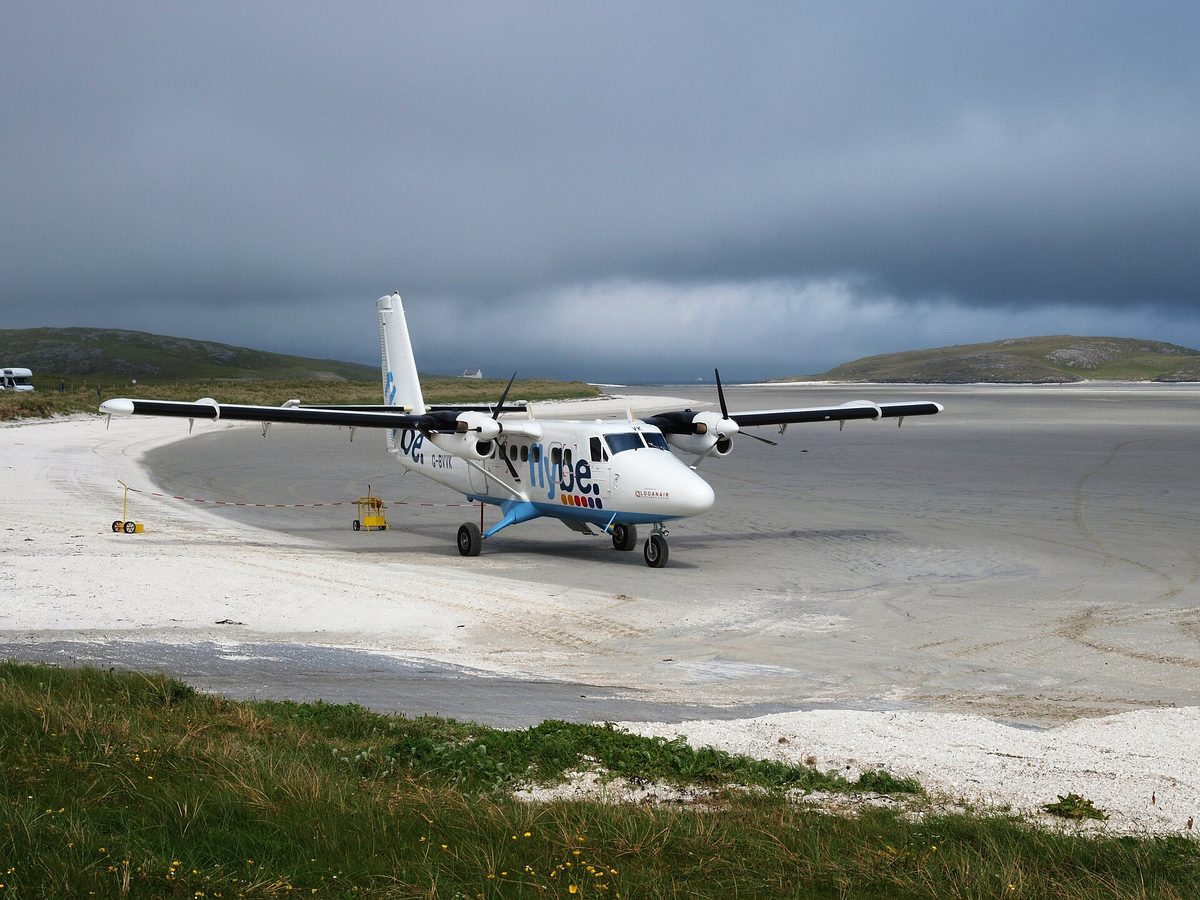
Traigh Mhor is the beach that doubles as Barra’s airport — the only place in the world where scheduled flights land on sand. The timetable follows the tide rather than the clock, which I find delightful and airlines presumably find maddening.
The rule: when the orange windsock is up, stay off the sand. When flights are done for the day it’s a public beach again. Loganair flies in from Glasgow, and the landing is among the strangest things you can do in Scotland.
Walk five minutes across the neck of land and you reach Traigh Eais, facing the open Atlantic — bigger, wilder, empty, and with a serious undertow. Look, don’t swim.
Getting there: CalMac from Oban to Castlebay takes around five hours direct, longer via Lochboisdale. Book a car space early; there are only a handful of sailings a week.
Vatersay
Vatersay has been joined to Barra by a causeway since 1991, so it’s a ten-minute drive from Castlebay. What you get is two beaches back to back on a narrow isthmus — Bagh Siar facing west into the Atlantic, Vatersay Bay facing east and sheltered.
That’s the trick: whichever way the wind is blowing, one of them is calm. If you only have an afternoon on Barra, spend it here rather than at the airport.
There’s a community hall doing teas in summer and a small car park. Otherwise nothing.
The Inner Hebrides and the west coast
Easier to reach than the Outer Hebrides and, in a few cases, just as good. Most of these work as part of a wider trip round the Highlands and west coast rather than as destinations in themselves, which makes them a much softer commitment.
Calgary Bay, Isle of Mull
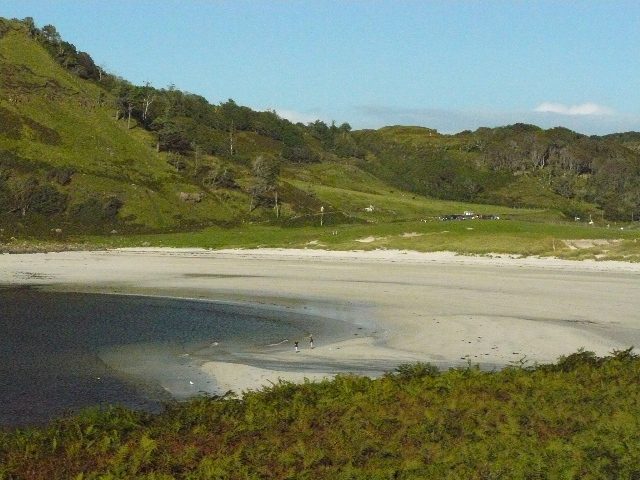
The best all-round beach on Mull and the one I’d pick if you have a single day. A wide bay of pale shell sand, clear water, and machair behind it. Yes, Calgary in Canada was named after it.
Getting there: ferry from Oban to Craignure, about 50 minutes, then roughly 90 minutes of driving across the island — much of it single track with passing places, and it takes longer than the map suggests. Allow properly for it.
Facilities: a free car park and Calgary Art in Nature a little way back up the road, which has a cafe. Wild camping is tolerated on the machair, which means it gets busy and occasionally messy in August. Take your rubbish home.
Swimming: yes. It’s a sheltered bay by west coast standards, and the shallows warm up on a sunny afternoon.
Langamull and the north Mull beaches
Langamull is Calgary’s quieter neighbour and takes a 20–25 minute walk through forestry from a small car park off the B8073. That walk is the whole point — it filters out most of the coach traffic.
No facilities, no signal, and the last bit of path can be boggy after rain. Boots rather than sandals.
The north end of Iona
Traigh Bhan — the White Strand of the Monks — sits at the north tip of Iona, and I’d put it among the loveliest small beaches in Scotland. Pale sand, green-blue water, and Staffa on the horizon.
Getting there: drive to Fionnphort at Mull’s south-west corner, then a ten-minute passenger ferry. Visitors’ cars aren’t taken across, so it’s a mile-and-a-bit walk from the jetty through the village and past the abbey. Perfectly easy, but wear something you can walk in.
It can be done as a very long day trip from Oban on a coach-and-ferry package, but you’ll spend eight hours travelling for two on the island. A night on Mull or Iona is far better.
Coral Beach at Claigan, Isle of Skye
It isn’t coral. It’s maerl — a calcified red seaweed that bleaches white when it dries — and it gives the beach a crunchy, gravelly texture rather than soft sand. Bare feet are a bad idea; the colour of the water is worth it anyway.
Getting there: follow the minor road north from Dunvegan for about four miles to the car park at Claigan, then walk roughly a mile along a farm track, 25–30 minutes each way. Free parking, but the car park is small and full by mid-morning in summer.
Facilities: none whatsoever. Nearest anything is Dunvegan.
Swimming: it shelves very gradually, so it’s more of a long paddle than a swim. Grand for children on a calm day. It’s an easy win on a Skye itinerary, and a welcome change of pace from the Quiraing car park scrum.
Talisker Bay, Skye
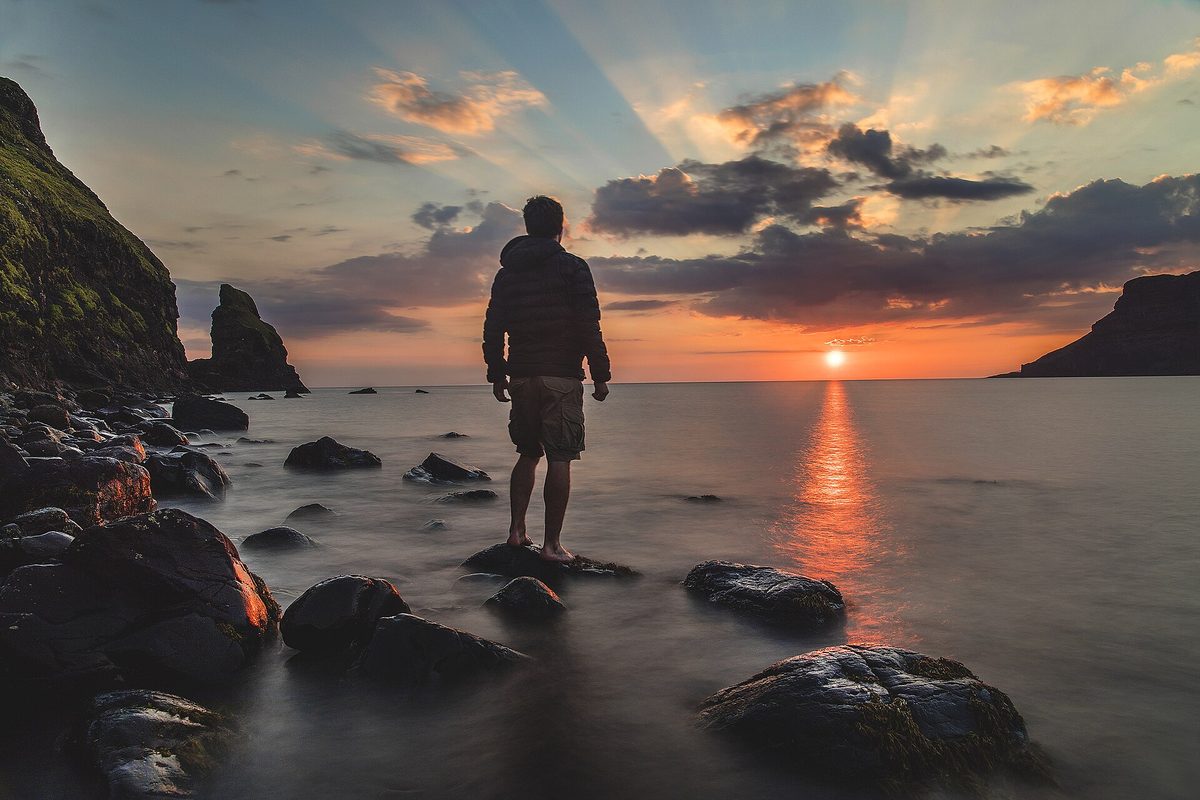
Not a swimming beach and not really a sunbathing one either. Talisker is a dark, dramatic cove with black and white sand in bands, a sea stack, and a waterfall coming off the cliff onto the beach at high water. It’s the most photogenic bit of coast on Skye and it’s usually windy.
Park in the very limited space near Talisker House — genuinely only room for a handful of cars, and it’s a working farm, so don’t block the track. It’s about 30 minutes’ walk each way. Then go and have a dram at the distillery of the same name eight miles away in Carbost, which is a better stop than most on any whisky distillery tour.
Kiloran Bay, Colonsay
A perfect half-mile crescent of golden sand backed by high dunes, and one of the least-visited good beaches in the country simply because Colonsay is awkward to reach. The ferry from Oban takes about 2 hours 15 and runs only a few days a week, which effectively forces a two- or three-night stay.
That inconvenience is the attraction. You will very likely have it to yourself. There’s a hotel, a brewery and a bookshop on the island, and not a great deal else.
Tiree: Balevullin and Gott Bay
Tiree gets more sunshine hours than almost anywhere else in Britain and it is flat, treeless and constantly breezy — which is why it’s Scotland’s windsurfing island. Balevullin is the surf beach; Gott Bay is a long, shallow eastern sweep that’s better for families and kitesurfing.
Ferry from Oban takes about four hours, or Loganair flies from Glasgow. There’s a surf school, board and wetsuit hire, and a handful of places to stay — book early, because the island is small and the Tiree Wave Classic in October fills it entirely.
Islay: The Big Strand, and two beaches not to swim at
The Big Strand at Laggan Bay runs seven miles, which makes it the longest beach on Islay and a fine walk on a windy day. Kintra at its southern end has a campsite and a car park.
Now the honest part. Machir Bay and Saligo Bay on the west coast are the two everybody photographs, and both carry warnings against swimming. The rips and undertow there are serious and people have drowned. Walk them, admire them, don’t get in. There is plenty else to do on Islay — the distilleries alone will fill three days.
Camusdarach and the Silver Sands of Morar
The stretch of coast between Arisaig and Morar is the easiest place on the mainland to see what the Hebrides look like without getting on a boat. White sand, turquoise shallows, and Eigg and Rum sitting on the horizon.
Camusdarach is the famous one — the beach from Bill Forsyth’s 1983 film Local Hero. The car park is signed off the A830 north of Arisaig; expect a small charge, as it has been moving to pay-and-display. From there it’s five minutes over a footbridge and through the dunes.
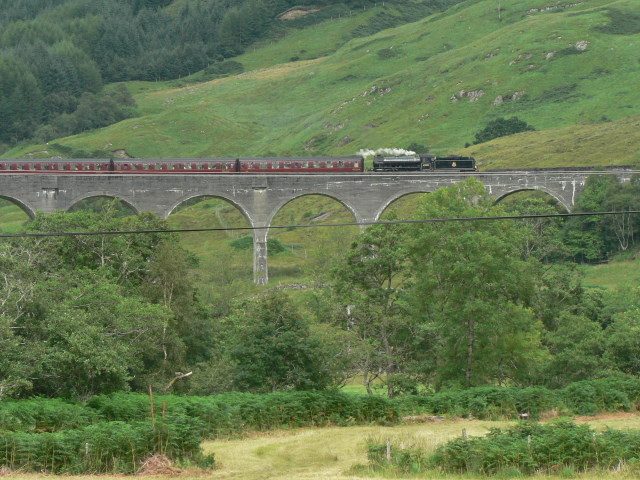
Getting there: about an hour and ten from Fort William, or fifteen minutes from Mallaig. The A830 is the road the Jacobite steam train follows, so you can combine it with the Glenfinnan viaduct.
Swimming: yes — shallow, sheltered and among the most family-friendly on the west coast. There are half a dozen equally good beaches within two miles if this one is busy; just pull into the next lay-by along.
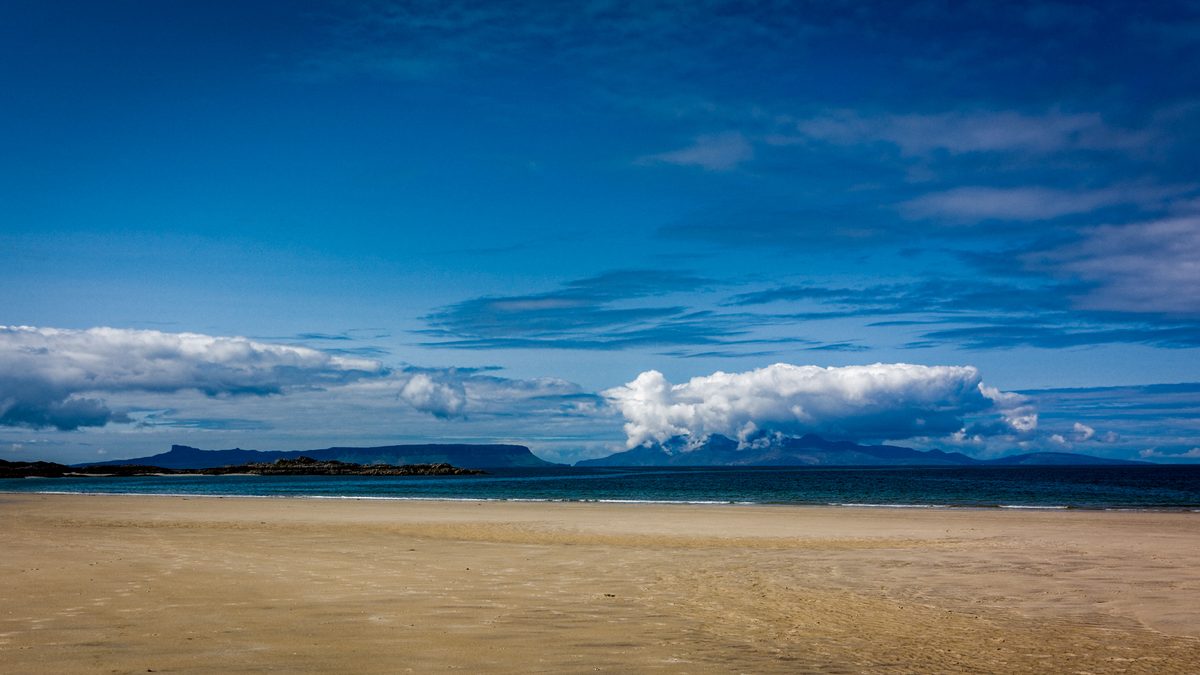
Sanna Bay, Ardnamurchan
Sanna is a series of small white bays scattered among black volcanic rock at the very end of the Ardnamurchan peninsula — the most westerly point on the British mainland. On a clear day you look straight across at Rum, Eigg and Muck.
The drive out is the commitment: the B8007 from Salen is about 25 miles of narrow, twisting single track and takes well over an hour. Add the Corran Ferry crossing from the A82 to shorten it from Fort William.
There’s a small car park and nothing else. It’s exposed, the swimming is chilly and rocky, and it is absolutely worth the drive.
Machrihanish and Westport, Kintyre
The west side of Kintyre gets three miles of Atlantic-facing sand with a proper surf break at the Westport end. It’s among the best surf beaches in Scotland and among the most dangerous for swimming — rips are common and there’s no lifeguard.
Machrihanish Dunes and the old Machrihanish championship links sit behind it, and the drive down the A83 from Tarbert is a fine coastal road in its own right. It’s a long way from anywhere — about three hours from Glasgow — so treat it as an overnight.
The north-west and the north coast
This is the stretch that the North Coast 500 route made famous, and the beaches are the best reason to drive it. They’re also the emptiest sand in Britain. Facilities are minimal, phone signal is patchy, and the single-track roads punish anyone in a hurry.
Sandwood Bay, Sutherland
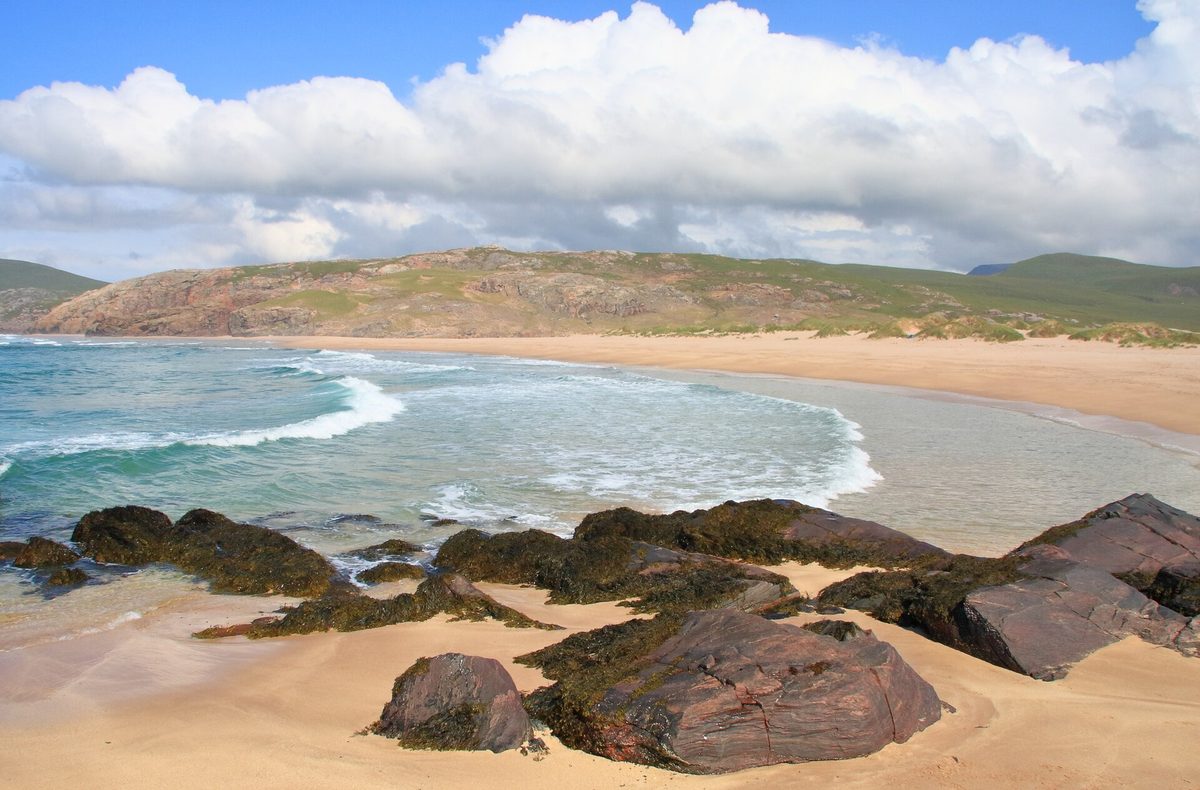
A mile of pink-tinged sand, big dunes, a freshwater loch behind, and the sea stack Am Buachaille standing off the southern end. No road reaches it. That’s why it’s still perfect.
Getting there: drive to Blairmore, near Kinlochbervie in the far north-west, and park at the John Muir Trust car park — there’s a donation box and, usefully, toilets. From there it’s four miles each way on a rough, undulating track across peat moorland. Allow two hours out, two back, plus however long you want on the sand. Four to five hours minimum for the round trip.
Facilities: nothing at the beach. No water, no bins, no shelter, no signal. Carry everything in and out.
Swimming: it’s open Atlantic with a shore break and no help within four miles. Strong, experienced swimmers on a calm day only.
Verdict: the finest beach walk in Britain. Boots, waterproofs, packed lunch. Don’t attempt it in trainers after a wet week — the track holds water.
Oldshoremore and Polin
If four miles each way is too much, these are ten minutes’ walk from a car park just past Kinlochbervie and they are quietly wonderful. Oldshoremore is the larger bay with a small parking area and a toilet; Polin is the little cove next door reached by a short path.
Honestly, on a busy August day I’d take these over Sandwood. Same sand, same water, and you can carry a cool box.
Achmelvich, Clachtoll and Clashnessie
Three small beaches strung along the B869 north of Lochinver, which is one of the most entertaining roads in Scotland — steep, twisting, single track, and glorious.
Achmelvich is the busiest, with a campsite, hostel, toilets and seasonal food van. It’s a sheltered white cove with water that goes properly turquoise, and it’s the safest swim of the three.
Clachtoll has an Iron Age broch beside it and a campsite; Clashnessie is a wider pink-sand bay with a waterfall walk behind it and no facilities at all. Car parks at all three are small. If you’re driving a motorhome, be realistic about whether you’ll fit.
Achnahaird and Mellon Udrigle
Two of the best views in Scotland from a beach. Achnahaird, on the Coigach peninsula, is a wide tidal bay that empties to acres of ridged sand with the peaks of Assynt behind it. Mellon Udrigle, further south near Laide, looks north across the water to An Teallach and the Summer Isles.
Both have small car parks off single-track roads and neither has facilities beyond, at Mellon Udrigle, a seasonal toilet that may or may not be open. Achnahaird empties so completely at low tide that swimming means a long walk out.
Balnakeil and Sango Sands, Durness
Durness is the natural base for the far north-west and it has two very good beaches within a mile of the village.
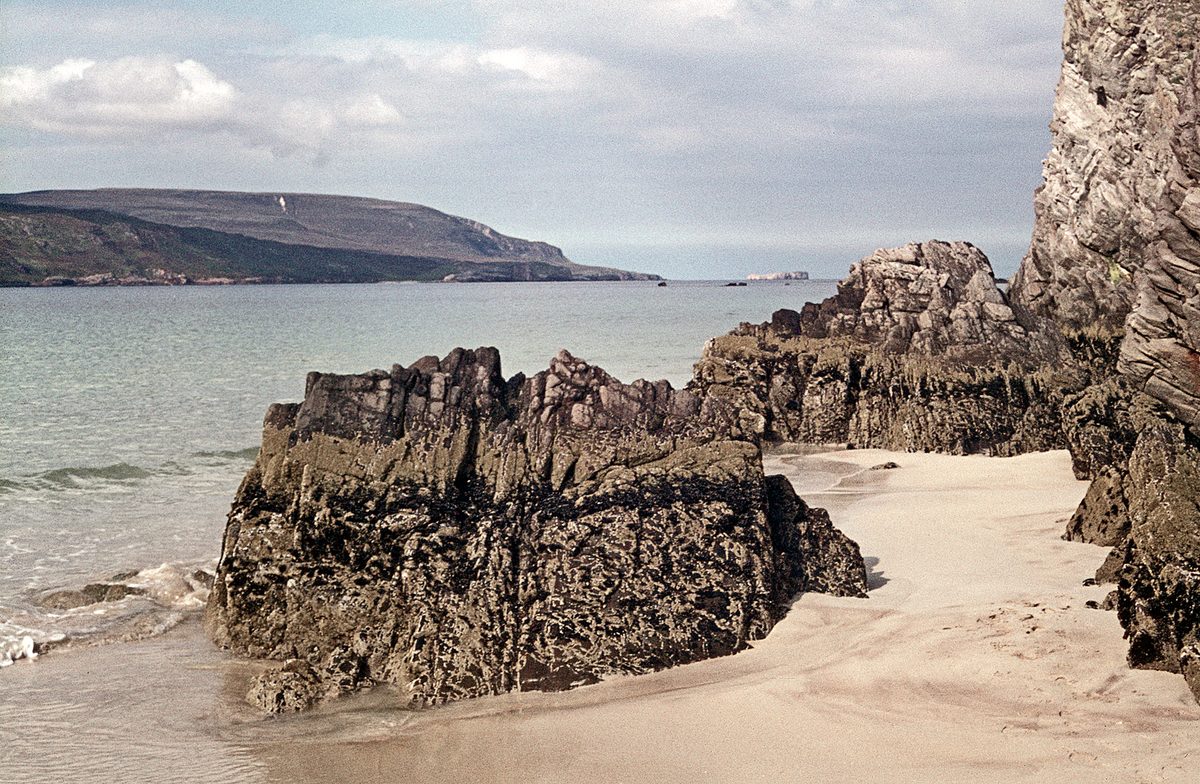
Balnakeil is the big one: a mile of sand under high dunes, with a ruined 17th-century church at one end and Balnakeil Craft Village — an old military base turned into studios and a very good chocolate cafe — just behind. Free parking. From the north end you can walk out to Faraid Head for puffins in early summer.
Sango Sands sits below the village itself, reached by steps from the campsite, with rock stacks splitting it into sections. Toilets and a bar at the top. It’s the more sheltered swim.
Both are cold, exposed and unpatrolled. Both are excellent.
Ceannabeinne, Torrisdale and Farr Bay
Ceannabeinne is the postcard beach three miles east of Durness with a zip line strung across it in season — good fun, and a rare example of an activity operator on this coast. Roadside parking on the A838 and steps down.
Torrisdale, near Bettyhill, is where the River Naver meets the sea, and the estuary channel runs fast. Swim in the bay, not the channel. Farr Bay next door is smaller and safer.
Dunnet Bay, Caithness
Firm sand running two miles along the north coast near Thurso, backed by dunes and a forest. Very few big northern beaches have proper infrastructure; this one does: car park, toilets, a ranger centre and a campsite. Dunnet Head, the most northerly point on the British mainland, is ten minutes up the road, and the gin distillery in the village is worth half an hour.
Thurso, just west, is a serious cold-water surf town — Thurso East is a world-class reef break, and not a beginner’s wave. There are surf schools in town if you want lessons.
The east coast: the practical ones
The east coast beaches don’t photograph like Harris. They do, however, have car parks, toilets, cafes, lifeguards and railway stations, and you can reach most of them in under an hour from a city. For a lot of visitors that trade is the right one.
Dornoch, Sutherland
A long golden beach with a proper little town behind it — cathedral, bookshop, distillery bar — and a fifteen-minute walk between the two. Parking at the beach, toilets, and a café in season.
Royal Dornoch is one of the great links courses in the world and green fees reflect it. The beach itself is flat, safe and popular with families. Roughly 45 minutes north of Inverness, which makes it the easiest good beach in the Highlands to reach.
Nairn and Findhorn, Moray
Nairn has two beaches, a harbour and a Victorian seaside-town feel, and it’s about half an hour from Inverness. East Beach is the big sandy one with a car park, toilets and an ice-cream queue.
Findhorn, twenty minutes further along, is a sandbar beach on a tidal bay with an enormous seal population. The channel between the bay and the sea moves very fast on the tide — every year someone underestimates it. Swim in the bay side or the open beach, not the narrows.
The Moray Firth is the best place in Britain to see bottlenose dolphins from land. Chanonry Point on the Black Isle is the reliable spot, on a rising tide. It is not a swimming beach; the current through that gap is ferocious.
Lossiemouth, Cullen and Sandend
Lossiemouth’s East Beach is a mile of dune-backed sand reached by a footbridge over the river — the old bridge was closed for years and a replacement has since opened, so check locally if you’re relying on it. West Beach, on the other side of town, has the lighthouse and a car park.
Cullen is a curve of sand under a railway viaduct in a village that gave its name to Cullen skink, the smoked haddock soup you should absolutely order while you’re there. It’s a highlight of any tour of Scotland’s regional food along this coast.
Sandend is a small, sheltered cove between the two that has become the north-east’s surf beach. Little car park, seasonal toilets, a burn running across the sand that children spend hours damming — one for the family shortlist.
Balmedie, Aberdeen and Newburgh
Balmedie Country Park north of Aberdeen has some of the biggest dunes in Britain, boardwalks over them, a car park, toilets and a cafe. The sand runs for miles. It’s a windy, bracing, big-sky beach rather than a pretty one.
Aberdeen’s own beach is a two-mile city esplanade with amusements at one end and Footdee — the old fishing cottages, pronounced “Fittie” — at the other. Dolphins are regularly seen from the harbour mouth in summer.
At Newburgh, where the Ythan meets the sea, there’s a grey seal haul-out that can run to a thousand animals. View them from the north side of the estuary at the Forvie reserve, keep well back, and leave the dog in the car — disturbing them is both illegal and pointless.
Lunan Bay, Angus
Red-tinged sand running two and a half miles with the ruin of Red Castle above it and a decent beach break for surfers. Parking is a small area at the north end with a track down; it fills quickly on a good weekend.
There’s a seasonal cafe and not much else. It’s about 25 minutes from Arbroath — where you should stop for a smokie — and a comfortable day out from Dundee.
West Sands, St Andrews
Two miles of flat sand alongside the Old Course, and the beach from the opening sequence of Chariots of Fire. You can walk to it from the middle of town in ten minutes, which puts it in a category of one among Scotland’s great beaches.
Facilities: toilets, cafes within reach, pay parking along the beach road, and RNLI lifeguards over the summer season. If you’re travelling with children who actually want to swim, this and Elie are the two I’d choose in all of Scotland.
Dogs: restricted across the summer months. Check the signs at the entrance; the rules change and the wardens do enforce them.
Elie and the East Neuk of Fife
Elie has a sheltered harbour beach, a summer sauna on the sand, lifeguards in season and a watersports centre. Add Earlsferry next door at low tide and you get close to a mile of golden sand. It is the most civilised beach day in Scotland.
The Elie Chain Walk, round the headland at Kincraig, is a scramble along the cliffs using fixed chains. It’s brilliant, and it is properly tide-dependent — people get cut off every year. Go at low water, allow two hours, wear grippy footwear, and don’t take small children.
The rest of the East Neuk — Crail, Anstruther, Pittenweem, St Monans — is an hour and a half from Edinburgh, along a coastal road that’s a pleasure in itself.
Yellowcraig, Gullane and North Berwick
East Lothian is Edinburgh’s beach coast and it’s better than it has any right to be. Yellowcraig has a car park, toilets, a woodland play area and a view out to Fidra, the island that supposedly gave Robert Louis Stevenson the shape of Treasure Island. Gullane Bents has vast dunes and a big car park above them.
North Berwick has two town beaches either side of the harbour, a Victorian seafront, the Scottish Seabird Centre, and boat trips out to the Bass Rock and its gannet colony — over 100,000 birds in season, and the smell arrives before you do.
Costs: the council coastal car parks charge, typically a few pounds, and a ticket usually covers you at other East Lothian coastal car parks the same day. Bring change or the parking app.
Getting there: trains run from Edinburgh to North Berwick in about 35 minutes, so this is a rare Scottish beach day that doesn’t need a car at all. For the others, see how public transport and car hire work here.
Seacliff
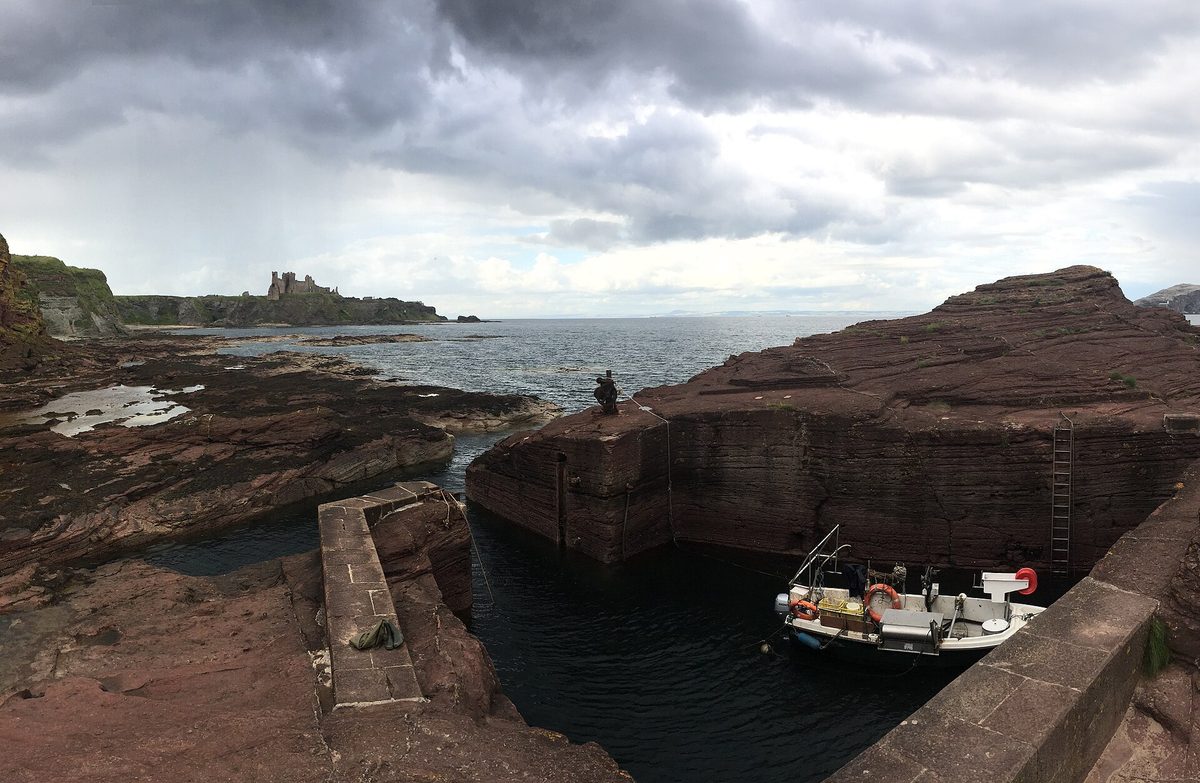
My favourite beach within an hour of a Scottish city. A curve of red-gold sand under the ruins of Tantallon Castle, with the Bass Rock offshore and the smallest harbour in Britain — a tiny dock blasted out of the rock — at the eastern end.
The catch: access is along a private road off the A198 through a coin-operated barrier. It has been £3 in £1 coins for several years, and there is no card reader. Bring coins or you will do a three-point turn and drive away. Prices at a private barrier can change without notice.
Facilities: absolutely none. No toilets, no bins, no cafe. That, plus the coin barrier, is exactly why it’s quiet.
Coldingham Bay, Scottish Borders
A compact sandy bay with a row of painted beach huts, a surf school, a cafe and RNLI lifeguards in summer. It’s the most southerly of Scotland’s lifeguarded beaches and about an hour and a quarter from Edinburgh.
The clifftop path north to St Abbs Head takes an hour and passes the finest seabird colony on the east coast. St Abbs is also Scotland’s premier scuba diving site, if you want to find out what 12°C feels like at ten metres.
The south-west: the coast people drive past
Dumfries and Galloway and the Ayrshire coast get overlooked because everyone is heading north. That’s a mistake if you’re coming up from England — these beaches are two hours closer than anything in the Highlands, and considerably emptier than East Lothian.
Sandyhills and Rockcliffe, Solway Firth
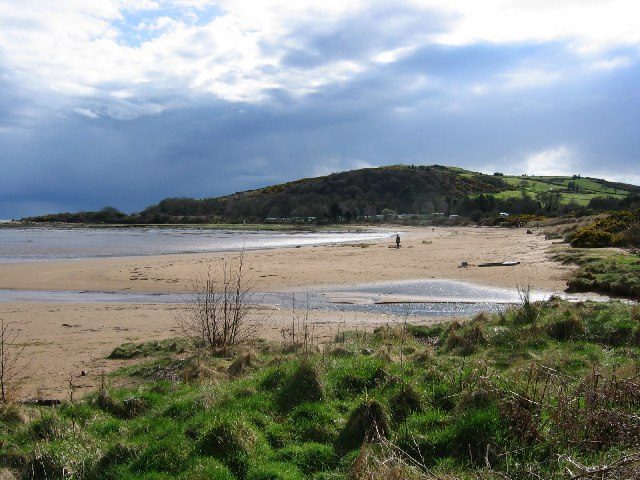
Sandyhills is a broad sandy bay with a car park, toilets and a caravan site, backed by hills. At low tide the sand runs out a very long way.
The warning that matters here: the Solway has one of the biggest tidal ranges in Britain and the flood tide crosses those flats faster than you can walk. There are also areas of soft, sinking sand. Do not wander out towards the low-water mark on a rising tide, and read the signs at the car park — they are not there for decoration.
Rockcliffe, a few miles west, is rockier and quieter, and the Jubilee Path to Kippford is a lovely 45-minute walk. Rough Island offshore can be reached on foot at low tide, but it’s a bird reserve and is closed during the May–June nesting season.
Southerness
Southerness has a stubby white lighthouse standing directly on the beach, first lit in 1749 and the second-oldest in Scotland. You can walk right up to it, which you can’t say of many.
The beach is a mix of sand and rock with good rock pooling at low tide, and there’s a links golf course and a large holiday park behind. Same Solway tide warnings apply.
Carrick, Mossyard and the Fleet Bay beaches
Between Gatehouse of Fleet and Kirkcudbright there’s a run of small sandy bays — Carrick, Mossyard, Sandgreen — that almost nobody outside the region knows about. Sand, shallow water, views out to the Isles of Fleet.
Access is down narrow farm roads, parking is limited and sometimes chargeable at a farm gate, and facilities are nil. Kirkcudbright, the artists’ town ten minutes away, is worth an afternoon on its own.
Culzean and Croy, Ayrshire
Croy Shore is a long pebble-and-sand beach with the best sunset view in the south-west — Ailsa Craig sitting offshore and Arran behind it. Culzean Country Park next door has a proper beach beneath the castle, plus the whole estate to explore.
Culzean charges admission to the park and castle, so factor that in, but the beach and grounds alone justify it if you’re already touring Scotland’s castles. It’s about an hour from Glasgow, which makes this the city’s most realistic beach day.
Portpatrick and Killantringan
Portpatrick is a harbour village on the far west of the Rhins of Galloway, and Killantringan Bay a mile north is a small sandy cove below a lighthouse. It’s the start of the Southern Upland Way, so you’ll see walkers setting off with enormous packs.
It’s a long way west — further west than Liverpool — and it’s worth it for the sunsets over the Irish Sea alone.
Planning a Scottish beach trip that actually works
The mistake I see most often is treating these beaches as stops on a driving route. The good ones are destinations, and the distances are much bigger than they look on a map.
Day trips versus overnights: be honest with yourself
Genuine day trips. East Lothian and the Borders from Edinburgh (40 minutes to an hour and a quarter). The East Neuk and St Andrews from Edinburgh or Dundee (an hour to an hour and a half). Culzean and Croy from Glasgow (about an hour). Dornoch, Nairn and Findhorn from Inverness (30 to 60 minutes). Coral Beach and Talisker from a base on Skye. Camusdarach from Fort William.
Not day trips, whatever the map says. Harris and Lewis need three nights to be worth the ferry, and I’d argue four. Barra needs two or three. The Uists and Berneray, three. Mull and Iona, two minimum — Calgary Bay is 90 minutes’ driving from the ferry terminal, so a day trip gives you about two hours there. Colonsay, Coll and Tiree are dictated by sailing days, which usually means two or three nights.
The far north-west is its own case. Durness is roughly five hours’ driving from Inverness by the coast road, or two and a half the direct way through Lairg. Sandwood Bay needs the best part of a day on its own. Base yourself in Durness, Kinlochbervie, Scourie or Lochinver for two or three nights and work outwards. Trying to see it from a single base further south will just mean a lot of driving.
If you’re building a wider route, our Scotland itinerary suggestions will help you work out where the beaches fit without wrecking the driving days.
Ferries: which route, and how far ahead to book
Almost all of the island beaches here are served by CalMac. Rough crossing times, which are worth knowing before you plan anything:
- Uig (Skye) to Tarbert (Harris) — around 1 hour 40 minutes
- Ullapool to Stornoway (Lewis) — around 2 hours 30 minutes
- Oban to Castlebay (Barra) — around 5 hours direct, longer via Lochboisdale
- Oban to Craignure (Mull) — around 50 minutes
- Fionnphort to Iona — around 10 minutes, foot passengers only
- Oban to Colonsay — around 2 hours 15 minutes, a few days a week
- Oban to Tiree — around 4 hours
Fares are subsidised under the Road Equivalent Tariff, so they’re cheaper than you’d expect — think tens of pounds rather than hundreds for a car on most routes, plus a modest fare per passenger. Check current pricing on the operator’s own site.
The booking rule: vehicle spaces to the Outer Hebrides in July and August sell out. Book the moment summer sailings open, which is usually months ahead. Foot passengers can almost always get on. If you can’t get a car space, consider going on foot and hiring a car or bikes on the island — but book that ahead too, because island hire fleets are tiny.
Also plan for cancellations. West coast sailings are disrupted by weather and by ageing vessels more often than anyone would like, particularly outside high summer. Never book a beach trip that requires you to be back for a flight the same evening.
Driving: single track, passing places and time
Most of the roads in this guide are single track with passing places. The etiquette matters: pull into a passing place on your left, or stop opposite one on your right; pull in to let faster traffic overtake; and give way to anything coming uphill.
Budget 40mph average at best on these roads, less in the north-west. A 60-mile drive on the B869 or the B8007 is a two-hour job, not a one-hour one. Fuel stations are far apart and many close on Sundays in the Outer Hebrides, where the Sabbath is still observed in Lewis and Harris — fill up on Saturday.
The Bealach na Bà to Applecross is the most demanding road in this article: hairpins, a 626-metre summit, and no place for caravans or nervous drivers. The coast road from Shieldaig is the gentler way in.
When to go
Late May and early June is my pick. The machair is coming into flower, the days are enormously long — light until nearly midnight in the far north — and the midges haven’t fully arrived. Late August and September give you the warmest water and the best chance of a settled spell, plus emptier car parks once schools return.
July and August are the busiest and the buggiest. Midges are least of a problem on beaches, because they can’t cope with a breeze, but a sheltered dune hollow on a still evening will be unpleasant. Clegs — horseflies — are worse in July and they bite through thin clothing.
Winter beaches are worth doing for the light and the emptiness, but the days are short and the sea is around 7°C. Our guide to choosing the right month to visit Scotland goes into the trade-offs properly.
Where to stay
Island accommodation is the binding constraint, not ferries. Harris has a handful of hotels and a lot of self-catering, and July–August books out by around March. Barra and the Uists are the same on a smaller scale. If you’re flexible, hostels and campsites are the easiest late option.
On the mainland, Durness, Lochinver, Ullapool, Gairloch and Arisaig are the useful bases for the west and north-west. Have a look at the accommodation options across Scotland before you fix a route, because in the north-west the beds decide the itinerary rather than the other way round.
Wild camping is legal on most unenclosed land under the Scottish Outdoor Access Code, and that includes many beach machairs. It does not include sleeping in a motorhome in a beach car park — that’s not covered, it annoys everyone locally, and several councils have started enforcing against it. Use a campsite.
What to actually pack
- Waterproof jacket and a warm layer, in August, without exception
- Boots or trainers you don’t mind soaking — a lot of these beaches involve a walk
- A wetsuit if you’re serious, plus boots and gloves
- A changing robe or, at minimum, a big towel and a plan
- Water, food and a bin bag — most of these beaches have no facilities at all
- Midge repellent and a head net for evenings inland
- Sun cream: reflection off pale sand burns people who assume Scotland can’t
- Coins, for barriers and honesty boxes that don’t take cards
- Downloaded maps, because signal disappears
What underwhelms, and the mistakes I keep seeing
Every guide tells you what’s good. Here’s the other half.
Aberdeen and Portobello are not what you came for
Aberdeen’s beach is a perfectly decent city esplanade. Portobello in Edinburgh is a nice promenade with good coffee. Neither is remotely comparable to what’s in the first half of this guide, and both regularly appear on national beach lists on the strength of being convenient. If you have one beach day in Scotland, don’t spend it on a city seafront.
Loch Morlich is a loch
Loch Morlich near Aviemore has a sandy shore, watersports and a mountain backdrop, and it turns up on almost every “best beaches in Scotland” list. It’s freshwater, in the middle of the Cairngorms, and the parking charges and crowds in summer are considerable. Lovely spot. Not a beach.
People plan the beach and forget the tide
The single most common disappointment. Turning up at Luskentyre, Uig Sands, Achnahaird or Traigh Mhor at high water means seeing perhaps a fifth of the beach that’s in the photographs. Two minutes with a tide table fixes it.
Underestimating the drive
“It’s only 90 miles” means nothing on the west coast. Google’s estimate for single-track roads is optimistic, and it doesn’t account for the tractor, the tour bus reversing, or the three stops you’ll make because the view demands it. Add a third to any journey time and you’ll be about right.
Arriving at 11am in August and expecting to park
Luskentyre, Coral Beach, Camusdarach, Achmelvich, Talisker and Calgary all have small car parks. In peak season they’re full by mid-morning and the verges are not an acceptable alternative — blocking a passing place on a single-track road stops ambulances, not just other tourists. Go early, go late, or go to the next beach along. There is always a next beach along.
Treating a 13°C sea like a 25°C one
Cold water shock is the actual risk, not sharks or depth. Never jump or dive in. Get in gradually, control your breathing, keep the first swim short, and don’t let children run in from warm sand. Almost every serious incident on a Scottish beach involves someone entering cold water fast, or being caught out by a tide.
Expecting the Caribbean weather to match the Caribbean photograph
Those photographs are real, and they’re taken on the fifteen good days. You may get a week of grey, or you may get one afternoon of low sun on white sand that you’ll think about for years. Both are normal. Pack for the first and hope for the second — the same principle that applies anywhere outdoors here. Our general practical tips for travelling in Scotland cover the weather-proofing side in more detail.
Frequently asked questions
What is the best beach in Scotland?
Luskentyre on the Isle of Harris, on almost any measure. It combines the white shell sand, the turquoise water at low tide and the mountain backdrop better than anywhere else, and it has a car park and a toilet. If you’d rather earn it, Sandwood Bay in Sutherland is the more atmospheric beach and involves a four-mile walk each way.
Can you actually swim in the sea in Scotland?
Yes, and plenty of people do year-round. Summer sea temperatures run around 12–14°C, peaking in late August. A short dip without a wetsuit is fine for most healthy adults; anything longer than about fifteen minutes is much more comfortable in a 4/3mm suit with neoprene boots and gloves. Enter slowly — cold water shock is the real hazard.
Which Scottish beaches have lifeguards?
Very few. RNLI patrols have recently covered around eight beaches, all on the east and south-east coast: Coldingham Bay, Silver Sands at Aberdour, Burntisland, Leven, Elie, St Andrews East and West Sands, and Broughty Ferry. Nowhere in the Hebrides, the north coast or the north-west is patrolled. Check the RNLI site for the current season’s list and patrol dates.
Are dogs allowed on beaches in Scotland?
There’s no national ban, only local council orders, and they’re usually seasonal — commonly from April or May to the end of September on busier beaches such as St Andrews West Sands and parts of the East Lothian coast. Remote beaches in the Hebrides and the north-west generally have no restrictions. Keep dogs on leads near dunes in spring for ground-nesting birds.
Where are the white sand beaches in Scotland?
Mostly on the west and the islands. The Outer Hebrides — Harris, Berneray, Barra, Vatersay and the Uists — have the whitest, because the sand is crushed shell rather than mineral. On the mainland, the Silver Sands of Morar near Arisaig come closest without a ferry. Coral Beach on Skye is white for a different reason: dried maerl seaweed rather than sand.
Do you need a car to reach Scotland’s best beaches?
For the wild ones, effectively yes. The exceptions are worth knowing: North Berwick, Dunbar and Aberdour are on the train line from Edinburgh; St Andrews is a short bus from Leuchars station; Aberdeen and Nairn have beaches within walking distance of the station. In the islands, buses exist but run to the ferry timetable, so allow far more time than you think.
When is the best time to visit Scottish beaches?
Late May to early June for long daylight, machair flowers and fewer midges, or late August to mid-September for the warmest sea and quieter car parks. July and August have the most reliable weather but the biggest crowds and the worst insects. Aim for low to mid tide on whichever day you choose — it makes more difference than the month.
Are Scotland’s beaches clean and safe to swim in?
Generally, yes. Scotland’s bathing waters are monitored through the season by SEPA and most are rated good or excellent, with dozens recognised in Scotland’s Beach Awards. Water quality can dip after heavy rain near towns and river mouths, so it’s worth checking the current classification for your beach before swimming. Remote island beaches are as clean as they look.
Final thoughts
The best beaches in Scotland are not a compromise or a novelty. Stand on West Beach on Berneray on a bright day with nobody else on three miles of sand and it’s hard to think of anywhere in Europe you’d rather be.
They just ask more of you than a Mediterranean beach does. You need to check the tide, book the ferry early, drive further than you planned, carry your own lunch, and accept a sea that will never be warm. Do all that and you get something increasingly rare: a genuinely beautiful place with almost nobody in it.
My advice, if you’re choosing one? Give Harris four nights. If you can’t, give East Lothian a Saturday — and start planning the Hebrides properly for next year. Either way, there is plenty else worth building the rest of the trip around in our roundup of Scotland’s best days out, and the country’s most beautiful places pair neatly with a beach route.
Beach weather here is a matter of luck rather than season, though July and August give you the best odds. Our comparison of June, July and August in Scotland weighs those odds against the crowds.
About the author: This guide was written and is maintained by the ScotlandTourism.org editorial team — travel writers who’ve spent years exploring Scotland’s cities, Highlands and islands, from bagging Munros to chasing the perfect dram. We update our guides regularly to keep prices, opening details and advice current.
Last updated: August 2026. Prices and opening times change — always check the official site before you travel.
Photo credits
All images are used under their respective Creative Commons or public-domain licenses:
- Luskentyre Sand — M J Richardson, CC BY-SA 2.0, via Wikimedia Commons
- Berneray West Beach — Sandy Gerrard, CC BY-SA 2.0, via Wikimedia Commons
- Barra Airport Beach — Steve Houldsworth, CC BY-SA 2.0, via Wikimedia Commons
- Calgary Bay Mull — Wendy Kirkwood, CC BY-SA 2.0, via Wikimedia Commons
- Talisker — Joshua Earle joshuaearle, CC0, via Wikimedia Commons
- Camusdarach Arisaig — Peter Moore, CC BY-SA 2.0, via Wikimedia Commons
- Sandwood Bay — Mr D Bailey, CC BY-SA 2.0, via Wikimedia Commons
- Balnakeil Durness — Roger D Kidd, CC BY-SA 2.0, via Wikimedia Commons
- Seacliff Beach — Willh26, CC BY-SA 4.0, via Wikimedia Commons
- Sandyhills Solway — Richard Webb, CC BY-SA 2.0, via Wikimedia Commons

2 notes from readers