Every list of the best castles in Scotland contains roughly the same fifteen buildings, described in roughly the same three sentences, ranked in an order nobody can defend. What they leave out is the thing you most need to know before a first trip: Scotland’s castles are not a single category of attraction, and treating them as one is how you end up with a £60 admissions bill you didn’t budget for and a locked gate at Inveraray in February.
A Scottish castle is one of four different things. It is a Historic Environment Scotland property with timed tickets and an audio guide. It is a National Trust for Scotland property on a completely separate membership. It is a privately owned house where a family still lives and opening is restricted to a season and a guided tour. Or it is a roofless ruin standing in a field that costs nothing to see. Which of those four you are looking at determines whether you book, what you pay, how long you stay, and whether an Explorer Pass earns its keep. So that is how I have grouped them below.
Which are the best castles in Scotland?
Edinburgh, Stirling and Urquhart are the three great fortresses and the ones most people should prioritise. Dunnottar and Kilchurn are the most photogenic ruins. Glamis, Blair, Inveraray and Culzean are the grand lived-in houses. Eilean Donan and Dunvegan are the island set-pieces. Which you choose should depend on your route, not on a ranking.
At a glance: the numbers that actually change your plans
Prices below are adult admission at the time of writing, and several sites charge a couple of pounds more if you turn up and pay at the gate rather than booking online. Always check the official site before you set off.
| Castle | Who runs it | Adult admission | Book ahead in summer? | Time to allow |
|---|---|---|---|---|
| Edinburgh Castle | Historic Environment Scotland | £23.50 online, £26 at the gate | Strongly recommended — tickets sell out | 2–3 hours |
| Stirling Castle | Historic Environment Scotland | £18.50 online | Advisable | 2.5–3 hours |
| Urquhart Castle | Historic Environment Scotland | Around £14 online | Yes, and book the car park too | 1–1.5 hours |
| Dunnottar Castle | Privately run | £13.50 | No, but check for wind closures | 1.5–2 hours |
| Tantallon Castle | Historic Environment Scotland | Around £7.50 online | Online for the best price | Short visit |
| Culzean Castle | National Trust for Scotland | £22 castle and park, £16 park only | No | 3–4 hours |
| Eilean Donan Castle | Private trust | £13 | No — tickets sold at the castle on the day only | 45–60 minutes |
| Kilchurn Castle | Historic Environment Scotland | Exterior only — interior closed for conservation | No | Short visit |
The four kinds of Scottish castle, and why the difference matters
Historic Environment Scotland looks after the state-owned sites: Edinburgh, Stirling, Urquhart, Doune, Tantallon, Craigmillar, Kilchurn and dozens more. These are the ones with timed online tickets, a standard concession structure, a shop, and the Explorer Pass. That pass and HES membership work at HES sites only, and the pass’s list of participating castles changes with the season, so check it against your route before you buy.
The National Trust for Scotland is a charity, entirely separate, with its own membership card. Culzean, Crathes, Brodick, Craigievar and Drum are theirs. An HES pass is worthless at an NTS gate and vice versa.
Privately owned houses — Glamis, Blair, Inveraray, Dunvegan, Duart, Dunnottar, Eilean Donan — set their own prices and their own seasons. Most close for the winter. Several sell only a guided tour of the interior at fixed departure times. No national pass touches any of them.
Unmanaged ruins — Ardvreck, Slains, and Kilchurn’s exterior — cost nothing, have no staff, no toilets and no railings. They are often the most atmospheric half hour of a trip and they are wildly under-represented in the rankings, presumably because nobody earns commission on them.
If you want the wider picture of how these fit together across the country, our main guide to castles in Scotland covers the history and the regional spread in more depth. What follows is the practical layer.
The great fortresses
These three are the ones that justify a full ticket price on their own. All are HES, all are covered by a pass, and all three together will get you most of the way to a break-even that I will do the maths on further down.
Edinburgh Castle
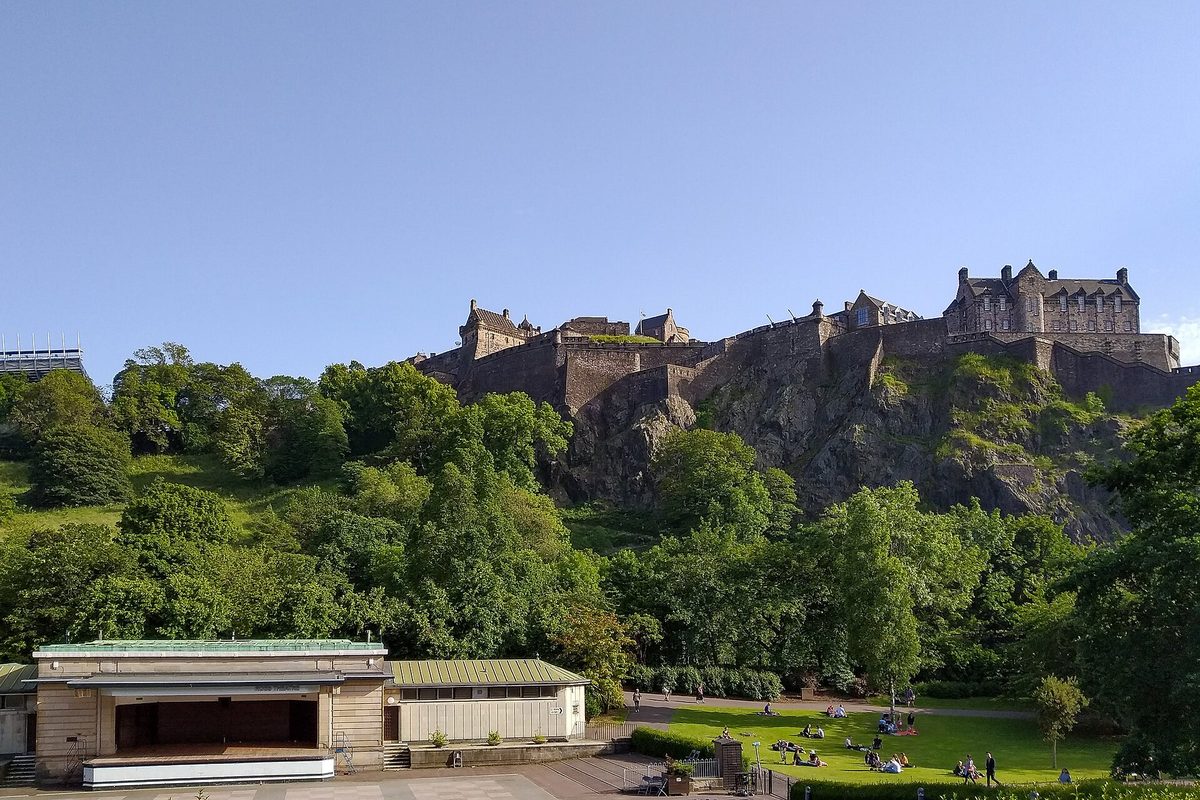
£23.50 for an adult booking online, £26 at the gate. It is the busiest castle in the country, and it is still worth it, because you are getting the Honours of Scotland, the Great Hall, St Margaret’s Chapel and a view over the whole city from a dead volcano. Allow two to three hours, longer if you stop for the one o’clock gun.
Book a timed slot. In July and August the morning slots go days ahead, and there is no ticket office queue that will save you. There is no visitor car park — park at Castle Terrace or come up on foot. We go through the ticket types, the cheapest entry windows and what is worth adding on in our Edinburgh Castle tickets guide, and the approach itself is half the fun if you come up the Royal Mile from Holyrood.
Honest line: the interior is genuinely good, but the esplanade in high summer is a crush. Go at opening or go in the last two hours of the day.
Stirling Castle
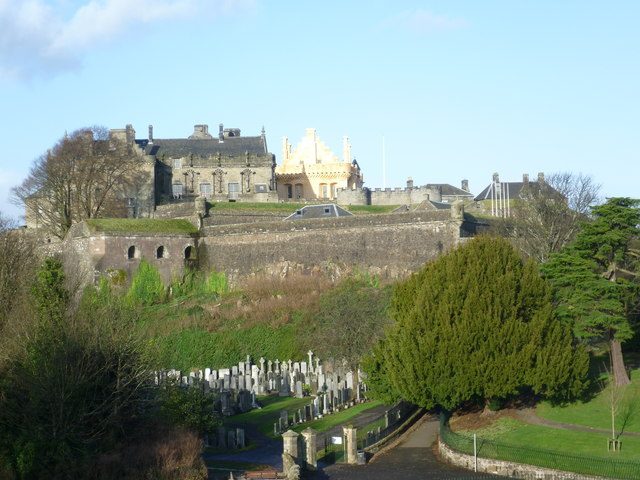
Around £18.50 online. If you only have time for one of the two big fortresses, and you care more about seeing how a Renaissance royal court actually looked than about crowds and crown jewels, choose Stirling. The Royal Palace has been redecorated to how it would have appeared in the 1540s — loud, gilded, tapestried, nothing like the grey stone people expect.
There is a car park on the esplanade, charged, and it fills by mid-morning in summer. Allow two and a half to three hours. It is within easy reach of both Edinburgh and Glasgow, so it slots into a day from either city.
If I could only send you inside one Scottish castle, it would be this one. If you leave Scotland having seen only the outside of castles, you have missed the point, and Stirling is where to fix that.
Urquhart Castle
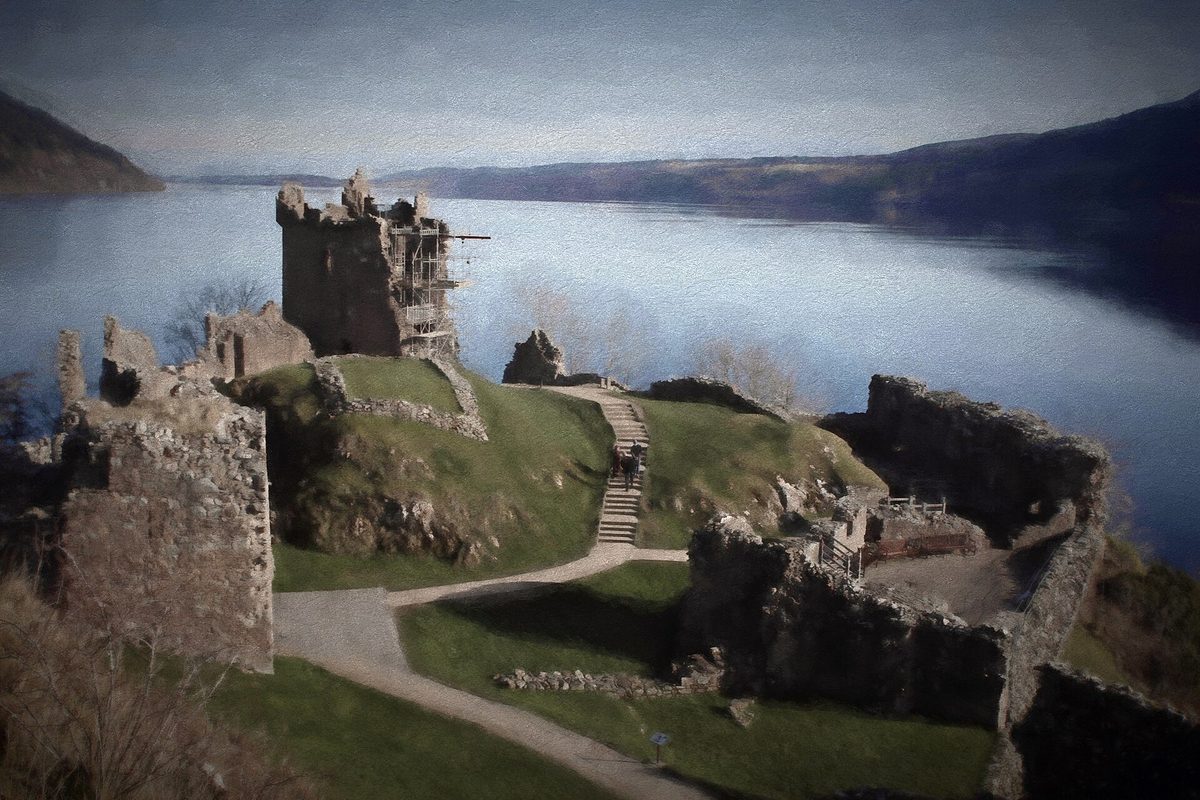
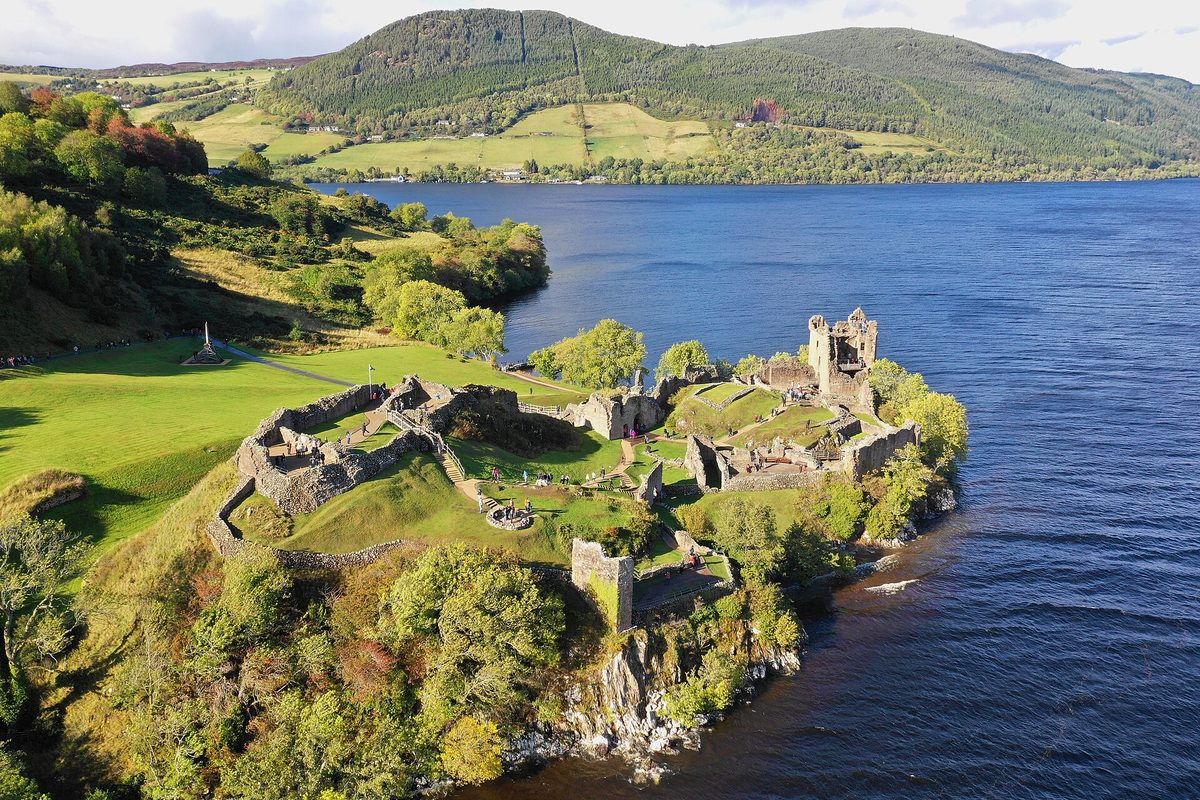
Around £14 online, around £16 if you pay on arrival. Urquhart is a modest ruin in a spectacular position: a headland jutting into Loch Ness with the Great Glen running away in both directions. The Grant Tower and the trebuchet are the highlights and you will see everything in an hour.
Two practical points nobody mentions. Parking is free but it must be booked online in advance and added to your ticket — turn up without it and you may be turned away. Motorhomes between 4.5 and 6 metres get a small number of designated bays, also pre-booked, and if none show as available online the site cannot take you. From the visitor centre there is a steep tarmac ramp down to the ruin, which matters if anyone in your party has mobility issues.
Honest line: you are paying for the view and the setting, not the masonry. It is still the right call if you are doing Loch Ness and Inverness anyway, but it would be poor value inland.
The photogenic ruins — free, or nearly
This is the group the rankings under-serve. Several of Scotland’s most memorable castles cost nothing at all, and two of them are better from the outside than any ticketed interior in the country.
Dunnottar Castle
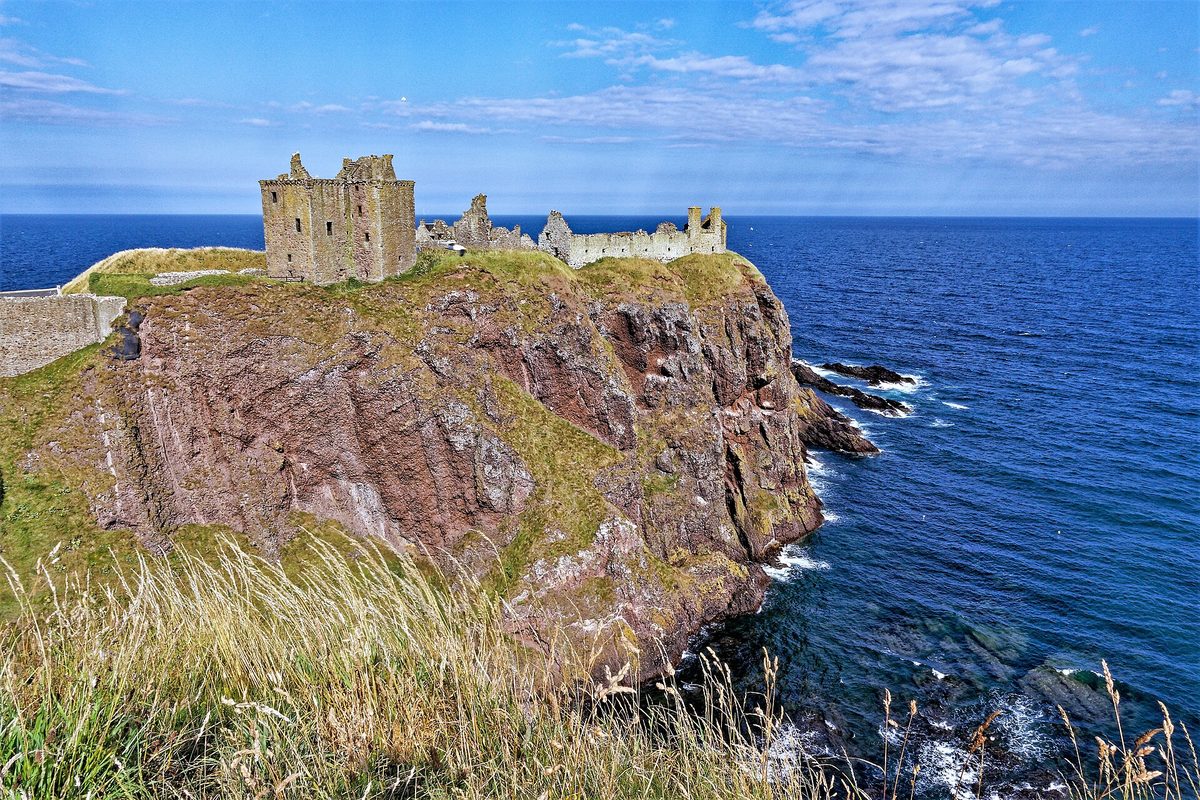
Privately run, £13.50 for an adult. A ruined fortress on a sea stack three miles south of Stonehaven, and the most dramatic thing in this article by a wide margin. From the car park a path runs along the clifftop, then a long flight of steps takes you down into the gully and back up the other side. It is not a stroll, and it is genuinely hard work with a pushchair.
Here is the thing worth knowing: the best view of Dunnottar is from the clifftop path, and that view is free. The buildings inside are roofless shells with interpretation boards. If your budget is tight, walk the path from Stonehaven, take the photograph, and keep your eleven pounds.
It closes in high winds, which on that coast is not a rare event. Check the day before.
Kilchurn Castle
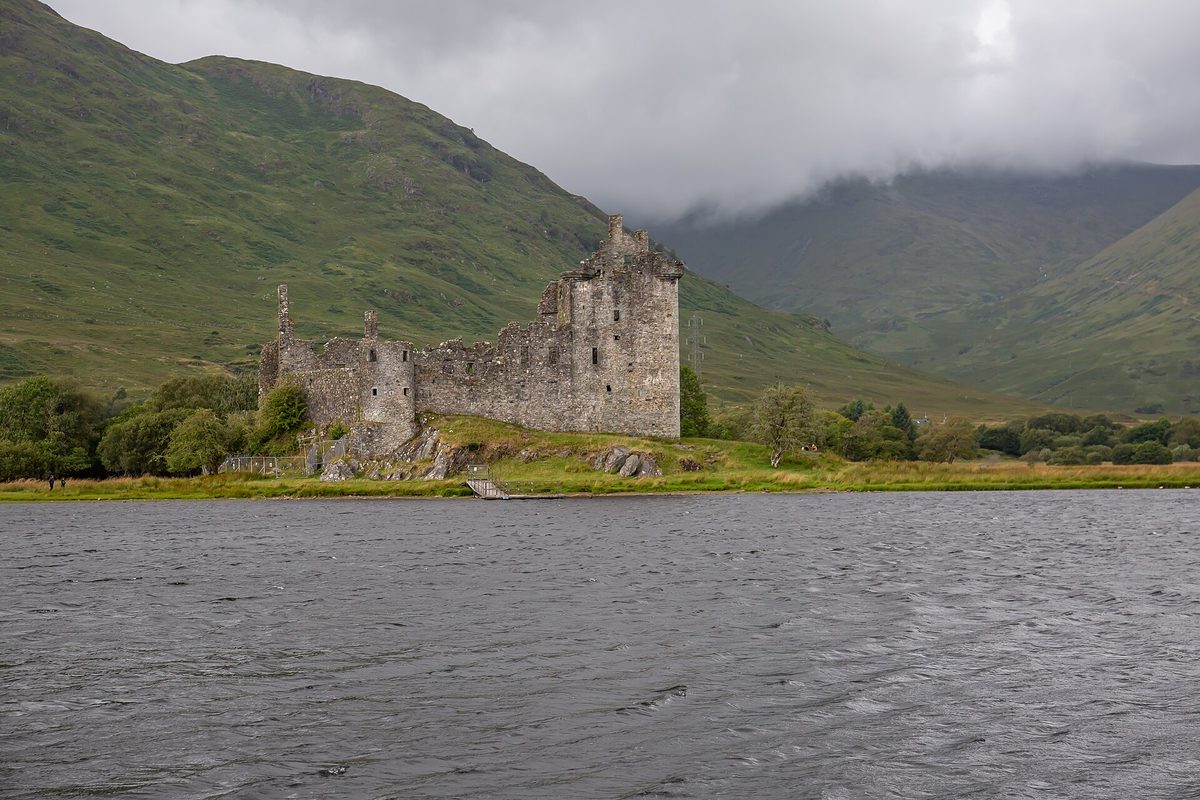
Free, HES-managed, at the north end of Loch Awe in Argyll. The interior is closed for conservation work, so you walk up to and around the exterior, and it costs nothing.
Getting there is the catch. The approach is a track off the A85 near Dalmally, through a railway arch and across grazing land beside the loch that floods after heavy rain. Wear boots. There is also a rough layby on the A85 with a long lens view if you would rather not get your feet wet. Half an hour is plenty. It pairs naturally with Oban, an hour or so west.
Ardvreck Castle
Free, unfenced, on a spit of land in Loch Assynt beside the A837 in Sutherland. It is a broken stump of a tower and you will spend fifteen minutes there, but on a still evening with the light going it is one of the images you will keep. It also sits directly on the North Coast 500, right beside the road, and it earns its place among the route’s genuinely worthwhile stops.
Tantallon Castle
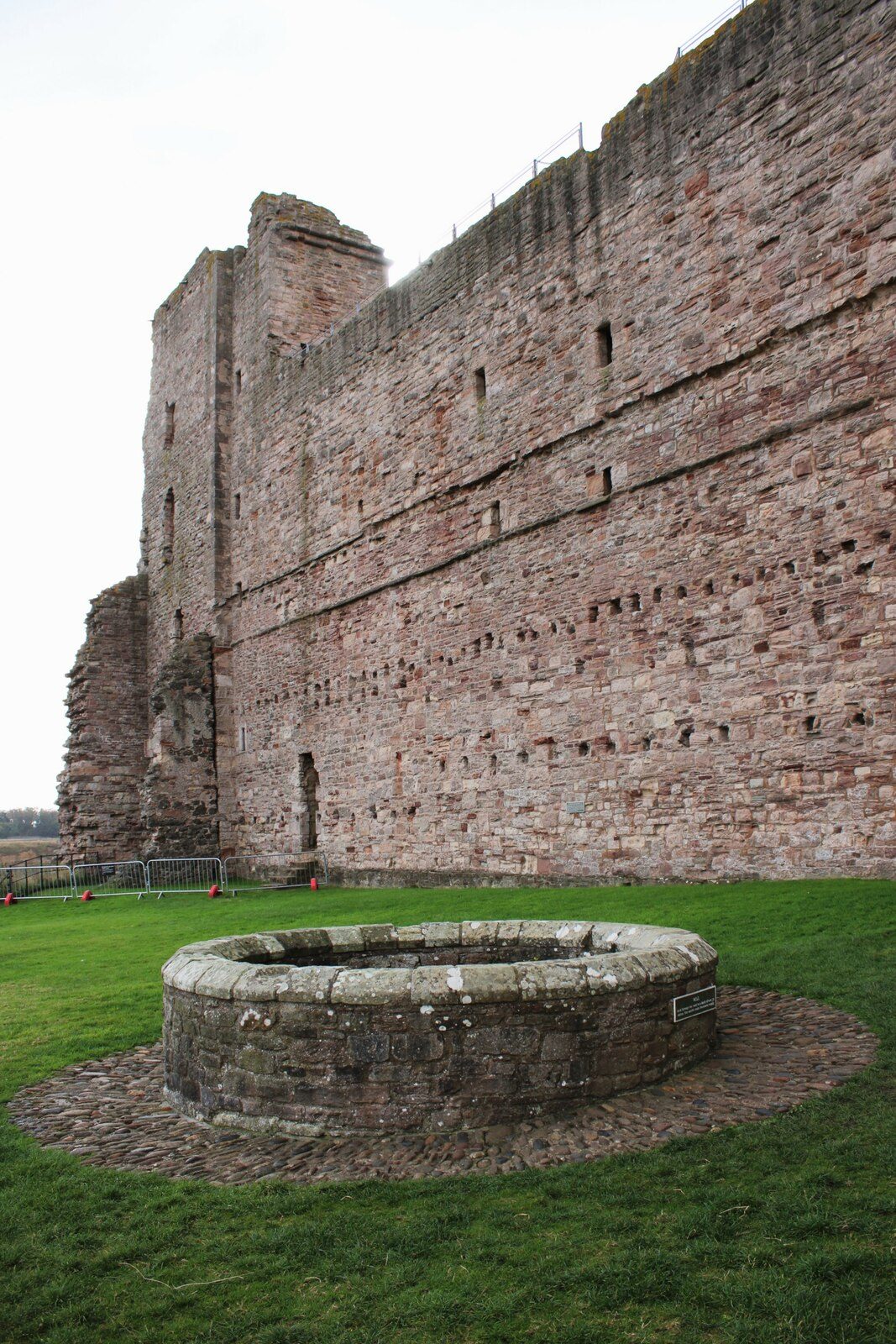
Around £7.50 online, which is very little for this much castle. A vast slab of red sandstone curtain wall on a headland east of North Berwick, with the Bass Rock offshore and gannets wheeling past. It opens daily from 9.30am to 5pm between April and September and from 10am to 4pm between October and March, with last entry 45 minutes before closing. It is shut from 24 to 28 December and from 1 to 4 January.
At the time of writing there is no access to the east tower staircase, the doocot or the vaults, so check what is open before you commit the drive. Like Dunnottar it closes in strong wind. Allow an hour. It is a natural add-on to a run out of the capital along with the coast, and it turns up in most sensible lists of day trips from Edinburgh.
Slains Castle
Free, unmanaged, on the cliffs above Cruden Bay in Aberdeenshire, and the least visited thing in this article. Bram Stoker holidayed nearby and the ruin is often linked to Dracula, which is either a good story or a good marketing line depending on who you ask. What is not in dispute is the atmosphere: gaping windows straight onto the North Sea, no staff, no signage, no railings and unprotected drops on three sides.
I would not take small children. I would absolutely go at dusk in October.
The lived-in houses
Different proposition entirely. These are stately homes with castellations, privately owned in most cases, and what you are buying is furniture, portraits, plasterwork and gardens rather than battlements. They also close for a chunk of the year, which catches people out.
Glamis Castle
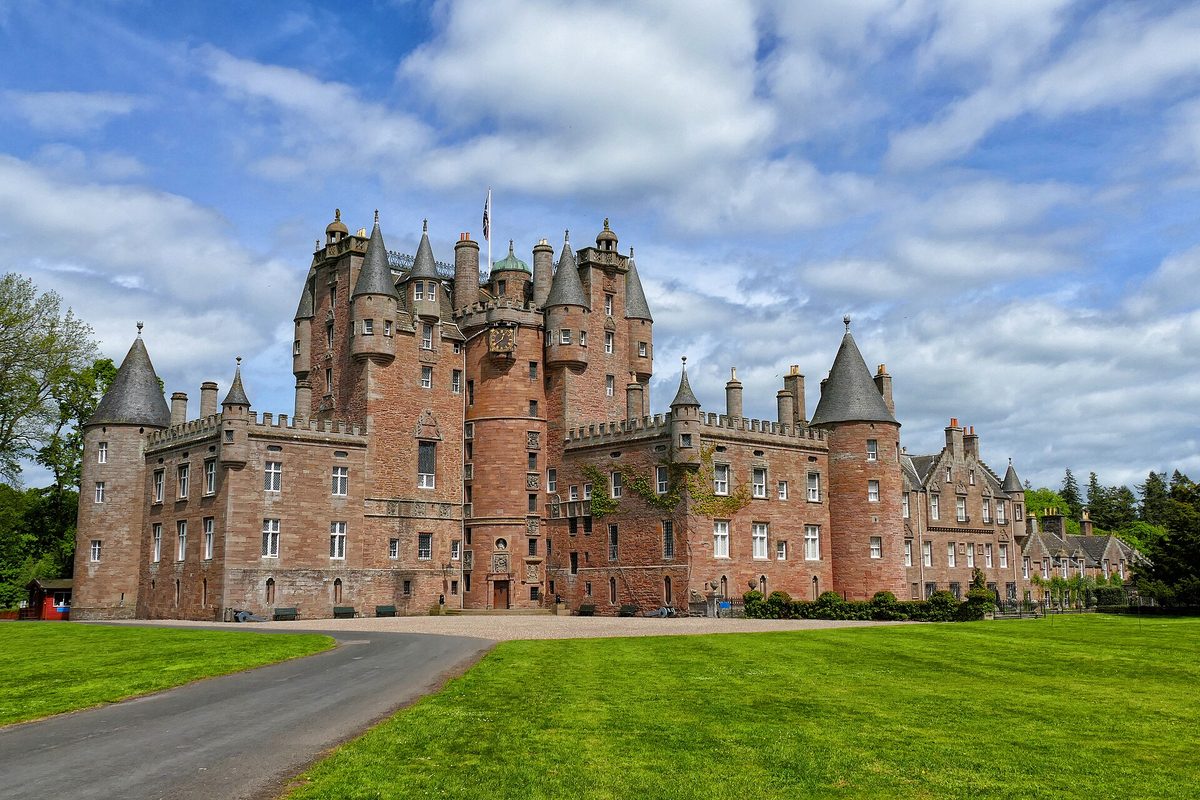
£19.50 for the castle tour plus gardens and grounds, or £9.50 for gardens and grounds only (£5 from 5 November to 20 December). Pink sandstone, a mile-long avenue, turrets stacked on turrets. The interior is seen on a guided tour, but your ticket does not tie you to a particular one: arrive any time from 10am to 4.15pm and ask which tour you can join. The last tour starts at 4.30pm.
Allow two and a half to three hours if you are doing the tour and the gardens. Be honest with yourself first: if you are not interested in the contents of the rooms, buy the grounds ticket and walk the avenue for half the money. Opening is seasonal — verify before travelling outside the summer.
Blair Castle
Around £20 for the castle and gardens, in Blair Atholl at the top of Highland Perthshire. Thirty rooms on show, whitewashed walls, and the Atholl Highlanders, Europe’s only legal private army, as a party trick. It is a big, generous, properly furnished house and it takes two and a half to three hours to do justice to.
Parking is easy and there is space for larger vehicles, which is not true of most castles on this list. It sits ten minutes off the A9, so it is one of the simplest to fold into a drive north. Base yourself in Pitlochry and you have it on your doorstep.
Inveraray Castle
£18.50 for an adult in 2026, on the shore of Loch Fyne in Argyll, and instantly recognisable if you watched a certain Christmas special. Grey-green stone, conical turrets, and an armoury hall bristling with about a thousand pole arms and muskets. Parking is charged separately. The castle closes for the winter and reopens on 25 March 2027; check its own site for that season’s prices before you go.
Allow an hour and a half to two hours. The armoury is the reason to go and the rest of the rooms are pleasant rather than remarkable. It is a good stop on a run between Glencoe and Glasgow, less so as a destination in its own right.
Culzean Castle
National Trust for Scotland, £22 for the castle and country park together, or £16 for the park alone. This is Robert Adam’s clifftop showpiece on the Ayrshire coast, with an oval staircase that is one of the great interiors in Britain, and 600 acres of grounds with a walled garden, a deer park and a beach.
Allow three to four hours, more with children, because the grounds are the point as much as the house. It is around an hour and a quarter south of Glasgow. If you are already an NTS member this is where your card earns the most.
Island and Highland set-pieces
The postcard castles. All privately run, all seasonal to some degree, and one of them you should not pay to enter at all.
Eilean Donan Castle
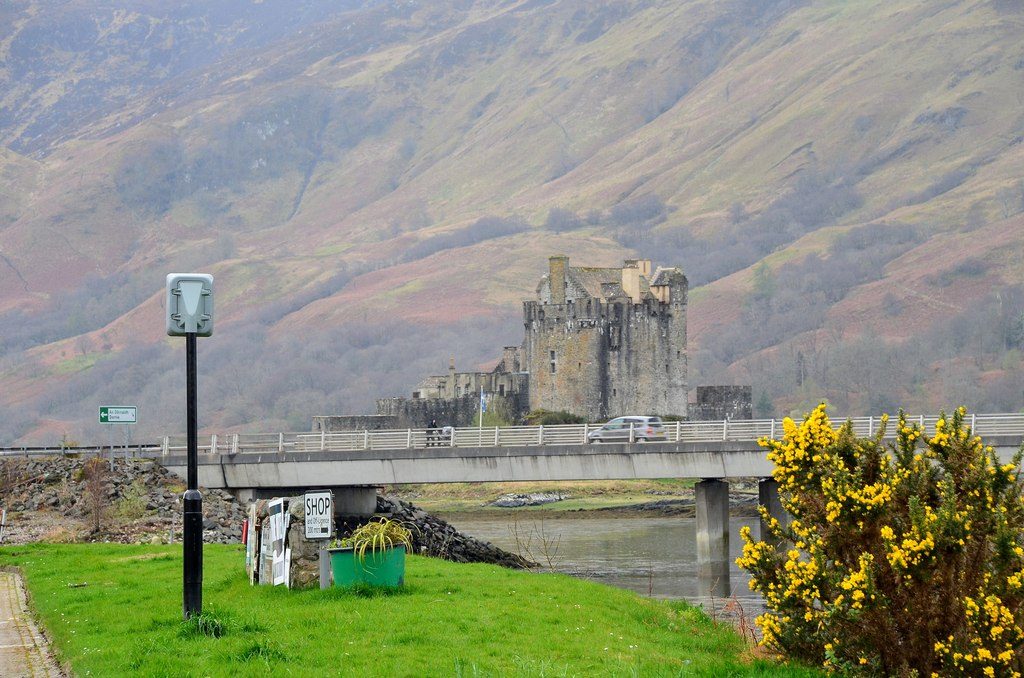
Around £13 for an adult, with a family ticket for two adults and up to three children at roughly £38. It sits where three sea lochs meet at Dornie, fifteen minutes from the Skye bridge, and it is the most photographed building in Scotland. The car park is large and free, which is more than most of this list manages.
Inside there is a Jacobite exhibition, a banqueting hall and a kitchen laid out with mannequins. A good many people photograph it from the shore and drive on, and I do not think they are wrong. The exterior is the masterpiece. Pay the £13 if you want the history; skip it happily if you are on a schedule getting to the Isle of Skye before dark.
Dunvegan Castle
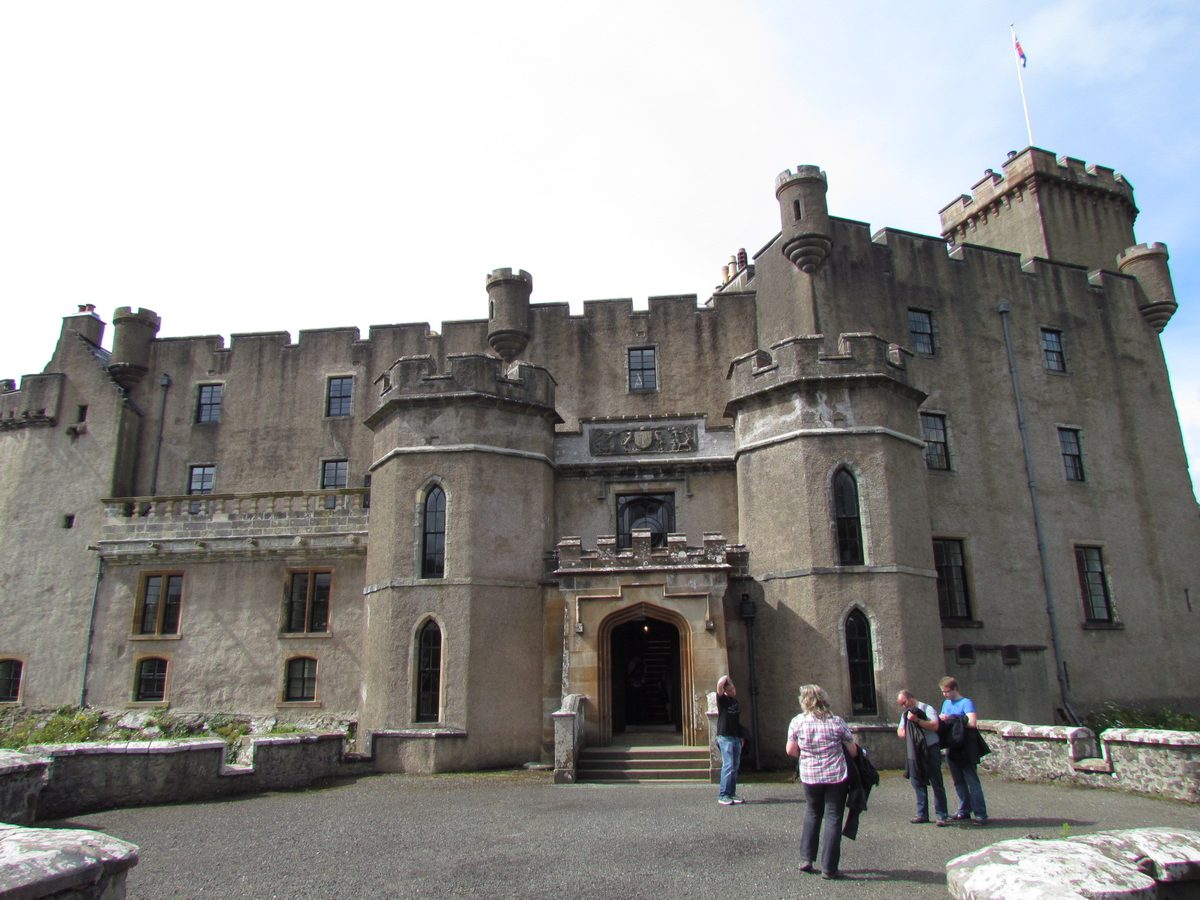
£18 for the castle and gardens, on the north-west of Skye, and the oldest continuously inhabited castle in Scotland — the MacLeod chiefs have called it home for 800 years. The Fairy Flag and Rory Mor’s drinking horn are the treasures. The five acres of formal gardens are included and are better than the building.
Seal-watching boat trips from the castle jetty cost extra and are weather-dependent. Allow an hour and a half to two hours with the gardens. It is a long way round the island from Portree, so plan the day rather than tacking it on — our guide to where to stay on Skye will tell you whether you have positioned yourself sensibly for it.
Duart Castle
Around £13, on a headland at the southern tip of Mull, and the seat of Clan Maclean. You see it from the Oban to Craignure ferry before you see anything else on the island, which is a good introduction. Opening is limited and seasonal — often only a handful of days each week outside high summer — so this is one to confirm by telephone or on the official site rather than assume.
Allow an hour, plus the ferry logistics, which dominate the day. If you are already going to Mull it is an easy yes. It is not worth building a crossing around.
Castle Stalker
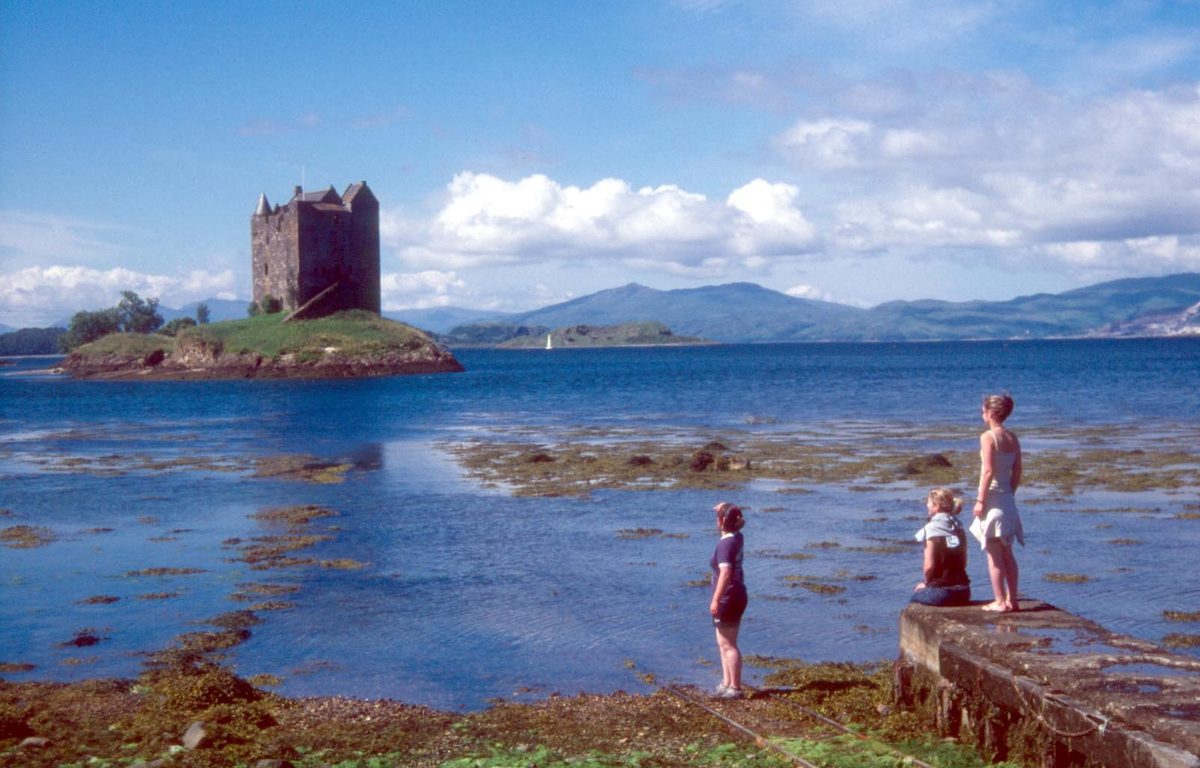
The one to see from the outside, deliberately. A four-storey tower house on a tidal islet in Loch Laich, north of Oban on the A828. There is a viewpoint and a café above the road with the classic composition laid out in front of you, and it costs nothing.
The castle does open for a small number of pre-booked guided tours in summer, reached by an open boat, with departure times dictated by the tide. Places are limited and go months in advance. If that appeals, book early and be flexible. If not, pull into the layby, take ten minutes, and drive on satisfied — it is one of the best free stops on any of the Highland road trip routes.
Worth a detour for one specific reason
Doune Castle — for the filming
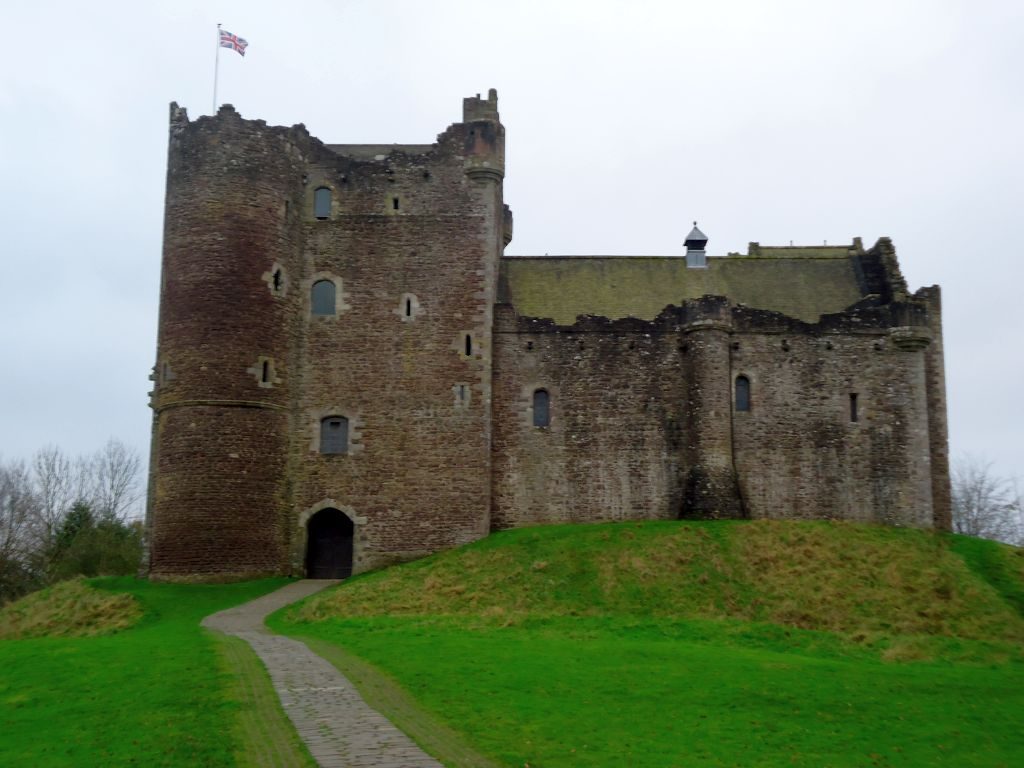
Around £10 online, HES. A compact and remarkably complete 14th-century courtyard castle whose great hall and kitchens have stood in for Castle Leoch in Outlander, Winterfell in the Game of Thrones pilot, and the entirety of Monty Python and the Holy Grail. The included audio guide leans cheerfully into the filming, with Terry Jones and, for the Outlander scenes, Sam Heughan.
Allow an hour to an hour and a half. It is roofed in parts, which makes it a decent wet-afternoon option.
Craigmillar Castle — for the quiet
HES, comfortably under £10 at the time of writing, and about fifteen minutes from central Edinburgh by car or a short bus ride. It is a substantial, largely intact tower house inside a double curtain wall, Mary Queen of Scots slept here, and on a weekday in shoulder season you can have most of it to yourself.
This is the answer for anyone who baulks at £23.50 and the crowds on the esplanade. You will not get the Crown Jewels. You will get to climb a spiral stair alone, which at Edinburgh Castle in August is not on offer at any price. Pair it with a slow day in the city — there is more in our Edinburgh travel guide.
Crathes Castle — for the gardens
National Trust for Scotland, around £16 for castle and garden or roughly £7 for the garden alone, on Royal Deeside west of Banchory. Inside, the Renaissance painted ceilings, with their Muses and Nine Worthies, are extraordinary. Outside, the yew hedges were planted in 1702 and the walled garden is divided into eight distinct rooms.
Entry to the tower is by timed slot because the stairs are narrow. Allow two to three hours. If you visit one castle purely for horticulture, make it this one.
Passes and memberships: the maths nobody does
This is the section every competing article skips, and it is the one that saves or wastes real money. There are three products and they do not overlap.
The Historic Scotland Explorer Pass
Sold in two lengths, valid for consecutive days from the moment you first use it, and it covers ticketed HES sites only — including Edinburgh, Stirling, Urquhart, Doune, Tantallon and Craigmillar. You may visit each site once within the validity period, and you can do several in a day. Pass holders get 20% off the audio tours at Edinburgh Castle, Stirling Castle and Glasgow Cathedral. Concessions apply to over-65s, full-time students and unemployed UK visitors.
Three warnings. First, it does not cover National Trust for Scotland properties or any privately owned castle — no Eilean Donan, no Dunvegan, no Glamis, no Blair, no Inveraray, no Dunnottar, no Culzean, no Crathes. Second, Holyrood Abbey needs a Palace of Holyroodhouse ticket, and Calanais visitor centre and Kinnaird Head are run by private trusts, so all three sit outside the pass. Third, holding a pass does not reserve you a slot: you still have to book a timed entry at each site, which at Edinburgh Castle in August is the constraint that actually matters. Buy online in advance; passes are non-refundable, though the start date can sometimes be moved if there is availability.
Historic Scotland membership
£72 for an adult for a year by card, or £64 by annual Direct Debit. Unlike the pass it allows unlimited repeat visits and runs for twelve months, which makes it the right product for anyone visiting Scotland twice in a year, staying for several weeks, or living in the UK.
National Trust for Scotland membership
£79.20 for an adult annually, or £6.60 a month. Completely separate from HES and separate again from the National Trust in England and Wales, although — and this is the useful bit — the two organisations have a reciprocal arrangement for members. The conditions are set out in the NTS membership terms, so if you already hold a National Trust card, read them before you buy an NTS one.
The reciprocal arrangements worth knowing
English Heritage, Cadw and Manx National Heritage members get half-price entry at HES sites during their first year of membership, and free entry once they are renewal or life members. Carers accompanying a visitor with a disability go free at HES sites, up to two per transaction. Holders of a Young Scot card pay £1. None of these are advertised loudly and all of them are worth checking against the card already in your wallet.
The break-even sums
Do the arithmetic before you buy anything. Three HES castles at online prices — Edinburgh at £23.50, Stirling at £18.50 and Urquhart at £14 — come to £56. Add Doune at £10 and Tantallon at £7.50 and you are at about £73.50, which has already passed the price of a full year’s HES membership. So the rule of thumb is straightforward:
Two big HES castles and nothing else, pay at the gate. Three or four, an Explorer Pass will almost certainly win, so compare the checkout price against your list. Five or more, or any chance of a return trip within twelve months, buy the annual membership instead — it costs more than the pass and removes every constraint.
For NTS, the sum is different because the individual tickets are cheaper: at roughly £14 to £20 a property you need about four visits to clear the membership fee, and realistically that means you are planning a proper tour of Culzean, Crathes, Craigievar, Drum and Brodick rather than a general Scotland trip.
And the sum that matters most: if your itinerary is the Instagram set — Eilean Donan, Dunvegan, Dunnottar, Glamis, Inveraray — then neither a pass nor a membership will save you a single penny, because not one of those is covered by either. Work out which camp your list falls into before you spend anything.
Castles by region, so you can slot them into an existing trip
Almost nobody builds a Scotland trip around castles. You build it around Edinburgh, the Highlands, Skye and a road trip, and then you fit castles into the gaps. Here is where they actually sit.
Edinburgh and the Lothians: Edinburgh Castle, Craigmillar a short hop out of the centre, Tantallon east of the city near North Berwick. Three castles, three completely different experiences, no car needed for the first two.
Stirling and Perthshire: Stirling Castle and Doune close together, with Blair Castle further north up the A9. This trio makes an efficient castle cluster and works as one long day or two relaxed half-days.
Argyll and the west: Inveraray, Kilchurn and Castle Stalker string along the A83 and A85 towards Oban, with Duart reachable by ferry from there. A natural chain if you are driving from Glasgow towards Mull or Fort William.
The Highlands and Skye: Urquhart on Loch Ness, Eilean Donan at Dornie, Dunvegan on Skye. These three fall in sequence on the standard Inverness-to-Skye run, which is why so many people end up seeing exactly this set.
Aberdeenshire and Angus: Dunnottar at Stonehaven, Crathes on Deeside, Glamis near Forfar, Slains at Cruden Bay. This is the densest castle country in Scotland and the least visited by overseas travellers.
Ayrshire and the south-west: Culzean, essentially on its own but big enough to carry a day, an hour and a quarter from Glasgow.
The far north: Ardvreck on Loch Assynt, a roadside stop rather than a destination, and firmly part of the NC500 rather than anything else.
If you are still shaping the route, our seven-day Scotland itinerary shows how these clusters connect, and getting around Scotland covers which of them you can reach without a car. Several cannot be reached without one, which is worth knowing before you book.
Which castles are actually good in bad weather
It rains. Not constantly, and not as much as the jokes suggest, but often enough that a plan for a wet day is worth having. The distinction is simply whether there is a roof.
Good in driving rain: Stirling, because the Royal Palace, Great Hall and Chapel Royal are all enclosed and you can spend two hours indoors. Glamis and Blair, both guided-tour houses where you are inside almost the whole time. Culzean and Crathes, same logic. Dunvegan, where the castle rooms and the exhibition are covered even if the gardens are not. Edinburgh, partly — the National War Museum, the Great Hall and the Crown Room are dry, but the walk between buildings is not.
Bad in driving rain: Dunnottar and Tantallon both close outright in strong winds, and Dunnottar’s cliff steps in the wet are genuinely unpleasant. Kilchurn’s approach floods. Ardvreck and Slains have no shelter of any kind. Craigmillar and Urquhart are open ruins with a short covered element and no more.
The pattern is clear: the ticketed lived-in houses are your foul-weather insurance and the free ruins are your fair-weather bonus. Plan accordingly, and check what Scotland’s weather does month by month before you commit to a fortnight of clifftop ruins.
Planning: how long, how to get there, what to book
Two castles in a day is comfortable. Three is possible if they are close together, like Stirling and Doune, or Edinburgh and Craigmillar. Four is a bad day out in which you look at your watch more than the buildings.
Driving times run longer than the map suggests. Stonehaven to Glamis is around an hour. Glasgow to Inveraray is roughly an hour and 40 minutes on the A82 and A83, and the Rest and Be Thankful stretch can close after landslips. Add a third to any estimate in July and August, and add more if you are behind a motorhome on a single-track road.
What to book and when: Edinburgh Castle timed slots, several days ahead in summer and a fortnight ahead over the Festival. Urquhart’s car park, at the same time as your ticket. Castle Stalker’s boat tours, months ahead. Everything else you can generally buy online the night before for the cheaper rate, or simply turn up, and at Eilean Donan turning up is the only option: tickets are sold at the castle on the day. Guided-tour houses like Glamis have fixed departure times, so arrive with a couple of hours of opening left rather than 45 minutes.
Seasonality is the other trap. Most privately owned castles and a good number of NTS properties close from around late October to late March or early April. HES opening varies by property: Edinburgh, Stirling and Urquhart stay open through the winter on shorter hours, but other sites keep their own seasons, so check each one. That makes winter a genuinely good time for the free ruins and the state-run fortresses, and a poor one for the stately homes. If you are still choosing dates, the best time to visit Scotland lays out the trade-offs month by month.
What underwhelms, and the mistakes I keep seeing
Paying to go inside every castle. Six ticketed interiors in a week is too many. The rooms blur, the audio guides repeat each other, and by day four you resent the shop. Pick two or three interiors you genuinely want — Stirling and one lived-in house is a good formula — and see the rest from the outside.
Assuming a pass covers everything. It does not, and this is the single most common and most expensive misunderstanding. Read the covered-sites list before you buy, not after.
Eilean Donan’s interior. It is fine. It is not £13 of fine if you have already spent forty minutes photographing the outside and have Skye to get to. Decide before you join the queue.
Turning up at Urquhart without a booked parking space. The car park is small, free and pre-booked. People do get turned away.
Underestimating Dunnottar’s approach. Fifteen minutes each way plus a serious flight of steps. Sandals and a pushchair will ruin your afternoon.
Treating Balmoral like an ordinary castle. Its opening is dictated by the royal calendar and access to the building is limited even when it is open. Check before you drive to Deeside for it.
Ignoring the free ones. Ardvreck, Slains, Kilchurn and the Castle Stalker viewpoint cost nothing and between them supply the best photographs on most people’s trips. If money is tight there is a whole article’s worth more in our roundup of free things to do in Scotland.
Bringing very young children to unfenced ruins. Slains has genuine unguarded cliff edges. There are much better options for families — see our guide to Scotland with kids.
Frequently asked questions
How many castles are there in Scotland?
Estimates run as high as 3,000, depending on whether you count fragments of wall, tower houses and fortified farmhouses. Historic Environment Scotland cares for several hundred sites, the National Trust for Scotland a few dozen, and the rest are private, ruined, or both. Around twenty are set up for visitors in any serious way.
Is the Historic Scotland Explorer Pass worth it?
It depends entirely on how many HES sites you plan to visit. Edinburgh, Stirling and Urquhart alone come to £56 at online prices, which is usually enough to justify a pass. Two sites, probably not. Five or more, or a return trip within a year, and annual membership works out better at £72 by card or £64 by Direct Debit.
Which castle in Scotland is worth visiting inside?
Stirling, without much argument. The recreated Royal Palace interiors and the Stirling Heads gallery give you a genuine sense of a 16th-century court rather than empty stone rooms. Crathes for the painted ceilings and Culzean for Robert Adam’s oval staircase are the other two interiors I would pay for without hesitation.
Can you visit Scottish castles for free?
Yes, and several of the best. Kilchurn, Ardvreck and Slains are free to walk around, Castle Stalker has a free roadside viewpoint, and the clifftop path at Dunnottar gives you the famous view without a ticket. HES also runs free open days at some properties during the year.
Which Scottish castle is best for a day trip from Edinburgh?
Tantallon for drama at about £7.50, out east near North Berwick. Craigmillar for a quiet hour close to the city centre. Stirling if you want a full day and the restored Renaissance palace interiors; if you go by train, add the half-mile uphill walk from Stirling station to the castle.
Do I need to book Scottish castles in advance?
Edinburgh Castle, yes, to guarantee entry, especially in summer: once the online tickets sell out there are none left at the castle. A Flexi ticket lets you visit within seven days without choosing a timeslot. Urquhart, yes, including its car park. Castle Stalker’s boat tours, months ahead. Eilean Donan is the exception the other way, selling tickets only at the castle on the day. Most others can usually be booked online the previous evening for the cheaper rate, though guided-tour houses have fixed departure times you need to work around.
Which Scottish castles are open in winter?
Historic Environment Scotland’s big castles do: Edinburgh, Stirling and Urquhart open all winter on shorter hours and close on 25 and 26 December, while smaller sites set their own seasons, so check each one. Free ruins have no ticket office, but check access before you go, because conservation work can shut them; Kilchurn’s interior is closed for repairs. Privately owned houses and many NTS properties shut from late October until spring, so winter is the season for fortresses and ruins rather than stately homes.
What is the most beautiful castle in Scotland?
Eilean Donan wins most polls, and the setting where three lochs meet earns it. My own vote goes to Dunnottar for sheer drama or Kilchurn for the reflection on a still morning at Loch Awe. All three are among the most beautiful places in Scotland by any measure.
Final thoughts
The best castles in Scotland are not the ones highest up someone’s ranking. They are the ones that fit your route, your budget and the weather you happen to get. Work out which of the four types your shortlist belongs to, do the pass arithmetic honestly, buy two or three interiors rather than eight, and spend the money you save on the drive between them.
And leave room for a free one. The castle that stays with you may have no ticket hall or audio guide at all: a broken tower like Ardvreck, glimpsed beside the road on the way north, can outlast the memory of any admissions desk.
If you want to go deeper on the ones that reward a full afternoon rather than a photo stop, there are separate guides to Dunnottar’s clifftop ruin near Stonehaven, to Culzean’s Adam house and country park in Ayrshire, and a region-by-region breakdown of where Scotland’s castles actually cluster if you are planning a route rather than a single day out.
About the author: This guide was written and is maintained by the ScotlandTourism.org editorial team — travel writers who’ve spent years exploring Scotland’s cities, Highlands and islands, from bagging Munros to chasing the perfect dram. We update our guides regularly to keep prices, opening details and advice current.
Last updated: October 2026. Prices and opening times change — always check the official site before you travel.
Photo credits
All images are used under their respective Creative Commons or public-domain licenses:
- Edinburgh Castle seen from Princes Street Gardens — Matti Blume, CC BY-SA 4.0, via Wikimedia Commons
- Stirling Castle standing on its crag above the Forth valley — kim traynor, CC BY-SA 2.0, via Wikimedia Commons
- The Grant Tower and ruins of Urquhart Castle above Loch Ness — BIG ALBERT, CC0, via Wikimedia Commons
- Dunnottar Castle on its clifftop headland near Stonehaven — Holger Uwe Schmitt, CC BY-SA 4.0, via Wikimedia Commons
- The ruined tower house of Kilchurn Castle at the head of Loch Awe — Balon Greyjoy, CC BY-SA 3.0, via Wikimedia Commons
- The red sandstone curtain wall of Tantallon Castle above the Firth of Forth — Richard Sutcliffe, CC BY-SA 2.0, via Wikimedia Commons
- Glamis Castle in Angus at the end of its tree-lined avenue — Worldfootage, CC BY-SA 4.0, via Wikimedia Commons
- Eilean Donan Castle and its stone bridge at Dornie in the western Highlands — Jim Barton, CC BY-SA 2.0, via Wikimedia Commons
- Dunvegan Castle and gardens on the Isle of Skye — Lómelinde, CC0, via Wikimedia Commons
- Castle Stalker seen across Loch Laich from the A828 in Appin — Alan Reid, CC BY-SA 2.0, via Wikimedia Commons
- The gatehouse and great hall range at Doune Castle — Robert Murray, CC BY-SA 2.0, via Wikimedia Commons