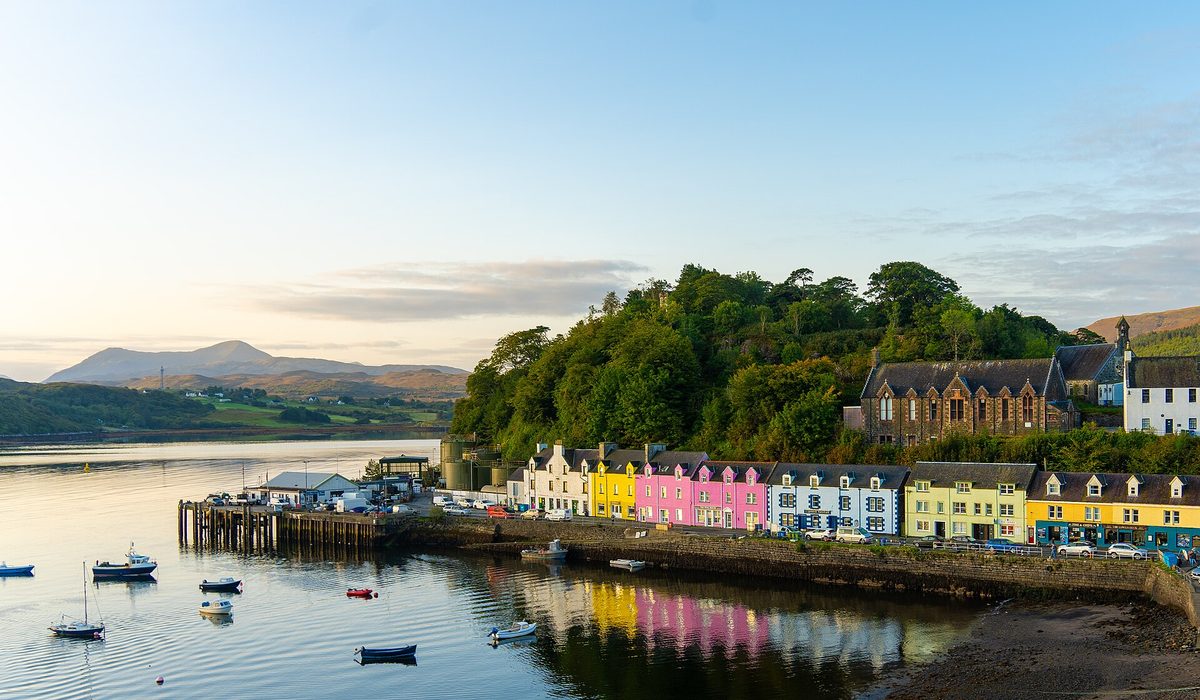
Search for Portree Isle of Skye and you get the same photograph forty times over: a row of painted houses reflected in a still harbour at dawn, the colour pushed a shade past reality. The first time I drove into town I went straight to the spot it was taken from, at the top of Quay Brae, took my own slightly worse version, and stood there thinking: is that it?
It took three more visits to work out that I had been looking at the place the wrong way round. Portree is not a postcard village that happens to have a shop. It is a working island town of roughly 2,300 people that happens to own one very photogenic terrace, and once you stop judging it as scenery and start using it as infrastructure it becomes the single most useful place on Skye. If you are still working out the shape of a Skye trip, start with our full Isle of Skye travel guide and treat this page as the chapter on the one town you will keep coming back to.
Portree Isle of Skye: is it worth visiting?
Yes, but for practical reasons more than pretty ones. The centre takes about an hour to walk and the famous painted houses are one short terrace. What makes Portree matter is that it is Skye’s only real town: the supermarket, fuel, cash machines, pharmacy, buses, boat trips and most of the island’s decent restaurants are all here.
Portree at a glance
| What you came for | Where it is | Time needed | Worth knowing |
|---|---|---|---|
| The painted houses | Quay Street, below Bosville Terrace | 20 minutes | One terrace of about a dozen frontages, best in morning light |
| Wildlife boat trip | Portree pier and the pontoon | 1.5–2 hours | Sea eagles and seals; book a day or two ahead in summer |
| Free viewpoint | The Lump and the Apothecary’s Tower | 30–45 minutes | Five minutes from the square, and almost nobody goes |
| Coastal walk | Scorrybreac circuit, north shore of the bay | 1–1.5 hours | About 3km, one short climb, boots not essential |
| Big shop and fuel | Co-op on Woodpark Road; filling station on the southern approach | 30 minutes | The widest choice and the most sensible prices on Skye |
| Dinner | The harbour and Somerled Square | 2 hours | Book. In July, book weeks out for the good places |
| Parking | Somerled Square and Bayfield | — | Pay and display, roughly £2 for a couple of hours at the time of writing |
| Day trips | North on the A855, south and west on the A87 | 15 min–1hr 15 | Old Man of Storr 15 minutes, Quiraing 40, Neist Point 1hr 15 |
The town in an hour: what Portree is actually like
Let me get the awkward bit out of the way, because most guides won’t. Portree is small. Not village-small, but small enough that you can walk from the top of the town to the end of the pier in ten minutes, and small enough that a thorough wander — every street, both squares, the harbour, a look in the shops — takes about an hour.
That is not a criticism. It is the single most useful thing to know before you arrive, because it changes how you plan your day. People block out a morning for “exploring Portree” and find themselves back at the car by half past ten wondering what went wrong. Nothing went wrong. You just need to know that Portree is a base and a supply stop with a good afternoon’s worth of things attached, not a destination that eats a whole day.
The painted houses are one terrace
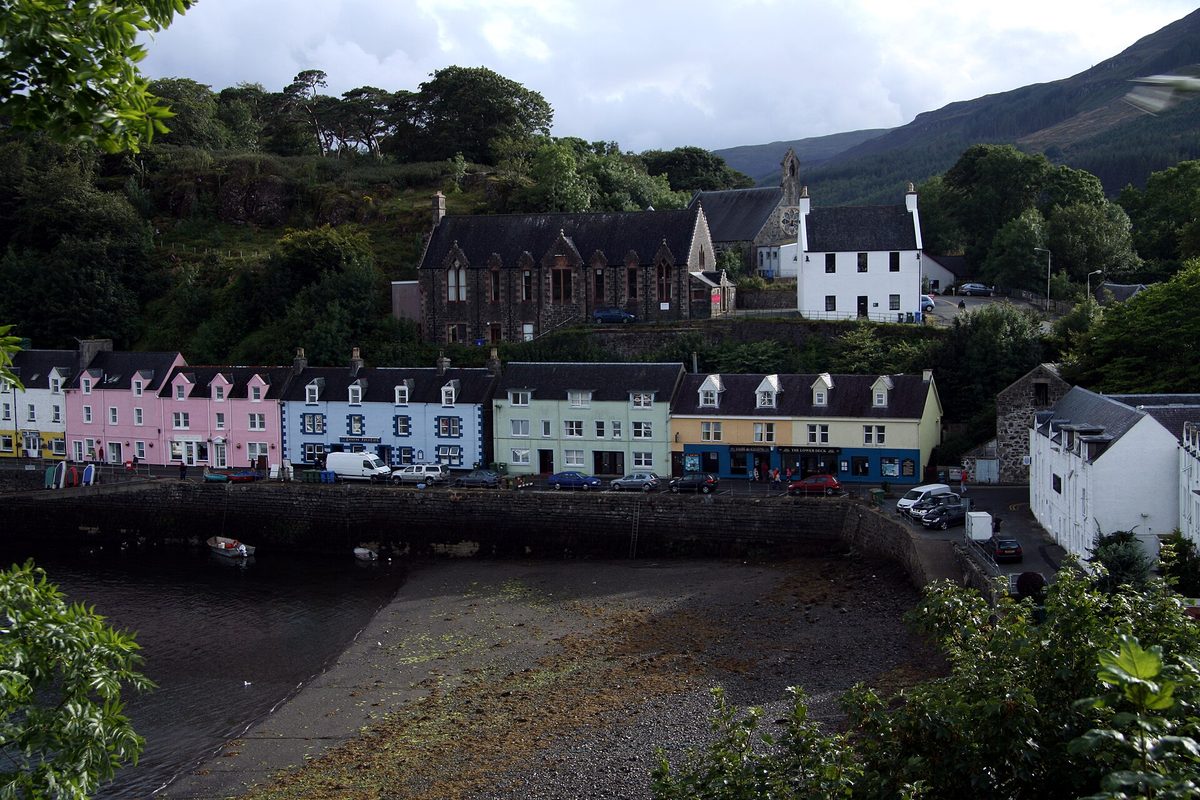
The row you have seen a thousand times is on Quay Street, tucked under the cliff below Bosville Terrace, and it runs to about a dozen frontages. Pink, yellow, blue, cream. Behind them the town climbs the hill in perfectly ordinary Highland grey harl and slate, which is exactly what a real town on the west coast looks like.
I like them more now that I have stopped expecting a whole village of them. Photograph them from the far side of the bay, or from the path that climbs onto The Lump, where you get the terrace, the boats and the hills behind Loch Portree in one frame. The classic shot from Quay Brae looking down is fine, but by mid-morning in summer you will be sharing that pavement with twenty other people doing the same thing.
Light matters here more than usual. The terrace faces roughly north-east across the bay, so it catches early sun and then sits in its own shadow for much of the afternoon. If your photograph is the reason you came, come before nine.
Somerled Square and the streets behind
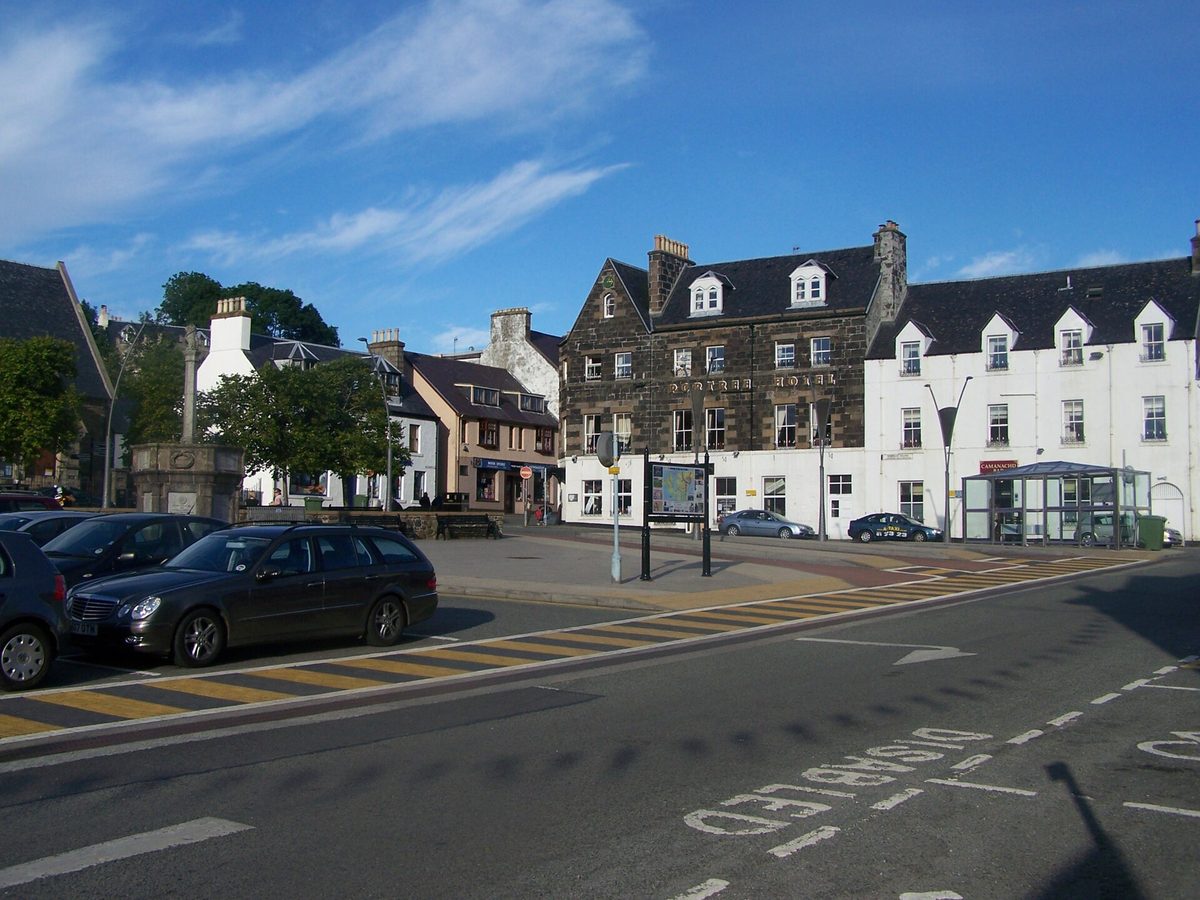
The real centre of gravity isn’t the harbour at all — it’s Somerled Square, a rectangle of tarmac a couple of minutes uphill. Buses stop here. Taxis wait here. The bank is here, the bakery is here, and on summer days a small market sets up with crafts and food stalls.
Aesthetically it is a car park with buildings round it. Practically it is the hinge the whole island turns on, and if you are travelling without a car you will get to know it well. Wentworth Street and Bank Street run off it towards the harbour, and that is where most of the shops are: outdoor gear, wool, gifts, a couple of galleries, a chemist, the smaller of the two Co-ops.
Spend twenty minutes in those two streets and you will have seen the retail sum of the Isle of Skye. There is more choice than anywhere else on the island, which tells you something about everywhere else on the island.
A little history, honestly told
Portree is Port Rìgh in Gaelic, and the neat translation you will read on every information board is “king’s port”, supposedly after a visit by James V in 1540. It is a good story. It is also disputed, and plenty of Gaelic scholars prefer Port Ruighe, meaning something closer to the port on the slope, which is a fair description of a town built on a hillside above a sheltered bay.
The other story you will be told is that Bonnie Prince Charlie said goodbye to Flora MacDonald at an inn on the site of what is now the Royal Hotel, in 1746, before slipping across to Raasay. Take it in the spirit it is offered. Skye trades heavily on that fortnight of history, and you will hear about it again at Kilmuir and at Uig.
What interests me more is the practical history. Portree was built as a fishing and trading port when the roads were tracks, and it was a departure point for emigration during the Clearances and the famine years. The town exists because the bay is deep and sheltered and because everything on this coast used to arrive by sea. That is why the buildings face the water, and why the good views are all from the edges.
Portree as Skye’s service centre: the hour it saves you
Here is the part nobody puts in a Portree article, and it is the part that will actually change your trip. Skye is a big island with a small population, and almost every service on it is concentrated in this one town. If you need something — food, fuel, cash, painkillers, a phone signal, a replacement waterproof — the answer is Portree, and if you drive past without stopping you will usually pay for it later in time.
I now treat arriving in Portree as a chore list before it is a sightseeing stop. Big shop, fill the tank, draw cash, then go and enjoy myself. It takes half an hour and it removes about four separate problems from the rest of the week.
Food shopping: two Co-ops, one of them serious
There are two. The large Co-op is up on Woodpark Road on the edge of town, and it is a proper supermarket — a full fresh section, chilled and frozen, a decent range, and long opening hours. The second is a small convenience Co-op on Bank Street in the centre, which is handy for a sandwich and hopeless for a week’s self-catering.
If you are staying in a cottage anywhere on Skye, do your main shop at the Woodpark Road store on the way in. Everything else on the island is a village shop with village-shop prices and village-shop hours, and the ones out at Elgol, Glendale or Staffin are not places to discover at seven on a Sunday evening that you needed milk, bread and something for four people’s dinner.
The other reason to shop here is lunch. Picnics solve a genuine problem on Skye, because the places you want to visit are an hour from anywhere that sells food, and the little cafes near the honeypot sites have queues in July. A cool bag in the boot with rolls, cheese, fruit and a flask is worth more to a Skye day than any restaurant booking. If you want to eat well while you’re at it, Skye’s local producers are excellent and the Co-op carries a fair amount of island produce — there’s more on what to look for in our guide to Scottish food and drink worth seeking out.
Fuel: fill up here, and don’t be clever about it
There is a filling station on the southern approach to town, and it has kept long hours every time I have used it. Fill up. Do not tell yourself you will find somewhere north of Portree, because the pickings up in Trotternish and out west are thin, occasionally closed, and priced accordingly.
Island fuel costs more than the mainland, but Portree is about as good as it gets on Skye, and the difference between a full tank here and a nervous half tank at Uig is a genuinely calmer day. A round of Trotternish from Portree, taking in the Storr, Kilt Rock, the Quiraing and Uig, is something like 60 miles with a lot of hill and a lot of second gear. Add a run out to Neist Point later in the week and you will be surprised how quickly the needle moves.
My rule on Skye is simple and it has never let me down: never leave Portree below half a tank.
Cash, cards and the machine that isn’t there
Portree has a bank on Somerled Square with a cash machine, and there are a small number of other machines around the centre. That is essentially the island’s banking, and rural branches change their hours and their existence with very little notice, so treat counter service as a bonus rather than a plan.
Card acceptance is close to universal now, but not quite. Honesty boxes at parking spots and croft gates, a few small takeaways, some of the little roadside stalls selling eggs or crafts, and the occasional bothy-style honesty shop still want coins. Carrying twenty pounds in cash and a few pound coins solves all of it. Draw it here, because the next machine may be forty minutes away and inside a shop that shuts at five.
Pharmacy, doctor and hospital
The chemist is on Wentworth Street, just off Somerled Square, and it is the obvious place for the things holidays run out of: blister plasters, antihistamines, insect bite cream, sun cream, painkillers, a spare toothbrush. Portree also has a medical centre and a small hospital, which is worth knowing simply so that you know where it is.
Nothing morbid intended. It is just that Skye is a place where people twist ankles on wet basalt and get caught out on hills, and the useful piece of knowledge is that the answer to almost any medical question on this island starts with the word Portree. For anything serious, the larger hospital is in Broadford, and Inverness is a long way further.
The bus interchange, and why it matters
Somerled Square is the bus stand for the whole island. There is no station, just a shelter and a stretch of pavement, but the routes that fan out from it are the reason you can visit Skye without a car at all.
The long-distance coaches run in from Glasgow and from Inverness. Local Stagecoach services loop the Trotternish peninsula in both directions, run west to Dunvegan, and run south to Broadford and the Armadale ferry. Frequencies are modest — think a handful a day rather than a bus an hour — and some services thin out or stop entirely outside the summer timetable, so check current times before you build a day around them.
Doing Skye by bus is genuinely possible from Portree and close to impossible from anywhere else on the island, which is a strong argument for basing yourself here if you aren’t driving. We go into the mechanics of it in our guide to getting around Scotland by bus, train and ferry, and there’s a full car-free route in the Scotland without a car itinerary.
Signal, wifi and the maps you should download
Mobile coverage in Portree itself is decent and varies by network, with the better networks managing 5G in town at the time of writing and the weakest struggling. What matters more is what happens when you leave. Coverage on the Trotternish road, out at Glenbrittle and around Elgol ranges from patchy to absent, and the moment you are in a glen you are on your own.
So do this while you have a signal: download offline maps for the whole island, screenshot your accommodation’s address and door code, and save the phone number of anything you have booked. Portree is where you do that. It is also where you will find a cafe with wifi if you need to do something that needs a real connection.
Parking, and where to actually leave the car
Portree’s car parks are pay and display and run by the council. The main ones are Somerled Square in the centre and the larger Bayfield car park just below it, and between them they take most of the town’s visitors. Charges at the time of writing are modest — roughly a couple of pounds for two hours, with a short free period on the square — but rates and hours change, so read the machine rather than this page.
Two practical notes. First, the square fills early on summer days and at events, and Bayfield is the overflow that people forget about; it is a two-minute walk and usually has space when the square doesn’t. Second, resist the temptation to park on the harbour front itself unless you are actually loading a boat. It is tight, it is busy with working traffic, and being the car that blocks a fish lorry is a poor start to a holiday.
Ask your host about parking before you book a room in the centre. Several of the guest houses on the terraces above the harbour have no parking at all, and a week of feeding a machine adds up. That question belongs on the same list as the rest of the decisions in our guide to where to stay on the Isle of Skye.
Portree harbour and the boat trips
If you only book one thing in Portree, book a boat. It is the best experience you can buy locally, it is the only one that uses the harbour for what the harbour is for, and it shows you a side of Skye that the road network simply cannot reach.
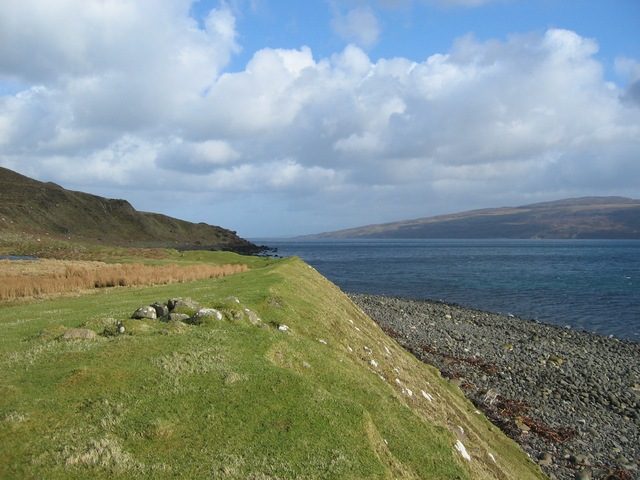
Portree Bay is a deep, sheltered inlet with steep cliffs on its northern side, guarded at its mouth by the flat-topped bulk of Ben Tianavaig. Beyond that you are into the Sound of Raasay, with the long low island of Raasay across the water and the mainland mountains of Applecross and Torridon stacked up behind it. On a clear evening that view alone is worth the ticket.
What you will actually see
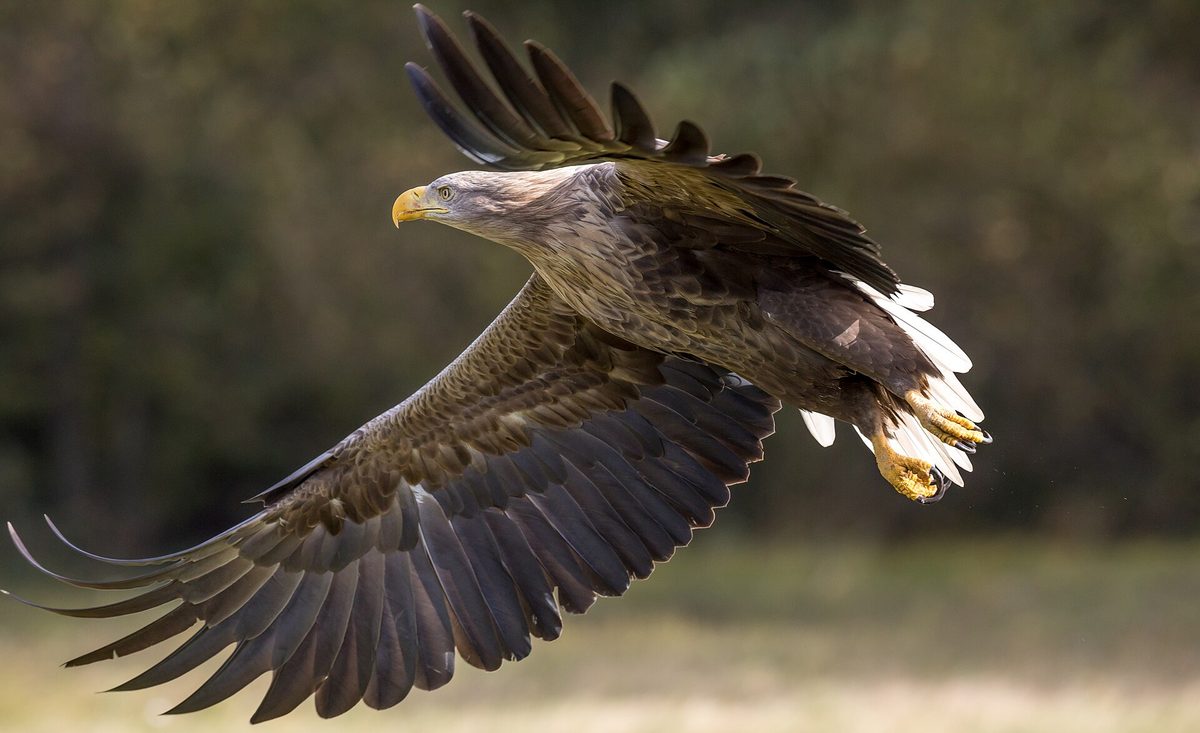
White-tailed eagles are the headline, and they deserve to be. These are the birds that were shot to extinction in Britain and reintroduced from Norway in the 1970s, and there are resident pairs on the cliffs around Portree Bay. They have a wingspan getting on for two and a half metres, which is why the standing joke on Skye is that they look like flying barn doors. Seen from a small boat at close range, that is not much of an exaggeration.
Some skippers put out a fish to bring a bird down within camera range. Opinions differ on the practice; my own view is that it is a long-established part of how these trips work here and it produces the sighting people came for, but it is worth knowing in advance that this is what you are paying for rather than a chance encounter.
After the eagles come the seals, which are close to guaranteed on the skerries around the bay, and which will follow the boat if the mood takes them. Then, depending on the season and your luck: porpoises, dolphins, the occasional minke whale further out in summer, gannets diving, guillemots and razorbills on the water, and otters along the shoreline if you have the eyes for it. Nobody can promise you cetaceans. Everybody can promise you a good look at the coastline.
The operators and the kinds of trip
Several outfits work out of Portree pier and the pontoon at the pier head, and they broadly split into three types.
The standard wildlife cruise runs an hour and a half to two hours on a covered boat, heads up the coast under the cliffs where the eagles nest, works the skerries for seals and comes back. It suits most people, including children, and it goes ahead in weather that would cancel the smaller boats.
The rigid inflatable trips are faster, wetter and considerably more fun if you like that sort of thing. They cover far more ground — out towards Raasay, Rona and the northern coast — and in summer some operators run longer whale-watching runs further offshore. You will be issued waterproofs. You will still get damp.
The third type is the half-day or full-day cruise on a larger boat, sometimes with a seafood lunch aboard and a landing on a neighbouring island. These are pricier and slower and lovely on a settled day. Book them earlier, because they run fewer departures.
Prices sit in the range you would expect for a small-boat wildlife trip, with children’s fares and family tickets at most operators, but they change every season and I would rather you checked than trusted a number on a page. Every operator has a website and most take bookings online.
When to go out, and what to wear
Morning trips are usually calmer. Evening trips in June and July get the best light on the cliffs, which matters if you are carrying a camera. April to October is the season; some operators run a shorter window than that, and almost nothing runs in the depths of winter.
Dress as though it is ten degrees colder than it is on the pier, because at sea it will be. Windproof outer layer, hat, something for your hands even in July. Sunglasses on a bright day, because glare off the water is punishing and you will spend an hour squinting at cliffs. If you get seasick, take something an hour before — the bay is sheltered but the Sound is open water, and a swell running from the north-east makes itself known.
Take binoculars if you own them. The skipper will point out a bird half a mile off and you will see a speck; through 8x binoculars you will see an eagle.
Booking, cancellations and the weather
Book a day or two ahead in July and August, more for the larger cruises. Outside high summer you can often walk down to the pier in the morning and get on a boat that afternoon.
Then accept that the sea has a vote. Trips get cancelled at short notice for wind and swell, and a bright sunny morning with a stiff north-easterly is exactly the sort of day that gets called off. Operators will usually rebook you or refund you, but the practical lesson is not to leave your boat trip until the last afternoon of your stay. Book it early in the trip and you have a second chance if it blows out.
One thing Portree is not, incidentally, is a ferry port. People arrive expecting to catch something to the Outer Hebrides from here. The ferries leave from Uig for Harris and North Uist, from Armadale for Mallaig, and from Sconser for Raasay — all covered in our guide to how to get to the Isle of Skye, along with the bridge and the train connections.
Free walks that start in the town
This is where Portree quietly beats its reputation. Two of the best short walks on Skye start within ten minutes of Somerled Square, cost nothing, need no booking, and are almost entirely ignored by visitors who have driven straight through on their way to the famous car parks.
The Lump and the Apothecary’s Tower
The Lump is the wooded headland immediately south of the harbour, and it is the single most underused thing in Portree. A path climbs from the harbour side through beech and sycamore onto an open grassy plateau, and at the far end stands an octagonal stone tower with a spiral stair inside.
That is the Apothecary’s Tower, a folly put up in the 1830s by a local doctor, wrecked by a storm in the 1970s and rebuilt since. Climb the steps and you get the whole geography of the place laid out: the terrace and the boats below you, Ben Tianavaig across the bay, the ridge of the Storr away to the north, Raasay to the east and, on a clear day, the Cuillin serrated along the southern horizon.
It takes ten minutes to walk up from the square and half an hour to enjoy properly. There is no ticket, no gate and, most mornings, nobody else. If you have one hour in Portree and you want the view, go here rather than joining the queue on Quay Brae.
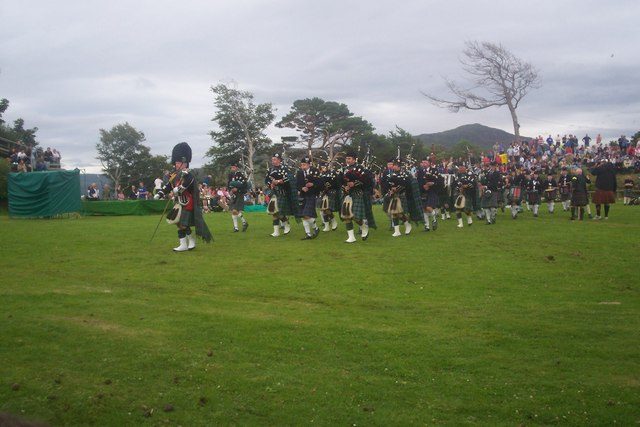
The flat green arena on top is also where the town’s big events happen. The Skye Highland Games have been held here since the 1890s, on a Wednesday in early August, with the caber, the pipe bands and the hill race up the back of the town. A music festival takes over the same ground in May. If your dates coincide, go — and if they do, book your bed a very long way ahead, because the whole town sells out weeks in advance.
The Scorrybreac circuit
The second is the Scorrybreac path, which runs along the northern shore of the bay below the cliffs. Start from the small car park at the end of the road below the Cuillin Hills Hotel, or just walk out along the shore from the harbour, which adds ten minutes and is more pleasant anyway.
The full circuit is around three kilometres with a little over a hundred metres of climb, and takes an hour to an hour and a half at a wandering pace. The first half is flat and easy, hugging the shingle at the water’s edge with the town falling away behind you. Then it climbs onto the hillside, loops back through gorse and bracken with the bay below, and drops you back where you started.
Two things make it better than it sounds. The first is that the cliffs above you are eagle territory, and I have had better sightings from this path, sitting still with binoculars, than from the deck of a boat. The second is the memorial to the Nicolsons, whose clan lands these were, sitting on a rise looking out over the water — a genuinely affecting spot that takes about ninety seconds of your time.
Underfoot it is a mixture of good path, grass and a few muddy stretches, and there is one section along the shore that is awkward at the highest tides. Trainers are fine in dry weather. After a wet week, wear boots.
Camas Ban and the beach nobody mentions
Follow the shore path far enough round and you reach Camas Ban, the white bay, a curve of pale sand on the far side of the headland facing back down the sound. It is not a beach for swimming — the water here has a serious opinion about temperature — but it is a fine place to sit with a flask, and on a still evening you will very likely have it to yourself.
Skye’s better-known sands are elsewhere, at Coral Beach near Dunvegan and Talisker Bay on the west coast, and Camas Ban is not competing with either. It is simply twenty-five minutes from a car park in the middle of town, which none of them are.
Ben Tianavaig, if you want a proper hill
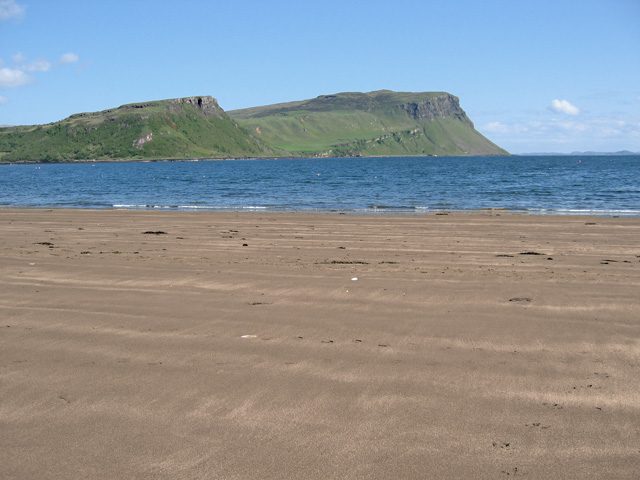
The flat-topped hill guarding the mouth of the bay is Ben Tianavaig, a shade over 400 metres, and it gives the finest view of Portree there is. The usual approach starts from the hamlet of Camastianavaig, a few miles round the coast by a narrow road, and the round trip is roughly two and a half to three hours with a steady pull up grassy slopes to a rim of small crags.
It is not technical, but it is exposed at the top, it holds cloud, and the seaward edge is exactly as steep as it looks from below. Pick a clear day, take a map, and treat it as a proper hill walk rather than a stroll — the general advice in our guide to hiking in Scotland applies here as much as anywhere.
In return you get Portree spread out beneath you, the whole Trotternish ridge running north, and the Cuillin filling the south-west skyline. It is the picture that everyone else’s Portree photograph is trying and failing to be.
Eating in Portree without ending up with a meal deal
Portree has the best concentration of restaurants on Skye. It also has nowhere near enough of them for the number of people who want dinner at half past seven in July, and this is the single most common way a Skye holiday goes mildly wrong.
The maths is unkind. A town of a couple of thousand people has perhaps a dozen places doing proper evening meals. On an August evening the island’s visitor population is many times the resident one, and every one of those visitors has come back from the Quiraing at six o’clock, hungry. If you turn up at seven without a booking you will be told, politely and repeatedly, that they are full, and you will end up buying a sandwich from the Co-op and eating it in the car looking at the harbour. I have done it. It is not the worst evening of your life, but it isn’t what you planned.
The rule: book, or eat early
For the good places in high season, book weeks ahead, not days. For everywhere else, phone that morning. If you have not booked, eat at six rather than eight and your odds improve enormously, because the first sitting is the one with gaps.
Better still, flip your day. Have your proper meal at lunchtime, when the same kitchens are far quieter and often cheaper, and eat something simple in the evening. On Skye, where you want to be out at a viewpoint in the long northern light anyway, this is a better shape of day in every respect.
Seafood at the harbour
The langoustines, crab, scallops and mussels landed on this coast are as good as anything in Britain, and the harbour-side places are where to eat them. Sea Breezes on the pier is the long-standing seafood name in town, known for shellfish platters. The Lower Deck on Douglas Row does simple fresh fish and is small enough that it is full most nights — go early.
A note that will save you disappointment: a great deal of Skye’s best shellfish is exported, and menus change with what the boats actually landed. If the board says something is off, it is genuinely off, not a brush-off. Ask what came in today and order that.
Smarter dinners
Scorrybreac, up on Bosville Terrace above the harbour, is Portree’s fine-dining room — a small, seasonal, tasting-led restaurant with very few covers. It is the one that books out first and the one worth the effort of planning around.
Dulse and Brose, in the Bosville Hotel on the same terrace, is a notch more relaxed: a brasserie doing elevated Scottish cooking, with the Merchant Bar attached for a drink beforehand. Up the hill on the north side of the bay, the restaurant at the Cuillin Hills Hotel trades on a view over the water that is worth an extra ten minutes’ walk.
All three take bookings and all three should be booked. None of them will take kindly to a party of eight walking in on spec on a Saturday in August.
Coffee, bakeries and lunch
Cafe Arriba, up the stairs on Quay Brae, has been feeding people for years and is the reliable, dog-friendly, vegetarian-friendly option in the middle of the day. There is a bakery on Somerled Square doing pies and cakes, and a couple of good independent coffee places in the centre that have raised the standard considerably in the last few years.
For lunch on the move, this is your chance. Buy the rolls, the cheese, the cake and the flask here, because the next opportunity may be a long way off and shut.
Chips, curry and the late-evening problem
There is a chip shop at the harbour and another nearby, and on a summer evening there will be a queue out of the door. That is the honest state of things: Portree’s takeaway capacity is modest and the queue is the price. There is a long-running Indian restaurant on Bank Street too, which is a useful alternative on a night when everywhere else is full.
What Portree does not have is a late-night eating culture. Kitchens across the island tend to stop serving earlier than mainland visitors expect, and arriving back from a long day at nine hoping for dinner is optimistic. If you are heading out to the Quiraing or Neist Point for sunset in June, when the light lasts until eleven, take food with you.
A drink, and a dram
The pubs around Somerled Square and on the harbour front are the social centre of the island, and on a good night you will get live music without anyone having advertised it. The bars in the hotels are quieter and better for conversation.
Portree also has its own gin and vodka distillery, with a shop in town, though it is a production site rather than a visitor attraction and does not run the sort of tour you may be imagining. For whisky, the island’s distillery is Talisker at Carbost, about forty minutes away, and it does run tours — book them, because they sell out. Our guide to Scotland’s whisky distilleries covers what to expect from a tour and how far ahead to reserve.
Rainy days, evenings and the indoor list
It will rain. Skye gets a great deal of weather and Portree is where you go when the tops are in cloud and the walk you planned has stopped being fun.
The cinema and theatre
On Viewfield Road, on the southern edge of town, is the building most guides still call the Aros Centre. It has changed hands and now trades as Las, within a candle company’s visitor centre, and it still does what it always did: a cinema screen, a theatre programme, live music and a bar and restaurant. Check what is on when you arrive, because a wet Tuesday evening in Portree with a film to go to is a considerably better evening than a wet Tuesday evening without one.
Shops that are worth a browse
Wentworth Street and Bank Street have wool, tweed, prints, ceramics and a couple of galleries showing island photographers and painters. There is a serious outdoor shop for the waterproof you should have packed. Prices are island prices, but the craft is real and the alternative is another lap of the harbour in horizontal drizzle.
The archive centre
If you have Skye ancestry, the Skye and Lochalsh Archive Centre holds records going back to the seventeenth century, with the bulk from the nineteenth — the emigration years, when this coast emptied. It keeps limited hours on limited days, so check before you go and email ahead if you have specific names. For a certain kind of visitor it is the most moving hour on the island.
Shinty, pipe bands and the town’s own calendar
Skye Camanachd play shinty at a good level and the season runs from spring into autumn. It is fast, physical, free or nearly so to watch, and about as far from a tourist experience as you can get while still being welcome. In summer the local pipe band parades in the town centre on set evenings. Neither is advertised much beyond a poster in a window, which is rather the point.
Day trips from Portree: real drive times
This is the actual reason to stay in Portree. It sits almost exactly at the island’s road junction, so nothing on Skye is more than about an hour and a quarter away, and the two headline drives — north into Trotternish and south-west into the Cuillin — both start at your door.
The times below are for a clear run in decent conditions. In July, on single-track sections behind a motorhome, add a third. Skye’s roads are slower than their distances suggest, and that is the mistake most first-timers make.
| Destination | Distance from Portree | Driving time | Road |
|---|---|---|---|
| Old Man of Storr car park | 7 miles | 15 minutes | A855 north |
| Sligachan and the Cuillin | 9 miles | 15 minutes | A87 south |
| Sconser (Raasay ferry) | 11 miles | 20 minutes | A87 south |
| Uig (Outer Hebrides ferry) | 14 miles | 25 minutes | A87 north-west |
| Kilt Rock and Mealt Falls | 17 miles | 30 minutes | A855 north |
| Quiraing car park | 20 miles | 40 minutes | A855 then single-track hill road |
| Carbost (Talisker distillery) | 22 miles | 40 minutes | A87, A863, B8009 |
| Dunvegan Castle | 24 miles | 45 minutes | A87 then A850 |
| Broadford | 26 miles | 40 minutes | A87 south |
| Glenbrittle (Fairy Pools) | 28 miles | 50 minutes | A863, B8009, single track |
| Elgol | 32 miles | 1 hour | A87, A881, long single track |
| Neist Point | 40 miles | 1 hour 15 | A850, B884, single track |
| Armadale (Mallaig ferry) | 44 miles | 1 hour 15 | A87 then A851 |
North into Trotternish
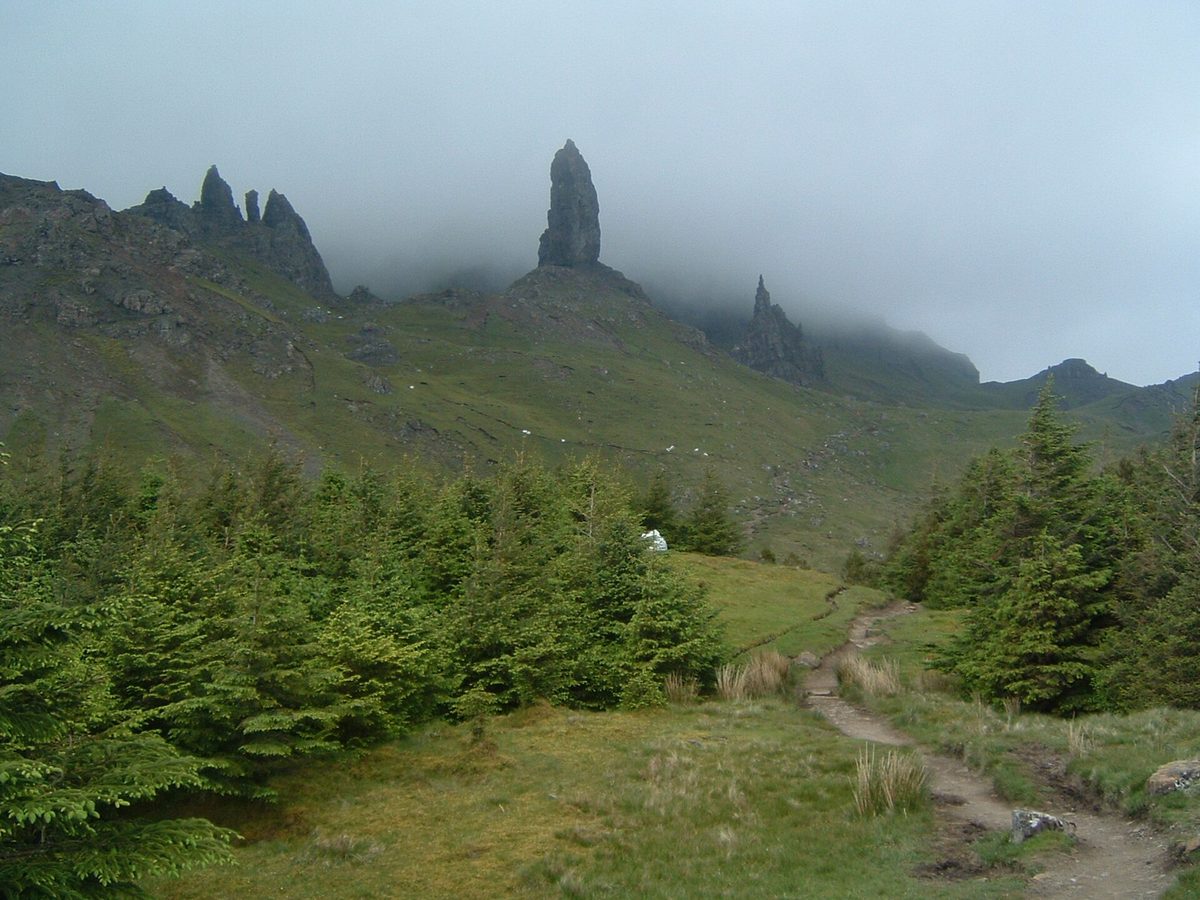
The classic Skye day, and the one to do first. Head north on the A855 and the road runs under the Storr within a quarter of an hour — which is why the car park there is full by nine in summer and why staying in Portree is such an advantage. You can be walking at seven and back for breakfast. Our complete guide to the Old Man of Storr covers the timings and the parking in detail.
Keep going for Lealt Falls, the dinosaur footprints at Staffin, and the roadside spectacle of Kilt Rock and Mealt Falls, where a waterfall drops straight off a cliff into the sea. Then either climb the hill road from Staffin to the Quiraing, or continue round to Uig and come at it from the other side. The Quiraing walk is the best hour and a half on Skye when the weather behaves, and the parking is the hard part, not the path.
The full loop back through Uig and down to Portree is about 50 to 60 miles depending on your detours, and it will take you all day if you do it properly. Do not try to add the west coast to it.
South-west into the Cuillin
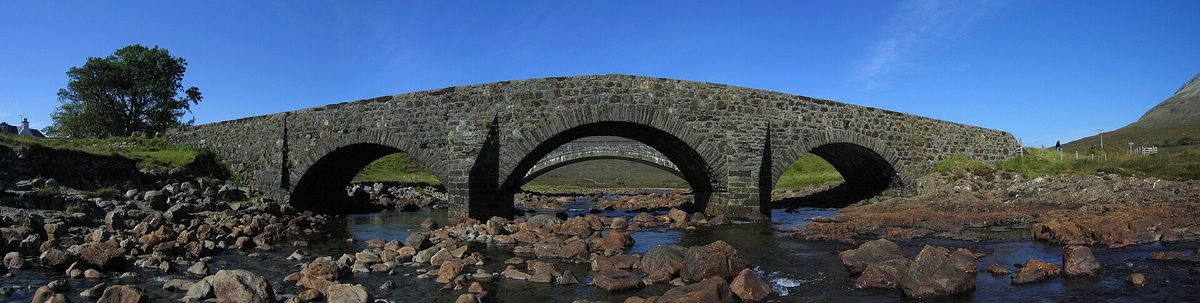
Fifteen minutes south of Portree the A87 crosses the moor and the Cuillin appear, which is one of the genuine hairs-on-the-neck moments in Scotland. Sligachan sits at the junction with its old stone bridge, its bunkhouse and its hotel bar, and it is the gateway to both ranges: the black gabbro peaks of the main ridge to the south and the round red hills of the Red Cuillin to the east.
Turn off for Carbost and you reach Talisker distillery, and beyond it Talisker Bay with its black-and-white sand. Turn again for Glenbrittle and you reach the Fairy Pools, which are lovely early and a scrum by eleven — the walk itself is short, the car park is the bottleneck.
Further south again, the long single-track road to Elgol delivers the best view in the Hebrides: the whole Cuillin ridge rising straight out of Loch Scavaig. Boats run from the jetty there to Loch Coruisk in the heart of the mountains. It is a full day from Portree and worth every minute of the drive.
West to Dunvegan, Neist Point and Waternish
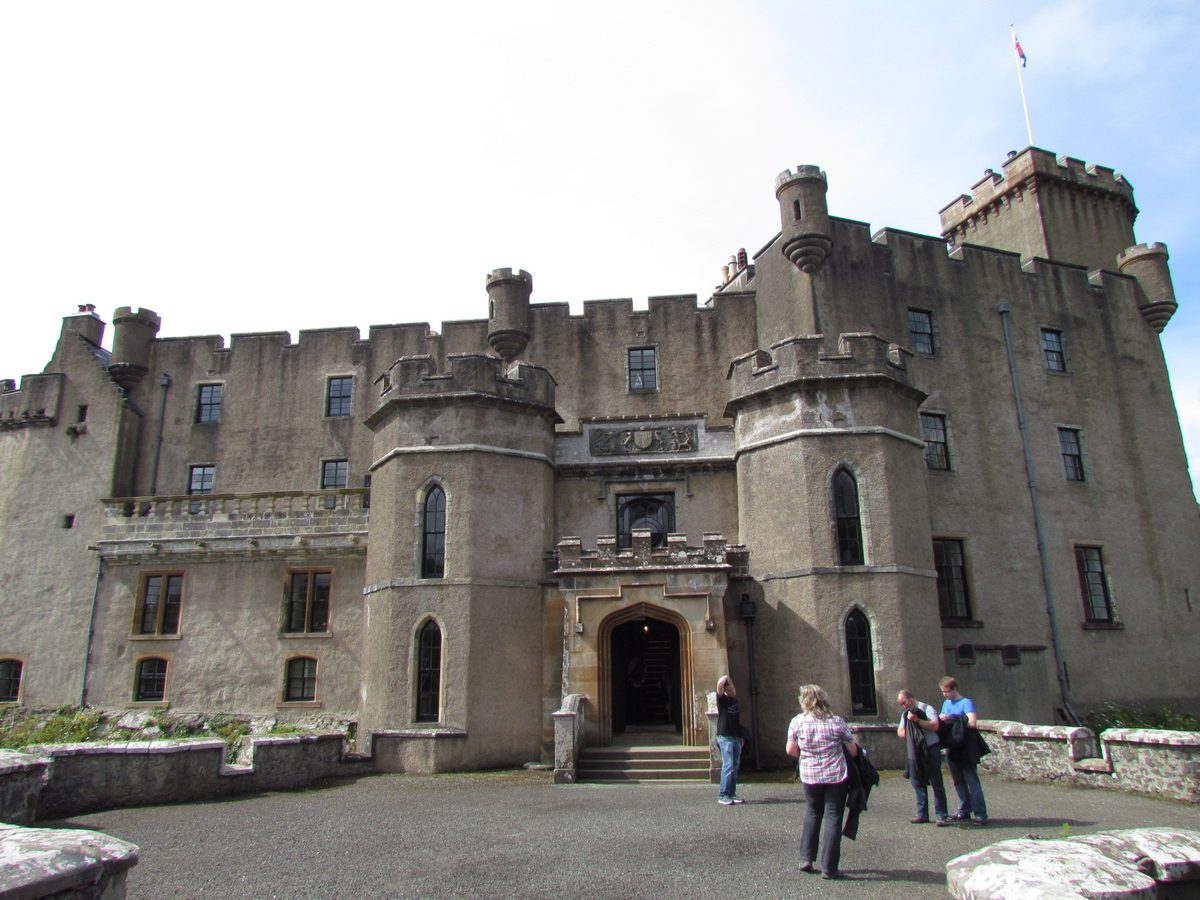
West Skye is quieter, greener and less photographed than Trotternish, and it makes a good second or third day. Dunvegan Castle is the seat of the MacLeods and claims to be the oldest continuously inhabited castle in Scotland — the gardens are better than people expect, and boat trips run from the jetty to a seal colony. It sits comfortably alongside the grander names in our roundup of Scotland’s castles.
Beyond Dunvegan the road narrows towards Glendale and Neist Point, where a lighthouse sits at the end of a green promontory at the westernmost tip of Skye. The walk out is downhill on the way there and uphill on the way back, which catches people out, and the sunsets are the reason to make the long drive.
North of Dunvegan, the Waternish peninsula has the Coral Beach, a stretch of crushed maerl that looks tropical in the right light and arctic in the wrong one, and the little harbour village of Stein with its old inn.
Across the water to Raasay
The one nobody does, and the one I would push you towards on a second visit. The ferry leaves from Sconser, twenty minutes south of Portree, and crosses in about twenty-five minutes. Raasay has a distillery, a good hill in Dun Caan with its flat volcanic top, and a network of quiet paths.
It also has Calum’s Road, a mile and three-quarters of public road built almost single-handedly, over years, by one crofter who had given up waiting for the council. Standing on it tells you more about twentieth-century island life than any museum will. If islands appeal, our guide to the Scottish islands covers where else to point yourself next.
Planning your stay in Portree
How many nights
Three nights is the sweet spot: one day north, one day south-west, one day for weather, a boat trip and the town itself. Two nights works if you are disciplined and accept you will miss the west coast. Four or five lets you add Elgol, Raasay and a proper hill day without spending every evening driving.
One night is a mistake I see constantly. People build a Skye stop into a bigger loop, arrive at six, leave at nine the next morning, and take away nothing but a photograph of a terrace and a memory of traffic. If that is all the time you have, be honest with yourself and plan a single target rather than three. Our Isle of Skye itinerary sets out what actually fits into two, three and five days.
Should you base yourself here at all?
Portree is the right base for most people, and I say that having tried the alternatives. Broadford is closer to the bridge and cheaper but forty minutes further from Trotternish. Dunvegan and Glendale are lovely and quiet and a long way from everything else. Uig is handy only if you are catching a ferry. Sleat, in the south, is a different holiday altogether.
Portree wins on services, on food, on buses and on the fact that the Storr is fifteen minutes away. It loses on price and on peace: this is the busiest place on the island, and in August the centre has a steady churn of coaches and cars. If you want silence, stay three miles out and drive in for dinner. The same trade-off shows up all over the region, and we weigh it up in our guide to the best base towns in the Scottish Highlands.
Getting here
By car, it is the A87 the whole way: over the Skye Bridge from Kyle of Lochalsh, which has been toll-free since 2004, then north-west through Broadford and Sligachan. From Inverness reckon on about two and a half hours, from Fort William closer to three, from Edinburgh or Glasgow the better part of six with stops. It is a beautiful drive and it is also a long one, and it forms the final leg of several of our Highland road trip routes.
By public transport, coaches run from Glasgow and from Inverness directly to Somerled Square. The nearest railway stations are Kyle of Lochalsh, on the line from Inverness, and Mallaig, at the end of the West Highland Line, with the Armadale ferry beyond it. Both journeys are worth doing for their own sake.
What to book, and how far ahead
Accommodation first, and early. Portree’s beds sell out for July and August by spring, and the good B&Bs go earlier than that. Restaurants next: weeks ahead for the smart ones in season. Boat trips a couple of days ahead. Tours and guided days a week or two — if you would rather someone else did the driving on those single-track roads, our roundup of the best Isle of Skye tours covers what runs from Portree.
Nothing else needs booking. There is no ticket for the Storr, the Quiraing, the Fairy Pools or the Lump; you just need to arrive at a sensible hour and pay for parking.
When to come
May and September are the best months on Skye by a distance: long days, most things open, fewer cars, and light that does interesting things to the ridges. June and July have the longest evenings and the biggest crowds. August adds the Highland Games and total saturation.
Midges arrive with the warm still weather from late May and are at their worst on windless June and July evenings, particularly near water and in trees — which describes The Lump and the Scorrybreac path exactly. A breeze kills them, repellent helps, and our guide to Scotland’s midge season explains when and where they actually bite.
Winter is a genuine option if you want the town rather than the island. Half the restaurants close, the boats stop, and the daylight runs from around nine to four, but Portree in a January gale with a fire and a dram has something going for it that August does not. For a fuller comparison of the shoulder months, see what Scotland is like in September.
What underwhelms, and the mistakes I see most
Some honest notes, because a guide that likes everything is no use to anyone.
The painted houses, in the wrong light
Photographed at noon under grey cloud, from the pavement above, that terrace is genuinely unremarkable. Every image that made you want to come here was shot at dawn or dusk, from across the water, in colour-graded post-production. Go early, cross the bay, and it lives up to itself. Turn up at two on a wet Wednesday and you will wonder what the fuss was about, and you will be right.
Expecting a fishing village
Portree has a working harbour, but it is not a preserved fishing village. It has a high school, a hospital, a council depot and a supermarket car park, because a couple of thousand people live and work here in the twenty-first century. Visitors who arrive looking for Tobermory in miniature come away disappointed. Visitors who arrive looking for a functioning island town with good food and a boat trip have a very good time.
The seven o’clock dinner
Worth repeating because it is the mistake with the highest cost. Do not leave dinner to chance in July and August. Book in the morning at the very latest, and if you cannot, eat at six or buy a picnic.
Driving to the Storr at eleven
The car parks at the Old Man of Storr, the Quiraing and the Fairy Pools are all full between roughly ten and four in summer, and roadside parking at all three is either impossible or actively unwelcome. Being based in Portree is only an advantage if you use it: leave at seven, be back by half ten, and have the rest of the day.
Underestimating the roads
Skye’s roads are narrow, twisting, full of sheep and, in places, single track with passing places. Twenty-five miles is a serious drive, not a half-hour hop. Learn the passing-place etiquette before you arrive: pull in on your left, pause on the right opposite the passing place, and give a wave. Never park in one.
Trying to do the whole island in a day
Storr, Quiraing, Neist Point and the Fairy Pools cannot be combined into one day, whatever a suggested itinerary tells you. That is somewhere north of 150 miles of Skye road with four walks attached. Pick two, do them properly, and come back for the rest. The wider case for slowing down runs through our Isle of Skye guide.
Frequently asked questions
How many days should I spend in Portree?
Three nights suits most people: a day north to the Storr and the Quiraing, a day south-west to Sligachan and the Cuillin, and a third for the town, a boat trip and whatever the weather ruins. Two nights is workable but tight. The town itself needs half a day at most.
Is Portree a good base for exploring Skye?
It is the best one for most visitors. It sits at the island’s road junction, so nothing on Skye is more than about an hour and a quarter away, and it has the services, the restaurants and the bus links that nowhere else on the island can match. The trade-offs are price and summer crowds.
Can you walk around Portree?
Easily. The centre is compact enough that everything is within about ten minutes on foot, including the harbour, both squares, the shops and the start of The Lump path. The one exception is the large Co-op on Woodpark Road, which is uphill on the edge of town and worth driving to if you have a big shop.
What is there to do in Portree when it rains?
The cinema and theatre on Viewfield Road, the galleries and craft shops on Wentworth and Bank Streets, the archive centre if you have island ancestry, and a long lunch somewhere with a view of the water. A wildlife boat trip on a covered boat also runs in weather that stops the walking.
Do you need a car to stay in Portree?
No, and Portree is the only place on Skye where that is true. Buses from Somerled Square loop Trotternish, run west to Dunvegan and south to Broadford, and several tour operators pick up in town. Services are limited rather than frequent, so plan around timetables, but a car-free Skye trip based here is realistic.
Are the Portree boat trips worth doing?
Yes. A ninety-minute wildlife cruise gets you close to white-tailed eagles and seals, shows you cliffs and coastline you cannot reach by road, and costs less than most guided days on the island. Book a couple of days ahead in summer, and book it early in your stay so you can rebook if wind cancels it.
Where are the colourful houses in Portree?
On Quay Street, along the harbour front below Bosville Terrace. It is one short terrace of about a dozen buildings rather than a whole village. The best angles are from the far side of the bay or from the path onto The Lump, and early morning light is far better than afternoon.
Is Portree expensive?
Accommodation is the pinch point, and summer rates in Portree run above the Highland average because demand outstrips beds by a wide margin. Food and fuel cost a little more than the mainland but not dramatically so. The walks, the viewpoints and the harbour are free, which balances things considerably.
Final thoughts
I have come to like Portree a great deal, and it took letting go of what I thought it was going to be. It is not a fishing village preserved for visitors. It is the place where the island does its business, and it happens to sit on one of the prettiest bays in Scotland with a terrace of painted houses along the front.
Use it that way. Fill the tank, do the shop, book the boat, walk up The Lump at eight in the evening when the light comes sideways across the water, and be out of the car park at the Storr before the coaches arrive. Portree will not fill your week. It will make the rest of your week work.
Portree makes a workable base for the far west, though it is further than it looks — allow an hour and a quarter each way for the run out to Neist Point, and rather less for the Fairy Glen above Uig.
About the author: This guide was written and is maintained by the ScotlandTourism.org editorial team — travel writers who’ve spent years exploring Scotland’s cities, Highlands and islands, from bagging Munros to chasing the perfect dram. We update our guides regularly to keep prices, opening details and advice current.
Last updated: September 2026. Prices and opening times change — always check the official site before you travel.
Photo credits
All images are used under their respective Creative Commons or public-domain licenses:
- Portree isle of skye harbour houses — הגמל התימני, CC BY-SA 4.0, via Wikimedia Commons
- Portree isle of skye town street — Chmee2, CC BY-SA 3.0, via Wikimedia Commons
- Portree isle of skye somerled square — Florian Pépellin, CC BY-SA 3.0, via Wikimedia Commons
- Portree isle of skye white tailed eagle — Andreas Weith, CC BY-SA 4.0, via Wikimedia Commons
- Portree isle of skye raasay coast — John Allan, CC BY-SA 2.0, via Wikimedia Commons
- Portree isle of skye pipe band — Colin Wilson, CC BY-SA 2.0, via Wikimedia Commons
- Portree isle of skye bay view — John Allan, CC BY-SA 2.0, via Wikimedia Commons
- Portree isle of skye old man of storr — Jörn Albring, Public domain, via Wikimedia Commons
- Portree isle of skye sligachan — Klaus with K, CC BY-SA 3.0, via Wikimedia Commons
- Portree isle of skye dunvegan castle — Lómelinde, CC0, via Wikimedia Commons