The first time I did Scotland without a car, I did it badly. I turned up in Portree on a Sunday in late October with a rucksack, a vague plan to walk up to the Old Man of Storr, and no idea that the Trotternish bus loop simply stops running on Sundays outside the summer timetable. I spent the day in a café on Somerled Square watching rain move sideways across the harbour, which was not the worst day of my life, but it was not the day I had planned either.
Every trip since then has gone better, because I stopped treating public transport as a downgraded version of driving and started treating it as its own thing with its own rules. Those rules are learnable. They are also almost never written down properly — the guides either tell you it’s easy, which is a lie in about a fifth of the places you want to go, or they tell you that you really need a car, which is a bigger lie. What follows is the version I wish I’d had: named services, real journey times, the connections that work, and blunt warnings about the ones that don’t.
Can you see Scotland without a car?
Yes, and comfortably — if you plan around timetables rather than around a map. Trains and Citylink coaches reach Edinburgh, Glasgow, Fort William, Oban, Inverness, Kyle of Lochalsh and Skye without difficulty. What you cannot reach are remote trailheads and single-track glens. For those, a day tour or a taxi fills the gap.
The routes at a glance
These are the connections a car-free trip is actually built from. Times and frequencies below are typical of recent summer timetables and are given as a planning guide only — winter cuts most of them and every operator reshuffles seasonally, so check the live timetable before you commit to anything.
| Route | Operator & service | Typical journey time | Rough frequency |
|---|---|---|---|
| Edinburgh — Glasgow | ScotRail (Queen Street) | 50 minutes | Every 15 minutes, all day |
| Glasgow — Fort William | ScotRail West Highland Line, or Citylink 914/915/916 | 3 hours 45 minutes by train, around 3 hours by coach | 3–4 trains, roughly hourly coaches in summer |
| Fort William — Mallaig | ScotRail, West Highland Line | Around 1 hour 25 minutes | 3–4 a day |
| Mallaig — Armadale (Skye) | CalMac ferry | Around 30 minutes | Several daily, tide-dependent |
| Fort William — Portree | Citylink 915/916 | Around 3 hours 5 minutes | 3 a day in summer |
| Inverness — Kyle of Lochalsh | ScotRail, Kyle Line | Around 2 hours 40 minutes | Up to 4 a day Mon–Sat |
| Inverness — Portree | Citylink 917 | Around 3 hours | 2–3 a day |
| Inverness — Edinburgh | ScotRail, Highland Main Line | Around 3 hours 30 minutes | Roughly every 2 hours |
The operators you actually need to know
Four names cover about ninety per cent of a car-free trip. Learn what each one is for and the whole thing becomes much less intimidating than it looks on a network map. Our wider guide to getting around Scotland covers the driving side too, but here’s the car-free half in detail.
ScotRail — the spine of the whole thing
ScotRail runs almost everything inside Scotland, and two of its lines are the reason a car-free trip works at all.
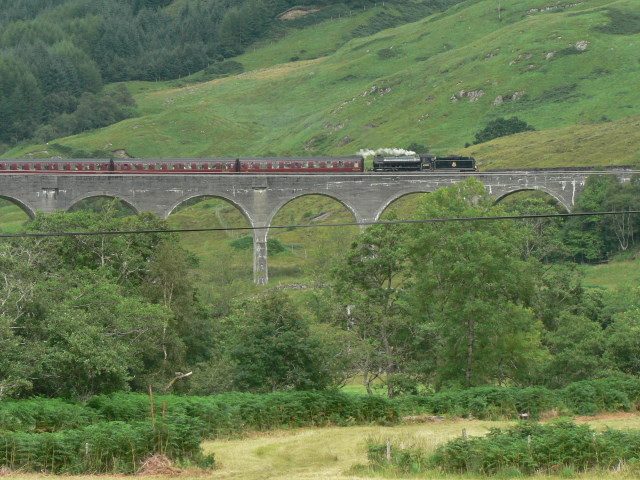
The West Highland Line leaves Glasgow Queen Street, runs up the side of Loch Lomond, splits at Crianlarich, and sends one portion to Oban and the other over Rannoch Moor to Fort William and on to Mallaig. Glasgow to Fort William is around three hours forty-five; Glasgow all the way to Mallaig is closer to five and a half hours, with up to three through trains a day. Fort William to Mallaig on its own is about an hour twenty-five, and that stretch crosses the Glenfinnan Viaduct — the same arches the Jacobite steam train uses, which is why Harry Potter fans in Scotland book it out months ahead. The scheduled ScotRail service crosses it too, for a fraction of the money, and nobody makes you wear a scarf.
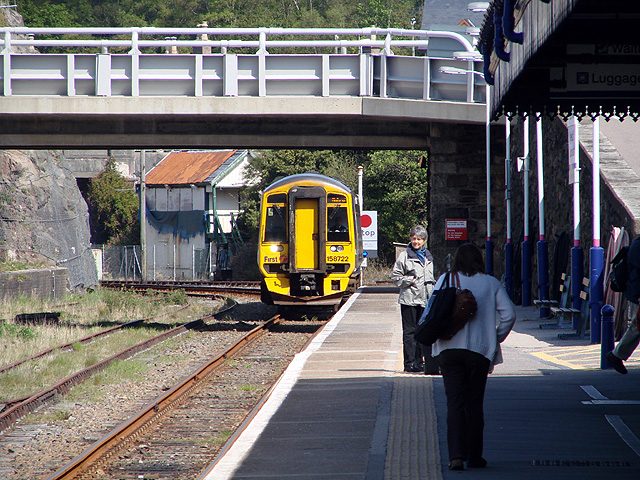
The Kyle Line runs Inverness to Kyle of Lochalsh in around two hours forty, up to four times a day Monday to Saturday, with a thinner Sunday service that in some winter timetables disappears entirely. It arcs round the Beauly Firth, crosses to Achnasheen, drops down Glen Carron and finishes along Loch Carron with Skye filling the windscreen. Plockton, two stops short of Kyle, is a genuinely lovely place to break the journey.
Both lines are on our round-up of the best scenic train journeys in Scotland, and they deserve it. Advance fares go on sale twelve weeks out and are dramatically cheaper than walk-up. Reserve a seat while you’re at it; the West Highland Line in August is a two-carriage train with more passengers than seats.
Scottish Citylink — where the rails stop
Citylink coaches go where the railway doesn’t, and the numbers matter because the same road carries several different services with different destinations.
The 915 and 916 run Glasgow Buchanan Bus Station to Fort William, Portree and, on some journeys, right through to Uig pier. Glasgow to Fort William is around three hours; Fort William onward to Portree is roughly three hours five. Here’s the crucial bit: in a recent summer timetable there were around eleven daily departures from Glasgow to Fort William, but only three that continued onto Skye. In winter the last coach of the day to Portree left Glasgow just before two in the afternoon. Miss it and you’re staying in Fort William.
The 917 runs Inverness to Portree, via Loch Ness and Glen Shiel, in about three hours, a couple of times a day. It’s the fast way between the Highland capital and Skye and it passes Eilean Donan Castle, which is a decent consolation for not having a boot.
Citylink fares typically go on sale seven to eight weeks ahead. Book them. Not for the price — for the seat. I have stood at Sligachan and watched a full coach go past, and there is no next one for four hours.
Stagecoach and the local buses
Stagecoach runs the local network on Skye and much of the north, and these are the services that determine whether you can actually reach anything once you’ve arrived. On Skye the ones that matter are the 52 (Portree to Broadford and Armadale pier, roughly five journeys a day Monday to Friday and three at weekends in summer) and the 57A and 57C, which run the Trotternish loop from Portree in opposite directions.
Pay attention to the 57s. They have a stop called Old Man of Storr Car Park. That single fact is the difference between seeing Skye’s most famous rock formation and not seeing it, and I’ll come back to how to use it.
Elsewhere, local buses are run by a patchwork of operators — First, West Coast Motors, Borders Buses and various small independents. They mostly take contactless. Rural drivers won’t announce stops, so follow your position on a map and ring the bell yourself.
CalMac — the ferries
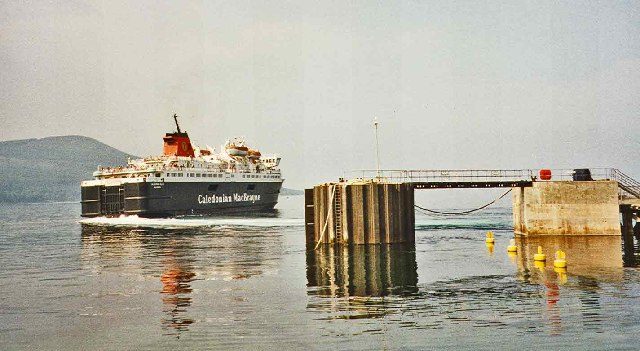
Caledonian MacBrayne runs the west coast island network, and as a foot passenger you have an easy life: no vehicle booking scramble, no six-month-ahead panic. The crossing that matters most for this itinerary is Mallaig to Armadale, about thirty minutes, several sailings a day, with foot passenger check-in closing ten minutes before departure. Tides force amended timetables on certain dates through the summer, so check the specific day rather than the general timetable.
Foot passengers can usually turn up and travel on most routes, but I book anyway on Mallaig–Armadale and on the Oban sailings in July and August.
The journey planner that actually works
Google Maps is unreliable for rural Scottish buses. Traveline Scotland is clunky and correct, which is the trade I’ll take every time. Cross-check anything important against the operator’s own PDF timetable, because that’s the document the driver is working from.
The passes: when they save money and when they don’t
This is where most guides go wrong, partly because the rules changed and a lot of pages never caught up.
Spirit of Scotland Travelpass
ScotRail’s flagship pass gives you four days of unlimited travel within eight consecutive days, or eight days within fifteen. At the time of writing it was priced at around £150 for the four-day version and around £190 for the eight-day one, with railcard discounts applying, under-fives free and 5–15s at half price. Check the current price before you buy — it has crept up.
What it includes: all ScotRail trains in Scotland plus cross-border services to Carlisle and Berwick, the Glasgow Subway, Edinburgh Trams, and a specific list of coach routes — Oban and Fort William to Inverness, Fort William to Kyle of Lochalsh to Uig, Inverness to Ullapool, and Stagecoach services on Skye. It also gets you a pound off the city sightseeing buses in Edinburgh, Glasgow and Inverness, and ten per cent off the Loch Ness cruises.
What it does not include, and this is the big one: CalMac ferries. They were removed from the Spirit of Scotland, Highland Rover and Grand Tour passes back in April 2023. Plenty of blog posts still say the pass covers all west coast ferries. It doesn’t. Buy your crossings separately from CalMac.
It also excludes the Caledonian Sleeper and the Jacobite steam train, it’s standard class only, and on weekdays the rail element is valid from 09:15 — though several routes are exempt from that restriction, including Glasgow to Oban, Fort William and Mallaig, and Inverness to Kyle, Wick and Thurso. Which happen to be exactly the routes you want.
The other passes
The Highland Rover gives four days in eight across the Highlands and is cheaper if you’re not going anywhere near the central belt. The Central Scotland Rover covers three days around Edinburgh and Glasgow. The Scottish Grand Tour is four days in eight but locks you to a fixed circular route and drops the discount perks — and on Skye it only covers Armadale to Kyle of Lochalsh, not the run up to Portree. Citylink’s own Explorer Pass gives three, five or eight days of unlimited coach travel but no trains and no ferries; seat reservations are free with it but still required.
So does a pass actually save you money?
Honestly, often not. Here’s my rule of thumb.
A pass wins if you are moving on most days, using long expensive legs like Glasgow–Mallaig and Inverness–Kyle, booking late, or you genuinely want the freedom to change your mind on the morning. That last one has real value on the west coast, where weather can make you swap a hill day for a museum day at short notice.
Advance singles win if you’re doing a base-and-day-trip trip with only three or four long moves, if you’re booking twelve weeks out, or if you hold a railcard. Four advance singles across the classic Edinburgh–Glasgow–Fort William–Skye–Inverness–Edinburgh loop can come in well under the pass price if you book early, and Citylink coach fares are cheap enough that the pass rarely pays for itself on the coach legs alone.
Do the sum. Price your actual itinerary as individual advance tickets first, then compare. If it’s within about twenty pounds, buy the pass for the flexibility.
A nine-day Scotland without a car itinerary that actually connects
This is the route I’d give a friend. Every leg below exists on a real timetable and the connections have slack built in. It runs Edinburgh to Edinburgh so you can fly in and out of one airport, and it can be cut to seven days — I’ll show you where. If you want the driving version for comparison, it sits alongside our full Scotland itinerary planner.
Day 1: Arrive in Edinburgh
Fly into Edinburgh and take the tram or the Airlink 100 bus into the centre — both take about half an hour and cost a few pounds. Stay in the New Town or near Haymarket rather than up in the Old Town; you will thank yourself when you’re wheeling a case over cobbles at eleven at night. Our Edinburgh accommodation guide breaks the districts down properly.
Spend what’s left of the day walking. Edinburgh is the most car-free city in Britain in practical terms — almost nothing worth seeing is more than a twenty-minute walk from Waverley.
Day 2: Edinburgh in full
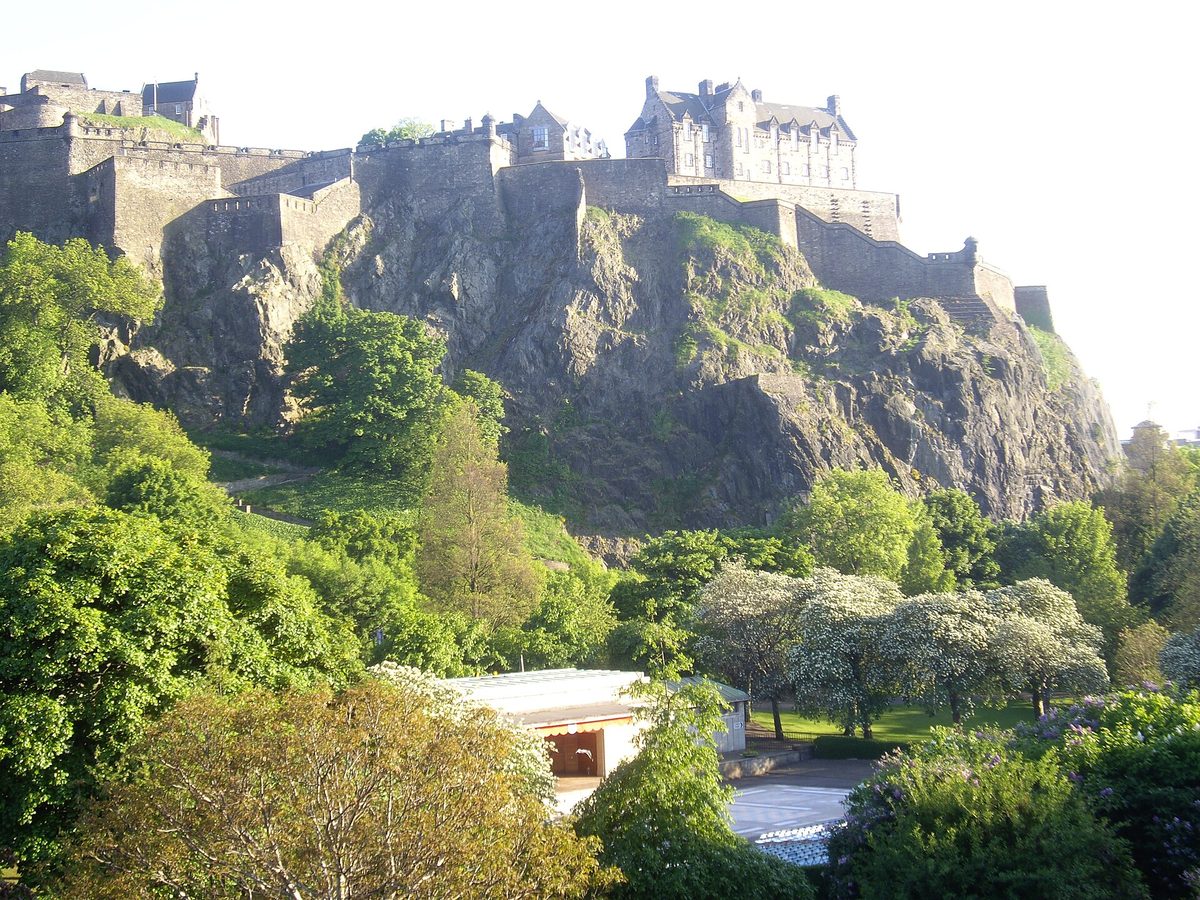
A whole day in the capital. Castle in the morning if you’ve pre-booked, then down the Royal Mile, then Arthur’s Seat or Calton Hill for the late light — our Edinburgh travel guide has the detail.
Alternatively, take a day trip. There are genuinely good ones reachable by train and bus — Stirling, Linlithgow, North Berwick, the Borders Railway to Tweedbank. Our list of day trips from Edinburgh flags which need a car and which don’t.
Day 3: Edinburgh to Glasgow
Trains leave Edinburgh Waverley for Glasgow Queen Street every fifteen minutes and take fifty minutes. There is no reason to book ahead and no reason to leave early. Have breakfast, go at ten.
Glasgow gets skipped by too many people and it shouldn’t. The subway costs a couple of pounds for an all-day ticket, the West End is one straight run out from the centre, and the Kelvingrove and Riverside museums are both free. Our Glasgow guide covers the rest. Stay within walking distance of Queen Street or Buchanan Bus Station, because tomorrow starts early.
Day 4: Glasgow to Fort William by the West Highland Line
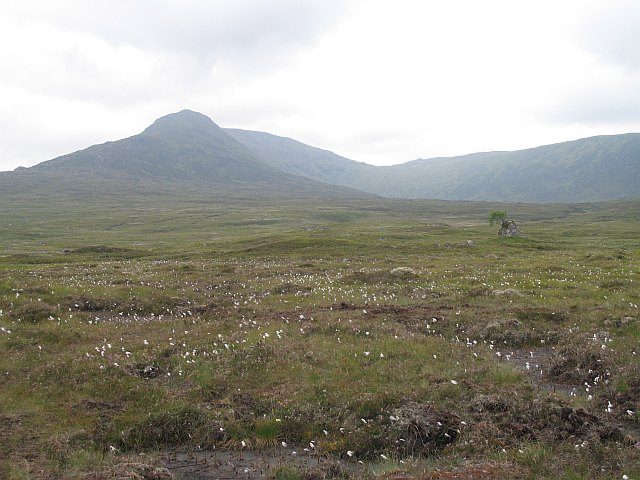
Take the train, not the coach. The coach is quicker by roughly forty-five minutes and it does drive through Glencoe, but the train goes places the road cannot — over the Horseshoe Curve, across the empty middle of Rannoch Moor, past Corrour, which is the highest station in Britain and has no public road to it at all. It is the single best three hours and forty-five minutes of the whole trip and it is better than driving the same distance, which is not something you can say about many rail journeys anywhere.
Sit on the left going north for Loch Lomond, then either side once you’re on the moor. Bring food; the trolley is unreliable.
Arrive in Fort William early afternoon. It is not a beautiful town, but it’s a working base with a bus station, a train station, lockers and everything you need. Walk out to Glen Nevis in the evening, or hire a bike.
Day 5: Fort William to Skye
You have two options and they are genuinely different trips.
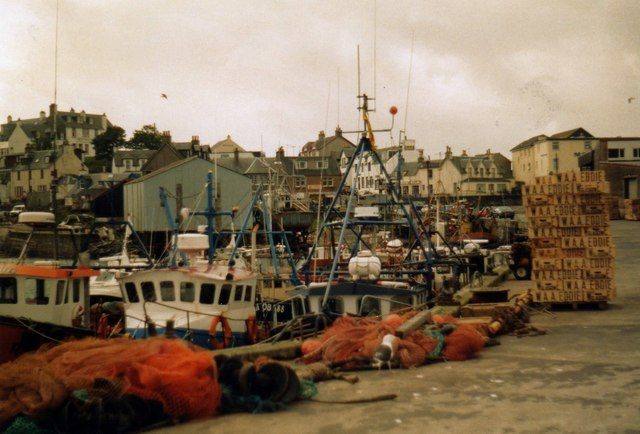
The scenic route. Morning train Fort William to Mallaig, about an hour twenty-five, over the Glenfinnan Viaduct and past the white sand at Morar. CalMac across to Armadale, thirty minutes. Then the Stagecoach 52 up the island — in the summer timetable I checked, departures from Armadale Pier at 12:35 and 15:05 reached Portree Square at 13:50 and 16:15. Work backwards from whichever of those you can realistically make, because the ferry and the bus are not timed as a single connection and you may get an hour in Mallaig whether you want one or not. It is still the most enjoyable travel day of the trip.
The direct route. Citylink 915 from Fort William bus station straight to Portree via Glen Shiel, around three hours five, with departures in a recent summer timetable at 10:00, 14:00 and 17:40. Faster, less faff, still scenic through Glen Shiel.
Check the ferry timetable for your specific date before you choose the first option. Tidal amendments are common and a cancelled sailing leaves you in Mallaig, where the onward options at 4pm are limited.
Day 6: Trotternish by local bus
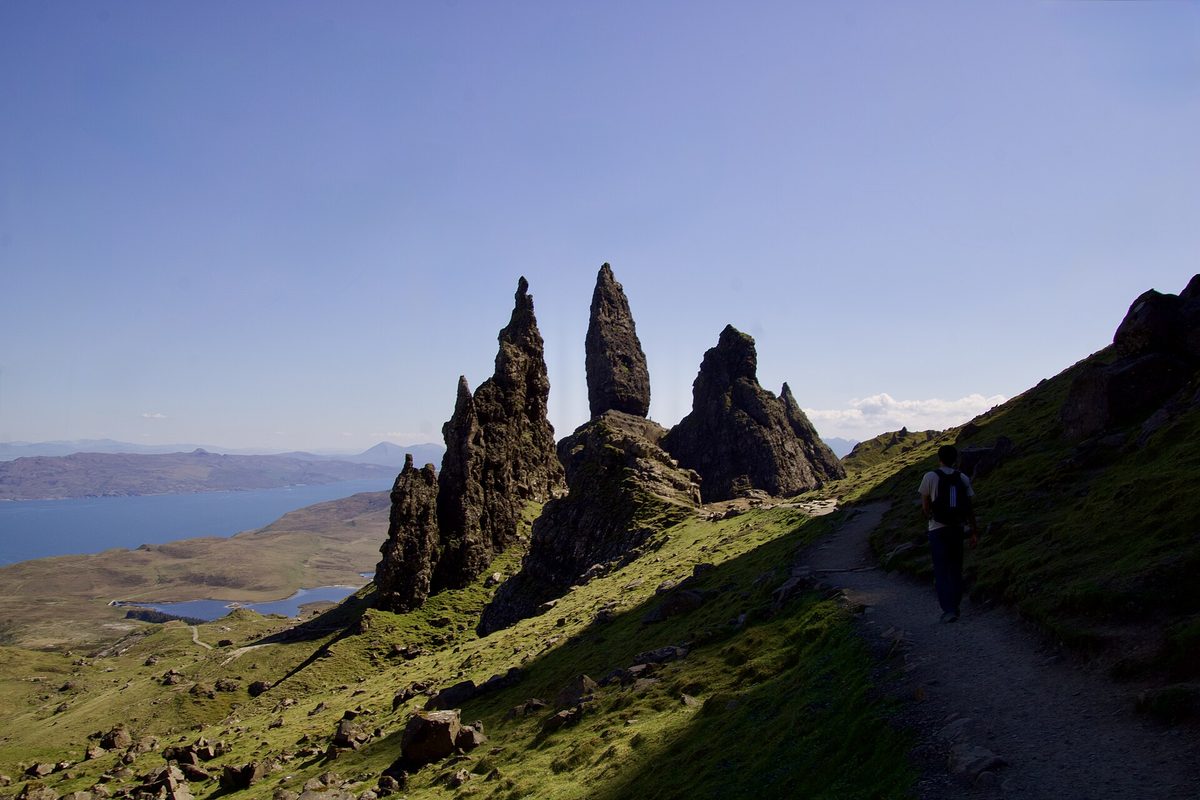
This is the day that proves the whole thing works. The Stagecoach 57A leaves Portree Square in the morning — 09:10 in the summer timetable — and stops at the Old Man of Storr car park about fifteen minutes later. Walk up. It’s around an hour and a half return on a rebuilt path, steep but not technical.
Then come back down and catch the 57C, which runs the loop the other way and passes the same car park around midday and again mid-afternoon. Check the exact times on the day, and be at the stop early, because there is no shelter and no next one for hours.
If the weather is filthy, spend the day in Portree instead. It’s a decent town, and the harbour is prettier in drizzle than most places are in sunshine. Our Isle of Skye guide has the wet-weather options.
Day 7: Skye by tour
Take a small-group tour from Portree. I mean this as a recommendation, not a defeat.
The Quiraing, the Fairy Pools at Glenbrittle, Neist Point and Elgol are effectively car-only. The buses don’t serve the Quiraing car park — the 57s run round the coast through Staffin and Flodigarry, not over the pass. There is no scheduled service into Glenbrittle at all. A minibus tour from Portree Square gets you to three or four of these in a day for less than a taxi to one of them, and the drivers know where the light will be.
Book it before you arrive in summer. Our Scotland tours overview covers the main operators and what separates a good small-group day from a coach crawl.
Day 8: Skye to Inverness
Again, two options.
The rail option. Citylink from Portree to Kyle of Lochalsh — the 10:10 from Portree Square reached Kyle at 11:16 in the timetable I checked — then the Kyle Line train to Inverness, around two hours forty. Longer overall, and it’s one of the great railway journeys. This combination is fully covered by the Spirit of Scotland pass.
The direct option. Citylink 917 from Portree straight to Inverness, around three hours, along the length of Loch Ness. Simpler, and you see the loch properly from the road, which you don’t from the train.
Either way you’re in Inverness by late afternoon. It’s a compact city with everything walkable from the station.
Day 9: Inverness, then home
Culloden is reachable on a local Stagecoach bus in about half an hour and is worth the morning. Loch Ness cruises leave from the Caledonian Canal at Tomnahurich, a short bus ride out, and are the easiest way to actually see the loch without a car — our Loch Ness and Inverness guide covers which operators go where.
Then it’s the Highland Main Line back to Edinburgh, around three and a half hours through the Cairngorms and Perthshire, or fly out of Inverness airport, which has a bus link into town.
Cutting it to seven days
Drop Glasgow (go Edinburgh to Fort William with a change at Glasgow Queen Street, all in one day) and drop one of the two Skye days. Keep the tour day rather than the bus day if you only keep one — it covers more ground. Our seven-day Scotland itinerary has the alternative shape if you’d rather rebalance than cut.
The traps nobody warns you about
Sunday will ruin your week if you let it
This is the single biggest difference between planning a car-free trip well and badly. On Highland routes, Sunday service doesn’t reduce — it collapses. Local Skye buses run a skeleton timetable in summer and, in the winter timetables I’ve looked at, no Sunday service at all on the Trotternish loop. The Kyle Line runs a much thinner Sunday service and sometimes none in the winter timetable. Citylink keeps its main trunk routes going, but with fewer journeys.
The fix is simple: make Sunday a city day or a tour day. Be in Edinburgh, Glasgow or Inverness, or be booked on something with a driver. Never plan to move between two rural places on a Sunday, and never plan a Sunday hill day that depends on a bus back.
The last bus back is earlier than you think
Rural Scottish buses are timed for schools and shopping, not for walkers. A trailhead served by five buses a day will often see its last useful return in mid-afternoon — and the “last” bus in a timetable column is frequently marked school days only, or Fridays only, or not Fridays. Read the footnotes. Then build in a two-hour buffer, because a hill walk always takes longer than the book time when the ground is wet, and the ground is wet.
Glencoe is reachable and still awkward
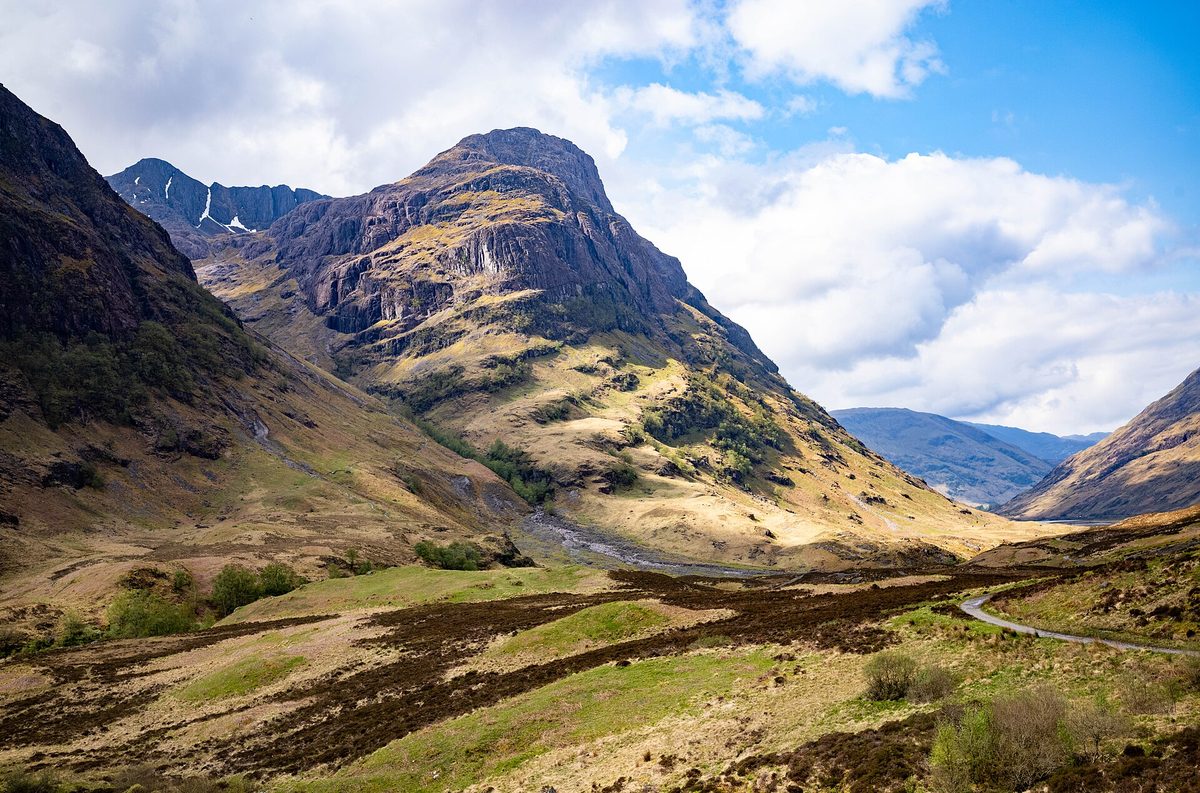
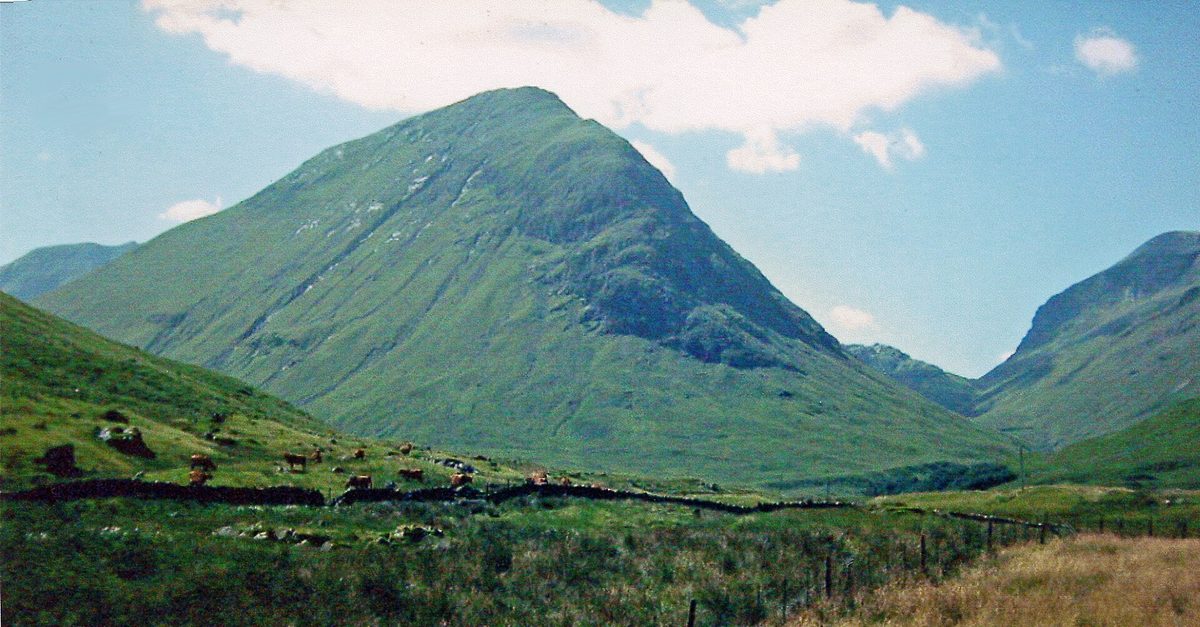
Citylink coaches on the Glasgow–Fort William road stop at the Glencoe ski centre chairlift road end, the visitor centre, the crossroads in Glencoe village and Ballachulish. So yes, you can get off in Glencoe.
The problem is what’s there. The A82 stops are laybys on a fast trunk road with no pavement, no shelter and nothing within walking distance. The visitor centre is a proper facility but sits a couple of miles from the village and a long way from the classic viewpoints. Getting off at the Buachaille end and walking anywhere means walking on the verge of a 60mph road with coaches passing at close range. I’ve done it. I wouldn’t again.
Glencoe by scheduled coach works if you’re stopping in the village or Ballachulish overnight, or if you’re a West Highland Way walker joining or leaving the route. For a day visit, take a tour from Fort William, Glasgow or Edinburgh instead. The glen deserves better than forty minutes at a layby.
Winter is a different country
From roughly late October, timetables thin out across the board, ferry sailings get cancelled in weather that summer would shrug off, and some services stop entirely. A car-free trip in January is entirely possible if you stick to cities and the main rail lines, but the Skye plan above simply doesn’t run. If you’re travelling in the cold months, read our guide to Scotland in winter and then check every single leg against the current winter timetable rather than the one you found in a blog post.
Luggage is a real constraint
Coach luggage holds fill up. Small trains have racks that were designed before anyone owned a wheeled case. You will walk from stations to accommodation, sometimes uphill, sometimes in rain. Pack for a fortnight in what you’d normally take for a long weekend, use a rucksack if you can bear it, and book accommodation you can walk to. Lockers exist at Edinburgh, Glasgow, Fort William and Inverness stations, which is worth knowing on a day when you check out at ten and your train is at six.
Where a day tour is the right tool, not a defeat
There’s a slightly puritan attitude in car-free travel writing that treats a guided tour as cheating. It isn’t. A tour is a vehicle with a driver, going somewhere buses don’t, on a day you’d otherwise waste. Use it deliberately.
From Edinburgh, a Highlands day tour is a long day — twelve hours to Glencoe and Loch Ness and back — but it’s the only way to see that country if the capital is your only base. Better still, use Edinburgh tours for the places rail nearly reaches: Rosslyn Chapel, the Borders, St Andrews.
From Inverness, tours fill in Glen Affric, the Black Isle, Cairngorms viewpoints and the eastern North Coast 500 fringes. The NC500 proper is a driving route and there’s no honest way around that, but a two-day tour from Inverness gets you the north coast without a licence.
From Portree, tours are close to essential, for the reasons above. A half-day option exists if you want the Quiraing and Fairy Glen without committing your whole day.
Distilleries are worth a mention here too. Several of the best-known ones sit miles up a single-track road with no bus, and a tour bus solves that neatly. It also solves the more obvious problem, which our guide to Scotch whisky distilleries puts more delicately than I will: on public transport, everyone in the group gets to drink.
Planning practicalities
How long you need
Seven days is the realistic minimum for Edinburgh plus the Highlands plus one island. Nine is comfortable. Five will get you two cities and one Highland base and that’s it — which is fine, but don’t try to squeeze Skye into it. Public transport eats roughly half a day every time you move, so the arithmetic is simply different from a road trip. If you’re still deciding, our piece on how to plan a trip to Scotland works through the trade-offs.
What to book, and when
Twelve weeks out: advance train tickets, the moment they release. Seven to eight weeks out: Citylink coach seats. Three to six months out for summer accommodation in Portree and Fort William, which are both small towns with a lot of demand. Ferries and tours, four to six weeks in summer, less otherwise.
Get a railcard if you qualify. Around £30 a year at the time of writing for a third off, which pays for itself on one Glasgow–Mallaig return. You don’t need to be British to hold one.
When to go
May and September are the sweet spot for a car-free trip specifically, because summer timetables are running but the coaches aren’t full and accommodation is findable. July and August have the fullest timetables and the fullest everything else. Our guide to the best time to visit Scotland goes month by month.
Where to base yourself
Pick two to four bases and stay at least two nights in each. Cities and transport hubs make the best ones: Edinburgh, Glasgow, Fort William, Inverness, Oban, Portree. Our where to stay in Scotland guide covers the options, but the car-free rule overrides everything else — if you can’t walk to it from the station or the bus stop, don’t book it.
What you actually give up
I’d rather be straight with you than sell this as costless. Four things go.
Spontaneity. You cannot pull over. That view you spot from the coach window between Tarbet and Ardlui is a view you saw, not a view you visited. Some days that’s restful. Some days it’s genuinely frustrating, and anyone who tells you otherwise hasn’t done it.
Remote beaches. Sanna, Achmelvich, most of the Outer Hebridean west coast, half of the places on any list of the best beaches in Scotland — these need a car or a very long walk. You can reach a handful by bus and one or two by ferry-plus-bus, but the great empty ones are out.
Most of the NC500. The Far North Line gets you to Thurso and Wick, and there’s a bus to John O’Groats, but the west coast section from Ullapool round to Durness is thinly served and the whole point of that road is stopping constantly. Treat it as a separate trip for a separate mode of transport.
Dawn and dusk at the famous places. This is the one that stings. The Quiraing at sunrise, Storr in the last hour of light, Neist Point at sunset — those all depend on being somewhere at a time when no bus runs. The best you can do is stay somewhere within walking distance of one good view and accept that you get one, not ten.
And what you get instead
You get the West Highland Line, which is not a compromise version of the A82 — it’s better. It goes through country the road never touches, you can walk about, and you spend three hours looking out of the window instead of at tarmac.
You get to drink. Nobody is the designated driver, which changes an evening in Portree or a distillery visit entirely.
You get slower days. Fewer places, more time in each, and a much better sense of somewhere than the road trip version where you photograph six lochs before lunch. And you meet people, because a coach up Glen Shiel is a shared experience and a car isn’t.
You also save real money. No hire car, no fuel, no insurance excess, no parking. Two people doing nine days by public transport will typically spend less than the same two people hiring a car for a week, even before the passes come into it.
Frequently asked questions
Is it hard to get to the Isle of Skye without a car?
Getting to Skye is easy: a direct Citylink coach from Glasgow or Inverness, or train to Kyle of Lochalsh and a short bus over the bridge, or train to Mallaig and the ferry to Armadale. Getting around Skye is the hard part. Base yourself in Portree, use the 52 and 57 buses for what they reach, and take a tour for the rest.
Do I need the Spirit of Scotland pass?
Only if you’re moving most days or booking late. Price your actual itinerary as advance singles first — if the pass isn’t cheaper by a meaningful margin, buy tickets individually. And remember it no longer includes CalMac ferries, whatever older guides say.
Can I do the North Coast 500 without a car?
Not properly. The Far North Line reaches Thurso and Wick, and buses serve Ullapool and Durness thinly, but the route’s appeal is stopping wherever you like on a road with no public transport worth the name. Multi-day guided tours from Inverness are the realistic alternative.
How much does a car-free week in Scotland cost?
Transport alone, budget roughly £150–£250 per person for a week of long-distance travel booked in advance, less with a railcard. Add tours at around £50–£80 a day. That’s typically less than hire car, fuel and parking for the same period, though prices move constantly and you should check current fares.
Are Scottish buses and trains reliable?
Reasonably, with caveats. Trains run to time most days; the West Highland and Kyle lines are more vulnerable to weather and landslips than the central belt. Coaches keep decent time but fill up in summer. Ferries are the least predictable — wind cancels sailings and you need a fallback plan for any island leg.
Can I reach the Fairy Pools by public transport?
No. There’s no scheduled bus into Glenbrittle. Your options are a tour from Portree, a taxi (expensive, and you’ll want to arrange the return in advance), or skipping them. Given how busy they’ve become, skipping them is a more defensible choice than people assume.
What about Loch Lomond without a car?
Straightforward. Balloch is on a frequent train from Glasgow Queen Street in about 45 minutes, with buses to Luss and water taxis across the loch. Tarbet and Ardlui are West Highland Line stops. It’s one of the easiest bits of the Scottish Highlands to reach car-free and a good day out from Glasgow.
Is it worth taking the Caledonian Sleeper?
If you’re coming from London, yes — it saves a night’s accommodation and drops you in Fort William or Inverness at breakfast time, ready to travel. It isn’t covered by any of the ScotRail passes and berths sell out months ahead for summer weekends, so book early or take a seat.
Final thoughts
The honest summary is this: a car gets you more places, and public transport gets you a better trip to fewer places. Which of those you want depends entirely on the sort of traveller you are, and I don’t think either answer is wrong.
What I do think is wrong is the framing that car-free travel in Scotland is a compromise you make when you can’t drive. Some of my best days in this country have been on the 10:20 out of Queen Street with a coffee and the whole of Rannoch Moor going past, or on a Skye bus with three locals and a driver who knew everyone’s name. You do have to plan harder. You have to read the footnotes on the timetable and you have to respect Sundays. Do that, and you’ll come home with a trip nobody could have driven.
Two towns do more of the heavy lifting on a car-free trip than anywhere else. Pitlochry sits on the Highland Main Line with the station five minutes from the high street, and Oban puts you on the CalMac board for Mull, Iona and the isles as a foot passenger, which is the cheapest and least stressful way to reach them.
About the author: This guide was written and is maintained by the ScotlandTourism.org editorial team — travel writers who’ve spent years exploring Scotland’s cities, Highlands and islands, from bagging Munros to chasing the perfect dram. We update our guides regularly to keep prices, opening details and advice current.
Last updated: August 2026. Prices and opening times change — always check the official site before you travel.
Photo credits
All images are used under their respective Creative Commons or public-domain licenses:
- The Jacobite steam train crossing the Glenfinnan Viaduct on the West Highland Line, the key rail route for seeing Scotland without a car — Chris Downer, CC BY-SA 2.0, via Geograph
- Fishing boats in Mallaig harbour, the West Highland Line terminus and ferry port for the Isle of Skye — Iain Lees, CC BY-SA 2.0, via Geograph
- A ScotRail train at Kyle of Lochalsh station, the western end of the Kyle Line from Inverness — John Lucas, CC BY-SA 2.0, via Geograph
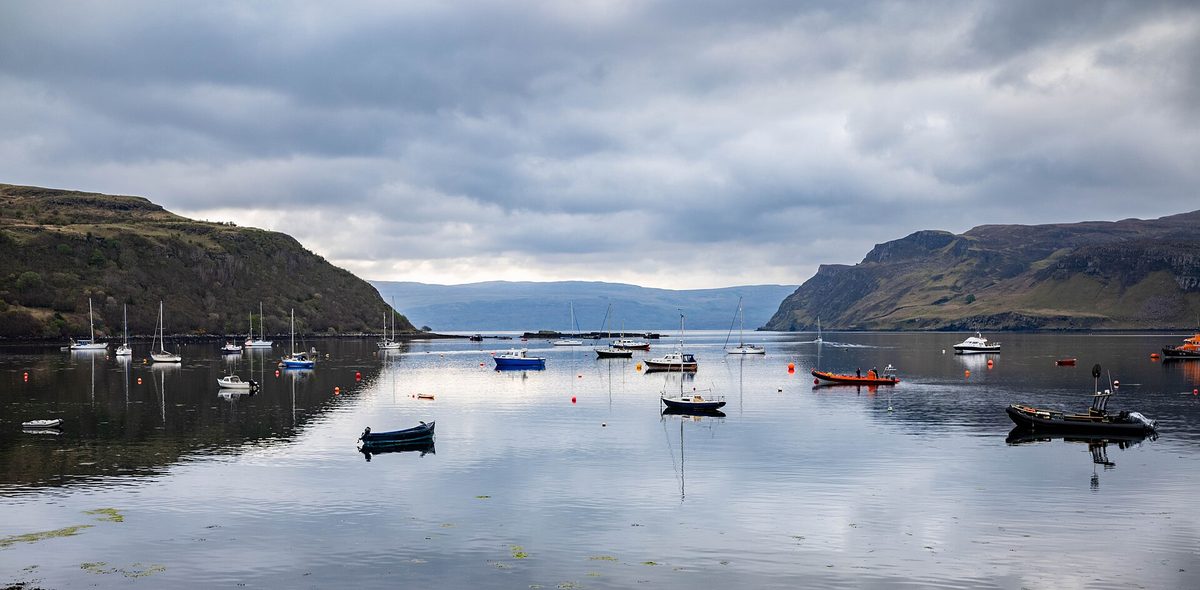
- Boats at anchor in Portree harbour, the Isle of Skye base for travellers without a car — rboed*, CC BY 2.0, via Wikimedia Commons
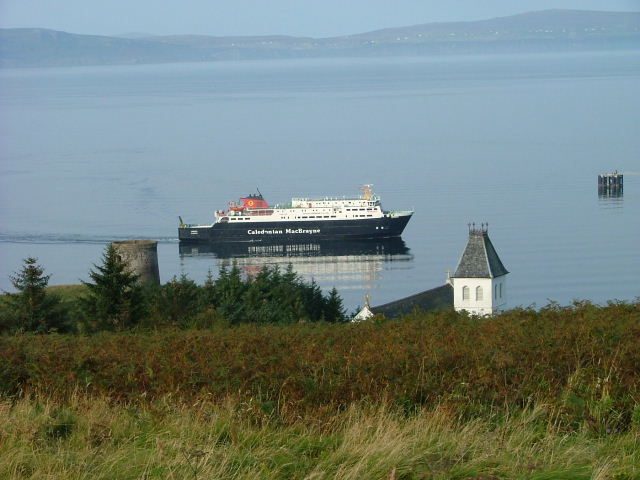
- A Caledonian MacBrayne ferry arriving at a west coast pier, used by foot passengers travelling Scotland without a car — Christine Matthews, CC BY-SA 2.0, via Geograph
- A walker on the path to the Old Man of Storr on Skye, reachable by Stagecoach bus from Portree — Lauwz The Kiwistralian, CC0, via Wikimedia Commons
- Mountains above the Pass of Glencoe, where Citylink coaches stop on the A82 for car-free travellers — Ben Brooksbank, CC BY-SA 2.0, via Geograph
- Open moorland around Corrour on the West Highland Line, the highest station on the British rail network — Richard Webb, CC BY-SA 2.0, via Geograph
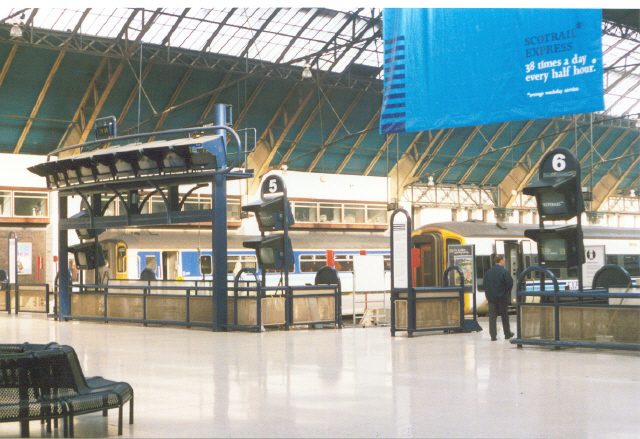
- A ScotRail train waiting at a Glasgow city-centre terminus, departure point for the West Highland Line — Ron Hann, CC BY-SA 2.0, via Geograph
- Oban waterfront and pier with McCaig’s Tower above the town, an easy car-free base on Scotland’s west coast — Thomas Nugent, CC BY-SA 2.0, via Geograph
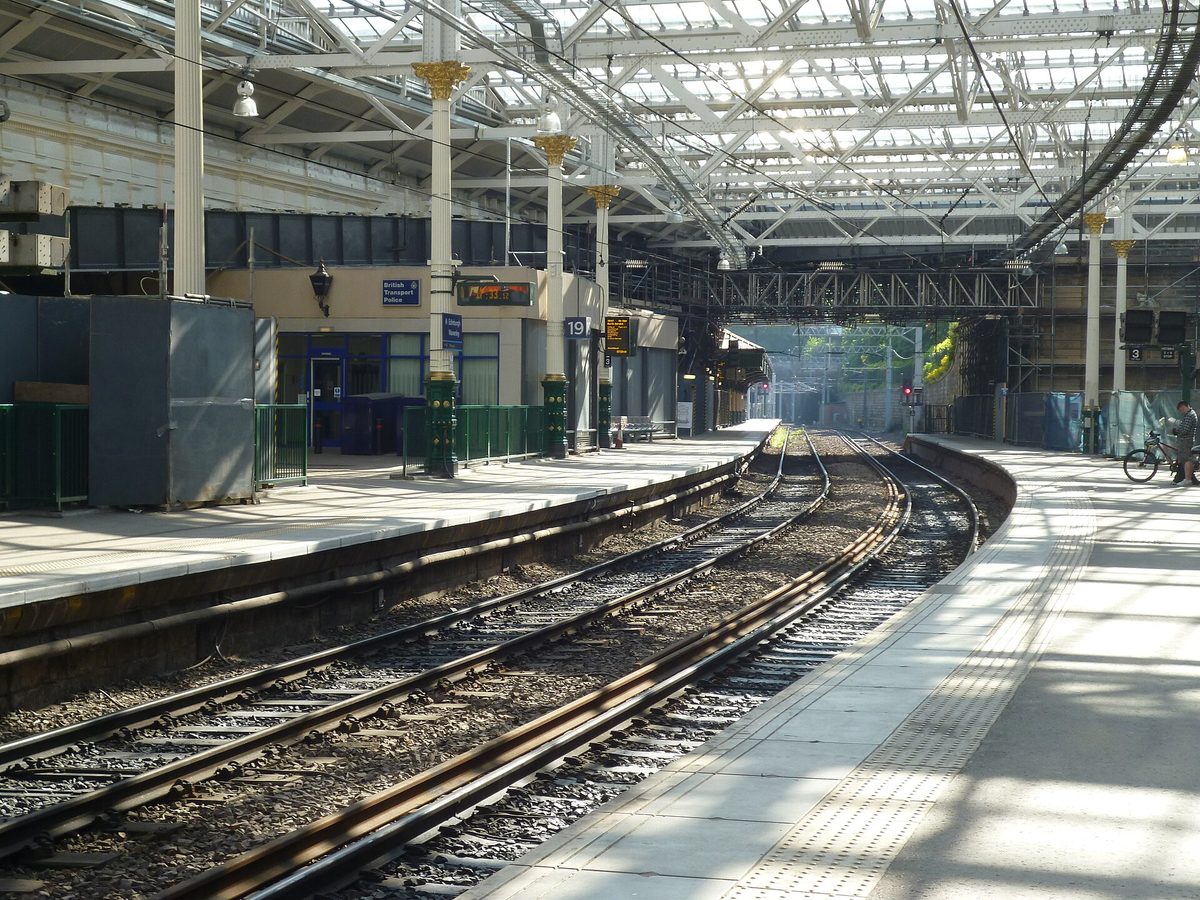
- Platforms and tracks at Edinburgh Waverley, the starting point for most car-free Scotland itineraries — Dr Neil Clifton, CC BY-SA 2.0, via Geograph
- A CalMac ferry approaching Uig pier on Skye, where Citylink coaches meet the Outer Hebrides sailings — Dave Fergusson, CC BY-SA 2.0, via Geograph