The first time I planned five days in Scotland for visiting friends, I built them a beautiful spreadsheet. Edinburgh, Skye, Loch Ness, Glencoe, home. Colour-coded. Drive times pulled straight off Google Maps. They landed at 13:40, collected the hire car at 15:20, and by the time they reached their first hotel it was dark and one of them had been awake for twenty-six hours.
They still talk about that trip fondly, which tells you something about Scotland. But the spreadsheet was a lie, and I want to start this 5 day Scotland itinerary by admitting exactly why. Five days is not five days. For anyone flying in, it is four touring days at best and often three and a half. Everything else in this guide follows from that one number.

How many days do you actually get?
Five days on paper usually means three and a half to four touring days. Arrival afternoon goes to immigration, the hire car desk and jet lag; departure morning goes to the airport. Plan against four days, pick one Highland region, and you will have a genuinely good trip. Plan against five and you will spend it driving.
The five-day options at a glance
| Route | Total driving | Nights | Best for | Biggest weakness |
|---|---|---|---|---|
| West coast — Loch Lomond, Glencoe, Oban, Mull | Around 7 hours across 4 days | 2 Edinburgh, 2 Oban | First-timers who want mountains, sea and an island | Ferry timings dictate your day |
| Cairngorms & Speyside — Aviemore, Dufftown, Royal Deeside | Around 6 hours across 4 days | 2 Edinburgh, 2 Aviemore | Whisky, wildlife, forests, families | No coastline, no big sea cliffs |
| Skye — Edinburgh, Fort William, Portree | Around 11 hours across 4 days | 1 Edinburgh, 1 Fort William, 2 Skye | People who will not be talked out of it | Half the trip is windscreen |
| Car-free — Edinburgh, Glasgow, Oban, Mull | Zero | 2 Edinburgh, 2 Oban | Stopovers, non-drivers, solo travellers | Fewer viewpoints, fixed timetables |
| Edinburgh plus day trips | Zero to 3 hours | 4 Edinburgh | Very short arrival and departure windows | You never really reach the Highlands |
The five-day arithmetic nobody does for you
Every itinerary I read while researching this piece opens on Day 1 with a full morning in Edinburgh. That only works if you arrived the night before, which most people have not. Here is the honest sum.
Arrival day is half a day, at most
Transatlantic flights into Edinburgh tend to land late morning to mid-afternoon. Add passport control, baggage, the tram or shuttle to a car hire desk, the queue at that desk, and the paperwork. From wheels-down to actually being mobile is rarely under two hours and can be three in July.
Then there is the body. If you have crossed five or more time zones you are not fit to drive an unfamiliar car on the left down a single-track road. I have watched a very competent driver from Denver clip a dry-stone wall at Rannoch because he was running on ninety minutes of aeroplane sleep.
Call arrival day what it is: a soft landing. Dinner, a walk, an early night. That is a genuinely pleasant use of it, and it costs you nothing you were realistically going to get anyway.
Departure day is gone before breakfast
Edinburgh Airport wants you there two hours before a short-haul flight and three before a long-haul one. Add the drive in and the car return, which takes longer than you think because the rental returns are signposted badly and you will be looking for a petrol station. A 10:00 flight means leaving your accommodation around 06:30. A 13:00 flight means leaving around 09:30, and you are not doing anything meaningful with the hour before that.
The only version of Day 5 that earns its place is the one where you are already in Edinburgh the night before, close to the airport, with nothing to drive.
So plan for four days
Four touring days. That is what you are working with, and it is enough for one region done properly, or two regions done badly. This is the single most useful thing I can tell you, and it is why the routes below all commit to one area rather than sprinting between three.
If you are reading this and thinking the maths is too brutal, the honest answer is to add days rather than compress the plan. Our seven-day Scotland itinerary is a materially different trip, and the ten-day version is the first length where you can reach both a coast and an island without hurrying. For the full ladder of options by trip length, start at our Scotland itinerary planner.
Skye or not Skye: the decision that shapes everything
This is the fork in the road, and almost every five-day plan online takes the wrong turn. Let me show you the numbers rather than just asserting it.

The drive maths, laid out
Edinburgh to Portree, the main town on Skye, is around 275 miles. The fastest signed route is a shade under five hours in perfect conditions. Nobody drives it in perfect conditions. The A9 north of Perth has average-speed cameras and long 50mph stretches. The A82 down Loch Lomond is a twisting 30–40mph reality between Tarbet and Ardlui in summer traffic. Add stops for petrol, coffee and photographs, and a realistic Edinburgh–Portree day is six hours of moving plus an hour and a half of not moving.
Return the other way, via Fort William and Glencoe, and you are looking at a similar figure. So the round trip alone is somewhere between nine and eleven hours behind the wheel depending on how you loop it. Then add Skye itself: Portree to the Quiraing and back is an hour; Portree to Neist Point and back is two and a half; the Fairy Pools add another ninety minutes from Portree. A single “Skye day” is easily three to four hours of driving on roads where a passing place is a road feature and a tour coach is a two-minute delay.
Total, across a five-day trip with four usable days: twelve to fifteen hours in the car, to spend roughly a day and a half on the island. That is the honest cost.
What Skye in five days actually looks like
You arrive at Portree at 18:30 having stopped twice. You eat whatever is still serving. Next morning you do the Storr with three hundred other people, drive north to the Quiraing, eat a sandwich in the car because the weather has turned, and drive back. The morning after, you leave at 08:30 for Edinburgh. You have seen two car parks and a ridge.
Skye is not overrated. It is one of the best places in Britain and I would go back tomorrow. But it rewards slowness, and slowness is the one thing five days does not give you. If Skye is genuinely the point of your trip, read our Isle of Skye guide and then book seven days instead.
When Skye is still the right call
Three situations. If you are already in Britain and driving up rather than flying in, you get your fifth day back and the maths changes completely. If you are joining a small-group tour and someone else is driving, the fatigue cost disappears even though the mileage does not — our guide to Scottish tour operators covers who runs what. And if you have been to Scotland before and Skye is the specific gap you want to fill, then go, and accept that this trip is a Skye trip and nothing else.
Otherwise, west coast. Which is where we start.
Option one: the west coast, and the one I would book
Loch Lomond, Glencoe, Oban and one island. Around seven hours of driving across four days, two bases only, and a landscape that changes character every forty minutes. This route delivers more per mile than anything else at this length, and Oban is a proper working town rather than a tourist car park.
Day 1: land, don’t drive
Whatever time you arrive, do not collect a car. Take the tram from Edinburgh Airport to the city centre — it runs roughly every seven to ten minutes, takes about half an hour to Princes Street, and cost around £7 single at the time of writing. Check current fares before you travel.
Check in, then walk. The Royal Mile from the Castle esplanade down to Holyrood is a mile of downhill that requires no planning and no tickets. If you have energy left, climb Calton Hill for twenty minutes of effort and the best free view in the city. Eat early, sleep early.
If you land before noon and feel human, our short Edinburgh itinerary compresses the essentials into an afternoon. Otherwise just wander. The Grassmarket, Victoria Street and the Water of Leith walkway cost nothing and need no timed ticket, which is exactly what a jet-lagged brain wants.
Day 2: Edinburgh in the morning, Oban by evening
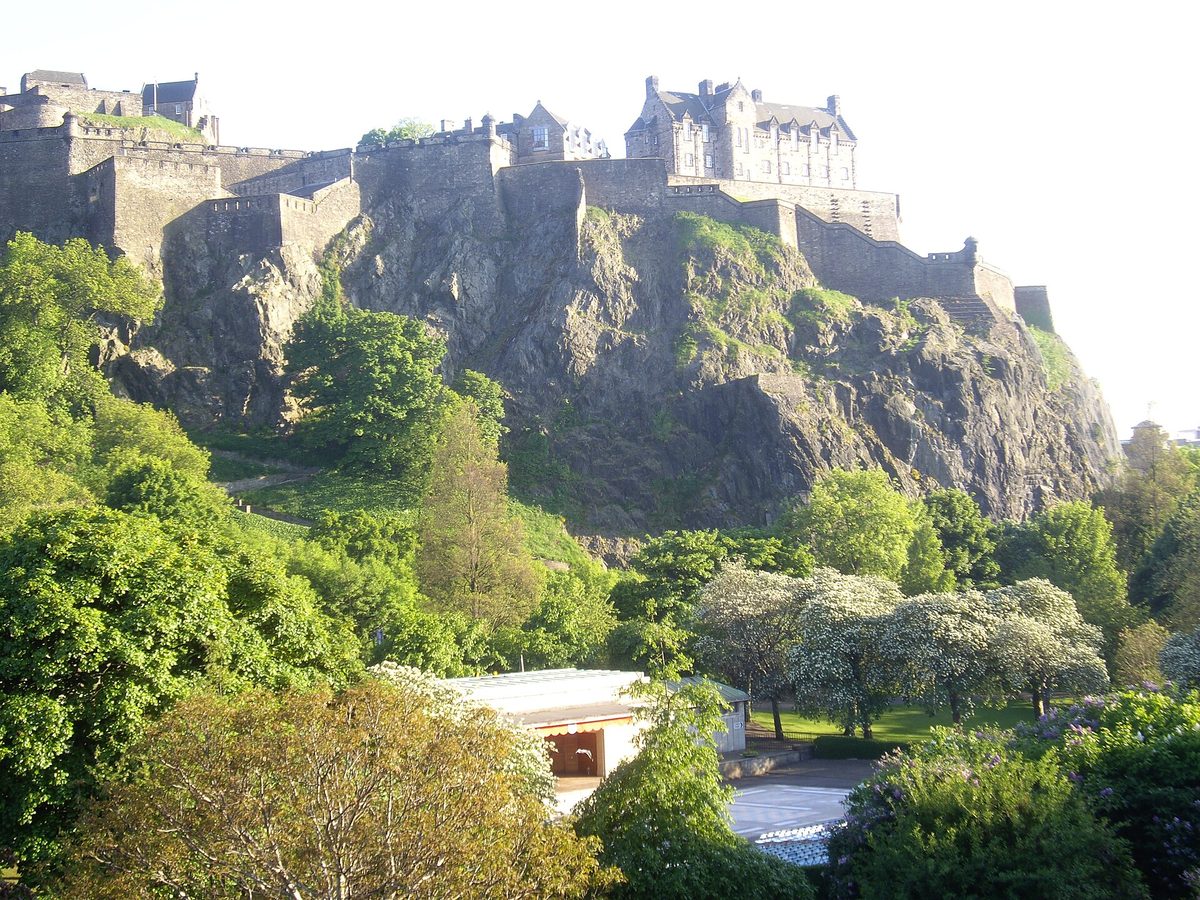
Book Edinburgh Castle for the first slot of the day, around 09:30. Adult tickets were roughly £21.50 online at the time of writing, a couple of pounds cheaper than at the gate, and the online slot is what gets you in during August. Our Edinburgh Castle ticket guide goes into the timing in detail. Give it ninety minutes, not three hours.
Collect the car around 11:30 from a city-centre office rather than the airport — it is usually cheaper and you skip the airport surcharge. Head west on the M9 and A811 towards Loch Lomond.

Luss, on the west shore, is about an hour and twenty minutes from Edinburgh. It is a conservation village of slate-roofed cottages with a pier that sticks out into the loch, and yes, it is busy. Park, walk to the end of the pier, look north at the mountains, and get back in the car within forty minutes. That is the correct dose of Luss.
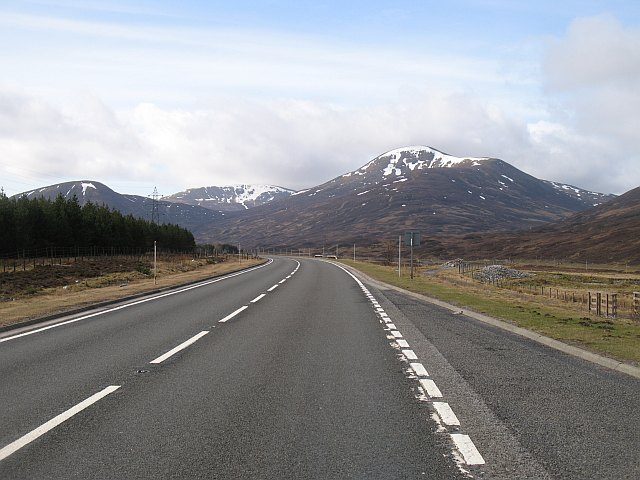
From there the A82 runs up the loch shore and this is where Scotland starts properly. The road narrows, the trees close in, and around Ardlui you break out into open country. Crianlarich, then Tyndrum, then the long climb onto Rannoch Moor — twenty miles of bog, lochans and nothing, which is one of the emptiest stretches of road in Britain and my favourite drive in the country.
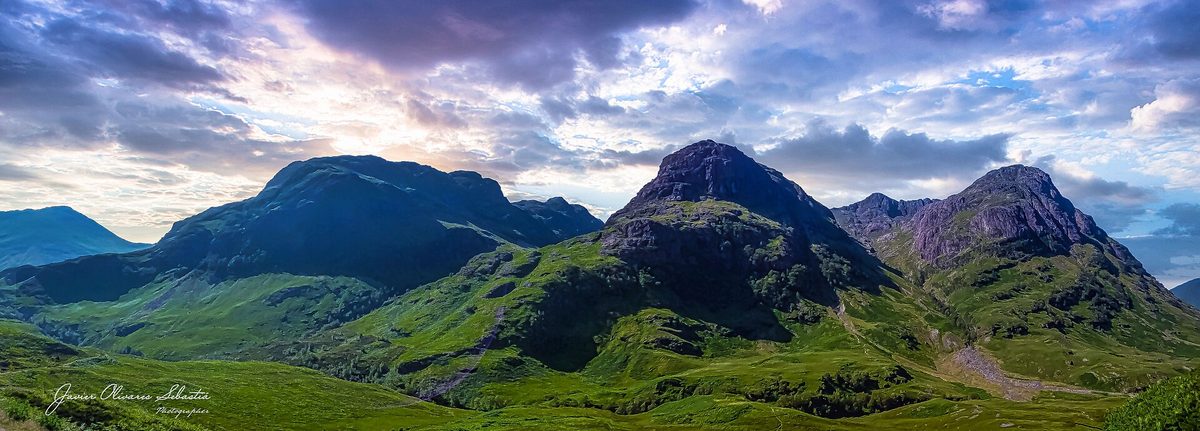
Then Glen Coe. The Buachaille stands at the entrance like a gatepost, and the Three Sisters ridges run down the south side of the glen. There are three laybys on the A82 where everyone stops; take the middle one, the Three Sisters viewpoint, and walk fifty metres from the car park to get away from the coaches. Allow an hour here. If the cloud is down, stop anyway — Glen Coe in bad weather is arguably better than Glen Coe in sun.
From Glencoe village to Oban is about sixty miles and an hour and twenty minutes via the Ballachulish Bridge and the A828 down the coast past Castle Stalker and Appin. You will arrive around 18:00 with the light still good in summer.

Oban is a Victorian seaside town wrapped around a bay, with McCaig’s Tower — a folly modelled on the Colosseum — sitting on the hill above it. It has a functioning fishing fleet, a ferry terminal that dispatches boats to eight islands, and the best casual seafood in the west. The green shack on the north pier does langoustines and scallops off a paper plate. The town’s distillery sits in the middle of the high street and does short tours; book ahead, as it holds few people per slot.
Driving Day 2: around three and a half hours moving, five and a half with stops.
Day 3: Mull, or Kerrera if you want to slow down
This is the day that makes the route. You have two versions and they suit different people.
The Mull version. The CalMac ferry from Oban to Craignure takes around 46–55 minutes. Go as a foot passenger — taking the car costs far more, requires booking weeks ahead in summer, and you do not need it. Foot fares were in single figures each way at the time of writing; check the CalMac site for current prices and sailings, because the timetable changes between summer and winter.

At Craignure, West Coast Motors buses meet most but not all sailings — the 495 runs north to Tobermory in a little over an hour, the 496 runs south-west to Fionnphort for the Iona ferry. Check the connections before you commit, because missing one on Mull means a two-hour wait. Tobermory is the row of painted houses everyone has seen, and it earns the reputation; there is a distillery on the seafront, a good chip shop, and a small museum. Iona is the other choice: a ten-minute ferry from Fionnphort to an island with an abbey founded in the sixth century and beaches the colour of the Caribbean on the rare day the sun holds.
You cannot do both Tobermory and Iona in one day from Oban. Pick. I would pick Iona if the forecast is decent and Tobermory if it is not, because Iona is mostly outdoors and Tobermory has roofs.
The Kerrera version. If Mull sounds like a lot of logistics, and some days it is, drive two and a half miles south of Oban to Gallanach and take the tiny passenger ferry across the Sound of Kerrera. The crossing is 600 metres and under five minutes on a boat that carries twelve people.

On the other side there are no cars, no shops and about seven miles of circular track. Walk south for an hour and a quarter and you reach the Kerrera Tea Garden, then the ruin of Gylen Castle on a headland above the sea. The full loop takes four to five hours at a gentle pace. I have done this walk in horizontal rain and still rated it above half the famous things on Skye, mostly because there were four other people on the island.
Either version, you are back in Oban for dinner. Boats also leave this pier for Colonsay, Coll, Tiree, Barra and South Uist, which is worth knowing for the next trip.
Driving Day 3: under thirty minutes.
Day 4: Loch Awe, Inveraray and back east
Leave Oban around 09:30 and take the A85 east. Twenty miles on, at the top of Loch Awe, Kilchurn Castle sits on a spit of land with mountains behind it. There is a small car park by the A85 layby and a fifteen-minute walk across a field to reach it. It is free, it is usually quiet, and it is a better castle photograph than anything you will get in Edinburgh.

From there you have a choice. The direct route back is A85 to Crianlarich then A82 and M9, around three hours to Edinburgh. The better route swings south on the A819 to Inveraray, a planned Georgian town on Loch Fyne with a castle, a preserved jail and an excellent seafood bar just outside on the loch shore. That adds around forty minutes and is worth every one of them.
Coming back east, break the drive at Stirling. The castle there is the one people skip because they have already done Edinburgh, which is a mistake — it is better presented, less crowded and the views from the walls over the Forth valley and the Wallace Monument are the best in central Scotland. Our roundup of Scotland’s castles explains why Stirling generally outranks its more famous rival.
Aim to be back in Edinburgh, or in a hotel near the airport, by early evening. If your flight is early, sleep near the airport — the difference between a 05:45 alarm in the city and a 06:45 alarm at an airport hotel is worth the loss of one final dinner on the Royal Mile.
Driving Day 4: three and a half to four hours moving.
Day 5: fly
Return the car, fly. If you somehow have a late-afternoon departure, the Royal Mile and the National Museum of Scotland will absorb a morning without any need for a plan or a ticket.
Where to stay on this route
Two bases: two nights in Edinburgh, two in Oban. Edinburgh in the Old Town or the Southside puts you within walking distance of everything; Oban is small enough that anywhere within ten minutes of the bay works, though the seafront guest houses on the Esplanade have the views. Book Oban early for July and August — it is a ferry town and beds fill months ahead. Our accommodation guide breaks down the regional differences and what a mid-range double actually gets you in each.
Option two: Cairngorms and Speyside, for whisky and wildlife
If you care more about distilleries, forests and the chance of seeing something wild than you do about sea cliffs, this is the better trip. It has less driving than the west coast route, the A9 north from Edinburgh is a fast road by Highland standards, and the Cairngorms are the largest national park in Britain with a genuinely different landscape — ancient pine forest, high plateau, and rivers full of salmon.

Day 1: Edinburgh, same as before
Land, tram in, walk, sleep. No changes. If you have an evening and any energy, one of the guided tours of the South Bridge vaults is a decent low-effort way to spend ninety minutes when you are too tired to think.
Day 2: Edinburgh to Aviemore, via Perthshire
Castle at 09:30, car at 11:30, north on the M90 and A9. Aviemore is around 130 miles and two and a half hours of pure driving, so you have room for two stops.
Dunkeld, an hour out, is a small cathedral town on the Tay with a ruined nave standing in a riverside meadow and a decent lunch stop on the square. Pitlochry, twenty minutes further, has a dam with a fish ladder where you can sometimes watch salmon working upstream in autumn, and two distilleries within walking distance of the high street. Take one of them, not both.
Push on and you are in Aviemore for late afternoon. It is not a beautiful town — it is a ski resort with a railway station and a lot of outdoor shops — but it is well placed and it has real infrastructure, which matters when the weather turns.
Driving Day 2: around two and a half hours moving, four and a half with stops.
Day 3: Speyside
From Aviemore, Speyside starts about an hour’s drive north-east. This is the densest concentration of malt whisky distilleries anywhere in the world — roughly half of Scotland’s total, packed into the valley of the Spey and its tributaries around Dufftown, Aberlour and Rothes.
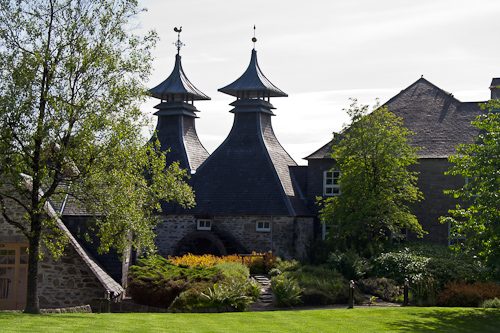
The rules of a good distillery day are simple. Book ahead; the small ones sell out and the big ones have timed tours. Do two, not four — three if you are determined, but by the fourth you are tasting nothing. And decide your driver situation before you leave, because Scotland’s drink-drive limit is 22 micrograms per 100ml of breath, materially lower than England’s, and one dram will put most people over it. Most distilleries will give the driver their measures in a small bottle to take away.
Prices vary wildly. A standard hour-long tour with a tasting sat around £15–£25 at the time of writing at most distilleries; the flagship multi-hour experiences at the best-known names run into the hundreds. Check the individual distillery site before you commit — our Scotch whisky distillery guide covers the regional styles and which visitor centres are worth the money.
If whisky is not your thing, the same drive gets you to Elgin Cathedral, a large red-sandstone ruin that was one of the grandest buildings in medieval Scotland, and on to the Moray coast, which has a run of fishing villages, a dolphin-watching point at Spey Bay and long empty sand at Findhorn and Cullen.
Day 4: the Cairngorms proper
Stay local and go slow. Three things worth your morning.
The Cairngorm Reindeer Centre at Glenmore, fifteen minutes from Aviemore, runs guided hill trips out to Britain’s only free-ranging reindeer herd. Adult tickets were around £28 at the time of writing with children around £21; trips run most of the year, weather permitting, and they sell out. Book online. It is a walk up a hillside in whatever the weather is doing, and the animals come to you.
Rothiemurchus and Loch an Eilein give you the other side of the park: Caledonian pine forest, some of the oldest native woodland left in Britain, and a flat four-mile loop around a loch with a castle ruin on an island in the middle. It is one of the easiest good walks in Scotland and works with children.
The funicular railway up Cairn Gorm gets you to 1,097 metres without walking, though services and opening have been intermittent in recent years — check before you drive up. If it is running and the day is clear, the view over the plateau is the closest thing Britain has to arctic tundra. If you would rather earn it, our hiking guide covers the routes onto the plateau and what they demand.
Drive back to Edinburgh in the afternoon — two and a half to three hours — or stay a fourth night in Perthshire to break it. This is also the day where the odds of seeing something are highest: red squirrels at the feeders in Rothiemurchus, ospreys at Loch Garten in summer, and red deer almost anywhere at dusk. The shaggy orange cattle everyone wants a photograph of are common on the Rothiemurchus estate and in the fields along the B970.
Day 5: fly
As before. Sleep near the airport if the flight is early.
Why this route is underrated
Nobody photographs the Cairngorms for the front of a guidebook, so it gets skipped. But the driving is easier, the roads are wider, the weather is drier than the west, and in September the hillsides go copper and the rutting stags start roaring. It is also the better call in midge season, because midges hate wind and open ground — see our midge season guide before you book anything for late July.
Option three: Skye, if you will not be talked out of it
Fine. Here is how to do it with the least waste. The trick is to break the drive in both directions rather than attempting Edinburgh to Portree in one go.

Day 1: land, Edinburgh, one night
One night only. You are trading Edinburgh for Skye and you cannot have both.
Day 2: Edinburgh to Fort William
Leave by 10:00. The A82 route via Loch Lomond, Rannoch Moor and Glen Coe is around 145 miles and three hours moving, four and a half with stops. Stop at Luss briefly and Glen Coe properly. Fort William is a functional town at the foot of Ben Nevis with a good range of beds and a decent number of places to eat, which is not true of everywhere on this route.
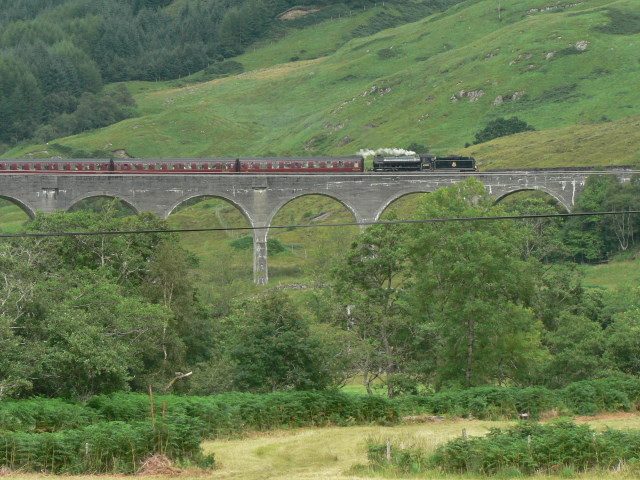
If you have time and daylight, drive out to Glenfinnan — twenty minutes west — where the monument stands at the head of Loch Shiel and the viaduct carries the West Highland Line across the glen. The steam train crosses it twice a day in season, and the car park fills an hour before. It is the viaduct from the films, if that is why you are going, and the walk up to the viewpoint takes about twenty minutes from the visitor centre.
Day 3: Fort William to Portree
Around 110 miles, two and a half hours moving. Go via the A87 through Glen Shiel — the Five Sisters ridge runs along the north side of the road and is one of the great sights of the Highlands — and stop at Eilean Donan Castle at Dornie, which is the castle from every calendar. Then over the Skye Bridge, which is free, and north to Portree.
Arrive by 15:00 and you have an afternoon. Sligachan, half an hour south of Portree, has an old bridge and a full view into the Cuillin, and it is the single best free stop on the island.
Day 4: north Skye, and only north Skye
The Trotternish peninsula loop from Portree is about fifty miles and takes a full day with stops: the Old Man of Storr (an hour up, forty minutes down, car park fills by 09:00 in summer and charges), Kilt Rock, the Quiraing, and the Museum of Island Life. Do not attempt to add Neist Point or Dunvegan on the same day. You will drive for three hours and enjoy none of it.
Parking is the constraint that ruins most Skye days. The main car parks are paid, small and full by mid-morning between June and September. Start at 08:00 or accept you are queueing.
Day 5: Portree to Edinburgh, and that is your day gone
Around 275 miles, five to six hours, all of it. Leave at 08:00. This is the price. You will not stop anywhere meaningful and you will not do anything else.
If you can shift your flight to the following morning and sleep near Edinburgh Airport, do it — it turns a horrible day into a merely long one. And if this route appeals but the timing does not, it is precisely the trip that our Scottish Highlands guide is built around.
The car-free five-day itinerary that actually works
A lot of five-day visitors are on a stopover, or between conferences, or simply do not want to drive on the left. Most itinerary articles handle this with a paragraph saying “you can also take tours”. You can do far better than that. Here is a complete plan using scheduled public transport only.

Day 1: arrive, Edinburgh
Tram from the airport, roughly £7 and half an hour. Walk the Old Town. No car to collect, no desk to queue at, so you get more out of this day than the driving versions do.
Day 2: Edinburgh
A full day in the city. Castle first thing, then the Royal Mile and the National Museum, then Arthur’s Seat in the late afternoon — it is a 251-metre hill inside the city and the climb takes about forty-five minutes from Holyrood. Our Edinburgh travel guide covers where to eat when you come back down.
Day 3: train to Oban via Glasgow
Edinburgh to Glasgow Queen Street takes around fifty minutes with departures every fifteen minutes or so. Change there for the West Highland Line to Oban, which takes about three hours and twenty minutes and is one of the best rail journeys in Europe — it climbs past Loch Long, runs along Loch Lomond, crosses to Crianlarich and then drops down past Loch Awe to the coast. There are only a handful of departures a day, so check the timetable and book an advance fare; walk-up prices are much higher.
Arrive Oban early afternoon. Walk up to McCaig’s Tower, eat seafood on the pier, sleep. Our guide to Scotland’s scenic railway journeys covers this line and the Mallaig extension in detail.
Day 4: Mull or Kerrera, on foot
Exactly the same day as the driving route, because the driving route did not need the car either. Foot passenger on the Craignure ferry, then the bus. Or the Kerrera ferry at Gallanach, which is a twenty-five-minute walk or a short taxi from Oban town centre.
Day 5: back to Edinburgh
Train Oban to Glasgow, change, train to Edinburgh. Around four and a half hours door to door, so this only works with an evening flight. If your flight is in the morning, come back on Day 4 evening and sleep in Edinburgh, and use Day 4 for Kerrera rather than Mull so you are not chasing a late ferry.
The honest trade-offs
You give up Glen Coe, which is the biggest loss. You can get it back by swapping the Oban leg for a Citylink coach: the 914, 915 and 916 services run Glasgow to Fort William in around three hours and ten minutes, straight down Loch Lomond, across Rannoch Moor and through Glen Coe, with advance fares from around £9 and walk-up fares closer to £20. You see the same road as the drivers and someone else watches it.
You also give up spontaneity, and rural bus timetables are thin. Check every connection twice. But you gain the ability to look out of the window, and you save the £250–£400 that four days of car hire, fuel and city parking would have cost in summer. Our guide to getting around Scotland has the operators, passes and booking windows.
When five days is really three: base in Edinburgh and go out from it
Some five-day trips are worse than four touring days. A late-evening arrival plus an early-morning departure leaves three, and if one of those is a Sunday in winter with a seven-hour daylight window, you are effectively working with two and a half. There is no shame in this and there is a good trip inside it.
The answer is to stay put in Edinburgh for all four nights and take one long day out. No packing, no car hire, no rural accommodation to book, and you get the city properly rather than treating it as a departure lounge.
What a day out from Edinburgh actually reaches
Stirling and the Trossachs is the closest good option: fifty minutes by train to Stirling, the best castle in the country, and a bus or taxi on to Doune. Half a day if you are efficient.
Glencoe and Loch Lomond by coach is around eleven hours door to door, roughly six of them moving, and it is the one full-day trip from Edinburgh I would defend. You see the A82 at its best and someone else drives.
Loch Ness day trips are the ones I would avoid. Thirteen to fourteen hours, most of it on a bus, for forty-five minutes at Urquhart Castle and a photograph of a large body of water. Skye day trips from Edinburgh are worse again — fifteen hours, two stops.
The North Berwick and East Lothian coast is the underrated one: thirty-five minutes by train, a beach, a seabird centre with live cameras on the Bass Rock gannet colony, and Tantallon Castle on a clifftop a short bus ride away. It costs almost nothing and it gets you out of the city without a full day of transit. Our roundup of day trips from Edinburgh ranks the lot by how much of the day the bus takes.
Filling the rest
Four days in Edinburgh sounds like a lot until you start listing: the Castle, Holyrood and the Palace, the National Museum, the Scottish National Gallery, Arthur’s Seat, Dean Village and the Water of Leith, Leith itself for dinner, Portobello beach on the tram, and the Botanics. That is comfortably four days without repeating yourself, and most of it is free. Almost all of it is walkable from the Old Town, and the tram covers what is not.
Practical planning
What to book, and how far ahead
Three things need booking well in advance for a summer trip: accommodation in Oban, Portree or Aviemore (two to four months); the hire car (two to three months, and prices climb steeply after that); and any distillery tour you actually care about (four to six weeks). Edinburgh Castle needs a slot but a week or two is usually enough outside August.
Everything else can wait. Ferries as a foot passenger rarely need booking; ferries with a car in July absolutely do. Restaurant tables in Oban and Portree on a Friday or Saturday in summer are worth a phone call.
August is the exception to all of this. Edinburgh’s festival period roughly triples accommodation prices and fills the city; if your dates fall in August, book everything the moment you have flights, and check what is actually on before you commit, because the Fringe, the International Festival and the Tattoo overlap and each fills the city differently.
Hiring a car
Book an automatic if you have not driven a manual in years. Scotland’s hire fleets are mostly manual and the automatics sell out first; paying an extra £15 a day for one is cheaper than a clutch incident on a hill start outside Tyndrum.
Get the smallest car your luggage allows. Single-track roads with passing places are much less stressful in a Corsa than in an estate, and the passing places are sized for local traffic, not for hire SUVs.
City-centre pickup is usually cheaper than airport pickup and lets you skip a day of parking charges. Edinburgh city parking runs to £4–£5 an hour in the centre and hotel parking is often extra, so collecting the car on the morning you leave town saves real money.
What changes if you fly into Glasgow
Glasgow is the better airport for two of these three driving routes, and nobody tells you this. It is around forty minutes closer to Loch Lomond, an hour closer to Oban, and it sits on the right side of the country for the whole west coast plan.
If you land at Glasgow, run the west coast route in reverse: night one in Glasgow, drive to Oban on day two via Loch Lomond, Glen Coe and back down the coast, island day on day three, then east through Stirling to Edinburgh for your last two nights. You cover the same ground with about forty minutes less driving and you get a night in a city that most five-day visitors never see. Our Glasgow guide covers what to do with that evening.
Flying into one city and out of the other is often only marginally more expensive and removes an entire return leg. Price it before you book a return into Edinburgh out of habit.
Doing this with children
The Cairngorms route is the one that works. The driving days are shorter, Aviemore has a steam railway, a sled-dog centre, a reindeer herd and a loch with a sandy beach, and the walk round Loch an Eilein is flat, four miles and has a castle on an island in the middle to keep interest up.
The west coast route works too if you make Day 3 the Mull ferry rather than a long walk on Kerrera; boats reliably beat views for anyone under about twelve. What does not work with children is the Skye loop, because it is two five-hour drives bracketing a day of clifftop paths. Our guide to Scotland with kids has more on which attractions repay the ticket price.
Drive times are optimistic, always
The standard advice is to add a third to any satnav estimate once you are north of Perth or west of Loch Lomond. In my experience that is about right in summer and generous in winter, when the roads are empty but the daylight is not. In December you have roughly seven hours of usable light in the Highlands; in June you have close to eighteen.
Single-track roads have their own etiquette. Pull into a passing place on your left, or stop opposite one on your right. Let faster traffic overtake — that will be a local trying to get to work. A raised hand off the steering wheel is the standard thank-you and you will use it fifty times a day.
When to go
For a five-day trip specifically, late May and early June are the best window: long daylight, before the worst of the midges, and before the school holidays fill the roads. September is the other good answer — quieter, the light is better for photographs, and the hills start turning. Our month-by-month guide to visiting Scotland has the full breakdown of daylight hours, rainfall and crowd levels.
Avoid mid-July to mid-August if you have any flexibility. Everything costs more, everything is fuller, and the midges are at their worst in the west.
What it costs
Rough figures for two people sharing, at the time of writing, excluding flights: accommodation £110–£180 a night for a decent mid-range double; car hire £45–£80 a day in summer for a small automatic; fuel around £70–£90 for the west coast route; food £60–£90 a day for two if you eat one proper meal out. Attractions add perhaps £120 across the trip. Call it £1,300–£1,800 for the four nights, and less in shoulder season. Prices move, so check.
What you have to give up, and what disappoints
Now the part most itineraries skip.
The things five days cannot contain
The North Coast 500 is 516 miles of single-track and slow roads. It needs seven days minimum and is genuinely better at ten. Attempting it in five is how people end up doing eight-hour driving days and remembering nothing.
Orkney and the Outer Hebrides are out. Both require a long drive to a ferry port and a crossing of two to three hours, and neither is worth doing as a day trip. Shetland is a fourteen-hour overnight ferry or a flight.
Two Highland regions is one too many. West coast or Cairngorms, not both. Every itinerary that promises Skye and Loch Ness and Glencoe and Edinburgh in five days is selling you a driving tour with occasional stops.
And you will not get both cities properly. Glasgow deserves a day of its own and does not get one at this length — the Kelvingrove, the Mackintosh buildings and the West End are a trip in themselves.
What underwhelms
Loch Ness. I will say it plainly: the loch is long, deep and largely featureless from the road, and the visitor attractions at Drumnadrochit are thin. Urquhart Castle is a good ruin in a good position and it is heaving. If you are passing, stop. Do not build a day around it. Our Loch Ness and Inverness guide has the detail on which viewpoints repay the detour.
The Fairy Pools on Skye are a series of small waterfalls in a burn, reached by a twenty-minute walk from a paid car park, shared with several hundred people. On a hot day when swimming is plausible, they are lovely. Otherwise you have driven forty minutes to look at a stream.
The Scotch Whisky Experience in Edinburgh is well made but it is a visitor attraction, not a distillery. If whisky matters to you, save the money and the time for a real still house on Speyside or in Oban.
And Highland souvenir shops sell tartan made in China. The genuinely good buys are whisky bought at the distillery, wool from a mill shop, and food: smoked salmon, oatcakes and a jar of heather honey travel better than a fridge magnet.
Five mistakes I see repeatedly
Changing accommodation every night. Packing, checking out, checking in and unpacking costs about ninety minutes a day. Over four days that is a full touring day lost to logistics. Two bases, maximum.
Booking the earliest possible flight home. It looks efficient and it costs you an evening plus a night’s sleep. An afternoon departure on Day 5 is worth paying a little extra for.
Trusting the satnav on the last stretch. Mobile signal disappears in glens and on Mull. Download offline maps for the whole route before you leave Edinburgh.
Packing for the wrong country. You need a waterproof jacket, waterproof shoes and a warm layer in every month including July. Scotland’s summer average high sits around 17–19°C and it rains on roughly half the days. Leave the umbrella at home — it will not survive the wind.
Planning by attraction rather than by geography. Make a list of what you want to see, plot it on a map, and delete anything more than ninety minutes off your line. That single exercise saves more time than any other piece of advice here.
Frequently asked questions
Is 5 days enough for Scotland?
Enough for one region done well, not for the country. With four usable touring days you can pair Edinburgh with either the west coast or the Cairngorms and come home feeling you saw somewhere properly. What you cannot do is combine Skye, Loch Ness, Glencoe and the islands, however many itineraries promise it.
Can you do the Isle of Skye in a 5 day Scotland itinerary?
You can, at a cost of roughly ten to eleven hours of driving just to reach it and return, plus three to four hours on the island itself. That leaves about a day and a half on Skye out of four. It is possible and many people do it; I would rather spend the same four days on the Oban and Mull coast and save Skye for a seven-day trip.
Should I start in Edinburgh or Glasgow?
Edinburgh if you want a city day built into the trip, which most five-day visitors do. Glasgow if you are heading straight for Loch Lomond, Glencoe or Oban, because it is around forty minutes closer to all three and its airport often has cheaper transatlantic connections. Flying into one and out of the other is worth pricing up.
Do I need a car for 5 days in Scotland?
No, though it changes the trip. The Edinburgh–Glasgow–Oban–Mull route works entirely on scheduled trains, ferries and buses, and the Citylink coach through Glen Coe covers the best road in the country without you driving it. You lose viewpoints and flexibility; you save around £250–£400 and a lot of stress.
How much driving is a 5 day Scotland itinerary?
The west coast route is around seven hours of driving spread across four days. The Cairngorms route is around six. A Skye loop is eleven or more. Anything above about two and a half hours of driving per day starts to eat the trip, which is the test I apply to any itinerary someone sends me.
What is the best month for a short Scotland trip?
Late May, early June or September. May and June give you long daylight and comparatively low midge numbers; September gives you quieter roads, better light and autumn colour, with the trade-off of shorter days. July and August are warmest and busiest, and the midges peak in the west from late June.
Can I see the Highlands in a day trip from Edinburgh?
Sort of. Coach day trips run to Loch Ness, Glencoe and even Skye, but the Skye ones involve fourteen hours and around six of them on a bus. A Loch Lomond, Glencoe and Oban day trip is a much more sensible use of one day. I have ranked them by how much of the day the bus eats in the section above.
Is it worth adding a day or two?
More than almost any other change you can make. A sixth and seventh day converts this from a sampler into a real Highlands trip, because the marginal days are all touring days rather than travel days. If you can move your flights, move them.
Final thoughts
The trips that go well at this length are the ones that pick something and commit to it. One region, two bases, four honest touring days, and a willingness to leave the famous thing off the list because it is four hours in the wrong direction.
My friends with the spreadsheet came back the following year and did nothing but Argyll for a week. They drove less in seven days than they had in five, and they still tell me it was the better trip. That is the whole argument, really. Scotland is not far away from itself on a map; it is far away in hours, in weather and in single-track roads, and the traveller who accepts that gets a much better five days than the one who fights it.
Pick the west coast if it is your first time. Pick the Cairngorms if you want whisky and forest and less driving. Pick Skye only if you have made your peace with the windscreen. And whichever you choose, book the ferry, download the maps, and pack the waterproof.
About the author: This guide was written and is maintained by the ScotlandTourism.org editorial team — travel writers who’ve spent years exploring Scotland’s cities, Highlands and islands, from bagging Munros to chasing the perfect dram. We update our guides regularly to keep prices, opening details and advice current.
Last updated: August 2026. Prices and opening times change — always check the official site before you travel.
Photo credits
All images are used under their respective Creative Commons or public-domain licenses:
- Edinburgh Castle above Princes Street Gardens, where most five day Scotland itineraries begin — John Lord, CC BY-SA 2.0, via Geograph
- The A82 crossing the head of Glen Coe and Rannoch Moor on a winter morning — Colin Wells, CC BY 2.0, via Wikimedia Commons
- The pier at Luss on the west shore of Loch Lomond, an easy first stop on a 5 day Scotland itinerary — David Dixon, CC BY-SA 2.0, via Geograph
- The Three Sisters ridges of Glen Coe seen from the A82 — JavierOlivares, CC BY-SA 4.0, via Wikimedia Commons
- Oban harbour and McCaig’s Tower on the hill above the town, the west coast ferry hub — habiloid, CC BY-SA 2.0, via Geograph
- The painted seafront at Tobermory on the Isle of Mull, an hour by bus from the Craignure ferry — Ray in Manila, CC BY 2.0, via Wikimedia Commons
- Gylen Castle on the Isle of Kerrera, a five-minute ferry hop from Oban — Richard West, CC BY-SA 2.0, via Geograph
- Kilchurn Castle at the head of Loch Awe, a free stop on the drive east from Oban — Balon Greyjoy, CC BY-SA 3.0, via Wikimedia Commons
- Loch Morlich and the Cairngorm plateau near Aviemore — Mike McBey, CC BY 2.0, via Wikimedia Commons
- A Speyside distillery with its pagoda roofs, on the whisky trail near Dufftown — Thomas Froese – www.tfoto.eu, CC BY 3.0 de, via Wikimedia Commons
- The Old Man of Storr on the Isle of Skye, the pinnacle that tempts every short Scotland itinerary — Lauwz The Kiwistralian, CC0, via Wikimedia Commons
- A steam train crossing the Glenfinnan Viaduct on the West Highland Line, the best car-free route into the Highlands — Chris Downer, CC BY-SA 2.0, via Geograph