
The first time I drove from Aviemore to Glencoe in a single morning, I set off in flat spring sunshine and arrived two hours later in horizontal rain that soaked me through in the length of a car park. Nothing unusual had happened. I had simply crossed from one side of Scotland’s mountains to the other, and the two places have completely different climates.
That is the problem with almost every guide to Scotland weather by month. They give you one national table — one average high, one rainfall figure — for a country where Wester Ross catches three times the annual rain that falls on Inverness, and where the island of Tiree logs around 65% more sunshine than the glens 85 miles across the water. If you are planning Edinburgh in October and your friend is planning Skye in October, you are not looking at the same weather at all. So this guide splits the data by region, and then explains the mechanics behind it.
Scotland weather by month: the short answer
Scotland is mild, wet and windy, with warm months rather than hot ones. July and August are warmest (highs of 17–19°C in the cities), December and January coldest (highs of 6–8°C). April, May and June are the driest and sunniest months almost everywhere. October to January are the wettest. The east is far drier than the west — that split matters more than the month.
The one table that explains Scottish weather
All figures below are Met Office station averages for 1991–2020, the current standard climate period. Read this table before you read anything else about the best time to visit Scotland, because it shows why a single national number is close to meaningless.
| Place | Annual rainfall | Rain days (1mm+) | Sunshine hours/year | July average high |
|---|---|---|---|---|
| Inverness | 755 mm | 148 | 1,250 | 19°C |
| Edinburgh (Gogarbank) | 784 mm | 137 | 1,363 | 19°C |
| Aviemore | 985 mm | 168 | 1,209 | 19°C |
| Tiree (Inner Hebrides) | 1,275 mm | 198 | 1,524 | 16°C |
| Lerwick (Shetland) | 1,252 mm | 204 | 1,158 | 14°C |
| Oban (Dunstaffnage) | 1,728 mm | 204 | 1,227 | 18°C |
| Fort William area (Tulloch Bridge) | 1,827 mm | 206 | not recorded | 17°C |
| Kinlochewe (Wester Ross) | 2,279 mm | 220 | 926 | 19°C |
Look at Inverness and Kinlochewe. Both are in the Highlands. Both average a July high of 19°C. One gets 755 mm of rain a year, the other 2,279 mm — three times as much — and 324 fewer hours of sunshine. They are about 60 miles apart on the same road network.
Month by month in four contrasting places
Here are the four climates most visitors actually encounter: the drier east, the wet west coast, the sheltered Moray Firth, and the windy northern isles. Temperatures are mean daily maximum and minimum; rain days count days with 1 mm or more; sunshine is the monthly total.
Edinburgh and the east coast
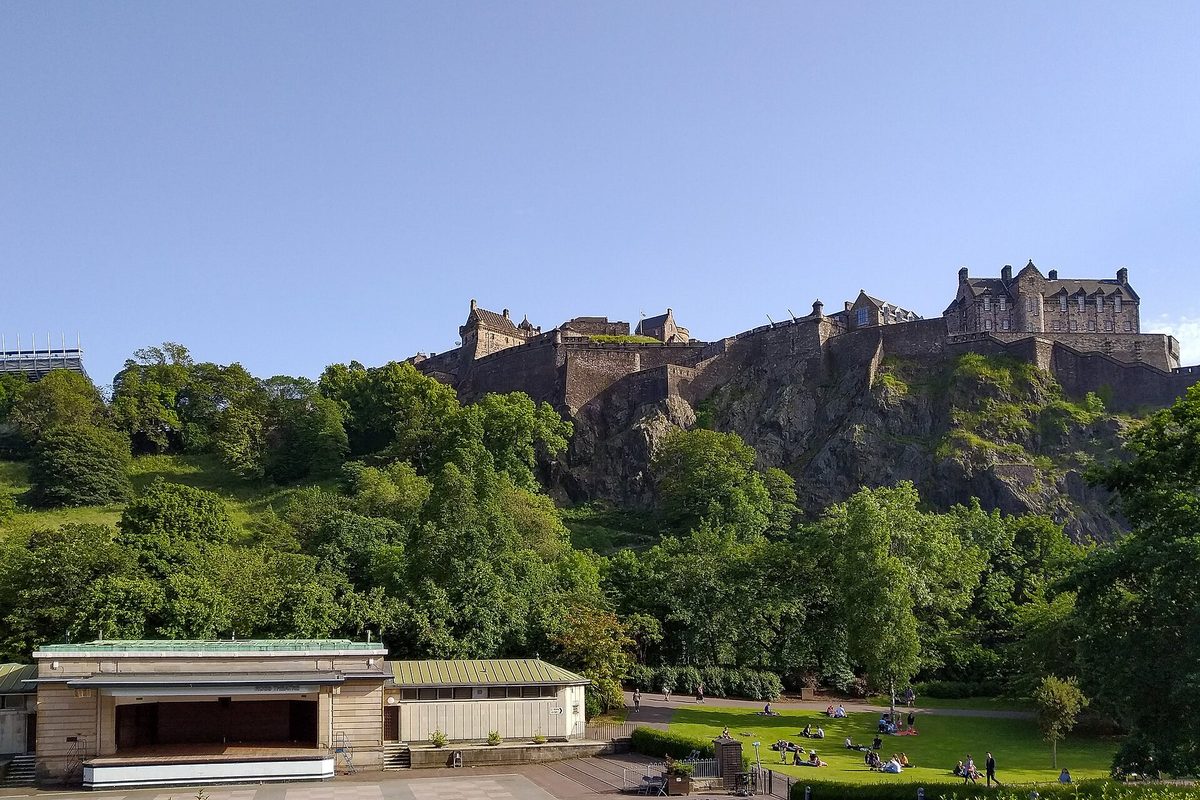
Edinburgh sits in the rain shadow of everything to its west, and it shows: 784 mm a year is less rain than falls on Manchester or Cardiff. The Gogarbank station near the airport is the reference site for the city, and its numbers are the ones I use when planning a trip to Scotland’s capital.
| Month | Avg high | Avg low | Rainfall | Rain days | Sunshine |
|---|---|---|---|---|---|
| January | 7°C | 2°C | 73 mm | 13 | 47 h |
| February | 8°C | 2°C | 61 mm | 11 | 78 h |
| March | 9°C | 3°C | 52 mm | 10 | 111 h |
| April | 12°C | 4°C | 46 mm | 9 | 148 h |
| May | 15°C | 7°C | 50 mm | 11 | 190 h |
| June | 17°C | 9°C | 69 mm | 11 | 159 h |
| July | 19°C | 11°C | 72 mm | 11 | 161 h |
| August | 19°C | 11°C | 75 mm | 11 | 146 h |
| September | 17°C | 9°C | 55 mm | 11 | 125 h |
| October | 13°C | 6°C | 83 mm | 13 | 94 h |
| November | 10°C | 4°C | 74 mm | 13 | 67 h |
| December | 7°C | 1°C | 75 mm | 13 | 38 h |
Two things jump out. April is the driest month of the Edinburgh year at 46 mm across nine rain days, and May is comfortably the sunniest at 190 hours — more sunshine than July. That is not a quirk of the data; May is the sunniest month at almost every station in Scotland. If you only have a single day in the city, late spring gives you the best odds of getting it dry.
Aberdeen and the wider Aberdeenshire coast run a shade cooler and slightly wetter than Edinburgh in autumn but sunnier over the year: Dyce records 1,447 hours against Edinburgh’s 1,363.
The west coast: Oban, Glen Coe and Lochaber
The Dunstaffnage station just north of Oban is the closest full-record site to the Glen Coe and Fort William corridor, and it is a fair picture of what the west coast throws at you.
| Month | Avg high | Avg low | Rainfall | Rain days | Sunshine |
|---|---|---|---|---|---|
| January | 8°C | 3°C | 206 mm | 20 | 32 h |
| February | 8°C | 3°C | 156 mm | 17 | 63 h |
| March | 9°C | 3°C | 137 mm | 17 | 95 h |
| April | 12°C | 5°C | 92 mm | 14 | 147 h |
| May | 15°C | 7°C | 95 mm | 14 | 192 h |
| June | 17°C | 10°C | 96 mm | 14 | 171 h |
| July | 18°C | 11°C | 110 mm | 16 | 135 h |
| August | 18°C | 11°C | 130 mm | 17 | 135 h |
| September | 16°C | 10°C | 141 mm | 16 | 99 h |
| October | 13°C | 7°C | 189 mm | 19 | 78 h |
| November | 10°C | 5°C | 178 mm | 20 | 46 h |
| December | 8°C | 3°C | 198 mm | 20 | 33 h |
Compare December: Edinburgh 75 mm and 13 rain days, Oban 198 mm and 20 rain days. Same country, same week, more than two and a half times the water. Push further inland into Lochaber and it gets worse — Tulloch Bridge, the nearest long-record station to Fort William, averages 250 mm in January alone.
The compensation is that the west is milder. Oban’s January low of 3°C is warmer than Aviemore’s (-1°C) because the Atlantic keeps the coast from freezing hard. It is also why the west is greener, and why the drives through the Highlands look the way they do in photographs.
Inverness and the Moray Firth
This is the number that surprises people most: the Moray Firth coast is one of the driest parts of Scotland. Inverness averages 755 mm a year, less than Edinburgh and a third of Kinlochewe, which sits about 60 miles west on the far side of the same mountains.
| Month | Avg high | Avg low | Rainfall | Rain days | Sunshine |
|---|---|---|---|---|---|
| January | 7°C | 1°C | 76 mm | 14 | 40 h |
| February | 8°C | 1°C | 61 mm | 12 | 74 h |
| March | 10°C | 2°C | 53 mm | 12 | 110 h |
| April | 12°C | 4°C | 41 mm | 10 | 144 h |
| May | 15°C | 6°C | 56 mm | 11 | 184 h |
| June | 17°C | 9°C | 62 mm | 12 | 143 h |
| July | 19°C | 11°C | 62 mm | 11 | 139 h |
| August | 19°C | 11°C | 65 mm | 12 | 136 h |
| September | 17°C | 9°C | 63 mm | 12 | 117 h |
| October | 13°C | 6°C | 78 mm | 14 | 82 h |
| November | 9°C | 3°C | 67 mm | 13 | 52 h |
| December | 7°C | 1°C | 73 mm | 14 | 28 h |
April in Inverness averages 41 mm over ten rain days. That is less than half what falls on Oban in the same month. It also explains why basing yourself at Loch Ness and Inverness for a few nights is a reliable move in a changeable week: you can day-trip west into the wet stuff and come back to a dry bed.
Aviemore, an hour south in Strathspey, runs colder but stays relatively dry at 985 mm. It records 84 days of air frost a year against Inverness’s 38, so it is the better bet for snow and the worse bet for a warm evening outside a pub.
Lerwick, Shetland and the far north
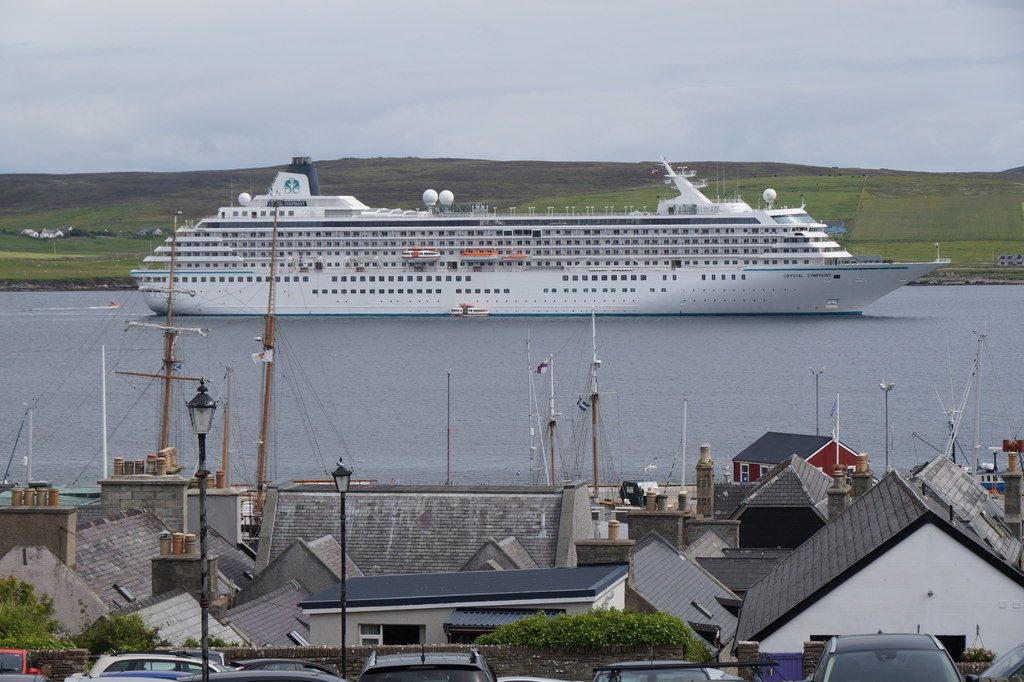
Shetland has its own climate: never very cold, never even slightly warm, and permanently breezy. Lerwick’s warmest month, August, averages a high of 15°C. Its coldest, February, averages 6°C. That is an annual swing of nine degrees, which is remarkable.
| Month | Avg high | Avg low | Rainfall | Rain days | Sunshine |
|---|---|---|---|---|---|
| January | 6°C | 2°C | 150 mm | 22 | 27 h |
| February | 6°C | 2°C | 123 mm | 19 | 58 h |
| March | 7°C | 2°C | 109 mm | 19 | 98 h |
| April | 8°C | 4°C | 68 mm | 15 | 141 h |
| May | 11°C | 6°C | 57 mm | 12 | 192 h |
| June | 13°C | 8°C | 60 mm | 12 | 148 h |
| July | 14°C | 10°C | 68 mm | 12 | 129 h |
| August | 15°C | 10°C | 89 mm | 13 | 132 h |
| September | 13°C | 9°C | 106 mm | 16 | 100 h |
| October | 10°C | 7°C | 131 mm | 20 | 75 h |
| November | 8°C | 4°C | 143 mm | 22 | 38 h |
| December | 7°C | 2°C | 150 mm | 23 | 21 h |
The number that should shape your packing is not in that table: Lerwick’s mean wind speed is around 17 mph across the year and about 21 mph in January. That is an average, not a gust. Stornoway in the Outer Hebrides averages about 14 mph and Tiree about 16 mph. Anywhere in the Scottish islands, wind is the weather.
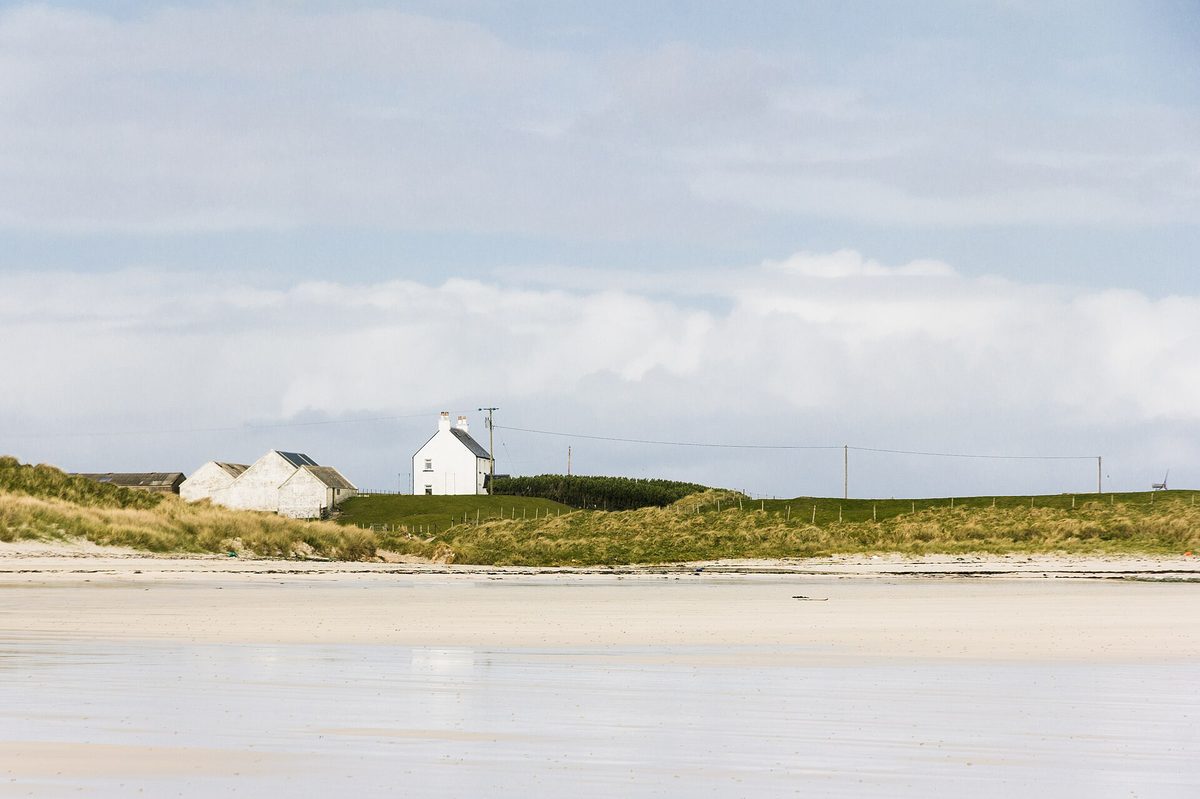
Tiree is the outlier worth knowing about. It gets 1,524 hours of sunshine a year, the sunniest record of any station here, and 240 hours in May alone. It is also almost treeless, because nothing woody survives that wind.
Daylight hours by month
Daylight swings more dramatically in Scotland than temperature does, and it is the single biggest constraint on what you can fit into a day. These are sunrise-to-sunset figures for the 15th of each month, rounded to five minutes.
| Month | Edinburgh | Inverness | Lerwick |
|---|---|---|---|
| January | 7 h 35 m | 7 h 20 m | 6 h 40 m |
| February | 9 h 35 m | 9 h 30 m | 9 h 10 m |
| March | 11 h 45 m | 11 h 45 m | 11 h 45 m |
| April | 14 h 10 m | 14 h 20 m | 14 h 35 m |
| May | 16 h 20 m | 16 h 35 m | 17 h 10 m |
| June | 17 h 35 m | 18 h 00 m | 18 h 50 m |
| July | 17 h 00 m | 17 h 25 m | 18 h 10 m |
| August | 15 h 05 m | 15 h 20 m | 15 h 45 m |
| September | 12 h 50 m | 12 h 50 m | 12 h 55 m |
| October | 10 h 30 m | 10 h 25 m | 10 h 15 m |
| November | 8 h 15 m | 8 h 00 m | 7 h 30 m |
| December | 7 h 00 m | 6 h 40 m | 5 h 55 m |
Add about an hour of usable twilight either side of those figures in midsummer and roughly 45 minutes in midwinter. In Edinburgh on 21 June the sun is up from 04:26 to 22:02 BST; on 21 December it manages 08:42 to 15:40. In Shetland at midsummer it never gets properly dark at all — locals call it the simmer dim, and you can read a map outdoors at one in the morning.
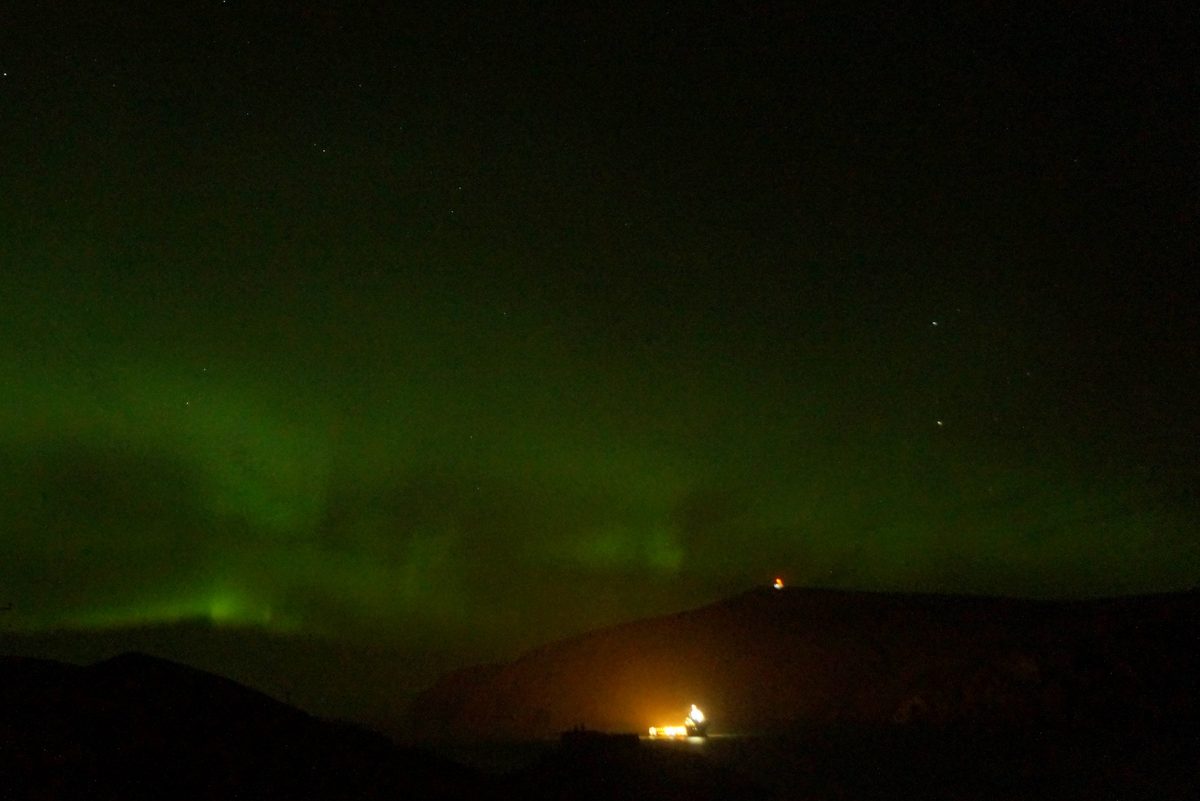
The practical consequence is that a December day in the north gives you about six hours of light. Two Highland sights and a two-hour drive is a full day, not a leisurely one. Plan a winter route through Scotland around that and you will enjoy it; ignore it and you will drive a lot in the dark. The flip side is that the same short nights make November to February the only realistic window for dark-sky stargazing.
Five mechanics worth understanding
The averages tell you what usually happens. These five things tell you why, and they are far more useful once you are actually on the road.
1. The Highlands have a rain shadow, and it is enormous
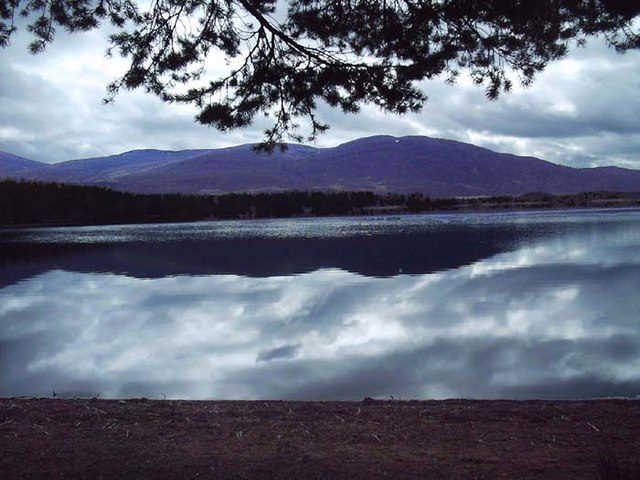
Atlantic air arrives from the west carrying huge amounts of moisture. When it hits the western mountains it is forced upwards, cools, and dumps its water on the first high ground it meets. By the time that same air spills down the eastern side it has been wrung out, and it warms as it descends, so it holds what is left.
The effect is not subtle. Kinlochewe on the west takes 2,279 mm a year. Aviemore in the eastern Cairngorms takes 985 mm. Both are Highland villages. Both sit under mountains. One gets more than twice the rain of the other, and the drive between them is about two and a half hours.
Use this. If your west-coast day is written off, the east is often genuinely dry rather than merely less wet, and vice versa. On a bad forecast for Skye I have driven to Strathspey and walked in sunshine the same afternoon.
2. Haar can steal a June morning on the east coast
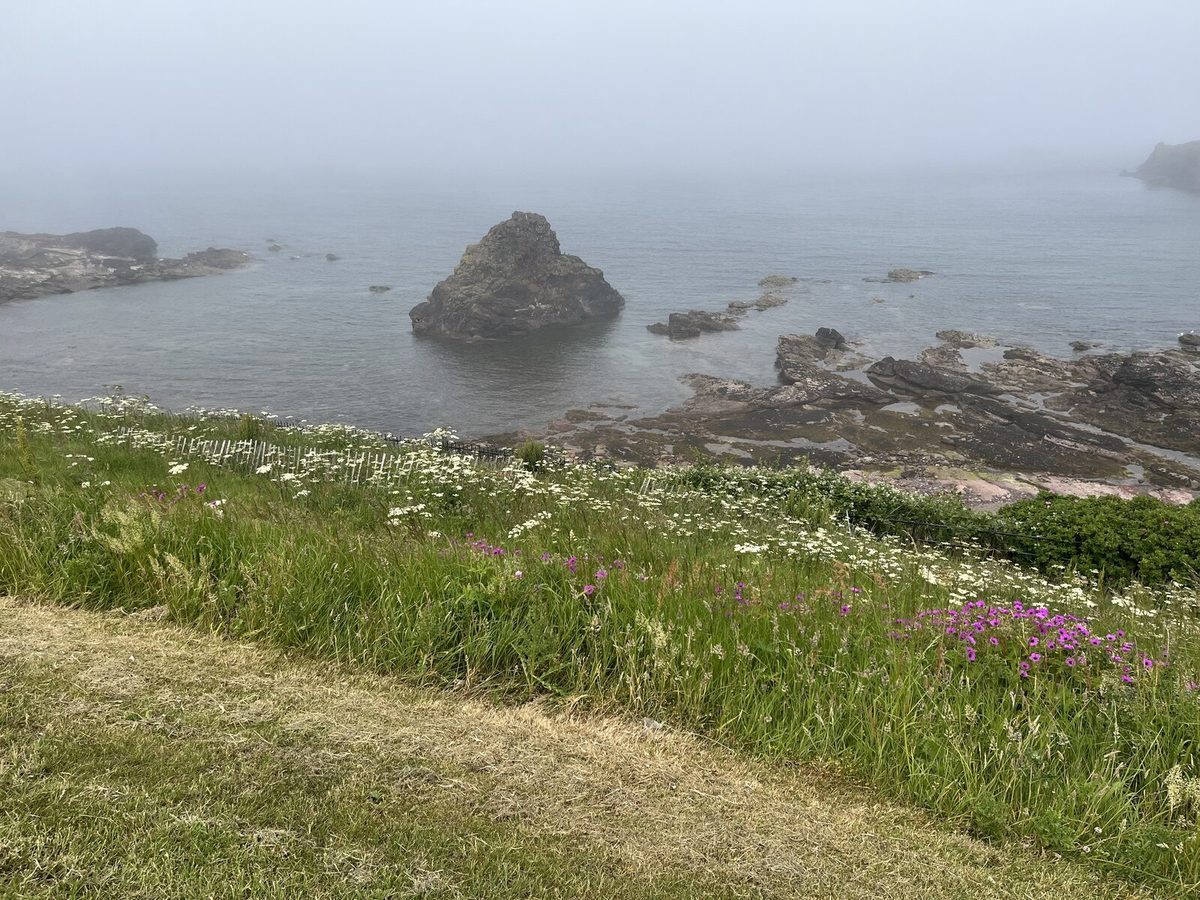
Haar is cold sea fog, and it is the reason the east coast can lose a whole summer morning while the countryside 15 miles inland is bright. It forms when relatively warm, moist air drifts over the cold North Sea, cools below its dew point and condenses. An easterly breeze or an afternoon sea breeze then pushes that fog onto the land.
It is most common between April and September, exactly when the land is warming fast and the sea has not caught up. Edinburgh, East Lothian, Fife, Dundee and Aberdeen all get it. A haar day looks like this: grey, still, around 12°C on the coast, and 20°C with blue sky by the time you reach Falkirk.
The fix is a Plan B that goes west or inland. If you wake up to haar in Edinburgh, that is the morning to climb Arthur’s Seat late rather than early, or to head for Glasgow, which often sits above it.
3. Wind matters more than temperature
A still 6°C day is pleasant walking weather. The same 6°C in a 35 mph wind feels like freezing point on the standard wind-chill calculation, and at 46 mph it feels like -1°C. That is the difference between a good afternoon and a miserable one, and it is why Scottish forecasts always lead with wind speed.
Two places where this bites. On the hill: the Met Office station on the Aonach Mor summit plateau near Fort William, at around 1,130 m, records a mean wind of about 22 mph across the year and 28 mph in January. Down in the valley at Tulloch Bridge the annual mean is about 7 mph. Same weather system, three times the wind.
And on the water: CalMac ferries to the islands cancel for wind, not rain, and they cancel with limited notice. If your trip depends on a single sailing to Skye, Mull or the Outer Hebrides in autumn or winter, build a spare day into the plan. There is more on that in our guide to getting around Scotland.
4. Altitude: about 6°C per 1,000 metres
Air cools as it rises. The usual working figure is around 6°C per 1,000 m, and in dry conditions it can be closer to 10°C. In practice, the gap between Tulloch Bridge at 237 m and the Aonach Mor summit station at roughly 1,130 m runs at about 6°C per 1,000 m in January and around 8°C per 1,000 m in July.
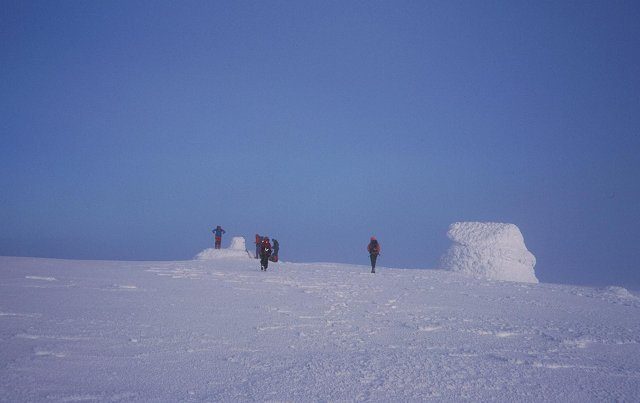
What that means in real numbers: in July, when Fort William is enjoying a 17°C afternoon, the summit plateau averages a high of 10°C and an overnight low of about 5°C. In May it averages a high of 6°C, a low of 2°C, and records nearly twelve days of air frost. Across the year that station logs 167 frost days.
So yes — you can start a Munro in a T-shirt and reach the top in conditions that need a hat and gloves, in June. Anyone walking the Scottish hills should treat the summit forecast, not the valley forecast, as the real one. The Mountain Weather Information Service publishes free summit forecasts and they are worth ten minutes of your morning.
5. “Four seasons in one day” is a real phenomenon
This one gets said so often it sounds like a cliche, but it describes something specific. Scotland sits in the path of the Atlantic storm track, where weather arrives as frontal systems — bands of warm and cold air with sharp boundaries between them. A single depression will deliver, in order: thickening cloud, a spell of steady rain at the warm front, a milder murky interval, then a cold front with heavy showers and a wind shift, then bright cold air with towering clouds and hail squalls behind it.
That whole sequence can pass over you in six hours. It is why a forecast saying “sunny intervals and showers” is genuinely accurate and genuinely unhelpful, and why the correct response to Scottish rain is usually to wait 40 minutes rather than to cancel.
What to pack, keyed to the numbers
All year, no exceptions
A properly waterproof shell with a hood, taped seams and a hydrostatic head that copes with sustained rain. Not a shower-resistant jacket. On the west coast in October you are looking at 19 rain days and 189 mm; a fashion raincoat will fail on day two.
Layers rather than one thick coat, because the useful temperature range on a single day can be 10 degrees. A merino or synthetic base layer, a fleece or light insulated midlayer, then the shell. Waterproof footwear you can walk five miles in. And a warm hat, even in July, if you are going anywhere above 600 m.
Leave the umbrella at home
I am serious about this. Scottish rain rarely falls vertically. With mean wind speeds of 14–17 mph on the islands and regular gusts well beyond that, an umbrella either inverts, snaps, or funnels water down your sleeve. In Edinburgh, where the wind is gentler at around 9 mph on average, an umbrella survives — but the moment you head for the coast or the hills, a hood is the only thing that works.
Season by season
December to February: insulated jacket, gloves, hat, and footwear with grip. Highland roads can hold ice, and the Cairngorms get proper snow. See our full account of what a Scottish winter is actually like.
March to May: the driest and sunniest stretch of the year, but still cold in the morning. Pack as for autumn and enjoy being pleasantly surprised. May in particular is the standout month on almost every measure in the tables above.
June to August: shorts are optional, the waterproof is not. The three summer months are the wettest of the warm season on the west coast, with August averaging 130 mm at Oban. Sunglasses genuinely help on long northern evenings.
September to November: the best light of the year and the fastest-deteriorating weather. September still gives you 16°C afternoons; November gives you eight hours of daylight and 20 rain days in the west.
Midges: which months to worry about
Highland midges need still, damp, mild conditions, which is why they are a west coast and Highland problem rather than a national one. The season runs roughly from late May to early September, peaking in July and August, and they are worst at dawn and dusk in sheltered, boggy places.
The link to the weather data is direct: midges are grounded by wind above about 7 mph and knocked back by heavy rain and cold. So the windy islands are largely fine, and a breezy west-coast headland is fine, while a still evening beside a loch in July is not. If you are camping or walking between June and August, read our guide to Scotland’s midge season before you book, and pack repellent and a head net.
Planning around the weather
How much time you need, by season
In June you can drive four hours and still walk for three. In December, six hours of daylight means two stops and one drive. As a rule I plan about 60% of the summer distance for a winter trip, and I front-load anything scenic into the middle of the day.
For a first trip, seven to ten days is the sweet spot in summer and ten to fourteen in winter, simply because you lose days to weather and short light. Building in one flexible day per week is the single best decision you can make.
What to book early, and what to leave loose
Book accommodation and ferries early — CalMac summer sailings to Skye, Mull and the Outer Hebrides fill weeks ahead, and so do the good places to stay on Skye. Book timed-entry attractions early for July and August. Leave hikes, viewpoints and long drives loose, and decide the night before based on the forecast.
For the North Coast 500 and other long routes, check the forecast direction of travel. Running the loop anticlockwise into a settled easterly, or clockwise ahead of an Atlantic front, can change your whole week.
Where to stay if the forecast is bad
Base yourself somewhere with indoor options and short drives to alternatives. Inverness, Pitlochry, Oban and Fort William all work; a remote cottage 40 minutes from the nearest village does not, if it rains for three days. A wet day is also the day for the West Highland Line or one of the other rail routes worth riding for the view, where somebody else does the driving and the windows do the work.
What the averages don’t tell you
Here is the honest bit, and it is the part most weather guides skip.
The average is not the forecast. Edinburgh’s 19°C July high is the average of every July afternoon over 30 years. Real July afternoons run anywhere from about 14°C to the mid-twenties, and the city record sits above 30°C. Planning your packing around the average alone will leave you cold on the bad days and overdressed on the good ones.
A wet month still has dry days. Oban averages 20 rain days in December. That leaves 11 dry ones. A “rain day” is any day with 1 mm or more — which can mean a ten-minute shower at 6am and a clear afternoon. It does not mean rain all day, and treating the rain-day count as a write-off is the single most common misreading of this data.
Sunshine hours and rainfall are not opposites. Kinlochewe averages a July high of 19°C, the same as Edinburgh, while receiving three times the annual rain. Warm and wet is a normal Scottish combination.
Variance is rising at the extremes. Recent summers have delivered both prolonged dry spells and record daily rainfall totals. Averages from 1991–2020 remain the best planning tool available, but treat them as a central expectation with wide margins, not a promise.
What underwhelms. Two things, said plainly. First, Scottish “sunshine hours” are measured as bright sunshine, and 1,363 hours in Edinburgh works out at under four hours a day averaged over the year — do not expect Mediterranean light in the shoulder months. Second, the famous long summer evenings come with cloud: June has more daylight than May but fewer sunshine hours at nearly every station, because the Atlantic gets busier. If you want light and sun in the same week, May is your month.
The mistake I see most often. Visitors cancel plans on a morning forecast. In a frontal climate, the morning tells you very little about three o’clock. Go out, take the shell, and let the weather do what it does.
Frequently asked questions
What is the wettest month in Scotland?
It depends where you are. On the west coast January and December are wettest — Oban averages 206 mm in January. In the east, October is usually the peak: Edinburgh averages 83 mm across 13 rain days. Nationally, October to January is the wet season, and April to June the driest stretch.
What is the driest month in Scotland?
April, almost everywhere. Edinburgh averages 46 mm over nine rain days, Inverness 41 mm over ten. May is a close second and delivers far more sunshine, which is why late spring is the strongest weather bet of the year for most trips.
Which part of Scotland has the best weather?
For dry weather, the east coast and the Moray Firth: Inverness averages 755 mm a year and Edinburgh 784 mm. For sunshine, Tiree in the Inner Hebrides at 1,524 hours. For warmth, the central belt and the east, where July highs reach 19°C. No single place wins all three.
How many daylight hours does Scotland get in summer?
On 21 June, Edinburgh gets about 17 hours 35 minutes of daylight and Lerwick in Shetland almost 19 hours, with twilight for most of the rest of the night. Mid-June to mid-July is the peak, and the north gains more than the south because of latitude.
How cold does Scotland get in winter?
Milder than most visitors expect at sea level. Edinburgh’s December average high is 7°C with a low of 1°C, and Lerwick’s January low is 2°C. Inland and at altitude it is a different story: Aviemore records 84 days of air frost a year and mountain plateaus stay below freezing for weeks.
Does it rain every day in Scotland?
No. Even the wettest station here, Kinlochewe, averages 220 rain days a year — which leaves 145 dry ones. Edinburgh has 137 rain days, so more than 60% of days record no meaningful rain at all. Showers are usually short and driven through by wind.
What month has the most sunshine in Scotland?
May, at nearly every station in the country. Edinburgh records 190 hours in May against 161 in July; Tiree records 240. Longer June and July days do not translate into more sunshine because Atlantic cloud increases as summer goes on.
Do I need snow tyres or a 4×4 in winter?
For main roads and cities, no — ordinary tyres are fine and gritting is reliable on trunk routes like the A9 and A82. For single-track Highland roads in January, check conditions before setting out, carry a shovel and a warm layer, and be willing to turn back. Hire cars in Scotland are not usually fitted with winter tyres.
Final thoughts
The lesson of every one of these tables is the same: stop asking what the weather is like in Scotland and start asking what it is like in the bit of Scotland you are going to, in the month you are going. A wet October week in Wester Ross and a dry October week in Inverness are both entirely normal, and both are in the data.
My own rule after a lot of trips: go in May if you can, September if you can’t, take a real waterproof whatever the month, and never let a grey morning decide your day. Scotland rewards people who go outside anyway — and the light after a squall clears is the best thing about the place.
About the author: This guide was written and is maintained by the ScotlandTourism.org editorial team — travel writers who’ve spent years exploring Scotland’s cities, Highlands and islands, from bagging Munros to chasing the perfect dram. We update our guides regularly to keep prices, opening details and advice current.
Last updated: August 2026. Prices and opening times change — always check the official site before you travel.
Photo credits
All images are used under their respective Creative Commons or public-domain licenses:
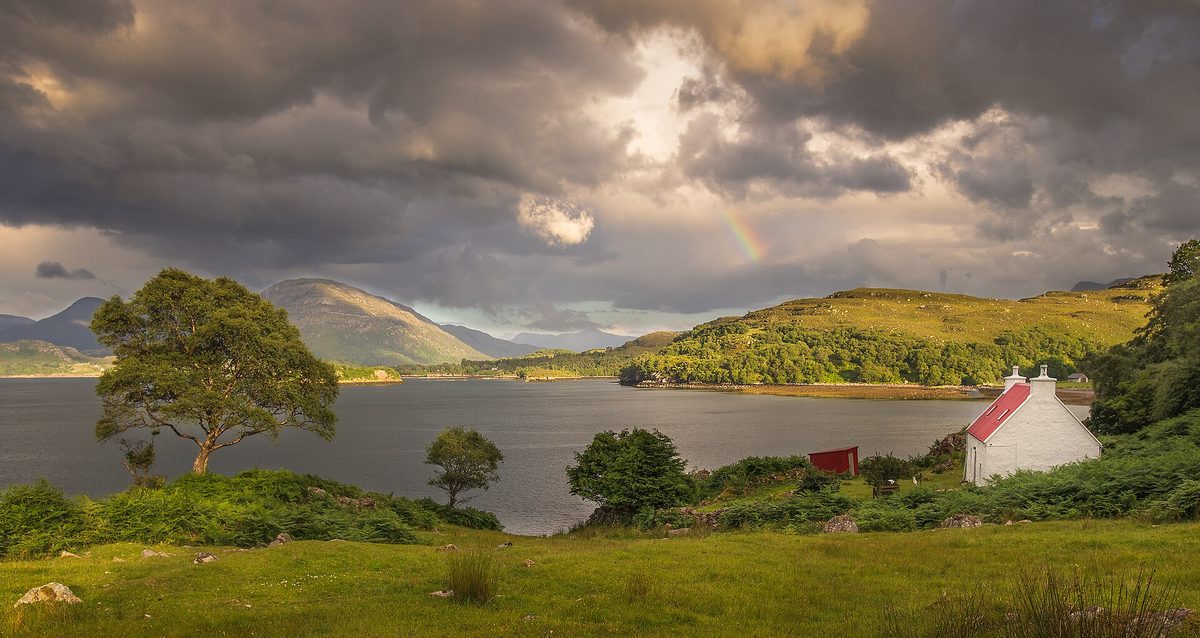
- A rainbow over Loch Torridon after a passing shower in the west Highlands — Chris Combe from York, UK, CC BY 2.0, via Wikimedia Commons
- Edinburgh Castle above Princes Street Gardens on a clear summer afternoon — Matti Blume, CC BY-SA 4.0, via Wikimedia Commons
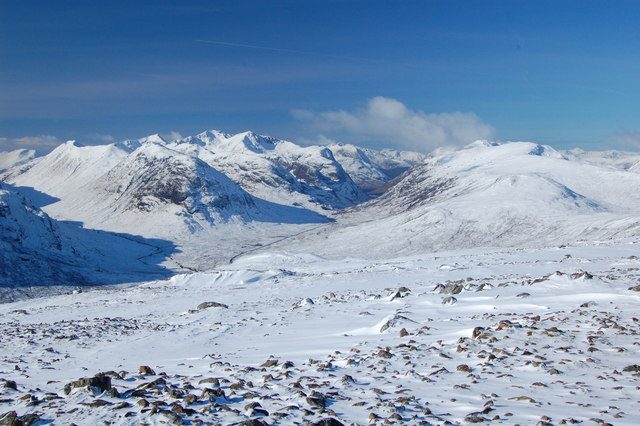
- Snow covering the peaks around Glen Coe in the west Highlands — Alex Mcnaughton, CC BY-SA 2.0, via Wikimedia Commons
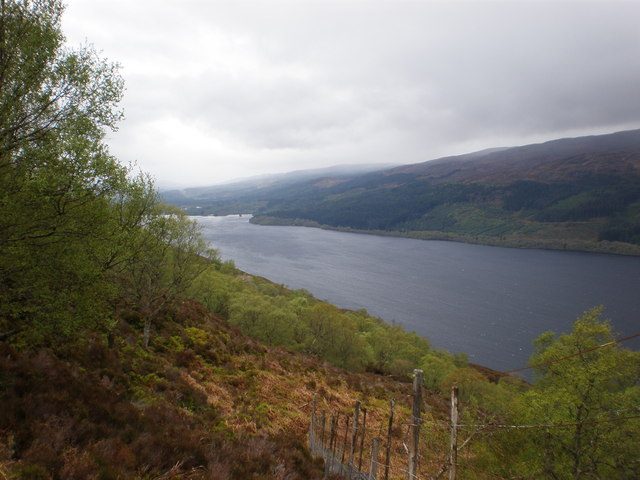
- Low cloud over Loch Ness in the Great Glen near Inverness — Sarah McGuire, CC BY-SA 2.0, via Wikimedia Commons
- Lerwick harbour in Shetland under grey summer cloud — Mike Pennington, CC BY-SA 2.0, via Wikimedia Commons
- Loch Morlich and Cairn Gorm under broken cloud near Aviemore — Dumgoyach, CC BY-SA 2.0, via Wikimedia Commons
- Haar drifting over the East Lothian coast near Dunbar on a summer day — Jennifer Petrie, CC BY-SA 2.0, via Wikimedia Commons
- Walkers on the snow-covered summit plateau of Ben Nevis — Richard Webb, CC BY-SA 2.0, via Wikimedia Commons
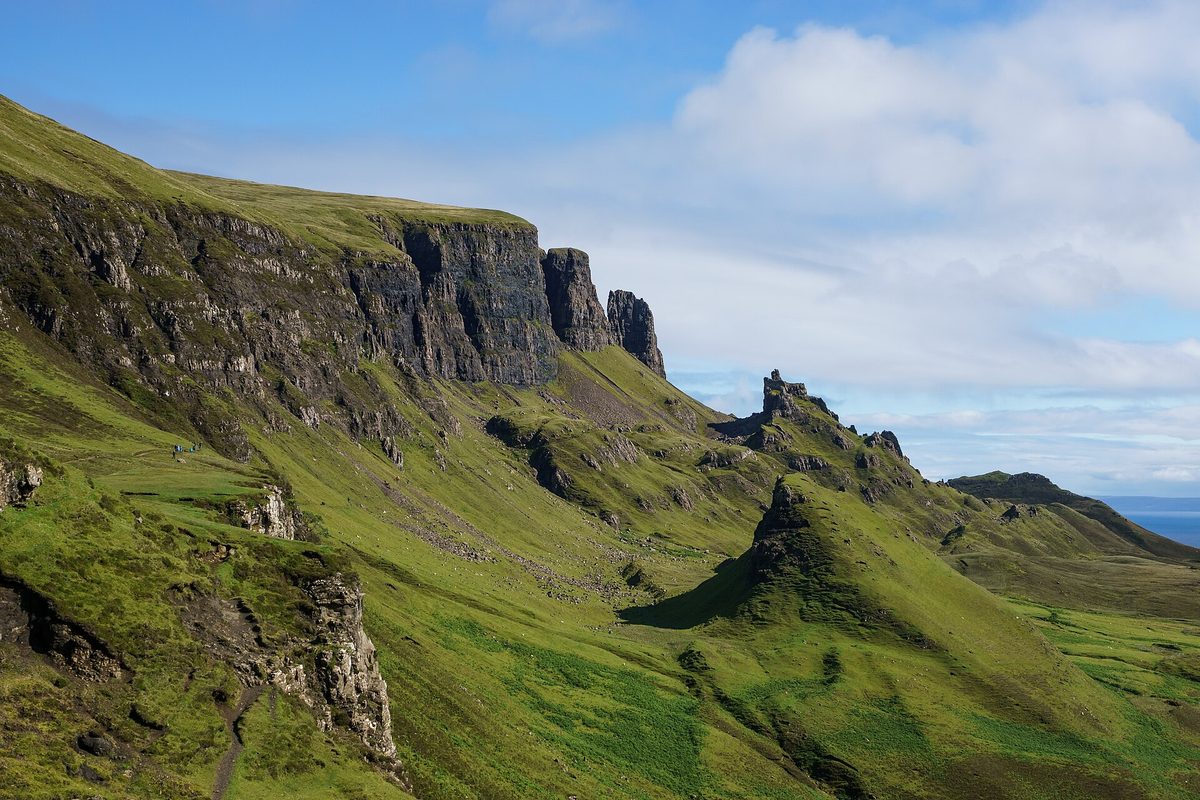
- Sunlight and cloud over the Quiraing on the Isle of Skye — Colin, CC BY-SA 4.0, via Wikimedia Commons
- A wide empty beach on Tiree, the sunniest station in Scotland — Alexey Komarov, CC BY-SA 4.0, via Wikimedia Commons

2 notes from readers