Everything useful I know about midges in Scotland I learned the hard way, in a forestry car park at the top of Glen Etive. Second of August, tripod up, light going pink over the river — and I lasted four minutes. Not four minutes of mild discomfort. Four minutes, then a sprint back to the car with the windows still down and a hundred of them coming in with me.
Two hours earlier I had eaten fish and chips on a wall at Ganavan Sands outside Oban in a light onshore breeze and hadn’t seen one. Same day, same county, forty miles apart, completely different evening. The insects hadn’t changed — the wind had. Almost everything written on this subject treats the midge as a moral test you either pass or fail, when it is actually a weather problem with four measurable conditions attached. Learn those and you stop being ambushed.
Midges in Scotland: the short answer
Midge season in Scotland runs from late May to late September, peaking from mid-July to late August. They are concentrated in the wet west — Lochaber, Argyll, Wester Ross, Skye and the inner islands. They cannot fly in wind above about 6–7mph, they hide in bright sun, and they stop entirely below roughly 9–10°C. Dawn and dusk in still, damp air is when they bite.
Midge season at a glance
| Month | Level in the west Highlands | What’s happening | Where you’re fine regardless |
|---|---|---|---|
| April | None | Larvae still in the peat, no adults flying | The whole country |
| May | None, then low from about the 25th | First hatch, usually the last week | Everywhere until late in the month |
| June | Moderate | First generation biting; numbers patchy | East coast, Borders, Central Belt |
| July | High and climbing | Second, bigger hatch from about the 20th | Edinburgh, Fife, Aberdeenshire, Moray |
| August | Peak | Second generation at full strength | As above, plus any exposed coast |
| Early September | Moderate, falling weekly | Cooler nights thinning the population | Most of the country |
| Late September | Low | Effectively finished in most places | Everywhere except sheltered western glens |
| October to April | None | First hard frost ends the season | The whole country |
If you’re still choosing dates, this table sits inside a much bigger picture — our guide to the best time to visit Scotland weighs midges against daylight, rainfall, crowds and ferry availability, which is the comparison that actually decides a trip.
What a midge is, and why the biology is useful to you
Roughly 35 to 40 species of biting midge live in Scotland, but one does almost all the damage: Culicoides impunctatus, the Highland biting midge. It is about 1.4mm long, grey-brown, and small enough to get through the mesh of a standard mosquito net.
Only the females bite, and they’re on a deadline
Male midges never bite you. They feed on nectar and plant sugars and die within days. The female needs a protein meal to develop a batch of eggs, and blood is the fastest source she has. She is not being spiteful. She is on a biological clock, which is why she is so persistent, and why swatting one changes nothing — there are several hundred more within two metres.
She finds you by carbon dioxide first, at a range of a few metres, then by warmth, moisture and skin chemicals at close quarters. This is why holding your breath is useless and why a group of six people gets hit harder than one person alone. It also explains why the person doing the hardest work on a hill walk gets bitten most: more breathing, more sweat, more signal.
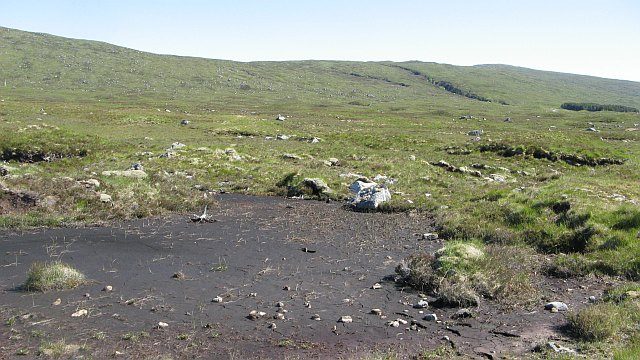
The four thresholds worth memorising
Here is the part every jokey listicle skips. Midge behaviour is governed by four physical limits, and all four are on any decent weather app.
Wind. This is the big one. Above about 6–7mph — roughly 10km/h, Beaufort force 3, the point at which leaves are in constant motion and a flag lifts — they simply cannot hold a course. They’re pushed downwind and give up. Below about 4mph they own the place.
Light. Direct bright sunshine dries them out and drives them down into vegetation. Overcast is their weather. A flat grey sky at 7pm in August is far worse than a clear one, which is the opposite of what most people assume.
Temperature. Below roughly 9–10°C they stop flying. This is why a clear night that drops to 7°C gives you a peaceful evening and a muggy one at 14°C does not.
Humidity. They dehydrate quickly and need damp air. Low humidity and a drying wind suppress them; the still, heavy air an hour after rain brings them out in numbers.
Reading the forecast the night before
Put those together and you can plan an evening properly. Check the hourly wind speed for your actual location, not the region. If it’s forecast at 9mph on an open coast, eat outside. If it’s 2mph, overcast, 15°C and you were planning to stand beside a wooded loch at nine o’clock, either move to the coast or accept that you’ll be wearing a net.
The Scottish Midge Forecast does this arithmetic for you. It’s run alongside the Smidge brand and combines actual midge trap catches with weather station data to give a 1–5 rating by area for the coming days. It is genuinely good at the regional picture. What it can’t know is that your specific car park is in the lee of a plantation, which is the difference between a 3 and a 5 in practice. Use it as a starting point and let the wind arrow have the final word.
The season, properly explained
There isn’t one midge season, there are two overlapping ones, and knowing which you’re walking into changes what you pack.
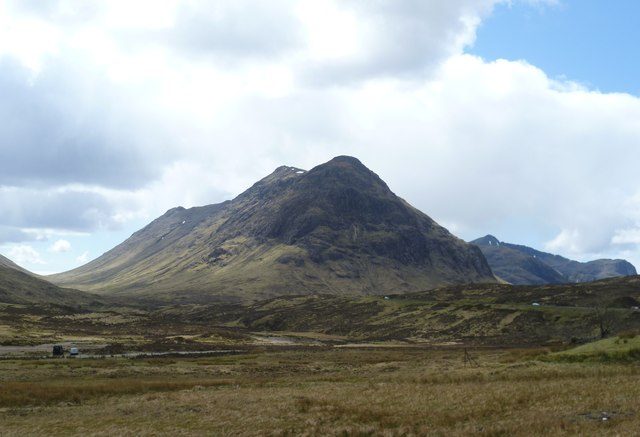
Late May and June: the first hatch
The overwintering larvae pupate once soil temperatures come up, and the first adults typically appear in the last week of May in the mildest western spots. A cold spring pushes this into early June; a warm damp April can pull it forward a week.
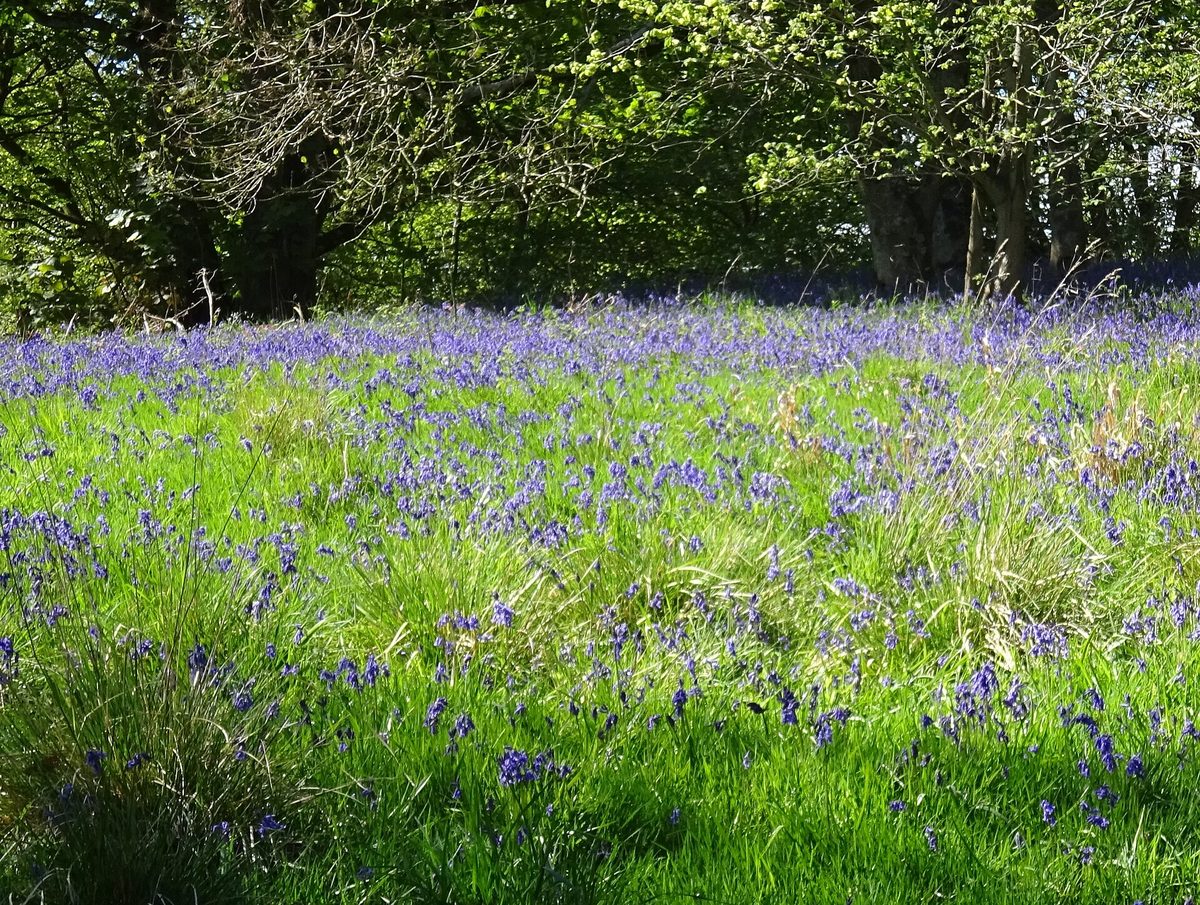
This first generation is real but comparatively thin. Through June you can walk all day in the west and barely register them, then get caught for twenty minutes at dusk. It’s the reason May in Scotland remains such a well-kept secret among people who visit repeatedly: long daylight, decent odds on dry weather, gorse and bluebells out, and the biting hasn’t really begun.
Mid-July to late August: the second generation
The females from the first hatch lay, and their offspring emerge from about the third week of July. This second generation is substantially larger than the first, and it is the reason the first fortnight of August is the worst period of the Scottish year for anyone standing still outdoors in the west.
It coincides, inconveniently, with the school holidays and the peak of the tourist season. Everything else about Scotland in summer is at its best in that window — the hills are green, the ferries all run, the light lasts until nearly eleven — which is precisely why so many people arrive with no idea what’s coming.
September: the tail-off
Numbers fall week by week as nights cool. Early September in a sheltered glen can still be unpleasant after rain, but by the third week most people stop thinking about it. September in Scotland is, to my mind, the single best compromise month in the calendar: heather still purple, deer roaring by month’s end, midges fading, and accommodation easier to get.
October to April: over
The first hard frost finishes the adults off completely. From then until the following May there is nothing to plan around, which is one of several quiet arguments for Scotland in winter if you don’t mind short days and closed mountain roads.
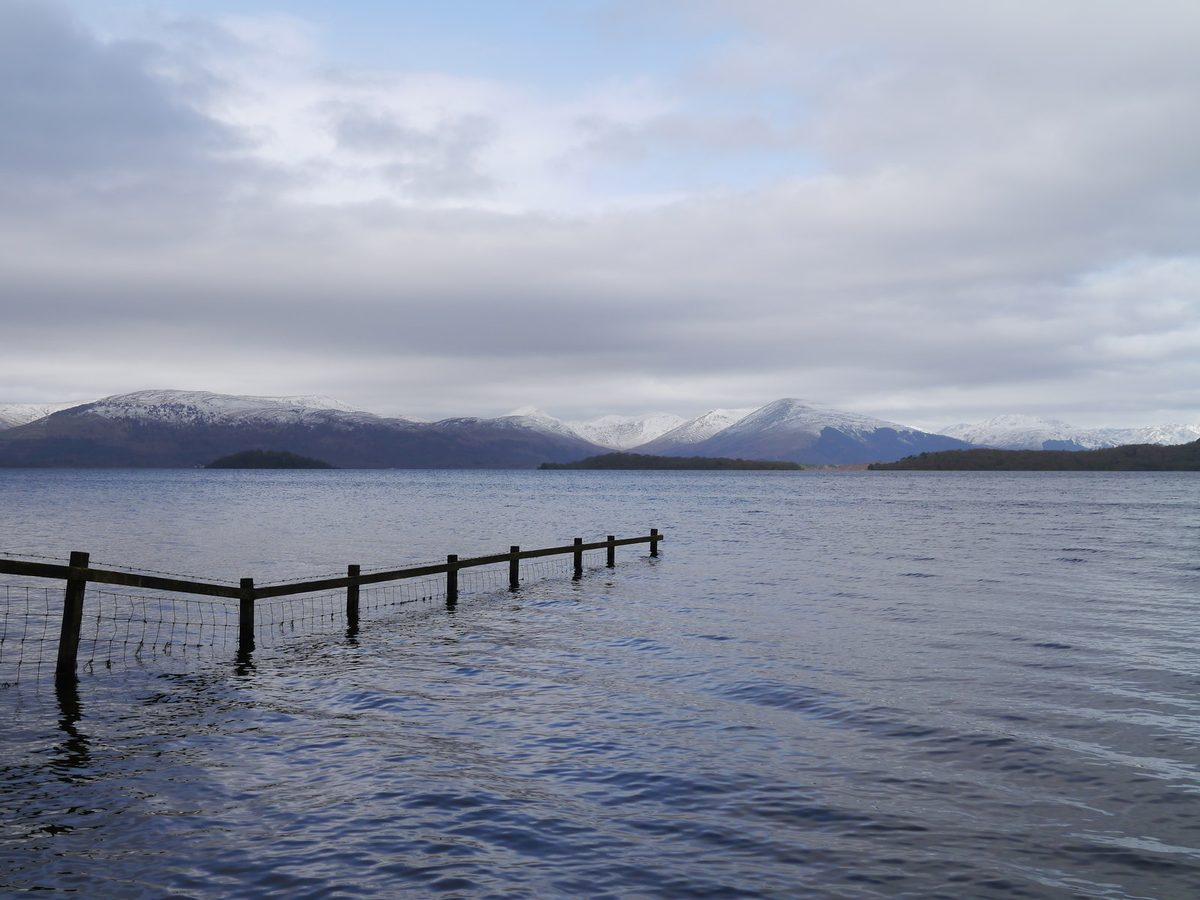
Where the midges actually live
This is the bit that most needs saying plainly, because a surprising number of people cancel or redirect trips they didn’t need to. Roughly nine tenths of Scotland’s midge problem sits in the wet west. If your itinerary doesn’t go there, it barely concerns you.
The bad ten per cent of the map
Lochaber — Fort William, Glen Nevis, Glencoe, Glen Etive — is the reliable worst. Argyll from Loch Lomond down through Oban and out to Kintyre is close behind. Wester Ross around Torridon, Kinlochewe and Shieldaig is severe, as is the Great Glen corridor and the wooded ground either side of Loch Ness. Anywhere the North Coast 500 route drops off the exposed coast into a sheltered inland glen, you’ll notice it immediately.
What these places share is acidic, peaty, permanently damp ground for the larvae, plus shelter from wind. The western Highlands are essentially one very large, very well-appointed midge nursery.
Skye, which surprises people in both directions
Skye has a fierce reputation and it’s half deserved. Sligachan, the Fairy Pools car park, Glen Brittle and anywhere in the woods around Portree can be genuinely grim on a still August evening. But Neist Point in a westerly, the Quiraing ridge, Elgol when the wind’s up — those are fine, often completely fine. The island is big enough and exposed enough that you can usually drive twenty minutes to a different wind.
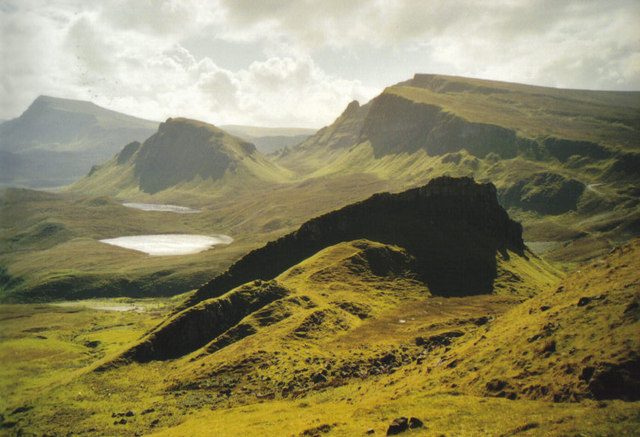
Where you can genuinely stop worrying
Edinburgh: no. I have never once been bitten in the city, and a summer walk up Arthur’s Seat or an evening on the Royal Mile is not a midge risk. The same goes for Glasgow, the Borders, East Lothian, Fife, Angus, Aberdeenshire, Moray and Speyside. If your plan is a few days in the capital — even something as compressed as one day in Edinburgh — midges are a non-issue and you can leave the repellent at home.
The east-coast links courses are another safe bet: the wind that makes golf in Scotland such hard work at St Andrews and Carnoustie is exactly the wind midges can’t cope with. Orkney and Shetland are effectively midge-free for the same reason. And the great Atlantic-facing beaches of the Outer Hebrides — Luskentyre, Seilebost, the west side of North Uist — are usually breezy enough to be pleasant at eight in the evening when a glen on the mainland is unbearable. Several of Scotland’s finest beaches are safer at dusk in August than most inland picnic spots.
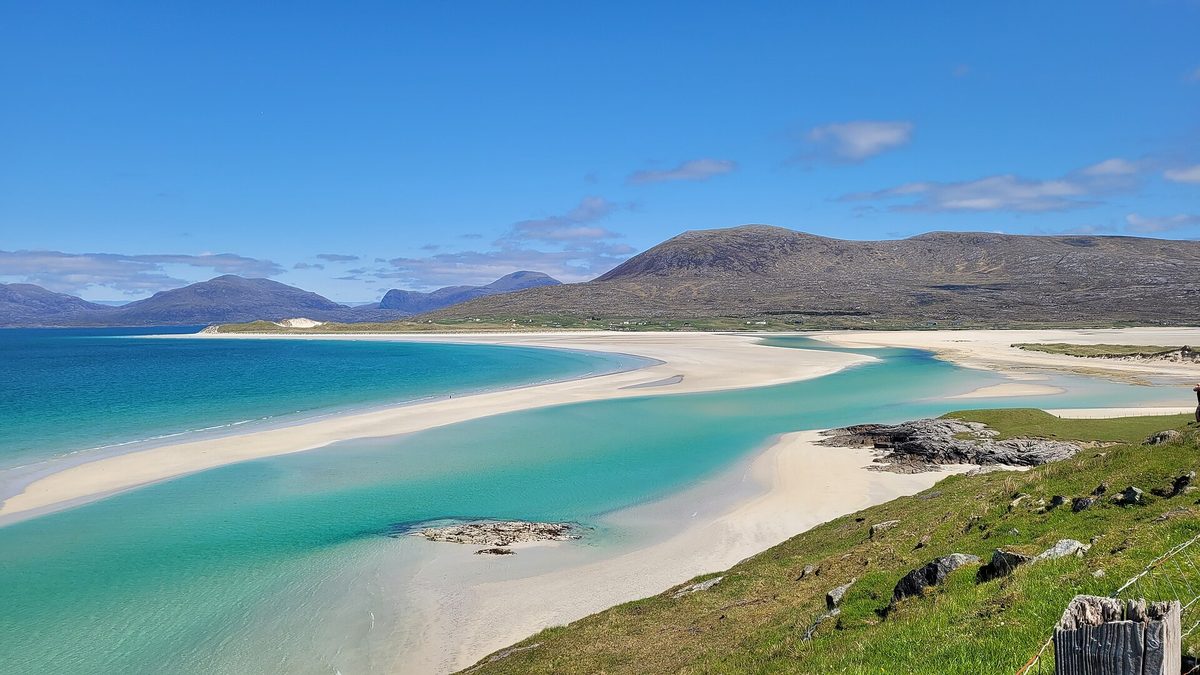
The caveat for the islands is that the sheltered eastern side of the same island can be a different world. Machair behind the dunes on Harris, the head of a sea loch on Mull, the bays on the east of Lewis — when the wind drops, those places bite. Island-hopping around the Scottish islands in August, I’d rather camp on the windward coast every time.
What actually works
Repellents, and what the numbers on the bottle mean
The market leader in Scotland is Smidge, which uses 20% saltidin — the same molecule sold internationally as picaridin or icaridin. It’s DEET-free, doesn’t dissolve plastic watch straps or camera grips, doesn’t smell industrial, and gives most people several hours of cover. Expect somewhere around £8–10 for a 75ml bottle at the time of writing; it’s stocked in Co-ops, outdoor shops and half the petrol stations north of Perth. Sawyer’s 20% picaridin spray is the equivalent product if you’re buying before you fly.
DEET works too and some people find it more reliable when the swarm is heavy. Concentration governs duration rather than strength: around 20% gives a few hours, 50% gives longer, and above 50% there’s little evidence of meaningful gain. Standard NHS guidance is that DEET is suitable from two months of age, and you apply sunscreen first, repellent second. Be careful with it around synthetic fabrics, watch faces and painted surfaces.
Avon Skin So Soft Original Dry Oil Spray is the one that always sounds like folklore and isn’t quite. It’s a body moisturiser, not a licensed repellent, but Highland estate workers, ghillies, forestry crews and a fair few Royal Marines have used it for decades. The working theory is physical rather than chemical: the oil film makes it hard for a midge to land and settle, and it may mask skin scent. It doesn’t last long and it makes you shiny. It also costs a few pounds, works on children who dislike sprays, and I still keep a bottle in the car door.
The head net nobody wants to wear
A midge head net is the single most effective piece of kit in this entire article, and I’d guess fewer than one visitor in twenty carries one. It costs about £5–8, weighs almost nothing, folds into a jacket pocket, and takes the problem from unbearable to irrelevant in four seconds.
Two things matter when buying. Get a fine-mesh net sold specifically for midges — standard mosquito mesh has holes a Highland midge walks through. And get one with a hoop or a hat to hold the fabric off your face, because netting resting on your skin gets bitten through.
You will look ridiculous. Nobody local will find this remarkable. I have worn one in a beer garden in Arisaig while everyone else pretended they were fine, and I was the only person who finished a pint.
Clothing and colour
Cover exposed skin: long sleeves, trousers, socks pulled over the trouser hem if you’re sitting still. Midges struggle to bite through anything tightly woven, but they’ll happily go through thin loose cotton where it touches, and they will find the gap between your sock and your ankle.
Light colours help. Midges orient partly by contrast against the sky and are drawn to dark shapes, so a black fleece is a worse choice than a pale one. The effect is modest, not magic. Wrists, neck, hairline and ankles take the most bites, so those are where repellent goes first.
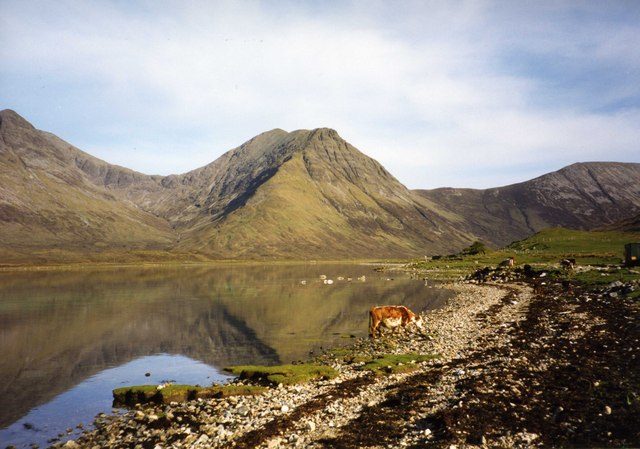
Traps, fans and the pub beer garden
Those humming boxes on legs outside Highland pubs and campsites are CO2-baited midge traps. They burn a little propane to produce carbon dioxide and warmth, mimic a large mammal, and vacuum the arrivals into a mesh bag. Over a season they measurably reduce the local population around a single outdoor area, which is why the beer garden at a place like the Clachaig near Glencoe is far more usable than the road-end car park a mile away. They do nothing for you on a hillside.
A cheap clip-on battery fan on a picnic table is a legitimate trick for the same reason wind is: you only need to move the air a couple of miles an hour to make flight difficult. Smoke from a fire helps as well, where fires are permitted and the fire risk is low. And keep moving — midges are weak, slow fliers, and walkers get bitten at stops rather than in motion. On a long day walking in the Highlands, the strategy is simply to take your breaks somewhere with a breeze and eat lunch on a col rather than in a hollow.
What doesn’t work
I’d rather save you the money. Citronella wristbands and clip-on bands have repeatedly failed to protect skin more than a few centimetres from the band itself — your wrist may be fine while your neck is not. Ultrasonic repellents, whether gadgets or phone apps, have no credible evidence behind them at all; the idea that a frequency drives off biting insects has been tested many times and doesn’t hold up.
Vitamin B12 and B1 tablets, garlic capsules and Marmite belong in the same category: popular, harmless, and unsupported by any controlled trial. Bog myrtle is a more interesting case — the plant does contain compounds with genuine repellent activity, and crushing a handful into your hands is a pleasant Highland ritual — but the effect from a sprig tucked in your hat is short-lived and weak compared with a 20% saltidin spray.
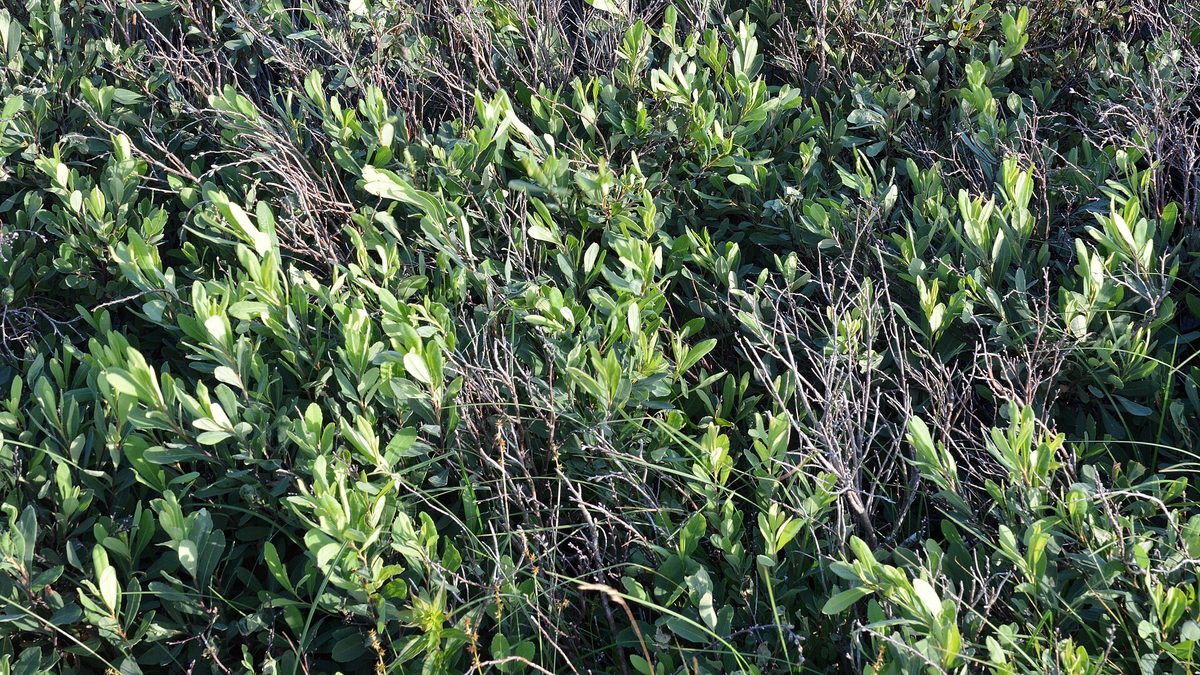
Scented soaps, perfumes and heavily fragranced sunscreen are actively unhelpful. So is a second pint at dusk beside still water, but that’s a different kind of advice.
If you’re camping
Campers get the worst of it, because camping involves standing still outdoors at exactly the two times of day midges are hunting. It’s manageable with a bit of discipline.
Pitch for wind, not for the view. A slightly exposed pitch with a breeze across it beats a sheltered one beside trees every time, and if you’re wild camping under the Scottish Outdoor Access Code, a spur or a low col is worth the extra twenty minutes of walking. Avoid the edge of forestry, long wet vegetation and the immediate margins of a burn or loch.
Cook and eat early, in the wind, before the evening lull. Get the inner tent zipped before the light goes soft. Choose a tent with fine mesh doors, not just a mosquito panel, and check the mesh gauge before you buy — this is one specification worth reading. A head torch attracts them at night, so if you need to go outside after dark, use red light or none.
Mornings are the trap. You want to strike camp between about nine and ten once the sun and wind are up, not at half past five in dead-still air, however keen you are to move. On a multi-day route, a night in a bothy or a bunkhouse mid-trip is an underrated reset — and if you’re mixing camping with a few indoor nights, our guide on where to stay across Scotland covers the options between hostel and hotel.
If you’re a photographer
Landscape photographers have a specific and unfair problem: the two hours you want are the two hours midges want, and standing motionless behind a tripod is the single most attractive thing you can do.
The practical answer is to choose subjects the conditions allow rather than fighting them. Coastal and elevated compositions during the peak weeks; sheltered woodland and lochside reflections when there’s a breeze or after the season. Neist Point, Elgol, Achmelvich, the Bealach na Bà viewpoint above Applecross — all of these usually have enough moving air at sunset to be workable in August. The forest track at the bottom of a glen does not.
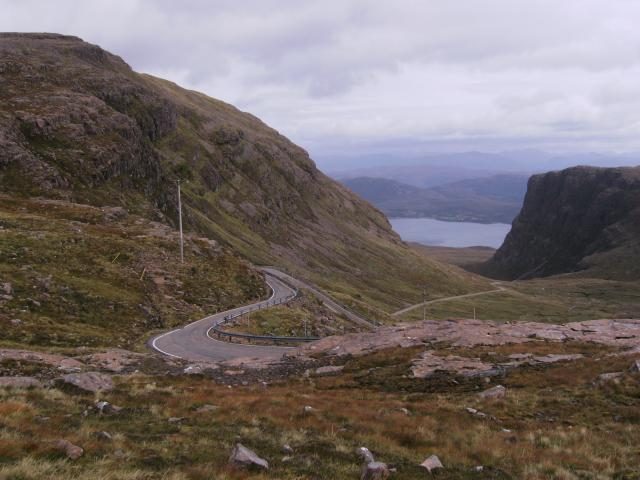
Wear the net and treat it as part of the kit. It doesn’t interfere with a viewfinder as much as you’d expect, and if you’re using live view it makes no difference at all. Thin liner gloves stop the back of your hands being eaten while your attention is on the histogram. And put repellent on before you set up, not after the first bite — by then you’re already committed and moving your hands around your face.
One genuine consolation: the same still, humid, overcast conditions that bring midges out also produce the flat light and low mist that make west Highland landscapes work. If you want the shot enough, the net is the price. Astrophotographers get an easier deal, because the clear, cooling nights that suit dark-sky stargazing are usually too cold and too dry for midges to fly.
The other two insects worth knowing about
Clegs
Clegs — horseflies, most often the notch-horned cleg — are the ones that actually hurt. They’re 10mm or so, brown-grey, with mottled iridescent eyes, and they fly silently and land on the back of an arm or a calf without you noticing. The bite is a scissor cut rather than a needle, and it can stay red, hot and swollen for several days.
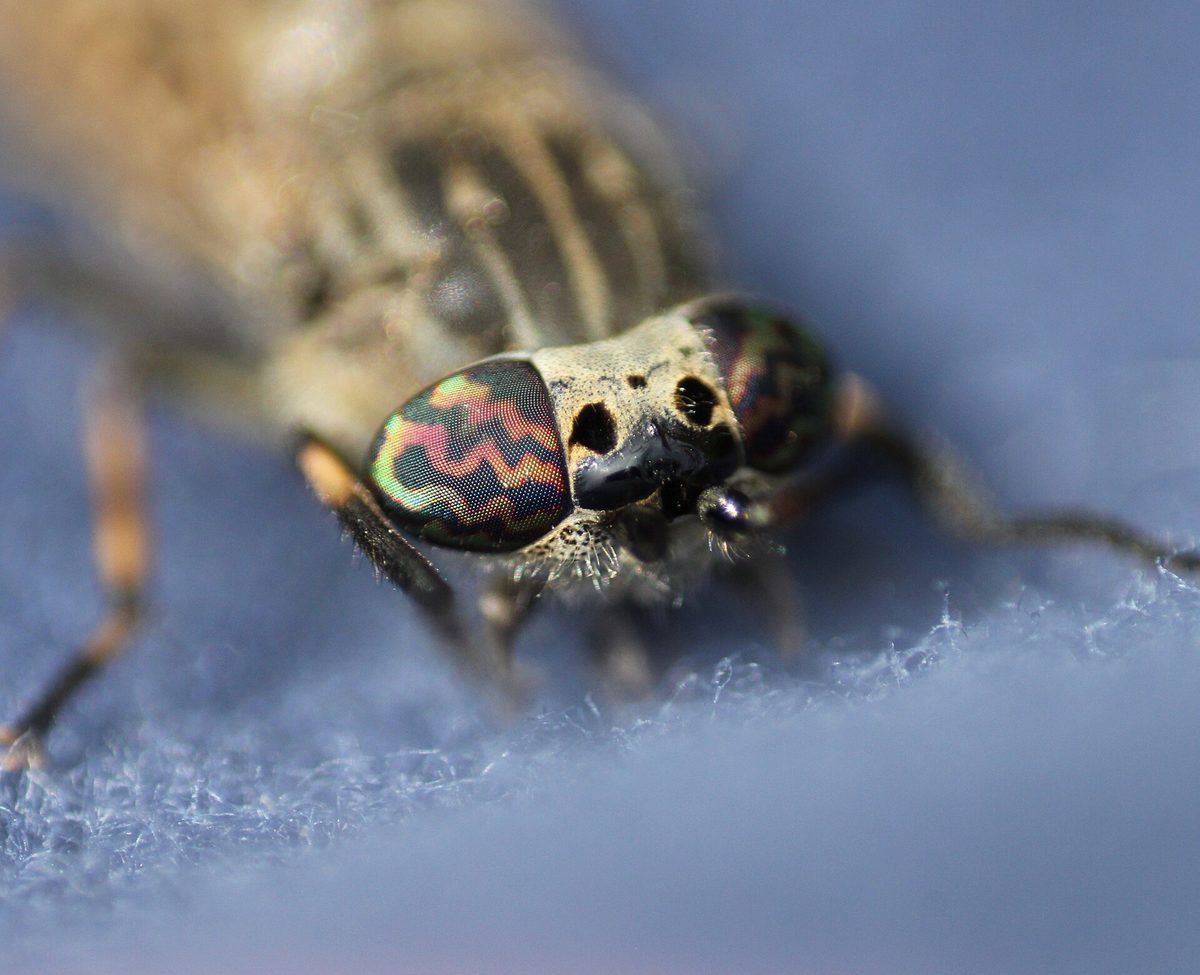
Unlike midges, clegs like warm, humid, still weather and are quite happy in bright sunshine, so a hot July afternoon that has grounded every midge in the glen is prime cleg time. There are far fewer of them, standard repellent puts them off reasonably well, and keeping your calves covered when walking through bracken helps. Wash the bite and try not to scratch it — cleg bites become infected more readily than midge bites.
Ticks, and a short word on Lyme disease
Ticks matter more than midges or clegs. They’re widespread in bracken, long grass and deer-grazed ground across the Highlands, and a small proportion carry the bacterium that causes Lyme disease. This is not a reason to stay off the hill; it is a reason to do a body check.
Prevention: trousers rather than shorts through bracken, tuck them into socks on overgrown paths, stick to the path where there is one, and check yourself at the end of every day. Look at the backs of knees, groin, waistband, armpits, navel, neck and hairline, and check children thoroughly. Nymphs are the size of a poppy seed and easy to miss.
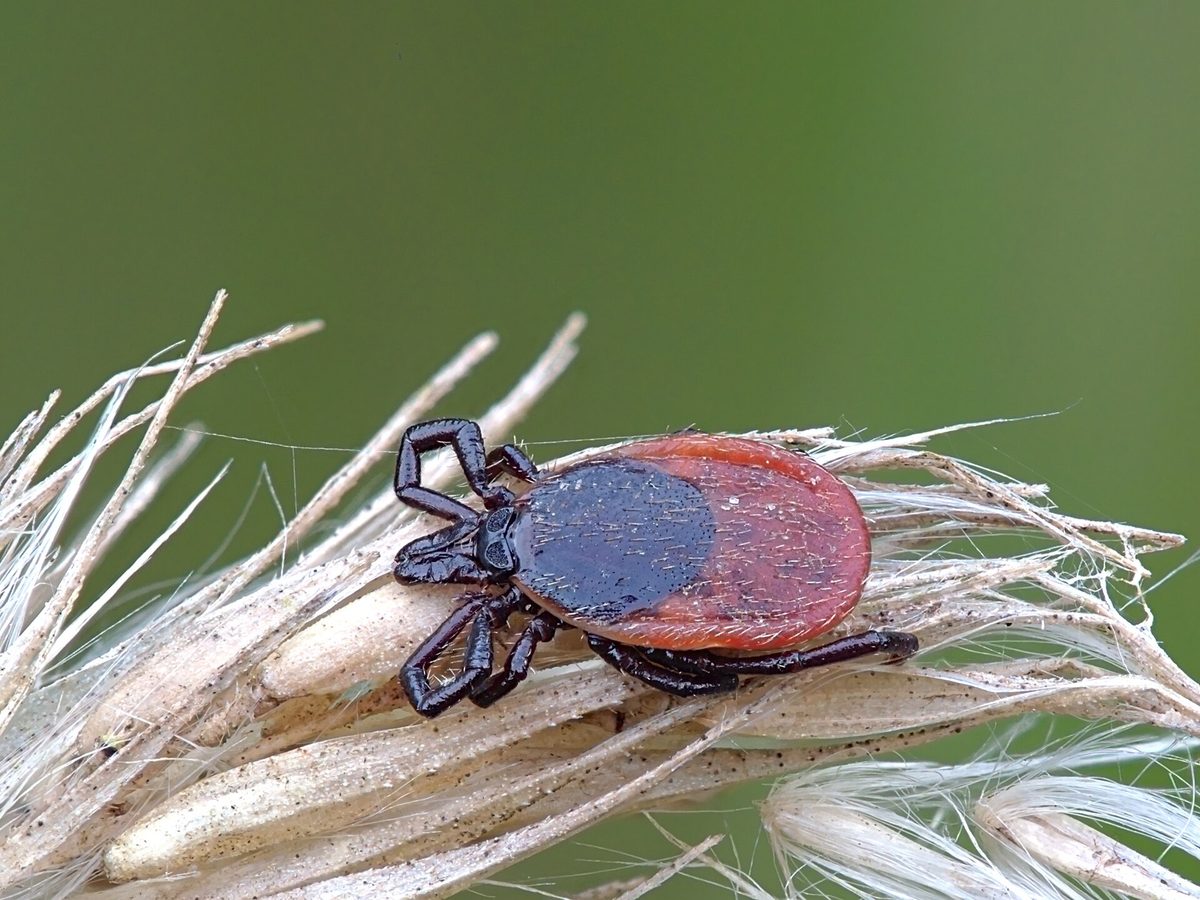
Removal, per NHS guidance: use fine-tipped tweezers or a purpose-made tick tool, grip the tick as close to the skin as you can, and pull steadily upwards without twisting or crushing the body. Don’t burn it, don’t smother it in petroleum jelly, and don’t try to make it back out — that raises the chance of it regurgitating. Clean the bite with soap and water or antiseptic afterwards. Carry a tick tool; they cost a couple of pounds and live on a keyring.
Then watch the site for a few weeks. The classic warning sign is a spreading circular or bullseye rash appearing days to weeks after a bite, sometimes with flu-like symptoms, headache, fever or joint aches. If you get any of that, see a GP and tell them you’ve been bitten by a tick in Scotland — Lyme disease is straightforward to treat with antibiotics when it’s caught early. If you’re home in another country by then, mention the tick bite anyway; it isn’t something a doctor elsewhere will think to ask about.
Planning a trip around all this
You don’t need to redesign a holiday around an insect. You need about three decisions.
Dates. If your trip is mainly cities, castles and distilleries, ignore midges entirely and pick your dates on weather and crowds. If it’s mainly wild camping and west-coast hiking and you have a free choice, late May, June or the second half of September are materially more comfortable than the first fortnight of August. Building a full route? Our Scotland itinerary planner is a better starting point than picking a month in isolation.
Shape. Within a summer trip, put the sheltered inland stops — Glencoe, Glen Affric, the Trossachs — in the middle of the day, and save the exposed coast for the evenings. Booking a place with a pub or a lounge to retreat into at nine o’clock is worth more than any spray. And think about how you’re moving: with your own car you can chase the wind, whereas relying on buses and trains for getting around Scotland means you’re at the mercy of wherever the timetable leaves you at dusk.
Kit. One bottle of saltidin repellent, one head net per person, a tick tool, an antihistamine and a small bite cream. That’s it, and it fits in a sandwich bag. Buy the repellent when you land if you’d rather not fly with an aerosol — every supermarket in the Highlands carries it by June, and stock is only a problem in the smallest island shops in August.
Booking-wise, nothing about midges changes your lead times. Ferries, popular campsites and Skye accommodation in July and August need booking months ahead regardless; our general Scotland travel tips cover that side in more detail.
Honest bits, including what people get wrong
The most common mistake is cancelling. I’ve had messages from people who dropped a west-coast leg entirely on the strength of some Reddit thread, and swapped it for a fortnight of city breaks in July. That is a bad trade. Midges are an evening nuisance in specific places, not a countrywide condition, and one head net solves more of the problem than a redesigned itinerary.
The second mistake is assuming repellent is enough on its own. It isn’t, in a real swarm at dusk in a sheltered glen. Repellent stops them biting; it doesn’t stop them landing on your face, going in your ears and getting up your nose, and it’s that, rather than the bites, that sends people running for the car.
The third is misreading sunshine. A bright, hot, windless afternoon feels safe and often is — then the sun drops behind the ridge at half past eight and the whole glen changes character in ten minutes. Watch for the shade line reaching you, not the clock.
And a small honest admission about avoidance strategies: climbing high to escape them is true but oversold. Above roughly 600–700 metres you’re generally clear, which is grand once you’re up there, and no help whatsoever at the car park at the bottom where you’re getting your boots on. That’s when you need the net, not on the summit.
One more thing worth saying: the bites themselves are minor. Scottish midges carry no disease that affects humans. You get small red itchy spots, often appearing the next day, and reactions vary hugely between people — some barely notice, others swell up. An antihistamine and a bite cream handle it, and not scratching handles the rest. It’s the numbers that make them miserable, not the individual insect.
Frequently asked questions
When is midge season in Scotland?
Late May to late September, with the peak from mid-July to the end of August. The first hatch usually appears in the last week of May, and a second, larger generation emerges from around the third week of July. Numbers fall through September, and the first hard frost ends the season entirely.
When are midges worst in Scotland?
The first two weeks of August, at dawn and dusk, in still, humid, overcast weather in a sheltered western glen. That combination is the genuine worst case. Change any one variable — add wind, add sunshine, drop the temperature below about 10°C, or move to an exposed coast — and it becomes manageable.
Are there midges in Edinburgh?
Effectively no. Edinburgh, Glasgow, the Borders, Fife and the east coast see very little midge activity even at the height of summer, because the ground is drier and the wind more reliable. A city break needs no midge planning at all. Our Edinburgh travel guide covers what actually matters there instead.
Does Smidge really work?
Yes, within limits. Its 20% saltidin is a properly evidenced repellent and it stops most biting for a few hours. It won’t stop midges landing on you or flying into your eyes and ears in a heavy swarm, which is why a head net is the necessary second layer on the bad evenings. Reapply after swimming or heavy sweating.
What wind speed stops midges?
Around 6–7mph, or roughly 10km/h, is the practical cut-off — that’s Beaufort force 3, when leaves and small twigs move constantly. Below about 4mph they fly freely. Checking hourly wind speed for your exact spot is the most useful five seconds of trip planning you can do in August.
Do midges bite through clothes?
Rarely through tightly woven fabric, but easily through thin loose cotton where it’s pressed against skin, and they will find every gap at your wrists, ankles, waist and collar. Long sleeves plus repellent on the gaps is the sensible combination. Light colours attract slightly less attention than dark ones.
Can I avoid midges completely on a Highland trip?
In peak season, not completely — but you can reduce it to a handful of brief encounters. Stay on exposed coasts, be outdoors in the middle of the day, use the midge forecast, and carry a net for the evenings. Plenty of people spend a fortnight visiting the most beautiful places in Scotland in August and come home with fewer than a dozen bites.
Are Scottish midges dangerous?
No. They transmit no disease to humans in Scotland. Bites are itchy red spots that fade in a few days, and severe allergic reactions are rare. If a bite becomes hot, spreading and painful rather than just itchy, that suggests infection from scratching, and it’s worth a pharmacist or GP visit.
Final thoughts
I still think about that evening in Glen Etive, mostly because of how avoidable it was. The forecast had shown 2mph and cloud. I knew what that meant and went anyway, without a net, at the exact worst hour of the exact worst fortnight of the year.
Since then I’ve had midge-free Augusts on the west coast, and it wasn’t luck. It was checking the wind, eating outside on the exposed side of the island, keeping the net in my jacket, and accepting that some evenings you photograph the coast instead of the forest. The insects are entirely predictable. We’re the variable.
Don’t let them cost you a trip to the west. Bring the net you’ll feel silly buying, and go.
About the author: This guide was written and is maintained by the ScotlandTourism.org editorial team — travel writers who’ve spent years exploring Scotland’s cities, Highlands and islands, from bagging Munros to chasing the perfect dram. We update our guides regularly to keep prices, opening details and advice current.
Last updated: August 2026. Prices and opening times change — always check the official site before you travel.
Photo credits
All images are used under their respective Creative Commons or public-domain licenses:
- Still water and sheltered woodland in Glen Etive, classic midge country in the west Hig… — Peter Moore, CC BY-SA 2.0, via Wikimedia Commons
- The breezy white sand of Luskentyre on the Isle of Harris, where onshore wind keeps mid… — Scotboy19, CC BY-SA 4.0, via Wikimedia Commons
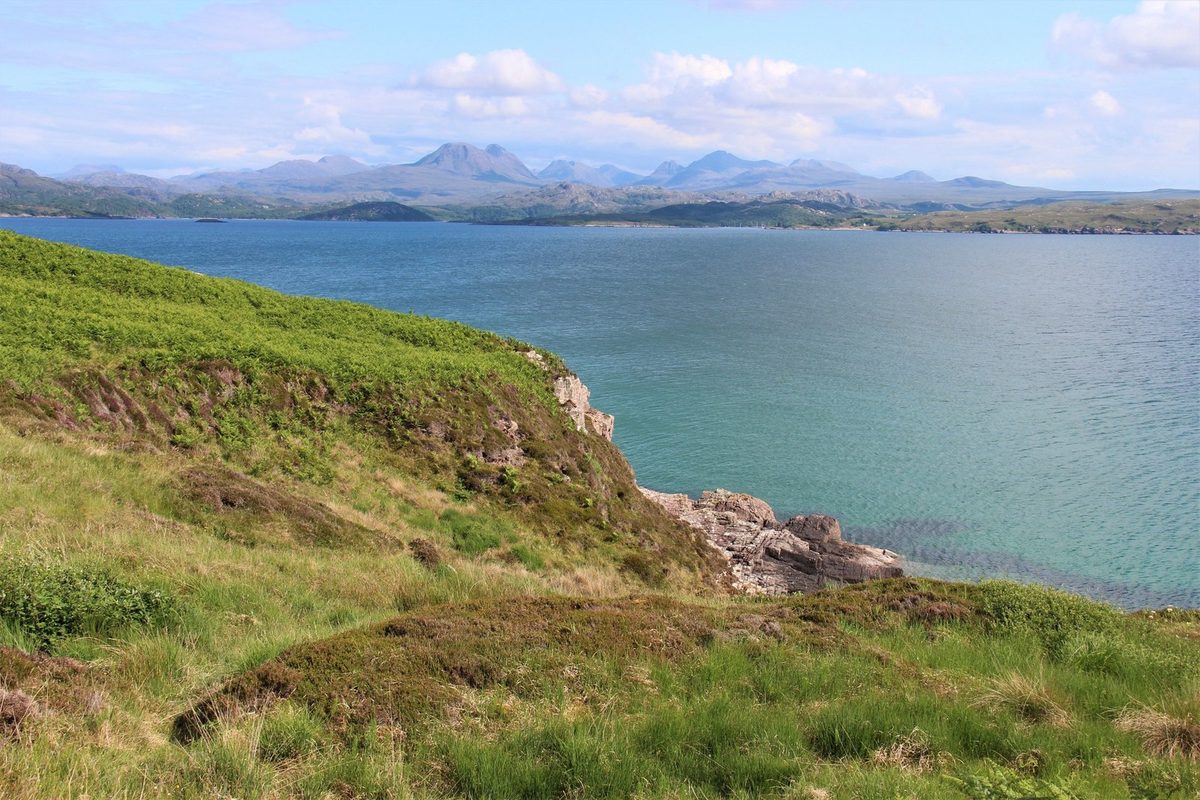
- Loch Gairloch looking across to the Torridon mountains in Wester Ross — Alan Reid, CC BY-SA 2.0, via Wikimedia Commons
- Peat bog and damp acidic ground on Rannoch Moor, prime midge breeding habitat — Richard Webb, CC BY-SA 2.0, via Wikimedia Commons
- The shore of Loch Lomond with snow on the hills, well outside midge season — James T M Towill, CC BY-SA 2.0, via Wikimedia Commons
- The Quiraing ridge on the Isle of Skye, exposed enough to catch a breeze — Carol Walker, CC BY-SA 2.0, via Wikimedia Commons
- Bog myrtle (Myrica gale), the Highland plant long used as a folk midge repellent — Ryan Hodnett, CC BY-SA 4.0, via Wikimedia Commons
- A sheep tick waiting on dry grass, the other insect worth checking for after a Highland… — W.alter, CC BY-SA 4.0, via Wikimedia Commons
- Close-up of a cleg, or horsefly, with its mottled iridescent eyes — Jaiiiiiiii, CC BY-SA 4.0, via Wikimedia Commons
- Mirror-flat water at Loch Slapin near Elgol on Skye, exactly the still conditions midge… — wfmillar, CC BY-SA 2.0, via Wikimedia Commons
- Buachaille Etive Mor at the entrance to Glencoe in the west Highlands — kim traynor, CC BY-SA 2.0, via Wikimedia Commons
- The Bealach na Ba road climbing above Applecross in Wester Ross, high and exposed to th… — Hilmar Ilgenfritz, CC BY-SA 2.0, via Wikimedia Commons