It is easy to drive straight past Pitlochry. The A9 sweeps around the town on an embankment, you catch a half-second of grey stone and steep woods, and then you are back to concentrating on the average speed cameras. Get off the train at the station instead and the whole of Highland Perthshire starts to make sense from here. The best things to do in Pitlochry are not the ones the coach parties see between lunch and the woollen mill.
Here is the argument I want to make. Pitlochry is the finest car-free base in Scotland outside the cities, and October, not July, is when this corner of the country is at its best. Neither of those claims turns up in the guides that rank above this one, and both of them will change your trip if you take them seriously.
What are the best things to do in Pitlochry?
Walk the free Pitlochry Dam Visitor Centre and salmon ladder, then take the short trail to Soldier’s Leap at Killiecrankie, the site of the 1689 Jacobite battle. Add Queen’s View above Loch Tummel, Blair Castle at Blair Atholl, the Douglas firs of the Hermitage near Dunkeld, and a play at Pitlochry Festival Theatre. Autumn is the strongest season.
Pitlochry at a glance
| Place | Best for | Time needed | Cost and access |
|---|---|---|---|
| Pitlochry Dam Visitor Centre & fish ladder | Free exhibition, hydro history, riverside walk | 1–2 hours | Free entry; check current opening hours before you go |
| Killiecrankie & Soldier’s Leap (NTS) | Jacobite history, gorge woodland, autumn colour | 1.5–3 hours | Site free; car park around £5; bus or a 5–6 mile walk from town |
| Queen’s View, Loch Tummel | The classic Highland Perthshire panorama | 45 minutes | Car park around £3; local buses run from Pitlochry, so plan the journey on Traveline Scotland |
| Blair Castle, Blair Atholl | Interiors, gardens, Atholl Highlanders history | 2.5–3 hours | Paid entry; free parking; train to Blair Atholl then a 15-minute walk |
| The Hermitage, Dunkeld | Giant Douglas firs, Ossian’s Hall, Black Linn Falls | 1–2 hours | Free entry; car park around £5; 20 minutes south by road |
| Ben Vrackie | The big view over the strath; a proper hill day | 4–6 hours | Start from Moulin, above the town |
| The Enchanted Forest, Faskally | October light-and-sound event in the woods | 2–3 hours including shuttle | Ticketed, books out; shuttle bus from town included |
| Blair Athol Distillery | A working Highland malt distillery in town | 1–2 hours | Signature tour around £21 at the time of writing; walkable |
Why Pitlochry is the best car-free base in Scotland outside the cities
Almost every guide to this town opens with driving times from Edinburgh and Glasgow. That is the wrong lead, and it quietly excludes a large slice of the people reading. Plenty of visitors do not want to drive on the A9, or cannot, or are travelling alone and do not fancy the cost. For them Pitlochry works: it has its own station on the Highland Main Line, and the dam, the distillery and the theatre are all within walking distance of it.
The town sits on the Highland Main Line, the railway that runs from Perth up to Inverness. That means direct trains from Edinburgh, Glasgow, Perth, Aviemore and Inverness with no changes, roughly every couple of hours through the day. Edinburgh to Pitlochry takes a little under two hours; from Glasgow Queen Street it is similar. Advance singles start around £15 if you book ahead, and walk-up fares are considerably more, so buy early.
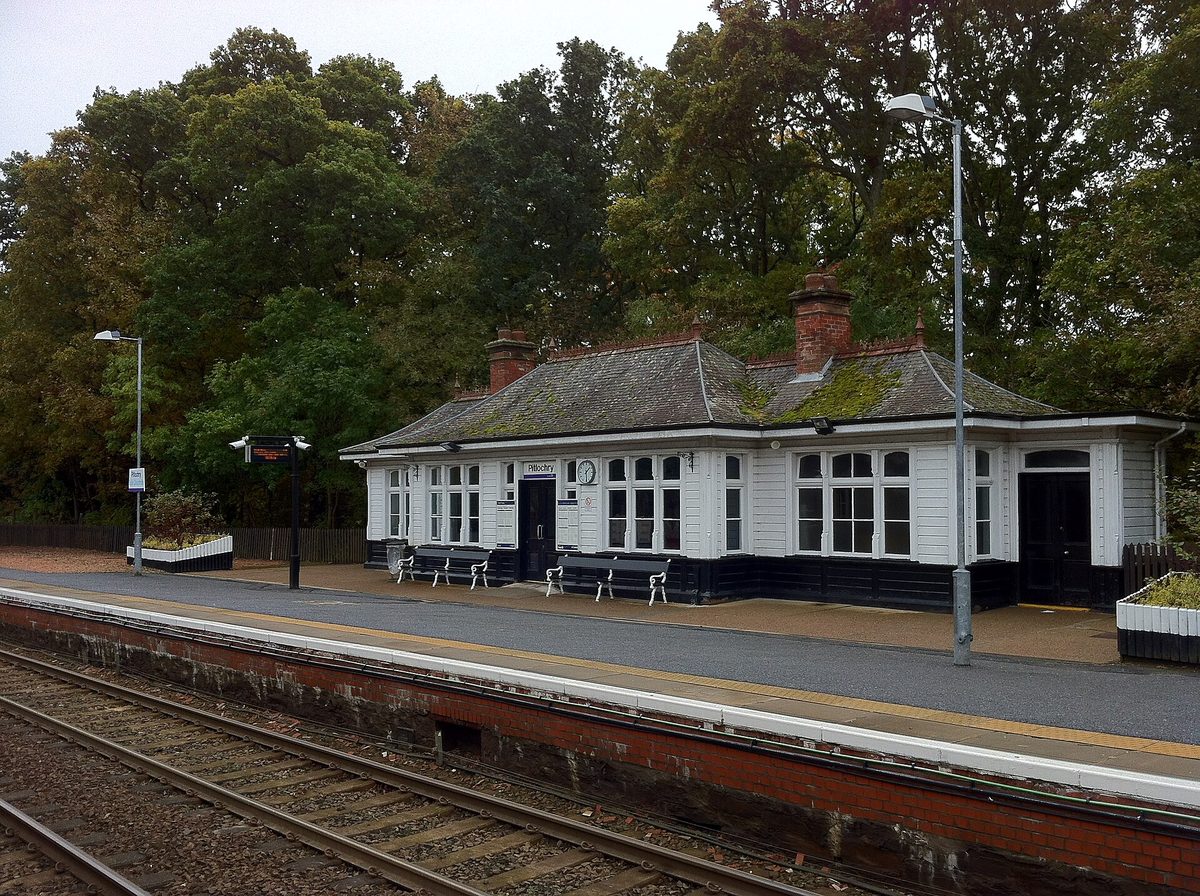
The detail that matters is what happens when you step off the train. Pitlochry station is a five-minute walk from the middle of the high street. Not a taxi rank and a dual carriageway. A short downhill stroll past the Victorian platform buildings, and you are among the shops. The station has a ticket office staffed most of the day, toilets, a waiting room and a small car park, and the platform buildings are handsome enough to photograph on their own.
Compare that with the alternatives. Fort William has trains but a thin service. Aviemore is well connected but spread out. Oban is a terminus with limited onward options. Pitlochry gives you frequency, a walkable centre and a genuine cluster of attractions inside walking or short-bus range. If you are putting together a Scotland trip without hiring a car, this town should be one of your fixed points, not an afterthought.
What you can reach on foot
More than you would guess. The dam and fish ladder are ten minutes from the high street across the footbridge. Blair Athol Distillery is at the southern end of town, on the pavement. The Festival Theatre is across the river, about fifteen minutes. Black Spout waterfall is a woodland walk of half an hour or so from the edge of town. The village of Moulin, with its old kirk and its brewery, is a steady uphill mile.
Ben Vrackie, at 841 metres, starts from Moulin. You do not need a car to climb the hill that dominates the town, which is more than you can say for most Scottish summits. Craigower, a smaller wooded top with a wide view, is reachable on foot too, though it is more pleasant if you start from the golf course.
Loch Faskally, the reservoir created when the dam went in, has a circular path around it of roughly four and a half miles. It takes in the dam, Faskally Wood and the Clunie footbridge, and it is flat enough for almost anyone. On an October morning with the larches turning, it is one of the better easy walks in the country.
What you can reach by bus and train
Blair Atholl is one stop north on the train, four or five minutes, and Blair Castle is a fifteen-minute walk from that station. Dunkeld & Birnam station is one stop south, about twelve minutes, and the Hermitage is roughly a mile and a half from there on foot. Both of those are genuinely straightforward day trips without a car, and neither is signposted that way by anyone else.
Killiecrankie is on the local bus route north from Pitlochry towards Blair Atholl. Services are not frequent, so check times before you set off rather than after. If the bus does not suit, the Killiecrankie walk from Pitlochry along the river is a fine day out in itself, roughly five or six miles each way through Faskally and past Loch Dunmore, and you can come back on the bus.
The Enchanted Forest in October includes a shuttle bus from Pitlochry town centre in the ticket price, which is a genuinely thoughtful piece of planning and means you can attend without driving in the dark.
Where a car still earns its keep
I am not going to pretend the whole region opens up without one. Queen’s View can be reached on a local bus from Pitlochry. Loch Rannoch, Kinloch Rannoch and the road out to Rannoch Station are effectively car country, though Rannoch itself has its own railway station on the West Highland Line, reached from Glasgow rather than from Pitlochry. Fortingall, Glen Lyon and Loch Tay all want wheels.
My honest advice: base yourself here by train for three or four nights, walk and bus what you can, and if the outlying glens matter to you, hire a car locally for a single day or take a small-group tour from the town. That works out cheaper and calmer than driving the A9 both ways. For the wider picture on trains, buses and hire cars, our guide to getting around Scotland lays out the trade-offs, and the most scenic rail routes in Scotland piece explains why the Highland Main Line deserves more attention than it gets.
Pitlochry town itself: the dam, the theatre and the high street
Pitlochry is a Victorian invention. There was a settlement at Moulin up the hill long before there was much here at all, and the town in its present form grew from General Wade’s military road in the 1700s, then exploded after the railway arrived and Queen Victoria made the Highlands fashionable. That history is written into the architecture: solid grey villas, wide pavements, hotels built for people arriving with trunks.
It is a small place. You can walk the length of it in fifteen minutes. That compactness is the point, and it is why the town rewards a slower visit than the tour coaches allow.
Pitlochry Dam Visitor Centre
This is the surprise. SSE runs a free visitor centre at the dam, and it is far better than the phrase “free visitor centre at a dam” suggests. The exhibitions cover the hydro-electric schemes that transformed the Highlands after the Second World War, the story of Edward MacColl and the Hydro Board, the salmon life cycle, and how the turbines actually work. There is a café with a wall of glass looking out over the Tummel and Loch Faskally.
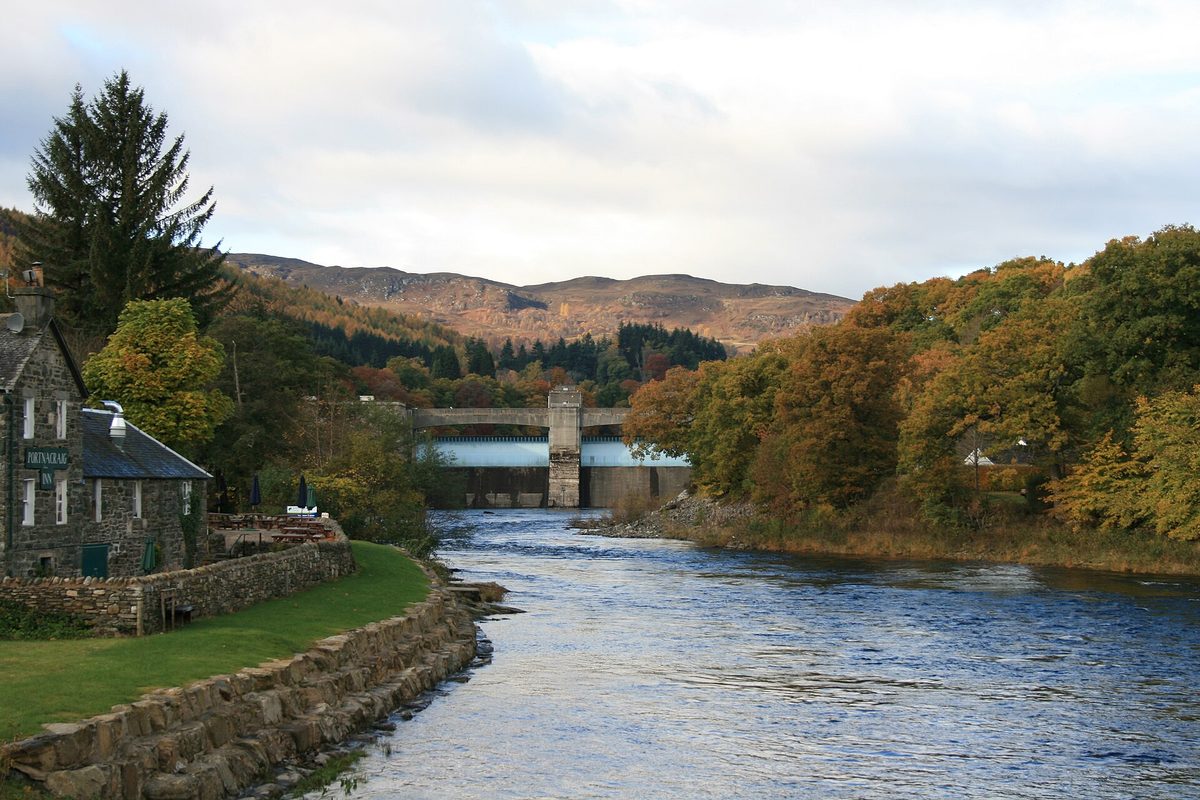
Give it an hour. Then walk out along the top of the dam itself, which is a public right of way, and look downstream at the river cutting between wooded banks with Port-na-Craig on the far side. In autumn it is the single best free view in the town.
The fish ladder, honestly
Every guide puts the salmon ladder near the top of the list. I want to manage your expectations, because a lot of people arrive expecting a spectacle and find a concrete channel.
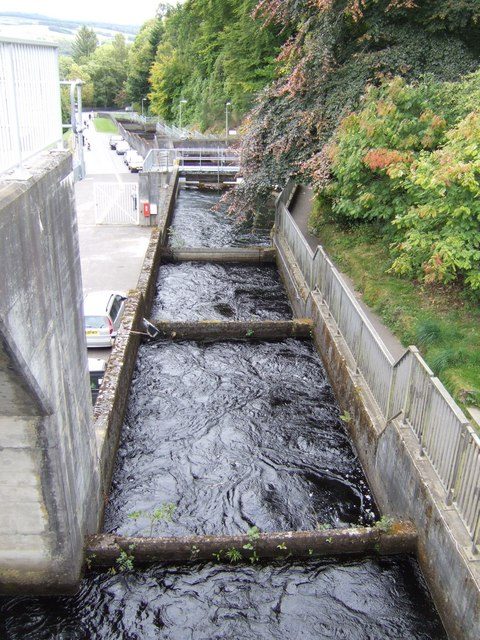
The facts first. When the dam was built as part of the post-war hydro scheme it blocked the salmon run up the Tummel, so engineers built a ladder of thirty-four stepped pools alongside it. It works. More than 250,000 salmon have used it since 1952. That is a genuinely impressive piece of mid-century engineering and it is free to walk beside.
What you will not necessarily get is fish. The underwater observation chamber that older guidebooks describe has been closed for years on access and safety grounds, with a live camera feed shown in the visitor centre instead. Even when everything is open, salmon do not run on a timetable. The main run is roughly April to August, with a second push from September into October, and heavy rain that lifts the river is what really gets them moving.
So: go, because it is ten minutes from the high street and costs nothing, and because the walk is lovely. Do not plan your trip around it. If you want to actually see leaping salmon, autumn after rain at the falls below Soldier’s Leap at Killiecrankie is a better bet than the ladder.
Pitlochry Festival Theatre
“Scotland’s Theatre in the Hills” has been running since its first performance in May 1951. It sits across the river from the town in a modern building with a big glass frontage and a decent café-bar, and it draws well over a hundred thousand people a year.
The programming is not what people expect from a small Highland town. The 2026 season has included new Scottish musicals and studio work alongside the big auditorium productions, and the theatre regularly attracts names you would associate with the West End rather than Perthshire. Tickets for the popular runs go early, so if a show matters to you, book before you book your bed.
Behind the theatre is the Explorers Garden, six acres of woodland laid out around the Scottish plant hunters who brought species back from the Himalayas, China and the Americas. It is open roughly April to October, daily except Mondays, and it is the quietest place in Pitlochry on a busy August afternoon. Red squirrels are a realistic hope rather than a promise.
Whisky: what is actually open
Here is a fact that most guides get wrong, and it will save you a wasted afternoon. Edradour, the tiny distillery in the hills above the town that appears on every list of things to do in Pitlochry, is closed to visitors until further notice. It continues to make whisky, and Signatory Vintage still bottles here, but you cannot turn up for a tour. Check the distillery’s own site before you set out, and if it has reopened by the time you read this, take it as good news rather than an assumption.
Blair Athol Distillery, at the southern end of the town, is the one that is open. It dates from 1798, the buildings are ivy-covered stone around a courtyard, and its malt has long helped shape the character of Bell’s. The standard signature tour was around £21 per person at the time of writing, with longer cask-and-cocktail experiences costing considerably more. Book ahead in summer. It is a ten-minute walk from the high street, which is exactly the kind of thing that makes this town work without a car — and if whisky is a main reason for your trip, our round-up of Scotland’s distilleries worth visiting covers how Perthshire fits alongside Speyside and Islay.
For a beer instead, the Moulin Brewery is up the hill behind the old inn at Moulin, and the walk up is a pleasant hour’s round trip from town.
The high street, without the marketing
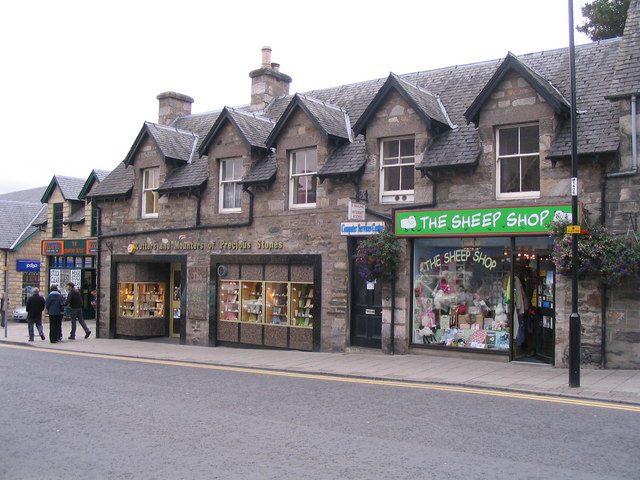
I like Pitlochry, so I want to be fair here. The main street is a tourist street. It has been a tourist street since the 1860s and it is not pretending otherwise. Along Atholl Road you will find woollen mills, tartan, gift shops, heather jewellery, fudge, whisky ice cream and a lot of shortbread. Some of it is genuinely good — the Highland Soap Company, Heathergems where you can watch the heather stems being pressed and dyed, one or two proper independents. Some of it is the same tat you will find in a hundred other Scottish towns.
Between roughly ten in the morning and three in the afternoon in July and August, the coaches are in and the pavements are busy. Come early or come late, or come in October, and the town is a different and much better place. The cafés are good and there are more of them than a town of this size deserves, which is one of the few real benefits of a long tourist history.
The corners of Pitlochry that the coach parties miss
These are the four places I send people when they have already done the dam and want a reason to stay another day. All of them are reachable on foot or with a very short drive.
Moulin and the Black Castle
Moulin is the older settlement, sitting on the hillside about a mile above the town. Before the military road and then the railway pulled everything down to the flat ground, this was where people actually lived, and walking up there gives you the geography of the place in a way the high street never does.
The kirk you see now was rebuilt in 1830–31 and again in 1875 after a fire, but there was a church on the site long before that: a dated stone records one here by 1613. In the graveyard there is a slab known locally as the Crusader’s Grave, said to date from the twelfth century. The Pitlochry and Moulin Heritage Centre, which used the kirk, is closed while repairs make the building safe and is looking for somewhere else to open, so check its website before you climb the hill for it.
A few minutes beyond the kirk, in a boggy field, are the low ruins of the Black Castle of Moulin, built by the Earl of Atholl in the fourteenth century. Local tradition holds that it was destroyed for fear of plague. That is folklore rather than documented history, but it is the kind of folklore that improves a walk.
The Moulin Hotel at the foot of the kirk road is three hundred years old and brews its own beer on site. The round trip from the middle of Pitlochry, allowing for a pint, takes about two hours.
The Dunfallandy Stone
A mile south of the town, up a narrow single-track road, stands one of the finest Pictish cross-slabs in Scotland, and almost nobody goes to see it. The Dunfallandy Stone is red sandstone, about 1.5 metres high, and was carved in the eighth century.
The front face has a decorated cross flanked by nine panels of biblical and fantastical imagery. The back has Pictish symbols — a crescent and V-rod, a double disc — along with two seated figures, a horseman, and a border made of two elongated fish-tailed beasts. Nobody knows for certain what the symbols meant. That is most of the appeal.
It is in the care of Historic Environment Scotland, free to visit, open at all reasonable times, and housed inside a glass and stone shelter that protects it beautifully and makes photographing it a nuisance. Parking is a couple of spaces in a passing place, so go quietly and do not block the road. Twenty minutes on foot from the south end of town, uphill.
Heathergems
Off the main street behind the tourist information centre, Heathergems is a small workshop where stems of heather are stripped, dyed, compressed and sliced into jewellery. It is the source of the heather pendants and brooches you will see in gift shops across Scotland, and this is where they are actually made.
There is a viewing gallery over the workshop floor, and watching the process is genuinely more interesting than it sounds. If you want a souvenir that was made within a mile of where you bought it, this is the one honest answer in a town full of imported tartan. Free to look.
The Loch Faskally circuit and the Linn of Tummel
The single best low-effort walk from the town centre. Cross the suspension bridge below the dam, follow the east shore of Loch Faskally north through Faskally Wood, cross the Clunie footbridge and come back down the far side. Roughly four and a half miles, flat, well surfaced, two hours at a gentle pace.
Extend it and you reach the Linn of Tummel, a National Trust for Scotland woodland where the Garry and the Tummel meet — linne is Gaelic for a deep pool. It is about two and a half miles north-west of Pitlochry on the B8019. Twenty minutes upriver from the memorial there is a suspension footbridge called the Coronation Bridge, and the oak woods around it hold pine martens, otters, pearl-bordered fritillary butterflies and lily of the valley.
Before the dam went in, the Linn was a set of falls where salmon leapt. It is still one of the loveliest bits of riverside in Perthshire, and it is free.
Killiecrankie: the best hour you will spend in Highland Perthshire
Three miles north of Pitlochry the River Garry cuts a deep wooded gorge, and this is where the region stops being pleasant and starts being genuinely interesting.
What happened here in 1689
On 27 July 1689, a Jacobite army under John Graham of Claverhouse, Viscount Dundee, met a government force under General Hugh Mackay on the slopes above the pass. Dundee’s Highlanders held the high ground, waited until the light was behind them, and came down the hill in a charge that broke Mackay’s line in a few minutes. It was one of the bloodiest engagements in Scottish history for the time it lasted.
It was also a hollow victory. Dundee was killed in the fighting, and without him the rising lost its only commander of real ability. The Jacobites were checked at Dunkeld on 21 August, less than four weeks after their win here.
Standing in the pass, the ground makes immediate sense in a way that no museum caption manages. You can see why an army coming north through this defile would be vulnerable, and why holding the slopes above mattered.
The Soldier’s Leap
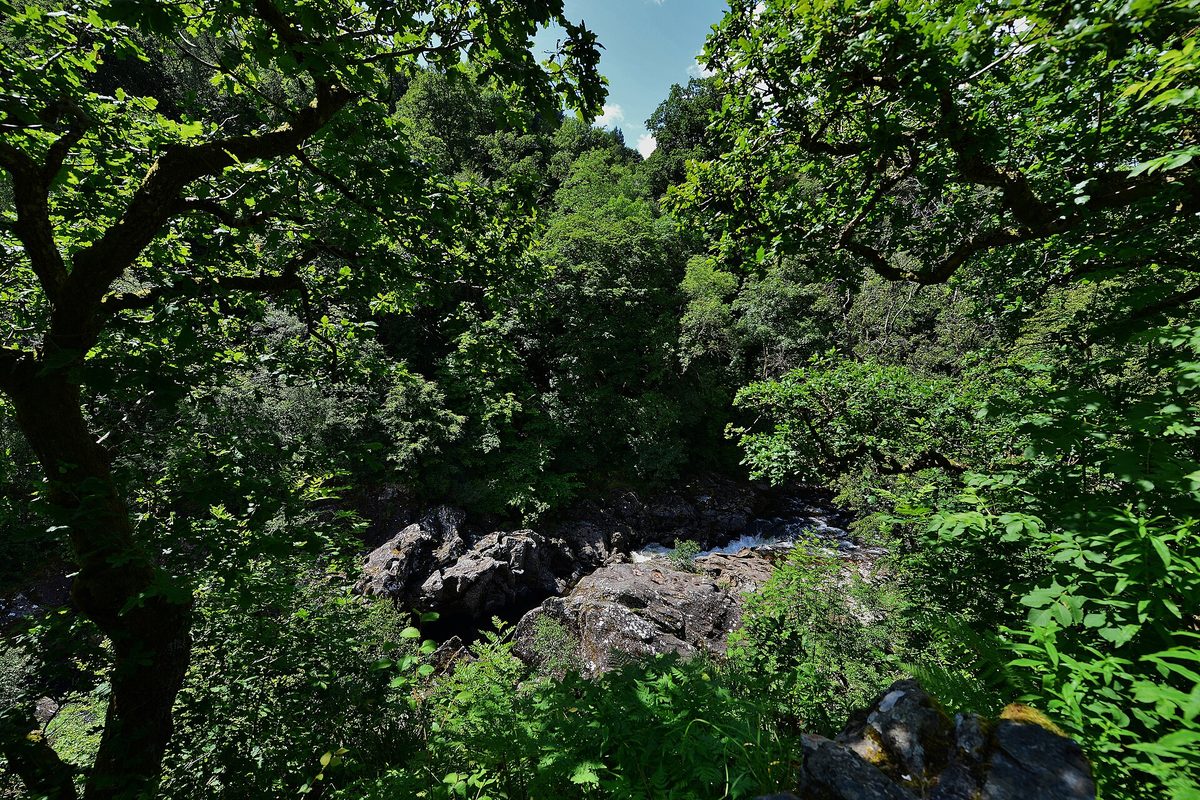
The story attached to the gorge is the one everybody remembers. A government soldier, cut off by pursuing Jacobites at the water’s edge, is said to have jumped the Garry where it narrows — a gap of about 5.5 metres, or 18 feet — and got away.
Whether it happened exactly like that is another matter, and I would treat the shoe as decoration. But the gap is real, you can stand and look at it, and it is wider than you want it to be. It is a short but steep walk down from the National Trust for Scotland visitor centre, fifteen minutes or so, with steps.
The site itself is open all year, every day, and free. The visitor centre and its café keep shorter hours, typically 10.00 to 17.00 in season. The car park costs around £5 at the time of writing, which is waived for National Trust for Scotland members. If you are visiting several Trust properties on a Scottish trip, the membership maths starts to work quickly, and our guide to Scotland’s castles and historic sites goes into which passes are worth it.
Walking the pass
Do not just look at the leap and leave, which is what most visitors do. The gorge walk continues downstream through oak and birch woodland to the green footbridge, and the view back up the river from there is the best in the pass. Carry on and you reach Garry Bridge, where there is a bungee jump operating over the river for anyone who wants their heart rate raised.
The woodland here is old and the wildlife list is good: red squirrels, woodpeckers, pine martens, and an unusually rich fungi population that brings mycologists here every autumn. There is a local tale that the last wolf in Scotland was killed near Killiecrankie in 1680, which is one of several places in Scotland to claim that particular distinction and should be taken with the appropriate pinch of salt.
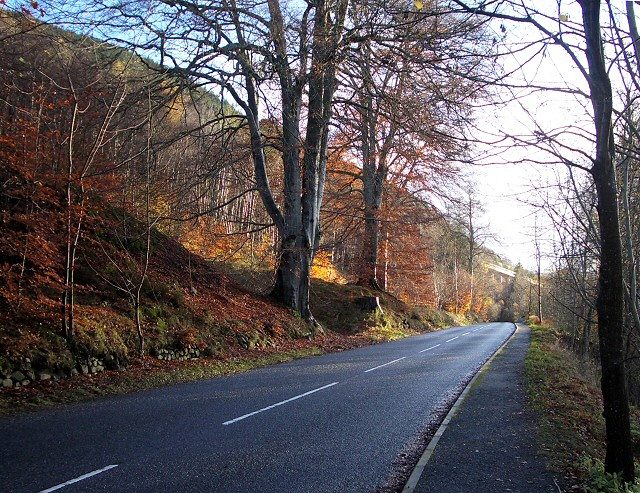
In October the whole gorge turns copper and gold and the site gets genuinely busy at weekends. Go on a weekday morning if you can.
Big Tree Country: why autumn beats summer here
Perthshire markets itself as Big Tree Country and for once the slogan is doing honest work. Some of Scotland’s most notable ancient and tall trees grow here, the Fortingall Yew among them, and the broadleaf woods make October the strongest month of the year in a way that is not true of Skye or the west coast.
Most of Scotland’s autumn colour comes from birch and bracken, which is lovely but brief. Highland Perthshire has beech, oak, larch, Douglas fir and a great many Victorian planted specimens, and the result is a longer, richer season with actual depth of colour. If you are choosing between months, our guide to Scotland in October sets out what the weather and daylight really do, and the broader best time to visit Scotland comparison is worth a read before you commit to dates.
The Hermitage, Dunkeld
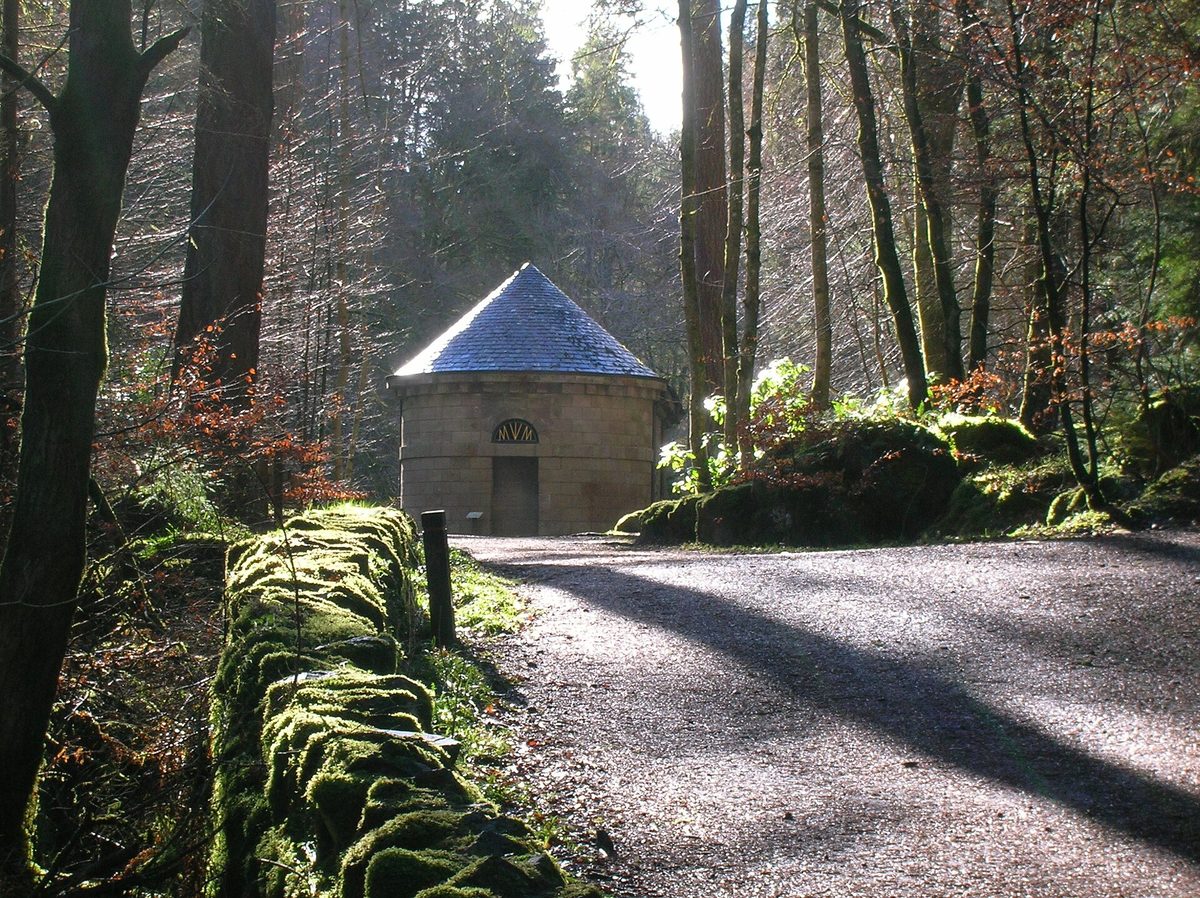
A short drive south, or a walk from Dunkeld & Birnam station, the Hermitage is the woodland walk to make time for. The path follows the River Braan through an eighteenth-century pleasure ground designed for the Dukes of Atholl, under towering Douglas firs that were planted later: the species only reached Britain in 1827.
Ten minutes in you reach Ossian’s Hall, a folly built in 1757 on a rock above the Black Linn Falls. It was designed as a piece of theatre — mirrors, sliding panels, sudden reveals — and it has been restored to something close to that effect. You step out onto the balcony and the waterfall is directly beneath you, loud enough that conversation stops.
It is free to enter. The National Trust for Scotland car park costs around £5. There is a totem pole in the woods, put there in the 1990s, and red squirrels are common. In autumn salmon leap at the falls. Go early; the car park fills by mid-morning on any decent October Saturday.
Faskally Wood and the Enchanted Forest
Faskally, on the edge of Pitlochry, is a nineteenth-century model woodland planted by the owners of Faskally House and later used as a training forest. The Dunmore Trail loops around Loch Dunmore, complete with a timber footbridge and a boathouse, and it is an easy accessible path suitable for wheelchairs and buggies. Water lilies in summer, and a serious show of colour in October.
In October the wood also hosts the Enchanted Forest, a large-scale light and sound event that has been running since 2002. The 2026 edition marks the twenty-fifth anniversary and runs from 8 October to 8 November, with a theme built around clocks and time. It sells out. Tickets are timed, prices rise as availability falls, and the ticket includes the shuttle bus from the town centre.
If you want to see it, book months out, not weeks. If you are building a trip around Scottish events more generally, our festivals and events calendar covers what is worth planning around and what you can leave to chance.
The Fortingall Yew
West of Aberfeldy, in the churchyard of a small village at the mouth of Glen Lyon, stands a yew tree that is among the oldest non-clonal trees in Europe. Estimates vary wildly — some put it at 2,000 to 3,000 years, others at 5,000 — because the heartwood has long since rotted away and there is nothing left to count. Its girth was recorded at around 16 metres in 1769. What survives now is several separate-looking fragments of a single ancient trunk, enclosed behind a wall to protect it from souvenir hunters.
It is not a dramatic sight. It is a low, dark, spreading thing behind railings. But standing next to something that may have been growing for fifteen hundred years, or several thousand, does something to your sense of scale, and Fortingall itself is a small and quiet village. From Pitlochry the road there runs via Aberfeldy.
The Birks of Aberfeldy
Robert Burns came here in 1787, on a Highland tour with his friend William Nicol, and the Falls of Moness inspired “The Birks o’ Aberfeldie”. The poem was popular enough that the place was renamed after it, which is a decent measure of Burns’s reach.
The walk is a circuit of about two and a half miles from the car park at the edge of Aberfeldy, climbing beside the falls of Moness to a footbridge at the top and returning on the other bank. It takes an hour and a half at a reasonable pace, and it is at its best after heavy rain or in mid-October. There is a bench known as Burns’s Seat partway up, which may or may not be where he sat.
When the colour actually peaks
People ask for a date and there is not one, but the pattern is reliable enough. The larches and birches start turning in late September. The main show through Faskally, Killiecrankie and the Hermitage is usually from the first week of October to the end of the third. By the first days of November the beeches are going over and the high ground is bare.
Cold clear nights followed by still sunny days give you the strongest colour. A week of Atlantic gales in early October can strip the lot. That is the gamble, and it is why I would rather visit Perthshire in mid-October than anywhere else in Scotland at that time of year — even a bad autumn here is better than a good one further west.
Viewpoints, hills and the shape of the land
Queen’s View
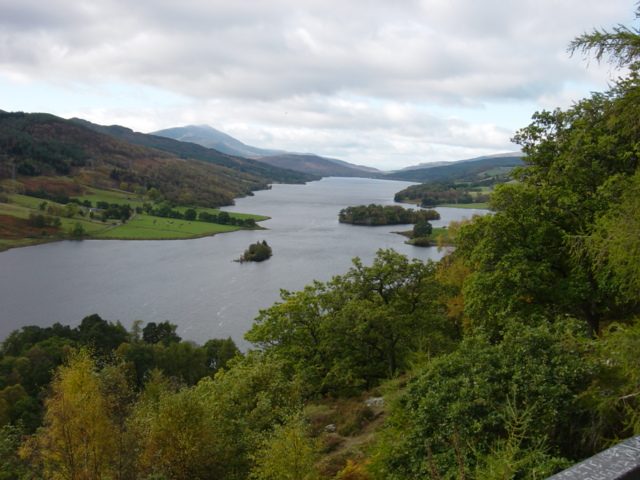
Seven miles west of Pitlochry on the B8019, Queen’s View looks down the length of Loch Tummel to the cone of Schiehallion. It is the postcard shot of Highland Perthshire and it earns the reputation, particularly in the hour before sunset when the light runs straight down the loch.
When Queen Victoria visited in 1866, she assumed the sweeping view west along Loch Tummel was named after her. Forestry and Land Scotland, who manage the site, say otherwise: the name most likely refers to Isabella, first wife of Robert the Bruce, more than five hundred years earlier.
Practicalities: the car park is under separate management and costs around £3, there is a café and visitor centre, and the viewpoint itself is a short level walk from the car park on a gentle incline that works for wheelchairs. Without a car, take one of the local buses that run out from Pitlochry. It gets very busy with coach traffic between eleven and three in summer, and it is close to empty at eight in the morning.
If you have time, carry on west past Tummel Bridge to Loch Rannoch. Loch Tummel and Loch Rannoch together make one of the better loch drives in the country, and they feature in our round-up of Scotland’s most beautiful lochs for good reason.
Ben Vrackie
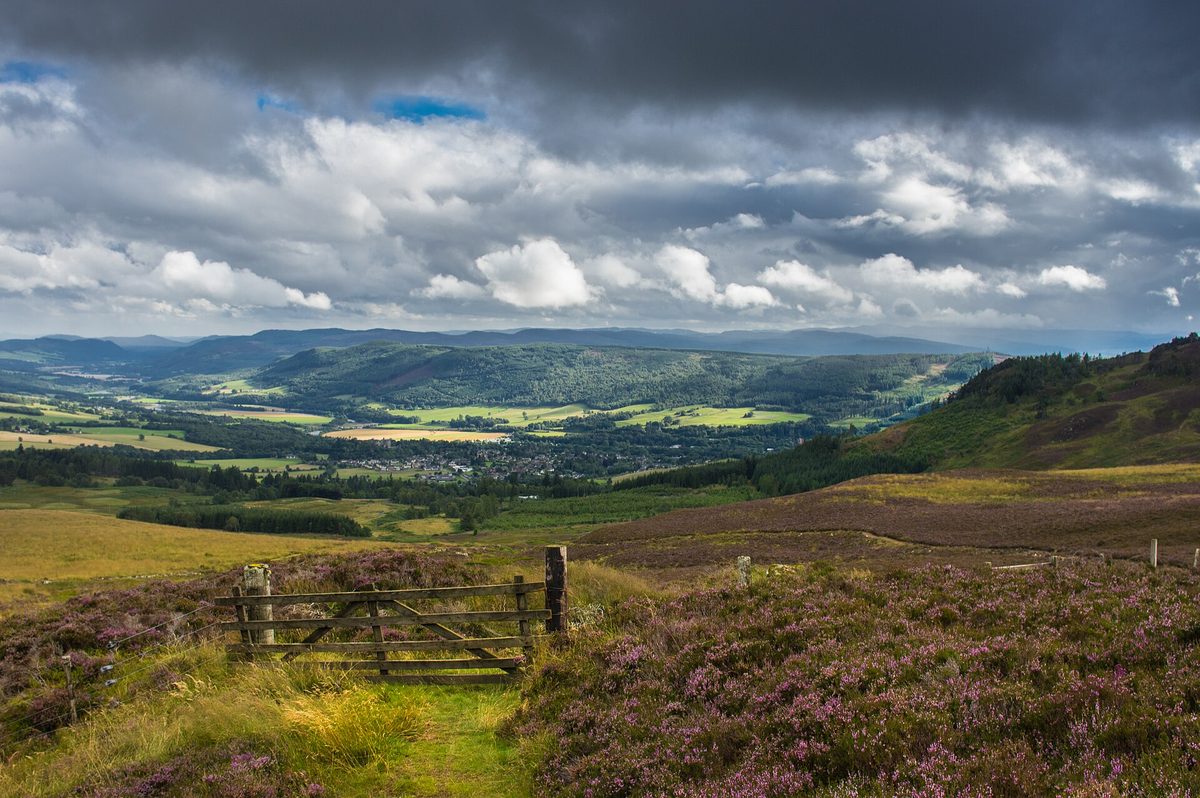
The speckled mountain, 841 metres, rises straight behind the town and is the obvious hill day from Pitlochry. The usual route starts at the car park above Moulin, climbs through forest, crosses open moor to Loch a’ Choire, and then takes a steep zigzag to the summit. Allow four to six hours return depending on your pace and how long you stop.
It is not a Munro, which means it is quieter than it deserves to be, and the view from the top takes in Beinn a’ Ghlò to the north and the whole sweep of Strathtay to the south. The final section is steep and loose and the summit is exposed. Take a jacket even in July.
If that is more than you want, Craigower is a wooded top north-west of town with a cleared viewpoint looking towards Loch Tummel, and it takes about two hours return. Black Spout is easier still: a waterfall about twenty metres high in the woods south of town, with a viewing platform, reachable in half an hour on foot. Our wider hiking in Scotland guide has more on choosing hills by ability and season.
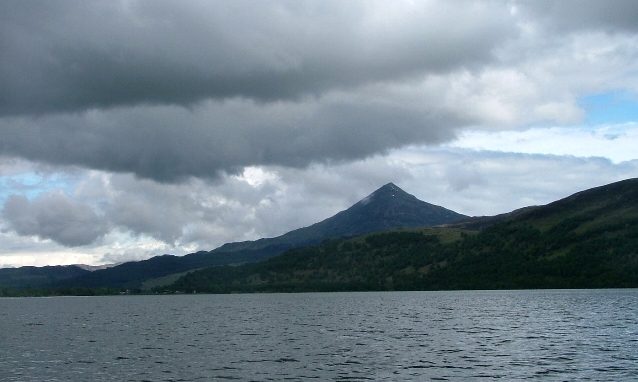
Schiehallion
The cone-shaped mountain you can see from Queen’s View is 1,083 metres and one of the most recognisable outlines in Scotland. Its Gaelic name is usually translated as the fairy hill of the Caledonians.
Its real claim to fame is scientific. In 1774 the Astronomer Royal, Nevil Maskelyne, spent weeks on its flanks measuring how far the mountain’s mass pulled a plumb line away from true vertical. From that deflection he estimated the density of the Earth. Schiehallion was chosen precisely because its regular shape made its volume calculable. To work out that volume, the mathematician Charles Hutton drew lines joining points of equal height on the survey, an early use of the contour line. The contours on an OS map do the same job.
The walk to the summit from the Braes of Foss car park takes about five hours return. The lower path was rebuilt by the John Muir Trust and is good; the upper boulder field is slow, awkward going that catches people out.
Blair Castle and the Atholl estate
The castle
Seven miles north at Blair Atholl, Blair Castle is white-harled, enormous and visible from a long way off. The oldest part, Comyn’s Tower, is traditionally said to have been begun by John Comyn in 1269 while the Earl of Atholl was away on crusade, though most of what survives dates from the fifteenth century. The Earl came back and took it, which tells you most of what you need to know about medieval land tenure.
It has been besieged, garrisoned by Cromwell’s troops, occupied by Bonnie Dundee before Killiecrankie and by Jacobites in 1746, and it was the last castle in Britain to be besieged. What you tour today is less a fortress than a very grand house: about thirty rooms open to the public, running from Georgian plasterwork to a hall lined with weapons, plus a walled garden and a deer park.
It opens daily from around 1 April to 30 October, generally 10.00 to 17.00 with last entry in the mid-afternoon. Parking is free, which is unusual and welcome. Check current admission prices on the Atholl Estates site before you go, because they change season to season. From Blair Atholl station it is a walk of about fifteen minutes.
Europe’s only legal private army
The detail that makes Blair Castle worth the entry is the Atholl Highlanders. The Duke of Atholl retains the only legal private army in Europe, a privilege granted by Queen Victoria after her visit in 1844. The regiment has no military role, carries Lee-Metford rifles for ceremonial purposes and includes a pipe band.
They parade at the castle, usually on the last weekend in May, alongside the Atholl Gathering Highland Games. If your dates allow, that is one of the more unusual things you can watch in Scotland and it is much less crowded than the Braemar Gathering.
Glen Tilt
Behind Blair Castle, Glen Tilt runs north-east into the hills along the line of the Loch Tay Fault. It is the best long walk in the immediate area and a rare thing in Scotland: a glen you can enter on foot straight from a railway station.
Start at the signed car park near the Old Bridge of Tilt, ten minutes from Blair Atholl station. The waymarked lower circuit takes about two hours and includes a viewpoint over the river gorge, where pale granite veins cut clean through much older dark schist. James Hutton came here in 1785 looking for proof that granite had once been molten and forced up through the rock around it, and those veins supplied it. It is one of the founding observations of modern geology, and you can put your hand on it.
Longer options run to fifteen miles or more up the glen and back, and the estate is a working one, so check for stalking restrictions between roughly August and October before you commit to the higher routes.
Falls of Bruar and House of Bruar
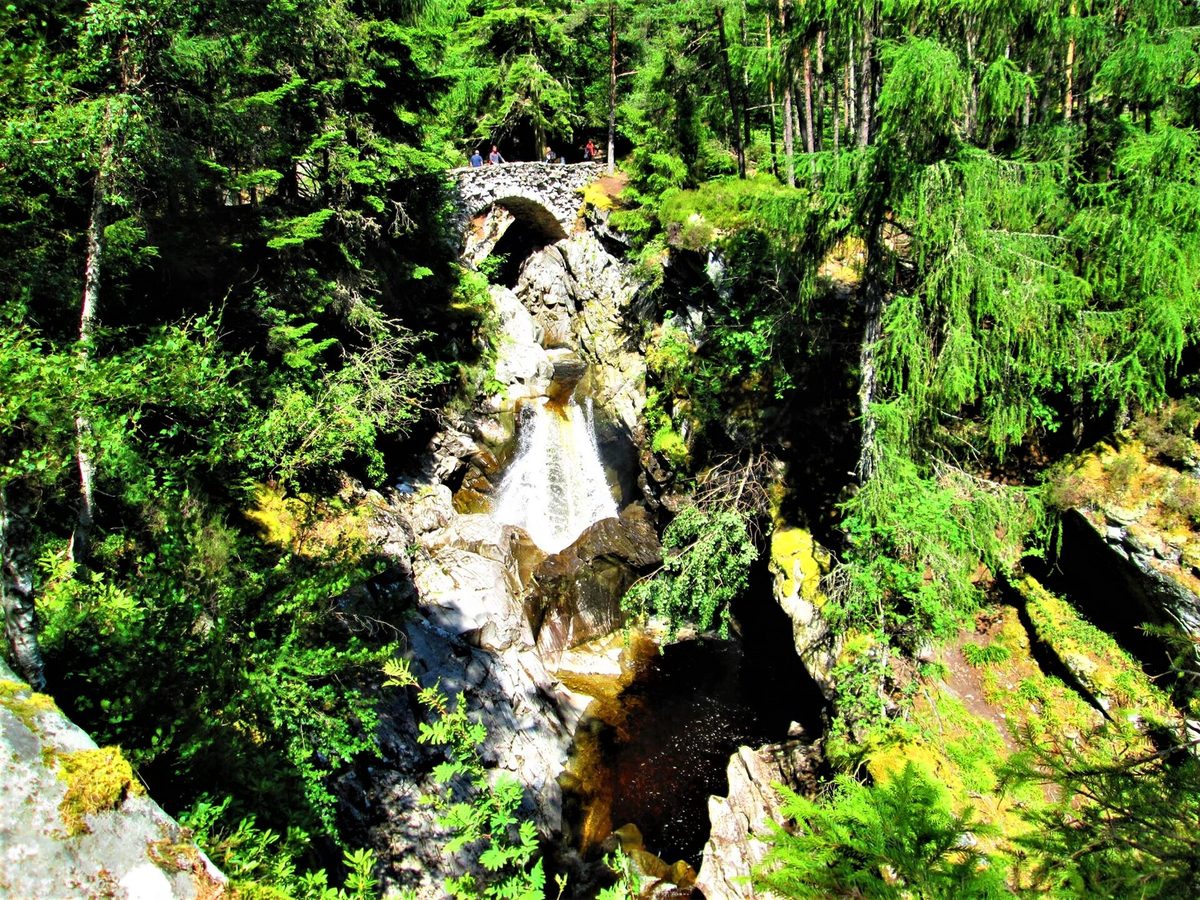
West of Blair Castle, just off the A9, the Falls of Bruar are a series of waterfalls in a rocky gorge, crossed by stone bridges, and their paths, bridges and planting followed a poem in which Burns appealed for trees. The Duke planted them. The walk is a circuit of about a mile and a half from the car park, steep in places, and the upper bridge gives the best view down the chute.
The car park belongs to House of Bruar, a large and unapologetically expensive country clothing and food hall that describes itself as the Harrods of the north. The food hall is genuinely good and the deli counter is worth a stop. The rest of it is tweed at prices that will make your eyes water. Park, walk the falls, buy a pie, move on.
Adventure sports, golf and what to do when it rains
The white-water end of Perthshire
The Tummel and the Garry are regulated by the hydro scheme, which keeps their flow steadier than a natural river’s, and that makes this corner of Scotland a good base for outdoor adventure. Operators around Pitlochry and Aberfeldy run white-water rafting, canyoning, river tubing, gorge walking, quad biking, paintball and abseiling.
Most of it operates spring to autumn, and there is a good reason for that. Scottish rivers are cold. Rafting in March is an experience, but not a warm one, and wetsuits only do so much. If you are bringing children, check minimum ages carefully — tubing and canyoning usually have higher limits than parents expect.
At Garry Bridge, just south of Killiecrankie, there is a bungee jump over the gorge, run seasonally, with a swing option and occasional night jumps. It is around 40 metres.
Golf with a view
Pitlochry Golf Course sits on the hillside above the town and is one of the better inland courses in Scotland for scenery rather than championship pedigree. It is an 18-hole par 69, and the climb from the first tee is steep enough that a buggy is a reasonable indulgence. Visitors are welcome, green fees are modest by Scottish standards, and the view from the higher holes across to Ben Vrackie is the reason to play it. There is more on the country’s courses in our golf in Scotland guide.
Wet weather, which you should plan for
Highland Perthshire gets rain. Plenty of it. The useful indoor list, in the order I would use it: the Pitlochry Dam Visitor Centre, which is free and takes an hour; Blair Athol Distillery, booked in advance; Blair Castle, which is largely indoors and takes half a day; the Atholl Country Life Museum at Blair Atholl, a small volunteer-run collection of rural life that keeps short seasonal hours; a matinee at the Festival Theatre; and Iain Burnett’s chocolate shop, whose velvet truffles have won enough awards to justify the price.
Failing all that, the Pitlochry station bookshop is a secondhand charity shop on the platform, run for the benefit of a local hospice, and it is a genuinely good browse while you wait for a train.
Day trips south and west: Dunkeld, Aberfeldy and Rannoch
Dunkeld and Birnam
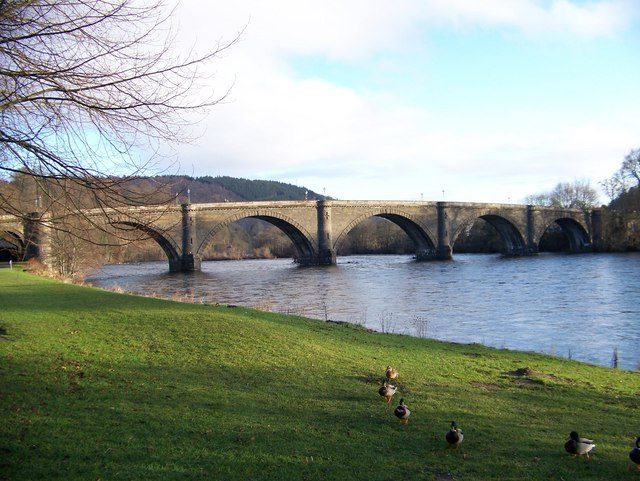
Fifteen miles south, and one stop on the train, Dunkeld is smaller and prettier than Pitlochry and has fewer coaches. The cathedral by the Tay has a partly ruined nave beside the part still in use as the parish church, and it holds the tomb of Alexander Stewart, the Wolf of Badenoch, who burned Elgin Cathedral in 1390.
Telford’s bridge of 1809 crosses the river to Birnam, where the Birnam Oak is said to be a survivor of the wood that Shakespeare sent marching on Dunsinane in Macbeth. Beatrix Potter holidayed here as a child and there is a small garden and exhibition devoted to her. The whole thing is an easy half day, and combined with the Hermitage it makes a full one.
Aberfeldy and Loch Tay
West of Pitlochry, Aberfeldy is a working town rather than a tourist one, with a Wade bridge of 1733, the Birks walk, and Dewar’s Aberfeldy Distillery on the edge of town. It is a short drive away.
Push on and you reach Kenmore at the head of Loch Tay, where the Scottish Crannog Centre has relocated across the loch after a fire destroyed the original reconstruction in 2021. Loch Tay itself runs fifteen miles south-west under Ben Lawers, the highest mountain in the southern Highlands. This is where Highland Perthshire starts blending into the country covered in our Loch Lomond and the Trossachs guide.
Loch Tummel, Loch Rannoch and the road to nowhere
The B8019 and B846 run west from Pitlochry past Queen’s View, along Loch Tummel to Tummel Bridge, then to Kinloch Rannoch and the full length of Loch Rannoch. Keep going and the road ends at Rannoch Station, on the edge of Rannoch Moor, where there is a tearoom, a platform and forty square miles of peat bog.
It is a long out-and-back — allow the better part of a day — and it is the emptiest, strangest driving in the region. The Black Wood of Rannoch on the south shore is one of the last fragments of the ancient Caledonian pine forest. On a clear night the sky out here is very dark indeed, which is worth knowing if stargazing in Scotland is on your list.
Planning your trip to Pitlochry
How many days do you need?
One night is enough to see the town, the dam and one walk. Two nights covers the town plus Killiecrankie and either Blair Castle or the Hermitage. Three nights is the number I would argue for: it lets you add Queen’s View and a hill, or a day out west to Aberfeldy and Fortingall, without rushing.
Anyone doing a longer loop should treat Pitlochry as a proper stop rather than a lunch break. It slots naturally into the run north from Edinburgh, and our Edinburgh to the Highlands road trip route shows where it fits. It also works as an ambitious day trip from Edinburgh by train if you only have the one day, though you will see the town and little else.
When to go
October, for the reasons above. Second choice is late May and early June, when the trees are in new leaf, the Atholl Gathering is on, the days are very long and the midges have not properly started. Midges are less of a problem here than on the west coast, but Perthshire evenings by water still get bitey from mid-June onwards.
July and August bring the coaches; if cost matters, see when Scotland is cheapest to visit. Winter is quiet in a way that catches people out: the Explorers Garden and Blair Castle close for the season, several restaurants shorten their hours or shut entirely from November to March, and the town can feel genuinely empty on a wet Tuesday in January. It is not a bad time to walk, but go in knowing what is closed, and read Scotland in winter first.
The events worth planning around
For a town of this size the calendar is remarkably full, and four dates are worth building a trip around rather than stumbling into.
Winter Words, February. A literary festival at the Festival Theatre, four days of talks, performances and literary lunches, curated by the theatre’s artistic director. It is the one thing that reliably fills the town in the dead season, and it is a good reason to see Perthshire under frost.
Etape Caledonia, May. The UK’s original closed-road cycle sportive, run for Cancer Research UK, with routes of 40, 55 and 85 miles out around Loch Rannoch and, on the long course, over the shoulder of Schiehallion. Thousands of riders start from Pitlochry. If you are not riding, be aware that the roads west and north of the town close for much of the Sunday morning — check the published closures before you plan a drive that day.
Pitlochry Highland Games, September. Held on the second Saturday in September at the Recreation Ground, and running since 1852. Caber, hammer, stone, piping, Highland dancing, tug-of-war and a massed pipe band to finish. It is a proper local games rather than a staged one, and it is far cheaper and less crowded than Braemar.
The Enchanted Forest, October and early November. Covered above. The one that sells out.
What to book ahead, and how far
- Enchanted Forest tickets — months in advance. This is the one thing that reliably sells out.
- Accommodation in October — three to six months. The colour season and the light event collide and the town fills.
- Festival Theatre tickets — as soon as the season is announced for the headline shows.
- Advance train tickets — twelve weeks out is when the cheapest fares appear.
- Blair Athol Distillery tours — a few days in summer, same-day is usually fine off-season.
- Blair Castle — no booking needed, but check the closing date if you are travelling in late October.
If you are driving: the A9, realistically
Pitlochry sits beside the A9, the main road from Perth to Inverness, and it is worth knowing what that road is actually like before you commit to it.
Large stretches between Perth and Inverness are still single carriageway with intermittent overtaking sections. Average speed cameras cover essentially the whole route from Dunblane to Inverness, spaced every three or four miles on the single-carriageway parts, and they work — speeding on the Perth to Pitlochry stretch dropped from around one driver in three to one in ten after they went in. Set the cruise control and stop thinking about it.
The dualling programme is running through the 2030s, so roadworks are a permanent feature somewhere along the route. Check Traffic Scotland the morning you travel rather than trusting a satnav estimate.
Parking in Pitlochry itself is a mix of on-street bays and a large council car park with toilets near the town centre. It fills in summer. Most hotels and guest houses have their own parking, which is a question worth asking before you book.
Where to stay and eat
The town has an unusually deep range for its size, from a youth hostel with a view over the rooftops to Victorian hydro hotels and a castle hotel on the loch. Our where to stay in Scotland overview covers how Highland towns compare on price, but the local geography matters more than the star rating here.
Roughly, there are four places to be. The centre, on or just off Atholl Road, is where the guest houses and traditional hotels cluster; you are two minutes from everything and you will hear some traffic. Near the station is the obvious choice without a car, and there are Victorian villas turned guest houses on the streets around it. Across the river towards Port-na-Craig and the theatre is quieter, ten minutes from the shops, and puts you next to the water. Up the hill at Moulin is the most characterful option, with a three-hundred-year-old inn and its own brewery, but it is a steep mile home at the end of an evening and I would not choose it without a car or a serious commitment to walking.
Book far earlier than you think for October. The autumn colour and the Enchanted Forest land in the same four weeks and the town genuinely runs out of beds, at which point people end up in Dunkeld or Aberfeldy and driving in.
Eating is straightforward: several good tearooms and cafés on and just off the main street, a couple of traditional pubs, and a small number of proper restaurants that need booking at weekends. Perthshire lamb, Tay salmon and local game turn up on menus everywhere, and the standard is generally higher than the tartan shopfronts outside would lead you to expect.
Pitlochry with children, with limited mobility, and with a dog
What works with kids
Better than most Highland towns, because the distances are short and there is a genuine mix of indoor and outdoor. The dam visitor centre is free, warm and has enough buttons and screens to hold a seven-year-old for an hour. The salmon ladder is a walk beside water with railings. Faskally Wood and the Dunmore Trail are pushchair-friendly and there are boats and a boathouse to look at.
Killiecrankie is the one to pick if you want a story attached to a place: the Soldier’s Leap gap is exactly the sort of thing children stand and stare at, and the path down has steps and a handrail rather than a scramble. Blair Castle has a deer park, peacocks on the lawn and a hall of weapons that reliably beats any amount of Georgian plasterwork.
Older children get the adventure operators — tubing, gorge walking and rafting, all with minimum ages that you should check rather than assume. The Enchanted Forest is a hit with primary-age children but it is dark, late and cold, so bring layers and accept a difficult morning after. For a wider view of family planning across the country, see our guide to Scotland with kids.
Accessibility, honestly assessed
Mixed, and worth knowing in advance. The strong points: Queen’s View has a short, gently graded path from the car park that works for wheelchairs. The Dunmore Trail at Faskally is a designated easy-access route with Blue Badge parking. The Pitlochry Dam Visitor Centre is fully accessible and the walkway over the dam is level. Blair Castle has step-free access to a good proportion of the ground floor and free parking close to the entrance.
The weak points: Pitlochry station has a degree of step-free access but no accessible toilet, and staffed hours end in the early evening. The path down to Soldier’s Leap is steep with steps and is not manageable with a wheelchair, though the visitor centre and the views from the top are. The Hermitage main path to Ossian’s Hall is firm and mostly gentle but has some gradient and uneven sections. Ben Vrackie, Craigower and the Birks are all proper hill and gorge walking.
The high street itself has good wide pavements, but several of the older shops have a step at the door.
Dogs and wildlife
This is good dog country. The riverside paths, Faskally, the Linn of Tummel and the Killiecrankie woods are all dog-friendly on a lead, and a fair number of the cafés and pubs in town welcome them — Highland Perthshire is used to walkers. Keep dogs on leads on estate land during the lambing and stalking seasons, and note that the deer park at Blair Castle has its own rules.
On wildlife: red squirrels are genuinely common here rather than a distant hope, and Faskally, Killiecrankie and the Hermitage are the three best places to look, early morning being the time. Pine martens are present but nocturnal and shy. Ospreys fish the lochs from April to August. Red deer come down onto the lower ground in autumn and the roaring during the October rut, heard from the hill paths above the town, is one of the sounds I associate most strongly with this place.
Three itineraries that actually work
One day, arriving and leaving by train
Catch an early train and you will be in Pitlochry by mid-morning. Walk down to the dam, spend an hour in the visitor centre and along the ladder, then follow the east shore of Loch Faskally as far as the Clunie footbridge and back — about two hours with stops. Lunch on the high street. Afternoon: either Blair Athol Distillery, booked in advance, or the train one stop north to Blair Atholl for the castle, which needs the full afternoon. Back on an evening service.
That is a full, unhurried day without a car and without a single taxi. It is also the version most people never consider because every guide assumes you drove.
A two-night weekend with a car
Friday evening: arrive, walk the dam at dusk, eat in town.
Saturday: Killiecrankie first thing, before the car park fills. Walk down to Soldier’s Leap and on to the green footbridge. Drive north to Blair Castle for the afternoon, then the Falls of Bruar on the way back with a stop at the food hall. Evening at the theatre if something is on.
Sunday: Queen’s View early, then west along Loch Tummel to Tummel Bridge and back via the Linn of Tummel. Home after lunch.
Three nights by train in October, which is the version I would book
Day one: arrive by lunchtime. Dam, fish ladder, Loch Faskally circuit through Faskally Wood at its best. The Enchanted Forest in the evening, booked months earlier, using the shuttle from the town centre.
Day two: bus or walk north to Killiecrankie. Do the full gorge circuit, eat at the visitor centre café, then continue by train to Blair Atholl for Glen Tilt or the castle. Back for dinner.
Day three: train one stop south to Dunkeld & Birnam. Cathedral, the Birnam Oak, then walk out to the Hermitage for Ossian’s Hall and the Black Linn Falls, which will be running hard after autumn rain. Late train back.
Day four: Ben Vrackie from Moulin if the forecast is kind, or a slow morning and the Dunfallandy Stone if it is not. Afternoon train onward — north to Aviemore and the Cairngorms in about an hour, which pairs neatly with our Aviemore and Cairngorms guide, or south to Edinburgh in under two.
What underwhelms, and the mistakes people make
Treating the fish ladder as the main event. Covered above, but worth repeating because it is the single biggest expectation gap in the town. The dam visitor centre is the better half of that visit.
Turning up at Edradour. It is shut to visitors with no reopening date given, yet guidebooks and blogs still list it as a highlight. Check first.
Doing Queen’s View at midday in August. You will queue for the car park, share the viewpoint with three coachloads and get flat light. Early morning or the last hour of daylight, and the place transforms.
Shopping the high street expecting craft. There are two or three genuinely good independents and a great deal of mass-produced tartan. That is fine, but do not build an afternoon around it.
Underestimating Ben Vrackie. It is not a Munro and people therefore treat it casually. The upper section is steep, the summit is exposed and the weather turns fast. Boots, a jacket and a map, not trainers.
Only giving it an afternoon. The commonest mistake of all. Pitlochry is a stop on most itineraries between Edinburgh and Inverness, and people give it ninety minutes and a coffee. Everything I have written about above lives within half an hour of the town.
Assuming winter is a cheap version of autumn. Some of it closes. Ask your accommodation what is actually open before you commit.
Frequently asked questions
Is Pitlochry worth visiting?
Yes, if you give it more than a coffee stop. The town itself is pleasant rather than remarkable, but it sits at the centre of a cluster of genuinely good sites — Killiecrankie, the Hermitage, Blair Castle, Queen’s View — all within half an hour. Two or three nights here beats a rushed afternoon on the way north.
How do you get from Edinburgh to Pitlochry without a car?
Take a direct ScotRail train from Edinburgh Waverley on the Highland Main Line. The journey takes a little under two hours and runs roughly every couple of hours through the day. Advance fares start around £15 one way if booked ahead. Pitlochry station is a five-minute walk from the high street.
When is the best time to see salmon at Pitlochry?
The main run is April to August, with a second push from September into October. Fish move most after heavy rain lifts the river. The underwater viewing chamber has been closed for several years, so you watch from the ladder itself or the live feed in the visitor centre. Killiecrankie is often the better bet.
How long does the Killiecrankie walk take?
Allow fifteen to twenty minutes each way from the visitor centre down to Soldier’s Leap, on a steep path with steps. The fuller circuit to the green footbridge and Garry Bridge takes about two hours. The site is open all year, free, though the car park costs around £5 and the visitor centre keeps seasonal hours.
Is Queen’s View really named after Queen Victoria?
Probably not. Forestry and Land Scotland say the name most likely refers to Isabella, first wife of Robert the Bruce, who lived over five hundred years before Victoria’s 1866 visit. Victoria seems to have assumed the view was named for her, and the misunderstanding stuck.
Can you visit Edradour Distillery?
Not for now. Edradour is not open to visitors, although it continues to produce whisky. Blair Athol Distillery at the south end of Pitlochry is open for tours, with a signature tour around £21. Always check both distilleries’ own websites before setting out.
When does the Enchanted Forest take place and do tickets sell out?
It runs in Faskally Wood each autumn; the 2026 anniversary edition runs from 8 October to 8 November. Tickets are timed, prices rise as the event approaches, and popular nights sell out well in advance. A shuttle bus from Pitlochry town centre is included, so you do not need to drive.
Is Pitlochry a good base for the Highlands?
For southern and central Highland Perthshire, yes, and it is unbeatable if you are travelling by train. It is less useful for the west coast or Skye, which are three hours or more away. For those, look at Fort William or Inverness instead, and start with our Scottish Highlands guide to work out which base fits your route.
Final thoughts
Pitlochry is not the most dramatic place in Scotland. Glencoe and Skye will beat it on spectacle every time.
What Pitlochry has is a rare combination: a station five minutes from a high street, three or four genuinely first-rate sites within half an hour, the best autumn woodland in the country, and a piece of Jacobite history you can stand inside. Arrive by train in the second week of October, stay three nights, and you will wonder why anyone drives past. If it is your first trip north, our first-time-in-Scotland advice is a sensible companion to this one.
About the author: This guide was written and is maintained by the ScotlandTourism.org editorial team — travel writers who’ve spent years exploring Scotland’s cities, Highlands and islands, from bagging Munros to chasing the perfect dram. We update our guides regularly to keep prices, opening details and advice current.
Last updated: September 2026. Prices and opening times change — always check the official site before you travel.
Photo credits
All images are used under their respective Creative Commons or public-domain licenses:
- Gift shops and stone buildings on Atholl Road, the main street in Pitlochry — M J Richardson, CC BY-SA 2.0, via Wikimedia Commons
- The Victorian platform buildings at Pitlochry railway station on the Highland Main Line — Andrew Abbott, CC BY-SA 2.0, via Wikimedia Commons
- The stepped pools of the salmon ladder beside Pitlochry Dam — Jonathan Billinger, CC BY-SA 2.0, via Wikimedia Commons
- Pitlochry Dam and the River Tummel in autumn colour, one of the best free things to do… — RobChafer, Public domain, via Wikimedia Commons
- Autumn colour along the B8079 through the Pass of Killiecrankie near Pitlochry — Lis Burke, CC BY-SA 2.0, via Wikimedia Commons
- The wooded gorge of the River Garry at Soldier’s Leap, Killiecrankie — HARTLEPOOLMARINA2014, CC BY-SA 4.0, via Wikimedia Commons
- Queen’s View looking west along Loch Tummel towards Schiehallion in Highland Perthshire — Jamieli, CC BY-SA 3.0, via Wikimedia Commons
- Looking down over Pitlochry from the heather slopes on the Ben Vrackie path — Neil Williamson from Dundee, Scotland, CC BY-SA 2.0, via Wikimedia Commons
- Ossian’s Hall among the Douglas firs at the Hermitage near Dunkeld — Rosser1954 Roger Griffith, Public domain, via Wikimedia Commons
- Walkers on the stone bridge above the Falls of Bruar north of Pitlochry — INDIGO WOLFSBANE from Newry…, NORTHERN IRELAND…., Public domain, via Wikimedia Commons
- Telford’s bridge over the River Tay at Dunkeld in Highland Perthshire — Elliott Simpson, CC BY-SA 2.0, via Wikimedia Commons
- The cone of Schiehallion rising above Loch Rannoch west of Pitlochry — Mick Garratt, CC BY-SA 2.0, via Wikimedia Commons