The first bite of tablet catches most people out. It’s grainy. It crunches, then dissolves. It is so sweet your teeth ring for a minute afterwards. It makes sense once you know what you’re walking into, and that is what this guide is for: how each of these Scottish desserts actually tastes.
That’s the gap. Search the subject and you get recipe after recipe, written by people who have never queued in a Scottish bakery at half eleven on a Saturday morning. This is the other guide: what to order, where you’ll actually meet it, which month it turns up, roughly what you’ll pay, and which ones I’d quietly steer you away from.
What should you actually order in Scotland?
Start with cranachan — cream, toasted oats, honey, whisky and raspberries, and the one Scottish dessert that wins over almost everybody. Add a slab of tablet from a sweetie shop, a slice of clootie dumpling if you’re here between October and February, and a Tunnock’s caramel wafer with your tea. Everything after that is a bonus.
Scottish desserts at a glance
| Dessert | What it’s actually like | Where you’ll find it | Best season | Survives a flight home? |
|---|---|---|---|---|
| Cranachan | Light, boozy, sharp with fruit; the crowd-pleaser | Restaurant menus year-round | June–August, raspberry season | No |
| Clootie dumpling | Heavy, spiced, closer to Christmas pudding than dessert | Pubs, hotels, farm shops | November–January | No |
| Dundee cake | Dense fruit cake, marmalade edge, almond top | Bakeries, supermarkets, gift shops | Christmas, but sold all year | Yes, easily |
| Black bun | Very dense spiced fruit inside a plain pastry case | Bakeries in late December only | Hogmanay | Yes, if wrapped |
| Tablet | Grainy, brittle, aggressively sweet; not fudge | Sweet shops, farm shops, supermarkets | Any time | Yes — the best souvenir |
| Macaroon bar | Coconut, chocolate and a sugar fondant made from potato | Newsagents and sweet shops | Any time | Yes, but it softens |
| Ecclefechan tart | Chewy, treacly, nutty; like a mince pie without mincemeat | Independent bakeries, mostly southern Scotland | Autumn and winter | A day or two at best |
| Tunnock’s caramel wafer | Chocolate, wafer, soft caramel; unpretentious and excellent | Every shop in the country | Any time | Yes, and cheap |
The creamy, whisky-led desserts
This is the group you’ll meet on restaurant menus, and it’s the group most likely to convert a sceptic. All of it leans on the same three Scottish larder staples: oats, cream and whisky. If you’re building a food-led trip, this section pairs naturally with a distillery visit earlier in the day.
Cranachan
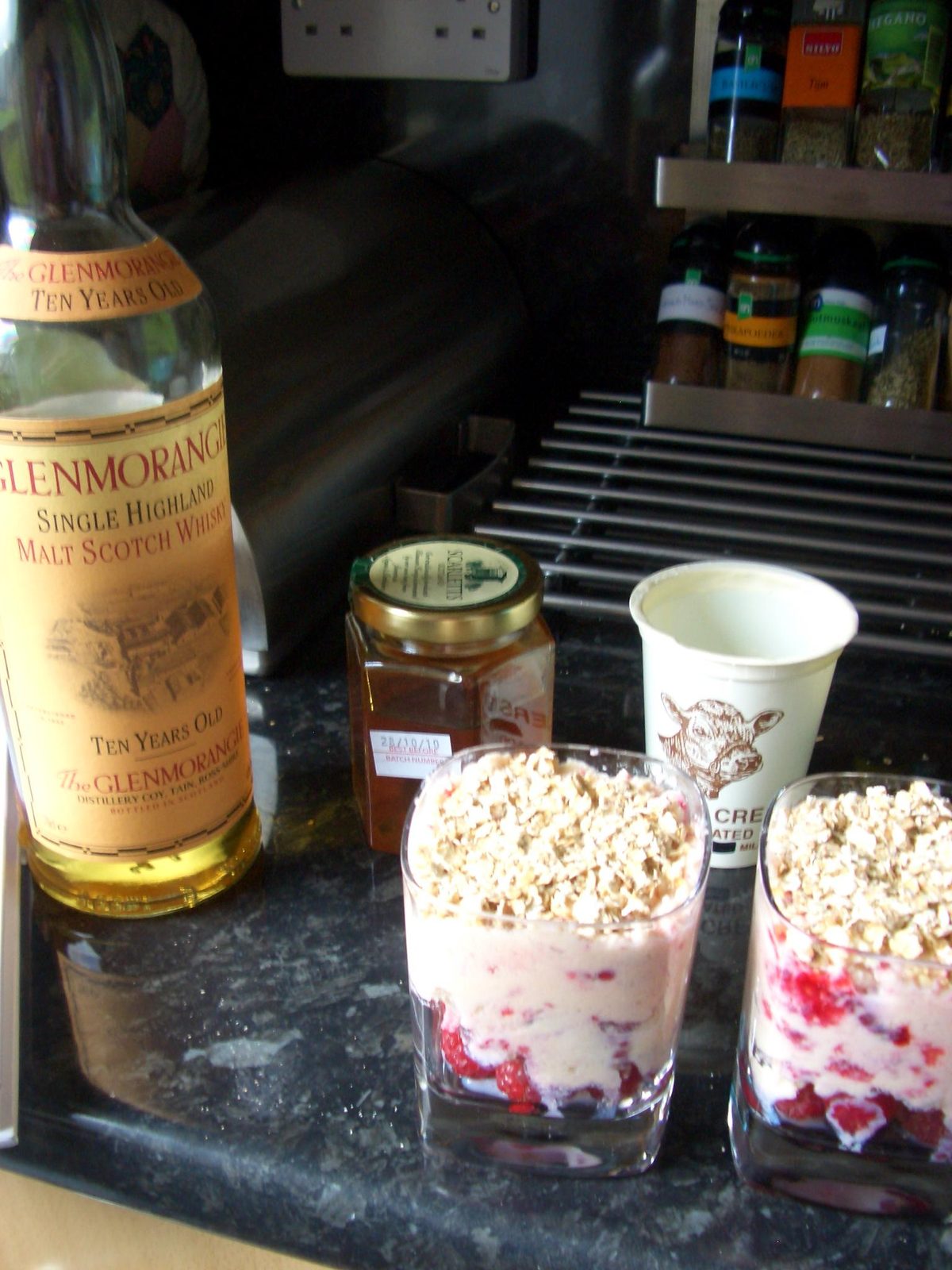
Cranachan is the one. Whipped cream folded with honey and whisky, toasted oatmeal for texture, raspberries layered through it. It descends from a much plainer dish called cream crowdie — oats, honey and soft fresh cheese — and the fruit and the whisky arrived later.
It works because it isn’t heavy. The oats give it a nutty grit, the raspberries cut the cream, and the whisky is usually a background warmth rather than a hit. Nobody I’ve handed a spoon to has disliked it.
You’ll see it on menus all year, but it’s genuinely better in July and August when Scottish raspberries are in. Perthshire and Angus grow a lot of them, and a good kitchen will say so on the menu. Expect roughly £8 to £12 for a dessert course in a mid-range restaurant — check the menu in the window before you commit.
Atholl brose
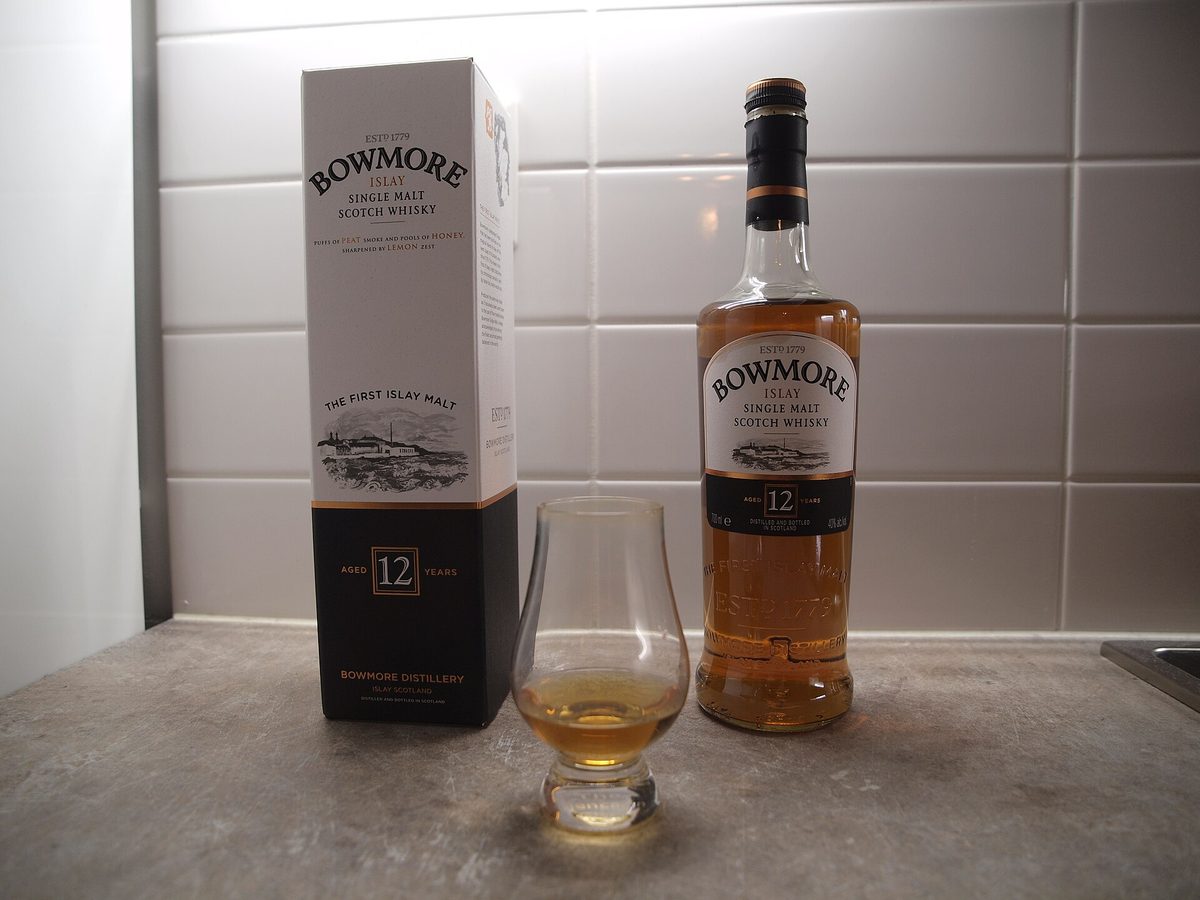
Less a dessert than a drink you can eat with a spoon. Oatmeal is steeped in water, the liquid strained off and mixed with whisky and honey, and cream is often whipped in. Atholl is in Highland Perthshire, and the legend attached to the drink has the first Earl of Atholl spiking a well with the stuff in 1475 to capture a rival — a good tale, if not one I’d swear to.
In practice you’ll find it at Burns Suppers, at Hogmanay, and in country-house hotels, rather than on a standard restaurant menu. It is strong. Treat a small glass as a full dessert.
Tipsy laird
The Scottish trifle: whisky-soaked sponge, raspberry jam, custard, cream, sometimes Drambuie instead of sherry. It’s the traditional pudding at a Burns Supper, served after the haggis, and it is much boozier than an English trifle.
Honestly? If you only have room for one creamy dessert, choose cranachan. Tipsy laird is enjoyable but it’s a trifle, and you probably know what a trifle tastes like.
Caledonian cream
Whipped cream, marmalade, a splash of whisky or whisky liqueur, a squeeze of citrus. Barely a recipe, and rarely on menus — you’re most likely to be handed it at a hotel dinner or a private supper. It’s sharper and less sweet than it sounds, and the marmalade connects it neatly to Dundee.
The baked and stodgy ones
Now the heavy artillery. These are winter foods, festival foods and teatime foods, and several of them are not really desserts in the pudding-after-dinner sense at all. Most of what follows sits closer to traditional Scottish cooking than to a restaurant dessert trolley.
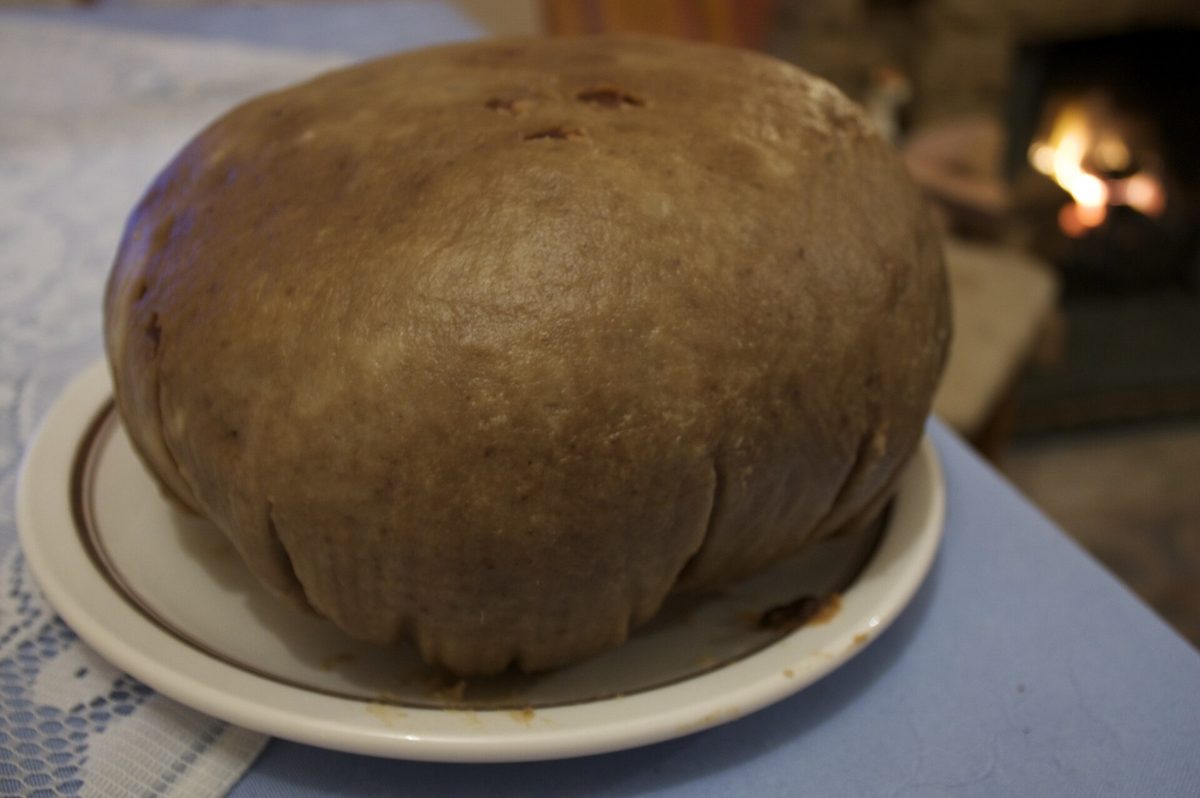
Clootie dumpling
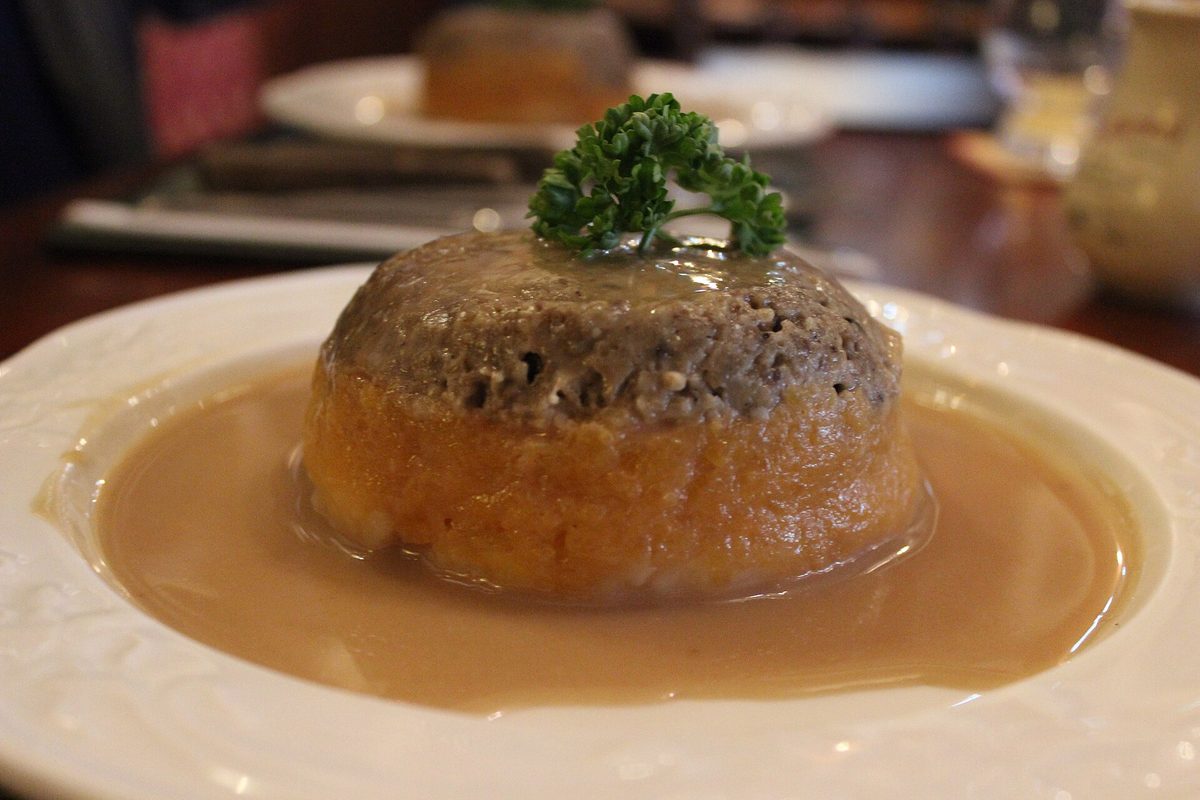
A dense pudding of flour, suet, dried fruit, treacle and spice, tied in a floured cloth — the cloot — and boiled for hours. The cloth leaves it with a faintly leathery skin, which is the point, and which some visitors find alarming.
Be clear about what you’re ordering: this is closer to Christmas pudding than to anything light. It is served in thick slices with custard, and a proper portion will end your evening. The genuinely good news is what happens to the leftovers — slices fried in a pan the next morning and served alongside a full Scottish breakfast, which is far better than it has any right to be.
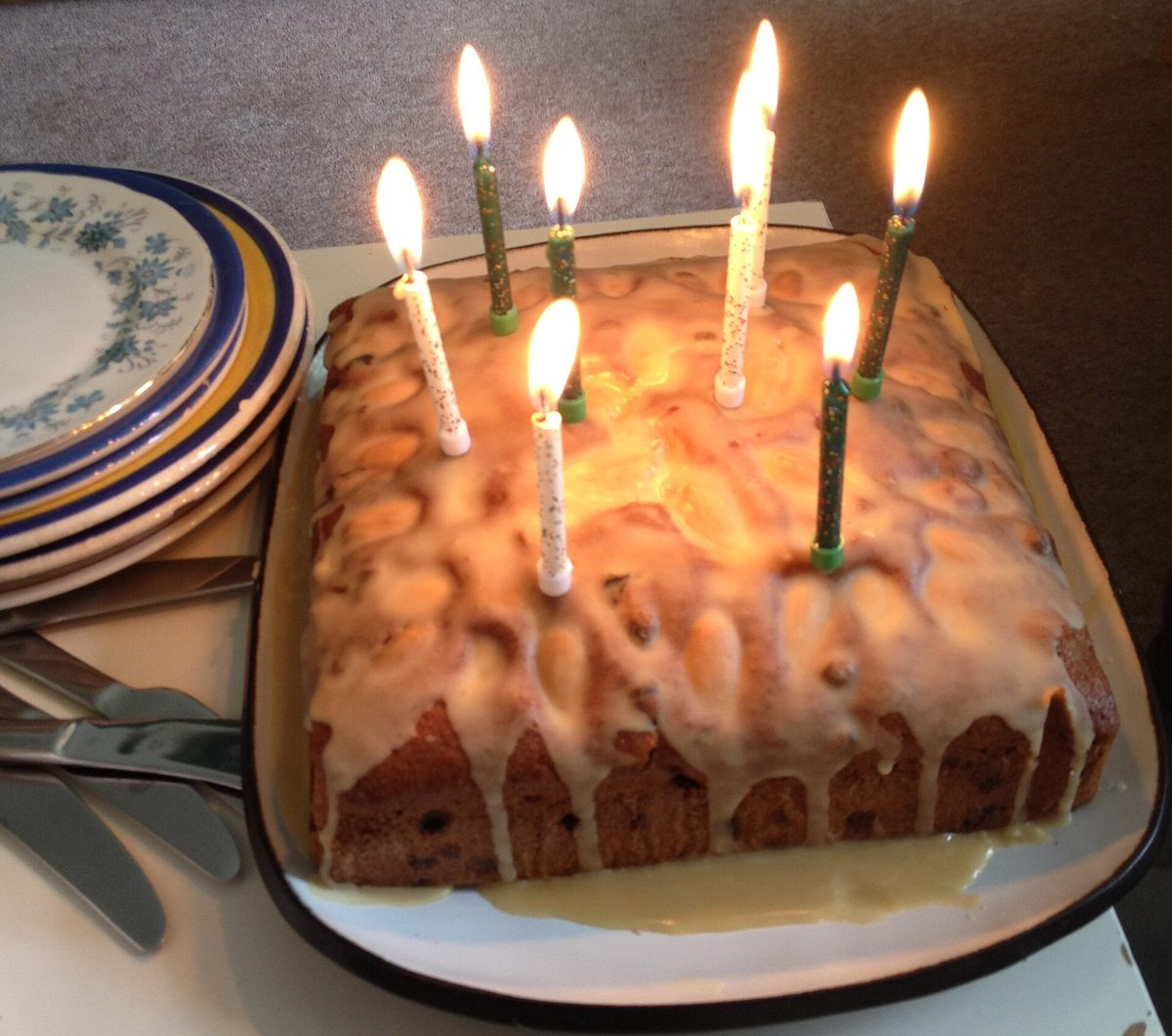
Dundee cake
A fruit cake made with ground almonds in the batter and whole blanched almonds arranged in rings on top, usually with candied peel or Seville orange marmalade worked through it. That marmalade link is not decorative: the Keiller family in Dundee built a marmalade business in the city, and the cake is bound up with that trade.
It’s drier and less cloying than a Christmas cake, and the almonds give it a proper crunch on top. Worth knowing: a bid to give “Dundee cake” protected geographical status was rejected by the UK government, on the basis that the name had become generic — so a Dundee cake bought in a tartan-lidded tin at the airport may have been baked anywhere at all. Buy it from a bakery instead.
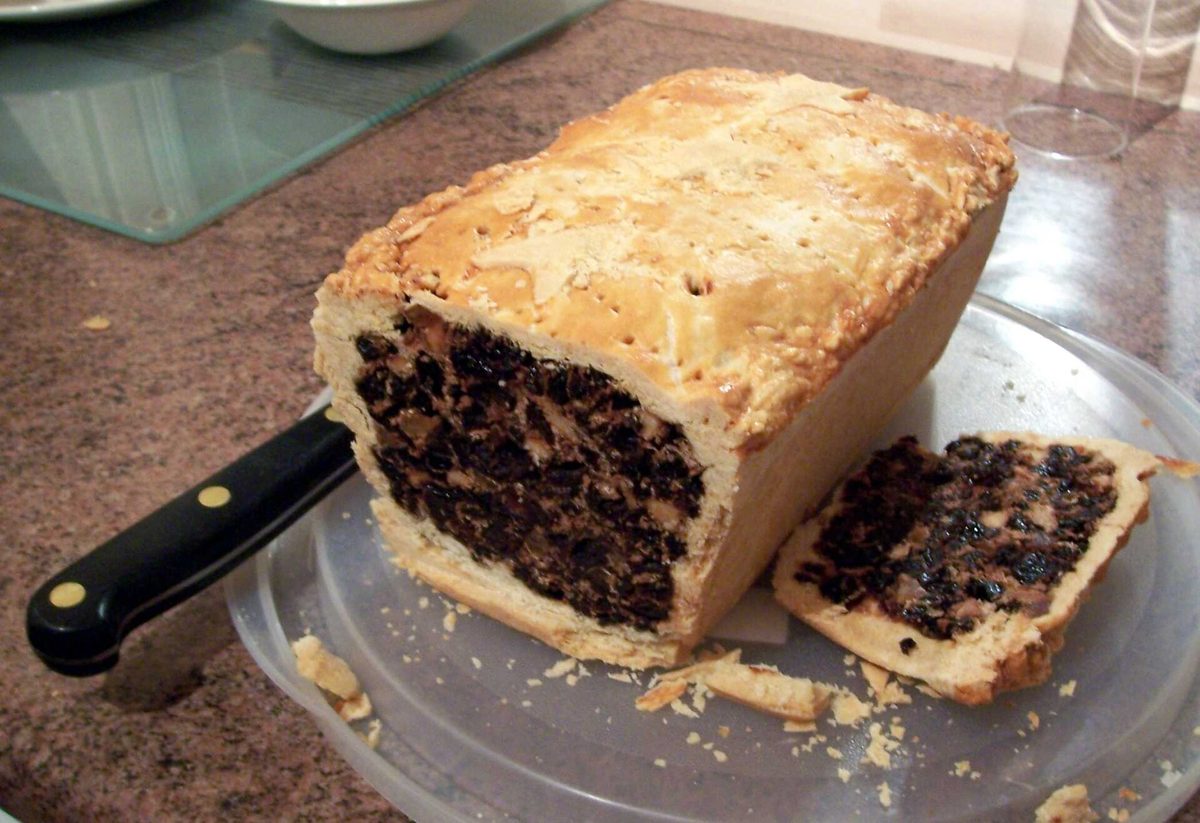
Black bun
A brick of intensely spiced dried fruit, treacle, allspice and ginger, sealed inside a plain pastry case. Robert Louis Stevenson was rude about it in print, which is both unfair and not entirely wrong.
It belongs to Hogmanay and to first-footing — the tradition of arriving at a neighbour’s door after midnight bearing coal, whisky and something to eat — so the turn of the year is when it comes into its own. A thin slice with a dram is the correct dose. A thick one is a mistake.
Selkirk bannock
Not a dessert but a Borders teatime bread: an enriched, buttery yeast dough packed so heavily with sultanas that slices hold together mostly out of habit. It’s associated with a Selkirk baker working from around 1859, and Queen Victoria is supposed to have taken a slice with her tea at Abbotsford, though that story gets repeated more often than it gets checked.
Buttered and eaten with tea, it is hard to beat. It also keeps and travels better than most of the list.
Ecclefechan tart
Named after the village of Ecclefechan in Dumfries and Galloway. Currants, chopped nuts, butter and sugar in a pastry case, traditionally sharpened with a splash of vinegar to stop it being sickly. Chewy, treacly, somewhere between a pecan pie and a mince pie.
Don’t plan a day around it. If you pass an independent bakery in the Borders or Dumfries and Galloway and see one, buy it; otherwise let it go.
Scotland’s sweetie counter
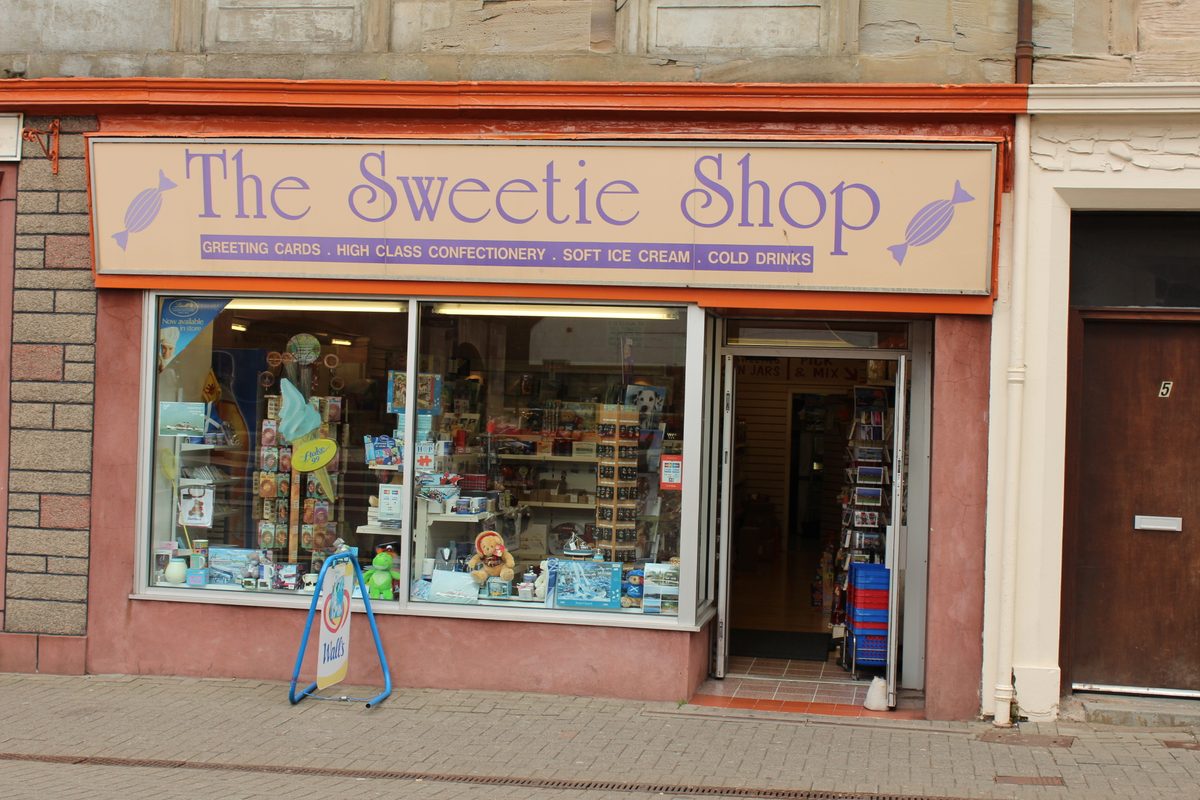
This is where Scotland genuinely diverges from the rest of Britain, and where most guides go vague. A traditional sweet shop — a sweetie shop — still exists in a lot of Scottish towns, and it’s worth ten minutes of anyone’s trip.
Tablet
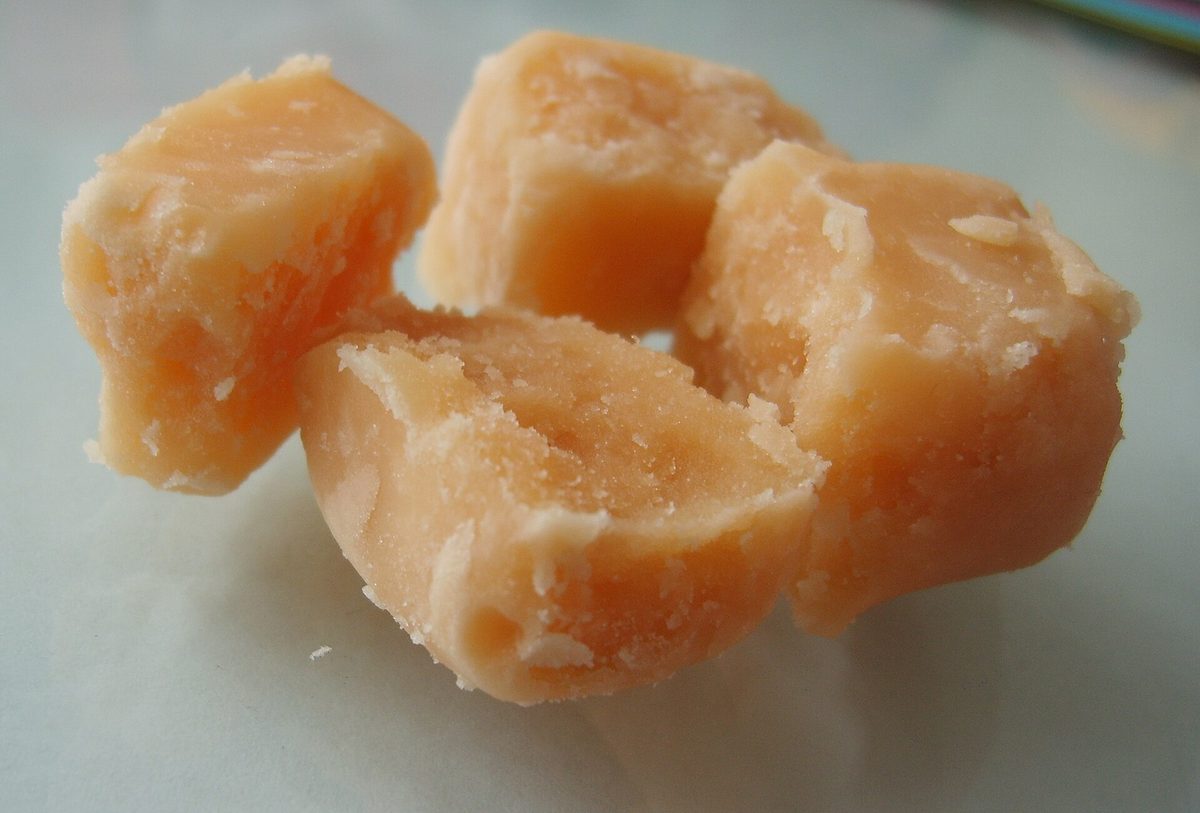
The famous one, and the divisive one. Sugar, condensed milk and butter boiled and beaten until it crystallises. It is not fudge. Fudge is smooth and yielding; tablet is brittle, grainy and roughly twice as sweet, and it shatters rather than bends.
Plenty of visitors take one piece and put the bag down. Give it a second go with strong black coffee or an unsweetened tea — that’s the pairing that makes sense of it. A bag from a farm shop or sweetie shop typically runs around £3 to £5, and supermarket own-brand versions are perfectly decent for a couple of pounds.
Macaroon bars
Nothing to do with French macarons. A Scottish macaroon bar is a snow-white fondant centre coated in chocolate and rolled in toasted coconut — and the fondant is made with mashed potato, which sounds like a wind-up and isn’t. The potato carries an enormous quantity of icing sugar without going sticky.
Its invention is usually credited to the Lees family, whose Lanarkshire firm still makes them, and you’ll find bars in newsagents for well under a pound. Try one. They’re very sweet and slightly odd and completely worth it.
Soor plooms and Edinburgh rock
Soor plooms — sour plums — are hard green boiled sweets from Galashiels in the Borders, sharp enough to make you pull a face on the first one. There’s a story tying them to a fourteenth-century skirmish with an English raiding party, which is exactly the sort of thing a sweet shop puts on a label.
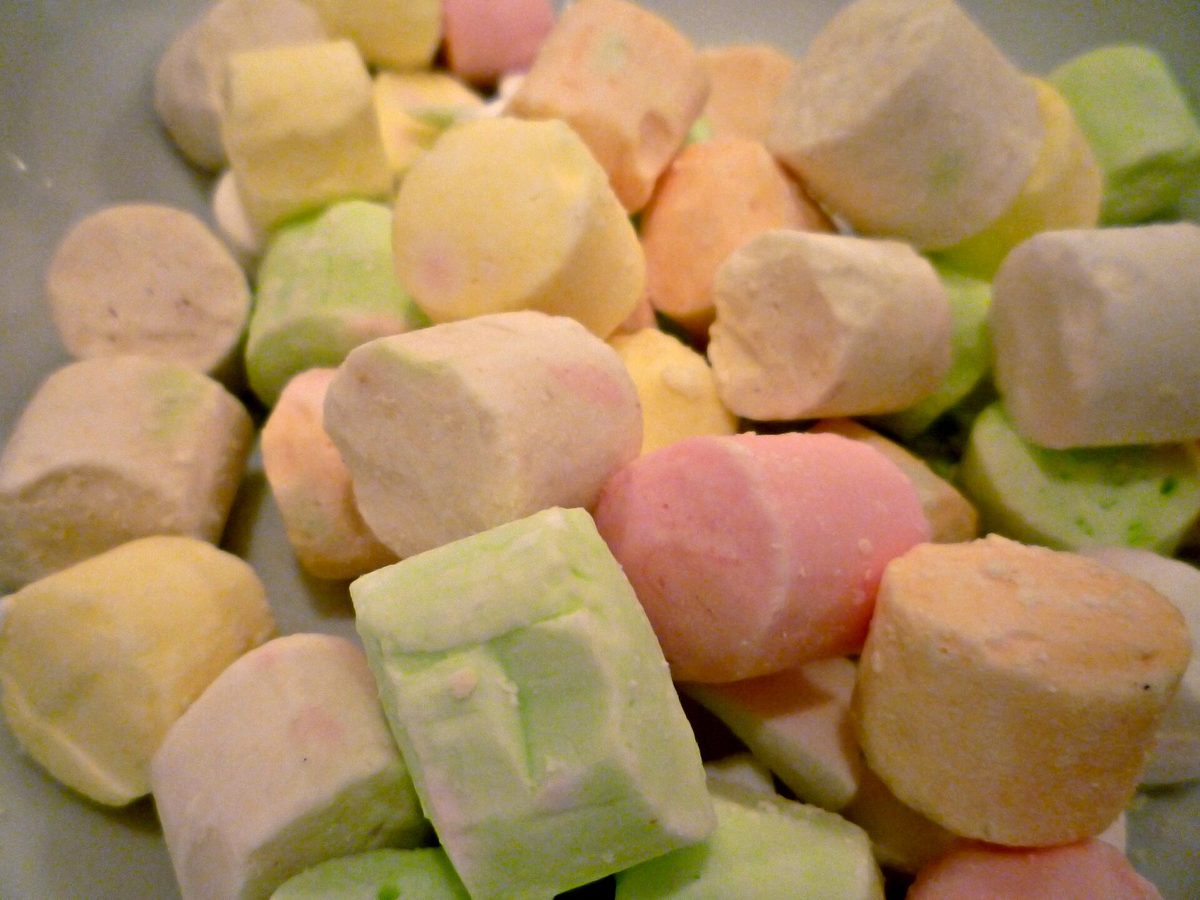
Edinburgh rock confuses people who know Blackpool rock. It isn’t hard, it has no lettering through it, and it isn’t glossy. It’s pastel-coloured, powdery and soft, and it crumbles the moment you bite. Alexander Ferguson, known as Sweetie Sandy, was making it in the city from the late 1830s. You’ll see it in boxes all along the Royal Mile, which is convenient rather than characterful, but the sweet itself is the real thing.
Tunnock’s
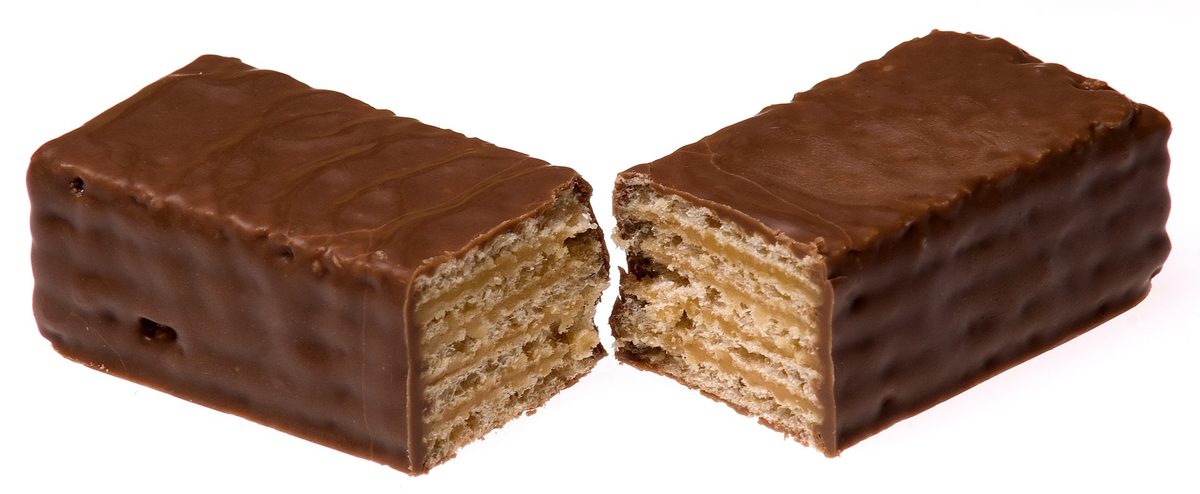
The Lanarkshire firm at Uddingston has been going since 1890, and its three big products are national furniture: the caramel wafer in red and gold foil, the teacake in red and silver, and the coconut-covered snowball. The caramel wafer dates from the early 1950s, the teacake from the middle of that decade.
You will be handed one with tea in a B&B, offered one on a bus, and see them stacked by the till in every corner shop in the country. A multipack costs about the same as a coffee. If someone in Scotland tells you to eat a teacake by peeling the foil into a neat square first, they aren’t joking.
Shortbread
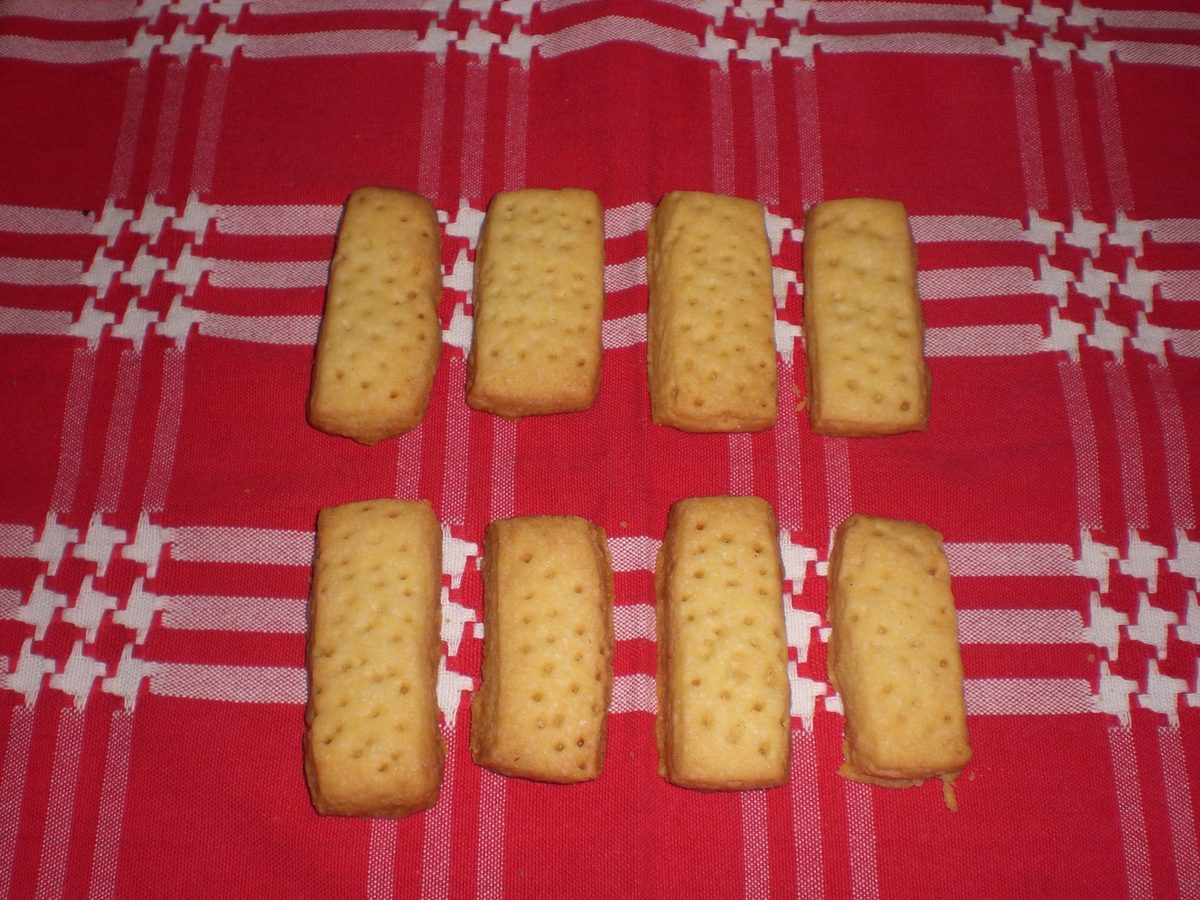
Butter, flour, sugar, and not much else. The version worth eating comes from a bakery counter in fingers, rounds or triangular petticoat tails, still slightly soft in the middle, and it tastes overwhelmingly of butter. Millionaire’s shortbread — a shortbread base under caramel and dark chocolate — is arguably a better bake and is on every counter in the country.
The bakery window most visitors walk past
Ask a Scot what they ate as a child and you’ll get none of the above. You’ll get the bakery counter, which is where the everyday sweet food lives and where prices are still measured in small change.
Empire biscuits
Two shortbread rounds sandwiched with jam, topped with white icing and finished with a glacé cherry or a jelly sweet. Every bakery has them and they cost very little. Sweet, plain and slightly nostalgic.
Fly cemetery
Properly a fruit slice: a thick layer of spiced currants pressed between two sheets of pastry and cut into squares. The nickname refers to what the currants look like through the pastry. It is much nicer than the name and a good thing to eat on a train.
Cream cookies and fern cakes
A cream cookie is a soft bun split and filled with unsweetened whipped cream — barely sugary and, on a cold day, exactly right. Fern cakes are small almond-and-jam tarts with a feathered pattern iced across the top. Neither shows up in the listicles. Both are more representative of how Scots eat sweet things than a clootie dumpling is.
What you’ll meet on a modern Scottish menu
Scotland’s restaurant scene has spent the past decade pulling these dishes apart and rebuilding them, and it’s some of the best eating in the country. If you’re planning meals in Edinburgh or Glasgow, this is where to spend your dessert budget.
Deconstructed cranachan
The single most reinterpreted Scottish dessert. Expect oat crumb instead of loose oatmeal, a whisky cream or parfait, raspberry sorbet or gel, sometimes a heather-honey element. When it’s done well it keeps everything good about the original and fixes the one flaw, which is that a glass of cream gets samey halfway down.
Whisky and oat ice creams
Oat milk ice cream, toasted-oat parfait, whisky caramel, burnt honey. Kitchens near distilleries often use a local cask spirit and will tell you which. It’s a good ordering signal — a menu that names the distillery usually cares about the rest of the plate too.
Tablet, reused
Tablet works far better as an ingredient than as a sweet, and chefs know it. Tablet ice cream, tablet cheesecake and shards of tablet on a chocolate dessert are all common now, and all of them tame the sugar. If tablet defeated you in its raw form, this is your second chance.
When each one actually appears
Timing matters more here than with most food writing, because several of these are seasonal to the point of being invisible for ten months of the year. It’s worth cross-checking against Scotland’s festival calendar before you plan.
Burns Night, 25 January
Haggis, neeps and tatties, then tipsy laird or clootie dumpling, then Atholl brose. Suppers are held in hotels, pubs and village halls across the country and many are open to visitors. Book a week or two ahead; the good ones fill.
Hogmanay and the days around it
Black bun’s entire window. Shortbread and Dundee cake go into overdrive too, and first-footing gifts are a real thing rather than a museum piece. If you’re visiting in winter, this is the richest week of the year for traditional baking.
Christmas
Clootie dumpling and Dundee cake both do duty as the Christmas cake in Scottish households, and macaroon bars turn up in selection boxes. Bakeries take orders for whole dumplings from about late November.
High summer
Summer raspberry season, roughly late June into August, and a good time to find cranachan made with fruit picked a few miles away (autumn-fruiting varieties carry the local crop on after that). Highland games and agricultural shows across the Highlands run home-baking tents through the summer months, and the tablet and shortbread on those tables is the best you will eat anywhere.
Where to buy, and what survives the flight home
Four categories are worth your time, roughly in order of quality.
Independent bakeries. Every town has at least one. This is where the shortbread, empire biscuits, fern cakes and fruit slices are, and where a Dundee cake or Selkirk bannock will be a fraction better and often cheaper than a gift shop’s. Go before noon.
Traditional sweetie shops. Jars behind the counter, soor plooms and Edinburgh rock by weight, homemade tablet in cellophane. Common in Borders and coastal towns and increasingly rare in city centres.
Farm shops and Highland games baking tents. The best tablet is almost always someone’s own, sold in a plain bag, priced somewhere around £3 to £5. Buy more than you think you need.
Supermarkets. Unglamorous and genuinely the sensible option for gifts. Own-brand tablet, shortbread and Dundee cake cost a fraction of the tartan-tin equivalent and are frequently made by the same Scottish producers. This is the honest souvenir advice nobody gives you.
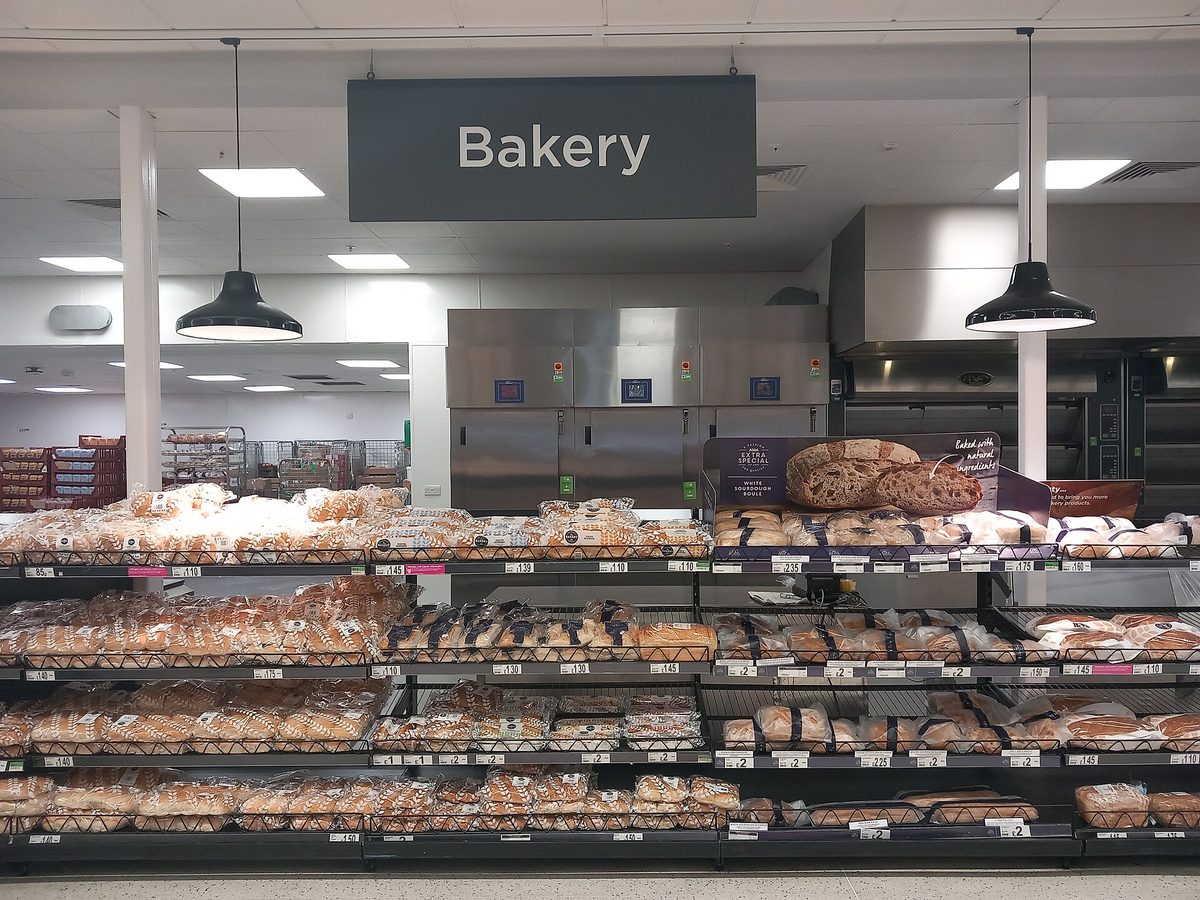
What travels: tablet (weeks, if sealed), shortbread, Dundee cake, black bun, Tunnock’s anything, boiled sweets. What doesn’t: clootie dumpling (it’s a kilo of wet suet pudding and it will not thank you), cranachan, anything with fresh cream, macaroon bars in a hot cabin bag. Pack tablet in a hard-sided box or it becomes gravel.
Fitting this into an actual trip
You don’t need to plan a trip around desserts, and I’d argue you shouldn’t. But a few practical notes are worth having.
How long you need: nothing here demands dedicated time. Two weeks in Scotland eating normally will put cranachan, shortbread, tablet and a Tunnock’s product in front of you without effort. The seasonal items are the exceptions, and those depend entirely on your dates — see our guide to the best time to visit Scotland if you’re still deciding.
What to book ahead: Burns Suppers (a fortnight, more in Edinburgh), Hogmanay dinners (weeks, sometimes months), tasting menus in Edinburgh and Glasgow (a month is sensible for a Friday or Saturday), and whole clootie dumplings from a bakery at Christmas (a few days). A guided food tour in Edinburgh is the fastest way to try several of these in one afternoon without ordering four desserts you can’t finish.
Getting to them: everything on this list is available in Edinburgh and Glasgow. The regional specialities — Selkirk bannock, Ecclefechan tart, soor plooms — cluster in the Borders and the southwest, which is easy on a day trip out of Edinburgh and awkward otherwise.
Dietary notes: clootie dumpling and traditional black bun usually contain suet, so ask if that matters to you. Cranachan is straightforwardly vegetarian and easy to make alcohol-free on request. Almost nothing here is gluten-free, tablet and boiled sweets excepted.
What’s overrated, and what visitors get wrong
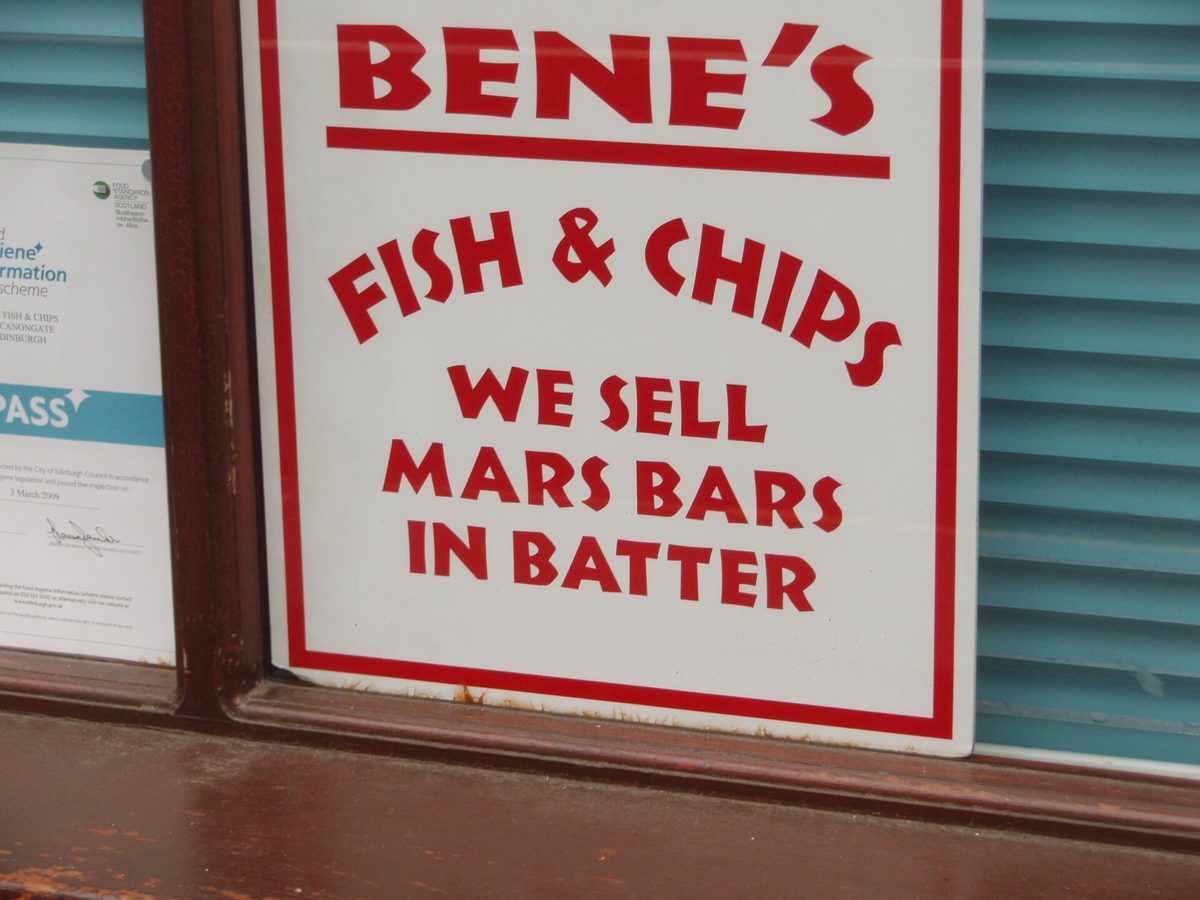
The deep-fried Mars bar is a tourist trap. The Haven Chip Bar in Stonehaven, Aberdeenshire (now the Carron Fish Bar), claims to have invented it in 1992, though its origins are disputed, and it has been sold to visitors ever since. Scots do not eat these. The chip shops that advertise them on the window are advertising to you, not to the locals queuing behind you. It tastes of hot batter and molten chocolate, it costs a few pounds, and you will regret it within about ninety seconds.
Shortbread in a tartan tin is not the good stuff. Airport and gift-shop shortbread is dry, thin and priced for the packaging. Bakery shortbread costs less and tastes of butter rather than of cardboard. If you want a tin as a gift, buy the tin and fill it yourself.
Tablet is not fudge, and pretending otherwise ruins it. People bite into it expecting soft caramel, get a mouthful of crystallised sugar, and write the whole thing off. Approach it as its own category and it makes far more sense.
Don’t order clootie dumpling after a main course you’ve finished. This is the single most common mistake. It is a very serious quantity of suet pudding. Share one, or eat it as an afternoon thing with tea.
Sticky toffee pudding is probably not Scottish. It’s on menus everywhere and it’s excellent, but the origin story most commonly points to Cumbria, just over the border in England. Enjoy it; don’t tick it off as a Scottish dessert.
Don’t expect a dessert menu to be a heritage exhibit. Most Scottish restaurants serve one or two traditional puddings and a lot of contemporary ones. That’s normal and not a failure. Our wider guide to Scottish food and drink sets out how the rest of the menu tends to work.
Frequently asked questions
What is the most famous Scottish dessert?
Cranachan, comfortably. It’s the one that appears on restaurant menus nationwide, the one served at Burns Suppers, and the one most likely to be reinvented on a tasting menu. Tablet and shortbread are more famous as products, but cranachan is the dessert Scots would name first.
What is Scottish tablet and how is it different from fudge?
Tablet is boiled sugar, condensed milk and butter, beaten as it cools so the sugar crystallises. Fudge is smooth and soft; tablet is grainy, brittle and considerably sweeter, and it breaks rather than bends. Same family, genuinely different eating experience.
What do Scots eat for dessert at Christmas and New Year?
Clootie dumpling and Dundee cake are the Christmas staples, both served in slices with custard or cream. Black bun belongs to Hogmanay and first-footing, and shortbread appears throughout. Tipsy laird turns up at both, and again at Burns Night in January.
Is the deep-fried Mars bar worth trying?
Not really. A Stonehaven chip shop claims it as a 1992 invention, and it became a novelty aimed at visitors rather than a food Scots eat. If you want the experience, split one between four people. Nobody needs a whole one.
Which Scottish sweets can I take home in my luggage?
Tablet, shortbread, Dundee cake, black bun, boiled sweets like soor plooms and Edinburgh rock, and anything made by Tunnock’s all travel well. Anything with fresh cream does not, and a clootie dumpling is far too heavy and moist to be worth the suitcase space.
Where can I try traditional Scottish desserts in Edinburgh?
Traditional pubs and hotel restaurants are the reliable option for cranachan and clootie dumpling, independent bakeries for shortbread, empire biscuits and fruit slices, and sweet shops along the Old Town for rock and tablet. Our guide to where to eat in Edinburgh covers the areas worth walking.
Are Scottish desserts all made with whisky?
No, though the famous ones lean that way. Cranachan, Atholl brose and tipsy laird all use it, and the alcohol is usually still present. The baked classics — clootie dumpling, Dundee cake, black bun — use a splash at most, and the entire sweetie counter is alcohol-free. Ask if it matters.
What is a clootie dumpling and why is it called that?
A cloot is a piece of cloth in Scots. The pudding — flour, suet, dried fruit, treacle and spice — is tied in a floured cloth and boiled for several hours, which gives it its round shape and its distinctive skin. Traditionally coins and charms were hidden inside for luck.
Final thoughts
If you take one thing from this: eat cranachan in July, buy your tablet from a farm shop rather than an airport, and give the deep-fried Mars bar a miss. The rest is discovery, and the bakery window will teach you more in five minutes than any list will.
Scotland’s sweet food is unfussy, unglamorous and often a century older than it looks. That’s the appeal. Plan the rest of the eating around it with our food and drink guide, work out the shape of your route with our things to do in Scotland ideas, and if this is your first visit, our first-time Scotland tips and general Scotland travel advice will save you a few mistakes I made the hard way.
About the author: This guide was written and is maintained by the ScotlandTourism.org editorial team — travel writers who’ve spent years exploring Scotland’s cities, Highlands and islands, from bagging Munros to chasing the perfect dram. We update our guides regularly to keep prices, opening details and advice current.
Last updated: November 2026. Prices and opening times change — always check the official site before you travel.
Photo credits
All images are used under their respective Creative Commons or public-domain licenses:
- Two glasses of cranachan, the Scottish dessert of cream, toasted oa… — Saskia van de Nieuwenhof from Edinburgh, United Kingdom, CC BY-SA 2.0, via Wikimedia Commons
- A dram of Islay single malt in a Glencairn glass, the spirit behind… — JIP, CC BY-SA 3.0, via Wikimedia Commons
- A whole clootie dumpling on a plate beside an open fire, the dense … — Matt Riggott from Reykjavik, Iceland, CC BY-SA 2.0, via Wikimedia Commons
- A Dundee cake, the almond-topped Scottish fruit cake linked to the … — Eljay, CC BY 2.0, via Wikimedia Commons
- A black bun cut open to show the dense spiced fruit filling inside … — IMBJR, CC BY-SA 3.0, via Wikimedia Commons
- Squares of Scottish tablet, the grainy sugar confection sold in swe… — Seraphim Whipp at English Wikipedia, Public domain, via Wikimedia Commons
- Pastel sticks of Edinburgh rock, the soft crumbly confection invent… — The original uploader was Mebanana at English Wikipedia., Public domain, via Wikimedia Commons
- A Tunnock’s caramel wafer split open to show its layers, a La… — Evan-Amos, CC0, via Wikimedia Commons
- A traditional Scottish sweetie shop front, the place to buy tablet,… — Billy McCrorie, CC BY-SA 2.0, via Geograph
- Traditional Scottish shortbread fingers, better bought fresh from a… — Thorsten Alge, Public domain, via Wikimedia Commons
- A Scottish supermarket bakery aisle, where own-brand tablet and Dun… — Xeverything11, CC BY-SA 4.0, via Wikimedia Commons
- A Scottish chip shop window sign advertising deep-fried Mars bars — Rathfelder, CC BY-SA 4.0, via Wikimedia Commons