A full Scottish breakfast is not a full English with a Scottish accent and a sprig of heather. It’s a different plate, and almost all of the difference sits in the two or three items most visitors can’t name when they see them.
That’s the gap I want to close here. Nearly every guide to this dish lists the contents and moves on, usually next to a photograph of a full English. So instead I’m going through the plate item by item, with an opinion on each, because the components are the argument. If you want the wider context first, our guide to Scottish food and drink sets out the whole national repertoire, and the companion piece on traditional Scottish dishes covers everything that isn’t breakfast.
What is a full Scottish breakfast?
A full Scottish breakfast is a fried plate of Lorne (square) sausage, tattie scone, black pudding, bacon and egg, usually with some combination of haggis, white pudding, link sausage, mushrooms, grilled tomato and beans. The square sausage, the tattie scone and the black pudding are what make it Scottish rather than English.
The plate at a glance
| Item | What it actually is | Scottish or shared? | My verdict |
|---|---|---|---|
| Lorne (square) sausage | Beef sausagemeat with rusk and pepper, pressed into a loaf and sliced | Scottish | The single most Scottish thing on the plate. Order it. |
| Tattie scone | Flat griddle scone of mashed potato and flour, cut in quarters | Scottish | Superb fried in bacon fat. Depressing when it isn’t. |
| Black pudding | Blood, oatmeal, suet and onion in a casing, sliced and fried | Shared, but standard in Scotland | Ask who makes it. The answer tells you a lot. |
| White pudding | The same recipe without the blood — oatmeal, suet, onion, pepper | Scottish and Irish | Most visitors have never met it. Try it once. |
| Haggis slice | A round of haggis fried until the edges crisp | Scottish | The sign of a kitchen going the extra step. |
| Link sausage | Standard pork or beef banger in a casing | Shared | Fine, but it isn’t why you came. |
| Bacon | Back bacon, not streaky | Shared | Consistently good. Rarely the problem. |
| Beans, mushrooms, tomato | The supporting cast | Shared | Beans divide households. Mushrooms are usually tinned. |
The Scottish items, one at a time
Lorne sausage, also called square sausage or slice
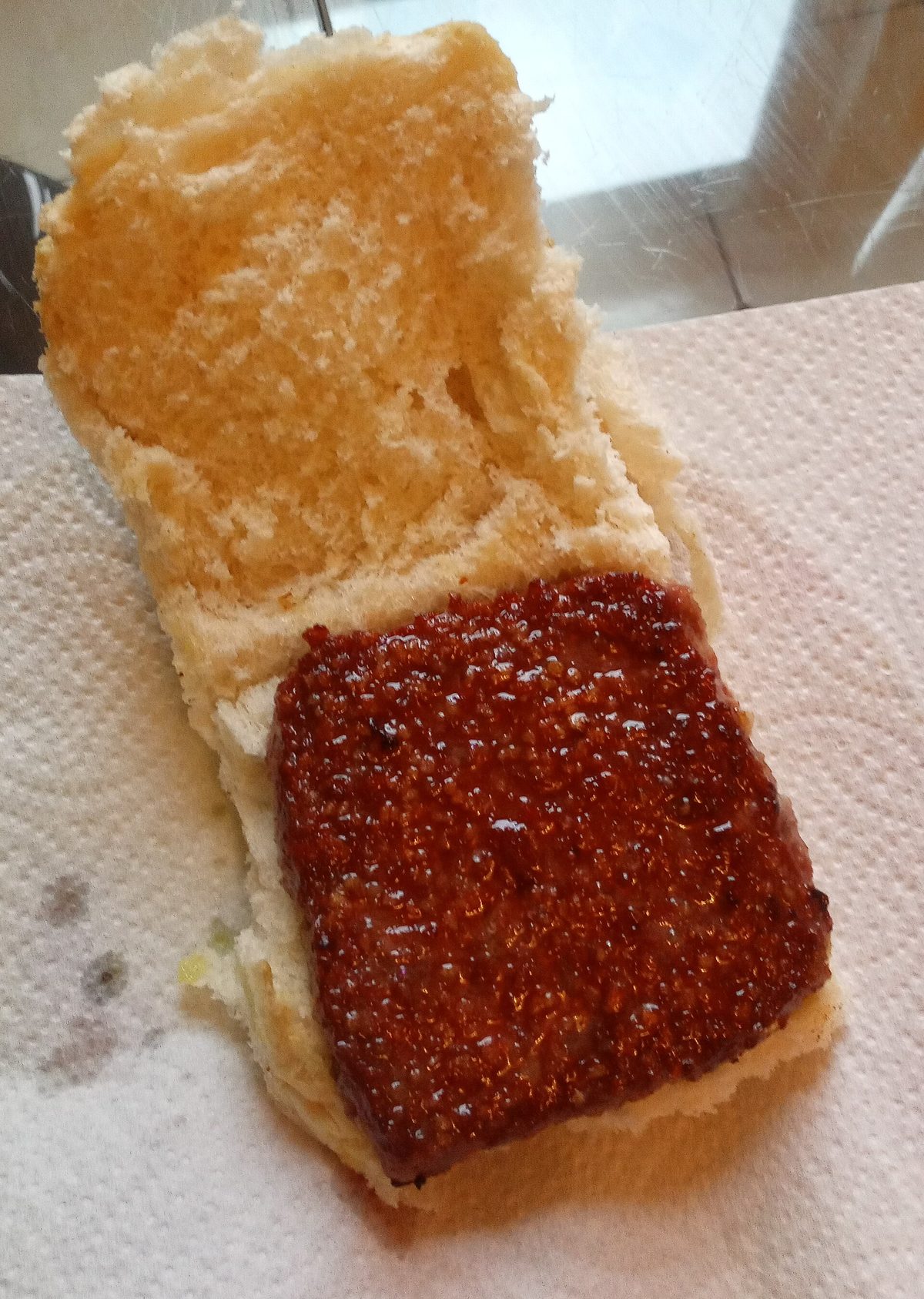
Start here, because if you eat nothing else on this list you should eat this. Lorne sausage is sausagemeat — traditionally beef, sometimes a beef and pork mix — blended with rusk and pepper, pressed into a long loaf tin, chilled, and sliced into squares about a centimetre thick. There is no casing. That is the whole point.
No casing means more surface area, which means more browned crust per mouthful than any link sausage can manage. Fried properly on a medium heat, a square sausage develops a dark, almost caramelised face on both sides while staying soft in the middle. It is a genuinely different eating experience from a banger, not a novelty shape.
The square shape exists for a practical reason: it fits a morning roll exactly, corner to corner, with no meat hanging out and no bread left bare. The name may come from the Lorne district of Argyll. Its exact origin is unclear, but advertisements for Lorne sausage appear in newspapers as early as 1892, before the Glasgow music-hall comedian Tommy Lorne found fame, which makes him an unlikely namesake.
One tip that will improve your breakfast immediately: square sausage needs longer than it looks. It’s a thick slab of raw meat, not a pre-cooked pudding. Hotels that keep it warm under a heat lamp for forty minutes turn it into a curled, grey, leathery thing, which is how a lot of visitors form a bad first impression of the best item on the plate.
Tattie scone, the one that separates the good from the mediocre
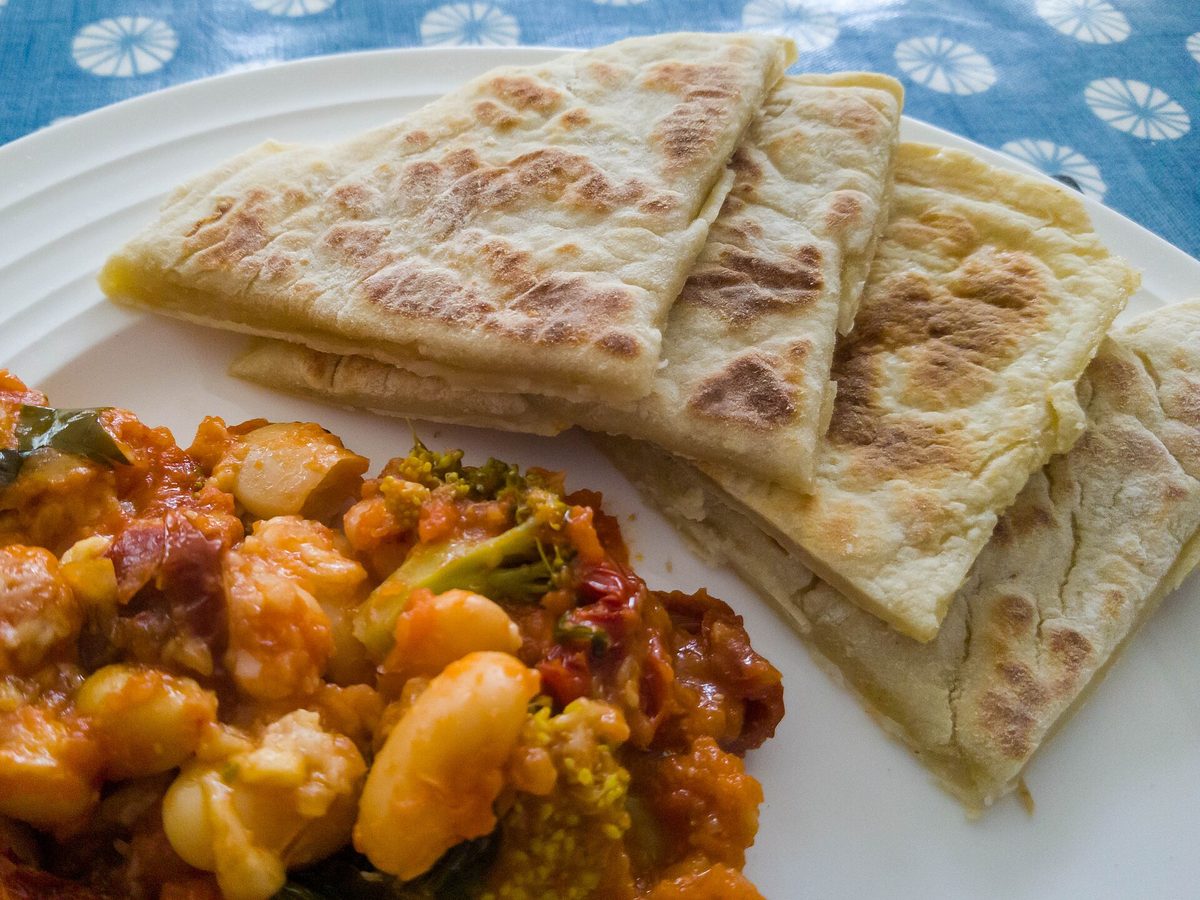
A tattie scone is a soft, flat griddle scone made from mashed potato, flour, a little butter and salt, rolled thin, cooked on a girdle and cut into quarters. Cold from the packet it is unremarkable — slightly floury, slightly claggy, the sort of thing you’d politely eat and forget.
Fried in bacon fat until the edges catch and blister, it becomes the best carbohydrate anyone has ever put on a breakfast plate. It does the job of fried bread — mopping yolk, absorbing bean sauce — while eating considerably lighter, and it holds heat better than toast.
This is the item I judge a breakfast by, and it’s the one most often got wrong. A pale, floppy tattie scone that has been warmed rather than fried is genuinely bad: doughy, bland, and faintly damp. If yours arrives the colour it was in the packet, the kitchen is not paying attention, and that usually tells you something about the rest of the plate too.
Black pudding, and why Stornoway matters
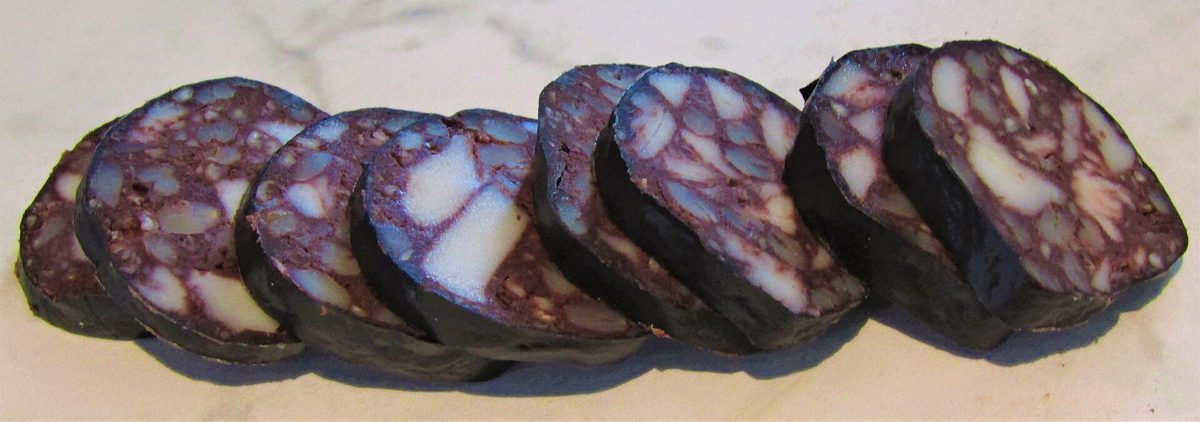
Black pudding is blood sausage: blood, oatmeal, suet, onion and a lot of pepper, packed into a casing, cooked, then sliced and fried until the outside forms a crust and the inside stays crumbly. It is not exclusively Scottish — Lancashire and Ireland would both like a word — but in Scotland it’s a standard component rather than an optional extra, and that’s a meaningful difference.
The version worth seeking out is Stornoway black pudding, made on the Isle of Lewis. It holds Protected Geographical Indication status, registered with the EU in May 2013 and carried onto the UK protected food names register at the end of December 2020, which means that only producers working in the Stornoway area can legally use the name. It’s noticeably coarser and more peppery than most mass-market versions, and it holds its shape in the pan instead of collapsing into crumbs.
If a menu names its black pudding supplier, order it. Cafés that bother to name a butcher are almost always cafés that fry the tattie scones properly as well.
White pudding, the one you’ve probably never had
White pudding — also called mealie pudding in parts of Scotland — is the black pudding recipe with the blood taken out: oatmeal, suet, onion, pepper. It’s mild, nutty and slightly sweet against the salt of the bacon, and it fries to a nice crisp shell.
Almost no visitor has eaten one. It’s more common the further north and east you go, and Aberdeenshire in particular takes it seriously. If you’re squeamish about black pudding but curious, white pudding is the easy way in — same texture, none of the ingredient anxiety.
You may also meet fruit pudding, which is a sweet-savoury slice with currants, raisins and suet in it. It sounds wrong on a breakfast plate and works completely, especially eaten in the same forkful as bacon. It’s getting rarer, so take it if you see it.
The haggis slice
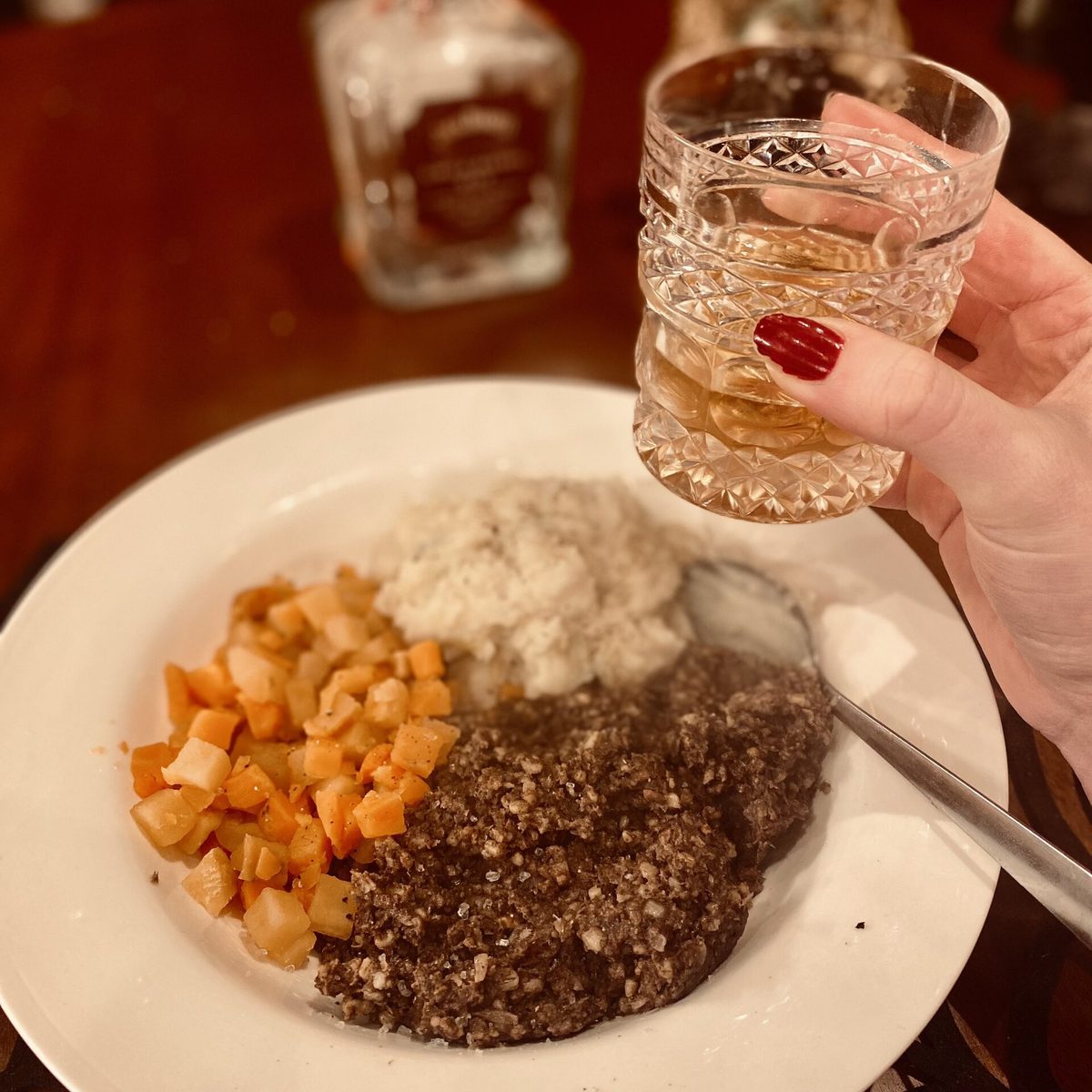
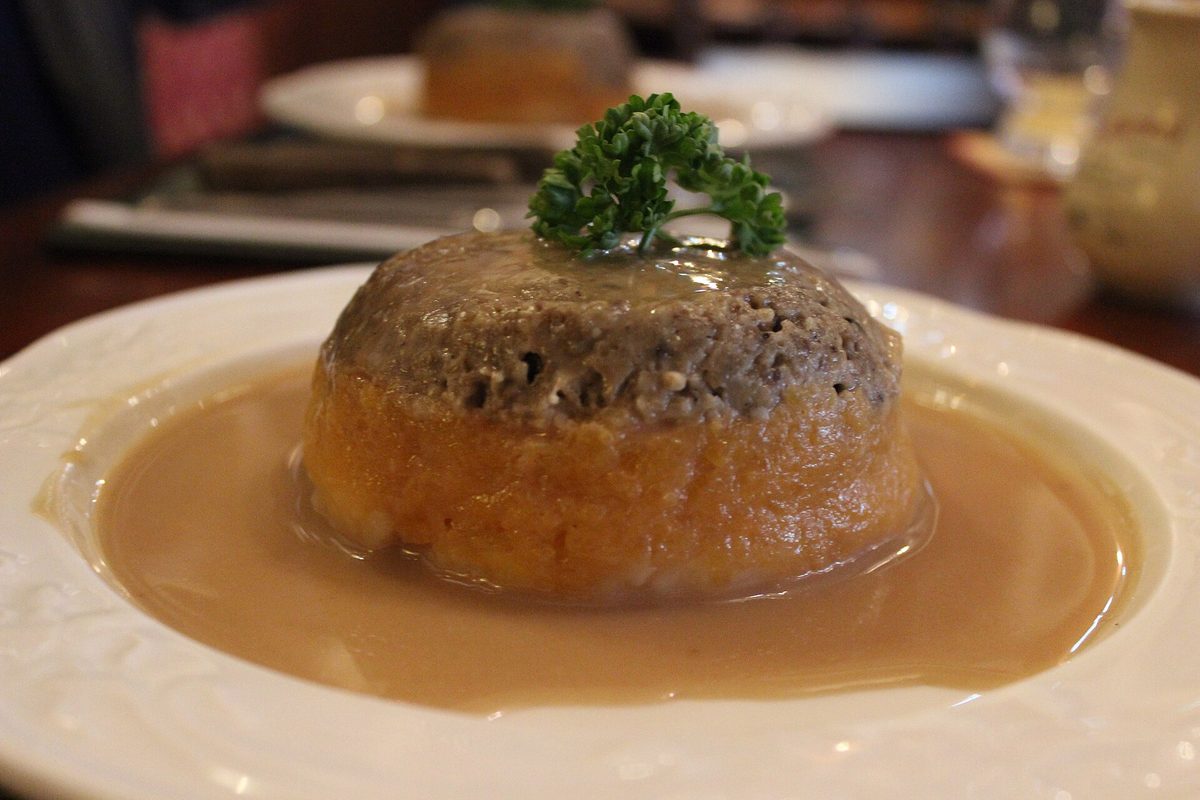
A slice of haggis fried until the edges crisp brings pepper and warmth that nothing else on the plate provides, and it’s the single best way to try haggis for the first time, because if you don’t get on with it you’ve still got a full breakfast in front of you.
If you want the full story of what’s in it and why it has such a reputation, we’ve written it up separately in our honest guide to haggis. The short version: it tastes of black pepper, oats and offal, in that order, and it is nowhere near as alarming as its billing.
The rest of the plate
Everything from here is shared territory with the rest of Britain, but it still varies enormously in quality, and it’s worth knowing what good looks like.
Bacon in Scotland is back bacon — a lean eye of meat with a fat rim — rather than the streaky rashers Americans expect. Ayrshire middle bacon, a dry-cured cut, turns up on better menus. It is the item least likely to disappoint you anywhere in the country.
Eggs are fried by default. Scrambled and poached are usually offered, and poached is quietly the better choice at a hotel buffet because it can’t be sitting under a lamp going rubbery. In a café, take it fried and use the tattie scone on the yolk.
Link sausage appears alongside the square, not instead of it, in any breakfast worth the name. If a menu offers links only, that is one of the tells I’ll come back to.
Mushrooms and grilled tomato are the token vegetables. The mushrooms are usually tinned or button mushrooms cooked in the pan fat; the tomato is half a tomato under the grill, and it will be hotter than everything else on the plate by a wide margin.
Baked beans start arguments. Roughly half of Scotland considers them essential moisture and the other half considers them contamination that runs into the egg. Most cafés will leave them off if you ask, and most hotel buffets will give you a ladle whether you want one or not.
Toast and fried bread are the last question. Toast is standard, usually white plain bread, buttered thickly. Fried bread — a slice cooked in the pan until it’s saturated and crisp — still exists but is fading, partly because the tattie scone does the same job better and partly because even by fry-up standards it’s a lot. My advice: skip both and ask for a second tattie scone. Most places will do it, and it’s the single best swap available to you.
Scottish versus English breakfast: the honest comparison
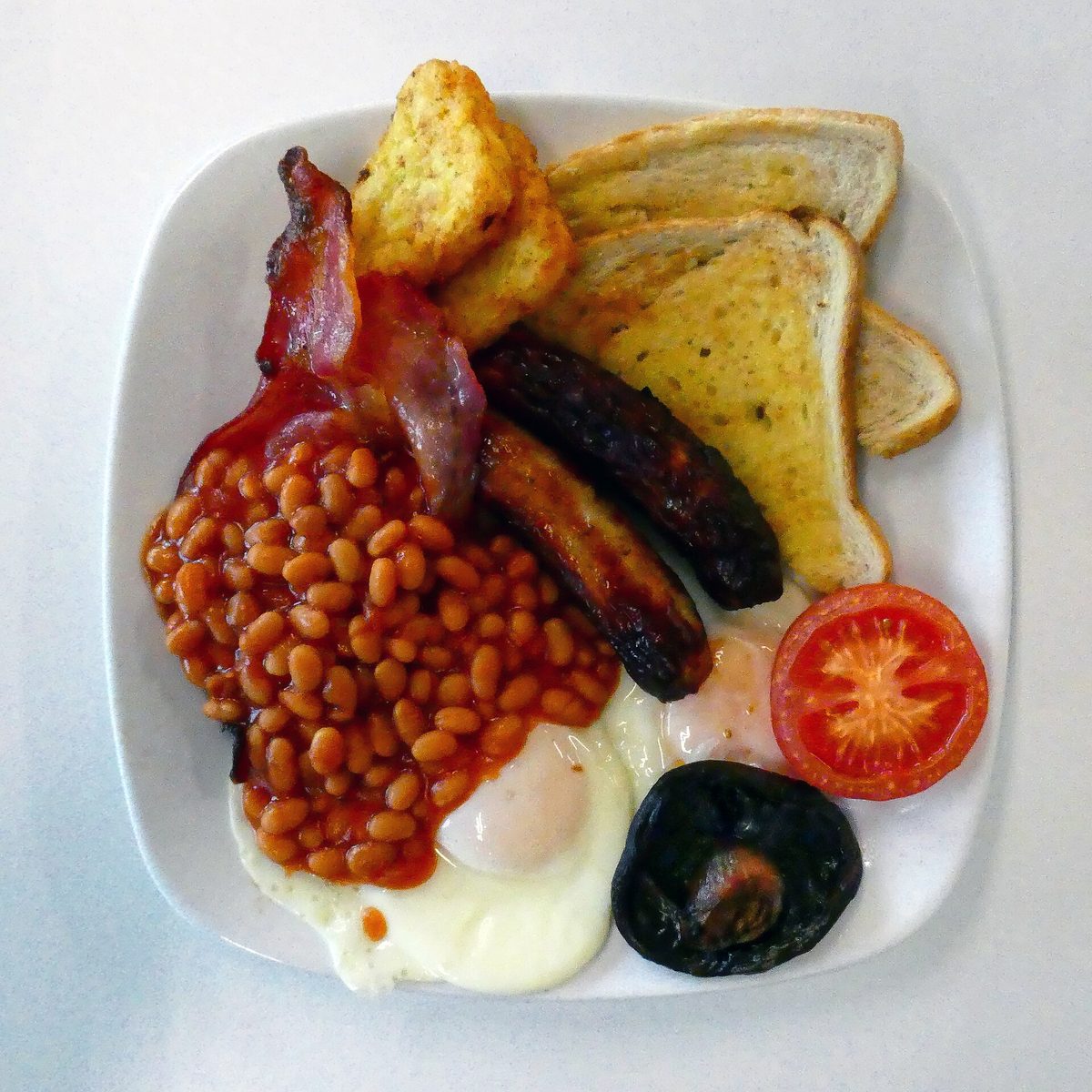
The two plates overlap far more than either nation likes to admit. Egg, bacon, sausage, beans, mushrooms, tomato and toast are common to both. The real differences are a short list of swaps, and pretending otherwise is how you end up with a guide that says nothing.
What’s in that isn’t in a full English
Lorne sausage, first and above all. Then the tattie scone. Then white pudding or fruit pudding, and often a slice of haggis. Black pudding is technically shared but functions differently: in England it’s an optional extra you have to request, in Scotland it’s simply part of the breakfast.
What’s out that an English breakfast would have
Hash browns, which are a modern hotel-catering import in both countries but far more entrenched south of the border. Bubble and squeak, which is an English leftovers dish and does not belong on a Scottish plate at all. And fried bread, which survives in England more robustly because there’s no tattie scone competing for the space.
The thing nobody tells you
Here’s the part almost nobody writes down, and it’s the single most useful thing in this article: most hotel “full Scottish” is a full English with a tattie scone thrown on top.
You’ll see it constantly in chain hotels and larger B&Bs, especially in tourist towns. Pork link sausages, hash browns, a hot cabinet, and one lonely tattie scone added so the menu can say Scottish. There’s no square sausage, no black pudding beyond a token slice, no haggis, and nobody in the kitchen has fried anything in bacon fat since the induction hobs went in.
It isn’t a scandal. It’s catering. But it does mean that if you eat one hotel breakfast in Inverness and conclude that the full Scottish is overrated, you have not actually eaten one.
How to spot a real full Scottish breakfast
This is a genuinely useful skill and it takes about ten seconds. Four things to look for:
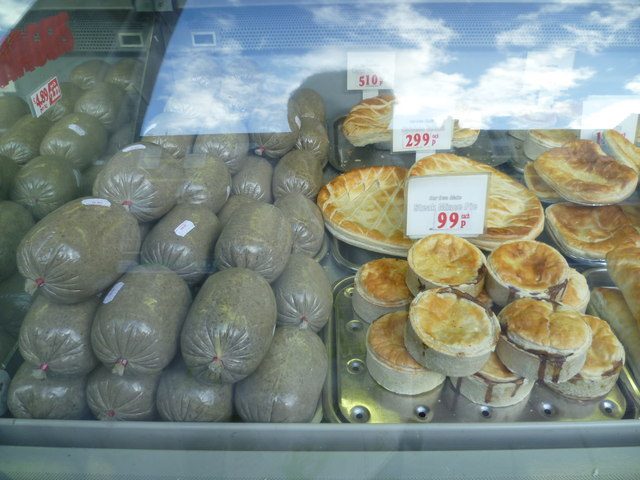
The menu says “square sausage” or “Lorne”, not just “sausage”. A kitchen that stocks square sausage will say so, because it’s the thing regulars come for. A menu that just says “sausage” is telling you it means links.
Somebody’s butcher is named. Independent cafés that buy from a local butcher will put the name on the board, because it’s a selling point. Scottish Craft Butchers even runs a national championship for beef sliced sausage, and winners tend to advertise it in the window. Where the butcher is named, the black pudding and the square sausage are usually both a class above supermarket standard.
The tattie scone isn’t pale. Look at other people’s plates on your way in. Golden-brown with dark blistered edges means it’s been fried in the pan. Uniformly cream-coloured means it’s been warmed through, and you’re in for a disappointing quarter of potato.
It’s an independent café, or a hotel that cares. Small, slightly scruffy places with laminated menus and a busy griddle beat almost every hotel dining room in the country. The exceptions are hotels and guesthouses that cook to order rather than running a buffet — if the breakfast arrives on a plate rather than being ladled from a tray, your odds improve enormously.
The roll and square: what Scots actually eat on a weekday
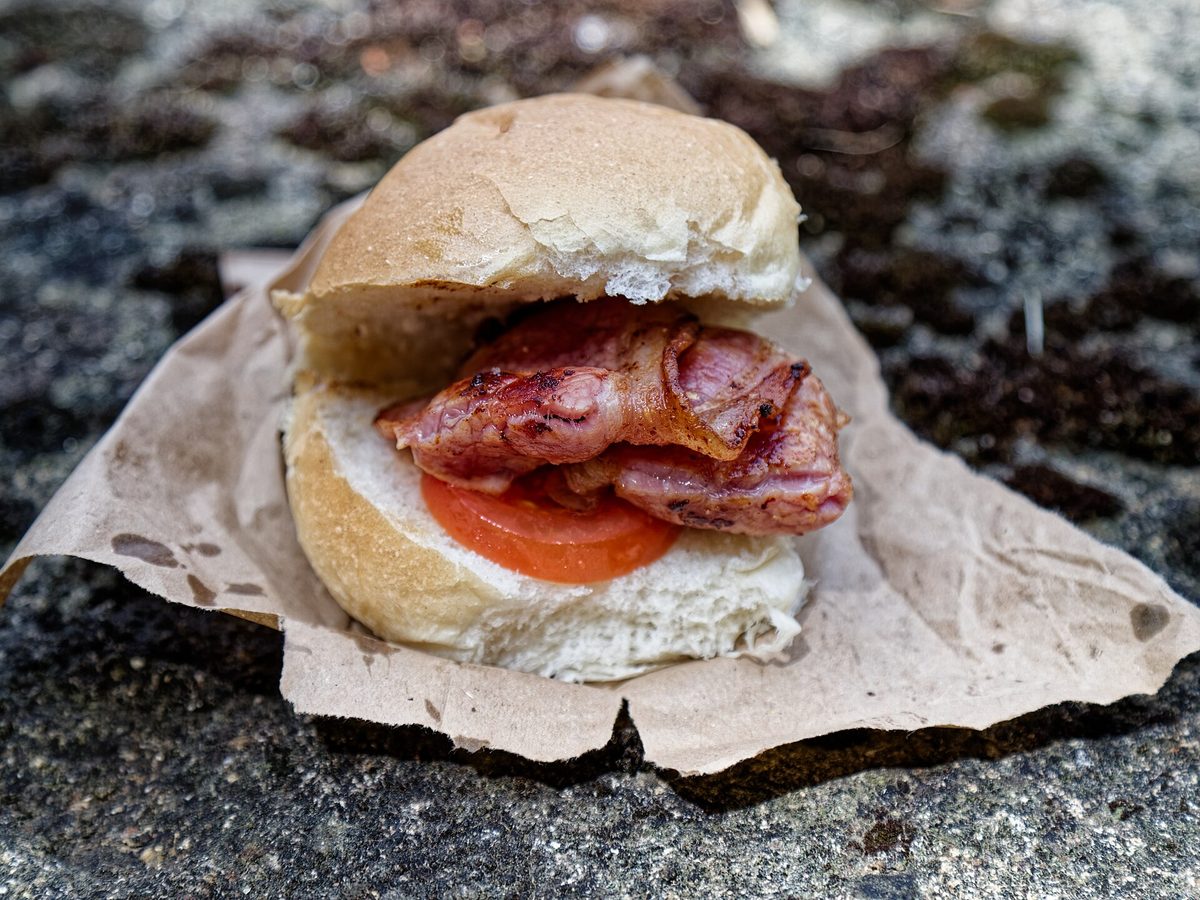
Nobody eats a full Scottish on a Tuesday. It’s a weekend meal, a hangover meal and a holiday meal. The everyday Scottish breakfast, if it isn’t porridge or toast, is a filled morning roll bought from a bakery on the way to work, and it deserves its own explanation because it’s a distinct thing.
Why the morning roll is its own item
A Scottish morning roll is not a bap, a barm, a cob or a bun. It’s a soft, floury, slightly flat roll with a thin crisp shell and a light, almost stretchy interior, sold in bakeries and corner shops every morning and stale by lunchtime. It’s designed to be eaten within a couple of hours of leaving the oven, which is why it doesn’t travel and why nobody outside Scotland makes a good one.
You can also ask for it well fired, which means baked until the top is genuinely blackened. It looks burnt. It tastes better — more bitter, more crust, more contrast against whatever’s inside. It’s an acquired preference and it’s held with real conviction.
The roll and square
A slice of fried square sausage in a morning roll, with brown sauce. That’s it. It costs somewhere around £2 to £3.50 at a bakery at the time of writing, depending on where you are, and it is the most Scottish thing you can eat before nine in the morning. Order one with a tattie scone in the roll alongside the sausage and you’ll be taken for a local.
Roll and sausage, roll and bacon, roll and haggis
Confusingly, “roll and sausage” in Glasgow usually means square sausage, whereas elsewhere it might get you a link. If you want the square, say square. Roll and bacon is the safe universal option. Roll and haggis, where you find it, is excellent and criminally under-advertised.
Buy these from an independent bakery rather than a chain if you can. A high-street bakery chain will sell you a hot filled roll for a couple of pounds and it’ll be perfectly fine, but the bread will be the giveaway.
Where to eat one, and what it costs
Cafés and greasy spoons
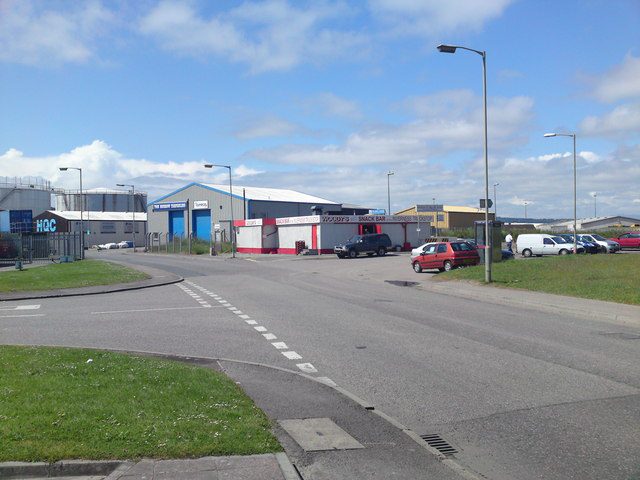
The reference standard. Independent cafés in Glasgow and Edinburgh, roadside snack bars, harbour cafés in fishing towns and the sort of place that still has a hatch to the kitchen. Expect to pay roughly £9 to £13 for a full plate at the time of writing, less if you build your own from a list of items, which many places let you do. Prices have moved a lot in recent years, so treat any figure you read anywhere — including this one — as indicative.
Hotels and B&Bs
Usually included in the room rate, or around £15 to £20 as a standalone add-on at larger hotels. Quality is wildly variable and correlates almost perfectly with whether it’s cooked to order or sitting in a heated tray. Small family-run guesthouses often do the best breakfasts in Scotland, full stop — something worth factoring in when you’re comparing places to stay across the country, or picking a base for the Loch Ness and Inverness area where breakfast quality varies enormously between neighbouring guesthouses.
Pubs and chains
Wetherspoon and similar chains do a “Scottish breakfast” with haggis and tattie scone for well under a tenner, and it’s honestly not bad value if you’re not expecting a butcher’s square sausage. It’s a reasonable option early in the morning when independent cafés haven’t opened, which in smaller Highland towns can be later than you’d like.
Timing, queues and whether you need to book
Check the café’s booking policy before you go: some popular brunch places in Edinburgh and Glasgow take reservations, and others work on a first-come basis. Arriving early, particularly at weekends, gives you the best chance of a table without a wait.
Allow 40 minutes to an hour for the meal itself, longer if the kitchen is small and cooking everything to order. Cafés set their own breakfast hours and some serve it all day, so check before you go. In hotels and guesthouses, serving hours vary: check the night before if you have an early start, because some rural guesthouses will happily do you a bacon roll if you ask, and none of them will if you don’t. Planning around opening hours generally is covered in our Scotland travel tips.
Regional variations worth knowing
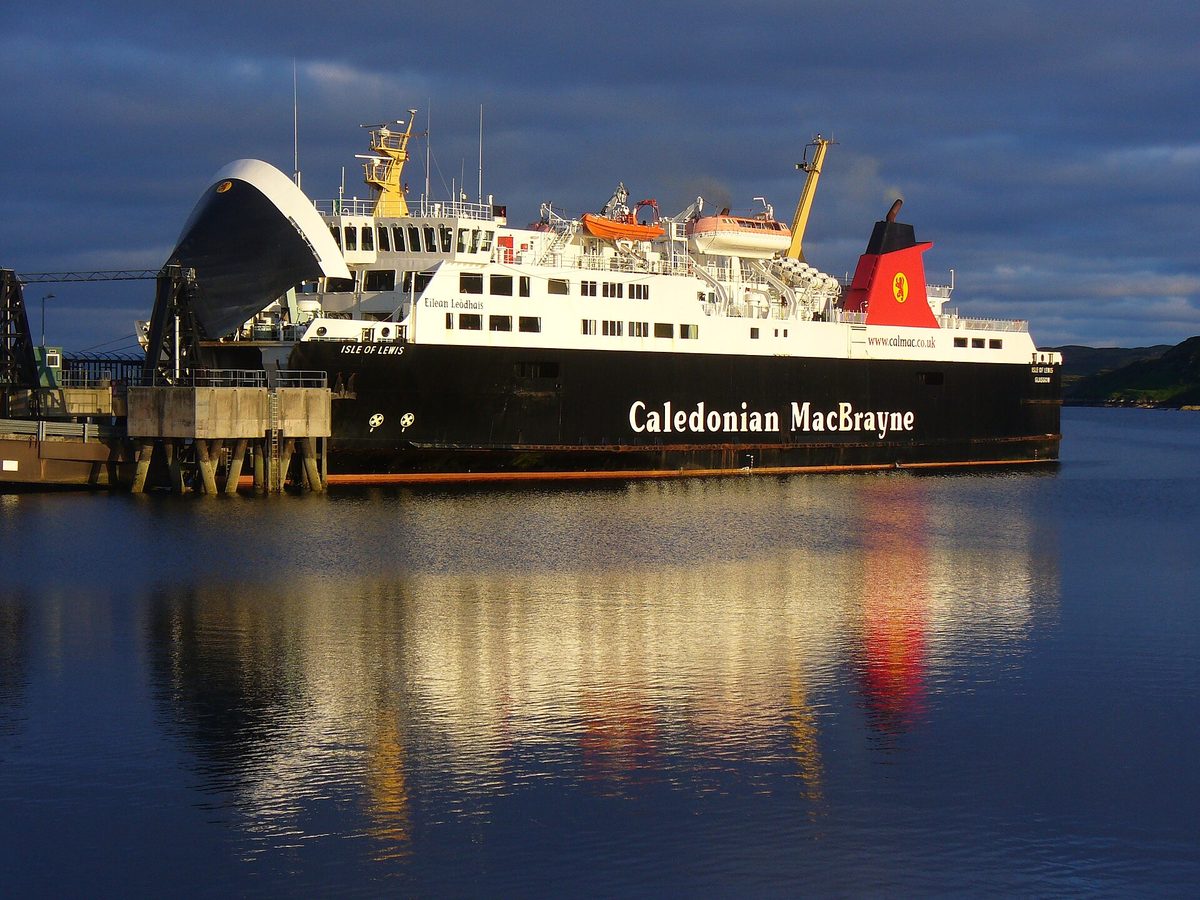
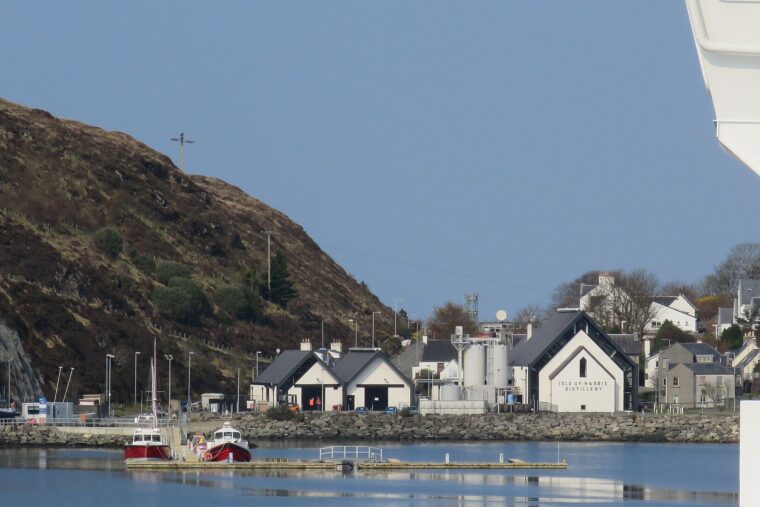
In the Outer Hebrides, the black pudding is the event. Order it on Lewis and you’re eating the protected article a few miles from where it was made. Island cafés across Scotland’s islands also tend to serve more fish at breakfast — kippers and smoked haddock turn up alongside the fry-up in a way they simply don’t on the mainland.
The north-east, around Aberdeen and Moray, is white pudding and mealie pudding country, and it’s where you’re most likely to be offered a rowie or buttery — a flat, salty, laminated roll that’s closer to a croissant made by someone in a bad mood. It’s excellent and very local.
In the Highlands proper, breakfast is more about volume than variation, and rightly so if you’re heading out for a day on the hill or driving a long stretch of the North Coast 500. Oatcakes sometimes replace toast, which is an improvement.
What to drink with it
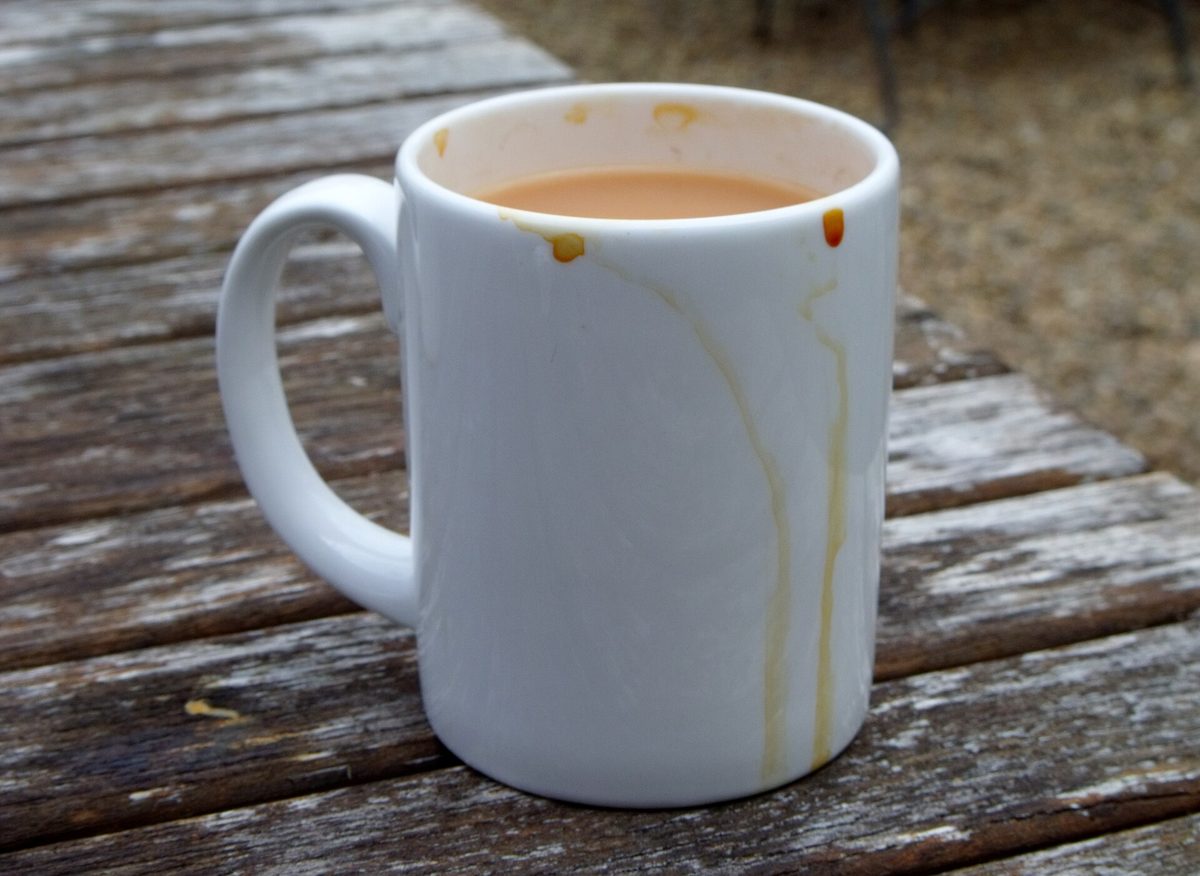
Tea, in quantity, in a mug, with milk. That’s the answer, and coffee in a traditional café is often an afterthought — though that’s changed a lot in the cities.
Worth knowing: “Scottish breakfast tea” is a blend name, not a Scottish product. There’s no meaningful commercial tea grown in Scotland (a handful of small experimental growers exist, but nothing that reaches a supermarket blend). Scottish breakfast tea is typically a strong mix of Assam, Ceylon and East African leaf, blended robust because Scotland’s soft water otherwise produces a weak-tasting cup. The name describes what it’s for, not where it’s from. Order tea in a Scottish café and you’ll get a standard strong British blend, which is exactly what you want.
Irn-Bru with a fry-up is not a tradition so much as a hangover strategy. And no, nobody drinks whisky at breakfast — if you want that side of Scotland, save it for an afternoon at one of the Scotch whisky distilleries.
The vegetarian and vegan version
Better than you’d expect, because Scotland has genuinely good meat-free substitutes for the two items that matter most. Vegetarian haggis — oats, pulses, vegetables and the same pepper-heavy spicing — is widely available and not a compromise; plenty of Scots eat it by choice. Vegetarian black pudding exists too and gets the texture surprisingly close.
Tattie scones are naturally vegetarian and easily made vegan with an oil or dairy-free spread, and most cafés will fry them in a clean pan if you ask. What you’ll typically get: veggie haggis, tattie scone, mushrooms, tomato, beans, egg or a vegan alternative, toast, and a plant-based sausage. What you’ll miss: there is no substitute for square sausage, and I’m not going to pretend otherwise.
Vegan breakfasts are now standard on most Scottish café menus rather than a special request, which was not the case a decade ago.
The calorie reality
A full Scottish, eaten in full, is a heavy meal, and how heavy depends on portion size and how much of the plate is fried. If you are counting calories, ask for the nutritional information for the specific breakfast you are ordering, since portions vary widely.
That’s a large meal, and there’s no honest way to present it otherwise. It’s also completely fine as a thing you eat on holiday, and it has one real practical advantage: it keeps you going for a very long time. If you’re walking a Highland route, doing a big driving day, or heading up Arthur’s Seat before lunch, a full breakfast at eight and a sandwich at three is a perfectly sensible way to structure the day. Scots themselves eat it occasionally and eat porridge or toast the rest of the week, which is the sane approach.
What underwhelms, and the mistakes visitors make
Judging it by a hotel buffet. The single most common error, and the reason so many people come home unimpressed. A heated tray flattens everything: square sausage curls and dries, tattie scones go leathery, eggs turn rubbery. Find a café.
Ordering it every morning. Two or three across a two-week trip is plenty. By day four you’ll want porridge, and Scotland does excellent porridge.
Skipping the items you can’t identify. The white pudding and the fruit pudding are the two things you cannot easily get at home and the two most often pushed to the side of the plate. Eat them first.
Expecting haggis everywhere. Plenty of perfectly good full Scottish breakfasts have no haggis on them at all. Its absence isn’t a failure; the absence of square sausage is.
The genuinely mediocre bits. Tinned mushrooms are tinned mushrooms. The grilled tomato is almost always a formality. And a bad tattie scone is worse than no tattie scone — if it arrives pale, leave it.
Timing. In small Highland towns, cafés tend to keep shorter hours, so check when they open and when they stop serving breakfast. If you’re making an early start — for a day out at Loch Ness or a long drive — a bakery roll is your realistic option, which is another reason to learn the roll and square. Our first-timer’s tips for Scotland cover a few more of these opening-hours traps.
Frequently asked questions
What is in a full Scottish breakfast?
Lorne (square) sausage, tattie scone, black pudding, bacon and egg, plus usually some of: haggis, white or fruit pudding, link sausage, mushrooms, grilled tomato, beans and toast. The square sausage, tattie scone and black pudding are the three items that make it Scottish rather than English.
What’s the difference between a Scottish and an English breakfast?
Four swaps. Square sausage instead of, or as well as, pork links. A tattie scone instead of fried bread or hash browns. Black pudding as standard rather than optional. And the possible addition of haggis, white pudding or fruit pudding. Egg, bacon, beans, mushrooms and tomato are shared.
What is Lorne sausage?
Beef sausagemeat with rusk and pepper, pressed into a loaf tin and sliced into squares, with no casing. Also called square sausage or slice. The flat shape gives more crisp surface than a link and fits a morning roll exactly, which is where a great many of them end up.
What is a tattie scone?
A thin, soft griddle scone of mashed potato, flour and butter, cut into quarters. On a breakfast plate it’s fried until the edges brown, where it does the fried-bread job while eating lighter and soaking up egg yolk far better than toast. Pale ones haven’t been fried and aren’t worth eating.
Is haggis always served at breakfast in Scotland?
No. A fried haggis slice is common but not universal, and its absence doesn’t mean the breakfast is inauthentic. It’s a relatively modern addition. If you want to try haggis for the first time, breakfast is the low-risk way to do it, since there’s plenty else on the plate.
How much does a full Scottish breakfast cost?
Roughly £9 to £13 in an independent café at the time of writing, and around £15 to £20 as an add-on at a larger hotel, though it’s usually included in a B&B room rate. A roll and square sausage from a bakery costs about £2 to £3.50. Always check current menus.
What do Scots eat for breakfast on a normal day?
Porridge, toast or cereal, same as everywhere else. The full Scottish is a weekend and holiday meal. The everyday cooked option is a filled morning roll — a roll and square sausage, or a roll and bacon — bought from a bakery on the way to work.
Is Scottish breakfast tea actually from Scotland?
No. It’s a blend name describing a strong mix of Assam, Ceylon and African teas, historically blended robust to stand up to Scotland’s soft water. Tea isn’t commercially grown in Scotland at any meaningful scale. Order tea in a Scottish café and you’ll simply get a strong standard blend.
Final thoughts
The full Scottish is not a better full English. It’s a different plate built around three items — square sausage, tattie scone, black pudding — that you can’t reliably get anywhere else, and the whole business of “is it worth it” comes down to whether you find a kitchen that treats those three items properly.
So skip the hotel tray, walk past the place with the picture menu, and find a café where the griddle is going and somebody’s butcher is named on the board. Then eat the white pudding. You’ve come a long way for it, and it’s part of a food culture worth taking seriously — there’s a great deal more of it in our wider Scottish food and drink guide, and if you’re building a trip around it, the eating is generally best where the driving is slowest, whether that’s around Inverness, out on Skye, or on one of the many easy day trips from Inverness that start with a bakery stop. If you’re planning a serious walking trip, our guide to hiking in Scotland pairs well with a big breakfast, and getting around Scotland explains why bakery rolls so often end up being lunch as well.
About the author: This guide was written and is maintained by the ScotlandTourism.org editorial team — travel writers who’ve spent years exploring Scotland’s cities, Highlands and islands, from bagging Munros to chasing the perfect dram. We update our guides regularly to keep prices, opening details and advice current.
Last updated: November 2026. Prices and opening times change — always check the official site before you travel.
Photo credits
All images are used under their respective Creative Commons or public-domain licenses:
- A slice of fried Lorne square sausage in a Scottish morning roll — AllyD, CC0, via Wikimedia Commons
- Scottish tattie scones cut into quarters — Colin, CC BY-SA 4.0, via Wikimedia Commons
- Sliced black pudding — Kolforn (Kolforn), CC BY-SA 4.0, via Wikimedia Commons
- Haggis with neeps and tatties; at breakfast it appears as a fried slic — Evelyn Hollow, CC BY-SA 4.0, via Wikimedia Commons
- A full English breakfast with hash browns — Acabashi, CC BY-SA 4.0, via Wikimedia Commons
- A Scottish butcher’s window with haggis and pies — kim traynor, CC BY-SA 2.0, via Wikimedia Commons
- A filled morning roll — Acabashi, CC BY-SA 4.0, via Wikimedia Commons
- A roadside snack bar in Scotland — Alasdair MacNeill, CC BY-SA 2.0, via Wikimedia Commons
- Stornoway on the Isle of Lewis — Colin Smith, CC BY-SA 2.0, via Wikimedia Commons
- A mug of strong tea — grassrootsgroundswell, CC BY 2.0, via Wikimedia Commons