Order cullen skink in two different places and you can be served two very different soups. One bowl arrives roughly the colour of tea with too much milk in it. The other comes out the colour of a highlighter pen, and looks like the one you were hoping for.
The pale one is the good one. That single fact — that a proper bowl of this soup is not yellow — will improve your eating in Scotland more than any restaurant list I could hand you. So let’s start with how to judge what lands in front of you, then widen out to the rest of Scotland’s soups, which are frequently the best thing on the menu and almost never the thing anyone writes about. If you want the wider picture first, our guide to Scottish food and drink sets out the whole landscape.
What is cullen skink?
Cullen skink is a thick Scottish soup made from undyed smoked haddock, potatoes, onions and milk, originating in the fishing village of Cullen on the Moray Firth. The potato does the thickening and the smoked fish does the flavouring. It is served both as a starter and, with bread, as a full meal, and it should taste of smoke rather than of cream.
Scotland’s soups at a glance
| Soup | What’s actually in it | Where you’ll meet it | Rough price | Meat-free? |
|---|---|---|---|---|
| Cullen skink | Undyed smoked haddock, potato, onion, milk | Moray coast, Aberdeenshire, seafood restaurants nationwide | Around £7–9 as a starter | No — fish |
| Scotch broth | Mutton or lamb stock, pearl barley, root vegetables | Pubs and hotels, heaviest presence November to March | Around £6–8 | Usually not |
| Lentil soup | Red lentils, carrot, often ham stock | Practically every cafe in the country | Around £5–7 | Often not — ask |
| Cock-a-leekie | Chicken, leeks, sometimes prunes | Burns suppers, older hotels, set menus | Around £6–8 | No |
| Partan bree | Brown crab, rice, cream | Coastal seafood restaurants, north-east and west coast | Around £9–12 | No |
| Tattie soup | Potato, carrot, leek, stock | Cafes, community halls, walkers’ stops | Around £5–7 | Sometimes |
| Nettle soup | Young nettles, potato, stock | Seasonal menus, roughly March to May | Around £6–8 | Sometimes |
| Soup of the day | Whatever the kitchen has | Every pub in Scotland | Around £5–7 | Ask, every time |
Those prices are what I’d expect to pay in 2026 for a bowl with bread, and they move around a lot: a village cafe in Sutherland and a restaurant off George Street in Edinburgh are not playing the same game. Check the menu board before you sit down.
How to tell a good cullen skink from a bad one
This is the part nobody writes, and it is the only part that matters if you are eating rather than cooking. You can judge a bowl before you have swallowed a mouthful.
The colour tells you almost everything
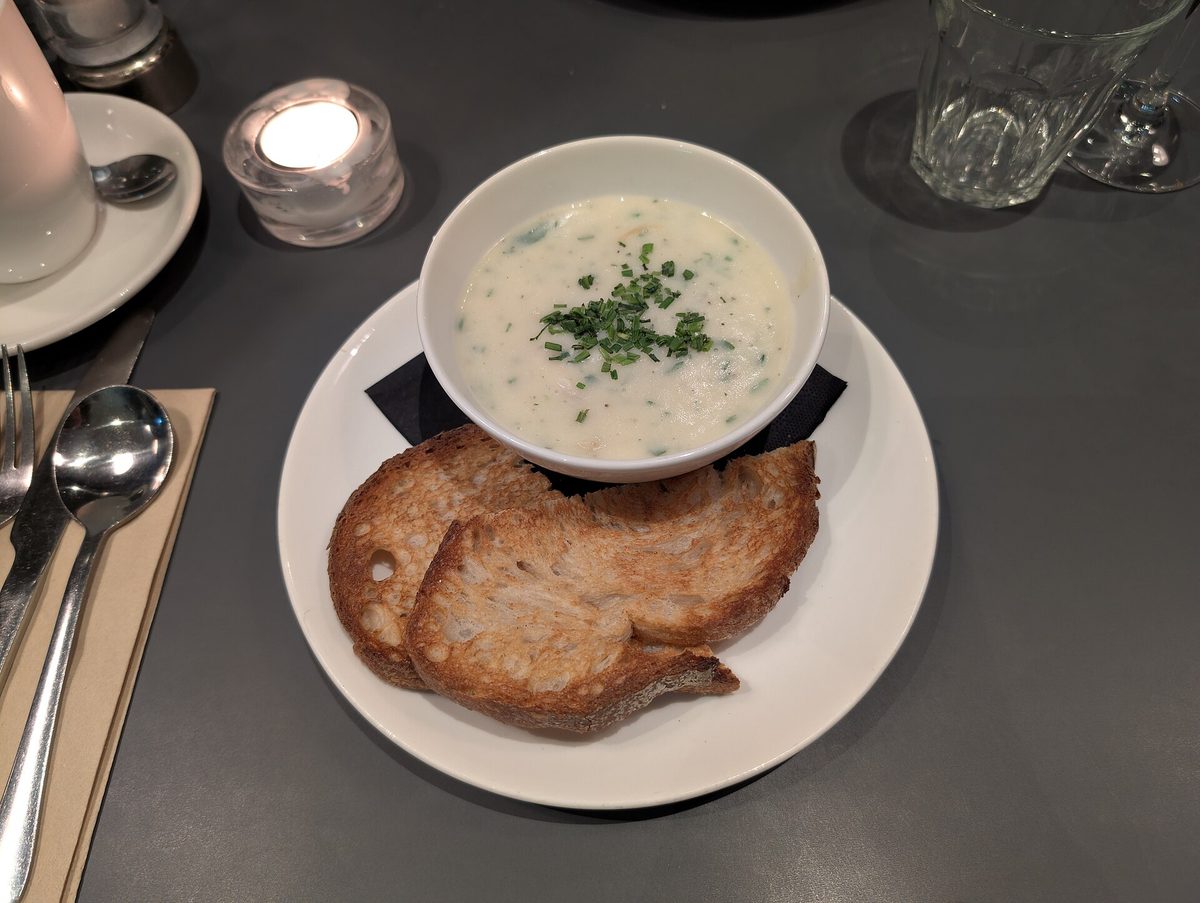
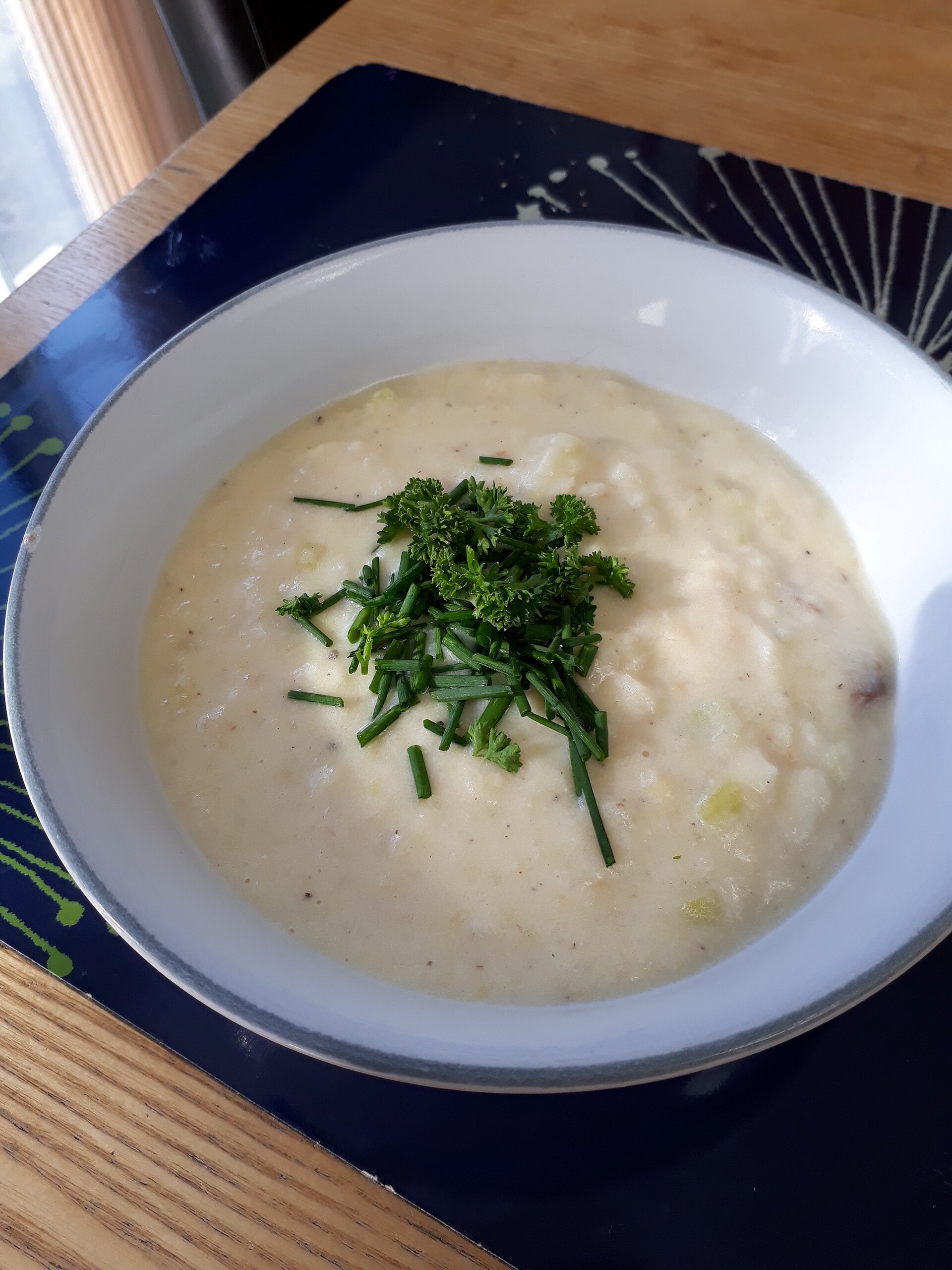
Proper cullen skink is off-white, ivory, faintly grey-beige. If it arrives a bright, uniform yellow, the kitchen has used dyed smoked haddock — the cheap supermarket stuff coloured with annatto or a similar dye to look “smokier” than it is. Undyed smoked haddock, the sort Cullen and Aberdeenshire smokehouses have always produced, is a pale straw colour at most, and it makes a pale soup.
Recipe writers will tell you the dye makes no difference to the taste. Strictly, they are right about the dye itself. Still, the colour tells you which fish the kitchen chose to buy, and that is worth knowing before you order. Luridly yellow soup is a warning, not a crime.
It should be thickened by potato, not by flour or cream
The texture should come from potato that has been cooked until it collapses and then partly mashed into the liquid. What you are looking for is a soup that clings slightly to the spoon but still runs off it, with recognisable pieces of potato and generous flakes of haddock.
What you do not want is the silky, uniform, faintly gluey texture of a roux. If you can taste flour, or if the soup coats your mouth in a way that feels engineered, someone has taken a shortcut. Equally, a bowl that is mostly double cream with a suggestion of fish in it is a fish chowder wearing a Scottish name.
It should taste of smoke, first and last
Close your eyes and the first thing you should get is smoke, then sweet potato, then dairy a distant third. Cream is optional in cullen skink and plenty of north-east cooks leave it out entirely. When cream leads, the smoke has been drowned.
The other tell is depth. A good bowl has been built by poaching the haddock in the milk and then using that milk as the base, so the smoke is dissolved through the whole thing. A weak bowl tastes of milk with smoked fish sitting in it, added at the end as an afterthought.
Soup-thick, not chowder-thick
There is a version of this dish, common in tourist-facing restaurants, that is essentially a stew. You can stand a spoon in it. It is filling and it photographs well and it is not what the soup is supposed to be. Cullen skink is thick for a soup, but it is still a soup. If you are chewing more than sipping, you are eating something else.
What arrives alongside it
Bread, almost always. Oatcakes are the traditional partner in the north-east, crumbled into the bowl for texture, and a kitchen that offers them is usually a kitchen that knows what it is doing. A wedge of decent bread and butter is fine. A single sad crouton is not a good sign.
Cullen, skink, and where the name comes from
The name puts people off, which is a shame, because the story behind it is one of the better ones in traditional Scottish cooking.
Cullen is a real place, and you can go there
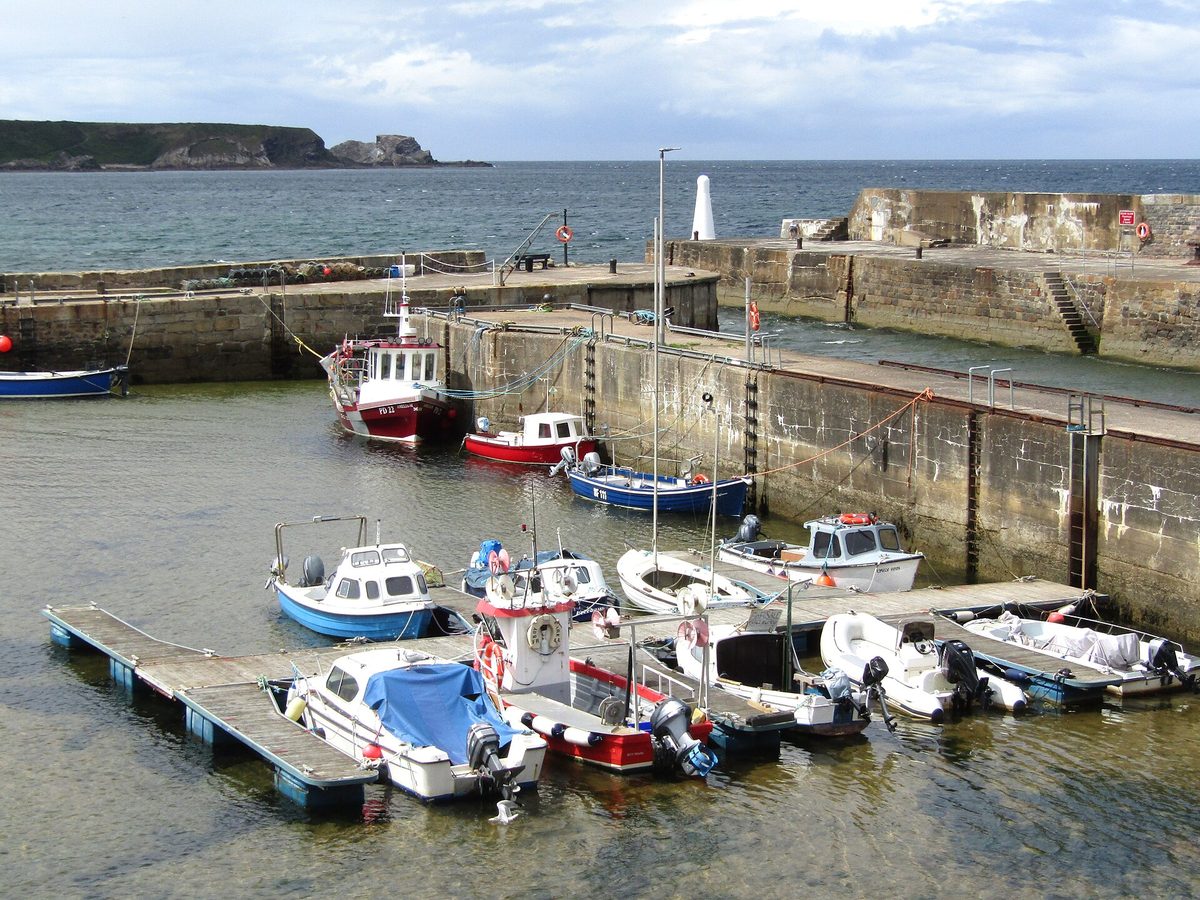
Cullen is a small village on the Moray Firth coast, roughly halfway between Elgin and Banff, with a harbour, a long beach and a disused railway viaduct running straight over the middle of the town. It is about an hour and twenty minutes’ drive east of Inverness on the A96 and then the A98, and around an hour north-west of Aberdeen.
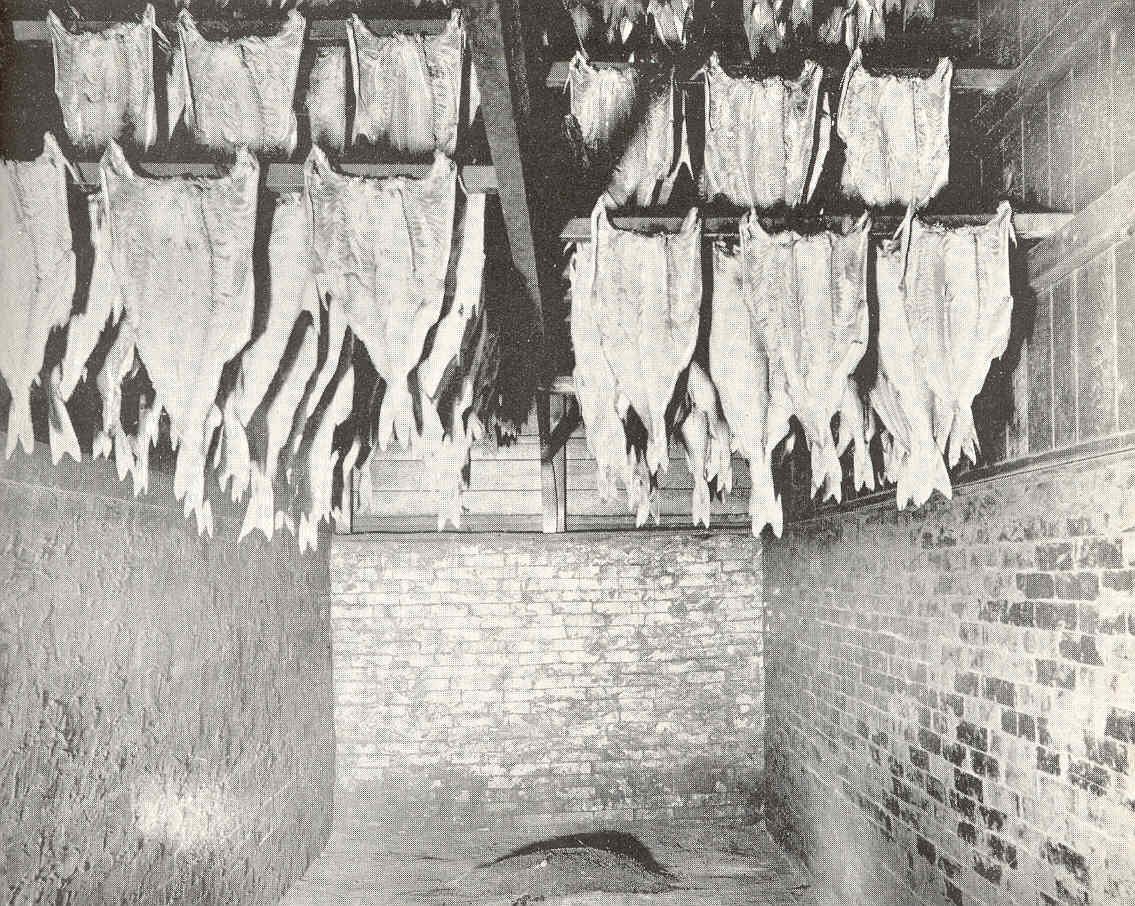
The village was a herring port and, more importantly here, a place that specialised in smoking haddock. That is the whole origin of the dish: the fish was what people had.
“Skink” means shin, and originally meant beef
Skink is a Scots word for a shin or knuckle of beef, from the Middle Dutch schenke, and it came to mean the soup you made from those cuts. Cullen skink was, at first, a beef broth. You will also see it glossed as “essence”, which is how Moray’s own tourism board puts it, and that reading suits the modern dish rather well.
By the 1890s, beef in the north-east had become an expense many households could not carry, while smoked haddock was abundant and cheap on the Cullen quayside. The name stayed and the ingredient changed. There is no lizard involved, whatever your search engine suggested.
The Cullen Skink World Championships
This is the detail almost every article misses. Cullen holds an annual Cullen Skink World Championships, usually in the Seafield Arms Hotel in the village, with two categories: traditional cullen skink and cullen skink with a twist. Judging is done blind, competitors work against the clock, and the winner is genuinely billed as world champion of a soup.
It has typically fallen in late winter or early spring — recent editions have been held in March — but dates shift year to year and it has been cancelled before, so check the organisers’ listing before you build a trip around it. If you are anywhere near the Moray coast when it is on, go. Village hall competitions of this kind are a far better window into how Scotland actually eats than any tasting menu.
Where to order cullen skink — and where to be wary
The Moray coast
Cullen itself, obviously, plus the string of villages along the same coast: Portknockie, Findochty, Buckie, Portsoy. Hotel bars here treat the soup as a matter of local pride and the fish has come a short distance. Combine it with the coastal path walk to Bow Fiddle Rock at Portknockie, which is twenty minutes from Cullen and one of the more dramatic bits of shoreline in the north-east. You are also on the edge of Speyside here, so it slots neatly into a run around the Speyside whisky distilleries.
Aberdeenshire and the north-east generally
Aberdeen, Peterhead, Fraserburgh, Stonehaven and the inland market towns all take the dish seriously. Stonehaven is a useful stop because it pairs with Dunnottar Castle on the cliffs just south of the town. Arbroath, a little further down, is smokie country rather than skink country, but the same smoking culture runs through it.
Edinburgh, Glasgow and the seafood restaurants
Good cullen skink is easy to find in Edinburgh, particularly in restaurants that specialise in Scottish seafood rather than Scottish everything. The Leith waterfront and the seafood-led places around the New Town are reliable. Our guide on where to eat in Edinburgh covers the areas worth walking to, and a guided food tour of the city will usually put a bowl in front of you alongside the other regional specialities.
The west coast and the islands
Cullen skink is an east coast dish that has travelled. On the west coast you will find it on menus in Oban, Mallaig and across the islands, and it is often very good, because those are serious fishing towns with serious kitchens. It just isn’t local. If a west coast restaurant is offering both cullen skink and a fresh langoustine or scallop dish landed that morning, order the shellfish and have the soup somewhere else.
Where I would be suspicious
Any menu that lists cullen skink between a nacho platter and a chicken burger. Any bowl that arrives yellow. Coach-stop restaurants on the tourist circuits, where the soup is made in industrial volume and reheated. And — a specific one — gastropubs in London and the south of England, where the dish has become shorthand for “we do a bit of Scottish”, usually with dyed fish and a heavy hand on the cream.
None of this means the soup will be inedible. It means you will eat a mediocre version of a dish that is genuinely excellent when made properly, and then wonder what the fuss is about.

Scotland’s other soups, and what they actually are
Cullen skink gets the attention. It is not the soup Scotland eats most, and it is not the only one worth ordering.
Scotch broth — a meal, not a starter
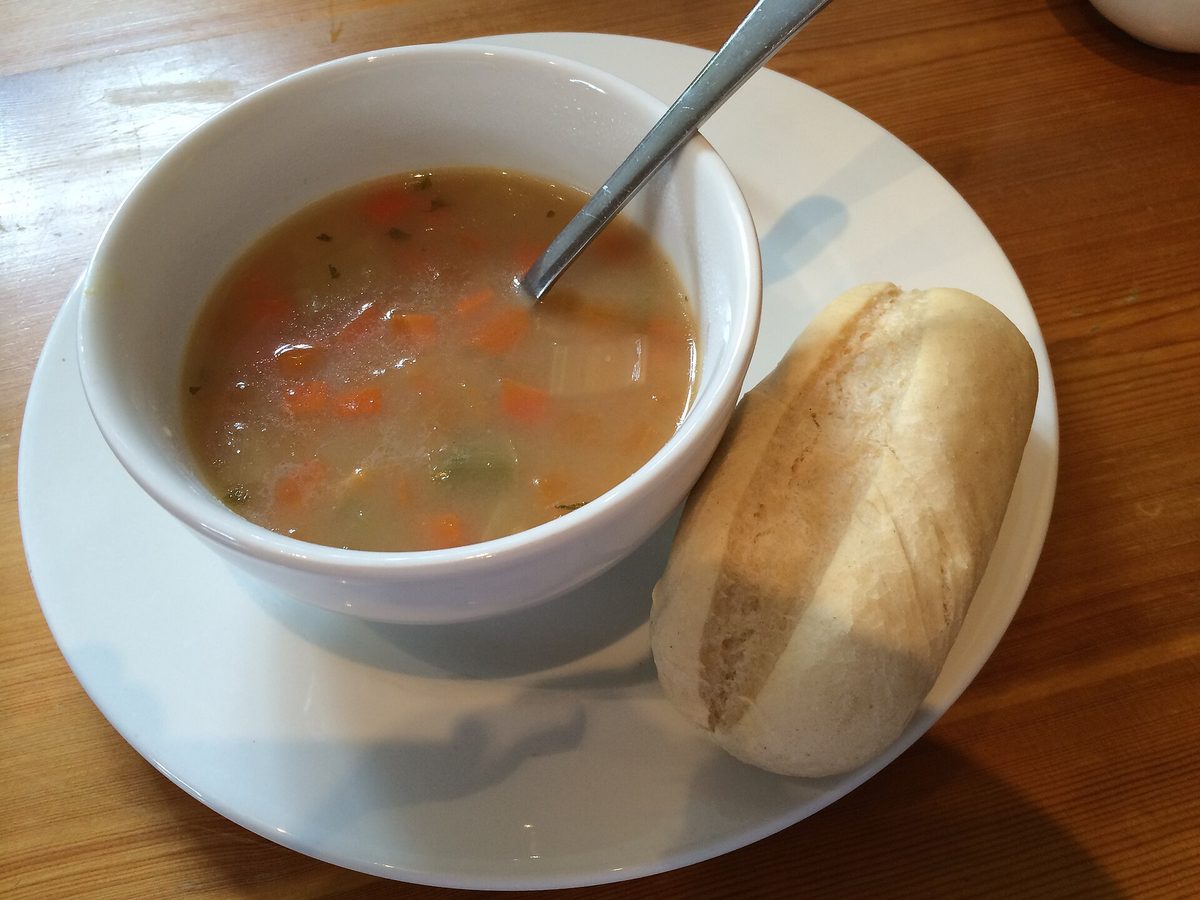
Barley, root vegetables and traditionally a mutton or lamb stock, simmered until the barley has swollen and the whole thing has gone slightly claggy. Order it as a starter at your peril: a proper bowl of Scotch broth with bread is lunch, and you will not want a main course afterwards.
Modern versions often use beef or vegetable stock, and vegetarian versions exist, but assume meat unless told otherwise. It is at its best in a Highland pub in February, after four hours outdoors, and it is one of the few dishes I would happily eat every day of a trip.
Lentil soup — the soup Scotland actually eats
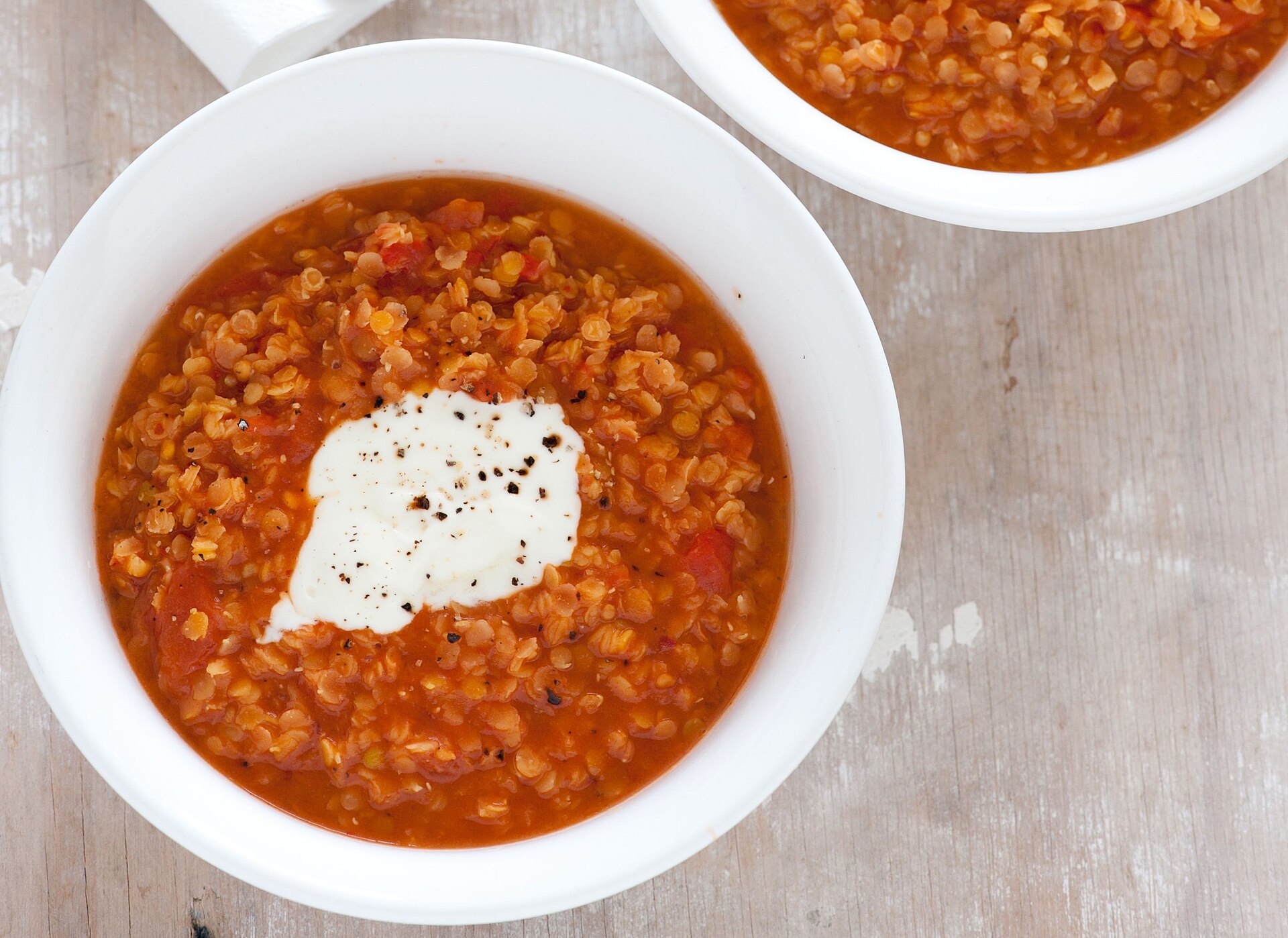
Nobody writes about lentil soup and everybody in Scotland eats it. Red lentils cooked until they disintegrate, carrot, sometimes potato or swede, usually a ham stock or a ham hough simmered in it. Thick, orange, faintly sweet, deeply unglamorous, and the single most common soup on a Scottish cafe board.
If you eat only one Scottish soup that no guidebook mentioned, make it this. And note the trap: the vast majority of Scottish lentil soup is made with ham stock, so it is not vegetarian, whatever the colour suggests.
Cock-a-leekie — and yes, keep the prunes
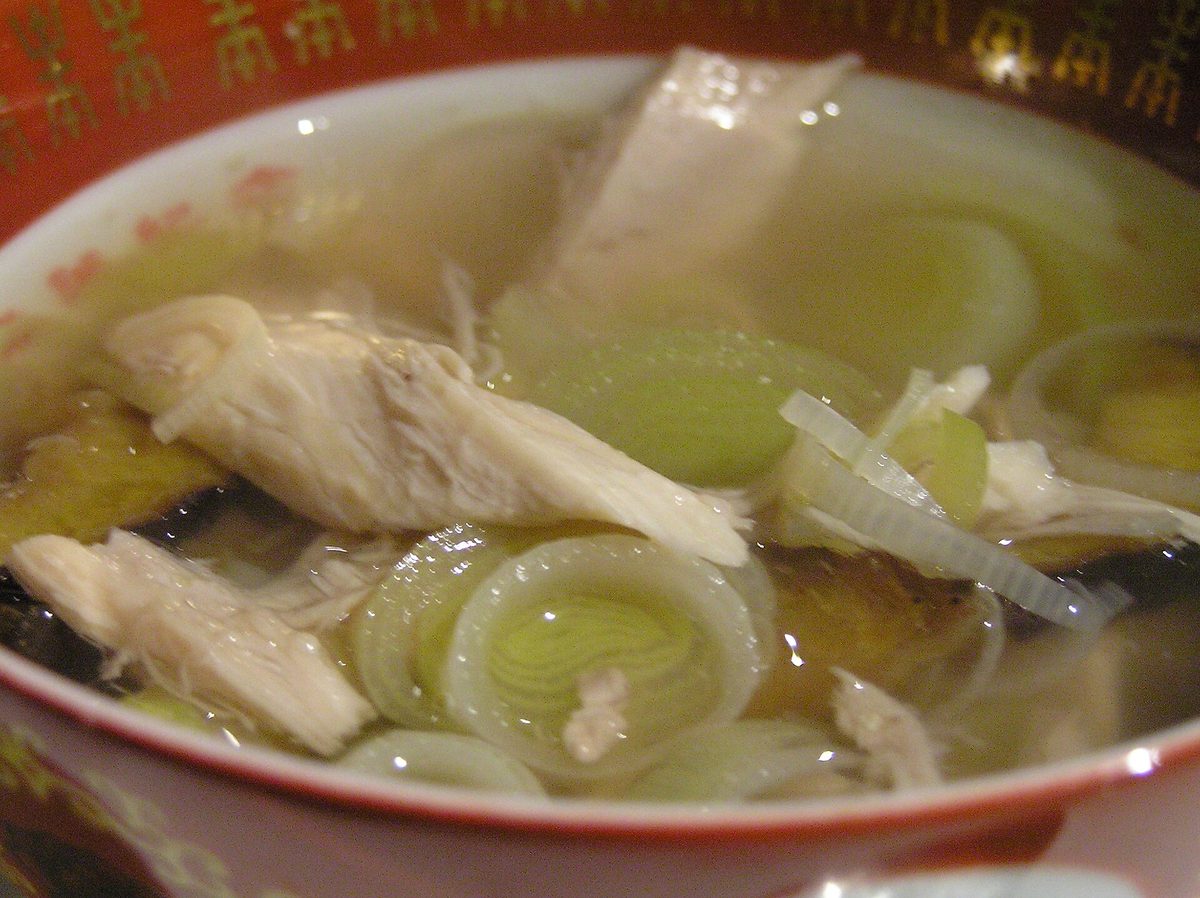
Chicken and leeks in a peppery stock, sometimes thickened with rice or barley, with prunes either cooked in or shredded over the top. A recipe for it was printed in 1598, though the name cock-a-leekie only came into use in the eighteenth century.
The prunes divide people. Half of Scotland thinks they are a Victorian affectation; the other half thinks the soup is flat without them. I am firmly on the prune side. The dark sweetness against the salt and pepper of the chicken stock is the whole point, and cock-a-leekie without them is just chicken and leek soup with a better name. You will meet it most often at a Burns supper in January or on a set menu in an older hotel.
Partan bree — crab, and worth the extra
Partan is Scots for the edible brown crab, bree means broth. Crab meat and rice cooked in stock and cream, blended smooth, usually finished with a little of the white meat stirred through.
It is the most expensive soup on this list and the one least often made well, because good crab is costly and shortcuts show. When you find it on a coastal menu in the north-east or on the west coast, it is usually there because the kitchen means it. Order it.
Tattie soup and hairst bree
Tattie soup is potato, carrot and leek in stock, sometimes with a bit of beef or lamb in the background. It sounds dull and isn’t, provided the kitchen has left some texture in the potato rather than blitzing it to wallpaper paste. Hairst bree — harvest broth, also called hotch potch — is its late-summer cousin, usually made with lamb and whatever fresh vegetables the season has produced. You will find hairst bree far more often in old cookbooks than on menus.
Nettle soup
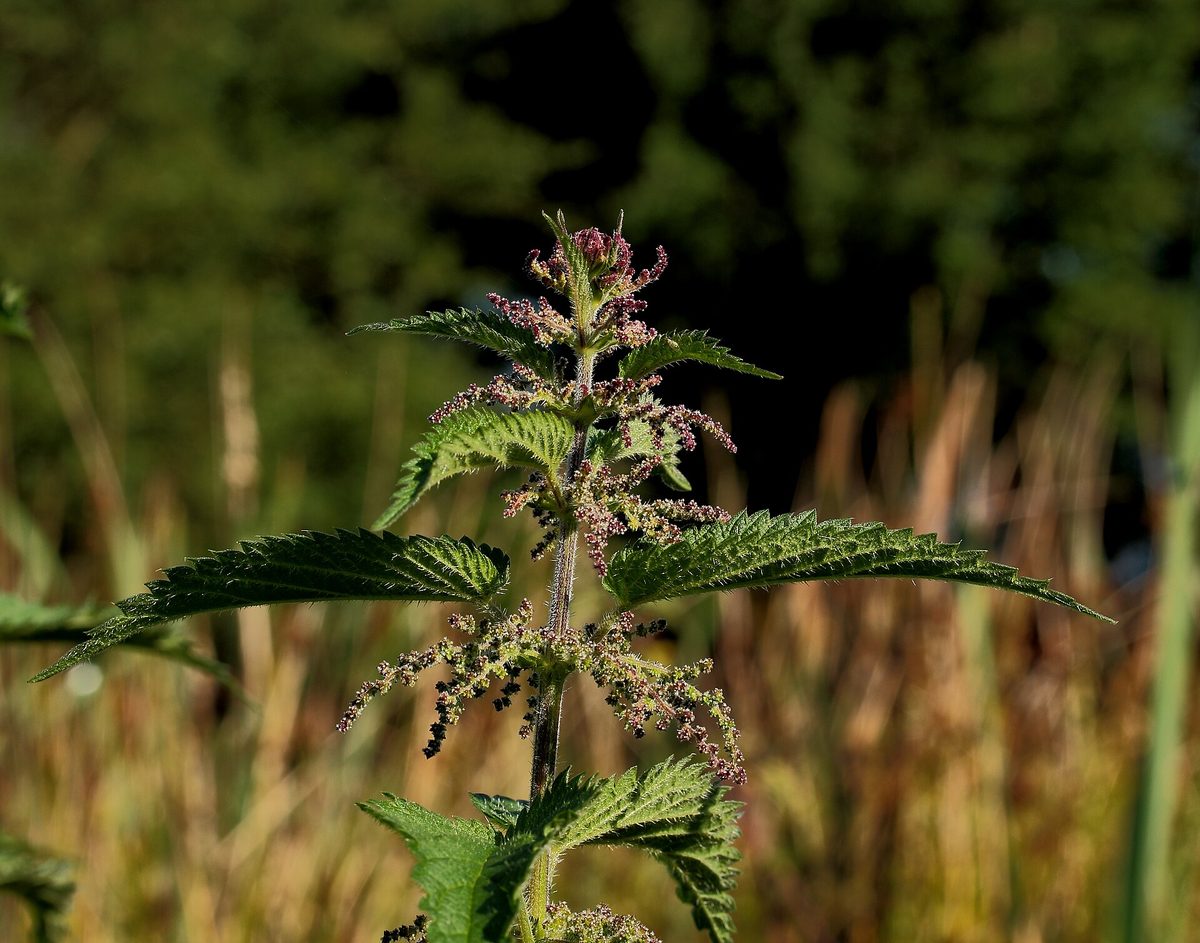
A genuine spring dish, made with young nettle tops picked before the plants flower, usually with potato for body. Roughly March to May, and mostly on menus at places that make a point of foraging. It tastes greener and more mineral than spinach soup, which is the closest comparison. Worth trying once if the season lines up.
Highland game broth
Less a fixed recipe than a category: venison, pheasant or grouse bones simmered down with barley and root vegetables, appearing on Highland and Perthshire menus through the shooting season and into winter. Dark, savoury and considerably better than the venison burger it usually sits near on the same menu. Estate hotels and country pubs across the Scottish Highlands are where you’ll find it.
Soup of the day
The single most useful item on any Scottish pub menu. It is nearly always homemade, nearly always the cheapest thing listed, and in an ordinary pub with an unambitious kitchen it is very often the best thing you can order. Ask what it is. If the answer comes back fast and specific — “carrot and coriander” or “mince and tattie” — it was made that morning. If the answer is vague, order something else.
When and where a visitor actually eats soup in Scotland
It is a November-to-March food, and that is not a limitation
Soup is on Scottish menus year round but it comes into its own between November and March, when it stops being a course and starts being a response to the weather. Order it in July and it is pleasant. Order it in a stone-floored pub in January with the rain going sideways outside and it makes complete sense. If you are visiting Scotland in winter, budget for eating a great deal of it, and check the month-by-month weather so you know what you are walking into.
It is the standard hillwalker’s lunch
Every walking area in Scotland has a pub or cafe where the soup exists primarily to bring hillwalkers back up to temperature. Glencoe, Aviemore, Fort William, Torridon, the Cairngorm villages. This is soup as infrastructure. If you are hiking in Scotland, plan your day around a soup stop rather than a sandwich and you’ll have a better time of it.
It is the cheapest good meal in the country
Around £6–8 buys a bowl of homemade soup and bread almost anywhere in Scotland in 2026. Nothing else on a Scottish menu delivers that ratio. If you are watching the budget on a long trip — a fortnight touring, or a week on the North Coast 500 where restaurant options thin out fast — soup at lunch and a proper dinner is a far better strategy than two mediocre mains.
It is the reliable order when the menu is average
You will eat in places where the mains are frozen and the desserts came in a box. The soup, in those same places, is usually made on site by someone who has made it a thousand times. This is not a compromise. It is a genuinely good bowl of food arriving in a room that is not otherwise going to feed you well.

Dietary realities you need to know before you order
This trips up more visitors than anything else, so I’ll be blunt: most traditional Scottish soups are not vegetarian, and several of the ones that look vegetarian are the worst offenders.
The meat-stock problem
Lentil soup usually has ham stock. Scotch broth is built on mutton or lamb. Tattie soup often has a beef or lamb base. Cock-a-leekie is chicken. None of these will necessarily be flagged on a chalkboard, because to the kitchen it is not an ingredient worth mentioning — it is simply how the soup is made.
Ask directly: “is that made with a meat stock?” Staff answer this question several times a day and nobody will find it odd. Vegetarian versions of Scotch broth and lentil soup are increasingly common, especially in cities and in newer cafes, but you have to confirm rather than assume.
Dairy, gluten and fish
Cullen skink contains milk and usually butter, and there is no meaningful dairy-free version of it. Partan bree contains cream. Scotch broth and lentil soup are generally dairy-free but the bread beside them is not gluten-free unless you ask — most kitchens can swap in oatcakes. Anyone with a fish or shellfish allergy should be aware that cullen skink, partan bree and Scottish seafood chowder are all made in kitchens where cross-contact is likely.
Salt
Smoked haddock is cured and salty, and cullen skink made properly with the poaching milk carries that through. It is a well-seasoned dish by nature. If you are watching your salt, this is not the soup for you, and Scotch broth or tattie soup will suit you better.
Building a trip around it: practical planning
How long you need
You do not need a dedicated trip. Cullen and the Moray coast work well as two days bolted onto a Highlands itinerary, or as a single long day out. From Inverness the drive east to Cullen is around an hour and twenty minutes each way; from Aberdeen it is around an hour. Give yourself an overnight if you want to walk the coastal path as well as eat.
Getting there
A car is by far the easiest way to reach the Moray coast villages. There are buses along the A98 corridor between Elgin, Cullen and Banff, and trains run to Elgin and Keith on the Inverness–Aberdeen line, but the villages themselves need a bus connection or a taxi. Our notes on getting around Scotland set out the realistic options. If you would rather not drive at all, a small-group tour covering Speyside will usually get you close.
What to book, and when
Almost nothing needs booking. Soup is not a reservation dish. The exceptions: Sunday lunch in small coastal villages, where kitchens close early or don’t open at all. It is entirely possible to drive to Cullen on a Sunday and find nothing serving. Ring ahead. Restaurant dinner in Edinburgh in August during the festivals needs booking weeks out. And if the Cullen Skink World Championships is your reason for going, sort accommodation early, because the village is small.
Fitting it into a bigger trip
The Moray coast sits neatly between Speyside and Aberdeenshire, so it combines well with distilleries, castles and the coastal path. If you’re working out the best time to visit Scotland, the north-east is at its most likeable in late spring and early autumn, though the soup argument favours winter. First-timers should read our advice for a first trip to Scotland before committing to a route.
What underwhelms, and the mistakes people make
Cullen itself is a working village, not an attraction
Let me be honest: people arrive in Cullen expecting a shrine to the soup and find a quiet village with a beach, a viaduct, a few hotels and an ice cream shop. That is all it needs to be, and the beach and the coastal walk are genuinely good, but if you are driving two hours purely to eat a bowl of soup in the place it was named after, manage your expectations. Go for the coast and eat well while you’re there.
Ordering it as a starter before a big main
Cullen skink is dense. So is Scotch broth. Ordering either before a plate of steak pie is a rookie error that leaves you defeated halfway through the main. Either have the soup as your meal with bread, or share a bowl between two.
Assuming every Scottish restaurant does it well
The dish is on menus all over the country, including in kitchens with no particular interest in it. Regional origin still matters here in a way it doesn’t for, say, haggis, which is made well across Scotland. Cullen skink is best where the smokehouses are.
Skipping the soup because you had a big breakfast
A common pattern: visitors work through a full Scottish breakfast, skip lunch entirely, then eat a heavy dinner. You miss the best-value eating in the country doing that. A small breakfast and a soup lunch is the better shape for a Scottish day, and leaves room for the Scottish puddings that show up on the same menus.
Expecting chowder
North American visitors in particular arrive expecting clam chowder and get something thinner, smokier and less creamy. It is not a failed chowder. It is a different thing, and once you stop measuring it against chowder it is much better.
Frequently asked questions
What does cullen skink taste like?
Smoke first, then sweet soft potato, then a background of milk. It is savoury and quite salty, thick without being heavy, and much less creamy than its appearance suggests. If you like smoked fish you will like it immediately. If you don’t, the smoke is not something you can eat around — it dominates.
Is cullen skink the same as fish chowder?
No. Chowder usually contains several kinds of fish or shellfish, often bacon, and leans heavily on cream. Cullen skink uses one fish, smoked haddock, and is thickened with potato rather than cream or flour. The result is smokier, thinner and more direct than a chowder, and it is a single-flavour dish rather than a mixture.
Why is my cullen skink bright yellow?
Because the kitchen used dyed smoked haddock rather than undyed. Dyed fillets are cheaper and widely sold in UK supermarkets. The dye itself does not damage the flavour, but it usually signals a kitchen buying on price, and the bowl tends to disappoint for reasons that go beyond the colour.
Where is the best place to eat cullen skink in Scotland?
The Moray coast around Cullen, Portknockie and Portsoy, and the wider Aberdeenshire north-east, where the smokehouses are and the fish travels a short distance. Good seafood-focused restaurants in Edinburgh, Glasgow and the west coast fishing towns also do it well. Avoid it in high-turnover tourist restaurants that serve everything.
Is Scottish soup vegetarian?
Frequently not. Lentil soup usually contains ham stock, Scotch broth is made with lamb or mutton, cock-a-leekie is chicken and tattie soup often has a meat base. Vegetarian versions exist and are increasingly common in cities, but you should always ask directly rather than assume from the ingredients you can see.
How much does a bowl of soup cost in Scotland?
Expect around £5–8 for a bowl with bread in a pub or cafe in 2026, and around £7–10 for cullen skink as a restaurant starter. Partan bree costs more, often £9–12, because good crab is expensive. Prices vary by region and rise sharply in central Edinburgh, so check before ordering.
What is the national soup of Scotland?
Cock-a-leekie is the soup known by that title, backed by a printed recipe dating to 1598 and its fixed place at Burns suppers. Scotch broth has an equal claim by weight of consumption. Cullen skink is the most internationally famous, but it is a regional dish from one stretch of coast.
When are the Cullen Skink World Championships held?
Usually in the Seafield Arms Hotel in Cullen, in late winter or early spring — recent years have been held in March. There are two categories, traditional and “with a twist”, judged blind. Dates and format change year to year and the event has been cancelled in the past, so confirm with the organisers before planning around it.
Final thoughts
Scotland’s soups are the least fashionable and most consistently good part of its cooking, and cullen skink is the one worth learning to judge properly, because the gap between a good bowl and a lazy one is enormous. Look for pale, smell for smoke, and take the oatcakes if they’re offered.
Beyond that: order the soup of the day when the menu looks average, ask about the stock if you don’t eat meat, and treat a bowl of Scotch broth in February as the meal it is. For everything else on a Scottish menu, our complete food and drink guide and our broader Scotland travel tips will fill in the gaps.
About the author: This guide was written and is maintained by the ScotlandTourism.org editorial team — travel writers who’ve spent years exploring Scotland’s cities, Highlands and islands, from bagging Munros to chasing the perfect dram. We update our guides regularly to keep prices, opening details and advice current.
Last updated: November 2026. Prices and opening times change — always check the official site before you travel.
Photo credits
All images are used under their respective Creative Commons or public-domain licenses:
- A bowl of cullen skink served with toasted bread, pale rather than … — Andy Li, CC0, via Wikimedia Commons
- Cullen harbour on the Moray Firth, the village that gave cullen ski… — Colin Smith, CC BY-SA 2.0, via Geograph
- Haddock hanging in a traditional smokehouse, the origin of finnan h… — Charles Hugh Stevenson, Public domain, via Wikimedia Commons
- Bow Fiddle Rock on the Moray coast, a short walk along from Cullen — Alan Hodgson, CC BY-SA 2.0, via Geograph
- Scotch broth with barley and root vegetables, served with a bread roll — bnhsu, CC BY-SA 2.0, via Wikimedia Commons
- Cock-a-leekie soup with chicken, sliced leeks and dark pieces of prune — Laurel F, CC BY-SA 2.0, via Wikimedia Commons
- Stinging nettles, picked young in spring for Scottish nettle soup — Dominicus Johannes Bergsma, CC BY-SA 4.0, via Wikimedia Commons
- A traditional pub interior, where soup of the day is often the safe… — Brian McNeil, CC BY 3.0, via Wikimedia Commons
- Red lentil soup: Red lentil soup bowl by jules, CC BY 2.0, via Wikimedia Commons.
- Cullen skink in Aberdeenshire: My Cullen Skink Soup by Iain Cameron, CC BY 2.0, via Wikimedia Commons.