The obvious way to do Balmoral Castle is to put the postcode in from Aberdeen and treat the road in between as scenery to be got past. Do it that way and you pay to walk round some gardens, look at one very large room, perhaps buy a shortbread tin, and drive home wondering what the day was for.
Balmoral is the name that sells Royal Deeside, and it is comfortably the least interesting stop in the valley. The road itself, the four other castles strung along it, the granite villages, the gorges above Braemar and the hill road over the Cairnwell — that is the trip. Balmoral is a footnote you can enjoy if the timing happens to work. This guide is built the way I wish someone had built it for me: valley first, castle second.
Is Balmoral Castle worth visiting? The short answer
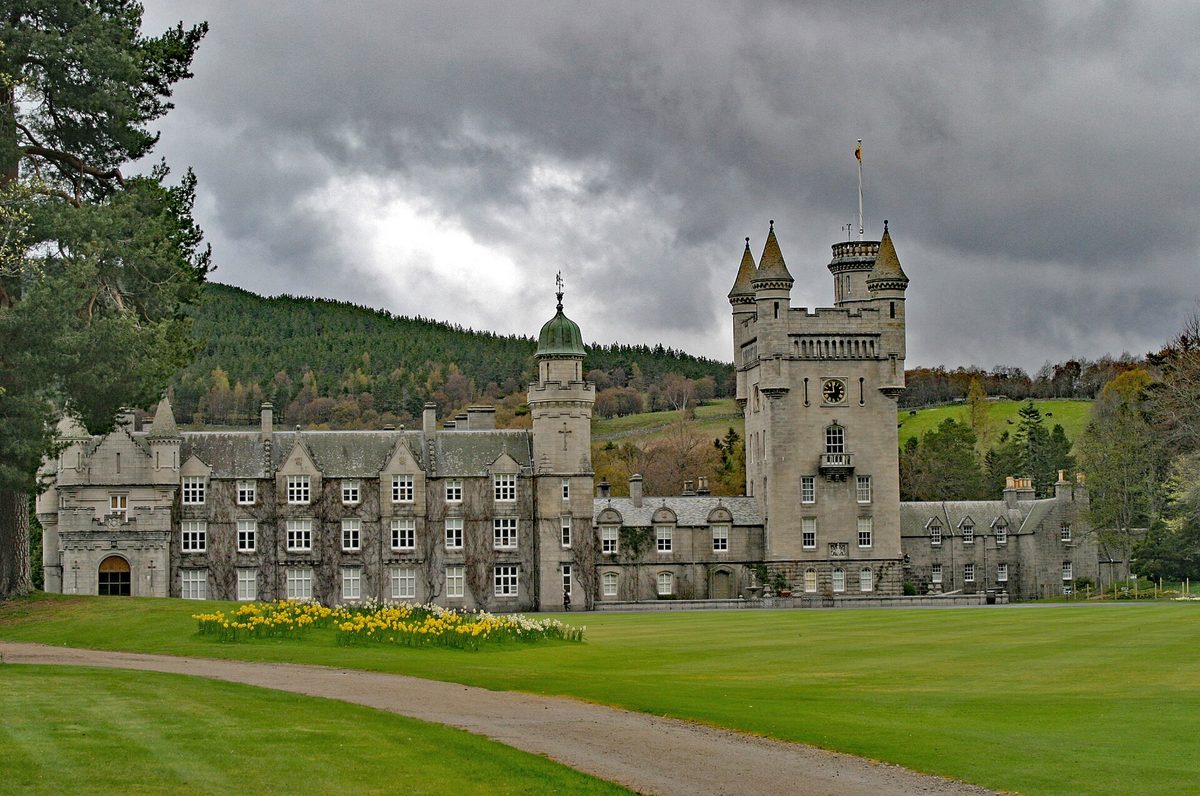
Balmoral is worth an hour or two if you are already on Deeside and the estate is open. It is a private home, not a museum: a normal ticket buys the grounds, the gardens and one room, not the house. The valley around it — Braemar, the Linn of Dee, the other Deeside castles — deserves two days on its own.
Royal Deeside at a glance
Prices and opening patterns below change from season to season. Treat this as a shape to plan around and check each operator’s own site before you commit to a drive.
| Stop | What you actually get | Adult admission (approx.) | Time to allow |
|---|---|---|---|
| Balmoral Castle & Estate, Crathie | Grounds, gardens, exhibition in the Ballroom, cafe and shop | Around £18 in summer; around £10 in the shorter autumn season | 1.5–2.5 hours |
| Crathes Castle, near Banchory | Tower house interior, painted ceilings, walled garden, woodland trails | Around £18, plus £5 parking | 2.5–3.5 hours |
| Drum Castle, near Peterculter | Guided tour of the Jacobean house, walled rose garden (the Old Wood is shut after fallen trees) | £18, plus £5 parking | 2–3 hours |
| Craigievar Castle, near Alford | Small-group guided tour of the pink tower; free grounds | Around £18, plus £5 parking | 1.5–2 hours plus the detour |
| Braemar Castle | Community-run tower house, restored interiors, self-paced | Around £16, plus £4 parking | 1–1.5 hours |
| Royal Lochnagar Distillery, Crathie | Working distillery tour and tasting, one mile from Balmoral | Tours from around £22 | 1–1.5 hours |
| Linn of Dee, Mar Lodge Estate | River gorge, easy-access trail, gateway to the high Cairngorms | Free entry; parking around £5 | 45 minutes to half a day |
| Braemar Gathering | The Highland games the King attends, first Saturday in September | General admission from around £20 | A full day |
What a Balmoral Castle ticket actually buys you
This is the part every other page glosses over, so let me be blunt about it. Balmoral is the private property of the monarch, bought by Queen Victoria and Prince Albert in 1852 and rebuilt from 1853. It is not run by Historic Environment Scotland or the National Trust for Scotland. Your HES Explorer Pass does nothing here. Neither does NTS membership, which is genuinely annoying if you have bought one specifically to tour Aberdeenshire’s castles — it covers Crathes, Drum and Craigievar and stops dead at the Balmoral gates.
The season is short, and it moves
The estate closes to visitors when the Royal Family are in residence, which is roughly August and September. The rest of the year the estate publishes its own calendar of opening days on balmoralcastle.com, and it is worth checking before you drive out: in 2026 an autumn opening followed, and from 4 November admission to the grounds is free while the Castle Ballroom is closed.
The direction of travel is more access, not less: interior guided tours of parts of the castle have appeared on the calendar in recent seasons, which was unthinkable a decade ago. But the dates genuinely shift year to year, and the estate has been known to close at short notice. Before you commit to a two-hour round trip from Aberdeen, open balmoralcastle.com and look at the opening-times calendar. I cannot stress this enough. It is the single most common way people waste a Deeside day.
Tickets, prices and the interior tours
Admission changes with the season. In the autumn opening it is £10 for an adult and free for under-16s, which is fair value for what you get. Summer prices are set season by season, so look them up when you plan. Parking is charged separately, in the region of £6 per car in the car parks off the A93 at Crathie, with a higher rate for motorhomes.
The interior guided tours are the interesting development and the thing to book if you are a serious royalist. They run on limited dates only, take a dozen people at a time, cost a great deal more than a general admission ticket, and go on sale online well in advance. They sell out. If that is why you are coming to Scotland, plan your entire trip around the ticket release rather than the other way round.
What you see, and what you don’t
General admission gets you the Castle Ballroom, the gardens and the grounds. There is a restaurant, a Mews gift shop and a second shop at the main gate. A free self-guided audio tour runs through the estate’s own phone app with around ten stops; download it before you arrive, because the mobile signal on that stretch of the A93 is patchy.
You do not see the private apartments. You do not see the Royal Family. You will not see the King’s study or the drawing room where the family gather. The walking is genuinely pleasant — the Cairns Walk visits the memorial cairns the family have raised across the hillside, of which Prince Albert’s Pyramid is the largest, put up by Queen Victoria after his death in 1861 — but parts of it close at certain times of year, so check on the day. Dogs are welcome on a lead, which for once is a real advantage over most of Scotland’s big castle attractions.
Crathie Kirk and Royal Lochnagar, the two stops right next door
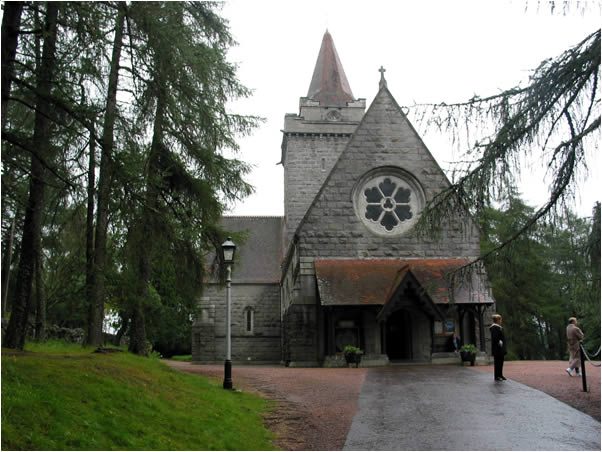
Almost nobody writes about Crathie Kirk and it is a hundred metres from the Balmoral car park, on the other side of the A93. This is the small granite parish church the Royal Family have worshipped in since Queen Victoria’s day; she laid the foundation stone in 1893 and the present building was dedicated in 1895, paid for largely by public subscription. Visible from the front door are the ruins of the old 14th-century church of St Monire and the graveyard where John Brown, Victoria’s ghillie, is buried. Its opening is seasonal, so check before you cross the road. If Balmoral is closed the day you turn up, this is your consolation prize and it is a decent one.
A mile up the road at Crathie sits Royal Lochnagar, one of the smallest traditional distilleries in Scotland. It was founded in 1845 by John Begg and picked up its royal prefix after Victoria and Albert walked over from Balmoral in 1848 — the sort of neighbourly visit that has kept a brand alive for nearly two centuries. Tours start at around £22 for a straightforward hour, rising steeply for the warehouse tastings. It opens later in summer, usually to 6pm from June to August. If you are working your way round Scotland’s whisky distilleries and their tour options, this one is a genuinely small operation rather than a visitor-centre production line, and all the better for it.
The castles of Royal Deeside, in the order you’ll meet them
Head west out of Aberdeen on the A93 and the castles come at you in a sensible sequence. I would argue three of the four below are better visits than Balmoral. If you want the wider national picture, our guide to castles in Scotland and how to plan a castle trip sets out the regions; the shortlist of the best castles in Scotland puts Deeside in context against Skye, Argyll and the Borders.
Drum Castle — 10 miles from Aberdeen
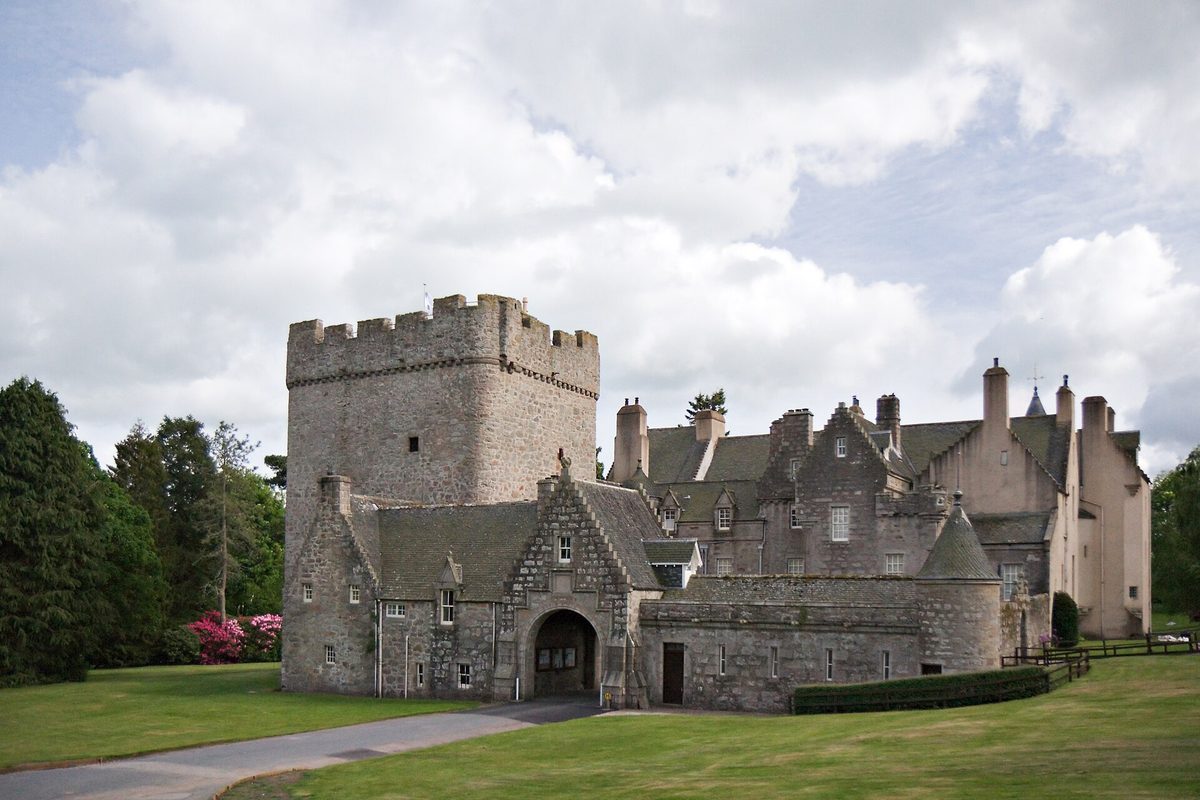
Half a mile off the A93 near Peterculter, Drum is the first proper stop. Its great square tower is one of the earliest intact tower houses in Scotland, with a Jacobean mansion grafted on to it and a long Victorian layer on top of that. The Irvine family held it for something like six and a half centuries, which is a run of continuity you can feel in the rooms.
The castle is seasonal, with the grounds open from dawn to dusk, so check the National Trust for Scotland’s Drum page for opening days. Entry to the house is by guided tour, running through the day, with last admissions well before closing. The walled rose garden is the real draw for a lot of people, laid out in period sections. Beyond it, the Old Wood of Drum is ancient woodland with a history going back to the 12th century, though it is closed after fallen trees until the area is made safe. Adult entry has been around £18, plus £5 for the car park; a garden-only ticket runs around £5 if the house is not your priority.
Crathes Castle — the best castle on Deeside
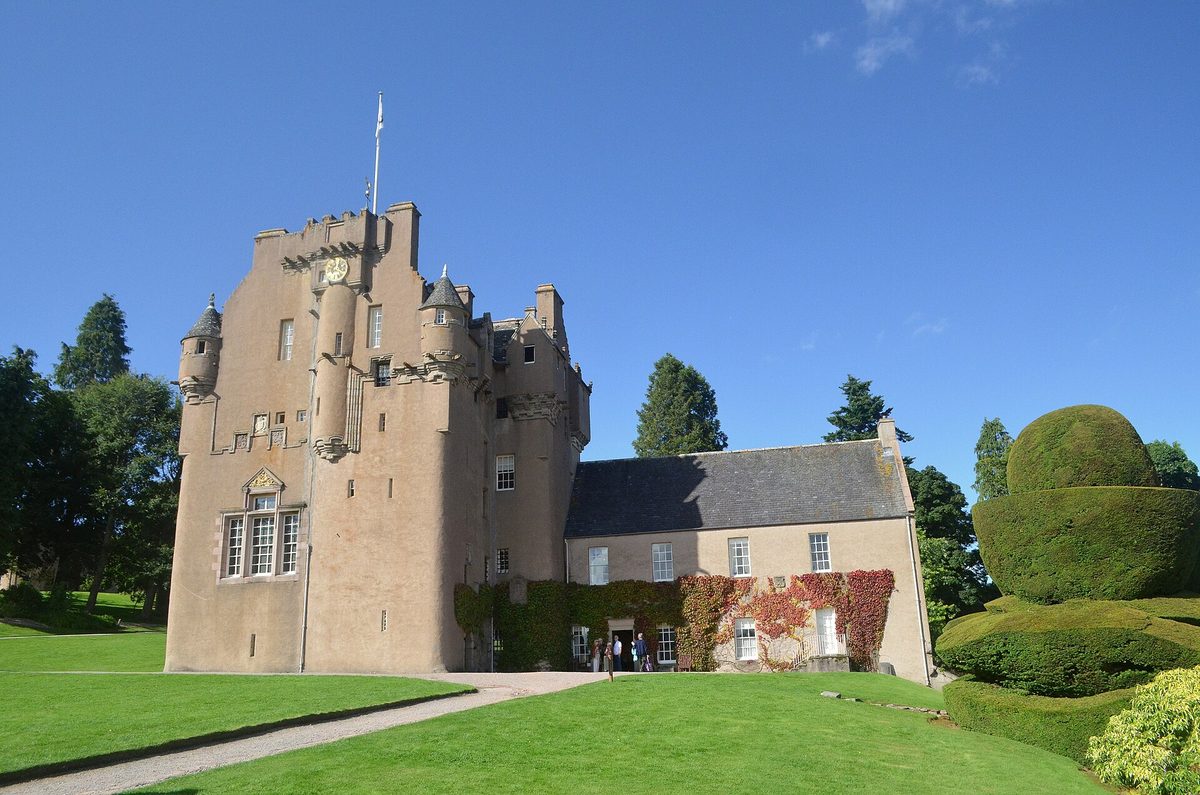
If you only stop at one castle between Aberdeen and Ballater, make it Crathes, three miles east of Banchory. It looks the part — a pink-harled 16th-century tower house with corbelled turrets and a clock tower — but the reason to go inside is the painted ceilings. The Chamber of the Muses, the Chamber of the Nine Worthies and the Green Lady’s Room keep their Renaissance painted ceilings; several lay long hidden under Georgian plasterwork until they were re-exposed in 1913. Very little else like it survives in Scotland.
Hanging in the Hall is the Horn of Leys, an ivory hunting horn the Burnett family have kept for six hundred-odd years, said to have been given to them by Robert the Bruce. The walled garden is arranged as a series of eight linked rooms, and the great yew hedges that divide them are commonly dated to around 1702 — they are chest-high walls of dark green that have been clipped continuously for three centuries.
Practicalities: last entry to the castle is at 4.15pm, and opening days change through the year, so check the National Trust for Scotland’s Crathes page for the dates you want. You cannot pre-book — it is first come, first served, so arrive before eleven on a July Saturday. Adult admission has been around £18 with £5 parking, and there is a large woodland adventure play area that runs in the school holidays and will buy you an hour of peace if you are travelling with children.
Craigievar Castle — worth the detour off the valley
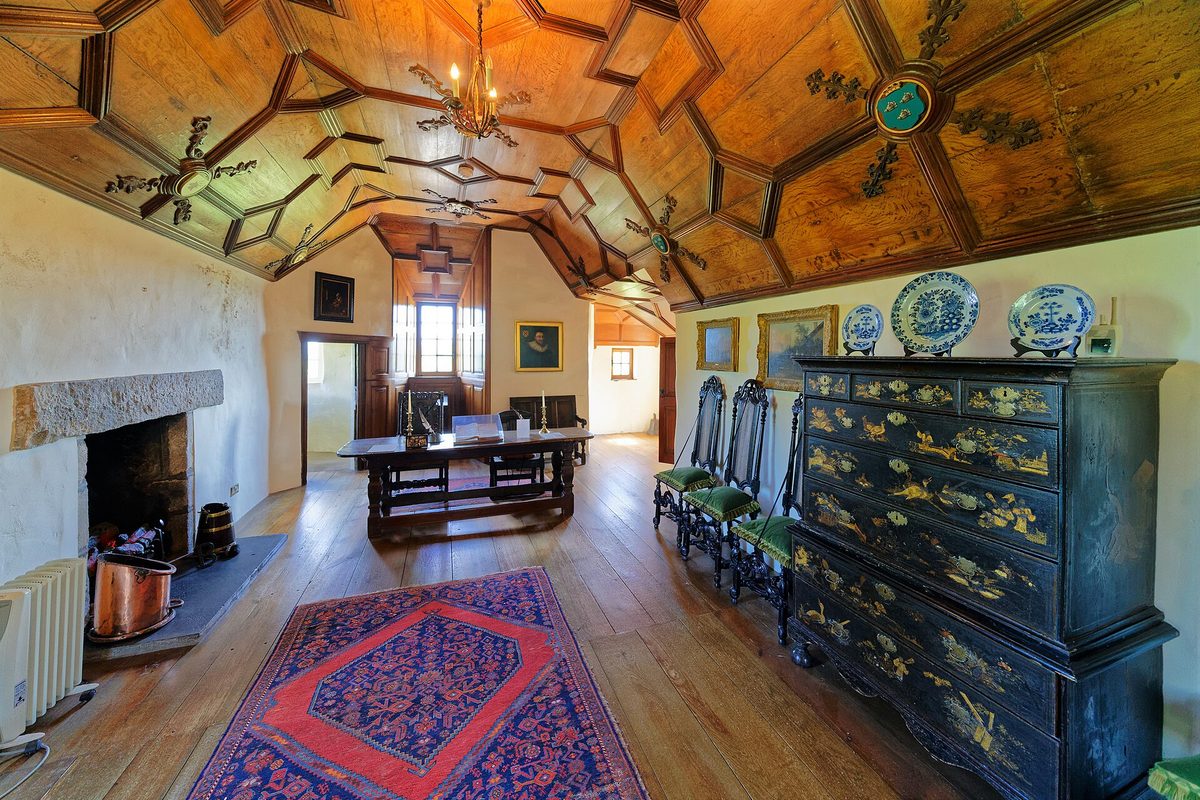
Craigievar is not on Deeside. It sits off the A980 between Alford and Banchory, about 26 miles west of Aberdeen and 15 miles north-west of Banchory, and reaching it means a proper detour up and over from the Dee valley. Do it anyway. It is the pink fairy-tale tower — seven storeys of harled granite tapering into a crown of turrets and corbelling, finished around 1626 for William Forbes and lived in as a family home until the 1960s. The resemblance to a certain Disney castle is widely remarked on and hard to unsee.
It reopened on 31 May 2024 after a conservation project that repaired the harling and used more than 13,000 litres of specially mixed limewash to bring the colour back. The pink is arresting in low autumn light and slightly absurd in bright sun.
Access is by guided tour only, capped at around ten people, first come first served with no advance booking, running roughly every half-hour to forty-five minutes. The season is short — broadly daily in high summer, then Friday to Monday through September and up to 25 October — and the castle shuts once the last tour starts, so a late arrival means a wasted drive. From 26 October to 25 March 2027 the castle is closed, but the grounds and woodland stay open, free, every day from dawn to dusk. Mobile coverage out there is poor and sat navs have a habit of routing people down a south drive that vehicles cannot use, so follow the brown signs rather than the phone.
Braemar Castle — the one that surprised me
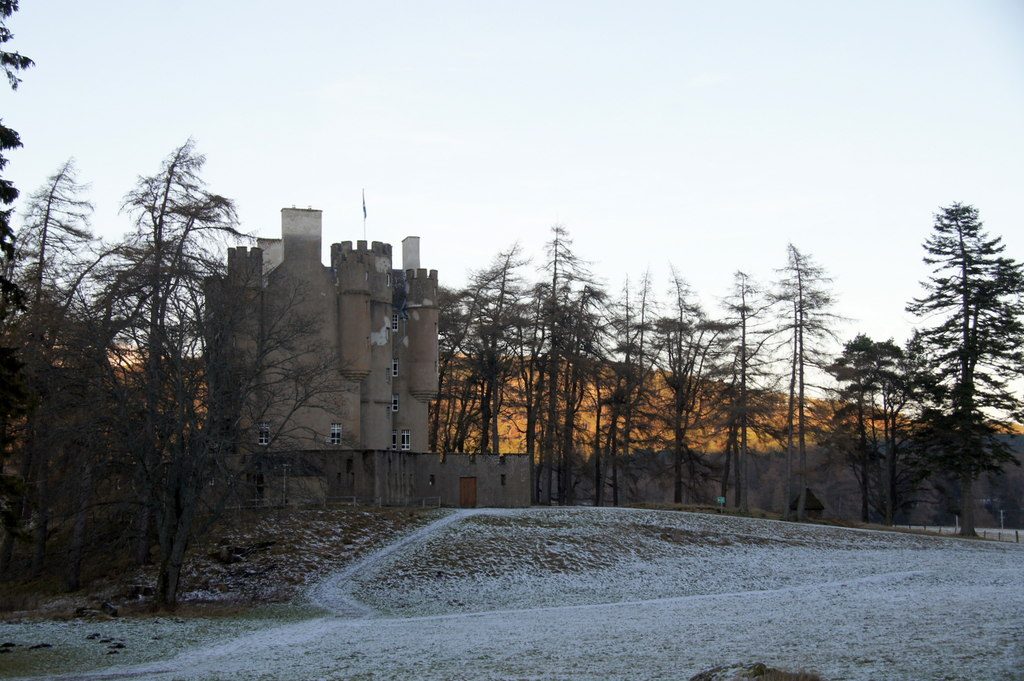
Braemar Castle sits on a knoll just outside the village on the A93, and it is the most likeable of the lot. It is run by and for the village: leased to the community in 2007, looked after by a team of volunteers and staff, and reopened on 2 May 2024 after restoration.
That community care shows in the visit. Nobody is herding you. The interpretation is written by people who actually know the place, the tone is less reverent than the big estates, and the whole thing takes an hour without ever feeling thin. Adult admission is £16, children aged 5 to 15 pay £8, and a family ticket for two adults and up to three children is £33; the parking fee is refunded when you buy admission. It opens Wednesday to Sunday in April and October and daily from May through September — and it closes on Gathering day in early September, so plan accordingly.
The drive is the point: the A93 and the Snow Roads
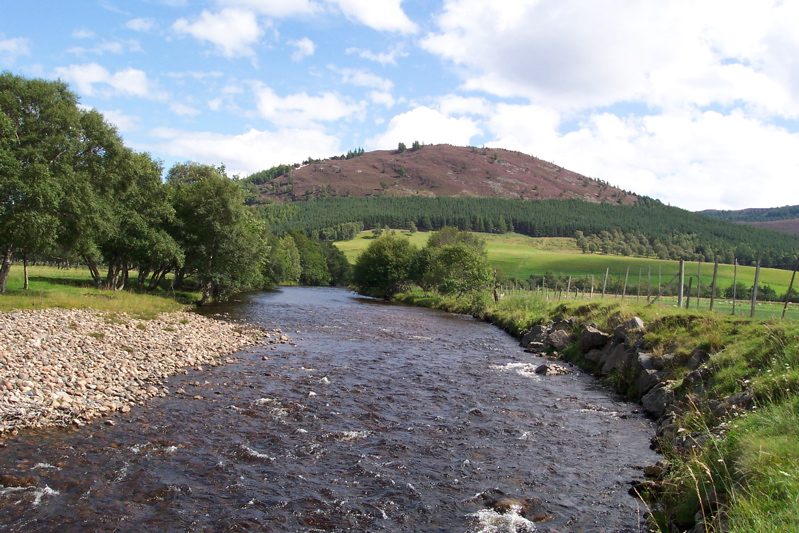
The A93 runs west from Aberdeen through Banchory, Kincardine O’Neil, Aboyne, Dinnet, Ballater, Crathie and Braemar, then turns south over the Cairnwell to Glenshee, Blairgowrie and Perth. You are alongside the River Dee for almost all of it. Fifty-eight miles Aberdeen to Braemar, and if you drove it without stopping you would do it in about an hour and a half. Nobody should drive it without stopping.
Aberdeen to Ballater — the wooded, farmed stretch
The first forty miles are gentle: broad-leaved woodland, salmon beats, granite villages and the two big National Trust castles. Burn O’Vat, near Dinnet, is a giant glacial pothole reached on a short signposted walk, and it is free. Ballater arrives at around forty miles, at the point where the valley narrows and the hills start to mean it. Allow roughly an hour and a quarter of driving plus however long the castles take.
Ballater to Braemar — the stretch that earns the postcard
These seventeen miles are the best of Deeside. The road tightens, pine forest closes in, you pass Crathie and the Balmoral gates, and the Cairngorm plateau starts appearing over the trees. Invercauld Bridge, the old Brig o’ Dee below Braemar, and the views up towards Lochnagar are all here. Half an hour’s driving if you are brisk, an hour and a half if you have any sense.
Over the Cairnwell to Glenshee
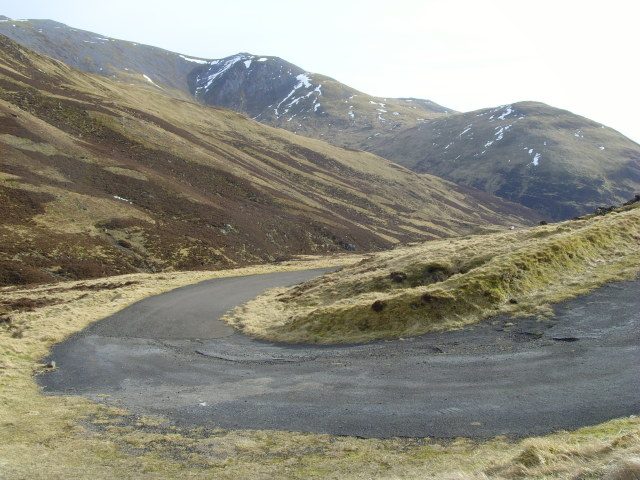
South from Braemar the A93 climbs to the Cairnwell Pass at 670 metres — 2,199 feet — which makes it the highest main road in Britain. The Devil’s Elbow hairpins were eased decades ago, but the gradient and the exposure are still real, and Glenshee Ski Centre sits at the summit with a chairlift that runs through the summer for people who want the height without the walk. On a clear day it is one of the great short drives in the country. In February it is a snow gate.
The whole corridor forms part of the Snow Roads Scenic Route, a signed ninety-mile drive from Blairgowrie in the south up through Glenshee, Braemar and Ballater, then north over the Lecht and on to Grantown-on-Spey. Three commissioned artworks stand along the route — Connecting Contours at Glenshee, The Watchers at Cock Bridge, Still at Tomintoul — and it makes a better day out than the usual Highland loop. If you are assembling a longer drive, it slots neatly into our roundup of the best road trip routes in the Scottish Highlands, and it makes a strong alternative to the coastal circuit covered in our North Coast 500 planning guide.
Upper Deeside beyond the castles
West of Braemar the tarmac runs out at Linn of Dee and the Cairngorms begin in earnest. This is the half of Royal Deeside that castle-focused itineraries skip entirely, and it is the half I would fight for.
Linn of Dee and Linn of Quoich
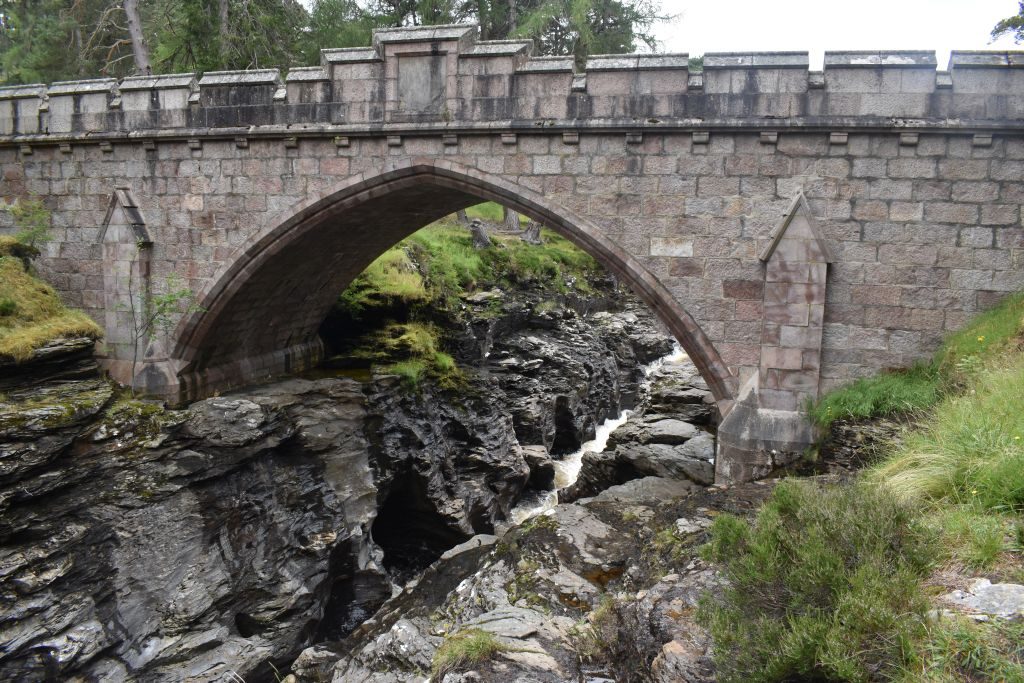
Three miles west of Braemar, on the unclassified road signposted from the village, the River Dee funnels through a slot of rock barely wide enough to jump. Stand on the granite bridge and watch it — the noise is extraordinary after rain. There is a car park with pay-and-display of around £5, toilets in the main season, and an easy-access trail that suits wheelchairs and buggies.
Carry on to the road end for the Linn of Quoich, a quieter, prettier gorge with a pothole in the rock known as the Punch Bowl. Both sit on Mar Lodge Estate, a National Nature Reserve owned by the National Trust for Scotland that covers something close to seven per cent of the Cairngorms National Park. Entry to the estate is free; you pay only to park. This is also the trailhead for the Lairig Ghru, the great through-pass to Speyside, and for a long day into the heart of the range — see our overview of hiking routes across Scotland before you take that on.
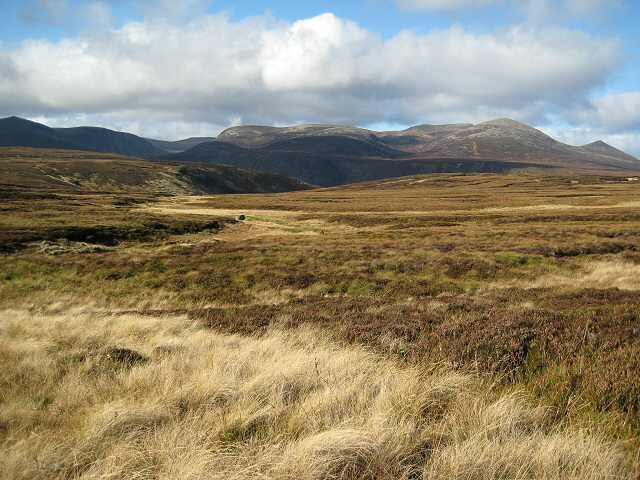
Lochnagar — the hill that made the valley famous
Lochnagar rises straight out of the Balmoral estate, and its northern corrie is one of the finest mountain amphitheatres in Britain. Byron wrote about it. Queen Victoria climbed it and recorded, with magnificent flatness, “But alas! Nothing whatever to be seen; and it was cold, and wet, and cheerless.” That remains an accurate weather forecast for a good number of days a year.
The standard circuit starts at the Spittal of Glenmuick car park, up the dead-end road from Ballater, and runs around 19 kilometres — just under 12 miles — with about 930 metres of ascent and a realistic six to seven hours on the move. The true summit is Cac Càrn Beag. The route passes below the corrie, then descends past the Glas Allt falls and the royal lodge of Glas-allt-Shiel on the shore of Loch Muick. There is a parking charge at the Spittal, and no public transport to the start whatsoever. This is a proper Munro day: boots, map, and a serious look at the forecast.
Morrone — the half-day version
If Lochnagar is too much, Morrone is the answer. It is the Corbett that sits directly above Braemar, 859 metres, and the walk starts from the village centre. Around 12 kilometres, five hours to allow, and a 360-degree view from the top. You come back down a track into Glen Clunie and return along the old military road past the golf course. It is the best value-per-effort hill in this part of Scotland.
The Braemar Gathering — the one date worth building a trip around
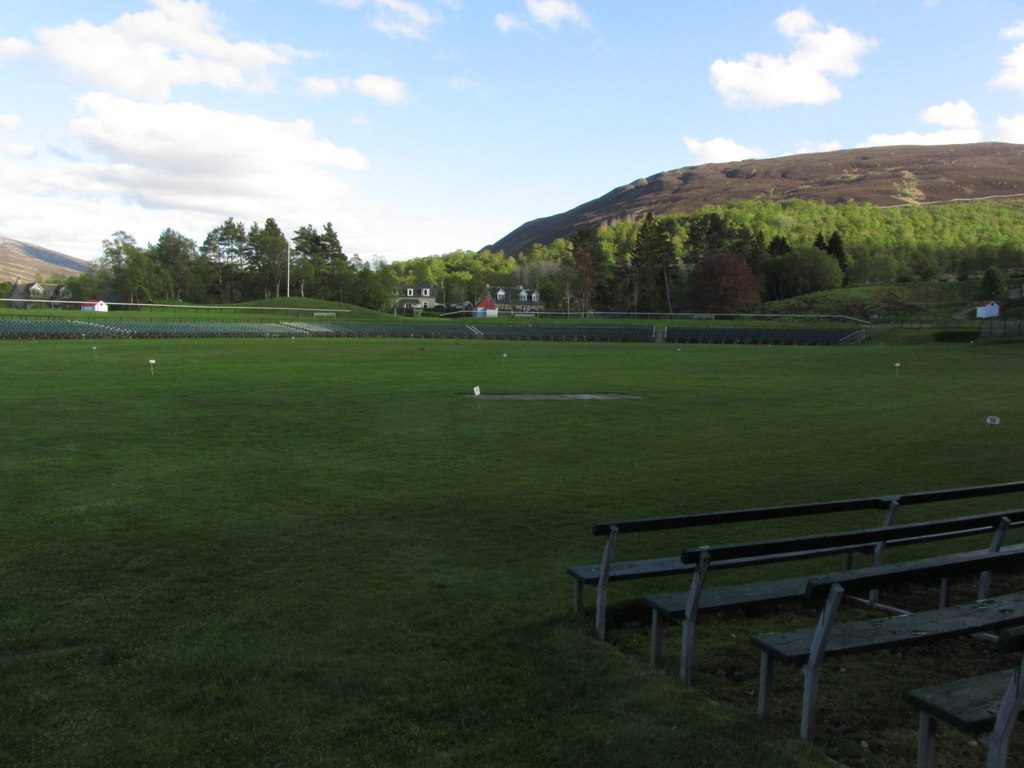
The Braemar Gathering is held on the first Saturday in September at the Princess Royal and Duke of Fife Memorial Park in Braemar. It is the games the Royal Family traditionally attend from Balmoral, and the atmosphere is unlike any other gathering in Scotland: a village of eight hundred people taking on a crowd many times its own size for a day, tossing the caber, hill races up Morrone, massed pipe bands, and a royal party in the pavilion.
Book early. Seated tickets in the grandstand and ringside sections go on sale months ahead and are routinely gone by mid-summer; general admission standing tickets have started at around £20 and typically go live in the February before. Note the timing clash: the Gathering falls squarely inside the window when Balmoral is closed to visitors, so you cannot do both in the same trip. If you want the games, take the games — it is by far the better day. The Braemar Highland Games Centre at the same site, opened to the public in 2019, is worth an hour on any other day of the year, and our guide to Scotland’s festivals and events calendar puts it alongside the other dates that shape a trip. September is a strong month generally — see what visiting Scotland in September is really like.
How to structure the trip
One day from Aberdeen
Leave Aberdeen by 9am. Crathes Castle first, arriving for opening — two and a half hours including the walled garden and a coffee. Back on the A93, lunch in Ballater. Balmoral or Crathie Kirk mid-afternoon depending on whether the estate is open, allowing an hour and a half. Then push west to Braemar for the last hour of light, look at the Linn of Dee, and drive back. It is a long day, roughly 120 miles of driving in total, and it works.
What it does not do is give you Braemar Castle, Craigievar, any hillwalking or any evening. If you only have a day and you want to be honest with yourself, cut Balmoral entirely and do Crathes, Ballater, Braemar and the Linn of Dee. You will have a better time.
Two days, basing in Ballater
This is the version I recommend to most people. Day one: Drum and Crathes on the way in from Aberdeen, arrive in Ballater late afternoon, walk up Craigendarroch above the village for the view. Day two: Balmoral and Crathie Kirk in the morning, Royal Lochnagar at lunchtime, then west to Braemar Castle and the Linn of Dee, back to Ballater for dinner. Add a third day if you want Lochnagar from Glen Muick.
Two days, basing in Braemar
Braemar suits walkers and anyone continuing south over the Cairnwell. Day one: drive the full valley from Aberdeen with stops, arriving late. Day two: Braemar Castle in the morning, Morrone or the Linn of Quoich in the afternoon, then either leave over Glenshee towards Perth and Highland Perthshire around Pitlochry, or double back to Ballater. Braemar has far fewer places to eat than Ballater, so book dinner.
Linking Deeside to the Cairngorms and Aviemore
Here is the geography that catches people out: there is no road from Braemar to Aviemore. The Lairig Ghru is a footpath. On a map they look close — twenty-odd miles apart across the plateau — but by car you must go round, either north from Ballater on the A939 over the Lecht to Tomintoul and Grantown-on-Spey, or south over Glenshee and round through Perth. Allow plenty of time for the northern route, and be aware that the A939 between Cock Bridge and Tomintoul is sometimes the first road in Great Britain to close in snow.
Done deliberately, though, that northern link is the best half of the Snow Roads and drops you straight into the western Cairngorms. Our guide to things to do in Aviemore and the Cairngorms covers what waits at the other end, and Deeside slots naturally into a longer trip if you are coming up the east coast rather than the west.
Getting to Royal Deeside without a car
Passenger trains on the Deeside line stopped in 1966, so the trip from Aberdeen is by road. The good news is that the bus is genuinely usable, which is unusual in rural Scotland.
Stagecoach Bluebird’s service 201 runs from Aberdeen bus station at Union Square all the way to Braemar, and it stops in the right places: on the A93 half a mile from Drum, Crathes Castle, Banchory, Aboyne, Ballater, Crathie (Balmoral Road End), and finally Braemar. Journey times run to about an hour and forty minutes to Ballater, just under two hours to Balmoral, and a shade over two hours to Braemar. On weekdays the first bus leaves Aberdeen as early as 05:45, and several daytime services run through to Braemar at roughly hourly intervals; check Stagecoach’s timetable for the day you travel.
A car-free day trip to Balmoral from Aberdeen absolutely works. So does Crathes, which has its own stop. Craigievar does not — there is no useful public transport to it at all, and you would need a taxi from Alford or Aboyne. The Linn of Dee has no bus either; from Braemar it is a three-mile walk or a local taxi. If you are planning a wider trip on public transport, our guides to getting around Scotland by bus and train and to a car-free Scotland itinerary go into the connections in more depth.
Ballater, Braemar or Banchory: where to base yourself
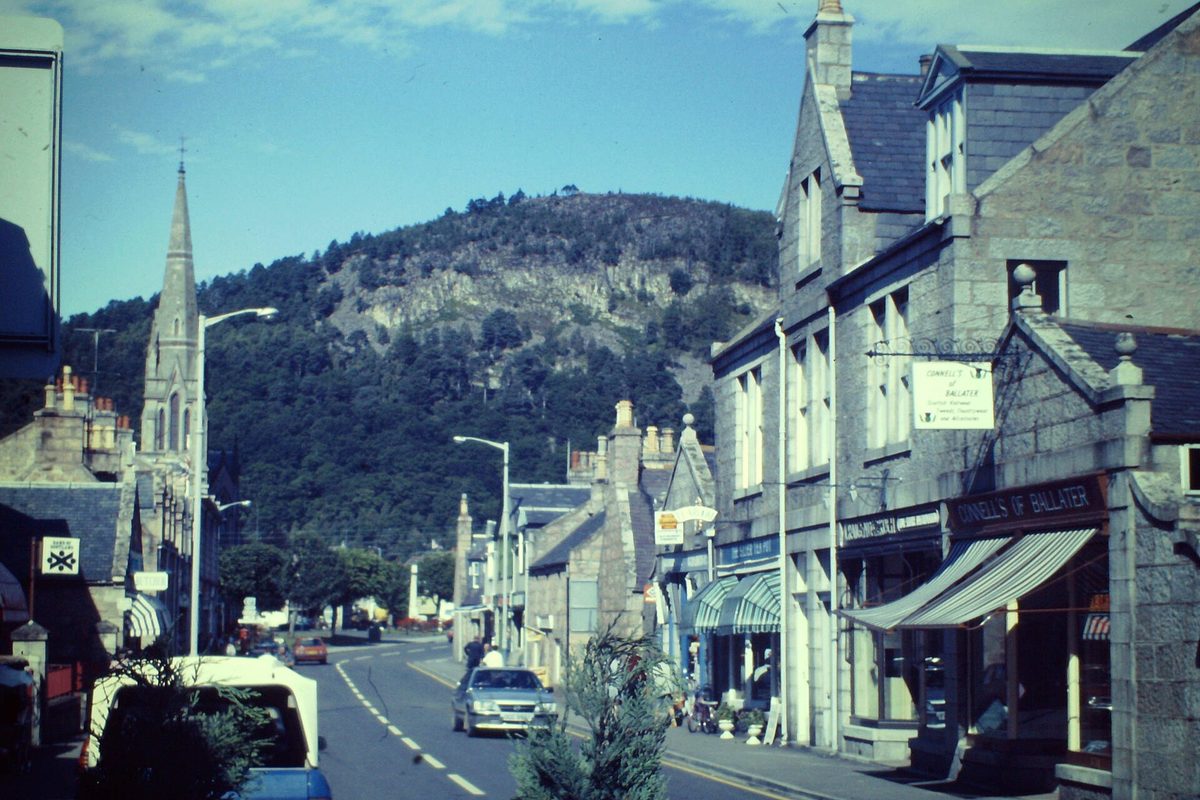
Ballater is the sensible choice. Around fifteen hundred people, laid out in grey granite around a green, with more restaurants, cafes and shops than anywhere else in the valley and a run of shopfronts carrying royal warrants. The Old Royal Station — the stop Queen Victoria used, gutted by fire in 2015 and restored before reopening in 2018 — now houses a library and a cafe, and it is a good rainy-hour stop. Ballater is forty miles from Aberdeen and seventeen from Braemar, which puts everything within half an hour.
Braemar is smaller — around eight hundred residents — higher, colder and much closer to the mountains. It suits walkers, skiers heading for Glenshee and anyone who wants dark skies. The Fife Arms, a Victorian hunting hotel reopened in December 2018 after a lavish restoration by the gallerists Iwan and Manuela Wirth, is the grand option and is priced accordingly; there is also a well-run youth hostel and a scattering of guesthouses. Book ahead in any case, because there is not much of it.
Banchory works if you want to be close to Aberdeen and treat Deeside as a series of day trips, but you will spend an hour each way getting to the good bits. For the wider picture on choosing a base, see where to stay in Scotland by region and our list of the best base towns in the Scottish Highlands.
Weather on upper Deeside — colder than you think
Braemar sits at 339 metres above sea level, ringed by hills on all four sides, and cold air drains down into the village and pools there. It shares the record for the lowest temperature ever recorded in the United Kingdom — minus 27.2 degrees Celsius, set at Braemar in 1895 and matched there again in 1982. That is not a party fact. It is a planning fact.
In practice this means upper Deeside is a season behind Aberdeen. Snow lies in the Lochnagar corries into May most years. The A93 over the Cairnwell has snow gates — at Braemar, at the summit south of the ski centre and at the Spittal of Glenshee — and they get used, sometimes in April. Traffic Scotland publishes live snow gate status online and it is worth checking between November and Easter. Come in April expecting spring and you will find brown heather, bare birches and a wind that goes straight through a fleece. Come in late September and early October and you get the best light of the year. Our month-by-month guide to Scottish weather is worth a read before you fix dates.
What disappoints, and what to skip
I would rather tell you this now than have you find out at the ticket barrier.
You will not see the Royal Family. The estate is only open when they are not there. That is the entire logic of the season. People do turn up in August hoping for a glimpse and go away cross.
Most of the castle is off limits. One room on a general ticket. The Ballroom is large and the exhibition is well put together, but if you have just come from a full day inside Stirling Castle or from Edinburgh Castle’s dozen buildings, the contrast is stark. Set expectations accordingly — and if you are choosing between the big two, our Stirling versus Edinburgh comparison is the place to start.
The commercial furniture dominates. Car park, gift shop, second gift shop, restaurant, cafe. It is a well-run operation and the estate has bills to pay, but the ratio of retail to castle is high and it takes the edge off the romance.
The gardens are good, not exceptional. They are handsome, well kept, and King Charles has taken a close personal interest in them. But if you have already been to Crathes’ walled garden that morning, Balmoral’s will not be the highlight of your day.
The A93 in July is busy. Coach traffic between Ballater and Crathie in high summer is heavy and there are very few overtaking opportunities. Drive it early or late.
Common mistakes: assuming your NTS or Historic Scotland membership covers Balmoral (it does not); assuming Craigievar is on the way (it is not); assuming you can drive straight from Braemar to Aviemore (the road goes round the Cairngorms via Grantown-on-Spey); and turning up at Crathes after its 4.15pm last entry, or late at Craigievar, which shuts as soon as its last tour starts. If Deeside is your first taste of the country, our first-time visitor tips for Scotland covers the rest of the traps.
Frequently asked questions
Can you go inside Balmoral Castle?
Partly. General admission gets you into the Ballroom, which hosts the annual exhibition, and that is the only room open on a standard ticket. In recent seasons the estate has also offered small-group guided tours that go further into the castle, on limited dates at a much higher price. Those sell out well in advance.
How much are Balmoral Castle tickets?
Prices change with the season: the autumn opening charges £10 for an adult, with under-16s free, and summer prices change each year. Parking is extra, around £6 a car. Check balmoralcastle.com for current pricing before you travel.
When is Balmoral Castle open to the public?
Broadly from late March or early April to the first week of August, closing when the Royal Family arrive for the summer, with a shorter autumn opening from late September into early November in recent years. Exact dates change annually and the estate can close at short notice, so always confirm on its own website.
How far is Balmoral Castle from Aberdeen?
It is about 50 miles west of Aberdeen on the A93, at Crathie between Ballater and Braemar. Driving takes around an hour and twenty minutes without stops. The Stagecoach 201 bus from Aberdeen bus station takes just under two hours to the Crathie, Balmoral Road End stop (the weekday 07:15 departure arrives at 09:11), so a car-free day trip is entirely feasible.
Is Balmoral or Crathes Castle better?
Crathes, comfortably, if you want a castle visit. You get several floors of interior including the painted Renaissance ceilings, the eight-room walled garden and its three-hundred-year-old yew hedges, plus woodland trails. Balmoral gives you one room and grounds. Visit Balmoral for the royal association, not the architecture.
What is the best time of year for Royal Deeside?
Late May and early June for long light and green hills, or the last week of September into mid-October for autumn colour on the birches along the Dee. September also brings the Braemar Gathering, though it falls when Balmoral is shut. Avoid mid-July if you dislike coach traffic on the A93.
Do I need a car for Royal Deeside?
Not for the main corridor. The 201 bus links Aberdeen with Crathes, Banchory, Aboyne, Ballater, Balmoral and Braemar, stopping on the A93 half a mile from Drum, and runs into the evening. You do need a car, a taxi or a long walk for Craigievar, the Linn of Dee and the Lochnagar trailhead at Glen Muick.
Where can I see the Cairngorms from Deeside?
The best roadside views are between Ballater and Braemar on the A93, and from the Cairnwell Pass south of Braemar at 670 metres. For the plateau itself, walk in from the Linn of Dee or climb Morrone above Braemar, which gives a full circle of the range for about half a day’s effort.
Final thoughts
Go to Balmoral if the timing lines up and you want to stand where Queen Victoria decided Scotland belonged to her. It is a strange, atmospheric spot, and Crathie Kirk across the road adds more than the castle does. But do not build the trip around it, and do not drive two hours from Aberdeen without checking the estate is actually open.
Build the trip around the valley instead. Crathes for the painted ceilings, Braemar Castle for the volunteers who run it, the Linn of Dee for the noise the river makes, and the A93 over the Cairnwell for the sheer height of the thing. Royal Deeside is one of the most rewarding two-day drives in Scotland — it is just that the famous bit is not the good bit. If you are still assembling the wider route, our list of the most beautiful places in Scotland will help you decide what comes next.
About the author: This guide was written and is maintained by the ScotlandTourism.org editorial team — travel writers who’ve spent years exploring Scotland’s cities, Highlands and islands, from bagging Munros to chasing the perfect dram. We update our guides regularly to keep prices, opening details and advice current.
Last updated: October 2026. Prices and opening times change — always check the official site before you travel.
Photo credits
All images are used under their respective Creative Commons or public-domain licenses:
- Balmoral Castle in Royal Deeside, the Scottish home of the Royal Family — W. Bulach, CC BY-SA 4.0, via Wikimedia Commons
- The River Dee running through upper Deeside near Braemar — Deus Ex at English Wikipedia, Public domain, via Wikimedia Commons
- Crathes Castle near Banchory, with its clipped yew hedges — Andrew Tryon, CC BY-SA 2.0, via Wikimedia Commons
- The medieval tower and Jacobean wing of Drum Castle near Banchory — Ikiwaner, CC BY-SA 3.0, via Wikimedia Commons
- A panelled room inside Craigievar Castle in Aberdeenshire — Holger Uwe Schmitt, CC BY-SA 4.0, via Wikimedia Commons
- Community-run Braemar Castle on upper Deeside in winter — Mike Pennington, CC BY-SA 2.0, via Wikimedia Commons
- Crathie Kirk, the parish church attended by the Royal Family at Balmoral — The original uploader was DanMS at English Wikipedia., CC BY-SA 3.0, via Wikimedia Commons
- The Lochnagar plateau seen across the moor above Loch Muick — Lis Burke, CC BY-SA 2.0, via Wikimedia Commons
- The River Dee squeezing through the rock gorge at the Linn of Dee — Robert Struthers, CC BY-SA 2.0, via Wikimedia Commons
- The Memorial Park at Braemar, home of the Braemar Gathering — Colin Park, CC BY-SA 2.0, via Wikimedia Commons
- The A93 hairpin at the Devil’s Elbow below the Cairnwell Pass at Glenshee — Paul Chapman, CC BY-SA 2.0, via Wikimedia Commons
- Bridge Street in Ballater, the best base on Royal Deeside — Colin Smith, CC BY-SA 2.0, via Wikimedia Commons