The first time I queued for Edinburgh Castle tickets I did almost everything wrong. I turned up at the gate on a wet July morning without booking, paid the walk-up price through gritted teeth, and then spent two hours power-walking round the place because I had convinced myself my timed slot meant I had to be out by a certain hour. It did not. Nobody told me, and I never thought to ask.
That misunderstanding is the single most common thing I hear from people coming back down the Royal Mile, and it is only one of about eight ways this castle catches visitors out. So this is the guide I wish I had read: how the ticketing actually works, when a pass beats a single ticket and when it does not, which bits of the castle earn the money and which you can walk straight past, and what happens in August when the Tattoo swallows the esplanade whole.
The short answer
Book online. Adult admission is around £23.50 online against £26 at the gate at the time of writing, and summer slots regularly sell out weeks ahead. Your ticket is a timed entry slot, not a time limit — once you are through the gate you can stay until closing. Allow two to three hours, and expect a steep cobbled climb inside.

Edinburgh Castle at a glance
| What | Detail (check before you travel) | Worth knowing |
|---|---|---|
| Adult admission | Around £23.50 online, £26 walk-up | Online is cheaper and the only way to guarantee entry |
| Child 7–15 / concession | Around £14 / £19 online | Under-7s free; concession is 65+ or unemployed, not students |
| Opening | 9.30am daily; last entry 1 hour before close | Closes 6pm April–September, 5pm in winter |
| Time needed | 2–3 hours | The official line is “at least 2 hours”; an hour is possible but joyless |
| Audio guide | Around £4 | Download it before you travel — on-site signal is patchy |
| Official guided tour | Around £6.50 extra, 30 minutes | Must be pre-booked; free for Historic Scotland members |
| One O’Clock Gun | 1pm daily except Sundays, Good Friday, Christmas Day | Stand on Mills Mount by 12.45pm to see it, not just hear it |
| Free option | The esplanade and city viewpoints | Esplanade access is restricted roughly May–October for the Tattoo |
How Edinburgh Castle tickets actually work
Almost every guide tells you to book in advance and then stops. The mechanics underneath are where people lose money and lose their tempers, so let us do this properly. I have leaned on the official Historic Environment Scotland booking terms and visitor FAQs here rather than on hearsay, and I would still check the small print at the point of purchase, because these things change.
Your slot is an entry window, not a countdown
This is the big one. Entry to the castle runs on a timed ticketing system with hard capacity limits on each slot. That capacity limit is about how many people come through the gate in a given window. It says nothing about how long you stay.
There is no exit time on your ticket. Nothing in the official booking terms or the visitor FAQs sets one for Edinburgh Castle. The only clock that matters is the castle’s closing time. Book an 11am slot and linger until five if you like.
I watched a family sprint past St Margaret’s Chapel because the father was convinced their 90 minutes were nearly up. They had booked at 10am. It was 11.20am. Nobody was going to move them on. Slow down.
What happens if you are late
Here the news is less generous. Historic Environment Scotland states plainly that entry outside your booked slot cannot be guaranteed. Their own FAQ answer is worth quoting in spirit: staff will do their best to fit you in, but if the slot has reached capacity when you arrive, you wait for the next available one.
In practice, on a quiet Tuesday in February you will be waved through. On the second Saturday in August you may genuinely be standing on the esplanade for 30 or 60 minutes watching your own itinerary collapse. Build in a buffer. The walk up from Waverley station takes longer than the map suggests, because the map does not know about the gradient or the crowds on the Royal Mile.
The no re-entry rule nobody mentions
General admission tickets are valid for one day only, on the date and time selected, and re-entry is not permitted. That matters more than it sounds. You cannot nip out to the Royal Mile for lunch and come back. You cannot leave your oversized rucksack at your hotel mid-visit and return. Once you walk back over the drawbridge, that is that.
So do the castle in one go, eat before or after, and sort your bags out beforehand. If you are building a wider plan for the city, our Edinburgh travel guide lays out how the castle fits alongside Holyrood, the Old Town and the New Town without doubling back on yourself.
Flexi tickets: clever, or expensive insurance?
A flexi ticket gives you one entry on any day within a seven-day window that starts on your chosen date, with no timeslot to pre-book. Adult flexi runs around £38 against £23.50 for a standard adult ticket. That is roughly a £14.50 premium, or about 60% more, for the freedom to turn up when you fancy.
My honest view: most people should not buy it. If you know you are in Edinburgh on the Thursday, book the Thursday. Flexi earns its keep in three situations — a weather-dependent trip where you are keeping the castle as your wet-day backup, a cruise call or connection with a wobbly arrival time, or a Highlands driving loop where the A82 has already taught you that your schedule is a work of fiction. Otherwise it is £14.50 you could spend on a decent dinner.
How far ahead peak dates sell out
Historic Environment Scotland is unusually blunt about this: tickets often sell out far in advance, especially over the summer, and once online allocation is gone there are no further tickets at the castle. That last clause is the bit to underline. Selling out online is not a nudge to buy early. It means the gate closes.
My working rule, based on watching availability across several summers: for July and August, book four to six weeks out and do not leave it later than a fortnight. For a Saturday in August during the Fringe and the Tattoo, treat six weeks as the minimum. April to June and September want a week or two. November to February you can often book the night before. If your dates are pinned to the festival calendar, our guide to Scotland’s festivals and events will tell you which weeks are the pinch points.
Explorer Pass, membership or a single ticket?
This is the calculation nobody does for you, and it deserves a few minutes, because the numbers are tighter than the marketing implies. All figures below are online adult prices for the 2026 summer season at the time of writing — check them, because they move every year.
The three-site break-even
Here is the maths in plain terms. Edinburgh Castle is around £23.50. Stirling Castle is around £18.50. Urquhart Castle on Loch Ness is around £14. A summer adult Explorer Pass, valid for 14 consecutive days across Historic Scotland sites, is around £48.
- Edinburgh alone: £23.50. The pass costs you £24.50 more. Obviously not.
- Edinburgh plus Stirling: £42. The pass still loses, by about £6. This surprises people.
- Edinburgh plus Urquhart: £37.50. The pass loses by around £10.50.
- Edinburgh plus Stirling plus Urquhart: £56. The pass finally wins, saving about £8.
So the break-even is three major sites, not two. The classic Scotland trio — castle in the capital, castle at Stirling, castle on the loch — is exactly where the pass starts paying. Two big castles is not enough, no matter how it feels at the checkout.
The pleasing thing is that the shape holds across ticket categories. Concession: roughly £19 plus £15 plus £11 is £45, against a £39 pass. Child: about £14 plus £11 plus £8.50 is £33.50, against a £29 pass. Same three-site tipping point, same modest saving. And once you add a fourth site — Linlithgow Palace and Doune Castle are both easy add-ons — the gap widens properly in your favour.
Two caveats. The pass covers one visit per property, so it is not a re-entry hack. And some Historic Scotland sites advertise a discount for arriving car-free by bus, train or bike, which shifts the sums against the pass if it applies to your itinerary. Check at the point of booking. If you are working out how to reach any of this without a car, our notes on getting around Scotland by train and bus are the place to start.
When membership wins instead
Historic Scotland membership sits above the pass: around £72 on a card, or about £64 by annual direct debit, for 12 months of free entry to all ticketed sites. Against roughly £18 a site, that pays for itself at about four ticketed properties — one more than the pass.
Membership makes sense in three cases. If you are in Scotland for longer than the pass’s 14 consecutive days. If you are likely to be back within a year, which covers a lot of people who fall for the place on a first visit. Or if you want the official guided tour at Edinburgh Castle, which is free for members but not included with an Explorer Pass. There is also a shop and café discount, which quietly claws back a few pounds over a fortnight of eating your way round Scotland.
The discounts most people miss
Several routes to cheaper or free entry get almost no coverage, and a good deal of the city costs nothing at all. Young Scot cardholders pay just £1. Serving members of the British Armed Forces get in free with a valid MOD 90, and that extends to Stirling Castle and Fort George. English Heritage, Cadw and Manx National Heritage members get half-price entry in their first year and free entry once they renew. Carers accompanying a visitor with a disability go free, up to two per transaction, and no proof of disability is required for the visitor themselves. All of these still need an online booking to guarantee a slot.
Guided tour, audio guide, or neither?
A quick correction, because a lot of older articles still get this wrong and it will cost you money or a missed tour. At the time of writing, the official 30-minute guided tour at Edinburgh Castle is a paid add-on of around £6.50 per person that must be pre-booked. It is not simply included with general admission the way many guides published a few years ago describe. Historic Scotland members get it free. Verify at the point of booking.
The official guided tour
Half an hour, led by castle staff, outdoors, in English only, with a wireless receiver and headset issued at the meeting point just through the Main Gate on the right. Tours run roughly every half hour through the summer day and about five times daily in winter. The rules are strict: arrive 15 minutes early, and if you miss your start time you cannot join that tour or any later one that day. Poor weather can see tours adapted or cancelled, with a refund of the tour element.
Look closely at the summer timetable and you will spot a gap between the 12.15pm tour and the 1.15pm tour. That is the gun. Somebody sensible built the schedule around it.
The audio guide
Around £4, with a 20% discount for members and Explorer Pass holders, and free for blind and partially sighted visitors. It is narrated by Saoirse Ronan, Bill Paterson and Andrew Gower, which is a rather better cast than most attractions manage. Available in a long list of languages, plus large print and Open Dyslexic print versions on request at the audio booth.
The single most useful piece of advice about it: buy it with your ticket and download it to your phone before you travel. Connectivity inside a fortress built of several metres of volcanic rock and masonry is exactly as bad as you would expect, and the castle itself says so. Bring your own headphones and a charged battery. There is also a free orientation map at the gate, which most people walk past.
My verdict
For most visitors, the audio guide is the better use of both time and money. Thirty minutes of guided tour cannot cover a site this size, and it keeps you outdoors on someone else’s schedule when the interiors are the reason you paid. The audio guide lets you stand in front of the Honours of Scotland for as long as the queue allows and actually take it in.
Take the guided tour if you are a member and it costs you nothing, if you want a human being to answer questions, or if you are the sort of traveller who needs a structure imposed before you will look at anything properly. Take both if you have three hours and an appetite for detail. Take neither only if you have already read a good deal about Scottish history, in which case the printed panels will do. And if you would rather someone else did the thinking for the whole trip, our overview of organised tours of Scotland covers the operators who fold the castle into a wider route.
The One O’Clock Gun: timing, days off, and where to stand
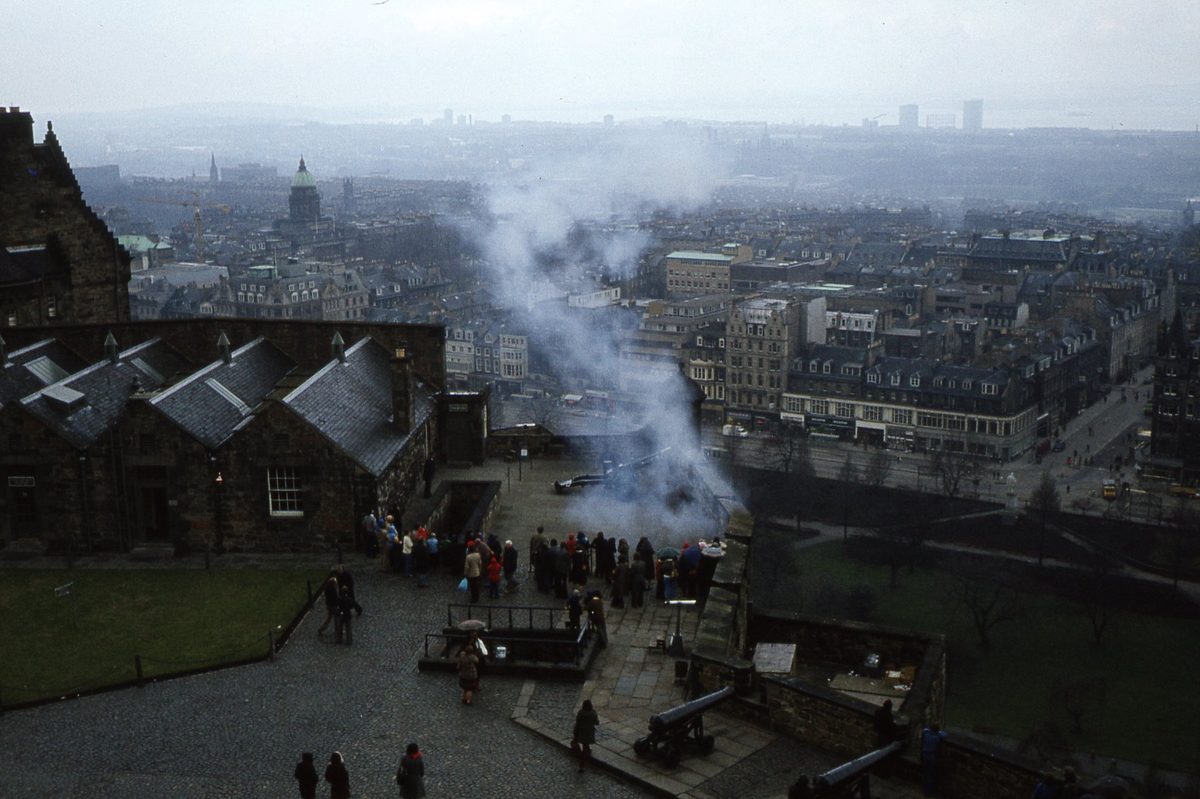
The gun fires at 1pm every day except Sundays, Good Friday and Christmas Day. Those three exceptions are the detail that ruins afternoons. I have watched people plan an entire Sunday around it.
The tradition dates from 1861, when an Edinburgh businessman named John Hewat brought the idea back from Paris so that ships in the Firth of Forth could set their maritime clocks. The original was a 64-pounder. Since 2001 it has been a 105mm field gun, fired from Mills Mount Battery.
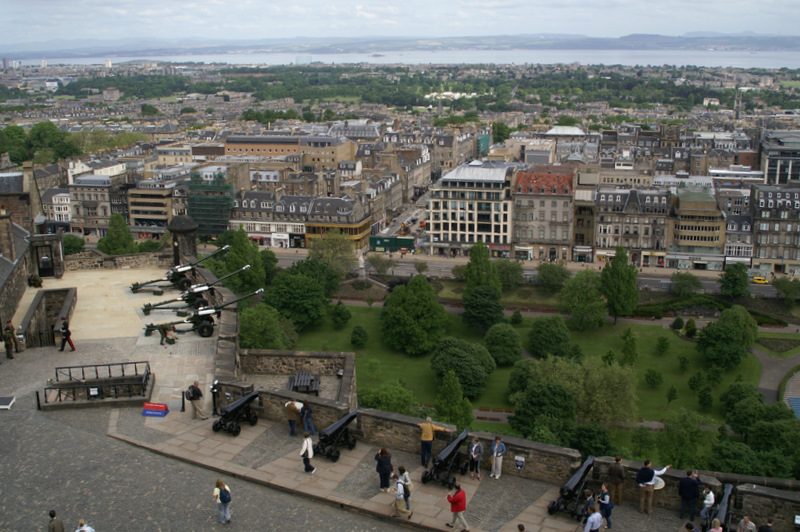
Now the part that matters. Half the people on Princes Street will hear the gun and jump. To see it, you need to be inside the castle, on Mills Mount, which sits at the far end of the Argyle Battery just outside the Redcoat Café — through the Portcullis Gate and along to your right. Get there by about 12.45pm on a summer day. By 12.55pm the front rail is three deep and you will be photographing the backs of heads.
Two knock-on effects worth knowing. If you book a 12.30pm or 1pm entry slot you are walking uphill against the crowd heading for the gun. And the castle’s accessibility mobility vehicle does not run between 12.15pm and 1.15pm because of the firing, which means noticeably longer waits for visitors entering on those two slots. If mobility is a factor, book a slot before noon or after 1.30pm.
The noise is loud, and it is sudden. If you are visiting with small children or anyone noise-sensitive, ear defenders are available to borrow — ask when your ticket is scanned. Our guide to Scotland with children covers a few more attractions where that sort of forward planning pays off.
What genuinely earns the ticket
Let us be honest about what this place is before we praise it. Edinburgh Castle is a military garrison and a complex of museums standing on a volcanic plug. It is not a fairy-tale castle. There are no turrets from a picture book, no sweeping ballroom, no moat with swans. Visitors who arrive picturing Neuschwanstein leave flat, and they are not being unreasonable — they were sold the wrong thing.
What it is happens to be more interesting: a thousand years of continuous fortification on a crag, with the layers still legible if you know where to look. Here is what repays the admission.
The Honours of Scotland
The oldest crown jewels in Britain, displayed in the Crown Room on the first floor of the Royal Palace, on the east side of Crown Square. The crown was made for James V and first worn at the coronation of Mary of Guise in 1540; Mary Queen of Scots was the first crowned with the new crown and sceptre together, in 1543. They were smuggled out and hidden between 1651 and 1660 to keep them from Cromwell’s army, then locked away in a chest after the Act of Union in 1707 and effectively forgotten, until Sir Walter Scott prised the chest open in 1818 and found them still there.
One important correction, because plenty of guides have not caught up: the Stone of Destiny is no longer here. It left Edinburgh Castle in March 2024 and is now the centrepiece of Perth Museum. If seeing the Stone was your reason for buying a ticket, buy a different ticket.
Expect a queue and a shuffle through a dim corridor of context before you reach the case. Go early or late in the day; the middle hours are grim.
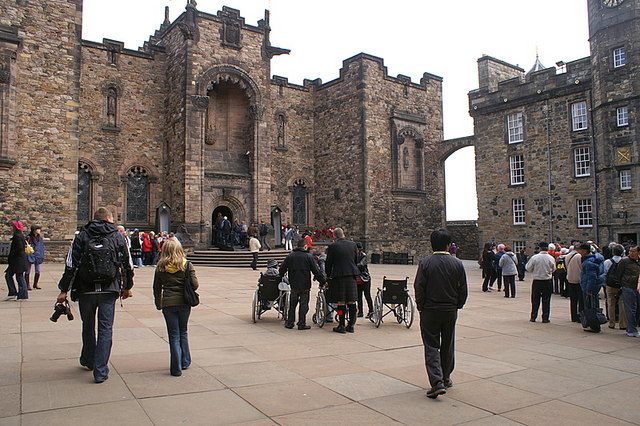
St Margaret’s Chapel
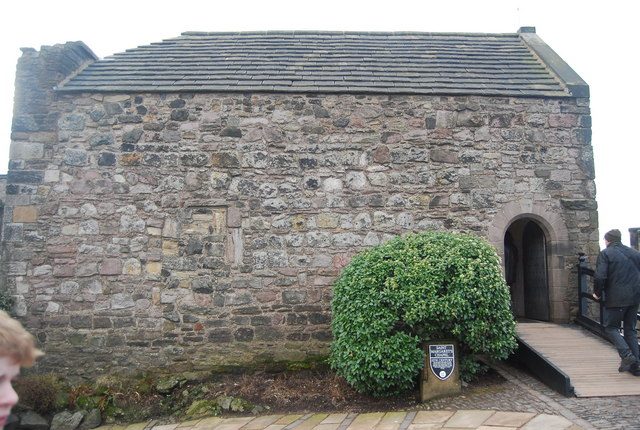
The oldest surviving building in Edinburgh, built by David I around 1130 and named for his mother, Queen Margaret. It is tiny — you will be inside for four minutes — and it is my favourite thing in the castle. Everything around it has been rebuilt, bombarded, barracked and restored; this one small room simply kept going. In the 1500s it was used as a gunpowder store, its origins forgotten entirely until an antiquary called Sir Daniel Wilson identified it in 1845.
The arches are original. The stained glass is not. There are always fresh flowers, arranged by a guild whose members are all named Margaret and all live in Scotland, which is the sort of quietly eccentric detail Scotland does well. It sits just past Foog’s Gate, on the left beyond the Whisky and Finest Food Shop.
The Great Hall
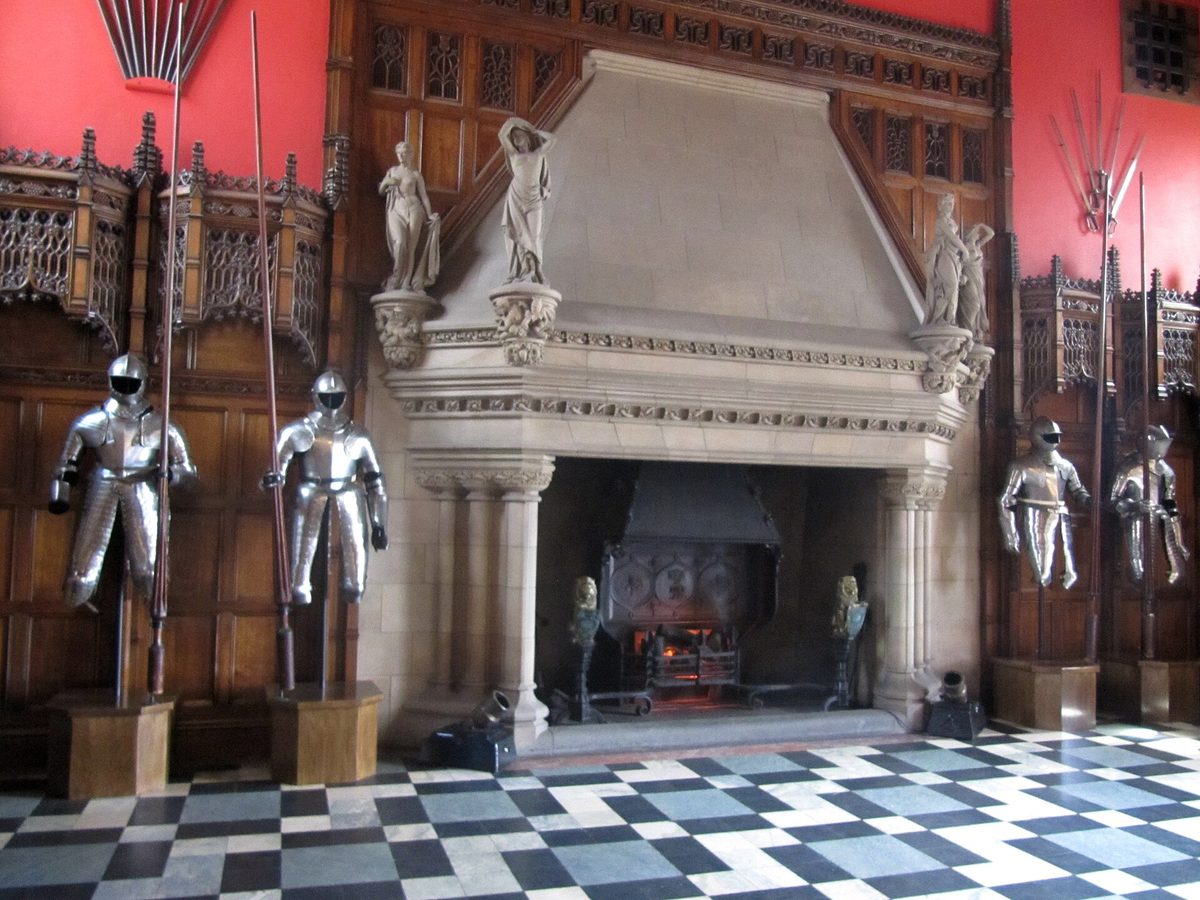
Completed in 1511 for James IV, who had two years to enjoy it before dying at Flodden. The roof is the thing — giant beams resting on carved stone corbels, and one of the finest medieval timber roofs in Britain. Cromwell’s troops took the castle in 1650 and turned the hall into a barracks; it later served as a military hospital until the soldiers finally left in 1886. The walls now bristle with arms and armour, including the Lochaber axe, a pole arm that looks like a bad idea from every angle.
The Scottish National War Memorial
On the north side of Crown Square, opened in 1927 inside the former North Barracks. It is the most affecting room in the castle and the one most people rush. One in five Scots who enlisted in the First World War never came home, and this building carries their names. The stained glass and sculpture were made by some of the best Scottish artists and craftspeople of the period. Take your hat off, put your phone away, and give it ten minutes.
The views from the batteries
The Argyle Battery and the Half Moon Battery give you the New Town laid out in Georgian grid lines, the Firth of Forth glinting behind it, and on a clear day the hills of Fife. This is a legitimate reason to buy a ticket on its own. You are seeing the city’s geology explained: the crag you are standing on, the long tail of the Royal Mile running east, both carved by ice. It is one of the best urban views in Britain and it belongs on any list of Scottish must-sees.
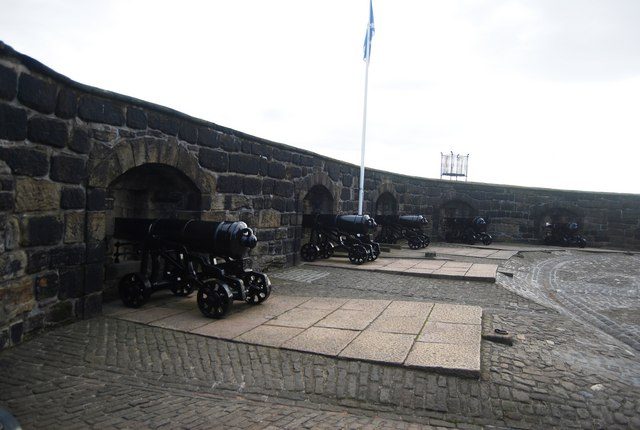
Mons Meg
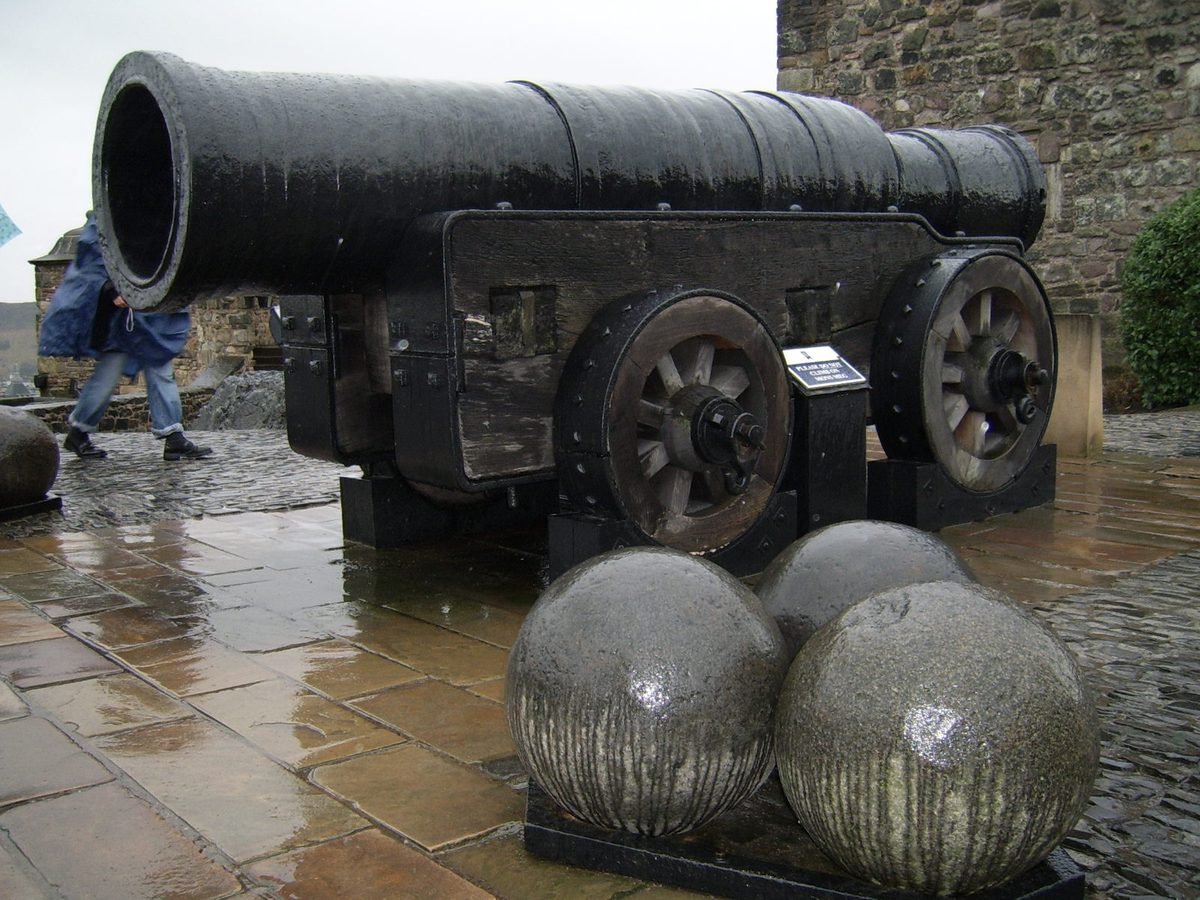
A six-tonne siege bombard given to James II in 1457, capable of throwing a 150kg gunstone about two miles. Hauling her 50 miles to the siege of Roxburgh in 1460 took teams of oxen managing barely three miles a day. She fired a celebratory shot for Mary Queen of Scots’ wedding in 1558 that reportedly landed in what is now the Royal Botanic Garden. Her barrel burst in 1681. She spent 75 years in England before returning in 1829 with a cavalry escort from Leith Docks. Children love her. So do I.
What you can honestly skip
Being specific here is more useful than being polite.
The regimental museums
There are three: the Royal Scots Museum, the Royal Regiment of Scotland Museum directly opposite, and the Royal Scots Dragoon Guards Museum in the New Barracks. For a general visitor with two hours, all three are skippable. They are collections of colours, medals, uniforms and campaign silver, curated for people with a connection to those regiments, and the labelling assumes knowledge most visitors do not have.
The exception worth 15 minutes is the French eagle and standard in the Dragoon Guards museum, seized from the 45th French infantry during the charge at Waterloo in 1815. That is a genuinely remarkable object. Walk in, find it, walk out.
Note too that these museums keep their own shorter hours and can close for school visits or private functions. Arriving at 4.30pm expecting them open is optimistic.
The bits that may be closed anyway
At the time of writing the Prisons of War exhibition is closed and the National War Museum is partially closed for building repairs. Closures at a site of this age are constant and rarely well advertised. Check the castle’s own closures page the week you travel, particularly if one specific exhibition is your reason for going.
The shops
Three of them, and none is a reason to slow down. If you want whisky, you will do better in town — our guide to Scotch whisky distilleries points at the real thing rather than the gift-boxed version.
The free castle: what you can see without a ticket
You can walk onto the esplanade for nothing. It is the wide tarmac forecourt in front of the gatehouse, 110 metres long on a gentle five-degree slope, and from it you get the gatehouse, the Half Moon Battery rearing above you, and a view back down over the Old Town roofs. For a lot of visitors on a tight budget, that plus a good viewpoint is enough.
The catch is timing. The Tattoo grandstands occupy the esplanade for far longer than the show itself — the castle’s own pages note that the bike racks there are unavailable from May to October because the stands are in place, and that accessible parking is restricted over the same window. So the free esplanade experience is really a November-to-April proposition.
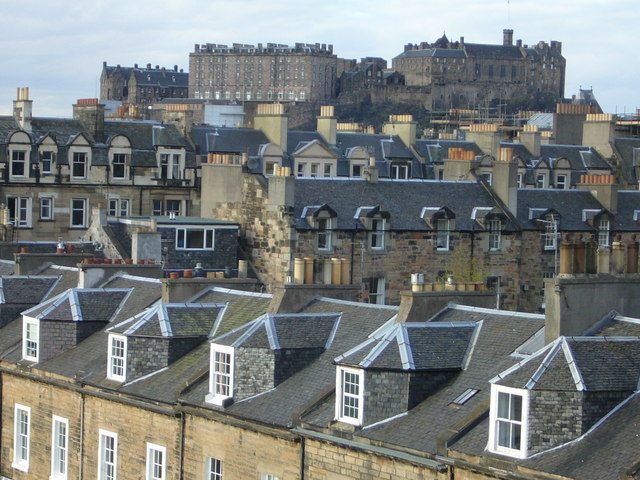
The better free views are elsewhere, and honestly some of them beat the esplanade:
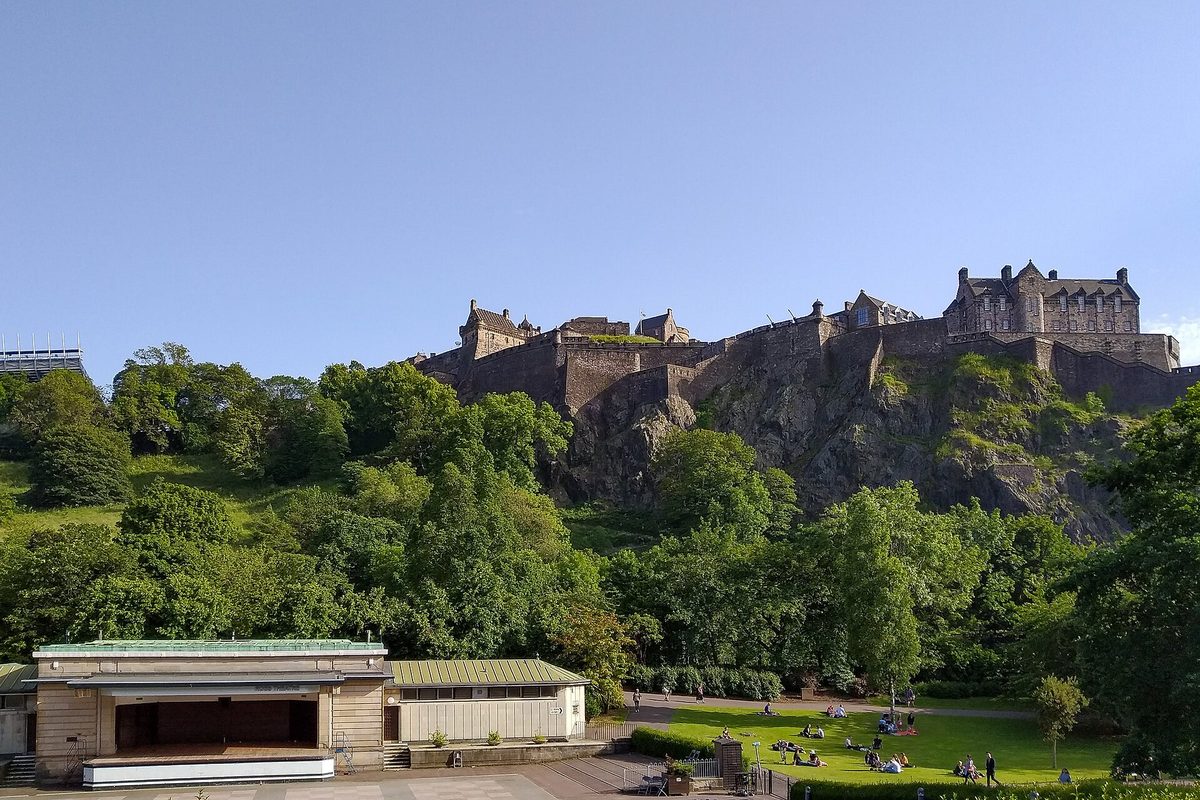
- Princes Street Gardens. The classic postcard angle, castle rearing off the crag above the trees. Best in late afternoon light when the west face catches the sun.
- The Vennel steps. A stepped lane climbing off the Grassmarket, giving you the castle framed between tenements above a surviving stretch of the old town wall. This is the shot everyone thinks they need a ticket for.
- The Grassmarket itself. Sit outside a pub with the castle looming over the far end. Combine it with Victoria Street just up the hill, which turns up in every Harry Potter trail round Scotland going.
- Calton Hill. Twenty minutes’ walk east and you get the castle in profile at the end of the Royal Mile ridge, with the whole city between. Best at sunset.
- Johnston Terrace and Castle Terrace. Right under the south and west walls, and almost always empty because the crowds stay on the Royal Mile.
None of that costs a penny, which puts it comfortably within our roundup of free things to do in Scotland. If your budget is tight, spend the £23.50 on something else and take the photographs anyway.
August: the Tattoo, the esplanade and the early closes
If you are visiting in August, three things change and only one of them is widely reported.
First, the Royal Edinburgh Military Tattoo runs on the esplanade — 7 to 29 August in 2026 — which means the approach to the gatehouse is a construction site with grandstand scaffolding either side of a narrowed walkway. Your photograph of the entrance will have steel in it. There is no way round this.
Second, and this is the one that catches people out: on Tattoo performance days the castle closes early. In 2026 the published early closes are 5pm, with last entry at 3.30pm, on 8, 15, 22, 28 and 29 August. If you have booked a 3pm slot on one of those dates you have two hours, not four. Check the dates against your booking, because the standard opening times page will otherwise tell you the castle is open until six.
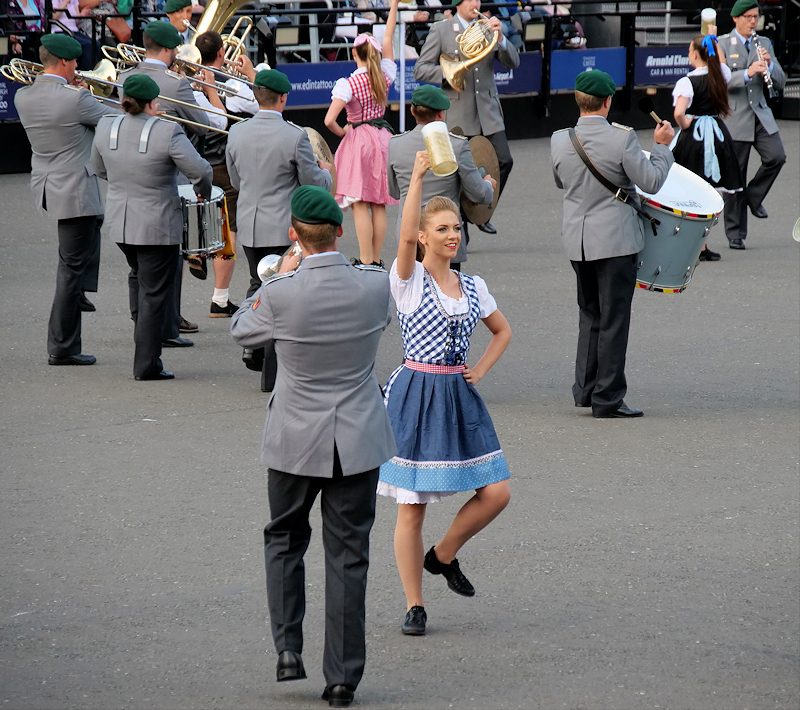
Third, August is simply the hardest month to get a slot at all. The Fringe, the International Festival and the Tattoo overlap, the city’s population balloons, and castle availability disappears accordingly. If you are choosing when to come and the festivals are not the draw, read our take on the best time to visit Scotland before you book flights — September gives you most of the weather and a fraction of the crush.
Planning the practicalities
Getting to the gate
There is no public parking at the castle. None. The nearest option is the Castle Terrace NCP, and on a summer weekend you will pay handsomely for the privilege. Come on foot or by public transport.
Staying in the Old Town puts you within ten minutes on foot, which is one argument for paying Old Town prices — our notes on where to stay in Scotland weigh that up properly. Waverley station is about 0.4 miles away and it is uphill the entire way — allow 15 to 20 minutes, more with luggage or in the rain. Haymarket is around a mile. The nearest tram stop is Princes Street, also roughly 0.4 miles. Lothian Buses run through the Old Town; the useful stops are the Mound and George IV Bridge. From the airport, the Airlink 100 bus reaches Waverley Bridge in about 25 minutes, and trams leave every seven minutes and take around half an hour to Princes Street.
Cyclists should note the bike racks behind the ticket box are only there from November to April. From May to October the Tattoo stands occupy that ground.
The queue reality: 10am versus mid-afternoon
Doors open at 9.30am. The 9.30 and 10am slots feel calm for about 20 minutes and then the coach groups land, roughly between 10.15am and 11am, and the Crown Room queue becomes an event in its own right. Midday to 2pm is the worst of it, compounded by everyone converging on the gun.
The genuinely quiet windows are the first slot of the day if you can be at the gate by 9.25am, and anything from about 3pm onward. Mid-afternoon in summer is my pick: the coaches have gone, the light on the batteries is better, and you still have two or three hours before last entry closes behind you. Tuesday to Thursday beats the weekend by a distance. This is the same logic we apply throughout our Scotland travel tips — go against the coach timetable, not with it.
How long you actually need
The official guidance is at least two hours for the main attractions, and that is fair. Two hours covers the Honours, the Great Hall, the war memorial, St Margaret’s Chapel and the views without hurrying. Three hours lets you add the Prisons of War when open, the Battlement Walk and a coffee. An hour is possible — the castle publishes a one-hour route — but you will be walking past things.
If you are fitting the castle into a compressed city break, our two-day Edinburgh itinerary slots it into a morning without wrecking the rest of the day, and the wider Scotland itinerary planner handles the case where Edinburgh is day one of a fortnight.
The cobbled climb and accessibility
Worth being precise, because vague warnings help nobody. The esplanade approach is smooth tarmac at about five degrees — that part is easy. The difficulty begins inside.
You enter over a wooden-slatted bridge, then climb a steep curved cobbled route that averages five degrees but reaches 15 degrees at its steepest, running roughly 350 metres from the entrance up to Crown Square. Foog’s Gate is the worst of it. Hospital Square is reached down a 12-degree cobbled ramp. The exit is via 70 stone steps with a handrail, though staff will guide you back down through the castle if that is unsuitable.
The support on offer is better than most visitors realise. A mobility vehicle runs to Crown Square on request — arrange it with staff at the entrance — carrying up to three passengers plus one wheelchair user, though remember it pauses between 12.15pm and 1.15pm for the gun. Manual wheelchairs are available first-come, first-served. The Great Hall and the war memorial have ramped access; St Margaret’s Chapel has a small ramp and an 810mm door. There is an adapted toilet in Crown Square between the Great Hall and the Crown Gift Shop. Sensory backpacks and ear defenders can be borrowed from the ticket office, and visual stories and a sensory map are downloadable in advance.
A small number of accessible parking spaces sit on the esplanade, first-come first-served or bookable in advance by email, but availability is squeezed from May to October by the Tattoo build. Footwear matters more than people expect: wet cobbles at 15 degrees are no place for smooth soles.
Bags, buggies and what you cannot bring
Suitcases and rucksacks of 30 litres or more are not permitted inside, and the castle cannot store luggage, prams, pushchairs or anything else. There is no left-luggage facility. Bag searches happen at the entrance as part of security screening.
This trips up an astonishing number of people arriving straight from Waverley on their last morning. If you are travelling with luggage, use the station lockers or a city-centre left-luggage service first. Assistance dogs are welcome throughout, including indoors; other dogs are not.
Eating on site
The Redcoat Café is the practical option, open daily from 9.30am to around 4pm, self-service and reliably busy at lunchtime. The Tea Rooms open later, around 10.30am. Both are fine rather than memorable, and both close well before the castle does — so a 4pm entry means no food inside. Given the no re-entry rule, eat before you come in or plan to eat on the Royal Mile afterwards. There is also an afternoon tea package that bundles admission, if you want to make more of it.
So is Edinburgh Castle worth it?
Yes, with conditions, and the conditions are the useful part.
It is worth it if you engage with what it actually is: a working fortress and national war memorial that happens to hold the Scottish crown jewels, wrapped round the oldest building in the city, on the best viewpoint in central Edinburgh. Come for the Honours, the chapel, the Great Hall and the batteries, and £23.50 buys you two or three very good hours.
It is not worth it if you want romance and turrets. Go to Stirling, where the restored Renaissance palace interiors are more spectacular, or to Urquhart Castle above Loch Ness for setting, or to Eilean Donan for the picture in your head. Our roundup of castles in Scotland is candid about which ones deliver which experience, because they are not interchangeable.
It is also not worth it if you are visiting on a tight budget with two hours to spare and no particular interest in Scottish history. Walk the esplanade, climb the Vennel, spend the money on dinner. Nobody will award you a lower mark for it.
And a note on expectations that I wish someone had given me. The castle is a complex of buildings from many centuries doing many jobs, not a single unified monument. That is the point. If you can read it as layers — medieval chapel, Renaissance great hall, Georgian barracks, Victorian restoration, twentieth-century memorial, all stacked on one crag — it becomes fascinating. If you are looking for one perfect castle, this is the wrong rock. There are better candidates among the most beautiful places in Scotland.
Frequently asked questions
How much are Edinburgh Castle tickets?
At the time of writing, adult admission is around £23.50 booked online or £26 at the gate, with concessions around £19 and children aged 7 to 15 around £14. Under-7s go free. Family tickets and seven-day flexi tickets are also available — more on visiting the city with children. Prices change annually, so check the official site before you book.
Do I have to leave when my time slot ends?
No. Your booking is a timed entry slot governing when you come through the gate, not a limit on how long you stay. Once inside you can remain until closing time. The only genuine restriction is that general admission tickets do not permit re-entry, so you cannot leave and come back the same day.
What happens if I miss my Edinburgh Castle time slot?
Staff will try to fit you in, but entry outside your booked slot is not guaranteed. If the castle has hit capacity for the slot when you arrive, you will wait for the next available one. On quiet winter days this is a non-issue; on a summer Saturday it can mean a substantial wait, so allow extra time for the uphill walk.
Is the Explorer Pass worth it for Edinburgh Castle?
Only if you are visiting at least three ticketed Historic Scotland sites within 14 days. Edinburgh plus Stirling comes to around £42 against a £48 adult pass, so the pass loses. Add Urquhart and you reach roughly £56, at which point the pass saves around £8. Four or more sites and it is clearly worth it.
When does the One O’Clock Gun fire, and where should I stand?
It fires at 1pm every day except Sundays, Good Friday and Christmas Day, from Mills Mount Battery at the far end of the Argyle Battery beside the Redcoat Café. To see rather than merely hear it, be inside the castle and in position by around 12.45pm in summer, when the front rail fills quickly.
Can you see Edinburgh Castle for free?
Yes, from outside. The esplanade is publicly accessible, though largely occupied by Tattoo grandstands from roughly May to October. Better free viewpoints include Princes Street Gardens, the Vennel steps above the Grassmarket, Calton Hill and Johnston Terrace. You cannot enter the castle grounds proper without a ticket.
How long do you need at Edinburgh Castle?
Allow two to three hours. Two hours covers the Honours of Scotland, the Great Hall, St Margaret’s Chapel, the Scottish National War Memorial and the battery views at a reasonable pace. Three hours lets you add the Battlement Walk and a coffee. The castle publishes a one-hour route, but it involves walking past a lot.
Is the Stone of Destiny still at Edinburgh Castle?
No. The Stone of Destiny left Edinburgh Castle in March 2024 and is now displayed at Perth Museum, about an hour and a half away by road. The Honours of Scotland — the crown, sceptre and sword of state — remain in the Crown Room at the castle.
Final thoughts
I have been back to Edinburgh Castle perhaps a dozen times now, in every weather this city produces, and the visit I remember best was a wet Wednesday in late November. Four o’clock, nearly dark, almost nobody there. I had St Margaret’s Chapel to myself for ten minutes and then stood on the Argyle Battery watching the New Town lights come on below in the drizzle.
That is the version worth planning for: book ahead, go off-peak, download the audio guide, and give yourself permission to stand still. The people who leave disappointed are almost always the ones who arrived at half past ten in August with 90 minutes and the wrong castle in their head. Go in knowing what it is, and it earns every pound.
For everything else in the city — where to eat, which neighbourhoods reward an afternoon’s wandering, how to string the sights together without crossing your own path — start with our complete guide to Edinburgh. And if the castle has given you an appetite for the rest of the country, that is exactly what it did to me.
About the author: This guide was written and is maintained by the ScotlandTourism.org editorial team — travel writers who’ve spent years exploring Scotland’s cities, Highlands and islands, from bagging Munros to chasing the perfect dram. We update our guides regularly to keep prices, opening details and advice current.
Last updated: August 2026. Prices and opening times change — always check the official site before you travel.
Photo credits
All images are used under their respective Creative Commons or public-domain licenses:
- Visitors walking across the Edinburgh Castle esplanade towards the gat — MatthewJS, CC BY-SA 3.0, via Wikimedia Commons
- Edinburgh Castle on its volcanic crag above Princes Street Gardens — Matti Blume, CC BY-SA, via Wikimedia Commons
- The Argyle Battery and Mills Mount at Edinburgh Castle — Mike Pennington, CC BY-SA 2.0, via Wikimedia Commons
- Smoke drifting over the city as the One O’Clock Gun fires from Mills M — Colin Park, CC BY-SA 2.0, via Wikimedia Commons
- The carved fireplace and displays of arms and armour inside the Great — Palickap, CC BY-SA 4.0, via Wikimedia Commons
- Crown Square at the top of Edinburgh Castle — Mike Pennington, CC BY-SA 2.0, via Wikimedia Commons
- St Margaret’s Chapel — Nigel Chadwick, CC BY-SA 2.0, via Wikimedia Commons
- Mons Meg — The original uploader was Yatton at English Wikipedia., Public domain, via Wikimedia Commons
- Cannons along the curved Half Moon Battery at Edinburgh Castle beneath — N Chadwick, CC BY-SA 2.0, via Wikimedia Commons
- A visiting military band performing on the Edinburgh Castle esplanade — David Dixon, CC BY-SA 2.0, via Wikimedia Commons
- Edinburgh Castle seen for free across the tenement rooftops of the cit — kim traynor, CC BY-SA 2.0, via Wikimedia Commons