Five days is one working week of annual leave with the weekends doing the heavy lifting at either end, which is why a north coast 500 5 day itinerary suits so many trips to the top of Scotland. It is also the length at which the route starts to bite back.
Most five-day plans you will find online are the seven-day plan with two days quietly deleted. Nobody redoes the arithmetic. The result is a schedule that has you behind the wheel for five or six hours a day, arriving at your bed after dark, eating crisps for lunch because the one cafe in Scourie shut at three. This guide plans the five days from scratch.
Can you drive the NC500 in five days?
Yes, but you have to choose. In five days you either drive the whole 516-mile loop and see it thinly, or you cut the east coast and do the west and north properly. Both are good trips. What does not work is treating five days as a seven-day itinerary with two days removed, which is what most plans quietly do.
The five-day Full Loop at a glance
This is the complete circuit, driven clockwise from Inverness — west first, over to Lochcarron and Applecross — so that the hardest, slowest driving happens on day one while you are fresh, and the fast road home happens on day five when you are tired.
| Day | Route | Road character | Where to sleep |
|---|---|---|---|
| 1 | Inverness — Contin — Lochcarron — Bealach na Bà — Applecross | Fast A-road, then a mountain pass | Applecross |
| 2 | Applecross — Shieldaig — Torridon — Gairloch — Ullapool | Slow single track, then winding A832 | Ullapool |
| 3 | Ullapool — Ardvreck — Lochinver — Kylesku — Durness | Single track with steep blind summits | Durness |
| 4 | Durness — Tongue — Thurso — Dunnet Head — Wick | Single track easing into fast A836 | Wick |
| 5 | Wick — Helmsdale — Golspie — Dornoch — Inverness | Fast A99 and A9, mostly 60mph | Home, or Inverness |
| Total | Full circuit, about 516 miles | Slow in the west, fast in the east, and your stops come on top | |
Five days of driving sounds manageable. It is the stops on top that ruin people.
The arithmetic behind a North Coast 500 5 day itinerary
The full North Coast 500 route guide gives the headline number: 516 miles. Divide by five and you get 103 miles a day, which sounds like a gentle morning’s drive in most of Britain. That figure is the trap.
Why 103 miles a day is a fiction
The loop is not one road. It is three roads with wildly different personalities, and you cannot average across them.
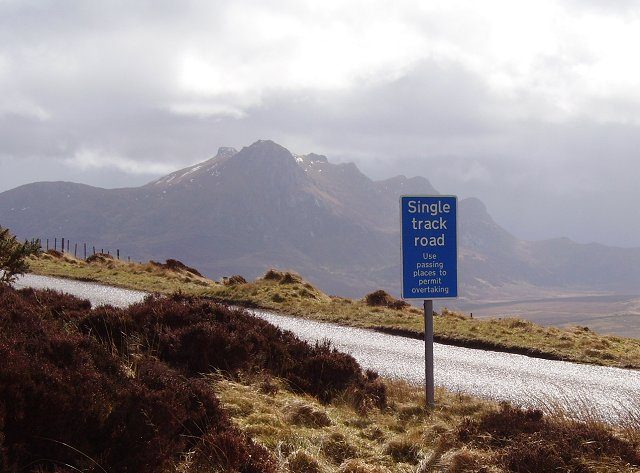
Roughly a third of the route, the whole western third from Lochcarron up to Durness, is single track with passing places. Not “narrow country lane” single track. Genuinely one vehicle wide, with blind summits, sheep with no road sense, and passing places that you will use constantly. Once you count the stopping, your average on that stretch falls a long way below the speed limit, and if you tell yourself otherwise you will spend the trip late and cross.
The northern coast, Durness to Thurso along the A838 and A836, is a middle case. Long single-track sections around Loch Eriboll and the Kyle of Tongue, then it widens and speeds up past Bettyhill. Call it 35 to 40mph.
The east coast is a different country. The A99 and A9 from Wick south to Inverness is proper 60mph road, wide, well surfaced, with dual sections either side of Inverness. Leave Wick at eight and you are at Inverness airport before eleven.
Which means the days have to be lopsided
Here is the whole trick of a five-day NC500, and almost no itinerary says it out loud: your days must be uneven on purpose. Short, slow days on the west. Long, fast days on the east. If you spread the mileage evenly you will have brutal west-coast days and a boring, under-used final day.
Look again at the table above. Day 3, Ullapool to Durness, is single track with steep blind summits; day 5 is the fast A99 and A9 from Wick. Mile for mile, the first takes far longer than the second. That is not a mistake. That is the route being honest.
Where the extra hours actually go
Driving time is not trip time. On the west coast, budget on top of your sat-nav estimate:
- Twenty to thirty per cent for passing places. A single motorhome coming the other way on the B869 can cost you five minutes of reversing.
- Ten minutes per photo stop, minimum. Pulling in, getting out, walking to the view, walking back. You will do six or eight of these a day and they add up to well over an hour.
- Forty-five minutes for lunch, and longer if the only place open has a queue, which in Durness in July it will.
- An hour of contingency. Roadworks, a closed cafe, a wrong turn, a cracking beach you had not planned on.
A 2 hour 45 driving day therefore becomes a 7 hour day out. That is fine. A 5 hour driving day becomes an 11 hour day out, and that is the version people come home exhausted from.
Variant one: the Full Loop in five days
Drive it clockwise, meaning west out of Inverness towards Lochcarron first. Everybody argues about direction and most of the arguments are noise, but there is one real reason to go clockwise on a five-day trip: it puts the Bealach na Bà on day one, when your reflexes are sharp and you have not yet done four days of single track, and it puts the fast A9 on day five, when you have a plane or a long drive south waiting.
Day 1: Inverness to Applecross
Leave Inverness by 8.30am. Fill up before you go; fuel gets thinner and dearer from here.
The A835 and A832 west through Contin and Achnasheen is fast and unremarkable by NC500 standards, which is exactly what you want first thing. Stop at Rogie Falls for twenty minutes if you like a short forest walk, and skip it without guilt if you do not. From Achnasheen the A890 drops down Glen Carron to Lochcarron, and Lochcarron is your last sensible coffee and fuel before the pass.
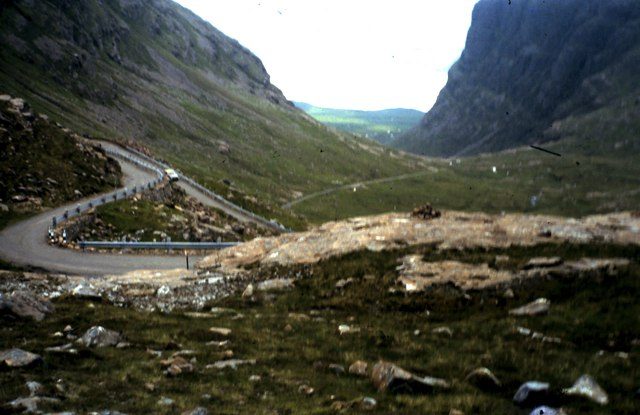
Then the Bealach na Bà. Six miles of climbing to 626 metres (2,053 feet), gradients up to 20 per cent, and a set of hairpins near the top that need first gear and both hands. The sign at the bottom warns it is unsuitable for learner drivers, caravans and very large vehicles, and it means it. In a normal car it is straightforward if you take it slowly and use the passing places properly.
Arrive at Applecross mid-afternoon and stop. The village is a single row of houses along a bay looking across the Inner Sound to Raasay and the Cuillin. If you have booked a table at the Applecross Inn — and in summer you must book, days ahead — you have earned it.
Where to sleep: Applecross has very few beds and they go early. If you cannot get one, Lochcarron and Shieldaig are the fallbacks, and both work; Shieldaig in particular is a lovely place to wake up.
Day 2: Applecross to Ullapool by the coast road
A long day on slow roads, so leave by 8.30 at the latest.
Take the coast road north from Applecross to Shieldaig rather than going back over the pass. It is narrow, twisting, gloriously empty single track past Fearnmore and Cuaig, and it is slow going for the distance. It is also one of the best stretches on the whole loop and it is the reason day 2 needs an early start.
From Shieldaig the A896 runs under the Torridon hills, which are as good a mountain view as Britain offers from a car. Beinn Eighe National Nature Reserve, Britain’s first, has a visitor centre near Kinlochewe and two waymarked trails; the shorter Woodland Trail takes about an hour and is a good leg-stretch. If you want longer walks than that, save them for a trip with more days in it and read up on hillwalking across Scotland before you commit.
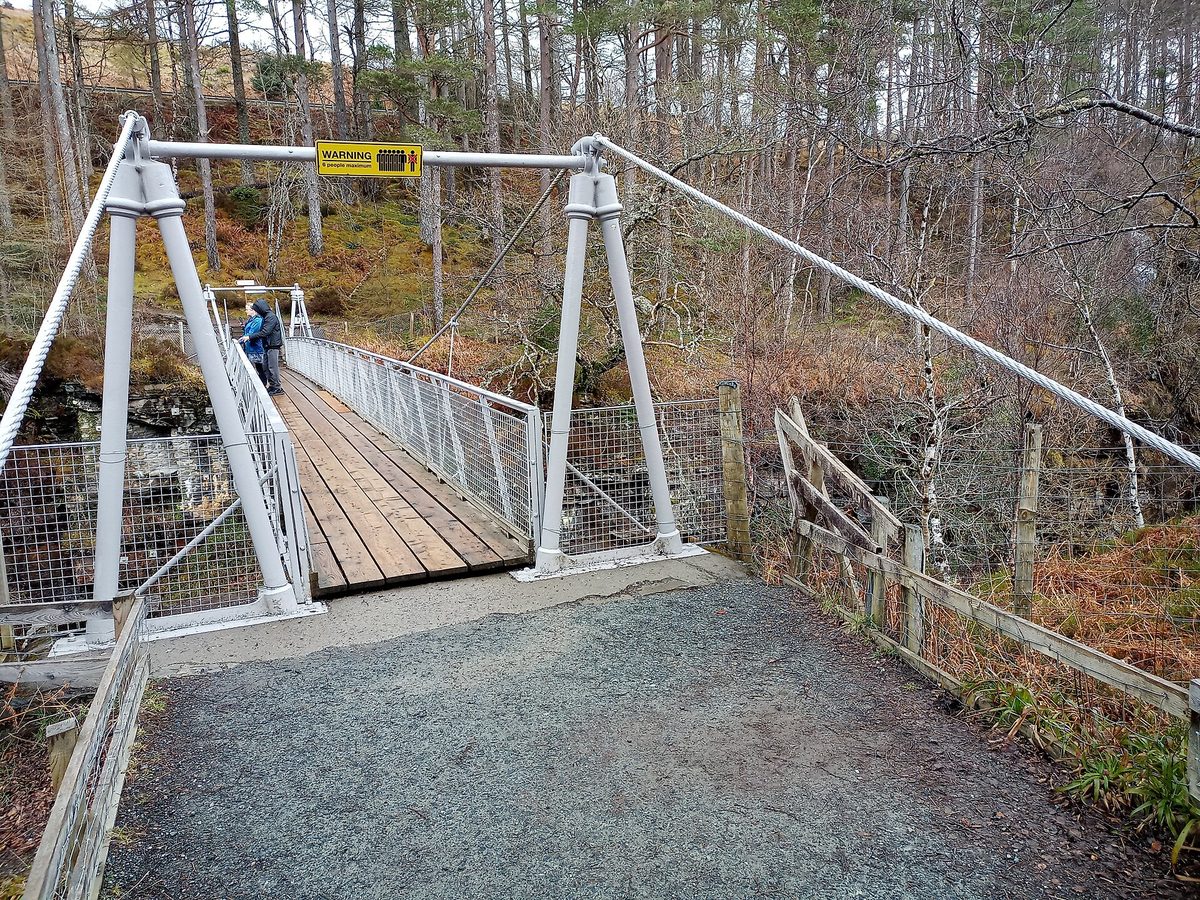
Then Gairloch, Inverewe Garden at Poolewe if gardens are your thing (allow 90 minutes), and the long haul round Little Loch Broom to Corrieshalloch Gorge at Braemore Junction. Corrieshalloch is a proper stop: a Victorian suspension bridge slung over a slot in the rock roughly a mile long and 60 metres deep, with the Falls of Measach going over the edge. It is National Trust for Scotland, there is a car park charge for non-members, and it takes forty minutes.
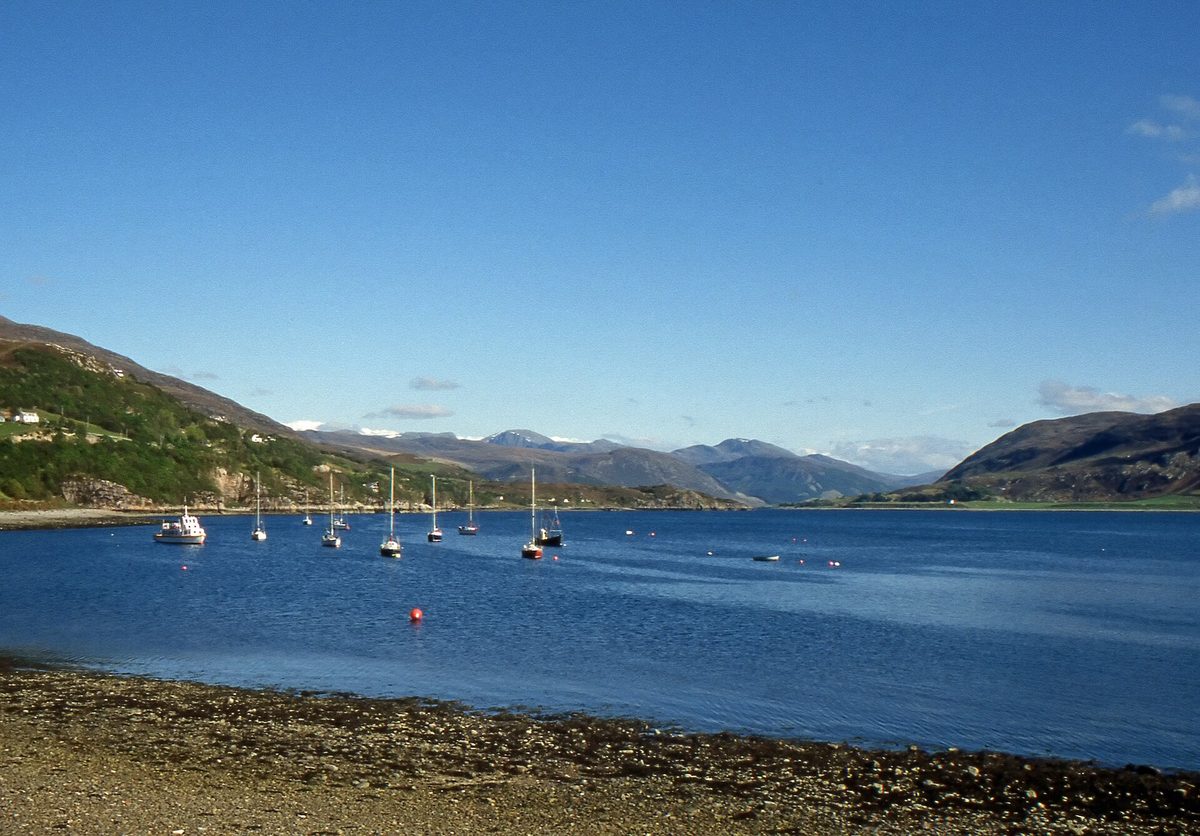
Ullapool by six. It is the largest settlement in Wester Ross and a place with an evening to it: a working harbour, a CalMac ferry to Stornoway, pubs and restaurants.
Day 3: Ullapool to Durness through Assynt
The shortest mileage of the trip and one of the fullest days, which tells you everything about the west coast.
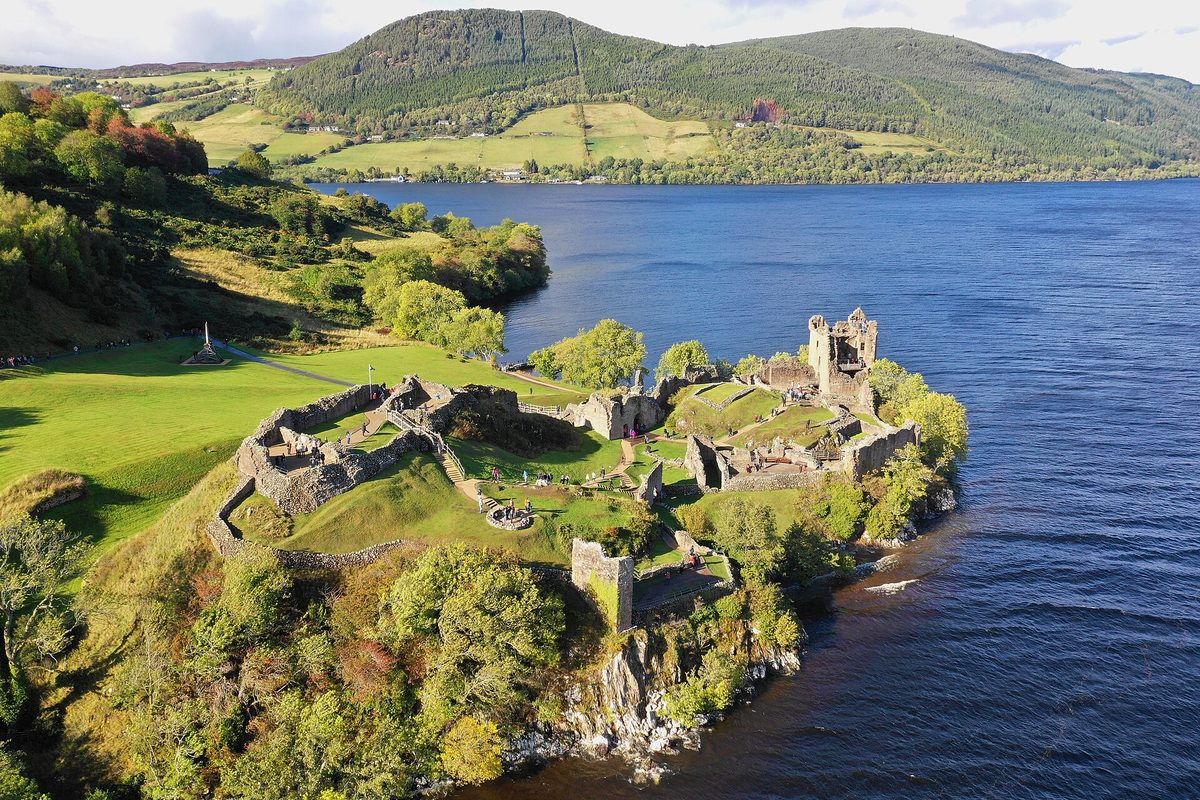
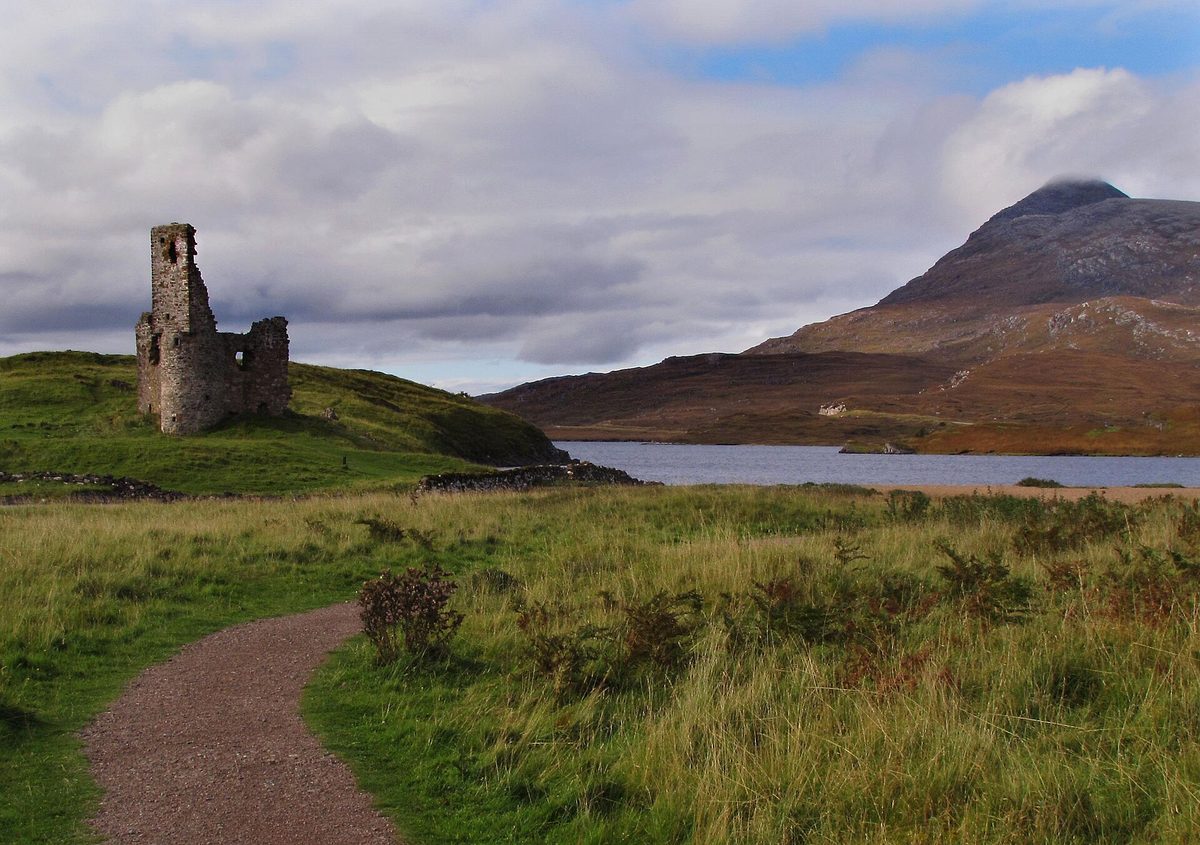
North on the A835 past Knockan Crag, a free National Nature Reserve with a short trail and a genuinely interesting bit of geology (this is where Victorian geologists worked out that old rock could be shoved on top of young rock). Then Ardvreck Castle on Loch Assynt, a 16th-century ruin on a spit of land, free, park at the roadside and walk five minutes. Of all the ruined castles you can pull over for in Scotland this is the one with the best backdrop.
At Skiag Bridge you get a choice. Straight on up the A894 to Kylesku, or west on the A837 to Lochinver and back north on the B869 through Achmelvich, Stoer and Drumbeg. Take the B869 if the weather is decent and your vehicle is smallish. It is slow going, with 1-in-6 gradients and blind crests that will make a nervous passenger grip the door handle, and a short side road off it leads down to Achmelvich beach, which is white sand and turquoise water and does not look like Scotland at all. Lochinver Larder does pies that are worth the detour on their own.
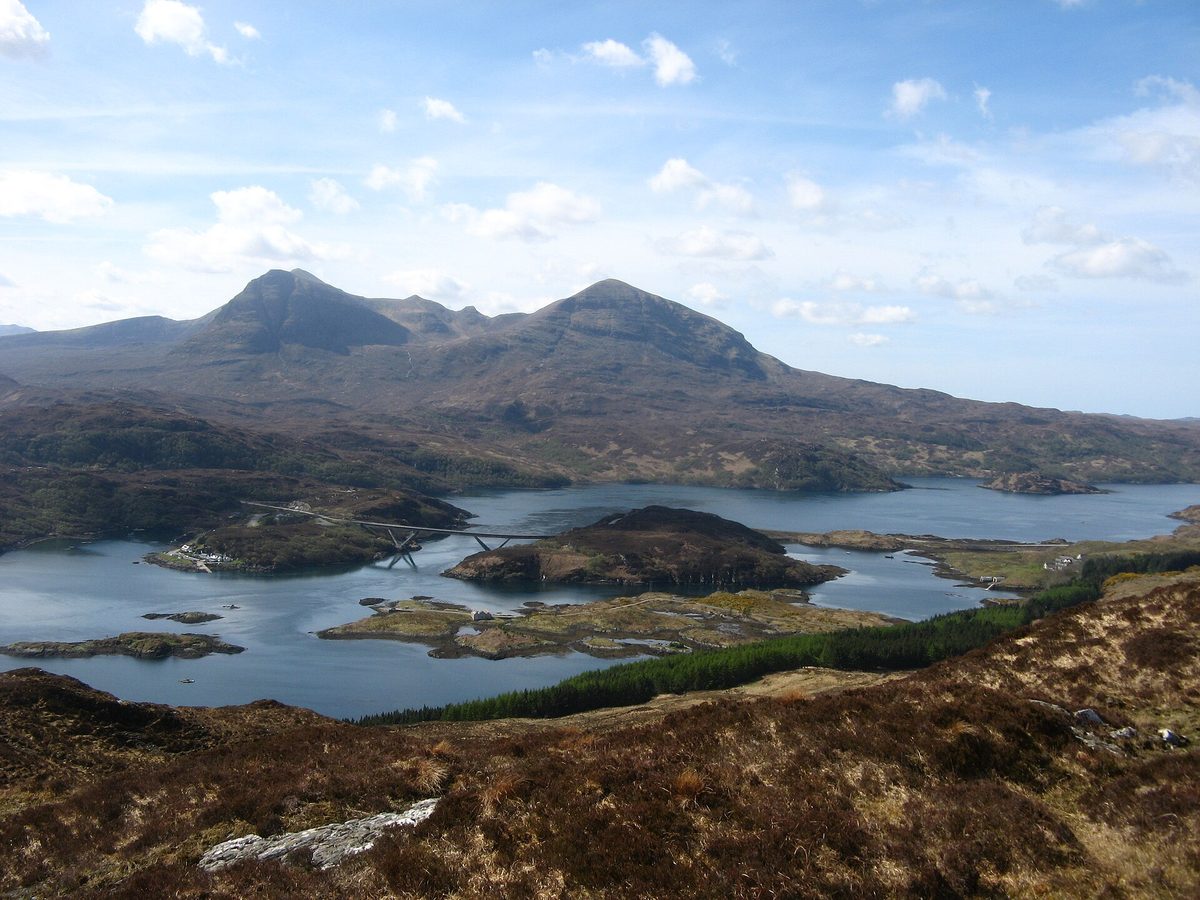
Rejoin at Kylesku for the bridge, a curved concrete span opened in 1984 that photographs far better than a bridge has any right to. Then Scourie, Kinlochbervie, and into Durness.
Where to sleep: Durness. Book it the moment you commit to the trip; it is the hardest bed on the route to get in July and August.
Day 4: Durness to Wick along the north coast
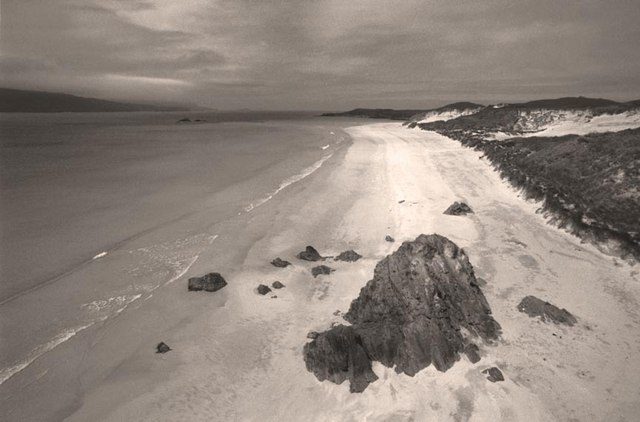
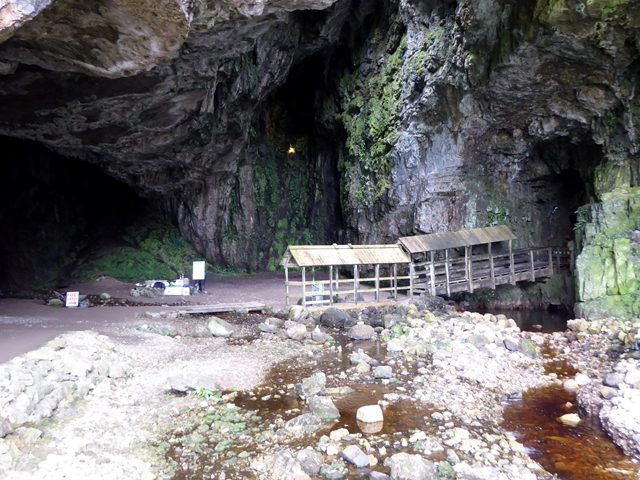
Do Durness properly first thing, then move. Smoo Cave is a few minutes down a flight of steps from its car park and free to look into; the inner chamber and its waterfall are seen on a short boat and walkway tour that runs seasonally and only when the burn is behaving, so treat it as a bonus rather than a plan. Balnakeil Beach is a mile of pale sand behind the old churchyard, and Balnakeil Craft Village next door has a chocolate shop that has no business being this far from anywhere.
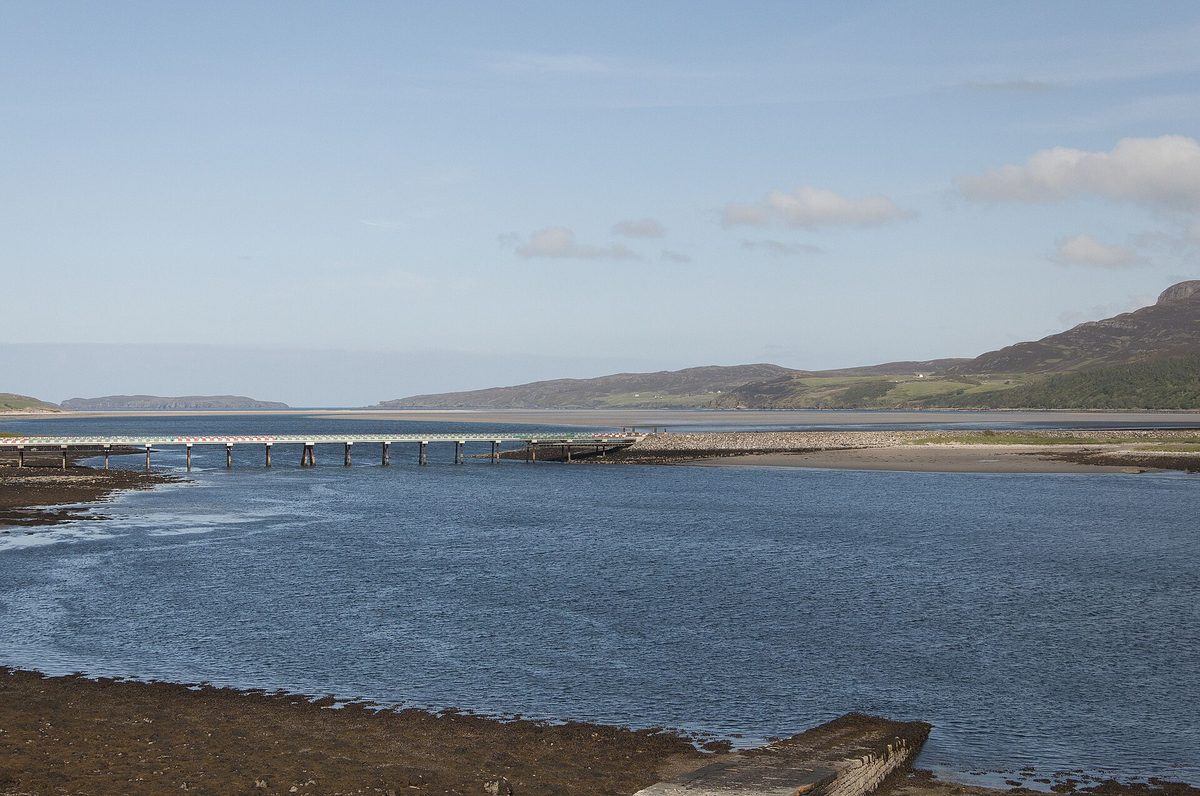
Then east. Around Loch Eriboll, over the Kyle of Tongue causeway with Ben Loyal standing behind it, past Bettyhill and Strathnaver, past the old Dounreay nuclear site, into Thurso. From Thurso it is fast.
Dunnet Head is a ten-mile round-trip detour and it is the actual northernmost point of mainland Britain, which John o’Groats is not, whatever the signpost implies. Give it the time; it is worth more than John o’Groats itself.
You will reach Wick tired. That is the shape of this day and there is no clever way around it: day 4 on the Full Loop is the one where you are covering ground rather than lingering.
Day 5: Wick to Inverness on the fast road
This is the day the Full Loop buys you. Fast road, 60mph limits, wide carriageway, dual sections near Inverness. Two and a quarter hours of actual driving, which means you have a whole day of slack to spend on stops.
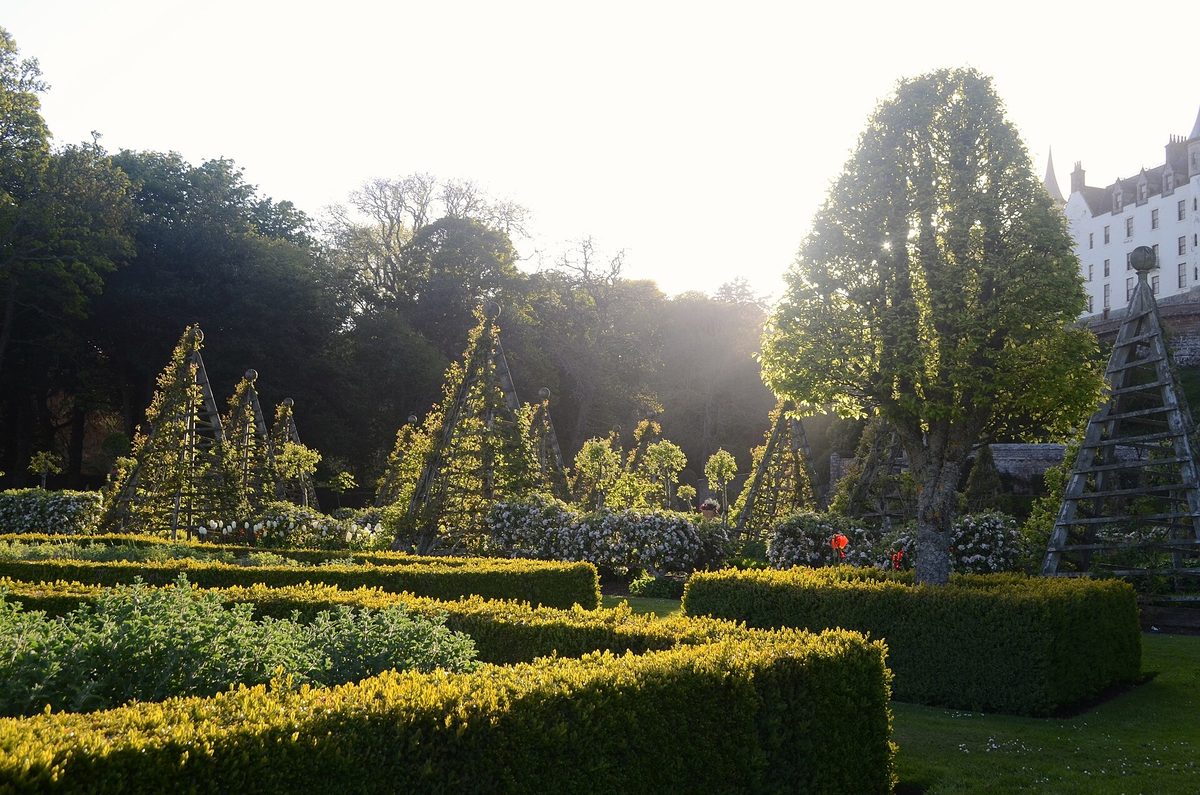
Spend it on the Whaligoe Steps, a flight of stone steps cut down a cliff to a natural harbour where fisherwomen once carried baskets of herring back up (the count is usually given as 365; people who count them rarely agree). Then Helmsdale and the Timespan museum if you want the Clearances explained properly, and Dunrobin Castle at Golspie — 189 rooms, formal gardens down to the sea, falconry displays, open roughly April to October, adult admission around £16 at the time of writing. Check before you go.
Finish at Dornoch for its cathedral and, if you play, Royal Dornoch, one of the best links courses in the world and one that needs booking a long way out.
If you still have light, the Black Isle is twenty minutes off the A9 and Chanonry Point is one of the best places in Britain to see bottlenose dolphins from dry land, best on a rising tide.
Who the Full Loop suits
People who want to have driven the North Coast 500, complete, with the John o’Groats photo and the whole circuit on the map. People travelling with someone who would rather see a lot than see a little slowly. Anyone visiting in June, when the light is long enough to absorb a bad day.
It suits you less if you hate being rushed, if you are travelling in October, or if this is a once-in-a-lifetime trip that you want to remember for the places rather than the mileage.
Variant two: West & North in five days
You drive the west coast and the north coast at a sane pace, then skip Caithness entirely by cutting inland from Tongue down the A836 to Lairg and joining the A9 at Bonar Bridge.
You lose John o’Groats, Duncansby Head, Wick, Dunnet Head, the Castle of Mey and Dunrobin. You gain four unhurried days on the best third of the route and one honest transit day home.
| Day | Route | What the day is for | Where to sleep |
|---|---|---|---|
| 1 | Inverness — Lochcarron — Bealach na Bà — Applecross | The pass, and an evening by the water | Applecross |
| 2 | Applecross coast road — Shieldaig — Torridon — Gairloch | Torridon at walking pace | Gairloch or Poolewe |
| 3 | Gairloch — Inverewe — Corrieshalloch — Ullapool | A short day with a boat trip or a hill in it | Ullapool |
| 4 | Ullapool — B869 Drumbeg loop — Kylesku — Durness | Assynt, properly | Durness |
| 5 | Durness — Tongue — Altnaharra — Lairg — A9 — Inverness | The drive home, with Smoo and Tongue on the way | Home, or Inverness |
| Total | West and north only | Four sightseeing days, plus one transit day | |
What changes is the distribution: on the Full Loop you get five compromised days, and on this one you get four proper days and one drive home. Days 2, 3 and 4 here cover the stretch from Applecross to Durness that the Full Loop crams into two, and that leaves time for the stops, which on the west coast is the difference between a holiday and a commute.
Day 1: Inverness to Applecross
Identical to the Full Loop. Leave by 8.30, do the pass in the afternoon, sleep in Applecross. Because you are not chasing the loop, you can take the Attadale Gardens detour near Strathcarron or walk the shore at Applecross before dinner without checking your watch.
Day 2: Applecross to Gairloch
The coast road to Shieldaig, then Torridon with time to actually stop in it. Do the Beinn Eighe Mountain Trail if the weather is with you (roughly 3 to 4 hours, steep, cairned, and it takes you above the treeline to a plateau that feels like the Arctic), or the Woodland Trail if it is not. Have lunch in Kinlochewe, then a slow run out to Gairloch with the Red Point road as an optional extra.
This is the day that most impresses people, and on the Full Loop you drive straight through it.
Day 3: Gairloch to Ullapool
The shortest day on either variant, deliberately. Inverewe Garden in the morning, Corrieshalloch Gorge at lunchtime, into Ullapool by mid-afternoon with the whole evening free.
Use it. Take a Summer Isles boat trip from the harbour, or drive the dead-end road out to Achiltibuie under Stac Pollaidh, or climb Stac Pollaidh itself (two to three hours return on a well-made path, and the view down over the Assynt lochans is the one everyone photographs). Ullapool is also one of the better Highland towns to use as a base if you decide to slow the whole trip down and do two nights here.
Day 4: Ullapool to Durness
Knockan Crag, Ardvreck, the full B869 Drumbeg loop with time for Achmelvich and the Stoer lighthouse walk, Kylesku bridge, and a stop at Tarbet for the Handa Island ferry if seabirds interest you (a seasonal boat, roughly April to early September, and the island walk takes three hours, so this one is either/or with the Drumbeg loop).
Get into Durness by six and walk Balnakeil in the evening light. In June that light lasts until eleven.
Day 5: Durness to Inverness the inland way
The long one, and I am not going to dress it up. Smoo Cave first thing, then round Loch Eriboll and over the Kyle of Tongue causeway. Climb to Castle Varrich above Tongue if you have the legs; it is about an hour return on a good path with a view worth every step.
Then turn south on the A836 through Altnaharra. This road is off the NC500 itself: a long run of single track through empty country, past Loch Loyal and the head of Loch Naver. The weather station at Altnaharra recorded −27.2°C on 30 December 1995, a joint UK record low. Allow plenty of time. At Lairg it becomes ordinary again, and from Bonar Bridge you are on the A9 and moving.
If you would rather not face the whole drive home on your last day, sleep at Tongue on night 4 instead of Durness. That shares the miles out between the last two days and costs you the Balnakeil evening. I think the Balnakeil evening is worth more, but it is close.
Who West & North suits
First-timers who would rather come home with three days they remember in detail than five they remember as a blur. Photographers. Anyone travelling in September or October when the light is short. Anyone who has already ticked off Caithness on a previous trip, and anyone who reads the phrase “John o’Groats signpost” and feels nothing.
It suits you badly if you are the sort of person who will regret an incomplete loop on the map. That is a real feeling and there is no arguing someone out of it. If it is you, drive the Full Loop.
Full Loop or West & North: the two variants side by side
If you are still torn, this is the decision in one table.
| Full Loop | West & North | |
|---|---|---|
| Last day | Wick to Inverness on the fast A99 and A9 | Durness to Inverness the inland way, through Tongue and Lairg |
| Shape of the trip | Five moderately busy days | Four unhurried days plus one transit day |
| You get | The complete circuit, Caithness, Dunrobin, Duncansby | Time to walk, swim and wait for the light on the west coast |
| You lose | Depth — two or three stops a day, no long walks | The whole east coast, and the completed loop on the map |
| Best months | May to July, when daylight covers your mistakes | Any month, and the only sensible choice October to March |
If you have to go anticlockwise
I have argued for clockwise, but there are good reasons you might not be able to, and the commonest one is beds. If the only Durness room you can get is on a Tuesday and the only Applecross room is on a Thursday, the direction of travel is decided for you, and that is fine.
Anticlockwise means Inverness, the A9 north, Wick or Thurso on night one, Durness on night two, Ullapool or Lochinver on night three, Torridon or Applecross on night four, and home over the pass on day five. It works. Three things change.
First, your easy day comes first, which is pleasant when you have just flown in and hired a car you are not used to. Second, the Bealach na Bà lands on your final afternoon, which is a fine finale but a bad plan if you have an evening flight from Inverness — leave three hours from Applecross, not two. Third, you meet the bulk of the traffic head-on rather than sitting behind it, because most people go clockwise; that is mildly better for your average speed and mildly worse for your nerves on single track.
One anticlockwise-only advantage worth knowing: the west coast light is generally better in the afternoon and evening, looking out to sea. Going anticlockwise puts you on the west coast late in the day, which photographers will appreciate more than they will mind the traffic.
What you actually sacrifice, and whether it matters
Both variants cut things. Here is what goes, and my honest view of each.
Duncansby Stacks
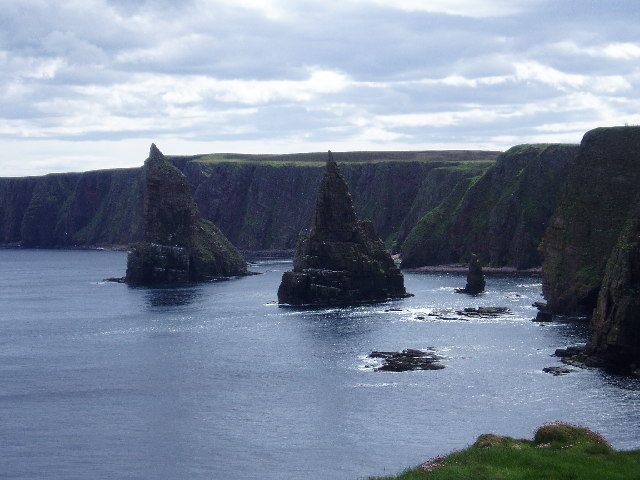
Cut on the West & North variant, and squeezed on the Full Loop. These are two enormous sea stacks off Duncansby Head, reached by a twenty-minute walk across a field from the lighthouse car park, and they are the best thing in Caithness by some distance. If you are doing the Full Loop, get to Duncansby and skip the John o’Groats signpost queue instead. If you are doing West & North, you are genuinely losing something.
Whaligoe Steps
Cut on West & North. A remarkable place with a hard history, and free, and it takes half an hour. But it is a set of steps down a cliff in a part of the route where you will already have seen a great many cliffs, and if you are prioritising, it goes before the west coast does.
Dunrobin Castle
Cut on West & North. Dunrobin is the most photogenic castle on the route and a proper two-hour visit with the falconry, and its association with the Sutherland Clearances gives it an edge most castle visits lack. Losing it hurts less than it sounds, because it is only 50 miles north of Inverness on fast road; you can do it as a half-day at either end of the trip, before or after the loop, without touching your five days.
The Black Isle
Cut on both, realistically. Chanonry Point, Fortrose Cathedral, Cromarty and the Black Isle Brewery deserve a day and they will not get one. Same solution as Dunrobin: it starts on Inverness’s doorstep, so bolt it on to your arrival or departure day rather than trying to force it into the loop.
The one thing I would not cut: the Bealach na Bà
People are talked out of the Bealach constantly — it is too steep, it takes too long, there is a perfectly good road round. Ignore them. Give it time for the stops, because it is one of the great drives in Britain: a corrie road that climbs from sea level to over 2,000 feet in six miles and then drops you at a village on a beach.
The only reason to skip it on a five-day trip is cloud. If the top is in cloud you will see a wall of grey, the hairpins become genuinely unpleasant, and you will have spent an hour for nothing. Check the webcam or ask at Lochcarron before you commit, and if the cloud is down, take the A896 through Kishorn to Shieldaig instead and do the coast road. Weather in the Highlands turns fast, so it is worth knowing what Scotland’s weather does month by month before you build a plan around a mountain pass.
Early starts: the discipline that makes five days work
I will put this as plainly as I can. On a five-day NC500, the difference between leaving at 8am and leaving at 10am is roughly the whole trip.
The two hours you cannot get back
Two hours is one major stop and two minor ones. Over five days it is ten hours, which is most of a sixth day. And it compounds, because the late-morning start means a late lunch, which means arriving at your bed at eight rather than six, which means a late dinner, which means a late start tomorrow.
The other thing an early start buys is emptiness. The single-track roads on the west coast are effectively yours until about half past nine. From ten onwards you meet the hire cars and the motorhomes that left Ullapool after breakfast, and your average speed drops noticeably. Bealach na Bà at 9am in June is a different road from Bealach na Bà at 1pm.
How to actually do it
- Ask about breakfast when you book. Find out what time it starts, because a late breakfast eats the early start. Some will do an earlier one if you ask the night before, or leave you a flask and rolls.
- Fuel up the evening before, not the morning of. Rural filling stations often do not open until nine, and some do not open on Sundays at all.
- Buy lunch before you need it. There is a supermarket in Ullapool and a village shop in Durness. Between them, shops and cafes are few and far apart, so carry food and plan your stops.
- Pack the car at night. Sounds trivial. Saves twenty minutes every single morning.
Leave one day with slack in it
On both variants, build your loosest day around the middle of the trip and treat it as a shock absorber. If the weather is filthy on day 2, you push the walk to day 3 rather than losing it. Five days has no spare day in it, so the slack has to be inside the days themselves. This is the same principle behind most sensible Highland road trip routes and it matters more here than anywhere.
What a good day on the NC500 actually looks like, hour by hour
Itineraries list stops. They almost never show you the clock, which is where the plan meets reality. So here is day 3 of the Full Loop, Ullapool to Durness, written out as it actually runs when it goes well. It fills a day.
- 07.15 — Up. Car packed the night before. Breakfast at 7.30 because you asked when you checked in.
- 08.10 — Out of Ullapool. Fuel done last night. The A835 north is empty.
- 08.45 — Knockan Crag. Twenty-five minutes on the lower trail, nobody else in the car park, the whole of Coigach behind you.
- 09.35 — Ardvreck Castle. Fifteen minutes, five of them walking. This is a photograph, not a visit.
- 10.10 — Turn west at Skiag Bridge for Lochinver. Slow road.
- 10.55 — Lochinver. Buy pies at the Larder now, eat them later. Do not sit down; the day does not have room.
- 11.20 — Onto the B869. This is the hour you came for. Achmelvich at 11.45, an hour on the beach and the little walk to the bay, pies eaten on a rock.
- 13.15 — Back on the B869 for Stoer and Drumbeg. Slow, narrow and worth every minute.
- 14.40 — Kylesku. Half an hour: the bridge from the old slipway viewpoint, coffee at the hotel.
- 15.30 — North on the A894. Scourie at 16.00, a quick stop at Tarbet or Oldshoremore if the sun is out.
- 17.20 — Into Durness. Check in, shower, sit down for the first time since breakfast.
- 19.00 — Dinner, booked.
- 20.30 — Balnakeil beach in the evening light, because in June you still have three hours of it.
Add up the day and you get nine hours from leaving to arriving, with two proper stops, three quick ones and a beach. That is what a well-shaped NC500 day looks like, and it only works because of the 8.10 departure.
Now shift the whole thing two hours later. You leave at 10.10, you reach Knockan at 10.45 with a full car park, you skip Achmelvich because you are behind, you arrive in Durness at 19.20 and eat crisps. Same stops on paper. Completely different day.
Where to sleep on a five-day NC500, village by village
Beds shape this route more than roads do, so it is worth knowing what actually exists in each overnight village before you lock in a plan. Prices below are broad summer bands at the time of writing for a double room, and they move; check.
Applecross
Tiny. The Applecross Inn has rooms above the pub and they are booked out months ahead in summer; there is a campsite with pods and a scattering of self-catering cottages, and that is close to the lot. Expect £140 upwards. If you cannot get in, look at Lochcarron or Shieldaig, both pleasant places to wake up — Tigh an Eilean at Shieldaig looks straight down the loch.
Gairloch and Poolewe
Relevant if you are doing the West & North variant. More choice than anywhere else on the west coast between Applecross and Ullapool: hotels, guesthouses, a hostel and a lot of self-catering. £100 to £160 is typical, and this is the easiest west-coast night to book late.
Ullapool
The most rooms and the most food on the west coast, and the one place with an actual choice of somewhere to eat at nine in the evening. The Ceilidh Place is the well-known one and does rooms, food and books; there are several hotels along Shore Street and a good deal of B&B stock in the streets behind. £110 to £180. It is also the sensible place to spend two nights if you want to slow down.
Lochinver and Kylesku
Alternatives to Durness on the West & North variant, and both are lovely. The Kylesku Hotel sits right on the water by the old ferry slipway. Lochinver has a hotel, several guesthouses and the campsite at Achmelvich. Fewer beds than Ullapool, so book earlier.
Durness
The hardest bed on the whole route. Mackay’s Rooms and the Smoo Cave Hotel are the anchors, plus a hostel, a bunkhouse, the campsite at Sango Sands and a handful of B&Bs. That is the entire supply for the far north-west corner of Britain in July. Book six months out or plan around Kinlochbervie or Tongue instead.
Tongue and Bettyhill
The Tongue Hotel and a few guesthouses and hostels; Bettyhill has a hotel and self-catering. This stretch is where people end up when Durness is full, and it works fine — you lose the Balnakeil evening and gain a shorter day 5.
Wick and Thurso
Easily the easiest night to book on the Full Loop. Both are proper towns with chain and independent hotels, guesthouses and B&Bs, and prices are noticeably lower than the west — often £80 to £120. Mackays Hotel in Wick is the long-established one. You will rarely struggle here even in August.
If it is all full
Two options and both are legitimate. Shift your nights by one village in whichever direction has space and rebalance the days, or reverse the direction of travel, which changes which village you need on which date and often unlocks the chain. Do not simply lengthen one day to 160 miles to compensate; that is how a five-day trip turns into a slog.
Eating on a schedule this tight
The single biggest avoidable time loss on a five-day NC500 is food, and it goes wrong in both directions: an hour lost to a sit-down lunch you did not have time for, or forty miles of hunger because everything was shut.
Kitchens close earlier than you think
Outside the towns, many kitchens stop after lunch and do not start again until the evening, so check each place’s hours before you count on it. If you roll into a village mid-afternoon expecting a hot meal, you can easily be out of luck. Plan lunch for a village, not a time, and have a fallback in the boot.
The takeaway-lunch habit
The trick that saves the most time is buying lunch in the morning and eating it at a viewpoint. The Lochinver Larder does pies designed for exactly this. Ullapool has a supermarket and a well-regarded seafood shack near the harbour. Balnakeil Craft Village at Durness has a chocolate shop that is genuinely worth the stop. Buy in the morning, eat at half past twelve wherever you happen to be, and you have bought yourself an hour of daylight.
Book dinner, every night
In Applecross, Durness, Kylesku and Shieldaig there may be one kitchen serving the whole village. Ring in the morning or ask your hosts to. Arriving at half past seven without a table is how people end up eating supermarket sandwiches in a car park on their holiday.
Breakfast is your lever
An early breakfast is worth more than any other single arrangement on this trip, because it protects the 8am departure. Ask your B&B or hotel the evening before whether they can serve it early. If yours will not, buy pastries and a flask the day before and eat on the road.
Five days in June is not the same trip as five days in October
This is the other thing the copy-paste itineraries never mention. The same 516 miles behaves completely differently depending on how much daylight you have to spend.
June: about 18 hours of usable light
In late June at Durness the sun is up before 4.30am and does not set until around 10.20pm, and the sky never goes properly dark. That is an enormous amount of slack. You can leave Ullapool at nine, mess up, take a wrong turn, spend an extra hour at Achmelvich, and still walk on Balnakeil beach after dinner.
June is why the Full Loop is defensible in five days. It is also the month of maximum traffic and the start of serious midge season, so read up on when and where midges bite before you plan any evening standing still by fresh water. If you want the long days with slightly fewer people, May on the west coast is the better bet and the midges have barely started.
October: the clocks and the cut-off
By mid-October you have around ten hours of daylight, and the clocks go back on the last Sunday of the month, after which sunset in the far north is not far off half past four. Ten hours is enough for a good day out. It is not enough for a 125-mile day with six stops in it.
This is exactly why I push the West & North variant for anyone travelling in October, when the light gets short and the colours get good. Shorter days fit inside the light. The Full Loop in late October means driving the north coast in the dark, which is both dull and, on single track with deer about, a bit hairy.
The compensation is real, though: autumn colour on the Torridon birches, no midges, no queues, and a serious chance of the aurora over the north coast, which you cannot see in June because it never gets dark.
The shoulder-month compromise
If you can pick your dates, mid-May and early September are the sweet spots for a five-day trip: fourteen to sixteen hours of light, most attractions open, beds still available at three months’ notice, and midges either not started or fading. If you have flexibility on dates, the general case for picking your month in Scotland carefully applies double on a route this exposed to weather and light.
And if you are going in winter
Five days between November and February is a different exercise again, and I would not attempt the Full Loop. In December the sun is up for around six hours at Durness and the practical driving window is shorter than that once you allow for the gloom either side. Half the accommodation and most of the attractions are closed, the Bealach na Bà shuts in snow with no warning, and the single-track roads are gritted late if at all.
What you get in return is genuine: an empty road, dark skies, and a real chance of the aurora on a clear night. If you want it, do a three-night version based in Ullapool and Durness rather than a loop, check Traffic Scotland before every leg, and carry a shovel, a blanket and more food than you think you need.
One shot at everything: light on a five-day trip
On a longer trip you can go back. On five days you get one pass at each place, at whatever hour the schedule delivers you there and in whatever weather the day has decided on. That changes how you should plan if photographs matter to you at all.
Which stops want which time of day
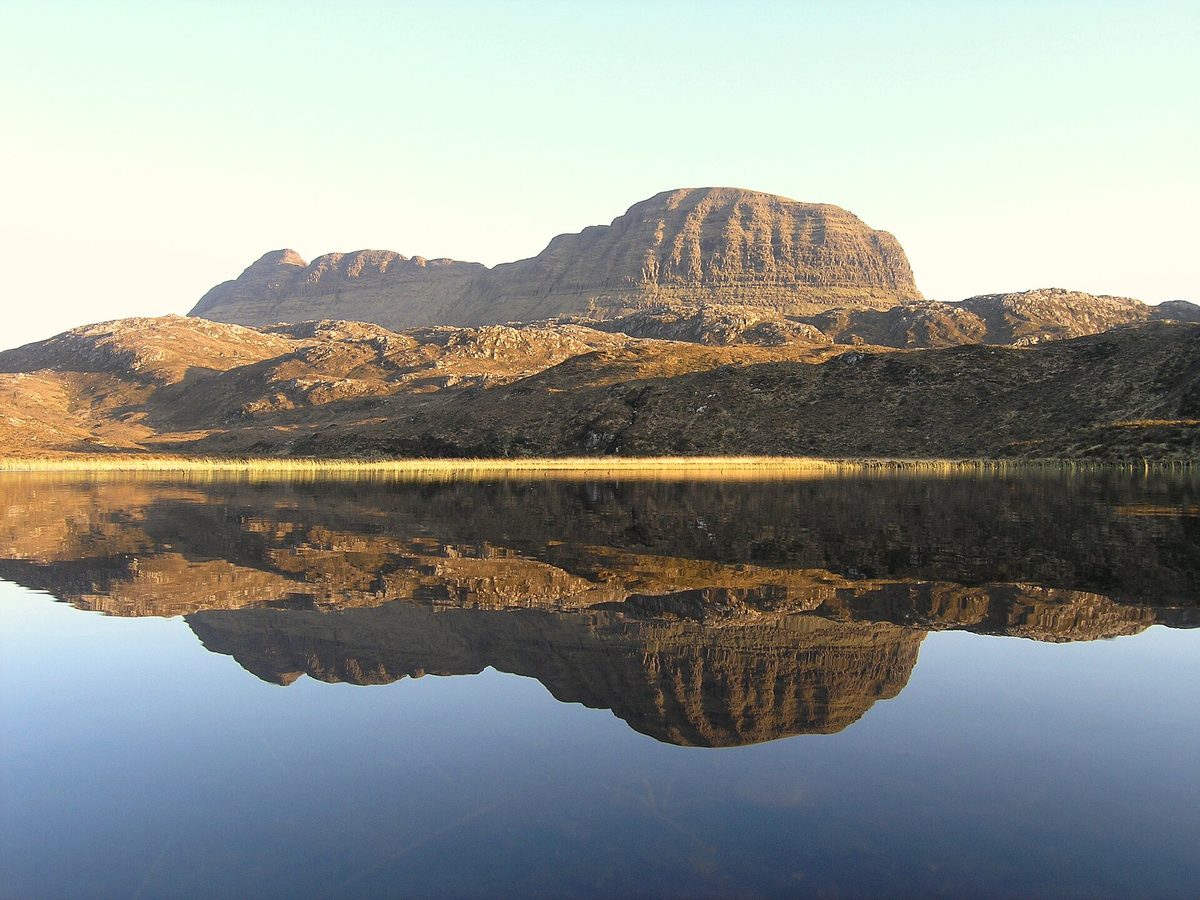
The west coast faces west, which sounds obvious and has real consequences. Achmelvich, Balnakeil, Applecross bay and the Kylesku bridge all look their best from mid-afternoon onwards, with the sun coming off the water towards you. Ardvreck Castle and Suilven work better in the morning, lit from the east. Corrieshalloch is a deep gorge and is honestly better on a flat grey day than in hard sun, which is a useful thing to know when the forecast is poor.
The Bealach na Bà is the exception that ruins schedules: the view from the summit car park across to Skye needs clear air more than it needs a particular hour, and clear air on that pass is not something you can plan for.
Build the day around one stop, not six
On a short trip, pick one place per day that you will give proper time to, and treat everything else as a drive-by. On day 3 that might be an hour and a half at Achmelvich. On day 2 it might be waiting out a shower at Loch Torridon. Six rushed fifteen-minute stops produce six mediocre photographs and a tiring day. One long stop produces something you keep.
Accept the weather you get
Five days in the north-west of Scotland will typically give you one excellent day, two mixed ones and one that is properly wet, in some order. Do not spend the wet day mourning. Low cloud on the Torridon hills and rain coming across Loch Eriboll are genuinely more characteristic of this coast than blue sky, and they photograph well if you stop trying to make them look like summer.
Planning the practical bits
What to book, and how far ahead
Beds are the constraint, not cars. There are perhaps a few hundred rooms across the entire west and north coast of this route and demand outstrips them badly from May to September.
- Six months ahead for July and August, and that is not an exaggeration for Applecross, Durness and Lochinver.
- Three months ahead for May, June and September.
- Two to four weeks is usually fine from November to March, though a lot of places shut for the winter entirely.
Book the whole chain before you book anything else, because one unavailable night in Durness reshapes the entire itinerary. Our wider guide to where to stay around Scotland covers the types of accommodation, but on this route the honest advice is simpler: take what you can get in the right village.
Also book: dinner at the Applecross Inn and anywhere in Durness, Dunrobin Castle if you want a specific falconry time, and any boat trip. Do not bother booking anything else.
Getting to the start
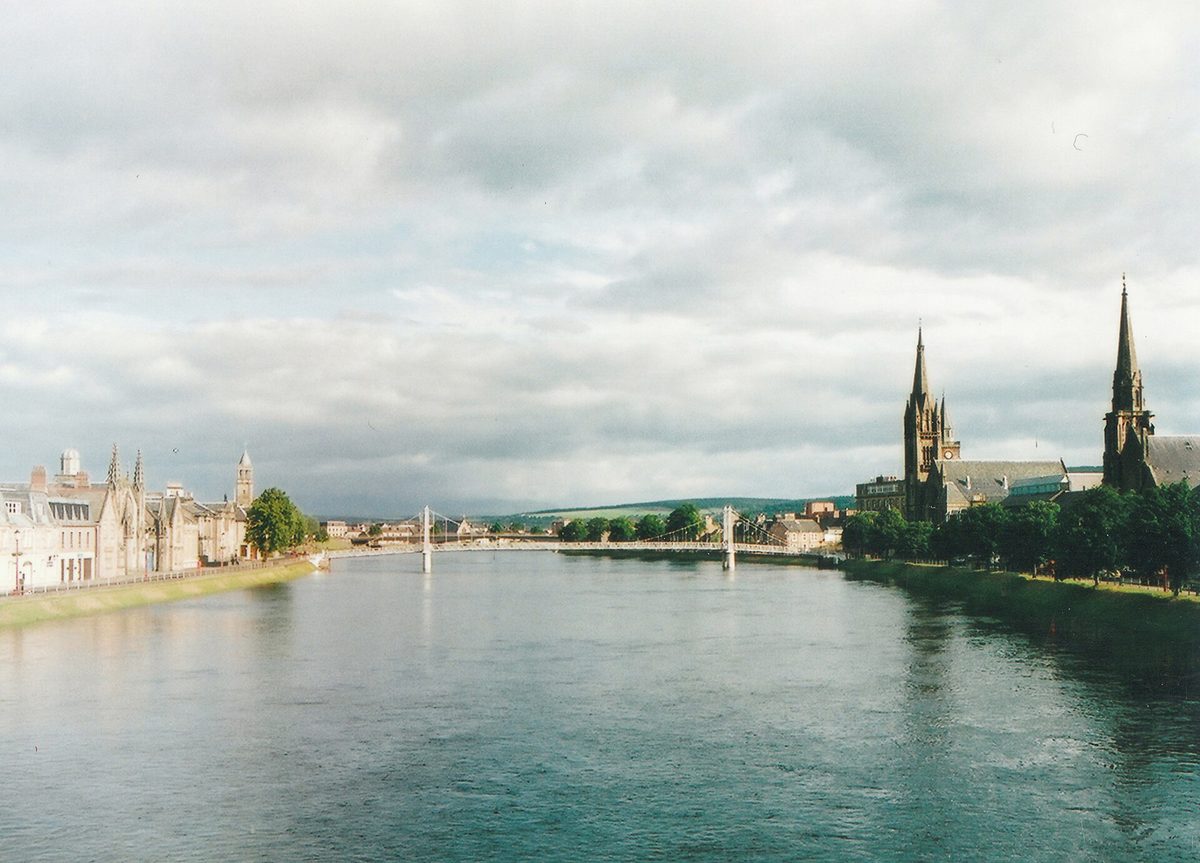
Inverness is the obvious start and finish, and the ways of reaching it are covered in detail further down. Whatever way you arrive, hire the car at the airport rather than in town, and give yourself an evening in the city before you drive anywhere — a walk along the river and a look at Loch Ness and Inverness itself is a better use of it than an extra 40 miles up the road. For the wider picture on trains, buses and ferries elsewhere in the country, our guide to getting around Scotland is the starting point.
Fuel, charging and signal
Fuel is available in Ullapool, Lochinver, Kinlochbervie, Scourie, Durness, Tongue, Bettyhill, Thurso, Wick and Gairloch, with a small pump at Applecross. Many are attached to shops with limited evening and Sunday hours. A simple rule: never pass a filling station below half a tank on the west coast. Expect to pay noticeably more per litre than in Inverness.
EV charging exists along the route but it is thin and single units are common, so a queue of one car ahead of you is a genuine delay. Plan charges at the overnight stops rather than mid-drive, and check live availability the morning of.
Mobile signal is patchy to absent between Kinlochbervie and Tongue and across the Altnaharra road. Download offline maps before you leave Inverness and take a paper map as backup.
What to drive
A small or mid-size car is the right tool. Reversing 200 metres uphill on the B869 in something wide is miserable, and the Bealach signs exist for a reason. Motorhomes larger than a standard VW T5 conversion should avoid both the Bealach and the Drumbeg loop entirely and take the A896 and A894 instead.
Driving single track properly
Passing places are for passing and for letting faster traffic through. If the passing place is on your left, pull into it. If it is on your right, stop opposite it and let the other vehicle use it. If you meet someone between passing places, the vehicle nearer to one reverses, and on a hill it is usually the one going down. Pull over for locals, delivery vans and anyone behind you who is clearly going somewhere rather than sightseeing. A raised hand of thanks is standard and costs nothing.
What to take
Five days has no room for a shopping detour, so bring it with you. Waterproof jacket and trousers, because the rain here often arrives sideways. Boots you can walk a beach and a hill path in. Warm layers even in July; the wind off the Minch does not care what month it is. Sunglasses, which people find funny until they are driving west into a low sun on a single-track road at seven in the evening. Midge repellent from late May to September. A physical road atlas. A cool bag for the lunches you will be buying in the mornings. Cash, in small amounts, for honesty boxes and the odd car park machine. And a flask, which is the single most useful object on a Highland road trip.
Doing the five days in a campervan or motorhome
A large share of the traffic on this route is now campervans, and on a five-day trip a van changes the plan more than people expect. It is a good way to do the NC500. It is not a way to do it faster.
Size decides your route
If your van is no bigger than a standard VW T5 conversion and you can reverse confidently for several hundred yards on single track, you can drive essentially the whole route including the Bealach na Bà and the B869, taking both slowly. Anything larger, and you should treat the Bealach, the Drumbeg loop and the Applecross coast road as closed to you and take the A896 and A894 instead. That is not timidity; it is the difference between a good day and reversing a seven-metre van 300 metres downhill with a queue behind you.
Everything takes longer
Add roughly 20 per cent to every driving estimate in this article. Vans are slower uphill, slower to stop and start at passing places, and slower to park. On a five-day schedule that is the equivalent of losing most of a day, which is a strong argument for the West & North variant if you are in a van.
Where you can and cannot stop
Overnighting in a motorhome is not covered by Scotland’s wild camping rights, which apply to lightweight camping on foot. In practice that means campsites and official aires, and checking how each one takes bookings before you set off, just as you would with a hotel. Do not overnight in passing places, beach car parks, or the pull-ins at Kylesku and Clachtoll; it is the single thing that has soured local feeling about the route.
Practicalities
Fresh water and waste disposal points are thinner on the ground than campsites are, so top up and empty whenever you get the chance rather than when you need to. Gas is available in Ullapool, Thurso and Inverness and not much in between. And a van sleeps you anywhere, which tempts people into longer days; resist it, because the whole argument of this article is that the driving is what wears you out.
The hidden sixth day: getting to Inverness and away again
Almost every five-day itinerary starts at Inverness at 9am on day one and ends there at 5pm on day five, as if you materialise at the start line. You do not, and the travel at either end is where a lot of five-day trips quietly become four-day trips.
If you are flying
Inverness airport is seven miles east of the city and hire desks are on site. A morning arrival means you can start the loop the same day, just about, if you are at the desk by 10am and you have already eaten. An afternoon or evening arrival means day one is gone: get the car, drive into town, sleep, and start properly at eight the next morning. That is a sixth night of accommodation and it is the best money you will spend on the trip.
If you are driving up
Edinburgh to Inverness is around three and a half hours on the A9, Glasgow about the same, Manchester a full day. Do not drive up and start the loop on the same day. The A9 is a tiring road with average speed cameras for much of its length and you will arrive at Applecross having driven for seven hours, which is precisely the state this article exists to help you avoid.
If you are taking the train
The train from Edinburgh or Glasgow to Inverness takes about three and a half hours and is a lovely journey through Perthshire and over Drumochter. The Caledonian Sleeper from London arrives in Inverness in the morning, which in theory sets you up for a same-day start — in practice you will have slept badly and be about to drive a mountain pass, so give yourself the morning.
Use the bookends properly
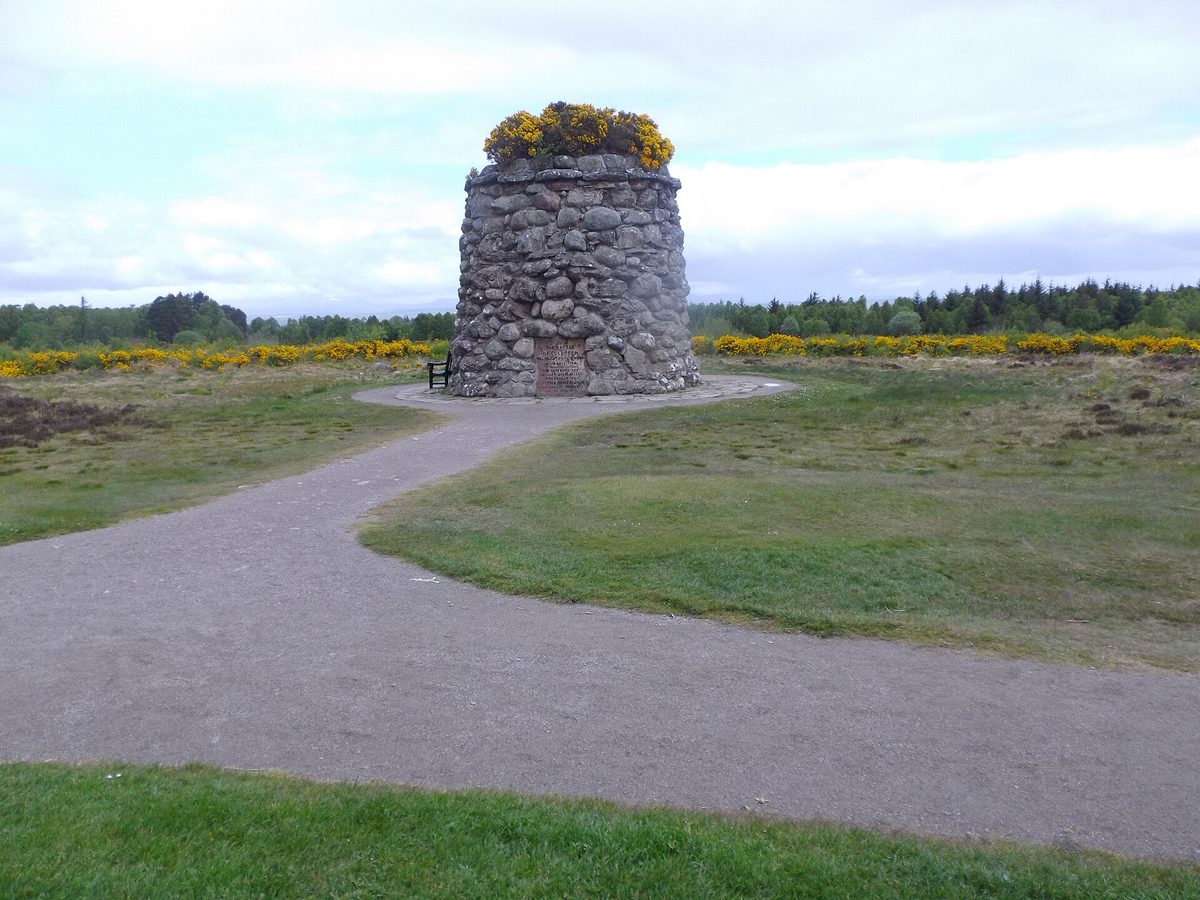
If you do end up with an evening in Inverness at either end, that is your chance to pick up the two things the five-day loop cuts: the Black Isle and Chanonry Point on one side, Culloden and Clava Cairns on the other. Both are half-days at most and neither costs you a night of the loop.
What five days on the NC500 costs
Rough planning figures for two people sharing a car and a room, at the time of writing. Everything here moves with the season and with fuel prices, so treat it as a shape rather than a quote.
| Cost | Budget | Mid-range | Comfortable |
|---|---|---|---|
| Accommodation, 5 nights | £350 (hostels, B&Bs, campsite) | £600 (guesthouses and small hotels) | £950+ (hotels with restaurants) |
| Fuel for the loop | £75 | £90 | £110 (larger car) |
| Food and drink | £200 (self-catering most lunches) | £350 | £550 |
| Entry fees and boat trips | £30 | £80 | £140 |
| Car hire, 5 days | £180 | £250 | £350 |
| Total for two | ~£835 | ~£1,370 | ~£2,100 |
Two notes. Fuel on the west coast runs noticeably above the national average, so budget on the higher side if you are doing the full loop. And a National Trust for Scotland membership pays for itself quickly if you plan to visit Corrieshalloch, Inverewe and Culloden, which between them would otherwise cost most of a membership anyway.
Five days with children in the car
The NC500 works with children better than its reputation suggests, but the five-day version needs adjusting, not just enduring.
The single-track roads are the problem
It is not the length of the drives, it is the character of them. Constant braking, accelerating and swaying on the B869 and the Applecross coast road makes children carsick far faster than an equivalent hour on the A9 does. If anyone in your car is prone to it, the West & North variant with its shorter days is the kinder choice, and so is putting the worst road of the day in the morning rather than after lunch.
Cut the drive, keep the beaches
Children on this route are almost universally happier at Achmelvich, Balnakeil, Ceannabeinne or Dornoch beach than at any castle or viewpoint, and those stops cost you an hour each. Build the day around two beaches and accept you will see fewer things. Bring wetsuits if you have them; the water is cold enough to be a genuine event and shallow, pale-sand bays like Achmelvich warm up more than you expect on a sunny afternoon.
What actually holds their attention
Smoo Cave, because it is an enormous cave you walk into. The Dunrobin falconry display. The dolphins at Chanonry Point if the tide obliges. Dunnet Head’s cliffs full of seabirds in early summer. The Kylesku bridge from below. Rogie Falls and its salmon ladder on day one. Almost nothing on the route requires a ticket or a queue, which with children is worth a great deal.
Practical adjustments
Book places with a restaurant on site so nobody has to get back in the car at seven. Two nights somewhere in the middle, usually Ullapool, resets everybody. And carry more food than seems reasonable, because the gap between “hungry” and “the next shop is 35 miles away” is where family road trips go wrong.
Five days on two wheels
Motorcyclists have been doing this loop since long before it had a name, and cyclists have been quietly doing it for longer still. Both need a different five-day plan.
By motorbike
Five days is comfortable on a bike, and in some ways better than by car: you overtake easily, you park anywhere, and the Bealach na Bà on two wheels is the reason a lot of people come. The constraints are weather and fatigue rather than time. Crosswinds along the north coast between Durness and Bettyhill can be serious, gravel and sheep mess collect on the inside of single-track bends, and cattle grids on a wet camber deserve respect. Budget for the possibility of a full day of rain and pack for it properly, because there is nowhere to shelter for long stretches. Fuel range matters more than in a car: plan on filling up at every second village on the west coast.
By bicycle
Five days is not enough to cycle the loop unless you are strong, self-supported and prepared to ride 100 miles a day with the Bealach na Bà in the middle of it. Most people take eight to twelve. If you have five days and a bike, ride a section rather than the circuit: Inverness to Durness up the west, or the north coast from Durness to John o’Groats, and take the bus or a lift back. The roads have no shoulder, so a mirror and daylight-running lights are worth having, and the traffic is at its worst in July and August.
Mistakes people make on a five-day NC500
Treating it as a driving challenge
The number 500 does something to people. It sounds like a target. It is not a target, it is a length, and nobody is checking. The trips that go wrong are the ones where completing the circuit became more important than any individual place on it.
Adding Skye
I see this constantly and it does not work in five days. Skye is not on the route, it is a substantial detour, and it deserves at least three days of its own. If Skye matters more to you than the north coast does, do Skye instead and read how to get to the Isle of Skye. Do not staple it on.
Expecting much of John o’Groats
It is a car park, a signpost you pay to be photographed beside, a few shops and a hotel. That is it. The stacks at Duncansby two miles away are extraordinary and almost empty. Go there instead, take your photo at the signpost on the way past if you must, and do not build an afternoon around it.
Booking the loop before checking the beds
People decide on the itinerary, then discover Durness is full, then bodge the route around a bed in Thurso and end up with a 160-mile day. Check availability first, then build the days around what you can get.
Underestimating how remote the middle is
Between Ullapool and Thurso there is no supermarket worth the name, no hospital, one or two cash machines, and long stretches with no signal. This is one of the emptiest parts of Western Europe. Carry water, snacks, a warm layer and a physical map, and top up fuel before you think you need it.
Trying to see the distilleries too
There are good ones on the route — Old Pulteney in Wick, Wolfburn near Thurso, Glenmorangie at Tain, Clynelish at Brora — and a tour is 90 minutes minimum plus a driver who cannot drink. On five days, pick exactly one, on day 5 or day 1. If a proper whisky trip is the point of your holiday, plan around Scotland’s distillery regions instead of around this loop.
So: five days, or wait until you have seven?
Here is my honest verdict, and it is not the one that gets clicks.
If you can take seven days, take seven days. Two extra nights transforms this route. It buys you Cape Wrath, the Sandwood Bay walk, a proper day in Assynt, and — more valuable than any of those — the ability to lose a day to weather without losing anything else. Our seven-day NC500 itinerary lays out what those two days actually buy.
If you have five and cannot get more, go. Five days done as West & North is a genuinely excellent Highland trip. It is better than seven days done badly, and it is enormously better than not going. The people I know who waited for the perfect seven-day window mostly waited several years.
If you have five and are choosing between them, choose by month. May to July: Full Loop is fine, take it. August to April: West & North, without much hesitation.
What I would not do is stretch five days into the Full Loop in October and hope. That is the specific combination that produces the exhausted, slightly resentful traveller who tells everyone the NC500 is overrated. It is not overrated. It is just longer than it looks, and if you want the full comparison of how trip length changes what you see, our guide to how many days you need in the Scottish Highlands is worth ten minutes.
Driving the route without annoying the people who live on it
Worth saying, because a five-day trip means you are moving fast through communities that have had a lot of fast-moving traffic since 2015, and the local patience is not infinite.
Passing places are not lay-bys
Never park in one, not for thirty seconds, not for a photograph. On a single-track road a blocked passing place can strand a queue of vehicles including someone trying to get to work in Kinlochbervie. Use the marked viewpoints and car parks, and if there is no car park, drive on and accept you do not get that photograph.
Let people past
Anyone driving faster than you on these roads probably lives here. Pull in early and wave them through rather than making them sit behind you for six miles. It costs you twenty seconds and it is the single thing locals mention most.
Wild camping is not roadside parking
Scotland’s access rights cover lightweight camping on foot, not parking a motorhome overnight in a passing place or a beach car park. Use campsites and the official aires instead. Take everything out with you, including the things you would rather not carry.
Spend money locally
The route only benefits the north if the money lands there. Buy fuel, food and gifts in Durness and Lochinver rather than stocking up entirely in Inverness, eat in the village you are sleeping in, and pay the parking charges at the places that levy them. They fund the toilets you will be glad of.
Frequently asked questions
Is 5 days enough for the NC500?
Five days is enough to drive the whole loop, but not enough to drive it and stop properly. How long each day runs depends on the roads, the stops and the traffic, and single track always takes longer than the map suggests. It works well if you accept two or three stops per day, or if you cut the east coast and do the west and north thoroughly.
Should I drive the NC500 clockwise or anticlockwise?
Clockwise on a five-day trip — west out of Inverness first. It puts the Bealach na Bà on day one while you are fresh and unfamiliar roads still feel exciting, and it puts the fast A9 on your last day, when you may have a flight or a long drive south. Anticlockwise is the better call once you have six or seven days, — you build up single-track practice on the easy A9 before the pass rather than after it; the difference matters most when time is tight. Our main North Coast 500 guide recommends anticlockwise for first-timers, and on a week-long trip I agree with it — five days is the length at which banking the hard driving early starts to outweigh saving the west coast for the finale.
How many hours a day will I be driving on a 5 day NC500?
Around two and a half to three and a quarter hours of moving time per day on the Full Loop, with the west-coast days at the slower end despite shorter mileage. Add roughly 30 to 50 per cent for passing places, photo stops and lunch, and you get a 7 to 8 hour day. Anything much beyond that and you have overpacked.
What should I skip on a short NC500 itinerary?
Caithness goes first: John o’Groats, Wick, Whaligoe. Then Dunrobin Castle and the Black Isle, both of which are close enough to Inverness to visit as a bolt-on day. Do not skip the Bealach na Bà unless the summit is in cloud, and do not skip the B869 Drumbeg loop unless your vehicle is too big for it.
Can you do the NC500 in a campervan in 5 days?
Yes, with two caveats. Anything bigger than a standard VW T5 conversion should skip the Bealach na Bà and the B869 and take the main roads instead, which costs you two of the best stretches. And campsite spaces on the west coast book up as fast as hotel rooms in summer, so wild camping is not the fallback people assume it is.
Is the NC500 better in June or September?
June for daylight, September for everything else. Late June gives you around 18 hours of usable light, which makes a five-day Full Loop comfortable. September usually brings fewer cars and fading midges, and by mid-September you have about 13 hours of daylight, which still fits a sensible itinerary. September is my personal pick for this route.
How much should I budget for a 5 day NC500 trip?
At the time of writing, expect roughly £100 to £160 a night for a double room in summer on the west coast, £80 to £120 of fuel for the loop in a normal petrol car, and £30 to £50 a day for food if you are eating out once. Add car hire from around £45 a day. Prices move, so check before you budget firmly.
Do I need to book NC500 accommodation in advance?
Yes, and earlier than you think. Applecross, Durness and Lochinver have very few beds and sell out six months ahead for July and August. Book the full chain of nights before you finalise the route, because a single unavailable night in the wrong village forces you into a 150-mile driving day to compensate.
Final thoughts
Five days on the North Coast 500 is not a compromise if you plan it as a five-day trip rather than a shortened seven-day one. The mistake is arithmetic, not ambition: 516 miles divided by five gives a number that flatters the east coast and lies about the west.
Do the subtraction honestly, accept that your days will be lopsided, and pick your variant by the month you are travelling. Then set an alarm for seven, get out of Inverness by half eight, and spend the day you save standing on a beach at Achmelvich wondering why more people do not come here.
Given the choice, take longer than five days over this route. Five is what most of us actually have, though, and it still buys one of the finest drives in the most beautiful corners of Scotland.
About the author: This guide was written and is maintained by the ScotlandTourism.org editorial team — travel writers who’ve spent years exploring Scotland’s cities, Highlands and islands, from bagging Munros to chasing the perfect dram. We update our guides regularly to keep prices, opening details and advice current.
Last updated: August 2026. Prices and opening times change — always check the official site before you travel.
Photo credits
All images are used under their respective Creative Commons or public-domain licenses:
- Hairpin bends of the Bealach na Ba pass climbing towards Applecross on a north coast 500 5 day itinerary — ronnie leask, CC BY-SA 2.0, via Wikimedia Commons
- Kylesku Bridge curving across Loch a Chairn Bhain on the NC500 west coast — Reboelje, Public domain, via Wikimedia Commons
- Ruined Ardvreck Castle on the shore of Loch Assynt in Sutherland — Carol Bleasdale, CC BY-SA 2.0, via Wikimedia Commons
- The vast sea-cave entrance of Smoo Cave near Durness on the north coast — Oliver Dixon, CC BY-SA 2.0, via Wikimedia Commons
- The Duncansby Stacks rising from the sea near John o Groats in Caithness — Shirley Grant, CC BY-SA 2.0, via Wikimedia Commons
- The long sweep of sand at Balnakeil Bay near Durness on Scotland’s north coast — Peter Moore, CC BY-SA 2.0, via Wikimedia Commons
- The distinctive dome of Suilven rising above the Assynt landscape in Sutherland — Andrew Tryon, CC BY-SA 2.0, via Wikimedia Commons
- Whitewashed houses along the harbour front at Ullapool on Loch Broom — Giorgio Galeotti, CC BY 4.0, via Wikimedia Commons
- The causeway crossing the Kyle of Tongue with Ben Loyal behind — Paul Hermans, derivative work by Hogweard, CC BY-SA 3.0, via Wikimedia Commons
- The Victorian suspension bridge over Corrieshalloch Gorge and the Falls of Measach — Victuallers, CC BY-SA 4.0, via Wikimedia Commons
- The formal gardens below Dunrobin Castle near Golspie on the NC500 east coast — Andrew Tryon, CC BY-SA 2.0, via Wikimedia Commons
- A passing place sign on a single track road in the Scottish Highlands — Richard Webb, CC BY-SA 2.0, via Wikimedia Commons