I’ve lost count of how many times I’ve walked the Royal Mile, and the thing that still gets me is how many visitors walk it the wrong way round. Almost every Edinburgh 2 day itinerary online hands you the same list of stops in roughly the same order, and not one of them mentions the most useful fact about this city: the Old Town is built on a hill, and the direction you travel decides whether your day is a long, easy descent or a series of grinding climbs with a wet coat over your arm.
Two days is genuinely enough here. But only if you respect the terrain and the clock. What follows is the plan I give friends who ask — time-blocked, with honest walking minutes between stops, a wet-weather swap for every slot, and a straight answer on what you must book weeks ahead versus what you can simply turn up to. If you want the wider picture of the city first, start with our full Edinburgh travel guide, then come back here when you’re ready to plan actual hours.
The short answer: how to spend 2 days in Edinburgh
Do Day 1 as one long Old Town descent: Edinburgh Castle at opening, the upper Royal Mile, one underground tour, then Canongate down to Holyrood. Do Day 2 on the flat New Town side, with one hill climbed early on fresh legs. Pre-book the Castle and any guided close tour. Everything else you can decide on the day.

Your 48 hours in Edinburgh at a glance
| Slot | Stop | Walk from last stop | Allow | If it’s raining |
|---|---|---|---|---|
| Day 1, 09:30 | Edinburgh Castle | Start at the top — 15 min uphill from Waverley | 2h to 2h30 | Go anyway; most of it is indoors |
| Day 1, 12:00 | Camera Obscura or the Scotch Whisky Experience | 2 min, gently downhill | 1h to 1h30 | Both are fully indoors |
| Day 1, 14:15 | Lawnmarket closes and St Giles’ | 6 min, downhill | 45 min | The Writers’ Museum, free, two minutes away |
| Day 1, 15:15 | The Real Mary King’s Close | 2 min, flat | 1h, guided | Underground. Book this slot deliberately for a wet day |
| Day 1, 16:30 | Canongate down to Holyrood | 20 min, all downhill | 45 min | Museum of Edinburgh and the People’s Story, both free |
| Day 1, evening | Calton Hill for last light | 15 min flat, then a 10 min climb | 45 min | Swap for a South Bridge vaults tour |
| Day 2, 08:45 | Arthur’s Seat | From Holyrood; 45 to 60 min up | 2h round trip | National Museum of Scotland instead — free, and huge |
| Day 2, 14:00 | The Mound, New Town and Dean Village | 10 min downhill off the ridge | 3h to 4h | Scottish National Gallery, free, at the bottom of the Mound |
Why an Edinburgh 2 day itinerary has to run downhill
Edinburgh’s Old Town sits on a crag and tail, which is a piece of glacial geology you can feel in your knees. A vast ice sheet moving east ran into the hard volcanic plug that Edinburgh Castle now sits on, scoured out deep hollows either side of it, and left a long tail of softer material trailing away to the east. The Royal Mile runs along the spine of that tail.
The numbers are worth knowing. The Castle esplanade sits at roughly 109 metres above sea level. The Palace of Holyroodhouse, at the other end, sits at about 42 metres. That’s around 67 metres of drop over a street that measures a Scots mile — about 1.81 kilometres, or 1.12 of the miles you’re used to. Average gradient works out at roughly 4%, which sounds trivial until you’re doing it in the other direction at four in the afternoon.
So: walk it downhill, always. Start at the Castle, finish at Holyrood, and the whole of Day 1 becomes one gentle descent with a handful of small detours. Reverse it, as a surprising number of guides quietly do, and you spend your afternoon climbing 67 metres on setts while dodging people coming the other way.
Two more things nobody warns you about. First, the closes — those narrow alleys leading off the Mile — mostly drop away steeply north and south, and many of them are stairs rather than slopes. Advocate’s Close alone has dozens of steps. Second, the Old Town is paved in setts, the squared granite blocks people call cobbles. They’re beautiful and they are murder in smooth-soled shoes, especially wet. Trainers with grip, not fashion boots.
Day 1: the Old Town, top to bottom
08:15 — Breakfast, and getting up the hill once
Walk: from Waverley station, 12 to 15 minutes and genuinely steep, either up Cockburn Street or up the Playfair Steps beside the Mound. Allow: 45 minutes for breakfast. Rain swap: none needed. Book: no.
The plan asks you to get to the top of the hill once, in the morning, on fresh legs, and then never climb again until evening. Do it properly with a full Scottish breakfast — tattie scones, lorne sausage, black pudding if you’re brave — because you won’t want a heavy lunch. Eat near the top — the Lawnmarket and Castlehill have a handful of cafés doing it properly — rather than down in the Grassmarket, because you’ll be back there for lunch and there’s no sense climbing the same hill twice before ten in the morning. If you want to understand what you’re eating, our guide to Scottish food and drink covers the lot.
If the hill genuinely isn’t for you, Lothian bus routes 23, 27, 41 and 42 run up over George IV Bridge and drop you a few minutes’ flat walk from the esplanade. An adult single is £2.40 at the time of writing, with contactless accepted and no change given if you pay cash.
09:30 — Edinburgh Castle
Walk: you’re already there. Allow: 2 hours to 2 hours 30. Rain swap: none — go anyway, the bulk of it is under a roof. Book: yes, weeks ahead in summer, and buy online because it’s cheaper than the gate.
Take the first or second timed slot of the day. The castle takes well over a million visitors a year and the difference between 09:30 and 11:30 in the Crown Room is the difference between looking at the Honours of Scotland and looking at the back of someone’s head. Expect around £20 to £24 for an adult booked online at the time of writing; check the official site before you travel, because Historic Environment Scotland adjusts prices.
Two and a half hours is the honest figure if you want St Margaret’s Chapel, the Royal Palace, the Great Hall, the prisons of war and the National War Museum. Most itineraries budget ninety minutes and then quietly run late all day. If you’re a castle person and this trip is a taster for more, our round-up of Scotland’s greatest castles will give you somewhere to go next.
One quirk worth timing: the One O’Clock Gun fires at 1pm every day except Sunday, Good Friday and Christmas Day. If you want to hear it, you’ll be back down the Mile by then — it’s loud enough that you’ll catch it anywhere in the Old Town.
12:00 — Pick one: Camera Obscura or the Scotch Whisky Experience
Walk: 2 minutes, gently downhill from the esplanade. Allow: 1 hour to 1 hour 30. Rain swap: not needed, both are indoors. Book: useful in July and August, otherwise walk up.
These two sit almost next door to each other at the head of Castlehill, and here is where I’ll be blunt: pick one. Doing both eats your entire afternoon and you will end up cancelling something better later. Camera Obscura is six floors of optical illusions plus a rooftop terrace with one of the best free-standing views in the city; around £22 for an adult at the time of writing, and it’s the obvious choice if you’re travelling with children.
The Scotch Whisky Experience is a barrel ride through a mock distillery followed by a tasting. It’s well done and the collection of bottles at the end is remarkable. But be clear about what it isn’t: it’s an introduction, not a distillery. If whisky is the point of your trip, skip it, put the money towards a proper visit and read up on Scotland’s whisky distilleries instead. Edinburgh itself has working gin and whisky distilleries you can tour, which is a better use of the same ninety minutes.
13:15 — Lunch: drop off the Mile
Walk: 6 minutes down George IV Bridge and then down Victoria Street to the Grassmarket, all downhill. Allow: 1 hour. Rain swap: pick somewhere with a roof and stay put an extra twenty minutes. Book: not for lunch, unless it’s August.
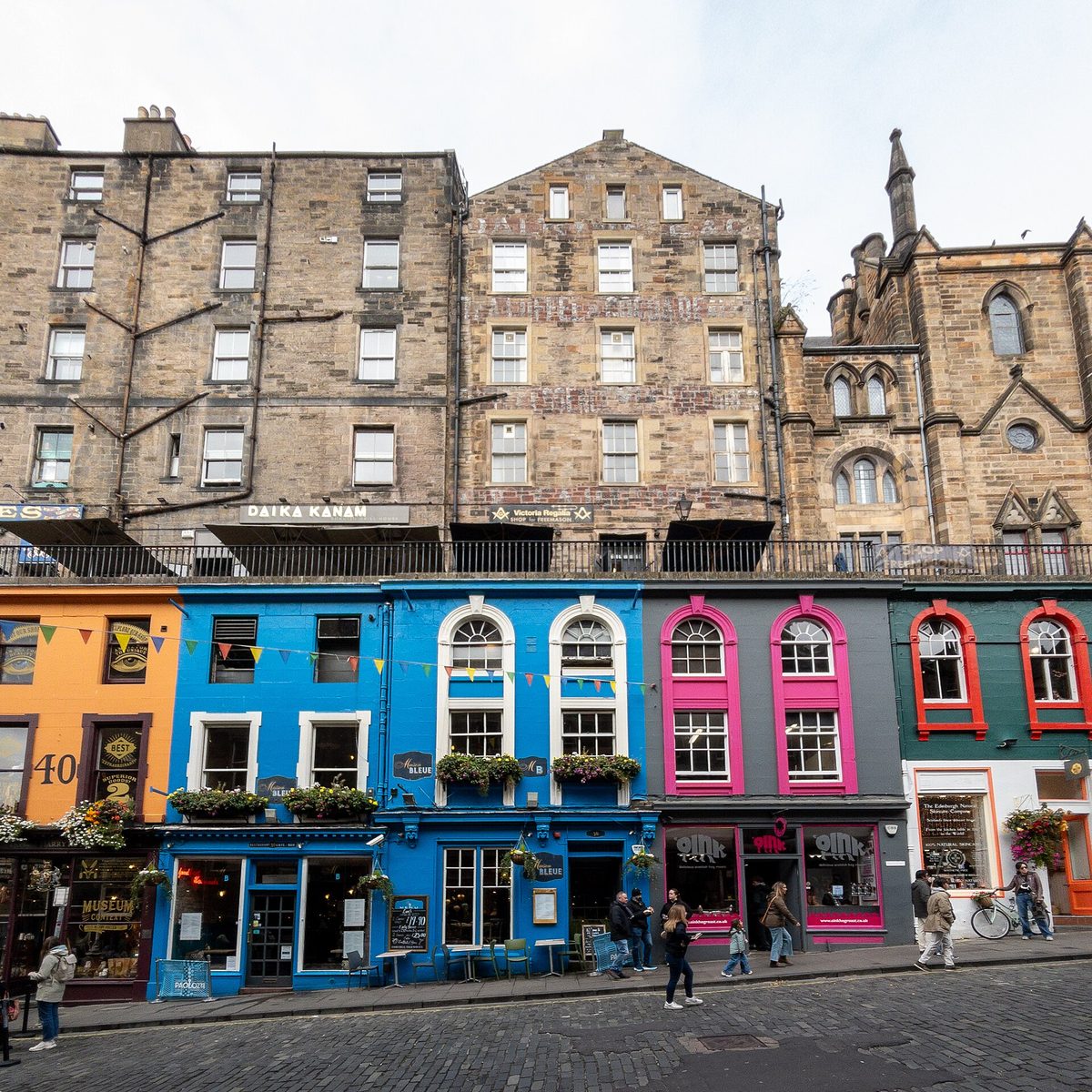
Food directly on the Royal Mile is mostly fine and mostly overpriced. Two minutes off it, the standard jumps. Victoria Street curves down from George IV Bridge in a run of coloured shopfronts — it’s the street everyone photographs, and yes, it’s often cited as an inspiration for Diagon Alley, which the Harry Potter locations around Scotland crowd will already know. At the bottom you land in the Grassmarket, a wide square under the south face of Castle Rock with a solid run of pubs and restaurants.
Here’s the honest bit: this is the one climb I’m going to ask you to make on Day 1. Getting back up to the Mile means either the ramp of Victoria Street again, around 5 minutes at a steady pull, or the Vennel steps at the western end of the Grassmarket. The Vennel is steeper but it gives you the best free view of the castle in the city, straight up the rock face. Worth the calves.
14:15 — The Lawnmarket closes and St Giles’
Walk: 6 minutes back up and then downhill along the Mile. Allow: 45 minutes. Rain swap: the Writers’ Museum in Lady Stair’s Close, free and dry. Book: no.
This stretch is where the Old Town’s vertical weirdness is most visible. Duck into Lady Stair’s Close for the Writers’ Museum (Burns, Scott and Stevenson, free entry), then Riddle’s Court, then Advocate’s Close, which drops north in a long flight of steps and frames the Scott Monument perfectly at the bottom. You don’t need to walk down it. Just look.
St Giles’ Cathedral sits in the middle of the High Street with its crown steeple. Entry is free with a donation invited, and if you’re taking photographs inside there’s usually a small permit charge — a couple of pounds, worth checking at the desk. The Thistle Chapel at the back is the reason to go in: absurdly detailed carved oak, built for Scotland’s order of chivalry. Ten minutes well spent. Plenty more no-cost stops like this in our list of free things to do across Scotland.
15:15 — The Real Mary King’s Close
Walk: 2 minutes, flat, the entrance is on Warriston’s Close beneath the City Chambers. Allow: 1 hour, and the tour is fixed-length. Rain swap: this is the rain option. Book: yes — slots are timed and sell out.
When the City Chambers were built in the eighteenth century, they were dropped straight on top of a warren of existing streets, and those streets are still down there. The guided hour walks you through them. It’s around £25 an adult at the time of writing, which feels steep until you’re standing in a seventeenth-century room that hasn’t seen daylight in three hundred years.
The reason it sits here in the schedule rather than earlier is deliberate: it’s the one stop that’s completely weatherproof, so if the forecast is grim you can shuffle it to whichever block gets the worst of it. If it’s booked out, the various South Bridge vaults tours do a similar job underground.
16:30 — Canongate down to Holyrood
Walk: 20 minutes end to end, every metre of it downhill. Allow: 45 minutes with stops. Rain swap: the Museum of Edinburgh and the People’s Story, both free, both on this stretch. Book: no.
The lower Mile is quieter, cheaper and in my view more interesting than the top. The tourist shops thin out around John Knox House and by the time you reach Canongate you’re mostly among locals. Canongate Kirkyard is worth five minutes — Adam Smith is buried there. The Museum of Edinburgh opposite is free and small enough to do in twenty minutes.
You’ll reach the bottom around 17:15, and here is the structural truth that most two-day itineraries dodge: you cannot fit the Palace of Holyroodhouse into Day 1 as well. Last admission is roughly an hour and a quarter before closing, and closing is around 18:00 in summer and 16:30 in winter. If Holyroodhouse matters to you, put it at 09:30 on Day 2 and shorten your hill. Trying to squeeze Castle, an underground tour and a palace into one day is the single most common way people ruin this trip.
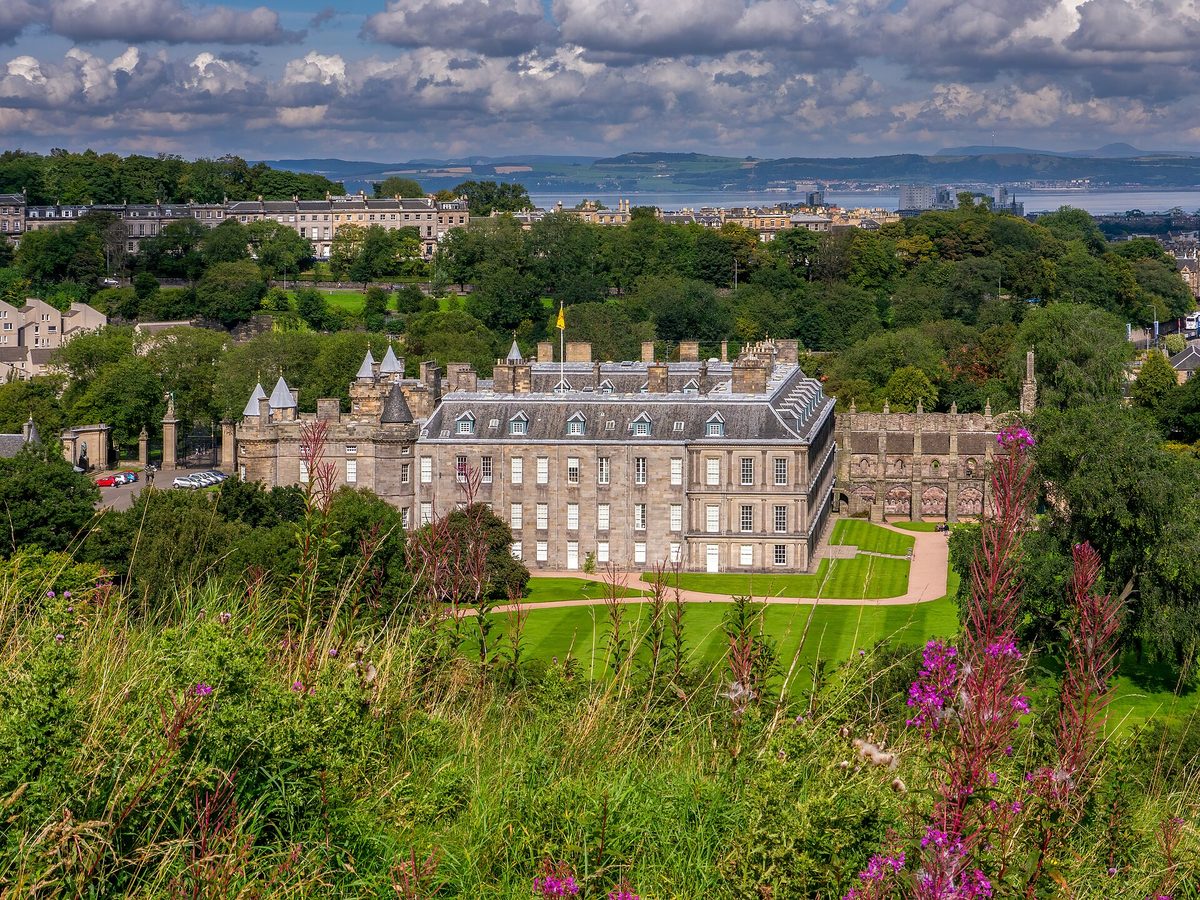
What you can do at the bottom for free: walk into the Holyrood Palace forecourt for the view of the Abbey ruins, look at the Scottish Parliament building (the public areas are free and open on most weekdays and Saturdays, though hours vary), and stand at the mouth of Holyrood Park with Salisbury Crags rearing up in front of you. That last one is your reconnaissance for tomorrow.
18:30 — Dinner, and where not to eat
Walk: 5 to 15 minutes depending on where you’re heading. Allow: 2 hours. Rain swap: irrelevant. Book: yes for Friday and Saturday, at least a week ahead.
You’re at the bottom of the hill, which is good news: the Canongate and Holyrood end has some of the better mid-range kitchens in the Old Town, and you don’t have to climb to reach them. What I’d avoid is trekking out to a much-recommended pub in Duddingston or Stockbridge on Day 1 — both are lovely, both are 40 to 60 minutes on foot from here, and you have already walked about eight kilometres.
20:00 — Calton Hill, if the light is still going
Walk: 15 minutes flat along Abbeyhill and Regent Road, then a 10 minute climb on made paths. Allow: 45 minutes up top. Rain swap: don’t bother — do a vaults tour or a pub instead. Book: no, it’s free and open all hours.
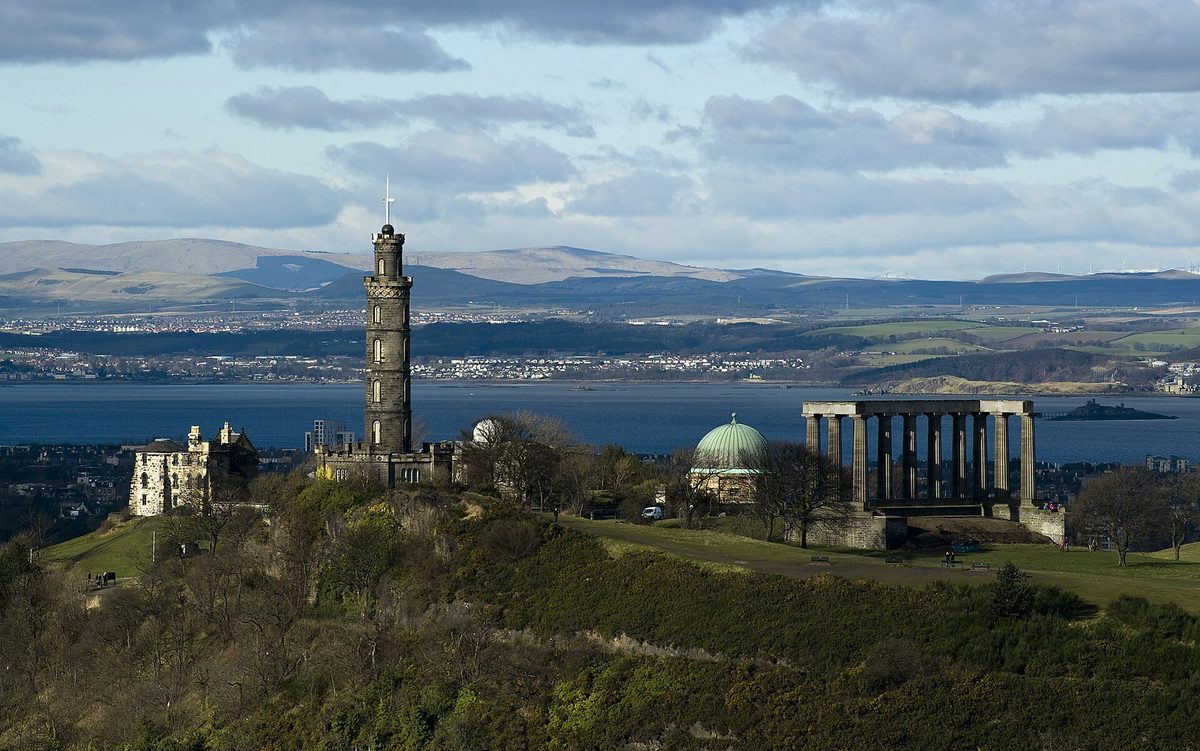
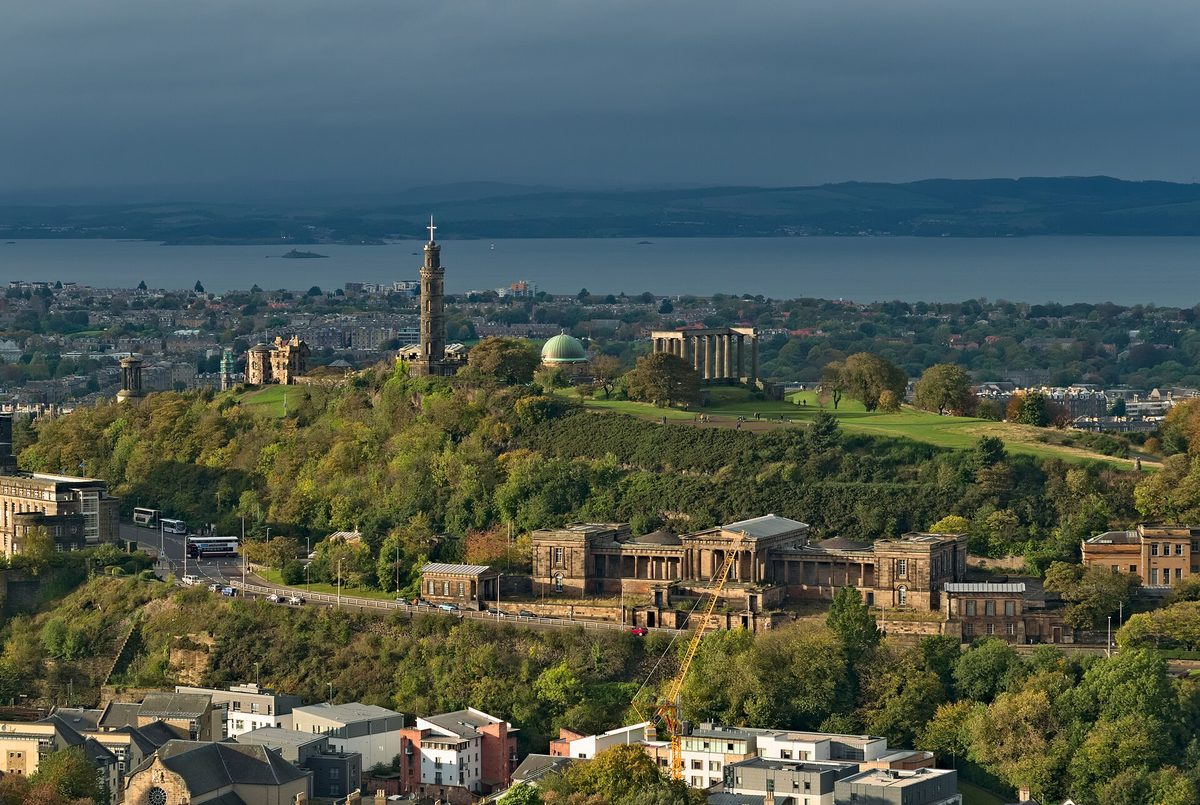
Yes, I said no more climbing. This is the exception, and it’s 103 metres of hill on tarmac and steps, not a scramble. Calton Hill is the reason Edinburgh gets called the Athens of the North: the unfinished National Monument sits up there like a Parthenon that ran out of budget, which is precisely what happened. From the top you get the Old Town ridge on one side, the New Town grid on the other, and the Firth of Forth beyond.
In June and July it’s still light past 22:00 this far north, so an evening climb is easy. In November you’ll want to be up there by 15:30. Plan accordingly, and see our notes on when to visit Scotland for how brutally the daylight swings.
Day 2: a hill first, then the flat city
08:45 — Arthur’s Seat
Walk: from the Holyrood car park, 45 to 60 minutes to the summit. Allow: 2 hours round trip including time at the top. Rain swap: the National Museum of Scotland, and no guilt about it — you’re going there anyway, so go early and stay longer. Book: no.
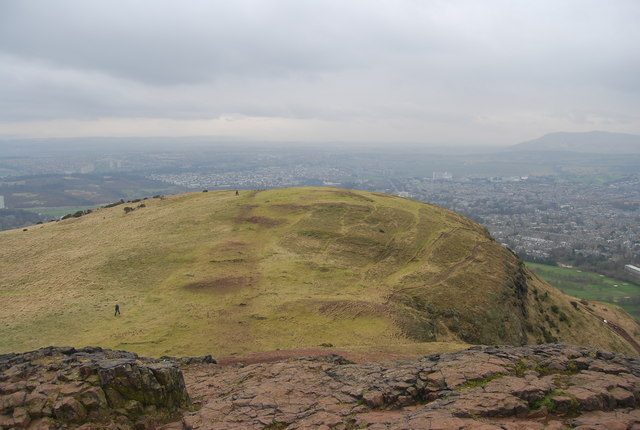
Arthur’s Seat is 251 metres, an extinct volcano sitting in a royal park in the middle of a capital city, and it is the best thing you’ll do in 48 hours in Edinburgh. It is also a proper hill. The most common mistake I see in other guides is scheduling it for the evening of Day 1, after eight hours on your feet. Do it first thing on Day 2 instead, on rested legs, before the paths fill up.
The direct route from Holyrood climbs steeply from the start and involves rough steps near the top. The gentler alternative is to walk or drive round to the Dunsapie Loch side, which cuts the climb roughly in half. Either way it’s exposed — the wind up there is a different animal from the wind at street level, and the summit rock is slick when wet.
A note on the low-level option: the Radical Road, the path running along the base of Salisbury Crags, has been closed since a rockfall in 2018. Historic Environment Scotland has been working towards a partial reopening during 2026, but check the current position before you build a plan around it. The rest of Holyrood Park is open, and the circuit round Queen’s Drive is a fine flat alternative. If this whets your appetite, our guide to hiking in Scotland goes considerably bigger.
11:00 — Optional: the Palace of Holyroodhouse
Walk: 10 minutes back down from the park gate. Allow: 1 hour 30. Rain swap: it already is one. Book: yes, timed entry.
If you skipped it yesterday and you want it, this is where it fits. Around £20 an adult at the time of writing, self-guided with an audio tour, and the Mary, Queen of Scots chambers plus the ruined Abbey are the highlights. Two warnings: it closes for royal functions at short notice, and in winter it runs Thursday to Monday rather than daily. Check the Royal Collection Trust site before you plan your morning around it.
Take it and your afternoon shortens. That’s the trade. I’d take it if you’re a history person and skip it if you’d rather have a slow wander through the New Town, because Edinburgh’s Georgian half is genuinely one of the finest planned townscapes in Europe and most two-day visitors give it ninety rushed minutes.
12:30 — Up to Chambers Street and the National Museum of Scotland
Walk: 20 minutes, uphill via Holyrood Road and the Pleasance — or take the 35 bus and save your legs. Pick up lunch on Nicolson Street or Chambers Street on the way in. Allow: 1 hour 30. Rain swap: not needed. Book: no, free entry.
This is the last real climb of the trip, and if you’ve done Arthur’s Seat that morning you have my blessing to take the bus. The 35 runs from the Holyrood end up towards the Old Town; a single is £2.40 at the time of writing.
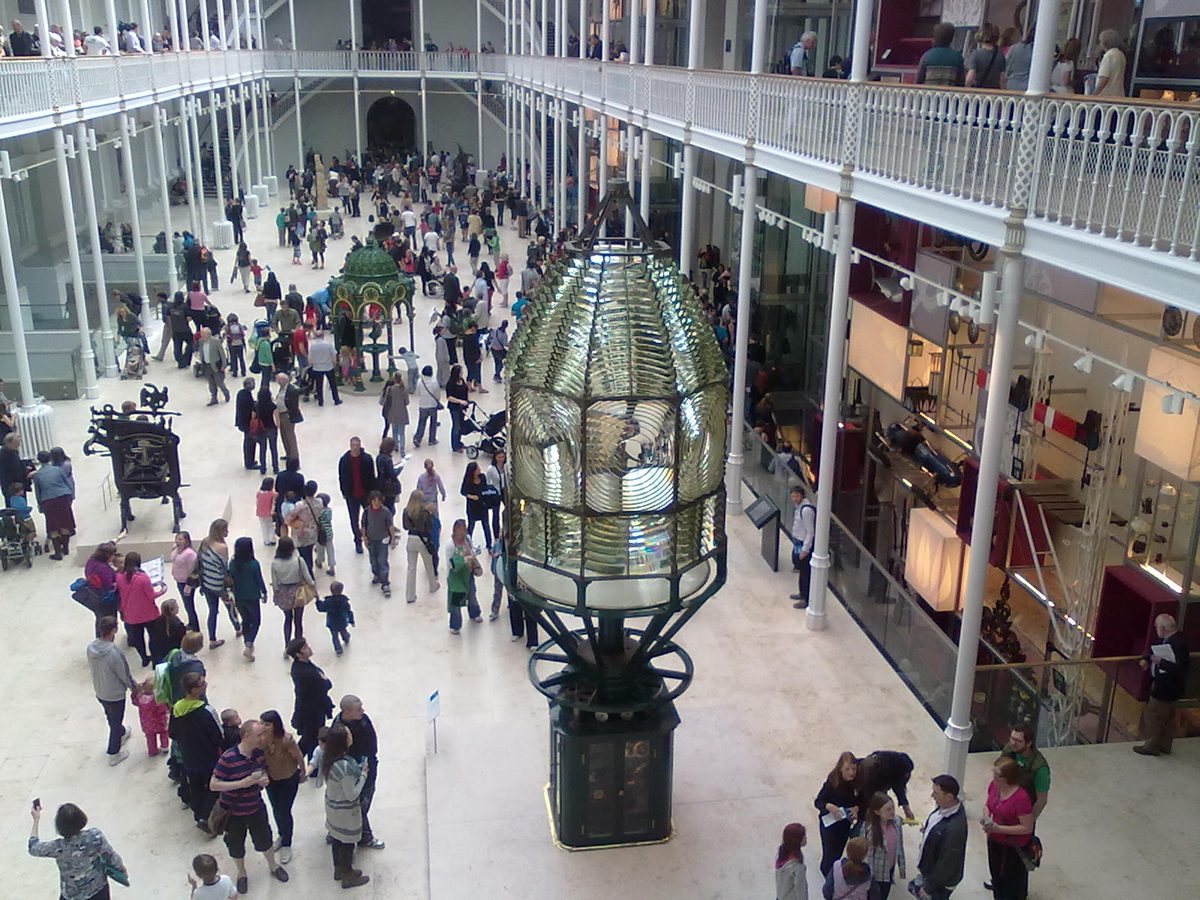
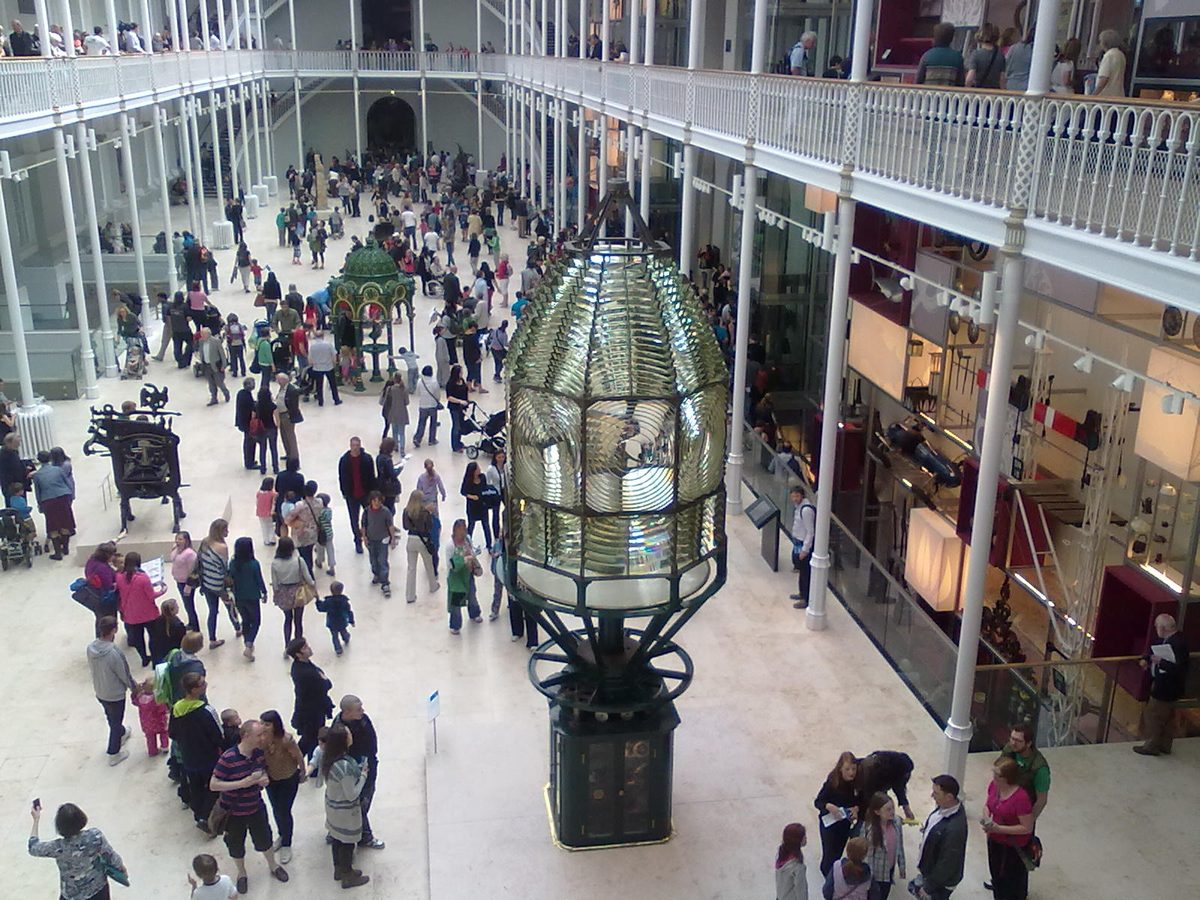
The National Museum of Scotland is free, enormous and better than it has any right to be. The Grand Gallery alone is worth the walk, and the Scottish history galleries in the older wing run from Iron Age carved stones through the Lewis Chessmen to the present day. Go up to the roof terrace on Level 7: another free view over the Old Town rooftops that almost nobody bothers with. Budget ninety minutes minimum; you could easily spend a day.
14:00 — Greyfriars, then down the Mound
Walk: 3 minutes to Greyfriars, then 12 minutes down through the Grassmarket and along to the Mound — downhill from here on. Allow: 1 hour. Rain swap: the Scottish National Gallery at the foot of the Mound, free. Book: no.
Greyfriars Kirkyard is across the road from the museum, and it’s a properly atmospheric graveyard with mort-safes still visible — iron cages fitted over graves to stop body-snatchers. Twenty minutes. On the way out you’ll pass the Greyfriars Bobby statue, and I’d ask you not to rub the dog’s nose. It’s a recent invention rather than a tradition, it’s worn the bronze back to bare metal, and it irritates every Edinburgh resident who walks past.
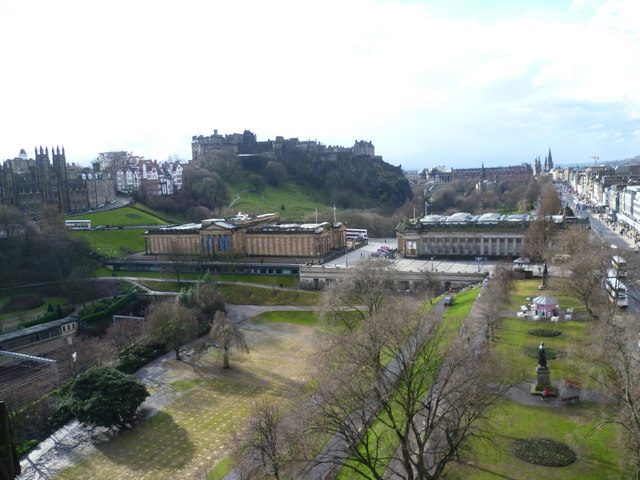
From there you drop off the Old Town ridge for good. The Mound is the artificial causeway built from the spoil dug out for the New Town, and it delivers you from one half of the city to the other in about six minutes of pleasant downhill. The Scottish National Gallery sits at the bottom of it, free, and holds Titians, Vermeers, Raeburns and a Botticelli in a building you can do properly in fifty minutes.
15:30 — The New Town, on the flat
Walk: 12 minutes along Princes Street and up to George Street. Flat. Allow: 1 hour 15. Rain swap: the Georgian House on Charlotte Square, or the Scottish National Portrait Gallery on Queen Street. Book: no.
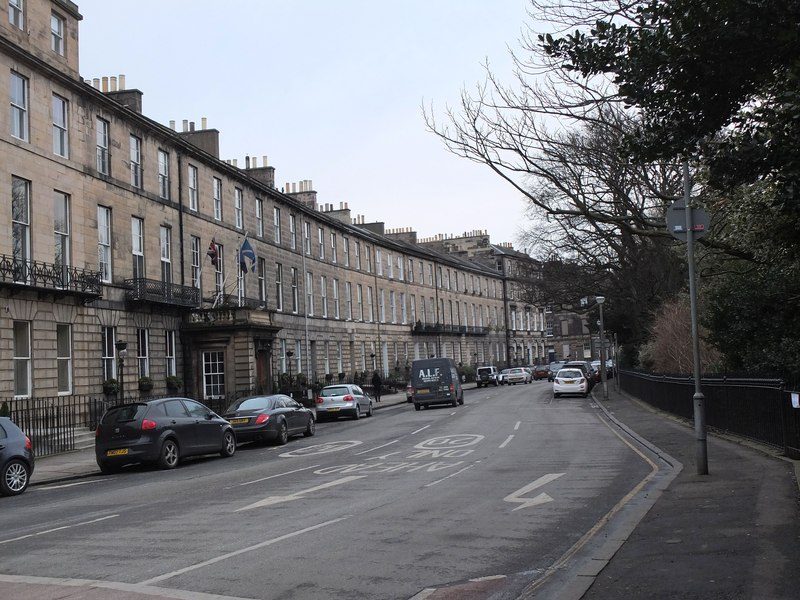
After a day and a half of steps and setts, the New Town feels like someone has switched gravity off. It was laid out from 1767 on a grid — Princes Street, George Street, Queen Street running parallel, bookended by Charlotte Square and St Andrew Square — and it’s a UNESCO World Heritage Site alongside the Old Town.
Walk George Street rather than Princes Street. Princes Street is high-street chains with a good view; George Street is the better architecture and the better bars. Charlotte Square at the west end is the set piece, designed by Robert Adam, and the National Trust for Scotland’s Georgian House there shows you what one of these places looked like furnished in 1800. If you skipped Arthur’s Seat and still want a view, the Scott Monument on Princes Street is 287 steps up a very tight spiral for roughly a tenner — not one for anyone who dislikes enclosed spaces.
16:45 — Dean Village and the Water of Leith
Walk: 12 to 15 minutes west from Charlotte Square, with a steep drop down Bells Brae at the end. Allow: 1 hour. Rain swap: honestly, it’s rather good in drizzle — but the Scottish National Gallery of Modern Art is a 15 minute riverside walk away if you’d rather be inside. Book: no.
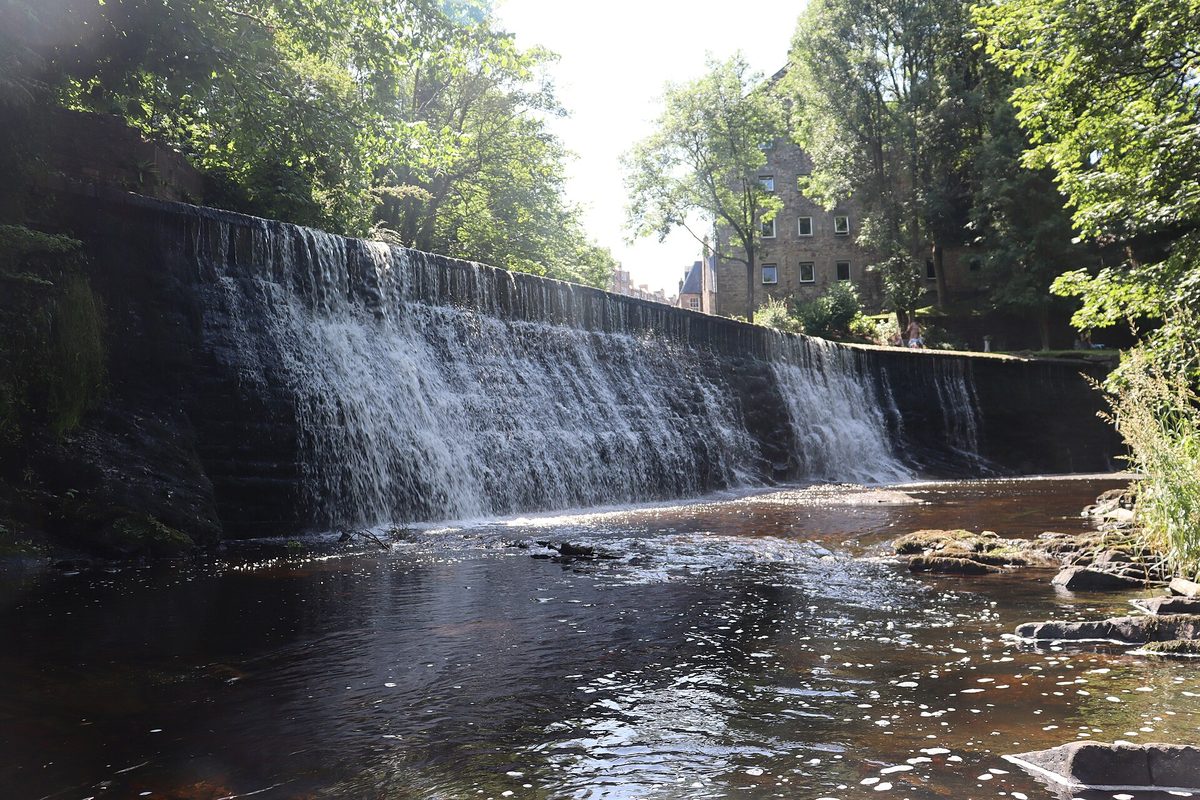
Dean Village was a milling community on the Water of Leith for something like eight hundred years, and it sits in a wooded gorge barely ten minutes from the shops of Princes Street. Stone buildings, a weir, almost no traffic. It shows up on plenty of lists of the most beautiful places in Scotland and unlike most of them you can reach it on foot from your hotel.
Fair warning, since nobody else gives it: you drop into Dean Village and you have to climb back out. Bells Brae is short and steep, and it’s about 8 to 10 minutes of steady uphill back to Queensferry Street. The kinder option is to follow the Water of Leith Walkway downstream to Stockbridge instead — 15 minutes, flat, riverside — and finish the day there.
18:15 — Stockbridge for dinner
Walk: 15 minutes flat along the river from Dean Village. Allow: the rest of the evening. Rain swap: none needed. Book: yes at weekends.
Stockbridge is where Edinburgh residents actually eat. It’s a proper neighbourhood — independent shops, a Sunday market, a run of good restaurants and pubs along Raeburn Place and St Stephen Street — and after two days of the Old Town it’s a relief. From here it’s a 20 minute walk or a short bus ride back to the centre, and the walk back is uphill, so factor that in if you’ve had a few.
If you’re here in August: the Fringe variant
The Edinburgh Festival Fringe runs from 7 to 31 August 2026, and during those weeks the itinerary above does not work as written. This is the part that other guides mention in an FAQ and then carry on regardless.
What actually changes. The High Street section of the Royal Mile, roughly from the Tron down to St Giles’, becomes a slow-moving crush of flyerers, street performers and crowds standing still. A stretch you’d normally walk in six minutes takes twenty, and you will not enjoy it with a rucksack. Timed tickets for the Castle, Mary King’s Close and Holyroodhouse disappear weeks out. Restaurant tables need booking. Hotel prices roughly double. And the Castle esplanade carries the grandstands for the Royal Edinburgh Military Tattoo through much of the summer, which changes both the approach to the gatehouse and the classic photograph.
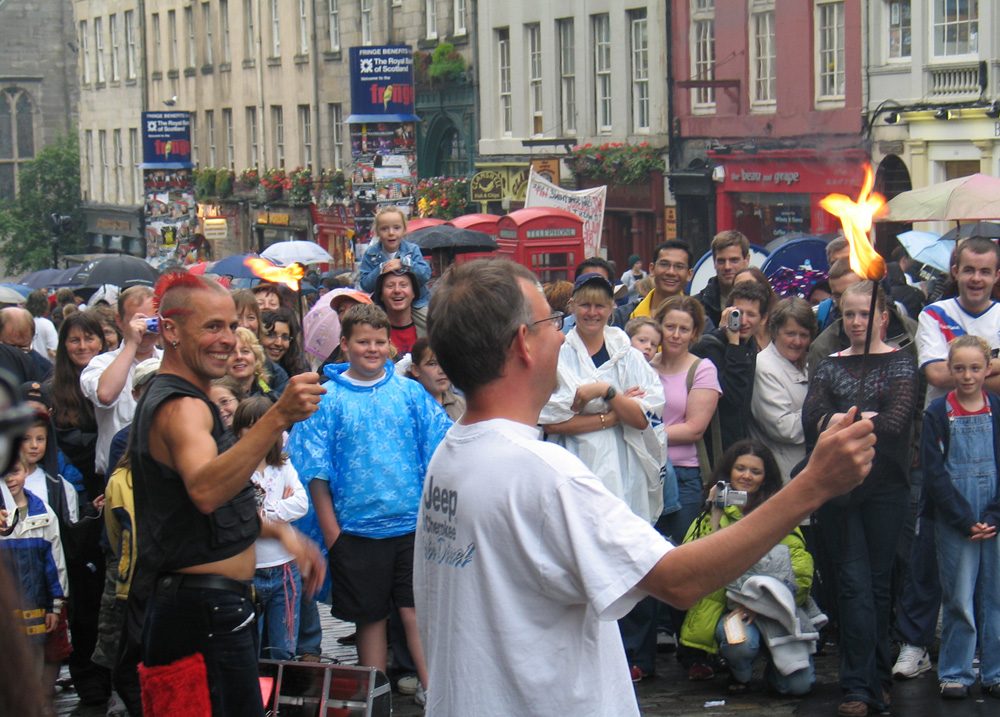
How I’d adapt it. Take the very first Castle slot of the day, before the Mile wakes up. Use parallel streets to move around — Victoria Street and the Cowgate to the south, Cockburn Street and Market Street to the north — rather than fighting your way along the High Street. Move Arthur’s Seat to Day 1 at 08:00, because the hill is one of the few places in August that isn’t heaving. Book everything six to eight weeks out. And build in the Mile itself as a deliberate stop for an hour rather than as a corridor, because in August the street is the show.
Would I still come? Yes, but knowing what I was buying. If you want the festivals without the specific chaos of the Fringe, look at what else is on across the year in our guide to Scotland’s festivals and events. If you want the city itself, come in late May or September.
What to book, and how far ahead
| What | How far ahead | Rough adult price | Can you just turn up? |
|---|---|---|---|
| Edinburgh Castle | 2 to 4 weeks; 6 to 8 in August | £20 to £24 online | Sometimes in winter, rarely in summer |
| The Real Mary King’s Close | 1 to 2 weeks; 4 to 6 in August | Around £25 | Occasionally, midweek and off-season |
| Palace of Holyroodhouse | 1 to 2 weeks, and check for closures | Around £20 | Usually yes outside summer |
| Camera Obscura / Scotch Whisky Experience | A few days in high summer | Around £22 each | Yes, most of the year |
| Dinner, Friday or Saturday | 1 week; 3 to 4 in August | Varies | Early sittings, at a push |
| A Fringe show | As soon as the programme lands | Free to £30+ | Yes for free and pay-what-you-want shows |
| Royal Yacht Britannia (out in Leith) | A few days | Around £22 | Usually yes |
| Museums, galleries, St Giles’, both hills | Nothing to book | Free, donations welcome | Always |
Prices above were correct at the time of writing and move most years — treat them as a planning guide and confirm on each official site. For a broader view of costs, opening seasons and the small stuff that catches people out, our Scotland travel tips are a useful companion read.
Getting around, and where to base yourself
Almost all of this Edinburgh weekend itinerary is walkable, and over two days you’ll cover somewhere around 18 to 22 kilometres. That’s the honest number, and it’s why the order matters so much.
When you do want transport: Lothian Buses run everywhere and an adult single is £2.40 at the time of writing, having risen in February 2026. Pay contactless or with exact change — drivers give none. Trams are the same £2.40 within the city zone, with a city day ticket at £6.00, and the line now runs from the airport through the centre and down to Newhaven, stopping at Ocean Terminal for the Royal Yacht Britannia. From the airport, the tram is £5.50 single and takes around 35 minutes to the centre; the Airlink 100 bus is £4.50 and is often quicker off-peak. Full context on connections beyond the city is in our guide to getting around Scotland.
On where to sleep, the trade-off is simple and nobody spells it out. Staying in the Old Town puts you in the middle of everything and means stairs, noise and, in many older buildings, no lift. The New Town is flat, quieter, five to ten minutes from Princes Street, and generally better value per square metre. Bruntsfield and Marchmont to the south are residential, cheaper and about 20 to 25 minutes’ walk in. Our overview of where to stay across Scotland covers the wider picture, and the neighbourhood-by-neighbourhood detail sits in our Edinburgh city guide.
Arriving by train, Waverley station sits in the valley between the Old and New Towns, which means whichever way you’re going, you’re walking uphill out of it. Haymarket, ten minutes west, is flatter and closer to the West End. London to Edinburgh takes around four and a half hours by direct train, and if you’re continuing north the route onwards is one of the best in the country — see our pick of Scotland’s scenic rail journeys.
What underwhelms, and what to cut
The hop-on hop-off buses. In a city centre this compact, on streets this congested, you will frequently be overtaken by people walking. They earn their keep only for the run out to Leith and back, or if mobility is a genuine issue.
The tourist shops on the upper Mile. Machine-woven tartan, mass-produced “clan” souvenirs and cashmere that isn’t. If you want a good scarf or a bottle worth carrying home, buy it from a specialist shop off the main drag, or wait until you’re out in the country.
The Elephant House. The café’s Harry Potter association is real but oversold, it’s had a rough few years including a serious fire in the building, and the queue outside is often longer than the wait for a table anywhere better on the same street. Greyfriars Kirkyard next door is the more interesting stop and it’s free.
Trying to fit the Castle, an underground tour and Holyroodhouse into one day. I’ve said it once; it bears repeating because it’s the most common failure. That’s roughly five and a half hours of paid attraction time plus queues plus a mile of walking. Pick two.
Booking Arthur’s Seat for the evening. Every second itinerary does this and it’s cruel. You’ll have walked ten kilometres, the light goes faster than you think in spring and autumn, and coming down that rocky path in the dusk is how people turn ankles.
Assuming “a mile” means a mile. It’s a Scots mile, about 1.81 km, and the closes and detours off it will double your actual distance without you noticing.
If you’re properly short on time, here’s what to cut in order: the Scotch Whisky Experience, then Holyroodhouse, then Dean Village, then the Scott Monument. What I’d never cut: the Castle at opening, one underground tour, and one hill. Those three are the trip.
Frequently asked questions
Is 2 days enough time in Edinburgh?
For the city centre, yes. Two full days covers the Castle, the length of the Royal Mile, an underground tour, a hill, the New Town and one neighbourhood beyond the centre. What two days will not cover is a day trip — the Highlands, Loch Ness or Stirling all need a third day, and rushing one in will cost you the city itself.
How much walking does this 2 day Edinburgh itinerary involve?
Around 18 to 22 kilometres across the two days, plus roughly 400 metres of total ascent if you climb both Arthur’s Seat and Calton Hill. Day 1 is longer in distance but almost entirely downhill; Day 2 has the steeper climbing but on better surfaces. Wear shoes with grip — the Old Town setts are slippery when wet.
Do I need to book Edinburgh Castle in advance?
Yes, and buy online rather than at the gate because it’s cheaper and it guarantees your timeslot. Two to four weeks is usually enough; make it six to eight for August. Take the first slot of the day if you can. The difference in crowding between 09:30 and midday inside the Crown Room is substantial.
What is the best order to walk the Royal Mile?
Downhill, from Edinburgh Castle to the Palace of Holyroodhouse. The street drops around 67 metres over its length, from about 109 metres above sea level at the esplanade to about 42 at the Palace. Walking it upward at the end of a long day is a genuinely unpleasant climb on uneven setts, and it’s the mistake most first-timers make.
What can you do in Edinburgh when it rains?
A great deal, and cheaply. The National Museum of Scotland and the Scottish National Gallery are both free and both big enough for half a day. The Real Mary King’s Close is entirely underground. Camera Obscura, the Writers’ Museum, St Giles’ and the Georgian House are all indoors. Save the hills for the clearer of your two days.
Is Edinburgh worth visiting during the Fringe in August?
It’s a different trip rather than a better or worse one. You get thousands of shows and a city at full tilt; you also get crushing crowds on the High Street, sold-out attractions and roughly double the hotel prices. If sightseeing is your priority, come in late May or September. If the shows are the point, come in August and book early.
How much does a weekend in Edinburgh cost?
Excluding accommodation, budget roughly £60 to £90 per person per day if you’re doing one or two paid attractions, eating out twice and using the odd bus. You can bring that well under £40 by leaning on the free museums, galleries and hills. Accommodation is the swing factor and can triple in August — see our breakdown of which neighbourhood to book.
Do you need a car for 2 days in Edinburgh?
No, and I’d actively discourage it. The Old Town is a maze of one-way streets, city-centre parking is expensive, and there’s a low emission zone covering the centre. Everything in this itinerary is walkable or a short bus ride. Hire a car on the day you leave for the rest of the country — there’s a full Scotland itinerary waiting if you’ve got longer.
Final thoughts
Edinburgh rewards people who plan around its shape rather than against it. Get up the hill once in the morning, spend Day 1 coming down it, and give Day 2 to the flat New Town with one climb taken early while your legs still work. Do that and two days feels generous rather than frantic.
The thing I’d most like you to take from this is the permission to cut. Every stop above is good; not all of them will fit your particular two days, and an itinerary you actually enjoy beats a checklist you race. Leave something for next time — and there will be a next time, because most people come back. When you do, the Edinburgh guide has the deeper cuts, and the Scottish Highlands start closer than you think. If you’d rather someone else handled the logistics for the wider country, our overview of guided tours in Scotland is the place to look.
About the author: This guide was written and is maintained by the ScotlandTourism.org editorial team — travel writers who’ve spent years exploring Scotland’s cities, Highlands and islands, from bagging Munros to chasing the perfect dram. We update our guides regularly to keep prices, opening details and advice current.
Last updated: August 2026. Prices and opening times change — always check the official site before you travel.
Photo credits
All images are used under their respective Creative Commons or public-domain licenses:
- Edinburgh Castle on its volcanic crag above the Grassmarket — Roger Wollstadt from Sarasota, Florida, CC BY-SA 2.0, via Wikimedia Commons
- Colourful shopfronts curving up Victoria Street towards George IV Brid — Drnoble, CC BY-SA 4.0, via Wikimedia Commons
- The Palace of Holyroodhouse at the foot of the Royal Mile — Ermell, CC BY-SA 4.0, via Wikimedia Commons
- The summit ridge of Arthur’s Seat looking over Edinburgh on a grey mor — N Chadwick, CC BY-SA 2.0, via Wikimedia Commons
- The view east over Edinburgh from Salisbury Crags — Daniel Kraft, CC BY-SA 3.0, via Wikimedia Commons
- The Nelson Monument and the unfinished National Monument on Calton Hil — Saffron Blaze, CC BY 3.0, via Wikimedia Commons
- The Grand Gallery of the National Museum of Scotland — Brian McNeil, CC BY-SA 3.0, via Wikimedia Commons
- Princes Street Gardens and the Scottish National Gallery below Edinbur — kim traynor, CC BY-SA 2.0, via Wikimedia Commons
- A flat Georgian terrace in Edinburgh’s New Town — Jim Barton, CC BY-SA 2.0, via Wikimedia Commons
- The weir on the Water of Leith at Dean Village — Mike Shaw, CC BY-SA 4.0, via Wikimedia Commons
- Crowds and a street performer on the Royal Mile during the Edinburgh F — The JPS (Wikimedia Commons), CC BY-SA 3.0, via Wikimedia Commons