Type “vegan food Scotland” into a search bar and you get a dozen city restaurant lists, most of them out of date and none of them any use north of Ullapool on a wet Tuesday in late October. That is where the real difficulty lies. In Glasgow you can eat plant-based for days without a single compromise. Up there, the hotel kitchen stops serving early, the village shop has already shut, and the answer to “is there anything else nearby?” can be a long drive in the wrong direction.
That gap is the honest story nobody writes about. The cities are genuinely excellent — Glasgow is one of the best places to eat plant-based anywhere in Britain, and Edinburgh is not far behind. Twenty miles past the last roundabout it becomes a different exercise entirely: less about choosing between restaurants and more about knowing what a rural kitchen can actually put in front of you, and phoning ahead so they know you are coming. This guide covers both, plus the part everyone skips — how much traditional Scottish food you can still eat, which is far more than you would think.
Vegan food Scotland-wide: the short answer
Scotland is a good country to eat plant-based in, with one large caveat. Glasgow and Edinburgh rank among the strongest vegan cities in the UK, with dedicated restaurants, bakeries and even a fully plant-based grocery. Outside the central belt, dedicated vegan venues are rare and you rely on adaptable menus, supermarket self-catering and phoning ahead. Vegetarian haggis keeps traditional Scottish food open to you.
Region-by-region: how hard is it, really?
Difficulty here means “how much effort you need to put in to eat well”, not “will you go hungry”. You will not go hungry anywhere in Scotland. You might just eat a lot of the same thing.
| Where you are | Difficulty | What you’ll realistically find | Phone ahead? |
|---|---|---|---|
| Glasgow | Very easy | Fully vegan restaurants, bakeries, cafes and pubs across the West End, city centre and Southside | Only at weekends |
| Edinburgh | Very easy | Plenty of vegan and vegetarian restaurants, strongest around the Old Town, Leith and the Southside | Yes in August, and for dinner year-round |
| Inverness, Aviemore, Oban, Fort William, Stirling | Moderate | One or two dedicated places, plus decent marked options in most cafes and pubs | Sensible for dinner |
| Isle of Skye, Loch Ness, Perthshire, Argyll | Moderate to hard | Hotel restaurants with one plant-based main, cafes with soup and a wrap, seasonal closures | Yes, always |
| North and west Highlands, North Coast 500 | Hard | A single pub kitchen per village, limited hours, long gaps between shops | Essential, ideally the day before |
| Outer Hebrides, Orkney, Shetland | Hard | Good village shops, a handful of cafes, very restricted Sunday trading in parts of Lewis and Harris | Essential, and check Sunday separately |
| Anywhere rural, November to March | Hardest | Kitchens closed on some days of the week, last orders early in the evening | Non-negotiable |
| Edinburgh in August | Easy but crowded | Everything is open and everything is full — the constraint is tables, not menus | Book weeks ahead |
The two Scotlands: cities versus everywhere else
It helps to stop thinking of Scotland as one destination with one food scene. For a plant-based traveller there are two countries here, and the border sits roughly where the motorway ends.
Glasgow: the best city in Scotland for vegan food
If you only have time for one city and eating well matters to you, make it Glasgow. It has more fully vegan venues than Edinburgh, it spreads them across three distinct areas rather than concentrating them for tourists, and prices are consistently lower — a plant-based main that runs to £16 in Edinburgh is often £12–14 here. Check before you book, but that gap has held for years.
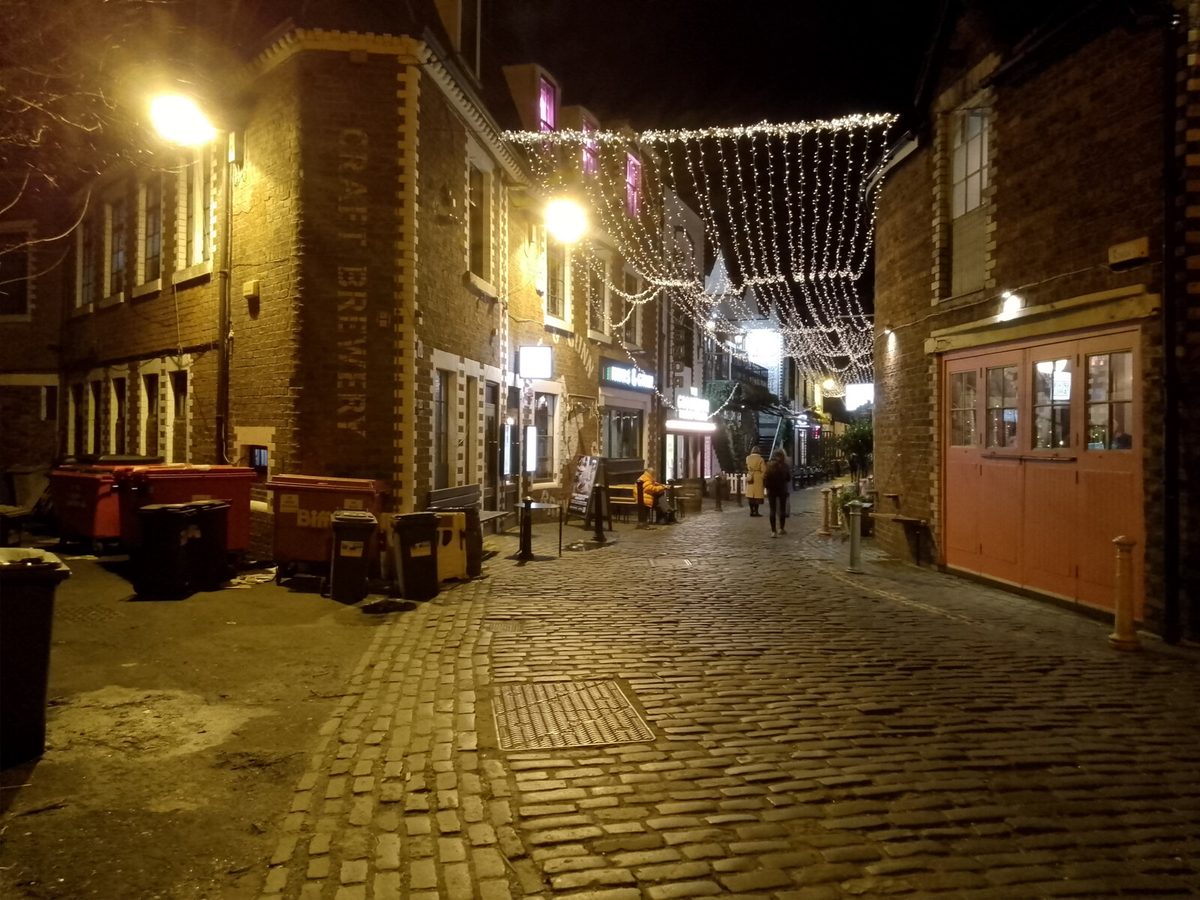
The West End around Byres Road and the university is the easiest place to start: cafes, Vietnamese and Middle Eastern kitchens, and pubs that label vegan dishes properly rather than leaving you to interrogate the staff. The Southside, around Shawlands and Pollokshields, has the more interesting independent end — social cafes with entirely plant-based menus, South Asian kitchens where half the menu is vegan by default. The city centre covers the rest, including several vegan bakeries.
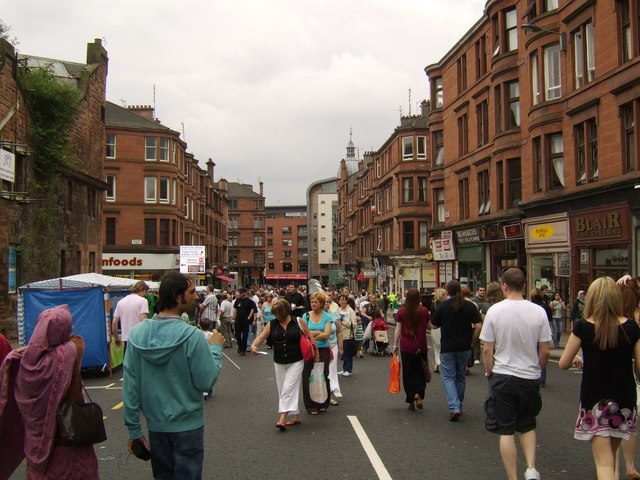
Glasgow also has the thing that matters most: cultural normality. Nobody blinks. You are not going to have the conversation where a waiter asks if fish is allowed. If you are building a route, our Glasgow city guide covers where to base yourself, and the neighbourhoods above map onto it neatly.
Edinburgh: more choice on paper, more compromise in practice
Edinburgh is very good and is regularly ranked among the top few UK cities for vegan restaurant density. What it also has is tourists, and that changes the experience. The Royal Mile and the immediate Old Town are full of places that will feed you competently and charge you for the postcode. The genuinely interesting plant-based cooking sits slightly out from there — Leith, the Southside around the university, Stockbridge, Bruntsfield.
Edinburgh’s real advantage is its long-established vegetarian restaurants. The city has had serious meat-free kitchens since well before it was fashionable, including a vegetarian Indian restaurant that has been running since the 1970s. That depth shows in the cooking. Our guide to eating out in Edinburgh goes wider than plant-based, and an Edinburgh food tour can usually be adapted if you tell the operator when you book — not on the morning.
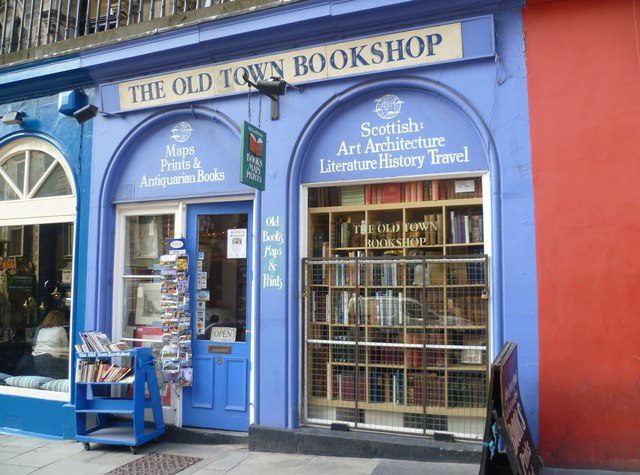
The August problem is real. During the Fringe and the International Festival the city’s population roughly doubles, and the small independent vegan places are exactly the ones that fill first. If you are visiting in August, book dinner three or four weeks out, eat early or late, and accept that walk-ins are a losing game. The Fringe alone brings thousands of performances into a small city for most of the month. The rest of the year, our Edinburgh travel guide will serve you better than any restaurant list.
Inverness, Aviemore and the mid-sized towns
Between the two Scotlands sits a useful middle tier: Inverness, Aviemore, Stirling, Perth, Oban, Fort William, Dundee, Aberdeen. Each of these has at least one dedicated vegan or vegetarian venue and, more importantly, a cluster of cafes and pubs where somebody in the kitchen has thought about it. Inverness in particular has improved sharply in the last decade and functions as the last easy meal before the north.
Treat these towns as restocking points, not just overnight stops. If you are heading into the far north or west, this is where you buy the tofu, the oat milk and the decent bread — because you are not going to find them again for a while.
The rural survival guide nobody writes
Here is the part every other guide skips with a paragraph about how “the Scots are very friendly and will try their best”. That is true, and it is not a plan.
What a Highland pub kitchen will actually make you
Most rural Scottish kitchens are small operations serving a fixed menu built around what keeps: meat, fish, cheese, potatoes. When you ask for a vegan main, the chef is improvising with whatever is in the walk-in. In practice, that produces a fairly predictable set of outcomes.
You will be offered, in rough order of likelihood: a jacket potato with beans (hold the cheese); a mushroom or vegetable risotto; a vegetable curry with rice; a tomato pasta; a vegetable soup with bread; a bean burger and chips; and, in slightly better kitchens, a stuffed pepper or a roasted vegetable traybake. That is roughly the whole vocabulary, so expect to see the same dishes more than once.
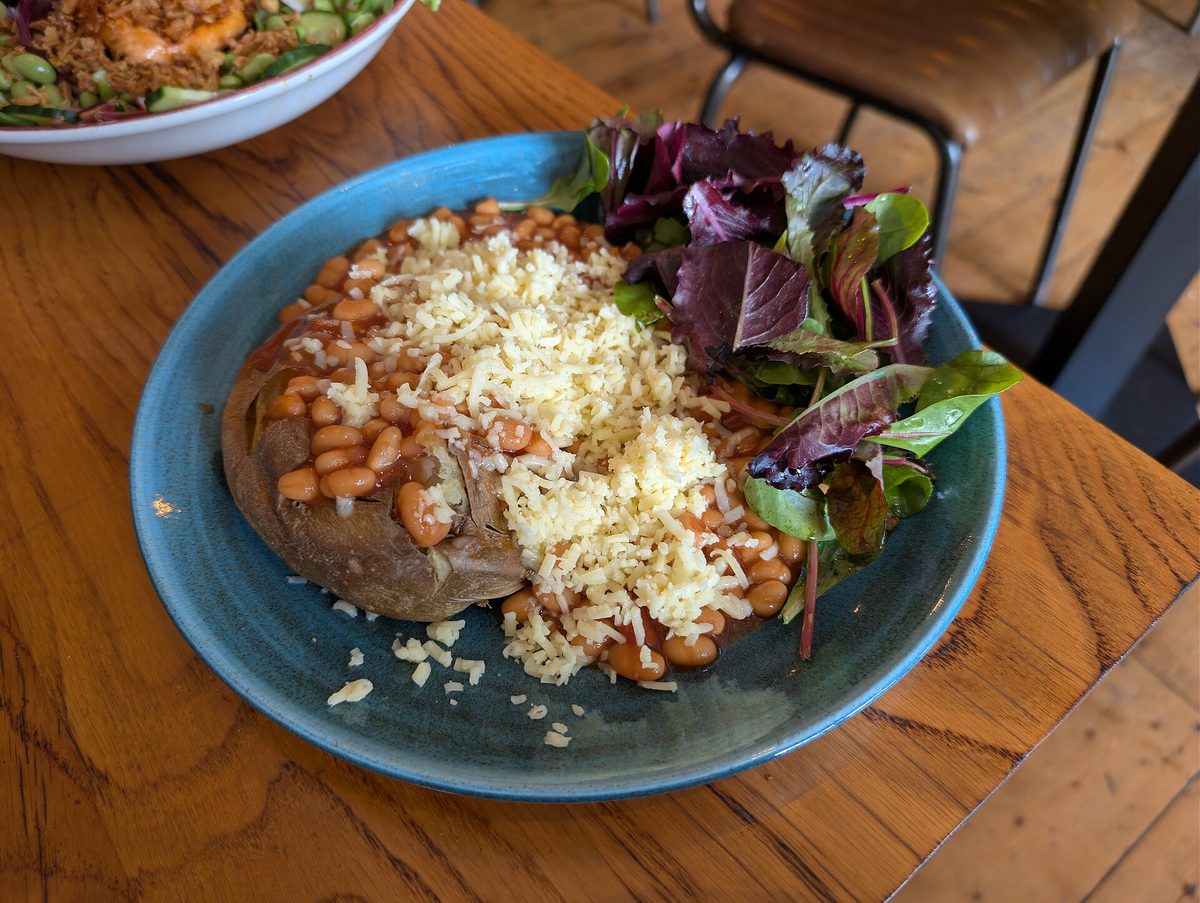
The reason it is so often a jacket potato or a risotto is not laziness. Both use ingredients a Highland kitchen definitely has, neither requires a separate stock, and both can be made to order in fifteen minutes on a busy service. If you understand that, you stop being disappointed and start asking better questions — “what vegetables came in this week?” gets a far more interesting answer than “do you have anything vegan?”
How to phone ahead, and what to actually say
In the Highlands you genuinely must call. This is not fussiness. In a village with one kitchen, one chef and eleven tables, a vegan main that nobody ordered is food waste, so they do not prep one. Give them a day’s notice and they will usually make you something considerably better than the menu default.
Call in the late morning or mid-afternoon, never during service. Say three things: the date and time, the number of people, and the words “one of us is vegan — no meat, fish, dairy, eggs or honey”. Then ask the useful question: “would it help if I gave you a day’s notice?” That phrasing tells the kitchen you understand their constraints, which does more good than any amount of apologising.
Also ask what time the kitchen closes, not what time the pub closes. Those are frequently different by two hours, and the second one is the one printed on the door.
Off-season closures and the eight o’clock wall
From roughly November to March, rural Scotland contracts. Some hotels close for weeks at a time, restaurants cut their opening days, and kitchens stop taking orders early in the evening, so check each restaurant’s winter days and serving times before you set off. If you have driven six hours and arrive at 8.15pm in Sutherland in February, you are eating whatever is in the boot of the car.
Build your day around lunch instead. In the off-season, lunch is the reliable meal — more places are open, soup is always on, and you are not competing for the one vegan main. Then treat dinner as the meal you have arranged in advance. The seasonal contraction applies to food more sharply than to anything else in Scotland, and it catches people out every year.
Supermarkets: where they are, and where the gaps are
This is the single most useful piece of rural planning, and it takes ten minutes. Scotland’s supermarket geography is genuinely uneven, and knowing it changes your trip.
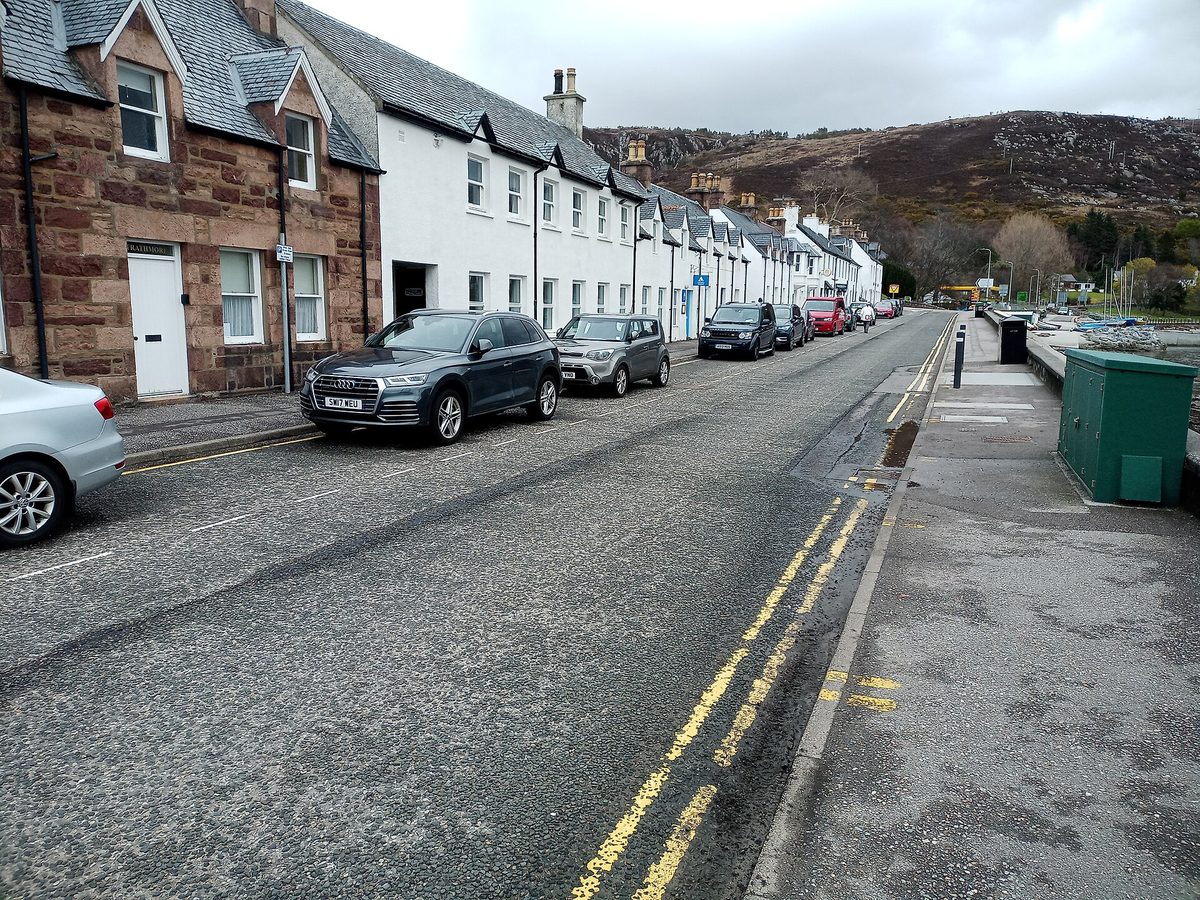
The large chains — Tesco, Morrisons, Asda, Lidl, Aldi, Sainsbury’s — cluster in the central belt and the bigger Highland towns: Inverness, Fort William, Oban, Perth, Stirling, Dundee, Aberdeen, Thurso, Wick, Dingwall, Tain, Stornoway. Ullapool has a Tesco, which makes it the obvious restock before the north-west. Aviemore is well served. All of these carry a proper plant-based range: oat milk, tofu, vegan cheese, ready meals, the lot.
Outside those towns, the backbone is the Co-op. Almost every Highland village of any size has one, and Co-op own-brand labelling is clear and consistent, which matters when you are reading a packet in a hurry. Scotmid also appears across the central belt and Fife. What a village Co-op will not reliably have is tofu, tempeh, decent vegan cheese or much fresh produce beyond the basics.
The gaps are in the remote north and west and on the smaller islands, where the shop may be a single room with limited hours that does not open on Sunday at all. In parts of Lewis and Harris, Sunday trading remains very restricted for religious reasons — check locally rather than assuming, and shop on Saturday.
If you are driving the North Coast 500, plan your food stops the way you plan your fuel stops. Same logic, same map.
Why self-catering beats any restaurant list
Here is the recommendation I would give to any vegan planning two weeks in Scotland: book accommodation with a kitchen for the rural half of the trip. Not because Highland restaurants are bad, but because it converts the hardest problem — unpredictable evening options — into a solved one.
A cottage or an apartment lets you shop once in Inverness or Fort William, cook two or three dinners, and treat every restaurant meal as a bonus rather than a necessity. It also removes the breakfast problem entirely, which is worth more than it sounds. Our guide to where to stay in Scotland breaks down the options by region.
If you are staying in B&Bs and small hotels instead, email your dietary requirements at the point of booking rather than on arrival. Small Highland B&Bs are often one or two people doing everything themselves, and they shop on a fixed day. Told in advance, most will do something thoughtful. Told at breakfast, they will do toast.
Travelling by bus and train changes the calculation again, because you lose the ability to carry a week’s shopping. Our Scotland without a car itinerary and the practicalities in getting around Scotland are worth reading before you commit to a car-free route through the north.
Can you still eat Scottish food? Far more than you think
The standard line in vegan Scotland guides is that traditional Scottish cooking is a write-off and you should content yourself with curry and chips. I think that is lazy, and unfair to a cuisine built on oats, barley, root vegetables and pulses.
Vegetarian haggis is not a consolation prize
Start here, because it is the best answer to “can I eat Scottish food?” and most visitors do not know it exists.
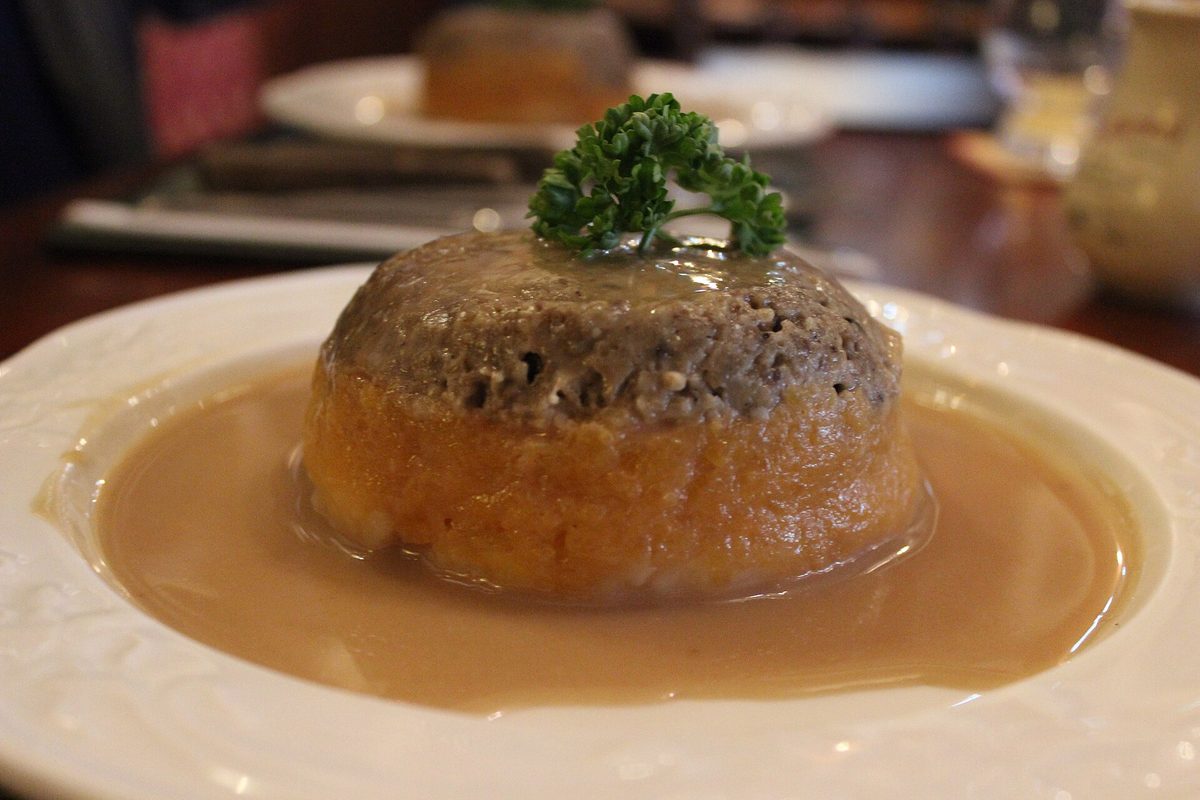
Vegetarian haggis is older than most people assume. Macsween, the best-known Edinburgh producer, created one in 1984 for the opening of the Scottish Poetry Library, and its vegetarian haggis is listed by the Vegetarian Society. It is not a niche product: the company has said that roughly one in every four haggis it sells is the vegetarian version. You will find it in supermarkets, on Burns Night menus, in chip shops as a “veggie haggis supper”, and as a standard vegetarian main in pubs across the country.
It is made from vegetables, pulses, oatmeal, seeds and the same spice mix as the original — and that spice mix is doing most of the work in the meat version too. Plenty of people who eat meat order it by choice. If you have read what actually goes into traditional haggis, you may understand why.
Two cautions. First, vegetarian does not automatically mean vegan — most of the widely sold veggie haggis is vegan, but some recipes include butter or egg, so read the packet or ask. Second, in a chip shop it will be fried in the same oil as the fish. Most Scottish chippies use vegetable oil rather than beef dripping, which is a point in their favour, but the shared fryer is unavoidable. If that matters to you, order the haggis with neeps and tatties in a pub instead. Expect somewhere around £12–16 for a pub plate, less for a chip shop supper — check current prices before you go.
Already vegan, or one question away
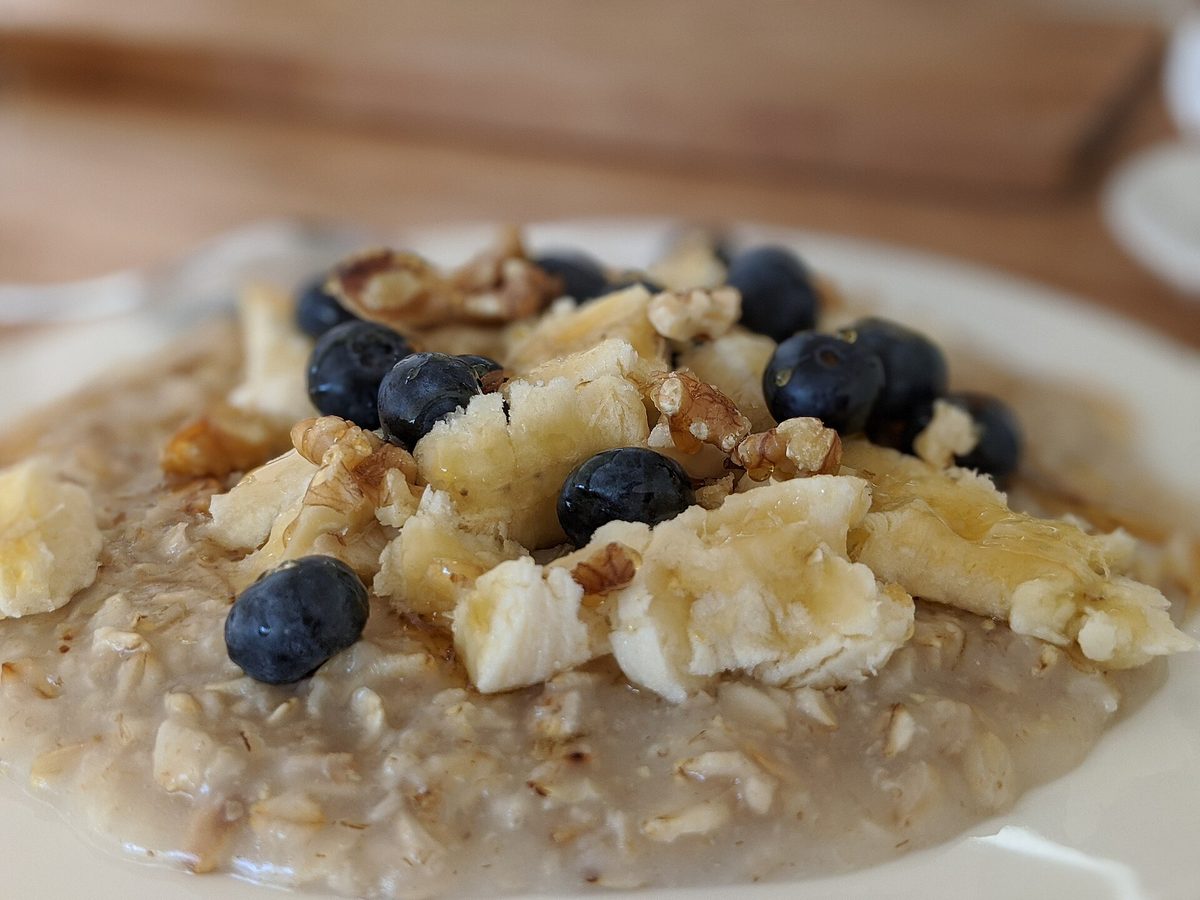
Porridge. Traditional Scottish porridge is oats, water and salt. That is it. No milk, no sugar, no cream. It is accidentally, historically vegan, and it is still the default breakfast in a lot of Highland kitchens. Ask for it made with water or oat milk and you are done.
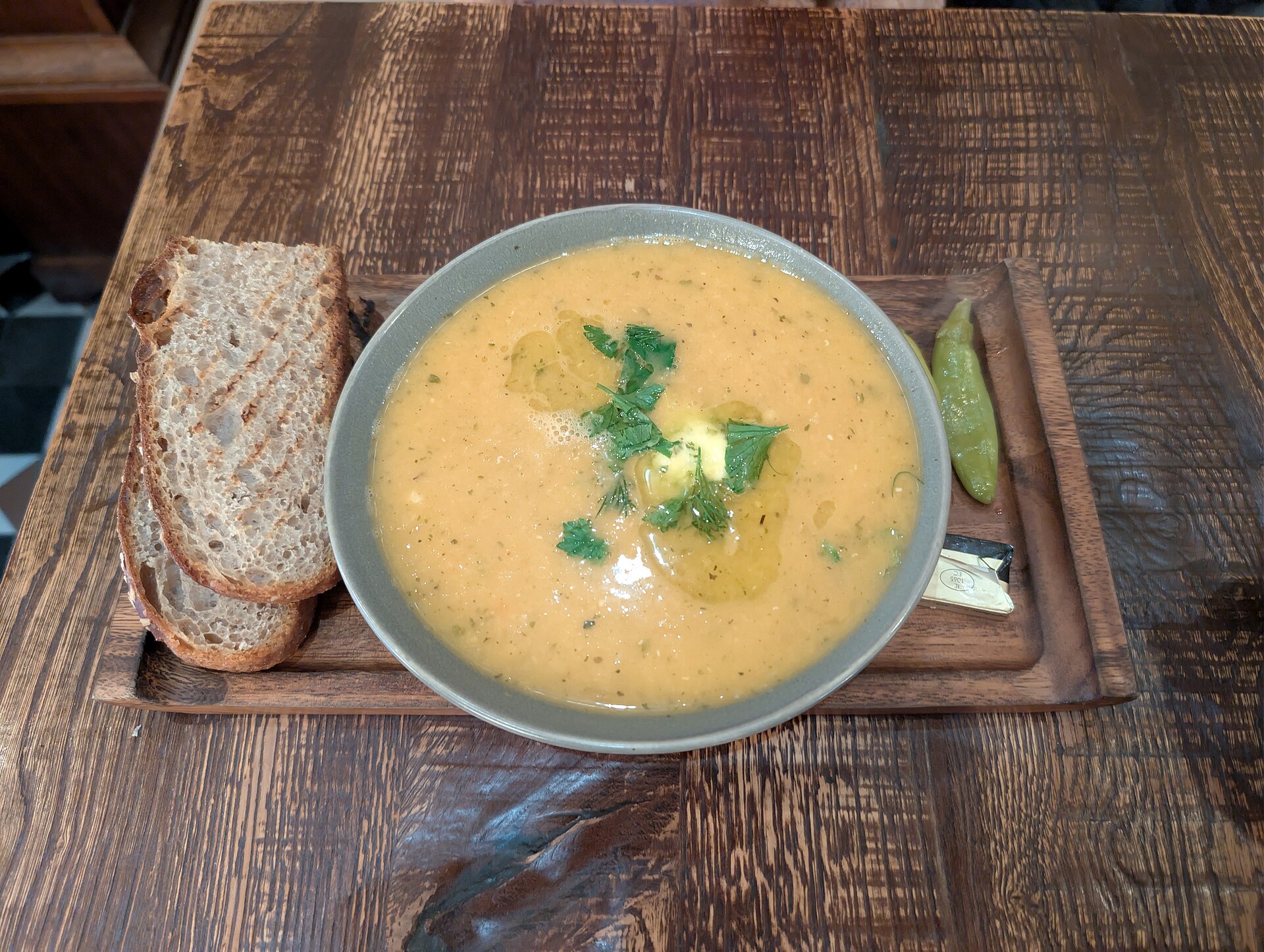
Lentil soup. The most common soup on Scottish menus, and the one that trips vegans up most often, because the classic recipe uses a ham hough or ham stock. Always ask. When it is made with vegetable stock — and increasingly it is — it is one of the best cheap lunches in the country, usually £6–8 with bread.
Scotch broth. Barley, dried peas, carrot, neep and cabbage, traditionally simmered with mutton. Made without the meat it is still a proper dish rather than a diminished one, but the stock question is the same. Our guide to Scottish soups covers the full range, including which ones are hopeless for vegans — cullen skink, for one, is smoked haddock and cream and cannot be rescued.
Stovies. Potatoes, onions and stock, slow-cooked. Traditionally made with dripping and leftover roast meat, so ask about the meat, stock and cooking fat before ordering one in a pub — but a vegan stovie is easy to make yourself in a self-catering kitchen and it is exactly the right food after a wet day on the hill.
Oatcakes. Oatmeal, water, salt and usually a fat. Some brands use vegetable oil, some use butter or lard, so check the box for one made with oil. They travel well in a rucksack. Along with hummus, they are the single most useful thing to carry in rural Scotland.
The hidden animals: what to watch for
Three things hide in Scottish food more often than visitors expect.
Ham stock turns up in lentil soup, pea soup and sometimes in vegetable soup made by a kitchen that did not consider it. Ask every time, in every establishment, however unlikely it seems.
Black pudding appears on breakfast plates by default and is made with blood. If you ask for a vegetarian breakfast without specifying, you may still get it, because some kitchens genuinely do not classify it as meat.
Shared fat is the quiet one. Tattie scones and mushrooms are routinely cooked on the same griddle as bacon, in bacon fat, because that is how a breakfast service works. Nobody will mention it. If it matters to you, you have to say “cooked in oil, in a clean pan” — and even then, on a busy Sunday, be realistic about what a single griddle can do.
Cranachan, shortbread and the pudding problem
Desserts are where Scottish food gets genuinely difficult, because the classics are built on dairy.
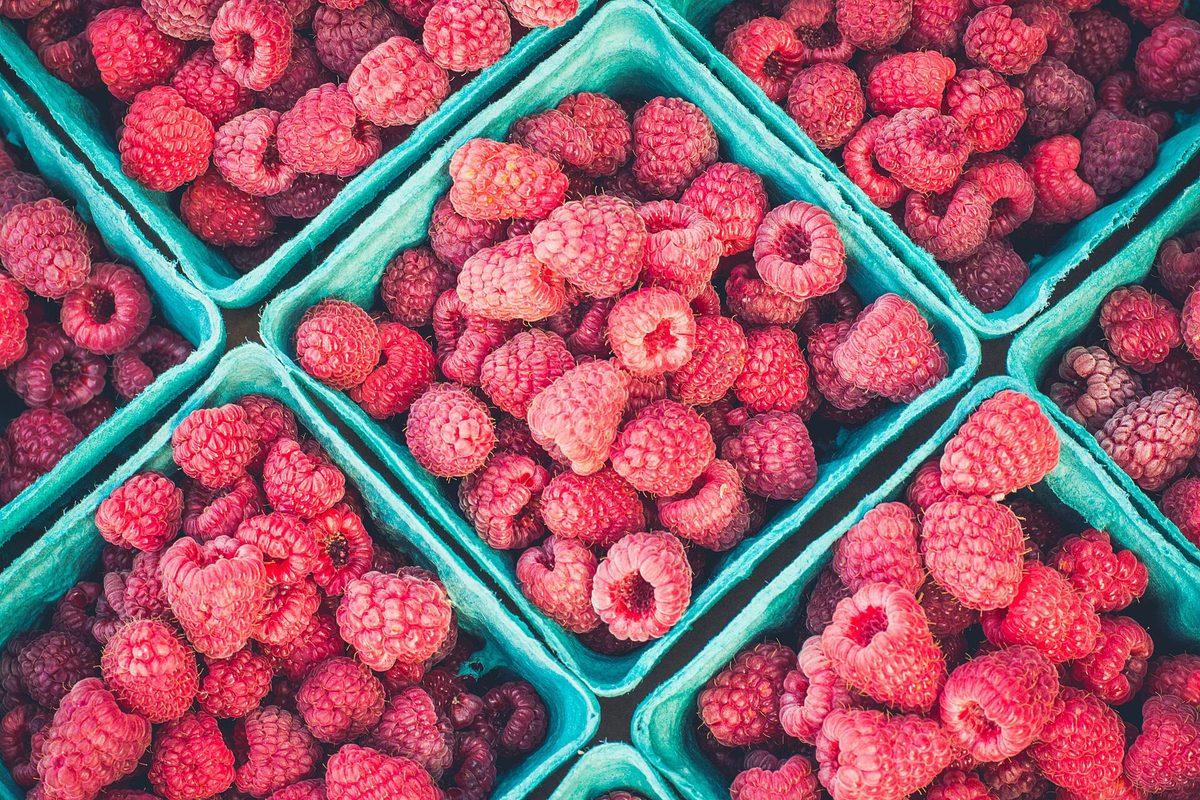
Cranachan — raspberries, toasted oatmeal, cream, whisky and honey — has two vegan issues, not one. The cream is easy: whipped coconut cream or a thick oat cream works well and the toasted oats carry the dish. Honey is the one people forget, and the fix is maple syrup or golden syrup, which is arguably more Scottish anyway. Made this way it is one of the better vegan desserts you will eat, and any decent city restaurant can do it. In a rural hotel, ask when you book.
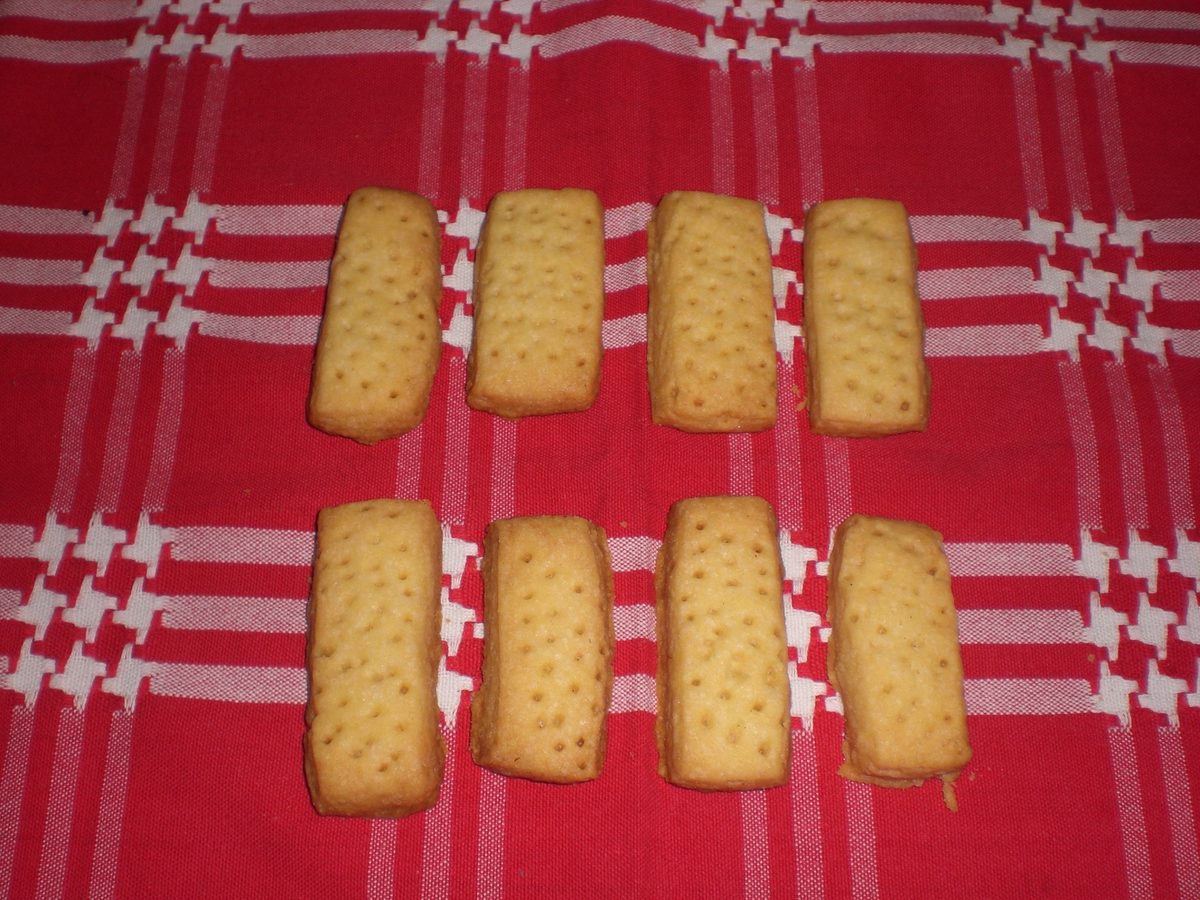
Shortbread cannot be fixed by asking. Butter is not an ingredient in shortbread, it is the point of shortbread — the traditional ratio is one part sugar, two parts butter, three parts flour. Vegan versions made with block plant fat exist and some are very good, but you will find them in city bakeries and health-food shops, not in a Highland tearoom or a tourist tin. Do not expect the gift-shop shortbread to be vegan. It will not be.
Tablet, fudge and most traybakes are dairy-heavy for the same reason. Our guide to traditional Scottish desserts covers the full list, and a fair few of them are more adaptable than shortbread. Dark chocolate, dairy-free ice cream in the cities, and fruit crumble made with plant margarine will get you through.
Breakfast is the hardest meal of the day
This surprises people. Dinner has options. Lunch has soup. Breakfast, in a hotel or B&B, is where the plant-based traveller does worst.
A full Scottish breakfast minus the animal products is beans, toast, grilled tomato and mushrooms. That is a fine meal once. By day four of a Highland trip it is dispiriting, particularly if the mushrooms came off the bacon griddle. The tattie scone might not be vegan, the black pudding certainly is not, and the “vegetarian option” in many places is simply the same plate with an egg where the sausage was.
Three things fix it. Ask for porridge — made with water or oat milk, it is traditional, it is good, and every kitchen in Scotland can make it. Tell your host in advance that you are vegan; a B&B given three days’ notice will often buy vegan sausages, and it costs them nothing. And in the cities, skip the hotel breakfast entirely and go to a cafe, because a decent Glasgow or Edinburgh cafe will do a full vegan breakfast that is better than anything you will be served on a hotel buffet.
Drinks: the easy part
Good news, for once. Scotland’s national drink is almost entirely vegan-friendly.
Single malt Scotch is water, malted barley and yeast, and the distillation process removes any need for the animal-derived fining agents used in wine and some beer. No isinglass, no gelatine, no casein. A dram is a dram.

The one asterisk is cask finishing. Many whiskies spend time in casks that previously held sherry, port or wine, and those wines may have been fined with isinglass — fish-derived. Whether trace residue in a cask matters is a judgement call and vegans disagree about it in good faith. If you are strict, stick to bourbon-cask or refill-cask bottlings and ask at the distillery; staff on distillery tours are usually well briefed. Cream liqueurs and honey-sweetened whisky liqueurs are straightforwardly not vegan.
Beer is more variable. Traditional cask ale is often fined with isinglass, while most modern Scottish craft breweries are vegan by default and say so on the can. Gin is generally fine. Irn-Bru, the other national drink, is normally listed as suitable for vegans, though recipes change — read the label if it matters. When in doubt, the Barnivore database is the standard reference and it covers most Scottish producers. Our Scottish food and drink pillar guide has the wider context on what the country actually produces.
Reading labels on Scottish products
A few habits worth developing before you start filling a basket.
UK allergen labelling is legally required and clearly formatted, which makes milk and egg easy to spot — they will be in bold in the ingredients list. What allergen labelling does not flag is honey, gelatine, or non-vegan additives, so scanning for bold text alone is not enough.
Look for the Vegan Society sunflower trademark, which is the most common certification on British products. Co-op, Tesco and Sainsbury’s own-brand ranges label plant-based lines consistently and are usually the fastest thing to read in a hurry.
Two Scottish-specific traps. Anything described as “Scottish” and creamy — tablet, fudge, butter shortbread, Scottish tablet ice cream — is dairy, without exception in practice. And “vegetarian” on a Scottish menu is a much softer word than “vegan”: it frequently means cheese-heavy, and it does not tell you anything about the stock.
Planning a plant-based trip: how long, when, and what to book
If eating well is a priority, structure the trip differently from the standard loop.
How long. Ten days to two weeks lets you split the trip cleanly: four or five days in the cities where food is effortless, then the Highlands with a kitchen. A week is enough for Edinburgh, Glasgow and one Highland base. Our guidance on planning a first trip to Scotland covers the routing side.
When to go. May to September is materially easier for rural eating — more places open, longer kitchen hours, more staff. October is still workable. November to March in the Highlands requires real planning, and I would lean towards self-catering or a city-based trip in those months.
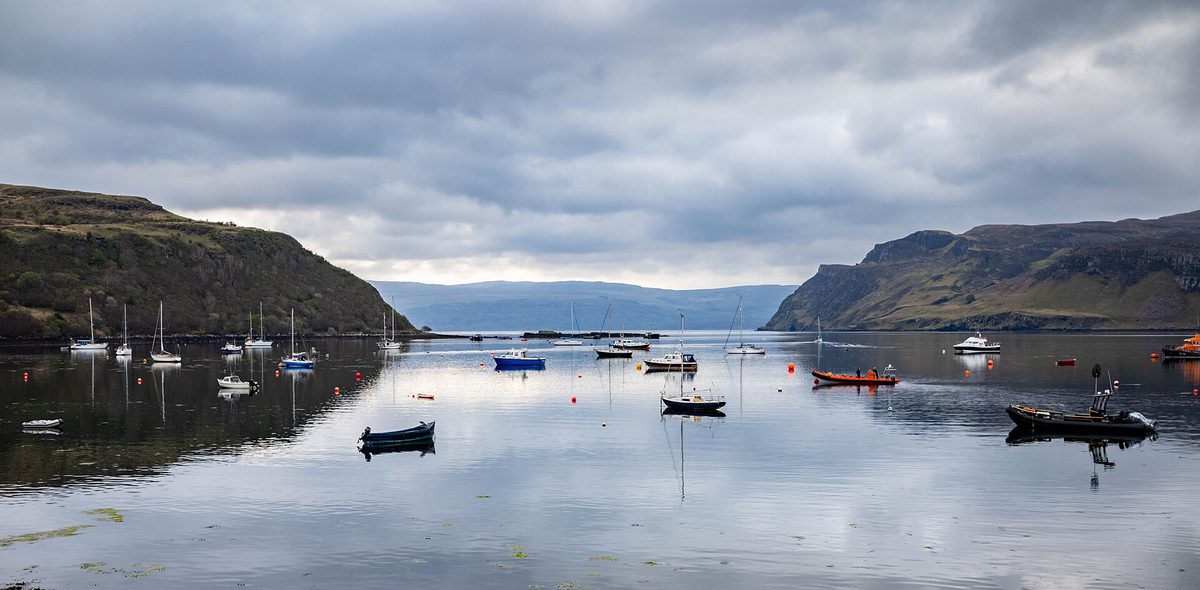
What to book, and how far ahead. Self-catering for the rural stretch: three to six months for July and August, less otherwise. Dinner at your Highland accommodation: at the time of booking the room, not on the day. City vegan restaurants: a week ahead normally, three or four weeks for August in Edinburgh. Anything on Skye in summer: as early as you can, because Skye’s restaurant capacity has not kept pace with its visitor numbers and this hits special diets hardest.
What to carry. A jar of hummus, oatcakes, nuts, a couple of instant noodle pots and a bag of coffee. It sounds excessive, until the night every kitchen nearby has closed.
What underwhelms, and the mistakes I see people make
Some honest assessments, including of things I like.
The rural vegan main is often mediocre, and that is not a scandal. A kitchen that cooks two plant-based meals a week is not going to be good at it. Adjust expectations rather than adjusting your itinerary — the scenery is why you came.
Do not build a Highland route around a list of vegan cafes. They close, they change hands, they run seasonal hours. Every list you find online, including the well-maintained ones, has dead entries. Build the route around supermarkets and a kitchen; treat cafes as a bonus.
HappyCow is thin outside the cities. It is genuinely useful in Glasgow and Edinburgh and close to useless in Sutherland. Do not interpret an empty map as “there is nothing here” — it usually means nobody has added the pub that does a good veg curry.
Assuming Edinburgh is the vegan capital. It is excellent, but Glasgow is better for plant-based food, cheaper, and less exhausting. If your priority is eating, weight your nights towards Glasgow.
Turning up at 8.15pm. The most common and most avoidable mistake in rural Scotland, and it has nothing to do with being vegan — it is just worse when you are, because there is no petrol-station sandwich fallback.
Not asking about stock. If you take one habit from this guide, take this one. Ham stock in soup is the single most common way vegans in Scotland eat something they did not intend to.
Skipping traditional food out of caution. You can eat a veggie haggis supper, proper porridge, a bowl of lentil soup and a vegan cranachan and have eaten more genuinely Scottish food than most visitors manage. Our overview of traditional Scottish food is worth reading precisely so you know what to ask for. And if you are travelling with someone who does eat fish, our Scottish seafood guide will keep them happy while you order the risotto.
Frequently asked questions
Is vegetarian haggis vegan?
Not always. Macsween’s vegetarian haggis is suitable for vegans, but recipes vary between producers, so read the packet, or ask the kitchen to check theirs. In a chip shop it will share a fryer with fish, which some vegans accept and others do not.
Which is better for vegans, Glasgow or Edinburgh?
Glasgow, on balance. It has more fully vegan venues, they are spread across the West End, city centre and Southside rather than clustered around tourist streets, and it is noticeably cheaper. Edinburgh has some long-established vegetarian kitchens, but it is busier and pricier, especially in August.
Can you be vegan on the North Coast 500?
Yes, with planning. Stock up in Inverness and again in Ullapool or Thurso, book accommodation with a kitchen where you can, and phone ahead for any dinner you intend to eat out. The stretch between Ullapool and Durness has the fewest options. Do not rely on finding somewhere open after 8pm.
Do Scottish restaurants understand what vegan means?
In the cities, almost universally. In rural areas, staff are willing but the vocabulary is looser — “vegetarian” is often used to mean “no meat” while still involving cheese, cream or fish stock. Say explicitly: no meat, fish, dairy, eggs or honey. Ask about the stock separately.
Is Scottish whisky vegan?
Yes, in essentially all cases. Whisky is barley, water and yeast, and distillation removes the need for animal-derived fining agents. Some vegans query whisky finished in sherry or wine casks, where the previous wine may have been fined with isinglass, so check the distillery’s own guidance on a cask-finished bottle. Cream and honey liqueurs are not vegan.
Are there vegan options in Highland hotels?
Yes, if you ask. Expect a risotto, curry or stuffed vegetable rather than anything ambitious. Quality varies enormously. Tell the hotel when you book the room rather than when you sit down, and most will produce something considerably better than the default. Small B&Bs need more notice than large hotels, not less.
What’s the best vegan breakfast in Scotland?
Porridge made with water or oat milk, which is both traditional and available everywhere. In the cities, a proper cafe full vegan breakfast — vegan sausage, beans, mushrooms, tomato, tattie scone cooked in oil — comfortably beats any hotel offering. Hotel breakfasts are the weakest meal of a Scottish trip for vegans.
Should I self-cater as a vegan in Scotland?
For the rural half of a trip, yes. A kitchen turns the hardest problem — unreliable evening options in remote areas — into a shopping trip. Buy in Inverness, Fort William, Oban or Ullapool, cook two or three nights, and treat every restaurant meal as optional rather than essential.
Final thoughts
Scotland is a genuinely good country to eat plant-based in, provided you understand that it is two different countries doing it. Glasgow will feed you better than most cities in Britain. A village in Wester Ross will feed you a jacket potato, and will do it kindly, and that is fine if you knew it was coming.
Give up on the restaurant list and plan around three things instead: a kitchen for half the nights, a phone call the day before for the other half, and a bag of oatcakes in the car. Do that, order the veggie haggis when you see it, and ask about the stock every single time. The Highlands are not going to become easy. They will become entirely manageable, which is all you need.
If you are still building the trip, our Scotland travel tips cover the non-food practicalities, and the eating will look after itself once the route is right.
About the author: This guide was written and is maintained by the ScotlandTourism.org editorial team — travel writers who’ve spent years exploring Scotland’s cities, Highlands and islands, from bagging Munros to chasing the perfect dram. We update our guides regularly to keep prices, opening details and advice current.
Last updated: November 2026. Prices and opening times change — always check the official site before you travel.
Photo credits
All images are used under their respective Creative Commons or public-domain licenses:
- Haggis with neeps and tatties, the plate a vegetarian haggis is ser… — Metukkalihis, CC BY-SA 3.0, via Wikimedia Commons
- A busy street in Glasgow’s West End, the best area in Scotland for … — Stephen Sweeney, CC BY-SA 2.0, via Geograph
- Victoria Street in Edinburgh’s Old Town, close to the city’s vegan … — kim traynor, CC BY-SA 2.0, via Geograph
- A jacket potato with beans, the standard vegan pub lunch in rural S… — Andy Li, CC0, via Wikimedia Commons
- Ullapool on the north-west coast, the last big supermarket before t… — Victuallers, CC BY-SA 4.0, via Wikimedia Commons
- A bowl of porridge with fruit, Scotland’s most reliably vegan break… — Shisma, CC BY 4.0, via Wikimedia Commons
- Tattie scones with a bean bake, often cooked in bacon fat at breakfast — Colin, CC BY-SA 4.0, via Wikimedia Commons
- Raspberries, the fruit at the heart of a vegan cranachan — Igor Ovsyannykov igorovsyannykov, CC0, via Wikimedia Commons
- Scottish shortbread, which is made with butter and is almost never … — Thorsten Alge, Public domain, via Wikimedia Commons
- A dram of Scotch whisky, a drink that is almost always vegan-friendly — cyclonebill from Copenhagen, Denmark, CC BY-SA 2.0, via Wikimedia Commons
- Portree harbour on the Isle of Skye, where booking a vegan dinner a… — rboed*, CC BY 2.0, via Wikimedia Commons
- Red lentil soup with bread: Lentil Soup – Schnitzel & Co. 2026-05-16 by Andy Li, CC0, via Wikimedia Commons.