Almost everybody arrives at Doune Castle for the coconuts, humming the Camelot song and waiting for the joke to land. It lands. Then you climb the steps off the courtyard, walk into the kitchen, and the humming stops.
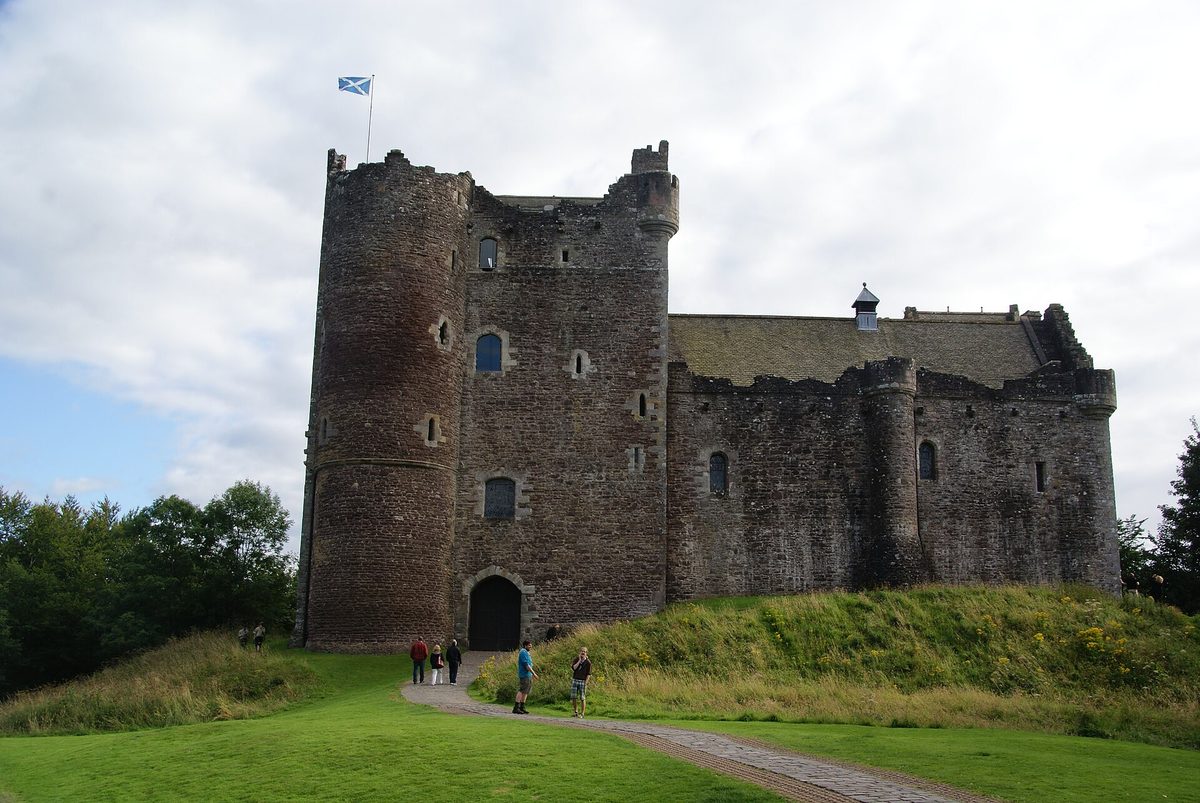
Here is the thing nobody tells you about Doune Castle: strip out every film crew that has ever parked on the grass and it would still be one of the most complete medieval great houses left standing in Scotland. Most of our castles are handsome wrecks — roofless shells where you squint at a fireplace halfway up a wall and try to imagine a room around it. Doune is not that. The kitchen has its roof. The hall has its floor. The serving hatches are still there, cut through five feet of stone, and you can stand in one and see exactly how a fourteenth-century banquet actually worked. That is rarer than the Monty Python connection, and far more interesting.
Is Doune Castle worth visiting?
Yes — but as a second stop, not a headline. It is small, walkable in ninety minutes, and 8.5 miles from Stirling. Come for the medieval kitchen and halls, with the Monty Python, Outlander and Game of Thrones fame as a bonus. Take the free audio guide; without it, you halve the visit.
Doune Castle at a glance
| Detail | What to know |
|---|---|
| Where | Doune — 8.5 miles from Stirling, 4.5 from Dunblane |
| Run by | Historic Environment Scotland; free to HES members and on the Explorer Pass |
| Tickets | Around £10 adult online, roughly £11 at the gate; concessions and child rates lower. Check before you go |
| Opening | Daily. Roughly 9.30am–5.30pm April to September, 10am–4pm October to March, last entry 45 minutes before closing |
| How long | Allow 60–90 minutes inside, and a little longer for the riverside woodland walk |
| Audio guide | Included in the ticket, on your own phone. Terry Jones and Sam Heughan have both voiced material for it — pre-load it, signal is patchy |
| Parking | Very limited on site. Three free car parks in Doune village. No motorhomes, campervans, caravans or coaches at the castle |
| Pair it with | Stirling Castle, Dunblane Cathedral, Deanston Distillery, or the eastern edge of the Trossachs |
The real reason to come: a great house you can actually read
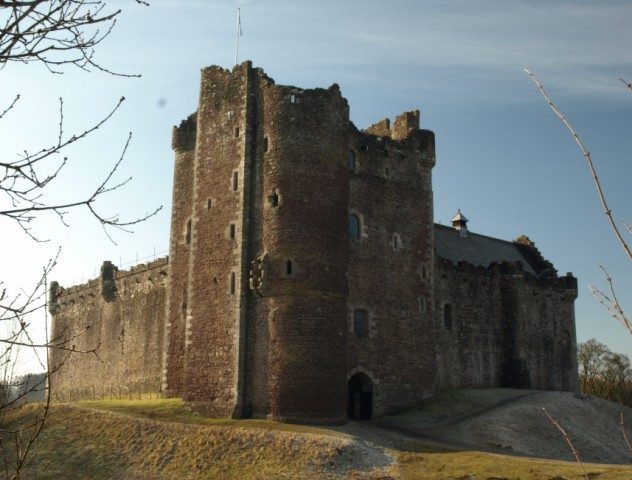
Doune was built for Robert Stewart, Duke of Albany — son of Robert II, and for more than thirty years the man who effectively ran Scotland while the actual king did not. The bulk of what you walk through went up in the decades either side of 1400. It is not a fortress that later became a home. Rebuilt in the late fourteenth century on the site of an earlier castle, it was laid out as a very grand house that could, if pushed, defend itself.
That matters because the layout is legible in a way most Scottish ruins are not. If you have worked your way through our wider guide to castles in Scotland and come away with a blur of curtain walls, Doune is the one that will finally make the plan click.
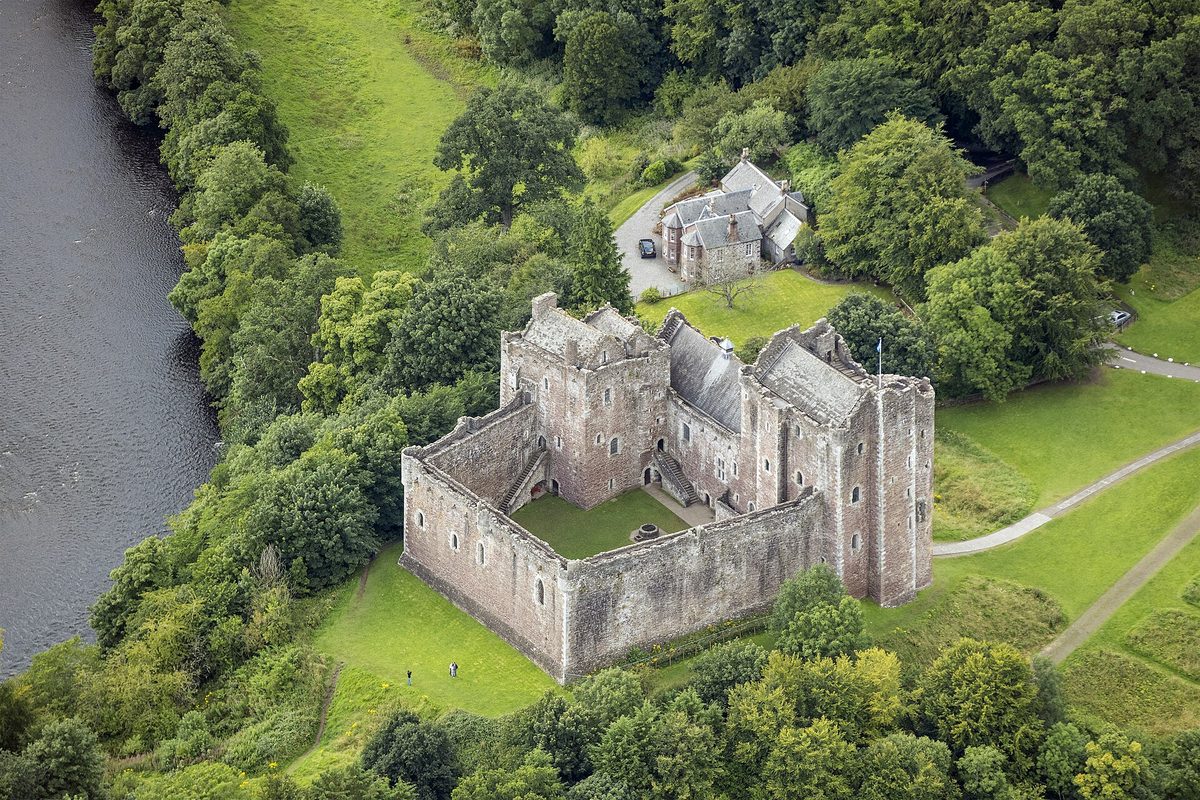
The kitchen, and the two hatches nobody photographs
Start here, not in the hall. The kitchen occupies its own vaulted tower and it is enormous — a barrel-vaulted room with a fireplace so wide you can stand inside it with your arms out and not touch either cheek. Historic Environment Scotland puts it at around five and a half metres across. There is an oven beside it. There are drains. There is a slot where a water supply came in.
Then look at the wall shared with the great hall. Two big elliptical arched openings punch straight through it. Those are serving hatches, and they are unusual for the period — most castles of this date shuttled food across a courtyard in the rain. At Doune, the cooks handed dishes directly into the hall through the wall.
Stand at one and the whole social machine of a medieval household snaps into focus: heat and shouting on one side, silence and precedence on the other, a wall between them with a hole in it.
The great hall, the Duke’s Hall and the naming confusion
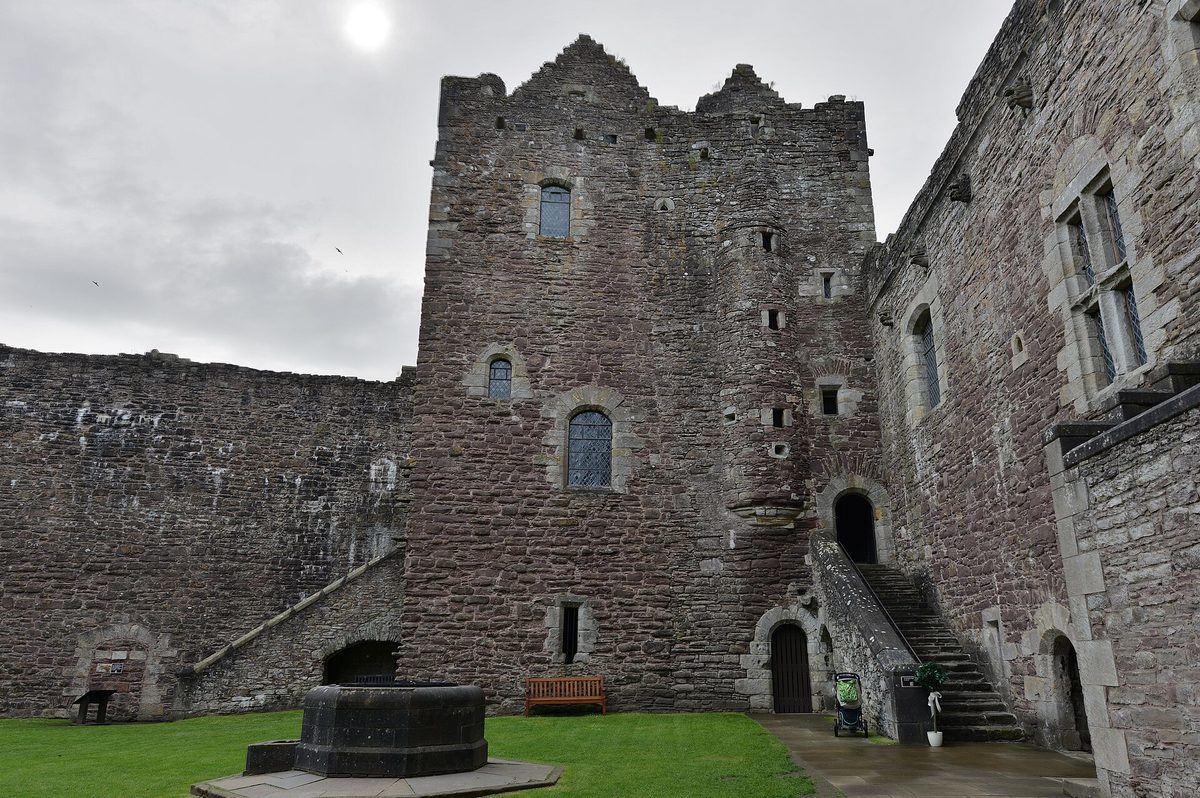
Up the thirteen steps from the courtyard you reach the first floor, which holds the kitchen, the great hall and the Duke’s Hall. Note that word “up”. There is no internal stair from the ground floor to the hall. Every route in and out of the principal rooms goes through the courtyard, in the open air, past a gate.
That is a security decision, not an oversight. It also means you will get rained on repeatedly moving between rooms, which is worth knowing before you leave the waterproof in the car.
The great hall has a central hearth — a fire in the middle of the floor with the smoke finding its own way out, older technology than the wall fireplaces elsewhere in the building. The roof above is high and steep and the acoustics are peculiar; drop a comment to your companion at one end and the far wall hands it back.
You will see the neighbouring room called the Duke’s Hall on the site signage and the Lord’s Hall in older guidebooks and on VisitScotland. Same room. Do not spend twenty minutes hunting for a hall that does not exist.
What the Victorians put back
Here is the honest caveat. The panelled walls, the tiled floor, the carved screen and the gallery in the Duke’s Hall are not medieval. They are 1880s restoration work carried out for the Earl of Moray.
That does not make them fake, exactly — Victorian antiquarians were rebuilding onto real evidence, and the room reads far better roofed and floored than it would as a shell. But it does mean the “minstrels’ gallery” you photograph is closer in age to the Forth Bridge than to Albany. Knowing which bits are which makes the visit sharper, not duller.
The gatehouse, the parapet and the windows that lead nowhere
The keep-gatehouse rises almost 29 metres, about 95 feet, and it does three jobs at once: gate, tower house and lodging. Walk out onto the parapet and you get the River Teith below, the Menteith Hills to the west, and Ben Lomond on the horizon if the cloud lifts. There is a waist-high wall up there, which helps if heights make you uneasy.
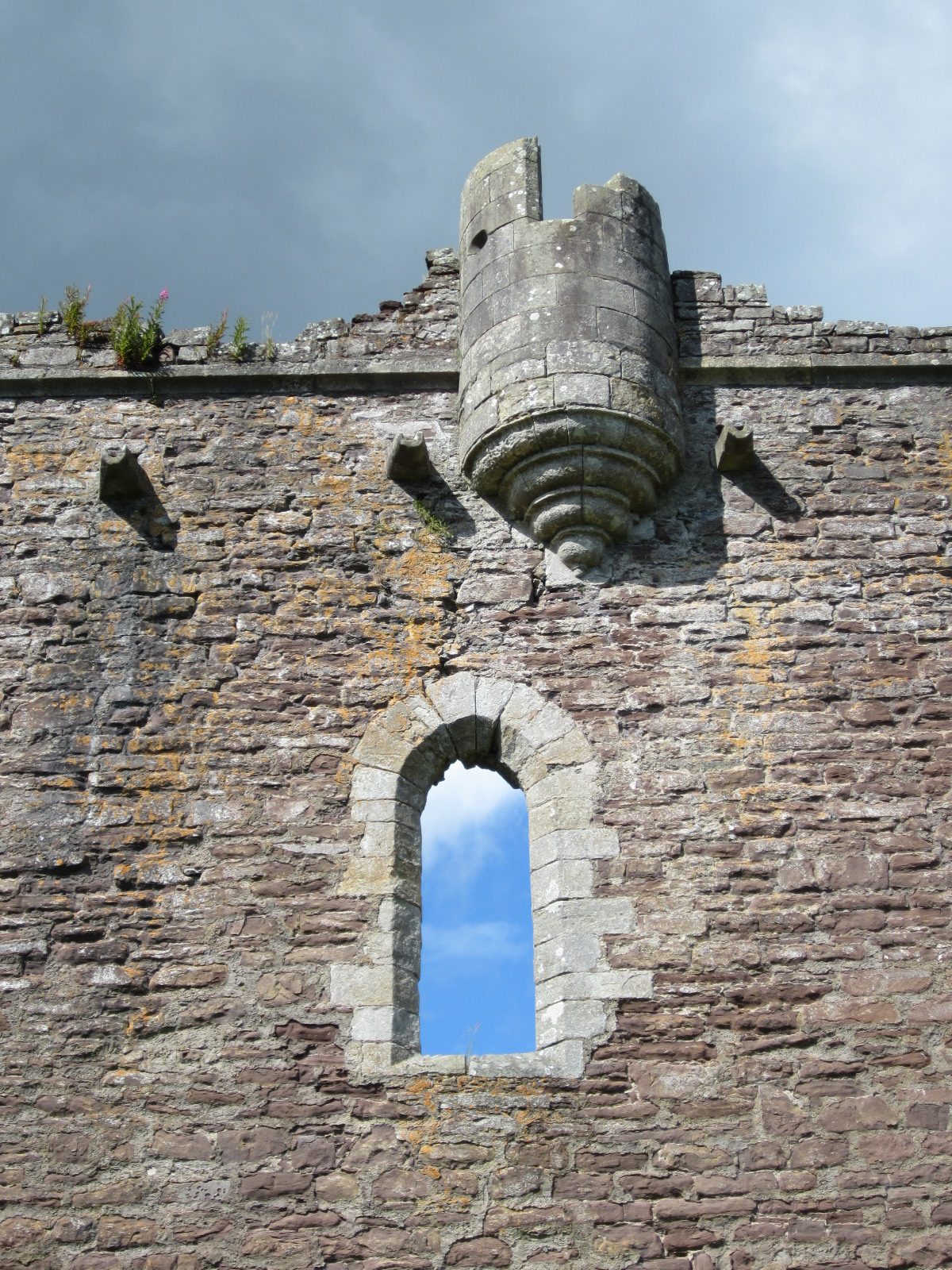
Now look back down at the curtain wall from the courtyard and find the windows. High up, in the outer wall, well above where any floor exists. They are finished, dressed windows opening onto nothing but air.
The usual reading is that Doune was never completed — that ranges of buildings were meant to fill the other sides of the courtyard and never got built. Historians argue about it. Either way, it is the single best detail in the castle and almost nobody looks up to find it.
The audio guide is the visit, not an upsell
I want to be blunt about this, because the site does a poor job of selling it: the audio guide is not an optional extra. It is included in your ticket price, it is the interpretation, and there are essentially no information panels doing the job instead. Skip it and you are wandering through empty stone rooms wondering why people rate this place.
Historic Environment Scotland runs it as a digital guide on your own phone. Terry Jones of Monty Python recorded the original commentary and it retains his register — genuinely funny, and unusually good on the history between the gags. Sam Heughan has voiced Outlander-flavoured material for the guide as well. HES names both men for its audio guide, but what is on offer can change, so check its Doune Castle page before you go.
Three practical things. Bring a charged phone; there is no hire kit to fall back on. Bring headphones — the castle sometimes has a few to lend, and at peak times they run out. And download the guide before you walk up the path, or at home from the link in your booking email, because the signal inside those walls is genuinely poor.
Allow an hour for the full commentary. Travelling with children who will not stand still that long? The castle also runs a fact-finding quiz, a better fit for the under-tens than any audio track — the same trick that works at plenty of the sites in our guide to Scotland with kids.
The films: what was shot here, and what was not
Doune has done more screen work than almost any building in Scotland, and the confusion around what was filmed where causes more disappointment than anything else on site. Let me sort it out.
Monty Python and the Holy Grail
The 1975 film had almost no money, and the production solved that by shooting many of its castles at Doune and filling most of the gaps with hanging miniatures. Camelot, Castle Anthrax, the castle where the French guard does the taunting, Swamp Castle where Lancelot goes on his rampage — all the same building, shot from different angles.
Only Castle Aaarrggh was somewhere else: that is Castle Stalker, out west near Appin on Loch Linnhe. So if you are chasing the whole set, you are looking at two very separate trips.
The great hall stood in for Camelot’s hall. The Trojan Rabbit trundles up the front path and through the gate you will walk through. The taunting happens over the wall you can see from the grass at the back. It is the rare film pilgrimage where the geography survives intact — you can walk the scenes in order.
Outlander and Castle Leoch
This is where expectations go wrong. Doune plays Castle Leoch, seat of Clan MacKenzie, across a run of season one episodes — and it also appears as the ruined castle Claire and Frank visit in the 1940s strand.
But the production used the exterior and the courtyard. The lawn out front is the shinty pitch. The courtyard is where Mrs Fitz hangs washing and the carriages pull up. The set designers modelled the kitchen on Doune’s, hearth and all, which is why it feels familiar when you walk in, but it is a copy of this room, not this room.
Knowing that in advance turns a letdown into a good bit of trivia. If Leoch is your reason for the trip, work it into a wider route using our roundup of Outlander filming locations across Scotland, because Doune alone is not a day. And if the clan side of the story is what hooked you, our guide to tracing Scottish ancestry and clan tartan is the honest version of what Leoch is fictionalising.
Game of Thrones and the Winterfell problem
Doune was Winterfell in the Game of Thrones pilot. The pilot only, which is worth knowing before you build a day around it.
So you will not recognise it, and that is not your memory failing. It is a genuinely obscure credit that gets sold as if the show lived here. I would not cross Scotland for it. If you are already coming for the Python and the architecture, it is a decent extra fact to have in your pocket.
The rest of the reel
Doune turns up in both the 1952 and the 1990s screen versions of Ivanhoe, and in Outlaw King in 2018. Long before any camera existed, Walter Scott put the castle into Waverley in 1814, which arguably makes it Scotland’s first screen-tourism destination two centuries early.
Tickets, opening times and what it actually costs
Online adult entry is around £10, concession around £8 and a child ticket (roughly ages seven to fifteen) around £6, with gate prices about a pound higher across the board; Historic Environment Scotland’s Doune Castle page has the current rates. Younger children go free. Historic Environment Scotland members are free, and it is included on the Explorer Pass, which runs for fourteen consecutive days and pays for itself quickly if you are also doing Stirling, Edinburgh Castle and one or two others.
Prices move, so treat all of that as a guide and confirm on the HES site when you book.
Two discounts worth knowing. Booking online beats the gate price. And HES runs a car-free discount — around 25% off standard adult, child and concession entry when you book online with the relevant code and arrive by bus, train or bike with your ticket to show. If you were already leaning towards the bus, that is a meaningful saving, and it fits neatly with the approach in our car-free Scotland itinerary.
Opening hours split two ways across the year: 9.30am to 5.30pm from April to September, and 10am to 4pm from October to the end of March, with last entry 45 minutes before closing. The castle is closed on Christmas Day and Boxing Day and on 1 and 2 January.
Winter is the catch. A 3.15pm last entry in January is not much of a day out if you have driven from Edinburgh after a leisurely breakfast. Aim for opening time in the dark months — and if you are planning a whole trip around the short days, our month-by-month notes on Scottish weather and the seasonal picture in Scotland in winter are worth ten minutes before you commit.
Getting there, parking, and the bit that catches people out
By car
Doune sits just off the A84 between Stirling and Callander, and the drive from Stirling takes about twenty minutes. From Glasgow allow roughly three quarters of an hour; from Edinburgh closer to an hour, more if the M9 is misbehaving. Postcode FK16 6EA.
The parking is where the trouble starts. The castle car park is small, tarmacked and level, with two blue badge bays on a first-come basis, and Historic Environment Scotland openly advises people to park in the village instead. It cannot take motorhomes, campervans, caravans or coaches at all. Small minibuses need to be booked in advance.
The road up to it is narrow, and in July and August you will meet cars reversing down it. Save yourself the standoff: go straight to one of the three free village car parks. Castlehill (FK16 6BJ) is closest, about a ten-minute walk. Doune Ponds (FK16 6EH) is small but sits handily near the shops. Draggie Burn Park and Stride (FK16 6QJ) links to the castle by paths through the Roman fort field, which is a nicer arrival than the car park anyway.
From the car park it is a short uphill walk to the gate, finishing on a steep stretch of uneven cobbles. They are slick when wet. Boots or grippy trainers, not smooth soles. Our first-time visitor tips make the same point about half the country’s historic sites, and Doune is a good example of why.
By bus, train and bike
The number 59 bus runs from Stirling to Doune in about half an hour and drops you on Bank Street, half a mile from the castle. Stirling is easy to reach by train from both Glasgow and Edinburgh, so a car-free day trip is straightforward, and it triggers that car-free ticket discount.
Cyclists can pick up National Cycle Network Route 765, which links Doune to Dunblane on quiet streets and traffic-free paths, and there is a rack at the castle for about eight bikes. For the wider picture on trains, buses and whether you need a car in Scotland at all, we cover it in getting around Scotland.
How long you need, and what to pair it with
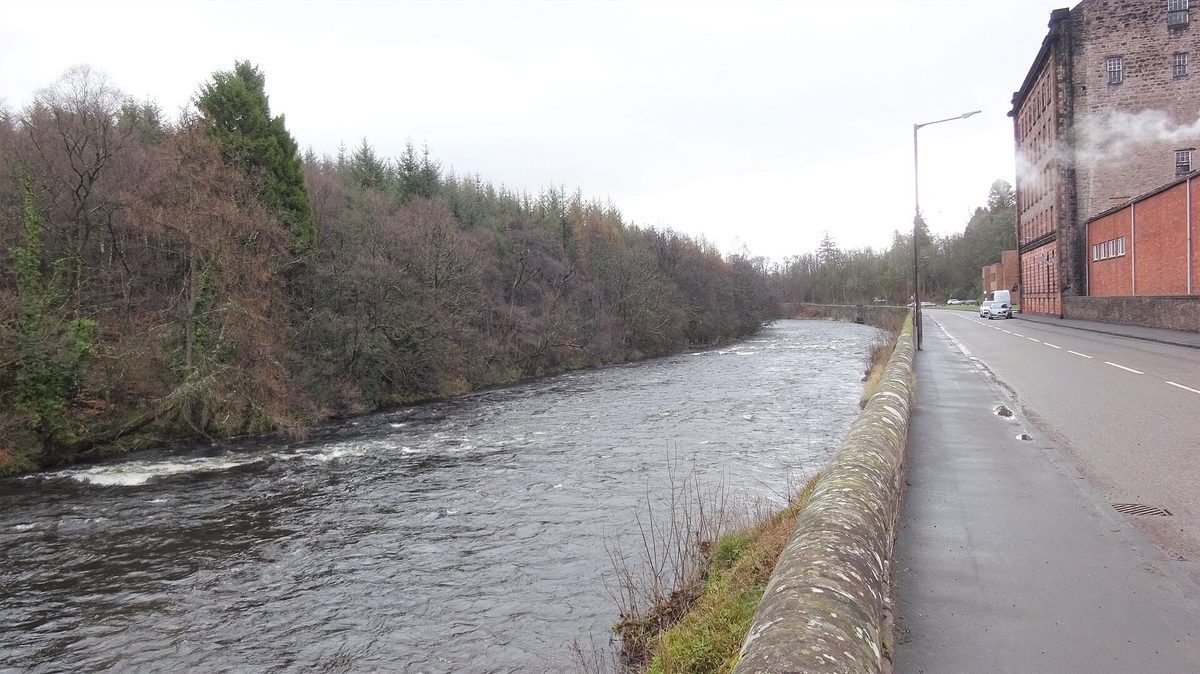
Ninety minutes covers the castle properly, including the full audio guide. Two hours if you are photographing everything. Add half an hour for the riverside woodland walk, which drops from the main gate down past a ruined mill towards the Teith and loops back — quiet, easy underfoot, and free.
Which means the real question is not how long Doune takes. It is what you attach it to.
With Stirling — and be honest about the pecking order
Stirling Castle is six miles away and it is the better castle. Bigger, richer, more restored, more consequential in Scottish history, and it will absorb three or four hours without effort. If you have one castle day in this part of the country, go there. Our Stirling Castle guide sets out why, and if you are weighing it against the capital, we compare the two head to head in Stirling Castle versus Edinburgh Castle.
Doune is the second stop. Stirling in the morning, lunch, Doune at two o’clock, home by five. That is the shape of the day, and it works beautifully. Reverse it and you will be rushing the better site.
You could also stitch in Dunblane Cathedral, four miles north, which is free and takes twenty minutes and has a nave that will surprise you.
With the Trossachs, or on the way north
The A84 through Doune is the road to Callander and the eastern Trossachs, which makes the castle an obvious half-hour stretch of the legs on the way to Loch Lomond and the Trossachs. Plenty of people driving north from Glasgow or Edinburgh pass within a mile of it without realising.
It also works as a first-morning stop on a longer run north — the sort of itinerary we map out in the Edinburgh to Highlands road trip, or the broader Highland road trip routes. Perthshire is close too, if you would rather bend east towards Pitlochry and Highland Perthshire.
Lunch, whisky and red kites in the village
There is no café at the castle — a self-service tea and coffee point, a shop, toilets and baby-changing, and that is your lot. Bring a picnic for the picnic area or walk down into Doune, where you will find a small supermarket, a bakery-style café or two and a public park to eat in.
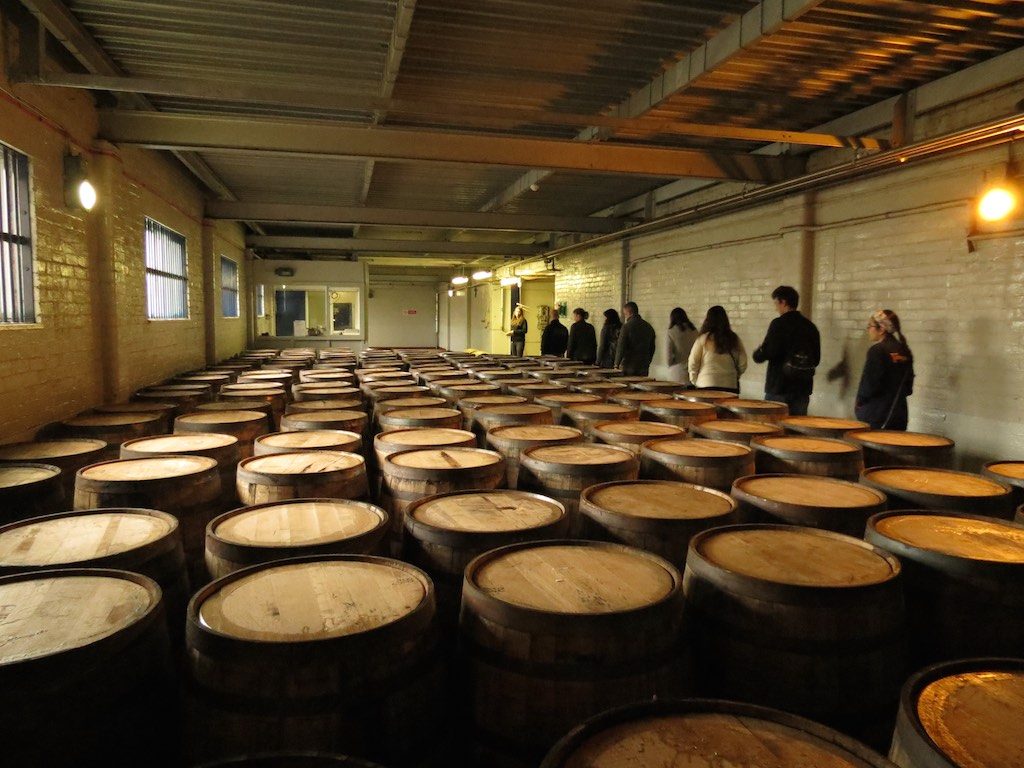
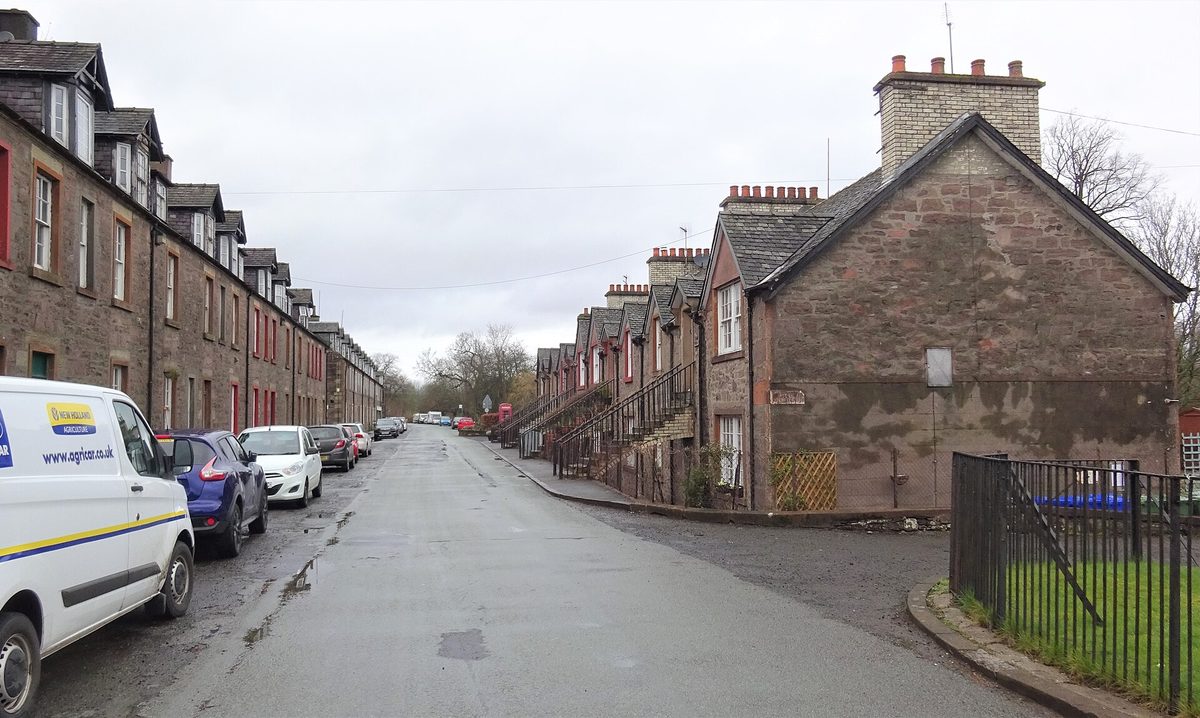
Deanston Distillery sits about a mile away in a converted eighteenth-century cotton mill on the Teith, still drawing power from the river. It is one of the more architecturally interesting distillery visits in the country and rarely crowded, which is not something you can say about many stops in our guide to Scotch whisky distilleries.
Just outside the village, Argaty runs a red kite visitor attraction; check its feeding times and book ahead on its own site. Between the castle, the distillery and the kites you have a properly full day within three miles of one village.
What underwhelms, and what to skip
Let me be straight with you, because the glowing write-ups do the place no favours by overselling it.
It is small. Four or five rooms, a courtyard, a stretch of parapet. If you have come from Edinburgh Castle or Stirling expecting the same scale, you will be through it in forty minutes and wonder what you paid for. The pleasure is in the detail, not the sprawl.
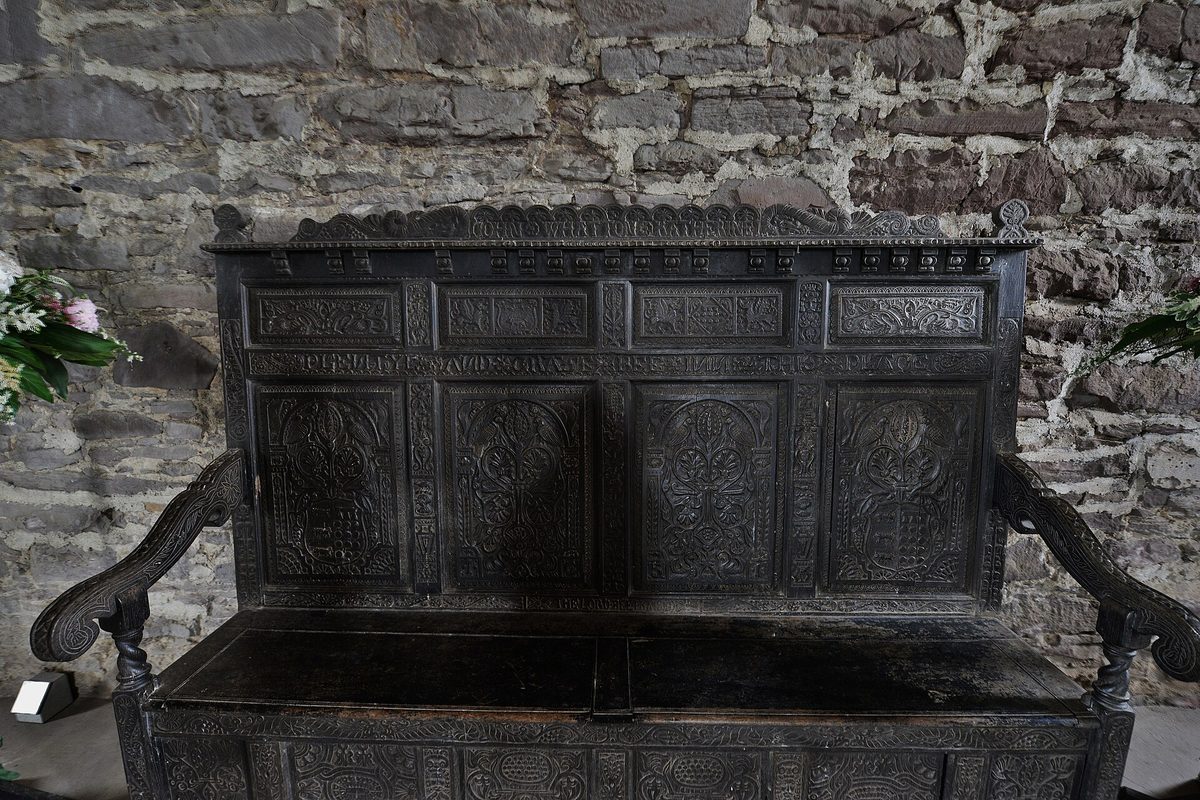
The rooms are empty. Beyond the Victorian panelling and one splendid carved settle, there is no furniture, no dressing, no set. Some visitors love the austerity. Others find it bleak, particularly in November when the stone is cold and the light goes at four.
You will not recognise the Outlander interiors. Worth repeating, because it is the single most common disappointment on site: those were sets.
Winter hours are short and there is no shelter. Almost the entire visit involves outdoor stairs and open courtyard. In driving rain it is a miserable hour, with no interior route between the rooms to duck along.
Access is limited. The approach is steep and cobbled, the courtyard is uneven grass, the halls need a flight of thirteen steps and the upper chambers are up worn spiral stairs. The shop and courtyard level are workable for many visitors; the halls are not step-free. Check the HES access notes if that matters to you.
No dogs. Assistance dogs only. Do not turn up with the spaniel assuming it will be fine.
The common mistake: treating Doune as a destination rather than a pairing. People drive an hour each way for a ninety-minute castle and feel short-changed. Bolt it onto Stirling, or the Trossachs, or a whisky stop, and it becomes one of the better half-days in central Scotland. On its own, it is a long way to go for a coconut joke.
Frequently asked questions
How long do you need at Doune Castle?
Allow 60 to 90 minutes inside for the rooms and the audio guide, and a little longer if you want the woodland and riverside walk below the castle. Two hours is generous. Anyone budgeting half a day will finish early and be looking for something else.
Is the Doune Castle audio guide included in the ticket?
Yes. It streams to your own device through a web browser rather than running on hired kit, so bring a charged handset and ideally headphones. Load it up before you reach the gate, since reception inside the walls is unreliable. Historic Environment Scotland lists Terry Jones and Sam Heughan among the voices, but confirm the current line-up when booking.
Which Outlander scenes were filmed at Doune Castle?
Doune serves as Castle Leoch throughout season one, and doubles as the same castle in its ruined 1940s state. Filming used the exterior, front lawn and courtyard only. Leoch’s interiors were sound-stage sets, though the production modelled the kitchen closely on the real one at Doune, hearth and all.
Was Game of Thrones really filmed at Doune Castle?
Only the pilot episode, where Doune stood in for Winterfell. It is a real credit, but a much smaller one than the marketing suggests.
Can you visit Doune Castle without a car?
Easily. Take a train to Stirling from Glasgow or Edinburgh, then the number 59 bus, a roughly 30-minute run that sets you down on Bank Street, a half-mile walk from the gate. Booking online and arriving by public transport or bike also unlocks a car-free discount on entry, currently around 25%.
How much are Doune Castle tickets?
At the last check, roughly £10 for an adult booking online and about £11 at the gate, with lower concession and child rates and free entry for Historic Environment Scotland members. It is also covered by the Explorer Pass. Prices change each season, so check the official site before travelling.
Is Doune Castle better than Stirling Castle?
No, and I would not pretend otherwise. Stirling is larger, more restored, more central to Scottish history and will hold you for three or four hours. Doune wins on one thing only: the completeness of its medieval kitchen and halls. Do both in a day, with Stirling first.
Is Doune Castle suitable for children?
For most primary-age children, yes. The coconut connection lands well, there is a fact-finding quiz, and the parapet views are a hit. The stairs are steep and the courtyard is uneven, so it is hard work with a pushchair, and there is no café to retreat into if things go sideways.
Final thoughts
Visitors tend to arrive quoting the film and head for the gate with their cameras. Then somebody wanders into the kitchen, notices the serving hatch, works out what it was for, and the tone of the visit shifts entirely.
That is the castle in a sentence. The fame gets you through the door; the building keeps you there. Put it after Stirling, take the audio guide, park in the village, and give it ninety unhurried minutes. If you would rather build a whole trip around fortresses, our roundup of the best castles in Scotland and the regional breakdown in Scotland’s castles by region will point you at the rest — including the cliff-edge drama of Dunnottar and the postcard set piece of Eilean Donan.
Doune will not be the best castle you see in Scotland. It might well be the one you understand best.
About the author: This guide was written and is maintained by the ScotlandTourism.org editorial team — travel writers who’ve spent years exploring Scotland’s cities, Highlands and islands, from bagging Munros to chasing the perfect dram. We update our guides regularly to keep prices, opening details and advice current.
Last updated: October 2026. Prices and opening times change — always check the official site before you travel.
Photo credits
All images are used under their respective Creative Commons or public-domain licenses:
- Doune Castle seen from the approach path, the tall keep-gatehouse standing above the… — Bill Boaden, CC BY-SA 2.0, via Wikimedia Commons
- Doune Castle from the air, showing the courtyard, curtain wall and the River Teith below — Godot13, CC BY-SA 4.0, via Wikimedia Commons
- The keep-gatehouse at Doune Castle on a clear winter afternoon — Carron K, CC BY-SA 2.0, via Wikimedia Commons
- The courtyard at Doune Castle with the well and the outdoor stair up to the halls,… — HARTLEPOOLMARINA2014, CC BY-SA 4.0, via Wikimedia Commons
- The carved oak settle in the great hall at Doune Castle — HARTLEPOOLMARINA2014, CC BY-SA 4.0, via Wikimedia Commons
- An unglazed window and corner bartizan high in the curtain wall at Doune Castle — Uomovariabile, CC BY-SA 4.0, via Wikimedia Commons
- The River Teith running past the old mill at Deanston, a mile from Doune Castle — Rosser1954, CC BY-SA 4.0, via Wikimedia Commons
- The main street of Deanston, the mill village beside Doune — Rosser1954, CC BY-SA 4.0, via Wikimedia Commons
- Casks in a warehouse at Deanston Distillery near Doune Castle — Malcolm Manners from Lakeland FL, USA, CC BY 2.0, via Wikimedia Commons
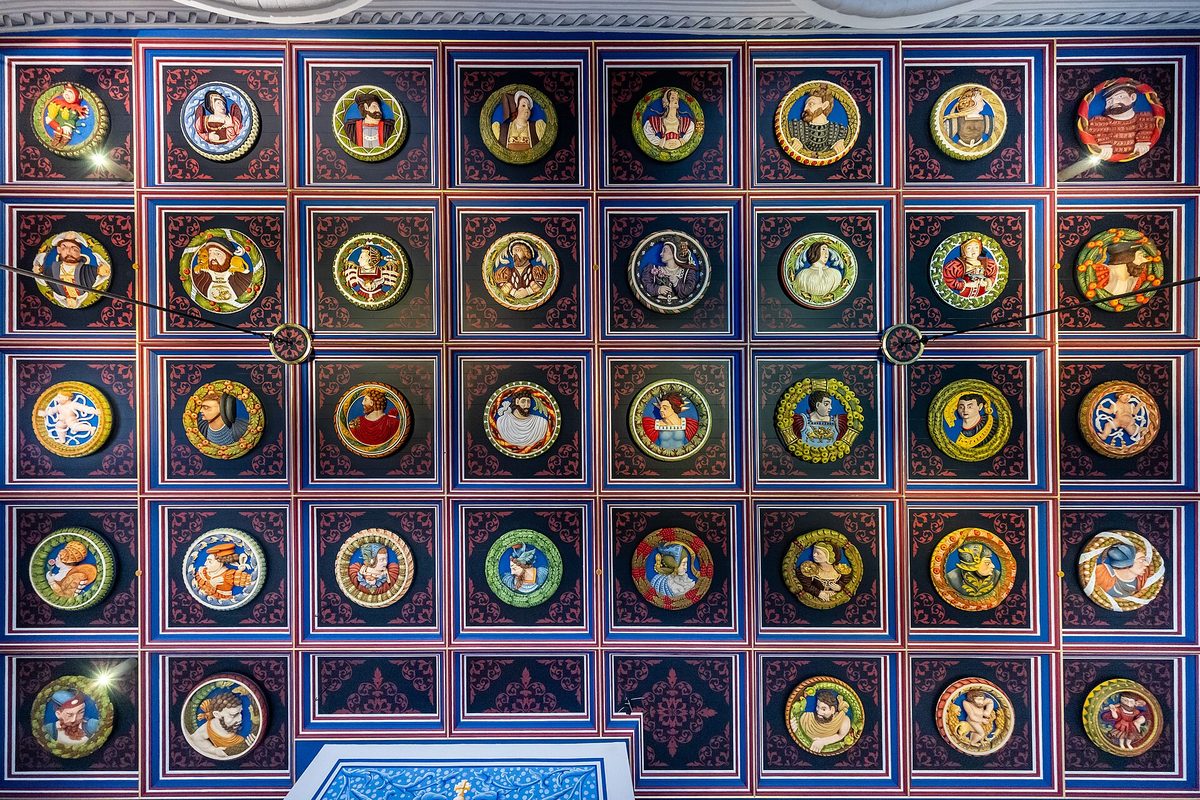
- The Stirling Heads ceiling in the Royal Palace at Stirling Castle, a short drive from Doune — Kenneth C. Zirkel, CC0, via Wikimedia Commons