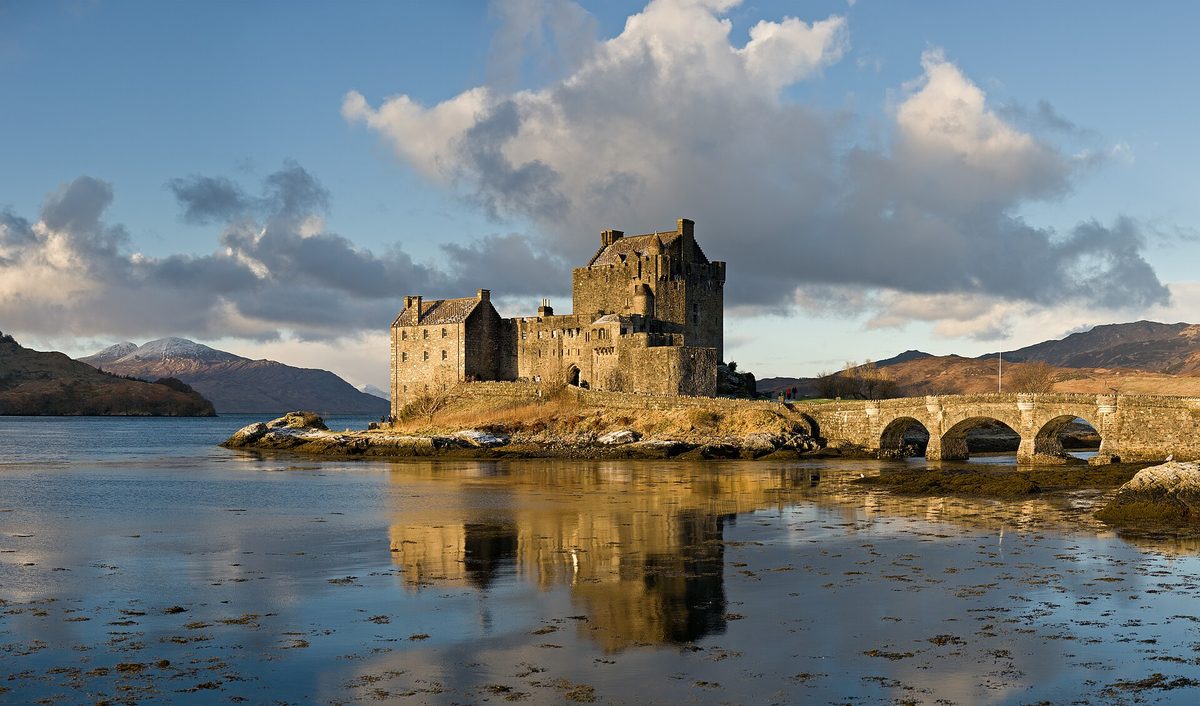
Most visitors to Eilean Donan Castle do the same thing. They pull into the car park off the A87, walk down to the shore, take the photograph, and stand there for a while with a coffee, quietly pleased with themselves. Plenty of them never go inside.
That is worth saying out loud at the start, because most guides to this place will not. The castle at the meeting point of Loch Duich, Loch Long and Loch Alsh is the most photographed building in Scotland, and the overwhelming majority of the photographs are taken from a patch of grass and shingle that costs nothing to stand on. The ticket is a separate decision, and a more complicated one than the tourist board lets on.
Is Eilean Donan Castle worth visiting?
Yes — but be clear about what you are paying for. The exterior view from the shoreline is free and is the reason most people come. The interior, at around £13 for an adult, is a 1930s reconstruction furnished like an Edwardian country house. Fine if you like that. A disappointment if you expected medieval stonework.
Eilean Donan Castle at a glance
| Detail | What to expect |
|---|---|
| Where | Dornie, by Kyle of Lochalsh, IV40 8DX — directly on the A87, the main road to Skye |
| Adult admission | Around £13 at the time of writing; concessions around £12, under-5s free. On-the-day tickets only, no online booking |
| Opening season | Roughly 1 February to 22 December. Closed for several weeks over the turn of the year |
| Parking | Large car park opposite; pay-and-display (around £3 for two hours) |
| Time needed | A short stop for photographs and a walk over the bridge; allow longer if you go inside and use the coffee shop |
| Quietest times | Early or late in the day is your best chance; how busy the middle of the day gets varies with the coach tours |
| Best light | Late afternoon and evening for the classic shoreline composition; floodlit after dark |
| Accessibility | Visitor centre fully step-free; the bridge is stepped and the castle interior has narrow spiral stairs |
The castle you photograph is not the castle that was blown up
This is the part almost every guide skims, and it is the single most useful thing to understand before you decide whether to buy a ticket.
A medieval stronghold at the meeting of three sea lochs
The island takes its name from Donnán, a sixth-century Irish saint who is thought to have founded a monastic cell here. The medieval castle went up in the early thirteenth century, during the reign of Alexander II, as a defence against Norse raiding along a coast where the sea was the motorway and clan power was counted in galleys. Vitrified stone on the island points to an older fort before it.
The medieval castle was much bigger than what you see today. A curtain wall enclosed most of the island, with a keep on the high point and walls that in places ran to around fourteen feet thick. By the end of the fourteenth century the defended area had shrunk to roughly a fifth of its original size — probably because nobody could muster enough men to hold the full circuit. A hornwork was added to the east side in the sixteenth century to give the new-fangled cannon somewhere to sit.
The Mackenzies of Kintail held it, the MacRaes guarded it and later became its constables, and for four centuries it did exactly what a Highland stronghold was supposed to do. Then came 1719.
1719: Spanish troops, three frigates and 343 barrels of gunpowder
The Jacobite rising of 1719 was a Spanish-backed affair, and it went badly. A small Spanish force landed on the west coast, and forty-six of those soldiers were posted to Eilean Donan with a magazine of gunpowder, waiting for weapons and cannon that never arrived.
The government heard about it. Three Royal Navy frigates — the Flamborough, the Worcester and the Enterprise — sailed into Loch Alsh in May 1719 and opened fire. The bombardment ran for three days and achieved surprisingly little, because fourteen feet of medieval rubble-core wall absorbs a lot of round shot. In the end Captain Herdman of the Enterprise put men ashore and the Spanish garrison surrendered.
What finished the castle was not the navy’s guns but the garrison’s own supplies. The government troops found 343 barrels of gunpowder inside and used them to demolish what the bombardment had left standing. A month later the rising collapsed at the Battle of Glen Shiel, a few miles up the road you will have driven in on.
Two hundred years of rubble, and the man who rebuilt it
Then nothing. For the best part of two centuries Eilean Donan was a heap of stone on an island, sketched by Victorian tourists and otherwise ignored.
In 1911, Lieutenant Colonel John Macrae-Gilstrap bought the island and decided to put it back together. Working with his clerk of works, Farquhar MacRae, and following the surviving ground plan of the earlier castle, he spent the next two decades on the rebuild. It was formally completed in July 1932. The arched stone bridge you walk across — the one in every photograph — is part of that project too. Before it, you reached the island by a tidal causeway.
So the building is genuinely medieval in footprint and genuinely twentieth-century in fabric. Excavations in 2008 and 2009 confirmed remains of the medieval curtain walls on the island, so it is not a folly. But when you stand in the Banqueting Hall and think “this feels like a country house rather than a fortress”, you are not being unfair. John Macrae-Gilstrap bought the island in 1911, and the rebuild he started with his clerk of works, Farquar Macrae, was finished in July 1932. It was rebuilt as a family home, and it looks it.
That is a far better story than the postcard version, and it is the reason I think the honest advice for a lot of visitors is: photograph it from the shore and keep your £13. If you love social history, Edwardian interiors and clan memorabilia, buy the ticket — you will get your money’s worth. If you came for arrow slits and dungeons, you will come out flat.
Getting there: drive times and the roads you will actually be on
The castle sits directly on the A87 at Dornie, which is the main road between Invergarry and the Skye Bridge. You cannot really miss it. That convenience is exactly why it gets so busy — it is on the way to everywhere on this coast.
From Skye and Kyle of Lochalsh
Kyle of Lochalsh is a short drive west on the A87, with the Skye Bridge just beyond it. Portree is a much longer run, at the far end of the A87 across Skye, and slower in high summer.
If you are staying on the island and planning a mainland day, this makes an easy morning or evening bookend. Our Isle of Skye itinerary builds it in as an arrival-day stop, and if you are still working out the crossing, the practicalities are covered in our guide to getting to the Isle of Skye.
From Inverness and Loch Ness
From Inverness the road runs down Loch Ness through Drumnadrochit and Invermoriston, then west through Glen Shiel. It is one of the better drives in Scotland, and it passes the top of Loch Ness and Inverness without much effort.
Be realistic about timings on this stretch. The A82 along Loch Ness is slow, twisty and frequently stuck behind a coach. Add half an hour to whatever your sat nav claims in high summer.
From Fort William, Glencoe and the south
From Fort William you head north via the A82 and A87 through Invergarry. Coming up from Glasgow or Edinburgh, you are looking at four to four and a half hours of driving without stops, which is a long way to go for one castle — build it into a wider loop instead. There are sensible ways to do that in our guide to Highland road trip routes, and if you are starting in the capital, the Edinburgh to Highlands road trip covers the run north.
Without a car
You can do it. Scottish Citylink coaches between Glasgow, Inverness, Skye and Kyle stop within a short walk of the castle at Dornie, and the nearest railway station is Kyle of Lochalsh, eight miles west, on the line from Inverness — one of the finest rail journeys in the country and a fixture in our round-up of Scotland’s scenic train journeys.
The catch is the timetable, which rules out a spontaneous stop-off. Check departures before you commit, and read our notes on getting around Scotland for how the coach and rail network actually joins up. Alternatively, some day trips from Inverness to Skye stop here — see the options in our guide to guided tours in Scotland.
Parking, tickets and opening times
The car park, and how early it fills
There is a large car park directly opposite the castle, on the loch side of the A87, plus an overflow area for busy days. It is pay-and-display, around £3 for two hours, so check the signs for current charges and hours before you leave the car.
In summer the main car park can fill. When it does, do not leave your car on the verge of the A87: this is a fast trunk road, and leaving a vehicle where it is dangerous or obstructs traffic is against the law. Use the overflow, or come back later. The community hall car park across the Loch Long bridge in Dornie is another option and has public toilets.
Eilean Donan Castle tickets and prices
At the time of writing, adult admission is £13.00 and concessions for over-60s are £12.00. Under-5s go free. A child aged 5–15 is £6.50, and a family ticket for two adults and up to three children is £38. Check the official site before you travel.
The important operational point: you cannot book Eilean Donan Castle tickets online. There is no advance booking system at all. Tickets are sold on site, on the day, from the visitor centre. That means no queue-skipping, and it means arriving early is your only real crowd-management tool.
If you are building a castle-heavy trip and want to know where the pre-booking rules differ, the contrast with Edinburgh Castle tickets is stark — there, booking ahead is close to essential.
Opening times through the year
Hours shift through the season, which trips people up constantly. Broadly, at the time of writing:
- February to late March: 10am–4pm, last admission 3pm
- Late March to April: 10am–6pm, last admission 5pm
- May: 9.30am–6pm
- June to August: 9am–6pm, last admission 5pm
- September: 9.30am–6pm
- 1–24 October: 10am–6pm
- Late October to 22 December: 10am–4pm, last admission 3pm
Last admission is an hour before closing, every time. Until 28 March that means 3pm, so if you arrive at Dornie at 4.15pm in early March expecting to get in, you have missed it by well over an hour.
The winter closure nobody plans for
The castle shuts completely for several weeks around the turn of the year — typically from just before Christmas until the start of February. The visitor centre, shop and coffee shop close with it.
This catches out a surprising number of people doing a winter Highlands trip, and it is not obvious from most listings. If you are travelling in January, the castle interior is off the table entirely. The exterior is not: you can still park (free, because the site is closed) and walk the bridge, and honestly a still January morning with snow on the Kintail tops is the best version of this view you will ever get. Our guide to Scotland in winter has more on what stays open at that time of year.
Where to stand: the photograph everyone actually comes for
Here is the thing that turns this from a castle visit into a proper stop. The famous image of Eilean Donan — castle, arched bridge, mirrored water, hills behind — is taken from the mainland shore. Not from inside. Not from the bridge. From a strip of grass and rock you can walk to in two minutes.
The shoreline south of the car park
This is the classic. Walk from the car park down towards the water and follow the shore south-west, away from the bridge. Within about a hundred metres you get the full composition: the castle three-quarters on, the bridge arching in from the right, the Kintail hills stacked behind.
Go further than the first spot you come to. Most people stop at the railing nearest the visitor centre; another eighty metres along the shingle opens the angle up and drops the modern buildings out of frame.
The north side and the Loch Long road bridge
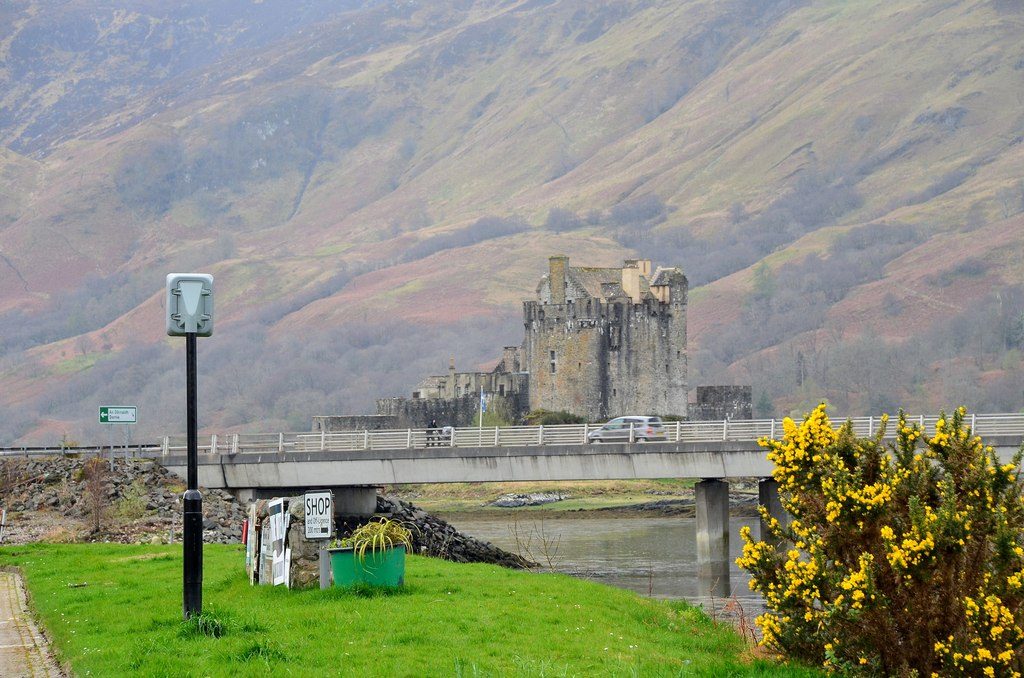
Cross the A87 bridge over Loch Long towards Dornie and there is a small car park on the far side. From here you look back at the castle from the north, with the bridge and the village in shot. It is a different and rather more contextual picture — less postcard, more sense of place.
The pavement on the road bridge itself gives a raised angle, though you are photographing over a crash barrier with traffic behind you, so it is not restful.
Carr Brae, for the view from above
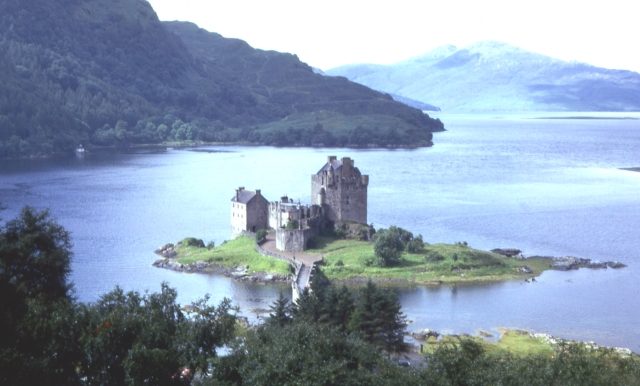
If you want the elevated shot — castle small in frame, three lochs spreading out around it — head for the Carr Brae viewpoint on the minor road that climbs above Loch Duich a short drive from Dornie. Allow ten to fifteen minutes each way.
Two warnings. It is single-track with passing places, so it is no fun in a campervan or on a busy afternoon. And you will want a longer lens; from up there the castle is a small object in a very big landscape.
Tide, light and timing: the three things that decide your photograph
Why the tide matters more than the weather
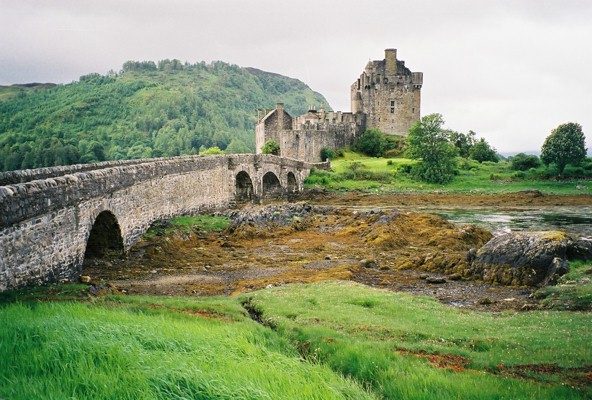
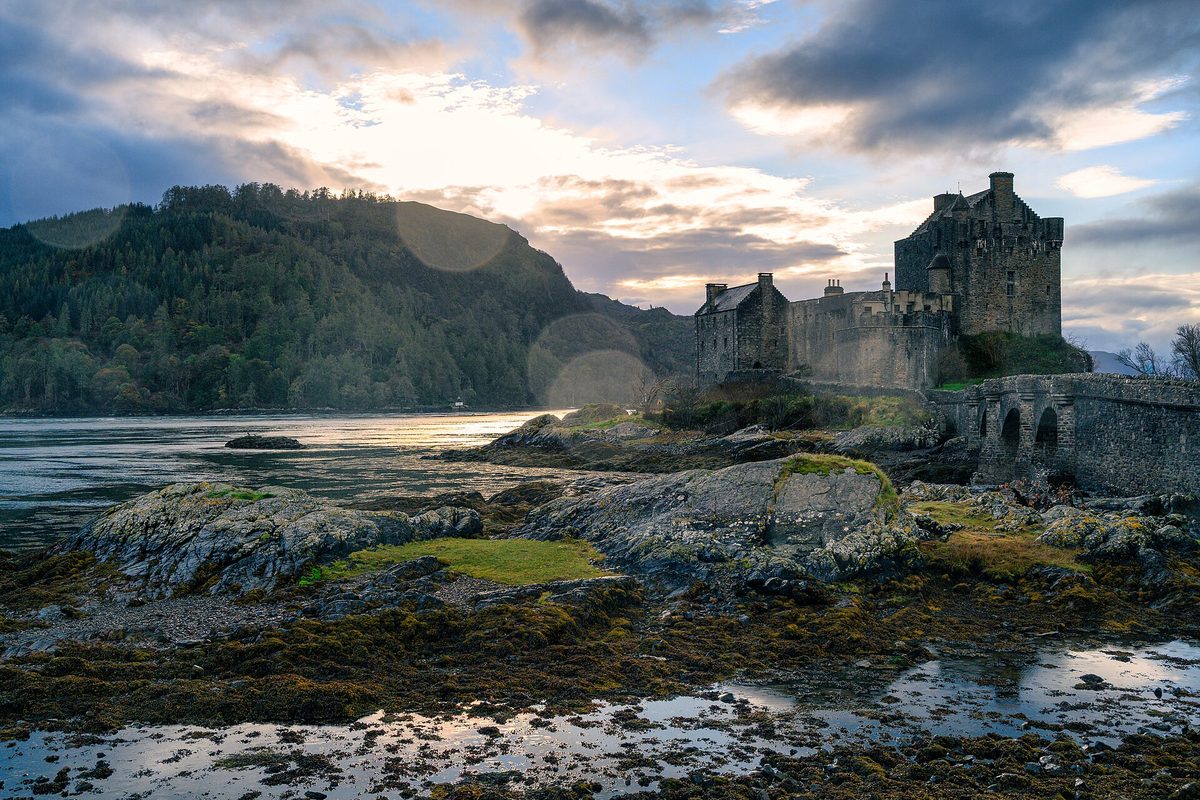
Eilean Donan sits on a tidal island in salt water, and the difference between high and low tide here is dramatic. At a high, still tide the water comes right up to the rocks, the castle appears to float, and you get the mirror reflection that sells the postcards. At low tide you are looking at brown weed, mud and stranded rock, and the reflection is gone entirely.
Neither is wrong — low tide gives you texture in the foreground and a better sense of the island’s shape — but if the reflection is what you came for, check the tide tables for Kyle of Lochalsh before you set off and aim for the couple of hours either side of high water. Add a calm day and you have the shot. A stiff westerly will ruin the reflection at any state of the tide.
This is the single most useful five minutes of planning you can do for this stop, and virtually nobody does it.
Which way the light falls
The classic shoreline composition looks roughly east and north-east across the water. That means the sun is behind you in the afternoon and evening, lighting the castle walls face on, and against you in the morning, when you are shooting into the glare.
In practice: late afternoon and evening in summer is the sweet spot, with the last hour before sunset the best of all. In June that means late in the evening. In winter the sun is so low all day that you get warm light from mid-afternoon onwards, one of the underrated advantages of a December visit.
Morning has its own case. The water is usually flattest at dawn, so if you want a glass reflection more than you want front light, come at first light and accept a slightly contre-jour castle.
The coach-tour rhythm
Eilean Donan is on practically every Highland coach itinerary running out of Inverness, Fort William and Edinburgh, and those tours all arrive within the same window. When several coaches arrive together, the car park fills, the coffee shop queue grows and the shoreline gets crowded.
Come early or late in the day and it can be a different place. Same castle, same view, far less of a crush. If you take one piece of advice from this guide, take that one.
After dark
The castle is floodlit at night, and it is worth building a detour around. From the car park — free at that hour — you get the lit walls doubled in dark water, and on a clear night in autumn or winter you may get stars above it. The dark skies of the western Highlands are genuinely good, and this stretch of Lochalsh has very little light pollution beyond the castle itself.
Inside the castle: what your ticket actually buys
The rooms you walk through
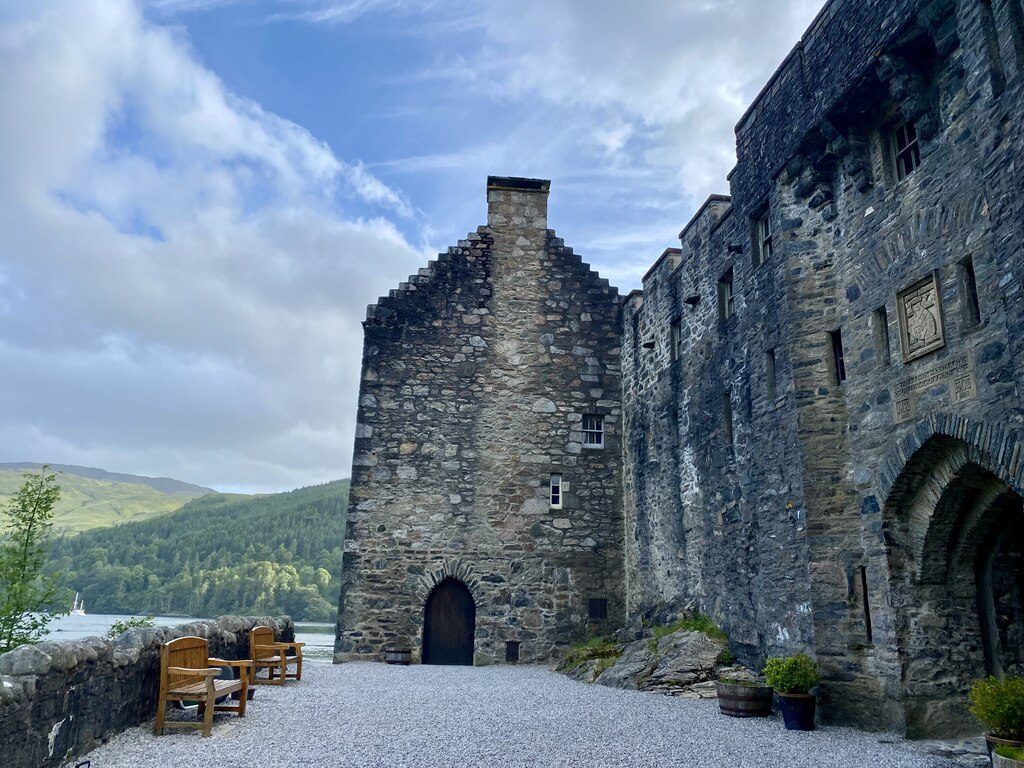
You cross the bridge, pass through the main entrance under the Macrae-Gilstrap coat of arms, and work your way up through the keep. The route takes in the billeting room, the kitchens and scullery, the Banqueting Hall on the first floor with its carved stone fireplace, and several bedrooms furnished broadly as they were in the 1930s. There is a small museum with Clan MacRae material, including the Roll of Honour, and Jacobite-era pieces.
The kitchen displays are the best of it, in my view — copper pans, period implements, a proper sense of the below-stairs machinery of a large house. The Banqueting Hall is handsome. The views out of the upper windows across Loch Duich are excellent and are, awkwardly, the thing most people remember.
The Edwardian country-house problem
Here is the honest verdict. If you have already worked your way round the great castles of Scotland at Stirling or Edinburgh, or you are ticking off a list of the best castles in Scotland, the interior at Eilean Donan will feel thin. There are not many rooms, and what is there is furnished as a wealthy family’s home from a century ago rather than as a medieval fortress — because that is precisely what it was.
It also gets crowded. The rooms are small, the route is one-way, and in August you shuffle. Forty-five minutes is a generous estimate of how long it takes.
I am not telling you to skip it. I am telling you to buy the ticket knowing what it is — a well-presented, slightly modest house museum with a great story attached — rather than expecting the castle in the photograph to be as dramatic on the inside as it is on the outside. Manage that expectation and you will enjoy it.
Rules that catch people out
Three of them, all worth knowing before you queue:
- No photography inside. None. Not on a phone. Everything you see in there stays in your memory, which is a genuine shock to people who have driven two hours to photograph a castle.
- No rucksacks or large bags inside the castle. There are free lockers next to the visitor centre — use them rather than trailing back to the car park.
- Dogs are welcome on the island but not inside the castle. The spiral stairs make it unsafe. If you are travelling with a dog, one of you does the interior while the other walks the shore.
Accessibility, plainly
The visitor centre is genuinely good: step-free, level access from the car park, doors wide enough for a wheelchair, two accessible toilets, and disabled parking bays around twenty metres from the entrance. The shop and coffee shop are equally easy.
The castle itself is a different matter, and the castle’s own access statement says so bluntly. The bridge across to the island is stepped in sections. Inside, there are uneven steps, narrow spiral staircases, low doorways and changes of floor level between rooms. For a wheelchair user the interior is effectively impossible, and for anyone with limited mobility or a fear of tight stairs it is hard work.
The reason is not indifference. Eilean Donan is a Scheduled Monument, which legally prevents the trustees from adding handrails to outside staircases or installing a lift. They cannot fix it even if they wanted to.
What they do instead: registered disabled visitors get free access onto the island, so you can still cross the bridge and go round the outside, and there is a free touch-screen virtual tour available on request at the visitor centre that covers rooms the general public do not normally see. Note that parts of the island are gravelled, which is hard going on wheels, and that the coffee shop terrace is a perfectly pleasant place to wait if half your party is doing the interior.
The visitor centre, the coffee shop and eating nearby
The visitor centre opened in 1998 and is better than it needs to be. Alongside the ticket desk there is a large gift shop, a coffee shop, a food hall and a takeaway counter doing fish and chips. Toilets are here too, including two accessible ones.
The coffee shop is fine — soup, sandwiches, decent cake — and it is genuinely useful because there is not much else immediately to hand. It closes earlier than the shop, usually mid-afternoon, so do not rely on it for a late lunch. In summer the queue can get long, so either eat before you arrive or plan on eating in Dornie or Kyle instead.
Dornie village, a few hundred metres across the Loch Long bridge, has a pub and a couple of small independent places doing baking and takeaway food. For anything more substantial, head west to Kyle of Lochalsh. The Clachan does traditional pub food, and there is decent baking and takeaway pizza within a two-minute walk of it.
What to combine it with
Eilean Donan is a stop, not a day out. The trick is pairing it sensibly with what is around.
The Skye Bridge and the island itself
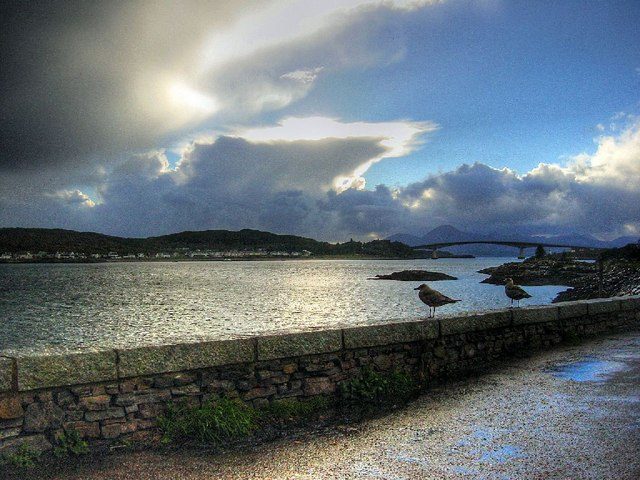
The Skye Bridge is eight miles west at Kyle of Lochalsh, free to cross since the tolls were scrapped, and takes you onto the Isle of Skye in about 20 minutes from the castle. If you are heading that way anyway, Eilean Donan is the obvious last mainland stop — and if you have half a day on the island, the Old Man of Storr and Neist Point lighthouse are both realistic from here.
Just be honest about distances. Skye is bigger than it looks on the map, and Neist Point is a good two hours’ drive from the Skye Bridge. Our thoughts on where to stay on Skye will save you from trying to do it all as a day trip.
Plockton
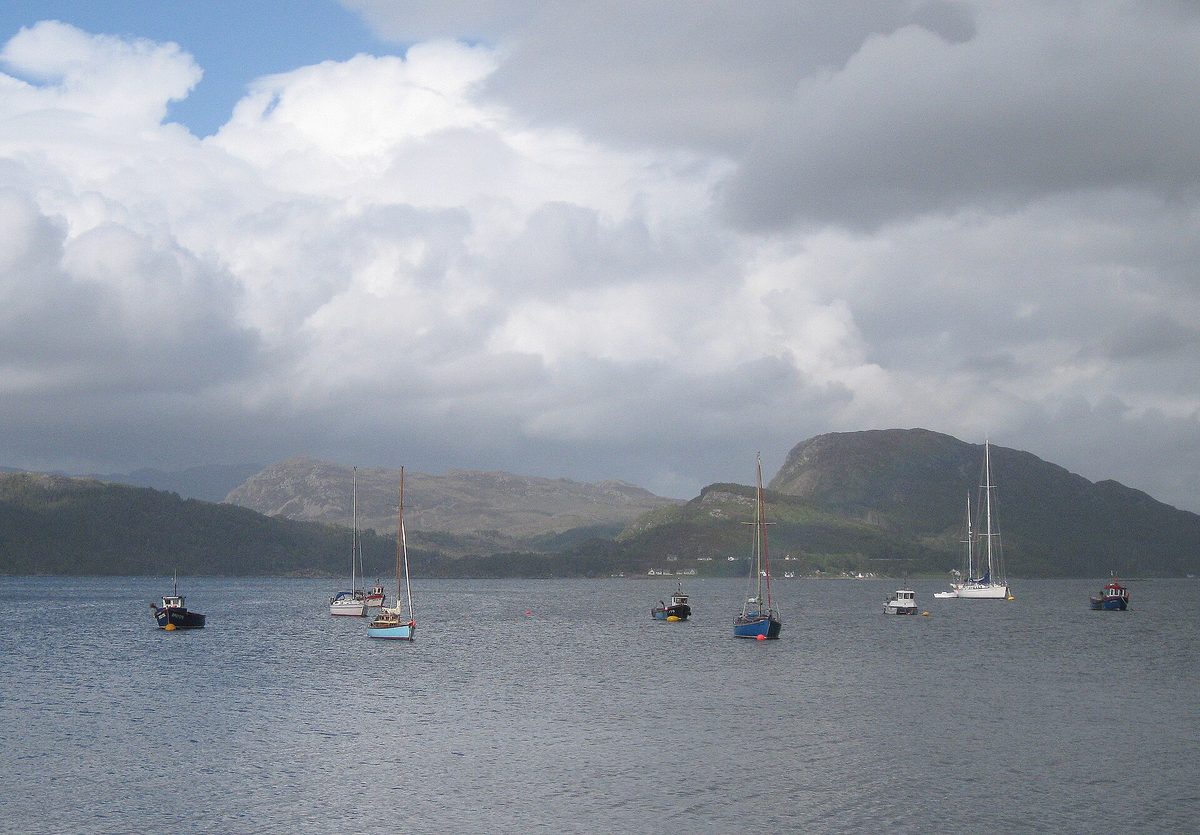
Fourteen miles west by a wandering minor road, Plockton is a sheltered village of white cottages facing a bay full of moored boats, with palm trees along the front — the Gulf Stream at work. It is the best half-day pairing with the castle and considerably more relaxing.
Allow time for the drive each way from Dornie, and expect narrow roads with passing places. There is limited parking on the seafront, so go early or late.
Glenelg, Mam Ratagan and the brochs
This is a rewarding detour from Eilean Donan. Drive south-east along Loch Duich to Shiel Bridge, then take the single-track road over the Mam Ratagan pass to Glenelg. Near the top of the pass a viewpoint looks straight down Loch Duich to the Five Sisters of Kintail.
At Glenelg you get two of the best-preserved Iron Age brochs in Scotland, Dun Telve and Dun Troddan, both free to visit. Dun Telve still stands over ten metres high with its internal gallery visible. If you want a sense of what a genuinely intact ancient structure feels like next to a twentieth-century reconstruction, this is the comparison to make on the same day.
There is also the little turntable ferry to Skye at Kylerhea, which runs seasonally and is far more fun than the bridge.
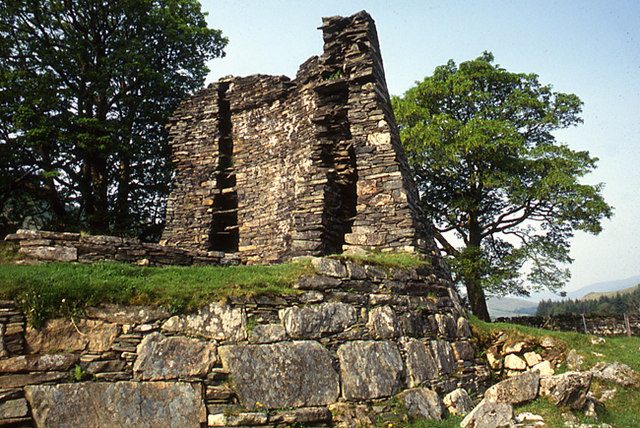
Kintail and Glen Shiel
Head the other way and you are in the Kintail hills within ten minutes. The Five Sisters ridge above Glen Shiel is serious hillwalking country and one of the great skylines in the country — worth a slow drive even if you never leave the car. The Falls of Glomach, among the highest waterfalls in Britain, are reachable from near Dornie but need a proper hike of several hours on rough ground — not a casual add-on to a castle stop.
For the wider region, our guide to the Scottish Highlands puts Lochalsh in the context of everything else within reach, and if you are choosing a base for several nights, the best Highland base towns covers Kyle, Plockton and the alternatives.
On screen: Highlander, Bond and the Outlander myth
The castle has been working in film since at least 1948, when it appeared in Bonnie Prince Charlie. Two appearances account for most of the pilgrimage traffic.
In Highlander (1986) it appears as the home of Clan MacLeod, and in The World Is Not Enough (1999) it plays MI6’s Scottish headquarters. It also turns up in Elizabeth: The Golden Age (2007) and Made of Honour (2008). Film fans heading further south can add the Glenfinnan viaduct and the Jacobite steam train as a separate trip.
Outlander is a common assumption, but the castle is not one of the series’ well-known locations, and the belief has become self-sustaining online. If screen locations are the point of your trip, the real pilgrimage sites are elsewhere — Doune Castle for Outlander, and the Glenfinnan viaduct for the Hogwarts Express, which we map out in our guide to Harry Potter locations in Scotland.
How long to allow, and how to fit it into a day
Exterior only: a short visit. That covers parking, the walk to the shoreline, photographs from two or three angles, and a stroll over the bridge and round the outside of the walls if the site is open.
With the interior: an hour and a half to two hours, including the coffee shop and the inevitable ten minutes in the gift shop.
With Plockton or Glenelg attached: half a day, comfortably.
The best way to slot it in is at the start or end of a day, not the middle. If you are driving to Skye, stop at 9am before the coaches and carry on. If you are driving back east, stop at 6pm when the site has closed, park for free, and take the good evening light. Trying to squeeze it in at 1pm on an August Tuesday is how people end up with a photograph full of strangers and a memory of queueing.
If you are still shaping the wider trip, our 7-day Scotland itinerary shows where a stop like this fits without wrecking the driving day.
What underwhelms, and the mistakes people make
The interior is smaller and more modern than expected. Covered above, but it bears repeating, because it is far and away the most common complaint. Buy the ticket for the story and the social history, not for medieval atmosphere.
People arrive at low tide and wonder where the reflection went. Two minutes with a tide table fixes this. It is the difference between the photograph you imagined and a castle sitting in a field of seaweed.
They arrive after last admission. Last entry is an hour before closing, and in winter that means 3pm. Plenty of people roll in at 3.30 in November and are turned away.
They come in January. The site closes for several weeks around the turn of the year. The view is still there, but the castle, shop and coffee shop are not.
They budget fifteen minutes and end up rushing. Even a photo stop wants half an hour once you have parked, walked and waited for a gap in the crowd.
They park on the A87 verge. Do not. It is a fast trunk road, the verges are soft, and it creates a real hazard. Use the overflow or the Dornie community car park.
They expect to book ahead. There is no online ticketing. Turning up early is the entire strategy.
They see it as a destination rather than a stop. This is a castle for a stop on the way, in an area with a fortnight’s worth of things to do. Pair it with Plockton, Glenelg or the Skye Bridge and the drive suddenly earns its keep.
Frequently asked questions
How much does it cost to visit Eilean Donan Castle?
At the time of writing, adult admission is around £13.00, with concessions for over-60s at about £12.00 and under-5s free. Child and family prices vary seasonally. Tickets are sold on site on the day only. Viewing and photographing the castle from the shoreline costs nothing at any time.
Can you see Eilean Donan Castle for free?
Yes, and most visitors effectively do. The shoreline viewpoints, the car park views and the road-bridge angle are all free.
Is it worth going inside Eilean Donan Castle?
It depends what you want. The interior is a 1930s reconstruction furnished as an Edwardian family home, with maybe six or seven rooms and no photography allowed. If you enjoy social history and clan material, yes. If you are chasing medieval drama, spend the money on Stirling or Edinburgh instead.
What time of day is best for photographing Eilean Donan?
Late afternoon and evening, when the sun is behind you and lighting the walls, ideally within a couple of hours of high tide on a still day. First light gives the flattest water but backlit stone. Both beat midday, when the light is harsh and the shoreline is busy with coach parties.
How long do you need at Eilean Donan Castle?
Thirty to forty-five minutes covers parking, the shoreline photographs and a walk over the bridge. Allow an hour and a half to two hours if you buy a ticket and use the coffee shop. Add Plockton or Glenelg and it becomes a comfortable half-day.
Is Eilean Donan Castle open in winter?
It opens from roughly 1 February to 22 December, on shorter winter hours of 10am to 4pm with last admission at 3pm. It closes completely for several weeks around the turn of the year, including all of January. The exterior remains accessible and photogenic throughout.
Was Eilean Donan Castle in Outlander?
It is not one of the series’ well-known locations, despite a persistent belief to the contrary. Its big screen roles are as the home of Clan MacLeod in Highlander (1986) and as MI6’s Scottish headquarters in the Bond film The World Is Not Enough (1999), which is probably where the confusion starts.
Is Eilean Donan Castle wheelchair accessible?
The visitor centre, shop and coffee shop are fully step-free with accessible toilets and nearby disabled parking. The castle interior is not: uneven steps, narrow spiral stairs and changing floor levels make it impossible for wheelchair users. As a Scheduled Monument it cannot legally be altered. Registered disabled visitors get free island access and a free virtual tour.
Final thoughts
Plenty of people stop at Eilean Donan without going inside. That is not an accident, and I do not think it is a failure of the castle.
What this place does better than almost anywhere in Scotland is give you a view. Get the tide right, get the light right, get there outside the middle of the day, and you will take a photograph that looks like the one that made you want to come to the Highlands in the first place. That is worth planning around.
And the story underneath — a medieval fortress blown apart by its own gunpowder, left as rubble for two centuries, then patiently rebuilt by its new owner and his clerk of works between 1911 and 1932 — is a great deal more interesting than “Scotland’s most photographed castle”. Whether you pay to walk through the rebuild is up to you. Just do not let anyone tell you the ticket is the point. The shoreline is the point.
About the author: This guide was written and is maintained by the ScotlandTourism.org editorial team — travel writers who’ve spent years exploring Scotland’s cities, Highlands and islands, from bagging Munros to chasing the perfect dram. We update our guides regularly to keep prices, opening details and advice current.
Last updated: October 2026. Prices and opening times change — always check the official site before you travel.
Photo credits
All images are used under their respective Creative Commons or public-domain licenses:
- Eilean Donan Castle and its arched bridge reflected in a still loch under a blue sky — Diliff, CC BY-SA 3.0, via Wikimedia Commons
- Eilean Donan Castle seen from higher ground above Loch Duich, with the island and hills behind — Anne Burgess, CC BY-SA 2.0, via Wikimedia Commons
- Eilean Donan Castle at low tide with weed and mud exposed beneath the stone bridge — Ken Crosby, CC BY-SA 2.0, via Wikimedia Commons
- Eilean Donan Castle in low evening light from the shoreline, with the tide out — Eric Kilby, CC BY-SA 4.0, via Wikimedia Commons
- Eilean Donan Castle viewed from beyond the A87 road bridge at Dornie — Jim Barton, CC BY-SA 2.0, via Wikimedia Commons
- The gravelled courtyard and rebuilt walls inside Eilean Donan Castle — Iain Lees, CC BY-SA 2.0, via Wikimedia Commons
- The Five Sisters of Kintail rising above the head of Loch Duich near Eilean Donan Castle — Natasa, CC BY-SA 2.0, via Wikimedia Commons
- The Skye Bridge seen from Kyle of Lochalsh, eight miles from Eilean Donan Castle — Markus Skubic, CC BY-SA 2.0, via Wikimedia Commons
- Boats moored in the sheltered bay at Plockton, a short drive from Eilean Donan Castle — Bob Jones, CC BY-SA 2.0, via Wikimedia Commons
- The Iron Age broch of Dun Telve at Glenelg, south of Eilean Donan Castle — Tom Richardson, CC BY-SA 2.0, via Wikimedia Commons