The first time I booked an Edinburgh ghost tour I got it wrong, and I got it wrong in the most ordinary way possible. I wanted an hour underground in the vaults. What I actually clicked on was a costumed history attraction at the other end of the Royal Mile, with a group photo at the end and a gift shop after it. Good afternoon out. Not remotely what I had paid for in my head.
That mistake is not unusual, and it is not the visitor’s fault. Edinburgh sells at least four completely different underground and after-dark experiences under roughly the same set of words, run by different companies, in different places, at different levels of seriousness. Nobody tells you that. So here it is, laid out properly, before you spend £25 on the wrong thing.

The short answer
Edinburgh has four separate night-time attractions people lump together. The South Bridge Vaults are privately split between tour companies, so which chambers you see depends entirely on who you book. The Real Mary King’s Close is a history attraction, not a ghost tour. Greyfriars’ Covenanters’ Prison needs one specific operator. Street-theatre walks are comedy, not fright.
Underground Edinburgh at a glance
| What it is | Where | Who can take you in | Time needed | Rough cost | Best for |
|---|---|---|---|---|---|
| Blair Street chambers, South Bridge Vaults | Off Hunter’s Square, behind the Tron | One operator holds this section exclusively | 75 minutes | £20–£30 | Adults who want history first, atmosphere second |
| Niddry Street and Cowgate chambers, South Bridge Vaults | Off the High Street, down towards the Cowgate | A different operator again | 60–75 minutes | £18–£28 | People who want it darker and are fine with theatrics |
| The Real Mary King’s Close | Beneath the City Chambers, High Street | Its own in-house guides only | 60 minutes | Around £25 adult | Families, history-minded visitors, nervous first-timers |
| Covenanters’ Prison, Greyfriars Kirkyard | Locked enclosure at the back of the kirkyard | One operator with permission to unlock it | About 90 minutes | Around £19 | Adults who genuinely want to be frightened |
| Street-theatre ghost walk | Royal Mile closes and courtyards, outdoors | Several operators | 75–90 minutes | £15–£22 | Teenagers, groups, anyone who wants to laugh |
| Ghost bus | Boards centrally, drives a loop | One operator | 75 minutes | £20–£25 | Bad weather, tired legs, mixed-age groups |
| Greyfriars Kirkyard in daylight | Candlemaker Row | Nobody — it’s a public graveyard | 30 minutes | Free | Anyone, including people who hate paying for tours |
Prices are indicative and move about, especially in October. Always check the operator’s own site before you book.
Why so many people book the wrong thing
Search for an Edinburgh ghost tour — or for haunted Edinburgh, or an Edinburgh vaults tour, it makes no difference to what comes back — and you get a wall of listings recycling the same six words: underground, vaults, haunted, ghost, Old Town, Edinburgh. Read twenty of them and you would reasonably conclude they are the same product at different prices. They are not.
Here is what is actually going on beneath your feet, and why the distinctions matter more than the star ratings.
“The vaults” are not one place you can visit
This is the single most useful thing I can tell you. The South Bridge Vaults are a run of chambers built into the arches of a bridge, stretching roughly between the High Street and Chambers Street. The number of individual chambers is usually put at around 120. No visitor sees anything close to all of them.
Different sections are held by different companies under private agreements. One firm has exclusive access to the Blair Street chambers and says so plainly on its own website. Another operates its own chambers off Niddry Street and the Cowgate. A third works a further section again. There is no central ticket office, no municipal vaults attraction, no way to wander through on your own. This is not how any other big-ticket guided attraction in Scotland works, which is exactly why it catches people out.
So when a listing says “the famous Edinburgh underground vaults”, that phrase is doing enormous work. It is technically true of all of them and specifically true of none. The vaults you actually stand in are whichever ones your operator holds the keys to.
Practically, that means comparing tours on price alone is meaningless. You are not buying the same hour cheaper. You are buying a different set of rooms, a different tone and a different guide tradition.
The Real Mary King’s Close is a history attraction, not a ghost tour
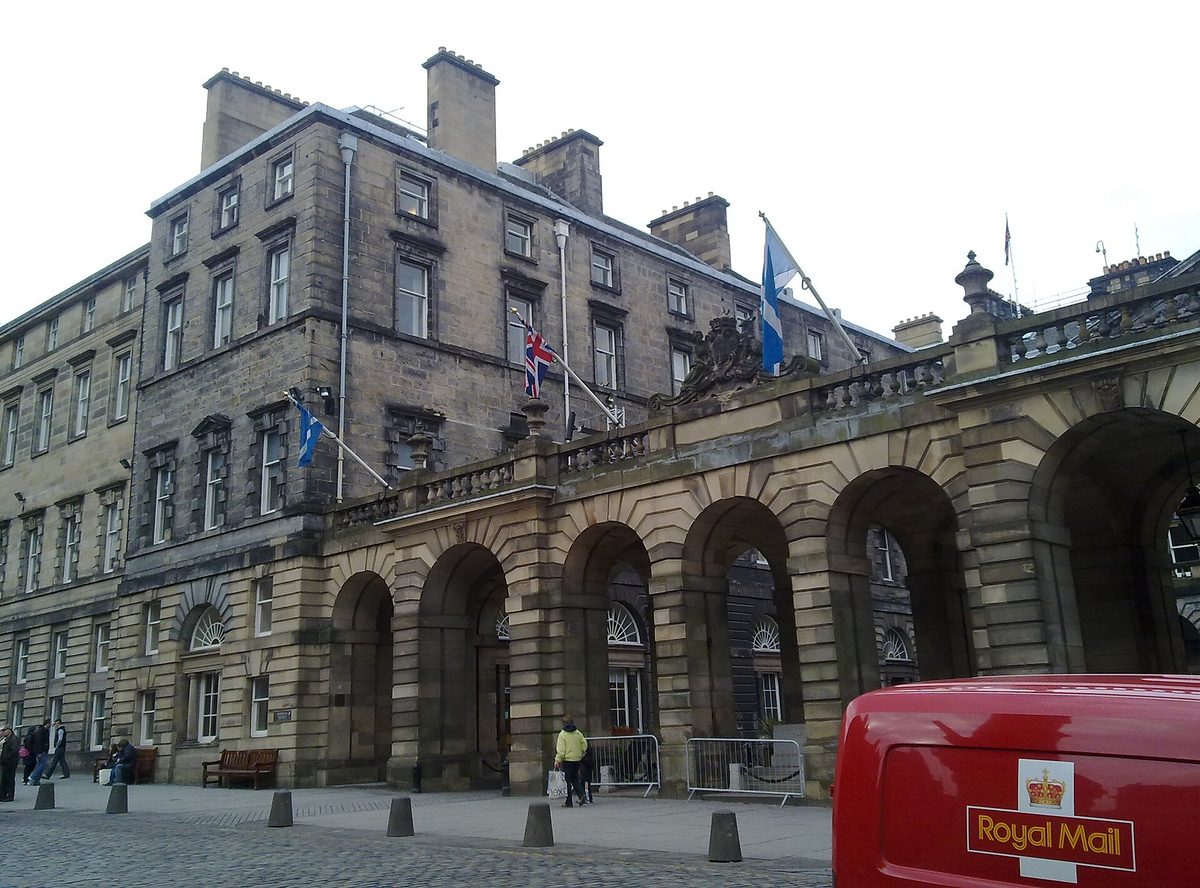
I want to be blunt about this because it is the most common mis-booking in the city. The Real Mary King’s Close is a preserved seventeenth-century street sealed under the City Chambers on the High Street. It is excellent. It is also not a ghost tour, and it does not pretend to be one on its own website — the confusion comes entirely from third-party listings.
What you get is a costumed guide in character, a 60-minute walk through several buried closes, reconstructed rooms with mannequins and props, a short film, and a group photograph at the end that you can buy if you want it. Photography is not permitted inside. Children under five are not admitted, for health and safety reasons rather than scares.
If you booked it wanting a cold hour in the dark being told about entities, you will be disappointed, and you will blame Edinburgh rather than the listing. If you booked it wanting to understand how 600-odd people actually lived stacked on top of each other in the 1640s, it is the best hour in the Old Town.
Greyfriars is a graveyard, and the interesting bit is locked
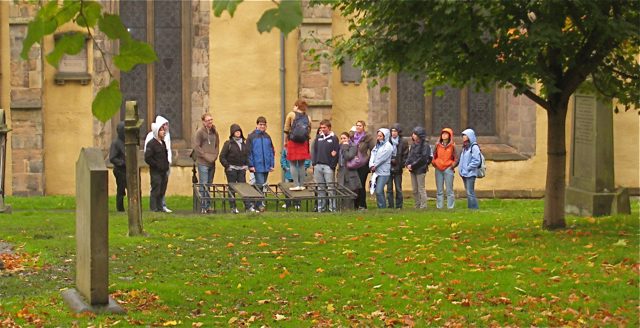
Greyfriars Kirkyard is free, public and open in daylight. You can walk in off Candlemaker Row this afternoon and nobody will stop you. What you cannot do is get into the Covenanters’ Prison, the walled enclosure at the far end, which is gated shut.
One operator holds permission to unlock it after dark. That is why the “Mackenzie poltergeist” tour is a specific product with a specific company rather than a general Edinburgh thing that any guide can offer. Plenty of other tours walk you round the public part of the kirkyard and tell you the same stories from outside the railings. That is a legitimate tour. It is not the same tour.
Street-theatre walks are a fourth category entirely
Then there are the outdoor comedy-horror walks: a guide in costume playing a deceased Edinburgh character, a route through the closes off the Royal Mile, and at some point an actor in makeup who leaps out from a doorway. The trade name for that actor, gloriously, is a jumper-ooter.
These are fun. They are also entirely unserious, and when someone tells you their Edinburgh ghost tour was rubbish, this is very often the one they mean — not because it was bad, but because they expected the vaults and got a pantomime. Know which you are buying.
The South Bridge Vaults, chamber by chamber
Right. Underground properly, then. If you skim the rest of this, read this bit.
What the vaults actually are
South Bridge opened in 1788 to carry the city southwards over the Cowgate ravine. It has nineteen arches and, unless you know where to look, you would never guess you were on a bridge at all — only the Cowgate arch is still visible from the street. Everything else was built over almost immediately.
The chambers inside those arches were let as storage and workshop space for the merchants trading above. The problem was that nobody had waterproofed the bridge deck properly. Water came through. The chambers were damp within a few years, unusable for stock within a couple of decades, and the legitimate trade moved out.
What moved in instead is the part the tours are built on: the very poorest of the Old Town, illegal drinking dens, unlicensed distilling, and — according to persistent local tradition, though the documentary evidence is thin — body snatchers using the chambers as a staging post. By the mid-1800s the vaults had been filled with rubble and forgotten. They were rediscovered in the 1980s and excavated through the 1990s, when oyster shells, bottles and children’s toys came out of the fill.
That last detail is the one that actually gets me. Not the entities. The toys.
The Blair Street chambers
The deepest and largest section, held exclusively by one long-established operator that runs two quite different tours through it. One is a straight history tour; the other is the ghost version. Both run around 75 minutes, both start at the Mercat Cross on the High Street and finish at a small vaults museum on Blair Street, just off Hunter’s Square.
The operator says outright on its own site that there are no jump scares and no actors on its ghost tour. The whole pitch is that the real history is unpleasant enough. Guides use radio headsets, which sounds gimmicky and is not: it means you hear every word from the back of a group of twenty in a stone room with terrible acoustics.
The history version is the one I’d point most adults towards. It handles artefacts, it visits the little museum, and it does not require you to take any position on the supernatural. My honest read: it is a better hour of storytelling than the ghost version, which uses the same rooms and much of the same material with the lights lower.
The Niddry Street and Cowgate chambers
A different operator runs its own chambers off Niddry Street, the steep lane dropping from the High Street down to the Cowgate. Different rooms, different tone. There is a display of medieval punishment and torture devices on the route, which some people find the highlight and others find gratuitous — you can usually opt out of that portion when booking, and I would if you have teenagers who are only pretending to be fine.
There is also a chamber that a pagan group used as a temple until around 2014 and which has been left as it was. Whatever you make of that, it is a genuinely odd and memorable room.
One thing to weigh: these chambers sit directly under the Cowgate’s nightlife strip. On a Friday at 10pm you can hear bass through the stone. It punctures the atmosphere completely. If you want the quiet version, go on a weekday and go earlier.
The late-night terror slots
Most vault operators sell a late tour, typically starting somewhere between 9pm and 10.30pm, marketed as the frightening one. Sometimes it is. But the honest version is that the difference is usually smaller than the price gap suggests. What actually determines whether a vault tour lands is group size and guide quality, not the hour on the ticket.
A group of eight at 7pm with a guide who knows the material will unsettle you far more than a group of thirty at 10pm where you spend the whole time looking at the back of someone’s head. Book the small-group option over the late option if you have to choose.
What it is genuinely like down there
Cold. Properly cold, and damp with it, all year. The chambers sit in stone under a road and never really warm up, so a July evening underground feels like a November one. The floor is uneven. Ceilings are low in places. It smells of wet stone and old brick, which is far more effective than any sound effect.
Some people find the enclosure difficult. I have been on tours where someone turned back at the top of the stairs and on one where a woman left halfway through, and nobody made anything of it either time — guides deal with this constantly and will walk you out without fuss.
There are no toilets underground. Once you are down, you are down for the duration. Go beforehand. This sounds like a trivial point and it is the single most useful line in this article for anyone travelling with children.
The Real Mary King’s Close, on its own terms
Having warned you it is not a ghost tour, let me now argue that plenty of you should book it anyway.
What you actually see
Mary King’s Close was a working street, open to the sky, running down the north slope off the High Street. It was partially demolished in 1753 when the Royal Exchange — now the City Chambers — was built over the top of it, and the lower storeys survived as basements and cellars. People worked down there well into the nineteenth century. The last residents left in 1902.
The tour takes you through four buried closes, not just Mary King’s. Rooms are dressed to show how they were used, there is a short film with actors playing residents, and there is the room associated with Annie, the child ghost whose story attracts the doll offerings you may have seen photographs of. The operator handles that story as folklore, which is the right call.
It also does something I appreciate: it kills the plague myth. Mary King’s Close was not sealed up with plague victims inside. The close was open to the sky during the plague of 1645 and for a century afterwards. It went underground because of building work, not quarantine. Any guide who tells you otherwise anywhere in this city is telling you a good story rather than a true one.
Who it suits and who it doesn’t
It suits families with primary-school children, anyone who finds real darkness unpleasant, visitors with limited time who want one good indoor hour, and anybody more interested in social history than in whether something touched their shoulder. It also copes better with rain than anything outdoors, which matters here more than you think.
It suits you less if you dislike scripted delivery. It is a high-volume attraction running many tours a day, and the guiding can feel rehearsed on a busy afternoon. And the no-photography rule genuinely annoys people, particularly when the only image you can take home is the group photo you have to buy.
Book it several days ahead. It sells out, and same-day walk-ups in summer are optimistic. If you are stitching together a tight schedule, our hour-by-hour plan for two days in Edinburgh shows where an hour underground fits without wrecking the rest of your afternoon.
Greyfriars Kirkyard and the Covenanters’ Prison
This is the one that separates people who want atmosphere from people who want to be frightened.
The history behind the locked gate
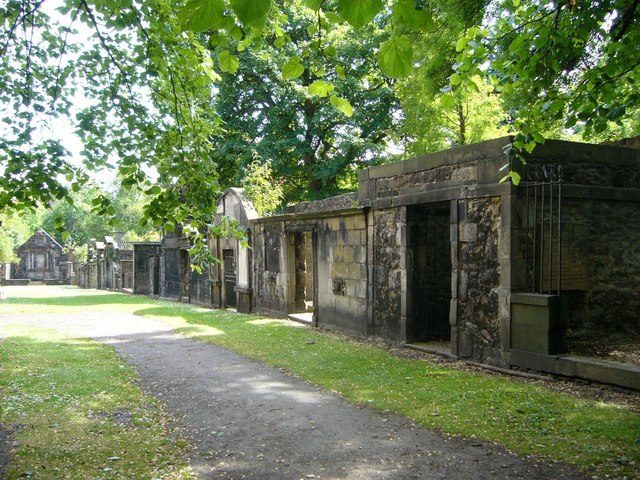
In 1679, after the government defeat of a Covenanter rising at Bothwell Brig, well over a thousand prisoners were brought to Edinburgh and held in an enclosure at the back of Greyfriars Kirkyard. They were kept there for months, through the autumn, largely without shelter. Many died. It was, by any measure, an atrocity, and it happened in a graveyard you can walk into for free.
Buried in the same kirkyard, in a domed mausoleum, is Sir George Mackenzie of Rosehaugh, the Lord Advocate who prosecuted Covenanters and who Edinburgh tradition still calls Bluidy Mackenzie. The prison enclosure and his tomb sit within sight of each other. Whatever you believe about the rest of it, that juxtaposition is genuinely unsettling.
The poltergeist claims, reported not endorsed
The operator that runs tours into the locked enclosure says it has sole access to the Covenanters’ Prison and the Black Mausoleum, and describes the Mackenzie poltergeist as the best-documented supernatural case on record, with hundreds of people claiming physical incidents on its tours since the late 1990s. Its own site carries a warning that the phenomenon can cause physical and mental distress and that you join at your own risk.
I am reporting that, not endorsing it. Nothing about those claims has been established outside the accounts of the people making them, and a cold, dark, walled enclosure at 9pm at the end of ninety minutes of atmospheric storytelling is an environment engineered to produce exactly the sensations described. That is not an accusation of bad faith. It is just how suggestion works.
What I will say is that it is the only Edinburgh tour I have been on where the fear in the group felt real rather than performed. Make of that what you will.
The restrictions are stricter than you expect
The graveyard tour into the prison typically runs nightly at around 9pm in summer and 8.30pm in winter, lasts roughly 90 minutes and costs in the region of £19 at the time of writing, with a concession rate. Numbers are deliberately capped.
Then the conditions, which are unusually firm and which people miss: no under-12s, sensible footwear required, and it is stated as unsuitable for pregnant women, people with heart conditions and anyone who has difficulty walking. Hen and stag parties are refused, and so is anyone who has been drinking. Check the current terms yourself before booking — but plan on the assumption that this one is for able-bodied adults only.
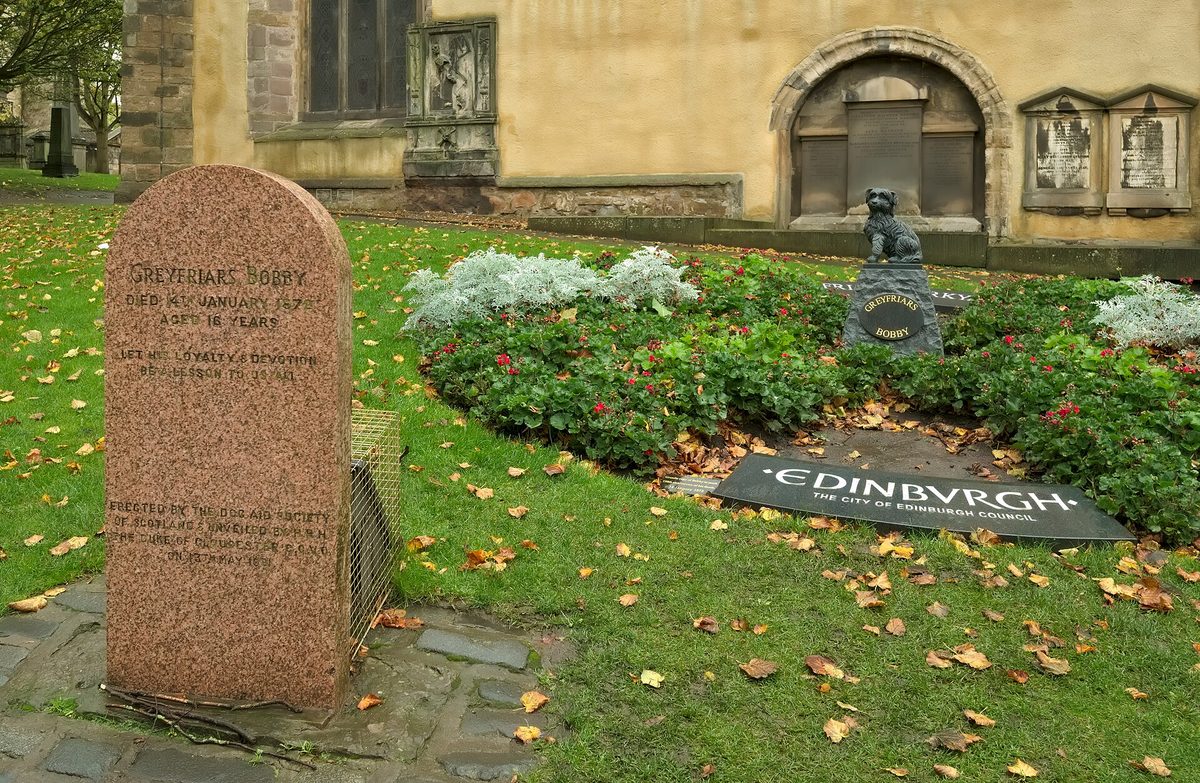
The kirkyard itself, incidentally, is one of the better free days out in the country if you go in daylight instead. Greyfriars Bobby’s headstone is just inside the gate, the Covenanters’ memorial is signposted, and you can read the whole story off the stones for nothing.
Street-theatre walks, ghost buses and free tours
The fourth category, and the one most likely to be mis-sold to you.
The costumed Royal Mile walks
The longest-running of these are built entirely around a character. One guide plays an eighteenth-century highwayman executed in 1811; another plays a Victorian cemetery director. You follow them through closes and courtyards off the Royal Mile hearing about torture, witch trials and plague, delivered with jokes, and at intervals somebody jumps out at you.
It is broad, it is silly, and done well it is a genuinely good night. The costumed walks tend to include a printed companion booklet, which is a nice touch and gets read on the flight home. They stay above ground throughout, which means no steps down into chambers and no minimum age worth worrying about, though the youngest children may find the jump-scares unpleasant.
Expect somewhere around £15–£22. These are the tours to pick if you are combining an evening walk with dinner and you want everyone in the group cheerful afterwards. Pair it with an early meal — there’s a note on what to order in our guide to eating and drinking in Scotland.
The ghost bus
A vintage black double-decker with a conductor in character, a route round the city and a comedy-horror script. Warm, seated, weatherproof, about 75 minutes. It is theatre on wheels and does not pretend otherwise.
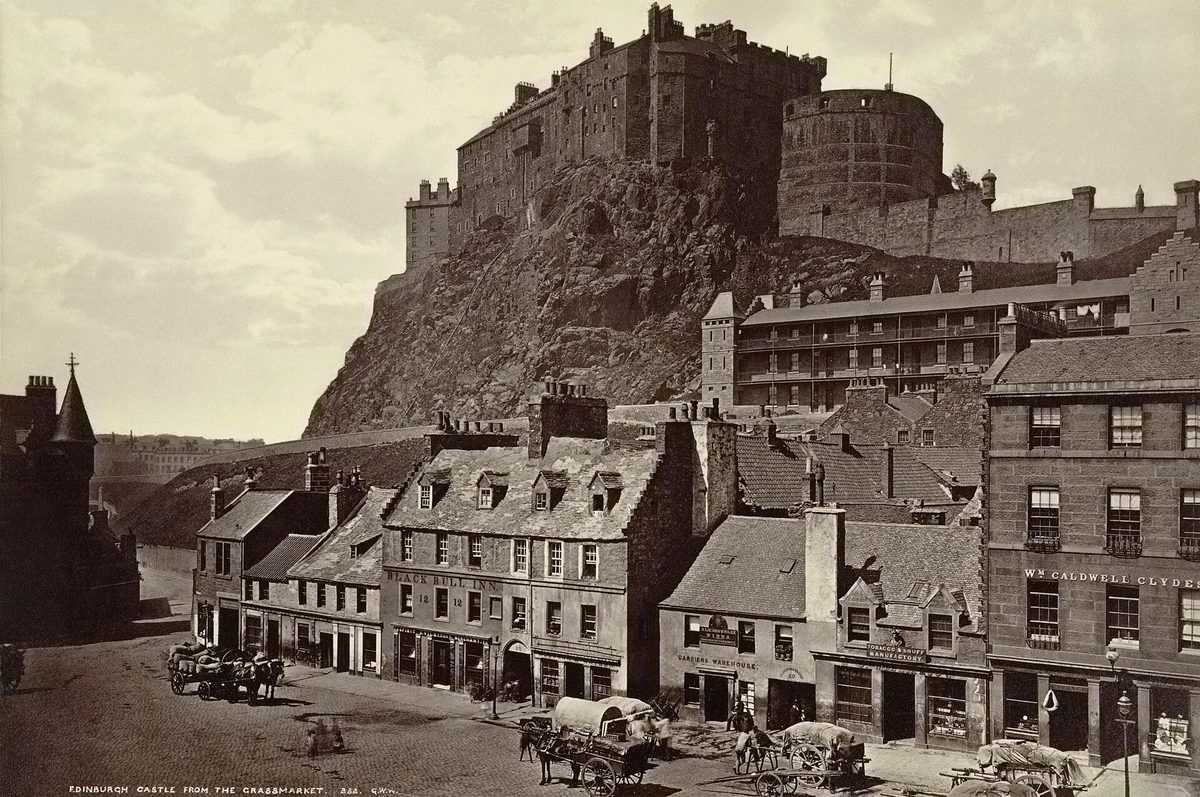
Honestly? For a wet November evening with a mixed-age group and someone in the party who cannot manage stairs, it is a far better decision than a vault tour that half of you will endure rather than enjoy. It also covers ground — you will pass more of the city in 75 minutes than any walk manages, including a couple of the castle views people queue for photographs of by day.
Free walking tours
Several companies run tip-based evening walks with a ghost-story theme. The good ones are very good; the guides are working for tips and it shows in the energy. What they cannot do is take you anywhere private, because access to the vaults and the prison enclosure costs money that a tip-based model cannot cover.
Use one as an introduction to the Old Town rather than as a substitute for an underground tour. And do tip properly — somewhere around £10 a head is normal, and the guide has usually worked harder than the one you paid up front.
The scare-and-seriousness scale
Every listing claims to be terrifying. Almost none of them are, and the ones that are do not need to shout about it. Here is the scale I’d actually use, from gentlest to heaviest.
Level 1 — costumed history, lights on
The Real Mary King’s Close and the daytime history tour of the Blair Street chambers. Guides in character or in period dress, full explanation, nothing leaps out, nothing is left ambiguous. Slightly claustrophobic at worst. A confident eight-year-old will be fine and will probably ask better questions than you do.
Level 2 — comedy horror outdoors
The street-theatre walks and the ghost bus. Loud, funny, at least one deliberate fright. The scare is a punchline rather than a threat. Teenagers love this level. So do groups who have had a drink, which is precisely why the serious operators refuse those groups.
Level 3 — the vaults, told straight
An evening ghost tour into the South Bridge chambers with a good guide and no actors. Cold stone, low light, an hour of real history that is grim on its own terms. Nothing jumps out. The discomfort is environmental and cumulative, and for a lot of people it is more affecting than anything staged.
Level 4 — the vaults, played up
Late slots, torture displays, guides working hard on the entity material. Whether this lands as frightening or as pantomime depends almost entirely on your guide and your group. It is the most variable level on the scale and the one that generates the angriest reviews in both directions.
Level 5 — the locked enclosure
The Covenanters’ Prison after dark. Restricted by age and health for reasons the operator states openly. This is the only Edinburgh product I would describe as genuinely heavy rather than atmospheric, and the only one where I would tell an anxious person to sit it out.
Matching the level to who is actually with you
History-minded adults. Level 1 or 3. Take the daytime history tour of the vaults, then read the kirkyard for free in the afternoon. You will get more out of that combination than out of any number of entity stories.
Teenagers. Level 2, and let them pick. A street-theatre walk with a jumper-ooter is exactly calibrated for fourteen-year-olds, and it does not require anybody to be brave in front of their siblings.
Nervous first-timers. Level 1, no argument. Book The Real Mary King’s Close, keep the lights on and the exit close. Do not let anyone talk you into the late vault slot as a bonding exercise.
Families with young children. Level 1, plus check minimum ages before you pay. Some vault operators welcome children from five upwards; the graveyard tour bars under-12s outright; Mary King’s Close admits nobody under five. A few companies run a dedicated children’s gory-history walk, which is the right answer for the six-to-ten bracket. There’s more on pacing a city day around small people in our guide to visiting Scotland with kids.
Sceptics who just want a good story. Level 3, small group, history-led. The material does not need embellishment and the best guides know it. You will come out of the Blair Street chambers having learned something, which is more than the entity tours reliably deliver.
Anyone with mobility limits. The bus, or a level walk above ground. Vault tours involve real staircases — one operator publishes step counts of 650 and 900 for its two vault tours — and the surfaces below are uneven.
Planning it properly
How far ahead to book
In July and August, book two to four days ahead for anything underground and a week ahead for Mary King’s Close. In October, book weeks ahead — the late slots go first and the last fortnight of the month can be gone by early September. In February on a Tuesday you can walk up. The rest of the year, 48 hours is usually plenty.
Book direct with the operator where you can. Third-party listings are where the confusion starts, the descriptions are vaguer, and you often lose the concession rates and the local-resident discounts that operators offer on their own sites.
What time to go
Underground, the time of day makes no difference at all — it is dark down there at 2pm in June. What changes is the walk between stops, which is the part that carries the atmosphere. In midsummer the sun does not set until after 10pm, so a 7pm ghost tour in July is a brightly lit stroll with a dark hour in the middle.
If atmosphere matters to you, come between late September and March, when it is properly dark by six. That also happens to be when the city is cheaper and quieter, which we cover in more depth in our guide to choosing when to visit Scotland.
October is a different city entirely
Edinburgh in the second half of October is not the same market. Every operator runs extra slots, several run Halloween specials at a premium, prices go up, groups get bigger, and the city fills with people who have come specifically for this. Samhuinn and the associated fire-festival events add another layer on top — worth checking against Scotland’s festival calendar before you fix dates.
If you want the vaults at their best, come in early November instead. Same darkness, same cold, a third of the crowd, and the guides are not on their fourth tour of the evening.
What to wear and bring
A layer you can put on underground, whatever month it is. I cannot stress this enough — visitors arrive in July in a t-shirt and spend an hour genuinely cold. Shoes with grip, because the floors are uneven and often wet. A waterproof, because the above-ground portion happens in whatever the weather is doing.
Leave the big bag at the hotel. Some chambers are tight and you will be turning sideways. And go to the toilet before you descend, for the reason already given.
Photography varies: several vault operators allow it, The Real Mary King’s Close does not. Flash in a dark chamber is antisocial anyway, and your phone will not produce anything usable. Watch instead.
What it costs
Reckon on £18–£30 a head for anything underground, around £25 for Mary King’s Close, and £15–£22 for an outdoor walk. Concessions exist and are frequently unadvertised on resale sites. Some operators offer reduced rates to Edinburgh residents and free carer tickets on request — ask rather than assume.
Two people doing one underground tour and one walk will spend somewhere around £80–£100 for the evening once you add a drink. That is not cheap, and it is worth setting against the fact that the city’s single best graveyard is free. Our general Scotland travel tips cover the passes and concessions worth knowing about.
Where to start from and how to get there
Everything in this article happens within about a fifteen-minute walk of the Tron Kirk on the High Street. If you are staying in the Old Town or the top of Leith Walk you will not need transport at all. From further out, the Lothian bus network runs late and covers the centre well; there’s more on tickets and apps in our overview of getting around Scotland, and on picking a base in the guide to where to stay across the country.
One practical note: meeting points are specific and unforgiving. “The Mercat Cross” and “the tree by the roadside wall of St Giles” are both on the High Street, roughly 100 metres apart, and both have tour groups milling around them. Read your confirmation twice and get there ten minutes early.
What underwhelms, and the mistakes people keep making
Booking two vault tours
People do this, having read that different companies hold different chambers, and conclude they should see both. Don’t. The rooms differ; the material overlaps heavily. Body snatching, the poor of the Old Town, the damp, the entity stories — you will hear most of it twice in one evening and the second telling always suffers.
Pick one vault tour and spend the other evening on something structurally different: the kirkyard, a walk, or a proper sit-down somewhere. If you have the appetite for more underground time, the buried close beneath the City Chambers is a genuinely different experience and pairs far better.
Confusing the castle vaults with the South Bridge vaults
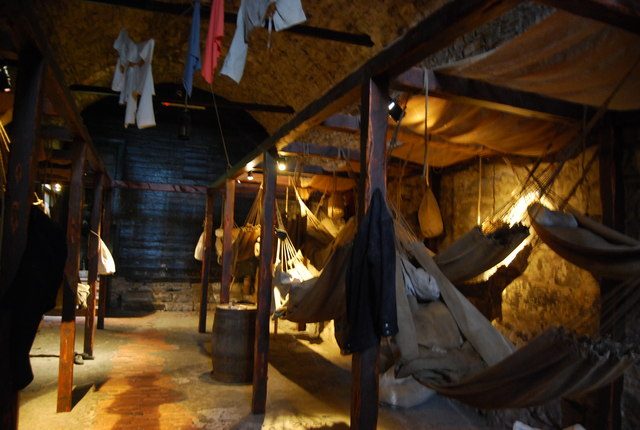
Edinburgh Castle has its own vaults — the Prisons of War, complete with reconstructed hammocks and graffiti carved by eighteenth-century captives. They are included in castle admission, they are lit, and they have nothing to do with the South Bridge chambers. Excellent, and a completely separate visit; see our guide to Edinburgh Castle tickets for how to fit them in.
Expecting an underground city
The idea that a lost city runs beneath the Old Town is the founding myth of haunted Edinburgh marketing, and it is wrong. There is no labyrinth. There are chambers under one bridge, buried closes under one civic building, and various cellars — some of which are now bars you can walk into for the price of a pint. That is it. Go in expecting a subterranean world and you will feel short-changed by the reality, which is a handful of cold rooms with a genuinely grim social history.
Booking the biggest, cheapest, latest tour
The single most reliable predictor of a bad night is group size. Thirty people in a stone chamber means you spend the hour on tiptoe. If the listing does not state a maximum group size, assume it is large. Paying £8 more for a capped group is the best money you will spend on this whole exercise.
Treating the paranormal claims as established
Guides will tell you about the entity, the watcher, the scratches, the incident logs. Some believe it completely. Take it as folklore delivered by professionals, in the same spirit you would take a ghost story told well in a pub. The documented history — the Covenanters, the poverty in the chambers, the anatomy trade — is horrifying enough without adjudicating on any of the rest.
Doing this on your first night
An underground tour lands much better once you have walked the streets above it in daylight and understand the geography. Do the Royal Mile end to end first, look down a few closes, get the shape of the ridge in your head. Then go under it. The stories mean about twice as much.
Frequently asked questions
What is the difference between the Edinburgh vaults and Mary King’s Close?
They are different places at opposite ends of the Royal Mile. The vaults are storage chambers inside the arches of South Bridge, built in the 1780s and reached through private entrances held by tour companies. Mary King’s Close is a seventeenth-century street buried under the City Chambers, run as a history attraction with its own guides.
Are Edinburgh ghost tours actually scary?
It depends entirely which one you book. The history tours are atmospheric rather than frightening. The street walks use comedy and one deliberate jump-scare. The vault tours rely on cold, dark and grim material. Only the locked Covenanters’ Prison tour is billed as genuinely distressing, and its operator warns about that openly.
Which Edinburgh underground vaults tour is the best one?
There is no single best, because different companies hold different chambers and you cannot compare like for like. Choose on format instead: a history-led tour with a small group if you want substance, an evening ghost tour if you want atmosphere. Group size and guide quality matter far more than which section you see.
Can you visit the Edinburgh vaults without a tour?
Not the tour chambers, no — they are privately held and there is no public entrance. The nearest thing is drinking in one of the Cowgate and Niddry Street bars that occupy vaulted spaces under the bridge. You get the architecture and the damp stone, minus any of the history.
Are Edinburgh ghost tours suitable for children?
Some are. Several vault operators welcome children from about five, and at least one runs a dedicated gory-history walk aimed at younger kids. The Real Mary King’s Close admits no under-fives. The Greyfriars graveyard tour bars under-12s. Always check the specific tour rather than assuming.
How cold is it in the Edinburgh vaults?
Cold enough to notice in any month. The chambers sit in stone beneath a road, they are damp, and they do not warm up in summer. Bring a jumper or a jacket even in July. Visitors who turn up in shorts on a warm evening spend the hour uncomfortable and remember the cold rather than the stories.
How long do Edinburgh ghost tours last?
Typically 60 to 90 minutes. The underground tours run around 75 minutes including the walk to the entrance, Mary King’s Close is a straight hour, and the Greyfriars graveyard tour is about 90. Allow extra either side for finding the meeting point and getting out again.
Should I book an Edinburgh ghost tour in advance?
Yes, and further ahead than you think in October, when demand and prices both jump. Two to four days is usually enough in summer, a week for Mary King’s Close. Booking direct with the operator gets you clearer descriptions and access to concession rates that resale listings tend to drop.
Final thoughts
The thing that stayed with me was not an entity story. It was standing in a chamber roughly the size of a garage, being told that families lived in it, and realising the ceiling was a road. People walked over the top on their way to buy something while other people were living underneath in the dark. You do not need a poltergeist for that to sit badly.
So book deliberately. Decide whether you want history, atmosphere or a laugh, pick the operator that actually holds the thing you want to see, keep the group small, and bring a coat. Then go back up and do the city in daylight — there’s a full run-through in our Edinburgh travel guide, and if you have a spare morning, the climb up Arthur’s Seat is the fastest cure for a night spent underground.
Beyond that, the city is well placed for easy day trips out, the Harry Potter locations that half of Greyfriars is also quietly selling, and a first-rate whisky distillery scene for afterwards. If the underground has given you a taste for the odd, there are plenty more unusual things to do around Scotland — but start with the city guide and work outwards.
About the author: This guide was written and is maintained by the ScotlandTourism.org editorial team — travel writers who’ve spent years exploring Scotland’s cities, Highlands and islands, from bagging Munros to chasing the perfect dram. We update our guides regularly to keep prices, opening details and advice current.
Last updated: August 2026. Prices and opening times change — always check the official site before you travel.
Photo credits
All images are used under their respective Creative Commons or public-domain licenses:
- Edinburgh’s Royal Mile after dark near John Knox House — Jorge Franganillo, CC BY 2.0, via Wikimedia Commons
- Looking along South Bridge in Edinburgh — kim traynor, CC BY-SA 2.0, via Wikimedia Commons
- Niddry Street off Edinburgh’s High Street — Stephen McKay, CC BY-SA 2.0, via Wikimedia Commons
- The stone-arched entrance to Riddle’s Close in Edinburgh’s Old Town — Callum Black, CC BY-SA 2.0, via Wikimedia Commons
- Edinburgh City Chambers on the High Street — Jza84, CC BY-SA 3.0, via Wikimedia Commons
- Walled burial enclosures at the Covenanters’ Prison end of Greyfriars — kim traynor, CC BY-SA 2.0, via Wikimedia Commons
- Greyfriars Bobby’s headstone and memorial just inside Greyfriars Kirky — Daniel Kraft, CC BY-SA 4.0, via Wikimedia Commons
- Victoria Street in Edinburgh’s Old Town — Drnoble, CC BY-SA 4.0, via Wikimedia Commons
- A Victorian photograph of Edinburgh’s Grassmarket beneath the castle — George Washington Wilson / Adam Cuerden, Public domain, via Wikimedia Commons
- A walking-tour group gathered among the table tombs of Greyfriars Kirk — Martyn Gorman, CC BY-SA 2.0, via Wikimedia Commons
- Reconstructed prisoner hammocks in the vaults beneath Edinburgh Castle — N Chadwick, CC BY-SA 2.0, via Wikimedia Commons