Type where to stay NC500 into a search box and you get a dozen lists of hotels, ordered by nothing in particular. I used those lists the first time I booked the North Coast 500. Two hours later I had a room in Inverness, a room in Ullapool for a Tuesday in late September, and absolutely nothing anywhere between Thurso and Kylesku — a stretch of coast that takes the better part of a day to drive. That is the moment you understand that this is not a shopping exercise. It is the itinerary.
Every guide I read beforehand was a list of hotels with a booking link attached. None of them told me the thing that actually decides your trip: the north and west coasts of Sutherland have very few beds, those beds sell out first, and the ones you manage to get dictate how many hours you spend behind the wheel each day. So this guide is built the other way round. It runs the loop as a sequence of overnight stages, tells you how far each one is from the next, roughly how much stock exists, when you need to have booked by, and — the bit nobody publishes — where to sleep instead when the town you wanted is full.
The short answer
Split the NC500 into five overnight stages: Inverness or Dornoch on the east, Wick or Thurso on the north-east, Durness or Tongue on the far north, Ullapool or Lochinver on the west, and Torridon, Shieldaig or Applecross on the south-west. Book the far north and Applecross first — those two decide everything else.
Where to stay NC500: the five overnight stages at a glance
| Stage | Main bases | Drive to next stage | Bed stock | Book by (July–Aug) | Fallback 30–45 min off-route |
|---|---|---|---|---|---|
| 1. East coast | Inverness, Dornoch, Tain | ~65 miles / 1hr 30m to Wick | Plentiful — hundreds of rooms | 2–3 months | Rogart, Lairg, Bonar Bridge, Brora |
| 2. North-east | Wick, John o’ Groats, Thurso | ~75 miles / 2hr to Durness | Decent — a few hundred rooms | 3–4 months | Halkirk, Castletown, Lybster, Dunbeath |
| 3. Far north | Durness, Tongue, Bettyhill | ~40 miles / 1hr 15m to Kylesku | Very tight — low tens of properties | 6–12 months | Melvich, Talmine, Kinlochbervie, Scourie |
| 4. West coast | Ullapool, Lochinver, Kylesku | ~57 miles / 1hr 30m to Gairloch | Ullapool decent, Assynt tight | 6–12 months | Achiltibuie, Ardmair, Dundonnell, Lairg |
| 5. South-west | Applecross, Torridon, Shieldaig | ~85 miles / 2hr 15m back to Inverness | The tightest on the loop | 9–12 months | Lochcarron, Kinlochewe, Strathcarron, Gairloch |
Those distances are the driving legs between stage centres, taking the main route rather than the scenic detours. Add 30 to 60 per cent to every one of them for photo stops, sheep, single-track passing places and the inevitable motorhome doing 32mph on the A836. If you want the full geography before you start slotting beds into it, our complete guide to the North Coast 500 lays out the whole loop and what sits on each section.
Why the accommodation map is the itinerary
The NC500 covers roughly 516 miles of largely single-carriageway and single-track road around the top of Scotland. That mileage is not distributed evenly in terms of where you can sleep. Roughly speaking, the eastern third of the loop — Inverness up through Dornoch to Wick — holds the great majority of the route’s beds. The north coast from Thurso west to Durness and the west coast from Scourie down to Ullapool hold a small fraction of them, spread across villages where a large hotel means twenty rooms and a typical B&B means three.
The practical effect is brutal and simple. If you cannot get a bed in Durness, your next realistic option is either 45 minutes back east at Tongue or 45 minutes south at Scourie — and both of those are also small. Lose two of those in a row and you have accidentally committed yourself to a five-hour driving day through the best scenery on the route, in the dark, at the end of it.
The two nights that break itineraries
In my experience there are exactly two nights that go wrong for people: Durness and Ullapool.
Durness because it is the pivot of the whole loop. It sits at the north-west corner, roughly two hours from Thurso and an hour and a quarter from Kylesku, with very little in between in either direction. If you have no bed there you are not shaving an hour off your day; you are re-planning two days.
Ullapool goes wrong for the opposite reason. It is the biggest settlement on the west coast, it has a genuine choice of hotels, hostels and guest houses, and so people leave it until last on the assumption that somewhere that size will always have something. Then they discover that Ullapool is also the ferry port for Stornoway, that it takes the overflow from Lochinver and Achiltibuie, and that in July it can be as full as anywhere on the route.
Book those two first. Then build the rest of the trip around them. I know that feels backwards, but it is the only order that works.
Why basing in Inverness and day-tripping does not work
I get asked this a lot, usually by people who have found a good weekly rate on a flat in Inverness. The answer is no, and the numbers are not close.
Inverness to Durness is around 130 miles and comfortably over three hours each way on roads where you cannot make up time. Inverness to Applecross is around 85 miles and about two and a quarter hours, more if the Bealach na Ba is busy. A day trip to either means five to seven hours of driving to spend two hours somewhere. Do that four days running and you have driven the entire NC500 twice over while seeing about a third of it.
Inverness is a fine place to start and finish — it has the airport, the car hire desks, the big supermarkets and a proper choice of rooms, and there’s plenty to fill an evening in our Loch Ness and Inverness guide. It is not a base for the loop. The NC500 is a circuit, and circuits need moving beds. If you want a single-base Highlands holiday instead, that is a legitimate trip — just a different one, and our rundown of the best base towns in the Scottish Highlands is the better starting point for it.
Stage 1: Inverness, Dornoch and the easy east coast
The east coast is the forgiving part of the route, and most people under-use it. The A9 north from Inverness is a fast, wide road by Highland standards, and the towns along it — Dingwall, Tain, Dornoch, Golspie, Brora, Helmsdale — have a spread of hotels, guest houses and self-catering that the rest of the loop simply doesn’t.
Inverness
Several hundred rooms across chain hotels, independents, guest houses and flats, which makes it the one place on the loop where a late booking is usually recoverable. Expect to pay somewhere in the region of £90 to £180 for a mid-range double in shoulder season and £140 to £250 in July and August, with the smarter properties well above that. Prices spike around events and the peak festival weekends, so check dates before you assume.
Use Inverness for the practical night, not the scenic one: arrive, pick up the car, do a proper supermarket shop, sleep, leave early. In peak summer I would still book a couple of months out.
Dornoch, Tain and Golspie
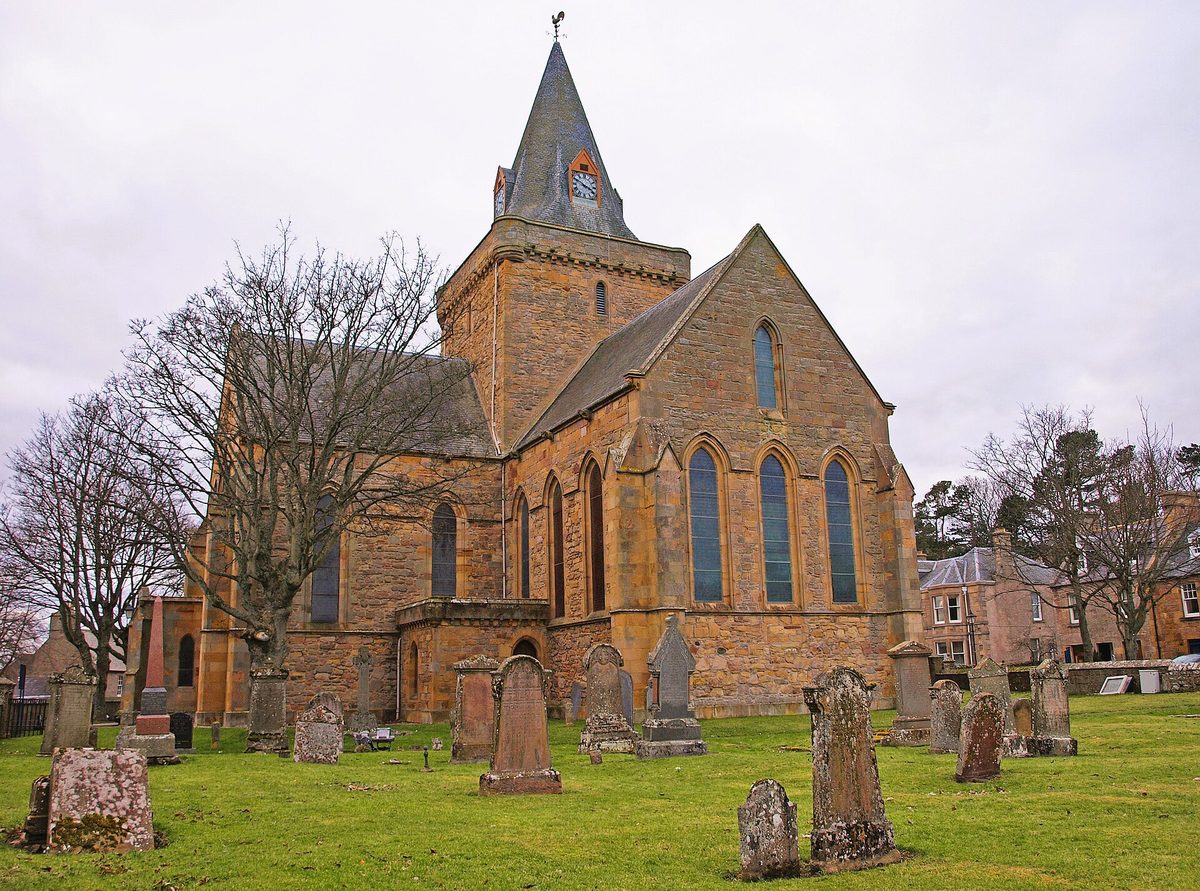
If you can, spend your first night 45 miles further north instead. Dornoch is a small cathedral town with a beach, a famous links course and a genuine choice of places to stay, and starting there rather than Inverness takes an hour off every subsequent day. Tain is less pretty but well positioned and cheaper; Golspie and Brora are quieter again.
Doubles here tend to run around £90 to £160 in shoulder season and £120 to £220 at peak, with the golf-facing properties in Dornoch considerably higher. Two to three months’ notice is usually enough in summer, though Dornoch tightens sharply around tournament weekends at Royal Dornoch, so check the golf calendar if you’re travelling in high season.
If the east coast is full: Rogart, Lairg and Bonar Bridge
This is the easiest stage to solve. Head inland. Rogart sits about 20 minutes off the A9 up the Strath Fleet and has a scattering of small properties including converted railway carriages; Lairg, at the foot of Loch Shin, is a genuine crossroads village around 40 minutes from Dornoch with a handful of hotels and B&Bs; Bonar Bridge and Ardgay are 25 minutes inland and routinely have space when the coast doesn’t.
Inland also tends to be cheaper by a noticeable margin, and Lairg has the added advantage of being a legitimate staging post for the far north — from there it’s about an hour and a half to Durness or Tongue on the A836, which is a useful escape hatch if stage three defeats you entirely.
Stage 2: Wick, John o’ Groats and Thurso
Caithness is the functional stretch. The landscape flattens, the drama drops off, and a lot of people treat this as a stage to get through. That is fair enough as a judgement on the scenery, but it makes it a good place to sleep: the towns are proper towns with petrol, cash machines, supermarkets and chip shops, and the rooms are the best value on the loop.
Wick
Wick is a working harbour town with a couple of hotels, several guest houses and self-catering flats. It is not going to be the photograph you frame when you get home, but it has an airport, a distillery, and rooms at prices that will look like a bargain by the time you reach Wester Ross. Reckon on roughly £90 to £150 for a double in shoulder season, perhaps £110 to £180 at peak.
Wick is also 16 miles — about 25 minutes — south of John o’ Groats, which matters if you’re doing the Orkney day trip.
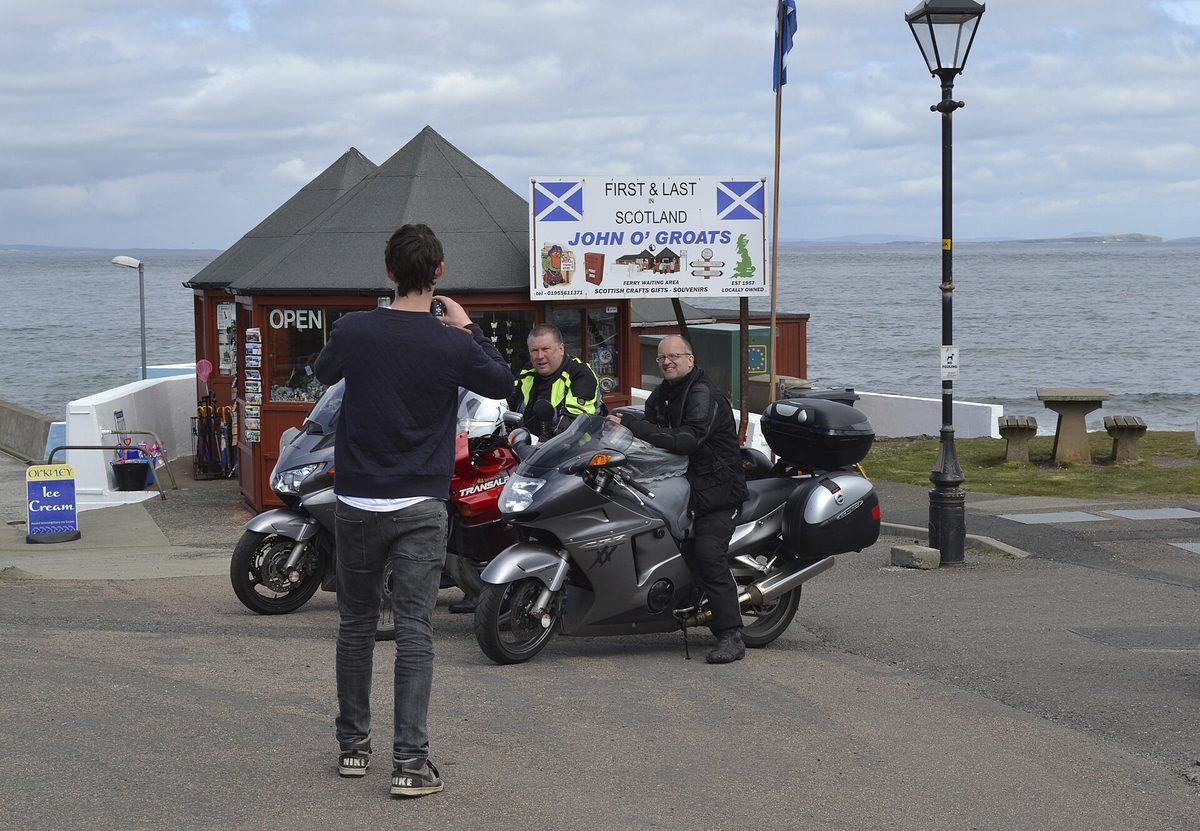
John o’ Groats and the Orkney ferry
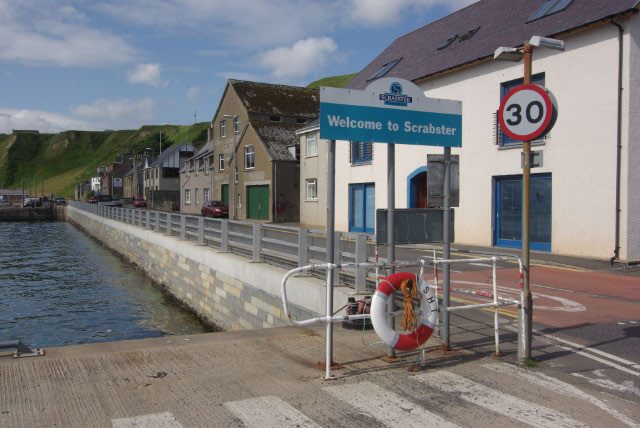
Here is the reason to sleep in this corner rather than pushing on. Two separate Orkney crossings leave from this corner: a seasonal foot-passenger ferry from John o’ Groats to Burwick, when it is running, and the year-round car ferry from Scrabster, just outside Thurso, to Stromness. Both want you on the pier early, and both are a genuinely good day out if you can spare one.
If you’re taking either, sleep the night before within 20 minutes of the pier. Sailings and seasons change year to year, so check the operator’s timetable directly before you build a day around it — and note that adding Orkney means an extra night in Caithness at both ends, not one.
Thurso and Scrabster
Thurso is the largest town on the north coast and the last one with a full-sized supermarket until you come back round to Ullapool, which is a long way in both directions. It has hotels, guest houses, a hostel or two and a surf scene at Thurso East that surprises people. Rooms sit at roughly £95 to £160 in shoulder season and £120 to £200 at peak.
Practically speaking, Thurso is where you should top up the tank, do the big shop and buy anything you have forgotten. Fuel west of here is scarcer, more expensive and more likely to be closed on a Sunday evening.
If Caithness is full: Halkirk, Castletown, Lybster
Halkirk is 15 minutes inland from Thurso and has a hotel and fishing lodges. Castletown and Dunnet sit between Thurso and John o’ Groats with pods, B&Bs and a campsite by Dunnet Bay. South of Wick, Lybster and Dunbeath are 20 to 35 minutes down the A99 and are almost always quieter. None of these adds meaningfully to the next day’s drive, which makes Caithness the second-easiest stage to solve after the east coast.
Stage 3: Durness, Tongue and the far north
Now it gets serious. The A836 and A838 from Thurso to Durness run around 75 miles and takes about two hours if nothing goes wrong, with long single-track sections west of Bettyhill and some of the best coastline in Britain either side of you. Along that entire stretch there are perhaps a few dozen places to stay in total, most of them small, and a good share of them closed from November to March.
This is the stage that sells out in February. Not metaphorically — the popular rooms in Durness and Tongue for the following July and August genuinely go that early, and by spring you are choosing from what’s left rather than what you wanted.
Bettyhill and Melvich
Melvich sits about 45 minutes west of Thurso and Bettyhill about 20 minutes further, both with a hotel, a few B&Bs and some self-catering between them. They are the halfway houses of the north coast: unglamorous, entirely serviceable, and much more likely to have a room in June than Durness is.
Staying here has a real advantage. It splits the Thurso–Durness leg into two short driving days and gives you time to actually stop at Strathy Point, Farr Bay and Torrisdale rather than photographing them through the windscreen at 50mph.
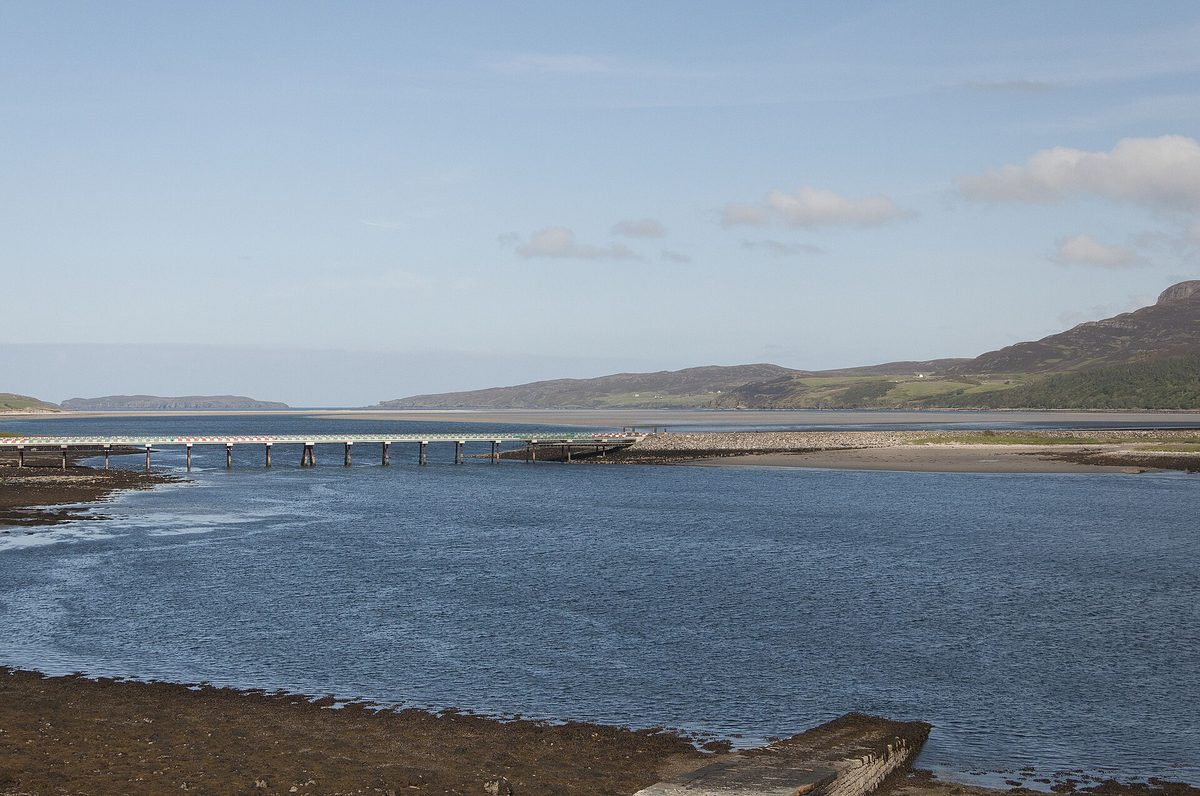
Tongue
Tongue is the prettiest overnight on the north coast — a village above the Kyle with Ben Loyal behind it and a causeway that photographs beautifully in evening light. It also has, realistically, one hotel, one former manse, a hostel, a scattering of B&Bs and some holiday cottages. That is the entire stock.
Doubles here typically run £110 to £180 shoulder, £140 to £250 peak, and two-night minimums are common in summer. If Tongue is your target, treat it like a restaurant with six tables: book absurdly early or don’t count on it.
Durness
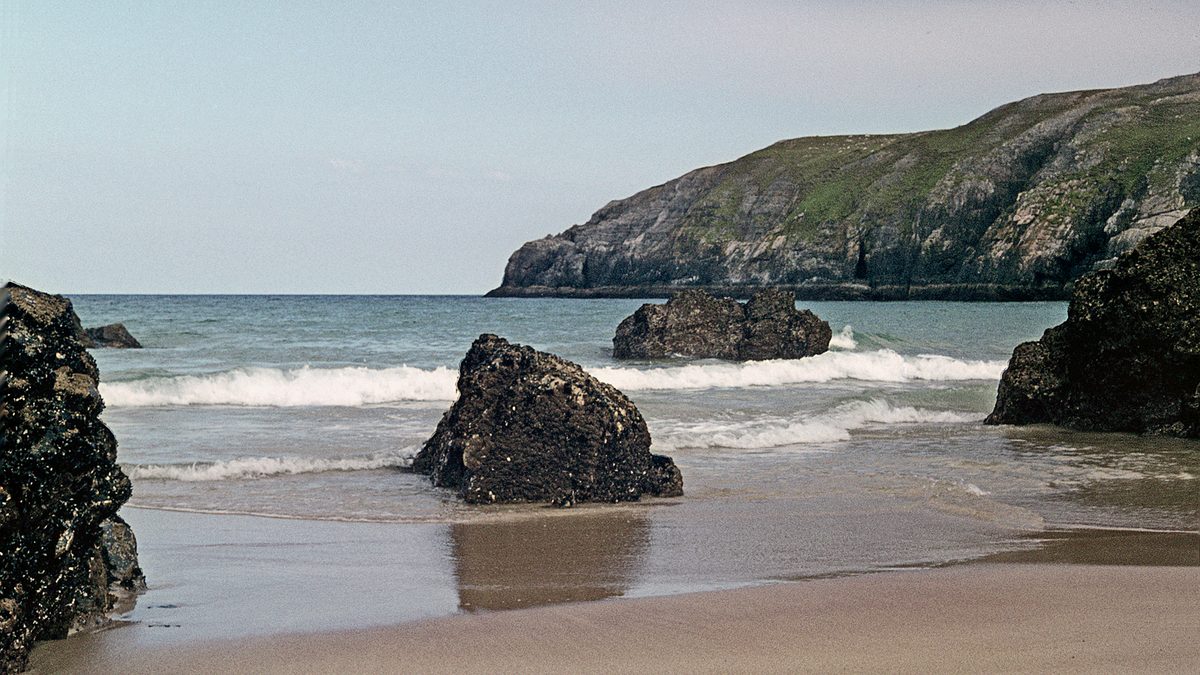
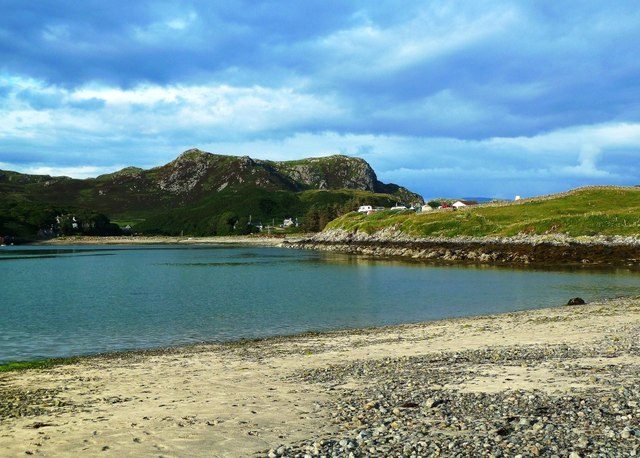
Durness is the corner of the country and the single most important bed on the route. It has a hotel or two, a handful of guest houses and B&Bs, a hostel, a bunkhouse, a campsite above Sango Bay and some self-catering — and that is it, for a village serving the junction of the north and west coasts.
Expect roughly £120 to £200 for a double in shoulder season and £150 to £280 in peak, and expect the cheaper end to have gone months ago. Several Durness properties are seasonal, opening around Easter and closing in October, which shrinks the winter options further. Book nine to twelve months out for July and August if you have any flexibility at all in your dates. If you don’t, consider going in May or late September instead — our guide to the best time to drive the North Coast 500 goes through the trade-offs month by month, and Scotland in May in particular is the sweet spot for this route.
If the far north is full: Kinlochbervie, Scourie, Talmine, Durine
This is where a fallback list earns its keep, because most guides will simply tell you Durness is busy and leave you there.
Kinlochbervie is about 20 miles south-west of Durness — 35 minutes on a decent single-track road — a working fishing port with a hotel and some B&Bs, and it is regularly available when Durness isn’t. It also puts you close to the walk in to Sandwood Bay, which is worth a morning on its own.
Scourie is 28 miles and about 45 minutes south of Durness, on your onward route rather than backwards, with a hotel, a campsite and a few small properties. In my view this is the smartest Durness substitute: you lose an hour of the following morning’s drive rather than gaining one.
Talmine and Melness sit 10 minutes off the A838 on the west side of the Kyle of Tongue and have cottages and a campsite that stay quiet because most people never turn down the road. And if you are properly stuck, Lairg is an hour and a half inland with real availability, which is a long detour but a better outcome than driving to Ullapool at midnight.
Stage 4: Kylesku, Lochinver and Ullapool
The west coast is where the route earns its reputation and where your accommodation budget takes its heaviest hit. Assynt is a landscape of isolated sandstone mountains — Suilven, Quinag, Stac Pollaidh — standing over lochans and small crofting settlements, and the places to stay in it are correspondingly small and correspondingly expensive.
Kylesku and Drumbeg
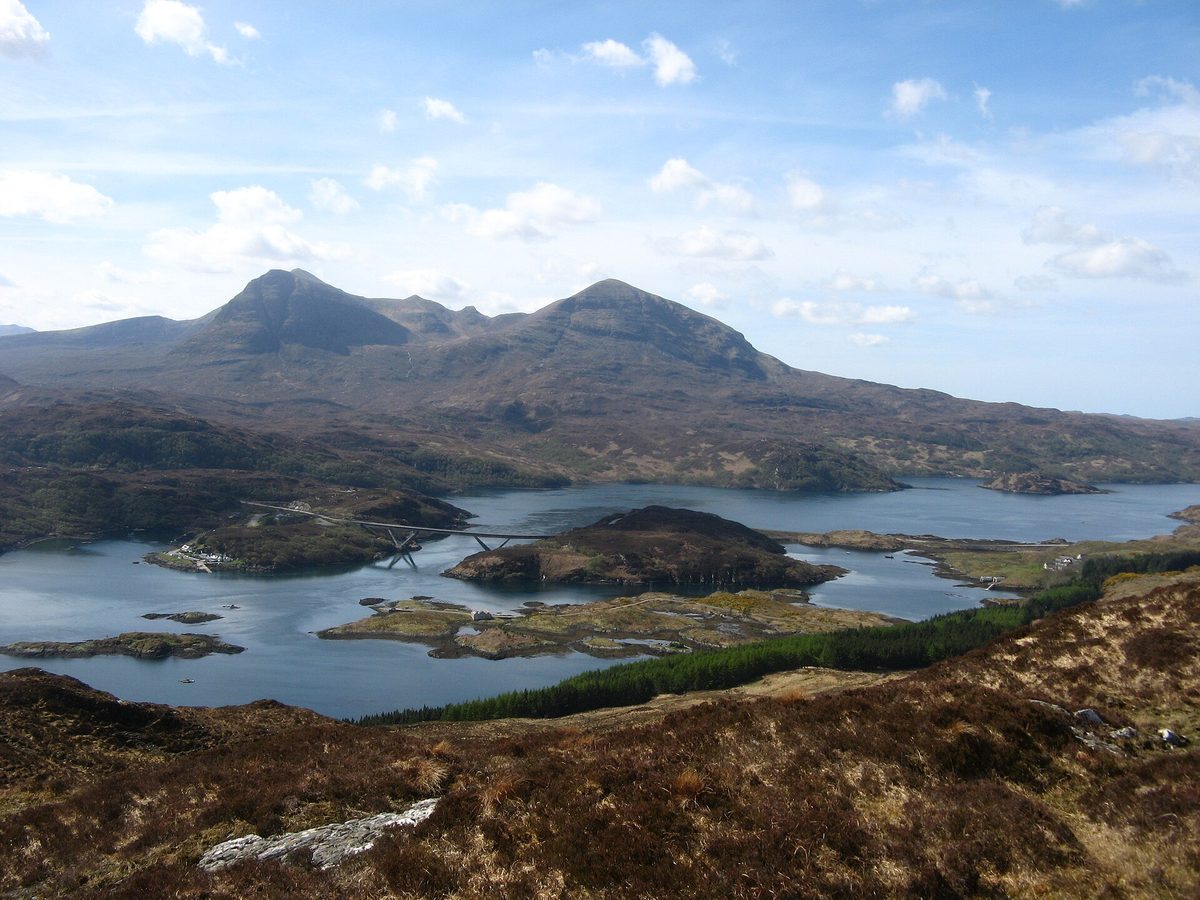
Kylesku is a hamlet at a bridge, and its handful of rooms sell out early because the bridge is one of the most photographed structures on the route. The B869 coast road round through Drumbeg, Clashnessie and Stoer is slower than the main A894 — allow an hour rather than half an hour — and has a few self-catering cottages and small B&Bs along it that stay under the radar.
Prices at the desirable end here run £150 to £300 or more in season. Kylesku is a lovely night if you get it; it is not a sensible plan A.
Lochinver and Achmelvich
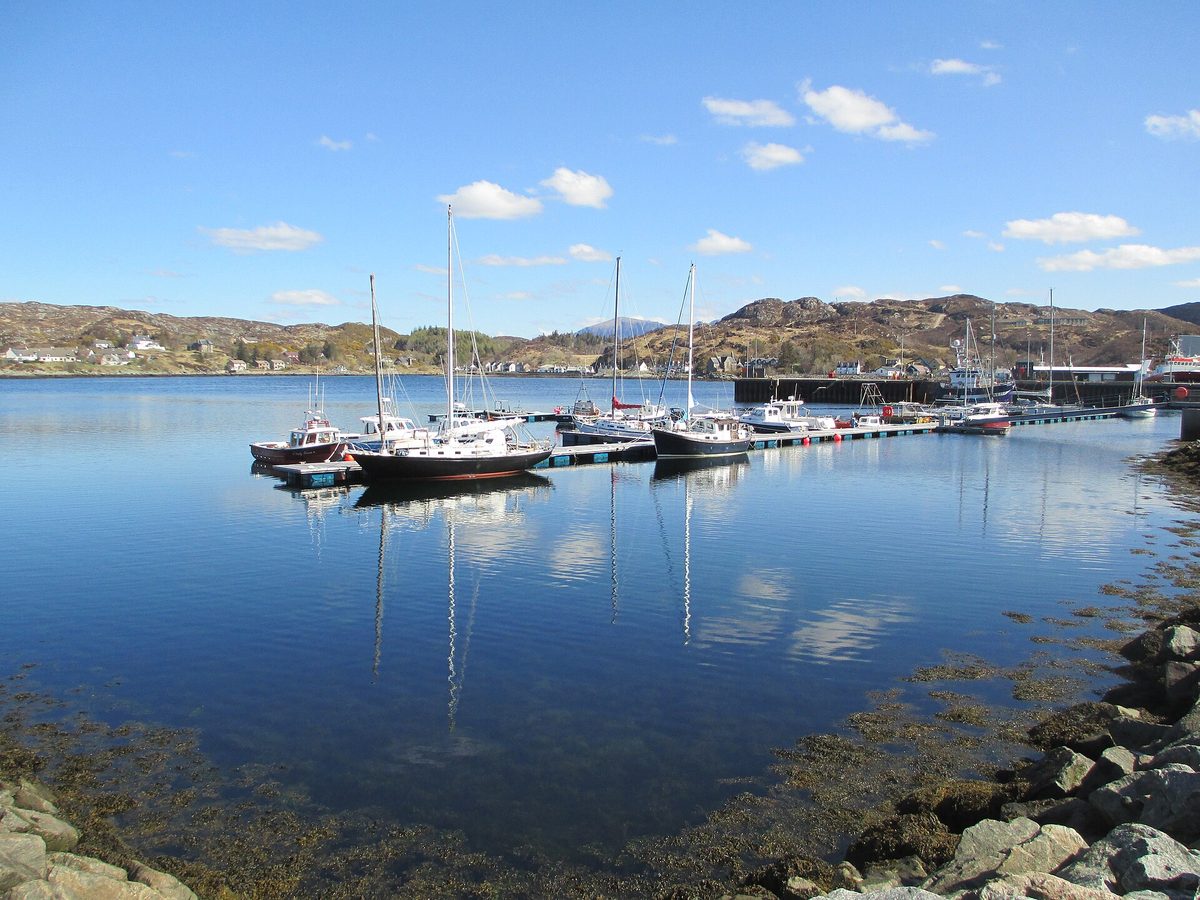
Lochinver is a proper working village with a harbour, a famous pie shop, a couple of hotels and guest houses, and a set of small B&Bs. Achmelvich, 10 minutes north-west down a single-track road, has a beach, a hostel, pods and a campsite.
Reckon on £110 to £190 shoulder, £140 to £260 peak for a double in Lochinver, higher at the two or three smart properties. Lochinver is 37 miles from Ullapool by the A837 and A835 — about an hour — or 28 miles by the single-track coast road through Inverkirkaig and Achiltibuie, which will take you closer to an hour and three quarters and is worth every minute in good weather.
Ullapool
Ullapool is the largest settlement on the west coast of the loop, a planned fishing village of white houses along Loch Broom, and the only place on this side of the route that feels like a town. Hotels, inns, guest houses, a hostel, self-catering flats, a campsite on the point, restaurants that stay open past eight, and the CalMac ferry to Stornoway.
All of which is why it fills. Doubles run roughly £110 to £200 in shoulder season and £150 to £280 at peak, with the seafront properties higher, and July and August book out six months or more ahead. Two nights here is a good idea if you can manage it — it’s the one stage where there’s enough within a half-hour radius to justify staying put.
If the west coast is full: Achiltibuie, Ardmair, Dundonnell, Ledmore
Achiltibuie is 25 miles and about 45 minutes from Ullapool down the single-track road into Coigach, looking out over the Summer Isles. It has a hotel, a hostel and self-catering, and it is far enough off the main road that it holds availability longer than anywhere else in the area.
Ardmair, 10 minutes north of Ullapool, has a caravan park and cottages. Dundonnell and Little Loch Broom are 40 minutes south on the A832 with a hotel and B&Bs, and they sit on your onward route to Gairloch rather than off it. Inland, Ledmore, Elphin and Lairg again pick up the slack.
One more option people forget: Ullapool has a well-run hostel and several bunkhouses in the wider area. If you’re travelling as a couple and the doubles have gone, a private twin in a hostel is a perfectly comfortable night and often half the price. There’s more on trimming the overall spend in our breakdown of what the North Coast 500 actually costs.
Stage 5: Gairloch, Torridon, Shieldaig and Applecross
Wester Ross is the best driving on the route and the hardest to sleep on. The road narrows, the mountains close in, and the villages get smaller just as the demand for them gets higher. This is the stage to book first if Applecross is on your list, and the stage to be most flexible about if it isn’t.
Gairloch and Poolewe
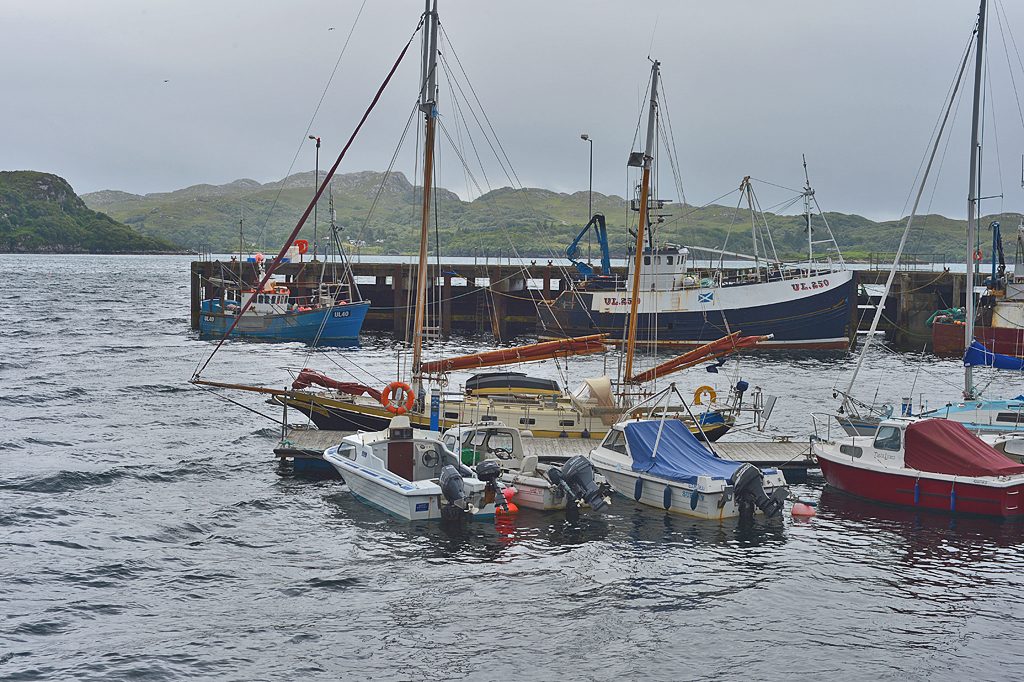
Gairloch is the biggest settlement in this section and the most useful. It has hotels, guest houses, self-catering, a hostel and campsites spread around the bay, plus beaches, a golf course and boat trips. Poolewe, 15 minutes north, is smaller again and essentially has one hotel plus self-catering and a campsite, though it does have Inverewe Garden.
Gairloch is my standing recommendation as the Wester Ross fallback. It is 90 minutes from Ullapool and an hour from Torridon, it has more rooms than anywhere else nearby, and it is a pleasant place to be stuck. Doubles typically £100 to £180 shoulder, £130 to £240 peak.
Torridon and Shieldaig
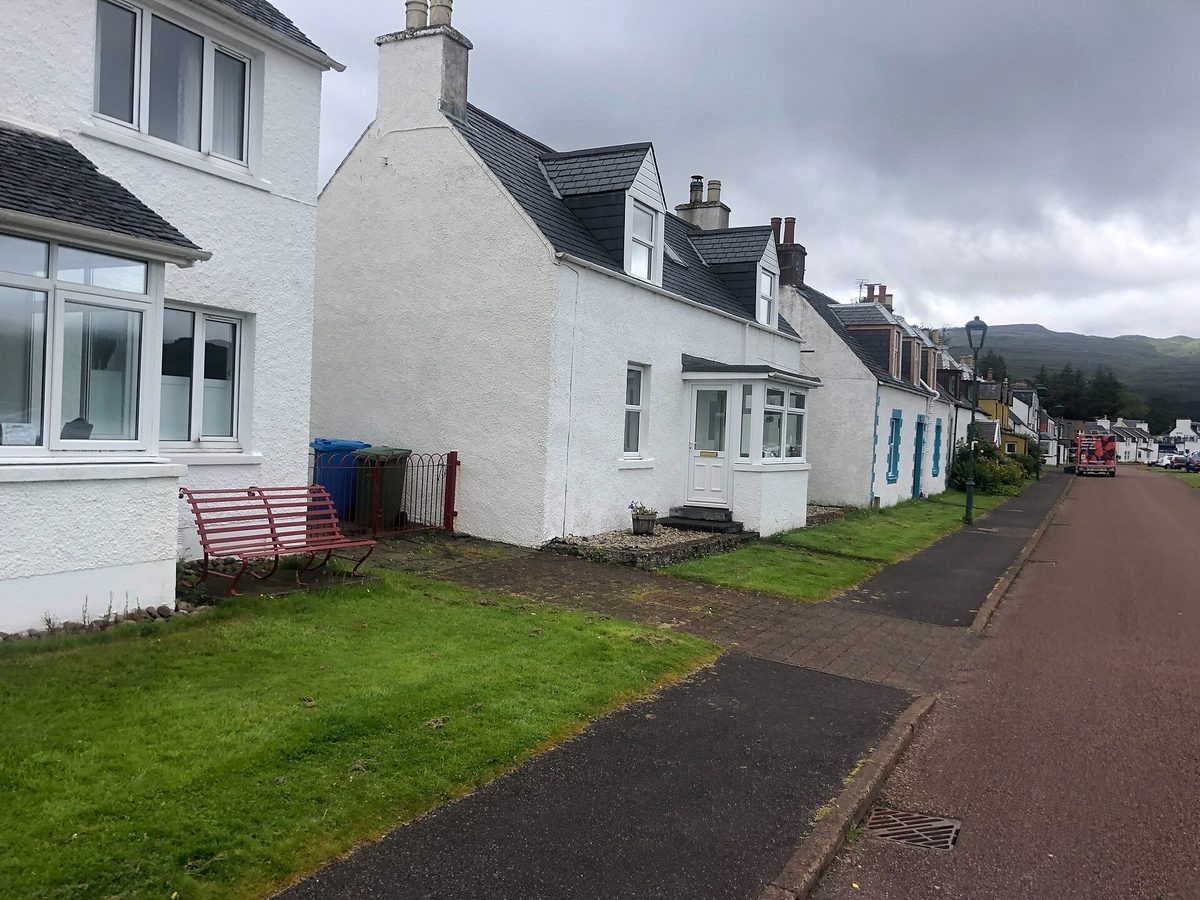
Torridon is a scatter of houses under some of the oldest and most severe mountains in Britain — Liathach and Beinn Eighe rise straight off the roadside — with a country-house hotel, an inn, a youth hostel and a campsite. Shieldaig, 20 minutes further, is a single row of white cottages facing an island of Scots pines, with a hotel, a couple of B&Bs and holiday lets.
Both are small enough that a single coach party or a wedding fills them. Doubles range enormously here, from around £120 at the simpler end to well over £300 at the smart end, and the flagship property runs far higher again in peak season. If you plan to walk here, budget an extra night: the Torridon hills are steep, rough and long, and they are not a stop-off on a driving day. Our overview of hiking in Scotland sets out what they actually demand of you.
Applecross
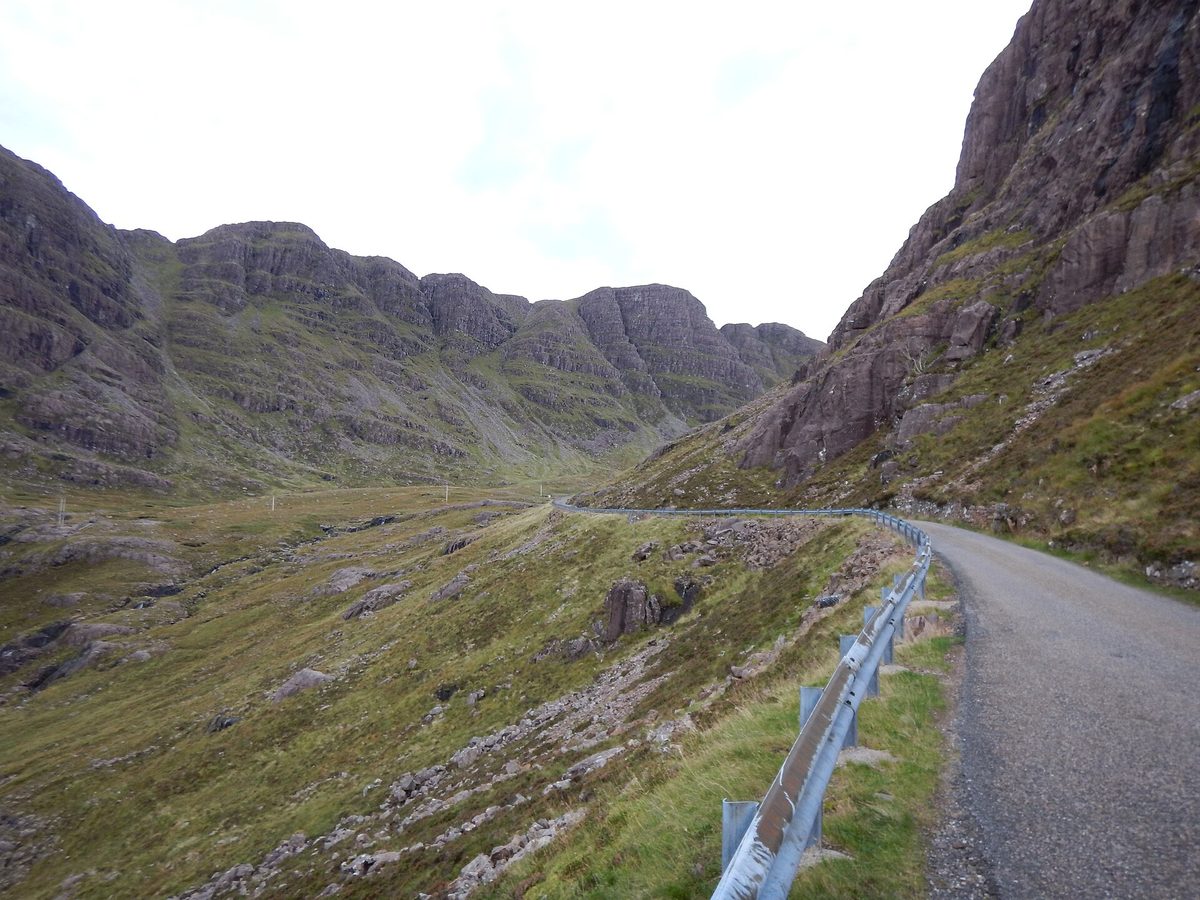
Applecross is the one everybody wants, and the reason is the road. The Bealach na Ba climbs from sea level to around 626 metres in six miles of hairpins and single track, one of the highest and most demanding public roads in Britain, and it drops you into a village facing Skye across the Inner Sound with a beer garden by the water.
The village has an inn, a campsite with pods, a walled garden with rooms, and a small number of cottages. That is genuinely the lot. The inn’s rooms for August are commonly gone a year in advance, and I would not book any Applecross summer night less than nine months out.
Two things worth knowing. First, the Bealach is closed or dangerous in snow, ice and high wind, and there is a longer coast road round via Shieldaig that adds around an hour — so an Applecross booking in shoulder season carries a small risk you’ll arrive the slow way in the dark. Second, if you cannot get a bed, you can still drive the pass, eat at the inn if you get there early, and sleep elsewhere. The road is the experience; the bed is a bonus.
If Wester Ross is full: Lochcarron, Kinlochewe, Strathcarron, Achnasheen
Lochcarron is the strongest fallback on this stage — a long village on the loch about 25 minutes from Shieldaig with a hotel, several B&Bs and self-catering, and it sits on the way back towards Inverness. Kinlochewe, 20 minutes east of Torridon at the head of Loch Maree, has a hotel, a bunkhouse and a campsite. Strathcarron and Achnasheen are on the Kyle railway line and have a small hotel apiece.
Further afield, Plockton and Kyle of Lochalsh are 40 to 50 minutes south of Lochcarron with a lot more stock, and they set you up neatly if you’re bolting on a few days over the bridge — see our Isle of Skye itinerary for how that extension works.
Three nights or seven? The number of stages you can actually do
The honest answer is that the NC500 has five natural overnight stages, and how many nights you take determines how many of them you get to sleep in rather than drive through.
Three nights (four days) means combining stages. The workable version is Dornoch or Tain, then Thurso, then Ullapool, and back to Inverness — which gives you driving days of roughly two, three and four hours before stops. You will see the north coast through the windscreen and skip Applecross entirely. It is doable and a lot of people do it, but you’re paying for the loop and collecting about half of it. Our three to four day NC500 itinerary sets out the tightest version that still works.
Five nights (six days) is the first version where each stage gets a night: east, north-east, far north, west, south-west. This is the sensible minimum for a first trip, and it’s the plan most people should book — the five-day NC500 itinerary maps it out stop by stop.
Seven nights (eight days) is where the trip stops being a drive and starts being a holiday. The extra two nights buy you a second night in Ullapool and a second somewhere in the far north or Wester Ross, which means two mornings where you don’t have to pack. It also builds in slack for the day the weather is so bad that driving the Bealach would be miserable. The seven-day NC500 itinerary is the one I’d point most first-timers at if they have the leave.
Beyond eight days you’re into island add-ons and detours rather than the loop itself. If you’re still deciding how the NC500 fits into a wider trip, how many days to spend in the Scottish Highlands is the piece that untangles it.
One structural point that affects beds: direction. Going clockwise (east coast first) puts your hardest-to-book nights — Durness, then Ullapool, then Applecross — in the back half of the trip, which is generally better because you’ll have found your rhythm by then. Anticlockwise front-loads Wester Ross. Neither is wrong, but pick one before you book anything, because switching direction after you’ve secured rooms is how people end up doing 200-mile days. The reasoning is set out properly in our NC500 route map and direction guide.
Hotel, B&B, hostel, pod or campervan
Most people mix these rather than picking one, and mixing is the right answer. The stock is so thin in places that being open to two or three types roughly doubles your options.
Hotels and inns
Outside Inverness, a “hotel” on the NC500 usually means an independent property with somewhere between four and twenty rooms, often with the only restaurant in the village attached. That last part is the real value: on the north and west coasts, a hotel that serves dinner saves you a 30-minute drive each way to eat. Expect £100 to £250 for a mid-range double across most of the route, with a handful of country-house properties running far higher.
B&Bs and guest houses
The backbone of the route, and the reason it works at all. Most have fewer than five rooms, which is exactly why they sell out early. Typical rates land around £90 to £180 for two sharing with breakfast, and the standard is generally very good — these are people’s homes and they care.
Two caveats. Many take bookings direct by phone or email rather than through the big platforms, so a property that looks fully booked online may simply not be listed there; it is always worth ringing. And a fair number are seasonal, opening around March or Easter and closing in October.
Hostels and bunkhouses
Underrated on this route. There are hostels and bunkhouses at Tongue, Durness, Achmelvich, Ullapool, Torridon, Gairloch and several points between, and most offer private twin or double rooms alongside dorms. A dorm bed usually sits around £25 to £40; a private room in a hostel will often undercut the local B&B substantially. When the far north is sold out, this is the first place I look.
Pods, huts and self-catering
Glamping pods have multiplied along the route in the last decade, particularly at campsites in Caithness, Assynt and Wester Ross. They’re typically insulated, heated and have a bed and a kettle, with the shower block a short walk away — check whether the pod is en-suite, because most aren’t.
Self-catering cottages are excellent value for three or more people, but watch the terms: many run Saturday-to-Saturday changeovers in summer and won’t take a two-night midweek stay at all, which makes them awkward for a moving loop unless you’re basing somewhere for several nights.
Campervans and campsites
A campervan solves the booking problem and creates a different one. You still need somewhere to park overnight, and the informal free-for-all of the route’s early years has been tightened up considerably. The Highland Council’s campervan and motorhome scheme, launched in July 2024, offers a voluntary seven-day pass costing around £40 that gives access to a set of designated overnight parking spots along the route, typically usable between 10pm and 8am with a no-return policy at each location.
Campsites themselves book up in July and August — the best-located ones at Dunnet Bay, Sango Sands, Achmelvich, Clachtoll, Applecross and Gairloch reliably fill — though many hold pitches for same-day arrivals if you turn up around late morning. Wild camping in a lightweight tent remains legal on most unenclosed land under the Scottish Outdoor Access Code; that right does not extend to sleeping in a vehicle at the roadside. Our comparison of campervan hire versus a car on the NC500 goes through the real costs of each.
What the listings actually mean out there
Highland accommodation descriptions use the same words as everywhere else and mean slightly different things by them. A few translations that will save you some surprises.
“En-suite” can mean a full bathroom, or it can mean a shower cubicle and a loo squeezed into the corner of a Victorian bedroom with a partition wall. Both are fine. But “private bathroom” is different again and usually means a bathroom for your sole use across the landing. If it matters, ask.
“Dinner served until 8pm” means the kitchen stops taking orders at 8pm, and in a village with one kitchen, it may well mean last orders at 7.30pm in practice if they’re busy. Rolling in at 7.45pm after a long day expecting to be fed is the single most common way people end up eating crisps for dinner. Ring ahead in the afternoon and book a table, even at your own hotel.
“Free parking” is genuine and universal, but in villages like Shieldaig and Applecross it may be a shared area rather than a space by your door.
“Wi-fi available” should be read as “there is a router”. Mobile signal across large parts of Sutherland and Wester Ross ranges from patchy to absent depending on your network, and satellite broadband has improved things but not everywhere. Download your maps and your music before you leave Inverness.
“Breakfast included” at a B&B usually means a cooked breakfast at a set time — often a window between 8am and 9am. If you need to be on the road at seven for a ferry, say so the night before and most hosts will leave something out.
“Pet friendly” almost always carries a per-dog charge, commonly £10 to £20 a night, and often restricts which rooms you can have.
None of this is anyone being difficult. These are small businesses in remote places running on tight margins and limited staff, and a bit of warning about what you need goes a very long way.
When to book, and in what order
Here is the sequence I’d follow, and the order matters more than the timing.
First, fix your dates and direction. Nothing else can happen until these are settled.
Second, book the far north and Applecross. Durness or Tongue, and Applecross if you want it. These are the scarcest beds on the loop and everything else bends around them. For July and August, that means booking six to twelve months out; for Applecross’s inn specifically, closer to twelve.
Third, book Ullapool or Lochinver. Six months out for peak, two to three for shoulder season.
Fourth, fill in Caithness and the east coast. Three to four months out for peak is comfortable, and you can usually still find something at a month.
Fifth, book your ferries, tables and any tours. Restaurant tables in the small villages need booking in summer as surely as the rooms do.
Off-season the whole calendar relaxes dramatically. In March, April and late October you can often book a week or two ahead and travel for 20 to 50 per cent less — the trade-off being shorter days, more closures and real weather, which our guide to the cheapest time to visit Scotland goes into properly. Winter on the north coast has its own reward if you’re chasing the aurora over the far north, though you should expect a good share of properties to be shut.
Two practical points on booking mechanics. Deposits of 20 to 50 per cent are normal at independents, and cancellation windows are often longer than you’d expect — two to four weeks rather than 48 hours — because a lost night in a four-room B&B in October cannot be resold. And minimum stays of two nights are common at peak, which can quietly force you into a rest day. That’s usually a good thing.
Mistakes I see people make
Booking the pretty places and hoping the gaps fill in. If you have Applecross and Kylesku but nothing on the north coast, you don’t have an itinerary, you have two nice photographs and a five-hour drive between them.
Underestimating drive times by roughly a third. Satnav estimates on single-track roads are optimistic in a way they simply aren’t on motorways. Passing places, cyclists, sheep, campervans and the fact that you will keep stopping to look at things all add up. Assume every leg takes at least 30 per cent longer than the app says.
Arriving after 8pm without having eaten. Covered above, but it bears repeating: outside Inverness, Thurso and Ullapool, dinner is not a thing you can assume.
Doing three nights in peak season with no fallbacks. A compressed itinerary has no slack. If one booking falls through in a place where the next option is 45 minutes away, the whole thing unravels.
Assuming a campervan means no planning. It means different planning: overnight spots, waste disposal, water, and the increasingly clear expectation that you’ll use designated sites rather than laybys.
Ignoring midges when choosing between a hotel and a tent. From roughly June to early September, still evenings on the west coast can be genuinely unpleasant outdoors. It doesn’t affect a hotel night at all, but it changes camping considerably — our Scotland midge season guide explains when and where they bite.
Treating the east coast as filler. Dornoch, Golspie and Helmsdale are perfectly good places to spend an evening, and the cathedral, the beaches and the distilleries along that stretch are worth an unhurried morning rather than a photo stop on the way to somewhere better.
Frequently asked questions
Where is the best place to stay on the NC500?
There isn’t one, because the NC500 is a loop rather than a hub. If you could only sleep in one place it would be Ullapool, which has the widest choice of rooms, restaurants and things to do within half an hour. But a single base means driving the loop as day trips, which doesn’t work. Plan five moving nights instead.
How far in advance should I book NC500 accommodation?
For July and August, six to twelve months for Durness, Tongue, Applecross and Ullapool, and three to four months for Caithness and the east coast. For May, June and September, two to three months usually does it. From November to March you can often book a fortnight ahead, but check what’s actually open.
How much does a night on the NC500 cost?
Broadly £90 to £180 for a mid-range double in shoulder season and £120 to £280 at peak, with country-house hotels well above that. Hostel dorms run around £25 to £40 and campsite pitches roughly £20 to £30. Rates move a lot by season and property, so treat these as ranges to sanity-check against, not quotes.
Can I drive the NC500 without booking accommodation?
Between roughly mid-May and early September, no — not on the north and west coasts. Turning up and hoping works reasonably well in March, April and late October, when there are fewer visitors and the larger hotels stay open. In summer you would spend the trip driving to find beds rather than looking at the view.
Is it worth staying in Inverness for the NC500?
For the first or last night, yes — it’s where the airport, the hire cars and the supermarkets are. As a base for the whole route, no. Durness is over three hours away each way and Applecross more than two, so day-tripping the loop from Inverness means hours of driving for very little time on the ground.
Which parts of the NC500 have the least accommodation?
Two stretches. Thurso west to Durness along the north coast, where the villages are tiny and many properties are seasonal. And Scourie down through Assynt to Ullapool on the west coast, where demand is highest and the stock is smallest. Book both of those before anything else.
Do I need to book dinner as well as a room?
On the north and west coasts, yes. Villages often have one kitchen, kitchens often stop serving around 8pm, and a coach party or a wedding can absorb the whole evening’s covers. Ring in the afternoon to reserve a table, even where you’re staying, and carry something in the boot as insurance.
Are there good options for travellers without a car?
Limited but real. Buses connect Inverness with Thurso, Wick, Ullapool and Durness on infrequent timetables, and Ullapool, Thurso and Gairloch all have hostels. It takes patience and careful timetable reading, and our guide to getting around Scotland by bus and train sets out what’s realistic.
Final thoughts
The NC500 is a wonderful drive and a genuinely frustrating thing to book, and the two facts are related: it goes to places that are worth going to precisely because almost nobody lives there. Fifteen-room villages don’t scale to meet demand, and they shouldn’t have to.
So plan around the constraint rather than fighting it. Fix your dates, choose a direction, secure Durness and Applecross first, then work outwards. Keep the fallback villages in your back pocket — Scourie, Kinlochbervie, Melvich, Lairg, Gairloch, Lochcarron — because you will probably need one of them, and knowing about them in advance is the difference between a change of plan and a crisis.
Get that right and the rest of it takes care of itself: you’ll come over the Bealach na Ba in the late afternoon knowing exactly where you’re sleeping, and the drive up through the Scottish Highlands will feel like the holiday it’s supposed to be rather than a logistics exercise. For everything else — the stops, the timings, the weather, the whisky — start from our North Coast 500 route guide and build from there.
About the author: This guide was written and is maintained by the ScotlandTourism.org editorial team — travel writers who’ve spent years exploring Scotland’s cities, Highlands and islands, from bagging Munros to chasing the perfect dram. We update our guides regularly to keep prices, opening details and advice current.
Last updated: October 2026. Prices and opening times change — always check the official site before you travel.
Photo credits
All images are used under their respective Creative Commons or public-domain licenses:
- Ullapool harbour and its seafront terrace on Loch Broom, the busiest NC500 base on the west coast — GerritR, CC BY-SA 4.0, via Wikimedia Commons
- Kylesku Bridge curving across Loch a’ Chairn Bhain, a tiny but popular NC500 overnight stop — Reboelje, Public domain, via Wikimedia Commons
- The single-track Bealach na Ba climbing towards Applecross, the hardest NC500 stage to reach — James Emmans, CC BY-SA 2.0, via Wikimedia Commons
- Dornoch Cathedral in the east coast town of Dornoch, an easy first night on the NC500 — wfmillar, CC BY-SA 2.0, via Wikimedia Commons
- Sango Bay at Durness, the far north-west corner of the NC500 and one of its tightest beds — Roger D Kidd, CC BY-SA 2.0, via Wikimedia Commons
- The Kyle of Tongue causeway on the north coast, between Durness and Bettyhill on the NC500 — 2011 Schotland Kyle of Tongue brug vanaf Achuvoldrach 4-06-2011 17-02-58.png: Pa, CC BY-SA 3.0, via Wikimedia Commons
- Boats in Lochinver harbour in Assynt, a west coast NC500 base with limited accommodation — Jennifer Jones, CC BY-SA 2.0, via Wikimedia Commons
- Whitewashed cottages along the shore road at Shieldaig in Wester Ross — Eirian Evans, CC BY-SA 2.0, via Wikimedia Commons
- Charlestown harbour at Gairloch, a fallback base when Torridon and Applecross are full — Nigel Brown, CC BY-SA 2.0, via Wikimedia Commons
- Scourie Bay in north-west Sutherland, a quieter alternative to Durness on the NC500 — Mary and Angus Hogg, CC BY-SA 2.0, via Wikimedia Commons
- The signpost and harbour buildings at John o’ Groats on the north-east corner of the NC500 — Terry Robinson, CC BY-SA 2.0, via Wikimedia Commons
- Scrabster harbour beside Thurso, where the Orkney car ferry sails from — Stephen McKay, CC BY-SA 2.0, via Wikimedia Commons