The easiest way to get a Loch Ness day trip backwards is to leave Inverness mid-morning, take the quiet-looking south road because it seems clever, find it far slower than the map promised, and reach Urquhart Castle hours later than you meant to.
The single decision that makes or breaks the day isn’t which stops you pick. It’s which way round you go. Get that right and you’ll have the best ruin in the Highlands almost to yourself; get it wrong and you’ll spend the day in a queue. So this is the timed version: a Loch Ness itinerary with real hours on it, real drive times, and the bits that go wrong.
The short answer: go clockwise
Leave Inverness by 08:30, drive south on the A82 down the west shore, and be at Urquhart Castle for the 09:30 opening before the coaches arrive. Cruise late morning from Drumnadrochit, lunch at Fort Augustus, then return north up the quiet east side on the B862 and B852 via Foyers and Dores. Roughly 70 miles, home by 17:30.
The day at a glance
| Time | Stop | Drive from previous | Why this slot |
|---|---|---|---|
| 08:30 | Leave Inverness (A82 south) | — | Ahead of the coach departures and the school run at Inshes |
| 09:15 | Urquhart Castle car park | 25–30 min | First entry slot is 09:30; the site is noticeably quieter before 10:00 |
| 11:15 | Cruise from Drumnadrochit | A few minutes | The one fixed point in the day — book this first |
| 12:45 | Invermoriston (Telford bridge) | 15 min | Ten-minute leg-stretch, not a destination |
| 13:15 | Fort Augustus — lunch and the locks | 12 min | Last reliable food until Inverness |
| 15:00 | Suidhe Viewpoint / Loch Tarff (B862) | Short drive | An elevated viewpoint high on the moor road |
| 15:45 | Falls of Foyers | 25 min | Allow an hour — it’s a steep descent, not a viewpoint |
| 17:00 | Dores Beach | 20 min | Best long view down the loch |
That’s the skeleton. Everything below is the flesh on it — including why the clockwise version works and the anticlockwise one doesn’t, and what to do when the weather or the season won’t play along. If you’re still deciding whether this whole area earns a day of your holiday, our wider guide to Loch Ness and Inverness covers the case for and against.
Which way round? The decision that shapes the whole day
Loch Ness has a road down each side. The A82 runs the west shore from Inverness through Drumnadrochit to Fort Augustus — wide, fast, busy, and the route every coach takes. The B862 and B852 run the east side, up over the moor and back down to the water at Foyers and Dores — narrow, slow, single-track in places, and almost empty.
You can drive the loop in either direction. Almost everyone tells you that and then stops, as though the choice were arbitrary. It isn’t.
Clockwise: west shore first, east shore home
Going down the A82 first puts you at Urquhart Castle within half an hour of leaving Inverness. The site opens at 09:30, and being through the gate before the organised tours from Inverness, Edinburgh and Glasgow arrive is the difference between photographing the Grant Tower against the loch and photographing the back of somebody’s head.
It also sequences the day sensibly. You do the ticketed, time-pressured things while you’re fresh and the clock still has slack in it. Then you eat at Fort Augustus, the one place on the loop with a real choice of food. Then you drive the beautiful, slow, unticketed road home with nothing to be late for. Nobody minds arriving at Dores at ten past five. Plenty of people mind missing a cruise.
Anticlockwise: why it goes wrong
Run it the other way and you spend the first two hours on the east-side road, which is genuinely lovely but eats time, and you reach Urquhart Castle somewhere between one and three in the afternoon — peak coach hour, peak car park pressure. Worse, you arrive at the one stop with a hard deadline — last entry — with a morning’s worth of accumulated delay behind you. And you’ll drive the twisty bit while you’re fresh and the fast bit when you’re tired, which is precisely the wrong way round.
There is one situation where anticlockwise wins, and I’ll come to it: winter, when the light runs out at four.
The east side takes longer than the map suggests
This catches people out constantly. Fort Augustus to Inverness looks like an hour’s drive on the map, and by the faster road it is. In practice, with passing places, blind summits, sheep, and the near-certainty that you’ll stop at least twice because the view demands it, budget an hour and forty minutes from leaving Fort Augustus to reaching Dores, plus whatever you spend at Foyers.
The B862 climbs away from the loch after Fort Augustus, past Loch Tarff and over the moor at Suidhe — this is General Wade’s military road, laid down in 1726–27 to move troops through the Great Glen, and it still feels like it. The B852 branches off near Whitebridge and drops back down to the water at Foyers. Neither road is difficult, but neither is quick, and if you’ve never driven a single-track road with passing places before, read up on the etiquette in our notes on getting around Scotland before you set off. The short version: pull in on your left, or wait opposite a passing place on your right, and always give a wave.
The classic loop, hour by hour
08:30 — Out of Inverness
Fill up before you go. There is fuel at Drumnadrochit and Fort Augustus, but it is Highland-priced and the Fort Augustus pumps have a habit of being busy at exactly the moment you want them. Coffee and something to eat in Inverness is easy enough — there’s no shortage of options if you’ve been working through things to do in Inverness — but do it before 08:30, not instead of it.
The A82 leaves town past the Bught and picks up the loch properly at Dochgarroch. From there it’s trees and glimpses of water for twenty minutes, then the loch opens out. Resist the first two laybys. The good views come later.
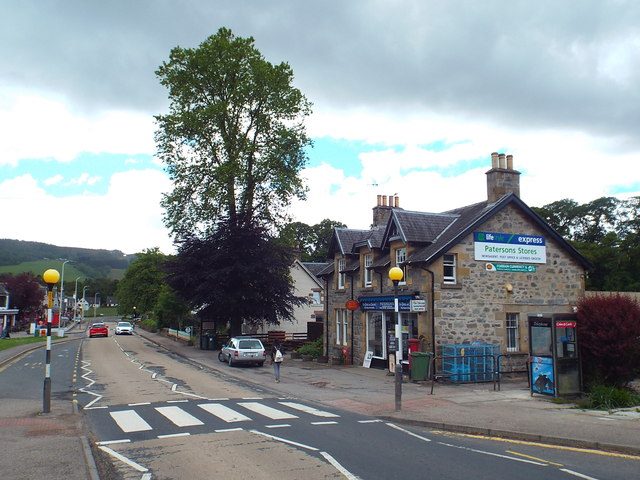
09:15 — Urquhart Castle, before it fills
Urquhart is the reason most people come, and it earns it: a broken red-stone fortress on a promontory, with the loch running away south-west for twenty miles behind it. It changed hands repeatedly through the Wars of Independence, was garrisoned, besieged, and finally blown up in 1692 to stop the Jacobites using it. What’s left is a ruin with an unusually good sense of its own shape — you can read the layout from the top of the Grant Tower in about a minute.
Three practical things, and please take all three seriously.
First, book a timed entry slot online. Historic Environment Scotland runs the site on advance timed entry, and in July and August slots regularly sell out days ahead. Adult admission is around £14 online at the time of writing, a couple of pounds more if you walk up — assuming there’s anything left to walk up to. HES members and Explorer Pass holders go free but should still reserve a slot.
Second, book a parking bay at the same time. The car park is not large, it sits below the visitor centre, and it fills. You reserve the bay in the same transaction as the ticket. Without a booked bay you may end up parking in Drumnadrochit and walking the two miles along the A82, which is not something I’d recommend.
Third, allow ninety minutes, not the forty-five you’re imagining. There’s a short film in the visitor centre, a genuinely steep path down to the castle itself, and the walk back up is more than most people expect. If you want the fuller history — who held it, when, and what the trebuchet in the courtyard is doing there — our Urquhart Castle guide goes into it properly.
Opening is 09:30 every day, except 1 January, when the castle opens at 11:00, and 25 and 26 December, when it is closed. Last entry runs to about 19:15 from April to August, 17:00 in September, 16:00 in October and 15:30 from November to March, which matters enormously for the winter version of this day.
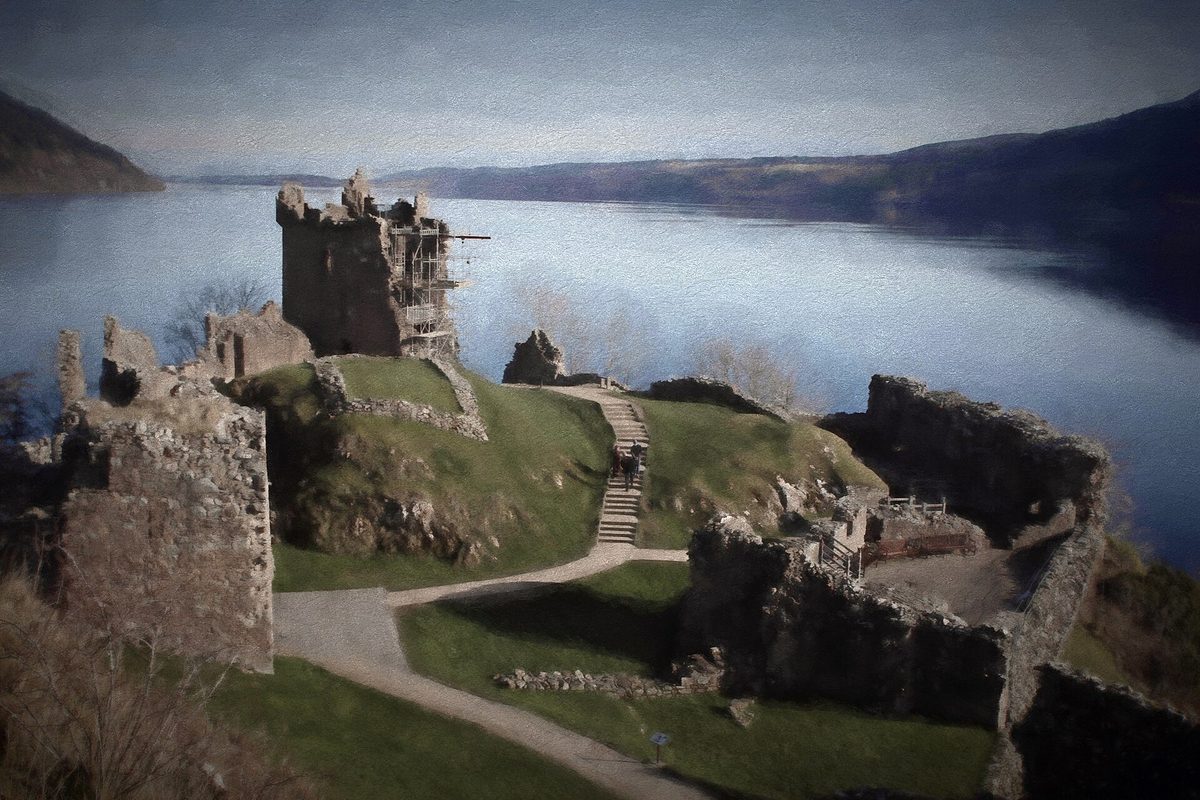
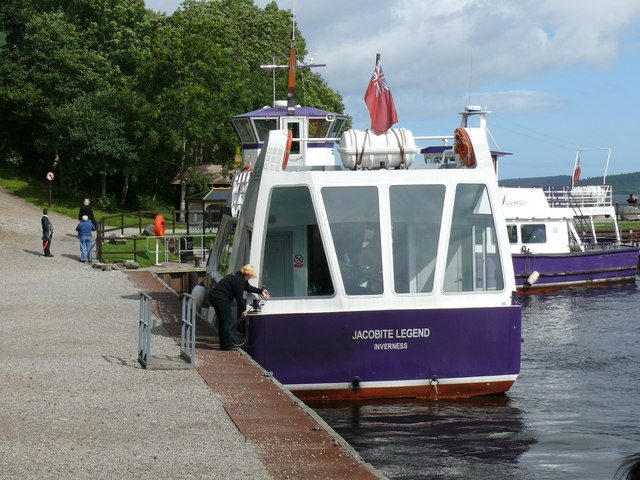
11:15 — The cruise, which is the fixed point of the day
Here is the planning principle that nobody states plainly: book the boat first and build the day around it. Castles, waterfalls and lunch all flex by half an hour without consequence. A boat leaves when it leaves.
You have a few options and they depart from different places, which is where people come unstuck.
The Loch Ness Centre’s Deepscan sails from Drumnadrochit, a few minutes from the castle, and it’s the one I’d pick for this itinerary purely on geography. You meet at the centre’s Groups Entrance and transfer to the boat. It’s a sonar-equipped research cruise rather than a standard sightseeing trip, which gives it a bit more character. It sails in season only (the 2026 season ran from 3 April to 1 November), so outside those months use one of the boats below. Tickets start at around £25.
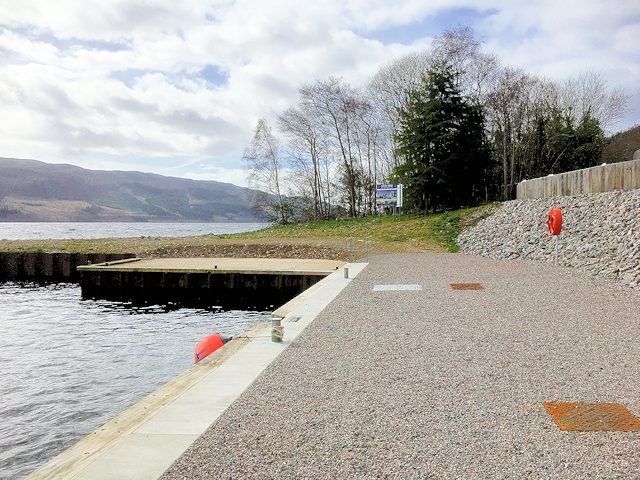
Loch Ness by Jacobite runs 50-minute cruises from Clansman Harbour (about nine miles from Inverness, back north from the castle) and from Dochgarroch Lock closer to town, plus a two-hour sightseeing cruise from Dochgarroch. Prices start from £21 for the 50-minute trips and £29 for the two-hour Contemplation; Freedom, an hour on the water and an hour ashore at Urquhart Castle, starts from £33. Cruise Loch Ness operates from the other end at Fort Augustus, with 50-minute sailings at roughly £22 for adults and £15 for children, running from about 10:00 through to 16:00 between April and October and only twice a day in winter.
If you’d rather sail from Fort Augustus, swap the cruise into the lunch slot and give yourself an extra hour at Urquhart instead. It works fine — you just need to decide before you book, not on the day. We compare the operators, boat sizes and what you actually see from each in our roundup of the best Loch Ness cruises.
What you get on the water is a different loch entirely. From the road it’s a strip of dark water between two hillsides. From the middle you feel the scale of it — 23 miles long, over 200 metres deep in places, and holding more fresh water than every lake in England and Wales combined. Most boats run live sonar and the crew narrate it, which is either good fun or slightly silly depending on your tolerance for the subject. If you want the actual evidential history rather than the gift-shop version, our piece on the Loch Ness monster is more honest about it than most.
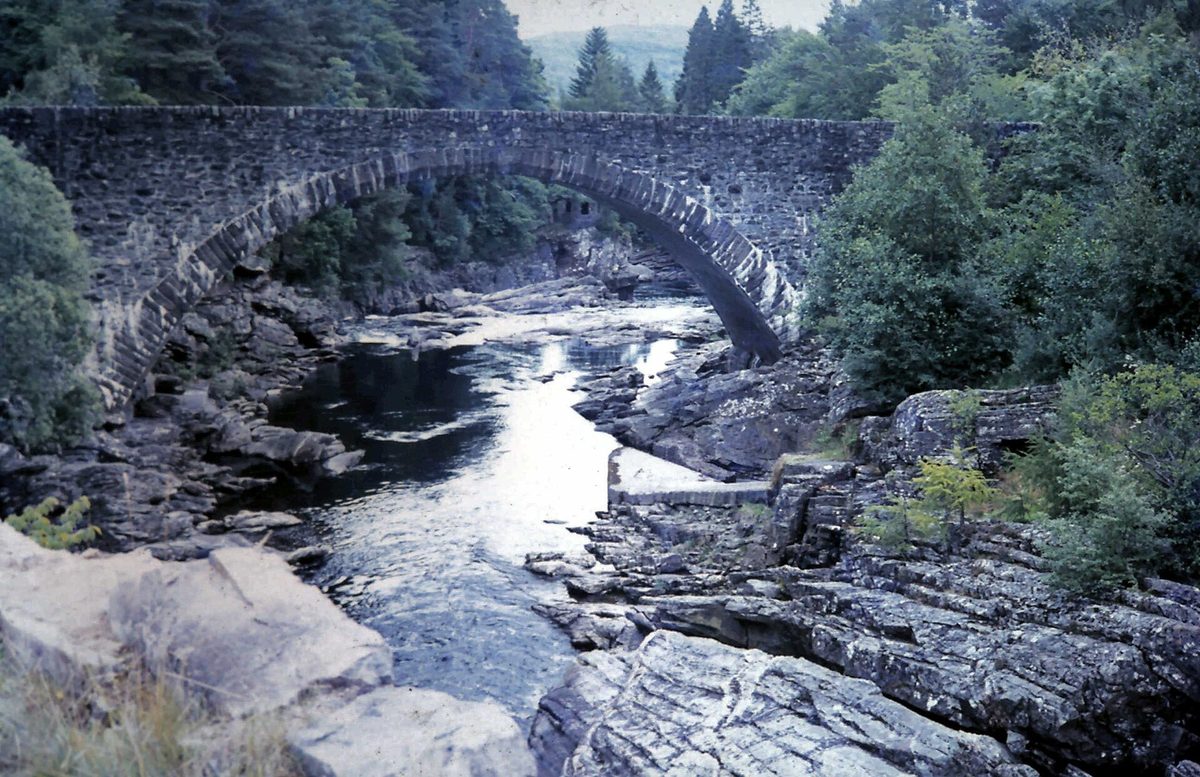
12:45 — Invermoriston, briefly
Ten minutes, no more. There’s a small car park by the A82 and a short walk to Thomas Telford’s old bridge over the River Moriston, finished in 1813 and replaced by the road bridge beside it in the 1930s. In spate the river underneath is genuinely dramatic; in a dry August it’s a trickle over bare rock. Look, photograph, move on. Skipping it entirely costs you nothing if you’re behind schedule.
13:15 — Fort Augustus: lunch and the staircase of locks
Fort Augustus sits at the southern tip of the loch and is the natural lunch stop: it’s roughly halfway round, and the east side that follows has very little in the way of food. Eat here even if you’re not hungry yet. I’ll explain why in a moment.
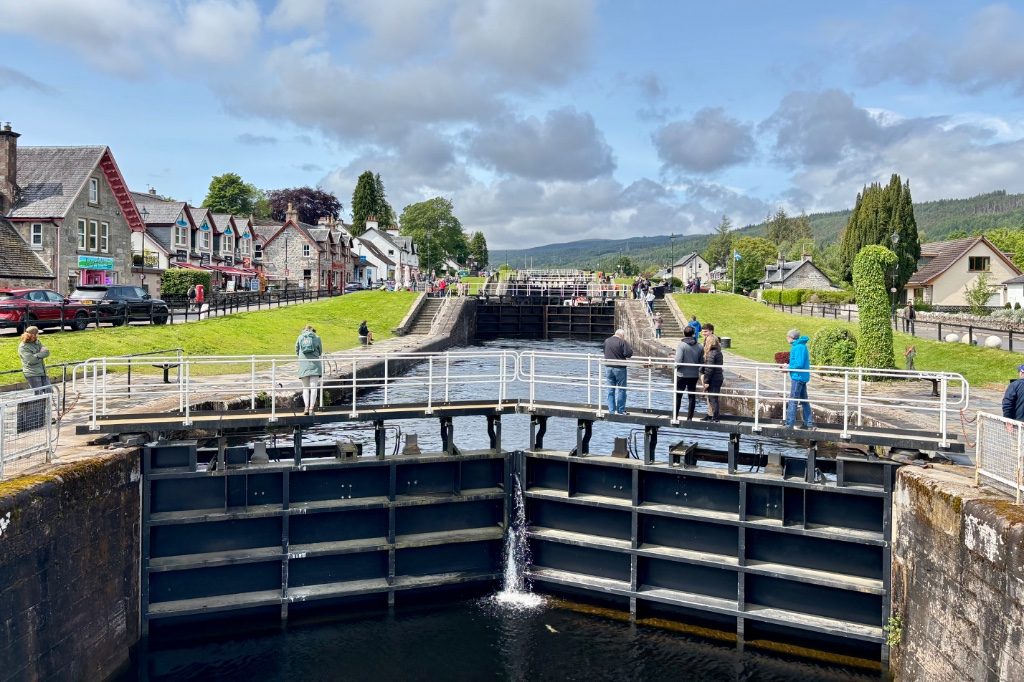
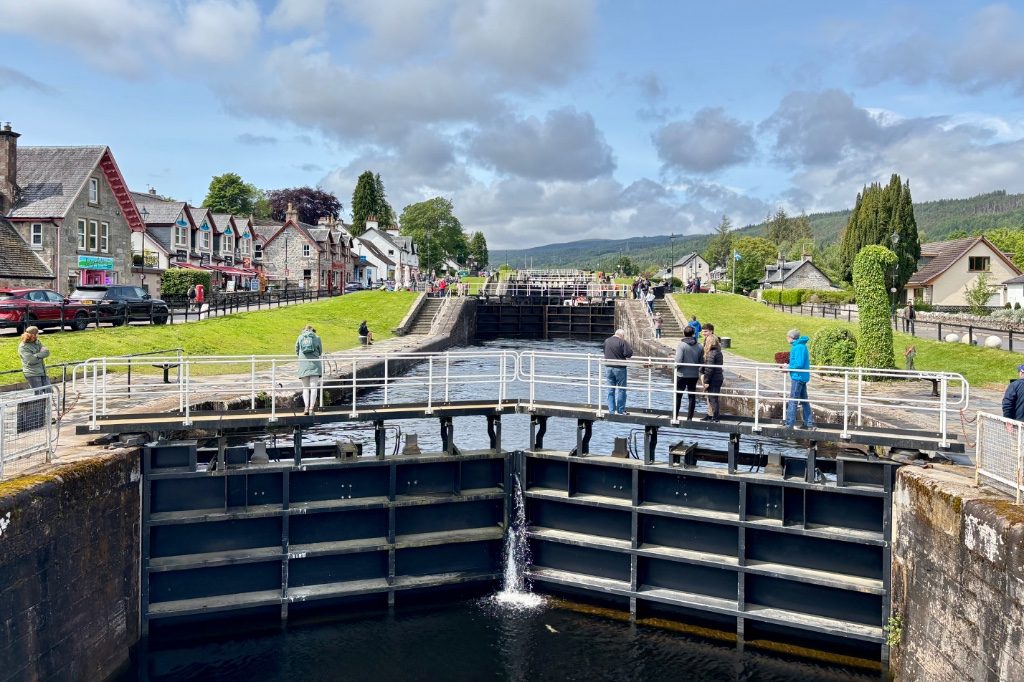
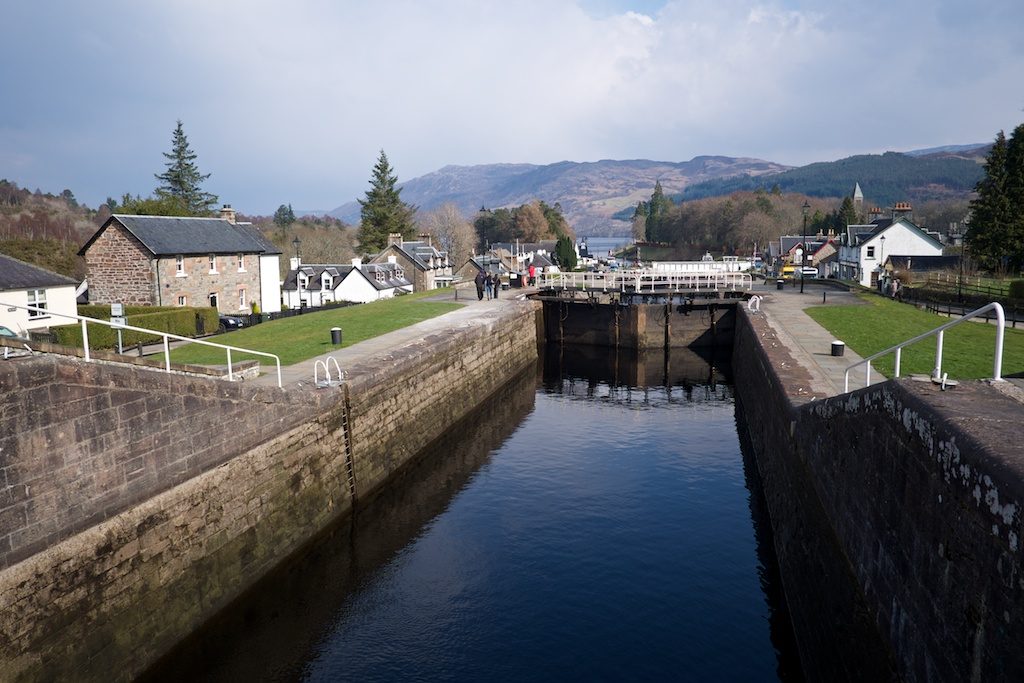
The thing to see is the flight of five locks carrying the Caledonian Canal down into Loch Ness. Boats are raised and lowered through the staircase one chamber at a time, and watching a yacht work its way down — gates opening, water dropping, the whole slow business — is far more absorbing than it sounds. The canal was Telford’s again, opened in 1822 after twelve years of work, 22 miles of cut linking a chain of natural lochs across the Great Glen. The Caledonian Canal Centre beside the locks has the interpretation, a café and, usefully, public toilets.
Give yourself ninety minutes here. Lunch, the locks, a wander along the towpath, and you’re back in the car at 14:45 with the best part of the drive still to come. If you’re carrying on rather than looping back, Fort Augustus sits on the A82 south, and the same road takes you on to Fort William and Glencoe.
14:45 — The B862 over the moor
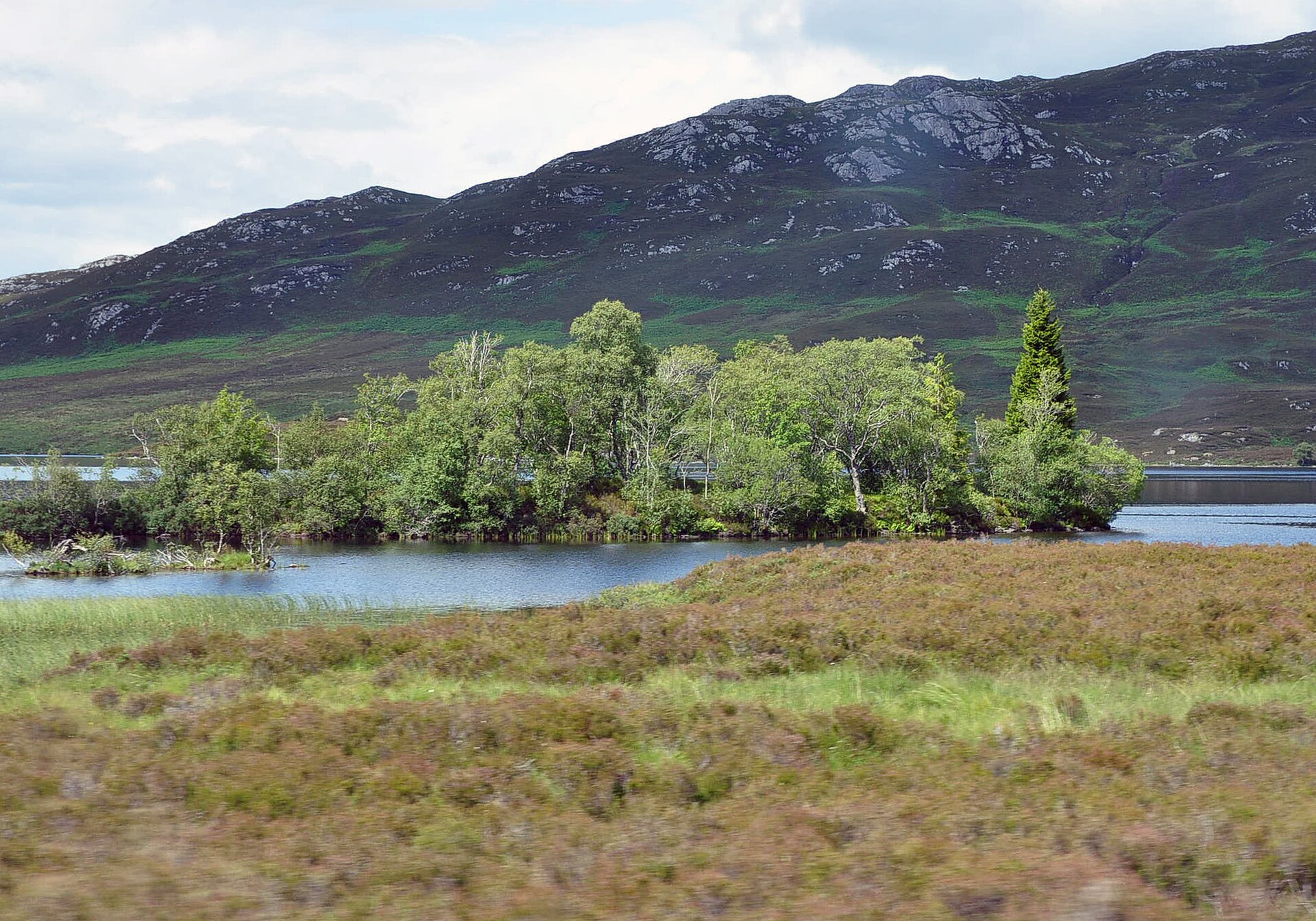
Now the day changes character. The B862 climbs steeply out of Fort Augustus and within ten minutes you’ve lost the loch entirely and gained a high, brown, empty moor with Loch Tarff sitting in a hollow below the road. Pull in at the Suidhe Viewpoint — there’s space for a few cars — and look back down the Great Glen. On a clear afternoon it’s the best view of the day, and I’d put money on you having it to yourself.
The road runs on through Stratherrick past Loch Mhòr, drops through Whitebridge, and at the junction you take the B852 down towards Foyers and the water. Single-track sections come and go without much warning. Take it slowly; there is nothing to gain by hurrying and a fair bit to lose.
This stretch is the reason I’d argue the east side is the more beautiful half of the loop, and it’s the half almost every visitor skips. It also belongs in any decent list of Highland road trip routes, which is not something you could say about the A82.
15:45 — Falls of Foyers: bring proper shoes
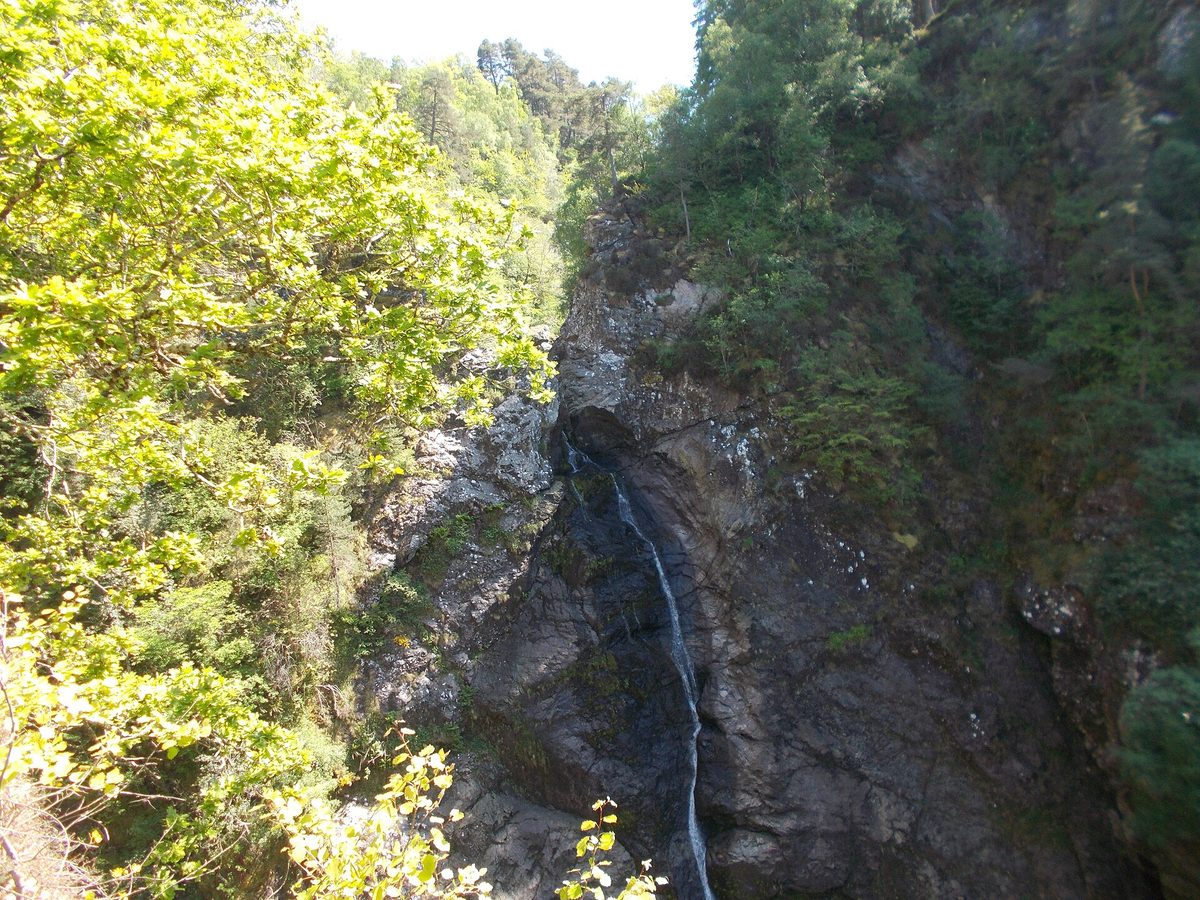
Let me be blunt about this one, because a lot of guides are not. The Falls of Foyers is not a viewpoint you stroll to from the car. You park in the car park opposite the entrance in Upper Foyers, cross the road, go through the gate, and then descend a long stepped path through woodland to the upper viewpoint. If you want the lower viewpoint, that’s more steps down again. Everything you descend, you climb back up.
The path is stepped, uneven, frequently muddy and slippery after rain, which in this part of Scotland means most of the time. Trainers will do in dry weather. Smooth-soled shoes will not. Wear something with a grip.
What you get is a waterfall dropping about 98 feet into a wooded gorge, and how impressive it is depends a great deal on recent rainfall. After a wet week it’s a roaring, spray-filled thing. In a dry spell it’s a thin ribbon down a black rock face. Both are worth the walk; only one is worth the photograph. It’s free, open all year, and there’s a café near the car park for the recovery cup of tea.
Budget an hour door to door. Forty-five minutes if you’re quick and only do the upper viewpoint.
17:00 — Dores, and the best view on the loch
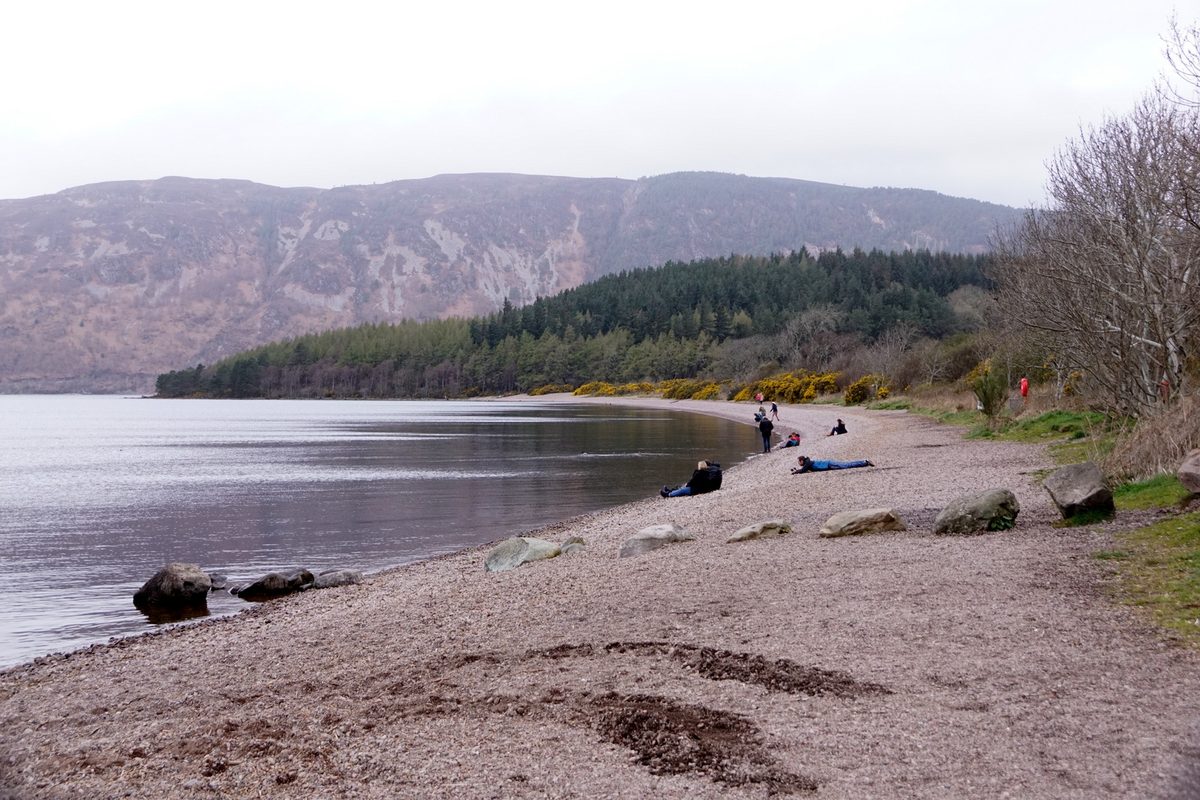
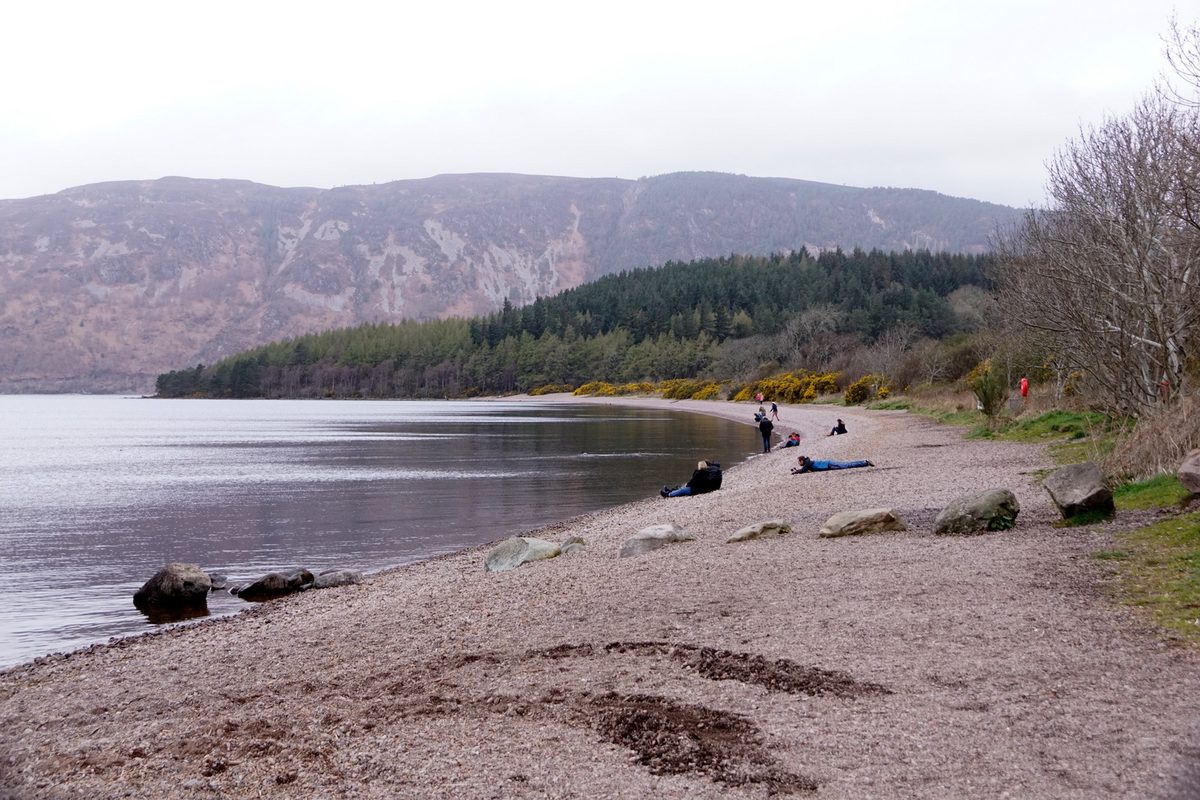
The B852 rejoins the water and runs into Dores, where a long shingle beach gives you the view that ends up on postcards: the loch running dead straight away to the south-west, hills falling in on both sides, the whole geological knife-cut of the Great Glen laid out in one frame. It is, to my eye, a better view of Loch Ness than anything you get from the west shore, and it costs nothing.
From Dores it’s a short run back into Inverness on the B862. If it’s midsummer and you still have light, Chanonry Point lies on the far side of town and the bottlenose dolphins often show on a rising tide. That is an ambitious way to end an already long day.
Three ways to run the day
Variant one: the classic full loop
Everything above. Roughly 70 miles, nine hours door to door, three ticketed things and two walks. If you have one day at Loch Ness and a car, this is the version to run. It works from April to September and is comfortable in June and July when you’ve got light until well past ten.
Variant two: the relaxed half-day
You’ve got an afternoon, not a day. Do this instead: leave Inverness at 13:00, drive to Dores first (20 minutes), take the view, then continue down the east side as far as Foyers for the falls. Turn around and come back the way you came, stopping at Dores beach again on the way home.
You’ll see the two best free things on the loch, do one decent walk, drive the prettier road twice, and spend nothing but fuel. What you miss is Urquhart Castle and the cruise — both of which are worth doing properly on another day rather than badly on this one.
The alternative half-day, if the castle is the whole point of the exercise, is a late-afternoon Urquhart slot in high summer when last entry runs to 19:15. Arrive at 17:30 in June and the site is far quieter than at noon, with much better light on the loch. It’s the single best-kept piece of timing advice about the place.
Variant three: the rainy-day version
It will rain. Not might — will, on a decent proportion of days, and our month-by-month weather guide is honest about the odds. A wet Loch Ness day isn’t a write-off, it’s a different day.
Cut the moor road and the long views, which you won’t see anyway, and lean into the indoor and the atmospheric. Urquhart Castle in horizontal rain is genuinely better than Urquhart Castle in sunshine — grey water, low cloud on the far shore, nobody else on the promontory. Go anyway, and stand in the Grant Tower out of the wind. Then the Loch Ness Centre in Drumnadrochit, which is a proper museum-style exhibition about the science and the searches rather than a gift shop with a plastic monster outside; adult tickets are £15.75 online. Then a cruise, because you’re under cover on the boat and rain doesn’t much affect what you see. Then lunch at Fort Augustus and the Canal Centre.
Come home the way you went, on the A82. The east-side road in heavy rain with poor visibility is not enjoyable and the falls path becomes properly slippery. Save it.
If the forecast is properly foul, the honest answer may be to swap the day entirely — Culloden has an indoor visitor centre and is only 15 minutes from Inverness, and there are other options in our list of day trips from Inverness.
Loch Ness in winter: the four o’clock problem
Between late November and mid-January, Inverness loses the light some time between about 15:30 and 16:00. That is the fact that reorganises everything.
Three consequences. First, Urquhart Castle’s last entry drops to around 15:30 from November to March, and the site closes not long after. Second, the cruise operators cut right back — Cruise Loch Ness runs only a couple of daily sailings from November to March, and the Jacobite timetable thins out too. Third, and most importantly, the east-side road in the dark is a waste. You will drive an hour and forty minutes of single-track moorland and see nothing at all.
So in winter, do one of two things.
Reverse the loop. Leave Inverness at 09:00, drive the east side first while it’s light — Dores, Foyers, the moor — and reach Fort Augustus for lunch around 13:00. The coach traffic that makes anticlockwise a bad idea in July barely exists in January, so arriving at Urquhart at 14:00 is fine. Do the castle before the 15:30 last entry and drive the A82 home in the dark, which is easy and well-surfaced.
Or cut it short. Skip the loop altogether. Inverness to Urquhart, castle, back via Dores for sunset. Four hours, all of it in daylight, no rushing. Frankly this is the better winter plan, and it leaves you time for the things Inverness does well in the cold. Our winter in Scotland guide covers what else is open up here at that time of year.
One more winter note: the B862 over Suidhe crosses exposed high ground and gets snow and ice when the glen below is clear. Check conditions before you commit to it, and if you’re in a hire car with summer tyres, don’t.
Self-drive or a guided coach tour? An honest comparison
Driving yourself isn’t right for everyone, so here is how the two compare.
| Self-drive loop | Guided coach day tour | |
|---|---|---|
| Rough cost, two adults | ~£12 fuel + £28 castle + £50 cruise = around £90 | Around £90–£140 total, castle and cruise usually included |
| Rough cost, family of four | ~£12 fuel + £45 castle + £92 cruise = around £149 | Around £180–£280 |
| Length of day | Around nine hours, all of it yours to reshape | Fixed itinerary; Jacobite’s Temptation tour, for one, runs 3.5 hours |
| East shore included? | Yes — the best part | Depends on the tour; check its itinerary |
| Arrival at Urquhart | 09:30, at opening | Set by the tour’s schedule |
| Commentary and history | What you read beforehand | A guide, which is genuinely valuable |
| Suits | Confident drivers, families, anyone wanting the quiet side | Non-drivers, solo travellers, tight schedules, anyone who wants a dram at lunch |
Two adults, the costs land in much the same place and self-drive buys you the east shore and a quiet castle. A family of four, self-drive is clearly cheaper. Solo, a coach tour often works out better and you get a guide talking you through the Great Glen fault, the Jacobites and the canal, which no audio app does as well.
Where I’d push you towards a tour regardless of arithmetic: if you’ve just landed, if you’re not used to driving on the left, or if it’s December and you don’t fancy an unfamiliar single-track road in the dark. And if you don’t have a car at all, Scottish Citylink’s 919 coach or Ember’s E14, which stops at Urquhart Castle, runs the A82 between Inverness and Fort William, along the loch — slower and less flexible, but perfectly workable once you have checked the current timetable for its stops. Our guide to how to get to Loch Ness has the bus detail and the bus-only version of this day.
What to book, and how far ahead
Short list, in order of urgency.
The cruise — as soon as you know your date. Sailings sell out in July and August, and in the shoulder seasons the timetable is thin enough that missing one costs you two hours. Book it, then write the rest of the day around the departure time.
Urquhart Castle timed entry and parking bay — a week ahead in summer, a few days otherwise. Both in the same booking. This is the one people skip and regret. Historic Environment Scotland does release some capacity closer in, but not reliably.
The Loch Ness Centre — only if it’s on your list. Adult tickets are £15.75 when you book on the centre’s website.
Lunch at Fort Augustus — not necessary, but sensible in August. The village has a handful of pubs and cafés, so allow plenty of time for lunch in high summer. If you’re a group of six, ring ahead.
Nothing else. The falls, Dores, the viewpoints and the drive are all free and unbookable, which is exactly why they belong in the afternoon.
On where to sleep: staying in Inverness keeps you near the airport, the trains and the restaurants; staying at Drumnadrochit or Fort Augustus puts you on the loch and cuts your morning drive to nothing. We weigh it up in where to stay around Inverness and Loch Ness, and if you’re building a longer Highland trip, choosing the right Highland base town is worth ten minutes of thought before you book anything.
What underwhelms, and the mistakes I keep seeing
The loch itself is not the attraction
Let’s be honest: as a body of water, Loch Ness is fine rather than spectacular. It’s long, straight, dark and mostly hemmed in by conifer plantation. If you’ve seen Loch Maree or Loch Assynt or a dozen others on our list of Scotland’s most beautiful lochs, Loch Ness will not be the one you remember. What makes the day is the castle, the boat, the locks, the moor road and the falls — the things around it. Come for those and you’ll enjoy yourself. Come expecting the water to move you and you may wonder what the fuss is about, a question our piece on whether Loch Ness is worth visiting tackles head on.
The monster attractions are a mixed bag
The Loch Ness Centre in Drumnadrochit is decent — more sober than you’d expect, with real material about the sonar surveys and the photographic hoaxes. The other monster-themed offerings in the village are aimed squarely at small children and priced ambitiously. With kids under eight, one of them will make the day; without kids, skip both and put the money towards the two-hour cruise instead.
The food gap on the east side is real
This is the mistake that ruins the afternoon. Between Fort Augustus and Dores — roughly two hours of driving with stops — there is a hotel at Whitebridge and a café near the falls at Foyers, and that is essentially it. Both keep their own hours and neither is guaranteed to be open in November or on a Monday in March. Eat properly at Fort Augustus and carry water and something to snack on.
Underestimating the return leg
People finish lunch at 15:00, glance at the map, decide they’ve got loads of time, and then find themselves rushing the falls at 17:30 with the light going. The east side is two hours from Fort Augustus to Inverness once you factor in Foyers and a couple of stops. Leave Fort Augustus by 15:00. If you’re running late, drop Suidhe rather than the falls.
Trying to bolt on Skye
Every summer somebody attempts Loch Ness and the Isle of Skye in the same day out of Inverness. It is technically possible and completely miserable — nine hours of driving for two hours of stopping. Give Skye its own days. Same goes for stitching the Cairngorms onto the end of this loop.
Expecting Highland cows on the roadside
You may see one; you may not. They aren’t reliably visible along either shore. If a shaggy coo is on the list, plan for it deliberately using our guide to where to see Highland cows rather than hoping one turns up at Dores.
Frequently asked questions
How long does it take to drive around Loch Ness?
The full loop from Inverness — A82 south, B862 and B852 north — is about 70 miles, before you add a single stop. With Urquhart Castle, a cruise, lunch at Fort Augustus and the Falls of Foyers, allow nine hours door to door. Rushing it below seven hours means dropping something meaningful.
Which side of Loch Ness is better to drive?
The east side, on the B862 and B852, is by a distance the more beautiful drive — quieter, higher and more varied. The west-side A82 is faster and has the famous stops. Do both: A82 south in the morning, east side home in the afternoon. Driving only the A82 and turning round is the commonest mistake here.
Do I need to book Urquhart Castle in advance?
Yes. Historic Environment Scotland operates timed entry and you book a car parking bay in the same transaction. In July and August slots sell out days ahead and the car park regularly reaches capacity. Adult tickets are around £14 online at the time of writing. Book a week out in summer, and check the HES site for current prices.
What time do the Loch Ness cruises run?
It varies by operator and season. From April to October, Cruise Loch Ness sails from Fort Augustus at 11:00, 13:00, 14:00 and 15:00, adding 10:00, 13:30, 14:30 and 16:00 at peak times; from November to March it sails at 13:00 and 14:00. Times can change, so check live availability on its website. Jacobite runs from Clansman Harbour and Dochgarroch through the day. Book first, then build your itinerary around the departure — it’s the only fixed point.
Is the Falls of Foyers walk difficult?
It’s short but steep. A stepped woodland path descends to the upper viewpoint, with more steps to the lower one, and you climb everything back up. Allow an hour, wear shoes with grip, and expect mud after rain. It isn’t suitable for wheelchairs or pushchairs, and it isn’t a viewpoint you reach from the car park.
Can you do a Loch Ness day trip without a car?
Yes, though not the full loop. Scottish Citylink’s 919 links Inverness and Fort William along the A82 beside the loch, and Ember’s E14 stops at Urquhart Castle; check the current timetables for stops at the village and the cruise piers before you plan the day around them. The east-side road has no useful service. A guided coach tour is the simpler option if you want a lot of ground covered in one day.
What is the best time of year for a Loch Ness day trip?
May and September. You get long daylight, most things open, and considerably fewer coaches than July or August. Midsummer gives you light until after 22:00. Winter is atmospheric and near-empty, but you’re working with about seven hours of daylight and a reduced timetable.
Where is the best view of Loch Ness?
From the shingle beach at Dores, looking south-west straight down the Great Glen. It’s free, there’s a car park, and it beats anything on the west shore. Second place goes to the Suidhe Viewpoint on the B862 above Fort Augustus on a clear day.
Final thoughts
Doing Loch Ness in a day has a reputation for being a bit of a conveyor belt, and if you do it the way most people do — coach out, castle at noon, photograph, coach back — it earns that reputation fairly.
Done clockwise, with the boat booked first and the afternoon given over to a slow road nobody else drives, it’s one of the better days you can have out of Inverness. Set the alarm for seven. Be at the castle gate when it opens. Eat a proper lunch at Fort Augustus. And then take your time on the way home, because that’s the part you’ll remember.
For everything else in this corner of the Highlands — Culloden, the Black Isle, the Moray coast and the rest — start from our Loch Ness and Inverness hub, and if you’re still shaping the wider trip, our general Scotland travel tips will save you a few mistakes I’ve already made for you.
About the author: This guide was written and is maintained by the ScotlandTourism.org editorial team — travel writers who’ve spent years exploring Scotland’s cities, Highlands and islands, from bagging Munros to chasing the perfect dram. We update our guides regularly to keep prices, opening details and advice current.
Last updated: November 2026. Prices and opening times change — always check the official site before you travel.
Photo credits
All images are used under their respective Creative Commons or public-domain licenses:
- The flight of five locks on the Caledonian Canal at Fort Augustus — David Dixon, CC BY-SA 2.0, via Wikimedia Commons
- The shingle shore at Dores looking south-west down Loch Ness — Mike Pennington, CC BY-SA 2.0, via Wikimedia Commons
- A cruise boat on Loch Ness — Susannah Muldoon, CC BY-SA 2.0, via Wikimedia Commons
- Drumnadrochit village on the west shore of Loch Ness — Malc McDonald, CC BY-SA 2.0, via Wikimedia Commons
- Telford’s old bridge over the River Moriston at Invermoriston — Gordon Spicer, CC BY-SA 2.0, via Wikimedia Commons
- Urquhart Castle ruins on the shore of Loch Ness near Drumnadrochit — BIG ALBERT, CC0, via Wikimedia Commons
- The Falls of Foyers dropping into its wooded gorge above Loch Ness — Peter S, CC BY-SA 2.0, via Wikimedia Commons
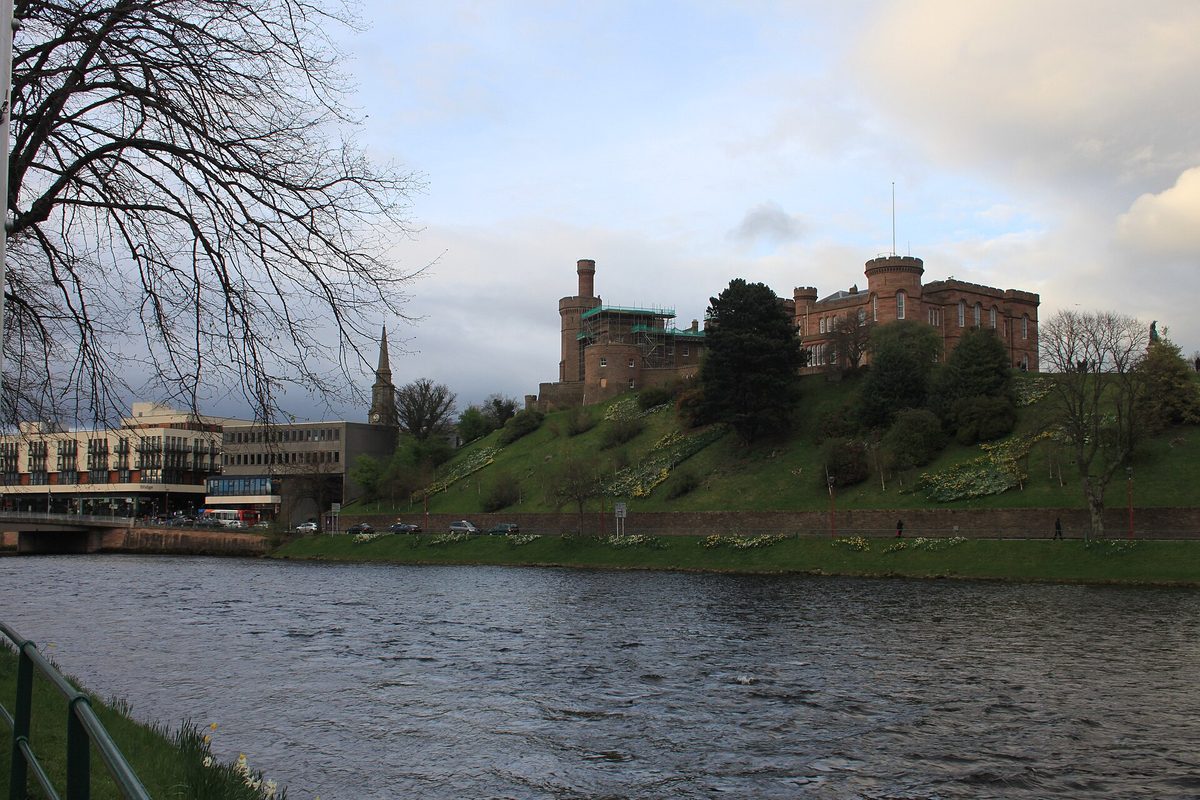
- Inverness castle above the River Ness — Roger Davies, CC BY-SA 2.0, via Wikimedia Commons
- Fort Augustus at the southern end of Loch Ness — Peter Skynner, CC BY-SA 2.0, via Wikimedia Commons
- The shore at Dores on Loch Ness — Colin Smith, CC BY-SA 2.0, via Wikimedia Commons
- The pier at Clansman Harbour on Loch Ness where cruises depart — David Dixon, CC BY-SA 2.0, via Wikimedia Commons
- Loch Tarff: Island on Loch Tarff by Nilfanion, CC BY-SA 3.0, via Wikimedia Commons.