The classic mistake at Chanonry Point is turning up for the weather. Glorious afternoon, blue sky over the Black Isle, a line of people along the shingle with cameras — and, if low water was hours ago, absolutely nothing. The people who see dolphins here turn up for the tide.
That is the whole thing in one sentence. The best dolphin watching Inverness offers is free, it happens on a strip of stones about half an hour from the city, and it is governed almost entirely by a number you can look up the night before. Get the tide right and you can watch bottlenose dolphins throwing salmon around thirty metres from your boots. Get it wrong and you get a nice view of Fort George. This guide is built around that number. If you are putting together a wider trip, it slots neatly into our Loch Ness and Inverness guide.
The best dolphin watching Inverness offers: the short answer
Go to Chanonry Point on the Black Isle, a short drive from Inverness, and time your arrival for the rising tide — be there soon after low water at Fortrose, then stay while the tide floods. May to September is best. Park in Fortrose and walk the last kilometre; the car park at the lighthouse is tiny.
Chanonry Point at a glance
| Option | From Inverness | Best window | Cost | Best for |
|---|---|---|---|---|
| Chanonry Point, Black Isle | Short drive over the Kessock Bridge, or bus 26 | Rising tide, from soon after low water | Free to watch; car park charges apply | Dolphins close to the shore |
| North Kessock, Inverness | Just over the Kessock Bridge | Rising tide, any time of year | Free | A no-effort backup with a pavement and a pub |
| Fort George, Ardersier | 11 miles east | Same tide window, opposite shore | Historic Environment Scotland admission | Combining dolphins with a proper fortress |
| Cromarty, Black Isle | Far end of the Black Isle | Around the Sutors on a moving tide | Free from the shore | A day out that works even if you blank |
| Spey Bay, Moray | The longest drive here, east along the coast | Any state of tide, river mouth | Free; centre entry free, check opening | Learning about the population properly |
| Boat trip from Inverness Marina | In Inverness | Operator sailing times, mid-March to end of October, weather permitting | Paid, book ahead | Getting out into the firth itself |
| RIB trip from Cromarty | By road to Cromarty, at the far end of the Black Isle | Daily sailings Easter to October, weather allowing | Paid, book ahead | Speed, spray and a proper sea day |
Why the tide decides everything
Almost every article about this place tells you to go to Chanonry Point and hope. Very few explain the mechanism, which is a shame, because once you understand it the whole trip stops being a lottery and starts being a plan.
What actually happens at the narrows
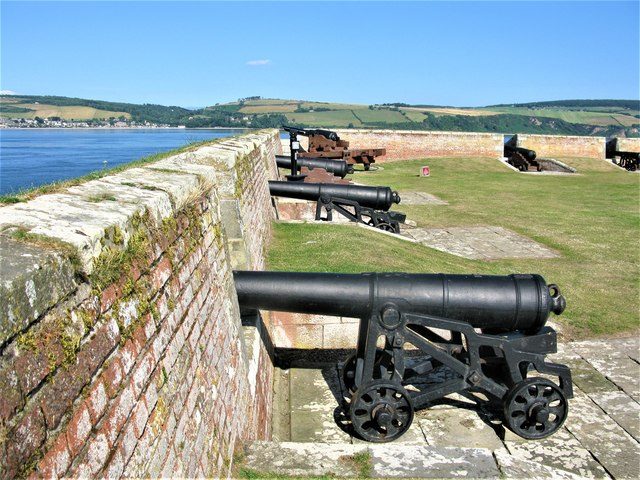
Chanonry Point is the tip of a shingle spit that pokes out from the Black Isle between the villages of Fortrose and Rosemarkie. Directly opposite, on the far shore, sits the vast eighteenth-century artillery fortress of Fort George at Ardersier. Between the two, the Moray Firth pinches to little more than a kilometre wide, and the channel there is deep — far deeper than the shallow flats on either side.
So you have a bottleneck. When the tide floods, an enormous volume of water has to squeeze through that gap to fill the inner firth beyond, and it accelerates as it goes. Atlantic salmon and sea trout heading for the rivers upstream get carried along with it, concentrated into a narrow, fast-moving ribbon of water.
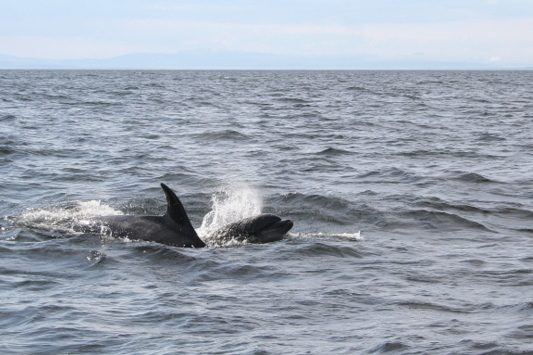
The dolphins know this. They have known it for generations. They park themselves in the channel, face into the current, and let the fish come to them. That is why they turn up on a rising tide and not, as a rule, on a falling one, and it is why they come so close to the beach: the deep water is genuinely only a stone’s throw from where you are standing.
The window that works
The rule of thumb, and it is the one every local photographer will give you, is that sightings pick up from around an hour after low water and the best of it comes in the two to three hours that follow. Some days they are early. Some days they arrive four hours in and stay for twenty minutes. But if you only have one shot at this, that is the window to be standing in.
What that means in practice is that a “good” day at Chanonry can start at half past six in the morning or half past seven in the evening. The tide does not care that you wanted to go after lunch. This is the single biggest thing most guides leave out, and it is the reason so many people go home disappointed.
How to work out your arrival time
It takes about ninety seconds. Look up tide times for Fortrose — failing that, Inverness works, though high and low water there run a little later than at the point, so give yourself extra margin. Find the low water time for your chosen day. Soon after it, as the tide turns and starts to flood, is when you want to be on the shingle with your binoculars out, not when you want to be leaving your hotel.
Then work backwards. Half an hour of driving from Inverness, a walk in from Fortrose, and in July or August extra time for finding somewhere to leave the car. Set off well before your target time and you will be relaxed rather than sprinting down the beach.
Two tides a day means two chances, roughly twelve hours and twenty-five minutes apart, shifting later by about fifty minutes each day. If the morning low water is inconvenient, the evening one may suit you perfectly — and in June and July there is enough light in the Highlands to watch until ten at night.
When the tide and your schedule refuse to agree
It happens. If the only rising tide on your day falls at three in the morning, do not force it. Go anyway, by all means — dolphins are sometimes seen at Chanonry at completely the wrong state of tide, and the walk is lovely regardless — but drop your expectations accordingly and put your effort into one of the alternatives further down this guide. Or shuffle your itinerary. A day at Culloden battlefield or on Loch Ness is easy to move; the moon is not.
Getting to Chanonry Point without losing your afternoon
The second thing nobody tells you: this is a very small place receiving a very large number of visitors, and the logistics can eat your tide window entirely if you are careless.
Driving, and the car park problem
From Inverness you cross the Kessock Bridge on the A9, come off at the Tore roundabout and follow the A832 through Munlochy and Avoch to Fortrose. It is a short drive in normal traffic. Postcode IV10 8SD gets you to the point itself.
The final stretch is where it goes wrong. After Fortrose you turn onto a narrow single-track lane that runs straight across the fairways of Fortrose and Rosemarkie golf club — golfers cross in front of you, so expect to stop — and ends at a small car park beside the lighthouse. Small is not an exaggeration. It holds a few dozen cars, it is pay and display (around £2 for up to two hours or £4 for up to four at the time of writing), and in July and August it is routinely full by mid-morning regardless of what the tide is doing.
When it fills, cars queue on that single-track lane with nowhere to turn, and the whole thing gridlocks. Please do not park on the verges: it blocks emergency access and it is exactly the behaviour that gets places like this closed to visitors. A gate limits access for motorhomes and campervans, so if you are travelling in one, do not plan on driving to the point at all.
Walking in from Fortrose — do this instead
Honestly, in peak season, just park in Fortrose and walk. It is a flat walk from the village, and you will very often arrive sooner than the person who drove down and spent that time circling.
The route is simple: from Fortrose head down Ness Road, then follow the marked path along the golf links out to the point. You can also walk along the shore from Rosemarkie if the tide allows, which is prettier and takes a little longer. Both villages have toilets, shops and somewhere to get a coffee; the point itself has neither toilets nor reliable food, though an ice cream van sometimes appears in summer.
Bus from Inverness, and the summer shuttle
You do not need a car for this, which makes it one of the better wildlife outings for anyone building a car-free Scotland itinerary. Stagecoach services 26 and 26A run from Inverness bus station out to Fortrose, Rosemarkie and on to Cromarty, roughly hourly through much of the day Monday to Saturday, and take about 32 to 42 minutes to Fortrose depending on the departure; check the current timetable on Stagecoach’s site. Get off in Fortrose and walk the last stretch.
In summer there has also been a seasonal Dolphin Shuttle, run by D&E Coaches, looping between Rosemarkie, Chanonry Point and Fortrose at roughly half-hourly intervals through the middle of the day. It exists precisely because of the car park chaos. Check locally that it is running before you rely on it — seasonal services in the Highlands come and go. Our guide to getting around Scotland covers the wider bus and rail picture.
What to take, and where to stand
Optics: less than you think
On a good day you will not need anything at all. The dolphins genuinely come within twenty or thirty metres of the beach, close enough that you hear the blow before you see the fin. That is the thing that makes Chanonry different from almost everywhere else.
That said, take binoculars. A pair of 8x42s is ideal — bright enough for grey Scottish light, steady enough to hold without a tripod — and they turn a distant dark smudge into a definite dorsal fin, which matters when you are deciding whether to wait another twenty minutes. For photography you want at least 200mm and preferably 300mm, plus a fast shutter speed, because dolphins surface for about a second and a half and give you no warning.
Clothing, because it is colder than it looks
You are standing still, on an exposed spit, with wind coming down the firth. Take a windproof layer, a hat, and something waterproof even under a clear sky — Highland weather turns quickly, as our month-by-month weather guide sets out.
Take a flask and something to sit on. You may be there two hours. A folding chair or a foam mat makes the difference between enjoying the wait and giving up twenty minutes before the dolphins show up, which is how most people miss them.
Where on the beach
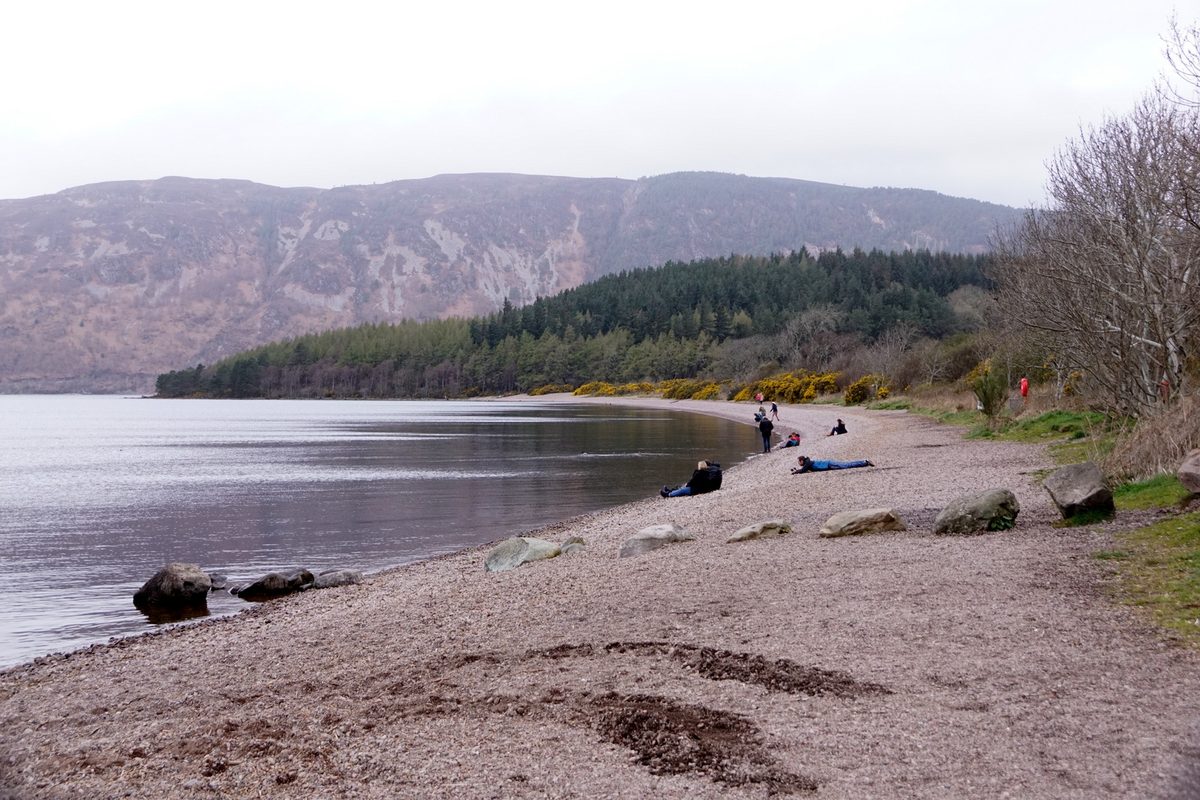
The main viewing area is the shingle just beyond the lighthouse, facing the channel and Fort George. Spread out along the shore rather than clumping at one spot, and keep an eye on the water at your feet: on a rising tide the sea will quietly reclaim the stones you are standing on, and photographers with tripods end up shuffling backwards every ten minutes.
Dogs need to be under close control, and the point is a working navigation channel — do not go paddling out towards the dolphins, however tempting. More on that below.
Season, odds and what else turns up
May to September is the window
The dolphins are resident year round, but the reliable months are May through September. Late spring brings the salmon run, which is the main event at Chanonry; by high summer the diet shifts towards mackerel and herring arriving from the North Sea, and the animals range more widely across the firth to follow the shoals.
Late August into September is calving season. Bottlenose dolphins carry for about thirteen months, and this is when you are most likely to see very small calves running tight alongside their mothers — genuinely one of the best wildlife sights in Britain, and a good reason to visit in September rather than midsummer. If you would rather have long evenings and fewer people at the point, May is the other sweet spot.
Winter is not hopeless — the pod does not go anywhere — but shorter days, rougher water and fewer fish make sightings less frequent, and standing on that shingle in a January easterly is a serious commitment.
Who lives here
The bottlenose dolphins you see here use the Moray Firth and the wider north-east coast of Scotland. They are the only resident bottlenose population in the North Sea and among the most northerly anywhere in the world.
They are also among the most closely studied dolphins on earth. Researchers identify individuals by the nicks and notches on their dorsal fins, and the long-running photo-identification work means many animals are known by name and followed across decades. The Moray Firth was designated a Special Area of Conservation for bottlenose dolphins in 2005.
What else you will see
Harbour porpoise are frequent in the firth and easy to mistake for small dolphins — they are smaller, blunter, with a low triangular fin, and they surface without fuss rather than leaping about. Common and grey seals haul out along the coast and often bob around off the point.
Look up as well as out. Ospreys fish the firth through the summer, gannets plunge-dive offshore, and terns work the shallows. Minke whales are seen in the outer firth in summer, only occasionally this far in, and orca sightings are rare enough that they make the local news.
Honest odds
Chanonry Point is widely reckoned the best land-based bottlenose viewing site in Europe. It is still not a guarantee. Time it properly in the right season and you are, in my experience, well ahead of a coin flip; turn up at random on a sunny Tuesday afternoon and you are gambling.
Blanking happens to everyone, including the researchers. Go with the attitude that you are spending two hours on a beautiful shore looking at a fortress across the water, and anything else is a bonus. That is the honest framing, and it is a better one than “you’ll definitely see dolphins”, which is what half the internet tells you.
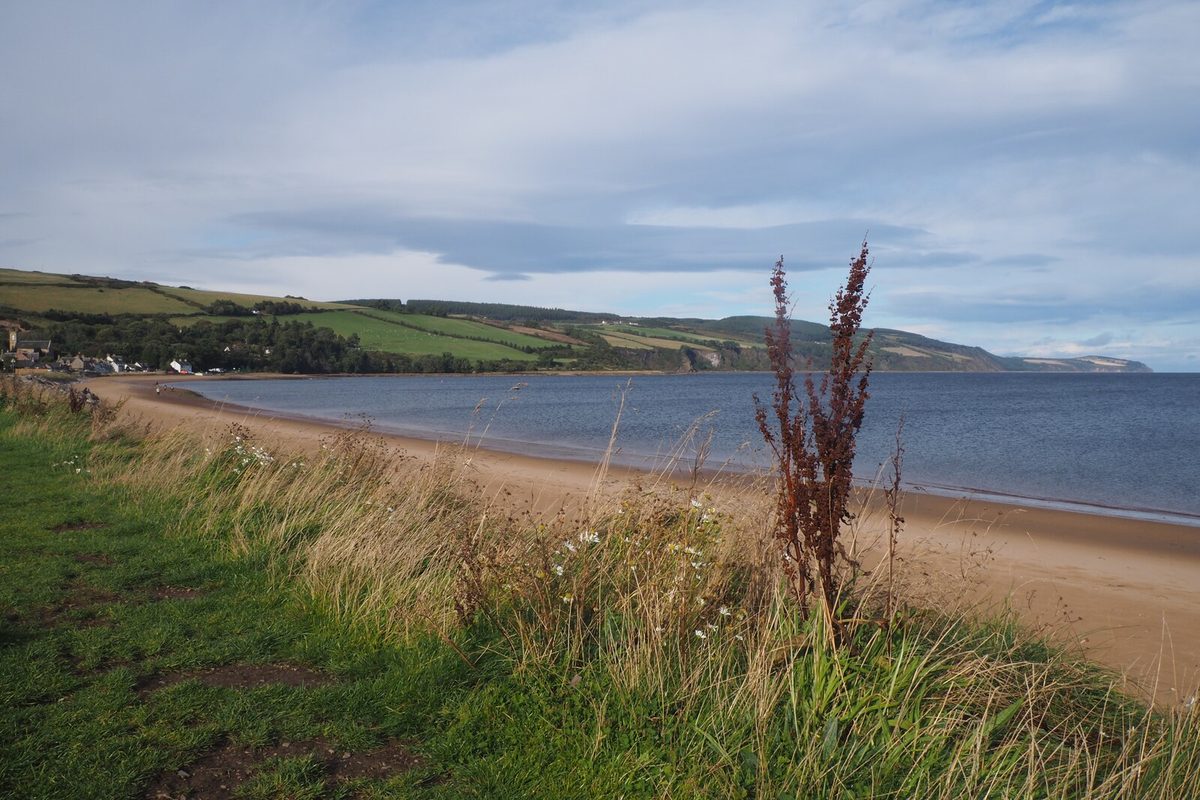
If Chanonry does not deliver: the backup plan
The dolphins are in the firth whether or not they come to the narrows. Here is where else to look, roughly in order of convenience from Inverness.
North Kessock
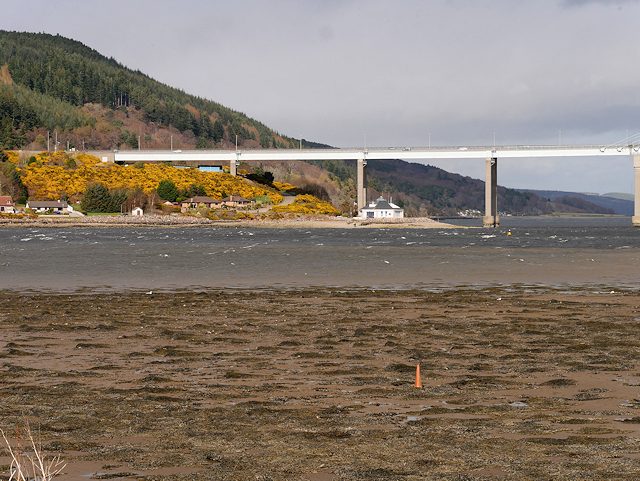
Five miles from the city centre, right under the Kessock Bridge on the Black Isle side. There is a viewpoint with a car park and a paved walkway, so it is far easier for anyone with mobility issues than the shingle at Chanonry, and dolphins pass through the channel here on a moving tide. Whale and Dolphin Conservation has run a Dolphin and Seal Centre at North Kessock in past summers, free to enter — check with WDC whether it is open before you build a day around it. The village pub is thirty seconds away, which helps.
Fort George
The far shore of the same narrows, reached from Inverness via the A96 and Ardersier. You are watching the identical channel from the opposite bank, and the ramparts give you height, which is a real advantage for spotting fins. Fort George is a Historic Environment Scotland property with an admission charge, and it is a genuinely impressive place in its own right — a Hanoverian artillery fortress built after Culloden and still barely altered. If the tide is right, the combination is one of the better day trips from Inverness.
Cromarty
At the far end of the Black Isle, a beautiful little eighteenth-century town guarded by the two headlands known as the Sutors. Dolphins are regularly seen from the shore near the lighthouse as the tide moves through the Cromarty Firth entrance. Even on a blank day you have a proper town to explore, which is more than can be said for a windswept car park.
Spey Bay and the Moray coast
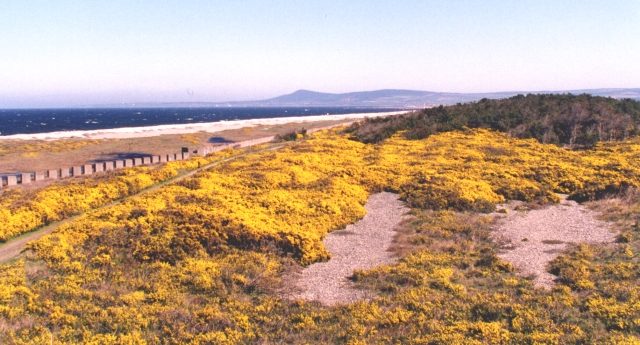
An hour and a quarter east, where the River Spey meets the sea, sits WDC’s Scottish Dolphin Centre — the best place in Scotland to actually learn about this population rather than just look at it. Dolphins feed at the river mouth, and the walk along the shingle is worth doing regardless. Further along the coast, Burghead, Hopeman and Nairn all produce regular sightings from the shore, and Nairn’s beach makes the list in our roundup of the best beaches in Scotland.
Boat trips versus standing on the shingle
People ask this constantly, and the honest answer is that they are different things rather than better or worse.
Shore watching at Chanonry is free, unlimited in duration, and on a good day gets you closer to the animals than a boat is permitted to go. It is also entirely at the mercy of the tide, and if the dolphins do not come through the narrows you have nothing.
A boat takes you to where the dolphins are rather than waiting for them to arrive, covers far more water, and turns up seals, seabirds and porpoise along the way even when the dolphins are elusive. You pay for it, you are committed to a fixed sailing time, and trips get cancelled in bad weather.
Two of the established operators in these waters are Dolphin Spirit and EcoVentures. Dolphin Spirit sails from Inverness Marina, with a two-hour wildlife cruise on a catamaran that runs up towards the Chanonry narrows and a faster two-hour RIB trip on Mischief. EcoVentures runs wildlife RIB trips from Cromarty, with daily sailings from Easter to the end of October, weather permitting; ask what kit is provided when you book. Both are accredited under the Dolphin Space Programme. Prices change season to season, so check the operators’ own sites and book ahead in July and August.
My advice, if you have the time and the budget: do both. Watch from the shore on the tide that suits you, and book a boat as your insurance on a different day. If you would rather spend your boat money elsewhere, the Loch Ness cruises down the road are a different sort of day out entirely.
Watching without causing harm
These are wild animals in a protected area, and the rules exist for good reason. The Scottish Marine Wildlife Watching Code, produced by NatureScot under the Nature Conservation (Scotland) Act 2004, sets out how to behave around cetaceans, and the Moray Firth’s Special Area of Conservation status gives the dolphins legal protection.
From land, it is straightforward. Stay on the beach. Do not wade, swim or paddle out towards them. Keep dogs close. Do not fly a drone over the water — it is intrusive and it will make you very unpopular with everyone else on the shingle. Keep noise down; sound carries.
On the water, choose an operator accredited by the Dolphin Space Programme, the voluntary accreditation scheme for Moray Firth wildlife boats that has been running since 1995. Accredited skippers follow an agreed code on approach distances and behaviour. If you are out in your own boat, kayak or paddleboard, the same code applies to you: no pursuit, no cutting across a group, no getting between mothers and calves.
Planning your visit
Allow three to four hours door to door from Inverness for a shore watch: half an hour each way, plus the two-hour tide window, plus contingency. It is not a thing to squeeze into a gap between other plans, because the one thing you cannot compress is the waiting.
Nothing needs booking for shore watching — it is free, and one of the genuinely good free things to do in Scotland. Boat trips should be booked a few days ahead in summer, and further if you want a specific sailing. Fort George tickets can be bought on the day outside peak weeks.
Inverness is the obvious base, and it works well for this and for everything else in the area — see our guide to where to stay around Inverness and Loch Ness, and the wider case for the city in choosing a Highland base town. Staying in Fortrose or Rosemarkie itself is the move if you are serious about the dolphins, because it puts you five minutes from the beach and lets you go twice in a day.
Chanonry pairs naturally with the rest of the Black Isle: Cromarty, the Fairy Glen waterfalls above Rosemarkie, and a coastline that most visitors drive straight past on their way to the North Coast 500. It also makes a very good half-day either side of an Inverness city day, or before you head south to look for something rather less likely than a dolphin — the stories behind that are in our piece on Loch Ness monster facts.
Children do well here provided you manage expectations and bring snacks; it earns its place on our list of things to do in Scotland with kids, though a two-hour vigil in the wind is not for every four-year-old. And if you are arriving from further afield, our guide on how to get to Loch Ness and Inverness covers the trains, buses and flights.
What underwhelms, and the mistakes people make
Turning up for the weather rather than the tide. The mistake I made, and the mistake most visitors make. A grey drizzly morning on a rising tide beats a brilliant sunny afternoon on a falling one, every single time. If you take one thing from this guide, take that.
Leaving too early. The dolphins keep no timetable, and packing up early is the surest way to miss them. If you have committed to the window, stay in it.
Driving to the point in August. You will spend forty minutes in a queue on a single-track lane and possibly not get in at all. Park in the village. Walk. It is a kilometre.
Expecting facilities. There is no cafe, no toilet and no visitor centre at Chanonry Point. There is a lighthouse, a car park, some benches and a beach. Everything else is back in Fortrose or Rosemarkie.
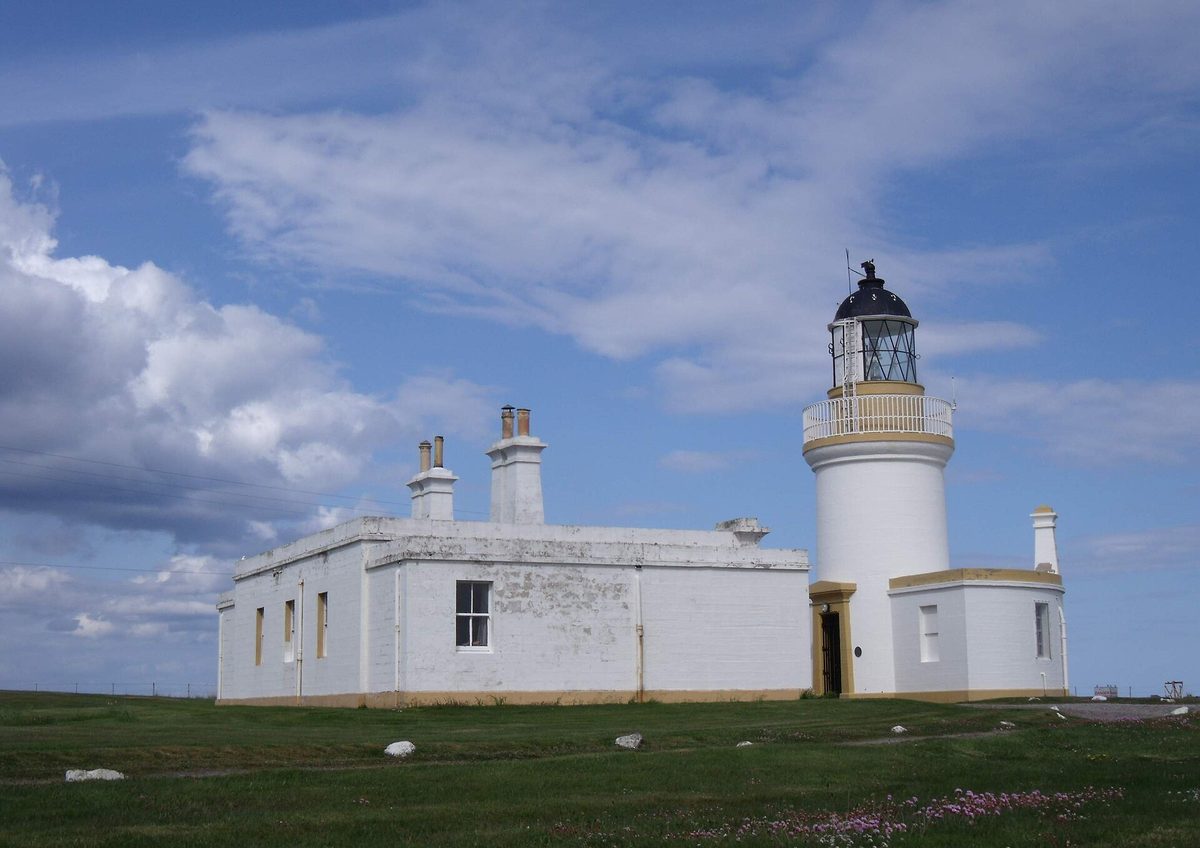
The lighthouse itself. It is a handsome white tower and it photographs beautifully, but it is closed to the public and you are looking at it from outside a fence. Do not travel for the lighthouse; travel for the water.
Assuming a boat trip is a guarantee. No operator can promise sightings, and the good ones say so plainly on their booking pages. Anyone implying otherwise is not being straight with you.
Ignoring the neighbours. Fortrose and Rosemarkie are small villages absorbing a lot of traffic. Use the car parks, use the shops and cafes, take your rubbish home. It is a short list and it keeps the place open.
Frequently asked questions
What is the best time of day for dolphin watching Inverness-side?
There is no fixed clock time — it depends entirely on the tide. Aim to be on the beach at Chanonry Point soon after low water and stay on as the tide floods. Check tide times for Fortrose the night before, because low water shifts roughly 50 minutes later each day.
Are you guaranteed to see dolphins at Chanonry Point?
No. These are wild animals and blank days happen to everyone, including the researchers who work there. Timing your visit to a rising tide between May and September gives you a genuinely good chance, but treat a sighting as a likely bonus rather than a certainty, and bring a flask and some patience.
How far is Chanonry Point from Inverness?
It is a short drive across the Kessock Bridge and along the A832 through Munlochy, Avoch and Fortrose. By bus, the Stagecoach 26 and 26A take about 32 to 42 minutes from Inverness bus station to Fortrose, depending on the departure, and run roughly hourly for much of the day Monday to Saturday.
Is there parking at Chanonry Point, and does it cost anything?
There is a small pay-and-display car park by the lighthouse, in the region of £2 for two hours at the time of writing. It holds only a few dozen cars and fills early in summer, and campervan access is restricted. Parking in Fortrose and walking the kilometre in is usually faster and always less stressful.
Which month is best for seeing Moray Firth dolphins?
May to September, with the salmon run driving activity in late spring and early summer, and mackerel and herring taking over later. Those months are also an important time for breeding and calving, so keep an eye out for young calves beside their mothers. The dolphins are resident year round, but winter sightings are less frequent and considerably colder to wait for.
Are dolphin boat trips from Inverness worth it?
They are, if you want to cover more water than the shore allows or your dates do not line up with a convenient tide. Established operators sail from Inverness Marina and from Cromarty, typically on two-hour trips between spring and October. Choose one accredited by the Dolphin Space Programme, book ahead in summer, and accept that sightings are never promised.
What else can you see besides bottlenose dolphins?
Harbour porpoise are common and often mistaken for small dolphins; look for a low triangular fin and an undramatic surfacing. Common and grey seals are regular, ospreys fish the firth in summer, and gannets and terns work the water offshore. Minke whales appear in the outer firth occasionally, and orca very rarely indeed.
Can you visit Chanonry Point without a car?
Yes, easily. Take the Stagecoach 26 from Inverness to Fortrose and walk the last kilometre along Ness Road and the golf links path. In summer a seasonal shuttle bus has run between Fortrose, Rosemarkie and the point itself, though you should check it is operating before relying on it.
Final thoughts
Chanonry rewards people who plan around the tide rather than the forecast. A grey, damp morning with the flood just starting is a far better bet than a blue-sky afternoon at the wrong state of the tide.
It costs nothing, it takes an afternoon, and it asks only that you read a tide table first. Of everything you can do around Inverness and Loch Ness, it is the one I would put at the top — and it belongs on any list of genuinely unique Scottish experiences. Check the tide. Go early. Take a hat.
About the author: This guide was written and is maintained by the ScotlandTourism.org editorial team — travel writers who’ve spent years exploring Scotland’s cities, Highlands and islands, from bagging Munros to chasing the perfect dram. We update our guides regularly to keep prices, opening details and advice current.
Last updated: November 2026. Prices and opening times change — always check the official site before you travel.
Photo credits
All images are used under their respective Creative Commons or public-domain licenses:
- Chanonry Point lighthouse and keepers’ cottages on the Black Isle near — Dave Conner from Inverness, Scotland, CC BY 2.0, via Wikimedia Commons
- Bottlenose dolphins surfacing together in the Moray Firth off the Mora — Des Colhoun, CC BY-SA 2.0, via Wikimedia Commons
- Cannons on the ramparts of Fort George at Ardersier — G Laird, CC BY-SA 2.0, via Wikimedia Commons
- Rosemarkie beach on the Black Isle — Jennifer Petrie, CC BY-SA 2.0, via Wikimedia Commons
- The Kessock Bridge seen from the shore at South Kessock — David Dixon, CC BY-SA 2.0, via Wikimedia Commons
- The view from Chanonry Point along the shore towards Rosemarkie on the — Dave Conner from Inverness, Scotland, CC BY 2.0, via Wikimedia Commons
- A red fishing boat at Avoch harbour on the Black Isle — dave conner, CC BY 2.0, via Wikimedia Commons
- Gorse and shingle at Spey Bay on the Moray coast — Anne Burgess, CC BY-SA 2.0, via Wikimedia Commons