It is easy to do Culloden battlefield in forty minutes: follow the path, read a couple of panels, photograph the cairn and go back inside for coffee. Do it that way and the moor looks flat. It changes once you know what you are walking on.
They had not. And that single piece of information reframes the whole visit. The moor is not a landscape with monuments on it. It is a burial ground with grass over it, and the clan stones you photograph are sitting on top of mass graves. Once you understand that, the place stops being underwhelming and becomes one of the most affecting hours you will spend anywhere in the Scottish Highlands.
Is Culloden Battlefield worth visiting?
Yes, if you go in knowing what the ground is. The moor is a war grave where roughly 1,500 Jacobites are buried in pits beside the clan markers, and the visitor centre’s 360-degree battle film and audio guide give the flat, empty field its meaning. Allow around three hours.
Culloden battlefield at a glance
| Detail | What to expect |
|---|---|
| Where | Culloden Moor, IV2 5EU, about 5 miles east of Inverness off the B9006 |
| Who runs it | National Trust for Scotland; free entry for members |
| Adult admission | Around £12.50 for the visitor centre, or about £16.50 including a guided battlefield walk — check nts.org.uk before you go |
| Car park | Around £5.00 pay and display, free for NTS members |
| Opening | Roughly 09.00–17.00 in the main season, 09.00–16.00 in winter; the moor itself is open daily, all year |
| Time needed | 2 hours minimum, 3 for the full visit, 4 if you read everything |
| Best conditions | Wind and sleet, genuinely — the battle was fought in filthy April weather |
| Ten minutes away | Clava Cairns, free, prehistoric, and not Craigh na Dun |
What the ground actually is
Culloden moor is a scheduled monument and, in every meaningful sense, a cemetery. That is the single fact that separates a good visit here from a wasted one, and it is the fact almost every guide skips over in a rush to get to the gift shop.
The clan stones sit on mass graves
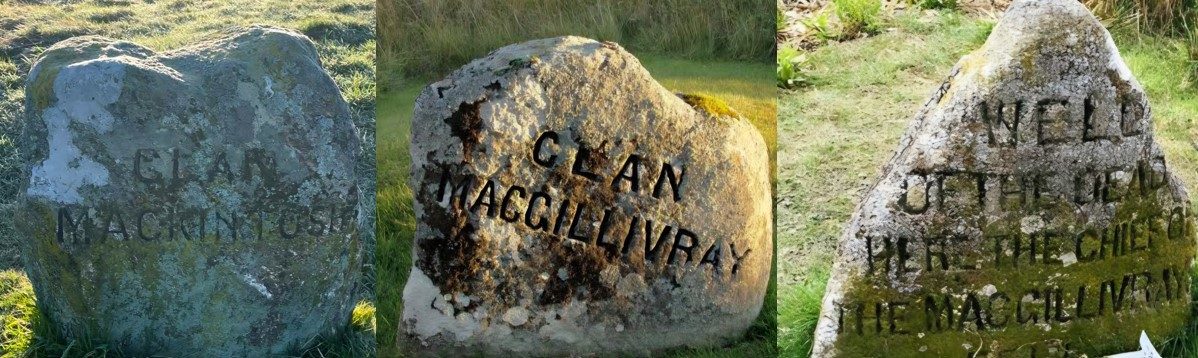
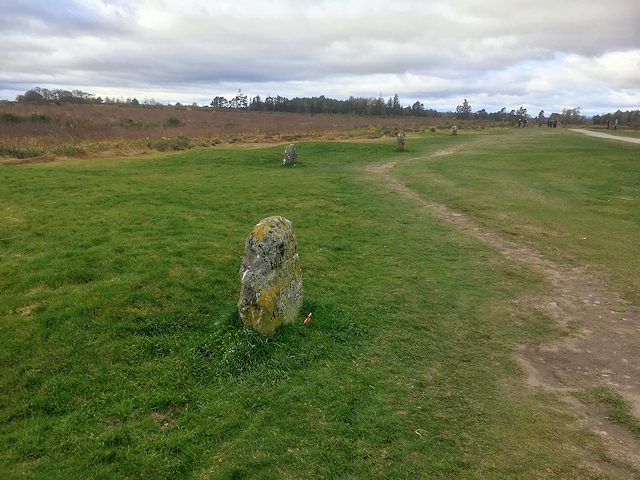
The rough grey stones you will see along the path — Clan Mackintosh, Clan MacGillivray, Clan Stewart of Appin, Mixed Clans — were not placed randomly, and they are not headstones in the churchyard sense. They mark the mass graves of those killed in the battle of 16 April 1746. The National Trust for Scotland is explicit about it: around 1,500 Jacobites are buried here, and the clan markers indicate their graves.
They are not old, as monuments go. Duncan Forbes put up the cairn and the markers in 1881, more than a century after the battle. So the stones are a Victorian act of remembrance placed over an eighteenth-century atrocity. Both things are worth holding in your head at once.
What the Trust asks, and what people do anyway
The request is simple: treat the graves area the way you would treat any other burial ground. Stay on the path, do not stand on or lean against the stones, do not picnic among them, do not let children run across the mounds. There are benches and a café back at the centre for your sandwiches.
It gets ignored constantly, and not out of malice. People arrive with no idea and behave the way they would at any other outdoor attraction. The ground around the Clan Fraser stone wore so badly under footfall that it was returfed in 2021, with a new footpath laid beside the stone to spread the pressure. It may or may not be roped when you visit; look for signage on the day and give it room if it is.
None of this is a lecture. It is practical advice, because the visit is better when you do it. Walking a burial ground slowly, on the path, reading the names, is a completely different experience from wandering about a field looking for a photo angle.
Inside the visitor centre
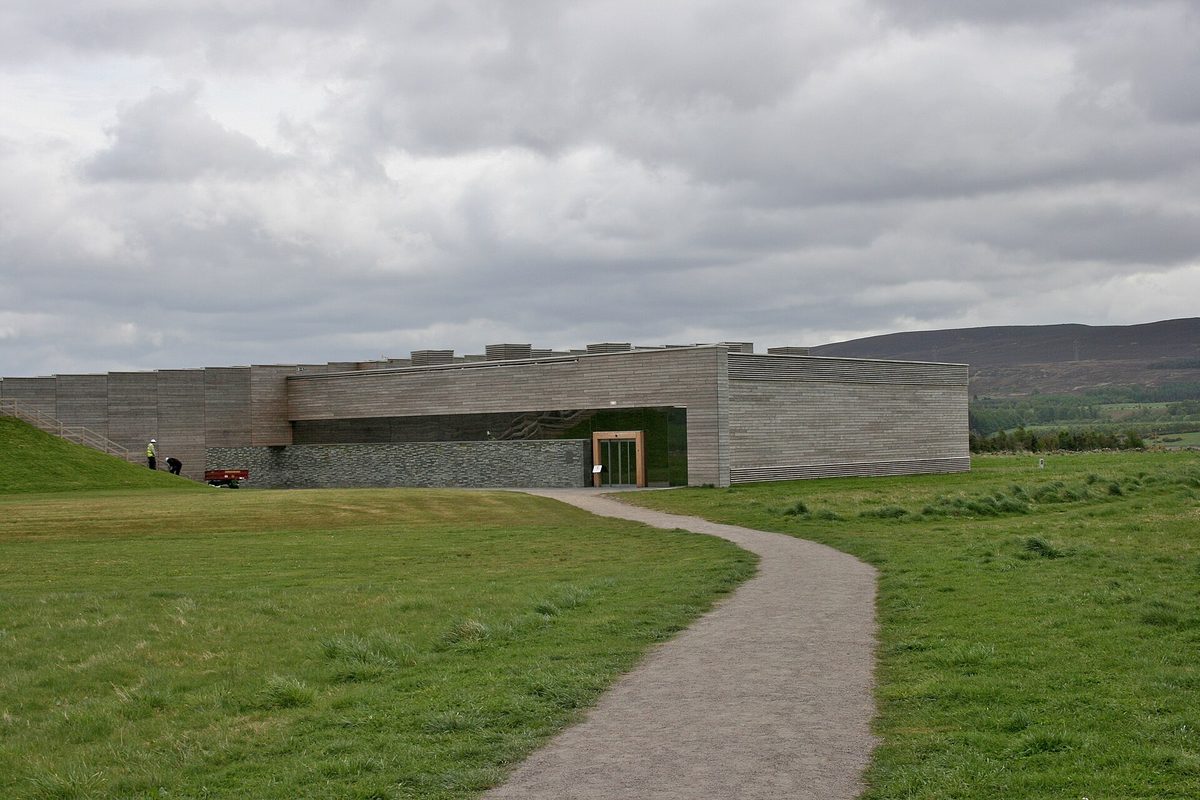
The building itself is worth a look before you go in: a long, low, timber-clad block that sits down into the ground rather than on top of it, deliberately refusing to compete with the moor. It opened in 2007 and it has aged well.
The immersion film is the highlight, and most guides bury it
The exhibition includes a 360-degree battle immersion theatre. The film runs about four minutes. The two armies form up on opposite sides, the artillery opens, the Highland charge comes at you from one side and the government volleys come from the other, and for a few seconds you are standing between them with the noise on every side.
It is the best thing in the building and I would happily pay the admission for that alone. Sit through it twice if the room is not crowded — the second time you stop flinching and start watching what is actually happening on each side. Small children may find it too much; there is no gore, but it is loud and it is frightening by design.
The exhibition and the battle table
The corridors leading in and out of the film room take you through the lead-up, the battle and the aftermath, told largely through first-hand accounts from both sides. There are muskets, pistols, basket-hilted swords, cannonballs and a case of musket balls pulled out of the moor by archaeologists. There is a sampler stitched in 1747 by an eleven-year-old girl showing a Jacobite being bayoneted, which tells you a great deal about how the battle was talked about at the time.
The animated battle table is the thing to spend proper time on. It gives you a bird’s-eye view of the ground with the troop movements playing out across it, and it is the clearest explanation you will get of why the Jacobite right had a much longer, worse walk than the Jacobite left. Watch it before you go outside, not after. It makes the flags outside legible.
The rooftop viewpoint
There is a staircase up to a flat roof terrace with the whole field laid out in front of you. From up there you can see the line of the government position, the line of the Jacobite position, the gap between them and the rise of ground where the moor drops away towards the River Nairn.
Read the field from the roof first. Then walk it. You will spend the whole walk knowing where you are instead of squinting at a leaflet. The roof is also accessible without an exhibition ticket, which makes it the best free thing on site.
The audio guide that walks with you
The handheld battlefield guide narrates the moor as you walk it, so you are not fumbling with numbered stops. It is available in around nine languages and it is included with visitor centre admission. Take it. Walking the moor in silence is fine; walking it while someone tells you what happened on the exact patch of ground under your boots is better.
Walking the moor
The paths are surfaced gravel and level enough for a pushchair or a wheelchair, and there is a shorter loop and a longer one. Wear something waterproof on your feet anyway. It is a moor.
The red and blue flags, and how close they are
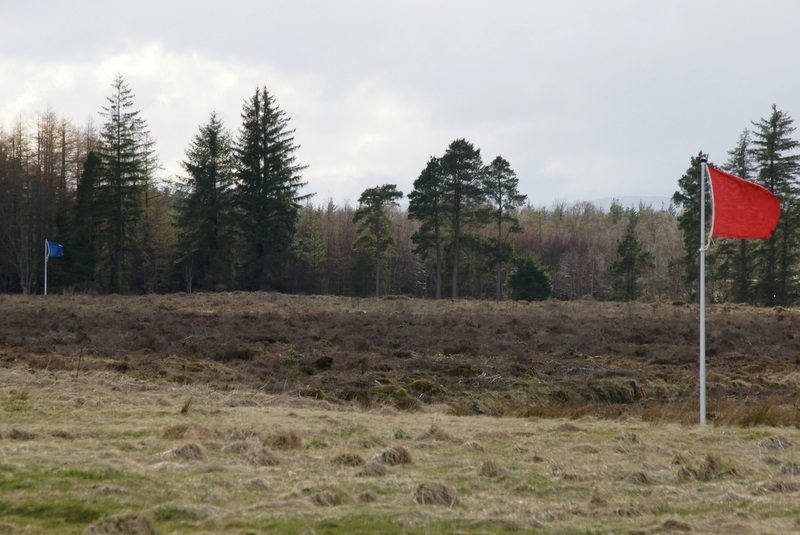
Red flags mark the government line. Blue flags mark the Jacobite line. This is the detail that lands hardest for most people, because when you stand at one line and look at the other, the distance is nothing. A few hundred metres of open ground. You can hold up a hand and cover the enemy position with your palm.
That is the whole battle in one glance. The Jacobites had to cross that gap on foot, uphill in places, into artillery and then into three ranks of musketry, and by the time the survivors reached the government line they were exhausted, disordered and far fewer. Every account of the charge makes more sense once you have seen how short and how naked that ground is.
The boggy ground on the Jacobite right
Walk out towards the right of the Jacobite line and pay attention to what your feet are doing. The ground there is soft, and in wet weather it is properly wet. This matters. The Highland charge worked on firm ground where a mass of men could build speed and hit a line before it could reload. On sodden moor it becomes a slog, the mass breaks up, and the charge arrives late, strung out and slow.
Some of the men on that flank had further to go than the men on the left, over worse ground, and it showed. There is no need to romanticise the outcome or blame it all on the terrain, but this is one of the rare battlefields where standing in the mud actually explains something.
Leanach Cottage
The low turf-roofed cottage on the moor is the one building that gives you the scale of eighteenth-century Highland life. A version of it stood here on the day, in the middle of the government lines, and it has been restored and re-thatched more than once since. The heather-and-turf roof is worth looking at closely if you have only ever seen Highland cottages in paintings.
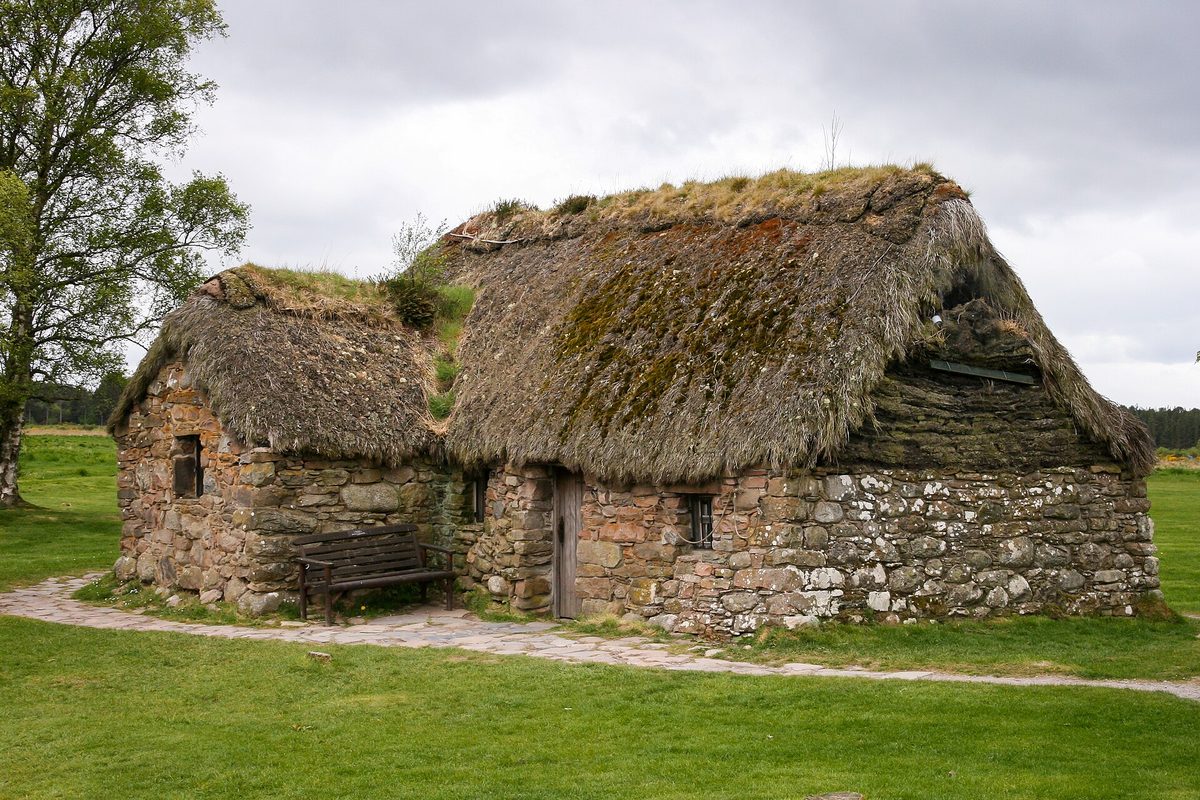
You will hear a story that wounded Jacobites sheltering in a barn near here were locked in and burned alive. It is a persistent local tradition rather than a documented certainty, and the building involved was probably not this one. The aftermath was brutal enough without needing it embellished.
The memorial cairn and the graves of the clans
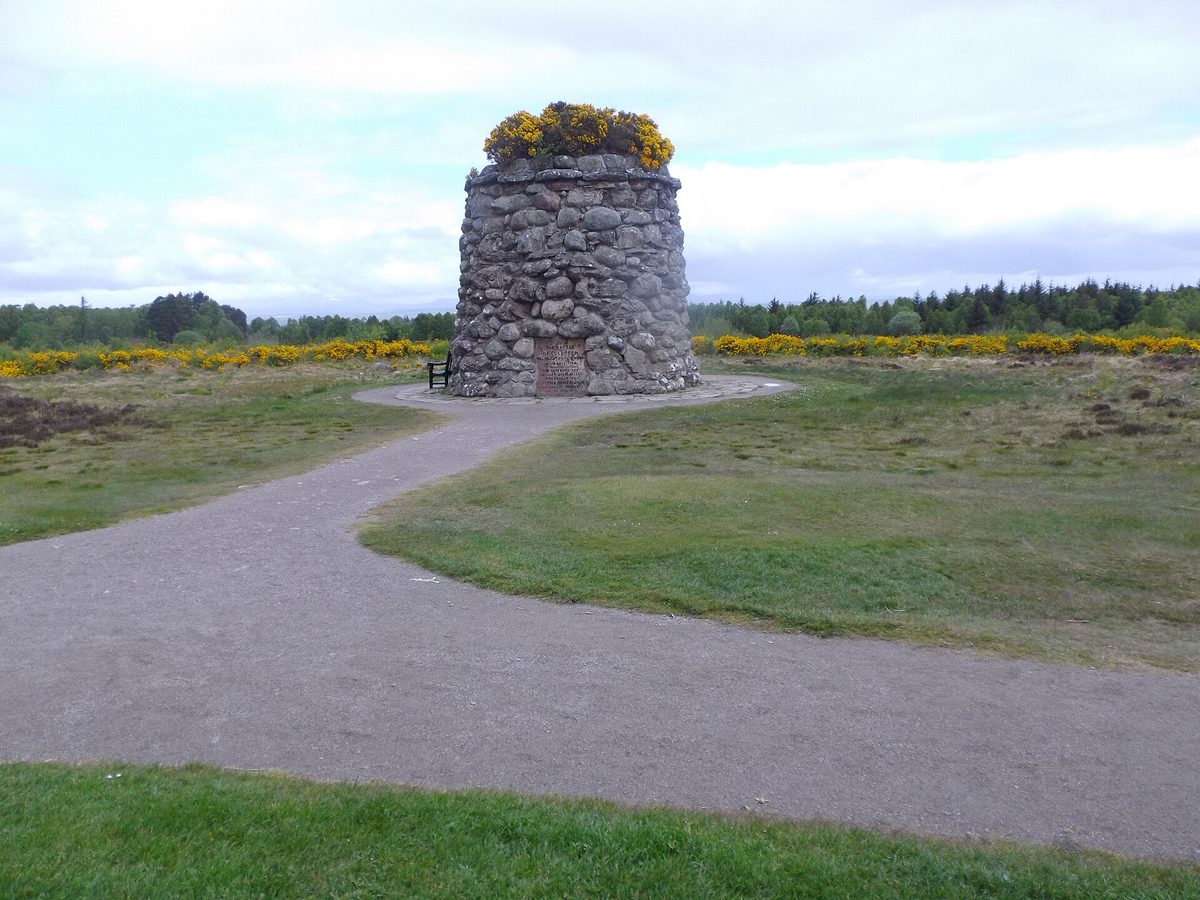
The cairn is a rough, round drum of stone about six metres high, built by Duncan Forbes in 1881 and given to the National Trust for Scotland in 1944. Its inscription describes the field as the graves of the gallant Highlanders who fought for Prince Charlie. That framing is Victorian, and it is worth noticing that it is doing a job.
The clan stones are strung out along the path either side of it. Read the names slowly. If you have Scottish ancestry, this is the point at which the visit can turn from an outing into something else entirely, and the centre has resources for researching clan names — which side your people were on is not always the side you expect. If that is a thread you want to pull, our guide to tracing Scottish ancestry, clans and tartan is the sensible starting point.
The memorial almost nobody walks to
The Victorian markers left two nations out: Ireland and France. Irish and French regiments fought here for the Jacobites, and they are remembered by a plaque some distance from the cairns, installed in 1994 by the White Cockade Society. Walk to the blue flag on the Jacobite front line and carry straight on at the crossroads and you will find it. Almost nobody does, which is reason enough.
The battle itself, with the romance taken out
You will get a better visit if you arrive with the actual sequence of events in your head rather than the ballad version.
The night march that did not happen
On 15 April 1746 Cumberland’s army camped at Nairn and celebrated his twenty-fifth birthday with extra rations and drink. The Jacobite command, knowing they were in no state for a pitched battle, gambled on a night attack on the sleeping camp. It was a decent plan on paper. In practice the column was hungry, exhausted and moving in the dark over bad ground, it fell behind schedule, and it was called off short of Nairn.
So the men who formed up on the moor the next morning had walked through most of the night for nothing and then walked back. Some were still asleep in Inverness when the guns opened. Some were away looking for food. The Trust records that Jacobite soldiers were on rations of three biscuits a day.
Under an hour
The Jacobite artillery opened at around one in the afternoon. Barely an hour passed between the first shots and the collapse of the Prince’s army. Around 1,600 men were killed, roughly 1,500 of them Jacobites; government losses were a fraction of that. By European standards it was a short, small battle. By any standard it was a slaughter.
Scots fought on both sides
This gets flattened constantly into Scotland against England, and it was not that. The government army included Scottish regiments and Highland companies; several clans stayed out, and some fought for London. The Jacobite army included Irish and French troops and a good number of Lowland Scots and Englishmen. It was a civil war inside a European war of succession, and the visitor centre is admirably careful about saying so.
What came after mattered more than the hour
The hour on the moor decided the rising. The years that followed decided the Highlands. Prisoners and wounded were killed, houses were burned, cattle were driven off, and Cumberland acquired the nickname Butcher. Then came legislation: the Disarming Act, and the Act of Proscription of 1746, which among other things banned Highland dress outside the army for decades.
Clan chiefs were remade as landlords. Within two generations the economics of the Highlands had been rewritten, and the Clearances followed. If you only take one idea away from Culloden, make it that one: the battle is the hinge, not the whole door. You can see the other end of that story in the emptied glens along the North Coast 500, where the ruined townships in the straths are not scenery, they are evidence.
The Outlander connection, honestly
A large share of visitors are here because of a novel and a television series, and there is nothing wrong with that. Fiction has been bringing people to Culloden since Walter Scott. But there is a specific confusion doing real damage, and it is worth being blunt about it.
Craigh na Dun is not here, and it is not anywhere
People arrive at Culloden asking where the standing stones are. There are no standing stones at Culloden. Craigh na Dun is invented. The circle used on screen was a set of lightweight fake stones erected on a hillock on private farmland near Kinloch Rannoch in Perthshire, roughly a three-hour drive south, and they were taken away again after filming. There is nothing to see there but a nice hill.
The wider set of real places used by the production is a separate trip in itself — our round-up of Outlander filming locations across Scotland maps the ones that genuinely exist, and Doune Castle, which plays Castle Leoch, is the one that most reliably delivers.
Clava Cairns is the place you actually want
A short drive from the battlefield, down a narrow lane, is Balnuaran of Clava: three main Bronze Age burial cairns built about 4,000 years ago, ringed by standing stones, in a small wood. It is cared for by Historic Environment Scotland, it is free, there is a small car park, and it is open all year.
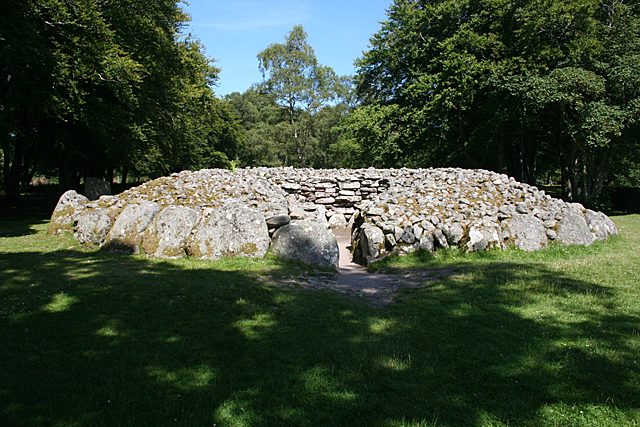
One honest caveat: it was not a filming location either. What it is, though, is a genuinely ancient burial site of exactly the kind the fiction is gesturing at, and standing inside one of those cairns on a quiet morning does more than any set ever could. Go early; the tour coaches arrive mid-morning and the site is small.
The Fraser stone
The Clan Fraser marker on the moor has become a pilgrimage point because of a character who did not exist. The Frasers who are actually buried under it did. The Trust has been careful not to blame any one group for the wear around it, but the wear is real and it has needed intervention. Look at it from the path, leave the flowers at the cairn if you want to leave something, and let the grass grow back.
Tickets, timing and getting there
Culloden is easy to reach and easy to underestimate. Here is what I would actually plan.
What a ticket includes and what it costs
Adult admission to the visitor centre has recently been around £12.50, with concessions near £11.00, children about £8.00 and a family ticket around £33.00. A combined ticket including a guided battlefield walk runs to roughly £16.50 for an adult. Young Scot cardholders pay about £1.00. Parking is a separate pay-and-display charge of around £5.00. All of these move, so check nts.org.uk before you travel.
The exhibition, the immersion film, the battle table and the audio guide are all covered by standard admission. The guided walk is the paid extra. The moor itself, the clan stones, the cairn, Leanach Cottage and the rooftop viewpoint cost nothing at all — you can have a meaningful visit here for the price of the car park, which is a rare thing at a major Scottish attraction.
Is National Trust for Scotland membership worth it?
If Culloden is your third or fourth NTS property of the trip, almost certainly. Membership covers admission and parking here and at a long list of other places, and it pays for itself quickly if you are doing a castle-heavy route. It is a genuine consideration if you are working through Scotland’s castles region by region. If Culloden is a one-off, just buy the ticket.
How long to allow
The Trust suggests around two hours and notes that keen history readers can spend three or four. I would plan three: an hour outside, an hour and a bit inside, twenty minutes on the roof and in the shop, and a coffee. Add another hour if you are also doing Clava Cairns, which you should.
Getting there from Inverness
It is about five miles east of the city, roughly a fifteen-minute drive, signed with brown tourist signs off the B9006. The car park is large but fills up in the middle of the day in summer, and there are coach bays, motorhome spaces, motorcycle bays and an electric charging post.
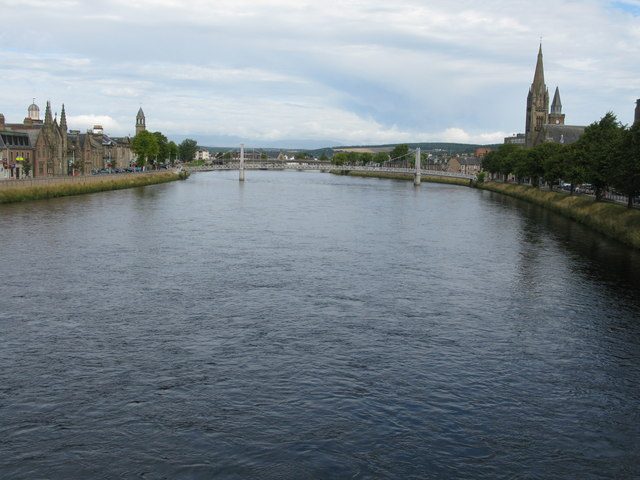
Without a car, Stagecoach runs a local service from Queensgate in the centre of Inverness out to the battlefield, taking around half an hour, and it stops at the visitor centre itself. Timetables change with the season, so check stagecoachbus.com the night before. Our guide to getting around Scotland covers the wider bus and rail picture, and Culloden is one of the easier Highland sights to reach without driving.
What to combine it with
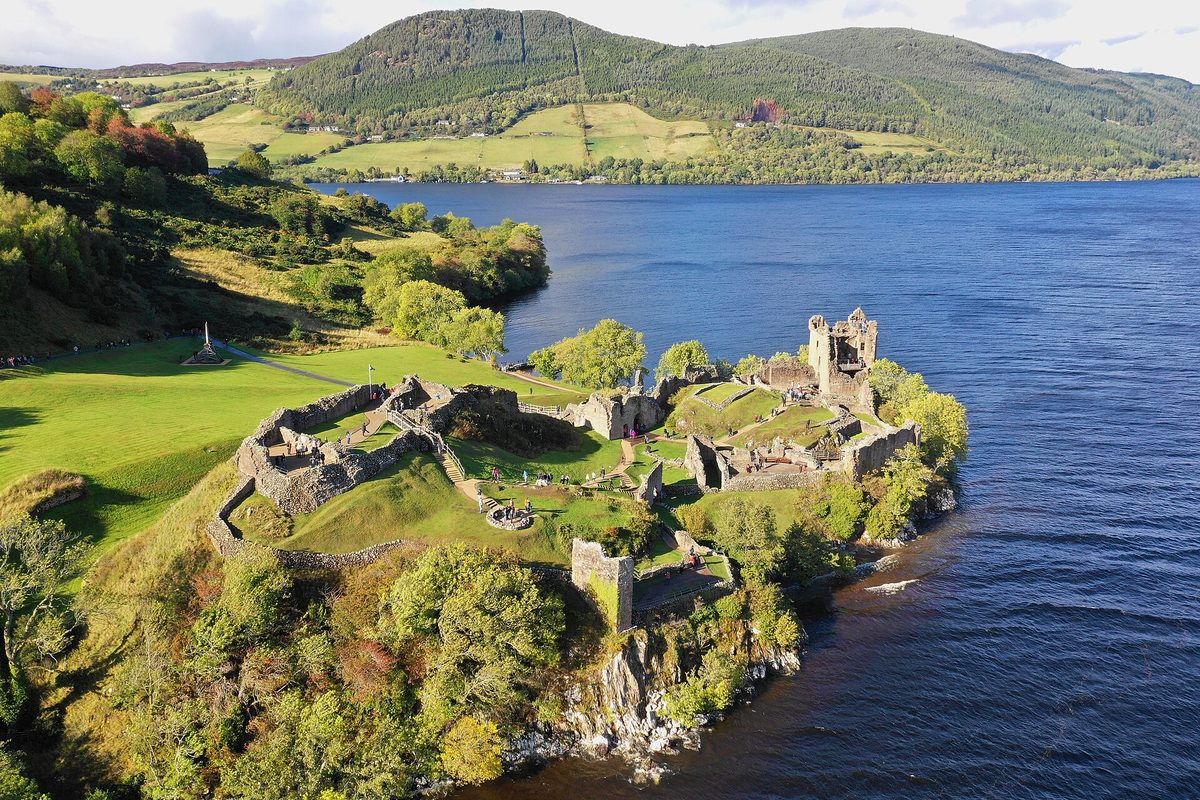
The obvious pairing is Clava Cairns, ten minutes on. Beyond that, Culloden sits neatly in a day built around Inverness and Loch Ness: battlefield in the morning, then west along the loch. If you are weighing up how to spend that afternoon, we have taken a hard look at whether Loch Ness is worth visiting, compared the best Loch Ness cruises, and written up Urquhart Castle, which is the one lochside stop that earns its queue.
For a Jacobite thread that runs across the whole country, the other end of the story is at Glenfinnan, where the standard was raised in 1745 and where the viaduct and the Jacobite steam train now pull the crowds. Doing Glenfinnan and Culloden in the same trip, in that order, is one of the more satisfying bits of sequencing in Scottish travel.
When to go, and why bad weather is better
Two pieces of timing advice, and they are the ones that will change your visit most.
First: if you arrive at opening and the car park is quiet, walk the moor before you go inside. By late morning the path carries a steady stream of people and two or three guided groups, and the thing you came for — standing on empty ground and feeling the size of it — is gone. The exhibition is perfectly good at eleven o’clock. The moor is not. Reverse the usual order.
Second: do not wait for a nice day. Sunshine flatters this place and misleads you. On a blue morning in June it is a pleasant heath with birdsong. In sleet driving in from the east, with your hood up and your hands numb inside twenty minutes, you are considerably closer to 16 April 1746, when the Jacobites stood in cold rain and wind blowing into their faces before they were asked to cross that ground.
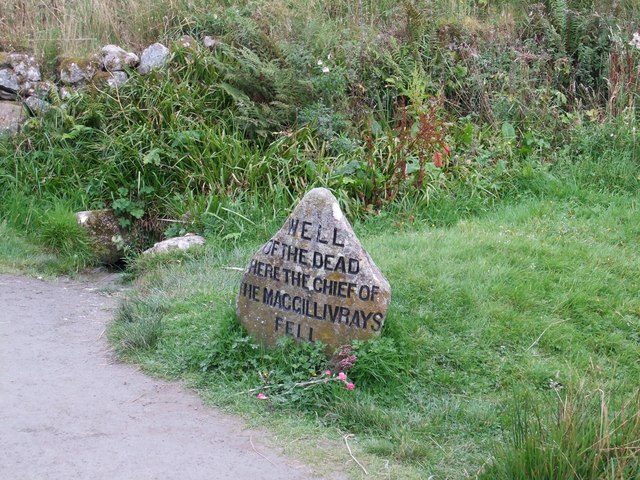
Practically, that means October to April is a better time to come here than July, which inverts the usual advice. Our month-by-month rundown of Scottish weather will tell you what you are signing up for, and Scotland in October is close to ideal: short queues, the moor turning russet, and a decent chance of the sort of weather the site deserves. If your dates are fixed, our overview of the best time to visit Scotland puts it in context.
The annual commemoration service, held in April around the anniversary of the battle, brings considerably more people, so check the date with the organisers before you plan around it. It is moving if that is what you have come for, and the wrong day if you want the moor to yourself.
What underwhelms, and the mistakes people make
I would rather tell you this now than have you feel short-changed at the gate.
It is a flat field
There is no castle, no ruin, no dramatic skyline. If you are chasing scenery, this is not it, and you would be better served by a day among the mountains or on a ruined coastal site like Dunnottar Castle. Culloden gives you almost nothing visually and everything contextually. That trade is only worth making if you engage with the interpretation. Skip the audio guide and skim the panels, and you will walk away thinking it was a field with flags in it, because that is what you will have looked at.
It is a hard sell for young children
The exhibition is text-heavy, the subject is killing, and there is very little to touch or press. The film may frighten under-eights. The moor is a walk in the wind with a strict no-running rule. Older children who have done any Jacobite history at school do well here; younger ones are usually better off elsewhere, and our list of things to do in Scotland with kids has warmer options for a wet afternoon near Inverness.
The guided walk is not for everyone
The guides are knowledgeable and the walk covers the troop positions, the graves and Leanach Cottage in about an hour. If you already know the battle well you may find it broad. If you know nothing, it is the fastest way to make the field make sense. Members get it free, which settles the question for a lot of people.
The five mistakes I see most
Arriving at midday with an hour to spare, so you see the exhibition and rush the moor. Missing the roof entirely. Walking past the audio guide desk. Treating the graves area as a photo backdrop. And driving away without going to Clava Cairns, which is ten minutes and free and is the thing half of you came to Scotland to see.
Frequently asked questions
How much are Culloden battlefield tickets?
Expect somewhere around £12.50 for an adult, a little over £16 if you add the guided walk, and roughly £33 for a family, with concession, child and Young Scot rates below that. Parking is charged separately at about £5.00. Trust members pay nothing for either. Prices shift, so confirm on nts.org.uk.
Can you visit Culloden Moor for free?
Yes. The battlefield is open daily, all year round. You can see the clan stones, the memorial cairn, Leanach Cottage, the line flags and the interpretation boards without a ticket, and the rooftop viewpoint is also free. Only the indoor exhibition, the immersion film and the audio guide need paid admission. You still pay for parking.
How long do you need at Culloden battlefield?
The National Trust for Scotland suggests around two hours, and says history enthusiasts can spend three or four. Three works best for most people: an hour outdoors, an hour or so in the exhibition, then the rooftop, the shop and a break in the café. Budget another hour if you are carrying on to Clava Cairns.
How do you get to Culloden from Inverness without a car?
Stagecoach runs a local bus from Queensgate in central Inverness to the battlefield, taking about thirty minutes and stopping at the visitor centre door. Frequency varies by day and season, so check stagecoachbus.com before you set out. Taxis from the city centre are quick given it is only five miles. Several Inverness day tours also include Culloden.
Is Culloden connected to Outlander?
The battle is central to the story, and the Clan Fraser grave marker draws many readers and viewers. But nothing was filmed here, and Craigh na Dun does not exist — the on-screen stone circle was a temporary set near Kinloch Rannoch in Perthshire. The prehistoric stone circle people are usually looking for is Clava Cairns, ten minutes from the battlefield.
Are the clan stones really graves?
Yes. Around 1,500 Jacobite dead are buried in mass pits on the moor, and the clan markers stand directly beside them. The stones themselves date from 1881, when the landowner Duncan Forbes erected them along with the cairn. The National Trust for Scotland asks visitors to give the graves area the same respect as any other burial ground.
What is the best time of day to visit Culloden?
First thing. Arrive at opening, roughly 09.00, and walk the moor before the coaches and guided groups arrive; the path is noticeably busier from mid-morning onwards. Do the exhibition afterwards, when crowding matters far less. Late afternoon in winter also works well, with low light across the moor and very few people about.
Is Culloden suitable for wheelchairs and pushchairs?
Largely, yes. The battlefield paths are wheelchair accessible, the visitor centre has level access to the café, shop, welcome desk and accessible toilet, and wheelchairs are available free of charge. The Trust publishes a detailed accessibility guide for the site. The outer reaches of the moor are rougher in wet weather.
Final thoughts
Culloden gives you nothing if you treat it as a stop on a list, and a great deal if you give it three unhurried hours, walk the ground first, and remember what is underneath it.
Go on a bad day. Take the audio guide. Climb to the roof before you step onto the moor. Stay on the path through the graves. Then drive the ten minutes to Clava Cairns and stand in a burial chamber four thousand years older than the battle, which is a useful thing to do with the rest of the afternoon. If it is your first trip north, our first-time Scotland tips and our guide to the best base towns in the Highlands will help you slot it into a wider route — and Inverness, as our Loch Ness and Inverness guide sets out, is the obvious place to sleep.
About the author: This guide was written and is maintained by the ScotlandTourism.org editorial team — travel writers who’ve spent years exploring Scotland’s cities, Highlands and islands, from bagging Munros to chasing the perfect dram. We update our guides regularly to keep prices, opening details and advice current.
Last updated: October 2026. Prices and opening times change — always check the official site before you travel.
Photo credits
All images are used under their respective Creative Commons or public-domain licenses:
- The National Trust for Scotland visitor centre at Culloden battlefield, seen from the… — Photograph by Mike Peel (www.mikepeel.net)., CC BY-SA 4.0, via Wikimedia Commons
- The 1881 memorial cairn on Culloden battlefield, with gorse in flower across the moor… — Stanley Howe, CC BY-SA 2.0, via Wikimedia Commons
- A red government flag and a blue Jacobite flag on Culloden Moor, marking how close the… — Mike Pennington, CC BY-SA 2.0, via Wikimedia Commons
- Clan headstones standing in the grass beside the visitor path across Culloden battlefield — David Dixon, CC BY-SA 2.0, via Wikimedia Commons
- Clan Mackintosh, Clan MacGillivray and Well of the Dead marker stones at Culloden — Caracal Rooikat, CC0, via Wikimedia Commons
- The Well of the Dead stone on Culloden Moor, where the MacGillivray chief fell — ronnie leask, CC BY-SA 2.0, via Wikimedia Commons
- Leanach Cottage, the turf-and-thatch cottage standing on Culloden Moor — Photograph by Mike Peel (www.mikepeel.net)., CC BY-SA 4.0, via Wikimedia Commons
- Balnuaran of Clava, the Bronze Age Clava Cairns ten minutes from Culloden battlefield — Anne Burgess, CC BY-SA 2.0, via Wikimedia Commons
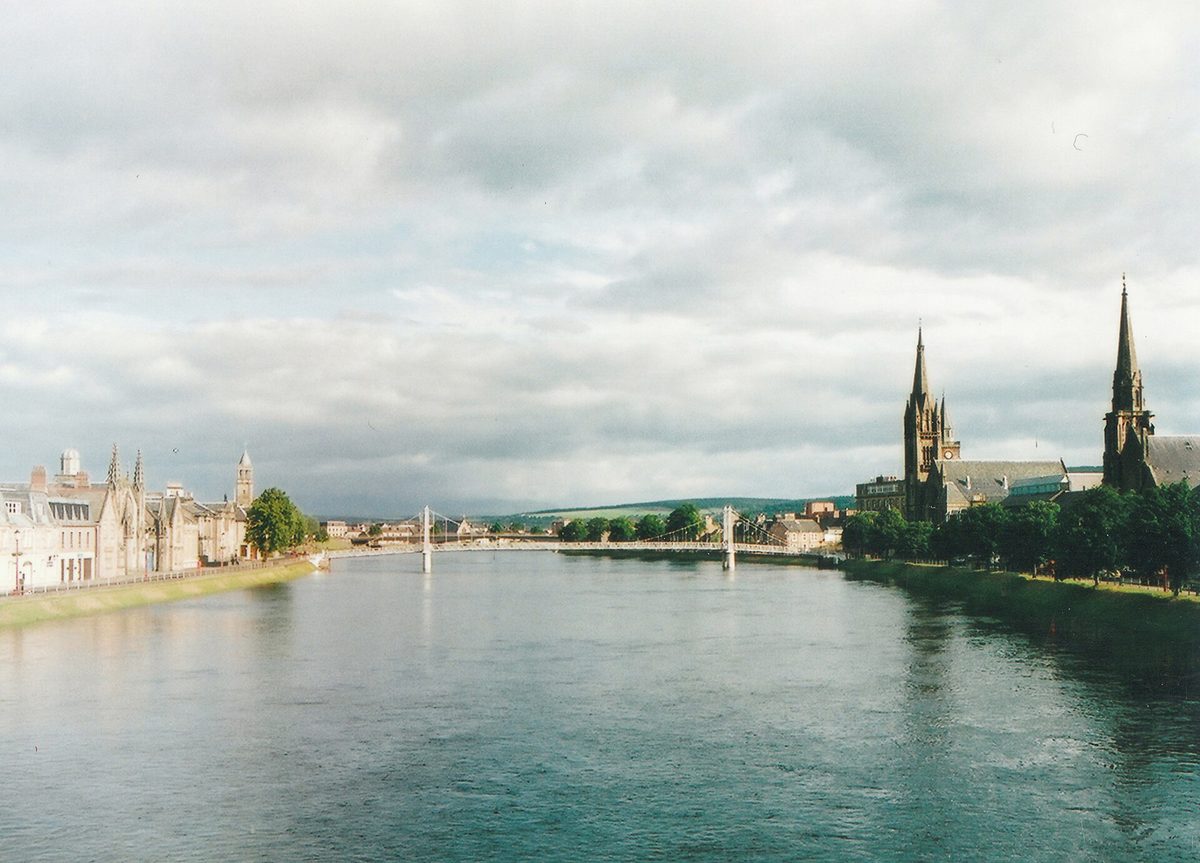
- The River Ness in Inverness, the base most visitors use for Culloden battlefield — G Laird, CC BY-SA 2.0, via Wikimedia Commons