Drive the A82 along the north shore and the view takes its time arriving, with long stretches where conifers hide the water. It is fair to ask: is Loch Ness worth visiting at all, or is this a long drive to look at a plantation? If you are asking the same question because something about the hype smells off to you, your instinct is sound. The loch does not deliver on first contact.
The usual mistake is assuming the water is the attraction. It isn’t. The reasons to come are a ruined castle on a promontory, an hour spent on the loch rather than beside it, a staircase of canal locks in a village at the far end, and a battlefield twenty minutes the other side of Inverness. Get those right and it is one of the better days in the Highlands. Get them wrong and you have driven a long way to look at a large, dark, cold lake.
The short answer
Loch Ness is worth visiting if you are already travelling through the Great Glen, or if you can give it a proper day from Inverness that includes Urquhart Castle, a boat trip and Fort Augustus. It is not worth a twelve-hour coach day trip from Edinburgh. The loch alone underwhelms; the things around it do not.
Is Loch Ness worth it for you? An at-a-glance verdict
| Your situation | Verdict | The reasoning |
|---|---|---|
| Driving Inverness to Skye, or anywhere down the Great Glen | Strongly worth it | On the A82 the loch sits on your route and Urquhart Castle is beside the road, so a castle stop costs you time rather than miles. |
| Based in Inverness with a spare day | Worth a full day | Castle, cruise, Fort Augustus and the quiet south road make a genuinely good circuit of about 70 miles. |
| Travelling with children aged 5–12 | Worth it | A ruined castle, a boat with sonar and a monster legend is a strong combination at that age. |
| Doing the North Coast 500 and short on time | Optional | It is a detour off the loop. Take it only if you have a slack half-day. |
| Coach day trip from Edinburgh or Glasgow | Not worth it | A twelve- to thirteen-hour day for one to three hours in the Loch Ness area, depending on the tour. Poor value even at tour-bus prices. |
| Three or four days in Scotland total | Skip it | Glencoe, Stirling and Edinburgh will give you far more per hour of travel. |
| Purely here for the monster | Manage expectations | There is no evidence and the exhibitions know it. Come for the story, not the sighting. |
| Chasing quiet, empty Highland scenery | Worth it, on the south side | The B862 and B852 are quiet, near-empty roads and much the better drive. |
What Loch Ness actually looks like when you get there
Let me set expectations properly, because almost nobody does this before you have already paid for the car hire.
The loch itself is long, dark and short on drama
Loch Ness runs roughly 23 miles (37km) from Fort Augustus in the south-west up to Dores and the outskirts of Inverness in the north-east. It is around 230 metres deep at its deepest, second only to Loch Morar, and it holds more fresh water than every lake in England and Wales put together. Those are genuinely impressive numbers.
The problem is that none of them are visible. Volume does not photograph. What you see is a straight, steep-sided trench of water, roughly a mile wide for most of its length, filled by peat-stained water that stays close to black in anything other than full sun. There is no island, no promontory apart from the one the castle sits on, no bend to reveal anything new. The loch sits in the Great Glen fault, a tear across Scotland so straight it looks drawn with a ruler, and the straightness is exactly what makes it feel less interesting than a loch a fifth its size.
Compare that with what you get at Loch Maree, or from the road above Loch Ericht, or almost anywhere on the list of Scotland’s most beautiful lochs, and Loch Ness comes a long way down on pure looks. It is the most famous and it is nowhere near the prettiest. Anyone who tells you otherwise is selling a boat ticket.
The A82 is the road everyone drives, and it is the worst view of the loch
Almost all Loch Ness traffic uses the A82 along the north-west shore, because it is the trunk route from Inverness to Fort William and on to Glencoe. It is a proper A road, busy, and lined with commercial forestry for long stretches. You will drive several miles at a time with a plantation between you and the water.
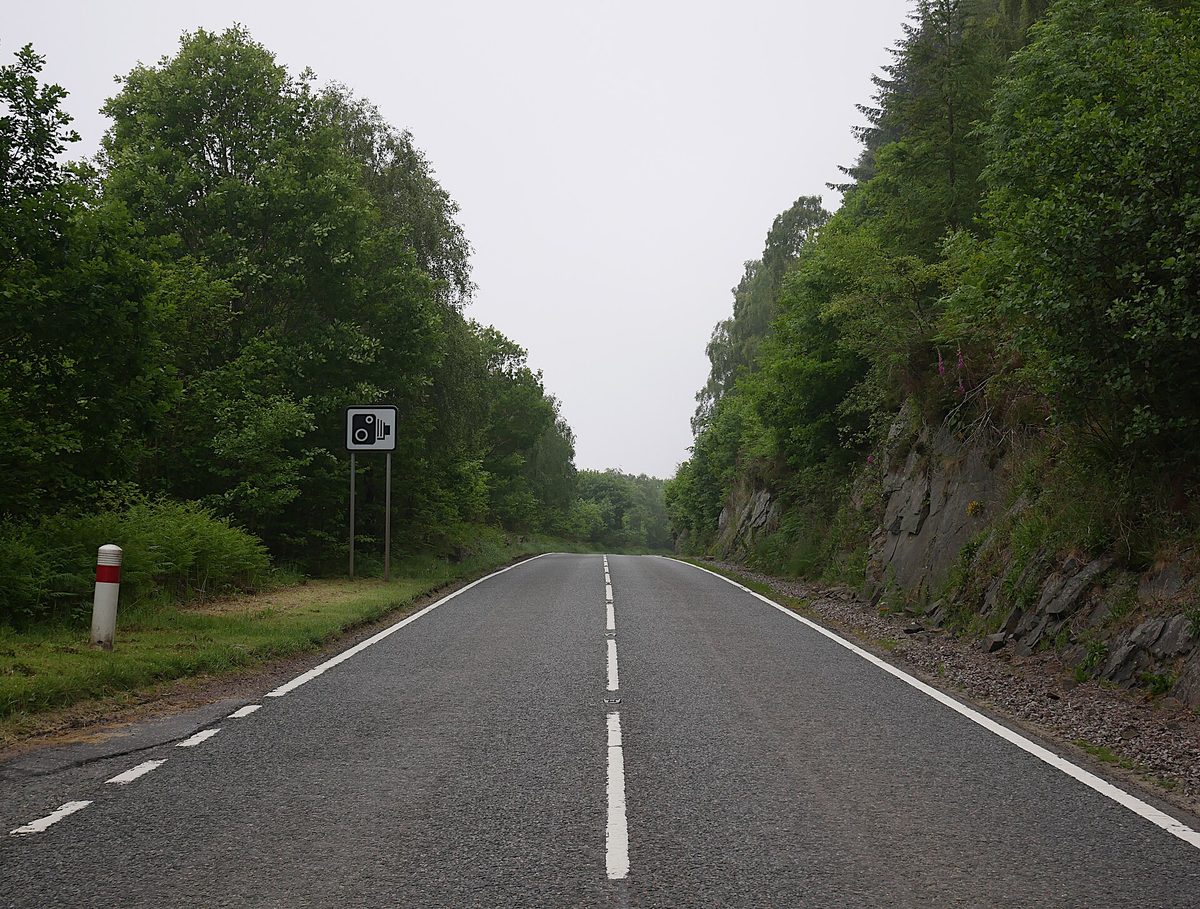
Where the trees do open up there is often nowhere to stop, and the laybys that exist fill fast in July. You will share the road with timber lorries and coaches, and there is a strong temptation to keep glancing sideways rather than at the road, which is how the A82 gets its reputation. Treat it as a link road, not a scenic drive, and plan your stops in advance rather than hoping for a viewpoint to appear.
Nowhere shows you the whole loch at once
This catches people out. There is no single vantage point that gives you the postcard, because the loch is far too long and its sides are too uniform. Dores comes closest, with the classic view south-west down the length of the loch. From the castle you see maybe a third of it. From a boat you see the walls of the glen rising above you, which is a different and better sensation, but still not a panorama.
If your mental image is a helicopter shot, you will not find the spot it was taken from at road level. Adjust now and you will enjoy the day far more.
The four things that genuinely justify the trip
Here is the part the tourism pages bury and the dismissive blog posts never bother with. Four attractions in this corner of the Highlands are properly good. None of them is the loch, and none of them is a monster.
Urquhart Castle
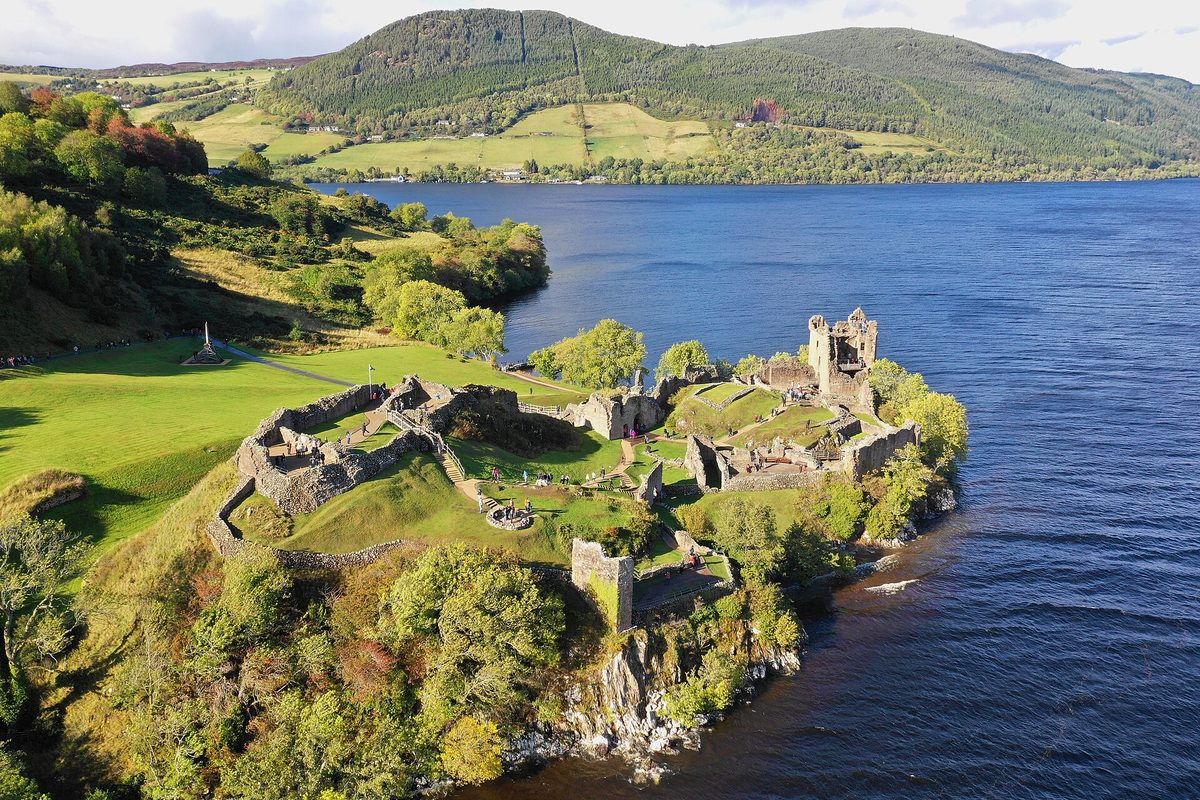
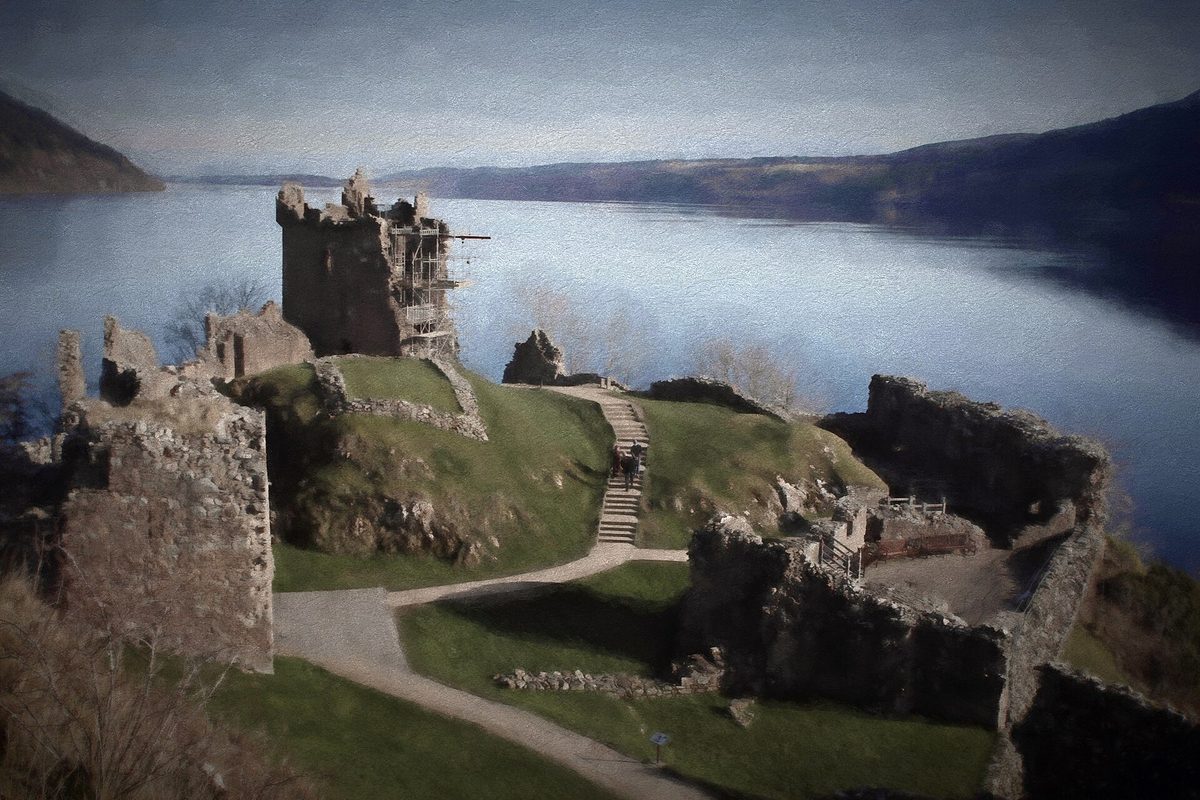
Urquhart is the reason to come. It occupies a rocky promontory jutting into the loch about two miles south of Drumnadrochit, and it is the one place where the Loch Ness of your imagination and the Loch Ness in front of you actually line up. A ruined medieval fortress, water on three sides, hills climbing away in both directions.
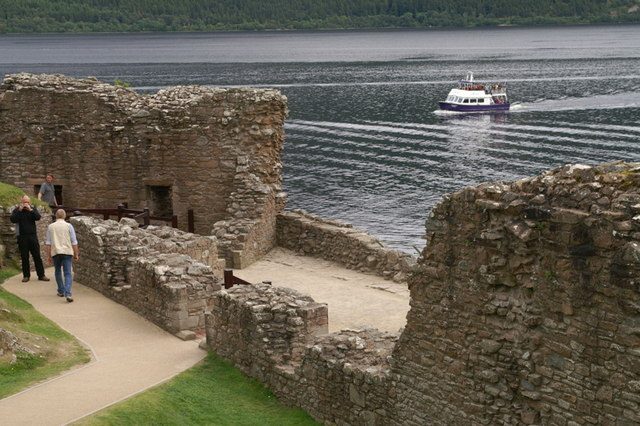
The castle is run by Historic Environment Scotland. Expect around £14 for an adult booking online and a couple of pounds more if you turn up and pay at the door, with family tickets available and free entry for Historic Scotland members — check current pricing before you go, because it moves. Entry is by timed slot, which matters more here than at most sites: the car park is not large and it genuinely fills by mid-morning in summer, at which point you are queueing on the A82 to get in.
Give it 90 minutes rather than the 45 most people allow. The visitor centre sits below the level of the ruins so it does not spoil the approach, and it opens with a short film that ends by lifting a screen to reveal the castle itself, which is a good piece of theatre. Then walk down past the full-size trebuchet, cross the ditch on the causeway, and climb the Grant Tower, which is the tallest surviving fragment and gives you the view up and down the Great Glen. The audio guide runs on your own phone and is included in the ticket, so bring headphones.
The history is worth ten minutes of your attention because it explains the shape. Urquhart controlled the Great Glen for five centuries, changed hands repeatedly between Scots and English during the Wars of Independence, was raided by the Lords of the Isles into the 1500s, and was finally blown up by departing government troops during the Jacobite risings so that it could not be used against them. That last act is why it is a ruin rather than a castle, and it puts Urquhart in the same story as Culloden a few miles away.
If castles are the reason you came to Scotland at all, Urquhart holds its own in the first rank of Scottish castles on setting alone, though it is a ruin rather than a furnished house — if you want intact interiors, Culzean on the Ayrshire coast or Stirling will serve you better. For a sense of how Urquhart fits alongside the rest, our overview of Scotland’s castles region by region is a useful map of where the good ones cluster.
An hour on the water
The boat trips look like the definition of a tourist ride, and they are still worth doing. Being on Loch Ness is a different experience from standing beside it, mainly because the scale finally registers: the glen walls go up rather than across, the water underneath you is deeper than most people have ever been above, and the castle from the water is far better than the castle from the car park.
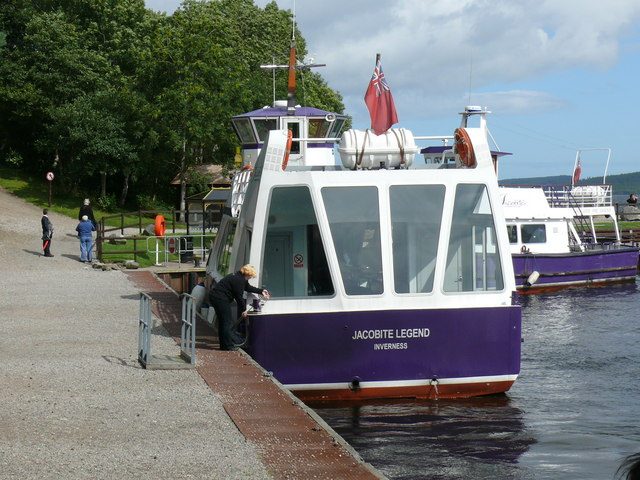
There are three main options and they suit different plans.
From near Inverness, Jacobite run cruises from Dochgarroch Lock and from Clansman Harbour, nine miles from the city centre on the A82, plus coach-and-boat tours that pick up at Inverness bus station if you have no car. A cruise that includes an hour ashore at Urquhart Castle sits around £30 for an adult; the longer coach-and-boat tours run up to roughly £54. Parking at Clansman is free but limited in peak season, and they ask you to arrive 45 minutes before departure, so build that in.
From Drumnadrochit, the Deepscan sails from the pier below the Loch Ness Centre, roughly hourly from early April to early November, at around £25 an adult for about an hour. This is the one with sonar running and commentary that leans into the research rather than the folklore, and there is a combined ticket with the exhibition for about £40.
From Fort Augustus, Cruise Loch Ness is family-run and, to my mind, the best value on the loch. The Daily Discovery is 50 minutes at £22 an adult and £15 a child, runs all year, and allows dogs. If you have teenagers, their speedboat trips are the thing: £32 for an hour, or around £40 for the 90-minute run up to Urquhart Castle at speed. Prices as of writing — confirm on the day.
Practical note: the loch generates its own weather and there is nothing to shelter behind. Take a layer more than you think you need, even in July, and expect the top deck to be cold and the enclosed saloon to be full.
The lock flight at Fort Augustus
Fort Augustus sits at the south-west end of the loch, and its centrepiece is a flight of five locks lifting the Caledonian Canal up from the water through the middle of the village. It is free, it is outdoors, and it is quietly one of the most watchable things in the Highlands.
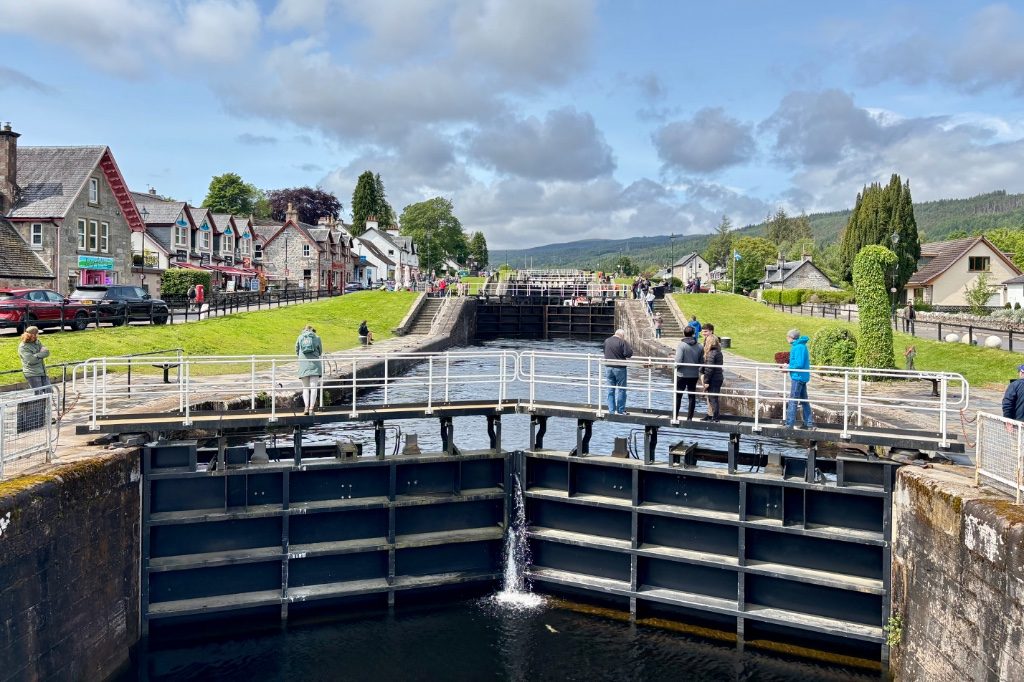
The Caledonian Canal runs about 60 miles from Inverness to Corpach near Fort William, stringing together Loch Ness, Loch Oich and Loch Lochy, with only around a third of that distance actually dug. Fort Augustus is where you see the engineering at work. A yacht takes something like an hour and a half to climb the whole flight, so if a boat is in the chamber when you arrive you can watch the entire operation over a coffee, and the road swing bridge at the bottom stops the traffic while it happens.
The Caledonian Canal Centre beside the locks has a café, a gift shop and displays on the canal’s history. Its hours change with the season, so check them on Scottish Canals’ site before you plan lunch around it. Grab a table outside, watch the gates, and you have found the least stressful hour on the whole loch. It also happens to be the best lunch stop of the day, which matters, because Drumnadrochit’s food offer is thin.
Culloden and Clava Cairns
A short drive east of Inverness sit two sites that will stay with you longer than anything on the loch.
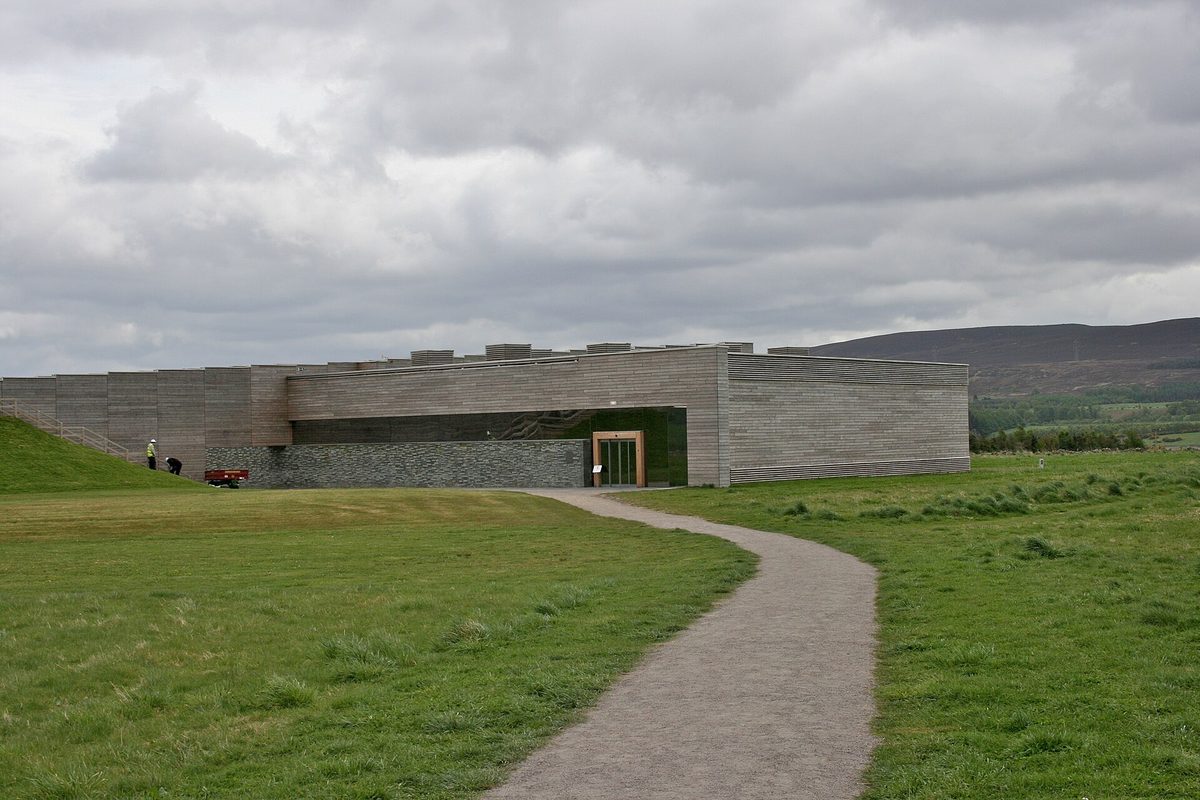
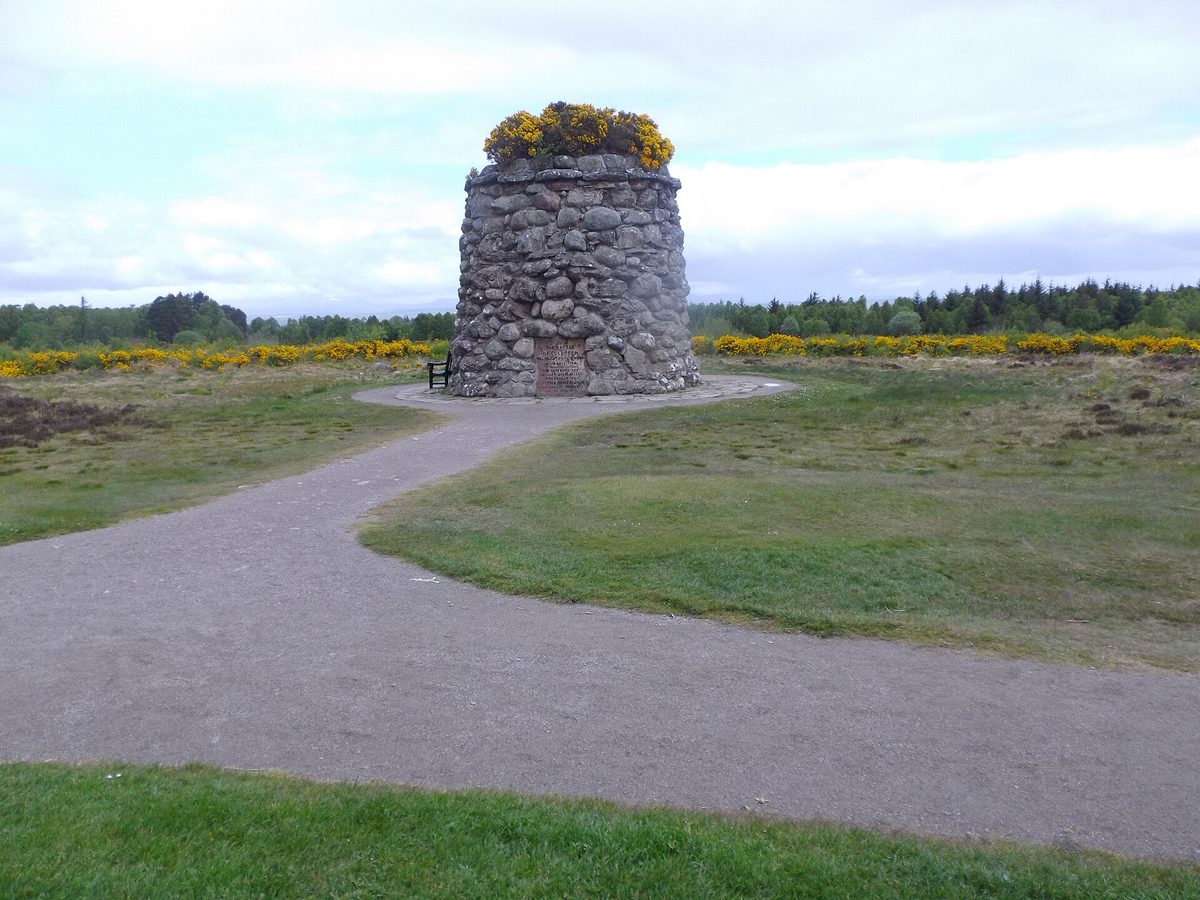
Culloden is where the Jacobite rising ended on 16 April 1746, in under an hour, on open moor. The National Trust for Scotland visitor centre costs £12.50 for an adult, and from the visitor centre you walk out onto the field itself, where flags mark the two lines and clan headstones sit in the heather. It is a bleak, flat, quiet place and it is far more affecting than any castle. If you have any interest in tracing a Scottish family line or clan connection, this is where the abstraction of a surname becomes a stone with your name on it.
Close by, Clava Cairns is free, open all year, and has its own car park. Three Bronze Age burial cairns around 4,000 years old sit in a grove of beech trees, each ringed by standing stones, with two of them aligned on the midwinter sunset. A walk round them does not take long. It also draws a steady stream of visitors because of its association with a certain time-travel drama, so if you are working through Outlander locations around Scotland you will find it on your list already.
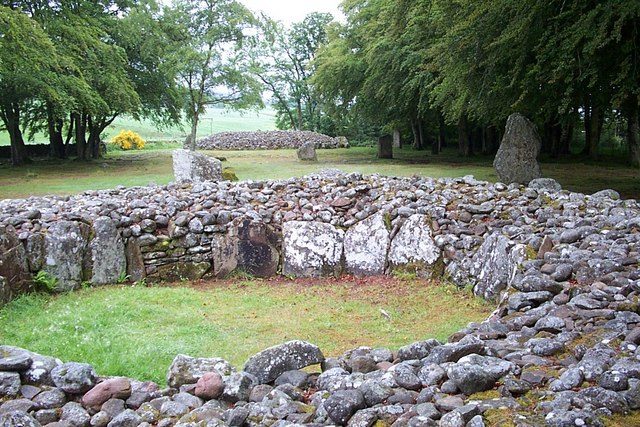
My honest opinion: if you only have one day near Inverness and you had to choose, Culloden plus Clava beats a full day at Loch Ness. The best plan is to do both, which is exactly why Inverness is the right base rather than a lochside hotel.
The decision framework: which of these four are you?
The reason nobody can answer “is Loch Ness worth visiting” with a straight yes or no is that the answer changes completely depending on what your trip already looks like. Here is the honest breakdown.
1. You are already driving through the Great Glen — strongly worth it
If your route takes you from Inverness towards Skye, or Fort William, or down towards Glencoe, the loch is not a detour. It is the road. The A82 runs its entire length, so stopping at Urquhart Castle costs you the ticket price and about 90 minutes, and stopping at Fort Augustus costs you a lunch you were going to eat anyway.
In that situation the answer is an easy yes, because the marginal cost is close to zero. This is also the most common scenario, since the loch sits directly on the standard Edinburgh to Highlands road trip and on most routes people take when working out how to get to the Isle of Skye. Book a castle slot for late afternoon, when the coaches have gone and the light comes down the glen from the west, and you will get the good version.
2. You are based in Inverness with a whole day — worth a dedicated day
A full circuit of the loch is about 70 miles and takes a comfortable day with stops. Drive out on the A82, do the castle in the morning, lunch and locks at Fort Augustus, then come back up the far side on the B862 and B852, which almost nobody does. Add a cruise from Fort Augustus if the weather is behaving.
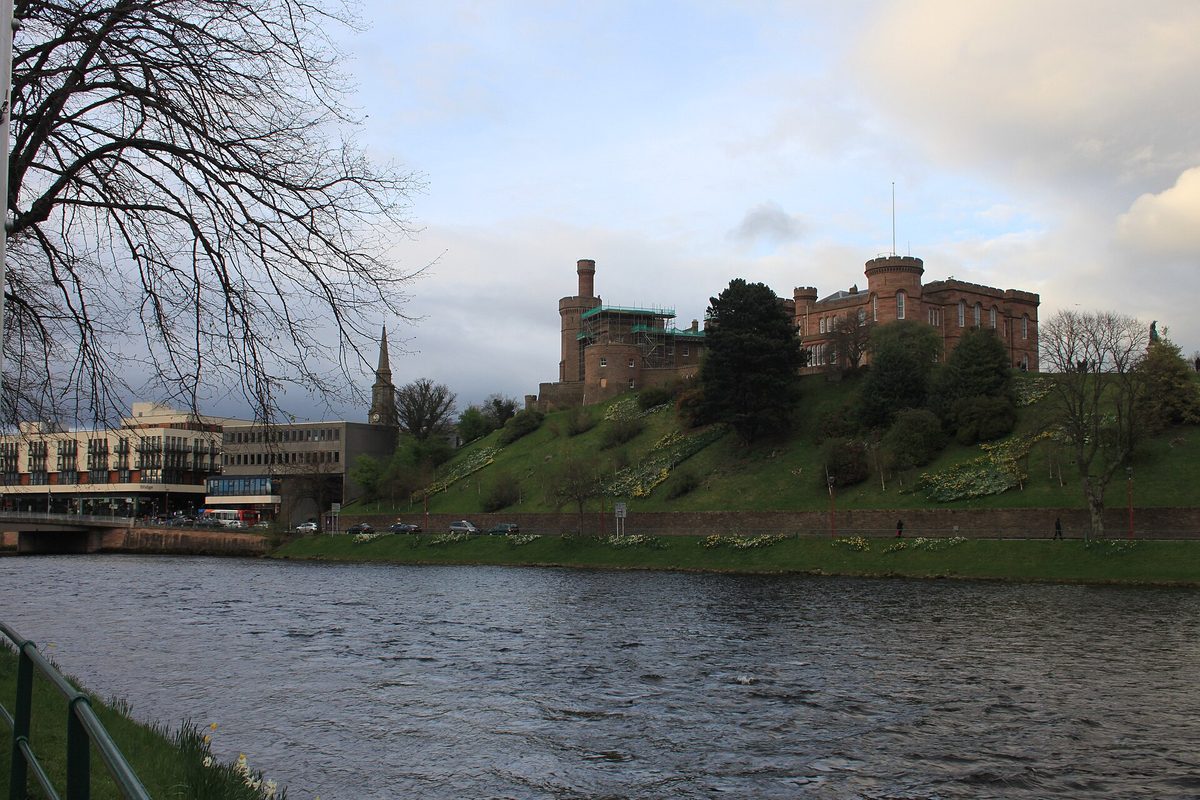
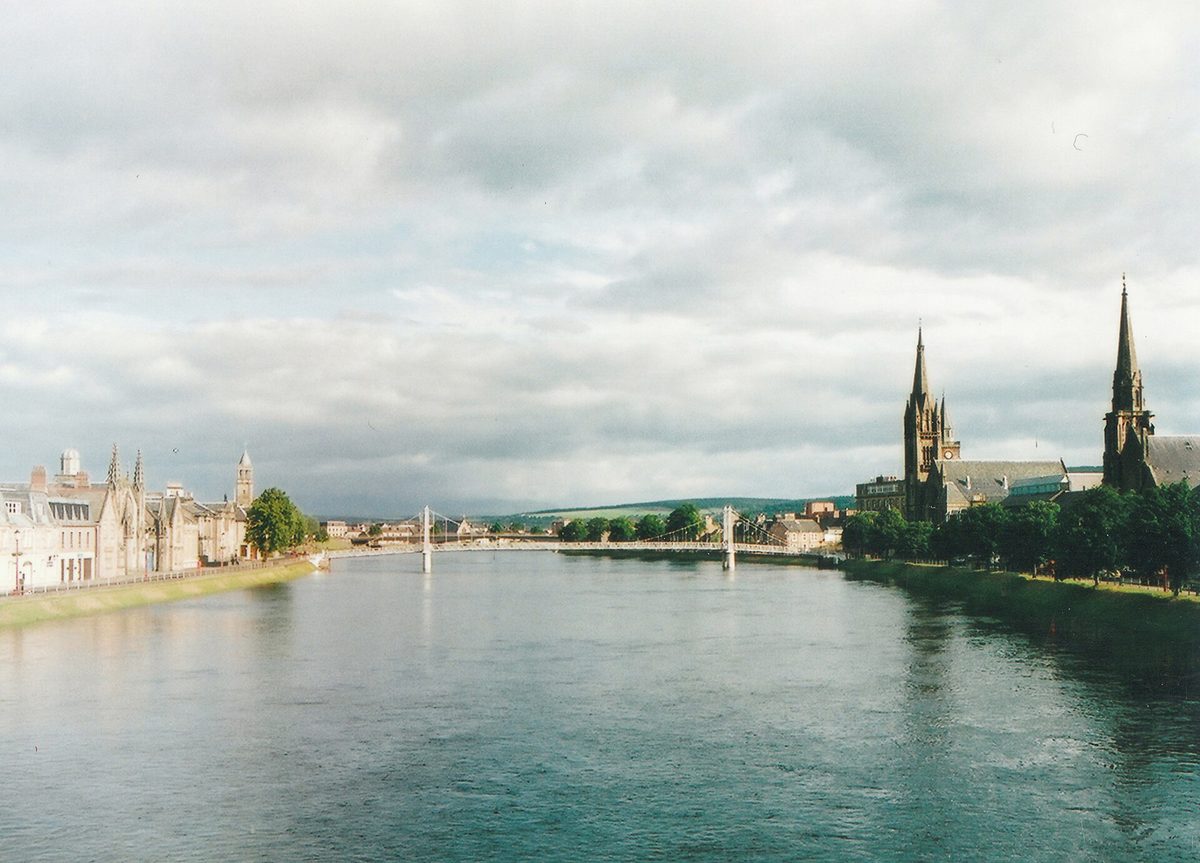
That is a good day out by any standard. Inverness itself is a workmanlike city rather than a beautiful one, but it is the right base: it has the accommodation, the restaurants, the train and the airport, and it puts Culloden, Clava, the Moray coast and the Cairngorms all within an hour. Our guide to the Loch Ness and Inverness area covers the wider region in more detail, and if you are still choosing where to sleep, the rundown of the best base towns in the Highlands makes the case for and against Inverness against the alternatives.
3. You are on a coach day trip from Edinburgh — genuinely not worth it
Loch Ness day tours run from both Edinburgh and Glasgow, and plenty of people book them. I am going to say it anyway: the numbers do not work.
Edinburgh to Loch Ness is around 170 miles each way. On a coach, on Highland roads, with the stops the itinerary requires, that is roughly four hours in each direction. Tours generally last twelve to thirteen hours in all, and the time you get around the loch runs from one to three hours, depending on the itinerary. You will not have time for both the castle and a cruise. Many itineraries do not include the castle at all, and drop you at the shoreline for photographs instead.
So you spend a full day, most of it seated, to look at a lake for the length of a football match. The scenery on the way through Glencoe and Rannoch Moor is genuinely the best part of that day, which tells you something: the tour is really a Highlands sampler with a Loch Ness label on it because that is the name people search for.
If you have a day out of Edinburgh, spend it on something within range. Our list of day trips from Edinburgh has a dozen options inside two hours, and Doune Castle or Stirling will give you more actual castle for a quarter of the driving. If you specifically want the Highlands, take two days and stay over rather than doing it as a return run.
4. You have three or four days in Scotland total — skip it
With a short trip, every hour of driving has to earn its place. Loch Ness sits at the far end of the country from the airports most people fly into, and the things it does well are things other places do better and closer. Glencoe is more dramatic and two hours nearer. Edinburgh will fill three days on its own.
Work out how many days you actually have before you commit. On a first trip of under five days, I would leave Loch Ness out without hesitation and not feel I had cheated anyone.
The viewpoints that actually work
Assuming you are coming, here is where to point the car. These are specific for a reason: vague advice to “stop along the shore” is how people end up with forty photographs of a spruce plantation.
Dores Beach
The best free view of Loch Ness, and the one that gives you the length of it. Dores is eight miles south of Inverness on the B862, at the north-east tip of the loch, and it has a curving shingle beach that looks straight down the water towards Fort Augustus. On a still morning the reflection runs for a mile.
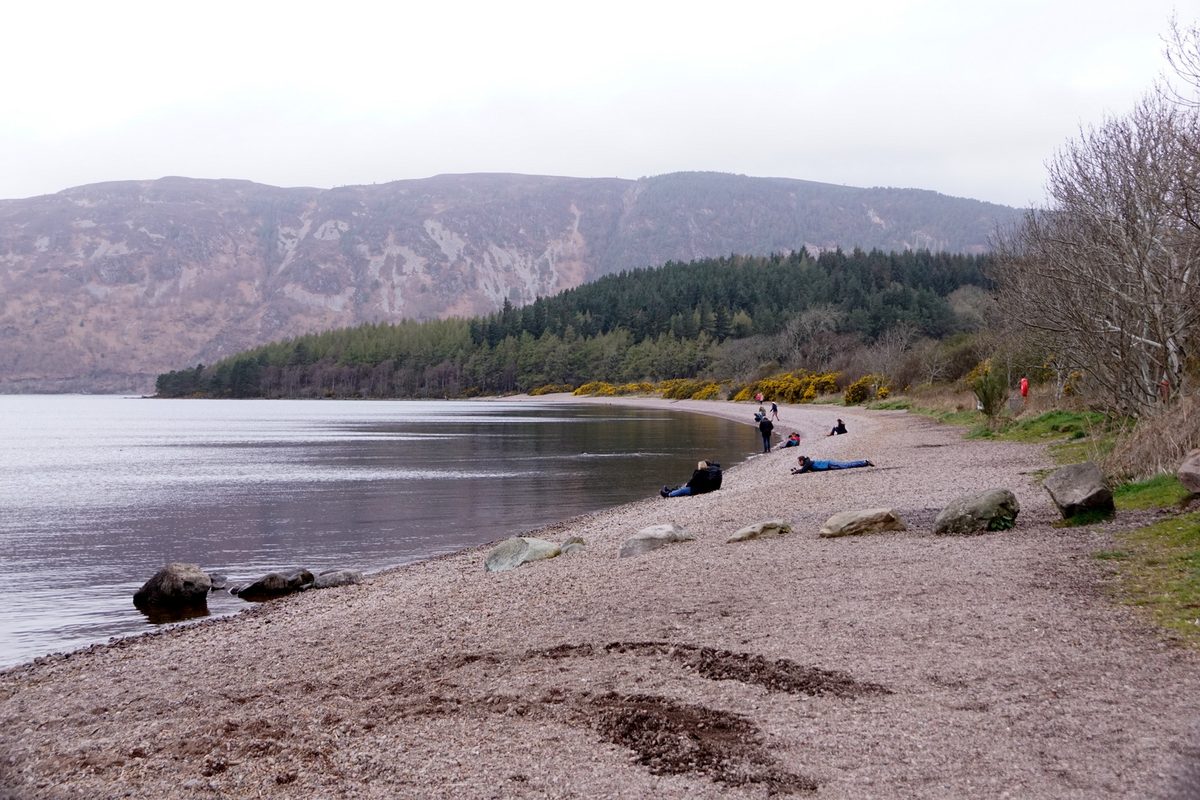
There is a pub at the top of the beach and a car park that fills on summer weekends because half of Inverness comes out here. Go early or go in the evening. It is also the single best spot on the loch for a swimming-free paddle, a coffee and twenty minutes of doing nothing, which is more than you can say for anywhere on the A82 side.
The laybys south of Drumnadrochit
Between Drumnadrochit and Invermoriston the A82 climbs a little and the forestry thins, and there are a handful of proper laybys with a view down onto the water. The one just past the castle turning gives you Urquhart from above without paying to go in, which is a legitimate move if you are short on time. Indicate early and expect the car behind you to be doing 60mph.
Suidhe Viewpoint on the B862
The high point of the old military road on the south side, up above the loch between Fort Augustus and Whitebridge. There is a small parking area, an interpretation board, and a short walk uphill through a gate to a higher vantage. You are looking across open moor towards Inverness with the loch below, and on a clear day it is the most Highland-feeling view of the whole circuit. Almost no coaches come this way.
Falls of Foyers
A drop of about 30 metres (98 feet) into a wooded gorge on the south side, reached from the village car park by woodland paths and a good many steps to two viewing platforms. Wear something with grip; the steps are slick under trees for most of the year.
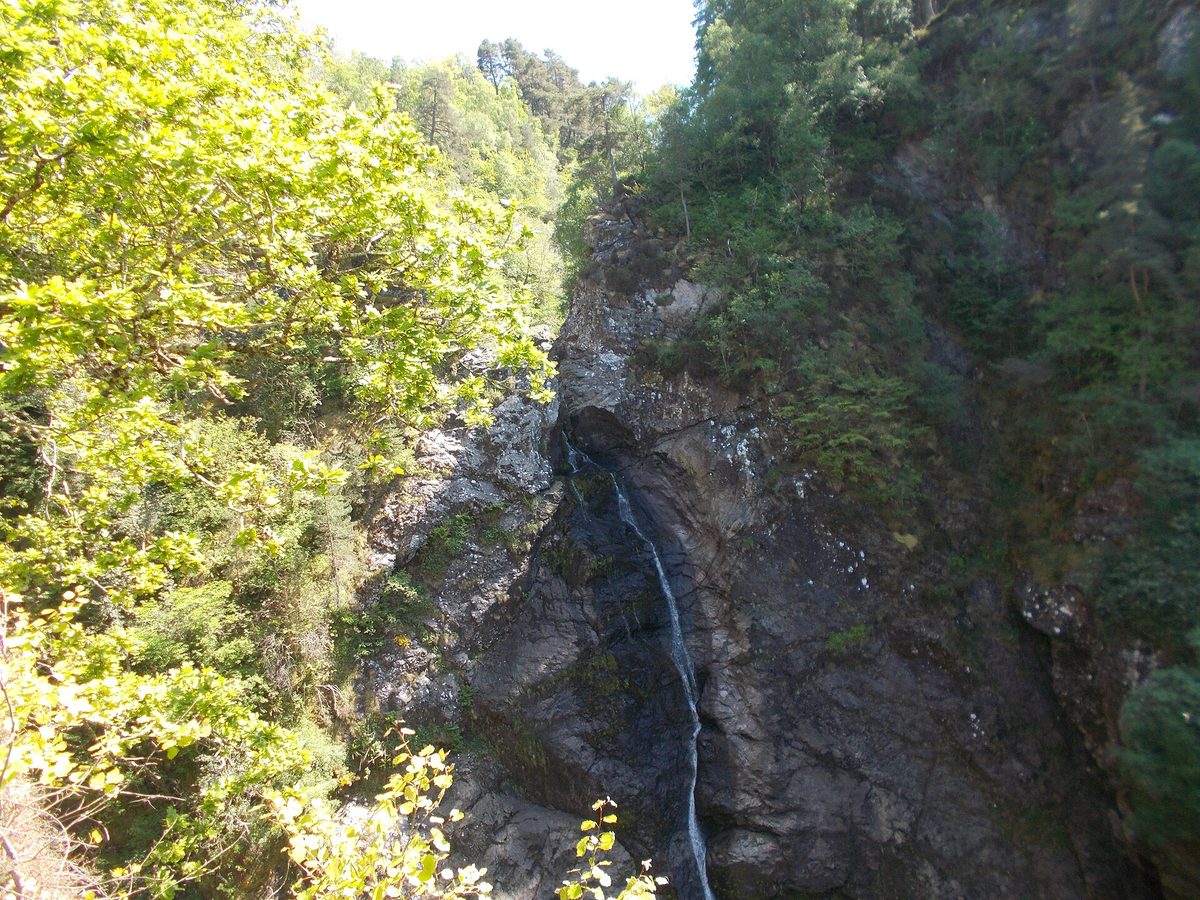
Be aware that the flow is affected by the hydro scheme upstream, so after a dry fortnight it can be a thin ribbon rather than a waterfall. After heavy rain it is excellent. This is a good example of the general rule that Scotland’s waterfalls reward bad weather, which is why October is quietly one of the better months here.
From the water, looking up
I have said it already but it bears repeating: the best view of Loch Ness is the one from the middle of it, because it is the only one where the depth and the walls of the glen make sense. If you do one paid thing, do the boat rather than the exhibition.
The south road almost nobody drives
Here is the single most useful piece of advice in this guide. The A82 is the famous road; the B862 and B852 on the south-east side are the good ones.
They follow the line of an eighteenth-century military road, built to move government troops through the Highlands, and you can drive them for twenty minutes without meeting anyone. The B862 climbs away from the shore onto open moorland with long views; the B852 drops down and runs right along the water through Foyers and Inverfarigaig. The classic move is to go out along one and come back along the other.
Done as a full loop from Inverness — out on the A82 to Fort Augustus, back on the B862/B852 through Whitebridge, Foyers and Dores — you are looking at roughly 70 miles and a full unhurried day. Do it anticlockwise, as described, so that you drive the good road in the afternoon with the light behind you and finish at Dores for the evening view.
Two cautions. Stretches of the B852 are single track with passing places, so if you are not used to that, read up on the etiquette before you go; our notes on getting around Scotland cover it. And there is very little in the way of fuel or food between Fort Augustus and Dores, so fill up and eat before you turn off.
Walkers and cyclists have a version of the same trick. The Loch Ness 360 Trail links the Great Glen Way along the north side with the South Loch Ness Trail to make an 80-mile circuit in six sections, each roughly a day’s walk or half a day’s ride, starting and finishing in Inverness. It is one of the better multi-day routes in the country, and the Dores end is easy to sample on foot from Inverness.
The monster, handled honestly
You cannot write about this loch without addressing the animal, and I would rather do it properly than either wink at you or sneer.
Where the story actually comes from
The oldest reference people cite is a seventh-century life of St Columba describing an encounter with a beast in the sixth century. Read it closely and the incident takes place in the River Ness, not the loch, and it reads as a standard piece of hagiography in which a saint subdues a water creature. It is evidence of a storytelling tradition, not of an animal.
The modern legend is precisely dated: 1933, when the local newspaper in Inverness reported a sighting by a couple driving the shore road. The timing is not a coincidence. That year, road improvements along the north side cleared trees, opened up views of the water and brought more visitors along the shore. More eyes, better views, a newspaper with column inches to fill.
The photograph that ran the world for sixty years
In 1934 the Daily Mail published the image everyone still pictures: a small dark head and neck rising from flat water, credited to a London doctor and known ever since as the “surgeon’s photograph”. It shaped the popular idea of what the animal looked like for six decades.
It was a hoax. One of the participants confessed in the early 1990s, shortly before his death, and described the method: a model head and neck fixed to a toy submarine, photographed close in so that the ripples read as waves. The same group had form — a year earlier the Mail had published photographs of large footprints on the shore, which the Natural History Museum examined and identified as having been made with a dried hippopotamus foot, the sort then sold as an umbrella stand.
I find that story more entertaining than the monster, and it is worth knowing before you look at the enlargement on the exhibition wall.
What the DNA survey found
A scientific attempt to settle the question came in June 2018, when an international team led from the University of Otago in New Zealand sampled the loch for environmental DNA — the traces every organism sheds into the water it lives in. They took around 250 samples from the surface, mid-water and the deeps, sequenced them, and compared the results against global databases. The findings were published in 2019.
There was no reptile DNA. Nothing consistent with a surviving plesiosaur, which was always the least plausible idea anyway. No sturgeon, no catfish, no shark. What there was, at essentially every sampling point, was a very large quantity of eel DNA.
The team were careful about what that does and does not mean. Their data cannot tell you how big any individual eel is, so the one hypothesis they could not rule out is that some sightings involve unusually large eels. That is a long way from a monster and it is not nothing either. European eels do live in the loch, they do move at the surface, and a large one in poor light at distance is a plausible source for a certain kind of report.
The honest position is this: there is no verified evidence of an unknown large animal in Loch Ness, the most famous photograph is an admitted fake, and the best modern survey turned up eels. The legend is still interesting, because what people see and what people report is a genuinely fascinating question. Just do not go expecting to solve it from a boat deck.
The two monster attractions in Drumnadrochit, compared
Drumnadrochit is the village at the centre of all this, and it is small — a green, a couple of shops, a lot of parking and two competing monster attractions. Visitors regularly assume they are the same thing. They are not.
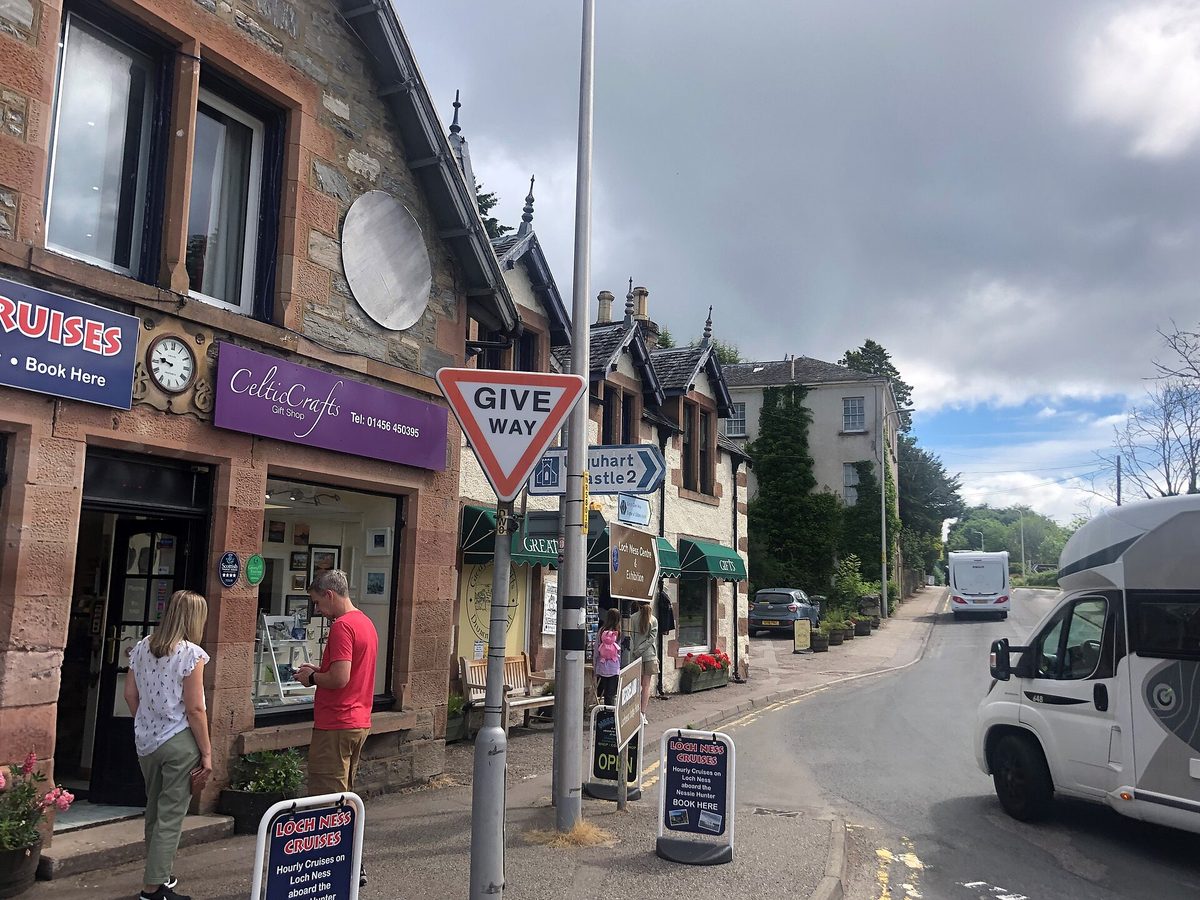
The Loch Ness Centre
The larger and more serious of the two, refurbished a few years ago and now run by a national attractions operator. It takes you through the geology of the Great Glen, the history of the sightings, and — to its credit — the succession of scientific expeditions that have tried to answer the question, including the sonar sweeps of the 1980s and the DNA work. It does not tell you the monster is real. It tells you why people keep looking, which is a better subject.
Online, adult tickets are £15.75 and children’s £13.50, and family tickets are available. It is cashless, and it takes about an hour. There is a combined ticket with the Deepscan boat trip for roughly £40 that is decent value if you want both.
Is it worth it? If you have a genuine interest in the sightings as a phenomenon, yes. If you are only there because it is raining, you can skip it without regret and spend the money on the boat.
Nessieland
The other one is a gift shop with an attraction attached rather than the reverse. It is aimed squarely at younger children, with a play area and a walk-through of models, and if you have a six-year-old who wants to meet a monster it does the job. If you are an adult hoping for the serious treatment, you will be out in fifteen minutes wondering where the money went.
I would not tell anyone to visit both. Pick one based on who you are travelling with, or skip both and put the time into the castle.
Planning your visit
How long you need
Two hours is enough for Urquhart Castle alone if you are passing through with a booked slot. It is not enough for anything else.
Half a day covers the castle plus either a cruise or Fort Augustus. This is the sensible minimum if you have driven any distance to get here, and it is what a Loch Ness stop should look like on a Highlands road trip.
A full day gets you the whole circuit: castle, boat, locks, the south road, Foyers, Dores at the end. This is the version I would recommend to anyone asking whether the place is worth it, because it is the version that answers yes.
Two days only makes sense if you are also doing Culloden, Clava Cairns, Glen Affric or a stretch of the Loch Ness 360 Trail, in which case base yourself in Inverness rather than on the shore.
Getting there without a car
It is entirely doable. Inverness has direct trains from Edinburgh, Glasgow and London, and the ride up through the Cairngorms is one of the better rail journeys in Scotland in its own right.
From Inverness, the coach service between Inverness and Fort William runs along the A82 and stops at Drumnadrochit and Fort Augustus, and there is a local bus between Inverness and Drumnadrochit as well. Services are limited rather than frequent, especially outside summer and on Sundays, so check timetables before you build a day around them and do not assume a late return.
The simplest carless option is one of the coach-and-boat combinations that leave from Inverness bus station, which bundle the transfer, the cruise and castle entry into a single half-day. Less flexible, but it removes the timetable problem entirely. For wider planning without a hire car, see our Scotland without a car itinerary.
Driving and parking
Urquhart Castle’s car park is the pinch point. Parking is free, it is not large, and a space is only guaranteed if you book your castle ticket online. Do that, and pick an early or late slot. Fort Augustus has several pay-and-display car parks and they also fill, but the village is small enough that you can park on the edge and walk in. Dores has a modest free car park that overflows onto the verge on sunny weekends.
The A82 is a 60mph single carriageway with a lot of bends, overtaking is rarely sensible, and the average speed you achieve will be well below what the map suggests. Allow about 30 minutes from Inverness to Drumnadrochit, and about an hour to Fort Augustus.
What to book, and how far ahead
- Urquhart Castle: book online, always. In July and August book a week or more ahead for a morning slot. Booking also saves you a couple of pounds.
- Cruises: a day or two ahead is usually enough outside peak, but the Fort Augustus speedboat trips and the Deepscan sell out in school holidays. Book on the operator’s own site rather than a reseller.
- Culloden: timed entry, worth booking in summer.
- Accommodation in Inverness: the tightest thing on this list. The city fills for events and in high summer, and prices climb accordingly. If the city is full, Nairn and Beauly are both within half an hour and usually cheaper.
- Fort Augustus locks, Clava Cairns, Dores, Suidhe, the Falls of Foyers: all free, none bookable, all better in the evening.
When to come
May and early June are the sweet spot: long days, the trees not yet in full heavy leaf, and the midges not properly awake. September is the other good window, with autumn colour along the south road and the coach traffic thinning.
July and August bring the crowds and the midges together. The little biters are at their worst on still, damp evenings from June to August and they will find you at Dores and along the canal at Fort Augustus; read our guide to the midge season and carry repellent. Winter has its own appeal — the loch is genuinely atmospheric under low cloud and you will have the castle nearly to yourself — but daylight is short, some cruises stop running and the south road can be icy. Check the month-by-month weather picture before you fix a date.
What a proper day costs
Two adults doing the full version: castle entry at roughly £28, a 50-minute cruise from Fort Augustus at £44, lunch at the canal centre for about £25, fuel for a 70-mile loop, and nothing at all for Fort Augustus locks, Dores, Suidhe or the Falls of Foyers. Call it £110 to £120 for the pair, which is respectable for a full day in the Highlands. Add the Loch Ness Centre and you are at £150. Skip the exhibition and you have lost nothing important.
Where to base yourself
People assume that sleeping beside Loch Ness improves the experience. Mostly it doesn’t, and here is the honest comparison.
Inverness — the right answer for almost everyone
Inverness is half an hour from Drumnadrochit and eight miles from Dores, which means the loch is a short drive rather than a commitment. It also has the restaurants, the supermarkets, the station and the airport, and it puts Culloden, Clava Cairns, the Moray whisky country and the northern Cairngorms all inside an hour. The city itself will not detain you for more than an afternoon — the castle is a working court building rather than a visitor attraction and the centre is compact — but as a base it is unbeatable in this part of the Highlands.
Drumnadrochit — handy, small, and thin on evenings
Staying in Drumnadrochit buys you one real advantage: you can be at Urquhart Castle for the first slot of the day, before the coaches arrive from Inverness, and that is genuinely worth something in July. Beyond that you have a village green, a handful of guesthouses, two monster attractions and limited choice for dinner. It works for one night as part of a moving road trip. It does not work as a week.
Fort Augustus — the prettiest of the three
If you want to sleep on the loch, sleep here. Fort Augustus has the canal running through the middle of it, boats coming and going all day, a few good pubs, and it empties out completely once the day-trip coaches leave around five o’clock, which is when the village is at its best. It is about an hour’s drive from Inverness, so it suits people heading on to Fort William, Glencoe or Skye rather than doubling back.
Lochside hotels and the Foyers side
There are a few country-house hotels and a scattering of self-catering places along the shores, particularly around Foyers and Inverfarigaig on the south side. They are quiet, often lovely, and a long way from a shop. Take one if the point of your trip is stillness; avoid it if you want to be able to walk to dinner. The comparison of Highland base towns is worth reading before you commit a week to anywhere out here.
Worth adding if you have a second day
If Loch Ness has earned a second day — and it can, if the weather turns good — these are the additions I would make, none of which appear on the standard itineraries.
Glen Affric
West of Drumnadrochit, reached by the road through Cannich, and the best thing within striking distance of Loch Ness. Ancient Caledonian pine, a chain of lochs, marked walks from an hour to a full day, and a fraction of the visitors. If someone tells you the Highlands are overrun, take them here on a Tuesday in June and watch the argument end.
Invermoriston and Divach Falls
Invermoriston, halfway down the A82, has an early nineteenth-century stone bridge by the engineer behind the Caledonian Canal, spanning a gorge where the river drops through rock. It takes ten minutes and almost every coach drives past it. Divach Falls, behind Drumnadrochit, is now a walk rather than a drive: the road to its car park is closed to vehicles after a landslide, so go on foot from Drumnadrochit or by the Glen Coiltie Loop.
Corrimony chambered cairn
Out towards Cannich, a passage grave of similar age to Clava with a stone circle around it and nobody there. If Clava has left you wanting more prehistory without the crowds, this is where to go.
A section of the Loch Ness 360
You do not have to walk all 80 miles. The Dores-to-Inverness section makes a good half-day with a pub at one end and a city at the other, and the Great Glen Way above Drumnadrochit climbs high enough to give you the view of the loch that the road never does. Both are far better uses of an afternoon than a second exhibition.
What underwhelms, and what to skip
The most useful thing a guide can do is tell you where the disappointments are, so here they are without softening.
The north shore drive
Already covered, but it deserves restating as the single most common source of “I don’t get it”. Driving the A82 and expecting the loch to perform is a mistake. It is a functional road with occasional glimpses. Every good view of Loch Ness requires you to stop, get out, and usually to be somewhere other than the A82.
Expecting a sighting
Nobody says this out loud, but a lot of visitors are quietly scanning the water. You will see wind lines, boat wakes, floating logs and the occasional bird. That is the complete list. Enjoy the story, take the joke seriously, and do not let it hollow out the rest of the day.
Nessieland, for adults
Fine for small children, thin for anyone else. If you are choosing between the two Drumnadrochit attractions on your own or as a couple, it is not the one.
Urquhart Castle at midday in August
The castle is small and the promontory is narrow. At peak times you are queueing on the causeway and waiting your turn on the tower stairs, and the sense of an isolated fortress evaporates entirely. The same castle at 5pm in May is one of the best places in the Highlands. Book accordingly — this is the difference between a two-star and a five-star visit.
Swimming
People ask. Deep down, the loch stays at around 5.5°C all year, and only the surface layer warms and cools with the seasons. The shelving is steep, and the water is dark enough that you cannot see your own feet. Wild swimmers do it, in wetsuits, with company. If you want a swim, the beaches on the west and north coasts are cold too but at least you can see the bottom.
Five mistakes I see repeatedly
- Booking the Edinburgh coach day trip. Twelve hours or more for as little as an hour at the loch. If Loch Ness matters to you, go and stay near it.
- Driving past without stopping. The second-worst option after the coach: you get the trees and none of the payoff.
- Turning up at the castle without a ticket in August. You will be turned away or queueing.
- Doing only the north shore. The south side is the better half and takes an extra hour.
- Building the day around the monster. Build it around the castle, the boat and the locks, and treat the monster as the garnish.
If Loch Ness is not for you, go here instead
Sometimes the right answer is no, and there is no shame in it. If the honest assessment above has cooled you on the idea, these are the alternatives I would push you towards.
For loch scenery: Loch Maree, Loch Shiel at Glenfinnan, or the Loch Lomond and Trossachs national park if you are coming from Glasgow. All prettier than Loch Ness, and none of them on the coach circuit.
For drama: Glencoe, which is the most impressive drive in Scotland and sits on the same road two hours south. If Loch Ness left you flat, Glencoe will not.
For a castle with a better setting: Eilean Donan on the way to Skye, or Dunnottar on its sea cliff south of Aberdeen, which is the most spectacularly sited ruin in the country and nobody’s second choice.
For quiet within reach of Loch Ness: Glen Affric, west of Drumnadrochit via Cannich, which has old Caledonian pinewood and a chain of lochs. It is the answer to “where do people who live here go”.
For the wider Highlands: our overview of the Scottish Highlands will help you build something better than a single-loch day. And if you are weighing up big-name Scottish experiences generally, our verdict on whether the North Coast 500 is worth it applies the same test to a much bigger commitment.
Frequently asked questions
Is Loch Ness worth visiting if you don’t believe in the monster?
Yes, provided you come for the right things. Urquhart Castle, an hour on the water and the lock flight at Fort Augustus stand up entirely on their own merits. Scepticism about Nessie costs you only the exhibition, which is the most skippable part of the day anyway.
How long do you need at Loch Ness?
Half a day covers the castle plus one other thing. A full day lets you do the complete circuit including the quiet south road, a cruise and Fort Augustus, and that is the version that genuinely justifies the journey. Two hours is enough only for the castle if you are passing through.
Is a Loch Ness day trip from Edinburgh worth it?
Not in my view. The day lasts twelve to thirteen hours, much of it on the road, and you get one to three hours around the loch depending on the tour. The Highland scenery en route is the real value. If Loch Ness is the goal, travel to Inverness and stay a night instead.
What is the best part of Loch Ness?
Urquhart Castle for the setting, the boat trips for the sense of scale, and Fort Augustus for the most relaxed hour. For views without a ticket, Dores Beach at the north-east end and the Suidhe Viewpoint on the south road are the two that repay the detour.
Can you see Loch Ness for free?
Easily. Dores Beach, the Falls of Foyers, Suidhe Viewpoint, the Fort Augustus lock flight and the laybys along the A82 all cost nothing, and Clava Cairns near Inverness is free with free parking. You can have a very good day here paying only for fuel and lunch.
Which side of Loch Ness is better to drive?
The south-east side, without question. The B862 and B852 are far quieter, run closer to the water in places and higher above it in others, and pass Foyers, Suidhe and Dores. The A82 on the north-west side is the faster road and the duller one.
Do you need to book Urquhart Castle in advance?
Yes. Entry is by timed slot, the car park is small, and summer mornings sell out. Booking online is also cheaper than paying at the gate by a couple of pounds. In July and August aim to book at least a week ahead.
Has anything ever actually been found in Loch Ness?
No verified evidence of a large unknown animal, no. The best-known photograph was admitted to be a hoax in the 1990s, and a 2018 environmental DNA survey published the following year found no reptile DNA in the loch. It did find a great deal of eel DNA, which left large eels as the one explanation the researchers could not rule out.
Is Loch Ness worth visiting in winter?
It can be excellent, with a quieter castle and low cloud sitting on the water, but the trade-offs are real: daylight from roughly 9am to 3.30pm around the shortest day, some boat trips on reduced winter schedules (check with the operator), and the south road liable to ice. Come in winter for atmosphere and solitude, not for a full programme.
Where should you stay to visit Loch Ness?
Inverness for almost everyone — Dores, at the north end of the loch, is a short drive away, and the city puts Culloden, Clava Cairns and the wider Highlands within reach. Fort Augustus is the nicer village to sleep in if you are continuing south towards Fort William or Skye. Drumnadrochit is handy only for getting an early castle slot.
Final thoughts
So is Loch Ness worth visiting? A qualified yes, and the qualification is everything. The loch is not the attraction; it is the setting for four or five things that are genuinely good, and if you organise a day around those — a castle slot in the late afternoon, an hour on the water, a coffee beside the locks, the long way home on the south road — you will not feel short-changed.
What I would not do is fly across an ocean for it, or give up a day of a short trip, or sit on a coach for eight hours to see it. Loch Ness rewards people who were coming this way anyway and were willing to stop properly. That is a much narrower recommendation than the tourist board gives you, and a much warmer one than the internet’s cynics allow. If your trip already runs through the Great Glen, go. If it doesn’t, the Highlands will not miss you here.
Put it on the same footing as anything else on your Scotland bucket list and judge it on what it actually delivers rather than on how famous it is. Do that, and I think you will enjoy it — and you will enjoy Culloden more.
About the author: This guide was written and is maintained by the ScotlandTourism.org editorial team — travel writers who’ve spent years exploring Scotland’s cities, Highlands and islands, from bagging Munros to chasing the perfect dram. We update our guides regularly to keep prices, opening details and advice current.
Last updated: October 2026. Prices and opening times change — always check the official site before you travel.
Photo credits
All images are used under their respective Creative Commons or public-domain licenses:
- Ruined walls of Urquhart Castle above Loch Ness with a cruise boat passing offshore — Mike Pennington, CC BY-SA 2.0, via Wikimedia Commons
- Urquhart Castle on its promontory with Loch Ness stretching south-west into the Great Glen — BIG ALBERT, CC0, via Wikimedia Commons
- The A82 along the north shore of Loch Ness, screened by trees for long stretches — Craig Wallace, CC BY-SA 2.0, via Wikimedia Commons
- The shingle beach at Dores looking down the full length of Loch Ness — Mike Pennington, CC BY-SA 2.0, via Wikimedia Commons
- Gift shops and cruise booking boards in Drumnadrochit, the centre of Loch Ness monster… — Eirian Evans, CC BY-SA 2.0, via Wikimedia Commons
- A Loch Ness cruise boat moored at its jetty near Inverness — Susannah Muldoon, CC BY-SA 2.0, via Wikimedia Commons
- The flight of five Caledonian Canal locks climbing through Fort Augustus at the south… — David Dixon, CC BY-SA 2.0, via Wikimedia Commons
- The Falls of Foyers dropping through a wooded gorge on the south side of Loch Ness — Peter S, CC BY-SA 2.0, via Wikimedia Commons
- Bronze Age burial cairn and standing stones at Balnuaran of Clava near Inverness — Elliott Simpson, CC BY-SA 2.0, via Wikimedia Commons
- The visitor centre on the moor at Culloden battlefield, twenty minutes from Loch Ness — Photograph by Mike Peel (www.mikepeel.net)., CC BY-SA 4.0, via Wikimedia Commons
- Inverness Castle above the River Ness, the usual base for visiting Loch Ness — Roger Davies, CC BY-SA 2.0, via Wikimedia Commons