I have lost count of the Edinburgh lists that pad their way to twenty by counting “walk down the Royal Mile”, “look at the castle from outside” and “sit in a park” as three separate attractions. They are not attractions. They are things that happen to you while you walk between attractions. So this guide to the best free things to do in Edinburgh is ranked by one question: is it actually worth your afternoon?
Because here is what most guides bury under item 27. Edinburgh holds an unusual concentration of national institutions whose permanent collections cost nothing — genuinely first-rate collections, not municipal curiosities. That one fact changes what a budget trip here looks like, especially if it rains for four days, which it might.
The short answer
Edinburgh’s best free experiences are its national collections: the National Museum of Scotland, the Scottish National Gallery, the Portrait Gallery, Modern One and Modern Two, and the National Library. All have free permanent displays. Add Arthur’s Seat, Calton Hill, the Water of Leith and a free Scottish Parliament tour, and you have four full days without paying admission once.
Free things to do in Edinburgh at a glance
| What | Time needed | Booking | Worth it for |
|---|---|---|---|
| National Museum of Scotland | Half a day, easily a full one | None for the free galleries | Rain, families, anyone with a pulse |
| Scottish National Gallery | 90 minutes | None (paid exhibitions ticketed) | Titian, Velázquez and Raeburn in one small building |
| Modern One & Modern Two | 2–3 hours including the walk | None | Surrealism, sculpture grounds, escaping crowds |
| Scottish Parliament tour | 45 minutes | Yes — book ahead online | Architecture and how devolution actually works |
| Arthur’s Seat | 1.5–2 hours return | None | The best view in the city, no exceptions |
| Cramond Island causeway | 2–3 hours plus travel | Check tide times first | A tidal island walk inside the city boundary |
| Fringe Street Events (August) | As long as you like | None | World-class street performance for nothing |
Start with the free national collections — Edinburgh’s real budget advantage
Most cities give you one good free museum. Edinburgh gives you five or six within walking distance of each other, funded as national institutions rather than run as visitor attractions. That distinction matters. Nobody is trying to upsell you an audio guide at the door.
The rule across all of them is the same: permanent collections free, temporary exhibitions ticketed. Walk in off the street and see the good stuff. If a headline show is on, that is the bit you pay for — check the official site first if that is what you came for.
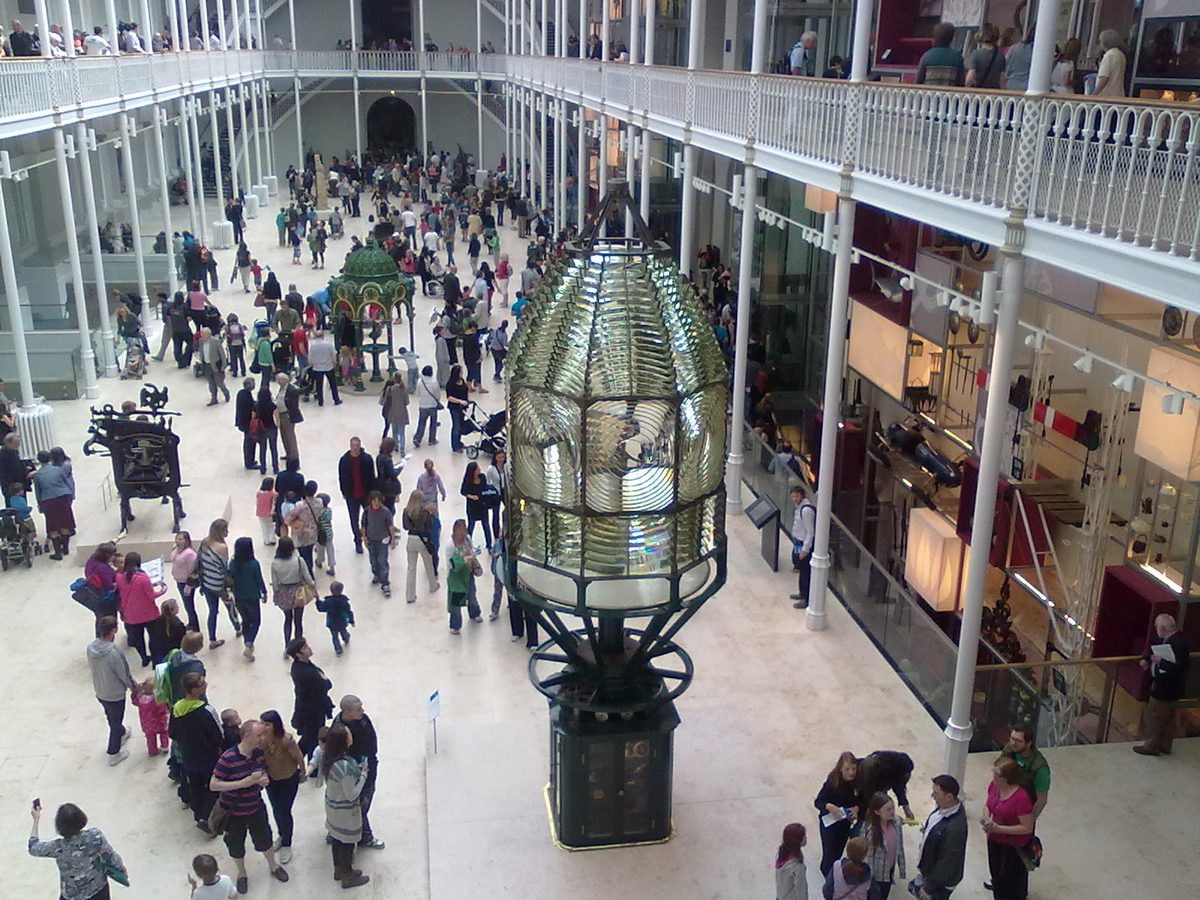
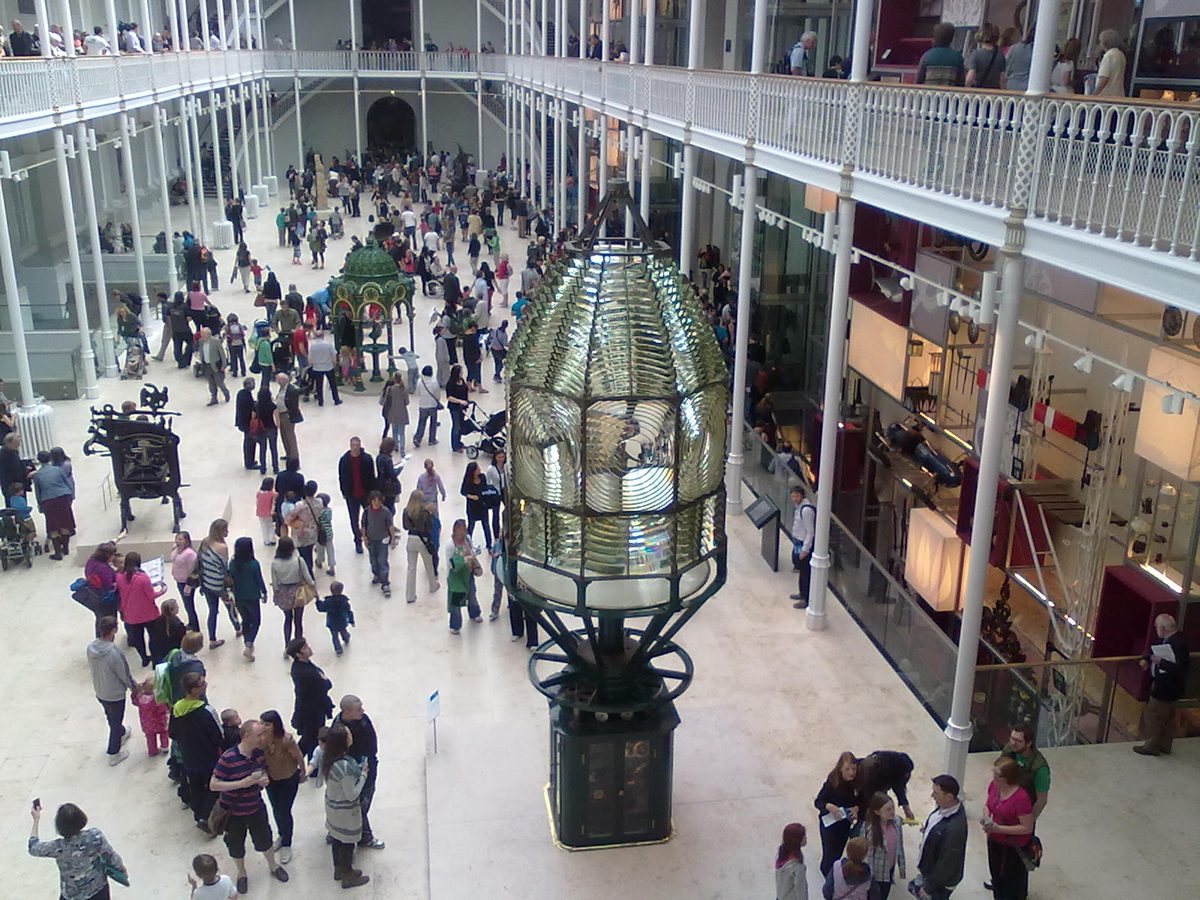
National Museum of Scotland, Chambers Street
Start here. Open daily, roughly 10am to 5pm, free, with charges only for special exhibitions. The Victorian Grand Gallery alone — a great white cage of cast iron and glass — justifies the walk up from the Grassmarket.
What makes it unusual is the range. Scottish archaeology and the Lewis Chessmen sit a few floors from Dolly the sheep, a Formula 1 car, an entire Japanese gallery and a natural history hall that will hold children for two hours. I have spent a whole wet Tuesday in here and left with rooms unvisited.
One thing almost nobody finds: the roof terrace. Level 7, reached by three flights of tight spiral stairs from the Industry and Empire gallery on Level 5, or by the terrace lift. The view runs across the Old Town rooftops to the castle, and it is free. Signage is poor, which is exactly why it stays quiet.
The Scottish National Gallery, the Mound
A small gallery with a heavyweight collection, sunk into the slope below the Old Town. Open daily, around 10am to 5pm, last admission a quarter of an hour before closing. Free.
You get Titian, Rembrandt, Velázquez and Vermeer in a building you can cross in ten minutes, alongside the Scottish rooms — Raeburn, Ramsay, and the skating minister, which turns out to be far smaller than you expect. The Royal Scottish Academy in front of it, on Princes Street, is also free and runs changing contemporary shows. Two hours covers both. If you have time for one gallery in this city, make it this one.
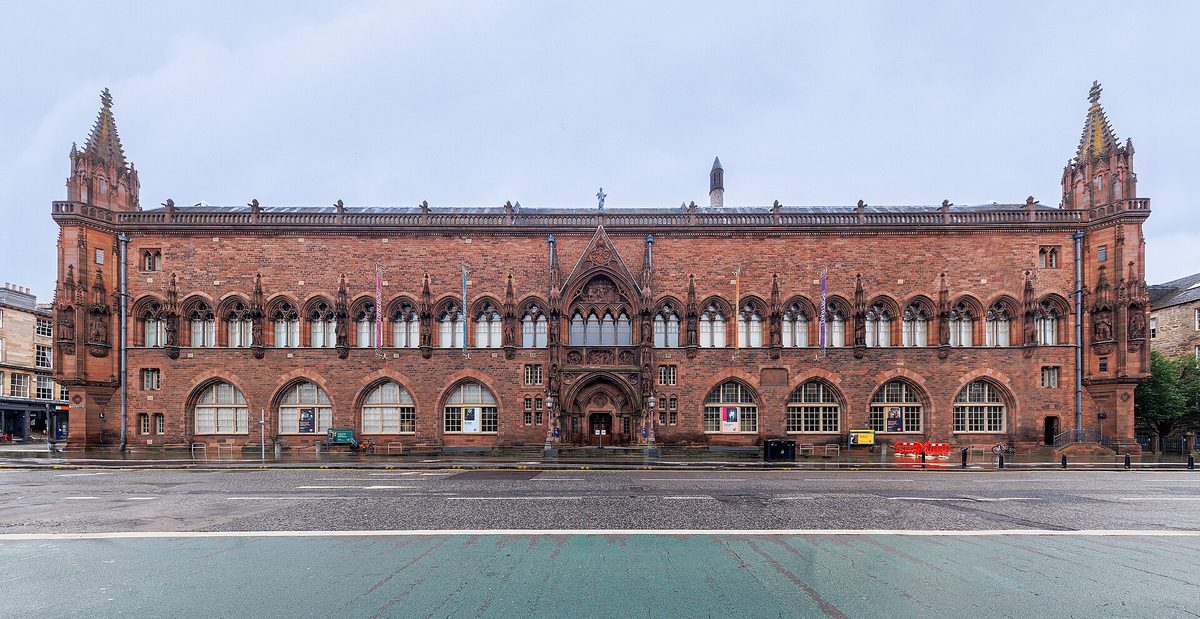
The Scottish National Portrait Gallery, Queen Street
The best building of the lot. Red sandstone, neo-Gothic, and inside a great arcaded hall with a processional frieze of Scottish history running round the walls. It was the world’s first purpose-built portrait gallery and it feels like it — grand in a way modern galleries never are. Fifteen minutes north of Princes Street, far enough that most day-trippers never make it. Free, open daily around 10am to 5pm. Come for the building even if portraits leave you cold.
Modern One and Modern Two, Belford Road
These two face each other on Belford Road, about twenty-five minutes’ walk west of the centre — or, far better, a walk along the Water of Leith from Dean Village. Both free, both open daily around 10am to 5pm, with the grounds opening a little earlier and closing a little later.
Modern One holds the Surrealism collection, one of the better ones in Britain, and its lawn carries Charles Jencks’s stepped landform, a spiral of grass and water that children treat as a climbing frame. Modern Two has the reconstructed Paolozzi studio, floor to ceiling in plaster casts and clutter. Parking here asks a donation, so walk or take the bus.
The National Library of Scotland, George IV Bridge
The one left off every list. The National Library runs free exhibitions in its visitor centre on George IV Bridge, drawing on early printed books, maps, manuscripts and the moving image archive. Opening runs roughly 10am to 7pm Monday to Thursday, 10am to 5pm Friday and Saturday, closed Sunday — making it one of the few free places in the Old Town open in the evening. Forty minutes, five minutes from the castle esplanade, and joining as a reader is free if you have a genuine reason to use the reading rooms.
Free, but you have to book — or turn up at the right moment
This is the category nobody separates out, and it is where readers get caught. Several of Edinburgh’s best free experiences need a booking, and a few are only free at certain times.
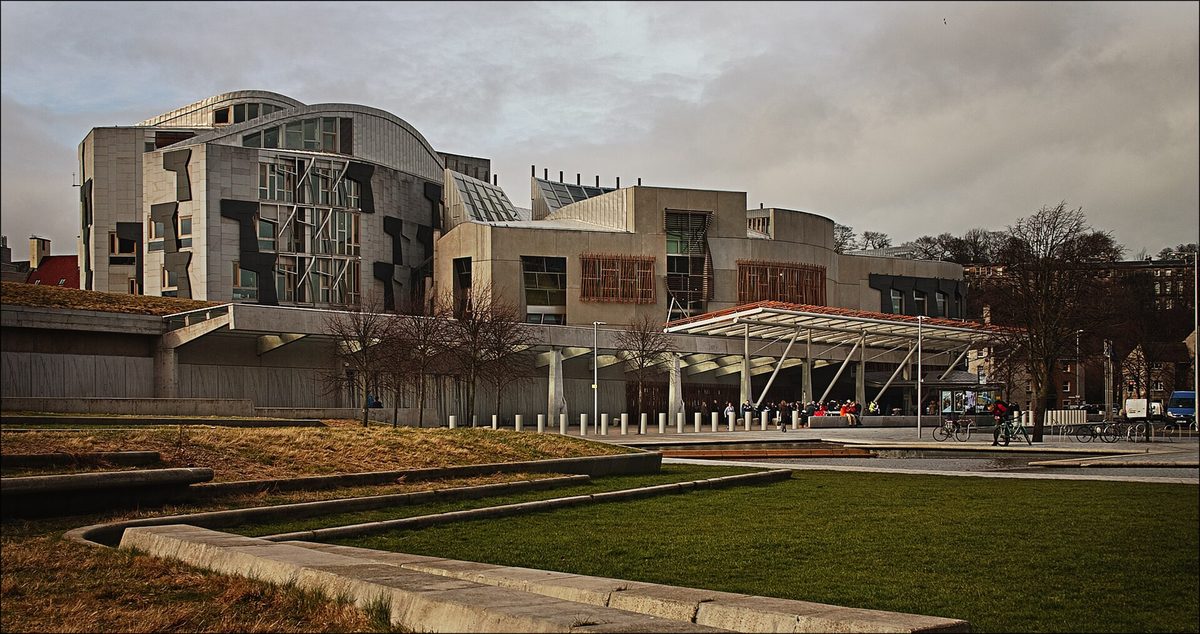
The Scottish Parliament, Holyrood
Enric Miralles’s building at the foot of the Royal Mile divides opinion sharply, and that is exactly why it is interesting. Everything about visiting it is free.
The guided tour lasts around 45 minutes and normally takes in the debating chamber, the Garden Lobby with its upturned-boat skylights, and a committee room. It runs Monday to Saturday during recess — which includes much of August — and availability shifts when Parliament is sitting. It is popular, so book in advance through the Parliament’s online ticketing rather than chancing it.
If you have not booked, free ten-minute talks run in the Main Hall through the day, and you can wander the public areas and permanent exhibition with no ticket at all. Expect airport-style security on the way in, and leave the penknife at the hotel.
Better still, watch the place work. Chamber meetings are open to the public and tickets are free; book ahead or often just walk in. First Minister’s Questions on a Thursday is the hot ticket and does book out. Debates on Tuesday and Wednesday are far easier to get into and, honestly, more revealing. Sessions stop during recess, so check the sitting calendar before you build a day around it.
St Giles’ Cathedral, High Street
Free to enter, with a suggested donation of somewhere around £5 to £10 at the time of writing — a sign at the door gives the current figure and nobody will chase you. There is a small charge for a photography permit if you want to shoot inside, which catches people out.
The free 45-minute guided tours are worth planning around: they typically run twice a day and need booking in advance. Both St Giles’ and Greyfriars Kirk also host free concerts on a regular schedule, often choral or organ recitals at lunchtime or on a Saturday evening. Check their listings for the week you are in town. It is the cheapest live music in the Old Town and the acoustics do the work.
The Royal Botanic Garden, Inverleith
Seventy-odd acres a mile north of the centre, founded in 1670, free to walk into. Prioritise the Chinese Hillside and the rock garden, and the top lawn for a clean view of the Old Town skyline over the Stockbridge rooftops. The catch: the glasshouses are ticketed separately and have been affected by a long redevelopment programme, so check what is open before making a special trip. The garden itself stays free regardless.
Free viewpoints, ranked properly
Edinburgh has more free high ground than any British city I can think of, and every list dumps them in a flat row as though they were interchangeable. They are not. Here they are in the order I would use them.
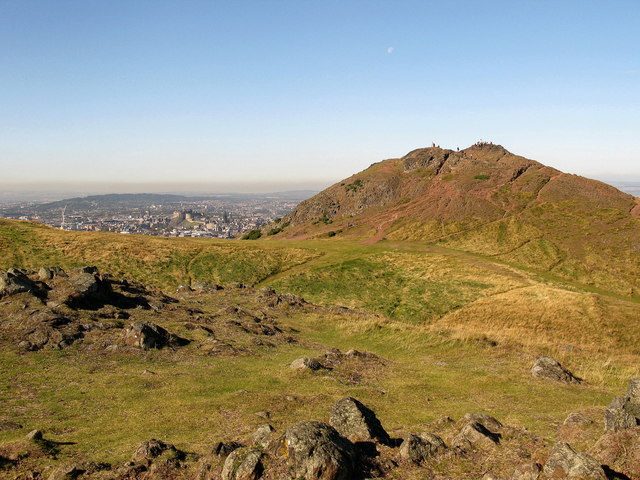
1. Arthur’s Seat — best view, most effort
Around 250 metres of extinct volcano inside the city boundary, and nothing else comes close. From the top you see the whole Old Town, the Firth of Forth, the Pentlands and, on a clear day, up into Fife. The usual route starts behind the Palace of Holyroodhouse and takes about 45 minutes each way, though the last section is a rocky scramble rather than a path.
Go at sunrise if you can face it. The hill is busy from mid-morning in summer; at 6am in June you will share the summit with about nine people and a lot of gulls. Wear proper shoes — the volcanic rock is slick after rain and the ambulance service is called out here more than it should be. Our full walking guide to Arthur’s Seat covers the different routes and which suits which fitness level.
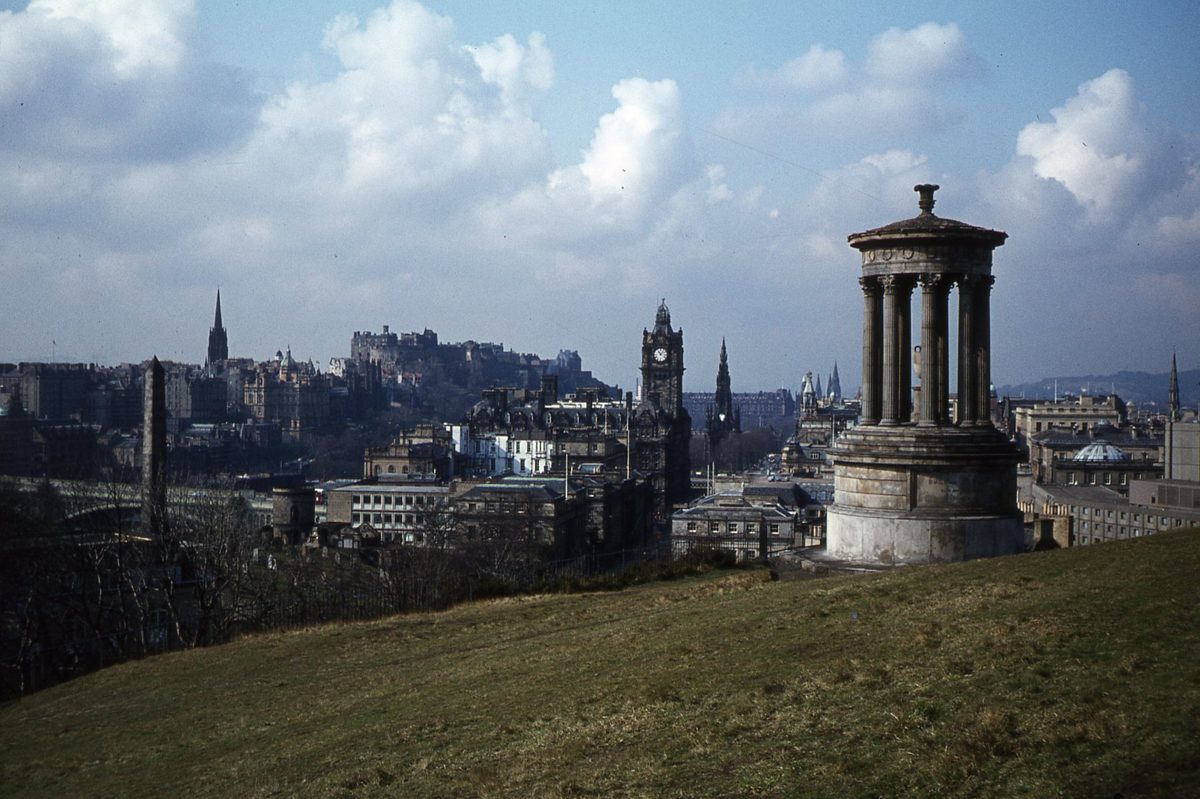
2. Calton Hill — best reward for the effort
Fifteen minutes from Princes Street on a paved path, and you get the postcard: the Dugald Stewart Monument in the foreground, the castle and the Old Town spine behind. This is the shot you have seen a thousand times, and it costs nothing.
Calton Hill is the sunset hill. The light comes from the west, straight down the Old Town ridge, and the whole thing turns gold for about twenty minutes. It is also busy at that hour, so arrive forty minutes early for a spot. The unfinished National Monument — twelve columns of a Parthenon nobody could afford to finish — is more fun to sit on than to look at. The Nelson Monument tower beside it charges admission; the hill itself never does.
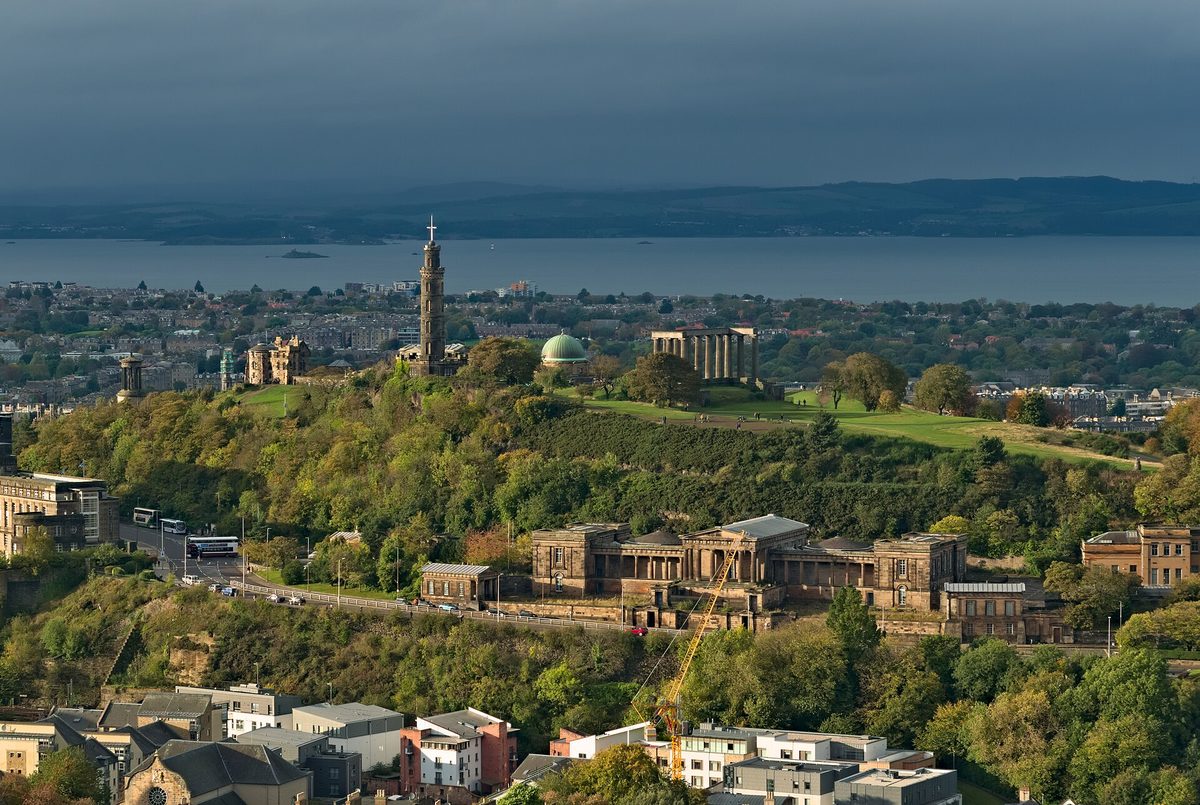
3. Salisbury Crags — the smart compromise
The great curved cliff below Arthur’s Seat gives about seventy per cent of the summit view for a third of the climb. You look straight down onto Holyrood, across to Calton Hill and out to the Forth. If you have an hour rather than two, or knees that object to scrambling, take the Crags and skip the top.
4. The National Museum roof terrace — best view with a roof nearby
It belongs on this list on its own merits. Level 7, no charge, and the only viewpoint in Edinburgh where you can be back under a roof in thirty seconds when the weather turns, which it will. On a wet afternoon it beats every hill in this section.
5. Blackford Hill — best for a quiet hour
At 164 metres, south of the centre and twenty minutes by bus, Blackford Hill gives the classic composition of the Old Town skyline with Arthur’s Seat alongside it — the view that appears on old prints. The Royal Observatory sits on its shoulder. Combine it with the Hermitage of Braid, the wooded nature reserve running below along the Braid Burn past an eighteenth-century mansion house and a doocot with close to two thousand nest holes. Almost no visitors come here. That is the point.
6. Corstorphine Hill — for the walk more than the view
West of the centre, a woodland nature reserve with a Victorian tower built in 1871 to mark the centenary of Walter Scott’s birth. The viewpoint called Rest and Be Thankful — where travellers once stopped for their first sight of the city — frames the castle and Calton Hill above the trees. A circuit takes about an hour and a half. Good if you are staying out west; not worth a special journey.
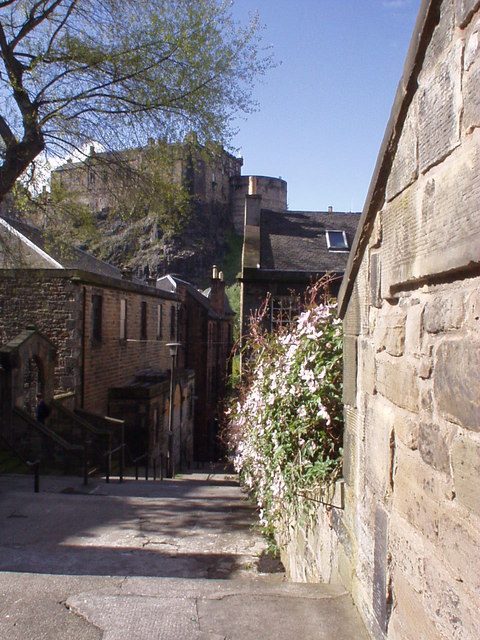
The two that are photo stops, not viewpoints
The Vennel steps, climbing from the Grassmarket, frame the castle between two stone walls. Ninety seconds, usually a small queue of people with cameras, and genuinely the best free castle photograph in the city. But it is a stop, not a destination.
Regent Road, running east below Calton Hill, gives the same Old Town panorama as the hill with no climb at all — useful with a pushchair, luggage or a bad hip. Stand near the old Royal High School. Both are two-minute detours you fit around something else, and any guide counting them as separate items is padding.
Free walks that actually go somewhere
Walking is free everywhere. What matters is whether the walk has a point to it. These four do.
Dean Village and the Water of Leith
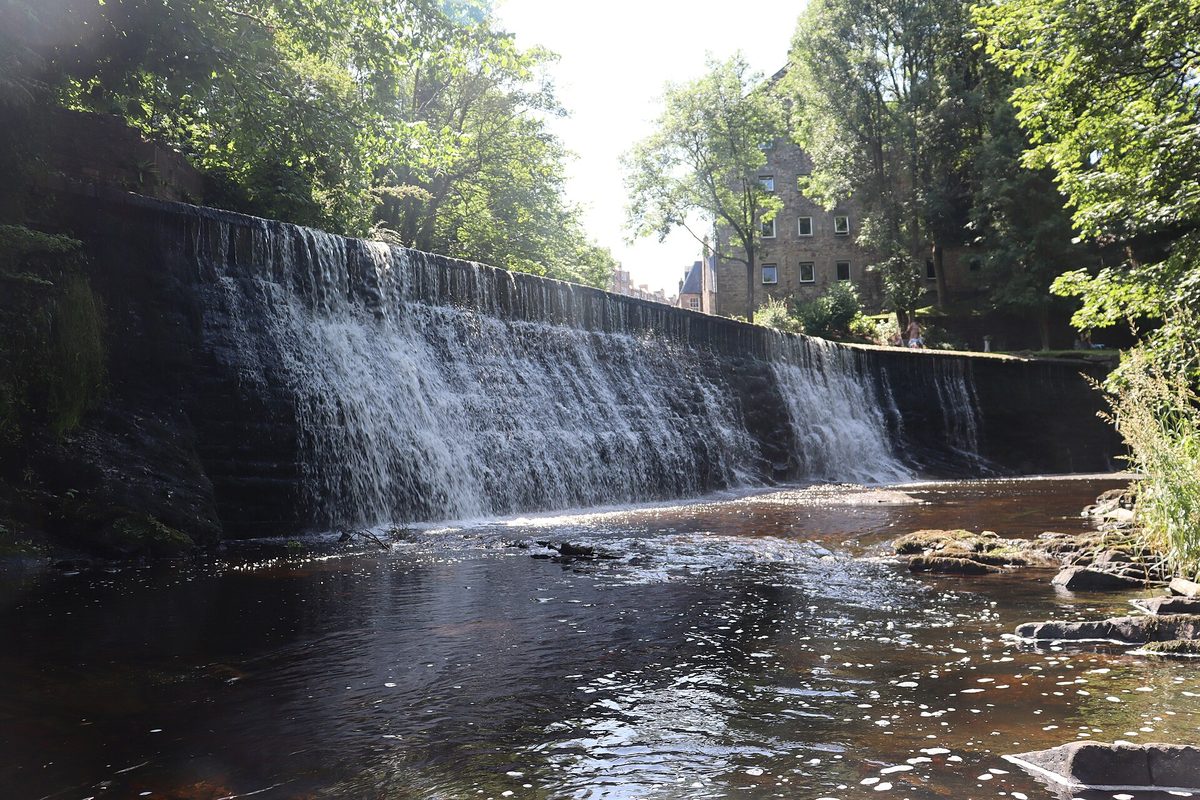
Ten minutes from Princes Street the ground drops into a wooded gorge and you are standing in a former milling settlement, the weir still running and the old grain merchants’ buildings above it. It is the most surprising thing in central Edinburgh.
Do not just photograph it and leave, which is what most people do. Pick up the Water of Leith Walkway and head downstream. The mile between Dean Village and Stockbridge is the prettiest stretch of the whole path, passing St Bernard’s Well, a neoclassical rotunda over a mineral spring. Allow 45 minutes with stops and you come out in Stockbridge, which has the best charity shops in the city.
The full walkway runs about twelve miles from the Pentlands to Leith, signposted in sections: Roseburn to Stockbridge is roughly two miles and 45 minutes; Stockbridge to Leith about three and a half miles and an hour and twenty. It is flat, surfaced and works for buggies and wheels. Walk upstream from Dean Village instead and you reach Modern One and Modern Two, which turns a gallery visit into a proper morning out.
The Shore at Leith
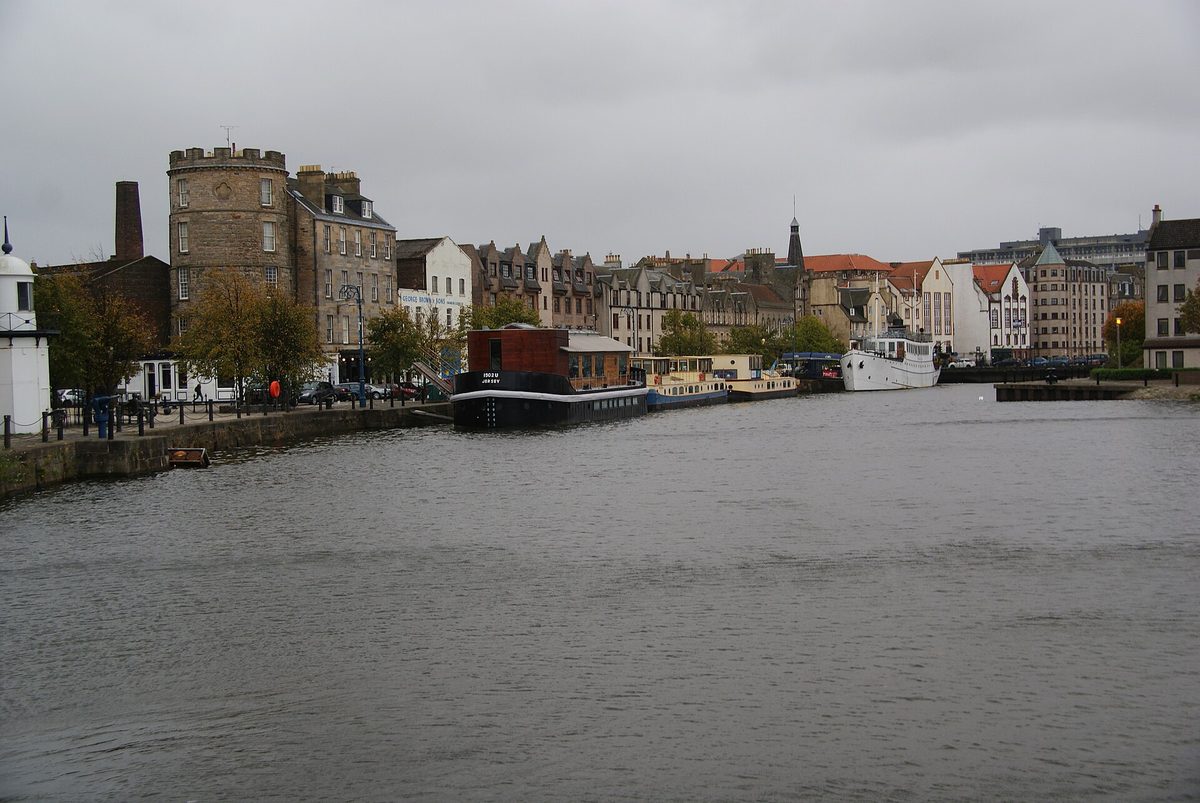
Leith is a working port that spent a long time being written off and is now the most interesting part of Edinburgh to eat in. The Shore — the cobbled quayside where the Water of Leith meets the docks — is lined with seventeenth and eighteenth-century merchants’ buildings, moored boats and a serious concentration of pubs.
Walking it costs nothing; getting there costs one bus fare, or half an hour down Leith Walk on foot. Go late afternoon and stay for dinner. There is more good, reasonably priced Scottish cooking and Scottish beer down here per square metre than anywhere on the Royal Mile.
Duddingston and Dr Neil’s Garden
On the far side of Arthur’s Seat, Duddingston is a village the city grew around and never quite absorbed: a twelfth-century kirk, a loch full of birds, and behind the kirk a garden laid out in the 1960s by two local doctors, running down to the water.
Dr Neil’s Garden opens daily from 10am until dusk, free, donations welcomed. It is small, quiet, and almost nobody who has not been told about it ever finds it. Walk over Arthur’s Seat and drop down the eastern side to reach it, and you have combined the best viewpoint in Edinburgh with its most peaceful corner in one morning.
Cramond and the causeway to Cramond Island — read this bit properly
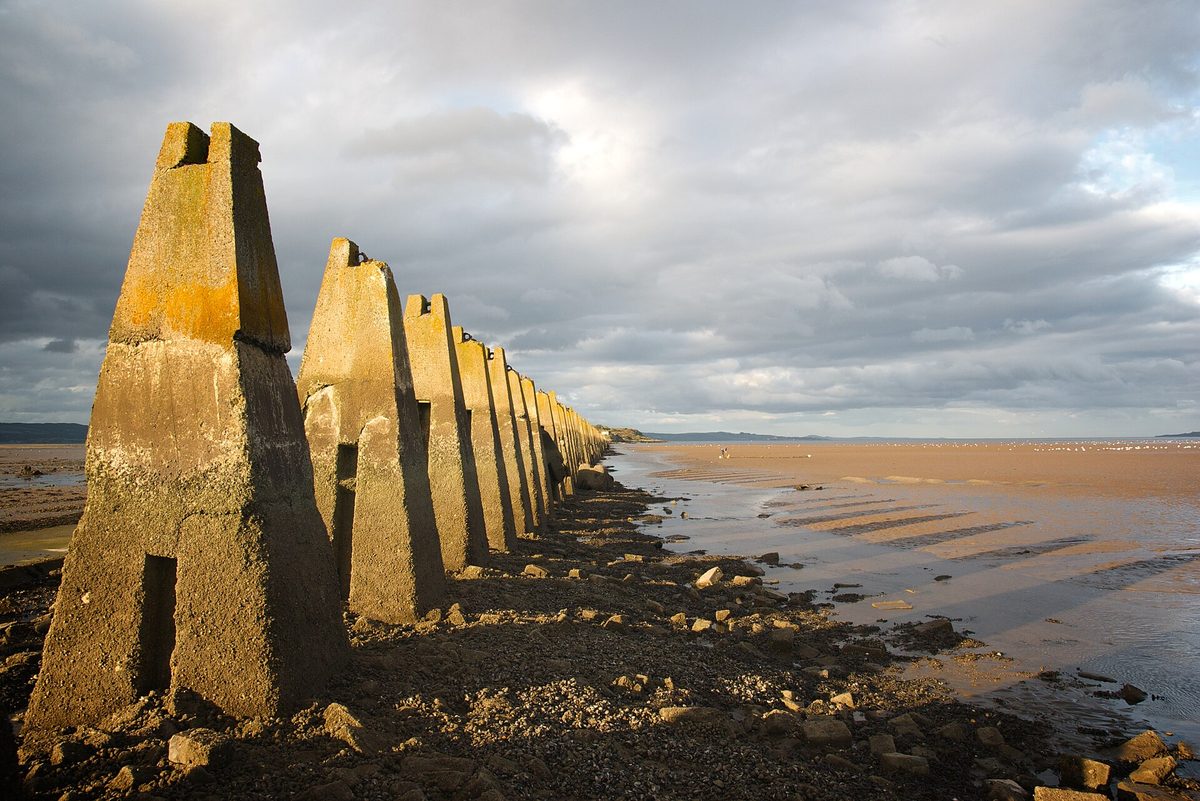
Cramond sits where the River Almond meets the Firth of Forth at the north-west edge of the city, reachable by bus. At low tide a concrete causeway runs out to Cramond Island, flanked by tapering concrete pylons built during the Second World War to stop submarines slipping through the channel. It is free, strange and genuinely memorable, and from the island’s high point you see the castle, Arthur’s Seat, the Port of Leith and the Forth bridges.
People get cut off here every year and the lifeboat has to launch. The rules are simple and you must follow them. The causeway is crossable for up to about two hours either side of low tide, and that day’s safe crossing times are posted on a board at the start. You can also get them by texting the word Cramond to 81400. Read the board. Set a phone alarm for the return time and obey it — the water comes back across the flats faster than it looks, and the crossing takes a good twenty minutes each way.
Do not wade if you have misjudged it. Stay put, call 999 and ask for the Coastguard. A full loop taking in the island, the promenade and the river path back to Cramond Brig runs about five and a half miles and takes two to three hours. There is a free car park at Cramond, though it fills early at weekends.
The truth about “free” walking tours
They are not free. They are tip-based, and the difference matters because the ask comes at the end, when you are standing in a circle with fifteen strangers and no easy exit.
Several operators run daily tours starting on or near the Royal Mile, typically two to two and a half hours covering the Old Town, Greyfriars Kirkyard and the Grassmarket. The guides are usually excellent and often work almost entirely on tips, so the model is fair enough. It just is not free.
Budget roughly £10 to £20 per person for a two-hour tour — the band that seems to have settled in Edinburgh at the time of writing. Below £10 you will feel it; above £20 you are being generous. A couple should expect to hand over around £25 to £35 between them. Carry cash, because not every guide takes cards.
If a fixed price suits you better, paid specialist tours are often better value than they look and you know the cost upfront. That is especially true of the underground vaults and ghost tours, where free versions cannot take you into the actual vaults because access is ticketed. The same applies to the Harry Potter locations around the city, most of which you can find yourself for nothing with a map. The genuinely free alternative is to walk the Royal Mile with a proper guide to its closes in hand and duck into the wynds nobody else bothers with. Advocate’s Close and Lady Stair’s Close reward five minutes each.
August: the one month Edinburgh becomes genuinely cheap for content
Most budget guides tell you to avoid August because beds cost a fortune. Half right. Accommodation in August is brutal and you should book months ahead or stay outside the city. But the content situation inverts completely, and no other list explains this properly.
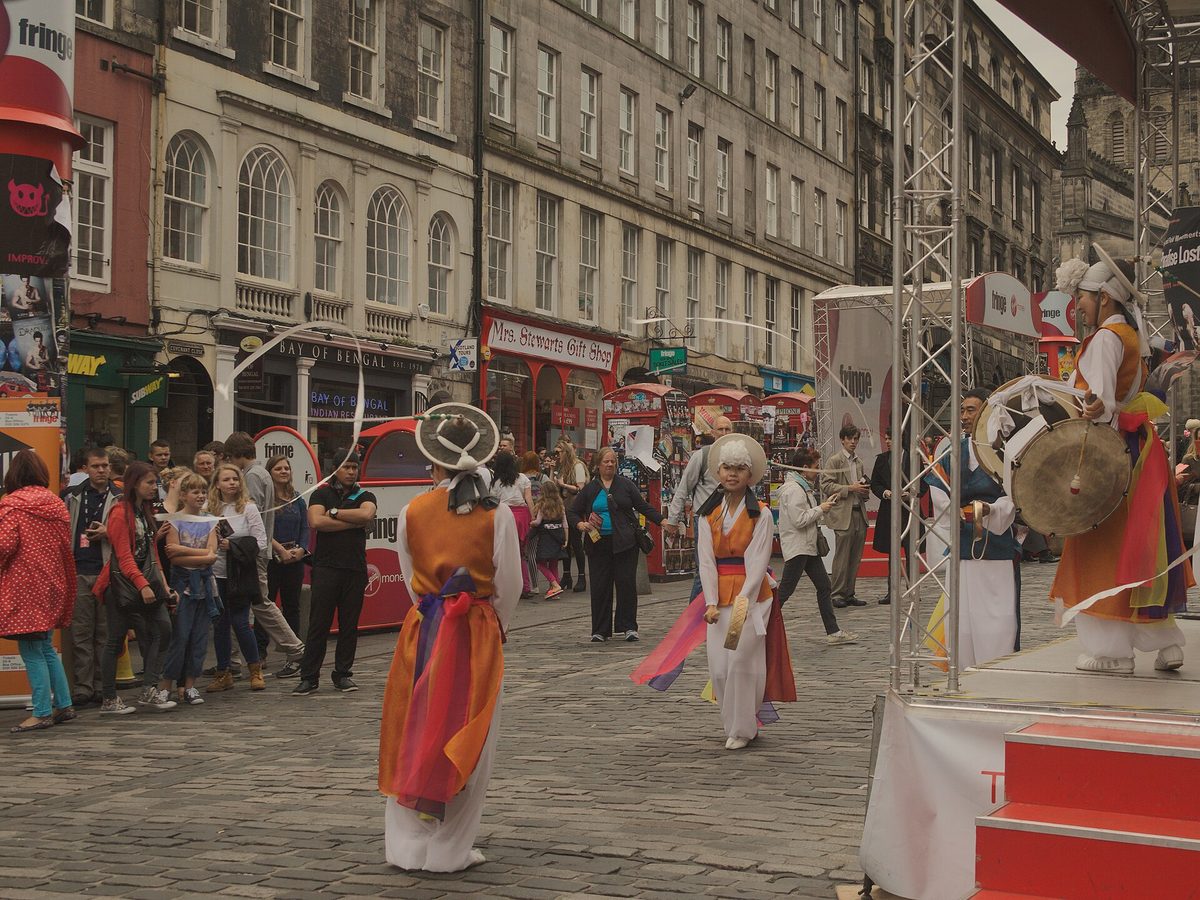
During the Fringe — 7 to 31 August in 2026 — there are more than 400 free shows in the programme. Not discounted. Free at the door, with a bucket at the end you contribute to if you enjoyed it. A fiver in the bucket for a good hour of comedy is still the cheapest entertainment in Britain.
There is also a formal pay-what-you-want model on many shows: buy a ticket in advance to guarantee a seat, or turn up and pay what you can at the end. Advance ticket holders go in first, so buy the cheap ticket for anything you really want to see.
- 2for1 days fall on Monday 10 and Tuesday 11 August 2026 across a large number of shows.
- The Half Price Hut opens from Wednesday 12 August, selling same-day tickets at half price. Browse online, then go to the Fringe Box Office and say the words “Half Price Hut” — miss that step and you pay full price.
- The Fringe Street Events on the High Street and around the Mound cost nothing at all. Acrobats, fire performers, close-up magic, hours of it. Donations encouraged, never demanded.
Put that together and August is the best-value cultural month in Europe, provided you have already solved the bed problem. Our guide to Scotland’s festivals and events calendar sets out how the Fringe, the International Festival and the Tattoo overlap, which matters because they price very differently. If you would rather have the city quiet, the best months to visit Scotland for value are usually May and September.
Small free museums worth exactly one hour
Edinburgh’s council-run museums are all free and all small. Treat them as one-hour fillers between bigger things and you will enjoy them.
The Writers’ Museum, up Lady Stair’s Close off the Lawnmarket, holds Burns’s writing desk and the press that printed Walter Scott’s first novels; half the pleasure is the seventeenth-century staircase. The People’s Story, in the Canongate Tolbooth, tells working-class Edinburgh from the eighteenth century onwards in residents’ own words, and is better than it sounds. The Museum of Edinburgh opposite holds Greyfriars Bobby’s collar and bowl. Both usually open seven days, roughly 10am to 5pm.
The Museum on the Mound, inside the old Bank of Scotland headquarters, is about money and contains a million pounds in banknotes. Odd and short. The Museum of Childhood on the High Street was the first museum anywhere devoted to childhood; if you are travelling with children in Scotland it earns its half hour, and if you are not, it will not. Greyfriars Kirkyard is free, open and properly atmospheric at dusk — the Covenanters’ Prison at the back is locked and only reachable on paid tours, but the main yard with the Potter, McGonagall and Riddell headstones costs nothing.
Planning a free day in Edinburgh
Central Edinburgh is small. You can walk from the castle esplanade to the Scottish Parliament in twenty-five minutes downhill, and almost everything here sits within a two-mile radius. That is why the free-day maths works so well.
What you will actually spend
Nothing on admission, if you plan it. Transport is the only real cost. A single on Lothian Buses and the trams is around £2.40 adult and £1.20 child at the time of writing, with a City DAY ticket about £6.00 adult, £3.00 child and roughly £13.00 for a family. Making three or more journeys? Take the day ticket. Contactless tapping caps automatically at a slightly lower rate.
The Airlink 100 airport bus is priced separately at around £3.50 single and standard day tickets are not valid on it. Fares change — check the operator’s site before you travel. For trips beyond the city, our guide to public transport around Scotland covers rail passes and regional tickets.
What to book, and how far ahead
Only two things here need advance booking: the Scottish Parliament guided tour and First Minister’s Questions. A week ahead is usually fine for the tour, longer in August. St Giles’ guided tours need booking too, but usually only a day or two out. Everything else you walk into. The full Edinburgh travel guide covers where in the city it is genuinely worth spending money.
A free day that actually joins up
Here is the route I would give a friend with one day, no budget and reasonable legs. It runs roughly west to east and never doubles back.
- 8am. Up Arthur’s Seat from Holyrood for early light. Down by 10am.
- 10.15am. Dr Neil’s Garden at Duddingston on the far side, twenty minutes of quiet, then back round the base of the hill.
- 11.30am. The Scottish Parliament — a ten-minute talk if you have not booked a tour, or the free exhibition.
- 12.30pm. Up the Canongate. The People’s Story and the Museum of Edinburgh face each other; pick one. Lunch from a bakery, eaten on the steps.
- 2pm. St Giles’ Cathedral, then five minutes down George IV Bridge to the National Library exhibition.
- 3pm. National Museum of Scotland on Chambers Street. Two hours, finishing on the roof terrace.
- 5.15pm. Down the Vennel steps for the castle shot, through the Grassmarket.
- 6pm. Up Calton Hill for sunset. In midsummer that means waiting until nearly 10pm, so swap in the Scottish National Gallery before it closes and go up later.
That is one day. With two, our 48-hour itinerary for the city shows how to mix these free stops with the paid ones. With longer, several day trips out of Edinburgh cost little more than a train fare, and Glasgow is under an hour away with its own set of free museums.
What underwhelms, and what to skip
Some famous free things in Edinburgh are dull. Being honest about that is more useful than another paragraph of enthusiasm.
The Greyfriars Bobby statue. A small bronze dog on a plinth at the top of Candlemaker Row with a permanent scrum of people queuing to rub its nose, which has worn the patina off and which the kirk has repeatedly asked visitors to stop doing. The story is lovely. The statue takes eleven seconds. Do not build a walk around it.
“Walking the Royal Mile” as an activity. You will walk it several times anyway. As a listed thing to do it is largely cashmere shops, kilt-hire windows and people handing you flyers. The interest lies in the closes running off it, not the street.
The National Monument on Calton Hill. Twelve columns of an unfinished Parthenon. Everybody calls it Edinburgh’s Disgrace, everybody photographs it, and up close there is nothing to look at. Go for the view, not the ruin.
Princes Street Gardens in poor weather. On a warm day, castle above and Ross Fountain in front, it is one of the best city parks in Britain. In horizontal February rain it is a muddy slope with a railway underneath.
Portobello Beach unless the sun is genuinely out. A proper two-mile promenade and a good beach, forty minutes by bus. On a grey day it is a long trip for a cold walk, and Scotland has far better beaches elsewhere.
Two common mistakes. First, assuming everything labelled free actually is — free walking tours want £10 to £20, the botanic glasshouses charge, and the castle never has been. Our guide to Edinburgh Castle tickets explains what the money buys and whether to bother. Second, cramming three national collections into one day. You will stop looking properly by the second. Two a day, maximum.
Frequently asked questions
Are museums in Edinburgh free?
The national ones are. The National Museum of Scotland, the Scottish National Gallery, the Portrait Gallery, Modern One and Modern Two and the National Library all offer free entry to their permanent collections, as do council-run museums such as the Writers’ Museum and the People’s Story. Temporary and touring exhibitions are usually ticketed separately.
How many days do you need to see the free things in Edinburgh?
Three days covers the essentials comfortably: one for the national collections, one for the hills and viewpoints, one for the walks out to Dean Village, Leith or Cramond. Four to five days lets you do it without rushing and gives you weather margin, which in Edinburgh is not optional.
Is Edinburgh Castle free to enter?
No. Edinburgh Castle charges admission and always has. You can walk up to the esplanade for free and take the view from there, and the best free castle photographs are actually from the Vennel steps, Princes Street Gardens and the Grassmarket rather than from inside the walls.
Are the free walking tours in Edinburgh really free?
No. They are tip-based, and guides usually rely on tips for their income. Budget around £10 to £20 per person for a two-hour tour and carry cash, since not all guides take cards. There is no charge to join and nobody takes payment upfront, but arriving without money is awkward for everyone.
What can you do in Edinburgh on a rainy day for free?
This is where Edinburgh is strongest. String together the National Museum of Scotland, the Scottish National Gallery and the Royal Scottish Academy and you have a full day indoors without paying. Add the National Library exhibition, St Giles’ Cathedral and the Portrait Gallery and you have two more days of dry, free content.
Is it safe to walk to Cramond Island?
Only within the posted safe crossing window, which is roughly two hours either side of low tide. Times are displayed on a board at the causeway and available by texting Cramond to 81400. People are cut off there every year. Set an alarm for your return, never wade through rising water, and call 999 for the Coastguard if you misjudge it.
Can you visit the Scottish Parliament for free?
Yes, entirely. The public areas and permanent exhibition are open with no ticket, short introductory talks run through the day, and the 45-minute guided tour is free but should be booked in advance online. Tickets to watch debates and First Minister’s Questions are also free, though the Thursday session books up quickly.
Is Edinburgh expensive to visit on a budget?
Accommodation is the expensive part, particularly in August. Attractions need not be: with the free national collections, the hills and the walkways you can fill several days without paying admission. Transport is modest, and a day ticket on the buses and trams covers most of what you will need. Our practical Scotland travel tips cover the rest.
Final thoughts
What surprises people about Edinburgh is not that there are free things to do — every city has those. It is the quality. A national museum you could spend a day in, a gallery with Titian and Velázquez in it, an extinct volcano you can climb before breakfast, and a tidal island at the end of a bus route. None of it costs a penny.
My honest advice: spend nothing for the first two days and see whether you feel short-changed. Most people do not. Then put the money you saved into one thing you genuinely want — a good dinner in Leith, or a proper tour of somewhere you cannot otherwise get into. That beats paying £25 a head at four attractions because a guidebook said so. For more across the country, our roundup of free things to do across Scotland shows how far the same approach travels, and our main guide to the city is the place to plan the rest of your trip.
About the author: This guide was written and is maintained by the ScotlandTourism.org editorial team — travel writers who’ve spent years exploring Scotland’s cities, Highlands and islands, from bagging Munros to chasing the perfect dram. We update our guides regularly to keep prices, opening details and advice current.
Last updated: August 2026. Prices and opening times change — always check the official site before you travel.
Photo credits
All images are used under their respective Creative Commons or public-domain licenses:
- The glass-roofed Grand Gallery of the National Museum of Scotland — Brian McNeil, CC BY-SA 3.0, via Wikimedia Commons
- The red sandstone facade of the Scottish National Portrait Gallery on — Kenneth C. Zirkel, CC BY 4.0, via Wikimedia Commons
- The Scottish Parliament building at Holyrood — dun_deagh, CC BY-SA 2.0, via Wikimedia Commons
- The Dugald Stewart Monument on Calton Hill with Edinburgh Castle beyon — Colin Park, CC BY-SA 2.0, via Wikimedia Commons
- The rocky summit of Arthur’s Seat above Edinburgh — Lisa Jarvis, CC BY-SA 2.0, via Wikimedia Commons
- The view over Calton Hill and the Firth of Forth from the Salisbury Cr — Daniel Kraft, CC BY-SA 3.0, via Wikimedia Commons
- Edinburgh Castle seen from the stone steps of the Vennel above the Gra — Jennifer Romero, CC BY-SA 2.0, via Wikimedia Commons
- The weir and old mill buildings on the Water of Leith at Dean Village — Mike Shaw, CC BY-SA 4.0, via Wikimedia Commons
- Moored boats and old merchants’ buildings along the Shore at Leith — Bill Boaden, CC BY-SA 2.0, via Wikimedia Commons
- The tidal causeway and wartime pylons leading out to Cramond Island ne — George Gastin, CC BY-SA 3.0, via Wikimedia Commons
- Performers and crowds at the free Fringe Street Events on Edinburgh’s — Brian McNeil, CC BY 3.0, via Wikimedia Commons